
How CSA Farms Are Turning Food Waste Into Profit (And Stronger Communities)
 darrell on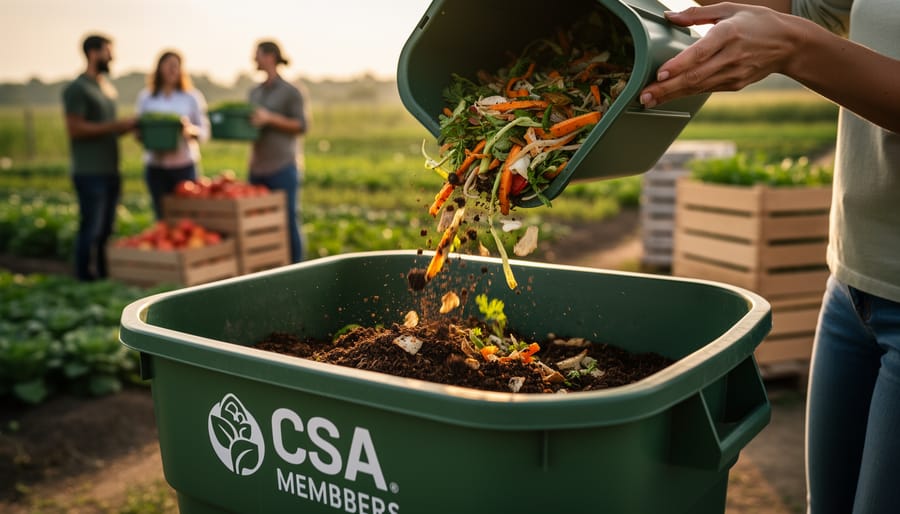
Transform food scraps from your CSA operation into nutrient-rich soil amendments by establishing formal agreements with members who commit to returning compost materials or participating in shared composting systems. These cooperative arrangements typically reduce farm waste by 40-60% while cutting disposal costs and creating closed-loop nutrition cycles that feed next season’s crops.
Start by designating drop-off stations at your farm or central collection points where members return vegetable trimmings, coffee grounds, and other approved materials in provided containers. Sarah Chen’s small organic farm in Vermont partnered with 45 CSA families this way, collecting over 3 tons of food waste in their first year and eliminating her need to purchase commercial compost entirely.
Structure agreements around clear responsibilities: farms provide collection bins, educational materials about acceptable items, and maintain the composting system, while members commit to weekly returns of properly sorted organic matter. Some cooperatives offer incentives like reduced share prices, extra produce, or compost distribution to participating households.
The most successful programs include monthly workshops teaching members proper separation techniques and the science behind decomposition, turning waste reduction into community education. Consider implementing a simple tracking system where families log their contributions, creating friendly competition and accountability. These partnerships strengthen the farm-member relationship beyond weekly vegetable exchanges, building invested communities who understand their role in sustainable agriculture from seed to soil and back again.
What Are Composting and Food Recovery Cooperative Agreements?
The Three Pillars of Successful Food Waste Partnerships
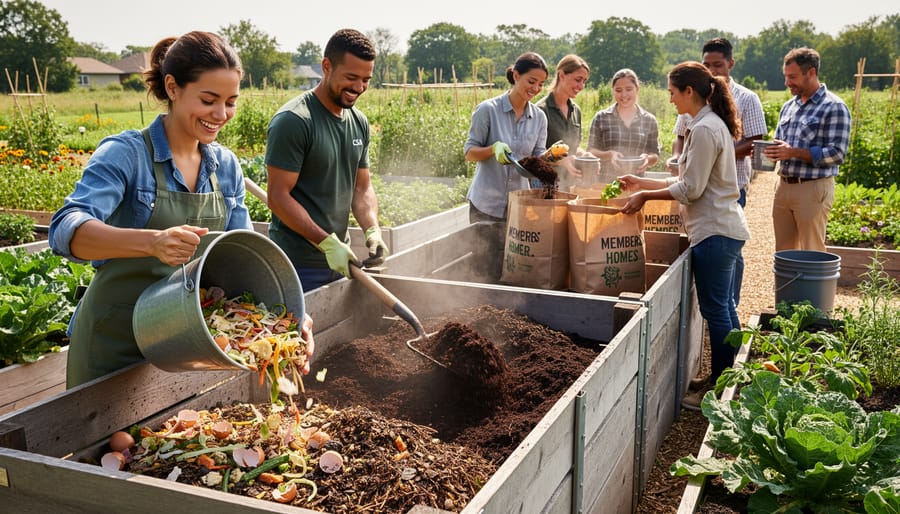
Think of successful food waste partnerships as a three-legged stool—each pillar equally important to keeping everything balanced and functional.
The first pillar is composting infrastructure. This includes your physical composting system, whether it’s a simple three-bin setup, a larger-scale windrow system, or even a partnership with a local composting facility. Without reliable infrastructure, you’re collecting scraps with nowhere to put them. Many CSAs start small with on-site bins and expand as member participation grows. The key is choosing a system that matches your current needs while allowing room to grow.
Next comes your food recovery system—the practical logistics of collecting, storing, and managing food waste before it reaches the compost pile. This means establishing clear protocols for what materials are accepted, providing proper collection containers for members, and creating convenient drop-off schedules. Some successful cooperatives have found that weekly pickup alongside regular CSA distributions works beautifully, turning what could be an extra trip into a seamless routine.
The third pillar is shared member education, which honestly ties everything together. When members understand why they’re separating food scraps and how their contributions create nutrient-rich soil for next season’s harvest, participation soars. Consider hosting composting workshops, sharing simple guides about what can and cannot be composted, and celebrating milestones like “500 pounds diverted from landfills!” One Vermont CSA saw participation jump from 40% to 85% after implementing a monthly newsletter featuring composting tips and showcasing the beautiful finished compost nourishing their fields.
Why CSA Farms Are Perfect Partners for Food Waste Reduction
CSA farms arrive at composting partnerships with distinct advantages that make them natural leaders in food waste reduction. Unlike traditional retail operations, CSA networks already possess the infrastructure and community connections needed to launch successful composting initiatives.
The built-in distribution system stands as perhaps the greatest asset. CSA farms already deliver produce to members weekly or bi-weekly, creating a ready-made collection route for food scraps. Members simply set out their compost buckets alongside their empty produce boxes, and farmers return finished compost or fresh produce—a circular system that minimizes additional trips and fuel costs.
Member engagement levels in CSA communities far exceed typical consumer relationships. These aren’t just customers; they’re invested participants who chose to support local agriculture. This shared commitment to sustainability means CSA members often jump at opportunities to contribute to composting programs. Many are already passionate about reducing waste and understand how their food scraps can nourish next season’s harvest.
The logistics framework requires minimal adjustment. Farms already manage pickup locations, coordinate volunteers, and communicate regularly through newsletters and social media. Adding composting collection simply expands existing operations rather than creating entirely new systems. Drop-off sites at farmers markets, farm stands, or central locations are already familiar to members.
Perhaps most importantly, CSA networks operate on shared values. The people who join community supported agriculture already believe in supporting local farmers, environmental stewardship, and sustainable food systems. When you present composting as closing the loop—transforming their kitchen scraps into the soil that grows their food—it resonates deeply. This philosophical alignment makes CSA members enthusiastic partners rather than reluctant participants, turning what could be a challenging logistical venture into a community-building opportunity that strengthens the farm’s mission.
Real-World Models: How CSA Cooperatives Are Making It Work
Farm Share Collection Programs
Many Community Supported Agriculture farms have discovered an elegant solution to food waste by transforming pickup days into compost collection opportunities. Instead of members making separate trips to dispose of food scraps, they simply bring their kitchen waste when collecting their weekly produce boxes. This convenient system works beautifully because members are already visiting the farm regularly.
Here’s how it typically works: CSA members receive a small bucket or bag at the season’s start. Throughout the week, they collect fruit and vegetable peels, coffee grounds, eggshells, and other compostable materials. On pickup day, they drop off their scraps at a designated collection bin and grab their fresh produce. The farm then composts these materials along with their own agricultural waste.
The real magic happens several months later when members receive finished compost to enrich their home gardens. This creates a genuine closed-loop system where nothing goes to waste. One successful farmer shared that her members love seeing their banana peels and coffee grounds transformed into rich, dark compost that grows better tomatoes and healthier herbs.
This arrangement strengthens the farm-member connection while reducing landfill waste and transportation emissions. Members appreciate the convenience and environmental benefits, while farmers gain valuable organic matter to improve soil health without purchasing expensive amendments.
Multi-Farm Composting Hubs
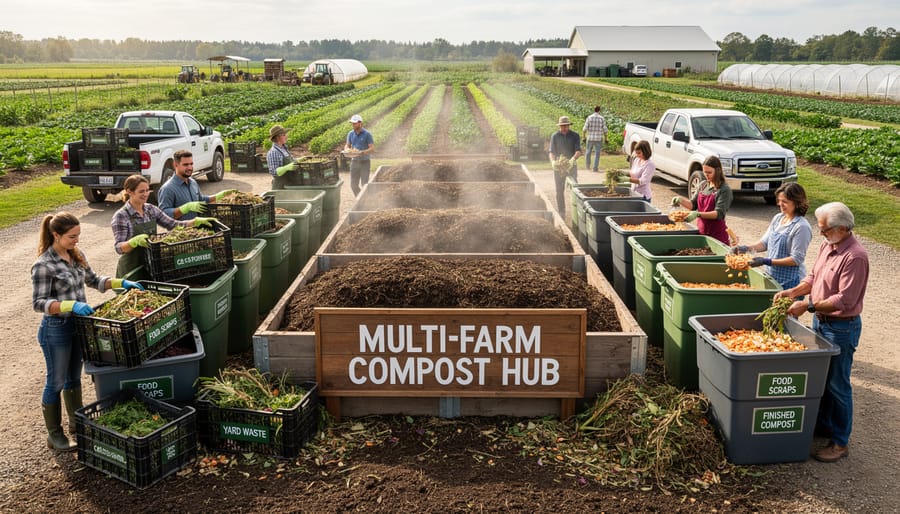
Imagine multiple CSA farms joining forces to tackle their food waste and soil amendment needs together. That’s exactly what multi-farm composting hubs accomplish. Instead of each farm building its own small-scale composting system, several farms pool their resources to create one centralized facility that serves the entire network.
These shared composting facilities make economic sense for smaller operations that might struggle to justify the investment alone. By combining their food scraps, crop residues, and other organic materials, farms achieve the critical mass needed for efficient hot composting. The cooperative model also allows members to share equipment costs, maintenance responsibilities, and labor.
Green Valley Collective in Vermont offers a great success story. Five CSA farms united to build a hub that now processes 50 tons of organic waste annually, producing high-quality compost for all members. Each farm contributes materials and shares operating costs proportionally to their usage.
These hubs often become community resources too, accepting food waste from CSA members’ households, creating a complete circle of sustainability. The finished compost returns nutrients to the soil, growing the fresh produce that feeds those same families.
Setting Up Your Own CSA Composting Partnership
Finding the Right Partners
The secret to successful composting partnerships lies in finding collaborators who share your vision for sustainability. Start by looking close to home—neighboring farms often have complementary waste streams that work beautifully together. For example, a dairy farm’s manure combined with your vegetable scraps creates balanced compost.
Local restaurants are goldmine partners, especially farm-to-table establishments already committed to sustainability. They generate consistent food waste and often appreciate the chance to close the loop with their organic materials. Schools present another excellent opportunity, particularly those with garden programs or environmental education initiatives. These partnerships not only divert waste but also create teaching moments for students.
Community organizations like food banks, farmers markets, and environmental groups make natural allies. They understand the local landscape and can help spread the word about your composting efforts.
When evaluating potential partners, consider three key factors: their waste volume and consistency, proximity to your operation, and commitment to sustainability goals. Schedule face-to-face meetings to discuss expectations, logistics, and shared values. The best partnerships emerge when everyone benefits—you gain quality compost materials while partners solve their waste disposal challenges. Look for organizations that demonstrate genuine enthusiasm and reliability, as these relationships require ongoing communication and mutual trust to thrive.
Structuring the Agreement
A solid cooperative agreement protects everyone involved while keeping your composting partnership running smoothly. Think of it as a friendly roadmap that ensures clear expectations from the start.
Begin by defining each party’s responsibilities in concrete terms. Who collects food scraps? Who manages the compost pile? Specify pickup schedules, acceptable materials, and maintenance duties. One successful CSA in Vermont found that rotating compost management among three member families each month prevented burnout and built stronger community bonds.
Cost-sharing arrangements should be transparent and fair. Outline expenses for bins, tools, transportation, and any processing fees. Some cooperatives split costs equally, while others base contributions on the volume of waste contributed or compost received.
Address liability clearly to protect participants from potential disputes. Include language about proper composting practices, odor management, and pest control responsibilities. This protects both property owners hosting compost sites and contributing members.
Compost distribution deserves special attention since that nutrient-rich “black gold” is the prize everyone’s working toward. Will members receive compost based on their contribution levels? Will some go to community gardens? Spell it out.
Finally, establish a simple conflict resolution process. Designate a point person or small committee to handle disagreements before they escalate. Most issues around composting cooperatives stem from miscommunication, which a well-structured agreement prevents beautifully.
Starting Small and Scaling Up
Starting a composting cooperative doesn’t mean you need to dive in headfirst with massive infrastructure. Begin with a small pilot program involving just a handful of committed CSA members or neighboring farms. This low-risk approach lets you test collection schedules, composting methods, and communication systems without overwhelming your resources.
Track meaningful metrics from day one. Measure pounds of food waste diverted from landfills, number of participating households, and cubic yards of finished compost produced. One Vermont CSA found that their initial six-member pilot diverted 300 pounds monthly, giving them solid data to attract more participants.
As you gain confidence and refine your processes, gradually expand your network. Add new collection points, invite additional farms to join, or extend pickup schedules. Celebrate milestones with your community, sharing success stories about how member contributions created nutrient-rich soil amendments that boosted crop yields by 25 percent or reduced farm waste disposal costs significantly. Remember, sustainable growth mirrors nature itself—steady, organic, and resilient.
Member Education: Getting Your CSA Community Excited About Composting
Getting members excited about composting starts with education that feels fun rather than preachy. Host hands-on composting workshops at your farm where members can build their own small-scale bins or learn vermicomposting basics. One successful Pennsylvania CSA farmer, Maria, turned these workshops into seasonal events featuring live demonstrations, take-home starter kits, and friendly Q&A sessions that built real enthusiasm among her members.
Make composting visible and accessible by including weekly share box inserts with practical tips. These quick-read cards can highlight which veggie scraps compost best, troubleshoot common problems like odor control, and celebrate member milestones. Consider creating a simple chart showing how much waste the collective community has diverted from landfills—people love seeing their impact in concrete numbers.
Transform “imperfect” produce into a teaching moment rather than an apology. Include recipe cards specifically designed for those knobby carrots or oversized zucchinis, showing members how to use every bit. A Vermont CSA created a popular “Ugly Produce Challenge” where members shared creative recipes on social media, turning potential waste into culinary adventures.
Gamification techniques work wonderfully for engaging your CSA community around waste reduction. Launch a friendly competition tracking which pickup location composts the most or develops the best soil from finished compost. Offer small rewards like extra herbs or farm store credits to winners. Create a “Compost Champion” spotlight in your newsletter featuring member success stories—real people achieving real results inspire others to participate.
Consider partnering members into composting buddy systems where experienced composters mentor newcomers. This peer-to-peer approach builds community connections while spreading knowledge organically. Remember, the goal isn’t perfection but progress. Celebrate every step members take toward reducing food waste, and watch your CSA transform into a vibrant community united around sustainable living.
Overcoming Common Challenges
Even the most enthusiastic composting partnerships face practical hurdles, but the good news is that CSAs across North America have developed proven solutions to keep things running smoothly.
Contamination concerns often top the list of worries. One successful approach comes from Green Valley Farm in Vermont, where they implemented a simple three-bin sorting system at their collection point. Members receive a one-page visual guide showing acceptable materials, which reduced contamination rates from 30% to just 5% within two months. Consider hosting a spring kickoff event where members can ask questions and see composting in action.
Logistics and transportation can strain small operations, but creative partnerships help. Many CSAs have found that coordinating with existing delivery routes eliminates extra trips. Some farms ask members to return their compost contributions in dedicated containers when picking up weekly shares, turning potential obstacles into seamless exchanges that build stronger local food systems.
Seasonal variations present unique challenges, especially in colder climates where winter composting slows down. Successful farms often reduce winter collection frequency or focus on frozen storage methods until spring. Meanwhile, summer abundance can be managed by expanding your network to include local community gardens that need additional compost materials during peak growing season.
Cost barriers worry many start-up operations, but initial investments needn’t break the bank. Begin with basic equipment like a few composting bins or a small tumbler system, typically under $500. As your program grows, the reduced waste hauling fees often offset setup costs within the first year. Some CSAs apply for local environmental grants or partner with municipalities seeking waste reduction solutions.
Regulatory requirements vary by region, so connect with your local health department early. Most small-scale farm composting operations fall under agricultural exemptions, but confirming this prevents future headaches. Document your processes and maintain temperature logs if required, making inspections straightforward and stress-free.
The Ripple Effect: Benefits Beyond Waste Reduction
When you join a composting cooperative agreement, you’re signing up for so much more than just reducing waste. Think of it as planting seeds that grow into benefits you might never have imagined.
First, let’s talk soil. Compost transforms tired earth into thriving ecosystems teeming with beneficial microorganisms. Farmers in successful composting partnerships report dramatic improvements in soil structure, water retention, and nutrient availability. This living soil means healthier crops with deeper root systems and better resistance to pests and diseases. Translation? Less money spent on inputs and irrigation, which is music to any farmer’s ears.
The community connections that blossom from these agreements create something truly special. Regular drop-offs and pickings-up mean members get face time with farmers, sharing stories, recipes, and gardening wisdom. One CSA member in Vermont shared how her weekly compost contribution became the excuse she needed to finally learn about season extension techniques directly from her farmer.
Educational opportunities naturally emerge too. Children discover where food really comes from and why that banana peel isn’t trash. Adults learn composting basics they can replicate at home, closing the loop in their own backyards.
Speaking of home composting, here are quick tips to get started: Keep a countertop container for scraps, layer browns (dried leaves, cardboard) with greens (vegetable scraps, grass clippings), maintain moisture like a wrung-out sponge, and turn your pile regularly. Even apartment dwellers can vermicompost with a simple worm bin under the sink.
For farms, participating in these partnerships enhances reputation as environmental stewards, attracting customers who value sustainability. It’s proof positive that your operation walks the talk, creating a virtuous cycle of community support and ecological healing.
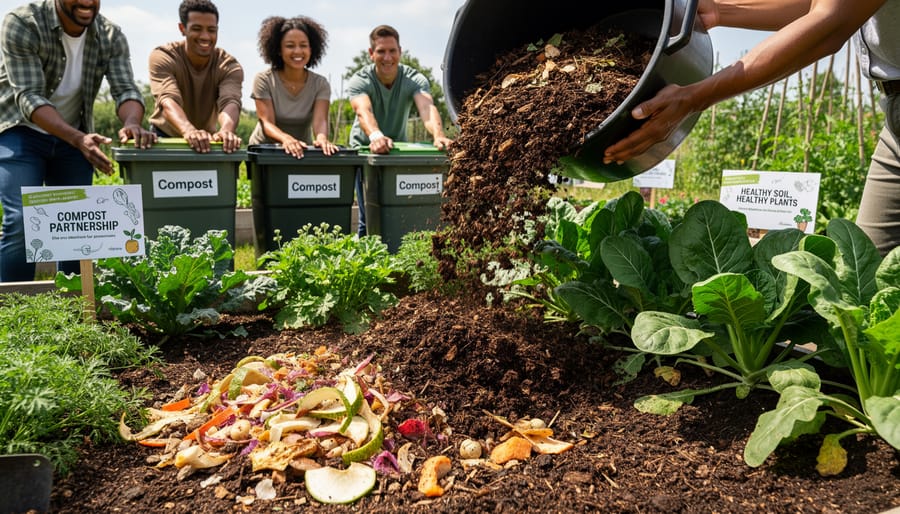
Composting and food recovery cooperative agreements represent more than just waste management solutions—they’re powerful tools that strengthen the entire CSA ecosystem while tackling some of our most pressing environmental challenges. By diverting food waste from landfills and returning nutrients to the soil, these partnerships create a beautiful closed-loop system that honors the cyclical nature of agriculture. They demonstrate how small-scale farms working together can achieve significant environmental impact.
The beauty of these agreements lies in their accessibility. You don’t need complicated infrastructure or massive funding to start making a difference. Begin by reaching out to your local CSA farm. Ask questions about their current waste management practices and express interest in supporting composting initiatives. Share this information with fellow members and explore possibilities together. Your CSA might already be considering such partnerships and simply needs member enthusiasm to move forward.
Remember, every thriving food system starts with community conversation. When neighbors, farmers, and local organizations unite around shared environmental goals, remarkable transformations happen. The power to build more resilient, sustainable food networks exists right in your community. Start the conversation today—your local farm, your soil, and your planet will thank you.