
Supercharge Your CSA Farm’s Productivity with Smart Organic Crop Rotations
 darrell on
Transform your organic farm’s productivity by implementing strategic long-term rotation planning that naturally builds soil health while maximizing yields. Alternate nitrogen-fixing legumes with heavy-feeding crops like tomatoes and brassicas to create self-sustaining fertility cycles. Group crops by plant families, rotating through distinct field sections every season to break pest and disease cycles naturally. Map your rotations based on market demand, scheduling high-value crops during peak CSA distribution months while maintaining soil biology.
Growing organic isn’t just about avoiding synthetic inputs – it’s about creating resilient agricultural systems that work in harmony with nature. Through thoughtful crop rotation, farmers build living soils teeming with beneficial microorganisms, reduce pest pressure naturally, and produce nutrient-dense foods that customers can trust. Whether you’re managing a small market garden or a diverse CSA operation, strategic rotation planning forms the foundation of successful organic farming.
The Science Behind Organic Crop Rotation Success
Soil Health and Nutrient Cycling
Crop rotation plays a vital role in maintaining and improving soil health through natural nutrient cycling. Different crops interact with the soil in unique ways, creating a dynamic system that benefits future plantings. Legumes, like peas and beans, form partnerships with soil bacteria to fix nitrogen from the air, enriching the soil naturally. Deep-rooted crops such as carrots and parsnips help break up compacted soil and bring nutrients from lower layers to the surface.
Following heavy feeders like tomatoes with soil-building cover crops allows the land to recover and replenish its nutrient stores. Green manures, such as clover and buckwheat, can be tilled back into the soil, adding organic matter and improving soil structure. These practices encourage beneficial microorganisms and earthworms, which further enhance nutrient availability and soil health.
By alternating between different plant families, farmers create a more resilient soil ecosystem that’s less dependent on external inputs. This natural approach to soil fertility management helps maintain consistent yields while building long-term soil health – a cornerstone of successful organic farming.

Natural Pest Management
Crop rotation serves as a powerful natural defense against pests and diseases in organic farming systems. By changing the location of crops each season, you effectively break the life cycles of many problematic insects and pathogens that tend to target specific plant families. For example, moving your tomatoes to a new bed each year helps disrupt the survival of tomato hornworms and other specialized pests.
This strategic plant shuffling also helps to prevent common plant diseases by reducing the buildup of soil-borne pathogens. When crops from different families follow each other, pest populations often decline naturally without the need for intervention.
Many successful CSA farmers incorporate “trap crops” into their rotation plans – plants that attract pests away from valuable crops. For instance, planting nasturtiums near your brassicas can draw aphids away from your marketable crops. Additionally, including aromatic herbs and flowers in your rotation can help repel certain pests while attracting beneficial insects that prey on harmful bugs.
Remember to maintain detailed records of pest issues and their locations to inform future rotation decisions. This knowledge becomes invaluable for long-term pest management success.
Planning Your CSA Rotation Calendar
Seasonal Planning Strategies
Successful organic crop rotation requires thoughtful seasonal planning that aligns with your CSA planning process. Start by mapping out your growing seasons and dividing your land into distinct sections that will host different crop families throughout the year.
For spring planning, focus on cold-hardy crops like peas, brassicas, and root vegetables. These plants establish well in cooler soil and provide early-season harvests. As you transition to summer, reserve space for heat-loving crops such as tomatoes, peppers, and squash, ensuring they follow nitrogen-fixing spring crops like peas or cover crops.
Fall planning should incorporate quick-growing crops that can be harvested before frost, while also establishing winter cover crops in previously harvested areas. Consider planting cold-tolerant varieties like kale and Brussels sprouts that actually improve in flavor after light frosts.
Winter months are ideal for soil building through cover crops and planning next year’s rotation. Use this time to review your notes from the previous seasons, identifying which crop combinations worked well and which areas might need adjustment.
Remember to maintain flexibility in your rotation schedule – weather patterns, market demands, and crop performance may require adaptations to your original plan. Keep detailed records of planting dates, yields, and soil conditions to refine your rotation strategy year after year.
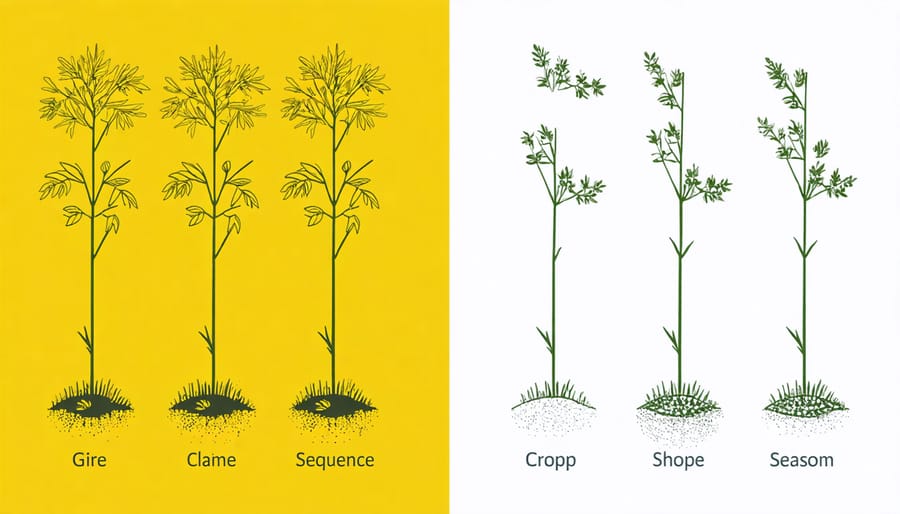
Plant Family Groups
Understanding plant families is the foundation of successful crop rotation. Crops within the same family often share similar nutrient needs and are vulnerable to the same pests and diseases, making family-based rotation essential for soil health and pest management.
The main vegetable families include:
Nightshades (Solanaceae): Tomatoes, peppers, eggplants, and potatoes are heavy feeders that benefit from rich, fertile soil. These crops should only return to the same spot every 3-4 years to prevent soil-borne diseases.
Brassicas (Cruciferae): Includes cabbage, broccoli, kale, and radishes. These crops are known for their deep roots and high nutrient demands, particularly nitrogen.
Legumes (Fabaceae): Peas, beans, and other legumes are soil builders that fix nitrogen. Plant these before heavy-feeding crops to naturally enrich your soil.
Cucurbits (Cucurbitaceae): Squash, cucumbers, and melons have sprawling growth habits and moderate nutrient needs. They work well following legumes in rotation.
Alliums (Amaryllidaceae): Onions, garlic, and leeks are light feeders with shallow roots. They can follow heavy feeders in your rotation plan.
Organizing your crops by family makes it easier to plan rotations that maintain soil fertility and minimize pest problems. Keep a garden journal to track where each family grows each season, ensuring they don’t return to the same spot too soon.
Market Demand Balance
Successful CSA farming requires a delicate balance between crop diversity and member satisfaction. When planning your rotation schedule, consider surveying your members about their produce preferences and incorporating this feedback into your planting strategy. This helps ensure your rotation not only maintains soil health but also meets market demands.
Many successful CSA farmers maintain a “core crops” rotation that includes reliable favorites like tomatoes, lettuce, and carrots, while experimenting with specialty crops in smaller plots. This approach helps maximize seasonal yields while keeping members excited about their weekly shares.
Consider creating a flexible rotation plan that allows for adjustments based on member feedback. For example, if members consistently express interest in more cooking greens, you might increase your brassica rotation while reducing space allocated to less popular crops. Keep detailed records of member preferences and crop performance to fine-tune your rotation strategy each season.
Remember to communicate with your members about the benefits of crop rotation and how it affects their weekly shares. Many CSA members appreciate understanding the connection between sustainable farming practices and the variety in their boxes. This education often leads to greater acceptance of seasonal eating patterns and helps maintain member satisfaction throughout the growing season.
Advanced Rotation Techniques for CSA Success
Cover Crop Integration
Cover crops are the unsung heroes of organic crop rotation, serving as powerful allies in building soil health and maintaining farm productivity. These temporary plantings work year-round to enhance your rotation system, even when your main crops aren’t in the ground.
Consider the experience of Sarah Miller, an organic farmer in Vermont, who transformed her depleted fields using a strategic cover crop system. “Adding winter rye and hairy vetch to our rotation was a game-changer,” she shares. “Our soil structure improved dramatically within just two seasons.”
Popular cover crop choices include legumes like clover and peas, which fix nitrogen in the soil, and grasses like rye and oats that prevent erosion and add organic matter. Buckwheat, a warm-season favorite, excels at suppressing weeds and attracting beneficial insects.
To maximize cover crop benefits:
– Plant immediately after harvesting main crops
– Choose species that complement your climate and soil needs
– Consider mixing different cover crops for multiple benefits
– Time termination carefully to avoid seed setting
– Incorporate residue thoroughly before planting next crops
Beyond soil improvement, cover crops provide additional advantages:
– Natural weed suppression
– Beneficial insect habitat
– Erosion control
– Moisture retention
– Enhanced biodiversity
Many successful organic farmers use the “relay planting” technique, where cover crops are established in standing cash crops before harvest. This ensures continuous soil coverage and maximizes the growing season’s potential.
Remember that cover crops aren’t just placeholder plants – they’re active participants in your farm’s ecosystem, contributing to long-term sustainability and productivity.

Companion Planting in Rotation
Companion planting takes crop rotation to the next level by considering not just what crops follow each other, but also which plants grow best together during the same season. This natural approach creates beneficial relationships that can enhance your rotation strategy while maximizing space and improving overall farm health.
Consider planting nitrogen-fixing legumes like peas or beans alongside heavy-feeding crops such as tomatoes or corn. The legumes enrich the soil while the other crops benefit from the added nutrients. When rotating next season, the following crops will thrive in the nitrogen-rich soil left behind.
A popular companion planting trio known as the “Three Sisters” demonstrates this perfectly: corn provides support for climbing beans, which fix nitrogen in the soil, while squash spreads along the ground, suppressing weeds and retaining moisture. This traditional Native American planting method can be incorporated into your rotation schedule, with the plot being excellent for leafy greens the following year.
Herbs play a crucial role in companion planting rotations too. Aromatic herbs like basil, dill, and cilantro can be planted throughout your rotation blocks to attract beneficial insects and repel pests. As you plan your rotations, consider leaving permanent herb strips between beds to maintain these benefits year-round.
Success story: Sarah Miller from Green Valley Farm found that incorporating companion planting into her rotation increased her tomato yield by 30% after adding basil and marigolds to her rotation blocks. She maintains these beneficial relationships while still following her primary rotation schedule, proving that these methods can work together harmoniously.
Remember to document which companion plantings work best in your specific environment and incorporate these findings into your long-term rotation planning.
Troubleshooting Common Rotation Challenges
Even the most well-planned crop rotations can face challenges, but with the right approach, these hurdles are completely manageable. Let’s explore common rotation challenges and their practical solutions.
Timing mismatches often occur when one crop isn’t ready for harvest before it’s time to plant the next. To address this, maintain a flexible buffer zone in your growing space and consider using quick-growing cover crops to fill temporary gaps. Having backup plans for alternative planting dates can also help manage unexpected weather delays.
Nutrient depletion sometimes happens when heavy-feeding crops are accidentally scheduled too close together. Combat this by keeping detailed soil testing records and adjusting your rotation plan accordingly. Adding compost or green manure crops can help restore balance to depleted areas.
Space allocation issues are another frequent challenge, especially when transitioning between crops of different sizes. Create detailed field maps and use succession planting to maximize space efficiency. Some farmers find success by interplanting compatible crops during transition periods.
Disease and pest pressures can persist despite rotation efforts. Sarah Miller, an organic farmer in Vermont, solved this by extending her rotation length and incorporating disease-resistant varieties. She also added beneficial insect-attracting flowers between crop rows, creating natural pest management zones.
Equipment scheduling conflicts can arise when different crops need attention simultaneously. Develop a detailed calendar that accounts for equipment needs and consider cooperating with neighboring farms to share resources during peak times.
Market timing challenges occur when crop schedules don’t align with peak market demands. Work backward from your target market dates when planning rotations, and maintain season extension options like row covers or high tunnels for flexibility.
Remember that successful rotation management often requires adaptation and creative problem-solving. Keep detailed records of what works and what doesn’t, and don’t be afraid to adjust your plans based on experience and changing conditions.
Organic crop rotation stands as a cornerstone of sustainable agriculture, offering multiple benefits for soil health, pest management, and crop yields. By thoughtfully planning and implementing rotation cycles, farmers can create resilient agricultural systems that work in harmony with nature. Whether you’re managing a small garden plot or a larger CSA operation, the principles remain the same: diverse plantings, careful timing, and attention to soil needs. Start small by rotating between three or four crop families, and gradually expand your rotation plan as you gain confidence. Remember that successful organic rotation isn’t just about following a schedule – it’s about creating a living, breathing ecosystem that sustains both the land and the community it feeds. With patience and dedication, you’ll discover that organic crop rotation isn’t just good farming practice – it’s an investment in our agricultural future.