
Smart Water Management Solutions That Make Your Farm Thrive
 darrell on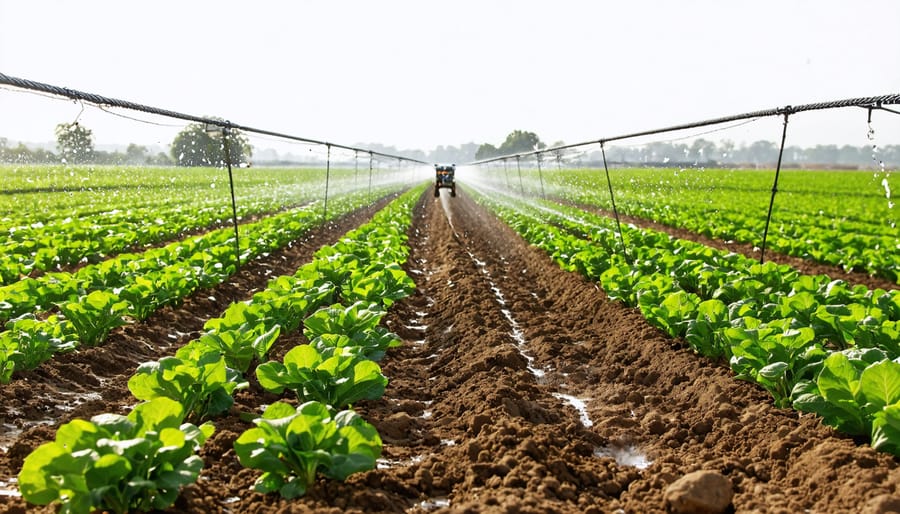
Transform your farm’s water efficiency with precision irrigation systems that reduce consumption by up to 70% while maximizing crop yields. Today’s smart water management technologies integrate seamlessly with regenerative agriculture practices, creating resilient food production systems that thrive even in challenging climates.
Modern soil moisture sensors, weather-responsive irrigation controllers, and advanced filtration systems now enable farmers to deliver exactly the right amount of water, at precisely the right time, directly to crop root zones. These innovations, combined with water-harvesting techniques like swales and keyline design, are revolutionizing how we manage this precious resource.
What’s truly exciting is how these technologies are becoming more accessible to small-scale farmers. From simple drip irrigation setups to sophisticated IoT-enabled systems that monitor water usage in real-time, there’s a solution for every farm size and budget. By embracing these water-smart technologies, we’re not just conserving water – we’re building more productive, sustainable farming operations that will feed communities for generations to come.
Modern Soil Moisture Monitoring Systems
Wireless Sensor Networks
Imagine having a detailed, real-time map of soil moisture levels across your entire farm, right at your fingertips. That’s exactly what wireless sensor networks deliver, revolutionizing the way we manage water in modern agriculture.
These smart sensors work like a team of tiny underground reporters, continuously measuring soil moisture at different depths and locations throughout your fields. Each sensor communicates wirelessly with a central hub, creating a comprehensive moisture map that you can access through your smartphone or computer.
The beauty of this system lies in its precision. Instead of relying on gut feelings or general weather patterns, you’ll know exactly which areas need water and which don’t. For example, Sarah Martinez, an organic farmer in California, reduced her water usage by 30% after installing a network of 20 sensors across her 15-acre vegetable farm.
These networks can also send alerts when moisture levels drop below critical thresholds, helping you prevent crop stress before it becomes visible. Many systems integrate with automated irrigation controllers, allowing for truly smart water management that responds to real-time conditions.
The initial setup is straightforward: sensors are placed strategically throughout your fields, typically at different depths and in areas with varying soil types or topography. Solar-powered nodes relay the data, making the system self-sufficient and environmentally friendly.
Smart Irrigation Controllers
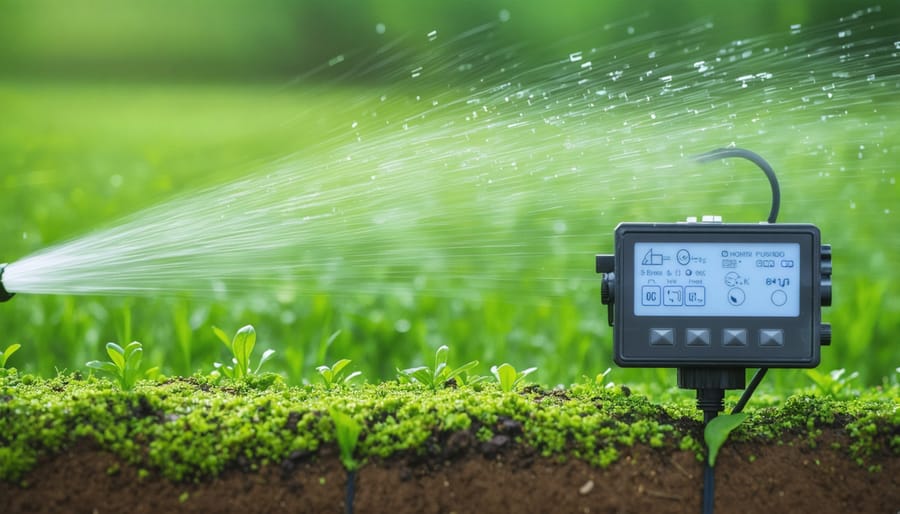
Smart irrigation controllers have revolutionized the way we manage water in sustainable farming, making it easier than ever to deliver exactly what your crops need, when they need it. These intelligent systems use real-time soil moisture sensors and weather data to automatically adjust watering schedules, eliminating the guesswork from irrigation timing.
The heart of these systems lies in their network of soil moisture sensors strategically placed throughout your growing areas. These sensors continuously monitor soil moisture levels at different depths, providing crucial data about water availability in the root zone. When integrated with automated irrigation controls, the system can make instant decisions about whether to water your crops based on actual soil conditions rather than preset timers.
Many modern controllers also factor in local weather forecasts, evaporation rates, and plant-specific water needs. For example, if rain is predicted, the system will automatically skip scheduled irrigation cycles, preventing overwatering and conserving precious resources. Some advanced systems even allow remote monitoring and control through smartphone apps, letting you manage your irrigation from anywhere.
Farmers using these systems typically report water savings of 30-50% compared to traditional irrigation methods. Sarah Miller, an organic farmer in California, shares, “Since installing smart controllers, we’ve cut our water usage by 40% while maintaining healthy crop yields. The system practically pays for itself in water savings alone.”
Water-Efficient Irrigation Technologies
Precision Drip Systems
Precision drip systems represent a game-changing approach to water management, delivering water directly to plant roots with remarkable efficiency. These systems use a network of tubes and emitters to provide consistent, targeted moisture exactly where plants need it most, reducing water waste by up to 70% compared to traditional irrigation methods.
Local farmer Sarah Martinez implemented drip irrigation on her 5-acre organic vegetable farm and saw immediate results. “We cut our water usage in half while improving crop quality,” she shares. “The consistent moisture levels have significantly reduced plant stress and disease problems.”
The beauty of drip systems lies in their versatility. They work equally well in small garden beds or large-scale operations, and can be customized based on soil type, crop needs, and climate conditions. Modern systems often include smart controllers that adjust water flow based on weather data and soil moisture sensors, taking the guesswork out of irrigation timing.
Key benefits include:
– Reduced water evaporation
– Minimal weed growth between rows
– Decreased soil erosion
– Lower energy costs
– Better nutrient retention
– Improved crop yields
Getting started with drip irrigation doesn’t have to be overwhelming. Begin with a small area to learn the basics, then expand as you become comfortable with the system. Many farmers find success by installing drip lines during bed preparation, covering them with mulch to protect the equipment and further conserve moisture.
Remember to perform regular maintenance checks for clogged emitters and leaks to ensure optimal performance. With proper care, a well-designed drip system can last for many growing seasons while significantly improving your farm’s water efficiency.
Variable Rate Irrigation
Variable Rate Irrigation (VRI) represents a game-changing approach to smart water management, allowing farmers to precisely control water application across different zones in their fields. Think of it as having multiple water controls instead of just one on-off switch for your entire field.
These systems use detailed field mapping and real-time sensors to measure various factors like soil moisture, crop health, and terrain variations. The magic happens when this data feeds into a central control system, which then adjusts water delivery accordingly. For example, sandy areas might receive more frequent but lighter irrigation, while clay-rich spots get less frequent but deeper watering.
The heart of a VRI system lies in its smart sprinklers or drip lines, which can independently adjust their flow rates. This means you’re not over-watering low spots while under-watering higher ground. Many farmers report water savings of 20-30% after implementing VRI, while also seeing more consistent crop quality across their fields.
Sarah Miller, an organic farmer in California, shares her success story: “Since installing VRI two years ago, we’ve cut our water use by 25% and noticed much more uniform growth in our tomato fields. The system even automatically adjusts for shaded areas near our windbreaks.”
For smaller farms, simplified VRI solutions are available that divide fields into just a few management zones. This provides many of the benefits of more complex systems while keeping costs manageable. The technology continues to evolve, with newer systems incorporating weather forecasts and crop growth models to fine-tune irrigation timing and amounts.
Water Capture and Storage Solutions
Rainwater Harvesting Systems
Rainwater harvesting has evolved from simple rain barrels to sophisticated collection systems that can sustain entire farms. These modern systems combine age-old wisdom with cutting-edge technology to maximize water capture and storage efficiency.
The heart of any rainwater harvesting system is the collection surface, typically your roof or a dedicated collection area. Advanced systems now incorporate first-flush diverters, which automatically filter out initial rainfall containing dust and debris, ensuring cleaner water storage. Gutters equipped with mesh guards prevent leaves and larger particles from entering the system, while modern filters remove smaller contaminants.
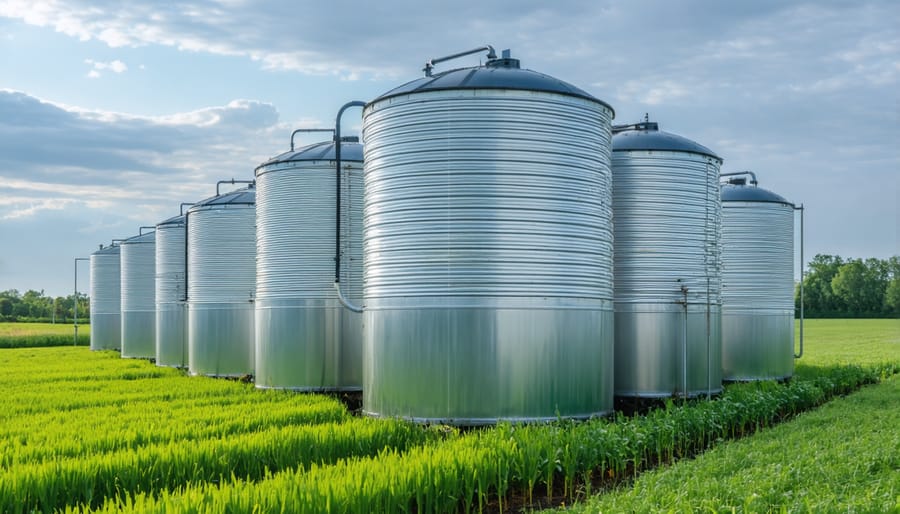
Storage options have also improved dramatically. While traditional above-ground tanks remain popular, underground cisterns offer several advantages: they maintain cooler water temperatures, preserve valuable surface space, and protect water from algae growth. Many farmers are now installing modular underground storage systems that can be expanded as needed.
Smart monitoring systems have revolutionized rainwater management. Digital sensors track water levels, quality, and usage patterns, while automated controls optimize distribution based on weather forecasts and crop needs. Some systems even integrate with smartphone apps, allowing farmers to monitor and adjust their water management remotely.
For smaller operations, simple yet effective solutions like rain gardens and swales help direct and store rainwater naturally in the landscape. These features not only capture water but also create beneficial microclimates and wildlife habitats.
Success story: Sarah Chen, an organic farmer in Oregon, installed a 10,000-gallon system that now provides 70% of her farm’s irrigation needs, saving thousands in water costs annually while building climate resilience.
Remember to check local regulations before installation, as some areas offer incentives for rainwater harvesting while others may have specific requirements or restrictions.
Soil Water Storage Enhancement
Enhancing soil water storage capacity is a game-changing strategy that helps farms become more resilient to weather fluctuations while reducing irrigation needs. By implementing specific techniques to improve soil health, farmers can create a natural water bank in their fields.
One of the most effective methods is incorporating organic matter through composting and cover cropping. These practices create a sponge-like soil structure that can hold up to 20 times its weight in water. Adding well-aged compost not only increases water retention but also feeds beneficial soil microorganisms that help maintain soil structure.
Biochar application is another innovative technique gaining popularity among organic farmers. This charcoal-like substance creates countless microscopic pockets in the soil that store both water and nutrients. Many farmers report success with a mixture of 10% biochar combined with compost before soil application.
Mulching plays a crucial role in water retention by reducing evaporation and regulating soil temperature. Natural mulch materials like straw, leaves, or wood chips create a protective layer that keeps moisture locked in the soil profile. For best results, apply a 2-3 inch layer of mulch around plants while keeping it away from stems to prevent rot.
No-till practices and minimal soil disturbance help maintain soil structure and natural water channels created by earthworms and plant roots. These biological highways allow water to penetrate deeper into the soil profile, creating reserves that plants can access during dry spells. Many successful CSA farmers combine these techniques with strategic crop selection, choosing plants that help build soil structure through their root systems.
The implementation of modern water management technologies represents a crucial step forward in advancing sustainable farming practices. These innovative solutions not only help farmers conserve our precious water resources but also contribute significantly to the overall health and productivity of agricultural operations.
By adopting smart irrigation systems, soil moisture sensors, and precision watering techniques, farmers can reduce their water consumption by up to 30-50% while maintaining or even improving crop yields. This efficiency translates into substantial cost savings and helps preserve local water tables for future generations.
The environmental benefits extend beyond water conservation. These technologies help prevent soil erosion, reduce nutrient runoff, and support beneficial soil microorganisms. Many farmers report improved crop quality and resilience to weather extremes after implementing these systems.
Looking ahead, water management technologies will play an increasingly vital role in addressing climate change challenges and ensuring food security. As more farmers embrace these solutions, we’re seeing a positive ripple effect throughout local communities – from healthier ecosystems to more sustainable food production.
For those considering implementing these technologies, the initial investment is often offset by long-term savings and improved crop outcomes. The future of farming lies in these smart, sustainable solutions that help us grow more with less while protecting our natural resources for generations to come.


