
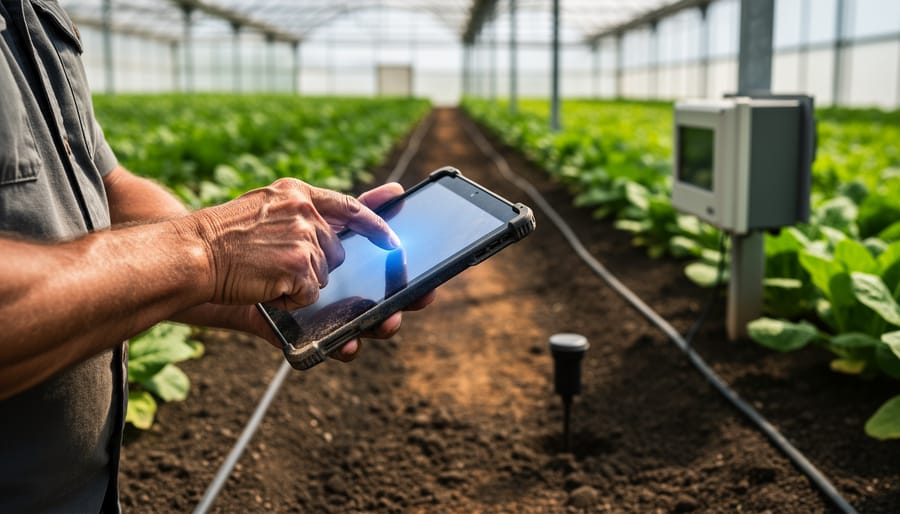
Your CSA farm’s online ordering system, customer database, and automated irrigation controls need protection just like your crops need fencing against deer. Modern farming operations increasingly depend on digital tools—from payment processors and email marketing platforms to soil sensors and climate monitoring apps—making cybersecurity as essential as crop rotation or pest management.
The eight cybersecurity domains provide a comprehensive framework for protecting digital assets on small-scale farms. Originally developed for large corporations, these domains translate surprisingly well to agricultural settings where a single data breach could expose customer payment information, delete years of planting records, or compromise automated growing systems. Think of them as different aspects of farm security: just as you protect your physical infrastructure through fences, locks, and insurance, you protect digital infrastructure through layered defenses.
Small farms face unique cybersecurity challenges. Unlike corporations with dedicated IT departments, most CSA operators manage technology alongside countless other responsibilities. You’re vulnerable to the same threats as larger operations—ransomware, phishing emails, stolen customer data—but with fewer resources to respond. A hacker doesn’t care whether you’re managing 5 acres or 500; they see an opportunity.
Understanding these eight domains empowers you to make informed decisions about farm technology without becoming a cybersecurity expert. Each domain addresses a specific aspect of digital protection, from controlling who accesses your systems to planning recovery after equipment failure. Together, they create a practical roadmap for securing your farm’s digital future while you focus on what matters most: growing healthy food for your community.
What Are the 8 Cybersecurity Domains?
If you’re running a Community Supported Agriculture operation, you might wonder what cybersecurity has to do with growing fresh, organic vegetables. The truth is, modern farms rely on digital tools more than ever before. From online payment systems and customer databases to automated irrigation controls and social media marketing, your farm’s digital infrastructure needs protection just like your crops need proper care.
The 8 cybersecurity domains originated from information security professionals who needed a comprehensive framework to protect sensitive data and systems. Think of these domains as eight different garden beds in your farm’s security garden—each one requires attention and specific care to keep your entire operation healthy and thriving.
These domains cover everything from securing your physical equipment to protecting customer information and responding to potential threats. For CSA operators, understanding these areas means safeguarding member payment details, protecting harvest planning data, and ensuring your farm management software stays reliable during critical growing seasons.
The framework might sound technical, but it’s surprisingly practical for farmers. Just as you rotate crops and maintain soil health using proven agricultural principles, these eight domains provide time-tested methods for keeping your digital operations secure. Whether you’re managing a small family farm or a larger cooperative, these guidelines help you protect the trust your community places in you while keeping your systems running smoothly season after season.
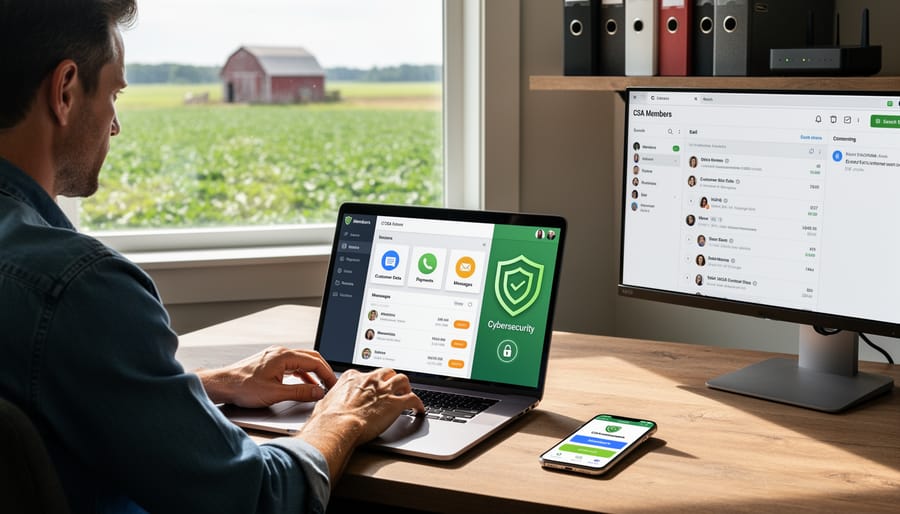
Security and Risk Management: Protecting Your Farm’s Foundation
Think of your farm’s digital foundation like the soil you tend—it needs protection to thrive. Security and risk management starts with knowing exactly what you’re protecting. Your CSA operation likely manages customer databases with names, addresses, and payment information, online payment processing systems, your website with product listings and blog content, and perhaps email marketing platforms. Each of these represents a digital asset that needs safeguarding.
Start by creating a simple inventory. List every system where customer information lives, from your farm management software to that spreadsheet you use for delivery routes. Next, assess your risks. What would happen if your customer database disappeared overnight? Could you fulfill orders without access to your digital records? Small farms face unique vulnerabilities—limited IT budgets, shared devices among staff, and often, one person managing everything.
Creating basic security policies doesn’t require a law degree. Begin with fundamentals: require strong passwords that mix letters, numbers, and symbols. Establish who can access what information—your harvest crew doesn’t need payment system access. Schedule regular backups of critical data, storing copies both online and on an external drive kept safely off-site.
Green Valley Farm in Vermont learned these lessons the hard way. In 2022, a ransomware attack locked their customer database right before spring share sign-ups. Thanks to weekly backups they’d started just months earlier, they restored operations within 48 hours. Owner Maria Chen now conducts quarterly security reviews and trains each team member on data protection. “We thought cybersecurity was for big corporations,” she shares. “Protecting our members’ trust became as important as protecting our crops from pests.”
Asset Security: Safeguarding Your Member Information
When you’re running a CSA operation, you’re collecting valuable information from your members—names, addresses, email contacts, and payment details. Think of this data like the seeds in your greenhouse: it needs proper protection and careful handling to maintain trust with your community.
Asset security starts with understanding what information you have and how sensitive it is. Member payment information requires the highest level of protection, while your weekly newsletter list might need less intensive security. Create a simple classification system—perhaps using labels like “public,” “member-only,” and “highly sensitive”—to organize your digital assets appropriately.
For payment processing, never store credit card numbers on your personal computer or spreadsheets. Instead, use reputable payment processors that handle this responsibility for you. These services are designed specifically to meet legal requirements and protect financial data, giving you peace of mind while you focus on growing food.
Store member contact lists in password-protected files, and limit access to only those team members who truly need it. Consider using encrypted cloud storage services rather than keeping everything on a single laptop that could be lost or stolen. Regular backups are essential—treat your digital records with the same care you’d give to your heirloom seed collection.
Remember that in most regions, you have legal obligations around personal data protection. These laws exist to protect your members’ privacy, and compliance builds the trust that makes your CSA community thrive. When members know their information is safe, they’re more likely to recommend your farm to friends and remain loyal subscribers season after season.
Security Architecture: Building Strong Digital Defenses
Think of your farm’s digital security like the physical barriers you use to protect your crops and livestock. Just as you wouldn’t leave your greenhouse unlocked or your chicken coop gate open, your digital infrastructure needs similar protection layers.
Security architecture is about building strong defenses around your farm’s technology systems. Start with your network setup—the digital equivalent of a perimeter fence. When you install wifi at your farm stand or farmers market booth, use strong, unique passwords and separate networks for business and guest access. Consider your public wifi like a viewing area where visitors can connect safely without accessing your private operations.
Your point-of-sale systems require special attention. These devices handle sensitive customer payment information, making them attractive targets. Always use encrypted connections (look for the padlock symbol in your browser), update software regularly, and never process payments over public wifi networks. Many small farms have experienced payment fraud simply because their systems weren’t properly secured.
For farms using IoT farm systems like automated irrigation or temperature monitors, create separate network segments. This prevents a compromised smart sensor from giving hackers access to your customer database—similar to how you’d separate different livestock areas to prevent disease spread.
Basic infrastructure protection includes using firewalls (digital gatekeepers that filter incoming traffic), regularly backing up your data to external drives, and positioning routers in secure locations. One successful organic farm owner compares her layered security approach to companion planting—each element supports and protects the others, creating a resilient ecosystem that’s harder for threats to penetrate.
Communication and Network Security: Keeping Your Connections Safe
Your farm’s digital communications are just as important as the locks on your barn. Whether you’re emailing CSA members about weekly harvest updates or coordinating with suppliers during the busy season, protecting these connections keeps your farm business running smoothly.
Start with secure email practices. Use strong, unique passwords for your farm email accounts and enable two-factor authentication whenever possible. When sending member information like payment details or addresses, consider using encrypted email services. During harvest season when you’re rushing between the field and your inbox, it’s tempting to check emails on public Wi-Fi at the farmers market—resist this urge or use a VPN to protect sensitive communications.
Social media has become essential for farm marketing, but it requires careful handling. When posting about your farm, avoid sharing details that reveal security vulnerabilities like vacation dates or exact locations of expensive equipment. Implement a secure social media marketing strategy by using separate business accounts, enabling privacy settings, and reviewing what information is publicly visible.
For sharing files with members—like recipe collections or farm newsletters—use reputable cloud services with built-in security features rather than emailing large attachments. Services like Google Drive or Dropbox offer password-protected sharing options.
One successful organic farmer shared how establishing a communication protocol during harvest season prevented a phishing attempt: “We created a rule that any payment changes must be verified by phone call. When a suspicious email arrived requesting new banking details, our team immediately caught it.”
Remember, protecting your digital communications protects your community’s trust and your farm’s reputation.
Identity and Access Management: Controlling Who Sees What
Think of Identity and Access Management as the key ring for your farm’s digital spaces. Just like you wouldn’t give everyone keys to your equipment shed, you need to control who accesses your farm’s online accounts and what they can do there.
Start with password basics. Create unique, strong passwords for each farm account using a password manager like LastPass or 1Password. These tools securely store your login information, so you’re not tempted to reuse the same password across multiple platforms. A good password combines letters, numbers, and symbols—think “RedTomato#2024Farm!” rather than “password123.”
Multi-factor authentication is your second line of defense. When you enable this feature on accounts like your CSA management platform, online store, or email, anyone trying to log in needs both your password and a second verification method, typically a code sent to your phone. Sarah Chen, who runs a 10-acre organic operation in Vermont, shared that adding multi-factor authentication stopped three unauthorized login attempts last season alone.
For team management, assign access based on actual job needs. Your volunteer helping with harvest doesn’t need administrative access to your accounting software. Create different permission levels—maybe your farm manager gets full access while seasonal helpers only see the harvest schedule.
Protect administrative accounts especially carefully. These master accounts control everything, so limit who has this access, never share these credentials, and review permissions quarterly as staff roles change. When someone leaves your operation, immediately remove their access to all farm systems.
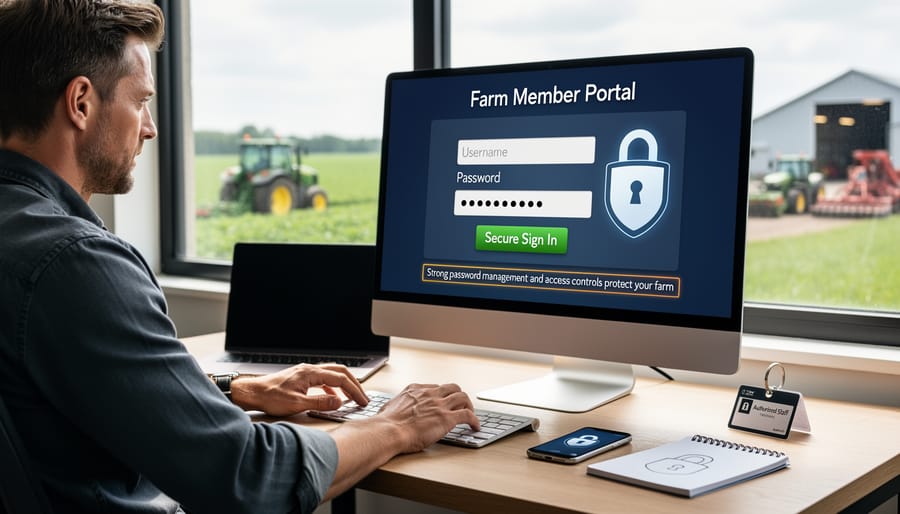
Security Assessment and Testing: Regular Check-Ups for Your Systems
Think of security testing like checking your greenhouse for pests – regular inspections prevent small problems from becoming catastrophic. For your CSA’s digital systems, you don’t need expensive consultants to conduct basic security check-ups.
Start with simple monthly audits you can perform yourself. Review who has access to your systems, check for software updates you might have missed, and verify that backups are running properly. Many farmers find Sunday evenings perfect for this quick 30-minute routine, much like planning the week’s harvest schedule.
Several free tools make security testing accessible. Password managers like Bitwarden help identify weak passwords across your systems. Google’s free Security Checkup reviews your account vulnerabilities. For your website, tools like Sucuri SiteCheck scan for malware and security issues without cost.
Create a seasonal security checklist aligned with your farm rhythm. Before spring planting season, update all passwords and review customer data access. Mid-summer, test your backup restoration process. Fall harvest time calls for reviewing payment processing security before your busiest sales period. Winter months are ideal for comprehensive system reviews and planning security improvements.
One Vermont CSA operator shares how quarterly security check-ups revealed an outdated plugin vulnerable to attacks, preventing potential customer data exposure. These regular inspections became as routine as maintaining their tractors, protecting both their digital presence and member trust.
Security Operations: Day-to-Day Protection Practices
Your farm’s digital security isn’t just about setting up protections and walking away—it requires daily attention, much like tending your crops. Establishing simple, consistent routines makes all the difference in catching threats before they become disasters.
Start each day with a quick 10-minute security check. Review overnight alerts from your farm management software, check for unusual login attempts, and scan email for suspicious messages before clicking anything. This morning ritual becomes second nature, like checking weather forecasts before heading to the fields.
Monitor your systems throughout the day for red flags: unexpected slowdowns, programs behaving strangely, or unfamiliar pop-ups. Trust your instincts—if something feels off, investigate immediately rather than waiting for a full-blown crisis.
Backup strategies are your insurance policy. Follow the 3-2-1 rule: maintain three copies of critical data (customer lists, financial records, crop planning documents), on two different types of storage, with one copy stored offsite. Automate daily backups during off-peak hours, and test restoration monthly to ensure backups actually work when needed.
Farmer Success Story: Maria Rodriguez of Sunrise Valley Farm implemented a simple daily checklist after a close call with ransomware. Her routine includes checking system logs, verifying backups completed successfully, and reviewing access permissions weekly. When a phishing attempt targeted her CSA coordinator, Maria’s monitoring caught the suspicious activity within hours, preventing data loss. “Five minutes daily protects years of customer relationships,” she says. Her proactive approach saved countless hours and maintained customer trust during a vulnerable moment.
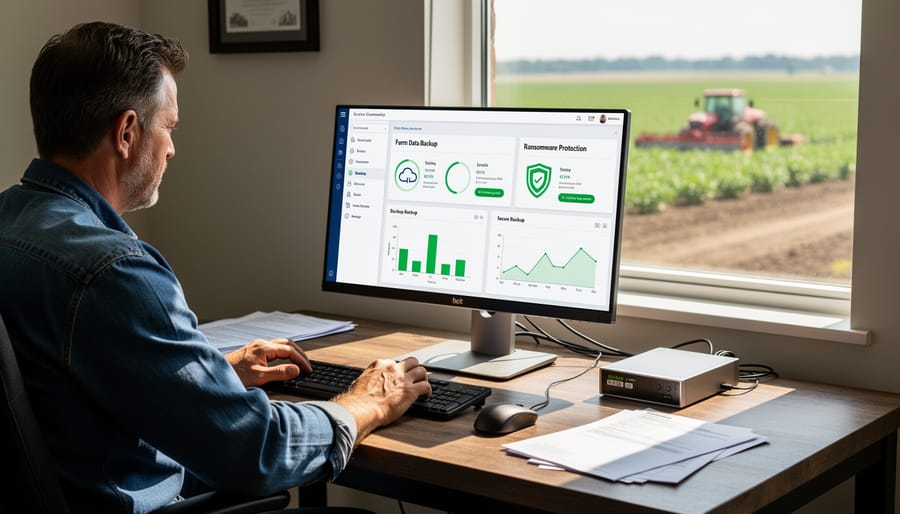
Software Development Security: Choosing and Using Farm Software Safely
Choosing the right farm software is like selecting seeds for your garden—quality matters from the start. When evaluating CSA management software, prioritize vendors who take security seriously.
Ask potential software providers key questions: Do they encrypt your data? How often do they release security updates? Where are your farm records stored, and who has access? Can you export your data if you switch systems? Reputable vendors will answer these confidently and provide documentation about their security practices.
Before adopting any third-party app or tool, research the company’s reputation. Read reviews from other farmers, check how long they’ve been in business, and verify they comply with privacy regulations. Avoid downloading apps from unofficial sources.
Keep all software updated regularly. Those update notifications aren’t just annoying—they often patch security vulnerabilities that hackers exploit. Enable automatic updates when possible.
Success story: Green Valley Farm switched to a vendor-supported platform after their homemade spreadsheet system became unwieldy. The farm manager now spends less time troubleshooting and more time connecting with members, knowing their customer data is professionally protected.
Remember, free software isn’t always the best deal if it compromises your farm’s security. Investing in reliable, secure tools protects both your business and your members’ trust.
Building Your Farm’s Cybersecurity Action Plan
Ready to strengthen your farm’s digital defenses? Start small and build momentum. First, assess where you are today by making a simple checklist of your current digital assets—from your customer database to your website login credentials. This inventory helps you prioritize what needs protection most urgently.
For small CSA operations, begin with quick wins that deliver immediate protection. Change default passwords on all devices, enable two-factor authentication on email accounts, and set up automatic backups for your customer database. These foundational steps cost nothing but time and dramatically reduce your vulnerability to common attacks.
Medium-sized farms might invest in password management software like Bitwarden (free version available) and create a basic incident response plan—essentially a one-page document outlining who to call if something goes wrong. The Cybersecurity and Infrastructure Security Agency offers free resources specifically designed for small businesses, including downloadable guides and security assessments.
Think of cybersecurity as similar to sustainable farming practices—both require ongoing attention, seasonal reviews, and continuous learning. Just as you wouldn’t skip soil testing or crop rotation, don’t skip monthly password updates or quarterly security reviews.
Connect with other CSA farmers through agricultural networks to share experiences and solutions. Many have faced similar challenges and discovered affordable tools that work for farm-scale operations. Consider scheduling a “digital health day” each season to review your security practices, update software, and train any team members on new protocols.
Remember, protecting your farm’s digital infrastructure protects your customers’ trust and your community’s food security. Start today, even if it’s just one small step forward.
Protecting your farm’s digital infrastructure isn’t just about technology—it’s about safeguarding the relationships and trust you’ve built with your community. As more CSA operations embrace digital local food systems, cybersecurity becomes an essential part of farm resilience, right alongside soil health and crop rotation.
The good news? You don’t need to tackle all eight domains at once. Start with the basics: create strong passwords, back up your member data regularly, and have honest conversations with your team about online safety. These small steps create a foundation that protects not just your business information, but also the personal details your members trust you with every season.
Consider the story of Green Valley Farm, which started by simply implementing two-factor authentication and regular software updates. Within six months, they’d prevented a phishing attack that could have compromised hundreds of member email addresses. Their commitment to digital security strengthened member confidence and became part of their farm’s reputation for reliability.
Remember, sustainable agriculture extends beyond organic practices and regenerative farming—it includes building systems that can withstand modern challenges. By taking practical steps to secure your digital operations, you’re investing in your farm’s future, protecting your community’s privacy, and contributing to a more resilient local food movement. Start small, stay consistent, and watch your digital security grow alongside your crops.
