
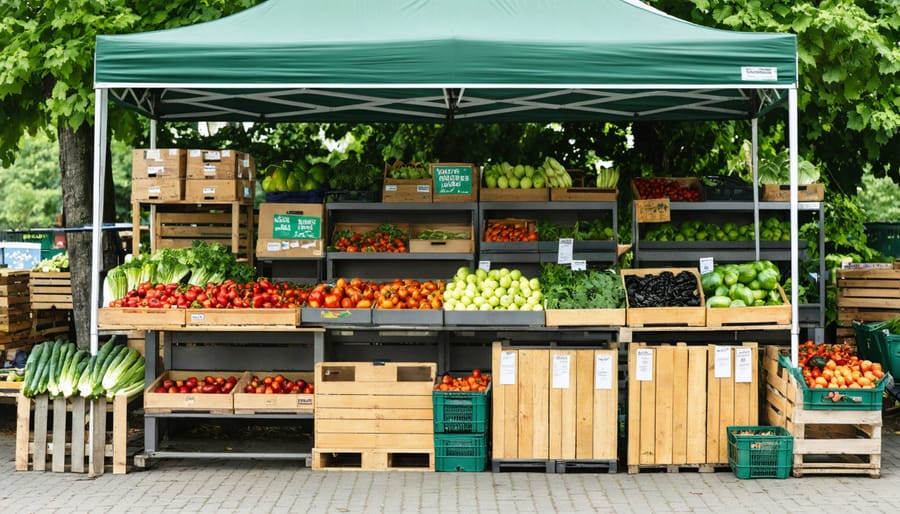
Transform your fresh produce passion into local farmers market success by mastering essential vendor requirements. Start with securing proper licensing, including health department permits, food handling certificates, and business registration – prerequisites that establish credibility and legal compliance. Next, invest in commercial-grade equipment meeting local health codes: approved display tables, certified scales, temperature-controlled storage, and weather-protective canopies. Finally, develop clear product labeling and pricing systems that detail growing practices, harvest dates, and organic certifications where applicable.
Farmers markets represent a $1.2 billion industry in North America, but only vendors who meet stringent quality and safety standards consistently thrive. Whether you’re a small-scale organic farmer or artisanal food producer, understanding and implementing these foundational requirements not only ensures compliance but builds lasting customer trust and sustainable market presence. Your journey begins with proper documentation, extends through operational excellence, and culminates in creating an authentic farm-to-table experience that resonates with today’s conscious consumers.
Basic Vendor Requirements and Documentation
Licenses and Permits
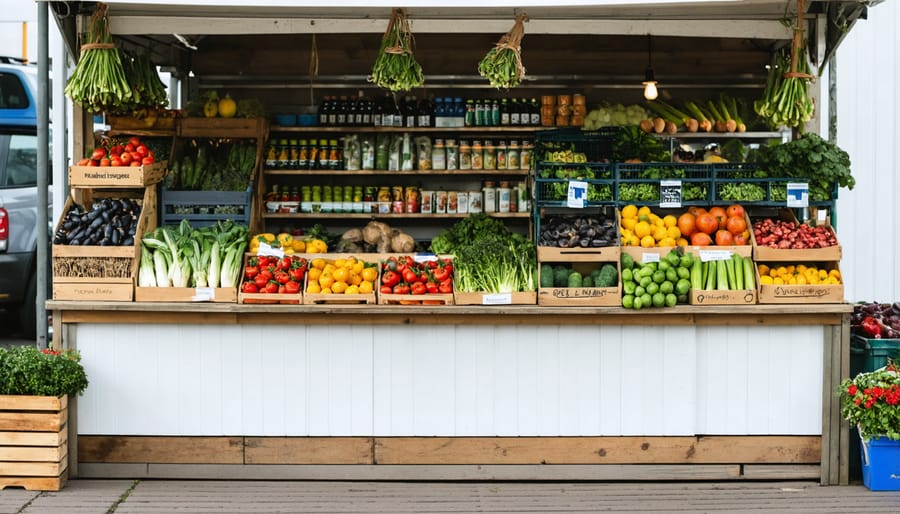
Before setting up your stand at a farmers market, you’ll need to secure several essential licenses and permits. Most markets require a basic business license from your city or county, which establishes you as a legitimate vendor. If you’re selling food products, you’ll also need a food handler’s permit and possibly a temporary food establishment permit from your local health department.
Cottage food operators should obtain specific certifications for home-based food production, while those selling prepared foods need commercial kitchen licenses. Many states require agricultural producers to obtain a certified producer’s certificate, verifying that you’re growing what you’re selling.
Special permits may be needed for specific products: egg handlers certificates for selling eggs, meat handler’s licenses for meat products, and wine-selling permits for vineyard products. Some markets also require proof of liability insurance before allowing you to sell.
Remember that permit requirements vary by location and market, so check with your local market manager and health department for specific requirements. Many markets offer guidance to help new vendors navigate the permitting process.
Insurance Coverage
Insurance coverage is a crucial requirement for vendors at most farmers markets. Typically, markets require vendors to carry general liability insurance with coverage ranging from $500,000 to $2 million. This insurance protects you against claims related to customer injuries, foodborne illnesses, or property damage that might occur during market operations.
Many markets require vendors to list them as “additional insured” on their policy. This extends your coverage to protect the market organization as well. For food vendors, product liability insurance is often mandatory, especially if you’re selling prepared foods or value-added products.
Some vendors opt to join farmers market associations that offer group insurance policies at discounted rates. These group policies can be more cost-effective than individual coverage. Keep in mind that different product types may require different levels of coverage – for instance, hot food vendors typically need higher coverage than those selling whole produce.
Remember to keep your insurance documentation current and readily available for market inspections. Most markets require proof of insurance before allowing vendors to participate in their first market day.
Product Standards and Quality Requirements
Fresh Produce Guidelines
Fresh produce must meet strict quality and safety standards to be sold at farmers markets. All fruits and vegetables should be properly cleaned, free from visible dirt, and displayed in clean containers. For certified organic produce, vendors must maintain current USDA organic certification and display their certification prominently at their stand.
Produce should be harvested at peak ripeness and sold within appropriate timeframes to ensure maximum freshness. Vendors must properly label items with pricing and clearly indicate whether products are conventionally grown or organic. Any produce with visible signs of decay, significant blemishes, or pest damage cannot be sold.
Many markets require vendors to grow their produce within a specific radius of the market location to maintain the “locally grown” standard. Keep detailed records of planting dates, harvest times, and cultivation methods for market management review. If you use any post-harvest treatments, these must be documented and comply with local food safety regulations.
Temperature-sensitive items like leafy greens should be stored in coolers or under appropriate shade structures. Consider investing in a pop-up tent with proper ventilation to protect your produce from direct sunlight. Remember to bring spray bottles for periodic misting of leafy vegetables to maintain freshness throughout market hours.
Success comes from maintaining consistent quality. Many successful vendors, like Sarah from Green Acres Farm, attribute their loyal customer base to their unwavering commitment to produce excellence and transparent farming practices.
Value-Added Products
Value-added products at farmers markets must meet specific requirements to ensure consumer safety and compliance with local regulations. These items include jams, jellies, baked goods, pickles, sauces, and other processed foods that transform raw ingredients into ready-to-eat products.
All processed foods must be prepared in a certified commercial kitchen or licensed facility that meets health department standards. Home kitchens typically don’t qualify unless they’ve received specific certification under cottage food laws. Vendors must maintain proper documentation of their kitchen certification and food handler permits.
Products require clear labeling that includes:
– Product name and description
– Complete list of ingredients
– Net weight or volume
– Producer’s name and contact information
– Production date
– Any allergen warnings
Temperature control is crucial for certain value-added products. Items requiring refrigeration must be stored at 41°F or below, while hot foods should maintain a temperature of 135°F or higher. Vendors need appropriate equipment to maintain these temperatures throughout market hours.
Keep detailed production records and maintain copies of all relevant permits and certifications at your market stand. Many markets require samples of new products to be approved by market management before they can be sold. Some states have specific restrictions on certain types of value-added products, so always check local regulations before developing new items for sale.
Remember to practice proper food handling and sanitization procedures during preparation, transportation, and display of your products.
Display and Equipment Standards

Booth Setup Requirements
A professional and weather-resistant 10’x10′ pop-up tent is essential for protecting your products and creating a welcoming space. Choose a white or light-colored tent to ensure optimal visibility and temperature control. Secure your tent with appropriate weights (minimum 25 pounds per leg) – never rely on stakes alone, as many market surfaces are paved.
For product display, invest in sturdy folding tables that can support your merchandise weight. Two 6-foot tables typically provide adequate space for most vendors. Ensure tables are level and stable, using adjustable legs for uneven surfaces. Cover tables with clean, wrinkle-free tablecloths that extend to the ground, creating storage space underneath.
Learn effective market display strategies by incorporating varying heights and depths in your setup. Use wooden crates, baskets, or tiered displays to create visual interest and maximize space. Keep a supply of bags, paper products, and sanitizing materials readily available.
Essential equipment includes a digital scale for precise weighing, clear price signs, and a weather-proof cash box or point-of-sale system. Consider investing in battery-powered lighting for early morning setup or evening markets.
Food Safety Equipment
Proper food safety equipment is essential for protecting both vendors and customers at farmers markets. For temperature-sensitive items, you’ll need reliable coolers or refrigeration units capable of maintaining foods at 41°F or below. Consider investing in digital thermometers to monitor temperatures throughout the day, especially during warm weather.
Food handling equipment should include separate cutting boards and utensils for different types of products, particularly when handling raw and ready-to-eat foods. Keep multiple pairs of disposable gloves handy and change them frequently. Hand-washing stations are mandatory for most markets, so pack a portable sink with hot water, soap, and paper towels.
For display purposes, use food-grade containers and protective covers to shield products from environmental contaminants. Elevated platforms or tables should keep all food items at least six inches off the ground. Don’t forget cleaning supplies like sanitizing solution, spray bottles, and clean cloths for maintaining a hygienic workspace.
Remember to bring extra equipment as backup – having spare thermometers and additional storage containers can save the day if something breaks or malfunctions during market hours.
Market Participation Rules
Successful participation in farmers markets requires adherence to specific operational guidelines and conduct rules that ensure a positive experience for both vendors and customers. Most markets require vendors to arrive at least one hour before opening to set up their displays and be ready for the first customers. Late arrivals may risk losing their designated spots or facing penalties.
Vendors must maintain a professional and friendly demeanor, contributing to positive market community engagement throughout the day. This includes keeping your stall area clean, displaying prices clearly, and handling customer inquiries with patience and knowledge about your products.
Your display should be neat and organized, with products properly labeled and prices visible. Many markets require the use of tent weights (typically 25 pounds per corner) for safety, regardless of weather conditions. Tables should be sturdy and covered with clean tablecloths, while produce must be displayed at least six inches off the ground.
Most markets operate rain or shine, so vendors need reliable weather protection for their products and display areas. If you need to leave early or can’t attend a market day, you must notify market management according to their specified timeframe, usually at least 24-48 hours in advance.
Sales reporting is often mandatory, with many markets requiring end-of-day sales totals for record-keeping and market analysis. Some markets also expect vendors to participate in sustainability initiatives, such as proper waste disposal and recycling programs, helping maintain the market’s environmental standards.
Embarking on your farmers market journey is an exciting venture that requires careful preparation and attention to detail. By ensuring you have the proper licenses, certifications, and insurance in place, you’ll be well-positioned to start selling your products with confidence. Remember to thoroughly review your local market’s specific requirements, prepare your display equipment, and maintain high product quality standards. Consider joining local farming organizations or connecting with experienced vendors for additional guidance and support. When you’re ready to take the next step, reach out to your chosen market’s management team to begin the application process. With proper planning and dedication to meeting these requirements, you’ll be well on your way to becoming a successful farmers market vendor, sharing your passion for local food with your community.
