How CSA Farms Can Navigate FMCSA Regulations Without Losing Their Minds
 darrell on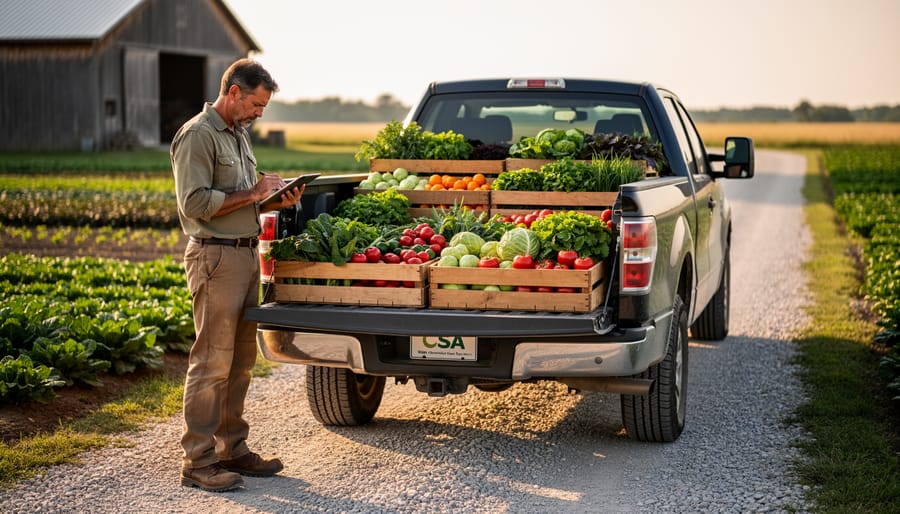
Determine whether your CSA farm needs DOT registration by calculating if your delivery vehicles exceed 10,001 pounds gross vehicle weight, cross state lines for farm deliveries, or transport nine or more passengers including the driver. Most small-scale CSA operations using pickup trucks and cargo vans fall well below these thresholds and remain exempt from federal motor carrier regulations.
Check your agricultural exemption eligibility first, as farms transporting their own products within 150 miles typically qualify for relief from commercial driver’s license requirements and some FMCSA regulations. This exemption has saved countless small farms from burdensome compliance costs while maintaining safe delivery practices for their weekly produce boxes.
Document your delivery operations now, even if you’re exempt, by keeping simple records of vehicle weights, delivery routes, and driver information. This preparation proves invaluable if your operation grows beyond exemption limits or if you face questions during roadside inspections. Many CSA farmers have avoided costly violations simply by maintaining basic transportation logs alongside their FSMA compliance requirements.
The U.S. Department of Transportation’s Federal Motor Carrier Safety Administration exists to ensure road safety, but understanding where small farms fit within this regulatory framework prevents unnecessary stress and expense. Unlike large commercial trucking operations, most community-supported agriculture programs operate under different rules designed specifically for agricultural enterprises. Your farm’s transportation compliance journey starts with knowing which category applies to your unique delivery model, then implementing only the requirements that genuinely affect your operation.
What DOT and FMCSA Actually Mean for Your CSA Delivery Routes
If you’re running a CSA farm and delivering fresh produce to your members, you might be wondering when the U.S. Department of Transportation (DOT) and Federal Motor Carrier Safety Administration (FMCSA) regulations come into play. Let’s break this down in simple terms.
The DOT is the federal agency responsible for ensuring safety across all transportation systems in the United States. Within the DOT, the FMCSA specifically focuses on commercial motor vehicle safety, setting rules for trucks and drivers who transport goods across state lines or operate larger vehicles. These regulations exist primarily to keep our roads safe and prevent accidents involving heavy commercial trucks.
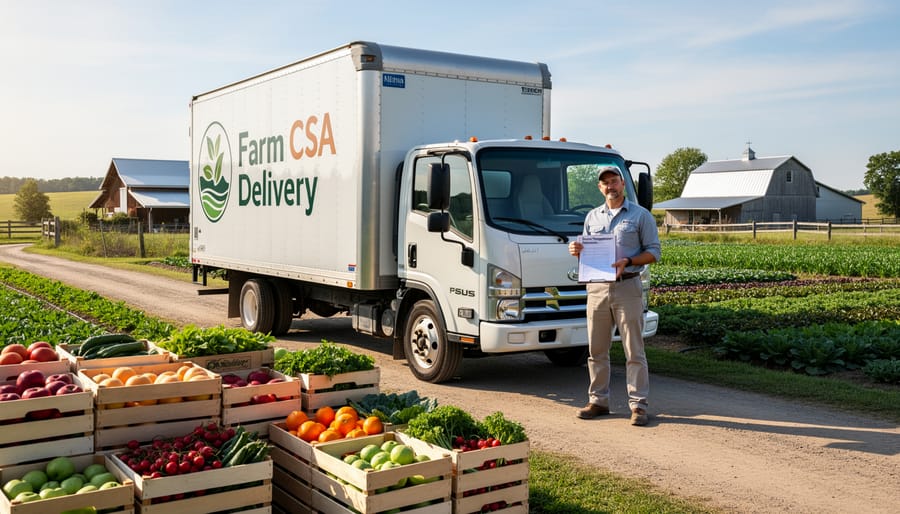
Here’s where it gets relevant for CSA farms: the FMCSA’s jurisdiction typically kicks in when you’re operating a commercial motor vehicle that weighs over 10,001 pounds or when you’re crossing state lines for commercial purposes. For most small-scale CSA operations, you’re likely in the clear if you’re making local deliveries in a pickup truck or cargo van.
Let’s look at real-world scenarios. Sarah runs a 50-member CSA in Vermont and delivers produce in her half-ton pickup truck within a 25-mile radius. She doesn’t fall under FMCSA regulations. However, Tom’s 200-member CSA in Pennsylvania uses a box truck that weighs 12,000 pounds to deliver to multiple drop-off points across two counties. Tom needs to pay attention to DOT requirements.
The key factors determining whether you need to comply include your vehicle’s weight rating, whether you cross state lines, and the nature of your operation. Many CSA farmers find they’re exempt because they use smaller vehicles and operate entirely within their state. Understanding these basics helps you determine your obligations without unnecessary worry, allowing you to focus on what you do best: growing amazing food for your community.
When Your Farm Truck Needs to Play by Federal Rules
The Weight and Distance Thresholds That Matter
Understanding when federal regulations apply to your CSA farm deliveries comes down to two key numbers that are surprisingly straightforward. If your vehicle has a Gross Vehicle Weight Rating (GVWR) of 10,001 pounds or more, you’re entering federal oversight territory. This includes the weight of your truck plus its maximum cargo capacity, not just what you’re actually hauling on any given day.
The second trigger is crossing state lines with your fresh produce. Even if you’re driving a smaller vehicle under that 10,001-pound threshold, transporting goods across state borders for commercial purposes brings you under FMCSA jurisdiction. For many CSA farmers, this is great news because most operations stay within their home state, naturally avoiding this particular requirement.
Here’s a practical example: Sarah, a Vermont farmer, runs a thriving CSA serving 75 families. She uses a three-quarter-ton pickup truck with a GVWR of 9,900 pounds and delivers exclusively within Vermont. She doesn’t meet either threshold, so federal regulations don’t apply to her operation. However, when she briefly considered expanding to neighboring New Hampshire, she realized that crossing state lines would change everything, prompting her to carefully evaluate whether the expansion made regulatory and financial sense for her farm’s sustainable growth model.
Agriculture Exemptions You Should Know About
Good news for CSA farmers: several exemptions might spare you from certain FMCSA regulations, making your delivery operations much simpler. Understanding these exemptions can save you time, money, and administrative headaches.
The agricultural commodity exemption is your first friend here. If you’re transporting farm products like fresh vegetables, fruits, or flowers from the field to your first point of market sale, you’re exempt from some Hours of Service regulations during planting and harvesting seasons. This means during those busy weeks when you’re rushing to get fresh produce to your members, you have more flexibility in your delivery schedules.
The 150 air-mile radius rule offers another practical exemption. If your delivery routes stay within 150 air miles of your farm and you return to your starting point within the same day, you’re exempt from keeping detailed logbooks. For most CSA operations delivering locally, this radius covers your entire service area comfortably. You’ll simply need to maintain time records showing your start and end times.
Many small-scale CSA farmers also benefit from vehicle weight exemptions. If your delivery truck has a gross vehicle weight rating under 26,001 pounds, you won’t need a commercial driver’s license. That pickup truck or small box truck serving your local community likely falls well below this threshold.
Farmer Sarah Martinez from Vermont shares her experience: “Learning about the 150 air-mile exemption was liberating. Our delivery routes cover three counties, but we’re well within the radius, so our recordkeeping stays simple and manageable.”
The CSA Score System: What It Is and Why It Matters
If you’re a CSA farmer, you might feel confused when hearing about “CSA” in a transportation context. Let’s clear that up right away. While you know CSA as Community Supported Agriculture, the Federal Motor Carrier Safety Administration uses CSA to mean Compliance, Safety, Accountability. These are two completely different things, but if you’re delivering produce to your members, the FMCSA’s CSA program might actually apply to your farm operation.
The Compliance, Safety, Accountability program is the FMCSA’s method for monitoring and improving commercial motor vehicle safety. Think of it as a report card for drivers and carriers. The system tracks safety-related violations through roadside inspections, crash reports, and investigations. These violations are organized into seven categories called BASICs, which include unsafe driving, hours-of-service compliance, vehicle maintenance, and driver fitness.
Here’s why this matters for your farm: if you’re operating vehicles that meet certain weight requirements or crossing state lines with your deliveries, you’re considered a motor carrier. The CSA scoring system assigns points for violations, and high scores can trigger FMCSA interventions, warnings, or even impact your ability to operate.
For small-scale farmers like Sarah, who runs a 50-member CSA in Vermont, understanding this system prevented major headaches. She discovered that her farm’s delivery van fell under federal regulations when she expanded to neighboring states. By learning about CSA scores early, she implemented simple maintenance logs and driver training, keeping her operation compliant and her scores low.
The good news? Many small farm operations qualify for exemptions or operate below the thresholds that trigger extensive requirements. Understanding the CSA scoring system helps you determine where your operation stands and what steps, if any, you need to take. It’s about working smarter, not harder, to keep your sustainable farming business running smoothly while staying on the right side of regulations.
Essential Compliance Steps for CSA Delivery Operations
Getting Your DOT Number and MC Authority
If your CSA operation requires DOT and MC numbers, the registration process is straightforward but requires attention to detail. You’ll need a DOT number if you operate commercial vehicles that cross state lines, weigh over 10,001 pounds, or transport more than eight passengers for compensation. The MC Authority is specifically required for interstate commerce involving goods for hire.
Start by visiting the FMCSA’s online registration system. You’ll need your business information, vehicle details, insurance documentation, and a designated process agent for each state where you operate. The DOT number is free and issued immediately, but MC Authority requires a filing fee and typically takes several weeks for approval.
Many small-scale CSA farmers find they qualify for exemptions, particularly if they stay within a 150-mile radius and operate vehicles under certain weight limits. Sarah Chen, who runs a thriving CSA in Oregon, discovered she didn’t need full authority because her deliveries stayed local and her vehicle remained under 10,000 pounds. However, she still registered voluntarily for the credibility it provided customers.
Keep copies of your registration certificates in each delivery vehicle, along with proper insurance documentation. This small step protects your operation during roadside inspections and demonstrates your commitment to safety standards.
Driver Requirements and Record Keeping
Understanding who can drive your CSA delivery vehicle starts with knowing the basic qualifications. Any driver operating a commercial motor vehicle must be at least 21 years old for interstate commerce (crossing state lines) or 18 for intrastate operations within your state. They need a valid driver’s license appropriate for the vehicle type, and for most small farm operations using vehicles under 26,001 pounds, a regular driver’s license suffices rather than a commercial driver’s license (CDL).
Medical certification requirements depend on your vehicle size and operation scope. Drivers of vehicles over 10,001 pounds engaged in interstate commerce need a Medical Examiner’s Certificate, obtained through a DOT physical exam conducted by a certified medical examiner. This exam checks vision, hearing, blood pressure, and overall physical capability to safely operate a vehicle. The certification typically lasts two years, though some conditions may require more frequent renewals.
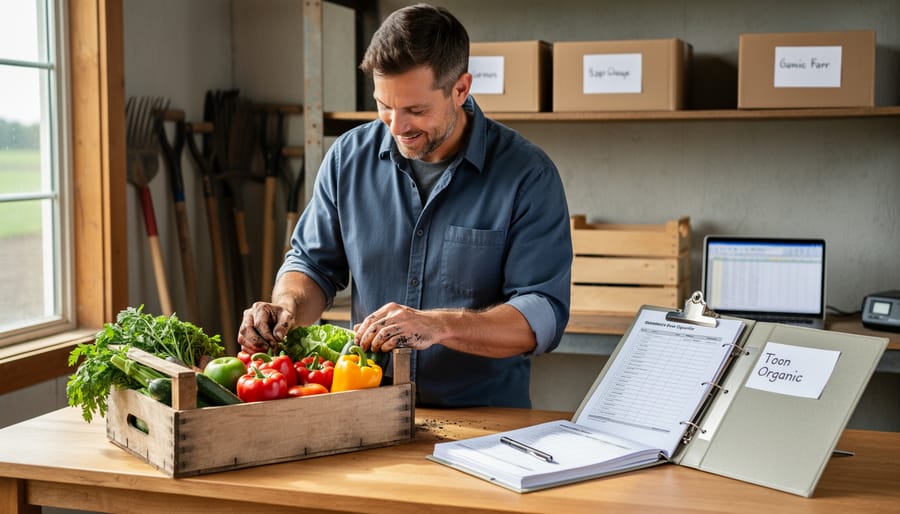
For record-keeping, simplicity works best for small farms. Maintain a driver qualification file for each person behind the wheel, including a copy of their license, medical certificate (if required), and annual driving record check. Understanding driver classification requirements helps ensure you’re properly documenting employees versus independent contractors.
Green Valley Farm in Vermont keeps everything in labeled folders, one per driver, stored in a fireproof file cabinet. They set calendar reminders for medical certificate renewals and annual motor vehicle record checks. This straightforward system has passed multiple compliance reviews while requiring minimal time investment, proving that effective record-keeping doesn’t need fancy software or complicated processes.
Vehicle Inspections and Maintenance Made Simple
Good news for CSA farmers: vehicle inspections don’t have to mean mountains of paperwork. The FMCSA requires a daily pre-trip inspection where drivers check essential safety items like brakes, lights, tires, and steering. A simple checklist works perfectly, and many farmers laminate a one-page form they keep in their delivery vehicle. It takes just 5-10 minutes before each route.
Your farm vehicle also needs an annual inspection by a qualified mechanic, who’ll provide a sticker for your windshield. Keep the inspection report in your vehicle, and you’re covered. Think of it as your regular farm equipment maintenance, just documented.
For maintenance logs, a basic notebook recording oil changes, tire rotations, and repairs satisfies regulations. Some farmers use smartphone apps to snap photos of receipts and maintenance work, creating a digital trail without filing cabinets.
One Oregon CSA farmer shares her approach: “I treat our delivery van like our tractor. Regular care, simple records, nothing fancy. It’s actually helped us catch small problems before they become expensive repairs.” This practical mindset keeps vehicles road-ready while meeting federal standards, protecting both your farm’s reputation and your community’s safety.
Hours of Service Rules for Farm Deliveries
The FMCSA sets specific limits on how many hours drivers can spend behind the wheel to ensure safety on our roads. Generally, commercial drivers cannot drive more than 11 hours after 10 consecutive hours off duty, and their total workday is capped at 14 hours. However, here’s good news for CSA farmers: agricultural exemptions often apply during planting and harvesting seasons, typically within a 150-mile radius from your farm. These exemptions recognize the unique, seasonal nature of farming operations.
Many small-scale CSA operations delivering fresh produce directly to customers may qualify for these exemptions, especially when transporting goods from farm to local drop-off points. It’s important to document your delivery routes and understand which months qualify as your harvest season. Keep detailed logs even if you’re exempt, as this protects you during roadside inspections. Remember, these rules exist to keep everyone safe, including you and your customers who depend on those farm-fresh deliveries of organic vegetables and fruits each week.
Real Stories from CSA Farmers Who’ve Figured It Out
Meet Sarah Chen from Green Valley Farm in Vermont, who discovered she needed FMCSA compliance after expanding her CSA delivery routes across state lines. Initially overwhelmed by the prospect of DOT regulations, Sarah found creative solutions that worked for her 50-member operation. “I thought compliance meant giving up our personal touch,” she shares. “Instead, I learned the agricultural exemption applied to most of our local deliveries within 150 miles.”
Sarah’s biggest challenge came when tracking vehicle maintenance records. Her solution? A simple spreadsheet system and setting calendar reminders for routine inspections. She invested in basic driver training through her local extension office, which cost less than $200 and covered both safety protocols and record-keeping basics.
Over in Oregon, Marcus Johnson runs Sunshine Acres, a certified organic farm delivering to 75 CSA members. He faced DOT requirements when his delivery van exceeded the weight threshold. “The medical card requirement seemed daunting at first,” Marcus explains, “but my regular doctor could perform the exam during my annual checkup for minimal extra cost.”
Marcus recommends joining your state’s farming association for group resources and shared compliance tools. He also suggests coordinating with neighboring farms to split costs on safety equipment and training materials.
Both farmers emphasize starting with the basics: understanding which regulations actually apply to your operation, maintaining simple but consistent records, and not assuming the worst. They’ve found that compliance doesn’t conflict with their community-focused values or sustainable practices, including accepting SNAP benefits and other accessibility programs.
Their advice? Take it one step at a time, reach out to your local USDA office for guidance, and remember that safety regulations ultimately protect both your team and the communities you serve.
Staying Compliant Without Breaking Your Budget
Meeting FMCSA requirements doesn’t have to drain your farm’s resources. Start by accessing the wealth of free educational materials available directly from the FMCSA website, including webinars, compliance guides, and downloadable checklists specifically designed for small businesses. Many state departments of agriculture also offer workshops tailored to farm operations navigating transportation rules.
Consider joining or forming a local farm cooperative to share compliance costs. Several CSA operations have successfully pooled resources to hire a part-time fleet manager or split the expense of vehicle maintenance tracking software. This collaborative approach mirrors the community spirit that already drives CSA farming while making regulatory requirements more manageable.
Affordable technology solutions can simplify your recordkeeping dramatically. Basic apps like Google Sheets or free vehicle maintenance trackers help you document driver logs, vehicle inspections, and maintenance records without purchasing expensive fleet management systems. Some farmers have found success using smartphone apps that cost less than twenty dollars monthly to handle driver hour tracking and electronic logging requirements.
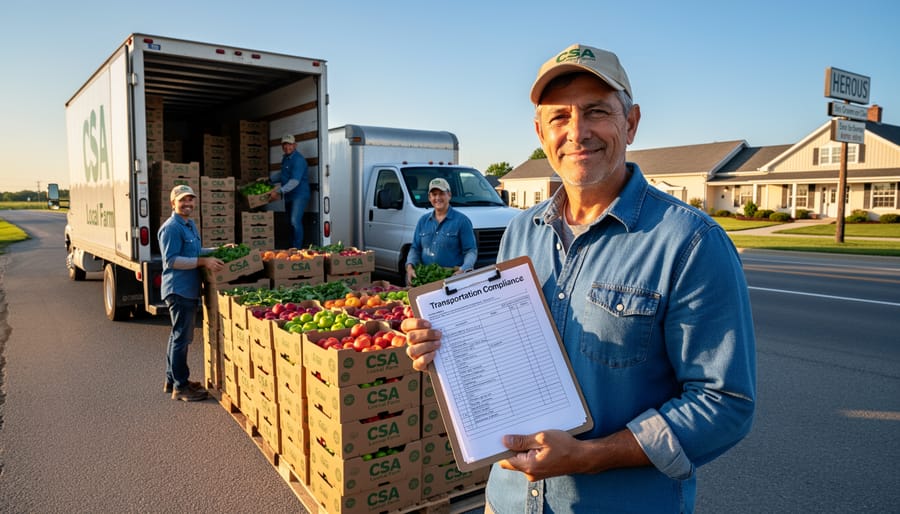
Sarah Chen, who runs Green Valley Farm in Wisconsin, discovered that investing in one comprehensive compliance binder and dedicating thirty minutes weekly to updating records kept her operation audit-ready without stress. She notes that staying organized with transportation documentation felt natural after mastering food safety regulations, using similar systematic approaches.
Remember that prevention costs less than penalties. Regular vehicle maintenance not only ensures compliance but prevents costly breakdowns during critical delivery windows, protecting both your budget and customer relationships.
Navigating FMCSA regulations might seem daunting at first, but compliance is entirely manageable for CSA farms with proper planning and understanding. Think of these requirements as protective measures that safeguard not just your business, but also your dedicated customers who rely on your fresh, organic produce deliveries. By maintaining safe vehicles, properly trained drivers, and accurate records, you’re demonstrating the same commitment to quality and responsibility that defines your farming practices.
Remember, compliance works hand-in-hand with other agricultural regulations like EPA compliance, creating a comprehensive framework that supports legitimate, professional farm operations. Many successful CSA farmers have integrated these practices seamlessly into their routines, often discovering that organized record-keeping and vehicle maintenance actually improve operational efficiency.
Start small by assessing your current delivery operations, identifying applicable exemptions, and implementing one requirement at a time. Your passion for sustainable agriculture and connecting people with wholesome food doesn’t have to compromise on safety or legality. With proactive planning and the right resources, you can continue growing nutritious food, nurturing community relationships, and operating your farm confidently within federal guidelines. Your commitment to feeding your community sustainably is valuable work worth protecting through proper compliance.