Category Archives

2 Articles

SNAP vs. WIC: How Your CSA Can Accept Both (And Stay Compliant)

Posted by darrell on
0
Policy, Law & Certification
SNAP vs. WIC: How Your CSA Can Accept Both (And Stay Compliant)

**Compare your farm’s income eligibility requirements first:** SNAP participants must earn below 130% of the federal poverty line, while WIC serves pregnant women, new mothers, and children under five at or below 185% of poverty—meaning your CSA could reach different community members through each program.

**Evaluate your operational capacity before committing:** SNAP requires point-of-sale equipment and Electronic Benefit Transfer (EBT) processing capabilities, allowing participants to purchase any eligible food items from your CSA. WIC operates through voucher systems with pre-approved food packages, typically fruits and vegetables, requiring less technology but more paperwork and state agency coordination.

**Calculate the financial impact on your cash flow:** SNAP benefits transfer directly to your account within 1-3 business days after each transaction, providing quick payment turnaround. WIC reimbursements can take 30-60 days depending on your state’s processing system, requiring stronger cash reserves to maintain operations while awaiting payment.

**Assess your community’s needs through local partnerships:** Contact your county health department and social services office to understand which program serves more families in your area. Many successful CSA farmers start with one program, master its requirements, then expand to the second—reducing the learning curve and compliance risks while building relationships with program administrators who become valuable resources.

Both programs transform how low-income families access fresh, locally-grown produce while providing CSA farms with stable revenue streams and expanded customer bases. Understanding these fundamental differences helps you make strategic decisions that align with your farm’s mission and operational reality.

Understanding SNAP and WIC: The Key Differences

What Is SNAP (Supplemental Nutrition Assistance Program)?

SNAP, also known as food stamps, is the nation’s largest nutrition assistance program, helping millions of families purchase healthy food each month. Participants receive benefits loaded onto an Electronic Benefits Transfer (EBT) card, which works like a debit card at approved retailers, including many CSA farms and farmers markets.

The program serves low-income individuals and families who meet specific income guidelines, typically those earning up to 130% of the federal poverty level. Benefits can be used to purchase a wide variety of foods, including fresh fruits, vegetables, meat, dairy products, bread, cereals, and seeds or plants that produce food—making it perfect for supporting local, organic produce purchases.

For CSA farmers, accepting SNAP opens your farm to a broader customer base while helping community members access nutritious, locally-grown food. Many successful farmers have found that participating in SNAP not only increases their customer reach but also strengthens their connection to the community. The program’s flexibility allows recipients to use benefits for CSA shares, creating a win-win situation where families gain access to fresh, sustainable produce while supporting small-scale organic farming operations in their area.

What Is WIC (Women, Infants, and Children)?

WIC (Women, Infants, and Children) is a federal nutrition program that takes a more targeted approach than SNAP, focusing specifically on pregnant women, new mothers, infants, and children under five who face nutritional risk. Unlike SNAP’s broader assistance model, WIC provides participants with Cash Value Vouchers (CVV) that can be redeemed for specific food categories designed to support healthy development during critical growth periods.

The program covers nutrient-dense foods including fresh fruits and vegetables, whole grains, dairy products, eggs, beans, peanut butter, and infant formula. For CSA farmers, this presents a wonderful opportunity to connect families with locally grown organic produce during their most nutritionally important years. The CVV system allows participants to choose their own fresh produce, making farmers markets and farm stands valuable community resources.

What makes WIC particularly special for sustainable agriculture advocates is its emphasis on whole foods and fresh produce. Many WIC families are discovering the benefits of seasonal, locally grown vegetables through their vouchers, creating meaningful connections between young families and their local farming community. This early exposure to fresh, organic produce helps establish healthy eating patterns that can last a lifetime.

Side-by-Side Comparison for CSA Farmers

Here’s a quick reference to help you navigate the key differences between SNAP and WIC at your CSA:

**Eligibility**: SNAP serves low-income individuals and families of all ages, while WIC specifically supports pregnant women, new mothers, and children under five who meet nutritional risk criteria.

**Transaction Methods**: SNAP customers use EBT cards like debit cards at your farm stand. WIC participants present paper vouchers or eWIC cards with pre-approved items listed.

**Food Restrictions**: SNAP allows customers to purchase any produce you offer. WIC limits purchases to specific fruits and vegetables on their approved list, with set dollar amounts per voucher.

**Reimbursement**: SNAP funds transfer directly to your account within 1-2 business days. WIC reimbursement requires submitting vouchers to your state agency, typically processing within 2-4 weeks.

Both programs expand access to fresh, organic produce for families who need it most, creating meaningful community connections while supporting your farm’s financial sustainability.

Why These Programs Matter for Your CSA

Mother and child shopping for fresh vegetables at farmers market
SNAP and WIC programs help families access fresh, locally grown produce through CSA programs and farmers markets.

Expanding Access to Fresh, Local Produce

Both SNAP and WIC serve as powerful bridges connecting low-income families with fresh, locally grown produce from CSA farms. Through SNAP benefits, families can purchase CSA shares and seasonal vegetables directly from farmers’ markets, giving them access to organic options that might otherwise be out of reach financially. Many CSA operators have discovered creative ways to make their programs SNAP-friendly by installing point-of-sale systems or offering voucher programs.

WIC takes a slightly different approach through its Farmers’ Market Nutrition Program (FMNP), providing specific vouchers that participants can redeem for fresh fruits and vegetables at approved locations. This creates wonderful opportunities for CSA farms to participate in local farmers’ markets and build relationships with WIC families.

The beauty of both programs lies in their potential to transform food access. One Minnesota CSA farmer shared how accepting SNAP doubled their customer base while introducing dozens of families to organic produce for the first time. These programs don’t just provide food assistance—they create lasting connections between sustainable farms and communities, supporting local agriculture while nourishing families with nutrient-dense, chemical-free produce grown right in their neighborhoods.

Growing Your Customer Base and Revenue

Accepting SNAP and WIC benefits opens your CSA to entirely new customer segments who are actively seeking fresh, nutritious produce. Many families who qualify for these programs prioritize quality food when given access, and your organic offerings become an attractive option. Studies show that farms accepting nutrition assistance see a 15-30% increase in their customer base within the first year.

Beyond the direct revenue boost, there’s a powerful ripple effect. When you make your CSA accessible to SNAP and WIC recipients, you’re building community goodwill that translates into word-of-mouth marketing and positive local press coverage. One Massachusetts farmer shared how accepting these programs led to partnerships with community health centers and nutrition educators, creating a steady referral stream.

The financial benefits are tangible too. Government benefits provide reliable, guaranteed payments, reducing the risk of bounced checks or payment delays. Plus, many states offer grants and reimbursements to help offset administrative costs associated with processing these benefits. You’re not just growing your revenue—you’re strengthening your farm’s role as a community food source while contributing to local food security.

Regulatory Compliance for SNAP/EBT at Your CSA

Becoming an Authorized SNAP Retailer

Ready to accept SNAP benefits at your CSA? The process starts with submitting an application through the USDA Food and Nutrition Service online portal or by mail. You’ll need to provide basic business information, including your tax ID number, proof of business legitimacy, and details about your product inventory.

To qualify, your farm must meet specific criteria: you’ll need to offer a variety of staple foods (think vegetables, fruits, and potentially bread or dairy if you partner with other producers), maintain a permanent location or regular market presence, and demonstrate stable operations. The USDA typically processes applications within 45 days.

Here’s a helpful tip: many successful CSA farmers bundle their SNAP authorization with their existing food safety compliance practices, creating streamlined systems that work for both programs. You’ll also need equipment to process EBT cards—either a standalone terminal or a mobile reader compatible with SNAP transactions.

Once approved, you’re required to maintain accurate records, display the SNAP retailer sign prominently, and follow program regulations regarding eligible foods. Many CSAs find that accepting SNAP opens doors to new community members while supporting food access initiatives that align perfectly with sustainable agriculture values.

Equipment and Transaction Requirements

Processing SNAP benefits at your CSA requires specific equipment that’s surprisingly straightforward to set up. You’ll need an Electronic Benefits Transfer (EBT) card reader or Point of Sale (POS) terminal authorized by your state’s SNAP agency. Many farmers find success with wireless mobile terminals, which offer flexibility at farmers markets and farm stands—perfect for CSA pickup locations that change seasonally.

The technology investment is modest compared to the community impact. Basic EBT terminals start around $35-50 monthly for rental, though some state agricultural departments offer equipment loans or subsidies to help farmers get started. Your system must connect to the FNS (Food and Nutrition Service) network to verify balances and process transactions securely.

Unlike WIC, which often requires paper vouchers or special WIC EBT cards with specific product restrictions, SNAP transactions work like standard debit purchases. The terminal reads the card, the customer enters their PIN, and funds transfer directly to your account—usually within 1-3 business days.

One inspiring example: Green Valley Farm in Oregon reports their mobile EBT reader paid for itself within the first month by attracting twelve new SNAP-enrolled members. The simplicity of swiping and confirming makes the checkout process seamless for everyone involved.

Eligible Products Under SNAP

SNAP benefits cover a generous range of fresh items that CSA farms typically offer. All fresh fruits and vegetables qualify, whether sold individually or bundled in your weekly shares. Members can use SNAP to purchase roots, greens, herbs, and seasonal produce without restrictions.

The program also extends to seeds and plants that produce food for household consumption—great news if your CSA offers starter plants or seedling sales! Value-added products get a bit trickier. SNAP covers items like fresh-pressed apple cider, washed and bagged salad greens, and cut vegetables as long as they’re intended for home preparation. However, prepared foods ready to eat immediately don’t qualify.

Common questions arise around items like herb bundles (yes, they’re eligible), decorative gourds (no, unless edible), and mushroom growing kits (yes, if they produce food). Honey, maple syrup, and jams your farm produces are SNAP-eligible too.

One important note: while SNAP has fewer restrictions than WIC on product types, farms must still comply with federal food safety regulations for all items sold. Understanding these eligible categories helps you structure share options that maximize accessibility for SNAP participants while maintaining your farm’s unique offerings.

Overhead view of colorful fresh vegetables in CSA harvest box on wooden table
CSA produce boxes can be purchased using SNAP benefits, providing families with diverse selections of fresh, seasonal vegetables.

WIC Regulatory Compliance for CSA Programs

Becoming a WIC-Authorized Vendor

If you’re interested in accepting WIC benefits at your CSA farm or farmers market stand, you’ll need to become an authorized vendor through your state’s WIC agency. The application process varies by location, but typically involves submitting detailed business information, proof of appropriate licenses, and documentation showing you meet state health and safety standards—similar to other regulatory requirements you may already navigate.

Once approved, you’ll sign a vendor agreement outlining your responsibilities, including maintaining approved product lists (primarily fresh fruits and vegetables, which is perfect for CSA operations), following pricing guidelines, and using electronic benefit transfer systems. Most states require initial training sessions covering their specific WIC voucher system, proper transaction procedures, and ongoing compliance expectations.

The good news? Many farmers find the WIC authorization process straightforward, especially if they’re already selling at established farmers markets. Some state agencies even offer expedited applications for farmers market vendors. Contact your local WIC agency early in the season to understand timeline expectations—approval can take several weeks. This investment opens doors to serving families who deeply value fresh, locally grown produce while expanding your customer base meaningfully.

Handling WIC Cash Value Vouchers

WIC Cash Value Vouchers (CVVs) provide families with a designated dollar amount specifically for fresh fruits and vegetables—making them perfect for CSA participation. Most states now use electronic benefit transfer (EBT) cards for WIC, though some still distribute paper vouchers. Here’s what you need to know to process them smoothly.

For **paper vouchers**, customers present a check-like document listing their name, the benefit amount, and valid dates. You’ll write in your farm’s information and the transaction amount, then have the customer sign it. Keep vouchers organized by month and submit them to your state WIC agency for reimbursement, typically within 60 days.

**Electronic WIC cards** work similarly to debit cards but require WIC-approved point-of-sale equipment. Contact your state WIC agency about authorization and equipment options—some offer loaner devices for farmers market settings.

Remember to keep detailed records of all transactions, including dates, amounts, and items purchased. Documentation requirements vary by state, so check your local WIC agency’s guidelines. Many successful CSA farmers designate one person to handle WIC transactions, ensuring consistency and proper record-keeping. This small investment in training creates smoother operations and builds trust with WIC families seeking your nutritious, locally grown produce.

WIC-Eligible Produce and Restrictions

WIC approves fresh, frozen, and canned fruits and vegetables without added sugars, fats, or oils. Your CSA boxes can include leafy greens, tomatoes, carrots, berries, apples, squash, and most common produce items. Dried beans and peas also qualify, making them excellent additions for extending storage life.

Here’s where it gets interesting for CSA farmers: organic produce is now prioritized in the WIC program, giving your organically certified farm a competitive advantage. State agencies determine specific approved lists, so check your local WIC office for exact guidelines—variations exist between states regarding exotic fruits or specialty items like microgreens.

Prohibited items include white potatoes (except for pregnant and postpartum participants), herbs sold in small bunches primarily for seasoning, ornamental pumpkins, and any produce with added ingredients like pre-seasoned vegetable mixes or candied fruits. Mature legumes in pods need to be shelled varieties to qualify.

One Minnesota CSA farmer shared how understanding these restrictions helped her curate WIC-friendly harvest boxes, increasing her customer base by 40% within one season. The key is planning your crop selection around these guidelines while maintaining the diverse, seasonal variety that makes CSAs special.

Making It Work: Practical Tips for CSA Compliance

Staff Training and Customer Communication

Training your team is essential for creating a welcoming environment where SNAP and WIC participants feel respected and comfortable. Start by educating staff on how both programs work, including which items qualify and how transactions are processed. Role-play different scenarios so everyone feels confident handling EBT cards and WIC vouchers without confusion or delays.

Emphasize the importance of discretion and treating all customers equally, regardless of payment method. Many farmers have found success by posting clear signage that says “SNAP and WIC Welcome Here” with program logos, immediately putting participants at ease.

Consider designating a staff member as your benefits program coordinator who stays updated on regulations and serves as the go-to person for questions. Share success stories during team meetings about how accepting these benefits has expanded your customer base and increased access to fresh, organic produce in your community. Remember, a positive first experience often turns benefit users into loyal, long-term CSA members who appreciate your commitment to inclusive, sustainable farming practices.

Record Keeping and Reporting

Keeping accurate records is your best friend when participating in SNAP or WIC programs. You’ll need to maintain detailed transaction logs, including member information, produce distributed, and payment records for at least three years. Store receipts separately for each program, as auditors will want clear documentation trails.

Think of your record-keeping system as similar to FSMA compliance—organized compliance documentation protects your farm and ensures smooth audits. Create a simple filing system with folders for monthly reconciliations, authorization forms, and program correspondence.

Common pitfalls to avoid include mixing personal and program funds, failing to update member eligibility status, and incomplete transaction records. Set calendar reminders for reporting deadlines and conduct monthly self-audits to catch errors early. Many successful CSA farmers recommend designating one team member as your compliance coordinator—this person becomes your go-to expert for both programs, ensuring consistency and reducing mistakes that could jeopardize your participation status.

Troubleshooting Common Issues

When SNAP transactions decline, first verify your equipment is properly connected and updated. Contact your payment processor immediately—they can identify whether the issue stems from insufficient benefits, card problems, or technical glitches. Keep backup contact information for your SNAP representative handy.

For WIC voucher challenges, double-check that items match approved product lists exactly. Brand names and package sizes matter! If customers face rejection at checkout, calmly review their vouchers together. Many farmers find success by creating simple visual guides showing which produce varieties qualify.

Maintain friendly relationships with your local program administrators—they’re valuable allies. Save their contact information and don’t hesitate to reach out with questions. One Oregon CSA farmer shared how her WIC coordinator helped resolve persistent scanning errors during a site visit, transforming a frustrating situation into a learning opportunity.

Document all issues with dates and details. This record helps administrators identify patterns and often leads to quicker resolutions. Remember, program staff genuinely want participants to access fresh, locally grown food—you’re partners in nourishing your community.

Farmer consulting with customer at farm stand with fresh produce
Successful CSA programs create welcoming environments where all customers feel comfortable using their nutrition benefits.

Success Stories: CSAs Thriving with SNAP and WIC

Real-world examples show that CSAs across the country are making fresh, organic produce accessible to SNAP and WIC families while strengthening their farm businesses. These success stories offer valuable insights for farms considering program participation.

**Green Valley Farm** in Oregon started accepting SNAP three years ago and recently added WIC farmers market nutrition benefits. Owner Maria Chen initially worried about the administrative burden but found the process manageable with proper setup. “The key was establishing a clear system from day one,” she explains. Her farm now serves 45 SNAP households, representing 20% of total membership. Maria invested in a mobile card reader and trained staff on proper transaction procedures. The biggest challenge was tracking separate SNAP-eligible items versus farm store purchases, which she solved by creating pre-approved share lists for SNAP customers.

**Riverside Community Farm** in Michigan took a different approach, partnering with a local food bank to help WIC families access their CSA program. Farm manager David Thompson worked closely with the health department to ensure produce met WIC requirements. “Understanding that WIC focuses specifically on pregnant women, new mothers, and young children helped us tailor our outreach,” he notes. The farm now provides shares to 30 WIC-participating families each season.

Both farms emphasize the community impact beyond revenue. They’ve hosted nutrition workshops, created bilingual signup materials, and built relationships with local social service agencies. The farms report that program participants often become full-paying members after their benefits end, creating long-term customer loyalty while genuinely improving food access in their communities.

Participating in SNAP and WIC programs represents more than just expanding your customer base—it’s about making fresh, organic produce accessible to families who need it most. These programs create meaningful connections between farmers and their communities while supporting sustainable agriculture through increased demand for locally grown food.

If you’re a CSA farmer considering these programs, the initial compliance requirements might seem daunting, but the rewards are substantial. Many farmers report that SNAP and WIC participants become their most loyal customers, often continuing to purchase beyond their program benefits. The administrative effort required typically pays off through consistent sales and the satisfaction of nourishing families with quality produce.

Your next steps are straightforward: determine which program aligns best with your operation, contact your state agency to begin the application process, and connect with other farmers who’ve successfully navigated these waters. Many state agriculture departments offer guidance specifically for small-scale producers entering these programs.

Remember, every CSA that accepts SNAP and WIC helps build a more equitable food system. Your farm can be part of this positive change while growing your business and strengthening community food security. The investment in compliance processes opens doors to serving families who deeply value what you grow.

What CSA Farms Actually Need to Know About FSMA Compliance

Posted by darrell on
0
Policy, Law & Certification
What CSA Farms Actually Need to Know About FSMA Compliance

The Food Safety Modernization Act (FSMA) Produce Safety Rule fundamentally changed how fruit and vegetable growers approach food safety—but here’s the good news: **many small-scale CSA operations qualify for exemptions**. If your farm’s average annual produce sales total less than $25,000, you’re automatically exempt. Farms earning between $25,000 and $500,000 may qualify for a “qualified exemption” if you sell more than half your food directly to consumers or local retailers within your state or within 275 miles.

Understanding your exemption status matters because it determines whether you’ll need to implement detailed record-keeping, worker training protocols, and water testing requirements. For farms that don’t qualify for exemptions, the rule covers five key areas: agricultural water quality, biological soil amendments (like compost), worker health and hygiene, equipment and tools, and domesticated and wild animals.

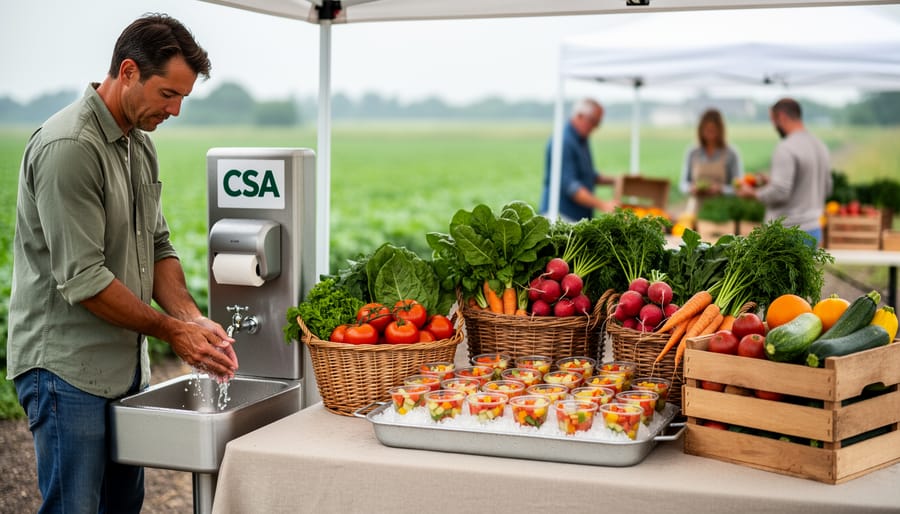
The path to compliance doesn’t have to overwhelm your operation or drain your budget. Many experienced farmers have integrated FSMA requirements into their existing practices through simple adjustments—like establishing designated handwashing stations, documenting compost aging processes, and creating basic water-use logs. This guide walks you through determining your exemption status, understanding what applies to your specific situation, and implementing practical solutions that protect both your customers and your farming livelihood.

The FSMA Produce Safety Rule in Plain English

Fresh harvested vegetables in wooden basket on farm table with farm field in background
CSA farm produce represents the direct connection between growers and consumers that many FSMA exemptions are designed to support.

Why This Rule Exists (And Why It Matters to You)

The FSMA Produce Safety Rule emerged from a simple truth: preventing foodborne illness protects everyone in the farm-to-table chain. Before this rule took effect in 2016, the U.S. saw numerous outbreaks traced back to contaminated produce—romaine lettuce, cantaloupe, spinach—that damaged consumer trust and devastated farms overnight.

This rule matters because it creates a level playing field where all growers follow basic safety practices around water quality, soil amendments, worker health and hygiene, and equipment sanitation. For small-scale farmers especially, compliance isn’t just about avoiding penalties—it’s about protecting your reputation and the relationships you’ve built with your community.

Consider Sarah Martinez, who runs a three-acre organic farm in Vermont. After implementing FSMA practices, she discovered that documenting her safety protocols actually became a selling point at farmers markets. Customers appreciated seeing her commitment to their wellbeing, and her CSA membership grew by 40% the following season.

The rule recognizes that most farmers already care deeply about food safety. It simply provides a standardized framework that helps you demonstrate that care while safeguarding both your customers and your livelihood.

Does Your CSA Farm Need to Comply?

The Direct Marketing Exemption Most CSAs Qualify For

Great news for CSA operators: most community-supported agriculture farms naturally qualify for what’s called the “qualified exemption” under the FSMA Produce Safety Rule. This exemption exists specifically to support small-scale operations selling directly to their communities.

Here’s how it works: Your farm qualifies if you meet two straightforward criteria. First, your farm’s average annual produce sales must be $25,000 or less over the previous three years. This threshold accounts for the cyclical nature of farming and gives new operations time to establish themselves. Second, more than half of your food sales must go directly to “qualified end-users”—that’s either individual consumers (your CSA members!) or local restaurants and retailers within your state or within 275 miles of your farm.

For most CSAs, this exemption is a natural fit. When Sarah Chen started her 30-member CSA in Vermont, she discovered she automatically qualified because her entire business model centered on direct-to-consumer weekly boxes. “I was worried about navigating complex regulations,” Sarah shares, “but realized my farm was already structured in a way that qualified for the exemption.”

Even if your sales exceed $25,000, that second requirement—direct sales to consumers and nearby businesses—often keeps CSAs exempt as they grow. You’ll need to maintain simple documentation showing where your produce goes, but the beauty of CSA operations is that member lists and delivery records naturally provide this proof.

When You DO Need to Follow the Rules

While many small CSA operations qualify for exemptions, certain situations trigger full FSMA compliance requirements. If your farm exceeds $25,000 in annual produce sales (averaged over three years), you’ll need to pay close attention to these regulations.

Size matters significantly here. Farms generating over $500,000 in annual produce sales don’t qualify for the qualified exemption, meaning full compliance becomes mandatory. This typically affects CSA operations that have scaled beyond neighborhood distribution or added substantial wholesale accounts.

Your customer base also determines your requirements. If more than half your food sales go to qualified end-users (like restaurants, grocery stores, or distributors rather than direct consumers), you’ll likely need full compliance. Even smaller farms can trigger this threshold when expanding into farmers’ markets alongside their CSA boxes.

Certain crops carry higher risk designations under FSMA, particularly leafy greens, sprouts, and fresh-cut produce. Growing these commercially may subject you to stricter oversight regardless of farm size.

The good news? Many established CSA farmers who’ve crossed these thresholds report that implementing proper food safety practices actually strengthened their operations. Better record-keeping and systematic approaches to water quality and soil amendments often lead to healthier crops and increased customer confidence in your products.

Core Requirements Every CSA Should Understand

Farmer washing fresh lettuce under running water at outdoor farm washing station
Water quality standards for washing produce represent one of the core FSMA Produce Safety Rule requirements that protect both consumers and farm reputation.

Water Quality and Testing

Water quality is one of the most critical aspects of FSMA compliance, but don’t let it overwhelm you—there are practical ways to manage this requirement even on small operations. The rule distinguishes between agricultural water used during growing (irrigation, frost protection) and post-harvest water (washing, cooling produce).

For growing water, you’ll need to test untreated surface water sources using two tests: generic E. coli and a geometric mean calculation. The good news? Many small farms already use well water, which typically requires less frequent testing. Start by identifying all your water sources and how you use them—this helps you understand which testing protocols apply.

Post-harvest water that touches produce must meet stricter standards, similar to drinking water quality. Many farms address this by using municipal water or installing simple filtration systems. Consider partnering with neighboring farms to share testing costs—it’s a strategy that’s worked beautifully for several community-supported agriculture operations.

Keep detailed records of your water sources, test results, and any corrective actions. Simple logbooks or spreadsheets work perfectly. Remember, inspectors appreciate farmers who demonstrate good-faith efforts toward safe practices, even if your system isn’t perfect immediately.

Composting and Soil Amendments Done Safely

One of FSMA’s most important focuses is how you treat and apply compost and manure to your produce fields. The rule distinguishes between treated and untreated biological soil amendments of animal origin (BSAAO). Treated compost—meaning it’s been processed through proper hot composting that reaches 131-170°F for specific durations—can be applied closer to harvest time. Untreated manure, however, requires longer waiting periods.

Here’s the key: you must wait at least 90 days between applying untreated BSAAO and harvesting produce that doesn’t touch the soil (like trellised tomatoes), and 120 days for crops that do contact soil or are eaten raw (lettuce, carrots, strawberries). Properly composted amendments significantly reduce this wait time, making them ideal for smaller farms with quick crop rotations.

**Practical tip:** Keep detailed records of when and where you apply amendments. Take-home farmer Maria Rodriguez from Green Valley Farm shares: “We switched to hot composting three years ago. The flexibility it gives us with planting schedules has been a game-changer—plus our soil health has never been better!”

Testing your compost process initially ensures you’re meeting FSMA standards while building nutrient-rich soil sustainably.

Worker Health and Hygiene Basics

The FSMA Produce Safety Rule recognizes that healthy workers mean safe produce. At its core, the regulation requires common-sense practices that protect everyone on your farm.

**Handwashing and Restrooms**

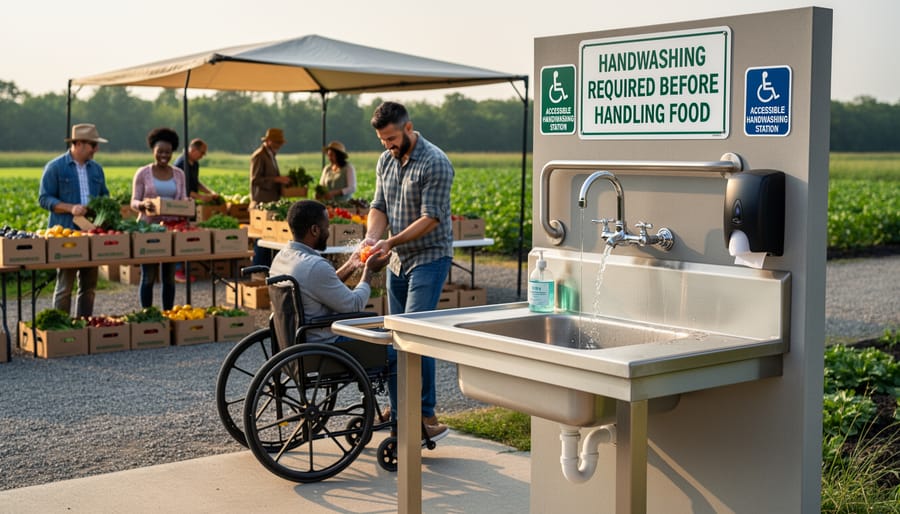
You’ll need to provide adequate handwashing facilities with soap, running water, and single-use towels wherever workers handle produce. These stations should be easily accessible—within a quarter mile of workers or at field entry points. Clean, well-maintained restrooms must also be available and regularly serviced.

**Health and Hygiene Training**

All workers need basic training on proper handwashing techniques, when to wash hands (before starting work, after restroom breaks, after handling animals), and the importance of reporting illnesses. The good news? This doesn’t require expensive consultants. Many growers incorporate quick demonstrations during morning check-ins.

One Vermont organic farmer shared how she turned hygiene training into a team-building opportunity, creating simple visual guides in multiple languages and celebrating their farm’s commitment to safety. Her approach not only ensured compliance but strengthened her crew’s sense of pride in their work.

Remember, these practices aren’t just regulatory boxes to check—they’re investments in your team’s wellbeing and your farm’s reputation for producing the safest, highest-quality food possible.

Making Compliance Work for Your CSA

Documentation That Actually Helps Your Farm

Good documentation doesn’t have to mean drowning in paperwork. Think of your FSMA records as tools that help you run a better farm, not just check boxes for inspectors.

Start with a simple farm map showing your water sources, growing areas, and composting spots. This visual reference helps new workers understand your layout while satisfying documentation requirements. Many farmers discover unknown cross-contamination risks just by creating this map.

Keep a basic logbook near your water source. Note the date, who tested it, and results. Over time, you’ll spot patterns—maybe your well water quality drops after heavy rains, giving you valuable insight for irrigation timing.

Track your soil amendments in a notebook or spreadsheet. Record what you applied, where, and when. This simple practice prevents over-application, saves money, and documents your 90-120 day waiting periods between raw manure application and harvest.

For worker training, photograph your handwashing stations and create a one-page guide with pictures. Keep a sign-in sheet when you review hygiene practices during spring orientation. It takes five minutes and proves you’re taking food safety seriously.

**Real farmer tip**: Sarah, who runs a three-acre market garden in Vermont, uses her phone to photograph her daily harvest logs. “I text them to myself, and they’re timestamped and backed up automatically,” she explains. “It’s faster than paper and I never lose records.”

The goal is creating systems you’ll actually use year after year—documentation that works for your operation, not against it.

Farmer documenting farm activities in field notebook while standing in vegetable garden
Simple record-keeping practices help CSA farms maintain good food safety documentation while improving overall farm management.

Real CSA Farmers Share Their Compliance Journey

Meet Sarah Chen from Green Valley Farm in Vermont, who initially felt overwhelmed when she realized her 60-member CSA needed FSMA compliance. “I thought it would mean expensive infrastructure changes we couldn’t afford,” she recalls. Instead, Sarah discovered that documenting her existing practices covered most requirements. She invested in a simple handwashing station for $150 and created straightforward record-keeping templates. “The biggest surprise? Our members loved seeing our food safety protocols. It actually became a selling point that set us apart from other farms.”

Over in Oregon, Marcus and Jen Thompson of Riverside Community Farm turned FSMA compliance into an educational opportunity. Their 40-member CSA now offers quarterly farm tours where they showcase their water testing procedures and harvest sanitation practices. “We explained how we follow FSMA guidelines to protect food safety, and members became even more confident in our produce,” Marcus shares. The couple admits the initial learning curve felt steep, but they connected with their state’s produce safety alliance for free training. Their top tip? Start with water testing and employee training—the foundations that make everything else easier.

Wildflower CSA in North Carolina, run by Emma Rodriguez, demonstrates how compliance can streamline operations. With 75 members, Emma needed better organization anyway. “FSMA gave us the framework to professionalize without losing our farm’s heart,” she explains. She implemented color-coded harvest bins to prevent cross-contamination and created a simple daily checklist that takes just ten minutes. Emma emphasizes talking with other CSA farmers: “We formed a local cohort to share resources and templates. Nobody needs to reinvent the wheel.”

These farmers agree that starting small, using available resources, and viewing FSMA as a quality enhancement rather than a burden made all the difference in their successful compliance journeys.

Resources and Support for CSA Compliance

Navigating FSMA compliance doesn’t mean going it alone—there’s a wealth of free and low-cost support available to help you succeed. Your local Cooperative Extension Service is an excellent starting point, offering personalized guidance tailored to your region’s growing conditions and regulatory landscape. Many extension agents specialize in food safety and can even conduct on-farm consultations at no charge.

The FDA-funded Produce Safety Alliance (PSA) provides comprehensive training courses that cover everything from worker hygiene to water testing protocols. These grower training courses, often priced under $50, satisfy the qualified supervisor requirement and connect you with fellow farmers facing similar challenges. Check your state’s extension website for upcoming sessions—many are now offered online for added convenience.

Financial assistance programs can ease the burden of compliance costs. The USDA’s Environmental Quality Incentives Program (EQIP) offers cost-share funding for improvements like well upgrades or handwashing stations. Some states also provide grants specifically for small-scale produce growers implementing food safety measures.

For quick questions, the FDA’s Technical Assistance Network provides direct access to regulatory experts who understand the unique needs of small farms. State agriculture departments often maintain dedicated hotlines too. Remember, asking for help isn’t just smart—it’s what successful farmers do. One Oregon berry grower shared how a simple extension call saved her thousands by identifying which records she actually needed versus what she thought was required.

The good news? Most small-scale CSAs either qualify for exemptions or can meet FSMA Produce Safety Rule requirements with manageable, common-sense adjustments. If you’re already growing thoughtfully and communicating with your members, you’re likely closer to compliance than you realize.

Rather than viewing these regulations as burdensome, consider them an opportunity to strengthen your operation. Implementing basic food safety practices—like testing your water source, tracking amendments, and documenting your procedures—protects both your members and your farm’s reputation. Many CSA farmers have discovered that sharing their food safety efforts actually deepens member trust and loyalty.

Remember, you’re not alone in navigating these requirements. Cooperative Extension offices offer free training through the Produce Safety Alliance, covering everything you need to know in accessible, farmer-friendly terms. State departments of agriculture often provide additional resources tailored to small growers.

Start by determining your exemption status, then take incremental steps toward any needed compliance. Whether you qualify for an exemption today or anticipate growth that will eventually require full compliance, proactive food safety practices demonstrate your commitment to the people who support your farm. That dedication to quality and transparency is what makes the CSA model so powerful.