
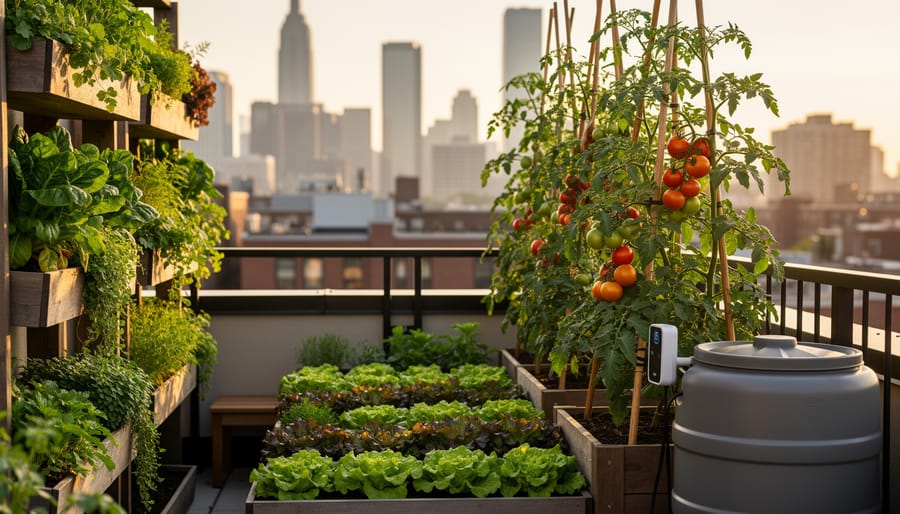
Map your growing space by measuring every sunny spot—balconies, windowsills, rooftops, and shared yards—then calculate hours of direct sunlight each location receives daily. This data-driven approach helps you match crops to microclimates, ensuring tomatoes claim your south-facing balcony while shade-tolerant lettuce thrives under partial cover.
Design vertical growing systems using wall-mounted planters, trellises, and tiered shelving to multiply your productive area without expanding your footprint. A 4×8 foot balcony can yield over 100 pounds of produce annually when you grow upward rather than outward, stacking herbs, greens, and vining crops in carefully planned layers.
Schedule succession plantings every two weeks using a simple calendar system that tracks planting dates, expected harvest windows, and crop rotation patterns. This planning method prevents feast-or-famine cycles and keeps fresh vegetables flowing from spring through fall, maximizing every container’s productivity throughout the growing season.
Connect with urban Community Supported Agriculture programs that provide proven growing blueprints and seasonal crop plans tailored to city conditions. These partnerships offer structured guidance for beginners while creating food security through coordinated neighborhood efforts. Urban farmers who adopt integrated planning methods report harvesting 3-5 times more produce than those using random, unplanned approaches.
Transform scattered containers into productive mini-farms by treating your urban space as a complete agricultural system where every element—from water collection to companion planting—works together intentionally.
What Integrated Urban Planning Means for Your Garden
The CSA Connection: From Farm to Urban Plot
Traditional Community Supported Agriculture models are experiencing an exciting urban evolution. Instead of simply delivering produce from distant farms, modern CSA programs are embracing integrated urban planning to create interconnected food networks right in the heart of cities. This transformation turns urban members from passive consumers into active participants in local food production.
Urban CSA farms now work closely with city planners to establish micro-farms on vacant lots, rooftop gardens, and underutilized green spaces. These small-scale operations serve as demonstration sites and educational hubs, showing residents how professional farming techniques can scale down for home gardens. Members learn directly from farmers during work shares, then apply those same principles to their backyard plots or balcony containers.
The real magic happens when home gardens become recognized extensions of the larger CSA system. Some programs now offer seed sharing initiatives, where members receive the same heirloom varieties grown at the main farm. Others coordinate neighborhood growing clusters, where several households focus on different crops and share their harvests, mimicking the diversity of a traditional CSA box.
Sarah Martinez, a CSA member in Portland, transformed her 400-square-foot backyard into a productive plot after working weekend shifts at her local urban farm. “I grew enough tomatoes and herbs last season to supply three neighboring families,” she shares. “We’re essentially creating our own micro-CSA network, and it started with what I learned through the main farm’s integrated planning workshops.”
This model proves that urban agriculture isn’t just about individual gardens but rather coordinated systems that strengthen community food security together.
Why Your Backyard Matters to City Food Security
Your backyard might seem like just a small patch of green space, but when connected through smart planning systems, it becomes part of something much bigger. Individual urban gardens collectively create a network of local food production that strengthens community resilience during supply chain disruptions and reduces reliance on distant food sources.
Think of integrated planning as connecting the dots between your tomato plants and your neighbor’s herb garden, then linking those to community plots and local CSA farms. When cities implement coordinated urban agriculture solutions, they create systems where resources like compost, seeds, and knowledge flow efficiently between growers.
The impact is real. In Detroit, networked urban gardens now produce over 400,000 pounds of food annually, demonstrating how individual efforts add up. Your backyard contributions matter because they diversify what your neighborhood grows, reduce food miles, and create living examples that inspire others to start growing.
Smart planning systems help track what each garden produces, identify gaps in local food availability, and coordinate seasonal growing schedules. This transforms scattered individual efforts into a cohesive food security strategy that benefits everyone in your community.
Technology That Makes Urban Growing Smarter, Not Harder
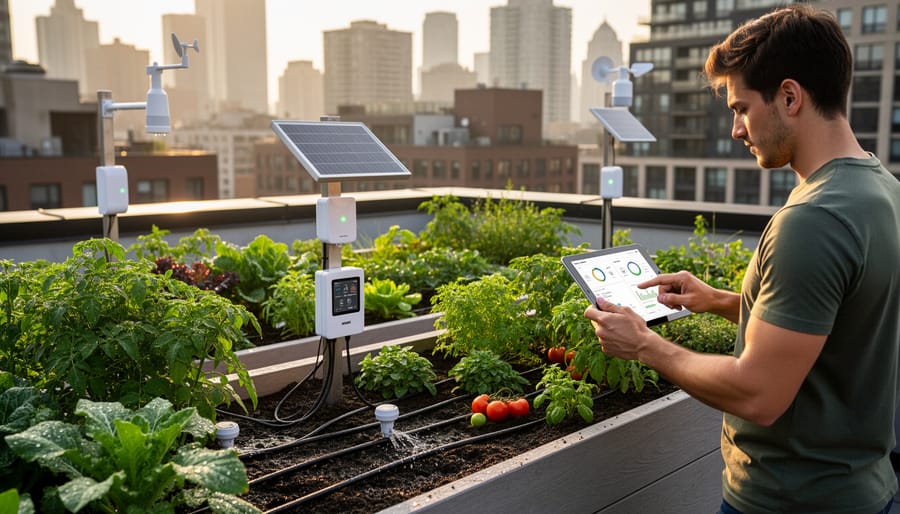
Sensors and Automation: Your Garden’s Digital Assistant
Urban gardening doesn’t require constant vigilance when you have the right digital tools working alongside you. Modern sensors and automation systems act as your garden’s tireless assistant, monitoring conditions and responding to your plants’ needs even when you’re at work or away.
Soil moisture sensors are the perfect entry point for beginners. These affordable devices measure water levels in your soil and send alerts to your phone when plants need watering. Basic models start around $20-30, while smart sensors with Bluetooth connectivity range from $50-100. They eliminate guesswork and prevent both overwatering and drought stress, crucial for apartment balconies where you can’t easily check soil daily.
Compact weather stations designed for urban settings track temperature, humidity, rainfall, and sunlight. These mini stations help you understand your microclimate—essential information since rooftop conditions differ dramatically from ground-level patios. Expect to invest $75-150 for reliable models that sync with smartphone apps.
Automated watering systems transform how city dwellers maintain gardens. Simple drip irrigation kits with timers cost $30-60 and work perfectly for balcony container gardens. More sophisticated systems ($150-300) integrate with moisture sensors and weather data, adjusting watering schedules automatically. This technology proves invaluable during summer vacations or busy work weeks.
Maria, a Toronto CSA member, installed a basic moisture sensor system in her vertical garden last spring. “I was drowning my tomatoes and under-watering my peppers,” she shares. “Now my phone tells me exactly what each section needs. My harvest doubled, and I’m spending less time worrying.”
The beauty of these systems is scalability. Start with one moisture sensor, then expand as you gain confidence. As IoT technology transforms commercial farming, similar tools become increasingly accessible and affordable for home gardeners seeking efficiency in limited urban spaces.
Apps That Connect Growers and Build Community
Technology is bringing urban growers together in exciting new ways, making it easier than ever to share knowledge, coordinate harvests, and build thriving digital communities around local food production.
Apps like Crop Swap and ShareHarvest connect neighbors who want to exchange surplus produce, seeds, and gardening supplies. These platforms help reduce food waste while strengthening community bonds. Simply post what you have available, browse nearby offerings, and arrange pickups with fellow growers in your area.
For CSA members, coordination apps like Harvie and Local Line streamline communication between farms and shareholders. Members can customize their weekly shares, swap items they don’t want, and even pick up extra produce when available. The real-time updates keep everyone informed about harvest schedules and farm happenings.
Knowledge-sharing platforms such as GrowIt! and PlantSnap function as social networks specifically for gardeners. Upload photos of your urban garden, identify unfamiliar plants, troubleshoot pest problems, and get advice from experienced growers worldwide. These apps create supportive spaces where beginners feel comfortable asking questions and experts enjoy sharing their wisdom.
Many urban farms now use apps like Growing Gardens to manage volunteer schedules, workshop registrations, and community events. Members receive notifications about planting days, harvest festivals, and educational sessions, making participation effortless.
These digital tools transform isolated backyard efforts into collaborative movements, proving that even in dense cities, growers can cultivate both vegetables and meaningful connections with their neighbors.
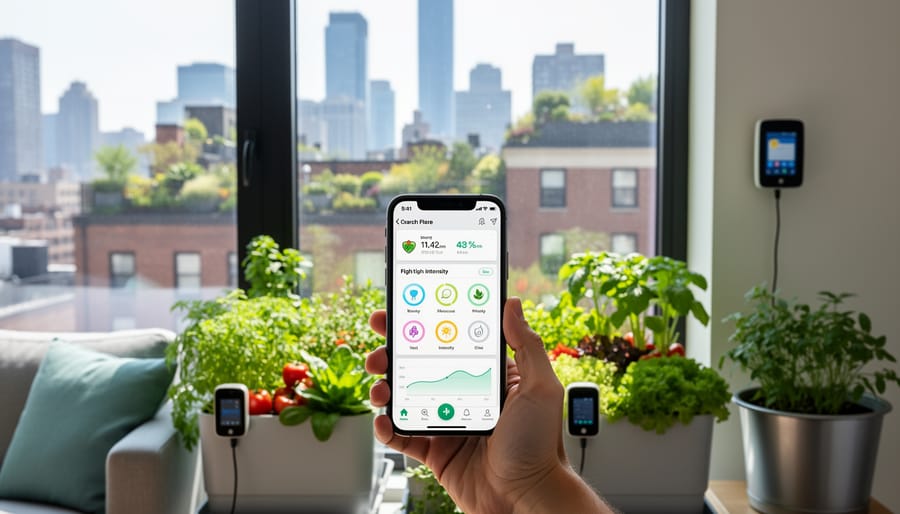
Vertical and Indoor Systems: Growing Beyond Ground Level
When ground space is scarce, thinking vertically transforms your urban growing potential. Hydroponic tower systems stack growing pockets upward, allowing you to cultivate dozens of plants in the footprint of a single houseplant. These innovative structures use nutrient-rich water instead of soil, making them perfect for balconies and patios where weight matters.
Indoor growing has evolved dramatically with LED grow light technology. These energy-efficient lights mimic natural sunlight, enabling year-round harvests regardless of weather or season. Modern LED systems use specific light spectrums to boost plant growth while consuming 40-60% less energy than traditional grow lights. You can now grow fresh lettuce, herbs, and even tomatoes right in your kitchen or spare bedroom.
Smart indoor systems take the guesswork out of urban farming. Automated controllers monitor moisture levels, adjust lighting schedules, and alert you when plants need attention. Some systems connect to smartphone apps, letting you tend your garden remotely during busy workdays.
Take Maria from Chicago, who transformed her studio apartment’s unused corner into a thriving vertical garden. Using a simple tower system and LED lights, she grows enough salad greens and herbs to supply her weekly meals and share with neighbors. She reports saving over $50 monthly on produce while enjoying fresher, pesticide-free food.
Starting small is key. Begin with a countertop herb garden to learn the basics, then expand as your confidence grows. The beauty of vertical and indoor systems is their scalability—you control exactly how much space and effort you invest.
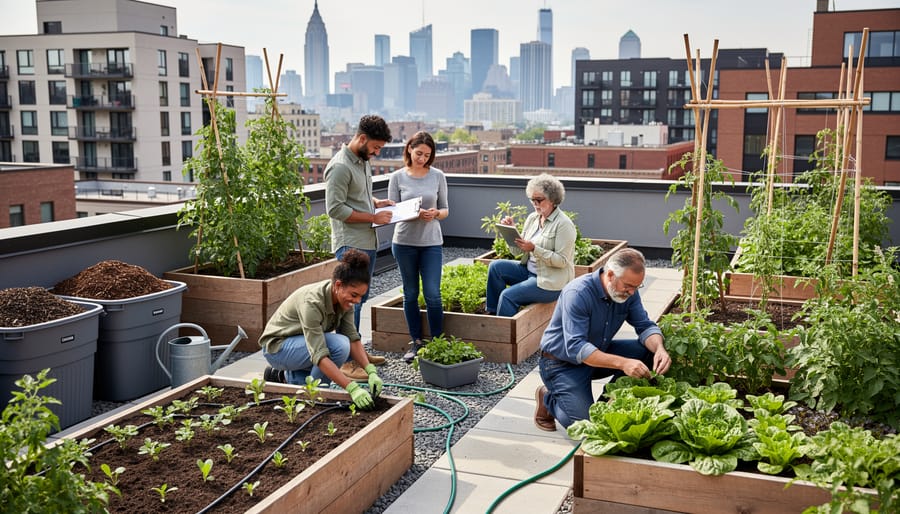
Real Success: Urban Growers Making It Work
The best proof that integrated urban planning works? Real people growing real food in real cities. Let’s meet some urban growers who’ve cracked the code.
Sarah Chen transformed her Brooklyn apartment building’s rooftop into a thriving CSA that now feeds 25 neighborhood families. She started with just three raised beds and a simple drip irrigation system controlled by her smartphone. By mapping sun exposure throughout the day and using vertical growing structures, Sarah maximized every square foot. Her secret weapon? A combination of automated watering scheduled around weather forecasts and a detailed planting calendar that ensures continuous harvests from April through November. What began as a personal experiment now generates enough produce to supply weekly shares while building community among her neighbors.
In Detroit, Marcus Williams turned his backyard and two vacant side lots into an urban farm that supplies three local restaurants. His integrated approach combines solar-powered irrigation, companion planting strategies, and a simple spreadsheet system that tracks what to plant when. Marcus emphasizes that you don’t need expensive technology to succeed. His planning notebook and basic weather app help him stay ahead of planting deadlines and pest problems. The key, he says, is consistency and observation.
Even balcony gardeners are seeing remarkable results. Lima Rodriguez feeds her family of four with vegetables grown entirely on her Chicago apartment balcony. She uses container gardens with self-watering systems and follows a succession planting schedule she learned from online gardening communities. By growing vertically and choosing high-yield varieties like cherry tomatoes, peppers, and leafy greens, Lima harvests something fresh almost daily during the growing season.
These growers share common threads: they all started small, learned from mistakes, and used simple planning tools to track what worked. They prove that integrated urban planning isn’t about having the perfect setup or expensive equipment. It’s about understanding your space, using available resources wisely, and staying committed to the process. Whether you have a rooftop, backyard, or just a sunny balcony, their stories show that thoughtful planning makes urban food production not just possible, but genuinely rewarding.
Getting Started: Your First Steps Toward an Integrated Garden
Assess Your Space and Resources
Before diving into urban agriculture, take time to understand what you’re working with. Start by observing your available space throughout the day. Which areas receive at least six hours of direct sunlight? These prime spots are perfect for fruiting plants like tomatoes and peppers, while shadier corners work well for leafy greens.
Next, evaluate your water situation. Is there easy access to a hose or outdoor faucet? Consider installing rain barrels to harvest free water while reducing your environmental footprint. One urban farmer in Chicago saved 40% on her water bill by collecting rainwater from her roof.
Measure your actual growing space, whether it’s a balcony, rooftop, or small yard. Don’t let limited square footage discourage you. Vertical gardens, container systems, and intensive planting methods can transform even tiny areas into productive gardens.
Finally, establish a realistic budget. Factor in initial setup costs for containers, soil, seeds, and any technology like drip irrigation systems or grow lights. Remember that many investments, like quality containers and automated watering systems, pay dividends through years of use. Start small if needed—you can always expand as you gain experience and confidence in your urban growing journey.
Start Small, Scale Smart
You don’t need to transform your entire urban garden overnight. The most successful city growers start with one or two simple technologies and expand as they learn what works in their specific environment. Begin by choosing a single system that addresses your biggest challenge. If watering is your struggle, try a basic drip irrigation timer before investing in a smart controller. If space is tight, test one vertical growing structure before covering every wall.
Consider running small experiments. Set up moisture sensors in half your containers while watering the others manually, then compare plant health and water usage over a month. This hands-on approach teaches you what your plants actually need rather than guessing. Maria, a Brooklyn balcony gardener, started with just three self-watering containers. After seeing her tomato yields double, she gradually expanded to 15 containers with a rainwater collection system.
Track what you observe in a simple notebook or phone app. Note which plants thrive, when pests appear, and how much you harvest. These insights become invaluable when deciding where to invest time and resources next. Remember, urban farming is about progress, not perfection. Each growing season offers new lessons that help you refine your approach and scale thoughtfully.
Overcoming Common Urban Growing Challenges
Urban gardening comes with its fair share of hurdles, but integrated planning paired with smart technology turns these obstacles into opportunities. Let’s explore how modern solutions tackle the common urban farming challenges that city growers face.
Limited space ranks as the biggest concern for urban farmers. Vertical growing systems, including tower gardens and wall-mounted planters, maximize every square foot available. Many urban CSAs now use tiered shelving with grow lights to transform small warehouses into productive farms. By mapping your space digitally using garden planning apps, you can optimize layouts and calculate exactly how many plants fit in your area.
Contaminated soil presents another significant barrier in cities where industrial history left behind harmful residues. Raised beds with purchased organic soil provide a clean growing medium, while container gardening eliminates ground contact entirely. Some urban farmers use soil testing kits to assess contamination levels before planting, then choose appropriate growing methods based on results.
Unpredictable microclimates make urban growing tricky. Tall buildings create wind tunnels and shade patterns that shift throughout the day. Temperature variations between sunny pavement and shaded areas can differ by 15 degrees. Weather monitoring stations and smartphone apps help you track these variations, allowing you to position heat-loving tomatoes in warm spots while placing leafy greens in cooler zones.
Water management also challenges city growers. Integrated drip irrigation systems with timers ensure consistent moisture without waste, while rainwater collection barrels turn rooftops into water sources. These technologies, combined with moisture sensors that alert you via smartphone, prevent both drought stress and overwatering, helping your urban garden thrive despite city conditions.
The beauty of integrated urban planning is that it transforms what seems impossible into something genuinely achievable. By combining thoughtful space design with accessible technology like soil sensors, vertical growing systems, and simple planning apps, city dwellers can create thriving food gardens right where they live. You don’t need a sprawling farm or expensive equipment to participate in CSA programs or grow your own fresh produce.
The success stories we’ve explored prove that anyone can start small and scale up gradually. Whether you’re joining a community garden with shared technology resources or setting up a modest balcony garden with a few smart tools, taking that first step matters most. Connect with your local CSA programs to learn what’s possible in your neighborhood and discover what resources already exist in your community.
Technology has democratized urban agriculture, making it accessible to beginners and experienced gardeners alike. Start by assessing your available space, research one or two tech tools that match your budget, and begin growing something simple. Your urban garden journey doesn’t have to be perfect from day one. The important thing is to begin, learn as you grow, and enjoy the fresh, organic produce you’ve cultivated yourself while contributing to a more sustainable food system in your city.
