

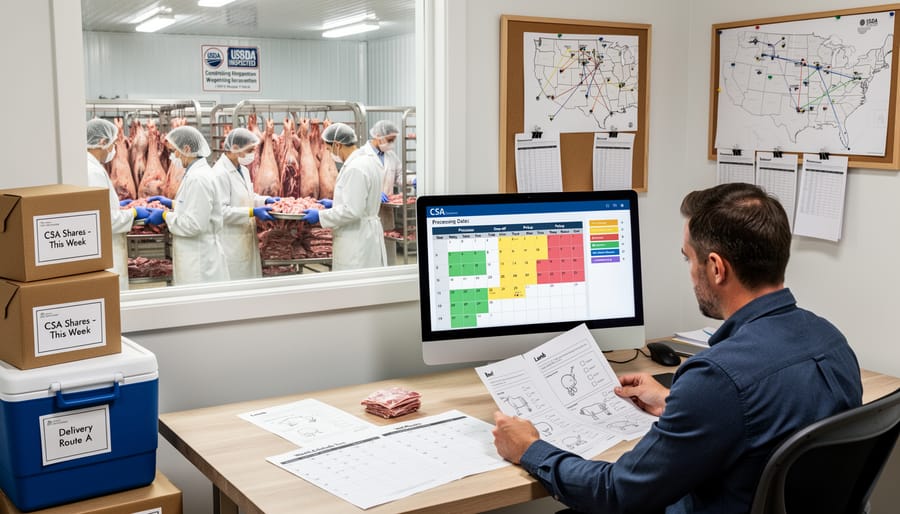
Start your grazing CSA by identifying USDA-inspected processing facilities within 100 miles of your farm that accept small-batch custom cuts. Contact at least three processors to compare booking timelines, per-pound fees, and whether they’ll work with your harvest schedule before committing to any livestock purchases.
Register your operation with your state’s Department of Agriculture and secure the appropriate livestock dealer license and meat handler permits. Most states require these certifications before you can legally sell meat shares, even through a CSA model. Processing compliance doesn’t mean abandoning your pasture-based values.
Design your CSA share structure around USDA regulations by offering “herdshare” agreements where members purchase a percentage of the live animal before slaughter, then pay processing fees separately. This model keeps you compliant while maintaining the direct farmer-to-consumer relationship that makes CSAs special. Document everything with clear contracts that specify what members receive and when.
Build relationships with 2-3 backup processors immediately. Sarah Chen, who runs a 50-member grazing CSA in Vermont, learned this lesson when her primary facility closed unexpectedly mid-season. Having established connections with alternative processors saved her business and kept her members supplied with their expected shares.
Calculate your true costs including processing fees, transportation to facilities, and packaging before setting share prices. Many beginning graziers underestimate these expenses and struggle financially their first season. Factor in a 15-20% buffer for unexpected regulatory requirements or processing delays that could impact your cash flow.
What Makes a Grazing CSA Box Different
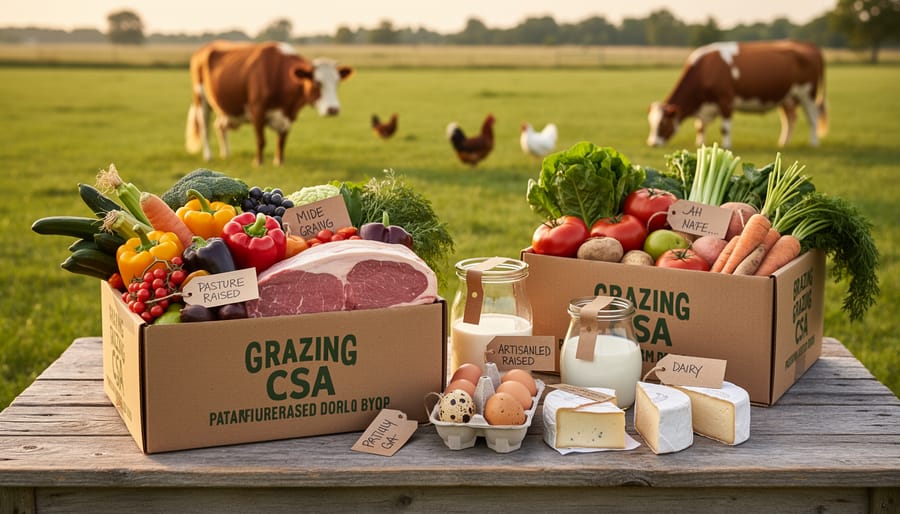
While traditional CSA boxes arrive filled with fresh vegetables and perhaps some herbs, grazing CSA shares take a distinctly different approach. These shares focus on pasture-raised animal products, including meat, eggs, and dairy items like cheese, butter, or yogurt. The farmers behind these operations emphasize the welfare of their animals through rotational grazing practices, moving livestock regularly to fresh pasture while allowing the land to regenerate naturally.
Seasonal availability plays a bigger role in grazing shares than vegetable CSAs. Meat shares typically operate on longer cycles, often delivering monthly or quarterly rather than weekly. You might receive a whole chicken in spring, ground beef and steaks in summer, pork cuts in fall, and lamb in winter, depending on when animals reach market weight. This rhythm follows natural breeding and growing seasons rather than the predictable weekly harvests of vegetables.
Product variety in grazing shares often surprises new members. Beyond standard cuts, you’ll discover items like bone broth, organ meats, rendered lard, and specialty sausages. Many farmers include recipe cards and preparation tips to help members make the most of unfamiliar cuts. Some operations combine their offerings, providing both meat and eggs in a single share, while others partner with neighboring farms to create mixed boxes featuring dairy alongside their meat products.
Share structure varies considerably among grazing CSAs. Some offer customizable options where members choose preferred cuts, while others provide standardized boxes designed to introduce the full range of products. Pricing typically reflects the higher production costs of pastured livestock, ranging from monthly payments to upfront seasonal commitments. Many farmers who started with vegetables found that adding livestock to your CSA diversified their income streams while improving soil health through integrated farming practices. This model requires more specialized infrastructure than vegetable operations, particularly regarding processing and cold storage, but creates meaningful connections between members and the animals that provide their food.
The Processing Reality Every Grazing CSA Faces
When On-Farm Processing Makes Sense
On-farm processing can be a game-changer for smaller CSA operations, particularly when you’re working within certain legal exemptions. Many states offer what’s commonly called the “1,000 bird exemption” for poultry processing, allowing farmers to process up to 1,000 chickens annually on-site without USDA inspection, provided they sell directly to consumers. This creates a perfect match for CSA box programs where you’re already building those direct relationships with members.
The sweet spot for on-farm processing typically involves operations running 20-50 CSA shares. At this scale, you can justify the initial investment in basic equipment like a USDA-approved poultry plucker or small meat grinder while keeping things manageable without hiring additional staff.
Take Sarah Martinez, who runs a 30-member CSA in Vermont. She invested in a simple on-farm setup for processing her pastured chickens and found it not only saved money on processing fees but also gave her complete control over timing and quality. “I can harvest on Wednesday and have fresh chicken in Friday’s boxes,” she shares. “My members love knowing their meat was processed right here on the farm they visit.”
The limitations matter though. On-farm processed products typically can’t be sold at farmers markets or to restaurants in most states—they’re restricted to direct consumer sales. You’ll also need proper facilities with running water, adequate refrigeration, and cleanable surfaces. While the startup costs are lower than building a USDA-inspected facility, expect to invest $2,000-5,000 in basic equipment and facility modifications to meet your state’s cottage food or exemption requirements.
Working with Off-Farm Processors
Building strong relationships with USDA-inspected processors is essential for any meat-based CSA operation. Start by contacting facilities at least 6-8 months before you need their services, as many small processors book up quickly during peak season. Visit potential partners in person to discuss your volume needs, pricing structure, and quality expectations.
Cut sheets can feel overwhelming at first, but they’re simply your instructions for how you want each animal processed. Work with your processor to create standard templates for common cuts your CSA members prefer. Keep these organized in a binder or digital folder for easy reference. Many successful farmers recommend starting simple with basic cuts before offering custom options.
Transportation requires careful planning to maintain meat quality and safety. Invest in reliable coolers or refrigerated transport, even for short distances. Schedule pickup times that minimize wait periods and always confirm appointments the day before.
Sarah Mitchell, who runs a grass-fed beef CSA in Vermont, shares this tip: “I visit my processor quarterly to review cut quality and discuss member feedback. This partnership approach has dramatically improved our product consistency.” Remember, your processor is part of your farm team. Clear communication and mutual respect create the foundation for delivering exceptional products to your CSA members.

Navigating State and Federal Regulations
Understanding Your State’s Exemptions
Navigating state exemptions can feel overwhelming at first, but understanding these regulations is actually one of the most empowering steps you’ll take in launching your CSA farm box operation. Most states offer valuable exemptions specifically designed to support small-scale producers like you, making compliance far more accessible than you might think.
Many states provide poultry processing exemptions that allow farmers to process a limited number of birds annually without requiring a USDA-inspected facility. These limits typically range from 1,000 to 20,000 birds per year, depending on your location. For example, Sarah Johnson from Green Meadow Farm in Vermont processes 5,000 chickens annually under her state’s exemption, selling directly through her CSA shares without the expense of building a commercial processing facility.
Farm-direct sales rules are another game-changer for CSA operations. These regulations often permit you to sell meat, poultry, and eggs directly to consumers with minimal licensing requirements, as long as you’re selling from your farm or at farmers markets. Some states even allow custom processing arrangements where members technically own the animal before processing, creating additional flexibility for your CSA model.
The key is researching your specific state’s Department of Agriculture website or connecting with your local extension office. They’ll provide clear guidance on exactly what exemptions apply to your operation size and sales methods. Remember, these exemptions exist precisely because lawmakers recognize the value small farms bring to local food systems, and they’re designed to help you thrive while maintaining food safety standards.
Dairy and Egg Regulations for CSA Boxes
Navigating dairy and egg regulations might feel overwhelming at first, but understanding the basics helps you confidently include these products in your CSA boxes. The key thing to remember is that rules vary significantly by state, so checking with your local agricultural department is essential before adding dairy or eggs to your offerings.
For dairy products, raw milk laws represent one of the most variable regulatory landscapes across the country. Some states permit direct farm sales of raw milk, while others require pasteurization for any commercial distribution. Many farmers find success by partnering with licensed dairy processors for pasteurized products, which broadens their market while ensuring compliance. If you’re considering raw milk sales where permitted, you’ll typically need separate licensing, dedicated equipment, and regular testing protocols.
Egg regulations present a more accessible entry point for most CSA farms. Understanding egg regulations for CSA farms helps clarify requirements around grading, labeling, and storage. Small-scale producers often qualify for exemptions from formal grading requirements, though refrigeration standards remain non-negotiable for food safety. Most states require eggs to be kept at 45°F or below once refrigerated.
Sarah Chen, who runs a successful CSA in Vermont, shares this tip: “I invested in a small commercial refrigerator specifically for eggs and dairy. It paid for itself within the first season by preventing any compliance issues and giving members confidence in product safety.”
Temperature logs, proper storage containers, and clear labeling practices create a solid foundation for including these valuable protein sources in your farm boxes.
Setting Up Your Farm for Compliant Processing
Creating a compliant processing setup for your CSA farm doesn’t have to break the bank or overwhelm you with complexity. The key is understanding what regulations apply to your operation and building systems that meet those requirements while fitting your scale and budget.
Start by determining which type of facility you need. For many CSA operations processing meat, poultry, or value-added products like jams or pickles, a licensed facility is essential. Some farmers find success building an on-farm processing space that meets state inspection standards. This typically requires dedicated areas for different tasks, proper flooring that’s easy to sanitize, adequate lighting, handwashing stations, and separate spaces for clean and dirty operations. While this sounds extensive, many farmers have successfully converted existing buildings or constructed modest facilities that meet regulations without massive investment.
The equipment you’ll need depends on what you’re processing. For meat operations, this might include proper refrigeration, stainless steel work surfaces, and appropriate cutting tools. For produce washing and value-added products, you’ll need food-grade containers, commercial sinks with three compartments for washing and sanitizing, and proper storage solutions. Consider purchasing quality used equipment from restaurant suppliers or other farmers to reduce costs.
Sanitation protocols form the backbone of food safety compliance. Develop written procedures for cleaning and sanitizing all surfaces, equipment, and tools. Keep detailed logs of these activities, as inspectors will review them. Simple templates can help you track daily cleaning tasks, equipment maintenance, and temperature monitoring for refrigeration units.
Record-keeping might seem tedious, but it protects both you and your customers. Document everything from sourcing ingredients to processing dates, temperatures during storage, and distribution records. Digital tools and apps can simplify this process, though basic paper logs work perfectly well for smaller operations.
Vermont farmer Sarah Chen shares her experience: “I was terrified of the inspection process, but once I had my systems in place and understood what inspectors were looking for, it became routine. Now my processing setup actually makes my work more efficient, not just compliant.”
Remember that local agricultural extension offices and small business development centers often provide free consultations to help farmers navigate these requirements.
Building Trust Through Transparency
When you’re transparent about your processing practices, you transform what might seem like boring regulatory compliance into a powerful way to connect with your CSA members. Your customers chose you because they want to know where their food comes from—so show them!
Start by inviting members to farm tours during processing days. Let them see your setup, whether you’re using a mobile processor, taking animals to a USDA facility, or working with a local butcher. When members witness your commitment to cleanliness and animal welfare firsthand, their trust deepens. One farmer in Vermont found that members who attended processing tours became his most loyal advocates, often bringing friends to join the CSA.
Consider sharing your inspection reports with members through your newsletter or member portal. Rather than hiding behind bureaucracy, frame these documents as proof of your dedication to safety. Explain what inspectors look for and how you exceed minimum standards. This openness shows you have nothing to hide and everything to be proud of.
Create simple educational materials about food safety practices specific to meat CSAs. Short videos or photo essays showing proper temperature monitoring, packaging procedures, or how you maintain cold chain integrity make excellent content for social media and email updates. Remember, keeping your animals healthy starts on the farm and extends through every step of processing.
Share success stories about how your processing practices benefit members. Maybe your vacuum-sealed packaging extends freezer life, or your careful labeling system helps families track their inventory. When members understand the care behind every step, they become partners in your mission rather than just customers. This transparency doesn’t just build trust—it creates community around shared values of quality, safety, and sustainability.

Real Stories from Successful Grazing CSAs
Meet Sarah Chen, who runs Meadowbrook Farm in Vermont with her family. When she launched her grazing CSA three years ago, she worried the processing requirements would sink her startup budget. Instead, she discovered her state’s on-farm poultry exemption allowed her to process up to 1,000 chickens annually right at the farm. “We built a simple outdoor processing station for $3,000 using food-grade stainless steel tables and a scalder,” Sarah explains. “Our members love watching the transparent process, and many volunteer during processing days.” Her biggest challenge was navigating the initial permit applications, but connecting with her local extension agent made everything clearer. Sarah’s advice for newcomers? “Start small with poultry exemptions before expanding to larger livestock. It builds your confidence and your customer base simultaneously.”
Across the country in Oregon, Marcus Webb took a different approach with Cascade Valley Meats CSA. After researching processing options, he partnered with a USDA-inspected mobile slaughter unit that visits his farm monthly. “The upfront cost was zero, and I pay per animal processed,” Marcus notes. “It freed me to focus on pasture management and customer relationships instead of becoming a processing expert overnight.” He integrated silvopasture systems to diversify his operation, which impressed members and improved soil health. His main obstacle was scheduling conflicts during peak season, solved by booking processing dates six months ahead. Marcus encourages new operators to explore regional cooperatives: “Three neighboring farms now share the mobile unit costs. Together we’ve made grazing CSAs viable in our community.”
Both farmers emphasize one crucial point: compliance doesn’t have to be complicated or expensive when you choose the right approach for your scale and goals.
Starting or maintaining a grazing CSA box program doesn’t require perfect compliance from day one. The key is taking that first step and building your knowledge as you grow. Many successful farmers began with simple direct sales, gradually adding processing capabilities and refining their systems based on customer feedback and local regulations.
Remember, compliance isn’t just about avoiding penalties—it’s about building trust with your customers. When members see that you take food safety seriously, understand labeling requirements, and work within legal frameworks, they feel confident supporting your farm. This transparency strengthens the CSA relationship and often leads to loyal, long-term memberships.
Connect with your local extension office, food safety organizations, and fellow farmers who’ve walked this path before you. These resources can demystify regulations and help you find cost-effective solutions tailored to your operation’s scale. Consider joining a farmer cooperative or exploring mobile processing options if building your own facility feels overwhelming.
View regulations as guideposts rather than roadblocks. They’re designed to protect both you and your customers, creating a framework where your grazing CSA can thrive. With patience, community support, and a commitment to learning, you’ll discover that compliance actually enhances your operation’s credibility and sustainability.
