
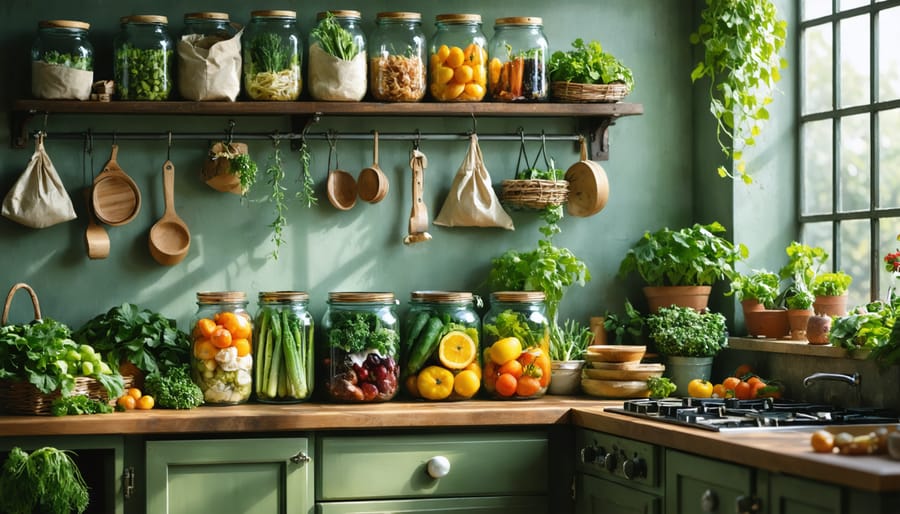
Transform your kitchen into an eco-conscious powerhouse through smart food storage practices that slash both environmental impact and grocery bills. Store produce in breathable cotton bags rather than plastic to extend shelf life naturally while eliminating single-use materials. Repurpose glass jars for bulk storage, creating an airtight seal that preserves dried goods for months without energy-intensive refrigeration. Master the art of natural food preservation through fermentation, dehydration, and cold storage – ancient techniques that require minimal resources while maximizing nutritional value.
These time-tested methods not only reduce food waste and packaging but also connect us to traditional wisdom that sustained communities for generations. By combining modern efficiency with heritage preservation techniques, eco-conservatism in food storage offers a practical path toward environmental stewardship that benefits both household budgets and planetary health. The simple act of mindful food storage becomes a powerful statement of environmental responsibility, proving that conservation and convenience can work hand in hand.
Traditional Meets Modern: Time-Tested Food Storage Methods
Root Cellaring: Nature’s Free Refrigerator
Root cellaring is a time-tested method of preserving fresh produce without electricity, using the earth’s natural cooling and humidity control. This traditional practice involves storing fruits, vegetables, and other food items in an underground space where temperatures remain consistently cool and moisture levels stay optimal for long-term storage.
The ideal root cellar maintains temperatures between 32-40°F (0-4°C) and humidity levels around 85-95%. Common locations include basements, hillsides, or purpose-built underground structures. The earth’s insulating properties help maintain these conditions year-round, making it an incredibly energy-efficient storage solution.
Different produce items require specific storage conditions to last longer. Root vegetables like carrots, potatoes, and beets thrive in cooler, more humid environments, while winter squash and onions prefer slightly warmer, drier conditions. Proper organization is key – keep fruits and vegetables that emit ethylene gas (like apples) separate from ethylene-sensitive produce to prevent premature ripening.
Success story: Sarah Miller from Vermont saved over $800 annually on her electricity bill after converting an unused corner of her basement into a root cellar. She now stores her garden harvest through winter, feeding her family fresh, local produce year-round while reducing her carbon footprint.
Remember to check stored items regularly and remove any showing signs of spoilage to prevent spread. With proper planning and maintenance, a root cellar can significantly reduce your environmental impact while preserving the flavors of your harvest.

Fermentation: Zero-Energy Food Preservation
Fermentation is nature’s gift to sustainable food preservation, offering a zero-energy solution that transforms raw ingredients into nutrient-rich, long-lasting foods. This ancient practice harnesses beneficial microorganisms to preserve food through natural processes, requiring no electricity or modern technology.
The beauty of fermentation lies in its simplicity: all you need is the right ingredients, clean containers, and time. Whether you’re making sauerkraut from cabbage, kimchi from vegetables, or kombucha from tea, the process relies on beneficial bacteria that naturally preserve food while creating delicious flavors and enhancing nutritional value.
Local farmer Sarah Miller shares her success story: “I started fermenting my surplus vegetables five years ago. Now, I can preserve my entire harvest without using any energy, and my customers love the probiotic-rich products.”
Environmental benefits of fermentation include:
– Zero energy consumption
– Reduced food waste
– Minimal packaging needs
– No artificial preservatives
– Enhanced shelf life without refrigeration
Getting started with fermentation is simple. Basic supplies like mason jars, sea salt, and fresh produce are all you need. Many gardeners find that fermentation helps them manage seasonal abundance while creating value-added products. Plus, the process actually increases the nutritional content of foods, making it a win-win for both the environment and your health.
Energy-Smart Preservation Solutions
Solar Dehydration Techniques
Solar dehydration offers an environmentally friendly and cost-effective way to preserve your harvest using nothing but the sun’s natural energy. This time-tested method not only helps reduce your carbon footprint but also maintains the nutritional value of your foods while creating delicious, shelf-stable products.
To get started, you’ll need a basic solar dehydrator, which can be either purchased or DIY-constructed using simple materials like wood, clear plastic or glass, and mesh screens. The key components include a collector area to trap solar heat, adequate ventilation for moisture removal, and drying racks for your produce.
For optimal results, slice your fruits and vegetables uniformly, about ¼ inch thick. This ensures even drying and prevents spoilage. Place the prepared items on drying racks with enough space between pieces to allow proper air circulation. Position your dehydrator in a sunny spot where it will receive 6-8 hours of direct sunlight daily.
Temperature control is crucial for successful solar dehydration. The ideal range is between 95°F and 145°F, depending on what you’re drying. Herbs and leafy greens need lower temperatures, while fruits and vegetables can handle higher heat levels. Using a simple thermometer helps monitor conditions inside your dehydrator.
One of our local farmers, Sarah Matthews, shares her success story: “I save hundreds of dollars annually by solar-drying my tomatoes and herbs. Plus, my customers love that I’m using completely renewable energy for preservation.”
Remember to store your dried goods in airtight containers in a cool, dark place. When done correctly, solar-dried foods can last for months while maintaining their natural flavors and nutrients.

Cold Storage Optimization
Optimizing your cold storage isn’t just about keeping food fresh – it’s about maximizing energy efficiency while minimizing your environmental impact. Start by organizing your refrigerator strategically: place frequently used items at the front to reduce door-opening time, and maintain a full (but not overcrowded) fridge, as the thermal mass helps maintain consistent temperatures.
Set your refrigerator temperature between 37-40°F (3-4°C) and your freezer at 0°F (-18°C) for optimal efficiency. Check the door seals regularly by placing a dollar bill in the door – if it slides out easily, it’s time to replace the gaskets. Keep your fridge’s condenser coils clean and dust-free, as dirty coils can reduce efficiency by up to 25%.
Consider using natural cooling techniques to pre-cool items before refrigeration. During winter months, take advantage of cold outdoor temperatures by creating a temporary storage space in an enclosed porch or garage for items like beverages and hardy vegetables.
Use clear storage containers to easily identify contents, reducing search time with the door open. Label everything with dates to practice proper food rotation and prevent waste. Group similar items together and designate specific zones for different food types – this not only improves organization but also helps maintain optimal temperature zones within your fridge.
For long-term storage, consider investing in an Energy Star certified chest freezer, which typically uses less energy than upright models. Place it in a cool, dry location away from direct sunlight and heat sources to maximize its efficiency.
Zero-Waste Preservation Practices
Reusable Storage Solutions
Making the switch to reusable storage solutions is a cornerstone of zero-waste kitchen techniques and plays a crucial role in eco-conscious food preservation. Glass jars, from mason jars to repurposed pasta sauce containers, offer an excellent plastic-free option for storing dry goods, preserves, and leftovers. These containers are durable, dishwasher-safe, and won’t absorb food odors or stains.
Stainless steel containers provide another lasting solution, especially for lunch boxes and portable food storage. They’re lightweight, unbreakable, and perfect for both refrigerated and dry storage. Many come with separate compartments and leak-proof lids, making them ideal for meal prep and food transportation.
Beeswax wraps serve as an eco-friendly alternative to plastic wrap. These reusable covers are made from organic cotton coated with beeswax, jojoba oil, and tree resin. They’re perfect for covering bowls, wrapping cheese, and keeping produce fresh. With proper care, they can last up to a year and are fully compostable when they reach the end of their life.
Silicone storage bags offer a washable, reusable alternative to disposable plastic bags. They’re freezer-safe, microwave-friendly, and perfect for storing everything from sandwiches to soup. Look for food-grade silicone options that are free from BPA and other harmful chemicals.

Whole-Food Preservation
Preserving whole fruits and vegetables is an art that connects us to traditional food preservation methods while minimizing waste. The key lies in selecting produce at its peak ripeness and using time-tested techniques that maintain the food’s natural integrity. Root cellaring remains one of the most effective methods, requiring only a cool, dark space with proper humidity control to store potatoes, carrots, and apples for months.
For those without a root cellar, modern refrigeration techniques can be adapted using green practices. Wrapping whole vegetables in slightly damp cloth bags or storing them in reusable containers with proper ventilation helps maintain freshness without plastic waste. Fruits like apples and pears can be stored separately to prevent ethylene gas from ripening nearby produce too quickly.
Dehydrating whole fruits and small vegetables preserves them entirely, including nutrient-rich skins and stems that might otherwise end up composting food scraps. Using solar dehydrators or energy-efficient electric models helps maintain environmental consciousness while creating long-lasting preserved foods.
Traditional fermentation of whole vegetables, like kimchi and sauerkraut, not only preserves food but enhances its nutritional value. This method requires minimal energy input and creates probiotic-rich foods that can last months when properly stored. Remember to use clean, sterilized equipment and maintain appropriate temperature conditions for safe preservation.
Seasonal Preservation Planning
CSA-Friendly Preservation Calendar
Making the most of your local food sourcing means knowing exactly when and how to preserve your seasonal bounty. This month-by-month guide helps you plan your preservation activities around typical CSA deliveries:
Spring (March-May):
– March: Prepare preservation equipment, clean jars, stock supplies
– April: Preserve early greens through dehydration
– May: Pickle spring onions and preserve fresh herbs in oil or by drying
Summer (June-August):
– June: Can strawberries, make jam, freeze peas
– July: Pickle cucumbers, can tomatoes, freeze berries
– August: Preserve peaches, make pickled beans, freeze corn
Fall (September-November):
– September: Can apple sauce, make fruit butters, pickle peppers
– October: Preserve root vegetables in cool storage, make pumpkin puree
– November: Ferment cabbage for sauerkraut, store winter squash
Winter (December-February):
– December: Dehydrate citrus fruits, make preserves from winter fruits
– January: Preserve winter root vegetables, make fruit leather
– February: Plan next year’s preservation schedule, maintain stored items
Quick Storage Tips:
– Root cellar vegetables: 32-40°F, 85-95% humidity
– Frozen produce: 0°F or below
– Canned goods: 50-70°F, dark location
– Dried foods: Cool, dry, dark place
Remember to label everything with dates and rotate your preserved foods regularly. This calendar focuses on common CSA offerings, but adjust based on your local growing season and available produce.
Embracing eco-conservative food preservation methods offers a powerful way to reduce our environmental impact while saving money and enjoying nutritious, seasonal foods year-round. By adopting these time-tested techniques, you’re not just preserving food – you’re preserving traditions, reducing food waste, and taking meaningful steps toward a more sustainable future.
Start small by experimenting with simple methods like water bath canning or dehydrating surplus garden produce. As your confidence grows, explore fermentation or try building a root cellar. Remember that every jar of home-preserved food represents reduced packaging waste, fewer transportation emissions, and support for local food systems.
The benefits extend beyond environmental impact. Many preservers report significant savings on their grocery bills, especially when preserving seasonal produce at peak harvest. Plus, there’s an undeniable satisfaction in opening a jar of summer tomatoes during the depths of winter or sharing homemade preserves with friends and family.
Ready to start your eco-conservation journey? Begin by preserving just one type of produce this season. Connect with local gardeners or farmers for bulk purchases, invest in basic equipment, and join community groups to learn from experienced preservers. Every small step counts toward a more sustainable food future, and the rewards – both personal and environmental – are well worth the effort.
Together, we can revive these valuable traditional practices while creating a healthier planet for future generations.
