
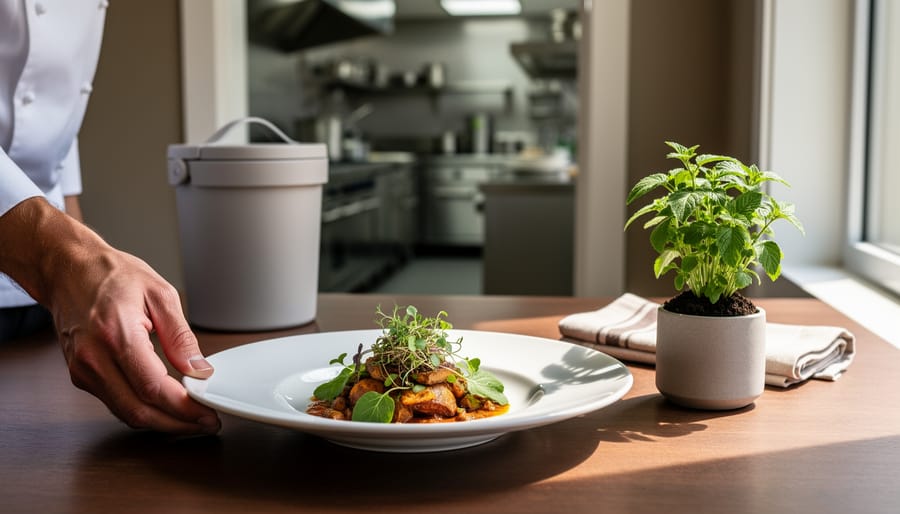
Sustainable fine dining merges exceptional culinary artistry with rigorous environmental stewardship, transforming luxury restaurants into laboratories for zero-waste systems, regenerative agriculture partnerships, and carbon-neutral operations. The movement has grown from a handful of pioneering chefs in the early 2020s to a defining standard across top-tier establishments, where sourcing decisions carry as much weight as plating aesthetics.
At its core, this approach redefines what it means to eat well. Restaurants now build entire menus around what nearby farms harvest each week, composting every scrap, filtering and reusing water, and calculating the carbon footprint of each dish. Some have gone further, planting their own gardens, raising heritage livestock, and fermenting ingredients that would otherwise spoil.
For diners, the experience offers more than a meal. It’s a window into what’s possible when food systems prioritize soil health, biodiversity, and fair labor practices without sacrificing flavor or creativity. The same principles that guide a Michelin-starred kitchen, like understanding seasonal rhythms and building relationships with growers, translate directly to home cooking and community-supported agriculture.
This shift matters because fine dining has always influenced broader food culture. When celebrated chefs champion local organic farmers and prove that sustainability enhances rather than limits culinary excellence, the ripple effects reach farmers’ markets, grocery stores, and backyard gardens. The techniques being refined in these kitchens, from root-to-stem cooking to natural fermentation, offer practical lessons for anyone committed to eating responsibly while supporting their local food economy.
What Makes Fine Dining Sustainable?
Sustainable fine dining reimagines luxury through the lens of environmental responsibility. Rather than showcasing rare ingredients flown in from distant continents, these restaurants demonstrate excellence by working within ecological boundaries. The approach marks a fundamental shift from the traditional fine dining model, where opulence often meant abundance and waste.
At its core, sustainable fine dining operates on a simple philosophy: exceptional food shouldn’t cost the earth. This means rethinking every aspect of how a restaurant sources, prepares, and serves meals. The goal isn’t just to reduce harm, it’s to create dining experiences that actively support healthy food systems and local communities.
The movement relies on several interconnected practices that set it apart from conventional luxury dining:
- Farm-to-table fine dining
- Direct relationships between chefs and local farms, eliminating middlemen and ensuring ingredients travel minimal distances from harvest to plate. This approach guarantees peak freshness while supporting regional agriculture.
- Nose-to-tail cooking
- Using every part of an animal or vegetable, turning what conventional kitchens discard into celebrated dishes. This practice honors the ingredient while dramatically reducing waste.
- Hyper-local sourcing
- Prioritizing ingredients grown or produced within a tight geographic radius, often just miles from the restaurant. This radical commitment to place reduces transportation emissions and celebrates regional flavors.
- Zero-waste kitchens
- Comprehensive systems that divert food scraps to compost, repurpose by-products, and eliminate single-use packaging. These operations aim for literally nothing entering the landfill.
Seasonal menus form the backbone of this approach. Instead of offering tomatoes year-round, sustainable restaurants celebrate what’s actually growing now. This constraint pushes chefs toward creativity rather than limiting them. Spring might feature tender peas and ramps, while autumn showcases squash and root vegetables.
Ethical ingredient selection extends beyond organic certification. These restaurants ask deeper questions: Were workers paid fairly? Does this seafood come from healthy fish populations? Can we source this locally instead of importing it? The answers shape every menu decision, proving that luxury and responsibility aren’t opposites, they’re partners in creating truly exceptional food.
The Farm-to-Fine-Dining Connection
Why Chefs Are Choosing CSA Partnerships
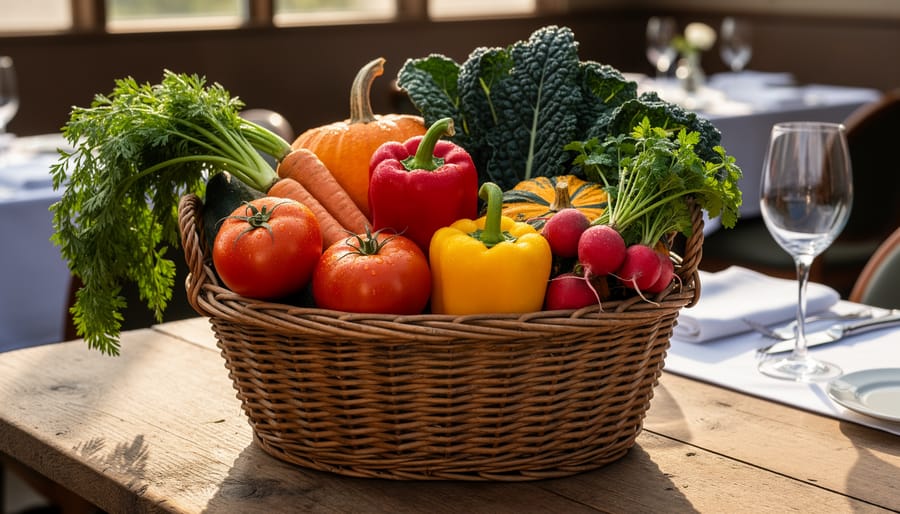
Fine dining chefs are increasingly drawn to CSA partnerships because these relationships solve problems that traditional supply chains can’t. When a chef receives a box of produce harvested that morning, they’re working with ingredients at peak flavor and nutritional value, something that matters tremendously when every element on a plate needs to shine. That 24-hour difference between harvest and kitchen transforms how vegetables taste and perform.
Beyond freshness, CSA farms offer access to varieties you won’t find through conventional distributors. Heirloom tomatoes in twelve different colors, obscure greens with complex flavor profiles, or fingerling potatoes in unusual shapes, these ingredients become signature elements that distinguish one restaurant from another. A chef might discover a purple cauliflower or lemon cucumbers that spark an entirely new dish concept.
The seasonal constraint actually fuels creativity rather than limiting it. When a farm delivers whatever is ready that week, chefs must adapt and innovate. This pushes culinary teams to develop techniques and combinations they might never have explored with year-round access to the same ingredients. One week might bring an abundance of zucchini blossoms, the next an unexpected surplus of kohlrabi. That variability keeps menus dynamic and forces chefs to stay sharp.
CSA partnerships also eliminate the middleman markup while ensuring farmers receive fair compensation. For restaurants operating on thin margins despite high menu prices, this direct relationship makes financial sense while supporting the local food economy they want to champion.
How These Partnerships Support Local Agriculture
When fine dining restaurants commit to sourcing from local organic farms, they create a lifeline for small-scale agriculture. These partnerships provide farmers with predictable, year-round income through regular wholesale orders, a stark contrast to the uncertainty of farmers’ markets where sales fluctuate with weather and foot traffic.
The financial advantages extend beyond stable revenue. Direct farm-to-restaurant relationships eliminate middlemen, meaning farmers keep more of each dollar while restaurants gain fresher ingredients. For small operations running on tight margins, this difference can determine whether a farm survives or folds.
These collaborations also boost farm visibility in ways traditional distribution channels never could. When a respected chef highlights a specific farm on their menu or social media, it introduces that producer to an audience of food enthusiasts who might become CSA members or market customers. That word-of-mouth marketing proves invaluable for farms without advertising budgets.
Perhaps most importantly, these partnerships validate sustainable farming practices. When top-tier restaurants publicly choose organic, regenerative methods, they signal to the broader food industry that environmental stewardship and quality aren’t just compatible, they’re inseparable.

Innovative Sustainable Practices in High-End Kitchens
Walk into the kitchen of a top sustainable restaurant and you will see something different from the usual high-end operation. Beyond the precision and artistry, there is a deliberate system where nothing goes to waste and every resource is carefully managed. These kitchens prove that environmental responsibility and culinary excellence are not just compatible but mutually reinforcing.
Composting has moved far beyond simply tossing scraps into a bin. Leading restaurants now separate organic waste into multiple streams, creating closed-loop systems where vegetable trimmings become compost for their own herb gardens or partner farms. Some establishments track waste by weight and ingredient type, using data to refine purchasing decisions and reduce food waste emissions over time. What cannot be composted often finds another purpose entirely.
The creative use of by-products separates sustainable kitchens from conventional ones. Carrot tops become vibrant pestos. Fish bones and vegetable scraps transform into rich stocks. Stale bread gets ground into breadcrumbs or turned into croutons rather than discarded. This root-to-stem philosophy extends the value of every ingredient while reducing the volume heading to landfills. When restaurants save surplus food through preservation techniques like pickling, fermenting, and curing, they create signature items that define their menus.
- Root-to-stem cooking that uses entire vegetables, from beet greens to broccoli stalks
- House-made preserves and ferments that transform seasonal surplus into year-round ingredients
- On-site kitchen gardens and rooftop farms that supply fresh herbs and microgreens
- Renewable energy systems including solar panels and energy-recovery ventilation
- Zero-packaging sourcing arrangements where ingredients arrive in reusable containers
Energy efficiency matters tremendously in kitchens that run twelve-plus hours daily. High-end sustainable restaurants invest in induction cooktops that heat faster while using less electricity, combi ovens that combine multiple cooking methods in one appliance, and LED lighting throughout. Smart ventilation systems adjust airflow based on actual cooking activity rather than running at full capacity constantly. These upgrades slash cooking energy consumption by thirty to fifty percent compared to traditional setups.
Water conservation takes multiple forms. Low-flow pre-rinse spray valves at dish stations use a fraction of the water without sacrificing cleaning power. Some restaurants install systems that capture and filter water from ice machines and steamers for reuse in non-food applications. Others work with suppliers who practice water-conscious agriculture, recognizing that sustainability extends backward through the entire supply chain. The result is kitchens that operate with remarkable efficiency while producing food that rivals any conventional fine dining establishment.

Seasonal Menus: The Heart of Sustainable Fine Dining
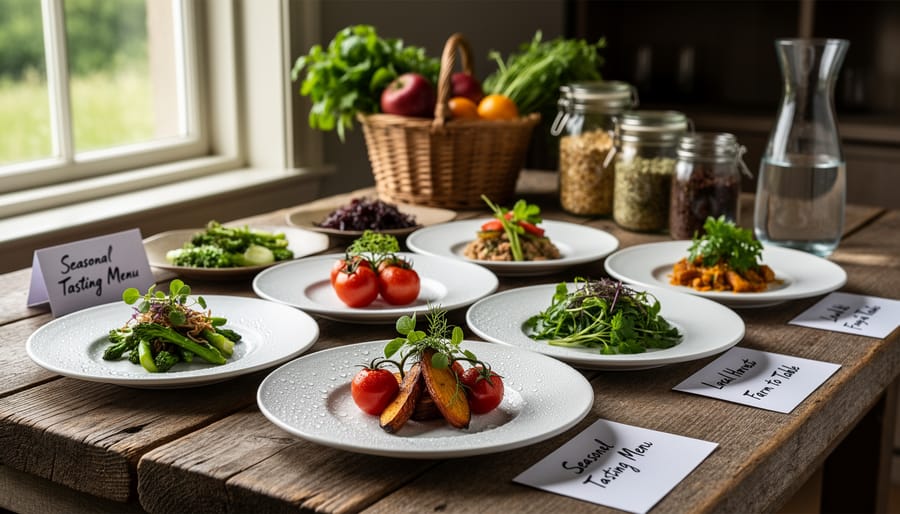
Walk into a truly sustainable fine dining restaurant in July, and you’ll find a menu celebrating summer tomatoes and zucchini blossoms. Return in November, and those same chefs will be crafting dishes around root vegetables and winter squash. This isn’t just culinary whimsy, seasonal menus form the backbone of sustainable restaurant operations.
When restaurants commit to seasonal eating, they drastically cut their carbon footprint. A tomato shipped from halfway around the world in January carries an enormous environmental cost compared to one harvested from a nearby farm at peak ripeness. By aligning menus with local harvest cycles, fine dining establishments eliminate the need for long-haul transportation and energy-intensive greenhouse production. The ingredients arrive fresher, often within hours of harvest, which means better flavor and higher nutritional value on the plate.
This approach also changes how chefs think about their craft. Rather than ordering whatever ingredients they want year-round, seasonal constraints push culinary teams toward creativity. They must ask: What can we do with an abundance of snap peas right now? How do we make Brussels sprouts exciting for the third month running? These limitations spark innovation, leading to unique preparations and flavor combinations that wouldn’t exist in a kitchen with unlimited global access.
Many sustainable restaurants take this further by learning to preserve seasonally extending summer’s harvest into winter months through fermentation, pickling, and canning. A jar of preserved stone fruit becomes a January dessert component. Pickled ramps from spring appear as a garnish in fall dishes. This mirrors what home cooks and farmers have done for generations, connecting modern fine dining to traditional foodways.
The beauty of seasonal menus lies in their honesty. They tell the truth about where you are and what the land can provide right now, turning each meal into a reflection of place and time.
What Everyday Diners Can Learn from Sustainable Fine Dining
You don’t need a Michelin star budget to eat more sustainably. The same principles that guide fine dining kitchens, thoughtful sourcing, minimal waste, seasonal eating, work beautifully in home cooking and everyday restaurant choices. What changes is the scale, not the philosophy.
Start by rethinking your relationship with ingredients. Fine dining chefs obsess over provenance because quality and sustainability go hand in hand. You can do the same by choosing local, organic produce when possible. It’s fresher, supports nearby farms, and typically requires less energy to reach your table. Even one farmers market trip per week shifts your eating habits toward seasonal rhythms.
Waste reduction translates directly from restaurant kitchens to home. Professional chefs use every part of an ingredient, carrot tops become pesto, chicken bones turn into stock, stale bread becomes croutons. Apply energy-efficient cooking techniques and plan meals around what you already have rather than impulse shopping. Store produce properly using eco-preservation methods to extend shelf life. These habits save money while reducing your environmental footprint.
Here’s how to incorporate fine dining sustainability principles into your daily routine:
- Shop at farmers markets or join a CSA to access seasonal, locally grown ingredients while supporting small-scale organic agriculture.
- Plan weekly menus around what’s in season rather than forcing out-of-season ingredients that require long-distance shipping.
- Reduce food waste by using scraps creatively, composting what you can’t use, and storing perishables properly.
- Support local restaurants that prioritize sustainable practices, even if they’re not fine dining establishments.
- Cook at home more often using whole ingredients, which gives you control over sourcing and reduces packaging waste.
The beauty of these practices is their flexibility. You won’t execute them perfectly every time, and that’s fine. Even small shifts matter. Choosing one seasonal vegetable over an imported option, saving vegetable scraps for stock, or asking a restaurant about their sourcing practices all contribute to a more sustainable food system.
Fine dining proves that environmental responsibility and exceptional quality aren’t opposing forces. They enhance each other. The same holds true whether you’re cooking Tuesday dinner or choosing where to celebrate an anniversary. Better ingredients, less waste, stronger connections to local food producers, these principles work at every price point and skill level.
Finding Sustainable Restaurants in Your Area
Finding restaurants that share your commitment to sustainability doesn’t require a hefty budget or inside connections. Start with the menu itself, which often reveals a restaurant’s priorities before you even step inside. Look for specific farm names rather than generic sourcing language. A menu that lists “tomatoes from Green Valley Farm” or “greens from Thompson Family CSA” signals direct relationships with local producers. Restaurants genuinely committed to sustainability typically highlight seasonal availability, sometimes noting when certain dishes will rotate off as ingredients change.
Certifications provide helpful shortcuts in your search. The Green Restaurant Association certification, LEED credentials for the building, and local sustainability seals indicate verified eco-friendly practices. Organic certification for ingredients, Fair Trade partnerships, and membership in organizations like the Sustainable Restaurant Association also matter. Don’t hesitate to ask your server direct questions about sourcing practices, composting programs, or seasonal menu changes. Staff at truly sustainable establishments usually welcome these conversations and can explain their restaurant’s specific commitments.
Online research extends your options significantly. Check restaurant websites for sustainability statements or farm partnership pages. Many now share their composting tonnage, energy reduction goals, or links to their ingredient suppliers. Search local food blogs and sustainability directories, which often maintain curated lists of eco-conscious establishments. Social media accounts frequently showcase chef visits to partner farms or highlight seasonal ingredient arrivals.
Remember that sustainable dining exists across price ranges. A neighborhood café buying from the farmers market and composting scraps lives these values just as authentically as upscale establishments with elaborate zero-waste programs. Your support matters regardless of where you choose to eat.
Sustainable fine dining proves that luxury and environmental stewardship aren’t opposing forces, they’re natural partners. These restaurants show us that the pursuit of excellence actually demands respect for ingredients, producers, and the planet. When a chef treats a carrot with the same reverence as a truffle, sourcing it from a local organic farm and using every part creatively, that’s not compromise. That’s craft at its highest level.
You don’t need a reservation at a Michelin-starred restaurant to embrace these principles. Every time you choose seasonal produce from your farmers market, support a CSA farm, or plan meals that minimize waste, you’re participating in the same movement. The real power of sustainable fine dining lies in its ripple effect, inspiring chefs at neighborhood bistros, home cooks rethinking their grocery habits, and eaters everywhere demanding better practices.
As more restaurants adopt these values and more diners vote with their wallets, we’re building a food system where quality, community, and sustainability reinforce each other. That future is already taking shape, one thoughtfully sourced meal at a time.
