Category Archives

43 Articles

Local Food Hubs: How Small Farms Are Revolutionizing Your Food Supply Chain

Posted by darrell on
0
Local Food Systems and Distribution
Local Food Hubs: How Small Farms Are Revolutionizing Your Food Supply Chain

Local food hubs are transforming how communities access fresh, sustainably grown food while revolutionizing regional food systems. These innovative distribution networks connect small-scale farmers directly with consumers, restaurants, and institutions, creating a vibrant marketplace that supports both local agriculture and community health. By aggregating, storing, and distributing locally grown produce, food hubs solve the critical “missing middle” challenge that often prevents small farmers from reaching larger markets. They serve as the vital bridge between rural producers and urban consumers, making fresh, seasonal food accessible year-round while ensuring farmers receive fair compensation for their hard work.

Picture a bustling warehouse where just-harvested vegetables from dozens of nearby farms are sorted, packed, and delivered to schools, hospitals, and neighborhood markets – that’s a food hub in action, strengthening local economies and building more resilient food systems one delivery at a time.

What Makes Local Food Hubs Different?

Bird's eye view of a bustling food hub facility with multiple delivery trucks and storage areas
Aerial view of a local food hub facility showing loading docks, storage areas, and farmers’ trucks delivering produce

The Community Connection

Local food hubs serve as vibrant community cornerstones, fostering meaningful connections between farmers, consumers, and local businesses. Unlike traditional community-supported agriculture programs, food hubs create broader networks that support multiple producers and diverse consumer needs.

These organizations strengthen regional food systems by hosting farmer markets, educational workshops, and community events. They often become gathering spaces where neighbors share cooking tips, swap recipes, and learn about seasonal eating. Many food hubs also partner with local schools and restaurants, creating farm-to-table programs that benefit the entire community.

By facilitating direct relationships between producers and consumers, food hubs help build trust and transparency in local food systems. Farmers get to know their customers personally, while consumers gain deeper appreciation for the work that brings fresh food to their tables. This connection creates a resilient local economy where food dollars circulate within the community, supporting sustainable farming practices and regional food security.

Beyond Just Distribution

Local food hubs go far beyond simple distribution, offering vital support services that help both farmers and consumers thrive. For farmers, many hubs provide valuable business planning assistance, marketing support, and food safety training. They often offer specialized equipment sharing programs and cold storage facilities that would be too expensive for individual farmers to maintain.

Some food hubs even operate educational programs, teaching sustainable farming practices and helping new farmers get started. They frequently organize workshops on topics like season extension, organic certification, and efficient post-harvest handling techniques.

For consumers, food hubs create engaging community experiences through farm tours, cooking demonstrations, and seasonal food festivals. Many hubs also partner with local schools and organizations to provide nutrition education and cooking classes, helping people make the most of their local produce. This comprehensive approach strengthens the entire local food system while building meaningful connections between farmers and their communities.

How Local Food Hubs Support Small Farmers

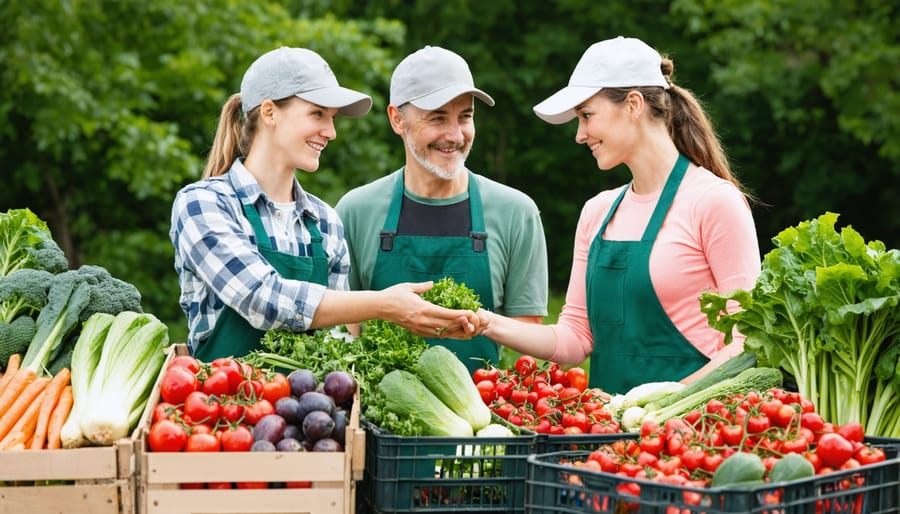
Farmer and food hub employee collaborating to prepare fresh produce for market
Small-scale farmer working with food hub staff to package and label their produce for distribution

Marketing and Sales Support

Food hubs provide crucial marketing and sales support that helps local farmers expand their reach and connect with more customers. Through professional branding, packaging, and marketing services, food hubs transform individual farm products into market-ready items that appeal to wholesale buyers and consumers alike. They handle promotional activities, including social media marketing, website maintenance, and relationship building with restaurants, schools, and retailers.

Many food hubs offer online ordering platforms where customers can browse and purchase products from multiple local farms in one convenient transaction. They also help farmers participate in farmers’ markets, food festivals, and community events, increasing their visibility and sales opportunities. Some food hubs even provide market analysis and pricing guidance to help farmers maximize their profits while keeping prices fair for consumers.

Success stories like the River Valley Food Hub demonstrate these benefits in action. Local farmer Sarah Chen increased her sales by 40% after joining the hub, which helped her develop professional packaging for her heirloom tomatoes and connected her with three new restaurant accounts. The hub’s marketing team also features her story and products in their monthly newsletter, reaching thousands of potential customers.

Logistics and Infrastructure

Local food hubs require robust infrastructure to effectively manage modern local food distribution and storage. These facilities typically include temperature-controlled warehouses, sorting and packing areas, and loading docks for efficient product handling. Many hubs feature commercial kitchens where producers can process their harvests into value-added products, extending their market reach and shelf life.

The logistics network includes refrigerated delivery trucks, inventory management systems, and specialized equipment for produce handling. Food hubs often provide farmers with shared resources like washing stations, packaging materials, and cold storage units, helping reduce individual infrastructure costs.

Digital infrastructure is equally important, with online ordering systems connecting farmers directly to buyers. These platforms handle everything from inventory tracking to delivery scheduling, making it easier for small-scale producers to reach larger markets.

Many food hubs also maintain educational spaces for farmer training and community workshops, along with office areas for administrative tasks and marketing support. This comprehensive infrastructure enables smooth operations while fostering collaboration between producers and consumers.

Visual diagram illustrating the flow of products from local farms through food hubs to end consumers
Infographic showing the local food hub supply chain from farm to consumer with icons and arrows

Food Hubs and Consumer Benefits

Fresh, Local Access

Food hubs make accessing fresh, local produce easier than ever by creating a direct pipeline from farm to table. Instead of navigating multiple farm stands or markets, customers can find a diverse selection of seasonal produce, dairy, and meats all in one convenient location. This streamlined approach to connecting with local food systems ensures that produce reaches consumers at peak freshness, often within 24-48 hours of harvest.

Beyond convenience, food hubs provide detailed information about growing practices, harvest dates, and the farmers behind each product. Many hubs offer flexible purchasing options, from pre-ordered boxes to market-style shopping, allowing customers to choose what works best for their needs. Additionally, food hubs often provide recipe suggestions, storage tips, and preparation advice to help customers make the most of their seasonal produce, creating a more engaging and educational shopping experience than traditional grocery stores.

Supporting Local Economy

Local food hubs serve as powerful economic engines for their communities, creating ripple effects that benefit everyone involved. When farmers sell through food hubs, they typically receive 50-80% of the retail price, compared to 15-25% through traditional distribution channels. This higher profit margin helps sustain local farms and enables them to reinvest in their operations.

Beyond direct farmer benefits, food hubs create local jobs in warehousing, distribution, and administration. They also help preserve farmland by making small-scale agriculture more economically viable. Many food hubs offer business training and marketing support to farmers, helping them develop sustainable business models.

The economic impact extends to consumers too. Money spent at food hubs tends to circulate within the local economy, creating a multiplier effect. Studies show that every dollar spent at a food hub generates an additional $1.75 in local economic activity, supporting other small businesses and community services. This local circulation of money helps build more resilient and self-sustaining communities.

Starting or Joining a Food Hub

Whether you’re a farmer looking to expand your market reach or a consumer passionate about supporting local agriculture, getting involved with a food hub is an exciting journey. Here’s how to take those first steps:

For Farmers:
Start by assessing your production capacity and what you can consistently supply. Food hubs typically look for farmers who can maintain reliable quantities of high-quality produce. Reach out to existing food hubs in your area and inquire about their producer requirements, which usually include food safety certifications and quality standards.

Consider attending food hub information sessions or agricultural cooperative meetings to network with other producers and learn from their experiences. Many successful food hub farmers started small and gradually scaled their operations to meet growing demand.

For Consumers:
Look for food hubs operating in your region through local farming organizations or online directories. Many hubs offer various participation levels, from simple CSA-style subscriptions to more involved membership programs. Start by signing up for their newsletter or following their social media to stay informed about seasonal offerings and participation opportunities.

Starting a New Food Hub:
If there isn’t a food hub in your area, consider starting one. Begin by:
– Conducting a feasibility study to assess local demand
– Building relationships with area farmers
– Identifying potential storage and distribution facilities
– Creating a business plan
– Securing necessary permits and insurance
– Establishing food safety protocols

Success Story:
Sarah Matthews, a small-scale vegetable farmer in Vermont, joined her local food hub three years ago. “It transformed my business,” she shares. “I went from struggling to find consistent markets to having reliable weekly orders and better pricing for my produce.”

Remember that food hubs thrive on community involvement. Whether you’re starting or joining one, focus on building strong relationships and maintaining open communication with all participants. Start small, be patient, and grow sustainably with your community’s needs.

Local food hubs have become vital bridges connecting small-scale farmers with their communities, transforming the way we think about and access fresh, local food. These innovative organizations have proven their worth by creating resilient local food systems, supporting farmer livelihoods, and making healthy, sustainably-grown produce more accessible to consumers. Through their efficient distribution networks and community-focused approach, food hubs continue to strengthen regional food security while promoting environmental stewardship.

The impact extends beyond just food distribution – food hubs are nurturing a new generation of farmers, creating jobs, and fostering deeper connections between producers and consumers. As we look to the future, these organizations will play an increasingly important role in building sustainable, equitable food systems that benefit everyone in the community. Whether you’re a farmer looking to expand your market reach or a consumer seeking fresh, local produce, food hubs offer a practical solution that supports both agricultural sustainability and community well-being.

How Modern Urban Farms Are Revolutionizing Local Food Distribution

Posted by darrell on
0
Local Food Systems and Distribution
How Modern Urban Farms Are Revolutionizing Local Food Distribution

In the heart of our cities, a revolutionary transformation is taking shape as innovative urban farms redefine local food production. These modern agricultural hubs combine cutting-edge technology with sustainable practices, creating vibrant food ecosystems in unexpected places – from rooftops to abandoned warehouses. Through community-supported agriculture, these farms are bridging the gap between city dwellers and fresh, nutritious produce while building resilient local food networks.

Powered by hydroponic systems, vertical growing techniques, and smart climate controls, today’s urban farms produce up to 10 times more food per square foot than traditional farming methods. They’re not just growing food; they’re nurturing communities, creating green jobs, and demonstrating how cities can become more self-sufficient and environmentally responsible.

These agricultural oases represent a practical solution to food security challenges while reducing transportation emissions and water usage – proving that the future of farming isn’t just rural; it’s right in our neighborhoods.

The Rise of Tech-Enabled Urban Farm Networks

Smart Logistics Solutions

Modern urban farms are revolutionizing food distribution through innovative digital solutions that seamlessly connect growers with consumers. Smart phone apps and online platforms now enable customers to browse available produce, place orders, and schedule pickups or deliveries with just a few taps.

These digital marketplaces provide real-time inventory updates, allowing farmers to better manage their harvests and reduce food waste. Customers can receive notifications when their favorite items become available or when special seasonal produce is ready for harvest.

Many urban farms have adopted QR code systems that let customers track their food from seed to table, providing complete transparency about growing methods and harvest dates. Some platforms even offer subscription services, where customers can customize weekly produce boxes based on their preferences and dietary needs.

Local delivery networks, often utilizing eco-friendly transportation like electric vehicles and cargo bikes, ensure fresh produce reaches customers within hours of harvest. This tech-driven approach not only maximizes efficiency but also strengthens community connections by making locally grown food more accessible to urban residents.

These smart logistics solutions are helping urban farms scale their operations while maintaining the personal touch that makes local food systems special.

Real-Time Inventory Management

Modern urban farms leverage sophisticated digital systems to track their produce from seed to sale. Using smartphone apps and cloud-based platforms, farmers can monitor crop yields, harvest schedules, and inventory levels in real-time. This technology ensures that nothing goes to waste and customers receive the freshest possible produce.

Many urban farms use QR codes and digital tracking systems to monitor each crop’s journey through the growing cycle. When produce is harvested, it’s immediately logged into the system, allowing farmers to update their available inventory instantly. This data helps them coordinate with local restaurants, markets, and CSA members more efficiently.

Success story: Green City Farm in Portland reduced food waste by 40% after implementing a digital inventory system. Their mobile app allows customers to see exactly what’s available each day, while farmers receive automatic alerts when specific crops are running low.

These smart systems also help urban farms maintain detailed records of crop rotation, yields, and seasonal patterns, enabling better planning for future growing seasons. By combining traditional farming wisdom with modern technology, urban farms can maximize their limited space while ensuring a steady supply of fresh produce for their communities.

Modern rooftop garden with digital monitoring equipment and automated irrigation systems
Urban rooftop farm with smart monitoring systems and digital displays showing real-time crop data

Collaborative Distribution Models

Professional chef and urban farmer discussing locally grown vegetables in commercial kitchen
Chef meeting with urban farmer at restaurant kitchen, reviewing fresh produce delivery

Restaurant Partnerships

Urban farms are revolutionizing the farm-to-table movement by forming direct partnerships with local restaurants, creating a seamless connection between growers and chefs. These partnerships typically begin with farmers meeting chefs at local markets or through community networking events, where they can showcase their fresh, seasonal produce.

Many urban farms now offer specialized growing programs where they cultivate specific ingredients based on restaurants’ needs. Chefs can request particular varieties of herbs, vegetables, or edible flowers, ensuring they have access to unique, high-quality ingredients that set their menus apart. Some farms even provide same-day harvest and delivery services, guaranteeing maximum freshness.

These partnerships benefit both parties: restaurants receive ultra-fresh, locally grown produce while urban farms secure reliable revenue streams. Chefs often visit the farms to understand growing practices and plan seasonal menus, while farmers gain valuable insight into culinary trends and restaurant needs.

Success stories include urban farms that supply multiple restaurants with specialized microgreens year-round, and others that coordinate with restaurant groups to grow heritage varieties of vegetables not commonly found in traditional markets. Some partnerships have evolved to include educational components, where chefs and farmers collaborate on workshops and dining events that help educate the community about sustainable food systems.

For urban farms, restaurant partnerships represent a vital distribution channel that supports sustainable local food systems while providing fresh, high-quality ingredients to discerning diners.

Community Hub Systems

Our urban farm’s innovative distribution network reimagines the traditional farmers’ market model through strategically placed community hubs. These neighborhood pickup points serve as vital links connecting local farmers with consumers in a convenient and sustainable way.

Each hub operates as a mini distribution center, typically housed within existing community spaces like recreation centers, schools, or local businesses. Members can collect their fresh produce at a time that suits their schedule, eliminating the need to visit the farm directly. This flexible system particularly benefits busy families and working professionals who might otherwise struggle to access fresh, local produce.

The hubs also function as community gathering spaces, fostering relationships between neighbors and creating opportunities for food education. Regular cooking demonstrations, seasonal recipe exchanges, and preservation workshops help members make the most of their farm-fresh ingredients.

To ensure produce freshness, we’ve implemented a sophisticated scheduling system that coordinates harvest times with hub delivery windows. Temperature-controlled storage units at each location maintain optimal conditions for different types of produce, while digital inventory tracking helps minimize food waste and ensures every member receives their complete share.

This decentralized distribution approach reduces transportation emissions and creates a more resilient local food system that can adapt to community needs while strengthening neighborhood bonds.

Sustainable Last-Mile Solutions

Electric Vehicle Fleets

Our urban farm takes pride in its all-electric delivery fleet, showcasing our commitment to sustainable agriculture from soil to doorstep. The farm operates a mix of electric cargo vans and e-bikes, carefully chosen to minimize our carbon footprint while efficiently serving our local community.

Our larger electric vans handle bulk deliveries to restaurants and grocery partners, while our nimble e-cargo bikes zip through neighborhood streets for individual customer deliveries. This dual approach allows us to navigate urban traffic efficiently while maintaining the freshness of our produce.

The fleet is powered by solar charging stations installed on our farm’s main building, creating a closed-loop sustainable transportation system. Each vehicle is equipped with temperature-controlled compartments to ensure optimal freshness during transit, especially crucial for delicate greens and herbs.

We’ve found that our electric vehicles not only reduce emissions but also save on operational costs. The quiet operation of our delivery vehicles has been particularly appreciated in residential areas, demonstrating that urban farming can truly be a good neighbor in every sense.

Bicycle Courier Networks

In a remarkable shift towards sustainable delivery solutions, many new urban farms are partnering with bicycle courier networks to distribute their fresh produce. These pedal-powered delivery systems not only reduce carbon emissions but also provide an efficient way to navigate busy city streets and connect farms directly with local customers.

Bicycle couriers, equipped with specially designed cargo bikes and temperature-controlled containers, can transport everything from microgreens to root vegetables across urban areas. These bikes can carry up to 350 pounds of produce while maintaining the freshness and quality that customers expect from urban farms.

The benefits extend beyond environmental impact. Bicycle deliveries often prove more cost-effective than traditional vehicle-based distribution, especially in dense urban areas where parking and traffic congestion pose significant challenges. Many courier networks also create meaningful employment opportunities for local cycling enthusiasts who share the values of sustainable agriculture.

Some urban farms have even developed smartphone apps that allow customers to track their deliveries in real-time, adding a tech-savvy element to this eco-friendly distribution method. This combination of traditional bicycle transport with modern technology represents the perfect blend of sustainability and convenience that today’s conscious consumers demand.

Courier on electric cargo bicycle delivering fresh produce boxes through city streets
Electric cargo bike loaded with produce boxes making deliveries in urban setting

Success Story: The Green Loop Network

The Green Loop Network emerged as a groundbreaking solution to urban farming distribution challenges in 2019, connecting 15 urban farms across Vancouver’s metropolitan area. What started as a small collaboration between three rooftop gardens has evolved into one of North America’s most efficient local food distribution networks.

The network’s success lies in its innovative hub-and-spoke distribution model. Each participating farm specializes in specific crops, maximizing growing efficiency while maintaining diverse product offerings. A central digital platform coordinates harvest schedules, manages inventory, and facilitates same-day delivery to customers within a 10-kilometer radius.

What sets Green Loop apart is its commitment to zero-waste distribution. The network uses electric cargo bikes for short-distance deliveries and employs reusable containers that customers return during their next delivery. This system has reduced packaging waste by 85% and delivery-related emissions by 90% compared to traditional distribution methods.

The network’s impact extends beyond environmental benefits. Participating farms report a 40% increase in revenue since joining, while customers enjoy fresher produce at competitive prices. The Green Loop Network has become a blueprint for urban farming communities worldwide, demonstrating how collaboration and smart distribution can transform local food systems.

As urban farming continues to reshape our food landscape, distribution networks are proving to be the vital link between city farmers and conscious consumers. The success of these networks has created a ripple effect, inspiring more communities to embrace local food production and distribution models. From tech-enabled delivery systems to neighborhood pickup points, these innovative solutions are making fresh, locally grown produce more accessible than ever.

Looking ahead, urban farm distribution networks are poised for even greater growth. Many cities are already incorporating urban agriculture into their sustainability plans, while investors and entrepreneurs are developing new technologies to streamline operations. The movement is creating jobs, reducing food miles, and strengthening community bonds – all while providing fresher, healthier food options for city dwellers.

The future of urban farming lies in its ability to adapt and scale. As more farms connect with local restaurants, schools, and families, we’re seeing the emergence of a more resilient and sustainable food system. This growing network of urban farms isn’t just changing how we get our food – it’s transforming our relationship with what we eat and how we build healthier, more connected communities.

How Community-Supported Agriculture Transforms Your Connection to Local Food

Posted by darrell on
0
Local Food Systems and Distribution
How Community-Supported Agriculture Transforms Your Connection to Local Food

Community-supported agriculture (CSA) revolutionizes how we connect with our food, transforming the traditional farmer-market relationship into a direct partnership between local producers and consumers. As a cornerstone of the modern farm-to-table movement, CSA programs invite members to invest in a farm’s seasonal harvest, receiving regular shares of fresh, locally grown produce while sharing in both the rewards and risks of farming. This innovative model emerged in the 1960s as a response to growing concerns about food quality and agricultural sustainability, offering a practical solution that benefits both farmers and consumers. Today, CSA memberships represent more than just a subscription service – they’re a commitment to supporting local agriculture, fostering community connections, and ensuring sustainable farming practices for future generations. Whether you’re a health-conscious consumer or passionate about environmental stewardship, understanding CSA’s fundamental principles opens doors to fresher food, stronger communities, and a more resilient local food system.

What Makes Community-Supported Agriculture Unique

The Farm-to-Table Partnership

The heart of community-supported agriculture lies in its unique partnership between farmers and members. Members, often called shareholders or subscribers, purchase a “share” of the season’s harvest upfront. This early investment provides farmers with crucial operating capital when they need it most – during planting and early growing seasons.

In return for their investment, members receive regular distributions of fresh, seasonal produce throughout the growing season. These distributions, typically weekly or bi-weekly, might include vegetables, fruits, herbs, and sometimes even flowers or honey, depending on what the farm produces. The exact contents of each share vary based on what’s ready for harvest, creating an exciting element of discovery for members.

Most CSAs offer different share sizes to accommodate various household needs. A full share usually feeds a family of four, while half shares are perfect for smaller households or those new to CSA participation. Some farms also offer flexible payment plans or working shares, where members can reduce their costs by contributing labor on the farm.

This direct partnership creates a genuine connection between consumers and their food source, fostering a deeper understanding of seasonal eating and agricultural cycles.

Smiling farmer handing vegetables to CSA member at farm pickup station
Farmer and CSA members exchanging fresh produce at a weekly pickup

Shared Risks and Rewards

One of the most distinctive aspects of CSA farming is the shared responsibility between farmers and members. When you join a CSA, you’re not just subscribing to a produce delivery service – you’re becoming a partner in the farm’s success and challenges throughout the growing season.

During bountiful times, members enjoy an abundance of fresh, seasonal produce that often exceeds expectations. A successful tomato harvest might mean extra shares of heirloom varieties, while a particularly good berry season could result in additional pints for preserving or freezing.

However, CSA members also share the risks inherent in farming. If a late frost damages the strawberry crop or an unusually wet season affects the tomato yield, members receive smaller portions of affected crops. This risk-sharing model helps farmers maintain financial stability during difficult growing seasons and creates a deeper connection between consumers and the realities of agricultural production.

Many CSA farmers offset potential crop losses by planting diverse varieties and implementing season-extension techniques, ensuring members receive value regardless of individual crop performance. This partnership approach fosters a supportive community that understands and appreciates the complexities of sustainable farming.

Benefits of Joining a CSA

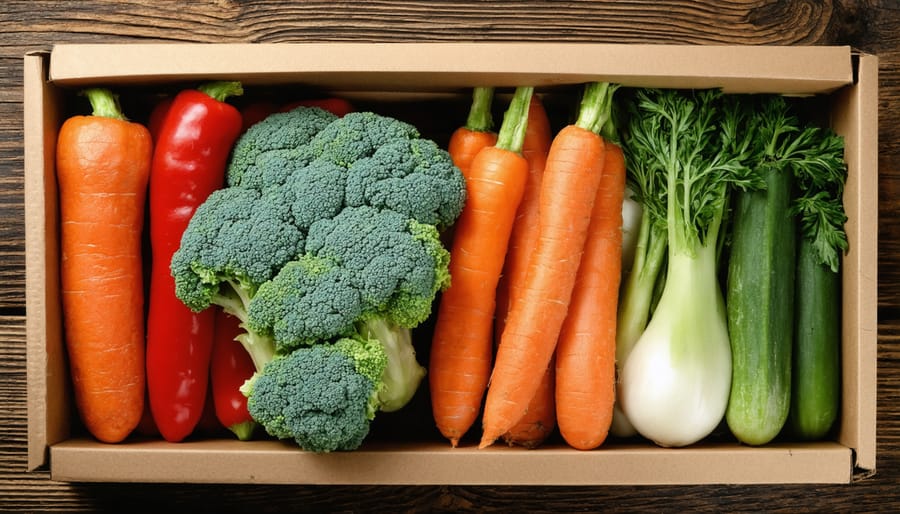
Wooden box filled with colorful seasonal vegetables including carrots, lettuce, tomatoes, and herbs
Diverse array of seasonal vegetables in a typical CSA share box

For Members

CSA membership offers a treasure trove of benefits that go far beyond just receiving fresh produce. As a member, you’ll enjoy weekly or bi-weekly boxes filled with freshly harvested, seasonal vegetables and fruits straight from your local farm. This direct connection to your food source ensures peak freshness and optimal nutrition, while also supporting eating seasonally in harmony with nature’s cycles.

Members often discover new varieties of produce they might not typically find in grocery stores, expanding their culinary horizons and cooking skills. Many CSAs provide recipes, cooking tips, and preparation suggestions to help members make the most of their weekly bounty. This educational aspect helps families develop healthier eating habits and a deeper appreciation for fresh, whole foods.

Perhaps the most rewarding aspect of CSA membership is the sense of community it creates. Members often have opportunities to visit the farm, participate in harvest events, and meet fellow food enthusiasts. This connection helps bridge the gap between urban and rural communities while fostering a deeper understanding of sustainable agriculture.

Additionally, many CSAs offer pick-your-own options, farm tours, and educational workshops, making it an enriching experience for families with children who want to learn about where their food comes from. By investing in a CSA share, members become active participants in their local food system while enjoying the freshest possible produce throughout the growing season.

For Farmers

For farmers, participating in a CSA program offers numerous advantages that contribute to a more stable and fulfilling agricultural business. The most significant benefit is the guaranteed income stream provided by member subscriptions paid at the beginning of the growing season. This upfront payment system allows farmers to better plan their crops, invest in equipment, and manage their resources effectively without relying on traditional loans.

Building direct relationships with customers creates a loyal community that understands and supports local sustainable agriculture. These meaningful connections often lead to long-term member retention and word-of-mouth referrals, reducing marketing costs and ensuring a reliable customer base year after year.

The CSA model also provides farmers with valuable feedback about their produce and growing methods, helping them refine their offerings to better meet community needs. By sharing both the rewards and risks of farming with their members, farmers can focus on quality over quantity and experiment with diverse crop varieties without fear of market fluctuations.

Additionally, the predictable income allows farmers to implement more sustainable practices and invest in farm improvements, knowing they have the financial security to do so. This creates a positive cycle where both the farm and the community benefit from stronger agricultural practices and fresher, more diverse produce options.

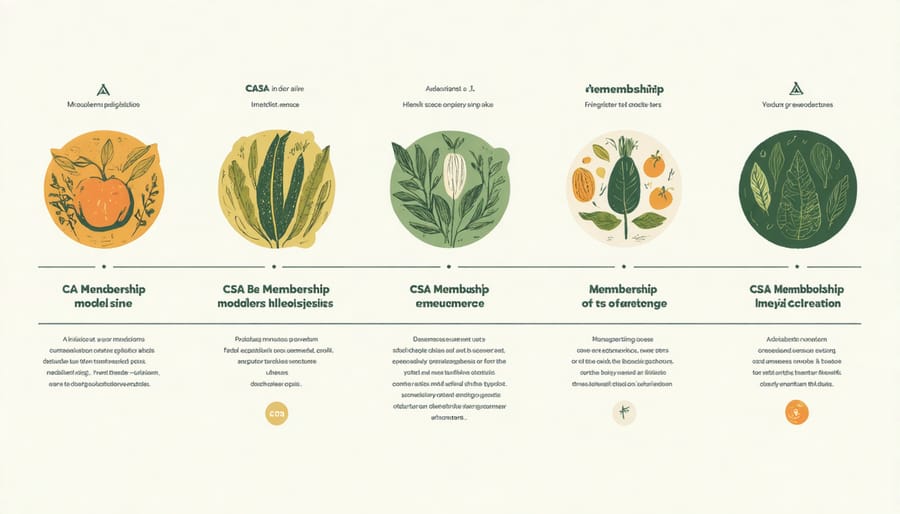
Visual diagram comparing traditional, flexible, and specialty CSA membership options
Infographic showing different CSA membership models and options

Common CSA Models and Options

Traditional Farm Shares

The classic weekly vegetable box model is the cornerstone of traditional CSA farming. Members typically receive a box of fresh, seasonal produce once a week throughout the growing season, which usually runs from late spring through fall. These shares often include 6-12 different vegetables and herbs, with quantities designed to feed a family of four for a week.

Farmers plan their crops months in advance, carefully timing plantings to ensure a diverse harvest each week. A typical early summer box might include lettuce, spring onions, radishes, and peas, while late summer shares could feature tomatoes, cucumbers, peppers, and sweet corn. Some farms also offer add-on options like eggs, flowers, or fruit for members who want to customize their shares.

The beauty of traditional farm shares lies in their predictable income for farmers and their ability to connect consumers directly with the growing seasons. Members learn to cook with new ingredients and experience the natural rhythm of their local food system. While the specific contents of each box may vary based on growing conditions and harvest timing, this uncertainty is part of the shared agricultural experience that makes CSA farming unique and meaningful.

Flexible Modern Approaches

Modern CSAs have evolved to offer more flexibility and options than traditional models, making it easier for members to find a program that fits their lifestyle. Many farms now provide customizable shares, allowing members to choose their preferred produce mix or adjust portion sizes to match their household needs. Some even offer bi-weekly options instead of weekly commitments, perfect for smaller households or those new to CSA programs.

Multi-farm CSAs have emerged as a popular alternative, combining resources from several local farms to provide greater variety and year-round availability. These collaborations might include vegetables from one farm, fruits from another, and specialty items like eggs, honey, or flowers from additional producers.

Specialty CSAs have also gained traction, catering to specific dietary preferences or interests. Members can now find shares focused on heirloom vegetables, microgreens, or even medicinal herbs. Some farms offer add-on options like grass-fed meat, artisanal cheese, or locally roasted coffee, creating a complete farm-to-table experience.

Many CSAs now incorporate technology, offering online ordering systems and flexible payment plans to make participation more convenient for busy families.

Getting Started with CSA Membership

Ready to join a CSA? Getting started is easier than you might think! Begin by searching online directories or local farmers’ markets to find CSA programs in your area. Many regions have multiple farms offering different types of shares, from seasonal vegetables to year-round options including eggs, meat, or flowers.

Once you’ve found potential CSAs, reach out to farmers directly to learn about their growing practices, share sizes, pickup locations, and payment options. Most farms offer detailed information through their websites or welcome farm visits during open house events. Consider asking about their growing season length, typical produce varieties, and whether they offer flexible payment plans or working shares.

Before committing, evaluate your household’s produce consumption and storage capacity. A full share typically feeds 3-4 people, while half shares suit smaller households. Also consider pickup logistics – ensure the location and schedule work with your routine.

Many CSAs require upfront payment for the season, typically ranging from $300-800 depending on share size and length. Some farms offer early-bird discounts or payment plans to make membership more accessible. Remember to ask about their policies regarding missed pickups and vacation holds.

New members often receive welcome packets with storage tips, recipes, and preparation suggestions for less familiar vegetables. Don’t hesitate to communicate with your farmer throughout the season – they’re usually happy to answer questions and provide guidance on making the most of your share.

Community-supported agriculture represents a powerful way to reconnect with our food system while supporting local farmers and sustainable agriculture. By joining a CSA, you become more than just a consumer – you become an active participant in your local food community, sharing both the rewards and risks of farming with those who grow your food.

The benefits extend far beyond just fresh, seasonal produce. CSA members often report feeling more connected to their community, developing a deeper appreciation for seasonal eating, and gaining valuable insights into sustainable farming practices. For farmers, CSAs provide stable income and the ability to focus on what they do best: growing nutritious, high-quality food.

Whether you’re passionate about environmental sustainability, supporting local economies, or simply want access to the freshest possible produce, participating in a CSA program offers a meaningful way to make a difference. Consider reaching out to local farms about their CSA programs – you’ll not only invest in your health but also in the future of sustainable agriculture in your community.

Take the first step today toward becoming part of this growing movement that’s transforming our food system one share at a time.