
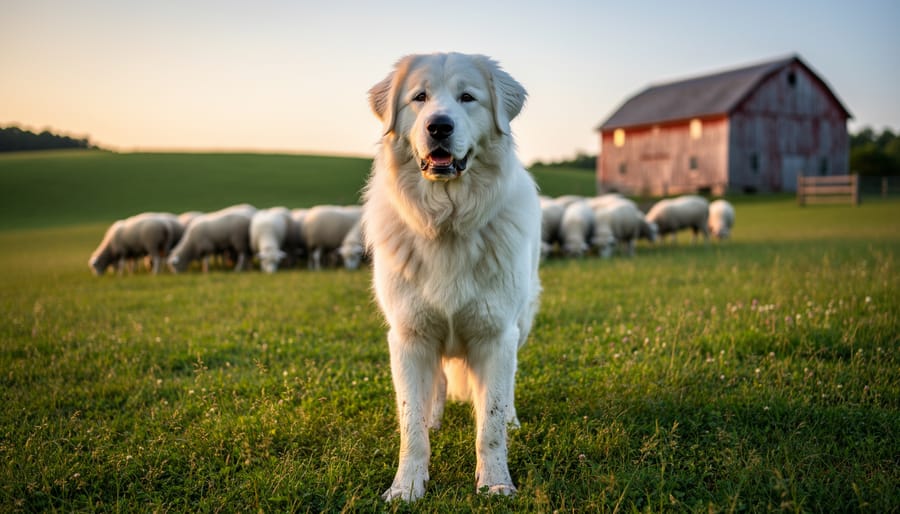
Picture your flock of chickens decimated overnight by a fox, or discovering your young lambs missing after a coyote visit. For small-scale farmers and CSA operators, predator losses aren’t just heartbreaking—they’re economically devastating and can threaten the viability of your entire operation.
Guardian animals offer a proven, sustainable solution that works harmoniously with organic farming principles. Unlike trapping, shooting, or chemical deterrents, these four-legged protectors provide 24/7 security while requiring minimal intervention once properly established. Dogs, donkeys, and llamas have protected livestock for centuries, and today’s small farms are rediscovering their remarkable effectiveness.
Choose guardian animals strategically based on your specific needs. Livestock guardian dogs like Great Pyrenees excel with sheep and goats across larger pastures, while a single donkey can defend smaller areas and bond particularly well with cattle or horses. Llamas work beautifully for sheep flocks under 200 head and require less training than dogs.
The investment pays dividends beyond predator control. Sarah Martinez, who runs a 30-member grazing CSA in Vermont, reports zero livestock losses since introducing her Anatolian shepherd three years ago. “My insurance costs dropped, my animals are calmer, and members love seeing Luna patrolling the fields during farm visits,” she explains.
Understanding which guardian animal fits your operation, acreage, livestock type, and management style determines success. The following guide breaks down everything you need to make an informed decision and implement guardian animals effectively on your farm.
Why Predators Target Grazing CSA Operations
Small-scale, pasture-based CSA operations face unique predation challenges that larger commercial farms often avoid through intensive confinement systems. Understanding why your grazing operation attracts predators is the first step toward protecting your flock or herd effectively.
Predators are opportunistic hunters, and pastured poultry, sheep, and goats present an irresistible target. Unlike animals housed in secure barns, your CSA livestock spend their days in open fields, making them visible and accessible to hungry coyotes, foxes, raccoons, and birds of prey like hawks and owls. Domestic dogs, whether strays or poorly supervised pets from neighboring properties, pose an equally serious threat and are responsible for more livestock deaths than many farmers initially realize.
The very practices that make your CSA operation sustainable and appealing to customers also create vulnerability. Rotational grazing systems move animals to fresh pasture regularly, which means your livestock aren’t always protected by the same fencing or positioned near your farmhouse where you can monitor them closely. Each move creates a temporary period of adjustment where predators can test defenses.
Predation patterns typically intensify during specific times. Dawn and dusk are prime hunting hours for coyotes and foxes. Spring brings desperate parents feeding hungry pups or kits, while winter scarcity pushes predators to take greater risks. Once a predator successfully takes an animal from your property, they’ll return repeatedly, teaching their young that your farm is an easy food source.
The financial impact extends beyond losing individual animals. Stressed flocks produce fewer eggs, traumatized sheep may abort lambs, and the constant tension affects your entire operation’s productivity and profitability.
The Three Types of Guardian Animals and How They Protect Your Flock
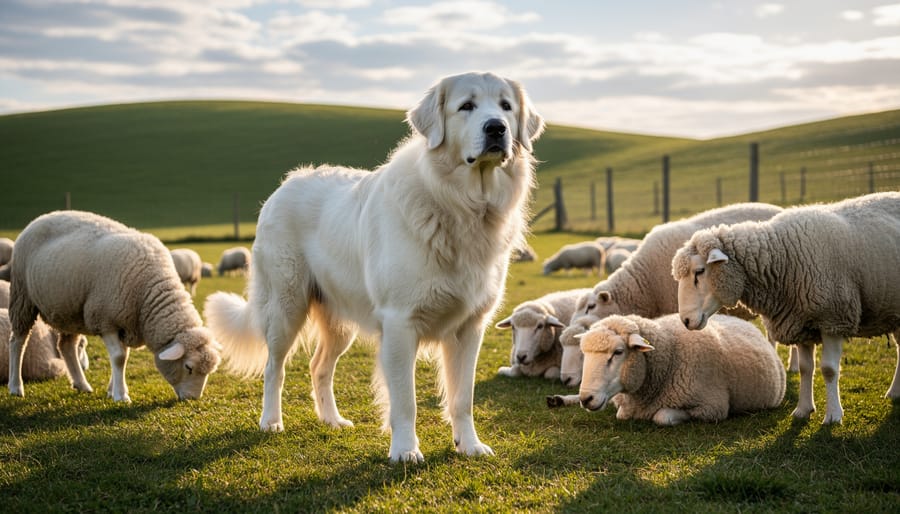
Livestock Guardian Dogs: Your 24/7 Protectors
Livestock guardian dogs have protected flocks and herds for thousands of years, and they’re just as effective on modern CSA operations. These remarkable canines work around the clock, patrolling your pastures and forming powerful bonds with the animals they protect.
The most popular breeds for farm guardianship include Great Pyrenees, known for their calm temperament and impressive size that deters predators. Anatolian Shepherds bring fierce independence and territorial instincts, making them excellent choices for larger properties. Maremmas offer a balanced approach with strong protective instincts and slightly smaller frames, perfect for operations with space constraints.
The bonding process starts when these dogs are young puppies, ideally 8-12 weeks old. They’re raised directly with your livestock, learning to view sheep, goats, or poultry as their family rather than prey. This critical socialization period typically takes several months, during which the puppy lives full-time with the animals they’ll protect. You’ll see them sleeping among the flock, mimicking their movements, and naturally positioning themselves between livestock and potential threats.
Training requirements differ from traditional pet dogs. Guardian dogs need minimal command training but require proper socialization to understand boundaries and acceptable behavior. They’re independent thinkers who patrol and make decisions without human direction, which is exactly what makes them effective.
Real-world results speak volumes. Sarah Martinez, who runs a 50-acre grazing CSA in Vermont, reports zero predator losses since introducing two Great Pyrenees three years ago, after losing 15 chickens and 3 lambs the previous season.
For CSA operations with customer visits, choose dogs with naturally calm dispositions and establish clear visitor protocols. Designate specific areas for customer interaction away from active grazing zones, and introduce your guardian dogs to visitors during controlled farm tours. Most well-socialized guardian dogs distinguish between welcomed guests and genuine threats, though supervision during public events remains essential for everyone’s comfort.
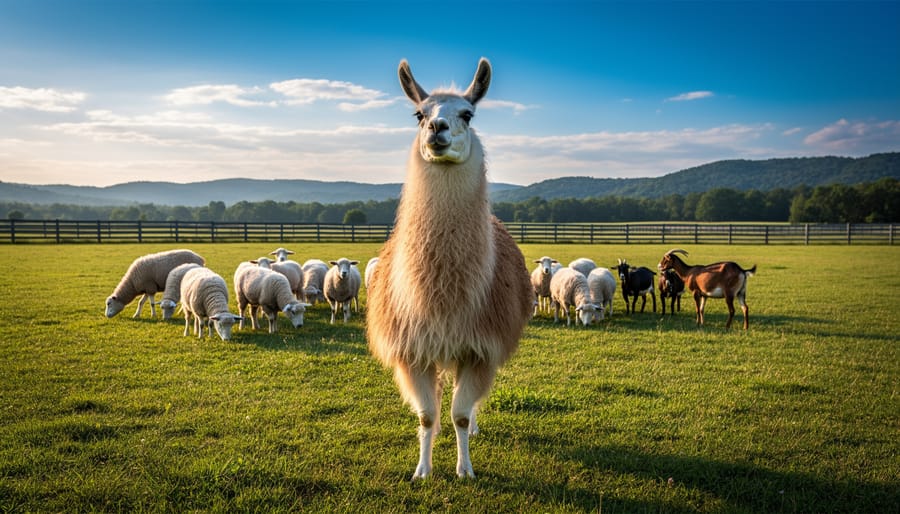
Guard Llamas and Donkeys: The Low-Maintenance Option
For smaller CSA operations, llamas and donkeys offer an appealing guardian solution that won’t break the bank or demand extensive training. These naturally territorial animals come with built-in predator defense instincts, making them surprisingly effective protectors right from the start.
Llamas possess an instinctive dislike of canine predators and will charge, kick, and even stomp threats to their herd. A single llama can successfully guard sheep, goats, or poultry across 20-40 acres. They integrate seamlessly with different livestock types and require minimal additional feed since they graze alongside your animals. Their calm demeanor around people makes them ideal for CSAs where members visit regularly.
Donkeys bring their own advantages, particularly against coyotes and dogs. Their loud braying alerts you to danger, while their powerful kicks deter most predators. Standard-sized donkeys work best for guardian duties—miniatures lack the size to intimidate threats, while larger breeds may be too aggressive. They’re exceptionally hardy, thriving on pasture with basic shelter.
Neither animal requires specialized training beyond proper socialization with your livestock during a brief introduction period. One Vermont CSA farmer shared how her rescue donkey, “Clover,” eliminated their chicken losses within weeks of arrival, costing only $200 plus standard feed and veterinary care.
For operations under 40 acres with smaller predator pressure, these low-maintenance guardians provide excellent protection without the commitment level of livestock guardian dogs.
Alpacas and Other Alternative Guardians
While llamas often steal the spotlight, alpacas are gaining recognition as effective livestock guardians, particularly for smaller CSA operations. These gentle camelids share many traits with their larger cousins but offer some distinct advantages worth considering.
Alpacas typically stand about a foot shorter than llamas and weigh 100-200 pounds less, making them less intimidating to work around, especially for families or operations involving children. Their smaller size translates to lower feed costs—a practical consideration for budget-conscious CSA farms. They’re naturally curious and protective, forming strong bonds with sheep and poultry flocks while remaining vigilant against foxes, raccoons, and small predators.
However, their diminutive stature becomes a limitation when facing larger threats like coyotes or dogs. While alpacas will sound alarm calls and position themselves between predators and livestock, they lack the physical power to effectively challenge determined attackers. This makes them best suited for areas with minimal large predator pressure or as part of a layered protection strategy.
Sarah Chen, who runs a three-acre CSA outside Portland, shares her experience: “Our alpaca Luna has been perfect for protecting our pastured chickens. She’s gentle enough that my kids help with her care, but she immediately alerts us to any unusual activity. For our small scale, she’s more manageable than a llama would be.”
Consider alpacas when managing smaller properties, protecting poultry or sheep from minor predators, or seeking a dual-purpose animal that also provides fiber. Their calm temperament and lower maintenance requirements make them an accessible entry point into guardian animals for new farmers.
Choosing the Right Guardian Animal for Your CSA Farm
Selecting the right guardian animal for your CSA operation isn’t one-size-fits-all. Think of it as matchmaking between your farm’s specific needs and each animal’s unique strengths. The good news? A clear decision-making framework can simplify the process considerably.
Start by assessing your farm’s size and layout. Dogs excel on operations ranging from 5 to 500 acres, adapting well to varied terrain and complex boundaries. Donkeys work best on smaller, more contained spaces under 40 acres where they can maintain visual contact with their flock. Llamas and alpacas fall somewhere in between, thriving on 20-100 acre operations with relatively flat topography.
Your livestock type matters tremendously. Guardian dogs bond with virtually any grazing animal, including poultry and goats. Donkeys sometimes show aggression toward smaller animals and struggle with protecting chickens. Llamas typically integrate beautifully with sheep and goats but may be less effective with cattle.
Consider your predator pressure realistically. Facing coyotes, foxes, or birds of prey? Any guardian animal can help. Dealing with bears, wolves, or packs of wild dogs? You’ll need the serious deterrent power that dogs provide, potentially in multiples.
Budget considerations extend beyond purchase price. Dogs require higher initial investment, typically $500-3000, plus ongoing veterinary care, quality food, and training time. Donkeys cost $300-1500 and eat similar pasture forage to your livestock. Llamas range from $300-2000 with modest feed requirements.
The member interaction considerations shouldn’t be overlooked. Will families visit during farm tours or pick-ups? Llamas and donkeys typically handle human interaction with calm curiosity. Guardian dogs, particularly during training periods, may need careful management around visitors to avoid protective behaviors.
For organic certification compatibility, all guardian animals fit seamlessly into certified operations. They provide chemical-free predator management that aligns perfectly with organic principles.
Sarah Martinez, a Vermont CSA farmer, shares this wisdom: “I thought bigger meant better protection, so I started with a donkey. After losing chickens repeatedly, I switched to a Great Pyrenees. Matching the guardian to my specific predators and livestock made all the difference.”
Create a simple checklist addressing each factor, rating options from one to five. The guardian scoring highest across your unique circumstances typically proves the right choice.
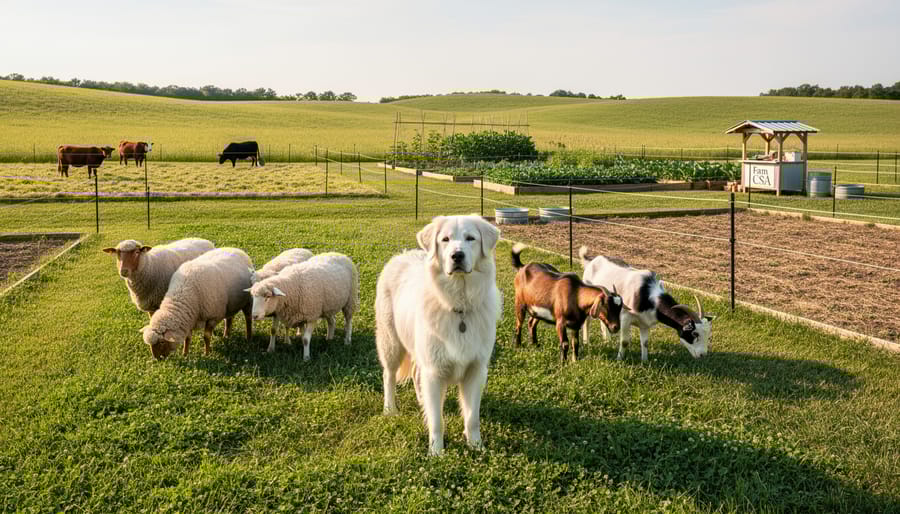
Real CSA Farmer Success: Guardian Animals in Action
When Sarah Martinez started her 15-acre CSA in Vermont, she lost 22 chickens to foxes and raccoons in her first season alone. “I was devastated,” she recalls. “These weren’t just losses on paper—they were animals I’d raised, and my members were counting on those eggs.” After researching her options, Sarah invested in two Maremma guardian dogs. The initial challenge was training the dogs to bond with her mixed poultry flock without chasing them. She started the puppies young, keeping them penned with the chickens from eight weeks old.
The results speak for themselves. In the two years since introducing her guardians, Sarah has lost only three birds to predation—a 93% reduction in losses. “The dogs patrol constantly, and I’ve actually seen them chase off foxes during dawn hours,” she explains. Her advice to other farmers? “Be patient with the bonding process, and don’t skimp on proper fencing. Guardian dogs need boundaries to do their job effectively.”
Meanwhile, Jake Thompson runs a sheep-focused CSA in Oregon, where coyotes posed a constant threat to his small flock. After losing six lambs in one spring, he introduced a pair of guardian llamas named Lucy and Ringo. “I was skeptical at first,” Jake admits. “But llamas are surprisingly low-maintenance compared to dogs.”
The transition took about three weeks as the llamas established their territory and bonded with the sheep. Jake’s predator losses dropped to zero that first year and have remained minimal since. The llamas’ naturally aggressive behavior toward canines proved remarkably effective. Jake’s biggest lesson? “Start with mature, trained guardians if you’re new to this. I got mine from an experienced breeder who’d already exposed them to sheep, which made integration much smoother.”
Both farmers emphasize that guardian animals aren’t a magic solution—they require commitment, proper introduction, and ongoing management—but the protection they provide makes them invaluable partners.
Getting Started: What You Need to Know Before Bringing Home a Guardian
Bringing a guardian animal onto your CSA operation requires thoughtful planning and preparation to ensure success for both your livestock and your new protector.
Before you even select your guardian, assess your property’s infrastructure. Secure fencing is non-negotiable—most guardians need at least four-foot perimeter fencing for sheep and goats, though six-foot fencing works better for guardian dogs who might roam. Budget between $1,500 to $3,000 for a well-trained livestock guardian dog, $200 to $600 for guardian geese, or $300 to $800 for llamas or donkeys. Remember that initial costs extend beyond purchase price to include vaccinations, microchipping, and setup expenses.
Housing needs vary by species. Livestock guardian dogs don’t require separate shelters if your livestock has adequate protection, as they’ll naturally stay with their flock. Llamas and donkeys need basic three-sided run-in sheds, while geese appreciate simple nesting boxes and access to water sources.
The introduction phase is critical. Never rush this process. Start by placing your new guardian in an adjacent pen where they can see, smell, and hear your livestock for several days. Gradually allow supervised interactions, watching for calm, protective behavior rather than chasing or aggression. This bonding period typically takes two to four weeks but varies by individual animal and species.
For guardian dogs, early training focuses on reinforcing their natural instincts rather than traditional obedience. They should learn basic commands but maintain independence to do their job effectively. Jane Morrison, a Vermont CSA farmer, shares, “Patience during those first months paid off tremendously—our Maremma now moves seamlessly with our sheep.”
Plan for ongoing care considerations including regular health checks, quality nutrition, and periodic fencing maintenance to keep your guardian healthy and effective.
Guardian animals represent more than just an effective predator deterrent—they embody the core values of Community Supported Agriculture by offering a sustainable, chemical-free approach to livestock protection. By choosing donkeys, llamas, or livestock guardian dogs, you’re investing in a long-term solution that protects your animals while maintaining the organic integrity your CSA members value. Take time to honestly assess your farm’s specific needs, considering factors like predator pressure, herd size, and available resources. Start by connecting with experienced farmers in your region who already use guardian animals, visiting farms to observe different species in action, and consulting with your local agricultural extension office for guidance. Remember that successful implementation doesn’t happen overnight—patience during the bonding and training period will pay dividends in reduced losses and peace of mind. With the right guardian animal matched to your operation, you’ll create a safer environment for your livestock while demonstrating your commitment to humane, ecologically sound farming practices that resonate with today’s conscious consumers.
