
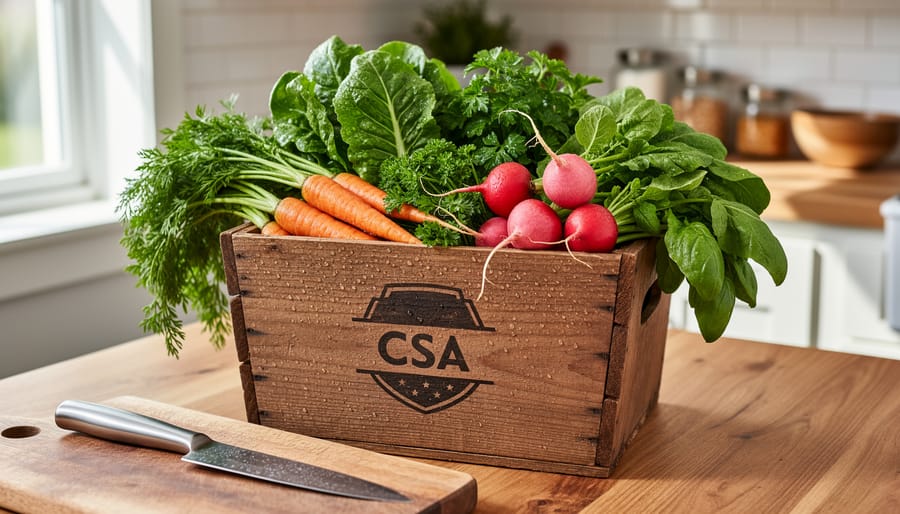
Most CSA shares fall somewhere between a few hundred and a bit over a thousand dollars per season, depending on the share size, the length of the season, and where the farm is located. Exact prices vary from farm to farm, so treat any number you see as a starting point, not a rule. A small weekly box for one or two people sits at the low end. A large family share, or one that runs through a long growing season, climbs from there.
Four things move the price most. Share size is the big one, followed by season length, then what the farm grows and how it grows it. Add in local land and labor costs, and you can see why two farms ten miles apart might charge quite differently.
What you’re really paying for is a season of fresh, locally grown produce plus a direct line to the people growing it. Many members find that cooking from a weekly box nudges them toward more home-cooked, vegetable-forward meals, which some people feel supports their everyday wellness and food budget. Results vary, and a share isn’t a substitute for professional health or nutrition advice.
Below, we break down typical costs by share type, show where your money goes on the farm, and compare buying a share with growing your own. We’ll also share a small farm’s story and a few simple tips for stretching every box.
What CSA Shares Cost: Pricing by Share Size and Season Length
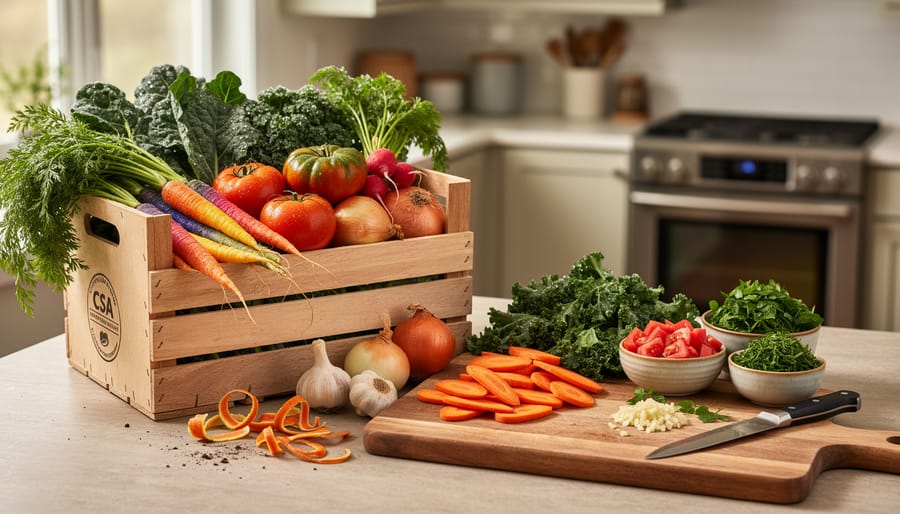
When you browse CSA sign-up pages, you’ll notice that two things shape the sticker price more than anything else: how big the share is and how long the season runs. A small share meant for one or two people usually costs less than a family share packed for four or more, and a short summer season costs less than a year-round arrangement with winter pickups.
Most farms quote one full-season price rather than a weekly one, since you pay upfront (or in a few installments) before the first harvest. To get a rough weekly figure, divide that season price by the number of pickup weeks. A share that runs 20 weeks, for example, spreads its cost over 20 boxes. That quick math makes it much easier to compare farms with different season lengths.
Here’s a simple way to think about the common options:
| Share type | Who it typically suits | How to estimate a weekly cost |
|---|---|---|
| Small share | One or two people, or lighter cooks | Season price ÷ number of pickup weeks |
| Standard share | Couples or small households who cook often | Season price ÷ number of pickup weeks |
| Family share | Larger households or avid preservers | Season price ÷ number of pickup weeks |
| Half-season share | First-timers testing the fit | Shorter season price ÷ fewer pickup weeks |
| Year-round share | Households wanting fresh food across seasons | Annual price ÷ total pickup weeks |
Keep in mind that prices vary widely by region and from farm to farm, so treat any range you read as a starting point rather than a promise. Climate, local land costs, and a farm’s growing methods all play a part. The most reliable way to see real numbers is to check the farms near you in the CSA Farm Directory, then run the weekly math yourself. Once you know the cost per week, you can compare it to your usual grocery spending and decide what fits your household.
Where Your CSA Dollars Go: A Look Inside the Farm Budget
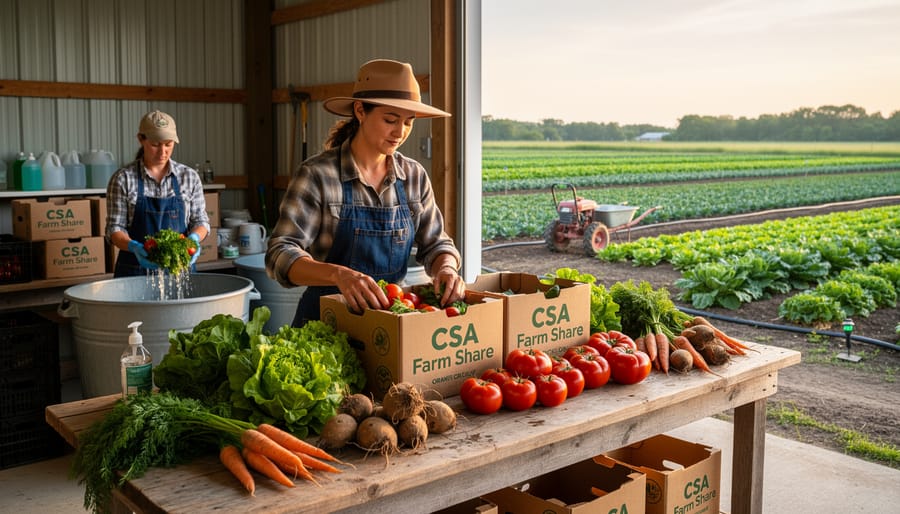
When you pay for a CSA share, you’re not just buying vegetables. You’re helping fund the growing season itself. A farm has to spend money long before the first harvest, and your payment is what makes that possible. If you’re curious about where CSA payments go here’s what a typical small farm covers:
- Seeds and transplants to start the season’s crops
- Soil health and compost to keep the fields fertile
- Labor for planting, weeding, harvesting, and washing
- Tools and irrigation to keep the work moving through dry spells
- Packing and distribution, whether that’s pickup boxes or home delivery
- A small cushion for farm resilience when weather brings surprises
Every farm budgets a little differently, so the exact mix varies from place to place. Still, most of these costs show up in early spring, when the fields are barely green.
That’s why paying upfront matters so much. When members commit before the season starts, the farmer knows roughly how much they can plan to grow, buy, and spend. They can order seed with confidence instead of guessing, and they don’t have to lean on loans or wait for market-day sales to cover the basics.
Picture a small organic farm that gets most of its sign-ups in late winter. With those commitments in hand, the farmer can put money into building up the soil, repair a worn-out irrigation line, and bring on a seasonal helper before the busy weeks arrive. The fields get the care they need at the right time, and members tend to see that effort in the boxes later in the summer.
It’s a simple partnership: you share the planning risk, and the farm shares the harvest with you.
What Changes the Price: Factors Behind CSA Share Costs
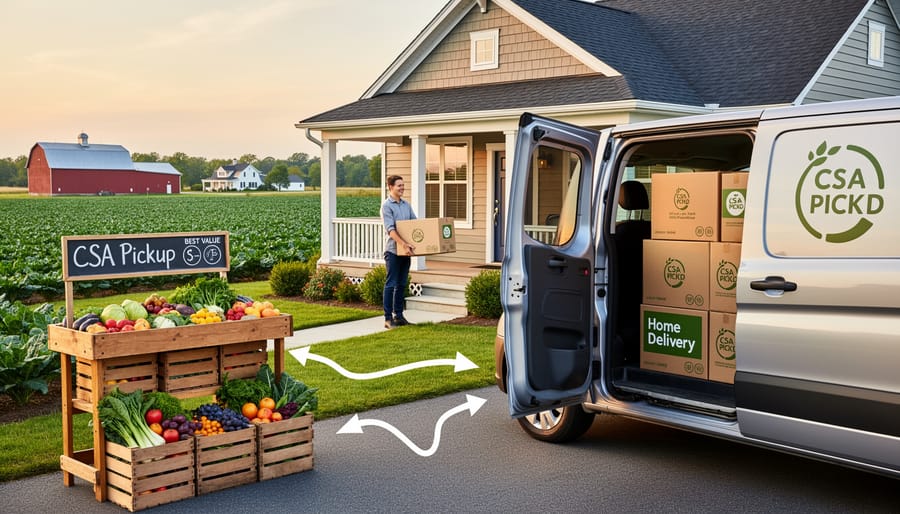
Several things move the sticker price on a CSA share, and they’re worth asking each farm about before you sign up. Region and growing season set the baseline, since a farm with a long season in a mild climate delivers more weeks of harvest than one with a short northern summer. Farming practices matter too. Farms using certified organic or similar growing methods often reflect that extra labor and record-keeping in their pricing, and a smaller farm may price differently than a larger one that can spread costs across more members.
Here are the factors to ask about, ordered from typically most to least influential on price (the order can vary by farm):
- Share size: ask what a small, standard, and family share includes each week.
- Season length: confirm how many weeks the share covers and whether a half-season is offered.
- Delivery model: compare the price of farm pickup, a neighborhood drop site, and home delivery.
- Add-ons: ask what eggs, flowers, or bread cost on top of the base share.
- Work-share or payment-plan options: ask whether volunteering hours or installments are available.
Some farms offer work-shares, where you trade a few hours of farm help for a reduced price, or sliding-scale pricing based on what a household can manage. Others let you pay in installments instead of one upfront payment, and a number of farms use tools that simplify CSA payments for members.
Some farms also accept SNAP/EBT or take part in CSA credit programs but availability differs from farm to farm. Please confirm directly with each farm rather than assuming an option is offered.
CSA Health Economics: How Food Spending and Healthcare Costs Connect

When you join a CSA, the first thing you notice is the price tag. The bigger question, the one health economists like to ask, is how food choices connect to what people spend on healthcare over a lifetime.
Health economics is simply the study of how resources, like money, time, and care, get used to support wellness. One idea within it is “diet-related health costs.” In plain language, that means healthcare spending linked to conditions that eating patterns can influence. Public health researchers have long observed that diets rich in fruits and vegetables are generally associated with better long-term health markers. Because of that, some economists study whether more produce on the table might relate to lower healthcare spending over time.
Here’s the honest part. A CSA share is a food purchase, not a medical treatment. Your health and your healthcare costs depend on many things, including genetics, activity level, sleep, access to care, and the rest of your diet. Individual results vary, and no savings are guaranteed. If you have questions about your own nutrition or a health condition, your healthcare provider or a registered dietitian is the right person to ask.
What a CSA can do is make fresh vegetables easier to reach for. A box of seasonal produce lands on your counter every week, which gently nudges you to cook with what’s in front of you. Many families find that this habit, more than any single vegetable, is what changes the way they eat.
If you’re curious how food spending ripples beyond one household, economic impact studies look at how local farms support jobs, suppliers, and community spending. Think of it as a wider lens on the same question: where food dollars go, and what they help build.
Weighing the Trade-Offs: Is a CSA Right for Your Budget?
Whether a CSA fits your budget depends on how you shop and cook. Many households find the trade-offs worth it, and a few honest limits are worth knowing before you sign up.
Pros
- You get fresh, seasonal produce harvested close to home.
- You build a direct connection with the farmer who grows your food.
- Unfamiliar vegetables can inspire new recipes.
- A weekly box may cut down on impulse buys at the store.
Cons
- Most farms ask for payment upfront, which takes planning.
- You have less control over exactly what arrives each week.
- Cooking from a box may take more time in the kitchen.
- Pickup days and locations take some logistics to manage.
The upfront payment is usually the biggest hurdle. Paying for a season at once feels different from spreading grocery costs across weekly trips, though some farms offer payment plans worth asking about.
Seasonal variety is a gift and a challenge. One week brings tender greens, the next brings a pile of beets you’ve never cooked. A little curiosity goes a long way here, and a quick search for a simple recipe often turns a mystery vegetable into a favorite.
Meal planning can also help with food waste. When you decide what to cook around the box, you’re more likely to use what you bring home, which means less going to the compost bin.
None of this makes other ways of shopping a poorer choice. Farmers markets, grocery stores, and home gardens all work well for different households. A CSA is simply one option, and it suits people who enjoy cooking with the seasons and don’t mind a little surprise in their kitchen.
DIY Garden vs. CSA Share: Which Costs Less for You?
Deciding between a home garden and a CSA share isn’t a simple “which is cheaper” question. It depends on your space, your time, and how much you enjoy getting your hands dirty.
Growing your own means buying seeds, soil, containers or raised beds, tools, and paying for water. Then there’s the learning curve. A first-year garden often teaches you more than it feeds you, and that’s part of the fun.
A CSA share flips that. You pay upfront, and a farmer who has done this for years handles the growing. You get a steady weekly harvest, a wider mix of crops than most backyards can manage, and far less personal labor.
| Factor | DIY Garden | CSA Share |
|---|---|---|
| Upfront cost | Seeds, soil, beds or containers, tools | One seasonal payment, sometimes in installments |
| Ongoing cost | Water, replacement seeds and amendments | Mostly covered by the share price |
| Time commitment | Planting, weeding, watering, harvesting | Weekly pickup and meal prep |
| Variety | Limited by your space and sun | Broad, shaped by the farm’s season |
| Skill needed | Grows with practice | Little beyond cooking |
| Harvest reliability | Varies with weather and experience | Planned by experienced growers |
Your costs will look different from your neighbor’s, so neither route is always the cheaper one.
Plenty of people do both. A CSA covers the staples like greens, roots, and squash, while a small home garden holds herbs and a few favorites you’d love to pick fresh.
A few sustainable living tips help either path go further:
– Compost your CSA veggie scraps and use them to feed your garden soil.
– Freeze, dry, or preserve extra produce so nothing goes to waste.
– Save seeds from your best plants when you can.
Little habits like these stretch the value of everything you grow or buy.
Stretching Your Share: Practical Tips to Get the Most Value
A little planning goes a long way once the box arrives. Start by checking what’s in it and sketching a few meals around the most perishable items first, like leafy greens and berries. Hardier roots and squash can wait a few days. If the weekly haul feels like too much, share it with a neighbor, or ask your farm whether a half-share is an option so you can test the fit before committing to a full season.
Preserving surplus is where the value really stretches. Blanch and freeze green beans, turn extra tomatoes into sauce, or pickle a bumper crop of cucumbers. Use the whole vegetable too: simmer carrot tops and onion skins into broth, roast beet greens, and toss broccoli stems into a stir-fry. Scraps that can’t be eaten make great compost for a home garden.
Can I split a share?
Many farms welcome shared memberships, and some even offer half-shares. Ask your farm directly, since policies differ from one to the next.
Do CSAs accept SNAP/EBT?
Some do, and some offer payment plans or sliding-scale pricing. Check with each farm before you sign up rather than assuming it’s available.
Is a CSA cheaper than the grocery store?
It depends on your shopping habits and what you usually buy. Comparing a farm’s weekly share value with your own grocery receipts is the best way to see how it fits your budget.
Will a CSA lower my healthcare costs?
A CSA isn’t a medical treatment, and no savings are guaranteed. Eating more fresh produce is one part of a balanced diet, so talk with your healthcare provider or a registered dietitian about what’s right for you.
Small habits like these make a share feel less like a bill and more like a pantry you’re proud of.
So what does a CSA share really cost? It depends on a few things you get to choose: the share size, the length of the season, and the farm you sign up with. A small summer share and a family-sized year-round share sit at very different price points, and each farm sets its own rates based on its region, its practices, and any extras you add on.
The link between fresh eating, wellness, and healthcare spending is worth thinking about, but it’s a personal one. Everyone’s health, habits, and budget look different, and no share can promise a particular result. If you have questions about diet and health, a doctor or registered dietitian is the best place to start.
When you’re ready, browse the CSA Farm Directory, then ask the farms near you about pricing, payment plans, and any sliding-scale or work-share options. Starting small, maybe with a half-share, is a gentle way to see how it fits your kitchen and your budget.
Every share you buy is also a handshake with a local grower, and that’s a pretty good place to begin.
