Category Archives

28 Articles

How NC State’s Land-Grant Mission Helps CSA Farmers Secure and Afford Farmland

Posted by darrell on
0
Business and Economic Impact
How NC State’s Land-Grant Mission Helps CSA Farmers Secure and Afford Farmland

Access affordable farmland through NC State’s land-grant programs designed specifically to help beginning farmers and CSA operators overcome one of agriculture’s biggest barriers. NC State University, established in 1887 under the Morrill Act, exists with a clear mission: making agricultural knowledge, resources, and opportunities accessible to everyone in North Carolina, regardless of background or experience level.

If you’re dreaming of starting a CSA but feeling overwhelmed by land costs and tenure insecurity, you’re not alone. Farmland prices have soared 40% in the past decade, pushing sustainable agriculture out of reach for many aspiring growers. The good news? NC State’s land-grant system offers concrete solutions through research-backed programs, expert guidance, and connections to farmland access resources that most people don’t know exist.

The Cooperative Extension Service provides free one-on-one consultations with agricultural agents who understand local land markets and can guide you through lease agreements, farm transition programs, and alternative land tenure models. Their Small Farm Unit specifically supports beginning farmers with business planning, soil health assessments, and connections to landowners seeking responsible stewards.

Beyond advice, NC State connects you to incubator farms, land-linking databases, and financing programs tailored for sustainable operations. Real farmers have transformed these resources into thriving CSAs, proving that the land-grant promise still works. Whether you’re searching for your first acre or trying to secure long-term tenure, understanding how to navigate NC State’s land-grant resources could be the difference between dreaming about farming and actually feeding your community.

What NC State’s Land-Grant Status Actually Means for Farmers

Back in 1862, when President Lincoln signed the Morrill Act, something remarkable happened for American agriculture. This legislation created land-grant universities with a clear mission: bring practical education and research to everyday people, not just the wealthy elite. North Carolina State University earned its land-grant status in 1887, joining this national network dedicated to serving farmers and rural communities.

So what does this mean for you as a farmer or aspiring grower? Essentially, NC State exists to be your partner in agricultural success. The university’s three-part mission makes this happen through research, teaching, and extension services.

The research component means NC State scientists are constantly working on real-world farming challenges. They’re developing disease-resistant crop varieties, testing organic pest management strategies, and finding ways to improve soil health. This isn’t theoretical work locked in ivory towers—it’s practical science designed to help you grow better food more sustainably.

Extension services bring that knowledge directly to your farm gate. Through NC Cooperative Extension, you get free access to agricultural experts, educational workshops, and research-based resources. County extension agents become your personal consultants, helping troubleshoot problems and implement new techniques.

Consider Sarah Martinez, who transformed her struggling vegetable operation into a thriving organic CSA after attending extension workshops on season extension and soil management. She credits the personalized guidance from her local agent with saving her farm.

This land-grant commitment means NC State’s resources aren’t reserved for large-scale operations. Whether you’re managing two acres or two hundred, whether you’re just starting or expanding, these taxpayer-supported services exist specifically to help you succeed in feeding your community sustainably.
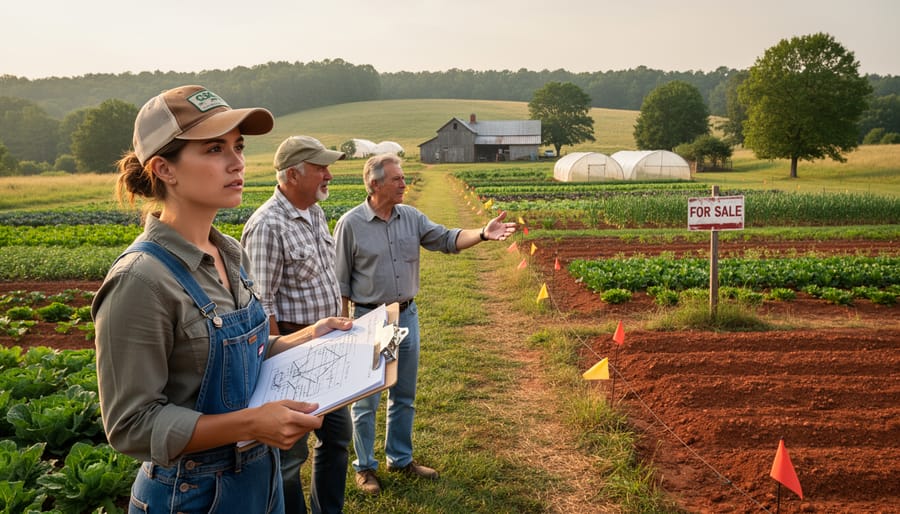
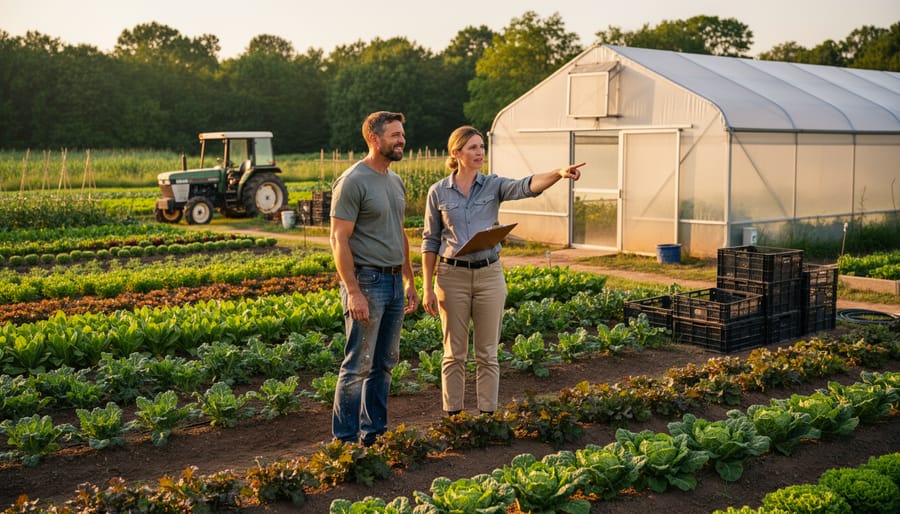
Young farmer tending vegetable rows on CSA farm with barn in background
CSA farmers in North Carolina face unique challenges in securing long-term farmland to build sustainable operations.

The Land Access Crisis Facing CSA Farmers Today

Why Land Tenure Matters for Your CSA

Secure land tenure is the foundation of a thriving CSA farm. When you have long-term access to your land—whether through ownership, extended leases, or land grants—you can invest confidently in soil health improvements that take years to yield results. Building organic matter, establishing perennial systems, and creating infrastructure like hoop houses or irrigation all require the certainty that you’ll be farming the same ground next season and beyond.

This stability directly impacts your members too. Building lasting CSA relationships depends on consistency and quality. When farmers face uncertain land tenure, they often hesitate to make improvements or may need to relocate suddenly, disrupting member trust and crop planning. Conversely, secure tenure allows you to develop signature varieties, perfect your growing systems, and create the dependable, high-quality harvests that keep members renewing their shares.

NC State’s land-grant programs recognize this reality, offering resources that help CSA farmers establish stable land access. Whether you’re exploring lease agreements, seeking affordable farmland, or navigating land purchase options, understanding your tenure options protects both your farm’s future and your community’s food security.

The Real Numbers Behind Farmland Costs

North Carolina farmland prices have climbed steadily over the past decade, with average costs ranging from $4,000 to $7,000 per acre depending on location and soil quality. Prime agricultural land near urban centers like Raleigh-Durham commands premium prices, sometimes exceeding $10,000 per acre, while rural counties in the eastern and western regions offer more affordable options starting around $3,000 per acre.

For aspiring CSA operators, these numbers can feel daunting. However, securing farmland affordably is possible with creative approaches. Many successful farmers start small, leasing rather than purchasing land initially. Average lease rates in North Carolina hover between $50 and $150 per acre annually for cropland, making this an accessible entry point.

The good news? NC State’s land-grant resources help bridge this gap through conservation easements, beginning farmer programs, and connections to landowners seeking agricultural partnerships. Understanding these real numbers empowers you to make informed decisions and explore alternatives that align with your budget and farming vision.

How NC State Extension Supports CSA Land Access

Free Educational Programs and Workshops

NC State’s Cooperative Extension offers a wealth of free educational programs designed to help aspiring farmers turn their agricultural dreams into reality. Through their comprehensive workshop series, you’ll discover practical guidance on farm business planning, financial management, and strategies for securing farmland. These sessions cover everything from developing business plans and understanding lease agreements to navigating the complexities of land acquisition and farm succession planning.

The university regularly hosts webinars that connect you with experienced farmers and agricultural professionals who share real-world insights. Topics range from soil health management to marketing strategies for CSA operations. Many programs feature farmer success stories that demonstrate how proper planning and education laid the foundation for thriving agricultural businesses.

Extension agents also offer one-on-one consultations to address your specific farming challenges. Whether you’re exploring beginning farmer programs or seeking to understand the essential ingredients for farm success, these resources provide invaluable support. Virtual and in-person options make it easy to participate regardless of your location. Visit your local Extension office or check their online calendar to find upcoming workshops, webinars, and training opportunities tailored to new and expanding farm operations.

One-on-One Extension Agent Support

Finding the right land and navigating purchase agreements can feel overwhelming, especially for new farmers launching a CSA. That’s where NC State’s local extension agents become invaluable allies in your farming journey. These knowledgeable professionals offer personalized, one-on-one consultations tailored to your specific situation and goals.

Extension agents help aspiring farmers understand the complexities of land leasing agreements, including fair pricing, contract terms, and renewal options. They can review potential land purchases with you, discussing soil quality assessments, water rights, and zoning regulations that might impact your CSA operation. When negotiating with landowners, they provide guidance on structuring favorable tenure arrangements that give you the stability needed to invest in soil improvements and infrastructure.

Take Sarah Martinez, who started a thriving organic CSA in Chatham County. Her local extension agent helped her negotiate a ten-year lease with an option to purchase, giving her confidence to build high tunnels and develop a loyal member base. The agent also connected her with legal resources to ensure her contract protected both parties.

These services are completely free and available throughout North Carolina. Your extension agent becomes a trusted partner who understands local land markets and can help turn your CSA dreams into reality.

Research-Backed Solutions for Affordable Farmland

Land-Link Programs That Actually Work

Finding farmland is one of the biggest hurdles for new CSA operators, but NC State’s land-link initiatives are creating real pathways to agricultural success. These programs connect retiring farmers who want to see their land continue in production with energetic newcomers ready to grow fresh, organic food for their communities.

The FarmLink program stands out as a practical matchmaking service. Through online listings and in-person consultations, Extension agents help retiring landowners find compatible beginning farmers. Many arrangements start as lease-to-own agreements, giving new operators time to build their customer base before committing to purchase.

Take Sarah Mitchell’s story. After working on established farms for three years, she connected with a retiring tobacco farmer through the program. He mentored her through her first season while she launched a 30-member CSA. Within four years, Sarah purchased the 15-acre property and now serves 85 families with certified organic vegetables.

Another success involves the Rodriguez family, who discovered available land in Chatham County through Extension workshops. The retiring owners appreciated their commitment to sustainable practices and offered favorable lease terms. Today, their thriving CSA employs two additional farmhands and supplies three local restaurants.

These programs work because they build relationships, not just transactions, creating agricultural legacies that benefit entire communities.

Creative Leasing Arrangements for CSA Success

Getting access to land doesn’t always mean taking out a hefty mortgage. Research from NC State Extension has highlighted several creative leasing arrangements that make CSA farming more achievable, especially for those just starting out.

Share agreements are gaining popularity among new farmers. Under this model, you work established farmland and share a percentage of your harvest or profits with the landowner. This reduces your upfront costs while giving landowners a stake in your success. The arrangement works particularly well when pairing experienced landowners with enthusiastic new growers.

Long-term leases with purchase options offer another pathway to farm ownership. These agreements let you lease land for five to ten years with the option to buy later, allowing you to build your CSA business while working toward ownership. You’re investing in infrastructure and soil health knowing you’ll eventually own the fruits of your labor.

Cooperative land ownership is also emerging as a viable solution. Multiple farmers pool resources to purchase land together, sharing costs and responsibilities. This model builds community while making land ownership accessible to those who couldn’t afford it alone.

NC State’s research shows these alternative arrangements significantly improve farmer retention rates. They reduce financial barriers while providing the stability needed to develop successful CSA operations. Consider exploring which model aligns best with your goals and financial situation.
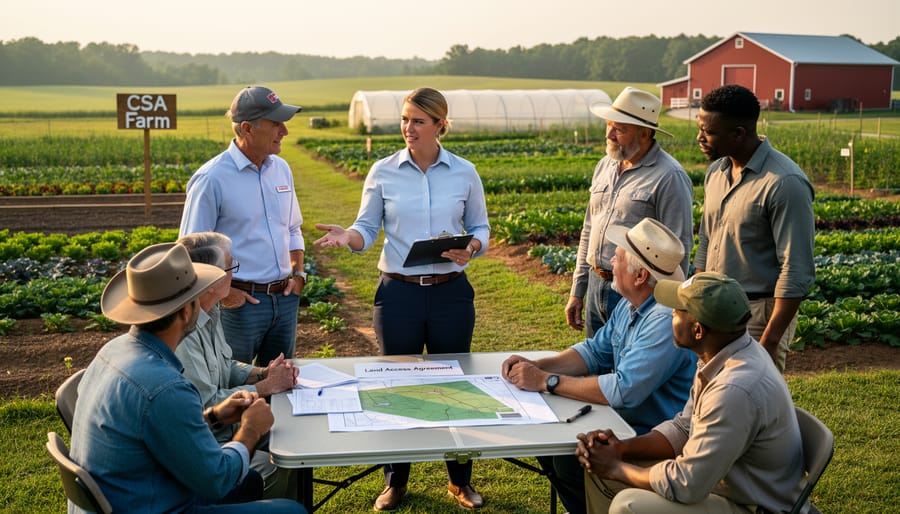
Extension agent consulting with farmer at edge of agricultural field
NC State Cooperative Extension agents provide personalized guidance to help CSA farmers navigate land access challenges.

Success Stories: NC CSA Farmers Who Found Their Land

Nothing tells the story better than real farmers who’ve walked the path. Take Emma Garrison, who launched Piedmont Harvest CSA in Orange County after connecting with NC State’s Extension program. Facing the common struggle of finding affordable land, Emma participated in a farm transfer workshop where Extension agents introduced her to the state’s Beginning Farmer programs. Through NC State’s network, she connected with a retiring farmer looking to lease acreage at below-market rates. Five years later, Emma serves 120 member families and has become a mentor herself, showing other aspiring farmers how NC State resources can open doors.

Over in Chatham County, brothers Marcus and David Chen transformed their dream of sustainable farming into reality through NC Cooperative Extension’s farm business planning assistance. The Chens had farming experience but lacked capital for land purchase. Extension specialists helped them craft a business plan that secured FSA loans and connected them with land-access programs specifically designed for beginning farmers. Today, Green Valley Farm operates on 15 acres, with a waiting list for their popular vegetable and herb CSA shares. Their success demonstrates the tangible CSA economic impact in their community, employing three local residents and supplying restaurants year-round.

Meanwhile, Jasmine Rodriguez found her path through NC State’s Small Farm Unit programs. After attending workshops on organic certification and season extension techniques, she discovered farmland through the state’s AgLink matching service, which pairs landowners with farmers. Her Asheville-area operation, Mountain Roots CSA, now flourishes on leased land, serving 80 families with certified organic produce. Jasmine credits NC State’s ongoing technical support and networking opportunities for helping her navigate everything from soil health to member retention.

These farmers share one thing in common: they didn’t navigate alone. NC State’s land-grant mission created the pathways they needed to succeed.

Your Action Plan for Securing CSA Farmland

Ready to tap into NC State’s resources for your CSA venture? Here’s your roadmap to getting started.

First, connect with NC State’s Cooperative Extension offices in your county. These local experts offer free consultations on land evaluation, soil testing, and crop planning specific to North Carolina’s climate zones. Schedule a visit to discuss your CSA goals and get personalized recommendations for your region.

Next, explore NC State’s online land tenure resources through their Center for Environmental Farming Systems. They offer downloadable lease agreement templates, land access guides, and budgeting tools designed specifically for beginning farmers. Take advantage of their webinar series on farmland financing options, including conservation easements and Farm Service Agency loan programs.

Consider attending NC State’s annual farm tours and field days, where you can meet successful CSA farmers who’ve navigated similar challenges. Sarah Chen, who started her Durham County CSA in 2019, credits an Extension agent’s guidance with helping her secure a favorable long-term lease on previously idle farmland. She learned to evaluate properties for water access, soil quality, and proximity to customer bases.

Reach out to NC State’s Small Farm Unit for their Beginning Farmer and Rancher Development Program. This initiative provides mentorship connections and workshops on business planning, land searching strategies, and building relationships with landowners.

Don’t overlook the university’s research station network. Many stations host demonstration plots where you can observe organic growing techniques and variety trials before committing to your own land investment.

Finally, join NC State’s online farming community forums to network with other CSA operators. These connections often lead to land-sharing opportunities, equipment loans, and invaluable peer support as you launch your sustainable farming journey.
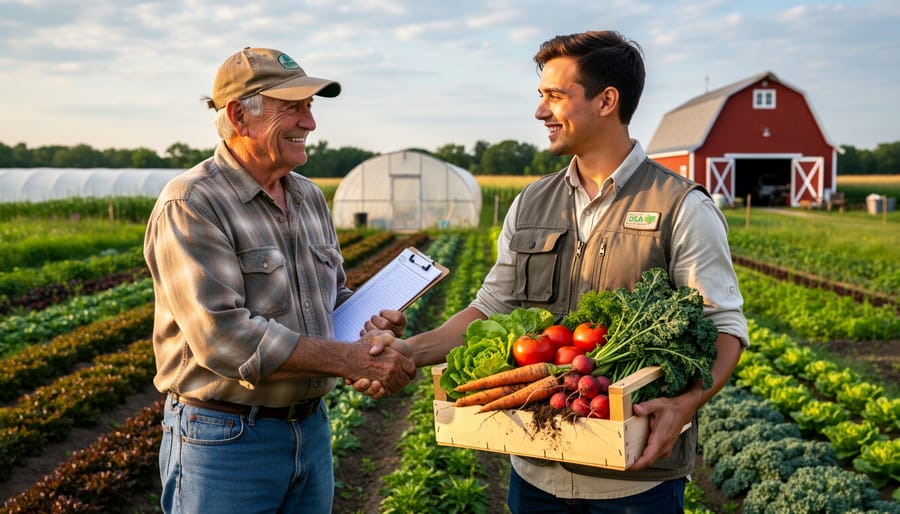
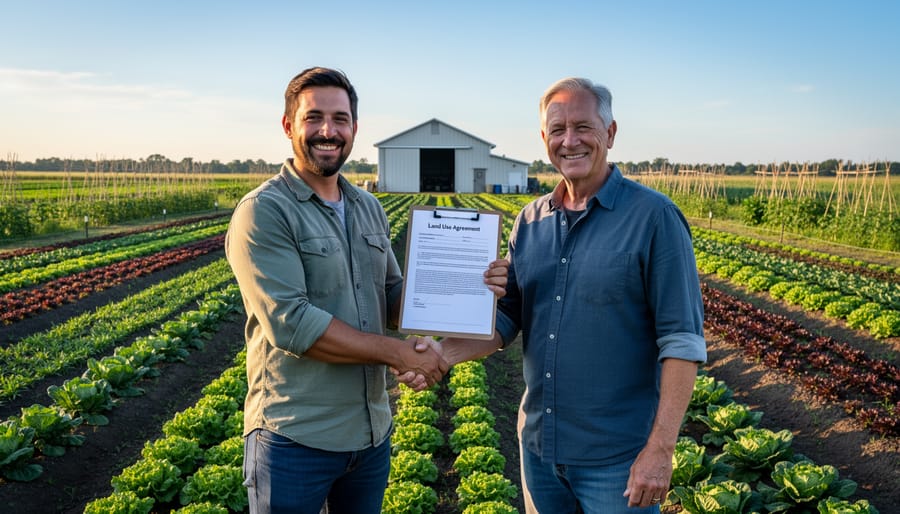
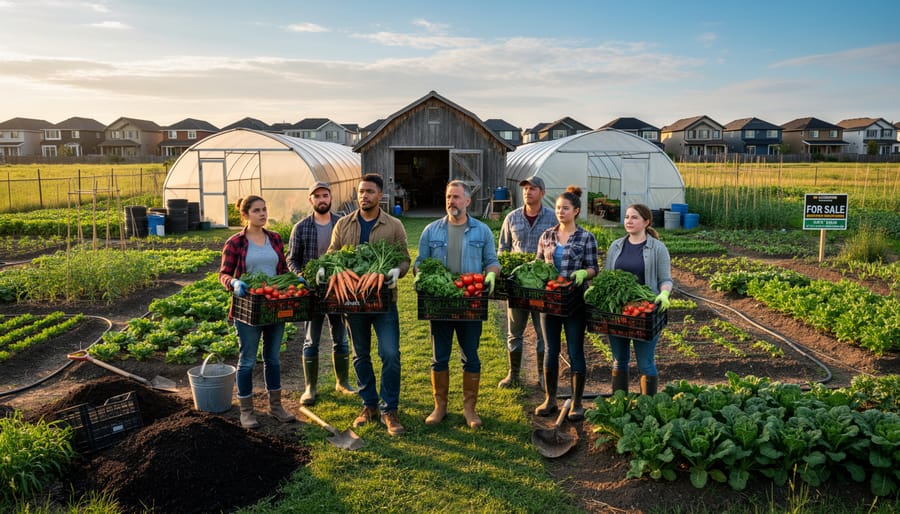
Farmers shaking hands in front of established CSA farm with greenhouse structures
Land-link programs successfully connect retiring farmers with new CSA operators, creating opportunities for the next generation.

NC State’s land-grant mission remains as vital today as it was over a century ago, continually adapting to support the evolving needs of modern farmers, especially those building community-supported agriculture operations. Whether you’re just dreaming about starting your own CSA or already managing acres of organic vegetables, the university’s commitment to accessible agricultural education and practical support is a resource you can count on.

The beauty of this land-grant legacy is that it’s designed for you, the people growing food in North Carolina communities. Extension agents understand the unique challenges CSA farmers face, from securing affordable land to building loyal customer bases. They’ve helped countless farmers transform ideas into thriving operations through personalized guidance, research-backed insights, and connections to funding opportunities.

Take advantage of what’s available. Your local Cooperative Extension office is staffed with experts eager to help you succeed, offering everything from soil testing to business planning workshops. Many farmers have discovered that a simple conversation with an extension agent opened doors they didn’t know existed, leading to land access programs, grant opportunities, and mentorship connections.

Don’t navigate your farming journey alone. Reach out to your county extension office today and discover how NC State’s land-grant resources can help you grow not just crops, but a sustainable agricultural future for your community.
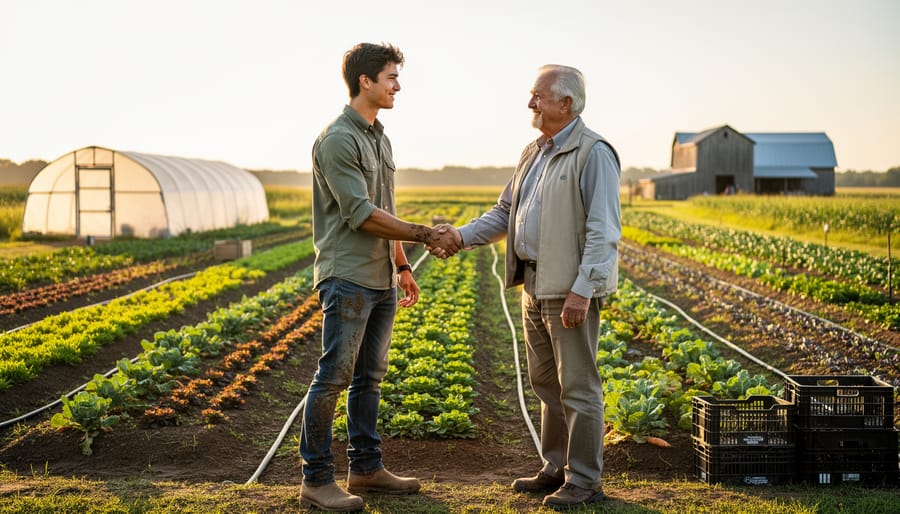
How Smart Farmers Are Securing Farmland Without Breaking the Bank

Posted by darrell on
0
Business and Economic Impact
How Smart Farmers Are Securing Farmland Without Breaking the Bank

Land access remains the single greatest barrier for new farmers entering agriculture, with farmland prices climbing 7% annually while beginning farmer incomes struggle to keep pace. Yet thousands of CSA farmers across North America have cracked this code, building thriving operations without purchasing land outright.

Consider Sarah Mitchell, who launched her 50-member CSA on leased land with just $15,000 startup capital. She negotiated a five-year lease with a retiring farmer, offering land stewardship and a percentage of profits instead of cash rent. Within three years, her operation generated enough revenue to transition to a lease-to-own arrangement.

The economics are straightforward: traditional land ownership requires $200,000-$500,000 in capital for even modest acreage, while creative tenure arrangements—leases, partnerships, incubator farm programs, and land trusts—reduce initial investment to $10,000-$50,000. This difference determines whether starting a farm remains a distant dream or an achievable goal.

Understanding land resource economics means recognizing that land access is a solvable puzzle, not an insurmountable wall. The farms feeding your community didn’t all start with inherited wealth or bank loans. They started with farmers who understood the true costs of land, explored unconventional pathways, and built relationships with landowners seeking agricultural legacies over maximum profit.

This guide breaks down the real numbers behind land access and reveals proven strategies working farmers use to secure their ground and build sustainable operations from the soil up.

Why Land Access Matters More Than Ever for CSA Farmers

The dream of starting a CSA farm often collides with a sobering reality: farmland prices have skyrocketed beyond reach for most new farmers. Over the past two decades, agricultural land values have increased by over 150% in many regions, while farmer incomes haven’t kept pace. For aspiring organic growers hoping to launch a CSA operation, this creates an impossible equation where traditional land ownership simply isn’t feasible.

The barriers extend beyond purchase prices. Even when farmers can afford a down payment, securing financing proves challenging. Banks often hesitate to fund small-scale organic operations, viewing them as riskier than conventional farms. Young farmers face additional hurdles, typically lacking the capital, credit history, or collateral that lenders require. This financial squeeze means talented growers with solid business plans and community support still can’t access the essential ingredients for farm success.

The ripple effects touch entire communities. When new farmers can’t access land, local food systems stagnate. Fewer CSA farms mean reduced fresh, organic produce options for families seeking healthier alternatives. It limits the economic impact of CSA farms on regional economies, from job creation to keeping food dollars circulating locally.

Consider Sarah, who spent five years working on established farms, learning organic techniques and building customer relationships. Despite her experience and 80 committed CSA members ready to support her venture, she couldn’t secure land. Her story isn’t unique—studies show land access ranks as the number one barrier for beginning farmers.

The traditional ownership model also ties up enormous capital that could otherwise fund infrastructure, equipment, or operating expenses during lean seasons. For CSA operations running on thin margins, this makes financial sustainability nearly impossible. The good news? Alternative land access models are emerging that address these challenges while supporting thriving, community-connected farms.

Young farmer walking through rows of leafy greens on small organic farm at sunset
Small-scale CSA farmers face unique challenges in accessing affordable farmland while building sustainable operations.

Understanding Land Tenure: What It Really Means for Your Farm

Ownership vs. Leasing: The Real Cost Comparison

Choosing between purchasing and leasing land represents one of the most significant financial decisions for CSA farmers. Each option carries distinct advantages worth understanding before committing.

Buying land requires substantial upfront capital—often $3,000 to $15,000 per acre depending on location—but builds equity over time. You gain complete control over improvements, crop rotation decisions, and infrastructure investments. For farmers planning to operate for 10+ years, ownership typically proves more economical. Consider Maria’s story: she purchased 5 acres in Vermont for $45,000. After seven years of running her CSA, her land appreciated to $65,000 while supporting 60 member families.

Leasing minimizes initial investment, typically ranging from $50 to $300 per acre annually. This flexibility allows new farmers to test their business model without massive debt. You can redirect capital toward equipment, seeds, and marketing while maintaining mobility if circumstances change. However, lease agreements may restrict certain practices or offer limited security for long-term planning.

The sweet spot? Many successful CSA farmers start with leasing arrangements, building customer relationships and refining operations. As revenue stabilizes, they transition to purchasing land, often with established cash flow supporting mortgage payments. This staged approach reduces financial risk while working toward ownership goals that align with sustainable farming dreams.

Creative Arrangements That Are Changing the Game

Accessing farmland doesn’t always mean buying it outright or signing a traditional lease. Creative models are emerging that address both affordability and long-term security for farmers who want to grow sustainably.

Community land trusts remove land from the speculative market by holding it in perpetual trust, then leasing it to farmers at affordable rates. This approach keeps farmland permanently available for agriculture while reducing the capital barrier for new growers. Farmers can often purchase buildings and improvements while leasing the land itself, building equity without the full burden of land ownership.

Cooperative ownership models pool resources among multiple farmers, spreading costs and risks. Members share land, equipment, and sometimes marketing expenses, making farming viable for those who couldn’t afford it solo. These arrangements work particularly well alongside innovative funding models that further reduce financial barriers.

Incubator farm programs offer perhaps the most accessible entry point. Beginning farmers receive parcels of prepared land, shared infrastructure, mentorship, and business training for a modest fee. After typically two to four years, graduates move on with practical experience and market connections, ready to secure their own permanent land.

These arrangements demonstrate that creativity and collaboration can unlock opportunities where traditional economics creates roadblocks, making sustainable farming accessible to passionate growers regardless of their starting capital.

The Hidden Economics of CSA Land Use

When you’re running a CSA farm, every decision about your land creates a ripple effect through your entire business model. Unlike conventional farms that can pivot crops based on market prices, CSA farmers make land use commitments months before members even sign up. This unique economic puzzle shapes everything from what you plant to how much you invest in permanent infrastructure.

The economics start with your land tenure situation. If you’re leasing year-to-year, you’ll think twice before installing that $15,000 walk-in cooler or planting perennial crops like asparagus that take three years to mature. Short-term land access means you’ll focus on annual vegetables with quick returns, even if those aren’t the most profitable long-term choices. One farmer I spoke with in Ontario postponed building a wash station for five years because her lease renewal was uncertain, costing her countless hours of inefficient harvesting practices.

Land tenure security directly influences your crop planning diversity too. Members expect variety in their boxes, but growing 40 different crops requires significant land investment and infrastructure. Farmers with owned land or long-term leases can dedicate space to succession planting and trial crops, while those with uncertain tenure stick to tried-and-true vegetables that guarantee member satisfaction in the short term.

Here’s where the economics get interesting: your member retention strategies become tied to your land decisions. High member turnover means constantly recruiting new subscribers, which pulls resources away from land improvements. But when you retain 80 percent of members annually, you can confidently invest in soil building, permanent beds, and irrigation systems that pay off over multiple seasons.

The sweet spot? Farmers with secure land access can plan three to five years ahead, creating regenerative systems that improve both soil health and profitability. They’re not just farming for this season’s harvest, they’re building equity in their land’s productive capacity.

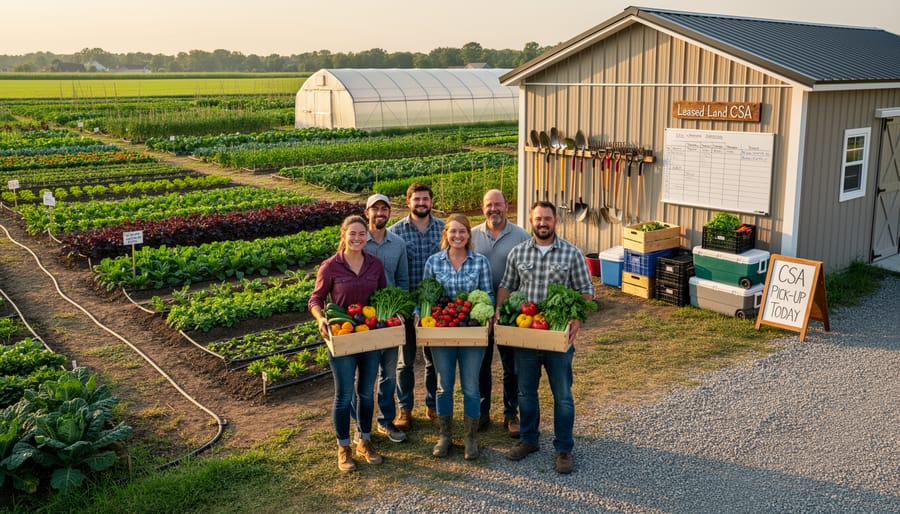
Farmer couple standing in vegetable field holding baskets of fresh harvested produce
Successful CSA farmers demonstrate that building a thriving operation on leased land is achievable with the right strategies.

Farmer Success Story: Building a Thriving CSA on Leased Land

When Maya Chen started her CSA operation in 2019, she had farming knowledge, business savvy, and passionate customers lined up—but no land of her own. Today, her Harvest Moon CSA serves 150 member families on 12 acres of leased farmland just outside Portland, Oregon, proving that land ownership isn’t a prerequisite for farming success.

Maya’s journey began with a creative five-year lease agreement with a retiring farmer. Rather than paying cash rent upfront, she negotiated a profit-sharing arrangement for the first two years, giving 15% of gross sales to the landowner while she established her operation. This arrangement reduced her initial financial risk and allowed her to invest in infrastructure instead.

“The key was showing the landowner my detailed business plan,” Maya explains. “I demonstrated how my CSA model would generate steady income while improving soil health through organic practices. That convinced him I was serious and capable.”

Her lease included permission to build a walk-in cooler, install drip irrigation, and construct a small packing shed. Maya invested approximately $25,000 in improvements, negotiating a reimbursement clause that guarantees her 75% back if the lease isn’t renewed. This protected her investment while giving the landowner valuable farm infrastructure.

The economic advantages of leasing became clear quickly. Without a mortgage or land purchase costs, Maya channeled resources into what mattered most: seeds, season extension equipment, and marketing. Her startup costs totaled $45,000 compared to the estimated $250,000 she would have needed for land purchase plus improvements.

Challenges certainly arose. In year three, Maya faced uncertainty when the landowner considered selling. She proactively researched grant programs for beginning farmers and discovered opportunities for long-term lease support through state agricultural programs. This preparation gave her confidence and negotiating leverage, ultimately securing a ten-year lease extension with a right of first refusal if the property sells.

Maya’s advice for aspiring CSA farmers? “Don’t let lack of land ownership stop you. Focus on building strong relationships, maintaining excellent communication with landowners, and creating win-win agreements. Leasing gave me the flexibility to start farming years earlier than I could have otherwise, and my business is thriving because of it.”

Making the Numbers Work: Practical Strategies for Land Access

Two farmers shaking hands in agreement in front of barn and farmland
Building strong relationships with landowners creates mutually beneficial arrangements that help CSA farmers access land affordably.

Partner with Landowners Who Share Your Vision

Finding landowners who believe in sustainable agriculture can transform your CSA dream into reality. Start your search by connecting with local agricultural organizations, attending farm bureau meetings, and reaching out through farmer networks in your community. Many landowners, especially those nearing retirement, want to see their land continue feeding people rather than sitting idle or being developed.

When approaching potential partners, come prepared with a clear vision of your farming goals and how you’ll care for their land. Share your commitment to soil health and sustainable practices – many sympathetic landowners deeply care about land stewardship and will appreciate your dedication to improving rather than depleting their property.

Beyond rent payments, consider what else you can offer. Some farmers provide landowners with a weekly CSA share, giving them a tangible connection to what’s growing on their property. Others offer to maintain fences, clear overgrown areas, or help with property tax benefits through agricultural use exemptions. One successful CSA farmer in Vermont built a strong relationship by inviting her landowner to seasonal farm dinners, creating a sense of shared purpose.

Focus on transparency and regular communication. Share your successes and challenges, invite landowners to walk the fields with you, and demonstrate how your farming practices enhance their land’s long-term value and ecological health.

Tap Into Farmland Access Programs

Finding affordable farmland doesn’t mean you’re on your own. Numerous programs exist specifically to help aspiring farmers overcome the land access barrier. Land trusts are nonprofit organizations that preserve agricultural land and often offer affordable lease opportunities to beginning farmers. These arrangements typically include long-term leases at below-market rates, giving you stability to build your operation.

Agricultural easements provide another pathway by restricting land to farm use permanently, which reduces purchase prices while protecting farmland from development. Many states offer tax incentives for landowners who participate, creating win-win scenarios.

Beginning farmer programs through organizations like the National Young Farmers Coalition connect newcomers with resources, mentorship, and sometimes direct land access. The USDA’s Farm Service Agency administers grants and low-interest loans designed specifically for new farmers, including the Microloan Program perfect for CSA startups.

Start your search locally by contacting your state’s agricultural department, regional land trusts, and Cooperative Extension offices. Many successful CSA farmers began through incubator farm programs that provide land, equipment, and training. Some communities are even exploring cooperative ownership models where multiple farmers share land costs and resources, making sustainable agriculture accessible to more people.

Design Your Operation Around Land Flexibility

When land security isn’t guaranteed, smart farmers design operations they can adapt or relocate if needed. Think portable infrastructure like hoop houses, movable chicken coops, and raised beds rather than permanent greenhouses or fixed barns. This approach protects your investment while building valuable assets you own outright.

Consider phased investment strategies that match your lease terms. If you have a three-year agreement, focus initial resources on soil building and quick-return crops before committing to perennial plantings or expensive infrastructure. Many successful CSA farmers start with annual vegetables and cover crops, gradually expanding into berries or orchards only after securing longer-term arrangements.

Keep detailed records of your soil improvements and infrastructure investments. These become negotiating tools for lease renewals or compensation if you need to relocate. Some farmers have successfully negotiated land purchases after proving their operation’s viability through careful, incremental growth. Remember, flexibility isn’t about thinking small—it’s about building a resilient business that can thrive regardless of land tenure changes.

The path to securing farmland for your CSA doesn’t have to feel like an impossible dream. Throughout this exploration of land resource economics, we’ve uncovered a fundamental truth: there are multiple creative pathways to access land, and the traditional model of outright purchase is just one option among many. Whether through leasehold arrangements, cooperative ownership, incubator programs, or innovative partnerships with landowners, aspiring farmers are finding ways to cultivate their vision without insurmountable financial barriers.

Remember that every thriving CSA you admire today started with someone taking that first step despite uncertainty. The farmers who succeeded understood that land access is a puzzle requiring creative problem-solving, not a locked door. They combined knowledge of land economics with resourcefulness, community building, and persistence.

Your next step might be researching available farmland in your area, reaching out to land trusts, or connecting with established farmers who’ve navigated these waters. Consider starting small with a lease arrangement while building your customer base and farming skills. Attend workshops on farmland access, join farming networks, and don’t hesitate to propose innovative arrangements to landowners who share your sustainable agriculture values.

The land is there, and the tools to access it economically are within your reach. By applying these economic principles with creativity and determination, you’re not just planning a farm—you’re contributing to a more sustainable, locally connected food system. Your CSA journey begins now.

How One Farm’s Career Training Program Is Reshaping the Local Food Economy

Posted by darrell on
0
Business and Economic Impact
How One Farm’s Career Training Program Is Reshaping the Local Food Economy

Growing your own food starts with knowledge, and one local agricultural business is turning that principle into economic opportunity by offering comprehensive career training programs that transform aspiring farmers into skilled professionals. Through hands-on apprenticeships, classroom instruction, and mentorship from experienced growers, trainees learn everything from soil preparation and crop rotation to pest management and direct-to-consumer marketing strategies that make small farms financially viable.

The ripple effects extend far beyond individual careers. When local businesses invest in training the next generation of farmers, they strengthen regional food systems, create living-wage jobs that keep young people in rural communities, and build a more resilient agricultural economy. Each trained farmer who launches their own operation multiplies the impact, supplying fresh produce to neighborhood markets, restaurants, and families who value knowing exactly where their food comes from.

These training programs address a critical gap in modern agriculture. With the average farmer age climbing above 58, the industry desperately needs skilled newcomers who understand both traditional growing methods and innovative sustainable practices. Local businesses providing this education aren’t just filling job openings; they’re preserving agricultural knowledge, revitalizing communities, and empowering people to build meaningful careers that nourish their neighbors while protecting the environment. The investment pays dividends in stronger local economies, healthier communities, and a more secure food future for everyone.

The Growing Demand for Trained Farm Workers

The sustainable agriculture movement has sparked tremendous consumer interest in locally grown, organic produce. Yet behind every thriving farmers market and bustling CSA box pickup, there’s a growing challenge: farms desperately need skilled workers, and they’re struggling to find them.

This labor shortage isn’t just about having extra hands during harvest season. Modern sustainable farms require workers who understand soil health, pest management, crop rotation, and the careful timing that organic growing demands. As more conventional farms transition to regenerative practices and new CSA operations launch to meet consumer demand, the gap between available jobs and qualified candidates continues to widen. These changes are reshaping local labor markets across the country.

Here’s the disconnect: while thousands of people express interest in sustainable food systems and dream of working the land, very few possess the practical skills needed to succeed. Gardening in your backyard differs vastly from managing acres of diverse crops, operating farm equipment safely, or implementing season extension techniques. Without proper training, well-intentioned newcomers often feel overwhelmed and farms lose valuable time and resources.

Career training programs have emerged as the essential bridge between enthusiasm and expertise. These programs offer hands-on experience in real farm settings, teaching everything from seed starting to post-harvest handling. Participants learn alongside experienced farmers, gaining confidence through practical application rather than theory alone.

Consider Sarah, who completed a six-month training program before launching her own market garden. “I thought I knew farming from reading books,” she shares. “But learning proper transplanting techniques and irrigation management changed everything. Now I’m actually profitable in my second season.”

This transformation from curious learner to confident farmer demonstrates why structured training has become indispensable for agriculture’s future.

What Farm-Based Career Training Actually Looks Like

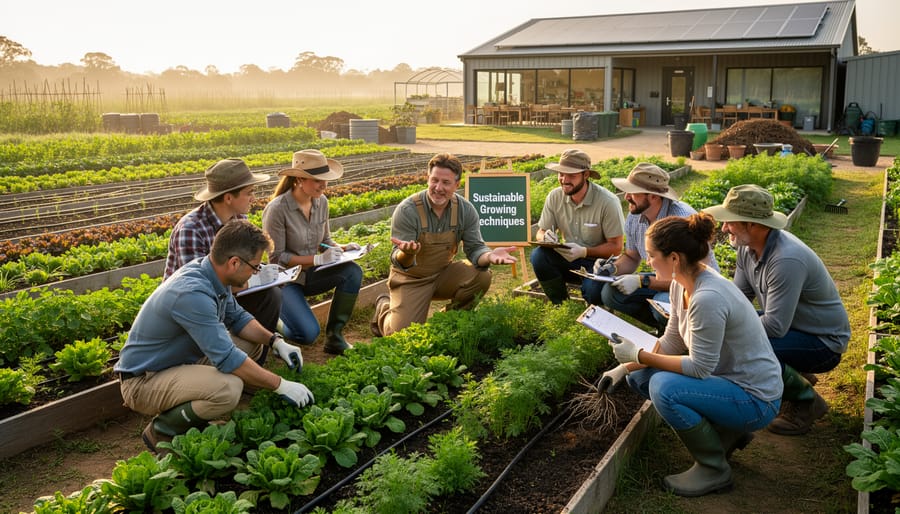
Agricultural trainees working together in vegetable field learning farming techniques
Farm trainees gain hands-on experience in sustainable growing techniques through structured career development programs.

Hands-On Skills Development

The career training program offers comprehensive hands-on experience that transforms beginners into confident farmers. Trainees spend their days in the fields learning essential skills like proper seed selection, soil preparation, and planting techniques for various seasonal crops. Under the guidance of experienced farmers, participants master the art of transplanting seedlings, understanding proper spacing, and creating optimal growing conditions for each plant variety.

Harvesting skills form a crucial part of the curriculum, teaching trainees to identify peak ripeness, use proper cutting techniques, and handle produce gently to maintain quality. The program also covers integrated pest management, where participants learn to identify common pests and diseases while implementing organic solutions like companion planting, beneficial insects, and natural pest deterrents.

Sustainable farming practices weave through every aspect of the training. Participants discover composting methods, crop rotation strategies, water conservation techniques, and soil health management. One graduate, Maria, shares her success story: “I started knowing nothing about farming. Now I manage my own quarter-acre plot, providing fresh vegetables to twenty local families.” This practical, mentorship-based approach ensures trainees gain real-world skills they can immediately apply to their own farming ventures or careers in sustainable agriculture.

Business and Marketing Education

Beyond growing techniques, successful farming requires solid business acumen. Many local agricultural training programs recognize that understanding the entrepreneurial side is crucial for long-term viability. These programs teach aspiring farmers how to develop comprehensive business plans that cover startup costs, seasonal cash flow management, and pricing strategies for different market channels.

Participants learn the essential ingredients for farm success, including how to build lasting customer relationships through effective communication and transparency about growing practices. Training often includes practical modules on operating a Community Supported Agriculture (CSA) program, selling at farmers markets, and navigating wholesale partnerships with restaurants and local retailers.

Understanding local food distribution channels is essential in today’s market. Trainees explore various sales models, from direct-to-consumer approaches to cooperative distribution networks. They also learn basic marketing strategies, including social media promotion, creating compelling farm stories, and engaging with their community. This business education empowers graduates to transform their agricultural passion into sustainable livelihoods while strengthening local food systems and creating economic opportunities within their communities.

Measuring Economic Impact: Beyond the Farm Gate

Direct Economic Benefits

When local farms invest in career training programs, the economic ripple effects are substantial and measurable. Recent economic impact studies show that each trained agricultural worker contributes an average of $35,000 to $50,000 annually in wages to the local economy, money that typically stays within the community through local spending.

Training programs create immediate employment opportunities, with many farms reporting the ability to expand operations by 20-30% after bringing on skilled workers. Take Sarah Chen, who completed a season-long apprenticeship at Green Valley Farm. Within two years, she launched her own organic vegetable operation, now employing three additional workers and serving 85 member families.

The productivity gains are equally impressive. Farms with trained staff report 25-40% increases in crop yields through improved soil management, efficient planting schedules, and reduced crop loss. This translates to more fresh, organic produce available for community members while strengthening food security.

Beyond the farm gate, these trained workers often become educators themselves, sharing sustainable growing techniques with home gardeners and inspiring the next generation of environmental stewards. This knowledge transfer multiplies the economic and environmental benefits throughout the region.

Indirect Community Benefits

The ripple effects of career training in sustainable agriculture extend far beyond the classroom, creating a flourishing ecosystem of local food initiatives. As newly trained farmers launch their own operations, they naturally gravitate toward community gathering spaces like farmers markets, breathing fresh life into these beloved weekend destinations. These markets become more vibrant and diverse, offering shoppers greater variety while strengthening connections between growers and consumers.

The training also sparks an entrepreneurial wave of farm startups throughout the region. Graduates armed with practical knowledge and confidence often begin with small-scale operations, perhaps starting a backyard microgreens business or launching a specialty herb garden. These micro-enterprises might seem modest at first, but they collectively contribute to a more resilient local food system. One inspiring example comes from Maria, who transformed her half-acre plot into a thriving cut-flower farm after completing her training, now supplying three local florists and two farmers markets.

Beyond individual success stories, this training strengthens the entire local food supply chain. Restaurants gain access to reliable sources of fresh, seasonal produce. Food cooperatives expand their local vendor networks. Even school lunch programs benefit from increased availability of farm-fresh ingredients. This interconnected web of producers, distributors, and consumers creates economic stability while reducing our community’s dependence on distant food sources shipped from thousands of miles away.

Success Story: From Trainee to Farm Entrepreneur

When Maria Rodriguez enrolled in the apprenticeship program three years ago, she was working retail and dreaming of a different future. Today, she runs Verde Valley Farm, a thriving 5-acre organic operation that supplies fresh produce to over 80 local families and three restaurants in the community.

Maria’s journey began with an intensive six-month training program that covered everything from soil health and crop rotation to business planning and customer relations. She spent her mornings learning greenhouse management and her afternoons getting hands-on experience in the fields. The program didn’t just teach her how to grow vegetables—it equipped her with real-world skills to launch a sustainable business.

“I learned about companion planting, season extension techniques, and how to build healthy soil without synthetic inputs,” Maria shares. “But what really made the difference was understanding the business side. They taught us pricing strategies, how to connect with customers, and the importance of building relationships within the local food community.”

After completing her training, Maria leased land through a farmland access program and started small with just half an acre of mixed vegetables. Her first season, she served 15 CSA members and generated $12,000 in revenue. By her third year, she’d expanded to 5 acres and increased her annual revenue to $85,000 while creating two full-time positions and seasonal work for local high school students.

Beyond the numbers, Maria’s farm has become a community hub. She hosts monthly farm tours for families, donates surplus produce to the local food pantry, and mentors new trainees from the same program that launched her career. Her success demonstrates how accessible agricultural training can transform individual lives while strengthening local food systems.

“The training gave me confidence and practical knowledge,” Maria reflects. “Now I get to share fresh, organic food with my neighbors while making a living doing something I genuinely love.”

Young farmer selling fresh produce at local farmers market stand
Program graduates apply their business training by launching farm ventures and participating in local food markets.

The Multiplier Effect on Local Food Systems

When a local farm invests in training new farmers, the benefits ripple far beyond individual career development. These trained growers become vital threads in the fabric of local food systems, creating opportunities that strengthen the entire community’s access to fresh, sustainable produce.

Consider the journey of trained farmers like Sarah Martinez, who completed a two-year apprenticeship at Green Valley Farm. Within three years, she was supplying organic vegetables to eight local restaurants, two elementary schools, and running her own thriving CSA program with 75 member families. Her success story isn’t unique. Trained farmers consistently expand market channels that didn’t previously exist, creating new purchasing options for institutions and families alike.

The knowledge transfer continues as these graduates become mentors themselves. They host farm tours, lead workshops on composting and season extension techniques, and provide crucial guidance to the next generation of growers. This creates a self-sustaining cycle of agricultural expertise within the community.

Schools particularly benefit from this multiplier effect. When trained farmers understand food safety protocols and can maintain consistent supply schedules, they become reliable partners for farm-to-school programs. Children gain access to nutrient-dense produce while learning where their food originates.

The economic impact extends to related businesses too. Local seed companies, tool suppliers, farmers’ market organizations, and food hubs all experience increased activity as more trained farmers enter the field. Each new CSA operation creates demand for delivery services, packaging materials, and storage facilities.

This interconnected growth demonstrates how career training in sustainable agriculture doesn’t just create jobs but builds resilient food networks that serve entire regions for generations.

Overflowing harvest box filled with fresh colorful vegetables from local farm
Trained farmers strengthen local food systems by increasing the availability and quality of fresh produce for community members.

Finding Career Training Opportunities in Your Area

If you’re excited about pursuing agricultural career training or want to support farms investing in their workforce, here’s how to get started. Begin by reaching out directly to local farms and CSAs in your area—many offer apprenticeships or internship programs but don’t advertise them widely. Visit farmers markets and farm stands to ask growers about training opportunities they might offer or know about.

When evaluating a program’s quality, look for hands-on learning opportunities that cover diverse farm operations throughout growing seasons. Reputable programs provide clear expectations about work hours, learning outcomes, and any compensation or food shares offered. Ask about mentor availability and whether you’ll gain experience in areas like soil health, crop planning, and sustainable pest management. Programs connected to organic certification bodies or sustainable agriculture organizations often maintain high educational standards.

Don’t overlook resources like your local Cooperative Extension office, agricultural colleges, and community colleges offering beginning farmer courses. Many non-profit farming organizations also maintain directories of training opportunities and can connect you with established farmers willing to mentor newcomers.

As a consumer, you play a vital role in supporting workforce development. Join CSAs that actively train new farmers, spreading awareness about their commitment to education. Purchase produce from farms employing apprentices, knowing your dollars help fund the next generation of sustainable growers. Share success stories of farmers who started as apprentices, inspiring others to explore agricultural careers. Consider volunteering at teaching farms or donating to scholarship funds that make training accessible to diverse communities, strengthening local food systems for everyone.

When local farms invest in career training programs, they’re doing much more than filling immediate job openings. They’re building a foundation for resilient food systems that strengthen our entire community. These programs create ripple effects throughout the local economy, from reduced unemployment to increased spending at neighboring businesses, while nurturing the next generation of agricultural stewards.

The farmers who complete these training programs become ambassadors for sustainable agriculture, carrying forward time-tested practices while bringing fresh innovation to their work. Their success stories demonstrate that investing in people creates lasting value that extends far beyond any single growing season.

As consumers and community members, we have the power to support this vital cycle. Seek out farms that prioritize workforce development and career training. When you purchase from these businesses, you’re not just buying fresh, organic produce. You’re investing in jobs, strengthening local food security, and helping build a more sustainable agricultural future. Consider visiting local farmers markets, joining a CSA program, or simply asking your favorite farm about their training initiatives. Every purchase becomes a vote for the kind of community you want to see thrive.

How CFTC Cross-Border Rules Are Reshaping Your Local Farm Economy

Posted by darrell on
0
Business and Economic Impact
How CFTC Cross-Border Rules Are Reshaping Your Local Farm Economy

You probably didn’t expect to land on a sustainable farming website while searching for CFTC cross-border guidance, but here’s why you should stay: those complex commodity trading regulations directly impact what you pay for organic vegetables at your local farmers market.

The Commodity Futures Trading Commission’s cross-border rules govern how international agricultural commodity prices are set, which means they influence everything from the cost of organic fertilizer your CSA farmer purchases to the price volatility in grain markets that affects feed costs for pasture-raised chickens. When commodity traders in Chicago make decisions based on CFTC guidance, those ripples reach your community’s small-scale organic farms within weeks.

Understanding this connection matters because large-scale commodity speculation can drive up input costs for local farmers by 15-30%, forcing them to either raise CSA share prices or absorb losses that threaten farm viability. Many sustainable farmers operate on margins so thin that international regulatory changes directly determine whether they can afford to keep farming organically or must scale back their operations.

This guide translates dense financial regulations into practical knowledge about how global agricultural markets affect your local food system, empowering you to understand the real economic pressures facing the farmers who grow your food and the communities that depend on agricultural stability.

What CFTC Cross-Border Guidance Actually Means for Small Farms

Farmer's hands holding freshly harvested organic vegetables at local farm stand
Local CSA farms connect consumers directly with fresh produce while navigating complex commodity market dynamics that affect their operations.

The Basics: When Farm Products Cross State Lines

When you sell tomatoes at your local farmers market, you probably aren’t thinking about federal oversight. But the moment farm products cross state lines—whether it’s grain futures contracts or commodity hedging—the Commodity Futures Trading Commission (CFTC) steps in to monitor the playing field.

Here’s how it works: Let’s say a cooperative of organic wheat farmers wants to secure fair prices by entering futures contracts with buyers in another state. Once that transaction involves interstate commerce and derivative products like futures or options, CFTC cross-border guidance comes into play. The agency ensures these trades remain transparent and fair, protecting farmers from market manipulation.

For small-scale farmers selling directly to CSA members, this rarely matters. However, if you’re growing your operation and considering hedging strategies to protect against price volatility, understanding when CFTC oversight applies becomes important. The trigger point is simple: trading derivatives across state boundaries activates federal jurisdiction. This safeguard exists to maintain market integrity, ultimately benefiting everyone from large cooperatives to the local organic farmer planning next season’s crops with confidence in stable pricing structures.

Why These Rules Were Created

The rules governing cross-border commodity trading trace back to the 1930s, when wild price swings threatened both farmers and consumers. Imagine a wheat farmer planting in spring with no idea what prices would be come harvest—would they cover costs or face ruin? These unpredictable markets hurt everyone, from the fields to the dinner table.

The Commodity Futures Trading Commission (CFTC) emerged to bring stability through regulated futures markets. These markets let farmers lock in prices before harvest, protecting their livelihoods while ensuring consistent food costs for families. When international trading expanded, cross-border guidance became essential to maintain fair practices across countries.

Today, these regulations still shield the local farm economic impact you see in Community Supported Agriculture operations. While CSA farms operate on direct relationships rather than commodity exchanges, they benefit from the broader market stability these rules create. When global commodity prices remain steady, local organic farmers face less competition from volatile conventional markets, making their sustainable practices more economically viable for communities who value knowing exactly where their food comes from.

The Ripple Effect on Your CSA Share Price

How Global Markets Touch Local Farms

Let’s look at how international commodity markets ripple down to affect your local CSA farm in surprisingly direct ways.

When commodity futures prices for crops like corn and soybeans spike on global markets—often influenced by the cross-border trading that CFTC guidance regulates—the effects cascade quickly. Sarah Chen, who runs a 15-acre organic vegetable operation in Vermont, noticed this firsthand when her feed costs for chickens jumped 40% in one season. The culprit? International grain traders responding to overseas demand, pushing up futures prices that ultimately determined what her local feed mill charged.

Equipment costs follow similar patterns. That new tractor or greenhouse kit often contains steel and aluminum priced according to metal commodity markets. When international speculation drives these futures contracts higher, manufacturers pass costs along, and suddenly that irrigation upgrade becomes harder to budget for.

Even organic certification feels the pinch. Certification agencies must account for rising operational costs tied to global commodity markets—everything from fuel for inspector travel to paper for documentation. These expenses increase when energy futures climb due to international trading activity.

The good news? Understanding these connections helps farmers plan better. Many successful CSA operators now track basic commodity trends, not to become traders themselves, but to anticipate cost changes and communicate honestly with their members. When grain futures signal higher feed costs ahead, farmers can adjust pricing or planting decisions months in advance, maintaining the financial stability that keeps local food systems thriving.

Price Stability Benefits for CSA Members

When you join a CSA, you’re investing in your local farm’s success, and regulatory frameworks in commodity markets can surprisingly influence what you pay for your weekly harvest. While it might seem distant from your farm box, international regulations on agricultural commodities help stabilize the prices farmers pay for inputs like seeds, organic fertilizers, and fuel.

Here’s the real-world impact: when commodity markets function transparently with proper oversight, farmers experience less dramatic price swings in their operational costs. This stability allows them to set fair, predictable CSA share pricing at the season’s start, protecting both your budget and theirs. Rather than facing surprise mid-season price adjustments due to volatile input costs, your farmer can confidently plan and pass that security on to you.

Take Sarah, a farmer from Ontario who shared how regulated commodity exchanges helped her lock in feed prices for her chickens early in the season. This meant her members enjoyed consistent pricing throughout the year, even when market chaos hit conventional suppliers. The result? Happier members who could budget confidently and a farmer who could focus on growing great food rather than constantly recalculating costs. This predictability strengthens the farm-community relationship that makes CSA special.

CSA members receiving weekly farm share boxes at farmers market
Community Supported Agriculture members picking up their weekly shares, representing the direct connection between consumers and local farms affected by broader market forces.

Economic Implications for Regional Food Systems

Supporting Local While Understanding Global Connections

When you understand how international commodity markets work, you become a more empowered consumer at your local farmers market. Global trading regulations like CFTC cross-border guidance influence the prices of agricultural inputs—from organic seeds to fertilizer—that your neighborhood farmers purchase. These costs ultimately affect what you pay for fresh produce at CSA pickups.

By choosing local, you’re not just supporting farmers; you’re participating in regional food systems that provide stability against global market fluctuations. When commodity prices spike internationally, locally sourced food often remains more affordable because it bypasses long supply chains and speculative trading.

Consider Sarah, a small-scale organic farmer in Ontario, who partners directly with 80 families through her CSA program. She’s less vulnerable to international price swings because her customers commit upfront, creating predictable income that lets her focus on soil health and sustainable practices rather than market volatility.

Understanding these connections helps you appreciate why your CSA membership matters beyond just fresh vegetables—it’s an investment in food security and community resilience.

Farmer Success Story: Navigating Market Changes

Meet Sarah Chen, who runs Green Valley Farm, a thriving 15-acre CSA operation in Vermont. When global grain prices spiked in 2021 due to international trade disruptions, Sarah watched her feed costs for chickens nearly double overnight. Rather than panic, she saw an opportunity to strengthen her farm’s resilience.

Sarah shifted her approach by growing more of her own chicken feed, planting heritage grains that thrived in her climate. She also diversified her CSA boxes to include value-added products like fermented vegetables and herb bundles, reducing her dependence on commodity markets. By communicating openly with her members about the challenges facing small farms in a globalized food system, she built even stronger community support.

Her transparency paid off. Members appreciated understanding how international market forces affected their local food, and many increased their share sizes to help stabilize farm income. Sarah now runs workshops teaching other farmers how to insulate their operations from market volatility while maintaining organic certification. Her story demonstrates that staying informed about broader agricultural economics, even complex regulatory frameworks, helps farmers make smarter decisions that protect both their livelihoods and their commitment to sustainable practices.

What CSA Members Can Do to Support Stable Farm Economics

Early Share Commitments Matter More Than Ever

When international commodity markets experience volatility—whether due to trade regulations like CFTC cross-border guidance or global supply chain disruptions—local farms aren’t immune to the ripple effects. Input costs for everything from organic seeds to fuel can fluctuate wildly based on global trading patterns. This is where early share commitments become a financial lifeline for small-scale organic farms.

When CSA members purchase their shares before the growing season begins, they provide farmers with crucial upfront capital. This means farms can lock in supplies at predictable prices and make strategic purchasing decisions without being forced to react to market swings. For example, Sarah from Green Valley Farm shares that her February CSA sign-ups allowed her to buy organic fertilizer and heirloom seeds at stable winter prices, avoiding the spring price jumps that affected many conventional operations.

This advance funding model creates a protective buffer, allowing farmers to focus on what they do best—growing nutritious, chemical-free food—rather than constantly worrying about commodity price fluctuations driven by distant regulatory changes.

Building Resilient Local Food Networks

While global commodity markets may seem distant from your local farm stand, building strong community food networks helps shield you from market volatility. Start by connecting with neighboring farms to share resources, knowledge, and customer bases. Consider forming a local food cooperative or joining existing farmer networks in your region.

Diversification strengthens resilience. When Sarah Chen’s organic vegetable farm faced unpredictable wholesale prices, she partnered with three nearby farms to offer year-round CSA boxes featuring produce, eggs, honey, and seasonal flowers. This collaboration increased customer retention by 40% and provided stable income regardless of commodity price swings.

Support your local food economy by shopping at farmers markets, joining community gardens, and participating in farm work-shares. Encourage restaurants and institutions in your area to source locally. These direct connections reduce dependence on long supply chains affected by international trade regulations and currency fluctuations.

Host farm tours, potlucks, and skill-sharing workshops to deepen community bonds. When people understand where their food comes from and know their farmers personally, they become invested in the farm’s success. This creates a buffer against external market pressures, ensuring your local food system thrives independently of global commodity trends.

Aerial view of small organic farm with vegetable rows and farmer working in field
Sustainable local farms build resilient food systems by maintaining strong community connections and adapting to changing economic conditions.

Understanding how global commodity markets and regulations like CFTC cross-border guidance influence our local food systems might seem overwhelming at first, but this knowledge is actually empowering. When you recognize how international grain prices can affect your CSA share costs, or why your farmer made certain planting decisions this season, you become a more informed and supportive community member. This awareness transforms you from simply a customer into an active participant in building resilient local food networks.

The beauty of Community Supported Agriculture is that it creates a buffer against these larger market forces. By committing to your local farm through seasonal shares, you’re helping farmers plan with confidence, invest in soil health, and weather the unpredictable storms of global trade regulations. Your membership matters more than you might realize, especially during times of market volatility.

As economic conditions shift and international policies evolve, staying connected with your CSA farm becomes increasingly valuable. Attend farm events, ask questions about how market changes affect operations, and share your farmer’s story with friends and neighbors. Consider this your invitation to deepen your relationship with the people growing your food. Together, through understanding and commitment, we’re cultivating something far more valuable than vegetables—we’re growing food security, environmental stewardship, and genuine community resilience that transcends borders and market fluctuations.

How AI Loan Matching Is Saving Small CSA Farms From Financial Collapse

Posted by darrell on
0
Categories
How AI Loan Matching Is Saving Small CSA Farms From Financial Collapse

Match your farm’s financial needs with the right lender using AI-powered platforms that analyze your CSA operation’s unique characteristics—from subscriber numbers to crop diversity—and connect you with specialized agricultural lenders in minutes rather than months. Upload your farm’s financial documents, revenue projections, and business plan to these intelligent systems that compare hundreds of online loans without credit check simultaneously, identifying products that evaluate alternative data points like customer retention rates and seasonal cash flow patterns, including options you might never find through traditional banking channels.

Community Supported Agriculture faces distinct financing challenges that conventional loan officers rarely understand. Your CSA’s subscription-based model, seasonal revenue cycles, and customer prepayments create financial patterns that traditional underwriting algorithms flag as risky. AI loan matching technology recognizes these patterns as strengths, not weaknesses.

Take Sarah Chen, who runs Green Valley Farm in Vermont. After two years of rejected bank applications, she used an AI matching platform that connected her with an agriculture-focused credit union within 48 hours. The system highlighted her 92% subscriber renewal rate and waitlist of 30 families—data points traditional lenders had overlooked—securing her a $75,000 equipment loan that transformed her operation.

These platforms democratize access to capital by removing geographic barriers and human bias from initial screenings. Whether you’re launching your first CSA or expanding from 50 to 200 shares, AI matching helps you find lenders who genuinely understand regenerative agriculture’s financial model and long-term value.

Why Traditional Lending Fails CSA Farmers

For Sarah Chen, a third-generation farmer launching her CSA operation in Vermont, the bank meeting felt like speaking different languages. Despite her detailed business plan and waiting list of eager subscribers, the loan officer seemed puzzled by her model. “But when do customers actually pay you?” he asked, flipping through projections that showed concentrated income during spring sign-ups and harvest season.

This scenario plays out repeatedly across North America. Traditional lenders struggle to understand the CSA model’s unique rhythm, creating frustrating barriers for farmers seeking growth capital.

The seasonal cash flow pattern inherent to CSA operations immediately raises red flags in conventional lending systems. While subscription payments often arrive upfront in late winter or early spring, significant expenses—equipment repairs, seed purchases, greenhouse maintenance—hit during the same period. Then comes the “hungry gap” of early season when cash reserves dwindle before harvest begins. This doesn’t indicate poor CSA farm profitability, but standard underwriting algorithms interpret these fluctuations as instability.

Collateral presents another stumbling block. Many CSA farmers operate on leased land or own property with conservation easements that limit its value as security. Their assets—hoop houses, washing stations, walk-in coolers—don’t translate easily into resale values that banks recognize.

Credit history compounds these challenges. Farmers transitioning from other careers or young growers establishing their first operations often lack extensive business credit. Their subscriber relationships, community reputation, and farming expertise carry tremendous real-world value but don’t appear on credit reports.

Perhaps most frustrating is the knowledge gap. Loan officers unfamiliar with agricultural nuances miss the strength signals inherent to successful CSA operations: high renewal rates, diversified crop plans, established distribution networks, and strong community ties. These indicators of stability and success simply don’t fit traditional lending frameworks, leaving viable farm businesses without access to capital that could fuel expansion, improve infrastructure, and strengthen local food systems.

Small organic CSA farm with diverse vegetable rows and rustic distribution building
Small CSA farms face unique financial challenges that traditional lenders often fail to understand, making capital access difficult.

What AI Loan Matching Actually Does for Your Farm

Smart Analysis of Your Farm’s Financial Story

Traditional lenders often overlook what makes CSA farms truly valuable. When you apply for conventional financing, banks focus heavily on credit scores and standard financial statements—metrics that don’t capture the unique strengths of your subscription-based farming operation.

AI-powered loan matching changes this game entirely. These intelligent systems dig deeper into what really matters for CSA success. They analyze your member retention rates, showing lenders that your 85% renewal rate demonstrates customer loyalty and predictable revenue. The technology recognizes seasonal cash flow patterns inherent to farming, understanding that February looks different from July—and that’s perfectly normal.

Your subscription growth trends tell a compelling story that AI can translate for lenders. If you’ve steadily increased from 50 to 120 member shares over three years, that progression matters more than a single quarter’s snapshot. The system also evaluates delivery consistency, member satisfaction indicators, and even your waiting list size as positive financial markers.

This smart analysis means you’re not competing against traditional businesses with different models. Instead, you’re matched with lenders who understand and value the community-supported agriculture approach, increasing your chances of securing fair financing terms.

Farmer using tablet technology in vegetable field with harvest crates nearby
AI-powered platforms analyze CSA-specific metrics like member retention and seasonal patterns to match farmers with appropriate lenders.

Finding Lenders Who Actually Understand Agriculture

One of the biggest frustrations CSA farmers face is sitting across from loan officers who simply don’t understand the seasonal nature of agriculture or the value of community-supported farming models. Traditional banks often view CSA operations as risky because they lack familiarity with this subscription-based approach to farming.

This is where AI loan matching becomes transformative. These platforms analyze your farm’s specific profile—including your CSA membership base, crop diversity, and sustainable practices—then connect you with lenders who actually specialize in agricultural financing. Instead of casting a wide net and hoping for the best, you’re instantly matched with credit unions, farm-focused lenders, and alternative financing sources that recognize the stability and community value your CSA provides.

Many of these agricultural lenders appreciate metrics that traditional banks overlook, like your customer retention rate, pre-season subscription sales, and commitment to regenerative practices. Some even offer favorable terms specifically for organic and sustainable operations.

Take Sarah Chen’s story: after being rejected by three conventional banks, an AI matching platform connected her with a regional agricultural credit union within 48 hours. They understood her CSA model immediately and approved her greenhouse expansion loan within two weeks. “They asked about my crop rotation plans and member satisfaction rates,” Sarah recalls. “Finally, someone who spoke my language.”

The technology eliminates the exhausting process of researching dozens of lenders individually, saving you valuable time you’d rather spend in the field.

Real CSA Farmers Who Found Funding Through AI Matching

Sarah Martinez discovered AI loan matching at a pivotal moment for her 15-acre CSA operation in Oregon’s Willamette Valley. After three years of managing her farm with borrowed equipment, she needed $45,000 to purchase a walk-in cooler and washing station. Traditional banks had turned her down twice, citing limited collateral and her farm’s short operating history.

“I spent maybe twenty minutes entering my farm’s information into an AI matching platform,” Sarah recalls. “Within 48 hours, I had responses from four different lenders who actually understood agriculture.” She secured a loan through a regional farm credit union that the algorithm identified based on her crop mix, customer retention rate, and commitment to organic practices. The new infrastructure allowed her to extend her growing season and increase her member base from 85 to 140 families within eighteen months.

Marcus and Jennifer Thompson faced a different challenge at their Iowa CSA farm. They wanted to expand from five to twelve acres but needed $120,000 for land purchase and soil amendments to transition the new acreage to organic certification. Their AI matching experience connected them with an agricultural-focused CDFI that specialized in organic transition financing.

“The platform highlighted our three-year waitlist and strong community connections from economic impact studies we’d participated in,” Marcus explains. “Those weren’t things our local bank even asked about.” The couple received favorable terms with deferred payments during the three-year organic transition period. Today, they supply 200 member families and employ four seasonal workers.

Even smaller investments can transform operations. Devon Chen used AI matching to secure a $15,000 microloan for high tunnel construction at his urban CSA farm outside Seattle. The algorithm connected him with a nonprofit lender focused on new farmers of color and sustainable agriculture initiatives.

“I didn’t know that lender existed,” Devon says. “The AI found them based on my demographics, farm size, and business model.” The high tunnels extended his growing season by two months, allowing him to offer winter shares for the first time and boost annual revenue by 35%.

These farmers share a common thread: AI matching didn’t just find them money—it found them the *right* partners who understood their unique business models and long-term sustainability goals.

CSA farmer standing with new commercial cooling and washing equipment funded through alternative lending
Successful CSA farmers have used AI loan matching to secure funding for critical infrastructure like cooling equipment and processing facilities.

Getting Started: What You Need to Apply

Before diving into AI loan matching platforms, gathering the right documentation will streamline your application and improve your chances of securing favorable terms. Think of this preparation as creating a comprehensive snapshot of your farm’s health and potential.

Start with your **financial fundamentals**. You’ll need at least two years of tax returns, profit and loss statements, and balance sheets. Don’t worry if your early years show modest profits—lenders understand that building a CSA takes time. Include bank statements from the past 3-6 months and a list of current debts with payment schedules.

Your **farm metrics** tell the story behind the numbers. Document your current acreage, crop varieties, growing seasons, and production volumes. Include your CSA membership numbers (current and historical), average share prices, and retention rates. These details demonstrate market demand and business stability.

A solid **business plan** is essential, but keep it practical. Outline your 3-5 year growth projections, expansion plans, and how loan funds will be used specifically. Will you purchase equipment, expand greenhouse capacity, or increase distribution? Be concrete. Many successful farmers also include their approach to sustainable farming practices, which resonates with mission-driven lenders.

**CSA-specific documentation** strengthens your application significantly. Share member testimonials, renewal rates, and waiting list numbers if applicable. Include photos of your operation, harvest records, and evidence of community engagement like farmers market participation or farm-to-table partnerships.

Finally, prepare **certification documents** such as organic certification, Good Agricultural Practices (GAP) certification, or food safety plans. These demonstrate professionalism and can unlock better loan terms.

Remember Sarah from Vermont, who secured funding by showcasing her 85% member retention rate alongside traditional financials? Her thorough preparation impressed lenders and resulted in a competitive interest rate. Taking time to organize these materials upfront means less back-and-forth later and positions you as a serious, organized business owner ready for growth.

Top AI Loan Matching Platforms for Agricultural Borrowers

Several AI-powered lending platforms have emerged to specifically serve small-scale farmers, making the loan matching process surprisingly straightforward for CSA operations.

**Steward** stands out for agricultural borrowers, offering free loan matching services that connect farmers with mission-aligned lenders who understand seasonal cash flow challenges. Their AI analyzes your farm’s unique financial patterns and matches you with lenders offering terms from $10,000 to $600,000. What makes them special? They don’t charge farmers any fees—lenders pay for the service instead.

**FarmRaise** combines AI loan matching with grant-finding tools, perfect for CSA farmers pursuing organic certification or infrastructure improvements. Their platform is free to use and includes personalized recommendations based on your farm size, crops, and sustainability practices. The AI learns from successful applications, helping you craft stronger proposals.

**AgCountry Farm Credit Services** uses sophisticated algorithms to pre-qualify farmers within minutes, specializing in operations under 100 acres. Their platform understands the value of agricultural partnerships and community-supported models, often viewing CSA membership lists as positive indicators of stable revenue.

**Whole Farm Co-op Lending** offers AI-assisted matching specifically for organic operations. While they charge a small application fee ($50-100), their technology excels at finding creative financing solutions including equipment leasing and working capital lines that sync with harvest schedules.

When choosing a platform, prioritize those with transparent fee structures and proven track records with small organic farms. Look for success stories from operations similar to yours—many platforms showcase farmer testimonials demonstrating how AI matching helped secure funding that traditional banks initially rejected.

What to Watch Out For: Protecting Your Farm’s Interests

While AI loan matching opens exciting doors for CSA farmers, it’s essential to approach these tools with informed confidence. Think of the AI as a helpful guide, not a decision-maker—the final choice always rests with you.

First, carefully review interest rates and repayment terms. AI platforms may suggest multiple lenders, but the lowest rate isn’t always the best fit. Consider the full picture: Are there prepayment penalties? What happens during a challenging growing season? Look for agricultural-friendly terms that understand the seasonal nature of farming income.

Watch out for fees that can quietly add up. Some platforms charge subscription fees, while lenders may include origination fees, application fees, or service charges. Calculate the true cost of borrowing before committing.

Be cautious about sharing sensitive farm data. Reputable AI platforms use secure encryption, but always read privacy policies. Your financial information and farm metrics are valuable—ensure they’re protected and won’t be sold to third parties.

Here’s an empowering tip from successful CSA farmer Maria Rodriguez: “I always run AI recommendations past my farm mentor and accountant. The technology found options I’d never discovered alone, but having trusted advisors review the terms gave me peace of mind.” This balanced approach—embracing innovation while maintaining careful oversight—helps you leverage AI’s power while protecting your farm’s future. Remember, you’re building a sustainable operation, and the right financing should support that long-term vision.

AI loan matching is breaking down financial barriers that have long kept sustainable farming out of reach for many passionate growers. By connecting CSA farmers with lenders who understand and value organic agriculture, these tools are creating real pathways to expand operations, invest in infrastructure, and build thriving local food systems. Whether you’re just starting your farming journey or looking to scale your existing CSA, exploring AI-powered loan platforms could be the key to unlocking your next chapter.

Take the first step today: research platforms that specialize in agricultural financing, gather your farm’s financial documentation, and prepare a clear vision for how funding will support your sustainable mission. Remember, securing capital isn’t just about growing your business—it’s about nourishing your community with nutrient-dense, locally grown food for years to come.

How Local Farms Transform Your Community’s Economic Growth

Posted by darrell on
0
Business and Economic Impact
How Local Farms Transform Your Community’s Economic Growth

Discover how the five fundamental factors of production – land, labor, capital, entrepreneurship, and knowledge – actively transform local economies through sustainable agriculture. Beyond traditional economics textbooks, these elements form the backbone of modern farming communities, creating resilient food systems that nourish both people and local prosperity. Whether you’re a small-scale farmer, community supporter, or curious consumer, understanding these interconnected factors reveals how sustainable agriculture builds economic strength from the ground up. From fertile soil to innovative farming techniques, each factor plays a crucial role in cultivating not just crops, but thriving agricultural communities that sustain generations to come. Join us as we explore how these timeless economic principles take root in today’s local food movement, fostering growth that extends far beyond the field.

Bird's eye view of a sustainably managed local farm with diverse agricultural zones
Aerial view of a diverse local farm showing different land use patterns, including crop fields, orchards, and sustainable farming practices

Land: The Foundation of Local Food Production

Sustainable Land Use Practices

Sustainable land use practices form the foundation of efficient agricultural production while preserving natural resources for future generations. Smart crop rotation, organic farming methods, and soil conservation techniques help maintain soil fertility and reduce the need for synthetic inputs. For example, cover cropping not only prevents erosion but also naturally enriches the soil with essential nutrients.

Many successful farmers implement integrated pest management and water-efficient irrigation systems to maximize their land’s productivity while minimizing environmental impact. Local farmer Sarah Miller increased her farm’s yield by 30% after adopting no-till farming and companion planting techniques, proving that sustainability and profitability can go hand in hand.

These practices also contribute to biodiversity, creating healthy ecosystems that naturally support agricultural production. By protecting pollinators, maintaining natural habitats, and using biological pest control methods, farmers can create resilient agricultural systems that benefit both the environment and their bottom line. This approach to land management ensures long-term economic viability while preserving our valuable natural resources.

Property Value Impact

Local farms contribute significantly to property values in their surrounding areas, creating a ripple effect of economic benefits. Studies show that properties near well-maintained farms typically experience a 5-15% increase in value compared to similar properties in non-agricultural areas. This boost stems from several factors, including preserved green spaces, improved air quality, and enhanced community character.

Farms that practice sustainable methods and maintain attractive landscapes particularly influence nearby real estate values. Properties adjacent to organic farms often command premium prices, as buyers value access to fresh produce and the aesthetic appeal of farmland views. Additionally, communities with active local food systems tend to attract environmentally conscious residents willing to pay more for homes in these areas.

The presence of successful small farms can also protect surrounding properties from rapid development, helping maintain stable property values over time. Many homebuyers specifically seek locations near CSA farms, viewing them as valuable community assets that enhance their quality of life and investment potential.

Labor: Creating Local Employment Opportunities

Direct Farm Employment

Direct farm employment creates significant economic opportunities in local labor markets, offering both full-time and seasonal positions that support sustainable agriculture. Small-scale organic farms typically employ 2-3 full-time workers per acre, compared to conventional farming’s lower labor requirements. These jobs often pay above minimum wage and provide valuable skills training in sustainable farming practices.

Beyond basic farming tasks, modern agricultural operations create diverse employment opportunities including market coordinators, CSA managers, and value-added product specialists. Many farms also offer apprenticeship programs, helping cultivate the next generation of organic farmers while providing immediate employment.

The multiplier effect of farm employment extends into the community, as farm workers tend to spend their wages locally, supporting other small businesses. This creates a positive cycle of economic growth while maintaining the environmental benefits of sustainable farming practices.

Indirect Employment Benefits

Local food systems create a powerful ripple effect of job opportunities beyond direct farm employment. When farmers prosper, they support numerous related businesses, from local equipment suppliers and seed companies to transportation services and agricultural consultants. For every successful farm operation, multiple positions emerge in food processing, packaging, and distribution.

Take Sarah’s organic farm in Vermont, for instance. Her thriving CSA program not only employs farm workers but also supports a local accounting firm, marketing professionals who manage her social media presence, and delivery drivers who distribute weekly produce boxes. The farm’s success has even sparked the creation of a commercial kitchen nearby, where other entrepreneurs transform excess produce into value-added products like jams and pickles.

These interconnected employment opportunities strengthen the local economy while building a more resilient food system. From farmers’ market coordinators to organic certification specialists, sustainable agriculture creates diverse career paths that keep economic benefits circulating within the community.

Capital: Investment in Local Agriculture

Equipment and Technology

Modern farm equipment and technology represent significant capital investments that directly impact agricultural productivity and efficiency. From tractors and irrigation systems to greenhouse facilities and processing equipment, these tools form the backbone of successful farming operations. Small-scale farmers often start with basic equipment like hand tools and small tillers, gradually scaling up as their operations grow. Many sustainable farms incorporate innovative technologies like solar-powered irrigation systems, automated climate controls for greenhouses, and sophisticated composting equipment.

Smart farming technologies, including soil sensors, weather monitoring systems, and farm management software, help farmers make data-driven decisions about planting, harvesting, and resource allocation. These investments, while substantial, can lead to improved yields, reduced waste, and better resource management. However, successful farmers often emphasize the importance of choosing appropriate technology scales – matching equipment investments to their operation’s size and needs rather than over-investing in unnecessary automation.

Farm workers collaborating with modern farming equipment and traditional tools
Farmers working together using modern agricultural technology alongside traditional farming methods

Financial Returns

Financial returns in local agriculture are unique because they combine traditional profit measures with valuable community benefits. Successful small-scale farms often see returns through multiple revenue streams, including direct sales at farmers’ markets, CSA memberships, and partnerships with local restaurants. Many farmers report profit margins of 40-60% on specialty organic crops when using efficient growing methods and direct marketing strategies.

Beyond monetary gains, farms generate returns through soil improvement, biodiversity enhancement, and increased property values. Local food systems also create economic multipliers – studies show that every dollar spent at local farms generates an additional $2.50 in local economic activity through job creation and business partnerships.

For beginning farmers, initial investments typically take 3-5 years to show substantial returns. However, diversified income streams, value-added products, and agritourism activities can accelerate profitability while building community connections and ensuring long-term sustainability.

Entrepreneurship: Innovation in Local Food Systems

Market Development

Exploring new market opportunities is crucial for local farmers looking to expand their reach and sustainable impact. Successful market development strategies often involve identifying underserved communities, creating innovative distribution channels, and adapting to changing consumer preferences. Many CSA farmers have found success by partnering with local schools, workplace wellness programs, and community centers to reach new customers. Some farmers diversify their offerings by developing value-added products like preserved foods or hosting educational workshops, while others tap into the growing demand for farm-to-table experiences through agritourism initiatives. Local farmers’ markets and food co-ops provide excellent platforms for testing new products and gathering customer feedback. By understanding market trends and consumer needs, farmers can create sustainable growth opportunities while maintaining their commitment to organic practices and community values.

Risk Management

Managing risks is one of the most crucial challenges entrepreneurs face in agricultural production. Successful farmers often employ diverse strategies like crop diversification, proper insurance coverage, and careful market analysis to protect their operations. Weather uncertainties, pest problems, and market fluctuations can significantly impact farm productivity, making it essential to have backup plans and emergency funds.

Many local farmers find success by joining farming cooperatives, which help spread risk and provide collective bargaining power. They also implement sustainable practices like water conservation and soil management to build resilience against environmental challenges. Smart financial planning, including maintaining cash reserves and establishing multiple revenue streams through value-added products, helps buffer against unexpected setbacks.

Learning from experienced farmers’ success stories shows that adaptability and continuous education are key to managing risks effectively. Regular soil testing, weather monitoring, and staying informed about market trends help farmers make proactive decisions rather than reactive ones.

Circular diagram illustrating water conservation, soil health, and resource sustainability in farming
Infographic showing the interconnected cycle of natural resource management in sustainable farming

Natural Resources: Environmental and Economic Balance

Water and Soil Conservation

Water and soil conservation methods play a vital role in sustainable agriculture’s long-term success. Smart irrigation systems, like drip lines and moisture sensors, help farmers use water efficiently while maintaining optimal crop growth. Many local farmers implement rainwater harvesting systems and build retention ponds to reduce reliance on municipal water sources.

Soil health management is equally crucial, with farmers using cover crops, crop rotation, and minimal tillage practices to prevent erosion and maintain soil fertility. Composting and natural fertilizers help build organic matter content, improving both water retention and nutrient availability. These conservation practices not only preserve essential resources but also reduce operating costs over time.

Success stories abound, like Sarah’s Heritage Farm, which reduced water usage by 40% through smart irrigation while improving soil quality through regenerative practices. These methods demonstrate how protecting natural resources can enhance both environmental sustainability and economic viability in local agriculture.

Long-term Sustainability

Long-term sustainability in the factors of production means balancing economic growth with environmental stewardship. Smart resource management ensures that land remains fertile for future generations, while sustainable labor practices create stable employment opportunities in local communities. Many successful organic farms demonstrate how traditional knowledge combined with modern eco-friendly innovations can maintain productivity without depleting natural resources.

Take Fresh Earth Farm in Vermont, for example. By implementing crop rotation, composting, and water conservation methods, they’ve reduced their input costs while maintaining healthy soil for over two decades. Their approach shows how environmental consciousness in production leads to both ecological and economic benefits.

When businesses prioritize sustainable practices, they often see reduced waste, lower energy costs, and increased customer loyalty. This creates a positive cycle where sustainable choices support both environmental health and business longevity, proving that good stewardship and profitability can go hand in hand.

The five factors of production – land, labor, capital, entrepreneurship, and knowledge – work together harmoniously in local agriculture to create a thriving ecosystem of sustainable food production and community wealth. Local farmers leverage these elements to cultivate not just crops, but also economic opportunities that ripple throughout the region. By utilizing land efficiently, employing local workers, investing in sustainable equipment, taking calculated risks, and applying agricultural expertise, small-scale farmers create resilient food systems that benefit everyone involved. The success of local agriculture demonstrates how traditional economic principles can be applied to create modern, sustainable businesses that nourish both the community and the environment. As more consumers embrace locally grown produce, these five factors continue to drive innovation and growth in sustainable farming practices, proving that small-scale agriculture can be both environmentally responsible and economically viable.

Smart Market Expansion: How CSA Farms Can Capture Their Entire Local Food Scene

Posted by darrell on
0
Business and Economic Impact
Smart Market Expansion: How CSA Farms Can Capture Their Entire Local Food Scene

Transform your farm’s reach and profitability by implementing a total market approach that connects your CSA with every potential customer segment in your local food ecosystem. Smart market growth strategies now demand presence across multiple channels – from farmers’ markets and direct-to-consumer deliveries to wholesale partnerships and digital marketplaces.

Today’s successful CSA farms thrive by blending traditional community connections with innovative distribution methods, creating a resilient business model that adapts to changing consumer preferences. By diversifying beyond the standard CSA box model, farms can tap into new revenue streams while maintaining their core values of sustainable agriculture and food sovereignty.

This comprehensive approach isn’t just about selling more produce – it’s about building a sustainable local food system that connects farmers directly with consumers through multiple touchpoints, ensuring year-round stability and growth potential. Whether you’re an established CSA looking to expand or just starting your farming journey, understanding and implementing a total market approach is crucial for long-term success in today’s dynamic agricultural landscape.

Understanding Your Local Food Ecosystem

Identifying Market Segments

Understanding your market segments is crucial for maximizing your CSA’s reach and creating meaningful local food system impact. The primary segments typically include individual households, which form the backbone of most CSA memberships. These families value fresh, seasonal produce and often prioritize supporting local agriculture.

Restaurants represent another vital segment, particularly those emphasizing farm-to-table cuisine. These establishments appreciate consistent quality and unique varieties that help them stand out in the culinary scene. Many successful CSAs build strong partnerships with local chefs who become ambassadors for their produce.

Institutional buyers, such as schools, hospitals, and corporate cafeterias, form a growing segment. While they may require larger quantities and specific delivery schedules, they often provide stable, long-term partnerships.

Small specialty stores and food co-ops represent an intermediary segment, bridging the gap between direct-to-consumer and wholesale markets. These businesses often share your values and can help extend your reach to customers who might not otherwise join a CSA.

Various market segments including families, restaurant chefs, and food service managers discussing produce with a CSA farmer
Diverse group of customers including families, chefs, and institutional buyers at a farmers market interacting with a CSA farmer

Mapping Customer Needs

In the world of local agriculture, understanding your customers isn’t just about knowing who buys your produce – it’s about deeply comprehending their diverse needs and motivations. Some customers prioritize convenience, seeking pre-packed boxes with recipe cards, while others value the freedom to handpick their vegetables. Young families might prefer kid-friendly varieties and educational farm experiences, whereas busy professionals could lean towards flexible pickup times and ready-to-cook options.

Success stories like River Valley Farm show how effective mapping can transform a CSA. By surveying their members, they discovered three distinct groups: health-conscious meal planners, sustainability advocates, and community-focused families. This understanding led them to create tailored share options and educational programs that boosted member satisfaction by 40%.

To map your customer needs effectively, consider conducting seasonal surveys, hosting focus groups, and maintaining open dialogue through social media. Pay attention to common requests, complaints, and praise – these insights help shape your offerings to match what your community truly wants, leading to stronger member retention and word-of-mouth growth.

Four-panel illustration showing different CSA sales channels and revenue streams
Split image showing multiple CSA revenue streams: traditional boxes, restaurant deliveries, farmers market stand, and online store

Building Multiple Revenue Streams

Beyond Traditional CSA Shares

Modern CSA farms are evolving beyond the traditional vegetable box model to create diverse revenue streams and build lasting customer relationships. Many farms now offer specialized shares like flower CSAs, which provide weekly bouquets of fresh-cut flowers throughout the growing season. Others have introduced egg shares, honey subscriptions, and even artisanal bread partnerships with local bakeries.

Value-added products have become increasingly popular, with farms offering homemade preserves, pickles, and fermented foods as add-on options to their regular shares. Some innovative CSAs have introduced meat shares, partnering with local ranchers to provide sustainably raised beef, pork, and poultry to their members.

Seasonal offerings have also expanded, with winter shares featuring storage crops, greenhouse-grown greens, and preserved items helping to maintain year-round engagement. Many farms now incorporate educational components, hosting cooking classes, farm tours, and preservation workshops to help members make the most of their produce.

Digital innovations are making CSA memberships more flexible, with online customization options allowing members to swap items based on their preferences. Some farms have introduced market-style pickup options, where members can choose their own items from available produce, creating a more personalized experience while maintaining the direct farm-to-consumer relationship.

Creating Strategic Partnerships

Building strong strategic partnerships is essential for expanding your CSA’s market reach and creating a resilient local food system. Start by identifying potential partners whose values align with your sustainable farming mission. Local restaurants, specialty grocers, and food co-ops often make excellent allies, as they share your commitment to fresh, locally-sourced produce.

Consider approaching educational institutions, such as schools and universities, to establish farm-to-cafeteria programs. These partnerships not only provide stable income but also help educate the community about sustainable agriculture. Many successful CSAs have found valuable partnerships with workplace wellness programs, offering convenient pickup locations at corporate offices while promoting healthy eating habits among employees.

Farmers’ markets present opportunities to connect with other local producers, leading to mutually beneficial relationships. For example, partnering with local beekeepers, dairy farmers, or artisanal food producers can enhance your product offerings without stretching your resources too thin.

Don’t overlook healthcare providers and wellness centers. Many are eager to promote preventive health through nutrition, making them ideal partners for CSA programs. Local food banks and community organizations can help ensure surplus produce reaches those in need while strengthening community ties.

Remember to maintain open communication with your partners and regularly assess how these relationships can evolve to better serve both parties’ needs. Successful partnerships often grow organically through shared values and consistent collaboration.

Implementing Your Total Market Strategy

Marketing Across Channels

In today’s diverse marketplace, successful CSA farms thrive by tailoring their marketing efforts across multiple channels to reach different customer segments effectively. Social media platforms like Instagram and Facebook work wonderfully for sharing vibrant farm photos and quick updates, appealing particularly to younger, tech-savvy customers who value transparency and connection with their food source.

Email newsletters serve as a powerful tool for maintaining relationships with existing members, offering weekly harvest updates, recipes, and farm stories. For the older demographic who prefer traditional communication methods, printed materials like brochures and local newspaper advertisements remain effective touchpoints.

Farmers’ markets provide an invaluable face-to-face marketing opportunity, allowing farmers to engage directly with potential customers and demonstrate the quality of their produce. Many successful CSA operators combine market presence with cooking demonstrations or tastings to showcase their products.

Community partnerships with local schools, restaurants, and wellness centers can help reach health-conscious families and food enthusiasts. Consider hosting farm tours and educational events to attract environmentally conscious consumers and families looking for authentic food experiences.

Online platforms and mobile apps are increasingly important for reaching busy professionals who appreciate convenience. Setting up an easy-to-use online ordering system or partnership with local food delivery services can make your CSA more accessible to this time-pressed segment.

Remember to maintain consistent messaging across all channels while adjusting the tone and content to suit each platform’s audience.

Scaling Operations Successfully

Growing your market presence requires careful planning and a balanced approach to ensure your operation remains sustainable and true to its values. Success stories like Green Valley Farm show how gradual expansion can work wonderfully – they started with 50 CSA members and now serve over 300 families while maintaining their commitment to quality.

Start by assessing your current capacity and identifying areas where you can scale efficiently. This might mean investing in better irrigation systems, adding greenhouse space, or hiring seasonal workers. Remember, sustainable growth happens in manageable steps, not giant leaps.

Quality control becomes even more crucial as you expand. Create clear systems for harvest scheduling, produce handling, and distribution. Many successful farms use checklist systems and regular team training to maintain consistent standards across all operations.

Consider implementing technology solutions that can help manage increased complexity. Simple tools like farm management software can track inventory, streamline customer communications, and manage deliveries more effectively. The key is choosing solutions that make your life easier without compromising the personal touch that makes local farming special.

Build strong relationships with your team members and ensure they understand and share your vision for growth. Happy workers lead to better quality produce and more satisfied customers. Many thriving farms create leadership roles for experienced team members, allowing them to grow alongside the business.

Keep communication channels open with your customers as you expand. Their feedback is invaluable for maintaining quality and identifying new opportunities for growth while staying true to your community-focused roots.

Measuring and Adapting

Tracking the success of your total market approach requires a combination of quantitative metrics and qualitative feedback. Start by establishing baseline measurements for key indicators like weekly sales, customer retention rates, and market share across different channels. Modern digital management tools can help streamline this data collection process and provide valuable insights.

Consider implementing regular customer surveys to gather feedback about satisfaction levels, product preferences, and purchasing habits. This information helps identify areas for improvement and opportunities for growth. Keep detailed records of seasonal variations in demand and adjust your production and distribution strategies accordingly.

Monitor your social media engagement rates and website traffic to gauge the effectiveness of your marketing efforts. Pay attention to which content resonates most with your audience and which channels drive the most conversions.

Success indicators might include:
– Increased member retention rates
– Growth in new customer acquisition
– Higher average purchase values
– Improved customer satisfaction scores
– Better resource utilization
– Reduced waste and spoilage

Remember to review and adjust your strategies quarterly, taking into account both data-driven insights and direct customer feedback. This flexible approach ensures your total market strategy remains aligned with both your farm’s capabilities and your customers’ evolving needs.

CSA farmer using technology to manage operations and analyze market data
Farmer using digital tablet to track deliveries and analyze sales data while standing in front of produce storage area

The total market approach represents a powerful shift in how we think about and operate within local food systems. By embracing this comprehensive strategy, CSA farmers and local producers can create more resilient and sustainable businesses while better serving their communities. Through diversified revenue streams, strategic partnerships, and enhanced customer engagement, farms can weather seasonal fluctuations and build lasting relationships with their customers.

Success stories from farms across the country demonstrate that implementing a total market approach leads to increased profitability and improved food access for diverse community members. Take Sarah’s Green Acres, for instance, which doubled its customer base in just two years by combining traditional CSA shares with an on-site farm store and restaurant partnerships. Or consider River Valley Farm, which created a thriving year-round operation by adding value-added products and educational programs to their offering mix.

To get started with your own total market approach, begin by assessing your current operations and identifying potential growth areas. Consider which additional market channels align with your farm’s values and capabilities. Remember that you don’t need to implement everything at once – start with one or two new initiatives and expand gradually as you build capacity and confidence.

Key actions to consider include:
– Surveying your current customers about their needs and preferences
– Exploring partnerships with local restaurants and institutions
– Developing value-added products from excess produce
– Creating educational programs or events to engage the community
– Establishing an online presence for broader reach

The future of sustainable agriculture lies in creating robust, diversified farming operations that serve their communities in multiple ways. By adopting a total market approach, you’re not just building a more profitable farm – you’re contributing to a more resilient and sustainable local food system for everyone. Take that first step today by evaluating your current operations and identifying one new market channel to explore.

How Kershaw County’s CSA Farms Are Transforming Local Food Systems

Posted by darrell on
0
Business and Economic Impact
How Kershaw County’s CSA Farms Are Transforming Local Food Systems

Kershaw County’s strategic location between Columbia and Charlotte has positioned it as South Carolina’s emerging economic powerhouse, with over $800 million in new capital investment secured since 2020. Nestled along the I-20 corridor, this rapidly growing region combines small-town charm with big business opportunities, attracting major manufacturers and technology companies while maintaining its agricultural heritage. The county’s pro-business climate, skilled workforce development programs, and robust infrastructure improvements have created a perfect storm for sustainable economic growth. Central Carolina Technical College’s expansion and the county’s innovative workforce training initiatives are preparing residents for high-paying jobs in advanced manufacturing, healthcare, and logistics. With a 15% increase in median household income over the past five years and a steady stream of new business announcements, Kershaw County demonstrates how rural communities can successfully balance tradition with progress to create a thriving, diverse economy.

Bird's eye view of a working CSA farm with organized crop fields, greenhouse, and packing facility
Aerial view of a diverse CSA farm in Kershaw County showing various crop sections and distribution area

The Economic Footprint of Kershaw County’s CSA Programs

Direct Sales and Revenue Generation

Kershaw County’s CSA programs have proven to be powerful economic drivers that transform local economies through direct-to-consumer sales models. Local farms offering CSA subscriptions generate consistent revenue streams throughout the growing season, with many reporting annual revenues between $50,000 and $150,000 from subscriptions alone.

The subscription model provides farmers with upfront capital through early-season membership payments, enabling better crop planning and reduced financial risk. Most successful CSAs in the county offer tiered pricing options, ranging from $25-45 weekly shares to premium boxes at $60-75, accommodating various household sizes and budgets.

Additional revenue streams include farmers’ market sales, restaurant partnerships, and value-added products like preserves and dried herbs. Many CSA farmers have found success with flexible payment plans and SNAP benefit acceptance, making fresh produce more accessible while maintaining profitable operations.

The economic impact extends beyond direct sales, as CSA farms typically employ 2-4 part-time workers and partner with local businesses for distribution and marketing services.

Job Creation and Local Employment

Kershaw County’s agricultural sector continues to be a significant driver of local employment, reshaping local labor markets through innovative farming initiatives. The county’s focus on sustainable agriculture has created diverse job opportunities, from skilled farm managers to produce handlers and market coordinators.

Local farms provide year-round employment for residents, with seasonal peaks during planting and harvest times. The growing interest in organic farming has sparked new training programs at Central Carolina Technical College, preparing the next generation of agricultural professionals. These programs offer hands-on experience in sustainable farming practices while building essential business management skills.

The county’s agricultural workforce development initiatives have shown promising results, with a 15% increase in farm-related employment over the past three years. Small-scale organic farms, in particular, have become significant employers, typically supporting 3-5 full-time positions per operation, plus additional seasonal workers. This growth pattern demonstrates the vital role of agricultural enterprises in sustaining local economic vitality and providing stable employment opportunities for community members.

Multiplier Effects in the Local Economy

Supporting Local Businesses

CSAs in Kershaw County play a vital role in fostering connections between local businesses and creating a thriving economic ecosystem. Many CSA farmers collaborate with nearby restaurants, supplying fresh, seasonal produce that enhances local dining experiences. These partnerships help restaurants offer farm-to-table options while providing farmers with reliable income streams.

Local food markets and specialty stores often feature CSA products, creating additional retail opportunities for farmers. Some CSAs have developed relationships with schools and healthcare facilities, contributing to institutional food programs that prioritize fresh, local ingredients.

The ripple effect extends beyond food-related businesses. CSA farms frequently work with local transportation services for delivery routes, partner with marketing firms for promotional materials, and engage with financial institutions for business support. Many also collaborate with agricultural supply stores, equipment repair shops, and irrigation specialists.

These interconnected relationships strengthen the local economy by keeping dollars circulating within the community. When CSA members support local farms, they’re also indirectly supporting a network of small businesses that are essential to Kershaw County’s economic vitality.

Farmer delivering fresh CSA produce to local restaurant business owner
CSA farmer interacting with local restaurant owner, exchanging produce

Community Investment and Growth

Kershaw County’s commitment to sustainable economic development has created a ripple effect of positive change throughout the community. Through strategic investments in local agriculture and small businesses, the region has seen how sustainable practices can power community growth while preserving its rural character.

The county’s focus on supporting local farmers and agricultural entrepreneurs has resulted in the creation of over 200 new jobs in the past three years. These positions range from direct farming roles to value-added processing and distribution opportunities. Local farmers’ markets have expanded from seasonal to year-round operations, providing steady income streams for producers and consistent access to fresh, local food for residents.

Investment in agricultural education programs has also yielded impressive returns, with the county’s youth farming initiative graduating 45 new farmers since 2020. These programs ensure the sustainability of local agriculture while creating pathways for the next generation of food producers. The economic multiplier effect of these initiatives extends beyond direct agricultural impact, supporting related businesses such as restaurants, food processors, and agricultural supply companies.

Smiling farmer standing in flourishing vegetable field with CSA boxes ready for distribution
Portrait of successful Kershaw County CSA farmer standing in their field

Success Stories: Kershaw County’s CSA Farmers

In the heart of Kershaw County, several CSA farmers have transformed their passion for sustainable agriculture into thriving businesses that contribute significantly to the local economy. Take Sarah and Mike Thompson of Heritage Creek Farm, who started their CSA program with just 15 members in 2018. Today, they serve over 100 families weekly and have created four full-time jobs for local residents.

The Thompsons’ success story exemplifies the potential of CSA farming in our region. By focusing on heirloom vegetables and implementing innovative growing techniques, they’ve increased their annual revenue by 300% in just three years. Their farm has become a model for sustainable agriculture, hosting monthly workshops that teach other aspiring farmers about organic growing methods.

Another inspiring example is the veteran-owned Rolling Hills Farm, operated by James Martinez. After transitioning from military service, James transformed five acres of family land into a diverse agricultural operation. His CSA now provides fresh produce to 75 local families and supplies three farm-to-table restaurants in Camden. The farm’s success has inspired other veterans in the area to explore agricultural entrepreneurship.

Cedar Grove Family Farm, run by the Wilson family, demonstrates how multi-generational farming can adapt to modern markets. Their CSA program combines traditional farming wisdom with modern organic practices, serving 60 member families while maintaining a profitable presence at local farmers’ markets. They’ve recently added value-added products like jams and pickles to their offerings, increasing their profit margins and creating two new part-time positions.

These success stories highlight how CSA farming contributes to Kershaw County’s economic diversity. Together, these three farms alone generate over $500,000 in annual revenue, provide employment for local residents, and strengthen food security in our community. They’ve also created valuable partnerships with local schools, restaurants, and food banks, demonstrating how sustainable agriculture can build stronger community connections while driving economic growth.

Looking ahead, these pioneering farmers are paving the way for new agricultural entrepreneurs in Kershaw County, proving that small-scale, sustainable farming can be both environmentally responsible and economically viable.

Future Growth and Opportunities

Kershaw County’s economic future looks particularly bright, with several promising developments on the horizon. The county’s strategic location along I-20 and proximity to major markets positions it perfectly for continued growth in manufacturing and logistics sectors. Recent investments in infrastructure, including the expansion of Central Carolina Technical College’s workforce development programs, are creating a skilled labor pool that’s attractive to potential employers.

The county’s economic development team has identified several key growth sectors, including advanced manufacturing, agribusiness, and technology-based industries. Plans are underway to develop additional industrial parks and expand existing ones, providing ready-to-build sites for new businesses. The Heritage Pointe Industrial Park, in particular, is slated for significant expansion over the next five years.

Tourism represents another promising avenue for growth, with the county’s rich historical heritage and natural attractions drawing increasing visitor numbers. Local leaders are working to develop eco-tourism opportunities around Lake Wateree and the Wateree River, which could create new jobs in hospitality and outdoor recreation sectors.

Small business development is also getting a boost through new initiatives like the Kershaw County Entrepreneurship Program, which offers mentorship and resources to local startups. The agricultural sector is seeing innovation through sustainable farming practices and value-added processing facilities, creating opportunities for farmers to expand their operations and reach new markets.

The county’s commitment to sustainable growth, coupled with its business-friendly environment and quality of life amenities, suggests a strong trajectory for continued economic development. Projections indicate potential for 2,000 new jobs and $500 million in capital investment over the next decade.

Community Supported Agriculture programs have proven to be vital economic drivers in Kershaw County, creating sustainable income streams for local farmers while strengthening our community’s food security. These partnerships between farmers and consumers not only generate direct economic benefits through subscription sales but also create ripple effects throughout the local economy by supporting agricultural suppliers, food processors, and markets.

By investing in CSA programs, we’re investing in Kershaw County’s future. Each subscription helps create jobs, preserve farmland, and keep food dollars circulating within our community. The success stories of our local farmers demonstrate how CSAs can transform small farming operations into thriving businesses that contribute to our county’s economic resilience.

You can make a difference by supporting our local CSA programs. Whether you’re a consumer looking for fresh, seasonal produce or a landowner considering agricultural ventures, your participation helps build a stronger, more sustainable local economy. Join us in growing Kershaw County’s agricultural future by becoming a CSA member, spreading the word about local farms, or exploring opportunities to start your own farming operation.

Transform Your CSA: Smart Market Growth Strategies That Actually Work

Posted by darrell on
0
Business and Economic Impact
Transform Your CSA: Smart Market Growth Strategies That Actually Work

Transform your farm’s growth strategy with the market growth matrix – a powerful tool that’s revolutionizing how local farms expand their customer base and boost profitability. Unlike traditional business models, this dynamic framework specifically helps small-scale farmers identify untapped opportunities in their local food markets while maximizing existing customer relationships.

Picture your CSA operation as a growing organism, with four distinct pathways for expansion: deeper penetration into your current market, geographic expansion to new areas, product diversification for existing customers, and completely new ventures. Each pathway offers unique advantages for sustainable farm growth, particularly relevant in today’s evolving local food landscape.

Whether you’re a seasoned farmer looking to scale up or a new grower planning your first expansion, the market growth matrix provides clear, actionable directions for growth while maintaining the personal touch that makes CSA farming special. By understanding and applying this strategic tool, you’ll be equipped to make informed decisions about where to invest your limited resources for maximum impact in your farming operation.

Let’s explore how this practical framework can help your farm thrive in an increasingly competitive local food market, starting with the four key growth strategies that have proven successful for small-scale farmers across the country.

Understanding the Market Growth Matrix for CSAs

Market growth matrix diagram showing market penetration, market development, product development, and diversification strategies for CSA farms
A 2×2 market growth matrix diagram customized for CSA farms, showing the four quadrants with agriculture-specific examples

The Four Growth Quadrants

The market growth matrix for CSA operations can be broken down into four distinct quadrants, each offering unique opportunities for farm growth and sustainability. Let’s explore how these strategies work in the context of community-supported agriculture.

Market penetration focuses on increasing sales of existing produce to current customers. For CSA farms, this might mean encouraging members to upgrade from half shares to full shares, or offering add-on products like eggs or honey to existing subscribers. Success story: Sweet Meadow Farm increased their membership retention by 30% by introducing flexible payment plans and implementing a member referral program.

Market development involves taking your current produce offerings to new customer segments or geographical areas. This could mean expanding delivery routes to reach new neighborhoods, partnering with workplace wellness programs, or setting up satellite pickup locations. Many CSA farms have found success by collaborating with local schools and institutions to reach families who weren’t previously aware of local farming options.

Product development keeps your current customer base excited with new offerings. This might include introducing new crop varieties, value-added products like preserves or dried herbs, or seasonal specialty items. Consider how Blue Sky Farm added microgreens to their winter shares, providing fresh produce year-round and maintaining steady income during traditionally slower months.

Diversification combines new products with new markets, representing the biggest leap but also potentially the greatest rewards. This could involve launching an on-farm education program, starting a farm-to-table dinner series, or developing processed products for retail sale. While more challenging, diversification can help create multiple income streams and greater financial stability for your CSA operation.

Market Penetration Strategies for Your CSA

Engaging Current Members

Growing your CSA membership base isn’t just about attracting new members – it’s equally important to nurture relationships with existing ones. Implementing effective market penetration strategies can help increase share sizes and strengthen member loyalty.

Start by offering flexible payment plans and share sizes to accommodate different household needs. Consider introducing add-on options like eggs, honey, or flowers that members can include with their regular shares. This not only increases revenue but also enhances the overall CSA experience.

Regular communication is crucial – share weekly newsletters featuring recipes, farm updates, and storage tips. Host on-farm events like harvest festivals or cooking demonstrations to create a stronger sense of community. These personal touches help keep members coming back season after season.

Implement a referral program where existing members earn credits or bonus products for bringing in new subscribers. Consider early-bird discounts for members who commit to the next season before the current one ends. Seek feedback through surveys and actively respond to suggestions, showing members their input matters.

Remember to celebrate your long-term members through special recognition or exclusive perks. This builds a loyal community while encouraging others to maintain their memberships for similar benefits.

CSA members collecting fresh produce shares while engaging with farm staff
Happy CSA members picking up their weekly shares at a farm distribution point, interacting with farmers

Local Market Expansion

Expanding your local market presence requires a strategic blend of community engagement and targeted marketing efforts. Start by analyzing your current customer demographics and identifying underserved segments within your existing service area. Consider partnering with local businesses, schools, and community organizations to increase visibility and build trust.

Success stories like Green Valley Farm showcase effective local growth strategies. They doubled their membership by hosting weekly farm-to-table events and educational workshops, making organic farming accessible and engaging for suburban families. Similarly, River Oak CSA found success through targeted social media campaigns highlighting their sustainable practices and member testimonials.

Implement a referral program that rewards existing members for bringing in new subscribers. This creates organic growth through word-of-mouth marketing while strengthening community bonds. Consider offering flexible membership options, such as bi-weekly shares or seasonal memberships, to accommodate different household needs and budgets.

Enhance your presence at local farmers’ markets and food festivals, using these venues as educational platforms to demonstrate the value of CSA membership. Create engaging displays featuring sample shares and seasonal produce calendars. Many successful CSAs also leverage email newsletters and social media to share recipes, farming updates, and member spotlights, keeping their community engaged and attracting new members through consistent, valuable content.

Remember to collect and act on member feedback regularly, adjusting your offerings and communication strategies to better serve your local market’s evolving needs.

Product Development for Growth

Value-Added Products

Moving beyond basic produce shares can significantly boost your CSA’s revenue and customer satisfaction. Consider creating value-added products that transform excess produce into shelf-stable items like jams, pickles, and herb-infused oils. These products not only reduce waste but can command premium prices when paired with effective pricing strategies.

Popular value-added options include farm-made sauces, dried herb blends, and seasonal preserves. Many CSAs have found success offering DIY kits, such as salsa-making packages or pickle-your-own vegetable boxes, which appeal to hands-on customers. Ready-to-cook meal kits featuring farm ingredients and recipe cards are another hit, especially with busy families.

Educational resources like seasonal cooking guides, farm-to-table cookbooks, or online cooking demonstrations can become valuable digital products. Consider collaborating with local artisans to create farm-branded merchandise or specialty items like honey, cheese, or bread made with your ingredients. These additions not only diversify your income streams but also strengthen customer relationships and brand loyalty.

Display of various value-added farm products available through CSA membership
Collection of value-added CSA products including jams, preserved vegetables, and prepared meal kits

Implementing Your Growth Strategy

Success Metrics

To effectively track your CSA farm’s growth using the market growth matrix, focus on key performance indicators that align with both market penetration and development goals. Start by monitoring your member retention rate and seasonal subscription renewals, aiming for at least an 80% retention rate. Track your weekly basket fill rate and member satisfaction scores through regular surveys, which help identify areas for improvement.

For market development initiatives, measure new member acquisition rates, referral numbers, and conversion rates from various marketing channels. Keep detailed records of crop diversity and yields to ensure you’re meeting expanding market demands. Social media engagement metrics and website traffic can indicate growing community awareness and interest in your CSA program.

Financial metrics are crucial – track revenue growth, profit margins per basket type, and cost-efficiency ratios. These numbers help you measure economic impact and make informed scaling decisions. Document your distribution efficiency by monitoring delivery times and maintaining accurate inventory records.

Set quarterly benchmarks for each metric and regularly review progress with your team. This data-driven approach ensures your growth strategies remain aligned with both market opportunities and operational capabilities.

The market growth matrix is a powerful tool that can transform your CSA farm from a small local operation into a thriving sustainable business. By understanding and applying the four key strategies – market penetration, market development, product development, and diversification – you can create a roadmap for sustainable growth that aligns with your values and meets your community’s needs.

Remember that success doesn’t happen overnight. Start by evaluating your current position and choosing one strategy to focus on initially. Whether you decide to deepen relationships with existing customers, expand into new markets, develop value-added products, or explore innovative farming techniques, make sure your choices align with your farm’s mission and capabilities.

Take action today by assessing your current market position and identifying opportunities for growth. Connect with other successful CSA farmers, listen to your customers’ feedback, and stay informed about emerging trends in sustainable agriculture. With careful planning and strategic implementation of the market growth matrix, you can build a resilient farm business that serves your community while promoting sustainable farming practices for generations to come.

Local Farm to Table: How Your Food Choices Power Community Growth

Posted by darrell on
0
Business and Economic Impact
Local Farm to Table: How Your Food Choices Power Community Growth

Every dollar spent at local farmers’ markets generates nearly three times the economic impact compared to conventional retail channels, according to recent economic impact studies. When communities invest in local food systems, they create a powerful ripple effect that transforms neighborhoods into thriving economic hubs. Local farms employ an average of 13 people per $1 million in revenue—nearly twice the job creation rate of large-scale industrial agriculture. Beyond direct sales, these agricultural ventures spark entrepreneurial growth through value-added products, agritourism, and specialized services that keep wealth circulating within the community. From farmers’ markets that generate $8.7 billion in annual sales nationwide to CSA programs that infuse regular capital into small farms, local food economies represent a sustainable path toward community resilience and prosperity. By understanding these economic dynamics, we can make informed choices that strengthen our local agricultural systems while building more robust, self-reliant communities.

The Ripple Effect of Local Food Dollars

Customer paying a farmer directly at a bustling local farmers market stand
Farmers market transaction showing customer handing money to a local farmer

The Multiplier Effect

When you spend a dollar at your local farmers’ market or CSA farm, you’re not just making a simple transaction – you’re initiating a powerful economic chain reaction that can help transform local economies. This phenomenon, known as the multiplier effect, shows how your initial purchase creates waves of economic activity throughout your community.

Here’s how it works: When you buy produce from a local farmer, they use that income to pay their workers, purchase supplies from local businesses, and reinvest in their farm operations. Their employees then spend their wages at local restaurants, shops, and services. The local suppliers, in turn, use that revenue to pay their own staff and expenses, creating another wave of spending.

Studies show that every dollar spent at local food producers generates between $1.80 to $2.60 in additional economic activity within the community. This is significantly higher than the multiplier effect of purchases made at large chain stores, where much of the money leaves the local economy immediately.

For example, when you spend $100 at your local CSA farm, it could generate up to $260 in total economic activity for your community. This ripple effect strengthens local businesses, creates jobs, and helps build a more resilient local economy that benefits everyone.

Job Creation and Retention

Local food systems are powerful engines for job creation, generating employment opportunities across various sectors of the community. When farmers sell directly to consumers through farmers’ markets, CSA programs, and local retailers, they typically employ more workers per acre than large industrial farms. These jobs range from field workers and farm managers to market coordinators and delivery drivers.
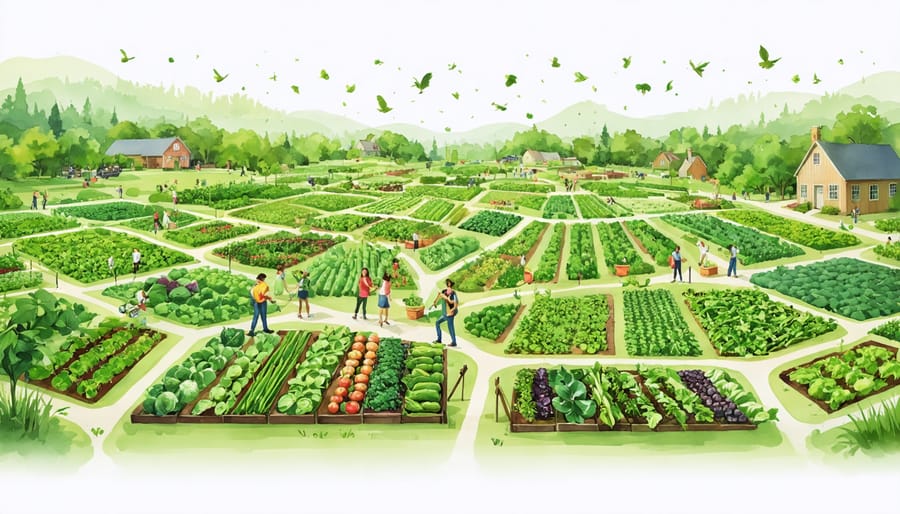
A study by the USDA found that farms selling locally create 13 full-time jobs per $1 million in revenue, compared to just 3 jobs for farms that don’t sell locally. Beyond direct farm employment, local food systems support auxiliary businesses like food processing facilities, distribution companies, and marketing services.

Take Sarah’s Fresh Farm Market in Vermont as an example. What started as a small family farm has grown into a thriving business employing 15 local residents year-round and an additional 10 seasonal workers. The market’s success has also sparked the creation of three new food-related businesses in the area, including a commercial kitchen and a local delivery service.

Local restaurants featuring farm-to-table menus create additional employment opportunities while supporting regional farmers. Food hubs, which aggregate and distribute local produce, have become significant job creators, often providing living wages and benefits to their employees. Many of these positions offer valuable skill development and career advancement opportunities in sustainable agriculture and food system management.

Direct Economic Benefits to Local Farmers

Price Premium Advantages

When farmers sell directly to consumers through farmers’ markets, CSA programs, or farm stands, they can command better prices for their produce compared to wholesale distribution. This “price premium” allows farmers to support local farmers while earning a living wage from their work.

Direct sales eliminate middlemen and allow farmers to set fair prices that reflect their true production costs. For example, a farmer might receive $2 per pound for tomatoes sold directly to customers, compared to just 50 cents through traditional distribution channels. This increased profit margin makes small-scale farming more economically viable.

Local farmers can also capitalize on the growing consumer demand for fresh, organic produce. Many customers are willing to pay more for high-quality, locally grown food with known origins. This premium pricing helps offset the higher costs associated with sustainable farming practices.

Success stories abound – like Sarah’s Fresh Farm Stand, which increased revenues by 40% after transitioning from wholesale to direct marketing. By building relationships with customers and educating them about farming practices, local producers can justify higher prices while providing superior value through freshness and quality.

Reduced Distribution Costs

One of the most significant advantages of local food systems is their ability to dramatically reduce distribution costs. When produce travels directly from farm to table, it eliminates multiple middlemen and lengthy transportation routes that typically add substantial costs to food prices. Local farmers can deliver their harvest to nearby markets or directly to consumers, often within a 50-mile radius, cutting fuel expenses and reducing the need for expensive cooling and storage facilities.

For example, a typical head of lettuce in the conventional food system might travel over 1,500 miles before reaching your plate, requiring multiple handling stages and temperature-controlled transportation. In contrast, locally grown lettuce might travel just 20 miles from farm to market, resulting in transportation cost savings of up to 75%.

These reduced distribution costs benefit both farmers and consumers. Farmers retain a larger portion of the food dollar, often receiving 70-80% of the retail price compared to just 20% in conventional systems. Meanwhile, consumers often enjoy fresher produce at competitive prices, especially during peak growing seasons. The savings extend beyond direct costs, as shorter supply chains also minimize food waste and packaging requirements, creating additional economic efficiencies that strengthen local food systems and community resilience.

Community-Wide Economic Impact

Supporting Local Businesses

When local food systems thrive, they create a powerful ripple effect that ends up reshaping your community in remarkable ways. Local farmers markets and CSA programs naturally attract customers to nearby businesses, creating bustling commercial zones that benefit everyone. For instance, when shoppers visit their local farmers market, they often extend their outing to include stops at neighboring cafes, boutiques, and other small businesses.

These food-centered community hubs foster business-to-business relationships too. Local restaurants partner with farmers to source fresh ingredients, food trucks set up at farm events, and artisanal food producers collaborate with growers to create unique products. This interconnected network strengthens the entire local business ecosystem.

The impact extends beyond direct food sales. Local farms often need supplies, equipment, and services from other local businesses, including hardware stores, mechanics, and agricultural service providers. They also create employment opportunities, from farm workers to market managers and delivery drivers.

Additionally, successful local food systems attract tourism, with food lovers traveling to experience farm-to-table restaurants, agricultural festivals, and farm tours. This increased visitor traffic benefits hotels, shops, and other tourism-related businesses, creating a sustainable cycle of economic growth that keeps money circulating within the community.

Multiple local businesses that benefit from the local food economy
Collage of local food businesses including restaurant, bakery, and farm store

Tourism and Regional Identity

Local food systems play a vital role in shaping tourism and regional identity, creating unique experiences that attract visitors and strengthen community bonds. When local farms and markets thrive, they become destination spots that draw tourists eager to experience authentic farm-to-table dining, pick-your-own produce adventures, and agricultural festivals.

Many communities have successfully branded themselves through their local food culture, from wine regions to apple-growing valleys. These distinct identities not only attract tourism dollars but also foster community pride and cultural preservation. Farmers markets often become community gathering spaces where locals and visitors alike can experience the region’s unique flavors and traditions.

The agritourism sector has seen remarkable growth, with farms offering activities like harvest festivals, cooking classes, and educational tours. These experiences create memorable connections between visitors and local agriculture while generating additional revenue streams for farmers. Local restaurants featuring regional specialties and farm-fresh ingredients further enhance the area’s appeal and economic vitality.

This agricultural heritage becomes part of the community’s storytelling, creating a narrative that resonates with both residents and tourists. When visitors spend time and money experiencing local food culture, they contribute to preserving traditional farming practices and supporting the unique character that makes each region special. This cyclical relationship between tourism and local agriculture helps ensure the long-term sustainability of both sectors.

Supporting Your Local Food Economy

Diverse group of people collecting their weekly CSA share boxes at a local farm
Community members participating in a CSA pickup event

Direct Purchase Options

Direct connections between farmers and consumers create powerful economic relationships that benefit both parties. Farmers markets serve as vibrant community hubs where local growers showcase fresh produce, artisanal products, and seasonal specialties. These markets typically operate weekly, providing regular income for farmers while offering consumers access to the freshest possible produce at competitive prices.

Community Supported Agriculture (CSA) programs represent another direct purchasing model where consumers become seasonal shareholders in local farms. Members receive weekly boxes of fresh produce throughout the growing season, providing farmers with stable income and helping them plan crop production more effectively. This model builds lasting relationships between farmers and families while ensuring a reliable market for farm products.

Farm stands, whether seasonal or year-round, offer another convenient direct-to-consumer option. These on-site retail locations allow farmers to sell produce at peak freshness while eliminating transportation costs and middleman markups. Many stands have evolved into destination shopping experiences, offering value-added products like jams, baked goods, and prepared foods that increase profit margins for farmers.

Each of these direct purchase options keeps money circulating within the local economy. Studies show that every dollar spent at farmers markets generates approximately $2.80 in local economic activity, compared to just $1.70 when shopping at conventional grocery stores. By choosing these direct purchase options, consumers support local farm families while enjoying superior quality and freshness in their food purchases.

Community Investment Opportunities

Supporting your local food system isn’t just about buying produce – there are numerous ways to invest in and strengthen your community’s agricultural economy. One of the most direct approaches is becoming a member of a Community Supported Agriculture (CSA) program, where you prepay for a season’s worth of fresh produce while providing farmers with crucial early-season capital.

Consider investing in local food cooperatives, which allow community members to become partial owners while supporting sustainable food systems. Many co-ops offer dividend payments and member discounts, making them both socially and financially rewarding investments.

For those with more substantial resources, look into opportunities to purchase farmland and lease it to local farmers. This arrangement helps preserve agricultural land while providing affordable access to aspiring farmers who might otherwise struggle to acquire property.

Micro-lending and crowdfunding platforms specifically designed for agricultural projects offer another avenue for investment. These platforms allow you to support specific farm projects, equipment purchases, or expansion plans with investments as small as $25.

Local food processing facilities and distribution centers also present investment opportunities. These vital infrastructure components help small farmers reach larger markets and add value to their products. Some communities have successfully launched food hubs through community investment initiatives.

Don’t overlook educational investments – supporting agricultural training programs, farm incubators, and youth farming initiatives helps ensure a sustainable future for local agriculture while building valuable community resources.

Supporting local food systems isn’t just about enjoying fresher produce – it’s an investment in our community’s economic vitality. When we choose locally grown food, we create a powerful ripple effect that strengthens our regional economy. Every dollar spent at local farms and markets typically generates two to three times more economic activity compared to conventional retail purchases.

Local food systems create sustainable job opportunities, from farm workers and market managers to food processors and distributors. These positions often provide living wages and keep wealth circulating within the community. Successful local farms also contribute to agricultural tourism, drawing visitors who spend money at other local businesses.
The economic benefits extend beyond direct sales. Local farms preserve agricultural land, maintaining property values and reducing development pressure. They also support related businesses like farm equipment suppliers, seed companies, and local restaurants featuring farm-to-table cuisine.

By choosing local food, we’re building resilient economic networks that can better withstand global market fluctuations. Small-scale farmers typically spend their earnings locally, creating a multiplier effect that benefits the entire community. They also often adopt sustainable practices that reduce environmental costs and preserve natural resources for future generations.
The choice to support local food systems is an investment in our community’s future, creating a stronger, more sustainable local economy that benefits everyone.