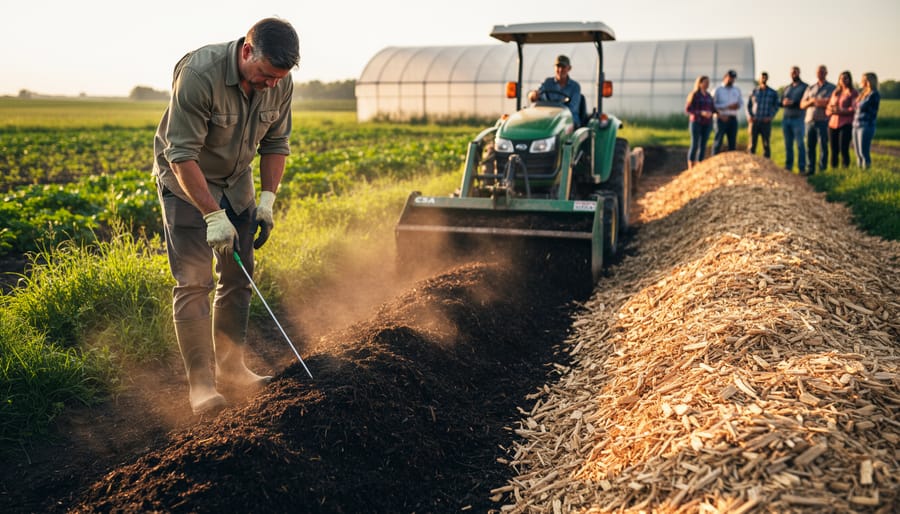
Partner with the Minnesota Composting Council to access proven frameworks for establishing commercial-scale composting programs within your CSA network, including free site assessments and regulatory guidance that have helped over 150 Minnesota farms divert 40,000 tons of organic waste annually. Connect directly with their Farm Composting Network to receive hands-on training in windrow management, temperature monitoring, and pathogen reduction techniques that meet state safety standards while transforming farm waste into nutrient-dense soil amendments worth $45 per cubic yard.
Join monthly peer learning circles where successful CSA operators share real-world solutions for overcoming common composting challenges, from managing seasonal volume fluctuations to sourcing carbon-rich materials like wood chips and straw at bulk pricing through the Council’s cooperative purchasing program. Access their comprehensive resource library featuring step-by-step guides for building three-bin systems, calculating optimal carbon-to-nitrogen ratios, and creating member education materials that boost CSA customer engagement in your sustainability initiatives.
Apply for technical assistance grants up to $5,000 specifically designed for CSA farms implementing new composting infrastructure, with simplified applications reviewed quarterly and funds available for equipment purchases, testing, and signage. The Council’s network connects you with certified compost facilities accepting food scraps from CSA pickup locations, creating closed-loop systems that demonstrate environmental stewardship to your members while reducing disposal costs by an average of 60 percent annually.
What the Minnesota Composting Council Actually Does for Your CSA

From Education to Action: Training Programs That Matter
The Minnesota Composting Council goes beyond advocacy by offering hands-on training programs designed specifically for farmers and CSA operators who want to master sustainable waste management. Their practical workshops cover everything from building efficient composting systems to implementing food recovery strategies that reduce waste while enriching your soil.
These training sessions focus on real-world applications, teaching participants how to turn farm waste and surplus produce into nutrient-rich compost. You’ll learn composting best practices tailored to small-scale operations, including proper carbon-to-nitrogen ratios, temperature management, and troubleshooting common challenges. The Council also provides guidance on scaling composting systems to match your farm’s specific needs.
One particularly valuable workshop series addresses food recovery strategies, helping CSA operators minimize waste while maximizing soil health. Participants discover innovative ways to compost unmarketable produce, reduce on-farm waste, and create closed-loop systems that benefit both their bottom line and the environment.
The Council’s educators bring decades of combined experience, sharing farmer success stories that demonstrate how composting transforms farm operations. Whether you’re just starting your CSA journey or looking to refine your existing practices, these accessible training programs offer the knowledge and confidence you need to implement sustainable composting systems that truly work.
The Network Effect: Connecting Farms with Resources
The Minnesota Composting Council excels at building community partnerships that transform organic waste into valuable soil amendments. By connecting CSA farms with local composting facilities and community organizations, the Council creates efficient systems where food scraps and farm waste become nutrient-rich compost rather than landfill burden.
These partnerships work beautifully in practice. A CSA farm might partner with a nearby composting facility to process vegetable trimmings and unsold produce, while community organizations collect food waste from local restaurants and households. The finished compost then returns to participating farms, enriching soil and closing the nutrient loop.
The Council provides the framework for these connections through networking events, resource directories, and technical support. They help farms identify compatible composting partners based on location, capacity, and processing methods. For smaller operations without access to large-scale facilities, the Council facilitates cooperative arrangements where multiple farms share composting resources.
This collaborative approach means CSA members can participate too. Many farms offer compost drop-off programs where shareholders bring kitchen scraps alongside their weekly harvest pickup, creating a true community cycle of sustainability that benefits everyone involved.
Why CSA Farms Are Perfect Partners for Composting Programs
The CSA Advantage: Built-In Community Buy-In
CSA members are natural champions for composting initiatives. These community-minded individuals have already made a commitment to sustainable agriculture by choosing local, organic produce over conventional grocery store options. They understand the connection between healthy soil and nutritious food, making them ideal partners in closing the loop on food waste.
This built-in enthusiasm creates unique opportunities for member-driven programs. Many CSA farms have successfully launched compost drop-off stations where members bring kitchen scraps during their weekly pickup. It’s a simple addition that transforms the regular CSA exchange into a complete cycle—members take home fresh vegetables and return nutrients back to the soil.
The Minnesota Composting Council recognizes this potential and offers resources specifically designed for CSA operations looking to engage their membership. From educational materials about proper food scrap sorting to signage for collection bins, they help farmers turn member interest into action.
Some farms take it further by hosting composting workshops as member events. Sarah Chen, who runs Blooming Prairie CSA outside the Twin Cities, shares her experience: “Our members were asking what to do with their veggie scraps. We partnered with the Composting Council for a hands-on workshop, and now 60% of our shareholders participate in our compost program. It’s strengthened our community and improved our soil quality.”
Real Success Stories: Minnesota CSAs Leading the Way
Minnesota’s CSA community is proving that composting partnerships can create real, measurable change. Here are three inspiring examples of farms working with the Minnesota Composting Council to build thriving circular food systems.
Featherstone Farm in Rushford has transformed their waste management approach through their collaboration with the Council. This 300-acre organic vegetable operation now diverts over 40 tons of crop residue and unmarketable produce annually from landfills. By implementing a three-bin composting system designed with Council guidance, they’ve produced enough finished compost to amend 15 acres of production fields each season. “The technical support we received helped us turn what felt like a problem into our most valuable soil input,” shares farm manager Lisa Peterson. Their CSA members have also become active participants, with 85% now returning their weekly produce boxes for composting rather than recycling.
Meanwhile, Grass Roots Grazers CSA in Brooten demonstrates how livestock-based farms can benefit from composting expertise. Working with Council-certified trainers, they’ve created a integrated system that processes manure, bedding, and vegetable scraps from their 200-member CSA program. The results speak volumes: 60 tons of organic matter composted in their first full year, reducing purchased fertilizer costs by 70%. Their finished compost now supports a thriving market garden that supplies vegetables alongside their pastured meats, creating true successful CSA partnerships with neighboring produce farms.
Stoney Acres Farm in Athens offers another compelling story. This small-scale operation serving 45 families partnered with the Council to establish a community drop-off composting site. Beyond their farm’s waste, they now accept food scraps from CSA members and local households, processing 25 tons annually. This community-focused approach has strengthened member engagement dramatically, with retention rates climbing to 92%. The farm uses the resulting compost across their 5-acre vegetable operation, eliminating their need for outside fertility inputs.
These examples show that regardless of farm size or model, composting partnerships deliver tangible environmental benefits while strengthening the financial and social foundations of CSA operations.

Starting Your Own Composting Partnership: A Practical Roadmap
Assessing Your Farm’s Composting Potential
Before diving into composting, take stock of what you’re working with on your farm. Start by identifying your waste streams—vegetable scraps, crop residues, animal bedding, and food preparation waste all make excellent compost materials. Consider how much material you generate weekly and throughout different seasons.
Next, evaluate your available space. Do you have room for windrows, bins, or a simple three-bin system? Even small CSA operations can compost successfully with compact methods. Think about accessibility for turning piles and delivering finished compost to your fields.
Assess your resources honestly: Do you have equipment like a tractor or turner? What about labor availability? The Minnesota Composting Council offers guidance on matching systems to your specific situation, whether you’re running a backyard operation or managing acres of production.
Take inspiration from Minnesota farmer Sarah Jensen, who transformed her CSA’s waste challenges into nutrient-rich soil amendments by starting small with a basic three-bin system, then expanding as she gained confidence and saw results in her tomato yields.
Tapping Into Council Resources and Funding
The Minnesota Composting Council offers several practical resources that can transform your CSA’s waste management approach. Their technical assistance program connects farms with composting experts who provide site assessments and customized system design recommendations, perfect for operations looking to start or expand composting efforts.
CSA farms can access educational workshops throughout the year, covering topics from compost tea production to vermiculture integration. These hands-on sessions often feature farmer success stories, like Prairie Roots CSA in Northfield, which reduced waste disposal costs by 60% after implementing strategies learned through Council training.
The Council also maintains an equipment-sharing database, allowing member farms to access chippers, turners, and screening equipment at reduced rates. This collaborative approach makes professional-grade tools accessible to smaller operations.
To tap into these resources, start by visiting the Minnesota Composting Council website and joining their mailing list for grant announcements and program updates. Attend their annual conference to network with composting suppliers and fellow farmers. Many members report that personal connections made at Council events led to valuable partnerships and knowledge-sharing opportunities that improved their composting systems while building community resilience.
Beyond the Farm Gate: Food Recovery That Feeds People First
Before a single scrap heads to the compost pile, the Minnesota Composting Council champions a smarter approach: feed people first. This philosophy aligns with the food waste hierarchy, which prioritizes rescuing edible food for human consumption before turning to composting as a solution for what truly can’t be eaten.
For CSA networks, this means thinking creatively about those slightly misshapen tomatoes or the surplus zucchini that every member seems to have in August. The Council encourages farmers to establish gleaning programs where volunteers harvest excess crops that might otherwise go to waste. These programs not only recover valuable food but also create meaningful volunteer opportunities that strengthen community bonds.
Many successful CSA operations have partnered with local food shelves to donate produce that doesn’t meet cosmetic standards for member boxes but remains perfectly nutritious. Some farms have implemented member share recovery systems, where subscribers can opt to redirect their weekly shares when traveling, ensuring the food reaches someone who needs it rather than spoiling in a refrigerator.
The Council provides resources and connections to help CSA farmers develop these food recovery programs alongside their composting efforts. For example, Lake Country CSA in Minneapolis reports recovering over 1,200 pounds of produce annually through a combination of food shelf donations and a member exchange board.
This tiered approach makes environmental and ethical sense. When food feeds people, it fulfills its highest purpose. What remains—the carrot tops, corn husks, and truly inedible scraps—then becomes excellent compost material, completing the cycle and enriching the soil for next season’s harvest.
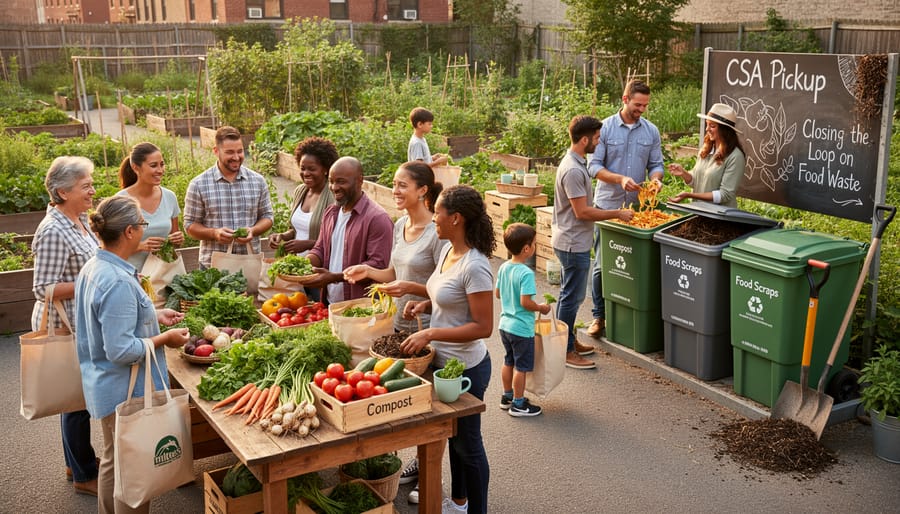
When you bring composting into your CSA partnership, you’re creating something truly special—a cycle of sustainability that benefits everyone involved. By diverting food scraps and farm waste from landfills, you’re reducing methane emissions and making a real environmental impact. That nutrient-rich compost then returns to the soil, growing healthier vegetables and building fertility for seasons to come. But perhaps most importantly, these partnerships strengthen the bond between farmers and members, creating a shared sense of purpose and environmental stewardship.
Whether you’re already part of a CSA or thinking about joining one, now is the perfect time to explore how composting can enhance your experience. The Minnesota Composting Council offers invaluable resources, educational workshops, and connection opportunities to help you get started. Farmers can access technical support to establish on-site composting systems, while members can learn best practices for collecting kitchen scraps and contributing to their farm’s sustainability goals.
Ready to take the next step? Reach out to the Minnesota Composting Council to discover partnership opportunities and connect with experienced composters in your area. Talk to your local CSA farmer about starting or expanding a composting program together. Every small action counts, and by participating in this beautiful cycle of growth and renewal, you’re helping build a more sustainable, resilient food system for Minnesota’s future. Your journey toward zero-waste, nutrient-rich farming starts today.
