
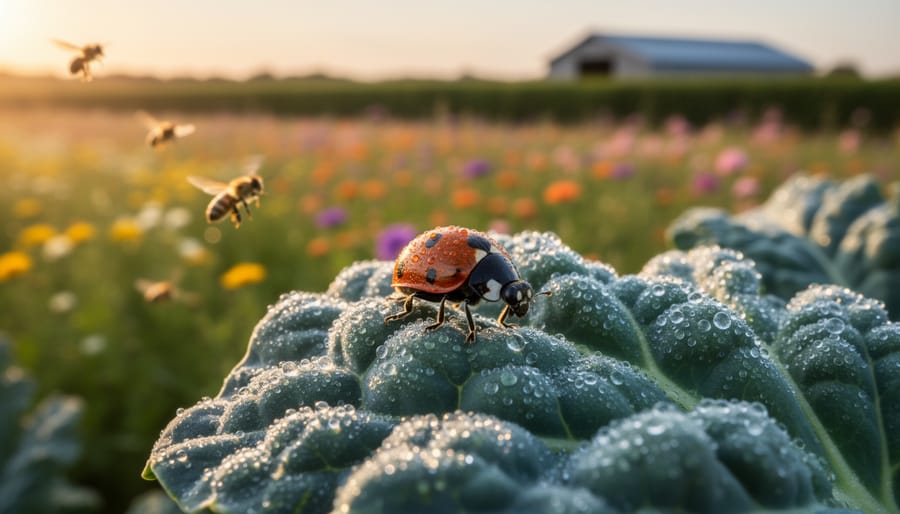
The soil beneath your feet contains more living organisms than there are people on Earth—and every one of them plays a role in growing the food that nourishes your family. When farms work with nature instead of against it, they create thriving ecosystems where beneficial insects pollinate crops, earthworms build fertile soil, and diverse plant life naturally suppresses pests and diseases.
This interconnected web of life, known as biodiversity, isn’t just beautiful—it’s the foundation of resilient food production. Conventional agriculture often simplifies landscapes into single-crop fields, but agroecological approaches embrace complexity. By intentionally fostering biodiversity on farms and in gardens, we create systems that require fewer chemical inputs, withstand extreme weather better, and produce more nutritious food.
The connection between ecology and food production matters for everyone who eats. Farmers who integrate native plantings see pest problems drop by 40-60% without spraying. Home gardeners who companion plant attract pollinators that increase yields. CSA members who support biodiverse farms invest in landscapes that sequester carbon, filter water, and provide habitat for declining species.
Whether you’re managing acres or a backyard plot, understanding how biodiversity supports agriculture empowers you to make choices that benefit both your harvest and the environment. The strategies ahead translate ecological principles into practical actions—from beginner-friendly flower strips to advanced crop rotation systems—all designed to help you cultivate abundance while nurturing the living systems that make it possible.
Why Biodiversity Matters for Your Growing Space
The Hidden Workforce in Your Soil
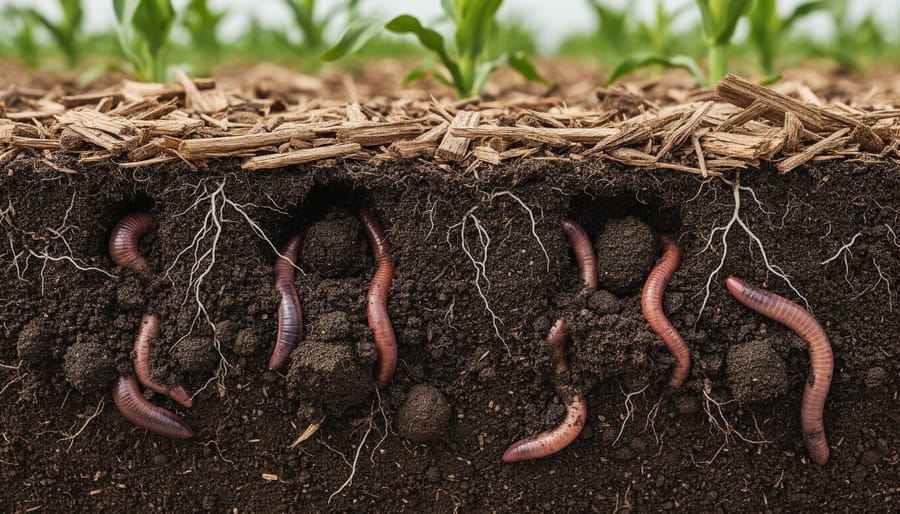
Beneath your feet lies an entire universe of life working tirelessly to create the foundation of productive farming. Every handful of healthy soil contains billions of microorganisms—bacteria, fungi, protozoa, and nematodes—alongside larger creatures like earthworms and beneficial insects. These tiny workers break down organic matter, cycle nutrients, improve soil structure, and even protect plants from diseases.
Mycorrhizal fungi, for instance, form partnerships with plant roots, extending their reach for water and nutrients while receiving sugars in return. Earthworms act as nature’s tillers, creating channels that improve drainage and aeration. Beneficial bacteria convert atmospheric nitrogen into forms plants can actually use.
Unfortunately, repeated tilling, synthetic pesticides, and monoculture farming can severely diminish this underground workforce. When soil life declines, farmers become increasingly dependent on external inputs to maintain productivity. The good news? regenerative soil practices can restore this biodiversity relatively quickly. Simple steps like adding compost, reducing tillage, and planting cover crops create the conditions these organisms need to thrive, gradually rebuilding the natural fertility that makes chemical inputs unnecessary and growing truly nutritious food possible.
Nature’s Pest Control Team
When you create the right habitat on your farm or garden, nature’s own pest control team shows up ready to work—for free! Beneficial insects like ladybugs, lacewings, and parasitic wasps feast on aphids, caterpillars, and other crop-damaging pests. A single ladybug can consume up to 5,000 aphids in its lifetime, making these spotted helpers invaluable allies.
Birds play a starring role too. Bluebirds, chickadees, and wrens devour countless insects daily, especially during nesting season when feeding hungry chicks. At Green Valley Farm in Ontario, the owners installed nest boxes throughout their fields and noticed a 40% reduction in caterpillar damage to their brassicas within two seasons.
Ground beetles patrol at night, hunting slugs and soil-dwelling pests, while bats can consume thousands of mosquitoes and moths in a single evening. The key is providing what these helpers need: diverse plantings for shelter, water sources, and importantly, avoiding broad-spectrum pesticides that harm friends and foes alike. By welcoming nature’s pest control team, you reduce reliance on interventions while supporting a thriving, balanced ecosystem.
Simple Agroecological Practices That Invite Wildlife Back
Plant Diverse Crops and Native Companions
Moving beyond monoculture transforms your farm into a thriving ecosystem. Polyculture—growing multiple crops together—mimics nature’s diversity and strengthens your land through agroecosystem approaches. When you combine this with companion planting and native hedgerows, you create beneficial habitat while actually boosting your harvests.
Consider the classic Three Sisters combination used by Indigenous farmers for centuries: corn provides structure for climbing beans, which fix nitrogen in the soil, while squash spreads below to suppress weeds and retain moisture. This simple polyculture reduces pest pressure and improves soil health naturally.
Native hedgerows along field edges work double duty. In the Pacific Northwest, planting serviceberry, oceanspray, and red-flowering currant attracts pollinators and beneficial insects that prey on crop pests. Midwest farmers find success with native prairie strips featuring coneflowers, black-eyed Susans, and little bluestem grass. These perennial borders provide year-round habitat for birds and insects that keep pest populations in check.
Companion planting within your vegetable beds offers immediate benefits. Plant basil among tomatoes to deter aphids, or interplant carrots with onions to confuse carrot flies. Marigolds scattered throughout gardens repel numerous pests while adding cheerful color.
Sarah Chen, a Manitoba market gardener, increased her yields by 30 percent after establishing native wildflower strips and diversifying her plantings. The secret? More pollinators and predatory insects meant healthier crops with fewer inputs. Start small—even a single hedgerow or companion planting experiment can make a measurable difference.
Create Habitat Corridors and Wild Edges
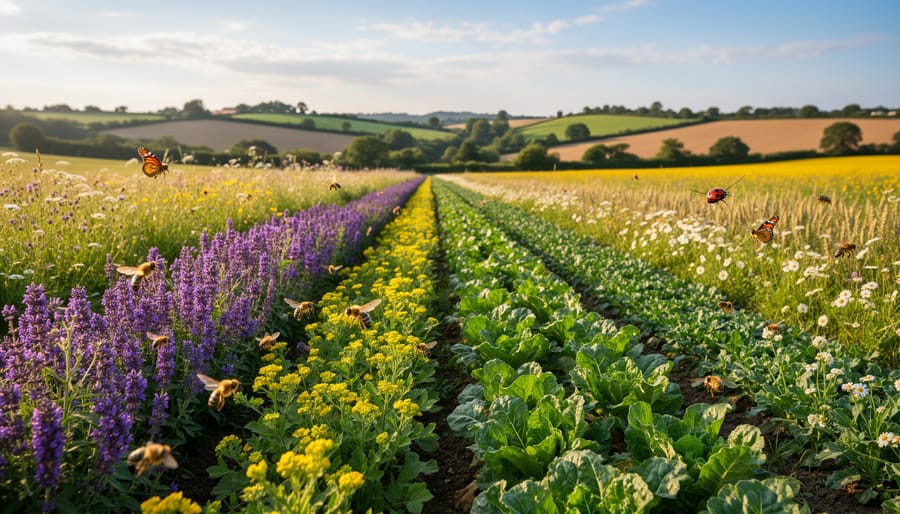
One of the simplest yet most impactful ways to support biodiversity is creating habitat corridors that connect isolated wildlife populations. Start by resisting the urge to mow everything. Leave strips of unmowed grass and wildflowers along field edges, between garden beds, or around your property perimeter. These wild edges become highways for beneficial insects, small mammals, and pollinators moving through the landscape.
Brush piles might look messy to some, but they’re five-star hotels for wildlife. Stack fallen branches, twigs, and leaves in quiet corners of your property. These piles provide shelter for ground-nesting bees, toads, beneficial beetles, and birds that help control pest populations naturally.
Installing bee hotels is another easy win. These simple structures made from hollow stems, drilled wood blocks, or bundled paper tubes give solitary bees safe nesting sites. Mount them in sunny, sheltered spots near flowering plants for best results.
Field margins deserve special attention. Maintain buffer zones of native grasses and perennials between cultivated areas. These margins reduce soil erosion, filter runoff, and create essential corridors. On her Vermont farm, Sarah Chen discovered that maintaining 10-foot wildflower margins increased her squash pollination rates by 40 percent while attracting pest-eating predatory insects.
The beauty of these practices is their scalability. Whether you have a backyard garden or several acres, every corridor counts in rebuilding the ecological web that supports healthy food production.
Eliminate (or Reduce) Chemical Inputs
Chemical pesticides and synthetic fertilizers might seem like quick fixes, but they’re actually working against nature’s balance. These inputs kill off beneficial insects like pollinators and pest predators, disrupt soil microbe communities, and can contaminate nearby water sources. The good news? There are gentler, more effective alternatives that work with your ecosystem instead of against it.
Start building healthy soil with compost, which feeds beneficial microorganisms and improves nutrient availability naturally. Consider cover crops like clover or vetch between growing seasons—they fix nitrogen, prevent erosion, and provide habitat for beneficial insects. It’s like giving your soil a nutritious meal and a cozy blanket all at once.
For pest management, try biological controls first. Encourage natural predators by planting diverse flowering species that attract ladybugs, lacewings, and parasitic wasps. Local farmer Maria Rodriguez reduced her pest problems by 70% simply by adding native wildflower borders around her vegetable beds. She noticed more birds and beneficial insects arrived within weeks.
When intervention is needed, opt for organic-approved options like neem oil or insecticidal soaps, which break down quickly and target specific pests. Remember, a few nibbled leaves aren’t failures—they’re signs of a living, breathing ecosystem supporting your crops.
Add Water Features for Life
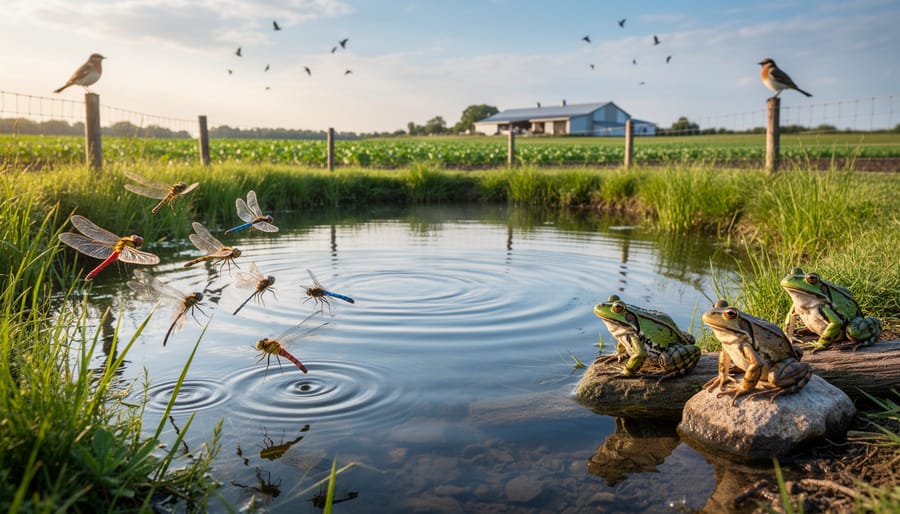
Water is the ultimate magnet for life on your farm. Even a modest pond, shallow swale, or simple birdbath can transform your farm’s biodiversity almost overnight. These water features create vital drinking spots for pollinators, birds, amphibians, and beneficial insects while establishing cooler microclimates that protect plants during heat waves.
Ponds become thriving ecosystems supporting dragonflies that devour mosquitoes and aphids, frogs that control pests, and birds that spread seeds across your property. Swales, those gentle depressions that capture rainwater, do double duty by preventing erosion while creating moisture-rich zones where diverse plant communities flourish. The bonus? These water management strategies reduce irrigation needs naturally.
Start small if a full pond feels overwhelming. A shallow dish refreshed weekly attracts butterflies and bees. As one Ontario CSA farmer discovered, adding a small wildlife pond brought back native frogs within weeks, and those frogs now keep slug populations in check throughout her vegetable beds. The surrounding moisture also extended her growing season by moderating temperature extremes, proving that welcoming water means welcoming abundance.
Real Farms Making It Work: Success Stories
From Monoculture to Wildlife Magnet
When Sarah Martinez inherited her family’s 40-acre property in Oregon five years ago, it was a typical grass seed monoculture with bare soil between rows and hardly a bird in sight. Today, her farm buzzes with pollinators, hosts nesting songbirds, and produces a diverse harvest of vegetables, herbs, and flowers for her thriving CSA program.
Sarah’s transformation began with small steps. She started by planting hedgerows along her field borders using native shrubs like Oregon grape and red-flowering currant. These corridors became highways for beneficial insects and shelter for wildlife. Next, she introduced cover crops between growing seasons, rotating crimson clover, vetch, and buckwheat to feed the soil and provide habitat.
The real magic happened when Sarah divided her land into smaller plots, creating a patchwork of vegetables, perennial flowers, and permanent beetle banks—slightly raised strips of native grasses that harbor predatory beetles and ground beetles that feast on crop pests. She also installed three small ponds that now attract dragonflies, frogs, and even the occasional heron.
The results speak for themselves. Sarah’s pest problems decreased by roughly 60 percent within three years, reducing her need for any interventions. Soil health improved dramatically, and crop yields increased by 35 percent. But perhaps most rewarding, she says, is watching families at weekly CSA pickups spot butterflies and listen to the chorus of birdsong that now fills her fields.
The Urban Garden That Feeds Families and Butterflies
In the heart of Portland, Oregon, the Cully Grove Community Garden proves that even a quarter-acre plot can become a thriving ecosystem that nourishes both people and wildlife. What started as an abandoned lot now produces over 2,000 pounds of organic vegetables annually while supporting more than forty butterfly species and countless pollinators.
The garden’s coordinator, Maria Chen, discovered that mixing food crops with native plants created unexpected benefits. “We planted milkweed between our tomato rows for monarch butterflies,” she explains. “Not only did we attract monarchs, but beneficial insects helped control aphids naturally, reducing our pest problems by half.” The garden now features strategic plantings of native wildflowers, herbs, and grasses around raised vegetable beds, creating corridors that connect to nearby green spaces.
Twenty local families tend individual plots while sharing communal areas dedicated to pollinator habitat. Members embrace a no-pesticide pledge and practice companion planting techniques that enhance biodiversity. A small pond lined with native cattails provides water for birds and habitat for frogs that feast on garden pests. The garden also maintains three different composting systems, turning neighborhood food scraps into rich soil while educating visitors about closing nutrient loops.
This approach demonstrates how small-scale urban agriculture can integrate conservation seamlessly with food production. The key lies in viewing your garden not as separate beds but as an interconnected ecosystem where every plant serves multiple purposes, supporting both your dinner table and the creatures that make healthy soil and pollination possible.
Measuring Your Biodiversity Impact
You don’t need fancy equipment or scientific training to track the biodiversity progress on your land. Simple, consistent observation methods can reveal remarkable changes over time and help you celebrate your conservation wins.
Start with an observation journal. Set aside 15 minutes each week to walk your property and record what you see. Note bird species, insect activity, flowering plants, and wildlife signs. Sarah Martinez, who runs a small CSA in Oregon, discovered she’d gone from spotting three butterfly species to twelve within just two growing seasons by keeping weekly notes. Her simple spiral notebook became a treasured record of her farm’s ecological transformation.
Photo documentation offers powerful visual proof of change. Take pictures from the same spots throughout the seasons. Capture flowering hedgerows, pond edges, and pollinator patches. These images tell stories that numbers sometimes can’t, showing how bare areas transform into thriving habitats. Set phone reminders for monthly photo walks to maintain consistency.
Community science apps like iNaturalist make species identification surprisingly easy. Simply snap a photo, and the app helps identify plants, insects, birds, and other organisms while contributing your observations to global biodiversity databases. It’s gardening education and citizen science rolled into one satisfying package.
Try basic species counts during peak activity times. Count different bird species visiting your space during morning hours, or tally pollinator types on a flowering patch for ten minutes. These simple metrics, tracked monthly or seasonally, reveal meaningful trends without requiring expertise.
Remember, the goal isn’t scientific perfection but rather developing awareness and documenting positive change. Your observations connect you more deeply to the land while providing motivation to continue your biodiversity-friendly practices.
Getting Your Community Involved
Your farm’s biodiversity conservation efforts gain tremendous momentum when your community becomes active partners in the work. Many CSA members and farmers market customers feel passionate about environmental stewardship but aren’t sure how to contribute meaningfully. By creating opportunities for hands-on involvement, you strengthen community food systems while expanding the impact of your conservation practices.
Seasonal farm tours offer an excellent entry point for community engagement. Consider hosting quarterly biodiversity walks where visitors can observe pollinator activity in wildflower strips, identify beneficial insects in your crops, or explore riparian buffer zones. These educational experiences help people understand the connection between healthy ecosystems and the food on their plates. One organic vegetable farm in Ontario found that after implementing monthly habitat tours, CSA membership renewals increased by thirty percent as members felt more invested in the farm’s mission.
Volunteer days focused on specific conservation projects create deeper connections. Organize events around planting hedgerows, building bird boxes, or maintaining pollinator meadows. Provide clear instructions and all necessary materials, making participation easy for families with children. Many farms successfully combine work sessions with potluck lunches featuring farm produce, transforming conservation efforts into community celebrations.
Educational workshops extend learning beyond the farm visit. Partner with local naturalists or conservation organizations to offer classes on native plant identification, composting techniques, or backyard habitat creation. These programs empower participants to implement biodiversity practices in their own spaces, multiplying your conservation impact throughout the community. When people understand the why behind your practices, they become enthusiastic advocates who share your farm’s story with others.
Embracing agroecological biodiversity practices isn’t just good farming—it’s a return to the wisdom of working with nature rather than against it. These approaches align perfectly with the Community Supported Agriculture model, where local, sustainable, and community-focused farming creates a powerful cycle of regeneration. When you cultivate diverse crops, welcome beneficial insects, and nurture healthy soil ecosystems, you’re not just growing food—you’re growing resilience, flavor, and nutrition while actively healing the land for future generations.
The beauty of this approach is that it works at any scale. Whether you’re managing a full CSA operation or tending a backyard garden, every step toward biodiversity makes a measurable difference. You’ve seen throughout this article that these practices produce healthier food, support wildlife, reduce dependency on external inputs, and create farms that can weather climate challenges. That’s the triple win: better for your soil, better for your community, and better for your pocket.
Ready to begin your biodiversity journey? Start small and build momentum. Choose just one or two practices that resonate with you—maybe planting a pollinator strip along your field edge or adding cover crops to your rotation. Observe what happens, celebrate the small victories when you spot your first ladybug colony or notice improved soil structure, and then expand from there. Every diverse planting, every habitat you create, every chemical you replace with a natural alternative is a vote for a healthier food system. Your land is waiting to show you what’s possible.
