
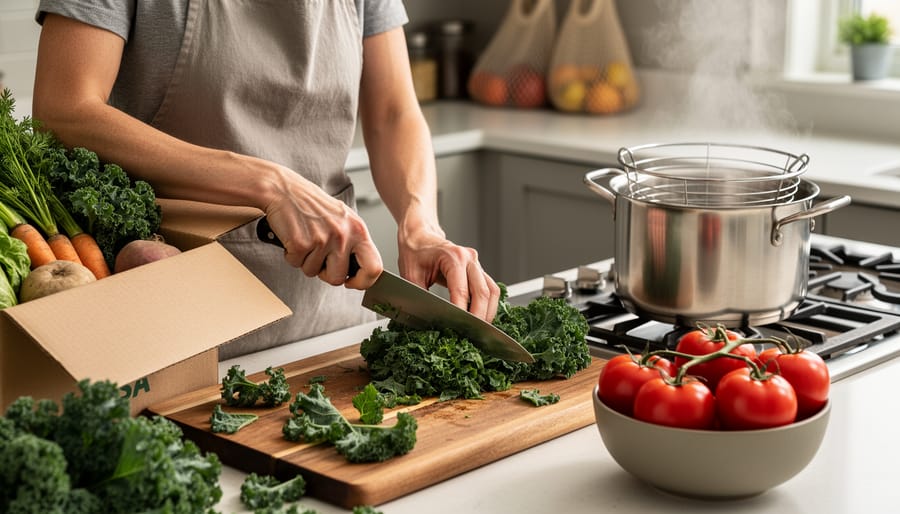
Steam vegetables for 3-5 minutes maximum to retain up to 90% of water-soluble vitamins like vitamin C and folate, compared to boiling which destroys nearly half. Cut your CSA greens immediately before cooking rather than hours in advance—exposure to air degrades nutrients rapidly, with some vegetables losing 25% of their vitamin content within the first hour of chopping.
Store your farm-fresh produce properly the moment it arrives: keep leafy greens in breathable bags in high-humidity crisper drawers, tomatoes at room temperature away from sunlight, and root vegetables in cool, dark spaces. This simple triage prevents nutrient loss before cooking even begins. When you do cook, embrace quick, high-heat methods like stir-frying or roasting at 400°F for 15-20 minutes. These techniques create flavorful caramelization while minimizing the time nutrients are exposed to heat.
The beauty of CSA cooking lies in working with produce picked at peak ripeness just days earlier—vegetables that already contain 30-50% more nutrients than supermarket equivalents. Your challenge isn’t just preserving these nutrients but celebrating them through cooking methods that honor the farmer’s work and your commitment to nourishing your family. Every technique you master transforms your weekly CSA box from overwhelming abundance into therapeutic, nutrient-dense meals that taste as vibrant as they look.
Why CSA Produce Demands Different Cooking Strategies
When you pick up your CSA box each week, you’re receiving produce at its nutritional peak. That bundle of kale was likely harvested just hours or days before reaching your kitchen, compared to store-bought greens that may have traveled thousands of miles over one to two weeks. This freshness creates a remarkable difference in vitamin content, enzyme activity, and phytonutrient levels.
Here’s what many home cooks don’t realize: ultra-fresh CSA produce contains significantly higher levels of water-soluble vitamins like vitamin C and folate, along with active enzymes that support digestion. Studies show that some vegetables lose up to 50% of their vitamin C within a week of harvest. Your CSA carrots, tomatoes, and leafy greens arrive with their nutritional armor intact.
Traditional cooking methods were developed partly to make aging produce palatable and safe. Boiling vegetables for extended periods, for instance, made sense when produce sat in storage or traveled long distances. But these same methods become wasteful when applied to farm-fresh ingredients. When you boil just-picked broccoli for ten minutes, you’re pouring precious nutrients straight down the drain.
Sarah Chen, a CSA member from Oregon, discovered this firsthand. After switching from boiling to quick-steaming her weekly greens, she noticed her family actually enjoyed the vegetables more. The vibrant colors, crisp textures, and sweeter flavors of minimally cooked fresh produce won over even her skeptical teenagers. Understanding this freshness advantage helps you choose cooking techniques that honor the farmer’s careful work and your produce’s exceptional quality.

The Science Behind Nutrient Loss in Your Kitchen
Water-Soluble vs. Fat-Soluble Nutrients
Understanding how nutrients behave in cooking helps you make the best choices with your CSA bounty. Nutrients fall into two categories: water-soluble and fat-soluble, and each responds differently to heat and cooking methods.
Water-soluble nutrients include vitamin C and B vitamins. These delicate compounds dissolve in water and can leach out when you boil or blanch vegetables. When CSA member Maria started steaming her leafy greens instead of boiling them, she noticed they tasted brighter and retained more color—signs that nutrients were staying put. Save cooking water from vegetables to use in soups or stocks, capturing those nutrients that did escape.
Fat-soluble nutrients like vitamins A, D, E, and K need fat for your body to absorb them properly. This is great news for your fresh CSA carrots and kale. Adding a drizzle of olive oil or a pat of butter to these vegetables doesn’t just enhance flavor—it actually helps you absorb more nutrients. Lightly sautéing tomatoes in healthy fat increases your absorption of lycopene, turning simple cooking into nutritional amplification.
The key is matching your method to your produce’s nutritional profile for maximum benefit.
Heat Sensitivity of Common Vegetables
Understanding how heat affects your CSA haul helps you make smart cooking choices. Delicate greens like spinach, kale, and chard lose vitamin C and folate quickly when exposed to high heat, so save these for quick sautés or enjoy them raw in salads. Broccoli, cauliflower, and Brussels sprouts retain more nutrients with gentle steaming rather than boiling.
Here’s the good news: some vegetables actually become more nutritious when cooked. Tomatoes release more lycopene when heated, making that fresh CSA tomato sauce a nutritional powerhouse. Carrots increase their beta-carotene availability through light cooking, and mushrooms boost their antioxidant levels when gently sautéed.
Local farmer Maria Chen from Riverside Organic Farm shares her approach: “I tell my CSA members to think of cooking as unlocking potential. Those beautiful heirloom tomatoes? Roast half for enhanced nutrition and slice the rest fresh for vitamin C.”
The key is matching your method to the vegetable. Water-soluble vitamins in peppers, cucumbers, and summer squash benefit from quick, minimal cooking or raw preparations, while root vegetables like beets and sweet potatoes release beneficial compounds through roasting or steaming.
Preservation Techniques That Lock in Maximum Nutrition

Quick Blanching and Shocking
This simple two-step technique helps you lock in those vibrant colors and essential nutrients when your CSA box arrives packed with greens and fresh vegetables. Here’s how to do it right:
Start by bringing a large pot of water to a rolling boil—no salt needed, as it can actually diminish nutrient retention. While waiting, prepare an ice bath in a large bowl. Drop your vegetables into the boiling water for just 30-90 seconds, depending on thickness. Tender greens like spinach need only 30 seconds, while heartier vegetables like green beans or broccoli benefit from 60-90 seconds.
Immediately transfer the vegetables to your ice bath using a slotted spoon or spider strainer. This shocking process halts the cooking instantly, preserving heat-sensitive vitamins like vitamin C and folate while keeping that gorgeous farm-fresh color intact. Let them sit for the same amount of time they were blanched.
Local farmer Maria Sanchez swears by this method for her weekly CSA prep. “I blanch and shock everything Sunday evening,” she shares. “It cuts my weeknight cooking time in half, and my kale still tastes garden-fresh on Friday.” Pat your vegetables completely dry before storing in airtight containers—they’ll stay crisp and ready-to-eat for up to five days, making nutritious meals effortless all week long.
Low-Temperature Steaming
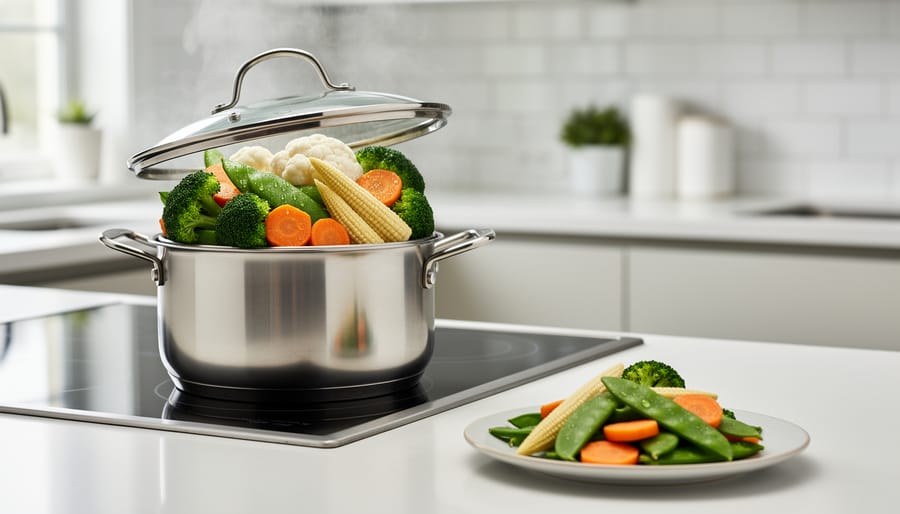
Low-temperature steaming preserves up to 90% of water-soluble vitamins in your CSA vegetables, making it one of the gentlest cooking methods available. The key is keeping your steaming temperature between 180-200°F rather than a rolling boil, which typically reaches 212°F.
To steam at lower temperatures, bring water to a gentle simmer before adding your steamer basket. You’ll know it’s right when you see light wisps of steam rather than vigorous clouds. This approach works beautifully with delicate greens like chard and spinach, which cook in just 2-3 minutes, and heartier vegetables like broccoli and carrots that need 5-7 minutes.
Local farmer Sarah Chen from Green Valley Farm shares her favorite tip: “I add fresh herbs from my garden to the steaming water. The aromatic steam infuses subtle flavor into the vegetables without adding salt or oil.” This technique especially enhances the natural sweetness of your farm-fresh produce.
For best results, cut vegetables into uniform sizes to ensure even cooking, and avoid overcrowding your steamer basket. The vegetables should sit in a single layer with space for steam to circulate. This gentle method maintains the crisp texture and vibrant colors that make CSA produce so appealing while keeping all those valuable nutrients intact.
The Raw Integration Method
Think of raw integration as giving your CSA veggies a nutrient-packed encore. The technique is simple: finish your cooked dishes with a generous handful of fresh, raw produce right before serving. When Sarah Chen started adding raw spinach to her just-drained pasta and tossing shredded kale into hot grain bowls, she noticed her family enjoyed brighter flavors while preserving those delicate vitamin C and B vitamins that cooking destroys.
The heat from your cooked base gently wilts the raw additions without demolishing their living enzymes. Try stirring fresh arugula into warm soups, topping roasted vegetables with chopped fresh herbs and diced tomatoes, or mixing raw grated beets into hot quinoa. This method works beautifully with your weekly CSA haul since you’re using produce at peak freshness when enzyme activity is highest. The contrast in textures adds appeal too—crisp cucumber ribbons over warm lentil stew or fresh corn kernels scattered across black bean tacos create satisfying variety that makes nutritious eating genuinely enjoyable.
Smart Sautéing with Healthy Fats
Here’s a cooking secret that might surprise you: adding healthy fats to your CSA vegetables isn’t just delicious—it actually helps your body absorb more nutrients. Many vitamins in your farm-fresh greens, carrots, and tomatoes are fat-soluble, meaning they need a little fat to be properly absorbed during digestion.
When sautéing your weekly haul, choose nutrient-friendly fats like olive oil, avocado oil, or grass-fed butter. The key is temperature control: keep your heat at medium (around 325°F) to preserve both the fat’s beneficial properties and your vegetables’ delicate nutrients. High heat can destroy valuable compounds and create harmful oxidation.
Timing matters too. Add heartier vegetables like kale or chard stems first, then introduce tender items like tomatoes or zucchini later. This prevents overcooking while ensuring even coating with your healthy fat. Local farmer Maria Chen discovered this technique transformed her CSA cooking, allowing her to prepare an entire week’s worth of vegetables without nutrient loss. A light sauté with quality fat takes just 5-7 minutes and makes those farm-fresh flavors shine while maximizing nutritional benefits.
Preservation Cooking for Surplus Weeks
When your CSA box overflows with gorgeous greens and abundant vegetables, preservation becomes your best friend for maintaining those farm-fresh nutrients. Fermentation techniques actually boost nutritional value by creating beneficial probiotics while preserving vitamins. Try transforming surplus cabbage, cucumbers, or carrots into tangy sauerkraut and pickles that’ll keep for months in your fridge.
Minimal-heat dehydration is another nutrient-preserving powerhouse, especially for herbs, tomatoes, and leafy greens. Set your dehydrator below 118°F to maintain enzyme activity and vitamin content. Local farmer Maria transformed her overwhelming kale harvests into crispy snacks that her family still enjoys months later, all while retaining their deep green nutrition. These simple methods mean nothing goes to waste, and you’ll enjoy your local organic bounty year-round.
Timing Tricks That Make All the Difference
The first 24 hours after picking up your CSA box are crucial for locking in nutrients. Fresh produce begins losing vitamins the moment it’s harvested, with some vegetables losing up to 50% of their vitamin C within a week. Your game plan? Unpack immediately and sort items by perishability.
Start by identifying your most delicate greens like spinach, arugula, and lettuce. These should hit your dinner plate within the first two days. Next, plan meals around tender items like zucchini, tomatoes, and fresh herbs by midweek. Heartier vegetables like carrots, beets, and winter squash can wait until the weekend while maintaining their nutritional punch.
Sarah, a longtime CSA member from Ontario, transformed her cooking routine using this simple system. “I used to find wilted greens at the bottom of my fridge on Thursdays,” she shares. “Now I plan a big salad night on pickup day and sauté my delicate greens the next evening. Everything gets used, and my family actually enjoys more variety.”
Create a visual meal map on Sunday evenings. Match your most nutrient-dense, perishable items with your busiest cooking nights when you need maximum nutrition for minimal effort. Pair this strategy with proper food storage techniques for anything you can’t use immediately. This rhythm ensures you’re eating produce at peak freshness when nutrients, flavor, and texture are all at their absolute best.
Real CSA Member Success Story
Meet Sarah Chen, a graphic designer and mother of two who joined her local CSA three years ago. Like many new members, she initially felt overwhelmed by the weekly bounty of unfamiliar vegetables arriving at her doorstep. Her family’s diet consisted mainly of convenience foods, and she noticed her kids constantly battling low energy and frequent colds.
Sarah decided to focus on nutrient-preserving cooking techniques rather than complicated recipes. She started with simple changes: steaming broccoli instead of boiling it, which research shows retains up to 90% of vitamin C compared to just 50% with boiling. Within six weeks, her family noticed a significant difference in their energy levels.
Her breakthrough came when she developed a rotating system of seasonal recipes that required minimal prep time. During summer months, she perfected a raw zucchini ribbon salad dressed with lemon and herbs, preserving all the heat-sensitive nutrients. For fall root vegetables, she adopted quick roasting at high temperatures, creating caramelized exteriors while keeping interiors tender and nutrient-rich.
Sarah tracked her family’s health improvements over 18 months. Her children’s sick days dropped by 60%, and her own cholesterol levels improved by 25 points. She credits these changes to eating produce at peak freshness and using cooking methods that preserve nutritional value.
Her advice to new CSA members is straightforward: start with one or two techniques, practice them until they become second nature, then gradually expand your repertoire as confidence grows.
Your Week-by-Week CSA Cooking Action Plan
Managing your CSA box becomes second nature when you match preservation methods to seasonal arrivals. In spring, your box overflows with delicate greens like spinach and lettuce—steam or quick-sauté these within 24 hours to preserve their vitamin C and folate. A light steam takes just 2-3 minutes and locks in nutrients better than boiling.
Summer brings abundant tomatoes, peppers, and zucchini. This is prime blanching season. Blanch summer vegetables for 2-3 minutes, then freeze them in portions for winter meals. The quick heat treatment preserves color, texture, and nutritional content for months. Raw storage in breathable containers keeps tomatoes flavorful on your counter.
Fall root vegetables like carrots, beets, and squash shine with gentle roasting at 375°F. Their natural sugars caramelize while beta-carotene remains stable. Store unwashed roots in your crisper drawer for weeks of steady use.
Winter shares featuring hearty greens and storage crops benefit from blanching before freezing. Developing strong farm-to-table cooking skills helps you confidently adapt techniques as seasons change, ensuring nothing goes to waste while maximizing the nutritional value of every harvest.
