Category Archives

39 Articles

Why Your Preserved Foods Might Be Unsafe (And How to Fix It)

Posted by darrell on
0
Culinary and Food Preservation
Why Your Preserved Foods Might Be Unsafe (And How to Fix It)

Calibrate your pH meter before every batch of pickles, krauts, or fermented vegetables using two buffer solutions—typically pH 4.0 and pH 7.0—to ensure your preserved foods reach the safe acidity level of 4.6 or below. Remove the protective cap, rinse the probe with distilled water, and immerse it fully in the pH 7.0 buffer solution first, waiting until the reading stabilizes before adjusting to match the buffer’s exact value. Repeat this process with the pH 4.0 buffer to establish a two-point calibration that accounts for accuracy across your typical preservation range. Store buffer solutions in their original containers away from light and heat, replacing them every three months or when contamination occurs, as degraded buffers compromise your entire calibration.

Just as thermometers require ice bath and boiling water verification, pH meters demand this same rigorous attention to maintain food safety standards in your home preservation projects. A miscalibrated meter reading 4.8 when the actual pH is 5.2 puts your family at risk for botulism in low-acid preserves. Keep calibration records with dates and buffer lot numbers in a preservation journal, creating an accountability system that professional food safety inspectors would recognize. Clean the probe gently with a soft cloth after each use, never touching the delicate glass bulb with your fingers, and store it in pH storage solution or a diluted buffer—never tap water—to prevent the probe from drying out and losing sensitivity. This simple routine transforms your pH meter from an uncertain gadget into a trusted guardian of your harvest preservation efforts.

Understanding pH and Why It Matters in Food Preservation

Understanding pH might seem technical at first, but it’s actually quite simple—and essential knowledge if you’re preserving your garden harvest or CSA bounty. Think of pH as a measurement of how acidic or alkaline a food is, measured on a scale from 0 to 14. Pure lemon juice rates around 2 (highly acidic), while baking soda dissolved in water sits near 9 (alkaline). Right in the middle at 7, you’ll find neutral water.

Here’s where it gets crucial for food safety: that pH number determines whether dangerous bacteria like Clostridium botulinum—the organism responsible for potentially fatal botulism—can survive in your preserved foods. This bacteria thrives in low-acid environments but cannot grow in high-acid conditions. The magic number to remember is 4.6. Foods with a pH below 4.6 are considered high-acid and can be safely preserved using boiling water bath canning. These include most fruits, pickles, and tomatoes with added acid.

Foods above 4.6 on the pH scale are low-acid and require pressure canning to reach temperatures high enough to destroy botulism spores. This category includes vegetables, meats, and most soups. Many aspiring home preservers have learned this lesson from experienced farmers at CSAs who’ve been safely canning for generations.

Just as you wouldn’t guess the doneness of meat without a properly calibrated thermometer, you shouldn’t assume your tomato sauce is acidic enough without testing. A calibrated pH meter takes the guesswork out of preservation, ensuring your hard-earned harvest stays both delicious and safe throughout the winter months.

The Connection Between Thermometer and pH Meter Calibration

Whether you’re preserving your garden’s harvest or preparing homemade pickles from your CSA bounty, accuracy matters tremendously. Just like thermometers, pH meters are precision instruments that drift over time and need regular calibration to maintain accuracy. Both tools follow remarkably similar calibration principles, and manufacturers typically provide detailed procedures in downloadable PDF format for easy reference in your kitchen or workshop.

The connection between these instruments goes deeper than you might think. Temperature directly affects pH readings because the electrical conductivity of solutions changes with heat. That’s why professional pH meters include automatic temperature compensation features, and why you’ll often need both instruments during food preservation. For instance, when you’re canning tomatoes from your summer garden, you need precise pH measurements to ensure safe acidity levels, but those readings must be taken at the correct temperature to be reliable.

Think of calibration as preventive maintenance for your food safety toolkit. Sarah Chen, a small-scale pickle producer who sources from local organic farms, learned this lesson when a batch failed safety testing. “I assumed my pH meter was fine because it looked accurate,” she explains. “Now I calibrate before every canning session using buffer solutions, just like checking a thermometer against ice water. It takes five minutes but protects weeks of work.”

Both instruments require standard reference points: thermometers use ice baths and boiling water, while pH meters use calibrated buffer solutions at known values. This regular verification ensures your preserved foods remain safe for your family throughout the year.

Digital pH meter probe in buffer solution with preserved food jars in background
A calibrated pH meter is an essential precision instrument for testing acidity levels in home-preserved foods.

How pH Meters Work and When You Need One

Just like thermometers measure temperature with precision, pH meters measure acidity levels in your preservation projects—and both require proper calibration to keep your preserved foods safe. Understanding when you need a pH meter versus simple pH strips can save you money while ensuring food safety.

pH meters work by using an electronic probe that measures hydrogen ion concentration in liquids, displaying results on a digital screen. They’re more accurate than pH strips, typically reading to two decimal places. For home preservers working with your CSA harvest bounty, pH strips often suffice for basic projects. However, investing in a quality pH meter becomes critical when you’re developing new recipes or working with low-acid foods.

Salsa canning is where pH meters truly shine. The combination of vegetables, peppers, and tomatoes creates varying acidity levels that determine safe processing times. You need readings below 4.6 pH to prevent botulism risk, and strips simply aren’t precise enough for this critical threshold. Similarly, when pickling vegetables from your garden, a pH meter confirms your brine achieved proper acidity, especially important with quick pickle recipes or when you’ve adjusted traditional recipes.

Fermentation monitoring represents another essential use. Watching your sauerkraut or kimchi drop to ideal pH levels (typically 3.0-4.0) ensures beneficial bacteria thrive while harmful ones can’t survive. One successful organic farmer I know tests her fermented hot sauce batches twice daily, ensuring consistent quality that’s made her product a farmers market favorite. That investment in a reliable pH meter paid for itself within her first season.

Step-by-Step pH Meter Calibration Procedure

Gather Your Calibration Supplies

Before you begin calibrating your pH meter—essential for safely preserving your garden’s harvest—gather these simple supplies. You’ll need pH buffer solutions, which are specially formulated liquids with precise pH values used to calibrate your meter. For home food preservation, you’ll typically use pH 4.0 and pH 7.0 buffer solutions. Think of buffer solutions as the “reference standards” that teach your pH meter to read accurately, much like checking a ruler against a known measurement.

You can purchase buffer solutions at garden supply stores, brewing supply shops, or online retailers. Look for fresh solutions in sealed packets or bottles, as they maintain accuracy longer. You’ll also need distilled water for rinsing your pH probe between calibrations, two or three clean small containers (shot glasses work perfectly), and soft lint-free tissues or lens cloths for gently drying the probe.

Many successful farmers and home preservers keep calibration supplies handy during peak harvest season. Sarah from Willow Creek Farm shares, “I calibrate before every pickling session—it’s become as routine as washing my hands, and it gives me confidence my preserved foods are safe for my CSA members.”

The Calibration Process

Calibrating your pH meter is simpler than you might think, and mastering this process ensures your preserved foods stay safe throughout the year. Let’s walk through each step together.

Start by rinsing your pH probe thoroughly with distilled water and gently patting it dry with a lint-free cloth. This removes any residue from previous testing. Next, immerse the probe into your first buffer solution, typically pH 7.0 (neutral), making sure the sensor is completely submerged. Allow the reading to stabilize for about 30 seconds. Most digital meters have a calibration button you’ll press to lock in this standard value.

Here’s where precision matters: if your meter shows a reading different from 7.0, use the adjustment dial or calibration button to set it correctly. Your meter’s manual will guide you through the specific steps for your model.

After completing the first calibration point, rinse your probe again with distilled water and dry it carefully. This prevents cross-contamination between solutions. Now immerse the probe into your second buffer solution, usually pH 4.0 for acidic preserves like pickles and salsas. Wait for the reading to stabilize, then adjust if needed.

Document your calibration results in a log with the date, buffer values used, and any adjustments made. This creates a helpful reference for future calibrations and helps track your meter’s performance over time.

If your meter won’t calibrate properly, first check that your buffer solutions aren’t expired and haven’t been contaminated. Clean the probe thoroughly with warm water and try again. Sometimes, older probes simply need replacing after months of faithful service in your preservation projects.

pH meter electrode being rinsed between buffer solution containers during calibration
Proper pH meter calibration requires buffer solutions, distilled water, and careful rinsing between measurements.

How Often Should You Calibrate?

For home preservers and small-scale farmers, calibration frequency depends on how actively you’re putting up your harvest. If you’re seriously preserving—think weekly canning sessions during peak tomato season or making regular batches of fermented vegetables—calibrate your pH meter before each preservation session. This ensures every jar is safely acidified and shelf-stable.

For occasional users who pickle or ferment monthly, weekly calibration checks work well. Simply test your meter against a standard solution and adjust if needed.

Watch for these telltale signs your meter needs immediate recalibration: sluggish response times when measuring, inconsistent readings from the same sample, or visible damage to the probe. Sarah, a community-supported agriculture member who preserves her weekly veggie box, learned this lesson after noticing her meter took longer than usual to stabilize—recalibration revealed it was off by 0.4 pH units.

Keep a simple calibration log in your preservation notebook. Jot down the date, calibration solutions used, and any adjustments made. This practice helps you spot patterns, like seasonal humidity affecting accuracy, and provides peace of mind that your preserved goods are consistently safe. Many experienced preservers find this record-keeping habit as essential as their recipe cards.

Using Your Calibrated pH Meter for Safe Food Preservation

Now that your pH meter is calibrated and ready, let’s put it to work ensuring your preserved harvest is both delicious and safe. Just as a properly calibrated thermometer protects you during canning, your pH meter becomes your guardian against harmful bacteria in pickles, salsas, and fermented foods.

When testing your preserves, timing matters. During recipe development, test at multiple stages to understand how ingredients affect acidity. For fermented vegetables, measure every few days to track the pH drop. Once you’ve perfected a recipe, test the final product before sealing jars. This confirms your creation falls within the safe zone—below 4.6 pH for shelf-stable foods.

Temperature significantly impacts pH readings. Always test your preserves at room temperature, ideally between 68-77°F. Hot liquids can damage your probe and give inaccurate readings. If you’ve just finished cooking salsa or pickles, let them cool before testing. Simply dip your rinsed probe into the mixture, ensuring it’s fully submerged, and wait for the reading to stabilize.

Meet Sarah, a CSA member who started making fermented hot sauce from her pepper harvest. By tracking pH levels, she learned exactly when her sauce reached peak flavor and safety—usually around 3.8 pH after five days. Her confidence in food preservation techniques grew tremendously, and she now shares her creations at local farmers markets.

Remember to rinse your probe with distilled water between different batches to prevent cross-contamination and maintain accuracy throughout your preserving sessions.

Assortment of home-preserved foods in mason jars with pH meter on wooden table
Testing pH levels in preserved foods like pickles, fermented vegetables, and canned salsa ensures they stay safely below the critical 4.6 pH threshold.

Caring for Your pH Meter Between Uses

Just like your trusty kitchen thermometer, your pH meter needs proper care to deliver accurate readings season after season. When you’re finished testing your pickles or ferments, rinse the electrode gently with distilled water and pat it dry with a lint-free cloth. Never wipe aggressively, as this can damage the sensitive glass bulb.

Storage is crucial for electrode longevity. Keep your probe in its storage solution (usually a potassium chloride mixture) rather than tap water, which can actually harm the electrode. Think of it like conditioning a cast iron skillet—the right environment maintains its effectiveness.

Avoid these common mistakes that many home preservers make: letting the electrode dry out completely, storing it in distilled water, or touching the glass bulb with your fingers. These habits will shorten your probe’s lifespan significantly.

Replace your electrode when you notice sluggish response times or difficulty calibrating, typically every 12-18 months with regular use. Sarah, a Vermont farmer who preserves hundreds of jars annually, keeps a backup probe on hand during peak canning season to avoid interruptions. She treats her pH meter with the same respect as her pressure canner—essential tools for safe, sustainable food preservation deserve proper maintenance.

Just as you wouldn’t dream of canning without a properly calibrated thermometer, treating your pH meter with the same calibration care is essential for safe home preservation. For CSA members and gardeners blessed with abundant harvests, accurate pH readings protect your family from foodborne illness risks. Consider creating your own calibration procedure document—a simple checklist keeps you accountable and ensures consistency across canning seasons. Sarah, a community garden coordinator, laminated her pH calibration steps and keeps them posted in her preservation workspace alongside her thermometer guidelines. By mastering both tools, you’re empowered to confidently transform your farm-fresh bounty into safely preserving farm-fresh produce that nourishes your family year-round.

Industrial Freeze Drying Brings CSA Harvest to Your Pantry Year-Round

Posted by darrell on
0
Culinary and Food Preservation
Industrial Freeze Drying Brings CSA Harvest to Your Pantry Year-Round

Industrial freeze drying transforms abundant CSA harvests into shelf-stable products that retain 97% of their nutritional value, opening new revenue streams for small-scale farmers while reducing food waste. This preservation method removes moisture through sublimation—converting ice directly to vapor—without the heat damage that destroys vitamins, enzymes, and flavor compounds in traditional dehydration.

CSA farmers are discovering that freeze-dried strawberries, tomatoes, and herbs command premium prices at farmers markets and through online sales, often tripling the value of fresh produce. A single harvest of basil worth $200 fresh can generate $600 when freeze-dried and packaged, with a shelf life extending two years or more. Small cooperative groups are pooling resources to purchase shared equipment, making the $15,000-$50,000 investment accessible through collective ownership models.

The technology particularly suits high-value crops with short growing seasons—think heirloom tomatoes, specialty mushrooms, and tender greens that spoil quickly. Unlike canning or freezing, freeze-dried products require no refrigeration, dramatically reducing storage and transportation costs while creating lightweight products perfect for shipping to distant customers.

Understanding the equipment requirements, processing times, and ideal produce candidates helps farmers evaluate whether this value-added opportunity aligns with their operation. Success stories from Vermont berry growers and Oregon mushroom cultivators demonstrate how freeze drying strengthens direct-to-consumer relationships while extending the farm’s economic impact beyond traditional growing seasons.

What Industrial Freeze Drying Actually Does to Your Food

Fresh vegetables and fruits arranged on trays inside industrial freeze-drying equipment
Industrial freeze-drying equipment processes fresh CSA produce while preserving nutrients and flavor through controlled moisture removal.

The Science Made Simple

Industrial freeze drying might sound complicated, but it’s actually one of nature’s smartest preservation tricks turned into a reliable science. Unlike traditional food storage techniques like canning or dehydrating, freeze drying preserves up to 97% of nutrients while keeping flavors incredibly true to fresh.

The process happens in three distinct phases. First comes freezing, where your CSA strawberries or kale are brought down to around -40°F. Think of it like winter hitting pause on your garden – everything locks in place at peak freshness.

Next is primary drying, where the magic really happens. The frozen produce goes into a vacuum chamber, and as pressure drops, something fascinating occurs: ice turns directly into vapor without becoming liquid first. This is called sublimation, the same process that makes frost disappear on a cold, sunny morning without creating puddles. During this phase, which can take 24 hours or more, about 95% of the water vanishes.

Finally, secondary drying removes the last stubborn moisture molecules still clinging to your produce. This ensures your freeze-dried tomatoes or blueberries can sit on a shelf for months or even years without spoiling.

The result? Lightweight, nutrient-packed produce that reconstitutes beautifully when you add water back. For CSA farmers, this means transforming bumper crops of seasonal vegetables into value-added products that customers can enjoy year-round.

Why Nutrients Stay Put

Here’s the secret behind freeze drying’s nutritional advantage: temperature matters more than you might think. When you freeze dry produce at minus 40 degrees Celsius, you’re essentially putting vitamins and minerals into suspended animation. Unlike traditional dehydration methods that blast food with heat up to 60 degrees Celsius, freeze drying keeps those delicate compounds intact.

Think about vitamin C, that fragile nutrient we all need. Heat-based drying can destroy up to 50% of it, while freeze drying preserves around 95%. The same goes for antioxidants and B vitamins. This matters tremendously for health-conscious CSA members who choose local, organic produce specifically for its nutritional benefits.

Local farmer Maria from Ontario’s Harvest Moon CSA discovered this firsthand when she started freeze drying her surplus kale and berries. Lab tests showed her freeze-dried products retained nearly the same nutrient levels as fresh, making preserving nutrients achievable year-round. For CSA operations focused on delivering maximum health value, freeze drying transforms seasonal abundance into nutrient-dense products that maintain the integrity your members expect from their organic investment.

From Farm Box to Freeze Dryer: How CSAs Are Using This Technology

Co-Op Models That Work

Several CSA farms have discovered that cooperation is the key to unlocking freeze-drying opportunities. Rather than shouldering the hefty equipment costs alone, forward-thinking farmers are joining forces to make industrial freeze-drying accessible and profitable.

The Vermont Valley Food Hub serves as an inspiring example. Six small CSA operations pooled resources to purchase a mid-sized industrial freeze dryer, creating a shared-use facility. Each farm contributes to maintenance costs and schedules processing time based on harvest volumes. This arrangement dropped individual investment from $150,000 to roughly $25,000 per farm, making the technology suddenly feasible for operations that never imagined owning such equipment.

In Oregon, the Cascade Growers Cooperative took a slightly different approach. Ten farms formed a processing cooperative where members pay annual fees plus per-pound processing charges. This model allowed them to invest in a larger, more efficient unit that handles higher volumes. The cooperative now processes strawberries, kale chips, and herb blends that member farms sell under individual labels or a collective brand.

The success stories don’t stop at equipment sharing. These cooperatives have discovered that working together opens doors to wholesale accounts that individual farms couldn’t access. Restaurants and specialty food stores prefer reliable, year-round suppliers with diverse product lines. By combining their freeze-dried offerings, cooperative members meet minimum order requirements and maintain consistent inventory.

Start exploring cooperative models in your region by connecting with your local farm bureau or agricultural extension office. Many states offer grants specifically designed to support farmer cooperatives investing in value-added processing equipment.

A Vermont Farm’s Freeze-Drying Success Story

When Green Mountain Harvest CSA in northeastern Vermont faced mountains of surplus berries and greens during their peak seasons, founder Sarah Chen knew something had to change. Like many small farms, they were composting perfectly good produce simply because it couldn’t reach customers in time.

Their breakthrough came in 2021 when they invested in a mid-sized industrial freeze dryer. “I was nervous about the initial cost,” Sarah admits, “but watching food go to waste was heartbreaking.” The farm started small, processing strawberries and spinach that didn’t meet fresh-market standards or couldn’t be distributed before spoiling.

The results exceeded expectations. Their freeze-dried strawberry slices became a member favorite, offering peak-season flavor in January. Within six months, Green Mountain Harvest developed a product line including berry powders, vegetable chips, and herb blends. CSA members could now enjoy locally grown produce year-round, and the farm opened new revenue streams during traditionally slow winter months.

The numbers tell an encouraging story. Sarah reports that their freeze-dried products now generate 30% of annual revenue, with profit margins significantly higher than fresh produce. “We’ve gone from composting 20% of our harvest to preserving it instead,” she explains. The farm recovered their equipment investment within two years.

Beyond finances, the freeze dryer transformed their business model. They now accept more produce from neighboring farms, creating a regional hub for preservation. Members appreciate the convenience of lightweight, shelf-stable products, and the farm maintains customer relationships throughout winter.

Sarah’s advice for other farmers considering this step? “Start with one or two products you grow abundantly. Test the market through your existing CSA members before expanding. The technology works beautifully, but success depends on understanding what your community wants.”

Close-up comparison of freeze-dried strawberries showing preserved color and distinctive porous texture
Freeze-dried strawberries retain their color and nutritional value while becoming lightweight and shelf-stable for year-round use.

Which CSA Produce Freeze Dries Best

The All-Stars: Fruits and Vegetables That Shine

Not all fruits and vegetables emerge from the freeze dryer equally impressive, but certain varieties truly excel in this preservation process. Understanding which produce performs best can help you maximize your investment and delight your CSA members with premium quality products.

Strawberries are absolute champions of freeze drying. They transform into intensely flavored, crispy gems that rehydrate beautifully or make perfect additions to granola and baked goods. The process concentrates their natural sweetness while preserving that bright red color customers love.

Sweet corn and peas retain remarkable flavor profiles that often surprise first-time tasters. These vegetables maintain their natural sweetness and vibrant colors, making them ideal for soups, side dishes, or camping meals. Many farmers report that freeze-dried corn actually tastes sweeter than canned versions, giving you a competitive edge at farmers markets.

Fresh herbs like basil, cilantro, and parsley freeze dry exceptionally well, preserving essential oils that deliver authentic flavor. Unlike air-dried herbs that can lose potency, freeze-dried versions crumble perfectly and rehydrate quickly in cooking. One small-scale farmer in Oregon built an entire product line around freeze-dried herb blends, turning excess garden harvests into year-round income.

Mushrooms are another standout success story. They become incredibly lightweight, intensify in flavor, and rehydrate to near-fresh texture. Gourmet varieties like shiitakes and oyster mushrooms command premium prices when freeze-dried, making them excellent candidates for value-added production on your farm.

Farmer with abundant CSA harvest in barn setting showcasing seasonal produce variety
CSA farmers are transforming seasonal surplus into value-added freeze-dried products that extend their harvest throughout the year.

The Tricky Ones Worth the Effort

Some produce items need a little extra love before freeze drying, but the results can be fantastic for your CSA members. High-fat foods like avocados require careful handling since oils can affect texture and shelf life. The key is to slice them thinly and use them soon after processing, or consider turning them into a powder that members can reconstitute for smoothies or spreads.

High-water content vegetables like cucumbers and zucchini present their own challenges. These watery crops can end up limp or lose their appeal if not prepared correctly. Try slicing them paper-thin and even lightly salting them beforehand to draw out excess moisture. While they won’t replace fresh cucumbers in a salad, freeze-dried cucumber chips make surprisingly delicious snacks.

One Wisconsin CSA farmer found success by experimenting with tomatoes, which fall into both categories with their high water content and delicate structure. By halving cherry tomatoes and freeze-drying them in small batches, she created a premium product that members love adding to pasta dishes and soups. The lesson here is simple: don’t shy away from the challenging items. With proper preparation and creative packaging, these trickier vegetables can become unique value-added products that set your CSA apart.

The Economics: Costs, Returns, and Making It Viable

Understanding the Investment

Getting started with freeze-drying for your farm operation involves understanding three main pathways, each with distinct costs and commitments.

If you’re considering purchasing equipment, industrial freeze-dryers range from $30,000 for small units processing 15-25 pounds per batch to over $500,000 for large-scale operations. You’ll also need adequate facility space with proper electrical infrastructure, often requiring 220-volt power and dedicated circuits. Factor in ongoing costs like electricity, maintenance, and packaging materials too.

For farmers wanting to test the waters without major investment, toll processing offers an accessible alternative. Regional facilities charge per pound processed, typically $4-8 per pound of finished product. This option lets you experiment with different crops and market testing before committing to equipment. Many CSA farmers successfully use toll processors seasonally when they have excess produce.

Mobile freeze-drying services are emerging as an exciting middle ground. These operators bring equipment directly to your farm, processing your produce on-site. You avoid facility modifications while retaining more control over the process than toll processing allows. It’s perfect for mid-sized operations or farmer cooperatives who can share the service costs.

Sarah Martinez, who runs a successful organic CSA in Vermont, started with toll processing three years ago. “We sent our surplus strawberries to a regional facility that first season. The product sold so well at our farm stand that we invested in a small unit the following year. Now freeze-dried fruits are 20 percent of our annual revenue.”

Pricing Your Freeze-Dried Produce

Setting the right price for your freeze-dried produce requires understanding both your costs and what the market will support. Current market research shows consumers typically pay $8-15 per ounce for freeze-dried fruits and vegetables at farmers’ markets and specialty stores, with organic, locally-grown products commanding premium prices.

Start by calculating your true costs including raw produce, electricity for the freeze dryer, packaging materials, and labor time. Most successful CSA farmers find they need to price products at 3-4 times their production cost to maintain profitability. For example, if freeze-drying strawberries costs you $4 per ounce all-in, pricing at $12-16 per ounce provides healthy margins.

Position your freeze-dried offerings as premium, farm-fresh alternatives to mass-produced options. Emphasize your organic growing practices, the superior flavor of locally harvested produce, and the absence of additives. Many CSA farms successfully bundle freeze-dried products into winter share boxes or create gift sets that highlight the farm’s story.

Consider tiered pricing strategies: offer small sampler sizes to attract new customers, medium packages for regular buyers, and bulk options for devoted supporters. Sarah Chen from Meadowbrook Farm discovered that creating seasonal variety packs increased her average transaction value by forty percent while reducing packaging time.

How to Use Freeze-Dried CSA Produce in Your Kitchen

Rehydration Secrets

Bringing freeze-dried produce back to life is simpler than you might think. The basic ratio is one part freeze-dried produce to one part liquid, though delicate items like berries may need slightly less. For most vegetables and fruits, soak them in cool or room-temperature water for 5-10 minutes. Heartier items like root vegetables might need 15 minutes, while tender greens rehydrate in just 2-3 minutes.

Here’s a farmer’s tip from Green Valley CSA: save the soaking liquid! It contains valuable nutrients and flavor that leached out during rehydration. Use it in soups, smoothies, or as cooking liquid for grains.

Some applications work better with freeze-dried produce used dry. Crumble freeze-dried strawberries directly into yogurt or oatmeal for intense flavor without added moisture. Grind dried herbs and vegetables into powders for seasoning blends. For baking, add dry pieces to muffin batter where they’ll absorb moisture during cooking.

Temperature matters too. Hot liquids speed rehydration but can affect texture in delicate produce. Cold water takes longer but preserves that just-picked crispness better. Experiment with your specific crops to find what works best for your CSA customers.

Recipe Ideas That Showcase Quality

Freeze-dried CSA produce opens up incredible possibilities for convenient, nutritious meals throughout the year. Here are some creative ways to put your preserved harvest to work.

For quick breakfast smoothies, toss freeze-dried strawberries, blueberries, or peaches directly into your blender with milk or yogurt. The powder created blends seamlessly while providing concentrated flavor and nutrients. One CSA member from Manitoba shared how she keeps jars of freeze-dried berries on her counter for morning smoothie bowls, eliminating the need for frozen fruit.

Soups become incredibly easy when you’ve got freeze-dried vegetables on hand. Simply crumble freeze-dried tomatoes, peppers, and herbs into broth, and they’ll rehydrate in minutes. This technique works beautifully for cooking with CSA produce year-round, even when fresh options are limited.

Camping enthusiasts love freeze-dried produce for lightweight, nutritious trail meals. Create custom backpacking dinners by combining freeze-dried corn, peas, and carrots with instant rice or pasta. The weight savings compared to canned goods makes a real difference on long trips.

Emergency preparedness kits benefit enormously from freeze-dried vegetables and fruits. Unlike canned options, they’re shelf-stable for 25 years and retain most of their nutritional value. Smart CSA members stock rotating supplies, using older batches in everyday cooking while maintaining fresh emergency reserves. This practical approach ensures nothing goes to waste while keeping your family prepared.

Mason jars filled with colorful freeze-dried vegetables arranged on kitchen counter
Properly stored freeze-dried produce maintains quality for months, bringing farm-fresh ingredients to your kitchen year-round.

Environmental Impact: The Sustainability Angle

For environmentally conscious farmers and consumers, freeze-drying offers compelling sustainability benefits worth considering. One of the most significant advantages is its power to reduce food waste. When your CSA faces a bumper crop of strawberries or an unexpected abundance of kale, freeze-drying transforms potentially wasted produce into shelf-stable products that can be enjoyed for months or even years.

This preservation method extends the impact of your CSA investment beyond the traditional growing season. Instead of composting surplus produce or watching it spoil, farmers can offer freeze-dried items that keep the farm-to-table connection alive year-round. Local food stays local, reducing transportation emissions and supporting your regional food economy even during winter months.

The energy conversation deserves honest consideration. Freeze-drying does require significant electricity during the initial freezing and vacuum processes. However, when you compare the total environmental footprint, the picture becomes more nuanced. Unlike canning, there’s no need for disposable jar lids or energy-intensive water baths. Compared to traditional dehydration, freeze-drying preserves more nutrients, meaning less food goes further nutritionally.

Take Green Valley Farm in Vermont, where owner Maria Chen calculated that freeze-drying her surplus blueberries prevented 400 pounds of annual food waste. She now powers her freeze-dryer with solar panels, creating a nearly carbon-neutral preservation process. The result? Her CSA members enjoy local blueberries in their morning smoothies all winter long.

For the eco-conscious consumer, choosing freeze-dried CSA products means supporting waste reduction, seasonal eating extension, and local food systems simultaneously. It’s preservation that aligns with your values while delivering practical benefits.

Getting Started: Options for CSA Farms and Members

Ready to explore freeze-drying for your CSA? Here are practical steps to get started, whether you’re a farmer or an enthusiastic member.

For CSA farmers curious about adding freeze-dried products to their offerings, starting small makes sense. Consider partnering with a toll processor first—these commercial facilities freeze-dry your produce for a fee, eliminating the initial equipment investment. Search for “freeze-drying toll processing” in your region, or connect with local food hubs that might offer these services. This approach lets you test market demand with products like freeze-dried strawberries or herb mixes before committing to equipment purchases.

When you’re ready to invest, small-scale home units (around $2,500-$4,000) work beautifully for testing recipes and creating sample products. Michigan farmer Sarah Chen started this way, freeze-drying her excess tomatoes and basil. Within two years, member enthusiasm justified upgrading to a commercial unit that now processes 200 pounds weekly during peak season.

For equipment purchases, attend agricultural expos where you can see machines in action and talk with representatives. Request demos with your actual produce—different models handle leafy greens versus berries quite differently. Many manufacturers offer financing options specifically for small farms.

CSA members can advocate for freeze-drying programs too! Bring the idea to your farmer during farm visits or member meetings. Offer to help research grant opportunities—many sustainable agriculture programs fund value-added processing equipment. Some CSAs have even formed member cooperatives to purchase shared equipment.

Start your freeze-drying journey by reaching out to three toll processors this month, attending one equipment demonstration, or scheduling a conversation with your CSA farmer. Small steps lead to preserved harvests and strengthened local food systems.

Industrial freeze-drying offers an exciting pathway for transforming your CSA’s seasonal bounty into year-round nourishment. This preservation method helps bridge the gap between summer’s abundance and winter’s scarcity, allowing you to maintain your connection with local farms even when fields lie dormant. By reducing food waste and extending the shelf life of produce without sacrificing nutritional value, freeze-drying supports truly sustainable eating habits.

For farmers, this technology opens doors to new revenue streams and helps stabilize income throughout the year. Consider Sarah’s success with her Vermont CSA, where freeze-dried tomatoes and berries now generate off-season income while delighting members who crave that farm-fresh taste in January.

For consumers, seeking out freeze-dried options from your local CSA means supporting your community’s agricultural economy while enjoying convenient, nutritious food that travels well and stores easily.

Ready to take the next step? Farmers, research co-packing facilities or cooperative freeze-drying equipment purchases with neighboring farms. Consumers, ask your CSA coordinator about preserved produce options or express interest in freeze-dried additions to your share. Together, we can build a more resilient, waste-free local food system that nourishes communities year-round.

Your CSA Box is Losing Nutrients Before Dinner (Here’s How to Stop It)

Posted by darrell on
0
Culinary and Food Preservation
Your CSA Box is Losing Nutrients Before Dinner (Here’s How to Stop It)

Steam vegetables for 3-5 minutes maximum to retain up to 90% of water-soluble vitamins like vitamin C and folate, compared to boiling which destroys nearly half. Cut your CSA greens immediately before cooking rather than hours in advance—exposure to air degrades nutrients rapidly, with some vegetables losing 25% of their vitamin content within the first hour of chopping.

Store your farm-fresh produce properly the moment it arrives: keep leafy greens in breathable bags in high-humidity crisper drawers, tomatoes at room temperature away from sunlight, and root vegetables in cool, dark spaces. This simple triage prevents nutrient loss before cooking even begins. When you do cook, embrace quick, high-heat methods like stir-frying or roasting at 400°F for 15-20 minutes. These techniques create flavorful caramelization while minimizing the time nutrients are exposed to heat.

The beauty of CSA cooking lies in working with produce picked at peak ripeness just days earlier—vegetables that already contain 30-50% more nutrients than supermarket equivalents. Your challenge isn’t just preserving these nutrients but celebrating them through cooking methods that honor the farmer’s work and your commitment to nourishing your family. Every technique you master transforms your weekly CSA box from overwhelming abundance into therapeutic, nutrient-dense meals that taste as vibrant as they look.

Why CSA Produce Demands Different Cooking Strategies

When you pick up your CSA box each week, you’re receiving produce at its nutritional peak. That bundle of kale was likely harvested just hours or days before reaching your kitchen, compared to store-bought greens that may have traveled thousands of miles over one to two weeks. This freshness creates a remarkable difference in vitamin content, enzyme activity, and phytonutrient levels.

Here’s what many home cooks don’t realize: ultra-fresh CSA produce contains significantly higher levels of water-soluble vitamins like vitamin C and folate, along with active enzymes that support digestion. Studies show that some vegetables lose up to 50% of their vitamin C within a week of harvest. Your CSA carrots, tomatoes, and leafy greens arrive with their nutritional armor intact.

Traditional cooking methods were developed partly to make aging produce palatable and safe. Boiling vegetables for extended periods, for instance, made sense when produce sat in storage or traveled long distances. But these same methods become wasteful when applied to farm-fresh ingredients. When you boil just-picked broccoli for ten minutes, you’re pouring precious nutrients straight down the drain.

Sarah Chen, a CSA member from Oregon, discovered this firsthand. After switching from boiling to quick-steaming her weekly greens, she noticed her family actually enjoyed the vegetables more. The vibrant colors, crisp textures, and sweeter flavors of minimally cooked fresh produce won over even her skeptical teenagers. Understanding this freshness advantage helps you choose cooking techniques that honor the farmer’s careful work and your produce’s exceptional quality.

Overhead view of fresh CSA produce box filled with colorful vegetables and herbs
A typical CSA box contains nutrient-dense, freshly harvested produce that requires specific handling to preserve its superior nutritional value.

The Science Behind Nutrient Loss in Your Kitchen

Water-Soluble vs. Fat-Soluble Nutrients

Understanding how nutrients behave in cooking helps you make the best choices with your CSA bounty. Nutrients fall into two categories: water-soluble and fat-soluble, and each responds differently to heat and cooking methods.

Water-soluble nutrients include vitamin C and B vitamins. These delicate compounds dissolve in water and can leach out when you boil or blanch vegetables. When CSA member Maria started steaming her leafy greens instead of boiling them, she noticed they tasted brighter and retained more color—signs that nutrients were staying put. Save cooking water from vegetables to use in soups or stocks, capturing those nutrients that did escape.

Fat-soluble nutrients like vitamins A, D, E, and K need fat for your body to absorb them properly. This is great news for your fresh CSA carrots and kale. Adding a drizzle of olive oil or a pat of butter to these vegetables doesn’t just enhance flavor—it actually helps you absorb more nutrients. Lightly sautéing tomatoes in healthy fat increases your absorption of lycopene, turning simple cooking into nutritional amplification.

The key is matching your method to your produce’s nutritional profile for maximum benefit.

Heat Sensitivity of Common Vegetables

Understanding how heat affects your CSA haul helps you make smart cooking choices. Delicate greens like spinach, kale, and chard lose vitamin C and folate quickly when exposed to high heat, so save these for quick sautés or enjoy them raw in salads. Broccoli, cauliflower, and Brussels sprouts retain more nutrients with gentle steaming rather than boiling.

Here’s the good news: some vegetables actually become more nutritious when cooked. Tomatoes release more lycopene when heated, making that fresh CSA tomato sauce a nutritional powerhouse. Carrots increase their beta-carotene availability through light cooking, and mushrooms boost their antioxidant levels when gently sautéed.

Local farmer Maria Chen from Riverside Organic Farm shares her approach: “I tell my CSA members to think of cooking as unlocking potential. Those beautiful heirloom tomatoes? Roast half for enhanced nutrition and slice the rest fresh for vitamin C.”

The key is matching your method to the vegetable. Water-soluble vitamins in peppers, cucumbers, and summer squash benefit from quick, minimal cooking or raw preparations, while root vegetables like beets and sweet potatoes release beneficial compounds through roasting or steaming.

Preservation Techniques That Lock in Maximum Nutrition

Fresh green vegetables being blanched in pot of boiling water
Quick blanching preserves both the vibrant color and nutritional content of fresh greens from your CSA box.

Quick Blanching and Shocking

This simple two-step technique helps you lock in those vibrant colors and essential nutrients when your CSA box arrives packed with greens and fresh vegetables. Here’s how to do it right:

Start by bringing a large pot of water to a rolling boil—no salt needed, as it can actually diminish nutrient retention. While waiting, prepare an ice bath in a large bowl. Drop your vegetables into the boiling water for just 30-90 seconds, depending on thickness. Tender greens like spinach need only 30 seconds, while heartier vegetables like green beans or broccoli benefit from 60-90 seconds.

Immediately transfer the vegetables to your ice bath using a slotted spoon or spider strainer. This shocking process halts the cooking instantly, preserving heat-sensitive vitamins like vitamin C and folate while keeping that gorgeous farm-fresh color intact. Let them sit for the same amount of time they were blanched.

Local farmer Maria Sanchez swears by this method for her weekly CSA prep. “I blanch and shock everything Sunday evening,” she shares. “It cuts my weeknight cooking time in half, and my kale still tastes garden-fresh on Friday.” Pat your vegetables completely dry before storing in airtight containers—they’ll stay crisp and ready-to-eat for up to five days, making nutritious meals effortless all week long.
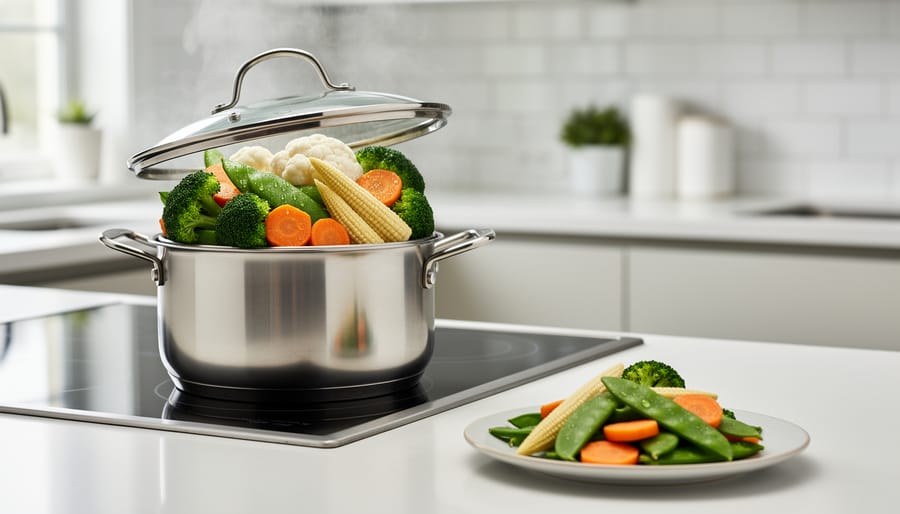
Hands holding bamboo steamer basket with colorful fresh vegetables and rising steam
Low-temperature steaming preserves maximum nutrients while achieving perfectly tender vegetables.

Low-Temperature Steaming

Low-temperature steaming preserves up to 90% of water-soluble vitamins in your CSA vegetables, making it one of the gentlest cooking methods available. The key is keeping your steaming temperature between 180-200°F rather than a rolling boil, which typically reaches 212°F.

To steam at lower temperatures, bring water to a gentle simmer before adding your steamer basket. You’ll know it’s right when you see light wisps of steam rather than vigorous clouds. This approach works beautifully with delicate greens like chard and spinach, which cook in just 2-3 minutes, and heartier vegetables like broccoli and carrots that need 5-7 minutes.

Local farmer Sarah Chen from Green Valley Farm shares her favorite tip: “I add fresh herbs from my garden to the steaming water. The aromatic steam infuses subtle flavor into the vegetables without adding salt or oil.” This technique especially enhances the natural sweetness of your farm-fresh produce.

For best results, cut vegetables into uniform sizes to ensure even cooking, and avoid overcrowding your steamer basket. The vegetables should sit in a single layer with space for steam to circulate. This gentle method maintains the crisp texture and vibrant colors that make CSA produce so appealing while keeping all those valuable nutrients intact.

The Raw Integration Method

Think of raw integration as giving your CSA veggies a nutrient-packed encore. The technique is simple: finish your cooked dishes with a generous handful of fresh, raw produce right before serving. When Sarah Chen started adding raw spinach to her just-drained pasta and tossing shredded kale into hot grain bowls, she noticed her family enjoyed brighter flavors while preserving those delicate vitamin C and B vitamins that cooking destroys.

The heat from your cooked base gently wilts the raw additions without demolishing their living enzymes. Try stirring fresh arugula into warm soups, topping roasted vegetables with chopped fresh herbs and diced tomatoes, or mixing raw grated beets into hot quinoa. This method works beautifully with your weekly CSA haul since you’re using produce at peak freshness when enzyme activity is highest. The contrast in textures adds appeal too—crisp cucumber ribbons over warm lentil stew or fresh corn kernels scattered across black bean tacos create satisfying variety that makes nutritious eating genuinely enjoyable.

Smart Sautéing with Healthy Fats

Here’s a cooking secret that might surprise you: adding healthy fats to your CSA vegetables isn’t just delicious—it actually helps your body absorb more nutrients. Many vitamins in your farm-fresh greens, carrots, and tomatoes are fat-soluble, meaning they need a little fat to be properly absorbed during digestion.

When sautéing your weekly haul, choose nutrient-friendly fats like olive oil, avocado oil, or grass-fed butter. The key is temperature control: keep your heat at medium (around 325°F) to preserve both the fat’s beneficial properties and your vegetables’ delicate nutrients. High heat can destroy valuable compounds and create harmful oxidation.

Timing matters too. Add heartier vegetables like kale or chard stems first, then introduce tender items like tomatoes or zucchini later. This prevents overcooking while ensuring even coating with your healthy fat. Local farmer Maria Chen discovered this technique transformed her CSA cooking, allowing her to prepare an entire week’s worth of vegetables without nutrient loss. A light sauté with quality fat takes just 5-7 minutes and makes those farm-fresh flavors shine while maximizing nutritional benefits.

Preservation Cooking for Surplus Weeks

When your CSA box overflows with gorgeous greens and abundant vegetables, preservation becomes your best friend for maintaining those farm-fresh nutrients. Fermentation techniques actually boost nutritional value by creating beneficial probiotics while preserving vitamins. Try transforming surplus cabbage, cucumbers, or carrots into tangy sauerkraut and pickles that’ll keep for months in your fridge.

Minimal-heat dehydration is another nutrient-preserving powerhouse, especially for herbs, tomatoes, and leafy greens. Set your dehydrator below 118°F to maintain enzyme activity and vitamin content. Local farmer Maria transformed her overwhelming kale harvests into crispy snacks that her family still enjoys months later, all while retaining their deep green nutrition. These simple methods mean nothing goes to waste, and you’ll enjoy your local organic bounty year-round.

Timing Tricks That Make All the Difference

The first 24 hours after picking up your CSA box are crucial for locking in nutrients. Fresh produce begins losing vitamins the moment it’s harvested, with some vegetables losing up to 50% of their vitamin C within a week. Your game plan? Unpack immediately and sort items by perishability.

Start by identifying your most delicate greens like spinach, arugula, and lettuce. These should hit your dinner plate within the first two days. Next, plan meals around tender items like zucchini, tomatoes, and fresh herbs by midweek. Heartier vegetables like carrots, beets, and winter squash can wait until the weekend while maintaining their nutritional punch.

Sarah, a longtime CSA member from Ontario, transformed her cooking routine using this simple system. “I used to find wilted greens at the bottom of my fridge on Thursdays,” she shares. “Now I plan a big salad night on pickup day and sauté my delicate greens the next evening. Everything gets used, and my family actually enjoys more variety.”

Create a visual meal map on Sunday evenings. Match your most nutrient-dense, perishable items with your busiest cooking nights when you need maximum nutrition for minimal effort. Pair this strategy with proper food storage techniques for anything you can’t use immediately. This rhythm ensures you’re eating produce at peak freshness when nutrients, flavor, and texture are all at their absolute best.

Real CSA Member Success Story

Meet Sarah Chen, a graphic designer and mother of two who joined her local CSA three years ago. Like many new members, she initially felt overwhelmed by the weekly bounty of unfamiliar vegetables arriving at her doorstep. Her family’s diet consisted mainly of convenience foods, and she noticed her kids constantly battling low energy and frequent colds.

Sarah decided to focus on nutrient-preserving cooking techniques rather than complicated recipes. She started with simple changes: steaming broccoli instead of boiling it, which research shows retains up to 90% of vitamin C compared to just 50% with boiling. Within six weeks, her family noticed a significant difference in their energy levels.

Her breakthrough came when she developed a rotating system of seasonal recipes that required minimal prep time. During summer months, she perfected a raw zucchini ribbon salad dressed with lemon and herbs, preserving all the heat-sensitive nutrients. For fall root vegetables, she adopted quick roasting at high temperatures, creating caramelized exteriors while keeping interiors tender and nutrient-rich.

Sarah tracked her family’s health improvements over 18 months. Her children’s sick days dropped by 60%, and her own cholesterol levels improved by 25 points. She credits these changes to eating produce at peak freshness and using cooking methods that preserve nutritional value.

Her advice to new CSA members is straightforward: start with one or two techniques, practice them until they become second nature, then gradually expand your repertoire as confidence grows.

Your Week-by-Week CSA Cooking Action Plan

Managing your CSA box becomes second nature when you match preservation methods to seasonal arrivals. In spring, your box overflows with delicate greens like spinach and lettuce—steam or quick-sauté these within 24 hours to preserve their vitamin C and folate. A light steam takes just 2-3 minutes and locks in nutrients better than boiling.

Summer brings abundant tomatoes, peppers, and zucchini. This is prime blanching season. Blanch summer vegetables for 2-3 minutes, then freeze them in portions for winter meals. The quick heat treatment preserves color, texture, and nutritional content for months. Raw storage in breathable containers keeps tomatoes flavorful on your counter.

Fall root vegetables like carrots, beets, and squash shine with gentle roasting at 375°F. Their natural sugars caramelize while beta-carotene remains stable. Store unwashed roots in your crisper drawer for weeks of steady use.

Winter shares featuring hearty greens and storage crops benefit from blanching before freezing. Developing strong farm-to-table cooking skills helps you confidently adapt techniques as seasons change, ensuring nothing goes to waste while maximizing the nutritional value of every harvest.

Why Your CSA Jam Won’t Set (And the Pectin Science That Fixes It)

Posted by darrell on
0
Culinary and Food Preservation
Why Your CSA Jam Won’t Set (And the Pectin Science That Fixes It)

Match your pectin type to your fruit’s natural pectin level—use regular pectin with high-pectin fruits like apples and citrus, but reach for low-sugar or no-sugar pectin when working with strawberries, peaches, or other low-pectin CSA favorites. Test your fruit’s readiness by mixing one tablespoon of rubbing alcohol with one tablespoon of raw juice; high-pectin fruit forms a solid clump, while low-pectin fruit creates small, separate pieces.

Extract homemade pectin from apple cores and peels saved throughout the season by simmering them in water for 40 minutes, straining, and freezing in measured portions—a perfect zero-waste solution that aligns with your CSA values and gives you complete control over your preserving process. This method works beautifully alongside other food storage techniques for maximizing your harvest.

Calculate pectin amounts based on your desired set firmness rather than blindly following package directions. Soft spreads need less pectin, while firm jellies require the full recommended amount. Add pectin at the right temperature—traditional pectin demands a rolling boil, while low-methoxyl pectin activates at lower temperatures with calcium water.

Understanding how pectin works transforms frustrating preserve failures into consistent successes. When you know why your strawberry jam stayed runny or your grape jelly turned rubbery, you gain the confidence to experiment with each week’s CSA fruit share. Whether you’re processing a bumper crop of raspberries or creating small-batch preserves from heirloom plums, mastering pectin science ensures your homemade jams and jellies capture the pure essence of local, organic fruit.

What Pectin Actually Does in Your Jam Jar

Mason jar of perfectly set strawberry jam with wooden spoon showing gel consistency
Properly set jam with ideal gel consistency demonstrates the successful interaction of pectin, sugar, and acid.

The Natural Pectin in Your CSA Fruit Box

Opening your CSA box each week is like receiving a surprise gift from nature, and understanding which fruits are naturally pectin-rich can transform your jam-making adventures. High-pectin fruits are your allies in creating perfectly set preserves without adding commercial pectin.

Apples, especially tart varieties like Granny Smith, top the list of pectin powerhouses. Their cores and peels contain the highest concentration, making them perfect for creating natural pectin stock. Cranberries, currants, and underripe plums also pack substantial pectin levels. When your CSA delivers these gems, you’re in excellent shape for firm-set jams and jellies.

Citrus fruits deserve special mention. The white pith and seeds of lemons, oranges, and grapefruits are pectin goldmines. Many jam-makers keep citrus peels specifically to boost pectin in other recipes.

On the other end of the spectrum, you’ll find low-pectin favorites like strawberries, peaches, cherries, and ripe pears. These sweet summer treasures taste amazing but need a helping hand to achieve that spreadable consistency. Blueberries and apricots fall somewhere in the middle, containing moderate pectin levels.

Here’s a practical tip from experienced preservers: combine high and low pectin fruits in your recipes. Mixing strawberries with some chopped apple creates a naturally balanced jam. This approach honors the whole-fruit philosophy many CSA members embrace while reducing waste. Understanding your fruit’s pectin personality helps you work with nature rather than fighting against it, creating delicious preserves that celebrate each season’s bounty.

Assortment of fresh CSA fruits including strawberries, peaches, cherries and apples on wooden table
Different fruits contain varying natural pectin levels, requiring different approaches for successful jam-making.

The Magic Triangle: Pectin, Sugar, and Acid

Creating perfect jam or jelly is like conducting a beautiful symphony where three key players must work in harmony: pectin, sugar, and acid. Understanding this magic triangle will help you transform your CSA fruit bounty into gorgeous preserves every time.

Think of pectin as the framework builder. These natural plant fibers need the right conditions to link together and form that satisfying gel structure. But pectin can’t do it alone. This is where sugar steps in as the essential assistant. Sugar pulls water away from pectin molecules, allowing them to bond more easily. It typically takes about 55-65% sugar content in your mixture to achieve the ideal gel. While that might sound high, this concentration is what gives your preserves their characteristic texture and helps preserve them safely.

The third player, acid, acts as the catalyst that makes everything happen. Pectin needs an acidic environment with a pH between 2.8 and 3.4 to gel properly. Without enough acid, your pectin molecules remain too negatively charged and repel each other rather than bonding. That’s why lemon juice or citric acid often appears in jam recipes, especially when working with low-acid fruits like strawberries or pears.

During cooking, heat activates this chemical dance. As your fruit mixture boils, water evaporates, concentrating the sugar and bringing all three elements into the perfect balance. The mixture reaches its gel point typically around 220°F, when the magic triangle aligns just right.

Understanding these interactions helps you troubleshoot problems. Runny jam? You might need more acid or pectin. Too stiff? Perhaps you used excess pectin or overcooked the mixture. With this knowledge, you’ll confidently preserve every precious fruit from your farm share.

Types of Pectin and When to Use Each One

Regular vs. Low-Sugar Pectin for Organic Fruit

When you’re transforming your CSA fruit haul into delicious preserves, choosing between regular and low-sugar pectin can make all the difference in your final product. Understanding these options helps you match pectin type to your taste preferences and the natural sweetness of your organic fruit.

Regular pectin, also called high-methoxyl pectin, needs substantial sugar to work its magic—typically a 1:1 fruit-to-sugar ratio. This means if you’re working with 4 cups of crushed strawberries, you’ll need about 4 to 7 cups of sugar. The chemistry behind this is fascinating: regular pectin requires both sugar and acid to create that perfect gel structure. While this produces traditional, sweet preserves with excellent shelf stability, it can sometimes mask the bright, fresh flavors of your farm-fresh organic fruit.

Low-sugar or no-sugar-needed pectin offers wonderful flexibility for CSA members who prefer less sweetness or want to highlight their produce’s natural flavors. These modified pectins work through different chemistry, using calcium rather than sugar to gel. You can use anywhere from no sugar to about half the amount required by regular pectin. This is perfect when you receive extra-sweet peaches or perfectly ripe berries that don’t need much enhancement.

Many sustainable-minded preservers appreciate low-sugar pectin for reducing overall sweetener consumption and letting organic fruit shine. However, these preserves typically have a softer set and shorter shelf life. Choose regular pectin for classic, firm jellies and low-sugar varieties when showcasing your harvest’s authentic taste.

Making Your Own Pectin from Apple Scraps

If you’re part of a CSA and find yourself with an abundance of apples, don’t toss those cores and peels! Making your own pectin is a rewarding zero-waste solution that transforms scraps into liquid gold for your preserving projects.

Apple scraps are naturally high in pectin, especially when slightly underripe. Start by collecting cores, peels, and any bruised portions from about four pounds of apples. Place them in a large pot with enough water to just cover the scraps, plus two tablespoons of lemon juice to help extract the pectin. Bring to a boil, then reduce heat and simmer for about 45 minutes until the apples are soft and mushy.

Strain the mixture through a fine-mesh sieve or cheesecloth, pressing gently to extract all the liquid. You’ll end up with a cloudy, slightly thick liquid that’s your homemade pectin. To test its strength, pour a tablespoon into a small bowl and refrigerate for 20 minutes. If it gels nicely, you’ve got high-pectin extract perfect for low-sugar jams.

Store your homemade pectin in clean jars in the refrigerator for up to one week, or freeze it in ice cube trays for convenient portions that last up to six months. Each ice cube equals roughly one tablespoon, making it easy to add pectin power to small batches of jam.

When using homemade pectin, remember it’s less concentrated than commercial versions. Generally, you’ll need about one cup of homemade pectin per four cups of crushed fruit, though some experimentation helps you find your perfect gel.

Hands pouring homemade apple pectin into copper preserving pan with apple scraps
Homemade pectin extracted from apple scraps offers a zero-waste solution for CSA members with abundant fruit.

Matching Pectin to Your CSA Harvest

Your CSA box arrives brimming with gorgeous fruit, and you’re ready to preserve that peak-season flavor. But which pectin approach will give you the best results? Let’s match common CSA fruits to their ideal pectin partners.

Strawberries, the quintessential early summer treat, have low natural pectin and benefit from added pectin. Use commercial low-sugar pectin if you want to showcase their delicate sweetness without excessive sugar. These beauties also pair wonderfully with a splash of lemon juice to boost both flavor and natural pectin levels.

Peaches and apricots are moderate in natural pectin but require some assistance for proper gelling. Traditional powdered pectin works beautifully here, creating those classic spreadable preserves. Since stone fruits can be quite sweet, you might experiment with reduced-sugar pectin formulas to let their natural flavor shine through.

Blueberries and blackberries contain moderate pectin levels, making them forgiving preserving partners. You can often use less commercial pectin than package directions suggest, or try combining them with high-pectin fruits like tart apples for a completely natural set. A local farmer, Maria from Riverside Farm, shared that she adds grated apple to her wild blackberry jam with stunning results and no commercial pectin needed.

Cherries need substantial pectin assistance, as they’re quite low in natural pectin. Liquid pectin added at the end of cooking helps preserve their vibrant color and prevents overcooking. Don’t skip the lemon juice with cherries, as the acidity is crucial for both safety and gelling.

Plums offer a pleasant surprise: they’re naturally high in pectin, especially when slightly underripe. You can often make plum jam with minimal or no added pectin, relying on the fruit’s natural thickening power combined with adequate cooking time.

Here’s your quick decision framework: Check your seasonal fruit against these categories. High-pectin fruits need little help. Low-pectin fruits need commercial pectin or a high-pectin companion fruit. When in doubt, start with small test batches to discover what works best for your taste preferences and the specific characteristics of your locally grown harvest.

Troubleshooting Common Pectin Problems

Even experienced preservers encounter pectin challenges, but understanding what went wrong helps you create perfect preserves next time. Here are the most common issues and their solutions.

Runny jam is perhaps the most frustrating problem. This usually happens when pectin levels are too low, cooking time was insufficient, or the fruit-to-sugar ratio was off. Always test for the gel point using a cold plate test before removing your jam from heat. If you’ve already made runny jam, you can actually remake it by measuring the quantity, adding fresh pectin according to package directions, and reprocessing. For future batches, ensure you’re using ripe (not overripe) fruit and following tested recipes exactly.

Overly stiff preserves occur when there’s too much pectin or the mixture was cooked too long. This often happens with high-pectin fruits like apples or when combining commercial pectin with naturally pectin-rich ingredients. The solution is reducing cooking time or using less pectin. Some experienced preservers even skip commercial pectin entirely with high-pectin fruits, relying on natural sources instead.

Sugar crystals forming in finished jam indicate either too much sugar, insufficient acid, or crystallization during cooling. Always wipe down pan sides during cooking to remove sugar crystals, and ensure proper acid balance. Adding a tablespoon of lemon juice can prevent this issue.

Uneven setting, where some jars gel perfectly while others remain liquid, typically results from inconsistent processing or filling jars with mixture at different temperatures. Keep your preserve mixture at a consistent simmer while filling jars, and process all jars together. Mastering these food preservation techniques takes practice, but each batch teaches valuable lessons.

Remember, small variations in fruit ripeness and natural pectin content mean some adjustments are normal. Keep notes on what works with your particular fruit sources, and you’ll develop an intuitive sense for creating perfect preserves every time.

Farmer arranging homemade preserve jars at farm stand with berry fields in background
Small-scale farmers successfully turn CSA fruit into value-added preserves by understanding pectin science.

Farmer Success Story: Sarah’s Berry Farm Preserves

When Sarah Mitchell started her 50-member CSA near Guelph, Ontario, she quickly realized her abundant berry harvests were overwhelming her members. “People loved getting fresh strawberries and raspberries, but they couldn’t use them all before spoilage,” she recalls. That challenge sparked her journey into preserve-making, which eventually became her farm’s signature product line.

Sarah’s first attempts were frustrating. “I followed recipes exactly, but results were wildly inconsistent. One batch would set perfectly, the next would be syrupy.” The breakthrough came when she started testing different pectin types with her specific fruit varieties. She discovered that her early-season strawberries needed commercial pectin for reliable results, while her late-summer berries naturally contained enough pectin when combined with apple scraps from a neighboring orchard.

Her biggest lesson? Temperature matters more than most recipes admit. “I invested in a good candy thermometer and learned the gel point for each fruit type,” Sarah explains. “Strawberries hit gel at 220°F, but my low-sugar raspberry preserves needed 218°F to avoid overcooking.”

Sarah now teaches preserve-making workshops at her farm, sharing her tested formulas with CSA members. Her practical tip for beginners: start with high-pectin fruits like tart apples or currants mixed with lower-pectin berries. This natural approach gave her confidence before exploring commercial pectins and various canning methods.

“The key is keeping detailed notes,” she advises. “Write down fruit variety, ripeness, pectin type, and cooking time. After a season, you’ll have your own customized preserve recipes that work every time with your specific ingredients.”

Tips for Sustainable Jam-Making with Seasonal Fruit

Making jam with seasonal fruit from your CSA share is about more than just preserving—it’s about celebrating the full potential of your local harvest. Understanding pectin helps you transform every piece of fruit into delicious preserves, even those that aren’t picture-perfect.

Those slightly bruised peaches or oddly shaped strawberries? They’re jam gold. Simply trim away any damaged spots and use the rest. The pectin doesn’t care about cosmetic imperfections, and you’ll reduce food waste while creating something wonderful. Peak-ripeness fruit contains optimal pectin levels, so when your CSA box arrives overflowing with berries or stone fruit, jam-making preserves that perfect moment.

Consider the pectin content of different fruits when planning your preserves. High-pectin fruits like apples, currants, and citrus need less added pectin, while strawberries, peaches, and cherries benefit from supplemental pectin. You can even save citrus peels and apple cores in your freezer throughout the season—they’re packed with natural pectin perfect for making your own pectin extract.

Match your jam-making schedule to your CSA calendar. Early summer brings strawberries and rhubarb, mid-summer offers abundant berries, and fall delivers apples and grapes. This rhythm connects you to the natural growing season while building a pantry that tells the story of your local harvest. Each jar becomes a time capsule of flavor, capturing sunshine and supporting your community’s farmers with every spoonful.

You now have everything you need to turn your CSA fruit bounty into beautiful, spreadable preserves. Understanding pectin—whether it’s naturally occurring in your berries or added from a package—takes the guesswork out of jam-making and gives you confidence to experiment. Each fruit that arrives in your weekly share is an opportunity to practice your new skills.

Remember, there’s no single “right” way to make preserves. Some batches will be perfectly gelled, while others might turn out softer or firmer than expected. That’s part of the learning process, and even imperfect preserves taste delicious on morning toast or swirled into yogurt.

By mastering pectin, you’re doing more than creating pantry staples—you’re preventing food waste, preserving the peak-season flavors your local farmers worked hard to grow, and building a deeper connection to your food. Start with a simple recipe using high-pectin fruit, then branch out as your confidence grows. Your CSA box is filled with potential, and now you have the knowledge to unlock it. Happy preserving, and don’t be afraid to get creative with flavor combinations as you work through those beautiful fruit shares.

Why Pressure Canning Your CSA Harvest Could Save Your Life (or Make You Sick)

Posted by darrell on
0
Culinary and Food Preservation
Why Pressure Canning Your CSA Harvest Could Save Your Life (or Make You Sick)

That overflowing CSA box of green beans and summer squash deserves more than a week in your fridge—it deserves safe preservation that protects your family while honoring the work of your local farmers. Pressure canning stands as the only scientifically proven method to safely preserve low-acid vegetables like the beets, carrots, corn, and beans filling your weekly share. Unlike water bath canning, pressure canning reaches the 240°F needed to destroy Clostridium botulinum spores—the invisible threat lurking in improperly canned low-acid foods that causes potentially fatal botulism poisoning.

Understanding which food preservation techniques match your harvest transforms anxiety into confidence. Your CSA’s tomatoes and pickled cucumbers thrive with simple water bath canning, but those gorgeous Brussels sprouts, peppers, and pumpkin require pressure canning’s intense heat. The distinction isn’t about preference—it’s about chemistry. Foods with pH levels above 4.6 create the oxygen-free, low-acid environment where botulism spores survive and produce deadly toxins.

This guide walks you through pressure canning fundamentals specifically tailored to CSA vegetables, from selecting the right equipment to troubleshooting common concerns. You’ll discover that with proper technique and tested recipes, pressure canning becomes an empowering ritual—one that extends your connection to local agriculture throughout winter months while keeping your pantry both abundant and safe.

The Science Behind Pressure Canning: Heat, Time, and Botulism

Stainless steel pressure canner on stovetop with steam releasing and fresh vegetables nearby
A pressure canner in operation reaches the critical 240°F needed to safely preserve low-acid vegetables like green beans and carrots.

Why Boiling Water Isn’t Enough for Your Vegetables

Here’s the truth about preserving those beautiful CSA vegetables: not all canning methods are created equal. While water bath canning works wonderfully for high-acid foods like tomatoes and pickles, it simply can’t reach the temperatures needed to safely preserve low-acid vegetables.

Water bath canning maxes out at 212°F, the boiling point of water. This temperature kills most bacteria, yeasts, and molds, but there’s one dangerous exception: Clostridium botulinum spores. These heat-resistant spores thrive in low-acid environments like green beans, corn, carrots, and other common CSA vegetables. When canned improperly, they produce a deadly toxin that has no taste, smell, or visible signs.

To destroy these spores, you need temperatures of 240-250°F, which is only possible with a pressure canner. The pressurized environment raises the boiling point high enough to eliminate all botulism risks. Think of it as the difference between a warm bath and a sterilization chamber. Your CSA harvest deserves preservation methods that keep your family safe while honoring the care your farmers put into growing these nutritious vegetables.

Understanding pH Levels in Your CSA Produce

Understanding the pH scale is your key to safe pressure canning decisions. The pH scale runs from 0 to 14, with 7 being neutral. Foods with pH levels above 4.6 are considered low-acid, while those below 4.6 are high-acid. This number isn’t arbitrary—it’s the threshold where botulism spores can thrive in oxygen-free environments like sealed jars.

High-acid foods include tomatoes (though they’re borderline and need added acid), most fruits, pickled vegetables, and anything preserved with vinegar. These foods can be safely processed in a simple water bath canner because their acidity naturally prevents harmful bacteria growth.

Low-acid foods make up the majority of your CSA vegetable box. Green beans, corn, carrots, beets, squash, peas, potatoes, and leafy greens all fall into this category. These vegetables require the high temperatures that only a pressure canner can achieve—240°F at specific pressure levels—to eliminate botulism spores.

Here’s a helpful tip from successful CSA member Sarah, who preserves 200 jars annually: “I keep a simple chart on my pantry door listing which CSA vegetables need pressure canning versus water bath. It saves me from second-guessing every time I process a new harvest.”

When in doubt, always treat mixed vegetable combinations as low-acid foods requiring pressure canning. The vegetable with the lowest acidity determines your processing method, ensuring your preserved bounty remains safe for your family throughout the year.

Know Your CSA Produce: What Needs Pressure Canning

Assortment of fresh CSA vegetables including green beans, corn, tomatoes, and squash on wooden table
Common CSA harvest vegetables include both low-acid foods requiring pressure canning and high-acid foods suitable for water bath canning.

Low-Acid Foods That Always Need Pressure

Understanding which vegetables require pressure canning is essential for safely preserving your CSA bounty. All low-acid foods – those with a pH above 4.6 – need the higher temperatures that only pressure canning can achieve to eliminate the risk of botulism.

Green beans are perhaps the most common CSA vegetable for pressure canning. Whether you receive Kentucky Wonders or French filets from your local farm, these favorites must always be pressure canned. The same goes for corn, whether you’re preserving whole kernels or cream-style from late summer harvests.

Root vegetables like carrots, beets, and potatoes are CSA staples that need pressure processing too. Many members find themselves with abundant root vegetables during fall distribution weeks, making these perfect candidates for home preservation. Tip: peel and dice beets uniformly for even processing, and remember that potatoes should be cubed rather than canned whole for best results.

Summer squash and zucchini also require pressure canning, though many gardeners find themselves overwhelmed by the abundance these prolific plants produce. While you might be tempted to water bath can them, resist the urge – their low acidity makes pressure canning the only safe option.

Other common CSA vegetables requiring pressure processing include peas, asparagus, mushrooms, and pumpkin. Even winter squash varieties, despite their firm texture, are low-acid foods needing the full pressure canning treatment. When properly preserved, these vegetables maintain excellent quality and provide nutritious meals throughout the year, connecting you to your local farm even during off-season months.

High-Acid Foods Safe for Water Bath Canning

Good news for fruit and tomato lovers: not everything needs the pressure canner treatment! High-acid foods with a pH of 4.6 or lower can be safely preserved using the simpler water bath canning method, making them perfect starting points for your preservation journey.

Fruits like peaches, berries, apples, and pears are naturally acidic enough for water bath canning, which is wonderful news when your CSA box overflows with summer’s bounty. These beauties retain their vibrant flavors when transformed into jams, jellies, and preserves. Just imagine spreading homemade strawberry jam on your morning toast in January!

Pickled vegetables are another fantastic option. When you add vinegar to cucumbers, green beans, or carrots, you’re lowering the pH enough to make water bath canning safe. That zesty brine does double duty, creating both safety and incredible flavor.

Here’s where things get interesting with tomatoes. While most tomatoes hover right around that 4.6 pH threshold, their acidity can vary by variety and ripeness. The safe approach? Always add bottled lemon juice or citric acid to your tomato recipes. This simple step ensures you’re safely below that critical pH line. Think of it as your safety buffer, especially important since tomatoes from different farms or even different weeks can have varying acidity levels.

These high-acid foods offer a gentler introduction to home canning while you’re building your confidence and skills. Master these first, then graduate to pressure canning when you’re ready to tackle those low-acid vegetables.

Essential Equipment and Setup for Safe Pressure Canning

Dial Gauge vs. Weighted Gauge: What You Need to Know

When you’re shopping for a pressure canner, you’ll encounter two main types: dial gauge and weighted gauge models. Understanding the difference helps you choose the right tool for preserving your CSA harvest safely.

Dial gauge canners feature a numbered pressure dial that lets you monitor exact pressure levels throughout processing. They offer precision and are often preferred by experienced canners who appreciate the visual feedback. However, dial gauges require annual testing for accuracy. Your local extension office typically provides this free service, and it’s essential since gauges can drift over time, potentially compromising your food safety.

Weighted gauge canners use a three-piece weight system that jiggles when the correct pressure is reached. These models are wonderfully straightforward and don’t require annual calibration, making them ideal for beginners. The jiggling sound becomes your reliable indicator that everything’s working correctly. While they’re limited to specific pressure settings (usually 5, 10, and 15 pounds), they’re incredibly dependable and practically maintenance-free.

Both types safely preserve low-acid foods when used correctly. Your choice depends on personal preference and maintenance commitment. Many homesteaders in our community swear by weighted gauges for their simplicity and reliability, especially when processing large quantities of CSA vegetables throughout harvest season. Whichever you choose, always follow manufacturer instructions and maintain your equipment properly.

Person's hands checking and adjusting pressure gauge on pressure canner
Regular monitoring of pressure gauge readings ensures that canning temperature remains at safe levels throughout processing.

Altitude Adjustments That Could Save Your Batch

Here’s a surprising fact: water boils at different temperatures depending on how high you are above sea level! At higher elevations, atmospheric pressure decreases, meaning water boils at lower temperatures. This matters tremendously for pressure canning safety because you need adequate heat to destroy botulism spores.

If you live at sea level, your pressure canner gauge should read 11 pounds of pressure for safe processing. But as elevation increases, you’ll need to adjust upward to compensate for the lower boiling point. For weighted-gauge canners, use 10 pounds pressure at altitudes up to 1,000 feet, then increase to 15 pounds above that threshold.

Dial-gauge canners require more nuanced adjustments. Between 1,001-2,000 feet, increase pressure to 12 pounds. At 2,001-4,000 feet, use 13 pounds. For 4,001-6,000 feet, aim for 14 pounds, and above 6,000 feet, you’ll need 15 pounds.

Not sure of your exact elevation? Check your county extension office website or use an online elevation finder with your zip code. Many farmers I know keep their elevation written right on their canner lid as a helpful reminder. This simple adjustment ensures your carefully harvested CSA vegetables are preserved safely, protecting all that garden-fresh goodness you’ve worked so hard to store.

The Non-Negotiable Safety Rules Every CSA Member Should Follow

Always Use Tested Recipes from Trusted Sources

When preserving your CSA bounty, resist the temptation to tweak recipes or combine ingredients creatively. Unlike water bath canning, pressure canning requires precise scientific formulas to ensure safety. Each tested recipe accounts for specific factors like food density, acidity levels, processing times, and temperatures needed to eliminate dangerous pathogens, particularly the bacteria that causes botulism.

Experimenting with ingredient ratios, substitutions, or processing times can create unsafe conditions that aren’t visible to the eye or detectable by taste. That beautiful jar of home-canned vegetables could harbor invisible dangers if the recipe hasn’t been scientifically validated.

Your reliable resources for tested recipes include the USDA Complete Guide to Home Canning, the National Center for Home Food Preservation, and your local Cooperative Extension Service. These organizations conduct rigorous laboratory testing to develop safe canning procedures. Many CSA farms also provide research-based preservation guides tailored to their seasonal offerings, helping you master food preservation with confidence.

Think of tested recipes as your safety blueprint—they’ve done the scientific work so you can focus on enjoying the harvest-to-jar journey while protecting your family’s health.

Processing Times and Pressures Are Not Suggestions

When you’re preserving that beautiful CSA harvest, think of processing times and pressure levels as non-negotiable recipes for safety rather than flexible guidelines. Cutting even a few minutes off the recommended processing time or allowing the pressure to dip below the specified level can create pockets where botulism spores survive. These hardy spores need sustained heat at the correct pressure to be destroyed, and there’s no margin for error.

Here’s the reality: botulism toxin is odorless, colorless, and tasteless. You can’t see, smell, or detect whether your shortcuts worked. A processing time of 75 minutes exists because food scientists determined that’s how long it takes for heat to penetrate completely and reach every spot in that jar. Starting your timer before the canner reaches full pressure or “fudging” the last ten minutes doesn’t save much time, but it dramatically increases risk.

Your family’s health depends on following these specifications exactly. Set a reliable timer, maintain steady pressure throughout processing, and resist the temptation to rush. The peace of mind knowing your preserved food is genuinely safe is worth every minute.

Inspecting Jars Before and After: Your Safety Checklist

Before you even begin pressure canning your CSA harvest, grab each jar and inspect it carefully. Run your finger around the rim – you’re feeling for any chips, cracks, or rough spots that could prevent a proper seal. Hold jars up to the light to spot hairline cracks in the glass. Even tiny imperfections can compromise safety, so set aside any questionable jars for storing dry goods instead.

Once you’ve filled and processed your jars, the real safety check begins during cooling. Listen for that satisfying “ping” as lids seal – it’s like a little celebration for each successfully preserved jar! After jars cool completely (usually 12-24 hours), press the center of each lid. A proper seal means the lid stays down and doesn’t flex. If it pops up and down, the jar didn’t seal and needs refrigeration for immediate use.

Label your jars with contents and date, then store them in a cool, dark place. Before using any home-canned goods, examine each jar carefully. Check for these warning signs: bulging lids, leaks, spurting liquid when opened, off-odors, mold, or unusual cloudiness. Here’s an important success story from experienced canners: when in doubt, throw it out. No preserved vegetable is worth risking your family’s health.

This vigilant approach might seem tedious initially, but seasoned home canners develop a quick eye for quality. You’re not just preserving food – you’re becoming a guardian of your family’s wellness while reducing food waste from your local harvest.

Close-up of sealed mason jar showing proper lid seal with preserved vegetables inside
A properly sealed jar features a concave lid button that doesn’t flex when pressed, indicating safe vacuum seal formation.

Common Mistakes That Put Your Preserved Food at Risk

Overpacking Jars and Ignoring Headspace

One of the most common mistakes in pressure canning is cramming too much food into jars or ignoring headspace requirements. Headspace, that empty gap between the food and the jar lid, isn’t wasted space—it’s essential for safe preservation. Each recipe specifies headspace for a good reason: during processing, food expands and releases air. Without adequate room, this expansion can force food particles between the jar rim and lid, preventing a proper seal.

For most low-acid vegetables from your CSA box, you’ll need 1-inch headspace. When you skimp on this space, you risk seal failure, which means spoilage and wasted garden goodness. Overpacking also prevents proper heat penetration throughout the jar, creating cold spots where harmful bacteria might survive.

Think of headspace as your safety buffer. Measure it carefully using a ruler or headspace tool, checking from the jar’s rim to the top of the food or liquid. Your future self will appreciate the perfectly sealed jars of summer’s harvest come winter, knowing you followed this simple but crucial step for safe home preservation.

Mixing Processing Methods or Times

One common mistake that can turn dangerous is mixing vegetables with different processing requirements in the same jar. Each vegetable has specific processing times based on its density, acidity level, and how heat penetrates through it. For instance, green beans require 20-25 minutes of processing time, while carrots need 25-30 minutes, depending on jar size. When you combine them, you might follow the shorter time, leaving denser vegetables underprocessed and potentially unsafe.

Your CSA box might tempt you to create mixed vegetable medleys, but resist this urge when pressure canning. Instead, can each vegetable separately and combine them later when you’re ready to cook. This approach ensures every jar receives the exact processing time needed for food safety. If you’re determined to create mixed jars, always use the longest processing time required among all vegetables included, and verify that combination with tested recipes from reliable sources like the National Center for Home Food Preservation. Your family’s health depends on these precautions.

Skipping the Acidification Step for Borderline Foods

Tomatoes sit right on that pH borderline, making acidification essential for safe water bath canning. Many CSA boxes overflow with gorgeous heirloom tomatoes in late summer, tempting you to skip this crucial step. Don’t! Modern tomato varieties, especially heirlooms, often have lower acidity than their ancestors.

Add two tablespoons of bottled lemon juice or half a teaspoon of citric acid per quart jar before processing. Fresh lemon juice varies in acidity, so stick with bottled for consistency. This small step drops the pH below 4.6, making your preserved tomatoes safe without affecting flavor noticeably.

Other borderline foods include figs and Asian pears. When your CSA farmer shares their specialty varieties, ask about acidity levels and always follow tested recipes. Think of acidification as your insurance policy against botulism while helping you enjoy every bit of your local harvest. One farmer I know prints acidification instructions right on her tomato box labels, making safe preservation effortless for her members.

When to Toss It: Recognizing Spoilage and Staying Safe

Even when you’ve followed every safety protocol while preserving your harvest, it’s essential to inspect your canned goods before eating them. Think of it as your final safety checkpoint between shelf and table.

Start by examining the jar before opening. A bulging or unsealed lid signals trouble, as does any liquid leaking from the container. When you open the jar, listen for the satisfying pop of a proper seal. No pop? That’s a red flag. Check for spurting liquid or foam, which indicates unwanted microbial activity inside.

Your nose knows best. Any off, sour, or unusual odors mean the contents should go straight into the trash. Even if everything looks fine, never taste suspicious food to test it. Botulism toxin can be present without obvious signs, and even a tiny taste can cause serious illness.

Look for these visual warning signs: mold growth (even small spots), cloudy liquid in products that should be clear, unusual color changes, or rising air bubbles when the jar sits undisturbed. Sometimes the food itself appears slimy or mushy when it shouldn’t be.

Here’s the golden rule that every experienced home canner follows: when in doubt, throw it out. No amount of preserved food is worth risking your health or your family’s wellbeing. It might feel wasteful to discard a jar you worked hard to process, but it’s always the safer choice.

Remember, proper disposal matters too. Don’t compost or feed questionable canned goods to animals. Seal them in a plastic bag and dispose of them in the trash where nothing can access them.

You now have everything you need to safely preserve your CSA bounty through pressure canning. By following tested recipes, maintaining proper pressure and processing times, and using well-maintained equipment, you’re protecting your family while reducing food waste and supporting local agriculture. The science behind pressure canning isn’t complicated—it’s simply about reaching the right temperature to eliminate harmful bacteria, and modern pressure canners make this achievable for home food preservers.

Remember that millions of people successfully pressure can low-acid foods every year. Those colorful jars of green beans, corn, and vegetable soup on your pantry shelf represent more than preserved food—they’re your commitment to eating locally, reducing your environmental footprint, and enjoying the flavors of summer even in February.

Meet Sarah from Vermont, a CSA member who was initially nervous about pressure canning. After attending a local workshop and starting with simple recipes, she now preserves over 100 quarts of CSA vegetables annually. “My family loves opening a jar of summer tomatoes and peppers in winter,” she shares. “Once I understood the safety guidelines, pressure canning became my favorite weekend activity during harvest season.”

Start small, follow the guidelines closely, and soon you’ll develop the confidence that comes with practice. Your local agricultural community thrives when members like you embrace preservation methods that honor the harvest. Happy canning, and enjoy those delicious, safely preserved vegetables all year long!

Turn Wild Plants Into Restaurant-Worthy Meals (Without Poisoning Yourself)

Posted by darrell on
0
Culinary and Food Preservation
Turn Wild Plants Into Restaurant-Worthy Meals (Without Poisoning Yourself)

Learn to distinguish edible wild plants from toxic look-alikes by examining three key features: leaf arrangement, stem characteristics, and root structure. Start with easily identifiable species like dandelions, chickweed, and wild garlic that have no poisonous twins in your region.

Harvest during morning hours after dew has dried but before midday heat sets in, which preserves flavor compounds and nutritional value. Take only what you’ll use within 24 hours, leaving at least two-thirds of any plant population to ensure regeneration for future foragers and local wildlife.

Wash wild foods thoroughly in cold water three times to remove soil, insects, and potential contaminants, then blanch leafy greens for 30 seconds to reduce bitterness and neutralize mild toxins present in some edible species.

The connection between foraging and sustainable living runs deeper than simply finding free food. When you gather wild ingredients, you’re participating in a food system that requires zero pesticides, no transportation emissions, and minimal environmental impact. You develop the same seasonal awareness that guides organic farmers and CSA members, understanding which foods appear in spring versus fall and how weather patterns affect availability.

This guide bridges the gap between plant identification and actual cooking, offering you tested techniques for transforming foraged ingredients into memorable meals. You’ll discover how to balance wild flavors with cultivated produce, preserve your harvest through proper storage methods, and develop confidence in safely expanding your edible plant repertoire throughout the seasons.

Safety First: The Non-Negotiable Rules of Wild Foraging

Before you venture into the woods with your basket, let’s talk about the most important aspect of foraging: keeping yourself safe. The golden rule here is simple but absolutely non-negotiable: you must be 100% certain of your identification before consuming any wild plant. If there’s even the slightest doubt, leave it alone. Unlike store-bought produce, there’s no safety net with wild foods, and some toxic plants can cause serious harm or worse.

Start by foraging with experienced local experts who know your region’s plants intimately. Consider joining foraging groups, taking guided walks, or working with master gardeners who often have deep knowledge of native species. These connections prove invaluable, especially when you’re learning to distinguish edible plants from their dangerous look-alikes. For instance, wild carrot closely resembles poison hemlock, and only subtle differences separate them.

Location matters tremendously. Avoid foraging near roadsides where plants absorb heavy metals and exhaust pollutants, or areas that might have been treated with pesticides or herbicides. Stay clear of industrial sites, railroad tracks, and conventional farmland borders. Instead, seek out pristine forests, your own chemical-free garden spaces, or properties where you have permission and know the land management history.

Invest in quality field guides specific to your region and use multiple resources to confirm identifications. Cross-reference plant characteristics across seasons, as appearance changes dramatically from spring to fall. Take clear photos from various angles and document the habitat where you found each species.

Here’s something many new foragers don’t realize: even correctly identified edible plants can cause reactions in some individuals. Just like conventional foods, wild edibles can trigger allergies or digestive sensitivities. Always try new wild foods in small amounts first, and introduce only one new species at a time so you can identify any adverse reactions. Think of it like introducing solid foods to a baby – slow and methodical wins the day.

Wicker basket filled with foraged wild greens, mushrooms and herbs on wooden table
A well-organized foraging basket showcases the variety of wild edibles available during peak season.

Building Your Forager’s Toolkit

Field Equipment Essentials

Having the right equipment makes foraging safer, more efficient, and more enjoyable. Start with breathable mesh baskets or paper bags rather than plastic, which can trap moisture and cause delicate finds like mushrooms to deteriorate quickly. I learned this lesson the hard way when my first chanterelle haul turned soggy!

Keep sturdy gardening gloves handy for handling prickly plants like nettles or working around thorny brambles. A good folding knife helps harvest cleanly without damaging the parent plant, ensuring it returns next season.

For identification, carry a reliable regional field guide specific to your area. While smartphone apps like iNaturalist and Picture This offer convenient digital identification with photo-recognition features, they shouldn’t replace your judgment. Use them as helpful companions alongside traditional guides, not sole authorities.

Consider investing in a small magnifying glass for examining key identification features like leaf patterns or spore prints. Many experienced foragers also pack a small notebook to record locations, dates, and growing conditions of successful finds. This builds your personal foraging map over time, turning each outing into valuable knowledge for future harvests. Remember, proper equipment supports both your safety and the long-term health of wild food sources.

Overhead view of foraging tools and equipment arranged on forest floor
Essential foraging equipment includes proper identification guides, collection bags, and protective gear for safe harvesting.

Kitchen Prep Tools for Wild Ingredients

Once you’ve gathered your wild treasures, having the right kitchen tools makes processing and preserving your foraged bounty much easier and more enjoyable. A quality salad spinner tops the list for anyone bringing home wild greens like chickweed, lamb’s quarters, or wood sorrel. These leafy finds often harbor tiny insects and forest debris, so multiple rinse-and-spin cycles ensure you’re serving clean, crisp greens to your family.

A food dehydrator becomes invaluable for extending your harvest throughout the year. Wild mushrooms, berries, and herbs dry beautifully, concentrating their flavors and preventing waste. Look for models with adjustable temperature settings to handle delicate greens versus heartier mushrooms. If you’re just starting out, even a basic four-tray dehydrator opens up tremendous preservation possibilities.

Proper storage containers protect your hard work from spoilage. Glass jars with airtight seals work wonderfully for dried goods like rose hips, elderberries, and mushroom powders. For fresh foraged items, breathable produce bags or containers with ventilation holes help wild greens stay fresh longer than plastic bags, which trap moisture and accelerate decay.

Consider adding a mortar and pestle for grinding dried ingredients into seasonings and teas. Many foragers also swear by their mesh strainers in various sizes for cleaning small berries and removing stems. These simple tools bridge the gap between forest and table, helping you safely prepare wild foods while honoring the time you spent gathering them. With proper equipment, processing foraged ingredients becomes a rewarding extension of your sustainable living journey.

Seasonal Foraging Calendar: What to Find When

Spring Awakening: Tender Greens and Early Shoots

Spring brings a burst of tender, nutrient-dense wild greens that are perfect for kitchen newcomers to foraging. Dandelions are everywhere and entirely edible—harvest young leaves before flowers appear for the mildest flavor, excellent in salads or sautéed with garlic. The crowns, dug carefully with a dandelion fork, can be roasted until crispy.

Ramps, those prized wild leeks, grow in shaded woodlands and offer both edible leaves and bulbs. Sustainable harvesting is crucial here: take only one leaf per plant or harvest just 10 percent of any patch, allowing populations to regenerate. Their garlicky flavor enhances pastas, eggs, and compound butters.

Fiddleheads, the coiled fronds of ostrich ferns, require proper preparation. Always cook them thoroughly by boiling for 10-15 minutes or steaming for 10-12 minutes to eliminate natural toxins. Never eat them raw. Their asparagus-like taste pairs beautifully with lemon butter.

Wild garlic carpets forest floors with its distinctive aroma. Snip leaves with scissors rather than pulling entire plants. Use them fresh in pesto, soups, or as garnish.

Spring preparation tip: Bring a damp cloth to wrap delicate greens immediately after harvesting, keeping them fresh until you reach your kitchen.

Summer Abundance: Berries, Flowers, and Herbs

Summer transforms the foraging landscape into a generous buffet of flavors and colors. This is prime time for wild berries – look for juicy blackberries trailing along woodland edges, tart wild strawberries hiding in meadows, and blueberries dotting hillsides. When harvesting, pick only fully ripe berries and leave plenty for wildlife and regeneration.

Elderflowers bloom in creamy clusters throughout June and July, perfect for crafting delicate cordials or fritters. Harvest flower heads on dry mornings when their fragrance peaks, and shake gently to remove any insects before use.

Don’t overlook purslane, a succulent groundcover often dismissed as a weed. This omega-3 rich green thrives in gardens and disturbed soil, offering a lemony crunch for salads and stir-fries. Snip tender stems and leaves regularly to encourage continuous growth.

Summer’s abundance means frequent harvesting opportunities, but respect grows slowly. Take only what you’ll use immediately, and rotate your foraging spots to allow plants time to recover. Early morning collection ensures peak freshness and flavor for your kitchen creations.

Fall Harvest: Nuts, Mushrooms, and Root Vegetables

As temperatures drop, autumn reveals hidden treasures beneath fallen leaves and forest floors. Acorns become abundant under oak trees—while they require leaching to remove bitter tannins, they transform into nutritious flour perfect for baking. Look for plump, brown acorns without holes or cracks, then shell and soak them in changing water until the bitterness disappears.

Wild mushrooms like hen-of-the-woods and oyster mushrooms thrive on decaying hardwoods during fall rains. Always consult expert guides and never consume mushrooms without absolute certainty of identification. When in doubt, photograph and verify with local mycological societies before harvesting.

Jerusalem artichokes grow wild along roadsides and field edges, their knobby tubers hiding underground. Dig carefully around stems to harvest these nutty-tasting roots that roast beautifully or add crunch to salads.

Preserving your fall bounty extends enjoyment through winter months. Dehydrate mushrooms and acorn flour, pickle root vegetables, or explore various food storage techniques to maximize your harvest. Remember, sustainable foraging means taking only what you need while leaving plenty for wildlife and regeneration.

Cleaning and Preparing Wild Ingredients

The Triple-Wash Method for Greens

Wild greens carry more than just dirt from the forest floor. They can harbor tiny insects, grit, and debris that won’t wash away with a simple rinse. Here’s how to clean them properly using the triple-wash method, a technique I learned from experienced foragers who know that thorough cleaning makes all the difference.

Start by filling a large bowl or clean sink with cool water. Submerge your greens completely and gently agitate them with your hands, allowing any debris to settle at the bottom. This first wash removes the bulk of visible dirt and any insects seeking shelter in the leaves.

Lift the greens out rather than draining the water, which would just redistribute the sediment. Discard the dirty water and refill your basin. Repeat the gentle swishing process for your second wash. You’ll likely notice the water is cleaner but still shows some cloudiness.

For the third and final wash, use fresh cool water one more time. The water should now run clear when you agitate the greens. This confirms your wild harvest is ready for cooking.

Pat the greens dry with clean towels or use a salad spinner. This final step ensures better texture when cooking and helps seasonings adhere properly to the leaves.

Hands washing wild foraged greens under running water in kitchen bowl
Proper washing techniques remove dirt and insects from foraged greens while preserving their delicate leaves.

Dealing with Bitterness and Strong Flavors

Wild foods often pack powerful flavors that can surprise your palate. Many foraged greens like dandelion leaves, burdock, and wild mustards contain compounds that create bitter or astringent tastes as natural defense mechanisms. The good news? A few simple preparation techniques can transform these intense flavors into delicious, palatable dishes.

Blanching is your first line of defense against bitterness. Drop your wild greens into boiling water for 30-60 seconds, then immediately plunge them into ice water. This quick heat treatment breaks down some of the bitter compounds while preserving the vegetable’s vibrant color and nutrients. For particularly stubborn specimens, try a double blanch using fresh water each time.

Soaking works wonders for roots and tubers with strong flavors. Slice your foraged finds thinly and submerge them in cold water for several hours or overnight, changing the water two to three times. This gentle process draws out water-soluble compounds responsible for harsh tastes. I’ve watched beginning foragers completely change their opinion of wild foods after learning this technique.

Multiple water changes during cooking help too. When boiling wild vegetables, drain and refresh the cooking water once or twice during the process. Each change removes more of those challenging flavors. Think of it as rinsing away what you don’t want while keeping the nutritious goodness intact.

Remember, some bitterness adds character to dishes. Start with these techniques and adjust based on your taste preferences and the specific plants you’re preparing.

Essential Cooking Techniques for Wild Foods

Blanching and Shocking: Taming Wild Greens

Blanching and shocking is a game-changer when you’re working with assertive wild greens like dandelion, mustard, or dock. This simple two-step technique mellows out intense bitterness while keeping those gorgeous greens looking vibrant on your plate. Here’s how it works: bring a large pot of salted water to a rolling boil, then drop in your cleaned greens for just 1-3 minutes. The hot water softens the plant fibers and leaches out some of those bitter compounds. Immediately transfer the greens to a bowl of ice water to halt the cooking process. This ice bath locks in that brilliant green color and preserves heat-sensitive nutrients like vitamin C.

The beauty of this method is its flexibility. Younger greens need less time, while tougher, more mature leaves benefit from the full three minutes. After shocking, squeeze out excess moisture and use your greens in sautés, pasta dishes, or grain bowls. You’ll find that blanching transforms even the most challenging foraged finds into delicious, approachable ingredients that rival anything from the farmers market.

Sautéing Wild Mushrooms and Vegetables

Sautéing wild mushrooms and vegetables brings out incredible depth of flavor when done thoughtfully. Start with a heavy-bottomed skillet over medium-high heat and choose quality fats like grass-fed butter, olive oil, or a combination of both. The key is getting your pan hot enough that mushrooms sizzle immediately upon contact, which prevents them from releasing too much moisture and becoming soggy.

Add your foraged mushrooms in a single layer, resisting the urge to stir for the first few minutes. This allows a beautiful golden-brown crust to develop, concentrating those earthy flavors. Season with just salt and freshly cracked pepper initially, letting the natural taste shine through. Wild greens like lamb’s quarters or nettles should be added toward the end of cooking, as they wilt quickly and can become bitter if overcooked.

Timing matters tremendously. Dense mushrooms like hen of the woods need about 8-10 minutes, while delicate chanterelles require only 4-5 minutes. Finish with fresh herbs and a squeeze of lemon to brighten the dish and honor these precious ingredients you’ve sustainably harvested from nature.

Infusions and Extracts: Capturing Wild Flavors

Preserving wild flavors through infusions and extracts lets you enjoy foraged ingredients year-round while building your sustainable pantry. Start with herb-infused oils using plants like wild garlic, rosemary, or oregano. Simply fill a clean jar with your washed, completely dried herbs and cover with olive oil. Let it steep for two to four weeks in a cool, dark place, shaking occasionally. Strain and store in the refrigerator for up to three months.

Wild flower vinegars showcase delicate flavors beautifully. Elderflowers, rose petals, and violet blossoms create stunning results. Fill a jar halfway with flowers, add white wine or apple cider vinegar, and steep for three to four weeks before straining.

For simple syrups, combine equal parts sugar and water, bring to a boil, then pour over foraged mint, pine needles, or spruce tips. Cool and strain after 24 hours. These syrups elevate beverages and desserts while reducing food waste.

Foraged teas are perhaps the easiest preservation method. Dry collected leaves like nettle, raspberry leaf, or mullein on screens in a well-ventilated area, then store in airtight containers away from light.

Fermentation and Pickling Techniques

Preserving your foraged treasures extends their enjoyment well beyond harvest season. Lacto-fermentation transforms wild greens like dandelion leaves, garlic mustard, and ramps into tangy, probiotic-rich foods. Simply submerge your cleaned wild edibles in a 2-3% salt brine, weight them down, and let beneficial bacteria work their magic at room temperature for 3-7 days. The same fermentation methods used for garden vegetables apply beautifully to foraged finds.

Quick pickling offers another accessible preservation option. Combine equal parts vinegar and water with sugar and salt, bring to a boil, then pour over foraged fiddleheads, wild mushrooms, or pickleweed in sterilized jars. This technique captures peak-season flavors while creating pantry staples that brighten winter meals. One forager’s tip: label your jars with harvest dates and locations to track which wild spots produce the tastiest results year after year.

Recipe Ideas to Showcase Your Foraged Finds

Wild Greens Pesto and Herb Blends

Wild greens pesto transforms foraged ingredients into a versatile condiment that preserves your harvest and adds vibrant flavor to countless dishes. The beauty of this approach is its adaptability—you can create delicious pestos using whatever wild greens you’ve gathered, from tender chickweed and mineral-rich lamb’s quarters to peppery garlic mustard leaves.

Start with about two cups of washed and dried wild greens, removing any tough stems. Combine them with a third cup of nuts or seeds (walnuts, sunflower seeds, or pine nuts work wonderfully), two cloves of garlic, and half a cup of olive oil in a food processor. Pulse until you reach your desired consistency, then stir in a quarter cup of grated cheese and season with salt and pepper to taste. For a dairy-free version, simply add nutritional yeast instead of cheese for that savory umami flavor.

Store your pesto in clean jars, covering the surface with a thin layer of olive oil to prevent oxidation. It’ll keep refrigerated for up to two weeks or frozen for several months. Use it on pasta, spread it on sandwiches, stir it into soups, or toss it with roasted vegetables. This simple preservation technique helps you enjoy the fruits of your foraging adventures long after the season ends.

Simple Salads That Let Wild Flavors Shine

Wild greens like dandelion, purslane, and chickweed pack intense flavors that shine brightest when balanced thoughtfully. The key is treating these foraged treasures with the same respect you’d give farmer’s market greens while acknowledging their bolder personalities.

Start with a simple citrus vinaigrette to mellow bitter greens. Mix lemon juice, olive oil, and a touch of honey to create harmony with strong-flavored wild mustards or dock leaves. For peppery watercress or nasturtium, try a creamy dressing with Greek yogurt and fresh herbs to soften their bite.

Texture matters too. Combine tender chickweed with crunchy nuts or seeds, adding familiar elements that help adventurous eaters embrace new flavors. Soften woody stems by massaging heartier greens like lamb’s quarters with olive oil before dressing.

Remember the 10 percent rule: start by mixing foraged greens with 90 percent familiar lettuces, gradually increasing wild ingredients as your palate adjusts. This gentle approach helps your community share members discover these nutrient-dense additions without overwhelming their taste buds, creating a bridge between backyard foraging and everyday meals.

Plated gourmet salad featuring wild greens, edible flowers and foraged mushrooms
Wild foraged ingredients elevate simple dishes into restaurant-quality presentations with unique flavors and textures.

Incorporating Foraged Foods into Everyday Meals

Wild foods blend beautifully into everyday cooking, transforming simple meals into nutrient-rich adventures. Start by adding young dandelion greens or chickweed to morning omelets alongside your garden vegetables. Tender wild garlic leaves elevate pasta dishes with their subtle, garlicky punch, while nettle leaves work wonderfully in soups when treated like spinach. Simply blanch them first to remove the sting.

Wild mushrooms like chanterelles or morels add earthy depth to risottos and cream sauces. Toss wild greens into salads, blend them into pesto, or fold them into quiche alongside your CSA box ingredients. The principles of cooking with local ingredients apply perfectly to foraged foods.

Begin by substituting just one wild ingredient in familiar recipes. A local forager in Ontario shares her tip: treat wild foods like premium herbs and greens, using them to enhance rather than overwhelm dishes. This gentle approach helps you develop confidence while discovering which wild flavors your family enjoys most.

Connecting Foraging to Community Supported Agriculture

Foraging beautifully complements Community Supported Agriculture by diversifying what you bring to your table throughout the growing season. Many CSA farmers already incorporate wild foods into their operations, recognizing that these nutrient-dense plants grow abundantly alongside cultivated crops without requiring additional resources or land.

Sarah Mitchell, who runs a 40-acre organic farm in Ontario, discovered that teaching her CSA members about foraging created unexpected benefits. “I started including wild garlic mustard and lamb’s quarters in spring share boxes with recipe cards,” she explains. “Members loved learning they could find these same greens growing wild in their neighborhoods. It deepened their connection to seasonal eating and reduced our spring workload since we were managing invasive species anyway.”

This integration strengthens local food systems by expanding the definition of local food beyond farm boundaries. Wild foods bridge the gaps between CSA delivery weeks and extend harvest seasons naturally. Early spring ramps and late fall rosehips provide fresh ingredients when cultivated crops are scarce.

Progressive farms now offer foraging workshops as CSA membership perks, creating community while educating members about sustainable harvesting. These workshops typically cover proper identification, ethical gathering techniques, and preparation methods for wild edibles found near the farm or in members’ own backyards.

Tom Rodriguez transformed his struggling farm by adding value-added products featuring foraged ingredients. His wild berry preserves and foraged herb salts became CSA favorites, creating additional income streams while celebrating regional biodiversity. “Foraging made our farm more resilient,” Tom shares. “We weren’t solely dependent on cultivated crops anymore.”

For CSA members, foraging skills mean you’re never without fresh ingredients. Between delivery weeks, you can supplement your farm box with wild greens, berries, and herbs, making your membership stretch further while deepening your understanding of local ecosystems and seasonal rhythms that farmers know intimately.

Your journey into foraging doesn’t need to begin with exotic mushrooms or obscure greens. Start with the easily identifiable plants that grow abundantly in your region—dandelions, purslane, or wild garlic are excellent beginner choices. These common wild foods offer remarkable flavor and nutrition while minimizing identification risks. As your confidence grows, you’ll naturally expand your repertoire, discovering new ingredients that transform your kitchen into a celebration of local, seasonal eating.

Foraging connects us to sustainable living in profound ways. When you gather wild foods responsibly, you’re reducing your carbon footprint, supporting biodiversity, and participating in the most local food system imaginable. Every foraged meal strengthens your understanding of the landscape around you and deepens your relationship with the changing seasons. Just like joining a community-supported agriculture program, foraging makes you an active participant in your food story rather than a passive consumer.

Remember that every expert forager once stood where you are now, guidebook in hand, wondering which plants were safe to harvest. Take your time, join local foraging groups, and never consume anything you cannot identify with complete certainty. The rewards extend far beyond the dinner plate—you’ll gain wilderness skills, environmental knowledge, and the extraordinary satisfaction of preparing meals from ingredients you gathered yourself.

Step outside, start observing, and let your culinary adventure begin. The wild pantry awaits, and nature is remarkably generous to those who approach with respect, curiosity, and patience.

How Biodynamic Research is Revolutionizing Food Preservation

Posted by darrell on
0
Culinary and Food Preservation
How Biodynamic Research is Revolutionizing Food Preservation

Biodynamic research revolutionizes traditional food preservation methods by integrating cosmic rhythms with agricultural science. This holistic approach, pioneered by Rudolf Steiner in 1924, has evolved into a sophisticated system that enhances soil fertility, crop vitality, and food nutrient density through natural processes. Recent studies from the Rodale Institute demonstrate that biodynamic practices increase soil organic matter by up to 21% more than conventional farming methods, while improving crop resilience and nutritional value.

Modern biodynamic research combines ancient farming wisdom with cutting-edge soil microbiology, investigating how lunar cycles and specialized preparations influence plant growth and food storage capability. Farmers implementing these methods report longer shelf life for harvested produce, enhanced flavor profiles, and stronger disease resistance in crops – all achieved without synthetic inputs. This research-backed approach offers practical solutions for sustainable agriculture while addressing growing concerns about food security and environmental stewardship.

Working with natural rhythms rather than against them, biodynamic practices create vibrant, self-sustaining farm ecosystems that produce nutrient-dense foods while regenerating the land. For CSA farmers and home gardeners alike, this research opens new possibilities for improving soil health, crop yields, and food preservation naturally.

The Science Behind Biodynamic Preservation

Natural Rhythms and Preservation Timing

Ancient farmers understood what modern research now confirms: the moon’s cycles and seasonal timing play crucial roles in food preservation effectiveness. Just as seasonal harvest patterns influence crop quality, these natural rhythms affect how well foods maintain their nutrients and freshness during storage.

Studies show that preserving foods during the waning moon phase often results in better outcomes. During this period, moisture content in plants naturally decreases, making it an ideal time for drying herbs, fruits, and vegetables. Local farmers report that sauerkraut and other fermented foods prepared during this phase tend to develop deeper flavors and remain stable longer.

The seasonal timing of preservation matters too. For example, root vegetables stored during their natural harvest season (fall) typically maintain their quality longer than those preserved out of season. This aligns with traditional wisdom that working with nature’s cycles enhances food preservation success.

Temperature fluctuations and humidity levels throughout the lunar cycle can impact preservation outcomes. Many biodynamic practitioners schedule their preservation activities around these natural patterns, often recording better results than when timing is ignored. For instance, seeds dried during the waning moon show higher viability rates, while preserves made during the waxing moon may be more prone to spoilage.

Biodynamic lunar calendar surrounded by jars of preserved fruits and vegetables
Lunar calendar showing planting and harvesting cycles with preserved foods arranged in a circular pattern

Soil-to-Storage Connection

Biodynamic farming practices have shown a fascinating connection between soil health and food quality that extends well beyond the harvest. Recent studies indicate that produce grown using biodynamic methods often demonstrates superior storage capabilities compared to conventionally grown crops.

Local farmer Sarah Bennett noticed this phenomenon firsthand at her CSA farm in Ontario. “Our biodynamically grown root vegetables stay crisp and flavorful for months longer in cold storage,” she shares. “We’ve found that carrots harvested in October maintain their sweetness well into March.”

This enhanced storage capability stems from the holistic approach biodynamic farming takes to soil cultivation. The practice of using specialized preparations and following lunar cycles appears to influence cellular structure and natural preservation processes within the produce. Vegetables and fruits grown in balanced, nutrient-rich soil develop stronger cell walls and higher concentrations of beneficial compounds that act as natural preservatives.

For home gardeners and small-scale farmers, this means reduced food waste and extended seasonal eating. Simple storage techniques like root cellaring become more effective with biodynamically grown produce, allowing families to enjoy local, organic food throughout the year. This connection between growing methods and storage life offers a practical solution for those seeking to reduce their environmental impact while maintaining access to nutritious, locally grown food.

Practical Applications in the Kitchen

Fermentation and Living Foods

Biodynamic principles extend naturally into the art of food preservation, particularly through traditional fermentation practices that enhance both nutritional value and shelf life. These methods honor the natural rhythms and living processes that transform raw ingredients into probiotic-rich foods.

In biodynamic fermentation, practitioners pay special attention to lunar cycles and seasonal energetics, believing these cosmic forces influence bacterial activity and fermentation outcomes. For example, many biodynamic farmers initiate their vegetable ferments during the waxing moon, when the natural pull of moisture is believed to enhance the development of beneficial bacteria.

The process begins with carefully selecting produce at peak ripeness, often harvested during optimal planetary alignments. Vegetables are then prepared using time-honored techniques like wild fermentation, which relies on naturally occurring beneficial bacteria rather than commercial starters. This approach maintains the connection between the food and its growing environment.

Common biodynamic ferments include:
– Sauerkraut made from cabbage harvested during root days
– Kimchi prepared with vegetables grown in balanced, living soil
– Naturally fermented pickles using herbs from biodynamic gardens
– Sourdough cultures maintained through seasonal transitions

Research has shown that fermented foods from biodynamic sources often contain more diverse probiotic strains compared to conventional counterparts. This abundance of beneficial microorganisms is attributed to the rich microbial life present in biodynamically managed soils, which transfers to the crops and ultimately to the fermented products.

Farmers practicing biodynamic fermentation report enhanced flavor profiles and extended preservation periods, suggesting that these methods may offer practical benefits beyond their philosophical foundations. Many CSA members have noticed these differences, particularly in the depth of flavor and keeping quality of fermented products made from biodynamic produce.

Various vegetables fermenting in glass jars showing active fermentation process
Active fermentation process showing vegetables in clear glass jars with visible bubbles and brine

Root Cellar Storage Optimization

Root cellars, a cornerstone of traditional food preservation, take on new life when enhanced with biodynamic principles. These underground storage spaces work in harmony with natural energy cycles and lunar rhythms, offering an eco-friendly approach to extending harvest longevity. By implementing proven storage techniques alongside biodynamic methods, farmers have reported remarkable improvements in produce shelf life.

The key to optimizing root cellar storage lies in understanding the relationship between cosmic rhythms and plant vitality. Traditional root cellars already leverage earth’s natural cooling properties, but biodynamic practitioners enhance this by timing their harvest and storage activities according to the moon’s phases. Root vegetables stored during the descending moon, for instance, tend to maintain their freshness longer.

Temperature and humidity control become more intuitive when working with biodynamic principles. Many successful CSA farmers arrange their storage zones based on the elemental qualities of different crops – grouping “root forces” vegetables like carrots and potatoes separately from “leaf forces” produce like cabbage and celery. This arrangement helps maintain optimal storage conditions for each crop type.

Innovative farmers have developed specialized storage containers made from natural materials that complement biodynamic practices. Clay pots, wooden crates lined with straw, and woven baskets allow proper air circulation while maintaining the energetic integrity of stored produce. Some practitioners also incorporate biodynamic preparations into their storage systems, using herbs like yarrow and chamomile to enhance preservation naturally.

Real-world results from CSA farms show that combining root cellar storage with biodynamic timing can extend storage life by up to 30% compared to conventional methods. For example, winter squash stored according to biodynamic principles often maintains its quality well into spring, while root vegetables remain crisp and flavorful for months longer than expected.

These enhanced storage practices not only preserve food quality but also maintain the vital life forces that biodynamic agriculture nurtures throughout the growing season.

Traditional root cellar with organized storage of biodynamic vegetables and fruits
Well-organized root cellar showing biodynamically grown produce stored according to seasonal patterns

Success Stories from CSA Farms

The transformative power of biodynamic farming methods comes alive through the experiences of successful CSA farms across the country. Take the story of Sunflower Valley Farm in Oregon, where Sarah and Mike Thompson transformed 15 acres of conventional farmland into a thriving biodynamic operation over five years. By implementing traditional biodynamic preparations and following the lunar calendar for planting, they’ve seen a 40% increase in crop yield and remarkable improvement in soil fertility.

Another inspiring example is Green Meadows CSA in Vermont, run by the Martinez family. Their implementation of biodynamic composting techniques has eliminated the need for external fertilizers while producing vegetables that customers describe as “incredibly flavorful and long-lasting.” Their root cellar storage methods, combined with biodynamic harvesting timing, have extended their winter storage crop availability by nearly two months.

In California’s central valley, River Oak Farm has become a model for drought-resistant agriculture through biodynamic practices. Owner James Chen attributes their success to the deep understanding of the farm as a living organism. Their innovative water conservation methods, coupled with biodynamic preparations, have reduced water usage by 30% while maintaining optimal crop health.

The success of these farms isn’t just measured in yields and sustainability. Prairie Wind Community Farm in Illinois has built a waiting list of over 200 families for their CSA program. Their commitment to biodynamic principles has created a vibrant ecosystem where beneficial insects thrive, naturally controlling pests without chemical interventions.

These farms share common elements in their success: dedication to the complete biodynamic calendar, careful attention to preparation timing, and strong community engagement. Many report that their produce stays fresh significantly longer than conventional alternatives, with some root vegetables maintaining quality for up to six months in proper storage conditions.

Perhaps most encouraging is the economic viability these farms have achieved. By focusing on quality over quantity and building direct relationships with consumers, they’ve created sustainable business models that support both environmental stewardship and profitable farming operations. Their success stories demonstrate that biodynamic farming isn’t just an idealistic approach but a practical path to agricultural resilience and community food security.

Getting Started with Biodynamic Preservation

Starting your biodynamic preservation journey doesn’t have to be complicated. Begin by selecting fresh, locally grown produce at its peak ripeness – this ensures the highest vital energy in your preserved foods. Create a dedicated preservation workspace that aligns with lunar and celestial calendars, which many biodynamic practitioners use to optimize preservation timing.

Essential tools include clean glass jars, natural preserving agents like sea salt and raw honey, and fermentation weights. Start with simple projects like lacto-fermented vegetables or herb-infused vinegars. These basic preservation methods allow you to understand biodynamic principles while creating nutritious, living foods.

Document your preservation process, noting dates, weather conditions, and lunar phases. This record-keeping helps you identify patterns and refine your techniques. Join local biodynamic farming communities or online forums to share experiences and learn from seasoned practitioners.

Remember to incorporate biodynamic preparations, such as yarrow or chamomile teas, which can enhance the preservation process. Start small, perhaps with a single preservation method, and gradually expand your practice as you gain confidence and understanding of biodynamic principles.

Biodynamic research continues to validate what many farmers have known intuitively – that working in harmony with nature’s rhythms can produce remarkable results. From enhanced soil fertility to increased crop resilience, the evidence supporting biodynamic practices grows stronger each year. Whether you’re a home gardener or professional farmer, implementing even a few biodynamic principles can make a significant difference in your growing success.

Start small by observing natural cycles, creating your own compost, or experimenting with companion planting. As you become more comfortable, gradually incorporate additional practices like planting by lunar cycles or preparing biodynamic sprays. Remember, every step toward more sustainable farming practices helps create a healthier planet and more nutritious food for our communities.

Join the growing movement of biodynamic practitioners who are proving that agriculture can be both productive and regenerative. Your garden or farm can become a living laboratory for these time-tested methods.

Farm-Fresh Cooking Classes: Where NC’s CSA Bounty Meets Culinary Excellence

Posted by darrell on
0
Culinary and Food Preservation
Farm-Fresh Cooking Classes: Where NC’s CSA Bounty Meets Culinary Excellence

Transform your culinary journey at North Carolina’s premier cooking schools, where traditional Southern flavors meet modern farm-to-table cooking skills. From Charlotte’s innovative Culinary Arts Institute to Asheville’s sustainable cooking academies, NC offers diverse programs that combine hands-on training with fresh, local ingredients. Whether you’re pursuing professional certification or expanding your home cooking expertise, these schools uniquely integrate seasonal CSA produce into their curriculum, teaching students to master both classic techniques and creative farm-fresh recipes. Professional chefs and passionate home cooks alike discover how to transform weekly CSA harvests into extraordinary meals while building a strong foundation in culinary fundamentals. Local cooking schools celebrate North Carolina’s rich agricultural heritage while preparing students for modern culinary challenges in professional kitchens or home settings.

Top CSA-Based Cooking Schools in North Carolina

Chef teaching students how to prepare seasonal vegetables in a cooking class
Professional chef demonstrating cooking techniques to students using fresh CSA vegetables

Triangle Region Programs

The Triangle region offers a vibrant mix of culinary education opportunities, with programs catering to both aspiring chefs and home cooks. Durham’s Cooking Connection hosts hands-on workshops focusing on farm-to-table cuisine, teaching participants how to transform local seasonal produce into delicious meals. In Raleigh, the Professional Cooking Institute provides comprehensive professional training programs, including specialized courses in Southern cuisine and modern cooking techniques.

Chapel Hill’s Kitchen Works partners with local farms to offer unique farm-to-kitchen experiences, where students harvest ingredients before learning to prepare them. The Natural Chef Program at Central Carolina Community College in Pittsboro stands out for its holistic approach, combining nutrition education with sustainable cooking practices.

For those seeking flexible learning options, Sur La Table in Durham’s University Hill and Williams-Sonoma at Raleigh’s North Hills offer regular cooking demonstrations and technique-focused classes. These shorter workshops are perfect for busy professionals wanting to enhance their culinary skills while supporting local food systems. Many programs offer weekend intensives and evening classes to accommodate various schedules, making culinary education accessible to everyone in the Triangle area.

Mountain Region Offerings

The mountain region of North Carolina, particularly Asheville and its surroundings, offers a unique blend of farm-to-table cooking experiences and traditional Appalachian culinary education. At the Asheville-Buncombe Technical Community College, students can enroll in professional culinary programs that emphasize local ingredients and mountain cooking traditions. The acclaimed John C. Campbell Folk School in Brasstown provides immersive weekend workshops where participants learn everything from biscuit-making to preserving mountain herbs.

For those seeking a more intimate learning experience, Several local chefs offer private cooking classes in their restaurant kitchens during off-hours. These hands-on sessions often feature foraging excursions for mushrooms and wild edibles, followed by instruction in preparing these mountain delicacies. The Seasonal School of Culinary Arts hosts week-long sessions throughout the year, focusing on seasonal ingredients from local farmers and producers.

Many mountain region cooking schools have also partnered with local organic farms to provide farm-to-table workshops, where students harvest ingredients before learning to prepare them in traditional and contemporary Appalachian styles.

What Makes CSA Cooking Classes Unique

Collection of fresh, colorful seasonal vegetables from North Carolina farms
Diverse array of seasonal NC produce arranged on a rustic wooden table

Seasonal Learning Experience

North Carolina’s cooking schools embrace the rhythm of the seasons, crafting their curriculum around seasonal produce availability to provide students with authentic farm-to-table experiences. Spring classes often focus on tender greens, asparagus, and early herbs, teaching students to create light, refreshing dishes that celebrate new growth. As summer arrives, instruction shifts to handling the abundance of tomatoes, peppers, and summer squash, with preserving techniques taking center stage.

Fall brings lessons in root vegetables, winter squashes, and hearty greens, while winter sessions explore creative ways to work with storage crops and greenhouse-grown produce. Many schools partner with local farms to ensure students learn to cook with what’s currently being harvested, making each class uniquely tied to North Carolina’s agricultural calendar.

This seasonal approach helps students develop a deeper connection with local food systems and enhances their understanding of ingredient selection. Classes often include tips for ingredient substitution and menu planning based on what’s available throughout the year, ensuring graduates can adapt their cooking skills to any season.

Farm-to-Kitchen Skills

North Carolina’s cooking schools emphasize the importance of handling fresh, local ingredients with skill and respect. Students learn essential techniques like proper washing and storage of farm-fresh produce to maximize shelf life and preserve nutrients. Hands-on classes teach the art of selecting ripe vegetables, identifying peak-season produce, and understanding harvest times for different crops.

Instructors demonstrate knife skills specifically tailored to working with fresh ingredients, from precisely cutting delicate herbs to breaking down root vegetables. Students master preservation methods including pickling, fermenting, and canning to make the most of seasonal bounty. Special attention is given to working with lesser-known local varieties and heirloom produce that might not be found in typical grocery stores.

The curriculum often includes farm visits where students learn directly from growers about optimal harvesting techniques and post-harvest handling. Practical sessions cover creating zero-waste menus, utilizing all parts of vegetables, and incorporating freshly harvested herbs and edible flowers into dishes. These skills help students transform their home kitchens into efficient spaces for working with local, seasonal ingredients.

Cooking class participants learning proper knife techniques for fresh produce
Students practicing knife skills with fresh herbs and vegetables

Choosing the Right CSA Cooking Workshop

Experience Levels and Class Types

North Carolina’s cooking schools cater to every skill level, from complete beginners to seasoned home cooks looking to refine their techniques. Many programs offer flexible learning formats, including evening classes, weekend intensives, and extended professional courses. Beginners can start with fundamental knife skills and kitchen safety through community cooking workshops that emphasize hands-on learning with seasonal ingredients. Intermediate students often explore specialized cuisines, advanced techniques, and menu planning, while professional-track programs provide comprehensive training in commercial kitchen operations and food service management.

Class sizes typically range from intimate groups of 8-12 students to larger demonstration-style sessions of up to 30 participants. Some schools offer hybrid learning options, combining online instruction with in-person kitchen practice. Whether you’re interested in casual cooking classes or pursuing a culinary career, North Carolina’s cooking schools provide structured pathways to help you achieve your culinary goals.

Schedule and Location Considerations

Most CSA cooking workshops in North Carolina offer flexible scheduling options to accommodate different lifestyles. Weekly classes typically run in the evenings from 6-9 PM, making them accessible for working professionals. Weekend intensive courses are also available, usually running Saturday mornings from 9 AM to 1 PM, perfect for those who prefer concentrated learning sessions.

Locations vary across the state, with many programs hosted at working farms or dedicated teaching kitchens. Popular venues include the Piedmont region’s sustainable farms and urban cooking spaces in Charlotte, Raleigh, and Asheville. Some programs offer seasonal pop-up workshops that follow harvest schedules, allowing students to work with the freshest local ingredients.

When choosing a program, consider travel time and parking availability. Many schools provide detailed directions and transportation suggestions. Some even offer carpooling networks for students traveling from further distances. Weather considerations are important too, especially for farm-based workshops during summer months.

North Carolina’s cooking schools offer an incredible opportunity to connect with local agriculture while developing valuable culinary skills. Through CSA-focused cooking education, you’ll learn to transform fresh, seasonal produce into delicious meals while supporting local farmers and sustainable practices. These programs provide more than just cooking techniques – they offer a deeper understanding of our food system, seasonal eating, and the importance of community-supported agriculture.

Whether you’re a home cook looking to expand your skills or someone passionate about local food systems, NC’s cooking schools provide the perfect blend of hands-on experience and agricultural education. From mountain to coast, each program brings its own unique perspective while maintaining strong ties to local farms and food producers.

Consider exploring the cooking schools in your area to discover how you can become part of this vibrant culinary community. The skills you’ll gain will last a lifetime, helping you make the most of your CSA shares while contributing to a more sustainable and connected food system in North Carolina.

Make Your Own Farm-Fresh 7 Spice Blend (Store It for Years)

Posted by darrell on
0
Culinary and Food Preservation
Make Your Own Farm-Fresh 7 Spice Blend (Store It for Years)

Transform your kitchen into an aromatic sanctuary with this traditional 7-spice blend, a centuries-old recipe that helps preserve foods naturally with spices. This versatile blend combines earthy cumin, warm cinnamon, vibrant black pepper, aromatic coriander, nutty allspice, fragrant cloves, and zesty nutmeg to create a symphony of flavors that elevates everything from roasted vegetables to hearty stews. Whether you’re a seasoned home cook or just beginning your culinary journey, crafting your own spice blend ensures maximum freshness, allows complete control over ingredient quality, and connects you to the time-honored tradition of natural food preservation. By sourcing organic, whole spices and grinding them yourself, you’ll create a blend that’s not only more potent and flavorful than store-bought versions but also free from artificial preservatives and anti-caking agents.

Why Make Your Own 7 Spice Blend?

Creating your own 7 spice blend at home is a rewarding practice that offers numerous benefits for both your culinary adventures and your wallet. When you make your own blend, you have complete control over the quality and freshness of each ingredient, ensuring optimal flavor in every pinch. Store-bought blends often sit on shelves for months, losing their potency and aromatic properties.

By mixing your own spices, you can customize the blend to suit your taste preferences. Perhaps you’d like a slightly spicier mix or prefer to emphasize certain flavors – the possibilities are endless. This flexibility allows you to experiment and create a signature blend that’s uniquely yours.

Cost-effectiveness is another compelling reason to make your own spice blend. While the initial investment in quality whole spices might seem higher, the freshly ground blend yields more intense flavors, meaning you’ll use less in your cooking. Plus, buying whole spices in bulk is often more economical than purchasing pre-made blends.

For those concerned about sustainability and food transparency, homemade spice blends allow you to source each ingredient consciously. You can choose organic spices, support local suppliers, and avoid unnecessary packaging waste. Additionally, you’ll know exactly what’s in your blend – no mysterious additives, anti-caking agents, or preservatives that often appear in commercial versions.

Essential Ingredients and Equipment

Sourcing Quality Spices

The key to creating an exceptional 7-spice blend lies in starting with high-quality ingredients. Local farmers’ markets are excellent sources for fresh, organic spices, offering opportunities to meet growers and learn about their cultivation practices. When possible, opt for whole spices rather than pre-ground varieties, as they retain more flavor and essential oils.

Look for spices that have vibrant colors and strong aromas – these are indicators of freshness and proper storage. Quality cinnamon should have a sweet, woody scent, while peppercorns should be uniform in size and feel heavy for their size. Fresh ginger powder should have a sharp, spicy fragrance, and paprika should maintain its bright red hue.

Consider joining a local food co-op or spice collective, where you can often find organic, sustainably sourced spices at better prices. Many specialty stores also offer bulk purchasing options, allowing you to buy smaller quantities to ensure maximum freshness.

Tools for Success

To create your perfect 7 spice blend, you’ll need a few essential tools in your kitchen arsenal. A dedicated spice grinder or coffee grinder is your most valuable ally, allowing you to freshly grind whole spices for maximum flavor. If you prefer traditional methods, a sturdy mortar and pestle works wonderfully for smaller batches and gives you complete control over the grinding process.

Keep a set of measuring spoons handy – precision is key when balancing multiple spices. A fine-mesh sieve helps achieve consistent texture by removing any larger particles after grinding. For storage, you’ll need an airtight glass jar with a tight-fitting lid to maintain freshness and protect your blend from moisture.

Optional but helpful tools include a spice tray for organizing ingredients, small funnels for transferring ground spices, and label-making supplies to mark your creation with the date and ingredients.

Collection of essential spice grinding equipment and tools for making spice blends
Various spice grinding tools including mortar and pestle, electric grinder, and mesh sieves

The Perfect 7 Spice Blend Recipe

Creating your own 7 spice blend is a rewarding way to ensure the freshest, most flavorful seasoning for your dishes while knowing exactly what goes into your food. This classic blend combines carefully measured portions of seven essential spices that work in perfect harmony.

Ingredients:
• 2 tablespoons ground black pepper
• 2 tablespoons ground coriander
• 2 tablespoons ground cumin
• 2 tablespoons ground allspice
• 1 tablespoon ground cinnamon
• 1 tablespoon ground cloves
• 1 tablespoon ground nutmeg

For the best results, start with whole spices whenever possible and grind them just before mixing. This ensures maximum freshness and flavor intensity. If using pre-ground spices, make sure they’re fresh and haven’t been sitting in your pantry for too long.

Mixing Instructions:
1. If using whole spices, grind each one separately in a clean spice grinder or mortar and pestle until you achieve a fine powder.
2. Measure out each spice precisely using measuring spoons.
3. Combine all ground spices in a medium mixing bowl.
4. Whisk the mixture thoroughly for about 2 minutes to ensure even distribution of all spices.
5. Transfer to an airtight glass container.

To maintain optimal freshness, store your blend in a cool, dark place away from direct sunlight. When properly stored, this blend will maintain its potent flavors for up to 6 months. However, for the most vibrant taste, try to use it within 3 months.

This recipe yields approximately ½ cup of spice blend. Feel free to scale the recipe up or down depending on your needs, maintaining the same proportions for consistent results. Remember to always use clean, dry measuring tools to prevent moisture from compromising the blend’s longevity.

Storage and Preservation Tips

To maintain the vibrant flavors of your homemade 7 spice blend, storing it correctly is essential. Start by selecting proper storage containers – airtight glass jars work best as they prevent moisture and preserve the aromatic qualities of your spices. Dark-colored containers offer additional protection against light exposure, which can degrade the spices’ potency over time.

Keep your blend in a cool, dark place away from direct sunlight and heat sources. The ideal storage temperature is between 15-20°C (59-68°F). Avoid storing near your stove or oven, as heat and steam can compromise the blend’s quality.

For maximum freshness, consider these helpful tips:
– Label your container with the date of preparation
– Store only what you’ll use within 4-6 months
– Give the jar a gentle shake every few weeks to prevent clumping
– Check periodically for any signs of moisture or mold
– Keep a small portion in a separate container for daily use

If you notice your blend losing its aromatic punch, it’s time to make a fresh batch. Remember that whole spices last longer than ground ones, so consider grinding small batches as needed for the freshest flavor profile.

For sustainability-minded cooks, reusing clean, dry glass jars from your kitchen is an eco-friendly storage solution that works perfectly for your homemade spice blend.

Various glass and metal containers showing proper storage methods for spice blends
Different airtight storage containers filled with freshly ground spice blend

Using Your 7 Spice Blend

This versatile spice blend brings warmth and depth to countless dishes, making it a staple for your farm-fresh cooking recipes. Sprinkle it generously over roasted root vegetables to enhance their natural sweetness, or add a pinch to warming soups and hearty stews. It’s particularly wonderful when used to season locally-grown winter squash or sweet potatoes before roasting.

For meat dishes, rub the blend onto chicken, lamb, or beef before cooking to create a flavorful crust. It also works beautifully in plant-based meals – try adding it to lentil soups, chickpea stews, or grilled eggplant. The blend adds complexity to homemade tomato sauce and elevates simple rice or grain dishes to new heights.

Don’t limit yourself to savory applications – a small pinch can add intrigue to hot chocolate or spiced tea. Mix it into honey for a unique spread, or combine it with olive oil to create an aromatic dipping sauce for fresh bread. For breakfast, try sprinkling it over your morning oatmeal with some local maple syrup.

Start with a small amount (about ¼ teaspoon per serving) and adjust to taste, as the blend’s intensity can vary depending on the freshness of your spices. Remember that the flavors will become more pronounced as dishes cook, so add gradually and taste as you go.

Now that you have the basic recipe, don’t be afraid to make it your own! Experiment with different ratios of spices to match your taste preferences, or try incorporating additional ingredients like dried orange peel or star anise for unique flavor variations. The beauty of creating your own spice blends lies in the freedom to customize. Start with small batches as you perfect your ideal mix, and remember to store your creation in an airtight container in a cool, dark place to maintain freshness. Whether you’re seasoning homegrown vegetables or adding warmth to winter stews, this versatile blend will become a cherished addition to your sustainable kitchen arsenal.

Transform Your CSA Produce: Ancient Soil Wisdom Meets Modern Fermentation

Posted by darrell on
0
Culinary and Food Preservation
Transform Your CSA Produce: Ancient Soil Wisdom Meets Modern Fermentation

Transform your soil into a thriving ecosystem by embracing regenerative agriculture’s six foundational principles, each amplified through the power of fermentation. As you master vegetable fermentation, you’ll unlock nature’s most potent tools for building resilient, productive farmland.

Beyond organic farming, regenerative practices work in harmony with natural cycles to create abundantly fertile soil, enhance biodiversity, and sequester carbon. These principles don’t just sustain the land—they actively regenerate it, producing nutrient-dense foods while healing our planet.

Whether you’re managing acres of farmland or tending a backyard garden, implementing these six principles will revolutionize your growing practices. By incorporating fermented amendments and probiotic-rich solutions, you’ll accelerate soil healing, boost plant immunity, and cultivate crops that thrive without synthetic inputs.

Get ready to discover how ancient wisdom meets modern science in a system that doesn’t just grow food—it revitalizes entire ecosystems while producing exceptional harvests. Your journey toward regenerative success starts with understanding these crucial principles and their powerful connection to fermentation practices.

Building Living Soil Through Fermented Amendments

Creating Probiotic-Rich Soil Amendments

Creating probiotic-rich soil amendments is like brewing a nutritious smoothie for your garden. By fermenting plant materials, you can develop powerful soil enrichments that boost microbial life and enhance nutrient cycling. Start by collecting green materials like grass clippings, leaves, and food scraps. Mix these with a fermentation starter (like effective microorganisms or natural yogurt) and molasses in a sealed container.

Let the mixture ferment for 2-3 weeks in a dark, room-temperature space. During this time, beneficial microorganisms multiply and break down the organic matter into a form that plants can readily absorb. The final product should have a sweet-sour smell, similar to pickled vegetables.

Local farmer Sarah Martinez shares, “Since I started using fermented amendments, my soil’s structure has improved dramatically. My plants are more resilient, and I’ve noticed fewer pest problems.” Apply the finished amendment by diluting it with water (1:20 ratio) and spraying it directly onto soil or compost piles. This practice not only enriches your soil but also reduces waste by transforming garden “scraps” into valuable resources.

Comparison of depleted and healthy living soil samples showing microbial activity
Split image showing soil samples – one poor soil vs one rich with organic matter and visible microorganisms

Microbial Balance in Healthy Soils

A thriving soil ecosystem depends on the delicate balance of beneficial microorganisms working together. Through sustainable farming practices, we can nurture these microscopic allies using fermented amendments like compost tea and bokashi. These natural preparations introduce diverse bacterial and fungal communities that help break down organic matter, fix nitrogen, and create nutrient-rich humus.

When we add fermented materials to our soil, we’re essentially providing a probiotic boost that strengthens the soil food web. Beneficial microbes help protect plants from pathogens, improve nutrient absorption, and enhance root development. They also play a crucial role in carbon sequestration by transforming plant matter into stable soil organic carbon.

The key is maintaining diversity – different types of fermented amendments support various beneficial organisms. For example, lacto-fermented plant juice provides beneficial bacteria, while indigenous microorganism solutions introduce local, climate-adapted microbes. By regularly applying these amendments, farmers create resilient soil ecosystems that require fewer external inputs while producing healthier, more nutritious crops.

Minimizing Soil Disturbance with Fermented Plant Protection

Protecting your crops while maintaining healthy soil structure doesn’t have to involve harsh chemicals or excessive tilling. Fermented plant preparations offer a natural and soil-friendly alternative that many regenerative farmers swear by. These preparations work with nature rather than against it, preserving the delicate soil ecosystem while defending against pests and diseases.

One popular approach is using fermented plant juices (FPJ), made by fermenting nutrient-rich plants with brown sugar or molasses. These preparations are rich in beneficial microorganisms and natural plant compounds that strengthen crop resistance to pests and diseases. For example, Maria Rodriguez, a California-based regenerative farmer, reports that her tomato yields increased by 30% after implementing FPJ treatments, all while maintaining pristine soil structure.

Indigenous Microorganism (IMO) solutions are another powerful tool in the regenerative farmer’s arsenal. These preparations capture and cultivate native beneficial microbes from your local environment, creating a powerful soil-building force that naturally suppresses harmful organisms. When sprayed directly on crops or soil, they form a protective barrier without disturbing the soil’s physical structure.

Best of all, these fermented preparations can be made right on your farm using local materials. Common ingredients include bamboo shoots, banana stems, and herb varieties like lemongrass and marigold. The fermentation process typically takes 5-7 days, after which the solution can be diluted and applied through regular spraying equipment.

By choosing fermented plant preparations over conventional methods, you’re not just protecting your crops – you’re building a resilient ecosystem that works in harmony with nature’s own defense mechanisms.

Keeping the Soil Covered with Cover Crop Ferments

Cover crop fermentation is a game-changing technique that amplifies the benefits of keeping soil covered while adding an extra layer of soil enrichment. By fermenting cover crops like clover, vetch, or rye, farmers create powerful liquid amendments that help build soil health and boost plant growth.

The process is surprisingly simple: harvest fresh cover crop material, chop it finely, and combine it with water and natural sugar sources like molasses in an anaerobic container. Over 2-3 weeks, beneficial microorganisms break down the plant material, creating a nutrient-rich liquid full of organic compounds and beneficial enzymes.

Local farmer Sarah Martinez shares her success story: “Since I started applying cover crop ferments to my fields, I’ve noticed stronger plant growth and fewer pest issues. The soil stays moist longer, and the earthworm population has exploded!”

These fermented solutions can be applied in several ways:
– As a soil drench to improve soil structure
– As a foliar spray to boost plant immunity
– Mixed with irrigation water for continuous feeding
– Added to compost to accelerate decomposition

The beauty of this method lies in its circular nature – you’re essentially transforming your cover crops into a super-powered version of themselves. The fermentation process makes nutrients more bioavailable while introducing beneficial microorganisms that support soil life.

Pro tip: Start small with a test batch using different cover crop combinations to find what works best for your soil. Keep detailed notes on ratios and fermentation times to refine your process over time.

Maximizing Biodiversity Through Fermentation

Multi-Culture Fermentation

Multi-culture fermentation takes the concept of companion planting to the next level by combining different crops in fermentation projects. This innovative approach enhances nutrient availability and creates diverse, beneficial microbial communities that support soil health. For example, combining cabbage with radishes and carrots in a traditional kimchi recipe not only creates a delicious probiotic-rich food but also generates a powerful liquid fertilizer from the fermentation brine.

Local farmer Sarah Chen shares her success story: “When I started mixing different vegetable scraps in my fermentation bins, I noticed my compost became richer and my soil more alive. The plants responded incredibly well to this diverse microbial input.”

To get started with multi-culture fermentation, try combining seasonal vegetables from your garden with herbs and beneficial weeds. The resulting fermented products can be used both as nutrient-dense foods and as powerful soil amendments. The liquid from these ferments, often called “ferment tea,” contains beneficial microorganisms and nutrients that can be diluted and applied directly to garden soil or used as a foliar spray.

This practice creates a closed-loop system where garden waste becomes a valuable resource for soil building and crop nutrition.

Various fermented vegetables in mason jars displaying different fermentation stages and colors
Collection of colorful fermented vegetables in glass jars showing different stages of fermentation

Seasonal Fermentation Cycles

Harnessing the power of seasonal fermentation cycles allows farmers to maximize the nutritional value and longevity of their crops throughout the year. Each season brings unique opportunities for fermentation, from spring’s tender greens to autumn’s hardy root vegetables.

In spring, focus on fermenting early crops like radishes, spring onions, and young garlic shoots. These quick ferments provide essential probiotics while preserving the vibrant flavors of early harvest. Summer brings abundant vegetables perfect for classic ferments like cucumber pickles, fermented tomatoes, and zucchini preserves.

Fall is ideal for longer-term fermentation projects using heartier vegetables. Cabbage becomes sauerkraut, while root vegetables transform into probiotic-rich kimchi and other traditional preserves. Winter months are perfect for experimenting with stored vegetables and developing complex flavors in existing ferments.

By aligning fermentation practices with natural growing cycles, farmers can reduce waste, extend their harvest’s usefulness, and maintain a steady supply of nutrient-dense foods year-round. This approach also helps build soil health by creating a closed-loop system where fermentation byproducts can be returned to the soil.

Context-Based Fermentation Applications

Fermentation practices in regenerative agriculture aren’t one-size-fits-all solutions. Instead, successful farmers adapt these techniques to work with their local environment, available resources, and specific crop varieties. For example, in humid regions, fermentation periods might need to be shorter to prevent unwanted mold growth, while drier climates may require longer fermentation times to achieve optimal results.

Take Sarah Miller’s farm in Vermont, where she developed a custom fermentation process for her fall vegetables using locally sourced maple leaves and spring water. This context-based approach resulted in pickled vegetables that not only stored well throughout winter but also captured the unique terroir of her region.

Understanding your soil’s microbial composition is crucial when developing fermentation strategies. Different soil types harbor distinct bacterial communities, which directly influence fermentation outcomes. Farmers can work with these natural variations by adjusting salt concentrations, fermentation vessels, and temperature controls to optimize the process.

Seasonal considerations also play a vital role. Summer crops might require different fermentation approaches compared to winter harvests. Many successful farmers maintain detailed fermentation logs, tracking variables like temperature, humidity, and fermentation duration across seasons to refine their techniques over time.

For beginners, starting with simple ferments using local ingredients is recommended. Try fermenting common crops in your area and gradually experiment with different variables. Remember that traditional fermentation practices in your region have likely evolved over generations to suit local conditions – these can provide valuable insights for developing your own context-appropriate techniques.

By adapting fermentation methods to your specific context, you’ll create more resilient preservation systems while honoring the unique characteristics of your land and crops.

Microscopic view of plant root system showing symbiotic relationship with soil microorganisms
Close-up of plant roots with visible mycorrhizal networks and beneficial bacteria colonies

Living Roots and Probiotic Networks

Just as we nurture relationships in our communities, plants cultivate vital connections underground through their root systems and partnerships with soil microorganisms. These living networks are enhanced when we introduce beneficial bacteria cultures through fermented amendments, creating a year-round support system for plant health.

Fermented amendments, like compost tea and bokashi, feed these underground networks by delivering active microorganisms directly to the soil. These additions help create what farmers often call the “soil food web” – a complex system where beneficial fungi and bacteria work together with plant roots to improve nutrient absorption and protect against disease.

Think of it as a underground farmers’ market, where roots trade sugars they produce through photosynthesis in exchange for minerals and nutrients provided by soil microorganisms. Fermented amendments act like welcome guests at this market, bringing new traders and resources to the exchange.

Sarah Chen, a successful CSA farmer in British Columbia, saw dramatic improvements in her crop resilience after implementing regular applications of fermented amendments. “My plants developed stronger root systems, and I noticed they handled drought stress much better,” she shares. “It’s like giving the soil a probiotic boost.”

To maintain these living networks, consider:
– Applying compost tea monthly during growing season
– Using cover crops to keep roots active year-round
– Minimizing soil disturbance to protect fungal networks
– Adding fermented plant material to your compost
– Monitoring soil life through simple observation tests

Remember, healthy roots supported by thriving microbial communities form the foundation of regenerative agriculture success.

The beautiful synergy between regenerative agriculture principles and fermentation practices creates a powerful framework for sustainable farming. When we combine these approaches, each principle becomes enhanced through the natural processes of fermentation. Soil health improves as fermented amendments introduce beneficial microorganisms, while water retention increases through enhanced organic matter content. The biodiversity principle flourishes as fermentation creates new microbial ecosystems both above and below ground.

Local farmers who have embraced these combined practices report stronger, more resilient crops and reduced dependency on external inputs. By incorporating fermented plant juices, bokashi, and other traditional fermentation techniques, they’re building self-sustaining systems that honor both ancient wisdom and modern regenerative principles.

As we face increasing environmental challenges, this integration of regenerative agriculture and fermentation offers hope for a more sustainable future. Whether you’re managing a large farm or tending a backyard garden, these combined practices provide practical tools for building healthy soils, supporting biodiversity, and growing nutrient-dense food while caring for our planet.