Daily Archives

4 Articles

Ancient Wisdom Meets Modern Farming: How Indigenous Seed Knowledge Helps Your Garden Thrive

Posted by darrell on
0
Seed Preservation and Biodiversity
Ancient Wisdom Meets Modern Farming: How Indigenous Seed Knowledge Helps Your Garden Thrive

For countless generations, Indigenous peoples worldwide have cultivated deep relationships with their local ecosystems, developing sophisticated methods of land stewardship that modern science is only beginning to fully appreciate. This ancient wisdom – known as Traditional Ecological Knowledge (TEK) – offers crucial insights for addressing today’s environmental challenges, from climate change adaptation to sustainable food production.

Unlike conventional Western approaches that often view nature as a resource to be managed, Indigenous knowledge systems recognize the intricate web of relationships between all living beings. This holistic understanding, passed down through oral traditions and hands-on practice, encompasses everything from weather prediction and wildlife patterns to soil health and seed preservation.

What makes TEK particularly valuable today is its emphasis on long-term sustainability and resilience. These time-tested practices, refined over centuries of careful observation and adaptation, offer practical solutions for modern gardeners, farmers, and conservationists seeking to work in harmony with natural systems. From Three Sisters companion planting to traditional fire management techniques, Indigenous ecological knowledge provides a blueprint for regenerative agriculture and ecosystem restoration.

As we face unprecedented environmental challenges, integrating this ancestral wisdom with contemporary scientific understanding becomes not just valuable, but essential for creating a more sustainable future.

The Living Library: Indigenous Seed Knowledge Through Generations

Sacred Seeds: More Than Just Food

In many indigenous cultures, seeds represent far more than just agricultural resources – they embody sacred connections between people, land, and ancestral wisdom. These precious kernels of life carry stories, traditions, and spiritual significance passed down through countless generations. Traditional seed keepers often perform ceremonies and offer prayers when planting and harvesting, recognizing seeds as living beings deserving of respect and gratitude.

The practice of preserving heirloom varieties isn’t just about maintaining genetic diversity – it’s about keeping cultural memories alive. Many indigenous communities view seeds as relatives, teachers, and gifts from the Creator that require careful stewardship. Each variety often has its own origin story, traditional uses, and specific growing instructions woven into community knowledge.

This deep spiritual connection influences how seeds are selected, stored, and shared. Many indigenous gardeners speak or sing to their plants, understanding that this relationship goes beyond mere cultivation. Some seeds are considered sacred medicines, used in healing practices and ceremonies that strengthen both individual and community wellbeing.
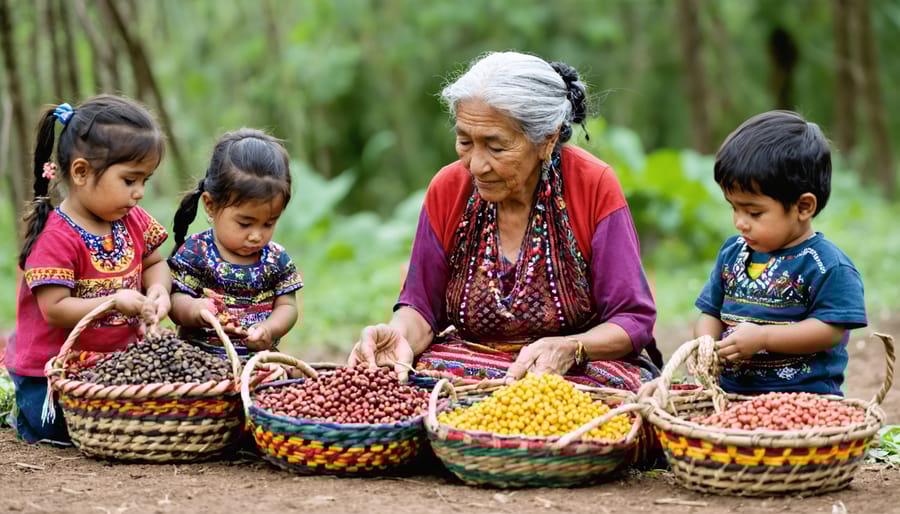
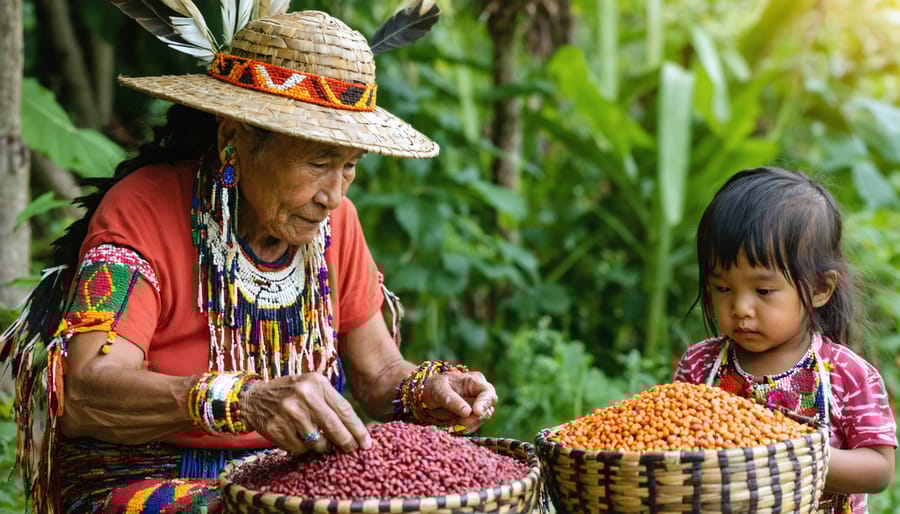
Indigenous elder sharing seed knowledge with children, displaying traditional seeds in ceremonial baskets
Elder indigenous woman teaching young children about traditional seed varieties, showing various colorful heirloom seeds in traditional woven baskets

Time-Tested Growing Methods

Indigenous communities have developed sophisticated growing methods over thousands of years, carefully adapting their techniques to local climates and soil conditions. The Three Sisters method, pioneered by Native American tribes, combines corn, beans, and squash in a mutually beneficial growing system. The corn provides natural poles for beans to climb, while beans fix nitrogen in the soil, and squash leaves create ground cover that retains moisture and prevents weeds.

Many indigenous farmers practice companion planting, strategically placing certain plants together to enhance growth and naturally deter pests. They often integrate perennial food forests, which mimic natural ecosystems by growing multiple layers of edible plants – from root crops to fruit trees – in the same space.

Traditional timing methods, based on natural indicators like bird migrations or flowering patterns, help determine optimal planting seasons. These bio-indicators have proven remarkably accurate, even as climate patterns shift. Indigenous farmers also practice seed saving and selective breeding, preserving crop varieties that are uniquely adapted to local conditions and ensuring food security for future generations.

Smart Seed Selection: Learning from Traditional Methods
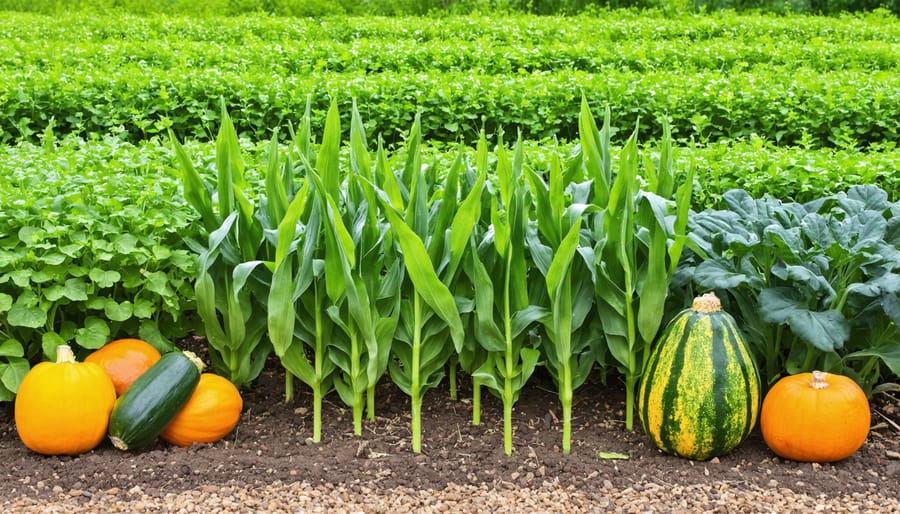
Three Sisters companion planting arrangement showing corn stalks supporting climbing beans with squash growing below
Traditional Three Sisters garden demonstration showing corn, beans, and squash growing together in traditional companion planting formation

Companion Planting Wisdom

Indigenous communities have long understood that certain plants naturally complement each other when grown together. This wisdom, passed down through generations, creates resilient garden ecosystems that support healthy plant growth while naturally deterring pests.

One of the most famous examples is the Three Sisters planting method, where corn, beans, and squash work in harmony. The tall corn stalks provide natural support for climbing beans, while the beans fix nitrogen in the soil to nourish the corn. The large squash leaves spread along the ground, creating living mulch that retains moisture and suppresses weeds.

Traditional knowledge also pairs aromatic herbs with vegetables for pest management. Marigolds planted near tomatoes help repel harmful nematodes, while sage companions well with cabbage to deter cabbage moths. Indigenous gardeners often plant sweetgrass near other crops, as its pleasant scent confuses insects searching for their target plants.

Desert-dwelling communities traditionally plant brittle bush or creosote near sensitive crops, as these plants naturally protect their neighbors from harsh sun and wind. In woodland gardens, elderberry is often grown alongside other plants because it attracts beneficial insects and provides shade for shade-loving species.

These time-tested combinations demonstrate how working with nature’s relationships creates stronger, more productive gardens while reducing the need for external inputs.

Natural Seed Storage Solutions

Indigenous peoples have developed remarkable seed storage solutions that have stood the test of time, protecting vital food sources for generations. These time-honored techniques focus on working with natural materials and local environmental conditions to preserve seeds effectively.

Clay pots and earthenware vessels remain among the most successful traditional storage methods. These containers naturally regulate moisture and temperature while allowing seeds to breathe, creating ideal conditions for long-term storage. Many communities enhance these vessels by mixing wood ash or specific dried herbs with their seeds to naturally repel insects and prevent mold growth.

Natural fiber bags made from materials like hemp, jute, or locally harvested plant fibers offer another time-tested solution. These breathable containers are often hung from rafters in well-ventilated areas, allowing air circulation while protecting seeds from moisture and pests. Some indigenous groups wrap their seeds in large leaves, such as banana or corn husks, creating natural packets that shield seeds from light and humidity.

Underground storage chambers, known as seed pits or earth cellars, demonstrate ingenious use of natural temperature regulation. These structures maintain consistent cool temperatures and humidity levels, often incorporating layers of dry grass, ash, or clay as natural preservatives.

Today’s gardeners can adapt these wisdom-filled practices by using similar natural materials and focusing on proper air circulation, moisture control, and temperature stability in their seed storage methods.

Traditional seed storage vessels made from clay and natural materials displaying indigenous preservation techniques
Collection of traditional clay and natural fiber seed storage containers with seeds being prepared for long-term storage using indigenous methods

Climate-Smart Growing: Indigenous Weather Knowledge

Indigenous communities have long relied on nature’s signals to make informed decisions about planting and harvesting cycles. By carefully observing patterns in plant and animal behavior, weather phenomena, and celestial movements, these communities developed sophisticated systems for predicting weather patterns and optimal growing conditions.

For example, many Indigenous farmers watch for the emergence of certain wildflowers or the arrival of specific migratory birds to signal the right time for planting. The Pueblo peoples of the American Southwest traditionally observe ant behavior – when ants build up their mounds, it often indicates approaching rain. Similarly, in Australia, Aboriginal communities recognize the flowering of certain wattle species as an indicator that specific fish species are abundant and ready for harvest.

Cloud formations play a crucial role in this knowledge system. Many Indigenous communities can predict incoming weather patterns by observing subtle changes in cloud shapes and movements. This understanding helps them protect their crops and adjust planting schedules accordingly, leading to the development of climate-resilient varieties that have adapted to local conditions over generations.

The moon phases also guide planting decisions in many Indigenous communities. Some groups plant root crops during the waning moon, believing the downward-pulling energy helps develop stronger roots. Alternatively, above-ground crops are often planted during the waxing moon phase when the rising energy is thought to support upward growth.

These traditional weather-reading practices offer valuable insights for modern gardeners looking to develop a deeper connection with their local environment. By learning to recognize natural indicators in our own gardens – from frost-predicting cricket chirps to rain-forecasting pine cone movements – we can make more informed growing decisions while reducing reliance on technology-dependent weather forecasting.

Saving Seeds the Indigenous Way

Indigenous seed-saving practices represent some of the most sophisticated and time-tested methods of preserving plant diversity. While modern seed preservation efforts rely heavily on technology, traditional techniques focus on working in harmony with natural cycles and local environments.

One fundamental principle of indigenous seed-saving is the practice of selecting seeds from the healthiest, most resilient plants that have adapted well to local conditions. Traditional knowledge teaches us to watch for specific characteristics: plants that withstand drought, resist local pests, or produce abundantly despite challenging conditions.

The timing of seed collection is crucial in indigenous practices. Seeds are typically gathered during the dry season or after the morning dew has evaporated to prevent moisture-related issues. Many indigenous communities use the moon phases as a guide, collecting seeds during the waning moon when moisture content in plants is naturally lower.

Storage methods vary among different indigenous cultures, but common elements include:
• Using natural containers made from gourds, clay pots, or woven baskets
• Adding aromatic herbs or ash to protect seeds from insects
• Storing seeds in cool, dark places above ground level
• Wrapping precious seeds in birch bark or other natural materials that regulate moisture

A unique aspect of indigenous seed-saving is the spiritual connection to the process. Many communities perform ceremonies or say prayers when collecting and storing seeds, recognizing them as living beings rather than mere objects. This deep respect translates into careful handling and storage practices that have proven effective over generations.

Another vital practice is the tradition of seed sharing within and between communities. This not only helps maintain genetic diversity but also strengthens community bonds and ensures food security. Many indigenous groups organize seed exchanges during seasonal gatherings, creating opportunities to share knowledge alongside seeds.

For home gardeners looking to apply these traditional methods, start by:
• Observing which plants thrive naturally in your area
• Saving seeds from multiple healthy plants to maintain diversity
• Using natural materials for storage when possible
• Creating your own seed-sharing network within your community

These time-honored practices offer valuable lessons for sustainable agriculture and help preserve both biodiversity and cultural heritage for future generations.

As we look to build a more sustainable and resilient food system, the wisdom held within indigenous traditional ecological knowledge becomes increasingly vital. These time-tested practices, developed over countless generations, offer proven solutions to many of our modern agricultural challenges. From drought-resistant farming techniques to biodiversity preservation, indigenous communities have long demonstrated how to work in harmony with natural ecosystems rather than against them.

By preserving and implementing this knowledge, we not only honor the cultural heritage of indigenous peoples but also gain valuable insights into sustainable food production. Success stories from farms incorporating traditional methods alongside modern practices show increased yields, improved soil health, and greater resistance to climate challenges. These results highlight how indigenous agricultural wisdom can help address food security concerns while protecting our environment for future generations.

The responsibility falls on all of us to ensure this precious knowledge isn’t lost. Supporting indigenous communities, documenting traditional practices, and creating partnerships between conventional farmers and indigenous knowledge holders are crucial steps forward. For home gardeners and small-scale farmers, incorporating even simple traditional techniques can make a significant difference in creating more sustainable growing spaces.

Remember, every garden plot or farm that embraces these time-honored practices helps keep this valuable knowledge alive and contributes to a more sustainable agricultural future.

How Local Farms Transform Raw Materials into Economic Growth

Posted by darrell on
0
Business and Economic Impact
How Local Farms Transform Raw Materials into Economic Growth

Transform local agriculture by mastering the four fundamental factors of production that drive successful farming operations. From fertile soil to innovative farming techniques, these essential ingredients for farm success shape the foundation of sustainable food production. Small-scale farmers and agricultural entrepreneurs harness these elements daily: converting unused land into thriving market gardens, optimizing labor through smart scheduling and volunteer programs, leveraging equipment and infrastructure investments, and implementing creative business strategies that connect fresh produce with eager consumers. Understanding how these production factors interact within local food systems reveals practical opportunities for both aspiring farmers and established growers to enhance their agricultural ventures while strengthening community food security.

Land: The Foundation of Local Agriculture

Sustainable Land Management

Sustainable land management practices are essential for maintaining long-term agricultural productivity and increasing land value. Smart farmers know that healthy soil is the foundation of successful farming, and they implement various techniques to preserve and enhance it. Crop rotation stands out as a time-tested method, where different crops are planted in sequence to maintain soil fertility and prevent nutrient depletion.

For example, Cedar Grove Farm in Vermont rotates corn with nitrogen-fixing legumes, which naturally replenish soil nutrients and reduce the need for synthetic fertilizers. This practice has helped them increase their land’s value by 15% over five years while maintaining consistent crop yields.

Conservation methods like no-till farming and cover cropping protect topsoil from erosion and improve soil structure. These practices also boost organic matter content, enhancing the land’s water retention capacity and reducing irrigation needs. Many successful farms complement these methods with composting and natural mulching, creating a sustainable cycle that builds soil health year after year.

The result? Healthier crops, lower input costs, and steadily appreciating land values that benefit both current operations and future generations.

Bird's eye view of a local farm with varied crop fields, irrigation systems, and soil conservation features
Aerial view of a diversified small farm showing crop rotation patterns and sustainable land management practices

Economic Benefits of Small-Scale Farming

Small-scale farming creates ripple effects that boost local economies in surprising ways. When farmers efficiently use small plots of land for organic produce, nearby property values often see a noticeable increase. Communities with thriving small farms tend to attract young professionals and families seeking fresh, locally-grown food and a connection to their food source.

Take Sarah’s story from Vermont: her two-acre organic farm not only provides income through direct sales but has helped transform her neighborhood into a desirable “farm-to-table” community. Local restaurants now feature her produce, creating additional jobs and drawing food tourists to the area. Property values in her vicinity have increased by 15% since she started farming five years ago.

Small farms also contribute to community development through farmers’ markets, food co-ops, and educational programs. These venues become social hubs, encouraging local spending and entrepreneurship. Studies show that every dollar spent at a small farm generates an additional $2.50 in local economic activity through employment, supply purchases, and increased foot traffic to nearby businesses.

By maximizing land use through intensive growing methods, small-scale farmers help preserve green spaces while creating sustainable economic growth for their communities.

Labor: The Human Element of Local Production

Farmers and agricultural workers learning to operate specialized farming equipment during a training session
Group of diverse farm workers receiving training on modern agricultural equipment

Job Creation and Skill Development

Local agriculture creates diverse employment opportunities while fostering valuable skill development in communities. From farm managers and field workers to market coordinators and value-added product specialists, each role contributes to a thriving agricultural ecosystem. Successful farms often partner with local schools and organizations to offer apprenticeships and training programs, helping cultivate the next generation of farmers and agricultural professionals.

Many organic farms provide hands-on learning experiences through seasonal internships, where participants gain practical skills in sustainable farming methods, crop planning, and business management. These programs not only create jobs but also ensure the preservation and transfer of traditional farming knowledge while incorporating modern sustainable practices.

The ripple effect extends beyond direct farm employment. Local food systems create positions in farmers’ markets, food processing, distribution, and agritourism. Additionally, the growth of farm-to-table restaurants and specialty food businesses generates opportunities for chefs, food artisans, and entrepreneurs who focus on locally sourced ingredients. This agricultural ecosystem helps build resilient local economies while providing meaningful work that connects people to their food system.

Community Engagement and Knowledge Transfer

Farm education programs and volunteer initiatives play a vital role in how CSA farms transform local economies through knowledge sharing and community building. These programs serve as practical training grounds where experienced farmers mentor newcomers in sustainable agricultural practices, creating a ripple effect of expertise throughout the community.

Local farms frequently host workshops covering essential topics like soil management, crop rotation, and organic pest control. These hands-on learning opportunities not only educate future farmers but also help consumers understand the value of locally grown produce. Volunteer programs allow community members to contribute their time while gaining practical experience in farming operations.

Many farms partner with schools and universities to offer internship programs, providing students with real-world experience in agricultural economics and sustainable farming practices. These partnerships often lead to innovation in farming techniques and create pathways for young people to enter the agricultural sector. The exchange of knowledge between experienced farmers and enthusiastic learners ensures the continuation of sustainable farming practices for future generations.

Capital: Investment in Local Food Systems

Equipment and Infrastructure

Modern farming success relies heavily on well-maintained equipment and robust infrastructure. Essential machinery includes tractors for plowing and harvesting, irrigation systems for efficient water management, and specialized tools for planting and crop maintenance. A local organic farm might invest in smaller-scale equipment like walk-behind tractors and precision seeders, which are perfect for intensive growing methods.

Storage facilities play a crucial role in preserving harvest quality. Climate-controlled storage units help maintain optimal temperature and humidity levels for different crops, while root cellars provide natural cooling for root vegetables and winter squash. Many successful farms also incorporate solar-powered cold storage units, combining sustainability with practical preservation needs.

Distribution networks connect farms to their markets through various channels. These include refrigerated delivery vehicles, packaging facilities, and strategic partnerships with local food hubs. Some innovative farms are embracing modern technology by implementing online ordering systems and establishing efficient delivery routes to serve their CSA members and restaurant clients.

Smart infrastructure planning helps reduce waste and improve operational efficiency. For example, strategically placed wash stations, packing sheds, and loading docks can significantly streamline the harvest-to-market process.

Financial Resources and Community Investment

Financial resources in local agriculture come from diverse sources, including traditional bank loans, USDA grants, crowdfunding campaigns, and community-supported agriculture (CSA) memberships. These funding streams act as vital capital inputs that enable farmers to purchase equipment, seeds, and necessary infrastructure.

When local farms receive financial support, it creates a powerful ripple effect throughout the community. For instance, when a small organic farm secures a $50,000 grant, they might purchase equipment from local suppliers, hire additional workers from the community, and increase their production capacity. This increased activity generates more local spending, tax revenue, and job opportunities.

Many successful farms combine multiple funding sources creatively. The Growing Roots Farm in Vermont started with a modest community investment of $15,000 and transformed it into a thriving operation that now supports 200 CSA members and provides produce to local restaurants. Their success demonstrates how initial capital investment, when combined with smart resource management, can multiply its impact through increased production and expanded market reach.

The key is viewing financial resources not just as money, but as a tool for building sustainable agricultural systems that benefit the entire community.

Entrepreneurship: Innovation in Local Agriculture

Value-Added Products

Local farmers are increasingly discovering innovative ways to transform their raw agricultural products into premium value-added items, significantly boosting their income potential. For example, apple orchards are creating artisanal cider, preserves, and dried fruit snacks from their harvest. Small dairy farmers are crafting specialty cheeses, yogurt, and ice cream, turning basic milk production into luxury dairy products that command higher prices at farmers’ markets.

Berry farmers are particularly successful in this arena, producing homemade jams, jellies, and fruit-infused vinegars. Some even partner with local bakeries to create farm-fresh pies and pastries. Herb growers are packaging dried herbs, creating custom tea blends, and producing essential oils from their crops.

Creative vegetable farmers are making pickled products, specialty sauces, and farm-fresh salsas. Others are offering value-added convenience by preparing pre-washed, cut, and packaged vegetables for busy families. These transformed products not only provide higher profit margins but also help farmers maintain steady income during off-seasons while reducing crop waste and creating distinctive brand identities in their local markets.

Colorful display of homemade jams, preserves, and other processed farm products at a local market
Farmer’s market stall displaying value-added products made from local farm produce

Direct Marketing Strategies

Local farmers are increasingly adopting innovative direct marketing strategies to connect with consumers and maximize their returns. CSA programs have become a cornerstone of sustainable farming, allowing producers to receive upfront payments while providing members with regular shares of fresh, seasonal produce. This model helps farmers better manage their cash flow and reduce market uncertainties.

Farmers markets serve as vibrant community hubs where producers can sell directly to consumers, eliminating middlemen and capturing full retail value for their products. These markets also provide valuable opportunities for farmers to build lasting relationships with customers and gather feedback about their products.

Local distribution networks have evolved to include restaurant partnerships, food co-ops, and online marketplaces. Many farmers now offer home delivery services or coordinate neighborhood pickup points, making fresh produce more accessible to busy families. Some innovative producers have even created farm-to-door subscription boxes, combining the convenience of delivery services with the personal touch of direct farmer relationships.

These direct marketing channels not only improve profit margins but also strengthen local food systems and create more resilient agricultural communities.

Local agriculture represents a powerful intersection of traditional economic factors and modern sustainability needs. Through efficient use of land, labor, capital, and entrepreneurship, local farms are proving to be vital economic engines in their communities. Success stories from small-scale farmers demonstrate how smart resource management can lead to profitable enterprises while supporting local food security.

The future of local agriculture looks promising, with increasing consumer demand for fresh, locally sourced produce creating new opportunities for growth. innovative farming techniques and direct-to-consumer sales models are helping farmers maximize their productivity while maintaining sustainable practices. This trend not only strengthens local economies but also creates jobs, preserves agricultural land, and reduces transportation costs associated with food distribution.

As we look ahead, the continued development of local food systems will likely play an increasingly important role in our economic landscape. By understanding and effectively managing the factors of production, local farmers can build resilient businesses that benefit both their communities and the environment. The success of these enterprises proves that sustainable agriculture can be both economically viable and environmentally responsible.

How Smart CSAs Are Making Online Shopping Eco-Friendly (And Profitable)

Posted by darrell on
0
Market Events and Community Engagement
How Smart CSAs Are Making Online Shopping Eco-Friendly (And Profitable)

Transform your CSA’s environmental impact by embracing digital solutions that enhance both sustainability and customer reach. Today’s most successful CSA operations combine eco-friendly farming practices with streamlined e-commerce platforms, reducing paper waste while expanding market access. Smart packaging choices, route-optimized delivery systems, and digital payment processing have revolutionized how local farms connect with conscious consumers, cutting carbon footprints by up to 50% compared to traditional distribution methods.

The shift toward sustainable e-commerce isn’t just about going paperless—it’s about creating resilient food systems that support local economies while minimizing environmental impact. From reusable packaging programs to carbon-neutral shipping options, innovative CSAs are proving that digital transformation and ecological responsibility can grow together, fostering stronger communities and healthier ecosystems for future generations.

Digital Farm-to-Door: The New CSA Model

Farmer using digital technology to process CSA orders in a greenhouse setting
CSA farmer using a tablet to manage online orders while standing in a greenhouse

Online Ordering Systems That Work

Many successful CSAs have embraced user-friendly digital platforms that make ordering and managing subscriptions a breeze. Popular solutions like Harvie, Local Food Marketplace, and Farmigo offer comprehensive features that handle everything from payment processing to delivery scheduling. These platforms help farmers track inventory in real-time while giving members the flexibility to customize their shares and make changes to orders.

Small-scale CSAs often find success with simpler solutions like SquareSpace or Wix, which offer built-in e-commerce features perfect for managing weekly pickups and member communications. Some farms even use a combination of Google Forms for order customization and payment processors like Square or Stripe for seamless transactions.

Local Harvest Farm in Vermont shares how switching to an online ordering system helped them reduce food waste by 30% while increasing member satisfaction. Their platform allows members to swap items they don’t want for extras of their favorites, ensuring produce doesn’t go to waste. The key is choosing a system that matches your scale of operations while remaining simple enough for both farmers and members to use with confidence.

Sustainable Packaging Solutions

When it comes to sustainable e-commerce, packaging plays a crucial role in reducing environmental impact. Many CSAs and organic produce delivery services are now embracing innovative eco-friendly packaging solutions that protect both the produce and the planet.

Reusable containers are gaining popularity, with many services implementing deposit systems for sturdy plastic or glass containers that can be returned and sanitized for multiple uses. Some farms have found success with collapsible produce boxes made from recycled materials, which can be easily stored and reused by customers.

For items that require single-use packaging, biodegradable materials derived from plant sources like cornstarch or mushroom mycelium offer excellent protection while completely breaking down in home compost systems. Paper-based solutions, including recycled cardboard boxes and kraft paper bags, provide another sustainable option when treated with natural water-resistant coatings.

Temperature-sensitive items can be kept cool using wool insulation or recycled denim padding instead of traditional styrofoam. These materials are not only biodegradable but often perform better than conventional options, maintaining consistent temperatures for longer periods.

Many successful CSAs are also implementing packaging minimization strategies, such as using loose produce bundles secured with compostable twine or encouraging customers to provide their own bags during pickup.

Building Customer Connection Through Technology

Virtual Farm Tours and Updates

Modern CSAs are leveraging technology to maintain authentic connections with their members through innovative digital engagement tools. Virtual farm tours have become increasingly popular, allowing members to experience the farming process from anywhere. Through live streams and recorded videos, farmers showcase daily activities, from seed starting to harvest, creating transparency and building trust.

Many CSAs now offer weekly video updates highlighting crop progress, weather challenges, and upcoming harvests. These glimpses into farm life help members feel more connected to their food source and understand seasonal variations. Some farms use Instagram Stories or Facebook Live to share real-time updates about field conditions or demonstrate cooking techniques for less familiar vegetables.

Interactive elements like time-lapse videos of growing crops and 360-degree virtual walks through the fields give members an immersive experience. Farmers often include behind-the-scenes content showing sustainable practices in action, from composting to natural pest management. This digital transparency helps members appreciate the value of their investment while fostering a stronger sense of community, even when physical farm visits aren’t possible.

Through these virtual connections, CSAs maintain their commitment to sustainability while adapting to modern communication preferences.

Interactive virtual farm tour showing farmer conducting live video session with CSA members
Split-screen view showing virtual farm tour with video chat between farmer and CSA members

Digital Communication Strategies

In today’s digital age, effective online communication is crucial for sustainable e-commerce operations. Regular email newsletters serve as a cornerstone for keeping members informed about harvest schedules, seasonal offerings, and farm updates. Social media platforms like Instagram and Facebook offer perfect venues for sharing vibrant photos of fresh produce, behind-the-scenes glimpses of farm life, and educational content about sustainable farming practices.

To maintain community engagement, consider implementing a mix of content types, including recipe sharing, farming tips, and member spotlights. Online forums or private Facebook groups can create spaces for members to connect, share experiences, and exchange cooking ideas. Regular blog posts about sustainable farming practices and seasonal eating help educate members while reinforcing your commitment to environmental stewardship.

Digital tools like automated text alerts for pickup reminders and mobile-friendly ordering systems enhance member experience while reducing paper waste. Remember to keep communications clear, consistent, and personal – your digital presence should reflect the same warmth and authenticity that members experience at the farm. Encourage two-way communication by actively responding to comments and messages, creating polls for feedback, and hosting virtual events when in-person gatherings aren’t possible.

Reducing Environmental Impact

CSA delivery vehicle with digital map showing optimized delivery routes
Delivery van with route optimization screen overlay showing efficient delivery planning

Smart Route Planning

CSAs are revolutionizing their delivery systems through smart route planning, making their operations more efficient while reducing their environmental impact. By implementing intelligent routing software, CSA farmers can optimize delivery schedules and routes, significantly cutting down on fuel consumption and emissions.

These systems analyze various factors like delivery locations, time windows, and vehicle capacity to create the most efficient routes possible. For example, many CSAs now use clustering algorithms to group nearby delivery points, ensuring vehicles travel the shortest possible distances between stops. This not only saves time and fuel but also helps maintain the freshness of produce by minimizing transit time.

Some innovative CSAs have adopted dynamic routing capabilities that can adjust in real-time to traffic conditions, weather, and last-minute changes. These adjustments help avoid congested areas and reduce idle time, further decreasing the carbon footprint of deliveries.

Many CSAs are also implementing collaborative delivery networks, where multiple farms in the same region coordinate their deliveries. This coordination prevents multiple vehicles from covering the same areas and maximizes the efficiency of each trip. Some farms report reducing their delivery-related emissions by up to 30% through these smart routing initiatives.

To make these systems even more effective, CSAs are encouraging members to choose pickup points or delivery time slots that align with optimal routes, creating a community-driven approach to sustainable delivery practices.

Food Waste Prevention

E-commerce platforms have revolutionized how businesses manage their food inventory, significantly reducing waste through smart digital solutions. Modern inventory management systems use predictive analytics to forecast demand accurately, helping businesses stock just the right amount of products at the right time.

Real-time tracking enables businesses to monitor product shelf life and implement first-in-first-out (FIFO) protocols effectively. Smart algorithms can automatically adjust order quantities based on seasonal trends, customer buying patterns, and historical data, minimizing the risk of overstocking perishable items.

Many platforms now integrate dynamic pricing features that automatically reduce prices for items approaching their sell-by dates. This not only helps prevent food waste but also maintains profit margins while providing value to cost-conscious consumers.

Mobile apps and digital tools allow staff to quickly identify items nearing expiration and take appropriate action, whether that’s marking items for immediate sale or coordinating with local food banks for donation. Some innovative solutions even connect businesses with food rescue organizations through automated alerts when surplus inventory is available.

By implementing these digital tools, businesses can typically reduce their food waste by 20-50%. Beyond the environmental benefits, this translates to significant cost savings and improved operational efficiency. The key is choosing user-friendly systems that integrate seamlessly with existing operations while providing clear, actionable data for better decision-making.

Sustainable e-commerce practices in CSAs represent a powerful intersection of technology and environmental stewardship. By embracing digital solutions while maintaining ecological responsibility, CSAs can significantly reduce their carbon footprint through optimized delivery routes, paperless operations, and reduced food waste. The implementation of online ordering systems has shown remarkable success in connecting local farmers with conscious consumers, while smart inventory management helps ensure that produce is harvested only when needed.

Looking ahead, the future of sustainable e-commerce in CSAs appears promising. Emerging technologies like blockchain for supply chain transparency and AI-powered demand forecasting will further enhance sustainability efforts. Many CSAs are already exploring innovative solutions such as reusable packaging programs and carbon-neutral delivery options, setting new standards for eco-friendly food distribution.

As more consumers prioritize environmental responsibility in their purchasing decisions, CSAs that embrace sustainable e-commerce practices are well-positioned to thrive. The combination of digital efficiency and ecological mindfulness not only benefits the environment but also strengthens local food systems and communities for generations to come.

How Intergenerational Centers Are Revolutionizing CSA Programs

Posted by darrell on
0
Community Partnerships and Networks
How Intergenerational Centers Are Revolutionizing CSA Programs

Imagine a vibrant community space where children’s laughter mingles with the wisdom of seniors, where garden beds become bridges between generations. Intergenerational centers are revolutionizing how we approach community building, education, and CSA partnerships by bringing together people of all ages in purposeful, enriching activities. These innovative hubs transform traditional age-segregated programs into dynamic spaces where toddlers learn gardening alongside retirees, teens share technology skills with elders, and communities grow stronger through shared experiences. As our society grapples with age isolation and disconnected communities, these centers offer a promising solution that benefits everyone involved – from improved social skills in children to reduced loneliness in seniors, while fostering sustainable, locally-focused food systems that nourish both body and soul.

Bridging Generations Through Local Food

Knowledge Exchange in the Garden

In the garden, a beautiful exchange of knowledge takes root as generations come together to grow food and community. Senior participants bring decades of hands-on growing experience, sharing time-tested techniques for seed saving, natural pest control, and reading weather patterns. They tell stories of traditional farming methods passed down through families, offering invaluable insights into crop rotation and companion planting that have stood the test of time.

Meanwhile, younger participants contribute fresh perspectives on modern sustainable practices, introducing concepts like vertical gardening, water-efficient irrigation systems, and organic composting techniques. They help implement digital tools for tracking plant growth and weather data, while teaching seniors about new climate-resistant varieties and eco-friendly growing methods.

This two-way exchange creates a vibrant learning environment where wisdom flows freely between generations. Seniors find purpose in mentoring, while youth gain practical skills that textbooks can’t teach. Together, they develop innovative solutions that blend traditional knowledge with contemporary sustainability practices, creating gardens that are both productive and environmentally responsible. The result is a rich tapestry of shared experiences that strengthens community bonds while ensuring valuable agricultural knowledge continues to flourish.

Elderly person and child working together in garden, sharing gardening knowledge
Senior gardener teaching young child how to plant seedlings in a community garden

Creating Meaningful Connections

At our intergenerational center, shared activities like planting seasonal vegetables and harvesting fresh produce create natural bonds between participants of all ages. Senior members often mentor younger gardeners, sharing traditional growing techniques and family recipes passed down through generations. Children bring fresh energy and curiosity, asking questions that spark meaningful conversations while tending to the community garden beds. These partnerships flourish as participants work side-by-side in the greenhouse, maintaining herb gardens, or collecting eggs from the chicken coop. The simple act of working together in nature helps bridge age gaps, creating lasting friendships that extend beyond the garden. Many participants report that these agricultural activities provide a sense of purpose and connection that enriches both their gardening experience and personal lives.

Benefits for CSA Programs

Diverse group of seniors and youth working together during CSA harvest
Mixed age group of volunteers harvesting vegetables at a CSA farm

Expanded Volunteer Base

Intergenerational centers benefit from a unique advantage when it comes to volunteering: they can tap into multiple age groups for support, creating a more sustainable and reliable volunteer workforce. Seniors, who often have more flexible schedules and a wealth of experience, can contribute during weekday hours when younger volunteers might be unavailable. Meanwhile, students and working adults can fill evening and weekend slots, ensuring consistent coverage throughout the week.

This age diversity brings valuable skills to the table. Retired professionals might offer expertise in areas like accounting, teaching, or healthcare, while younger volunteers often bring tech-savvy abilities and fresh perspectives. The mix of generations also creates natural mentorship opportunities, with experienced volunteers guiding newcomers through various tasks and responsibilities.

The multi-generational approach helps prevent volunteer burnout by distributing responsibilities across a broader group. Centers report higher volunteer retention rates when different age groups work together, as the social connections formed between generations create a stronger sense of community and purpose. This collaborative environment makes volunteering more enjoyable and meaningful for everyone involved.

Community Building

Intergenerational centers have proven to be powerful catalysts in building strong CSA memberships and fostering meaningful community connections. These centers create unique opportunities to transform communities through agriculture, bringing together people of all ages in shared learning and growing experiences.

Many CSA farms report increased membership retention when they incorporate intergenerational activities. Seniors share valuable farming wisdom and traditional growing techniques, while younger members contribute fresh perspectives and technological know-how. This exchange creates a vibrant learning environment that strengthens community bonds and ensures agricultural knowledge is preserved across generations.

Regular events like harvest celebrations, cooking demonstrations, and gardening workshops become natural meeting points where different age groups interact and collaborate. These gatherings often lead to lasting friendships and mentorship relationships that extend beyond the farm setting. Children develop a deeper appreciation for food production, while older adults find purpose in sharing their expertise and staying actively engaged in community life.

The result is a more resilient CSA program with members who feel personally invested in the farm’s success and the community’s well-being.

Intergenerational group managing CSA farm stand with fresh produce display
Community gathering at farm stand with seniors and youth selling CSA produce

Success Stories

One of the most inspiring successful CSA partnerships is the Bridging Generations Farm in Vermont, where retired teacher Sarah Matthews partnered with young farmer Jake Rodriguez to create a thriving intergenerational center. Their program now serves over 200 families while providing hands-on education to both seniors and children.

In California, the Golden Oak Community Farm demonstrates another heartwarming success story. Here, 72-year-old master gardener Frank Chen mentors three young farmers while running a vibrant CSA program. Their unique approach includes specialized growing areas where seniors teach children about heritage vegetables and traditional farming methods.

The Prairie Rose Farm in Minnesota showcases how multiple generations can work together seamlessly. Founded by the Thompson family, this center pairs experienced farmers in their 60s and 70s with agricultural students from the local community college. Their program has expanded from 50 to 300 CSA members in just three years, while also hosting popular weekend workshops where seniors and youth collaborate on sustainable farming projects.

These centers prove that age diversity strengthens farming communities. At Wisconsin’s Rainbow Valley Farm, 68-year-old Maria Hernandez shares her expertise in seed saving with younger farmers, while they introduce her to modern organic farming technologies. Their combined knowledge has created an innovative CSA program that maintains traditional wisdom while embracing sustainable new practices.

Starting an Intergenerational Program

Starting an intergenerational program at your CSA farm begins with identifying potential partner organizations in your community. Reach out to local senior centers, retirement communities, schools, and daycare facilities to gauge interest and discuss collaboration opportunities.

Begin with simple activities that naturally bring generations together. Consider creating dedicated garden plots where seniors and children can work side by side, sharing knowledge and stories while tending to plants. Schedule regular harvest days where older adults can teach younger participants about seasonal vegetables and traditional cooking methods.

Design your program structure with accessibility in mind. Ensure pathways are wheelchair-friendly and include raised beds for easier access. Plan activities during times that work for both age groups, typically mid-morning or early afternoon, and keep sessions to manageable lengths of 60-90 minutes.

Incorporate educational elements that benefit both groups. Children can learn about plant science and nutrition, while seniors can share their gardening expertise and life experiences. Consider implementing a buddy system, pairing younger and older participants for ongoing activities throughout the growing season.

Don’t forget to document success stories and gather feedback regularly. Start small with pilot programs and expand based on participant response. Many successful intergenerational programs began with just a handful of participants and grew organically through word-of-mouth and community engagement.

Remember to celebrate achievements together through harvest festivals, community meals, or seasonal celebrations that showcase the fruits of your collective labor.

Intergenerational centers in CSA programs have proven to be powerful catalysts for community growth and sustainable agriculture education. By bridging the gap between generations, these centers create lasting connections while ensuring valuable farming knowledge is passed down through hands-on experience. The success stories from existing programs demonstrate how younger participants gain practical skills and wisdom from experienced farmers, while older generations find renewed purpose in mentoring and sharing their expertise.

Looking ahead, these centers are poised to play an increasingly vital role in preserving agricultural heritage and promoting sustainable food systems. As more communities recognize the value of connecting different age groups through farming, we can expect to see continued growth in intergenerational programs. These initiatives not only strengthen local food security but also foster meaningful relationships that benefit entire communities, making them an essential component of the future of sustainable agriculture.