Yearly Archives

329 Articles

Virginia’s Farm-to-Table Festivals Will Change How You Eat This Season

Posted by darrell on
0
Farm-to-Table Experiences
Virginia’s Farm-to-Table Festivals Will Change How You Eat This Season

Discover Virginia’s thriving farm-to-table scene by visiting restaurants that source ingredients directly from nearby farms within 50 miles of their kitchens. Places like The Shack in Staunton and Lemaire in Richmond partner with multiple local farms, rotating their menus weekly based on harvest schedules. Check restaurant websites between March and November when seasonal festivals peak, as most establishments host special farm dinners, harvest celebrations, and meet-the-farmer events during these months.

Connect with the movement by attending seasonal festivals where chefs prepare dishes on-site using produce harvested that morning. Farm festivals are transforming how diners experience local food, offering cooking demonstrations, farm tours, and direct conversations with the growers who supply your favorite restaurants. The Virginia Wine and Harvest Festival in September and Spring Farm-to-Table dinners throughout the Shenandoah Valley provide perfect opportunities to taste the difference freshness makes.

Build lasting connections beyond festival attendance by asking restaurant staff which farms supply their ingredients, then visit those farms directly or join their CSA programs. Many Virginia farm-to-table restaurants post weekly harvest updates on social media, showcasing their farmer partnerships and upcoming seasonal menu changes. This transparency helps you understand exactly where your meal originates and supports the local farmers who make exceptional dining experiences possible year-round.

Why Virginia’s Farm-to-Table Festival Scene Stands Out

From Shenandoah Valley to Tidewater: Virginia’s Agricultural Richness

Virginia’s agricultural landscape offers an incredible diversity that keeps farm-to-table restaurant menus exciting year-round. From the fertile Shenandoah Valley in the west to the coastal Tidewater region, each area contributes its own unique bounty to the commonwealth’s culinary scene.

The Shenandoah Valley, often called Virginia’s breadbasket, produces exceptional apples, peaches, and stone fruits that shine in late summer festival menus. This region’s rolling farmland also yields heritage grains and grass-fed beef that appear on restaurant plates throughout the year. Local farmers here have embraced sustainable practices, with many transitioning to organic methods that enhance soil health while producing nutrient-dense crops.

Moving east, the Piedmont region excels in vegetable production. Spring brings tender asparagus and sweet peas, while summer overflows with heirloom tomatoes, squash, and peppers. Festival-goers in this area during autumn can expect dishes featuring butternut squash, Brussels sprouts, and late-season greens.

The Tidewater region, with its proximity to the Chesapeake Bay, offers a unique combination of land and sea. Beyond famous oysters and blue crabs, coastal farms grow specialty greens and herbs that thrive in the milder climate. Winter festivals here showcase collards, kale, and root vegetables that store beautifully.

This geographic diversity means Virginia’s farm-to-table festivals can celebrate different harvests throughout the seasons, giving restaurants incredible flexibility to create memorable, locally-sourced menus that truly reflect the surrounding landscape.

The Restaurant-Farm Connection at Virginia’s Seasonal Festivals

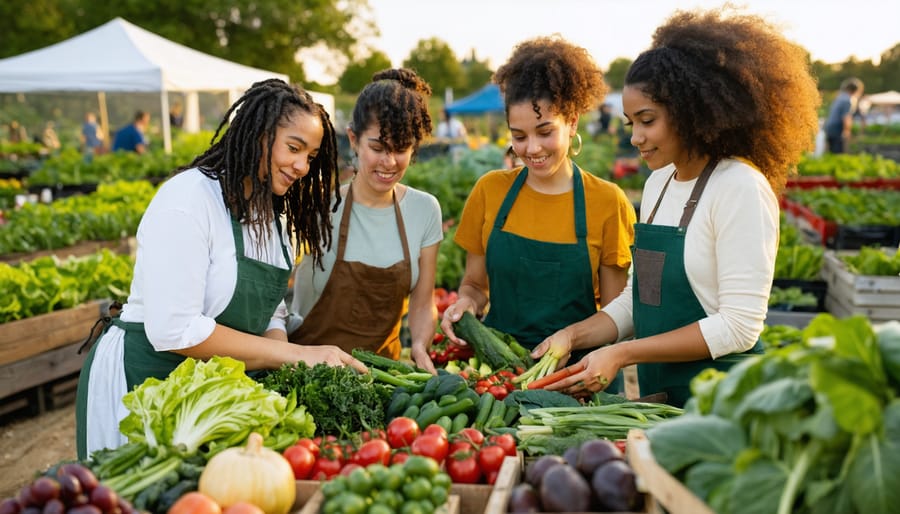
Chef and farmer meeting at outdoor table with fresh harvested vegetables
Virginia’s farm-to-table festivals create meaningful partnerships between local chefs and farmers, strengthening community food systems.

Meet the Chefs and Farmers Making It Happen

Behind every memorable farm-to-table meal lies a meaningful partnership between chef and farmer. In Virginia, these relationships have blossomed through seasonal festivals, creating a ripple effect that strengthens local food systems year-round.

Take Chef Emily Watson of Harvest Kitchen in Charlottesville, who met organic vegetable farmer Marcus Chen at the 2022 Blue Ridge Harvest Festival. What began as a conversation about heirloom tomatoes evolved into a weekly partnership where Marcus grows specific varieties exclusively for Emily’s seasonal menus. Their collaboration showcases how local partnerships transform communities, creating reliable income for farmers while ensuring restaurants receive peak-quality ingredients.

In the Shenandoah Valley, Chef Sarah Rodriguez partners with Willow Creek Farm, run by third-generation farmers the Thompson family. After connecting at the Valley Harvest Celebration, they developed a unique arrangement where Sarah visits the farm weekly to harvest ingredients herself. This hands-on approach helps her understand seasonal growing challenges while allowing the Thompsons to focus on sustainable soil management practices rather than harvest logistics.

The Richmond area highlights another success story with Chef David Kim and Greenspring Farm. Their partnership, formed at Capital City Farm Fest, centers on regenerative agriculture practices. David promotes the farm’s pasture-raised meats and vegetables through educational dinners, explaining sustainable farming techniques to diners while featuring dishes that celebrate the farm’s commitment to soil health and biodiversity.

These chef-farmer relationships demonstrate that festivals serve as crucial networking spaces where shared values around sustainability, quality, and community create lasting professional bonds that nourish both businesses and customers.

Festival attendees enjoying farm-to-table food tastings at outdoor Virginia event
Virginia’s farm-to-table festivals bring together food lovers and local producers for immersive seasonal celebrations.

What to Expect at Virginia’s Seasonal Farm-to-Table Festivals

Spring Festivals: Celebrating New Growth

As winter’s chill fades, Virginia’s farm-to-table restaurants burst into life with spring festivals celebrating the season’s first harvest. These events showcase the tender asparagus spears, peppery arugula, and sweet spring peas that local farmers have carefully nurtured through the cooler months.

Many restaurants partner directly with nearby farms to create special tasting menus featuring spring lamb raised on Virginia pastures, paired with vibrant microgreens and delicate ramps foraged from mountain hollows. These festivals offer a wonderful opportunity to meet the farmers behind your food and learn about sustainable growing practices that protect our soil and waterways.

Popular spring events include asparagus dinners in the Shenandoah Valley and strawberry celebrations in the Tidewater region. Chef demonstrations often highlight simple preparation methods that let seasonal ingredients shine, teaching attendees techniques they can use at home. Some festivals include farm tours, giving visitors firsthand glimpses of where their food originates.

These gatherings create meaningful connections between diners and farmers, often inspiring attendees to join CSA programs for continued access to fresh, local produce throughout the growing season. Spring festivals remind us that eating seasonally means enjoying food at its peak flavor while supporting farming families in our communities.

Summer Abundance: Peak Season Celebrations

Summer in Virginia transforms farm-to-table menus into vibrant celebrations of peak-season abundance. From late June through August, restaurants showcase sun-ripened heirloom tomatoes in every color imaginable, sweet corn pulled from fields just hours before service, and juicy berries that capture the essence of the season.

Many Virginia farm-to-table establishments host special summer dinners highlighting these warm-weather harvests. You’ll find creative preparations of summer squash, zucchini, and cucumbers sourced from nearby organic farms, often featuring the stories of the growers who nurtured them. These seasonal menus frequently include heirloom tomato towers with fresh basil, grilled peach salads with local goat cheese, and berry-studded desserts made with strawberries, blueberries, and blackberries picked at their prime.

What makes these summer celebrations truly special is the direct connection between diners and farming communities. Restaurant chefs often invite their partner farmers to guest appearances, sharing their sustainable growing practices and the journey from seed to plate. This transparency helps you understand the dedication behind each ingredient while supporting agricultural families who prioritize soil health and chemical-free cultivation methods throughout Virginia’s growing season.

Overhead view of colorful seasonal Virginia vegetables arranged on rustic wooden table
Summer farm-to-table festivals in Virginia celebrate the season’s peak abundance with colorful harvests from local farms.

Fall Harvest Festivals: The Grand Finale

As leaves turn golden and temperatures cool, Virginia’s fall harvest festivals transform farm-to-table dining into a grand celebration of abundance. October brings apple picking excursions that connect directly to restaurant menus, where heirloom varieties like Winesap and Albemarle Pippin shine in seasonal dishes. Chefs showcase their creativity with root vegetables pulled fresh from partnership farms—roasted beets, sweet potatoes, and turnips become centerpiece ingredients.

Many restaurants host harvest dinners on partnering farms, creating unforgettable experiences where guests dine among the fields that grew their meal. These events often feature local cider pairings and pumpkin-forward desserts that highlight Virginia’s agricultural diversity. Farmers share their success stories during these gatherings, explaining how crop rotation and cover cropping enrich the soil for next season’s bounty.

The festivals also serve as educational opportunities, helping diners understand the work behind their plates. You’ll discover which vegetables store well through winter and learn tips for preserving your own seasonal produce at home. These celebrations aren’t just about eating well—they’re about building lasting connections between your table and the farmers who make exceptional food possible year-round.

Top Farm-to-Table Restaurants Leading Virginia’s Festival Movement

Virginia’s farm-to-table restaurant scene thrives through genuine partnerships between chefs and local farmers, with many establishments taking leadership roles in the state’s seasonal festival movement. These restaurants don’t just serve local food—they actively celebrate and promote Virginia’s agricultural heritage through year-round community events.

In Northern Virginia, The Farm at Red Hill in Warrenton stands out for its dual role as both working farm and restaurant. Chef-owner Bryan Wavra sources ingredients from the property’s gardens and partners with neighboring farms for what he can’t grow himself. The restaurant hosts quarterly farm dinners that coincide with harvest seasons, giving diners a front-row seat to sustainable agriculture in action. Their spring asparagus festival and autumn apple celebrations draw food lovers from across the region, offering cooking demonstrations and farm tours alongside multi-course meals.

Central Virginia’s Fleurie Restaurant in Charlottesville has championed the farm-to-table movement for over two decades. Located near several family farms, the restaurant maintains close relationships with growers who supply heirloom tomatoes, pasture-raised meats, and artisanal cheeses. Fleurie participates in the Charlottesville Farm-to-Table Week each November, showcasing how these partnerships bring peak-season flavors to the plate while supporting local agricultural businesses.

The Blue Ridge region offers The Shack in Staunton, where chef Ian Boden’s innovative approach earned the restaurant a James Beard Award nomination. The Shack partners with dozens of Shenandoah Valley farms and participates in multiple seasonal festivals throughout the year. Their commitment extends beyond their dining room—they help organize the Staunton Local Food Hub’s harvest celebrations, which connect community members directly with the farmers who grow their food.

In Hampton Roads, Commune in Norfolk exemplifies coastal farm-to-table dining. Chef-owner Tim Haresign works with Eastern Shore farmers and Chesapeake Bay watermen to create menus reflecting Virginia’s maritime heritage. The restaurant actively participates in the Norfolk Harborfest and the Virginia Beach Neptune Festival, offering tastings that educate attendees about sustainable seafood and seasonal produce.

These restaurants prove that farm-to-table dining is more than a trend—it’s a commitment to community, sustainability, and preserving Virginia’s agricultural traditions. By participating in festivals and hosting their own farm-focused events, they create meaningful connections between diners and the land that feeds them, inspiring others to support local food systems year-round.

How These Festivals Support Your Local Food System

When you attend a farm-to-table festival in Virginia, you’re doing much more than enjoying a delicious meal. You’re participating in a movement that creates ripples of positive change throughout your community.

Every ticket purchased directly support small farms that form the backbone of Virginia’s agricultural heritage. These festivals provide crucial revenue streams for family-run operations, helping them maintain sustainable practices and continue growing the nutrient-rich produce we all love. When local farmers thrive, they can invest in better equipment, improve soil health, and even hire additional workers from your community.

The environmental benefits are equally impressive. By celebrating locally sourced ingredients, these festivals dramatically reduce the carbon footprint associated with food transportation. Instead of produce traveling thousands of miles, your meal might feature tomatoes grown just 20 miles away. This shorter supply chain means fresher food on your plate and fewer emissions in our atmosphere.

These gatherings also strengthen community bonds in meaningful ways. You’ll meet the actual farmers who grow your food, hear their stories, and understand the dedication behind every harvest. Take Sarah Mitchell from Blue Ridge Heritage Farm, who credits festival connections with helping her expand from a small vegetable operation to a thriving CSA program serving 150 families.

The economic impact extends beyond farms too. Local restaurants gain exposure, artisan food producers find new customers, and tourism dollars circulate within Virginia communities rather than flowing to corporate chains. By attending these festivals, you’re casting a vote for a more sustainable, connected, and resilient food system that benefits everyone from soil to table.

Planning Your Farm-to-Table Festival Experience

Connecting with Farms Through CSA Programs

Discovered a fantastic farm at a Virginia festival? Take your farm-to-table journey beyond the event by joining their Community Supported Agriculture (CSA) program. CSA memberships create a direct connection between you and local farmers, delivering fresh, seasonal produce to your doorstep or a convenient pickup location throughout the growing season.

When you chat with farmers at festivals, ask about their CSA offerings. Most programs run from spring through fall, with some providing year-round options including winter vegetables and storage crops. You’ll typically receive a weekly or bi-weekly box filled with whatever’s being harvested that week, introducing you to vegetables you might not normally purchase and inspiring creative cooking adventures.

Many Virginia farmers offer flexible membership options, including half-shares for smaller households or work-trade opportunities where you can volunteer at the farm in exchange for reduced costs. This hands-on involvement deepens your understanding of sustainable farming practices while building meaningful relationships with the people growing your food.

By joining a CSA, you’re investing in your local food system, supporting small-scale agriculture, and ensuring that the farm-to-table connection you experienced at the festival becomes a regular part of your sustainable lifestyle. Plus, you’ll enjoy the freshest possible produce while learning about seasonal eating patterns.

Virginia’s farm-to-table festivals offer more than just delicious food—they’re gateways to understanding where your meals truly come from. When you attend these events, you’re not just a spectator; you become part of a community that values sustainable living and supports local farmers who work tirelessly to bring fresh, organic produce to your plate.

These festivals create meaningful connections that extend beyond a single meal. You’ll meet the farmers behind your food, learn about their growing practices, and discover new ways to incorporate seasonal ingredients into your daily cooking. Many attendees find themselves inspired to start their own gardens or join CSA programs, transforming their relationship with food entirely.

Whether you’re a seasoned locavore or curious newcomer, Virginia’s farm-to-table scene welcomes everyone. The conversations you’ll have, the flavors you’ll experience, and the knowledge you’ll gain can reshape how you think about eating and living sustainably. So mark your calendar, bring your appetite and curiosity, and take that first step toward becoming an active participant in Virginia’s thriving local food movement. Your journey toward more mindful, connected eating starts here.

How Family Land Trusts Are Solving CSA Farms’ Biggest Challenge

Posted by darrell on
0
Community Partnerships and Networks
How Family Land Trusts Are Solving CSA Farms’ Biggest Challenge

Access to affordable farmland remains one of the biggest barriers for new farmers entering sustainable agriculture. A family land trust offers a powerful solution: it allows landowners to preserve their property for agricultural use while providing aspiring farmers with long-term security they need to build successful operations. This arrangement creates a win-win scenario where families protect their land legacy and farmers gain stable access to grow food for their communities.

The concept is straightforward yet transformative. Rather than selling property outright or renting year-to-year, landowners place their property into a trust structure designed specifically to keep land in agricultural production. Farmers then lease this land through long-term agreements, often 10 to 99 years, giving them the stability to invest in soil health, infrastructure, and perennial crops without fear of displacement. The trust structure can include provisions for affordable lease rates, succession planning, and conservation standards that align with organic and regenerative practices.

This model has already helped dozens of farmers launch thriving operations across the country. From small-scale vegetable growers to community-supported agriculture programs, family land trusts provide the foundation for building resilient local food systems. Whether you’re a landowner considering your property’s future or a farmer dreaming of your own operation, understanding how family land trusts work could unlock possibilities you haven’t yet imagined.

The Land Access Crisis Facing CSA Farms

For farmers dreaming of starting or expanding CSA operations, land access has become the single greatest barrier to entry. Across North America, farmland prices have skyrocketed over the past two decades, often doubling or tripling in value. What was once affordable agricultural land now competes with residential developments, commercial projects, and investment portfolios, pricing out the very farmers who would steward it sustainably.

The numbers tell a sobering story. In many regions, prime farmland near urban centers where CSA farms thrive can cost anywhere from $10,000 to $30,000 per acre or more. For a beginning farmer hoping to cultivate just 5-10 acres for vegetable production, the financial barrier becomes insurmountable without substantial inherited wealth or outside capital.

Young and aspiring farmers face particular challenges. Most are burdened with student debt, lack the equity for down payments, and cannot qualify for traditional agricultural loans without years of established farming income. Meanwhile, the average age of farmers continues to climb past 58 years old, creating an urgent need for new growers to enter the field.

Development pressure adds another layer of complexity. As cities expand outward, farmland on urban fringes becomes increasingly valuable for housing subdivisions and strip malls. Even farmers who manage to secure land often face property tax increases that reflect development potential rather than agricultural productivity, forcing them to sell to the highest bidder.

This crisis affects more than individual farming dreams. When farmers cannot access affordable land, communities lose their local food sources, consumers miss out on fresh seasonal produce, and the connection between people and their food weakens. Finding innovative solutions to land access is not just about helping farmers succeed; it is about building resilient, sustainable food systems that serve everyone. Family land trusts offer one promising path forward.

Young farmer examining crops in field with rolling farmland in background
CSA farmers face significant challenges in accessing affordable farmland to establish sustainable operations.

What Is a Family Land Trust?

Key Components of a Family Land Trust

Understanding the building blocks of a family land trust helps both landowners and farmers see how this arrangement protects farmland while supporting sustainable agriculture. Let’s break down the essential components that make these trusts work.

At the heart of every family land trust are the trustees, typically family members who hold legal title to the property. These trustees manage the land according to the trust’s mission, which usually centers on preserving agricultural use and environmental stewardship. They make decisions about who farms the land and ensure it remains accessible for future generations.

The beneficiaries are the individuals or farming operations granted access to use the land. In CSA farming contexts, these are often young or beginning farmers who gain affordable access to quality farmland they might not otherwise afford. The relationship benefits everyone involved—landowners see their property actively farmed using sustainable methods, while farmers build their businesses without the burden of land ownership.

Conservation easements frequently accompany family land trusts, providing legal protections that prevent future development. These easements permanently restrict certain uses of the land, ensuring it stays in agricultural production. Many landowners appreciate the tax benefits these easements offer while securing their conservation legacy.

Finally, lease agreements spell out the specific terms of the farming arrangement. These contracts detail everything from rent payment structures and lease duration to farming practices required and infrastructure responsibilities. Well-crafted agreements might include provisions for organic certification requirements, water rights, and building maintenance. Clear lease terms protect both parties and create the foundation for successful long-term farming partnerships that nourish communities with fresh, locally grown food.

How Family Land Trusts Differ from Other Models

Family land trusts offer a middle ground that sets them apart from other land access models. Unlike community land trusts, which typically involve multiple stakeholders and formal nonprofit structures, family land trusts are more intimate arrangements between individual landowners and farmers. This simplicity makes them faster to establish and easier to manage.

Traditional ownership requires farmers to purchase land outright, which can mean decades of debt or simply isn’t financially feasible given current farmland prices. Family land trusts remove this barrier by separating land ownership from farming rights, allowing farmers to invest their capital in equipment, infrastructure, and building their CSA business instead.

Agricultural easements differ primarily in their focus on conservation restrictions rather than active farm support. While easements prevent development, they don’t necessarily provide affordable access to aspiring farmers. Family land trusts actively facilitate farming relationships.

The beauty of the family land trust approach lies in its flexibility and personal connection. Sarah Martinez, who farms on family trust land in Vermont, shares: “My landowner wanted to see someone stewarding the soil, not just preserving it unused. This arrangement lets us build something together.” This collaborative spirit creates meaningful partnerships that benefit both parties while advancing sustainable agriculture in your community.

Why Family Land Trusts Work So Well for CSA Operations

Security and Long-Term Planning

One of the biggest challenges CSA farmers face is making long-term investments when they don’t own the land they farm. Building healthy soil takes years of careful amendments and cover cropping. Installing greenhouses, irrigation systems, and wash stations requires significant capital. Developing deep community relationships with CSA members happens gradually over multiple seasons. Without land security, these investments feel risky.

Family land trusts change this equation entirely. When farmers know they have secure, affordable access to land for decades rather than year-to-year, they can plan with confidence. Take Sarah Chen, who farms on land held by her family’s trust. “The first three years, I focused entirely on soil building,” she explains. “I planted perennial berries, installed drip irrigation, and built a root cellar. I could never have done that on a short-term lease.”

This stability benefits everyone. Farmers can invest in infrastructure that increases productivity and quality. They can implement rotational grazing systems and establish perennial crops that take years to mature. CSA members benefit from consistent, high-quality produce as soil health improves season after season. The land itself thrives under careful stewardship, with farmers motivated to build rather than extract. Family land trusts essentially remove the anxiety of displacement, allowing farmers to think in generations rather than growing seasons.

Farmer holding harvest crate full of fresh colorful vegetables from CSA farm
Secure land access through family trusts allows CSA farmers to build thriving operations and strong community connections.

Keeping Costs Affordable for Farmers

For many aspiring CSA farmers, the single biggest barrier to getting started isn’t knowledge or passion—it’s the crushing cost of land. When you remove land purchase from the equation, suddenly sustainable farming becomes financially achievable for dedicated growers who might otherwise never get their start.

Family land trusts make this possible by offering farmers long-term leases at rates far below market value, or sometimes for nominal fees like $1 per year. This arrangement transforms the economics entirely. Instead of spending decades paying off a mortgage, farmers can invest their capital where it matters most: quality seeds, soil amendments, irrigation systems, and the infrastructure needed to run a successful CSA operation.

Consider Sarah Martinez, who launched her 3-acre CSA in Vermont through a family land trust arrangement. Her lease costs just $300 annually—a fraction of what she’d pay in mortgage interest alone. “Without worrying about land payments, I could afford to build my greenhouse in year two instead of year ten,” she explains. “That extended my growing season and allowed me to serve more families.”

Typical family land trust leases run 20 to 99 years, providing the stability farmers need to make long-term investments in soil health and perennial crops. Some agreements include provisions for farmers to purchase the land eventually if desired, creating a pathway to ownership that wouldn’t otherwise exist. This security means farmers can focus on what they do best: growing nourishing food for their communities.

Multi-generational family gathered at farm entrance representing land trust partnership
Family land trusts enable landowners and farmers to partner in preserving agricultural land for future generations.

Real Stories: Family Land Trusts in Action

Meet the Johnsons and Green Meadow Farm in Vermont, where a family land trust transformed both a legacy property and a young farmer’s dreams. When the Johnson family inherited 50 acres of prime farmland, they faced a dilemma: none of them wanted to farm, but they couldn’t bear to see the land developed. They established a family land trust and connected with Maria, a passionate organic grower who had been struggling to find affordable land. Today, Maria runs a thriving 100-member CSA from the property. The Johnsons receive modest lease payments that cover property taxes, Maria gained secure land access without the crushing burden of a mortgage, and the community enjoys fresh organic vegetables. Maria shares, “Having a 30-year lease gave me the confidence to invest in infrastructure and build healthy soil. I’m not just renting year-to-year—I’m building something lasting.”

Out in Oregon, the Chen family created one of the most inspiring successful partnership models through their family land trust arrangement with Heritage Farm CSA. After retiring from careers in the city, the Chens wanted their rural property to serve a greater purpose. They connected with Tom and Sarah, experienced farmers who had been leasing land on short-term agreements for years. The family land trust structure allowed Tom and Sarah to finally make long-term investments in perennial crops, hoop houses, and a farm stand. The arrangement includes a clause allowing the farmers to pass their lease to a successor, ensuring continuity beyond their farming years. The Chens often volunteer during harvest season and have become beloved members of the CSA community.

In Ontario, Riverside Family Farm demonstrates how land trusts can preserve agricultural heritage across generations. The Morrison family established their trust specifically to keep their century farm in agriculture after watching neighboring farms get subdivided. Young farmer Jake operates a diverse CSA serving 75 families, raising vegetables, chickens, and heritage breed pigs. The trust agreement includes mentorship provisions, with the Morrison grandparents teaching Jake traditional farming techniques while he introduces them to organic practices and social media marketing. This intergenerational exchange enriches both parties while keeping the land productive and the community fed with nutrient-dense, locally grown food.

Setting Up a Family Land Trust for CSA Use

Getting Started: First Steps for Landowners

Taking the first steps toward establishing a family land trust doesn’t have to feel overwhelming. Start by assembling a team of trusted advisors who understand both agricultural land use and estate planning. You’ll want to connect with an attorney experienced in land trusts, an accountant familiar with agricultural tax law, and ideally a local agricultural extension agent who can help assess your property’s farming potential.

Next, take a good look at your land through a farmer’s lens. Walk the property and note soil quality, water access, sun exposure, and existing infrastructure like barns or storage areas. Understanding what crops or livestock your land can best support helps you identify compatible CSA farmers who’ll thrive on your property.

The tax conversation deserves careful attention since it often provides significant benefits. Conservation easements can reduce property taxes, and leasing land for agricultural use may qualify for preferential tax treatment in many states. Your accountant can help calculate potential savings and explain how donated or below-market leases might offer charitable deductions.

Many landowners find inspiration in success stories like the Johnson family in Vermont, who transformed their unused pasture into a thriving organic vegetable CSA. By understanding the tax benefits upfront, they were able to offer affordable lease terms while still maintaining their property’s financial viability. Remember, this initial groundwork creates the foundation for a partnership that can nourish your community for generations while keeping your land productive and protected.

Finding and Vetting CSA Farmer Partners

Finding the right farmer partner is essential for a successful family land trust arrangement. Start by connecting with local farming networks, agricultural extension offices, and CSA directories in your region. Attend farmers’ markets and farm tours to meet candidates face-to-face and observe their growing practices firsthand.

When evaluating prospective farmers, ask about their agricultural experience, business planning skills, and specific vision for your land. Review their track record with previous farming ventures or apprenticeships. Request references from past landlords, customers, or mentors who can speak to their reliability and farming expertise.

Alignment on values matters tremendously. Discuss their commitment to organic or regenerative practices, soil health management, and water conservation. Explore their long-term goals—are they seeking a temporary stepping stone or hoping to establish roots in your community? Understanding their timeline helps ensure mutual expectations.

Consider building thriving partnerships by creating clear communication channels from the start. Schedule regular check-ins to discuss farm progress, challenges, and shared decision-making. The best arrangements flourish when both parties feel invested in the farm’s success and maintain transparency about finances, land use, and future plans. Trust your instincts—a strong personal connection often indicates a promising partnership ahead.

Structuring Fair and Sustainable Agreements

Creating a successful family land trust agreement requires careful attention to several key elements. Start with clear term lengths—many farmers prefer 10 to 20-year leases that provide stability for building soil health and establishing crops. Rent structures should be fair to both parties; consider flexible arrangements like reduced rates during establishment years or rent based on farm income rather than market value.

Define infrastructure responsibilities upfront. Who maintains fences, irrigation systems, or barns? Many agreements have landowners handling major repairs while farmers manage day-to-day upkeep. Include provisions for improvements farmers might make, like high tunnels or compost systems, and how these will be valued if the lease ends.

Don’t overlook succession planning. What happens if the landowner passes away or the farmer retires? Building in right-of-first-refusal clauses protects farmers from sudden displacement. Sarah Chen, who runs a thriving CSA in Vermont through her family’s land trust, shares this tip: “We built in annual check-ins to adjust our agreement as both our farm and my parents’ needs evolved. That flexibility has been invaluable.”

Questions to Consider Before Starting

Before diving into a family land trust arrangement, both landowners and farmers benefit from honest conversations about key concerns. These partnerships thrive when everyone addresses potential challenges upfront.

Liability questions often top the list for landowners. Who’s responsible if someone gets injured during a farm tour or community event? What happens if farming practices damage the soil or water quality? The good news is that proper insurance coverage and clear agreements can protect both parties. Most successful arrangements include liability insurance carried by the farming operation, with landowners maintaining their property insurance. Having these protections documented in writing brings peace of mind to everyone involved.

Decision-making authority deserves careful discussion too. Landowners typically want assurance that their property won’t be altered without consent, while farmers need freedom to make day-to-day operational choices. The sweet spot usually involves farmers having autonomy over growing practices and harvest schedules, while major decisions about infrastructure, buildings, or land alterations require landowner approval. This balance respects both the farmer’s expertise and the landowner’s property rights.

Maintenance responsibilities need clear definition from day one. Who maintains existing structures? Who’s responsible for repairs to irrigation systems or fencing? What about general property upkeep beyond the cultivated areas? Successful partnerships outline these duties specifically, preventing misunderstandings down the road.

Perhaps most importantly, consider the exit strategy. What happens if the partnership isn’t working for either party? How much notice is required before ending the arrangement? What compensation, if any, applies for improvements made to the property? These conversations feel awkward initially, but they’re essential. Think of it like a prenup for your land partnership—not pessimistic, just practical.

Open dialogue about these questions early on creates stronger foundations for your family land trust. When both parties feel heard and protected, the partnership can flourish, benefiting your local community through increased access to fresh, sustainably grown food.

Family land trusts represent a beautiful bridge between two essential needs in our food system: landowners who want to see their agricultural legacy continue, and passionate farmers who need affordable, stable access to land. This innovative approach creates genuine win-win situations where everyone benefits. Landowners gain peace of mind knowing their property will remain productive farmland supporting local food systems, while CSA farmers secure the foundation they need to build thriving, sustainable operations.

The beauty of this model lies in its flexibility and community-building potential. Whether you’re a landowner watching your family’s farmland sit unused or an aspiring farmer feeling discouraged by skyrocketing land prices, family land trusts offer a practical pathway forward. We’ve seen countless success stories of farmers like Sarah, who transformed leased trust land into a flourishing organic CSA feeding hundreds of families, proving that secure land access truly changes everything.

If you’re intrigued by this concept, start exploring opportunities in your own community. Connect with local land trusts, attend farmer gatherings, and have conversations with landowners in your area. Many regions have established agricultural land trusts ready to help facilitate these arrangements. For aspiring farmers, don’t hesitate to reach out to property owners directly—you might be surprised how many are searching for the right steward for their land. Together, we can preserve agricultural heritage while nurturing the next generation of sustainable farmers.

How AI Loan Matching Is Saving Small CSA Farms From Financial Collapse

Posted by darrell on
0
Categories
How AI Loan Matching Is Saving Small CSA Farms From Financial Collapse

Match your farm’s financial needs with the right lender using AI-powered platforms that analyze your CSA operation’s unique characteristics—from subscriber numbers to crop diversity—and connect you with specialized agricultural lenders in minutes rather than months. Upload your farm’s financial documents, revenue projections, and business plan to these intelligent systems that compare hundreds of online loans without credit check simultaneously, identifying products that evaluate alternative data points like customer retention rates and seasonal cash flow patterns, including options you might never find through traditional banking channels.

Community Supported Agriculture faces distinct financing challenges that conventional loan officers rarely understand. Your CSA’s subscription-based model, seasonal revenue cycles, and customer prepayments create financial patterns that traditional underwriting algorithms flag as risky. AI loan matching technology recognizes these patterns as strengths, not weaknesses.

Take Sarah Chen, who runs Green Valley Farm in Vermont. After two years of rejected bank applications, she used an AI matching platform that connected her with an agriculture-focused credit union within 48 hours. The system highlighted her 92% subscriber renewal rate and waitlist of 30 families—data points traditional lenders had overlooked—securing her a $75,000 equipment loan that transformed her operation.

These platforms democratize access to capital by removing geographic barriers and human bias from initial screenings. Whether you’re launching your first CSA or expanding from 50 to 200 shares, AI matching helps you find lenders who genuinely understand regenerative agriculture’s financial model and long-term value.

Why Traditional Lending Fails CSA Farmers

For Sarah Chen, a third-generation farmer launching her CSA operation in Vermont, the bank meeting felt like speaking different languages. Despite her detailed business plan and waiting list of eager subscribers, the loan officer seemed puzzled by her model. “But when do customers actually pay you?” he asked, flipping through projections that showed concentrated income during spring sign-ups and harvest season.

This scenario plays out repeatedly across North America. Traditional lenders struggle to understand the CSA model’s unique rhythm, creating frustrating barriers for farmers seeking growth capital.

The seasonal cash flow pattern inherent to CSA operations immediately raises red flags in conventional lending systems. While subscription payments often arrive upfront in late winter or early spring, significant expenses—equipment repairs, seed purchases, greenhouse maintenance—hit during the same period. Then comes the “hungry gap” of early season when cash reserves dwindle before harvest begins. This doesn’t indicate poor CSA farm profitability, but standard underwriting algorithms interpret these fluctuations as instability.

Collateral presents another stumbling block. Many CSA farmers operate on leased land or own property with conservation easements that limit its value as security. Their assets—hoop houses, washing stations, walk-in coolers—don’t translate easily into resale values that banks recognize.

Credit history compounds these challenges. Farmers transitioning from other careers or young growers establishing their first operations often lack extensive business credit. Their subscriber relationships, community reputation, and farming expertise carry tremendous real-world value but don’t appear on credit reports.

Perhaps most frustrating is the knowledge gap. Loan officers unfamiliar with agricultural nuances miss the strength signals inherent to successful CSA operations: high renewal rates, diversified crop plans, established distribution networks, and strong community ties. These indicators of stability and success simply don’t fit traditional lending frameworks, leaving viable farm businesses without access to capital that could fuel expansion, improve infrastructure, and strengthen local food systems.

Small organic CSA farm with diverse vegetable rows and rustic distribution building
Small CSA farms face unique financial challenges that traditional lenders often fail to understand, making capital access difficult.

What AI Loan Matching Actually Does for Your Farm

Smart Analysis of Your Farm’s Financial Story

Traditional lenders often overlook what makes CSA farms truly valuable. When you apply for conventional financing, banks focus heavily on credit scores and standard financial statements—metrics that don’t capture the unique strengths of your subscription-based farming operation.

AI-powered loan matching changes this game entirely. These intelligent systems dig deeper into what really matters for CSA success. They analyze your member retention rates, showing lenders that your 85% renewal rate demonstrates customer loyalty and predictable revenue. The technology recognizes seasonal cash flow patterns inherent to farming, understanding that February looks different from July—and that’s perfectly normal.

Your subscription growth trends tell a compelling story that AI can translate for lenders. If you’ve steadily increased from 50 to 120 member shares over three years, that progression matters more than a single quarter’s snapshot. The system also evaluates delivery consistency, member satisfaction indicators, and even your waiting list size as positive financial markers.

This smart analysis means you’re not competing against traditional businesses with different models. Instead, you’re matched with lenders who understand and value the community-supported agriculture approach, increasing your chances of securing fair financing terms.

Farmer using tablet technology in vegetable field with harvest crates nearby
AI-powered platforms analyze CSA-specific metrics like member retention and seasonal patterns to match farmers with appropriate lenders.

Finding Lenders Who Actually Understand Agriculture

One of the biggest frustrations CSA farmers face is sitting across from loan officers who simply don’t understand the seasonal nature of agriculture or the value of community-supported farming models. Traditional banks often view CSA operations as risky because they lack familiarity with this subscription-based approach to farming.

This is where AI loan matching becomes transformative. These platforms analyze your farm’s specific profile—including your CSA membership base, crop diversity, and sustainable practices—then connect you with lenders who actually specialize in agricultural financing. Instead of casting a wide net and hoping for the best, you’re instantly matched with credit unions, farm-focused lenders, and alternative financing sources that recognize the stability and community value your CSA provides.

Many of these agricultural lenders appreciate metrics that traditional banks overlook, like your customer retention rate, pre-season subscription sales, and commitment to regenerative practices. Some even offer favorable terms specifically for organic and sustainable operations.

Take Sarah Chen’s story: after being rejected by three conventional banks, an AI matching platform connected her with a regional agricultural credit union within 48 hours. They understood her CSA model immediately and approved her greenhouse expansion loan within two weeks. “They asked about my crop rotation plans and member satisfaction rates,” Sarah recalls. “Finally, someone who spoke my language.”

The technology eliminates the exhausting process of researching dozens of lenders individually, saving you valuable time you’d rather spend in the field.

Real CSA Farmers Who Found Funding Through AI Matching

Sarah Martinez discovered AI loan matching at a pivotal moment for her 15-acre CSA operation in Oregon’s Willamette Valley. After three years of managing her farm with borrowed equipment, she needed $45,000 to purchase a walk-in cooler and washing station. Traditional banks had turned her down twice, citing limited collateral and her farm’s short operating history.

“I spent maybe twenty minutes entering my farm’s information into an AI matching platform,” Sarah recalls. “Within 48 hours, I had responses from four different lenders who actually understood agriculture.” She secured a loan through a regional farm credit union that the algorithm identified based on her crop mix, customer retention rate, and commitment to organic practices. The new infrastructure allowed her to extend her growing season and increase her member base from 85 to 140 families within eighteen months.

Marcus and Jennifer Thompson faced a different challenge at their Iowa CSA farm. They wanted to expand from five to twelve acres but needed $120,000 for land purchase and soil amendments to transition the new acreage to organic certification. Their AI matching experience connected them with an agricultural-focused CDFI that specialized in organic transition financing.

“The platform highlighted our three-year waitlist and strong community connections from economic impact studies we’d participated in,” Marcus explains. “Those weren’t things our local bank even asked about.” The couple received favorable terms with deferred payments during the three-year organic transition period. Today, they supply 200 member families and employ four seasonal workers.

Even smaller investments can transform operations. Devon Chen used AI matching to secure a $15,000 microloan for high tunnel construction at his urban CSA farm outside Seattle. The algorithm connected him with a nonprofit lender focused on new farmers of color and sustainable agriculture initiatives.

“I didn’t know that lender existed,” Devon says. “The AI found them based on my demographics, farm size, and business model.” The high tunnels extended his growing season by two months, allowing him to offer winter shares for the first time and boost annual revenue by 35%.

These farmers share a common thread: AI matching didn’t just find them money—it found them the *right* partners who understood their unique business models and long-term sustainability goals.

CSA farmer standing with new commercial cooling and washing equipment funded through alternative lending
Successful CSA farmers have used AI loan matching to secure funding for critical infrastructure like cooling equipment and processing facilities.

Getting Started: What You Need to Apply

Before diving into AI loan matching platforms, gathering the right documentation will streamline your application and improve your chances of securing favorable terms. Think of this preparation as creating a comprehensive snapshot of your farm’s health and potential.

Start with your **financial fundamentals**. You’ll need at least two years of tax returns, profit and loss statements, and balance sheets. Don’t worry if your early years show modest profits—lenders understand that building a CSA takes time. Include bank statements from the past 3-6 months and a list of current debts with payment schedules.

Your **farm metrics** tell the story behind the numbers. Document your current acreage, crop varieties, growing seasons, and production volumes. Include your CSA membership numbers (current and historical), average share prices, and retention rates. These details demonstrate market demand and business stability.

A solid **business plan** is essential, but keep it practical. Outline your 3-5 year growth projections, expansion plans, and how loan funds will be used specifically. Will you purchase equipment, expand greenhouse capacity, or increase distribution? Be concrete. Many successful farmers also include their approach to sustainable farming practices, which resonates with mission-driven lenders.

**CSA-specific documentation** strengthens your application significantly. Share member testimonials, renewal rates, and waiting list numbers if applicable. Include photos of your operation, harvest records, and evidence of community engagement like farmers market participation or farm-to-table partnerships.

Finally, prepare **certification documents** such as organic certification, Good Agricultural Practices (GAP) certification, or food safety plans. These demonstrate professionalism and can unlock better loan terms.

Remember Sarah from Vermont, who secured funding by showcasing her 85% member retention rate alongside traditional financials? Her thorough preparation impressed lenders and resulted in a competitive interest rate. Taking time to organize these materials upfront means less back-and-forth later and positions you as a serious, organized business owner ready for growth.

Top AI Loan Matching Platforms for Agricultural Borrowers

Several AI-powered lending platforms have emerged to specifically serve small-scale farmers, making the loan matching process surprisingly straightforward for CSA operations.

**Steward** stands out for agricultural borrowers, offering free loan matching services that connect farmers with mission-aligned lenders who understand seasonal cash flow challenges. Their AI analyzes your farm’s unique financial patterns and matches you with lenders offering terms from $10,000 to $600,000. What makes them special? They don’t charge farmers any fees—lenders pay for the service instead.

**FarmRaise** combines AI loan matching with grant-finding tools, perfect for CSA farmers pursuing organic certification or infrastructure improvements. Their platform is free to use and includes personalized recommendations based on your farm size, crops, and sustainability practices. The AI learns from successful applications, helping you craft stronger proposals.

**AgCountry Farm Credit Services** uses sophisticated algorithms to pre-qualify farmers within minutes, specializing in operations under 100 acres. Their platform understands the value of agricultural partnerships and community-supported models, often viewing CSA membership lists as positive indicators of stable revenue.

**Whole Farm Co-op Lending** offers AI-assisted matching specifically for organic operations. While they charge a small application fee ($50-100), their technology excels at finding creative financing solutions including equipment leasing and working capital lines that sync with harvest schedules.

When choosing a platform, prioritize those with transparent fee structures and proven track records with small organic farms. Look for success stories from operations similar to yours—many platforms showcase farmer testimonials demonstrating how AI matching helped secure funding that traditional banks initially rejected.

What to Watch Out For: Protecting Your Farm’s Interests

While AI loan matching opens exciting doors for CSA farmers, it’s essential to approach these tools with informed confidence. Think of the AI as a helpful guide, not a decision-maker—the final choice always rests with you.

First, carefully review interest rates and repayment terms. AI platforms may suggest multiple lenders, but the lowest rate isn’t always the best fit. Consider the full picture: Are there prepayment penalties? What happens during a challenging growing season? Look for agricultural-friendly terms that understand the seasonal nature of farming income.

Watch out for fees that can quietly add up. Some platforms charge subscription fees, while lenders may include origination fees, application fees, or service charges. Calculate the true cost of borrowing before committing.

Be cautious about sharing sensitive farm data. Reputable AI platforms use secure encryption, but always read privacy policies. Your financial information and farm metrics are valuable—ensure they’re protected and won’t be sold to third parties.

Here’s an empowering tip from successful CSA farmer Maria Rodriguez: “I always run AI recommendations past my farm mentor and accountant. The technology found options I’d never discovered alone, but having trusted advisors review the terms gave me peace of mind.” This balanced approach—embracing innovation while maintaining careful oversight—helps you leverage AI’s power while protecting your farm’s future. Remember, you’re building a sustainable operation, and the right financing should support that long-term vision.

AI loan matching is breaking down financial barriers that have long kept sustainable farming out of reach for many passionate growers. By connecting CSA farmers with lenders who understand and value organic agriculture, these tools are creating real pathways to expand operations, invest in infrastructure, and build thriving local food systems. Whether you’re just starting your farming journey or looking to scale your existing CSA, exploring AI-powered loan platforms could be the key to unlocking your next chapter.

Take the first step today: research platforms that specialize in agricultural financing, gather your farm’s financial documentation, and prepare a clear vision for how funding will support your sustainable mission. Remember, securing capital isn’t just about growing your business—it’s about nourishing your community with nutrient-dense, locally grown food for years to come.

How CSA Farms Can Actually Win Customers Through Digital Marketing

Posted by darrell on
0
Technology and Innovation
How CSA Farms Can Actually Win Customers Through Digital Marketing

Audit your current digital efforts by listing every platform where your CSA farm appears online, from your website and email list to Facebook and Instagram accounts. Evaluate which channels actually bring new members versus those consuming your time without results. Many CSA farmers discover they’re spreading themselves too thin across platforms their customers don’t even use.

Define your ideal member profile before investing another dollar in digital marketing. Ask yourself who shops at your farm stand, who stays subscribed year after year, and what problems your CSA solves for them. This clarity transforms generic social media posts into targeted messages that resonate with families seeking convenient access to organic vegetables or professionals wanting to support local agriculture.

Measure what matters by tracking specific numbers like email open rates, website farm tour requests, and social media inquiries that convert to memberships. Stop obsessing over vanity metrics like follower counts that don’t pay the bills. Set quarterly benchmarks for lead generation and member retention so you know whether your digital marketing actually strengthens your farm’s financial sustainability.

Prioritize one platform where your target audience actively engages rather than maintaining a weak presence everywhere. Focus your limited time on mastering that single channel with consistent, valuable content about seasonal harvests, sustainable farming practices, and member success stories before expanding elsewhere.

Why Most CSA Farms Get Digital Marketing Wrong

Many CSA farms dive into digital marketing with the best intentions but quickly find themselves spinning their wheels. The most common mistake? Treating all digital marketing tactics as equal priorities. Farmers often scatter their energy across Facebook, Instagram, email newsletters, blog posts, and website updates without a clear strategy connecting these efforts to actual member sign-ups.

Sarah Chen, who runs Riverside Community Farm in Ontario, learned this lesson the hard way. “I spent my first year posting beautiful photos daily on three different platforms,” she shares. “I was exhausted, and we only added twelve new members. When I finally sat down and asked myself which activities actually converted followers into paying members, I realized email was doing all the heavy work while social media just fed my ego with likes.”

Another trap is assuming you need to be everywhere at once. The truth is, successful CSA farms focus on mastering one or two channels that align with their target audience rather than maintaining a mediocre presence across every platform. This scattered approach wastes precious time that could be spent tending crops or connecting with members in person.

CSA farms also frequently confuse activity with effectiveness. Posting content regularly feels productive, but without tracking which digital marketing strategies drive membership inquiries, you’re essentially gardening in the dark. The solution starts with asking better questions about what you’re doing, why you’re doing it, and how you’ll measure success. Strategic questioning transforms random digital activities into intentional marketing that grows your farm community sustainably.

Community members shopping for fresh vegetables at local farmers market
Understanding your ideal CSA members means knowing their values, habits, and what draws them to local food communities.

Questions About Your Target Audience and Community

Who Are Your Ideal CSA Members?

Before crafting any digital marketing message, you need to understand who you’re talking to. Start by asking yourself: What age groups and family structures are most interested in my farm? Are they young families seeking healthy options for their children, or retirees passionate about supporting local agriculture? Consider their location too—are they urban dwellers craving a connection to the countryside, or nearby neighbors who want to reduce their carbon footprint?

Next, dig deeper into their values and motivations. Understanding what motivates CSA members helps you create content that resonates. Do they prioritize organic certification, sustainability practices, or simply knowing their farmer? Are they experienced cooks comfortable with unusual vegetables, or beginners who need recipe inspiration?

Finally, examine their behaviors and preferences. How do they prefer to communicate—through email newsletters, social media, or text updates? What times of day are they most active online? Do they respond better to beautiful farm photos, educational content about growing practices, or practical cooking tips? When Sarah from Riverbend Farm surveyed her members, she discovered most were working parents who checked Instagram during their morning commute, completely transforming her posting strategy and doubling her engagement within months.

Where Does Your Community Gather Online?

Understanding where your local community spends time online is essential for connecting with potential CSA members effectively. Start by asking yourself: Which social media platforms do my target customers actually use? While Facebook remains popular among families and older demographics interested in local food systems, Instagram attracts younger audiences who love beautiful farm photos and behind-the-scenes stories. Don’t assume you need to be everywhere at once.

Consider conducting an informal survey of your current members or engaging in conversations at farmers markets. Ask questions like: Do you prefer receiving farm updates through email newsletters, social media posts, or text messages? Where do you go online when researching local farms or organic produce? These insights help you focus your energy where it matters most.

Think about local online groups too. Many communities have Facebook groups dedicated to sustainable living, local food movements, or buy-and-trade networks where environmentally conscious consumers gather. Participating authentically in these spaces can build trust and awareness for your farm.

Pay attention to platform-specific behaviors as well. Are your potential members watching cooking videos on YouTube? Do they engage with farming content on TikTok? One successful CSA farmer discovered that her community loved Instagram Stories showing daily harvest activities, which required minimal editing but generated strong member engagement.

Remember, quality trumps quantity. It’s better to maintain a consistent, genuine presence on one or two platforms where your community actively gathers than spreading yourself thin across every social network available.

Questions About Your Digital Presence and Website

Is Your Website Working or Just Existing?

Your website is often the first impression potential CSA members have of your farm, so it needs to work hard for you. Start by asking yourself these honest questions: Can visitors find your CSA sign-up page within three clicks? When Sarah from Green Valley Farm redesigned her site with a prominent “Join Our CSA” button on the homepage, her membership inquiries doubled within a month.

Test your website on your smartphone right now. Does everything load quickly? Can you easily read the text without zooming? With over 60% of users browsing on mobile devices, a clunky mobile experience means lost memberships. Your navigation should be simple and intuitive—think “About,” “CSA Membership,” “What’s Growing,” and “Contact” rather than complicated menus.

Ask yourself what happens after someone expresses interest. Is there a clear path from curiosity to commitment? Your conversion path might include a simple contact form, an informative welcome email, and easy payment options. Consider whether your site answers the questions new members typically ask: What’s included? How much does it cost? Where do I pick up my produce?

Finally, examine your site loading speed using free tools like Google PageSpeed Insights. A slow website frustrates visitors and hurts your search rankings. Sometimes simple fixes like compressing images of your beautiful harvest photos can make a significant difference. Your website should be your hardest-working farmhand, cultivating relationships even while you’re tending crops.

What Content Actually Helps People Decide?

Before investing time and money into digital marketing, ask yourself what kind of content genuinely helps potential members overcome their hesitations about joining a CSA. The most effective content addresses real concerns that keep people from committing.

Start by asking: What questions do newcomers ask most frequently? Common concerns include meal planning with unfamiliar vegetables, storage tips, recipe ideas, and understanding what comes in the weekly share. Creating content that answers these questions positions your farm as helpful rather than just promotional.

Consider whether your digital marketing demonstrates transparency about your farming practices. Share behind-the-scenes glimpses of your growing methods, pest management approaches, and how you handle challenging weather conditions. This openness builds trust with environmentally conscious consumers who want to know exactly where their food comes from.

Ask if your content educates rather than simply sells. Brief growing tips, seasonal eating guides, and simple preservation techniques add value beyond asking people to sign up. When someone discovers your helpful article about storing root vegetables through winter, they remember your farm when CSA sign-up season arrives.

Think about whether you’re sharing authentic farmer success stories and challenges. People connect with real experiences more than polished marketing messages. A short post about successfully transitioning to no-till methods or introducing a new crop variety shows your commitment to continuous improvement and sustainable practices.

Finally, evaluate if your content timing aligns with decision-making cycles. Educational content works best several months before your sign-up period, giving potential members time to learn about CSAs and feel comfortable with the concept before committing.

Smartphone showing farm social media content on rustic farm table with vegetables
Strategic social media use helps CSA farms connect authentically with their community without overwhelming limited time resources.

Questions About Social Media Strategy

Which Platforms Deserve Your Limited Time?

Not every social media platform deserves your precious farming hours. Before spreading yourself too thin, ask yourself some key questions about choosing the right channels for your farm.

Where does your target audience actually spend time? If your CSA members are primarily busy families, Facebook and email might be your sweet spot. Younger, urban customers? Instagram could be worth the investment. Survey your members or observe where they engage most with your content.

How much time can you realistically dedicate each week? Start with one or two platforms you can maintain consistently rather than creating abandoned accounts everywhere. A thriving Facebook page beats a neglected presence on five platforms.

What content can you create effortlessly? If you love taking photos of your harvest, Instagram is natural. Prefer quick updates and community conversations? Facebook groups work beautifully. Play to your strengths.

Which platform shows actual results? Track where your sign-ups originate. One farmer discovered that her simple weekly email newsletter converted better than all her social media combined, saving her hours of posting time while growing her membership effectively.

What Stories Connect People to Your Farm?

Authentic storytelling is the heartbeat of successful farm marketing. Ask yourself: What daily moments capture the essence of our farm? Think beyond perfect produce photos—your members want to see the muddy boots, early morning harvests, and even the challenges you overcome. These genuine glimpses build emotional connections that turn customers into loyal community members.

Consider which stories resonate most with your audience. Do your members love learning about soil health improvements? Are they curious about how you decide what to plant each season? Understanding these preferences helps you create content that genuinely engages rather than just fills your social media calendar.

Video content offers powerful storytelling opportunities, even with just a smartphone. Ask yourself: Can we show a quick tour of the greenhouse? Could we explain our composting process in 60 seconds? Short, authentic videos often outperform polished professional content because they feel real and accessible.

Think about seasonal narratives too. How can you build anticipation for strawberry season or explain why certain crops struggled during drought? Sharing both triumphs and setbacks demonstrates transparency and educates your members about the realities of farming.

Finally, consider featuring your team and their individual stories. Who picks your tomatoes? What inspired your farm manager to pursue agriculture? These personal connections transform your CSA from a produce service into a community of real people working toward shared values of sustainability and local food systems.

Questions About Email Marketing and Member Communication

How Are You Growing Your Email List?

Your email list is one of your most valuable assets as a CSA farmer. Start by asking: What compelling incentives am I offering to encourage sign-ups? Successful farms often provide downloadable seasonal recipe guides, early access to share sign-ups, or exclusive growing tips in exchange for email addresses. Consider whether you’re placing sign-up forms strategically on your website, at farmers market booths, and during farm events.

Ask yourself if you’re making the sign-up process simple and mobile-friendly, since many potential members will subscribe from their phones. Are you clearly communicating what subscribers will receive and how often? Mystery Hill Farm in Vermont grew their list by 300% by offering a free “Guide to Storing Your CSA Harvest” at checkout.

Don’t overlook offline opportunities either. Are you collecting emails at farm tours, workshops, and community events? A simple clipboard with a clear value proposition works wonders. Finally, consider whether you’re segmenting your list to send targeted content to prospects versus current members. Personalization helps convert interested subscribers into committed CSA shareholders who stay engaged season after season.

What Makes Members Open and Read Your Emails?

Email marketing remains one of the most powerful tools for CSA farms to stay connected with members, but it only works if people actually open and read your messages. Start by asking yourself: Are we providing genuine value in every email, or just filling inboxes? Your members need useful content like seasonal recipes, harvest schedules, storage tips, and farm updates that make them feel connected to where their food comes from.

Consider your frequency carefully. Are you emailing too often and overwhelming busy families, or so infrequently that members forget about you? Most successful CSA farms find a sweet spot with weekly or bi-weekly newsletters during peak season.

Think about engagement tactics that spark action. Do your subject lines create curiosity without being clickbait? Are you including compelling photos of fresh harvests or behind-the-scenes moments that bring your farm to life? Does each email have a clear purpose, whether that’s announcing pickup changes, sharing a farmer success story, or highlighting what’s growing this week?

Test your timing too. Are members more likely to open emails on Tuesday mornings versus Friday afternoons? Pay attention to your open rates and adjust accordingly. Remember, quality always trumps quantity when building trust with your community.

Questions About Measuring Success and ROI

Understanding whether your digital marketing efforts are actually bringing in CSA members is crucial for making smart decisions about where to invest your time and limited resources. Start by asking yourself: How am I currently tracking where my new members find out about my farm? Many successful CSA farmers use simple tracking methods, like asking a quick question during sign-up—”How did you hear about us?” This basic data can reveal whether your Instagram posts, farmers market conversations, or email newsletters are doing the heavy lifting.

Next, consider what metrics matter most for your farm’s goals. Rather than obsessing over follower counts or website visits alone, focus on conversions. Are people actually signing up for shares after engaging with your content? One organic farm in Vermont discovered that their blog posts about seasonal recipes generated three times more sign-ups than generic promotional posts, allowing them to shift their content strategy accordingly.

Ask yourself these practical questions: Which social media platforms bring actual member inquiries versus just likes? Are people who attend your farm tours more likely to join your CSA? Does your email newsletter lead to renewals? Understanding these connections helps you prioritize efforts that truly work.

Consider using free tools like Google Analytics to track website behavior or creating unique promo codes for different marketing channels. This approach lets you see exactly which Facebook ad or newsletter campaign prompted someone to take action. Even a simple spreadsheet tracking monthly sign-ups alongside your marketing activities can reveal valuable patterns over time, helping you make confident, data-informed decisions about where to focus your energy next season.

Farmer reviewing marketing data on tablet while standing in crop field at sunset
Measuring digital marketing success helps CSA farms make informed decisions about where to invest their limited time and resources.

Questions About Time and Resource Investment

Before diving into any digital marketing strategy, take an honest look at your available time and energy. Ask yourself: How many hours per week can I realistically dedicate to creating content and engaging online? Many farmers discover that maintaining an active social media presence requires 5-10 hours weekly, a significant commitment during peak growing season.

Consider whether your current marketing efforts feel sustainable long-term. If you’re already feeling overwhelmed by daily posts or responding to messages at 10 PM, it’s time to reassess. One successful organic farmer in Vermont shared how she nearly burned out trying to post daily on three platforms until she simplified to just Facebook twice weekly, which actually improved her engagement.

Think about your strengths and weaknesses honestly. Are you comfortable writing blog posts, or would creating short videos feel more natural? Playing to your strengths makes marketing less draining and more authentic.

The DIY-versus-help question deserves careful consideration. While budget constraints are real, sometimes investing in a social media scheduler, hiring a part-time assistant, or trading services with another farmer can free you to focus on growing quality produce. Ask yourself: What would happen if I spent those marketing hours in the field instead?

Remember, consistency matters more than perfection. A simple, maintainable approach beats an ambitious plan that leads to burnout. Start small, establish routines during slower winter months, and adjust as you learn what works for your farm’s rhythm.

Asking the right questions about digital marketing isn’t a one-time exercise. The most successful CSA farms revisit these questions seasonally, treating them as essential check-ins that keep marketing efforts aligned with farm goals. By regularly evaluating what’s working, what needs adjustment, and where opportunities lie, you’ll stay strategic rather than reactive in your approach.

Don’t feel pressured to tackle everything at once. Start with the questions that address your most pressing challenges. If retention is your biggest concern, focus there first. If you’re struggling to reach new members, prioritize those discovery-related questions. Building a strong digital presence happens gradually, much like nurturing soil health.

Remember, you’re not alone in this journey. The community support for local farms continues to grow as consumers increasingly value transparency, sustainability, and connection to their food sources. Every question you ask and answer brings you closer to meaningful conversations with people who genuinely care about supporting your work. Your commitment to feeding your community deserves marketing that reflects that dedication and reaches those who share your values.

How Local Distribution Centers Connect Fresh Farm Food to Schools and Hospitals

Posted by darrell on
0
Local Food Systems and Distribution
How Local Distribution Centers Connect Fresh Farm Food to Schools and Hospitals

Local distribution centers are transforming how fresh, seasonal produce travels from nearby farms to schools, hospitals, and community institutions. These regional food hubs aggregate crops from multiple small-scale growers, handle processing and storage, and coordinate delivery schedules that individual farmers couldn’t manage alone. Picture a collaborative warehouse where a hospital can order lettuce from three different farms, sweet corn from another, and heirloom tomatoes from a fifth producer, all arriving together on one refrigerated truck.

The impact ripples through entire communities. Farmers gain access to larger, more reliable markets without sacrificing their independence or pricing power. Institutional buyers receive consistent supplies of high-quality local food while supporting regional economies. Students benefit when farm-to-school programs connect cafeterias with distribution centers, bringing garden-fresh meals and educational opportunities about where food originates.

These centers solve the classic challenge facing local food systems: small farms produce incredible variety but struggle with the logistics and volume requirements of institutional purchasing. Meanwhile, cafeterias and hospitals want to buy local but can’t manage relationships with dozens of individual farmers. Distribution centers bridge this gap, creating infrastructure that makes regional food systems economically viable.

Whether you’re a farmer seeking new revenue streams, an institutional buyer exploring local sourcing, or a community advocate building food security, understanding how distribution centers operate opens doors to strengthening your local food landscape.

What Makes Local Distribution Centers Different

Distribution center worker organizing crates of fresh vegetables on warehouse shelving
Local distribution centers aggregate fresh produce from multiple farms, creating the volume needed to serve institutions while maintaining quality and food safety standards.

The Aggregation Advantage

Think of local distribution centers as matchmakers for the farm-to-institution world. They solve one of the biggest challenges in local food systems: institutions like schools, hospitals, and universities need large, consistent quantities of produce, while individual small farms typically can’t meet those demands alone.

Here’s where the magic happens. A distribution center partners with multiple small and mid-sized farms in the region, collecting their harvests at a central location. When a hospital needs 500 pounds of tomatoes weekly, no single farm has to shoulder that responsibility. Instead, five farms might each contribute 100 pounds, creating the volume needed while keeping operations manageable for everyone involved.

This aggregation model transforms what was once impossible into routine. A school district requesting 200 heads of lettuce, 150 pounds of carrots, and 80 pounds of green beans for their weekly menu can now receive everything in one delivery from the distribution center, rather than coordinating with a dozen different farms. The center handles sorting, quality control, and logistics, ensuring institutions receive consistent products that meet their specifications.

For farmers, this means access to larger, more stable markets without the headache of managing multiple institutional relationships or making countless delivery runs. Sarah Martinez, who runs a 15-acre vegetable farm in Oregon, shares her experience: “Before our local distribution center, selling to institutions seemed impossible. Now I focus on growing quality produce while they handle the rest. My income has doubled in three years.”

This collaborative approach creates a win-win situation, strengthening local food economies while keeping sustainable farming practices thriving.

Beyond Simple Delivery

Local distribution centers serve as much more than simple middlemen between farms and institutions. These hubs have evolved into sophisticated food system infrastructure that addresses the complex challenges of getting fresh, local food onto institutional plates.

One of their most valuable roles involves ensuring food safety compliance. Many small and mid-sized farms lack the resources to navigate the intricate web of food safety regulations that institutions require. Distribution centers step in by implementing HACCP plans, conducting regular safety audits, and maintaining proper documentation. This support allows farmers to focus on growing great food while the center handles regulatory requirements.

Storage capabilities represent another crucial service. Institutional buyers need consistent supply, but harvests don’t always align with delivery schedules. Modern distribution centers provide temperature-controlled storage that maintains produce quality while coordinating the timing between when crops come off the field and when school cafeterias or hospital kitchens need them.

Many centers also offer light processing services like washing, trimming, and portioning produce to institutional specifications. A hospital kitchen might need pre-cut butternut squash, while a school district requires individual apple portions. These value-added services save institutional kitchens significant labor time.

Quality control measures ensure that only top-grade produce reaches buyers, protecting both the institution’s standards and the farmer’s reputation. Centers conduct regular inspections, sort product, and remove any items that don’t meet specifications.

Perhaps most importantly, distribution centers excel at coordination. They manage the delicate balance between unpredictable harvest schedules and rigid institutional meal planning, creating reliability in an otherwise challenging relationship.

Real Success Stories from the Field

When Sarah Chen started her 15-acre organic vegetable farm in Vermont, she dreamed of feeding her community but struggled to find buyers who could handle her harvest volume. Everything changed when she connected with the Green Mountain Food Hub, a local distribution center that aggregates produce from 40 small farms across the region. Within six months, Sarah’s farm income increased by 65%, and her fresh lettuce, tomatoes, and root vegetables now reach three school districts, two hospitals, and a university dining program. The food hub handles the logistics, invoicing, and delivery scheduling while Sarah focuses on what she does best: growing nutrient-dense organic produce.

The impact extends beyond individual farmers. Through the Green Mountain Food Hub, participating schools report serving local vegetables in 45% of their meals, compared to just 8% before the partnership began. Students are tasting peak-season produce harvested just 24 hours before it reaches their plates, and administrators appreciate knowing exactly where their food comes from and who grows it.

Out in Oregon’s Willamette Valley, the story is equally inspiring. The Valley Harvest Collective started in 2018 when five neighboring farmers pooled resources to create a shared distribution center. Marcus Johnson, who grows organic berries and stone fruits, explains how the collective transformed his operation: “Before, I’d spend 15 hours weekly making deliveries to individual restaurants and institutions. Now I drop everything at our shared facility on Tuesday mornings, and their team handles the rest.”

The collective now serves 12 institutional partners, including Portland-area colleges and senior living facilities. Combined, the five founding farmers have seen their institutional sales grow from $45,000 annually to over $280,000 in just three years. Their success attracted six additional farms to join, creating a robust local food network that generates over half a million dollars in annual farm income while keeping food dollars circulating within the community.

Perhaps most remarkable is the ripple effect these distribution centers create. Hospital patients recovering from surgery now receive meals featuring locally grown organic produce, schools incorporate farm visits into their curriculum, and senior citizens enjoy seasonal fruits that remind them of gardens from their youth. These aren’t just business transactions; they’re relationships rebuilding the connection between farmers and the people they feed, one delivery at a time.

How the Logistics Actually Work

Collection and Aggregation

Collection and aggregation form the backbone of efficient local distribution centers, transforming individual farm harvests into coordinated supply chains that serve institutions reliably. Distribution centers work closely with partner farms to establish pickup schedules that align with harvest times, ensuring produce arrives at its peak freshness. Early morning collections are common, allowing farmers to harvest vegetables with the dew still on them and transport them quickly to the central facility.

The coordination process begins with communication systems where farmers report their available quantities days in advance. This information helps distribution managers plan optimal routes that minimize travel time and fuel costs while maximizing freshness. Think of it as a carefully choreographed dance between multiple farms and one central hub.

At the consolidation facility, incoming produce undergoes quality checks, gets sorted by type and grade, and is stored in temperature-controlled environments. This is where small batches from various farms combine into institutional-sized orders. For example, a school district needing 500 pounds of tomatoes might receive contributions from five different farms, all meeting the same quality standards. This pooling system allows smaller growers to access larger markets they couldn’t serve individually, creating opportunities for farm success and growth.

Workers loading fresh produce into refrigerated delivery truck at distribution center
Coordinated pickup and delivery routes ensure fresh farm products reach institutional kitchens on schedule while maintaining proper temperature control.

Storage and Food Safety

Local distribution centers serve as vital guardians of food quality and safety, bridging the gap between farm and institution with professional-grade practices. These facilities invest in temperature-controlled storage to maintain produce at optimal freshness, ensuring everything from leafy greens to root vegetables reaches schools and hospitals in peak condition.

Food safety protocols follow FSMA compliance standards, protecting both farmers and the institutions they serve. This means rigorous documentation, regular inspections, and standardized handling procedures that give everyone peace of mind. Many centers have embraced digital traceability systems that track each product from field to fork, allowing quick responses if issues arise while building trust in local food networks.

Quality checks happen at multiple points, with trained staff examining produce for freshness, proper temperature, and handling standards. These measures protect farmers’ reputations while ensuring institutions receive consistent, high-quality products. Smaller farms particularly benefit from this infrastructure, as they gain access to professional food safety protocols without bearing the full cost individually. This collaborative approach strengthens the entire local food system, making fresh, safe produce accessible to more communities while supporting sustainable farming practices.

Delivery Scheduling

Successful delivery scheduling hinges on clear communication between distribution centers and institutional buyers. Centers typically work closely with schools, hospitals, and restaurants to understand their specific receiving windows, which often occur during early morning hours before kitchens ramp up operations. Modern distribution hubs use inventory management software to track product availability in real-time, matching farmer harvests with buyer orders to minimize storage time and maximize freshness.

The coordination process involves careful planning around harvest schedules, particularly for delicate items like leafy greens and berries that need quick turnover. Distribution managers maintain relationships with multiple farms, creating backup supply chains to ensure consistent delivery even when weather or seasonal factors affect individual operations. Many centers implement a just-in-time delivery model, where produce moves from farm to institution within 24 to 48 hours of harvest. This approach not only guarantees peak freshness but also reduces food waste and storage costs for everyone involved in the supply chain.

Technology That Keeps It Running

Behind every successful local distribution center lies a network of smart technology solutions that keep fresh produce moving efficiently from farm to institution. Modern inventory management systems track harvests in real-time, ensuring buyers know exactly what’s available and when. Cloud-based platforms connect farmers, distributors, and institutional buyers seamlessly, allowing everyone to see orders, deliveries, and payment status at their fingertips. These digital tools also maintain cold chain monitoring, recording temperatures throughout transport to guarantee food safety. GPS tracking helps coordinate delivery routes, reducing fuel costs and carbon emissions while keeping products fresh. Many centers use apps that send automatic notifications when orders are ready or delivered, creating transparency that builds trust among all partners. For small-scale farmers who once relied on spreadsheets and phone calls, these user-friendly systems level the playing field, making it simpler to participate in larger market opportunities without needing technical expertise.

Benefits That Ripple Through the Community

What Farmers Gain

Local distribution centers open doors farmers never knew existed. Instead of spending precious hours at farmers markets or cold-calling restaurants, growers gain access to institutional buyers like schools, hospitals, and cafeterias through one central partnership. This translates to reliable, consistent sales throughout the growing season rather than unpredictable weekend markets.

The financial benefits extend beyond steady income. Fair pricing agreements protect farmers from being undercut, while shared logistics costs make distribution strategies affordable even for small operations. No need to invest in refrigerated trucks or hire delivery drivers when the center handles transportation.

Perhaps most valuable is reclaimed time. Sarah Martinez, a third-generation organic farmer, shared how joining her regional distribution center freed up 15 hours weekly she previously spent on marketing and deliveries. That time now goes back into her fields and family, letting her focus on what she loves most: growing exceptional produce.

Group of diverse small-scale farmers with fresh produce at farm stand
Local distribution networks create reliable market access for small and mid-sized farmers, allowing them to reach institutional buyers while sharing logistics costs.

What Institutions Get

For schools, hospitals, and other institutions, local distribution centers open doors to fresh, seasonal produce that arrives at peak flavor and nutrition. Instead of juggling orders with multiple individual farms—each with different delivery schedules and minimum orders—institutions can place a single order through the distribution center and receive everything at once. This simplified approach saves precious time for busy food service directors.

Food safety becomes more manageable too. Distribution centers typically implement standardized handling procedures and can provide the documentation institutions need for compliance. Many centers conduct regular food safety training with their farmer partners, giving buyers added confidence.

Perhaps most importantly, these centers help institutions achieve their farm-to-school commitments and local food purchasing goals. Whether you’re aiming to source 20% locally or showcase regional flavors in your menus, distribution centers provide reliable access to local farms year-round. The impact extends beyond the cafeteria—institutions supporting local food systems help preserve farmland, strengthen rural economies, and teach communities about where their food comes from.

School cafeteria worker preparing fresh salad with locally-sourced vegetables
Schools and hospitals benefit from simplified ordering systems that provide access to fresh, locally-grown produce while meeting food safety requirements.

Community and Economic Impact

Local distribution centers create ripple effects throughout their communities by circulating food dollars within the regional economy rather than sending them to distant suppliers. When schools and hospitals purchase through these hubs, they directly support area farmers and food producers, strengthening the economic foundation of rural communities. These centers also generate meaningful employment opportunities, from warehouse operations to transportation and coordination roles. Beyond economics, they serve as powerful educational tools. Students eating locally sourced meals in cafeterias learn where their food comes from, while hospital patients benefit from fresh, nutrient-dense options that support healing. Many centers offer farm tours and workshops, connecting consumers with the people growing their food and fostering appreciation for sustainable agriculture practices that benefit everyone.

Common Challenges and How They’re Solved

While local distribution centers offer tremendous promise for connecting farmers with institutions, they do face real-world challenges that require creative problem-solving. Understanding these obstacles and their solutions helps everyone involved build stronger, more resilient food systems.

Securing consistent funding remains one of the biggest hurdles. Many distribution centers start with grant money but need sustainable revenue models for long-term success. Smart operators are tackling this by diversifying income streams, combining institutional sales with community-supported agriculture programs and retail partnerships. Some have found success working with food hubs that already have established infrastructure, reducing startup costs significantly.

Volume consistency presents another challenge, especially for smaller farming operations. Institutions need reliable quantities each week, but weather, pests, and crop failures happen. Distribution centers are addressing this by working with multiple farmers who grow similar crops, creating backup supply chains. When one farm experiences a setback, others can help fill the gap. This cooperative approach benefits everyone and builds community resilience.

Seasonal gaps in production can leave institutions scrambling for local options during winter months. Forward-thinking distribution centers are partnering with farmers who use season-extension techniques like hoop houses and cold frames. They’re also promoting preserved goods, encouraging institutions to purchase frozen vegetables, canned tomatoes, and dried beans during peak harvest for year-round use.

Maintaining strong relationships requires constant communication and trust-building. Distribution centers serve as mediators, helping farmers understand institutional needs for consistency and food safety documentation while educating buyers about realistic growing seasons and pricing. Regular farm tours, tasting events, and face-to-face meetings keep these connections strong. One Michigan farmer shared how their distribution center’s coordinator helped them navigate food safety certifications, opening doors to hospital contracts they never thought possible.

Success comes from viewing challenges as opportunities for innovation rather than roadblocks, creating systems that work for everyone involved.

Getting Involved in Your Area

Whether you’re a farmer, consumer, institution, or community advocate, you have unique opportunities to strengthen local distribution networks in your region.

For farmers ready to expand their reach, start by researching existing distribution centers through your state department of agriculture or local cooperative extension office. Many centers welcome new growers and can provide guidance on volume requirements, quality standards, and delivery schedules. If your area lacks infrastructure, consider connecting with neighboring farmers to explore collaborative options. The success story of Vermont farmer Sarah Mitchell shows how starting small with just three other growers eventually created a thriving regional network serving twelve schools.

Consumers play a vital role by actively choosing local options. Ask restaurants and grocery stores about their sourcing practices and request more locally grown selections. Sign up for Community Supported Agriculture programs that partner with distribution centers, ensuring consistent markets for farmers. Your purchasing decisions send powerful signals to retailers about community values.

Institutions including schools, hospitals, and corporate cafeterias can make substantial impact by dedicating even a small percentage of their food budget to local sources. Begin by contacting nearby distribution centers to discuss available products and seasonal planning. Many centers offer flexible ordering systems and can accommodate various institutional needs, from small daycare facilities to large university dining halls.

Community advocates can champion these systems by attending local government meetings, supporting farm-friendly policies, and organizing educational events about local food benefits. Consider starting a working group to assess your region’s needs and opportunities. Share information through social media, neighborhood newsletters, and community gardens. Every voice strengthens the movement toward resilient, locally focused food systems that benefit everyone from soil to table.

Local distribution centers are truly the missing link that transforms farm-to-institution programs from ambitious ideas into thriving realities. Without these crucial hubs, the gap between small-scale farmers and large institutional buyers remains too wide to bridge effectively. These centers make it possible for schools, hospitals, and other institutions to access the fresh, local food they’re seeking while giving farmers dependable markets for their harvest.

The beauty of this system lies in its scalability. Whether you’re a small organic vegetable grower testing the waters or an institution committed to serving your community better food, local distribution centers provide the infrastructure and support you need. They handle the complicated logistics, allowing farmers to focus on growing exceptional produce and institutions to focus on their core missions.

As you explore options in your region, consider how you can support these vital food system connections. Whether that means sourcing from these centers, advocating for their expansion, or simply spreading the word about their importance, every action counts.

The momentum behind regional food systems continues building nationwide. These distribution centers represent more than efficiency improvements; they’re reshaping how communities connect with their food sources, creating resilient local economies, and proving that sustainable, regional agriculture isn’t just viable but essential for our future.

How Smart Warehousing Keeps Your CSA Box Fresh From Farm to Doorstep

Posted by darrell on
0
Operations and Logistics
How Smart Warehousing Keeps Your CSA Box Fresh From Farm to Doorstep

Transform your CSA’s warehousing approach by designating a dedicated cold storage space, even if it’s just a converted garage or basement cooler, to extend your harvest season by weeks and reduce food waste by up to 40%. Map out your weekly distribution flow from field to member pickup, identifying every touch point where produce sits idle—then eliminate unnecessary stops by consolidating washing, packing, and sorting into one efficient staging area. Create a simple inventory rotation system using harvest date labels and first-in-first-out protocols to ensure members always receive the freshest possible vegetables while you maintain clear visibility of what needs moving quickly.

Stock essential warehousing supplies like stackable plastic bins, mesh produce bags, and temperature monitoring tools that cost under $500 total but dramatically improve product quality and handling efficiency. Partner with neighboring farms to share refrigerated truck space or cooperative storage facilities, splitting costs while building the regional food network that makes small-scale agriculture viable. Install basic shelving units positioned for optimal air circulation around leafy greens and root vegetables, maintaining the specific humidity and temperature zones each crop type requires for maximum shelf life.

Understanding warehousing fundamentals transforms your CSA from a seasonal hustle into a year-round operation that serves your community reliably. Whether you’re managing a 20-member neighborhood share or coordinating logistics for multiple drop-off locations, smart warehousing practices protect your harvest investment, strengthen member satisfaction, and create the operational backbone that lets your farm thrive sustainably. The strategies that follow break down exactly how successful CSA operators design, manage, and optimize their storage and distribution systems without industrial-scale budgets or complexity.

Why CSA Farms Need Strategic Warehousing

The 48-Hour Freshness Window

For CSA farms, timing is everything. Once produce leaves the soil, the clock starts ticking. Most vegetables begin losing nutrients and flavor within hours of harvest, which is why CSA operations typically work within a 48-hour window from field to member pickup.

During this critical period, proper warehousing becomes your farm’s best friend for maintaining freshness. Leafy greens, for example, need immediate cooling to preserve their crispness, while tomatoes require room temperature storage to develop full flavor. A well-organized cold storage area with different temperature zones can mean the difference between delivering farm-fresh quality and disappointing your members.

Sarah Martinez, who runs Green Valley CSA in Ontario, transformed her operation by adding a simple walk-in cooler. “We went from 15% waste to under 3%,” she shares. “Our members immediately noticed the difference in quality.”

The key is treating those 48 hours as a sprint, not a marathon. Harvest in the morning when produce is coolest, move items quickly to appropriate storage, and maintain consistent temperatures. This focused approach ensures your members receive vegetables at peak freshness, just as nature intended.

Balancing Variety with Space Constraints

One of the most exciting yet challenging aspects of CSA warehousing is accommodating the wonderful diversity that makes these boxes special. Unlike commercial operations handling just a few standardized products, CSA farms must store everything from delicate leafy greens to sturdy root vegetables, each requiring different temperature and humidity conditions.

Take Sarah Chen’s experience at Green Valley Farm in Vermont. She quickly learned that storing tomatoes alongside lettuce was a rookie mistake—tomatoes release ethylene gas that causes greens to wilt faster. Her solution? Creating distinct storage zones within her modest 800-square-foot cooler. She designated one area for ethylene-sensitive produce, maintained her root vegetables in slightly warmer, humid conditions, and kept herbs in ventilated containers.

For small to medium farms working with limited space, vertical storage racks maximize capacity while keeping different produce types separated. Stackable crates with proper airflow help organize items by harvest date and storage requirements. Many successful CSA managers recommend the “first in, first out” approach combined with strategic placement—hardier items like cabbage and carrots near doors where temperature fluctuates slightly, while sensitive berries and greens stay in climate-stable zones.

The key is planning your storage layout around your typical harvest mix, allowing flexibility as seasons change.

Essential Components of a CSA Warehousing System

Cold Storage Solutions That Fit Your Budget

Starting with cold storage doesn’t mean breaking the bank. Many successful CSA farms begin with affordable solutions that grow alongside their operations. A basic walk-in cooler, which can cost between $5,000-$10,000 for a small unit, provides reliable temperature control for most vegetables and is often the first major investment farms make in their cold chain management system.

For tighter budgets, repurposed refrigerated shipping containers offer an innovative alternative. Green Valley Farm in Vermont converted a used 20-foot reefer container for under $3,000, creating 160 square feet of cold storage that serves 75 CSA members. These containers are energy-efficient and portable, making them perfect for growing operations.

Root cellars represent another budget-friendly option, especially for root vegetables and winter squash. Hillside CSA in Oregon built a modern root cellar for $2,500 using insulated concrete forms, maintaining consistent 35-40°F temperatures without electricity for eight months yearly.

Even simple shade structures with evaporative cooling can extend produce life by hours in warmer climates, giving you time to deliver peak-freshness harvests to members while planning your next cold storage upgrade.

Fresh vegetables in CSA boxes stored in walk-in cooler with stainless steel shelving
Walk-in cold storage maintains optimal temperature and humidity for diverse CSA produce during the critical window between harvest and delivery.

Staging and Packing Areas

Creating an efficient packing area is essential for maintaining produce quality and keeping your CSA running smoothly. Start by designating a clean, well-lit space near your cold storage where the temperature stays consistent. Arrange packing stations in a logical flow, positioning boxes or bags at one end and moving through each produce item systematically.

Using reusable bins and crates helps keep produce organized and reduces waste during the packing process. Set up clear signage showing portion sizes for each item, which helps volunteers work quickly without constant guidance. Many successful CSA farmers create laminated charts displaying the week’s share contents and quantities, hanging them at eye level above each station.

Keep quality control tools nearby, including scales, produce wipes, and extra towels for any moisture concerns. Consider setting up separate stations for delicate items like tomatoes or leafy greens to prevent bruising. Green Acres CSA in Vermont improved their packing efficiency by 40 percent simply by reorganizing their workflow and training volunteers on proper handling techniques. Remember to maintain good air circulation and keep the area clutter-free to ensure food safety standards.

Farm volunteers assembling CSA boxes at organized packing stations with fresh produce bins
Organized packing stations allow volunteers to efficiently assemble diverse CSA boxes while maintaining produce quality and freshness.

Root Cellar and Ambient Storage Spaces

Before refrigeration became widespread, farmers relied on root cellars—and many still do! These naturally cool, humid spaces provide ideal conditions for storing hardy vegetables like potatoes, carrots, beets, and winter squash. A proper root cellar maintains temperatures between 32-40°F with 85-95% humidity, extending shelf life for months.

Modern CSA operations often adapt this traditional wisdom by creating ambient storage areas in basements, converted sheds, or dedicated insulated rooms. The key is controlling three factors: temperature, humidity, and air circulation. Even a small corner of your barn can become effective storage with proper ventilation and moisture management.

Different vegetables have specific needs. Potatoes and carrots thrive in cool, moist conditions, while winter squash and onions prefer slightly warmer, drier environments around 50-60°F. Smart CSA farmers often create multiple storage zones to accommodate these preferences.

Local farmer Maria Chen shares her success: “We converted an old concrete garage into tiered storage shelves. By monitoring conditions weekly and separating crops by their needs, we reduced our cold storage costs by 40% while maintaining quality.”

Start small—even a few wooden crates in a cool basement corner can make a difference. This sustainable approach reduces energy costs while preserving the natural flavor and nutrition your members expect from their CSA share.

Managing Inventory Flow in CSA Operations

From Field to Box: Timing Your Harvest

Timing your harvest to match distribution days is like conducting an orchestra—everything needs to come together at just the right moment. The goal is simple: get produce from your field into your members’ boxes while it’s at peak freshness, with minimal time spent in storage.

Start by working backwards from your delivery day. If you distribute on Fridays, plan harvests for Thursday afternoon or Friday morning for delicate items like lettuce and herbs. Heartier vegetables such as carrots, beets, and winter squash can handle being picked a day or two earlier without losing quality.

Consider creating a harvest calendar that maps out which crops to pick on specific days. Sarah, who runs a small CSA in Vermont, reduced her storage needs by 40% simply by staggering her harvest schedule across three days before distribution. She picks greens on Thursday evening when temperatures cool, roots on Wednesday, and sturdy vegetables like peppers and tomatoes throughout the week.

Keep weather in mind too. Harvesting during cooler morning hours helps preserve freshness, especially for leafy greens. This smart scheduling means less time refrigerating produce and lower energy costs—a win for both quality and sustainability.

Simple Inventory Tracking for Small Farms

You don’t need fancy technology to keep tabs on your harvest. Many successful small farms start with a simple whiteboard in their packing shed, tracking what’s been harvested, packed, and distributed each day. This low-tech approach works beautifully for farms managing under 50 CSA shares.

A basic spreadsheet can take you even further. Create columns for harvest dates, crop varieties, quantities picked, and shares packed. This gives you historical data to spot patterns and plan better for next season. One Vermont farmer shared how her simple Excel sheet helped her realize she was consistently overplanting lettuce while running short on carrots mid-season.

For those ready to step up, free tools like Google Sheets allow real-time updates from the field using smartphones. Your crew can log harvest quantities directly, eliminating duplicate data entry and reducing errors.

If you’re managing 100-plus shares, consider affordable farm-specific software like Farmigo or Local Food Marketplace. These platforms range from $20-50 monthly and integrate inventory tracking with CSA member management. The key is choosing what matches your operation size. Start simple and grow your system as your farm expands.

Farmer using smartphone inventory tracking app in front of fresh produce harvest bins
Simple digital inventory tracking helps CSA farms monitor harvest quantities and coordinate distribution schedules efficiently.

Handling Surplus and Managing Shortages

Smart CSA farmers know that nature doesn’t always cooperate with our plans. When you’re blessed with an abundant harvest, consider transforming surplus into value-added products like jams, pickles, or dried herbs that extend shelf life and create new revenue streams. These products can fill winter shares when fresh produce is scarce, keeping members engaged year-round.

Building relationships with neighboring farms creates a safety net for everyone. When your tomatoes fail but zucchini thrives, partnering farms can help balance shares through crop exchanges. This collaborative approach ensures members receive variety even during challenging seasons.

For shortages, communicate transparently with members early. Most CSA supporters understand farming’s unpredictable nature and appreciate honesty. Consider offering substitution options, recipe ideas for unfamiliar crops, or occasional discounts during lean weeks. Some successful farms maintain a small emergency fund from surplus sales to purchase supplemental items from trusted local producers, maintaining share value while supporting the broader farming community.

Distribution Logistics That Keep Members Happy

Pickup Point Coordination

Managing multiple pickup points requires careful planning to keep your CSA members happy and your produce fresh. Start by grouping locations geographically when optimizing distribution logistics, which reduces travel time and fuel costs while maintaining product quality.

Recruit reliable site coordinators for each location—these volunteers become your eyes and ears in the community. Provide them with clear checklists covering setup times, temperature monitoring, and member communication protocols. Many successful CSA farms schedule pickups within tight two-hour windows to minimize how long produce sits out.

Cold chain maintenance is critical during distribution. Invest in insulated coolers, ice packs, and thermometers for each site. Train coordinators to monitor temperatures, especially for leafy greens and dairy products. One Oregon farm reduced spoilage by 40 percent simply by ensuring all pickup sites had shaded areas and proper cooling equipment.

Create a simple communication system using group texts or apps to alert coordinators about delivery timing changes or special handling instructions. This keeps everyone informed and prevents confusion that could compromise your harvest’s freshness.

Home Delivery Routing Strategies

Planning efficient delivery routes can save your CSA operation hours each week while reducing fuel costs and environmental impact. Start by grouping delivery locations geographically, creating logical zones that minimize backtracking. Many small farms find success using free route optimization tools like Google Maps or dedicated delivery apps that calculate the most efficient path between multiple stops.

Consider scheduling deliveries on specific days for each zone rather than covering your entire service area daily. This approach reduces total driving time and allows you to consolidate orders, making each trip more worthwhile. For example, Sarah’s Organic Farm in Vermont cut their delivery time by 40 percent simply by organizing their 50 weekly customers into three geographic zones, each served on different days.

Time management extends beyond the road. Prepare delivery boxes the night before, organizing them in your vehicle according to your route sequence. This simple practice eliminates searching through boxes at each stop and keeps you on schedule.

Track your fuel consumption and delivery times for each route to identify improvement opportunities. Some farms discovered that slight schedule adjustments to avoid rush hour traffic saved them 30 minutes per route while improving fuel efficiency by 15 percent. Remember, every minute saved on the road is another minute you can dedicate to what matters most: growing exceptional organic produce for your community.

Real CSA Farms Making Warehousing Work

Real farms across the country have found creative warehousing solutions that fit their unique needs and budgets. Their stories show that there’s no one-size-fits-all approach to managing your harvest storage and distribution.

Take Green Valley Farm in Vermont, a 15-acre operation serving 200 CSA members. They transformed an old dairy barn into a multi-zone storage facility using basic insulation and a second-hand walk-in cooler. Owner Maria Chen explains that investing $3,000 in proper shelving systems cut their packing time in half. They now use a simple color-coded bin system that helps volunteers quickly locate items during Thursday pack days.

Down in North Carolina, Sunrise Fields took a different route. This 5-acre farm couldn’t afford a permanent structure, so they purchased two used refrigerated shipping containers for $4,000 each. These mobile units sit right at the edge of their fields, reducing the distance harvested crops travel before cooling. The farm rotates one container for washing and staging while the other maintains optimal storage temperatures.

Meanwhile, Desert Bloom Farm in Arizona faced unique challenges with extreme heat. They partnered with three neighboring farms to share a climate-controlled warehouse space in town, splitting costs four ways. This cooperative model gave them access to professional-grade equipment they couldn’t afford individually, including humidity-controlled rooms for delicate greens and root vegetable storage.

Small-scale Hillside Gardens in Oregon started with just a basement root cellar and gradually expanded. They added a DIY cold frame structure made from reclaimed materials, spending under $500. As their membership grew from 30 to 80 families over five years, they reinvested profits into a proper pole barn with insulated walls.

These farmers all emphasize starting simple and scaling up as your CSA grows. They recommend assessing your climate, budget, and member base before committing to expensive infrastructure, proving that smart warehousing doesn’t require massive investment upfront.

The magic of your weekly CSA box doesn’t happen by accident. Behind every crisp head of lettuce and sun-ripened tomato lies a carefully orchestrated warehousing and logistics system that honors the farm-to-table promise. From temperature-controlled storage rooms to efficient packing stations, thoughtful warehousing keeps produce fresh while supporting the deeper mission of building community connections around local, organic food.

For CSA members, take a moment to appreciate the early morning harvest crews and the detailed systems that ensure your vegetables arrive at peak freshness. Consider visiting your farm during distribution days to witness this behind-the-scenes choreography firsthand. Your understanding and patience during occasional supply fluctuations helps sustain these small-scale operations.

Aspiring farmers, remember that your warehousing setup doesn’t need to be elaborate from day one. Start with basic infrastructure like a cool, shaded space and reliable coolers, then expand as your membership grows. Connect with established CSA farmers in your region who’ve navigated these challenges successfully. Their stories often reveal creative, budget-friendly solutions that balance efficiency with sustainability.

By investing in smart warehousing practices, CSAs strengthen both their produce quality and their community bonds, proving that good logistics and genuine relationships can flourish together.

What the EPA’s Office of Pesticide Programs Means for Your CSA Farm

Posted by darrell on
0
Policy, Law & Certification
What the EPA’s Office of Pesticide Programs Means for Your CSA Farm

Understanding the US EPA Office of Pesticide Programs saves you from costly violations and protects your farm workers, even if you run a small organic CSA operation. Register every pesticide product you use—yes, even OMRI-listed organic sprays like neem oil and spinosad—by checking EPA registration numbers on product labels before purchasing. Keep detailed application records including what you sprayed, where, when, and who applied it, storing these documents for at least two years to demonstrate compliance during inspections.

Post Worker Protection Standard notices in English and Spanish at central locations where employees gather, detailing restricted entry intervals for each field or greenhouse section where you’ve applied pesticides within the past 30 days. Install a decontamination station with clean water, soap, and single-use towels within a quarter-mile of any treated area before workers enter those spaces.

Complete pesticide applicator certification through your state’s agriculture department even for organic materials—the EPA requires anyone applying restricted-use pesticides to hold valid credentials, and some states extend this requirement to all commercial applications. Provide annual safety training to every worker who might encounter treated areas, covering hazard recognition, label comprehension, and emergency response procedures specific to products you actually use on your farm.

The Office of Pesticide Programs exists not to burden small farmers but to prevent the farmworker poisoning incidents that plagued agriculture for decades. Your compliance protects the community members who trust you with their weekly vegetable boxes while shielding your operation from penalties ranging from warning letters to $19,000-per-violation fines.

Understanding the EPA’s Office of Pesticide Programs

How OPP Regulations Reach Your Farm

Understanding how EPA regulations actually reach your CSA farm helps demystify those federal compliance requirements you’ve been hearing about. The process follows a clear chain that starts in Washington, D.C. and ends at your farm gate.

The EPA’s Office of Pesticide Programs develops national standards for pesticide use and worker safety. Think of them as creating the baseline rules that protect both farmworkers and the environment. Once these federal regulations are finalized, they don’t come directly from the EPA to your farm. Instead, they flow through your state’s lead agency, which might be your Department of Agriculture or Environmental Quality department.

Your state agency takes those federal rules and implements them locally. They’re responsible for issuing applicator certifications, conducting farm inspections, and answering your specific questions about compliance. Some states add extra requirements beyond the federal minimums, so you’ll want to check with your state’s pesticide regulatory office to understand what applies in your area.

For CSA farmers, this matters because even organic operations using approved pesticides like neem oil or pyrethrin must follow these regulations. The Worker Protection Standard applies whenever you use EPA-registered pesticides, regardless of whether they’re organic or conventional.

Here’s the practical takeaway: bookmark your state pesticide agency’s website and sign up for their email updates. They’ll notify you about regulation changes, training opportunities, and compliance deadlines before they become problems.

EPA Worker Protection Standards: What CSA Farms Need to Know

Who Counts as a Worker or Handler on Your CSA

Understanding who qualifies as a worker or handler under EPA regulations can feel confusing, but getting this right is essential for compliance and safety. The Worker Protection Standard defines workers as anyone involved in tasks like planting, weeding, harvesting, or transplanting. Handlers are those who mix, load, or apply pesticides—even organic-approved ones.

Here’s where it gets interesting for CSA operations: volunteers absolutely count as workers if they’re doing agricultural tasks. That enthusiastic college student helping with your Saturday harvest? They’re covered under WPS. CSA members participating in work-share programs also fall under worker protections. The EPA doesn’t distinguish between paid employees and people receiving shares in exchange for labor—both need the same safety training and protections.

Family members present a slightly different scenario. If they’re immediate family members of the farm owner and work on the owner’s farm, they’re typically exempt from WPS requirements. However, this exemption doesn’t extend to employees’ family members or to relatives working on larger operations where the owner isn’t directly involved.

Many CSA farmers discover these worker classification requirements overlap with employment law considerations. If you’re unsure whether someone qualifies as an employee versus an independent contractor, it’s worth consulting resources that help you properly classify workers to avoid legal complications.

The golden rule? When in doubt, provide the training and protections. It’s better to err on the side of safety than face penalties or, worse, preventable health issues among your farm community.

CSA farm workers receiving safety training from instructor in vegetable field
Worker Protection Standards training ensures CSA farm employees understand safety requirements and proper procedures when working with agricultural products.

Training Requirements Made Simple

Understanding your training obligations doesn’t have to feel overwhelming. The EPA’s Worker Protection Standard outlines clear requirements that protect both you and your team while keeping your operation compliant.

For handlers—anyone mixing, loading, or applying pesticides—training must happen before they handle any restricted-use products. This includes even small-scale CSA farmers applying organic-approved pesticides like neem oil or pyrethrin. The training covers label instructions, personal protective equipment use, and what to do in emergencies. You’ll need to provide this annually, and the good news is that EPA-approved online modules make it accessible and affordable.

Workers who perform tasks in treated areas have slightly different requirements. They need training within five days of starting work and annually thereafter. The content focuses on recognizing pesticide hazards, understanding posting requirements for treated areas, and knowing their rights to protection and information.

Here’s where it gets practical: you must keep records of all training sessions for two years. Include the trainer’s name and qualifications, training date, topics covered, and participant names. A simple binder or spreadsheet works perfectly for most CSA operations.

Maria Chen, who runs a three-acre CSA in Oregon, shared her approach: “I schedule training during our spring kick-off meeting. Everyone’s already gathered, and it sets the safety tone for the season. I keep a folder with signed attendance sheets and training certificates—inspection-ready and stress-free.”

The EPA provides free training materials through their website, including videos and handouts in multiple languages. Many state extension offices also offer in-person sessions specifically designed for small farms. Remember, investing a few hours in proper training protects your team’s health and your farm’s future.

Pesticide Applicator Certification for Organic and Low-Spray CSAs

Do Organic Pesticides Require Certification?

Here’s a question that trips up many organic farmers: do you need certification to use organic pesticides? The answer might surprise you—yes, even organic pest control products approved by organizations like OMRI (Organic Materials Review Institute) fall under EPA regulation.

The EPA doesn’t distinguish between organic and synthetic pesticides when it comes to basic requirements. If a product is designed to prevent, destroy, or repel pests, it’s legally a pesticide and must be EPA-registered. This means even that neem oil or pyrethrin spray needs an EPA registration number on the label.

However, here’s where it gets interesting for organic operations. While the products themselves must be EPA-registered, your certification requirements as an applicator depend on what you’re using and how. Many OMRI-listed products qualify as minimum-risk pesticides under EPA guidelines, which typically don’t require applicator certification for the farmer using them on their own property.

That said, if you’re using restricted-use pesticides (even organic ones), you’ll need certification. Some biological controls and botanical pesticides do carry this designation.

Sarah Martinez, who runs a thriving 5-acre CSA in Vermont, learned this firsthand: “I assumed organic meant no paperwork, but understanding EPA requirements actually gave me confidence. Now I keep detailed records of every application, which my organic certifier loves and helps me track what works best.”

The bottom line? Always check the EPA registration number and label instructions. Your state agriculture department can clarify which products require certification in your specific situation.

Farmer wearing protective gloves applying organic spray to tomato plants
Even organic-approved pest control products may require proper certification and safety procedures on CSA farms.

Getting Your Applicator License: The Step-by-Step Process

Getting certified as a pesticide applicator might seem daunting, but breaking it down makes the process manageable. Even if you’re running an organic CSA, you’ll need this license if you use any OMRI-approved pesticides like neem oil or spinosad for pest management.

Start by contacting your state’s pesticide regulatory agency, since requirements vary significantly by location. Most states require you to pass a core exam covering pesticide safety basics, plus a category-specific exam. For CSA farmers, the “Agricultural Pest Control” category typically applies. Study materials are usually available free or low-cost through your state’s Cooperative Extension office, which often offers review sessions too.

Exam fees range from $50 to $150 depending on your state, with licenses requiring renewal every three to five years. Many states now offer online testing, making it more accessible for busy farmers. Plan to spend 20-30 hours studying if you’re new to pesticide regulations.

Here’s a practical tip from experienced CSA farmer Maria Chen from Oregon: “I joined a study group with three neighboring farmers. We met twice monthly to review materials together, which made the technical stuff about integrated pest management and environmental protection way less intimidating. Plus, we’ve continued meeting to share sustainable growing strategies.”

Remember, maintaining good records of your study progress helps when exam day arrives. The investment in certification protects your farm, your workers, and the community members who trust you with their food.

Practical Compliance Strategies for Small CSA Operations

Creating a Simple Compliance System That Works

Good news: you don’t need complicated software or expensive consultants to stay compliant with EPA pesticide regulations. Most CSA operations can create a straightforward system using simple tools you likely already have.

Start with a basic three-ring binder system. Create sections for pesticide application records, safety data sheets, training documentation, and emergency contact information. Even certified organic farms that only use OMRI-listed products need to maintain these records, as they demonstrate responsible management practices and protect you legally.

For application records, design a one-page template that captures the essentials: date, product name, EPA registration number, target pest, location, weather conditions, and applicator name. Keep blank forms in your shed or greenhouse where applications happen. The key is making documentation so easy that you actually do it consistently.

Training logs deserve special attention, much like food safety compliance records. Create a simple sign-in sheet for each training session with columns for date, topic covered, trainer name, and participant signatures. Take photos of your training sessions as backup documentation.

Signage doesn’t need to be fancy. Laminated sheets work perfectly for restricted entry intervals and emergency information. Place them where workers naturally gather: near the wash station, in break areas, and at field entrances.

Consider Sarah Chen’s approach at Valley View Farm. She keeps a clipboard at each growing area with pre-filled templates. “It takes thirty seconds after each application,” she says. “That small habit saved me during my organic certification audit.”

Organized farm desk with safety documentation and protective equipment
Simple record-keeping systems help CSA farms maintain EPA compliance without overwhelming administrative burden.

Success Story: How Green Valley CSA Streamlined Their EPA Compliance

When Maria Rodriguez started Green Valley CSA in Oregon five years ago, she worried that EPA compliance would drain resources from her small organic operation. She’d heard stories of complicated paperwork and expensive training requirements that seemed designed for large-scale farms, not community-supported agriculture focused on chemical-free growing.

“I was overwhelmed at first,” Maria admits. “Our CSA serves 85 families, and we pride ourselves on transparency. I thought WPS requirements would create barriers between us and our members who love helping with harvest days.”

The breakthrough came when Maria realized that understanding the regulations actually strengthened her farm’s mission rather than compromising it. She started by mapping which WPS requirements applied to her operation. Since Green Valley uses only OMRI-listed organic pesticides with minimal restricted-entry intervals, her compliance burden was lighter than anticipated.

Maria implemented a simple system that works beautifully for her CSA model. She created a dedicated binder with Safety Data Sheets for every approved organic input, posted clear signage in Spanish and English near her greenhouse, and scheduled a worker protection training session that doubled as a farm education workshop for interested CSA members.

“The training made everyone feel more confident,” she explains. “Our members appreciated learning about safe handling practices, even for organic pesticides. It reinforced our commitment to their wellbeing.”

Her advice to other CSA farmers? Start small and stay organized. Maria invested in basic recordkeeping software and set calendar reminders for annual training updates. The whole system takes less than two hours monthly to maintain.

Today, Green Valley thrives as proof that EPA compliance and community-focused organic farming go hand in hand, building trust while protecting everyone who works the land.

Understanding EPA pesticide regulations doesn’t have to feel overwhelming. By familiarizing yourself with the Office of Pesticide Programs’ requirements, you’re taking an important step toward protecting your workers, community members, and the environment. Whether you’re applying OMRI-listed products on your organic CSA or using conventional pesticides for targeted pest management, compliance ensures everyone stays safe while your operation thrives.

Remember that staying compliant with Worker Protection Standards and maintaining proper applicator certifications strengthens your farm’s reputation and builds trust with your CSA members. Many farmers find that implementing these safety systems actually improves their overall farm organization and efficiency.

For additional support, visit the EPA’s Pesticide Worker Safety website for training materials, or contact your state’s agricultural extension office for localized guidance. Your regional EPA office can also connect you with compliance assistance programs designed specifically for small-scale operations. By viewing these requirements as investments in your farm’s future rather than burdens, you’re creating a safer, more sustainable CSA that serves your community for years to come.
Native Seed Exchange: How Traditional Communities Preserve Heritage and Build Resilience

Posted by darrell on
0
Cultural Agriculture Practices
Native Seed Exchange: How Traditional Communities Preserve Heritage and Build Resilience

Seeds carry stories—passed hand to hand through generations, adapted to local soils, and preserved by communities who understood that biodiversity isn’t just about survival, it’s about thriving together. Native seed exchange networks represent one of humanity’s oldest forms of cooperation, where gardeners and farmers share regionally adapted varieties that commercial catalogs have long forgotten.

These traditional exchanges operate on a principle both simple and profound: when you give away seeds, you multiply abundance rather than diminish it. A single heirloom tomato shared in spring can produce hundreds of seeds by fall, each one capable of feeding families and strengthening local food systems. Indigenous communities have practiced this wisdom for millennia, creating resilient crop varieties that withstand drought, resist local pests, and deliver exceptional flavor without synthetic inputs.

Today’s native seed exchanges blend ancestral knowledge with modern urgency. As climate patterns shift and industrial agriculture narrows genetic diversity to dangerously thin margins, these grassroots networks preserve thousands of heritage varieties while building community resilience. Members swap Cherokee Trail of Tears beans, Navajo blue corn, and countless regional treasures that adapt better to local conditions than any store-bought hybrid.

Whether you’re transforming your backyard into a productive garden or dreaming of farming your own land, joining a seed exchange connects you to living agricultural history while ensuring these irreplaceable genetics survive for future generations. The seeds you share today become tomorrow’s food security.

The Ancient Practice of Seed Saving and Sharing

Elderly indigenous woman's hands holding basket of diverse colorful heirloom bean seeds
Traditional seed keepers preserve hundreds of varieties of heirloom seeds, each carrying generations of agricultural knowledge and cultural heritage.

Why Seeds Matter Beyond Food Production

Seeds represent far more than simple packets of genetic information waiting to sprout. In traditional societies worldwide, seeds carry ancestral knowledge passed down through countless generations, embodying the wisdom of those who carefully selected and saved the strongest, most resilient varieties season after season.

When Indigenous communities and traditional farmers exchange seeds, they’re sharing stories alongside those tiny vessels of life. Each variety carries a narrative about where it thrived, which families nurtured it, and how it sustained communities through challenging times. These exchanges strengthen social bonds and create networks of trust that extend beyond the growing season.

The spiritual dimension of seed exchange runs deep in many cultures. Seeds represent hope, continuity, and the sacred responsibility of stewardship. Many traditional societies view seed saving as a spiritual practice, honoring the gifts of the earth and ensuring future generations can continue their agricultural heritage.

Community-building happens naturally through seed exchange. When gardeners gather to share varieties, they’re not just trading plant material but exchanging growing tips, recipe ideas, and personal experiences. These gatherings create spaces where experienced growers mentor newcomers, cultural traditions stay alive, and collective agricultural knowledge expands.

For today’s sustainability-minded gardeners, participating in seed exchanges means joining this rich tradition. You’re not simply obtaining unique varieties for your garden but becoming part of a living heritage that values biodiversity, community resilience, and the profound connection between people, plants, and place.

Traditional Methods of Seed Selection and Storage

For generations, indigenous farmers and traditional communities have perfected the art of seed selection and preservation, developing techniques that modern gardeners can embrace today. These time-honored practices focus on observing plants throughout the growing season and choosing seeds from the strongest, most productive specimens.

The selection process begins in the field. Experienced seed savers mark their best plants early in the season, looking for traits like disease resistance, vigorous growth, and superior flavor. They avoid selecting from plants that bolt too quickly or show signs of weakness. This careful observation, part of traditional seed selection methods, ensures genetic strength passes to future generations.

Once harvested, proper storage becomes essential. Many communities have relied on simple yet effective techniques. Clay pots sealed with beeswax, glass jars stored in cool dark places, and cloth bags hung in dry locations all serve as excellent storage solutions. The key is maintaining low humidity and stable temperatures, typically between 32-41°F for long-term storage.

Sarah Chen, a third-generation farmer in British Columbia, shares her grandmother’s technique: “We dry our seeds thoroughly on screens for two weeks, then store them in paper envelopes inside mason jars with food-grade silica packets. This method has kept our heirloom tomato seeds viable for over five years.”

These practices aren’t just nostalgic traditions. They’re practical, cost-effective methods that connect us to agricultural heritage while building resilience in our food systems.

How Native Seed Exchange Works Today

Overhead view of diverse community members exchanging seed packets and jars at table
Community seed exchanges bring together gardeners and farmers to share locally-adapted varieties and preserve agricultural biodiversity.

Finding and Joining a Native Seed Exchange

Finding a native seed exchange near you is easier than you might think, and it’s a wonderful way to connect with your community while supporting biodiversity. Start by searching online for local seed libraries, community gardens, and farmers’ markets that often host seasonal seed swaps. Many indigenous agricultural organizations maintain their own seed exchange programs focused on preserving culturally significant varieties.

When you’re ready to join, expect a welcoming environment where experienced gardeners share knowledge alongside seeds. Most exchanges operate on a simple bring-what-you-can, take-what-you-need model, though some may ask for a small membership fee to cover administrative costs. Don’t worry if you’re new to seed saving—many programs offer workshops to teach you how to properly harvest, clean, and store seeds.

To participate responsibly, always label your seeds clearly with variety name, growing conditions, and harvest date. Be honest about whether seeds are organic or open-pollinated. Consider starting with easy-to-save varieties like tomatoes, beans, or lettuce before tackling more complex crops.

Connect with local indigenous communities by attending their cultural events, supporting Native-led agricultural initiatives, and respecting traditional knowledge-sharing protocols. Remember that some seeds hold deep cultural significance and may not be available for general exchange. Building these relationships takes time and genuine respect, but the rewards include access to rare varieties and invaluable growing wisdom passed down through generations.

The Benefits of Participating in Seed Exchange Networks

Building Climate Resilience Through Local Varieties

Native and heirloom seeds carry generations of genetic wisdom, making them champions of climate resilience in your garden. These climate-adapted varieties have naturally developed resistance to local pests, diseases, and weather patterns through years of careful selection by farmers and gardeners who came before us.

Unlike commercial seeds bred for uniform conditions, locally adapted varieties thrive in your specific microclimate. They know when to germinate after your last frost, how to handle your soil type, and which local insects to resist. This built-in intelligence means less intervention needed from you and stronger harvests even during challenging growing seasons.

Consider Sarah, a community gardener in Ontario, who switched to regionally adapted tomato varieties through her local seed exchange. While neighbors battled blight, her heritage tomatoes flourished through an unusually wet summer. The secret? Those seeds carried generations of adaptation to humid Great Lakes conditions.

By growing these time-tested varieties, you’re not just planting seeds but cultivating food security for uncertain climate futures while preserving agricultural biodiversity that commercial agriculture often overlooks.

Success Stories: Communities Keeping Seeds Alive

Across North America, dedicated communities are breathing new life into heirloom varieties that were nearly lost to time. Their stories offer hope and practical blueprints for anyone interested in seed preservation.

In Northern New Mexico, the Traditional Native American Farmers Association has revitalized over 40 indigenous crop varieties through their annual seed exchange gatherings. Farmer Miguel Santistevan shares how receiving ancestral Pueblo corn seeds five years ago transformed his small farm. “These seeds told stories my grandparents once knew,” he explains. “The corn adapted perfectly to our drought conditions, yielding 30% more than commercial varieties without irrigation.” Today, Miguel hosts monthly exchange meetups where 25 local families trade seeds and growing knowledge, creating a living seed library that strengthens food security across their community.

The Eastern Band of Cherokee Women’s Seed Keepers demonstrates the power of intergenerational exchange. When elder gardener Mary Thompson distributed Cherokee White Eagle corn to twelve younger members in 2019, she sparked a movement. These gardeners now cultivate seven traditional varieties, from Candy Roaster squash to greasy beans. Participant Sarah Wildcatt notes, “Receiving these seeds felt like holding my heritage. Now my children know the taste of food our ancestors grew.” Their informal exchange network has expanded to include 40 families, with each grower pledging to share seeds with at least three newcomers annually.

In Vermont, the Fruition Seeds community seed swap started with just eight gardeners in a barn. Founder Sasha Rosen witnessed remarkable biodiversity growth when participants began sharing regionally adapted varieties. “One member’s Italian heirloom tomatoes now thrive in thirty local gardens,” she recalls. “Exchange creates resilience we can’t buy.” Their annual event now attracts 200 participants who’ve preserved 150 vegetable varieties suited to short growing seasons.

These communities prove that seed exchange isn’t just about preservation. It builds relationships, strengthens regional food systems, and reconnects us with agricultural wisdom worth saving.

Starting Your Own Seed Saving Journey

Gardener's hands harvesting seeds from flowering plants into ceramic bowl
Learning basic seed saving techniques empowers gardeners to preserve their favorite varieties and participate in local seed networks.

Simple Tips for Successful Seed Saving

Getting started with seed saving is easier than you might think. These practical seed saving techniques will help you build confidence and contribute to native seed exchanges in your community.

Begin by selecting the healthiest, most vigorous plants in your garden. Look for specimens that show strong disease resistance, produce abundantly, and display characteristics true to their variety. Let these champion plants go to seed rather than harvesting all their produce.

Timing is everything when harvesting seeds. Wait until seed pods turn brown and brittle, or seed heads feel dry to the touch. For tomatoes and other fleshy fruits, choose fully ripe specimens and extract seeds when the fruit reaches peak maturity. A good rule of thumb is to harvest on a dry, sunny day after morning dew has evaporated.

Proper drying prevents mold and ensures long-term viability. Spread seeds in a single layer on paper plates or screens in a warm, well-ventilated area away from direct sunlight. Most seeds need one to two weeks of drying time. Test by biting a seed gently; it should crack rather than squish.

Store dried seeds in paper envelopes or glass jars in a cool, dark, dry location. Your refrigerator works wonderfully for this purpose. Label everything clearly with the plant variety, harvest date, and any special characteristics you noticed. This information becomes invaluable when sharing seeds at exchanges and helps preserve knowledge about local varieties.

Connecting Seed Exchange to Your CSA Experience

Your CSA membership offers a perfect gateway into the world of native seed exchange. Start by having a conversation with your farmer during your next pickup—ask about the varieties they grow and whether they save seeds from any heirloom or native plants. Many farmers are passionate about preserving traditional varieties and love sharing their knowledge with curious members.

Consider proposing a seed swap event at your CSA distribution site. These gatherings create wonderful opportunities for members to exchange seeds, share growing tips, and build community connections. You might be surprised how many fellow members already save seeds from their gardens and would welcome the chance to trade varieties. Even if you’re new to seed saving, participating in a swap introduces you to diverse native plants perfectly adapted to your local climate.

Some CSAs have started incorporating seed packets as part of their seasonal shares, giving members the chance to grow heritage varieties at home. If your CSA doesn’t offer this yet, suggest it as an add-on option. You could also organize a simple seed library within your CSA community—members contribute saved seeds in labeled envelopes, creating a shared resource that grows each season.

Remember, every gardener was once a beginner. Starting small with easy-to-save seeds like beans, tomatoes, or squash helps you develop confidence while contributing to the preservation of agricultural diversity. Your CSA community provides the perfect support network for this rewarding journey into seed stewardship.

Native seed exchange isn’t just for experienced gardeners or large-scale farmers—it’s an accessible practice that anyone can embrace, regardless of where you are in your growing journey. Every seed saved represents a small but meaningful act of resistance against biodiversity loss and corporate control of our food supply. These exchanges preserve agricultural heritage that stretches back generations, connecting us to the wisdom of farmers who came before us while building resilient food systems for the future.

The beauty of participating in a native seed exchange is that getting started requires nothing more than curiosity and willingness to learn. This week, choose one simple action: visit your local seed library to see what varieties grow well in your region, save seeds from just one plant in your garden to share next season, or strike up a conversation with your CSA farmer about the heirloom varieties they’re growing. Ask if they’re interested in trading seeds or can recommend local exchange networks.

Remember, every thriving seed exchange began with one person deciding to save and share. Your participation, no matter how small, strengthens the living thread that connects traditional agricultural practices to tomorrow’s harvests.

How Reusable Bins and Crates Are Transforming CSA Farm Operations

Posted by darrell on
0
Operations and Logistics
How Reusable Bins and Crates Are Transforming CSA Farm Operations

Replace disposable cardboard boxes with stackable plastic crates that last 50+ trips between your farm and CSA members. Start with 20-30 containers to test the system before investing in your full fleet—most farms need one crate per member plus 25% extras for rotation. Choose collapsible designs that fold flat for easy transport back to the farm, cutting storage space by 70% compared to rigid bins.

Set up a simple deposit system charging $5-10 per container, automatically refunded when members return clean bins at their next pickup. This approach has helped farms like Green Valley CSA achieve a 95% return rate while eliminating over $2,000 annually in packaging waste. Print your farm name and clear return instructions directly on each container to prevent mix-ups at shared pickup locations.

Track containers using a basic spreadsheet or farm management software, noting which members have bins and flagging any overdue returns with friendly reminders. The initial investment typically pays for itself within two seasons through eliminated cardboard costs and reduced labor from pre-packing vegetables into returnable containers the night before distribution. Members appreciate the commitment to sustainability, and you’ll spend less time breaking down boxes after every delivery—turning a waste problem into a competitive advantage that strengthens your farm’s environmental credentials while improving efficiency.

What Is Reusable Transport Packaging for CSAs?

Reusable transport packaging for Community Supported Agriculture programs offers a practical, eco-friendly alternative to the mountains of single-use boxes and bags that typically accompany weekly produce deliveries. Instead of disposable cardboard boxes that end up in recycling bins or landfills, CSA farms use durable containers designed for multiple trips between farm and member households.

The most common types include sturdy plastic bins with handles, similar to what you might see at farmers markets. These stackable containers resist moisture and last for years with proper care. Wooden crates provide another popular option, bringing rustic charm while offering excellent ventilation for leafy greens and delicate produce. Many farms have found success with collapsible containers that nest together when empty, making return transportation far more space-efficient. For CSAs offering dairy, meat, or items requiring temperature control, insulated coolers maintain product quality during delivery while eliminating styrofoam waste.

The key difference from single-use packaging lies in the circular system these containers create. Rather than grabbing a new cardboard box each week, members receive their produce in a clean, sanitized bin that returns to the farm for the next delivery cycle. This closed-loop approach dramatically reduces waste while often cutting packaging costs over time.

Take Green Valley Farm in Vermont, where switching to reusable bins eliminated over 2,000 cardboard boxes annually. Farmer Maria Chen shares that members appreciate the sturdier containers, which prevent crushed tomatoes and bruised peaches during transport. The containers also stack neatly in members’ garages or mudrooms between pickups, creating less clutter than flattened cardboard boxes. While implementing a return system requires planning, many CSAs find the environmental and practical benefits well worth the initial setup effort.

Stacked reusable plastic bins and wooden crates filled with fresh produce in farm packing area
Reusable bins and crates offer CSA farms a durable, sustainable alternative to disposable packaging materials.

The Real Benefits for Your CSA Farm

Cutting Costs While Going Green

Switching to reusable transport packaging requires an upfront investment, but the numbers tell an encouraging story. Take Green Valley Farm, a mid-sized CSA in Oregon that invested $2,800 in durable plastic crates and bins. Within eight months, they’d eliminated their previous $450 monthly cardboard box expense, breaking even before their first anniversary. Now in year three, they’re saving over $5,000 annually while reducing waste headed to landfills.

The math works because you’re replacing a recurring cost with a one-time purchase. Single-use packaging means paying week after week, season after season. Quality reusable containers typically last five to seven years with proper care, spreading that initial cost across hundreds of uses.

Start small if budget concerns you. Many farmers begin by purchasing enough reusable containers for their most committed members, gradually expanding as savings accumulate. Some CSAs implement a modest deposit system, where members pay $10-15 per container, refundable when they return it. This approach effectively lets your member base help finance the transition while ensuring accountability.

The environmental bonus sweetens the deal. You’ll dramatically reduce your carbon footprint while building a reputation as a sustainability leader in your community.

Fresh vegetables and leafy greens arranged in reusable plastic crate viewed from above
Sturdy reusable containers protect delicate produce during transport while maintaining freshness and professional presentation.

Keeping Produce Fresh and Protected

One of the biggest challenges for CSA farmers is getting fresh produce from field to table while maintaining peak quality. Sturdy, reusable containers make all the difference here. Unlike flimsy cardboard boxes that can collapse when damp or single-use plastic bags that offer little protection, durable plastic bins and crates provide a cushioned, stable environment for your delicate leafy greens, heirloom tomatoes, and just-picked berries.

These containers feature ventilation holes that allow air circulation, preventing moisture buildup that leads to spoilage. Their rigid structure prevents crushing during stacking and transport, which means fewer bruised apples and damaged lettuces reaching your members. Many farmers report significant reductions in produce waste after switching to reusable systems.

Take Green Valley Farm in Oregon, for example. After investing in stackable reusable bins, they cut their produce damage by 40% and noticed members commenting on how fresh everything looked at pickup. The farmer shared that the bins’ consistent sizing also made packing more efficient, allowing them to organize shares more quickly while ensuring every vegetable arrived in pristine condition. This protection translates directly to happier CSA members and less food waste for everyone involved.

How Reverse Logistics Actually Works for Small Farms

Setting Up a Simple Return System

Getting your reusable container system off the ground doesn’t have to be complicated. Start small by designating specific bins or crates for just one or two produce items, then expand as you learn what works best for your operation.

Communication is everything. Send a welcome email or newsletter explaining your new system before launch day. Let members know why you’re making the switch, what containers they’ll receive, and exactly when and where to return them. Most CSA members are thrilled to reduce waste once they understand the simple steps involved.

Set up a clearly marked return station at your pickup location. A simple table or designated corner with signage like “Clean Containers Go Here” works wonders. Include a quick visual guide showing acceptable cleanliness standards—members genuinely want to help but need clear expectations.

Create a rhythm that’s easy to remember. Many successful farms use a “return next week” policy where members bring back last week’s containers when picking up their fresh share. This keeps containers cycling smoothly without members accumulating stacks at home.

Consider a small deposit system if containers aren’t returning consistently. Even five dollars per bin encourages responsibility without feeling punitive. Valley Harvest Farm in Vermont found their return rate jumped from 60% to 95% after implementing modest deposits.

Keep backup disposable options available during the transition period. Some members will forget occasionally, and having a plan B prevents frustration on both sides while everyone adjusts to the new routine.

Keeping Track Without Getting Overwhelmed

You don’t need fancy software to keep track of your reusable containers. Many successful CSA farmers start with a simple sign-in sheet at pickup locations where members check off their names and note how many containers they’re returning. This low-tech approach works beautifully for smaller operations and costs nothing.

If you prefer digital tracking, a basic spreadsheet does the trick. Create columns for member names, containers checked out, and containers returned. You can even color-code cells to quickly spot who’s holding onto containers for too long. Some farmers use free apps like Google Forms for members to self-report their returns, which automatically updates a shared spreadsheet.

The key is choosing a system you’ll actually use consistently. Emma Rodriguez, who runs a 75-member CSA in Vermont, keeps it refreshingly simple: “I have a clipboard with member names and a tally system. Takes me two minutes at each pickup, and I haven’t lost a single container in three years.”

Consider implementing a friendly reminder system too. A quick text or email a few days before pickup asking members to bring containers prevents forgetfulness without creating confrontation. Remember, most people want to return containers but simply need gentle nudges to build the habit.

Real CSA Farms Making It Work

Real farmers are proving that reusable packaging systems work beautifully across different scales and models. Their experiences offer valuable insights for anyone considering this sustainable shift.

Green Valley Farm, a 15-acre operation in Vermont, started with just 50 members and a simple crate system. Owner Sarah Martinez invested in 200 stackable plastic bins that members exchanged weekly. The biggest challenge? Getting consistent returns during the first season. Sarah solved this by implementing a deposit system of $5 per crate and setting up clearly marked return stations at both pickup locations. “We now have a 98% return rate,” she shares. “The deposit was key, but so was making returns super convenient.” The farm has saved over $3,000 annually on packaging costs and virtually eliminated their cardboard waste.

Riverside Community Farm in Oregon takes a different approach with their 300-member CSA. They use sturdy cloth bags for greens and collapsible wooden crates for everything else. Farm manager Tom Chen admits the initial investment felt steep at $2,500, but the payback period was just 18 months. “Our members love the aesthetic and feel good about reducing waste,” he explains. The farm created a simple tracking system using numbered tags, which helped them identify patterns and reduce loss rates from 15% to just 3%.

For smaller operations, Meadowbrook Farm’s story resonates strongly. This 5-acre Michigan farm serves 30 families using repurposed restaurant delivery totes purchased secondhand. Farmer Lisa Wong keeps things manageable by doing doorstep delivery and collecting empties on the next round. “You don’t need fancy systems,” she emphasizes. “Start small, communicate clearly with members, and build from there.”

Each farm demonstrates that reusable packaging success depends less on farm size and more on clear communication, convenient return systems, and member buy-in.

Getting Members On Board With Returns

The success of any reusable packaging system hinges on one critical factor: getting your members to actually return the containers. This is often the biggest hurdle CSA farmers face, but with the right approach, you can create a smooth-running system that works for everyone.

Start with crystal-clear communication from day one. When members sign up or receive their first delivery, provide a simple one-page guide explaining exactly how the return system works. Include photos showing where to place empty containers, what condition they should be in (rinsed, no food residue), and your specific timeline expectations. Many successful CSAs find that demonstrating the process during farm tours or pickup orientations dramatically improves compliance rates.

Creating the right incentives makes a world of difference. Consider implementing a deposit system where members pay a small refundable fee for each container, encouraging timely returns. Alternatively, some farms offer bonus items like extra eggs or a jar of homemade jam to members who consistently return containers on time. One Wisconsin CSA farmer shared that offering a “sustainability star” loyalty program increased their return rate from 60% to 95% within a single season.

Make the return process ridiculously easy. Designate a clearly marked collection area at your pickup location with signs and bins. For delivery members, provide a simple bag or crate where they can leave empties at their doorstep. The fewer steps involved, the better your success rate.

Build community around the practice by regularly sharing the positive impact. Post updates about how many containers were reused and the waste diverted from landfills. When members understand they’re part of something meaningful, they become champions of the system rather than participants who occasionally forget.

Starting Small: Your First Steps Toward Reusable Packaging

Ready to make the switch but not sure where to begin? The beauty of transitioning to reusable packaging is that you don’t need to overhaul everything overnight. Start small and build momentum as you go.

Launch a pilot program with your most engaged members first. Choose 10-15 enthusiastic customers who already show commitment to sustainability, and test your system with them for 4-6 weeks. This gives you valuable feedback without overwhelming your operations. One Vermont CSA discovered through their pilot that members preferred shallow crates over deep bins because produce stayed fresher and was easier to unpack at home.

When selecting containers, prioritize durability over price. Look for stackable plastic crates or collapsible bins that can withstand years of use and fit your vehicle’s storage space. Calculate roughly 2-3 containers per member to allow for rotation while some are being cleaned and returned.

Budget realistically for your initial investment. Plan on spending between 10-15 dollars per container, plus any deposit tracking systems you might need. While this seems significant upfront, most farms recover costs within 18-24 months through eliminated packaging expenses.

Track everything during your trial period: return rates, cleaning time, member feedback, and cost savings. These metrics help you adjust your approach before scaling up. A Massachusetts farm found that sending weekly reminder texts boosted their container return rate from 65 percent to 92 percent within a month. Use what works, modify what doesn’t, and gradually expand to your full membership once you’ve refined the process.

Making the switch to reusable transport packaging isn’t just good for the planet—it’s a practical step that can strengthen your CSA operation from the ground up. Whether you start with just bins for bulk items or dive into a comprehensive container system, you’re joining a growing movement of farms proving that sustainability and profitability can go hand in hand.

Remember, there’s no one-size-fits-all approach here. A small urban CSA might thrive with collapsible crates and a simple rotation system, while a larger operation could benefit from sturdy plastic totes and a deposit program. The beauty of reusable packaging is its flexibility—you can tailor your system to match your farm’s unique needs, budget, and member base.

Start small if you need to. Test one type of container with a handful of willing members. Learn what works, adjust what doesn’t, and grow from there. Your members will likely surprise you with their enthusiasm once they understand the environmental and cost benefits. Many farmers report that their CSA community embraces reusable packaging as another way to participate in sustainable agriculture.

The first step is simply deciding to try. Your future self—and your farm—will thank you.

SNAP vs. WIC: How Your CSA Can Accept Both (And Stay Compliant)

Posted by darrell on
0
Policy, Law & Certification
SNAP vs. WIC: How Your CSA Can Accept Both (And Stay Compliant)

**Compare your farm’s income eligibility requirements first:** SNAP participants must earn below 130% of the federal poverty line, while WIC serves pregnant women, new mothers, and children under five at or below 185% of poverty—meaning your CSA could reach different community members through each program.

**Evaluate your operational capacity before committing:** SNAP requires point-of-sale equipment and Electronic Benefit Transfer (EBT) processing capabilities, allowing participants to purchase any eligible food items from your CSA. WIC operates through voucher systems with pre-approved food packages, typically fruits and vegetables, requiring less technology but more paperwork and state agency coordination.

**Calculate the financial impact on your cash flow:** SNAP benefits transfer directly to your account within 1-3 business days after each transaction, providing quick payment turnaround. WIC reimbursements can take 30-60 days depending on your state’s processing system, requiring stronger cash reserves to maintain operations while awaiting payment.

**Assess your community’s needs through local partnerships:** Contact your county health department and social services office to understand which program serves more families in your area. Many successful CSA farmers start with one program, master its requirements, then expand to the second—reducing the learning curve and compliance risks while building relationships with program administrators who become valuable resources.

Both programs transform how low-income families access fresh, locally-grown produce while providing CSA farms with stable revenue streams and expanded customer bases. Understanding these fundamental differences helps you make strategic decisions that align with your farm’s mission and operational reality.

Understanding SNAP and WIC: The Key Differences

What Is SNAP (Supplemental Nutrition Assistance Program)?

SNAP, also known as food stamps, is the nation’s largest nutrition assistance program, helping millions of families purchase healthy food each month. Participants receive benefits loaded onto an Electronic Benefits Transfer (EBT) card, which works like a debit card at approved retailers, including many CSA farms and farmers markets.

The program serves low-income individuals and families who meet specific income guidelines, typically those earning up to 130% of the federal poverty level. Benefits can be used to purchase a wide variety of foods, including fresh fruits, vegetables, meat, dairy products, bread, cereals, and seeds or plants that produce food—making it perfect for supporting local, organic produce purchases.

For CSA farmers, accepting SNAP opens your farm to a broader customer base while helping community members access nutritious, locally-grown food. Many successful farmers have found that participating in SNAP not only increases their customer reach but also strengthens their connection to the community. The program’s flexibility allows recipients to use benefits for CSA shares, creating a win-win situation where families gain access to fresh, sustainable produce while supporting small-scale organic farming operations in their area. For individuals facing personal financial strain at the same time, turning to debt settlement companies like Freedom Debt Relief may help reduce unsecured debt and create more room in the household budget.

What Is WIC (Women, Infants, and Children)?

WIC (Women, Infants, and Children) is a federal nutrition program that takes a more targeted approach than SNAP, focusing specifically on pregnant women, new mothers, infants, and children under five who face nutritional risk. Unlike SNAP’s broader assistance model, WIC provides participants with Cash Value Vouchers (CVV) that can be redeemed for specific food categories designed to support healthy development during critical growth periods.

The program covers nutrient-dense foods including fresh fruits and vegetables, whole grains, dairy products, eggs, beans, peanut butter, and infant formula. For CSA farmers, this presents a wonderful opportunity to connect families with locally grown organic produce during their most nutritionally important years. The CVV system allows participants to choose their own fresh produce, making farmers markets and farm stands valuable community resources.

What makes WIC particularly special for sustainable agriculture advocates is its emphasis on whole foods and fresh produce. Many WIC families are discovering the benefits of seasonal, locally grown vegetables through their vouchers, creating meaningful connections between young families and their local farming community. This early exposure to fresh, organic produce helps establish healthy eating patterns that can last a lifetime.

Side-by-Side Comparison for CSA Farmers

Here’s a quick reference to help you navigate the key differences between SNAP and WIC at your CSA:

**Eligibility**: SNAP serves low-income individuals and families of all ages, while WIC specifically supports pregnant women, new mothers, and children under five who meet nutritional risk criteria.

**Transaction Methods**: SNAP customers use EBT cards like debit cards at your farm stand. WIC participants present paper vouchers or eWIC cards with pre-approved items listed.

**Food Restrictions**: SNAP allows customers to purchase any produce you offer. WIC limits purchases to specific fruits and vegetables on their approved list, with set dollar amounts per voucher.

**Reimbursement**: SNAP funds transfer directly to your account within 1-2 business days. WIC reimbursement requires submitting vouchers to your state agency, typically processing within 2-4 weeks.

Both programs expand access to fresh, organic produce for families who need it most, creating meaningful community connections while supporting your farm’s financial sustainability.

Why These Programs Matter for Your CSA

Mother and child shopping for fresh vegetables at farmers market
SNAP and WIC programs help families access fresh, locally grown produce through CSA programs and farmers markets.

Expanding Access to Fresh, Local Produce

Both SNAP and WIC serve as powerful bridges connecting low-income families with fresh, locally grown produce from CSA farms. Through SNAP benefits, families can purchase CSA shares and seasonal vegetables directly from farmers’ markets, giving them access to organic options that might otherwise be out of reach financially. Many CSA operators have discovered creative ways to make their programs SNAP-friendly by installing point-of-sale systems or offering voucher programs.

WIC takes a slightly different approach through its Farmers’ Market Nutrition Program (FMNP), providing specific vouchers that participants can redeem for fresh fruits and vegetables at approved locations. This creates wonderful opportunities for CSA farms to participate in local farmers’ markets and build relationships with WIC families.

The beauty of both programs lies in their potential to transform food access. One Minnesota CSA farmer shared how accepting SNAP doubled their customer base while introducing dozens of families to organic produce for the first time. These programs don’t just provide food assistance—they create lasting connections between sustainable farms and communities, supporting local agriculture while nourishing families with nutrient-dense, chemical-free produce grown right in their neighborhoods.

Growing Your Customer Base and Revenue

Accepting SNAP and WIC benefits opens your CSA to entirely new customer segments who are actively seeking fresh, nutritious produce. Many families who qualify for these programs prioritize quality food when given access, and your organic offerings become an attractive option. Studies show that farms accepting nutrition assistance see a 15-30% increase in their customer base within the first year.

Beyond the direct revenue boost, there’s a powerful ripple effect. When you make your CSA accessible to SNAP and WIC recipients, you’re building community goodwill that translates into word-of-mouth marketing and positive local press coverage. One Massachusetts farmer shared how accepting these programs led to partnerships with community health centers and nutrition educators, creating a steady referral stream.

The financial benefits are tangible too. Government benefits provide reliable, guaranteed payments, reducing the risk of bounced checks or payment delays. Plus, many states offer grants and reimbursements to help offset administrative costs associated with processing these benefits. You’re not just growing your revenue—you’re strengthening your farm’s role as a community food source while contributing to local food security.

Regulatory Compliance for SNAP/EBT at Your CSA

Becoming an Authorized SNAP Retailer

Ready to accept SNAP benefits at your CSA? The process starts with submitting an application through the USDA Food and Nutrition Service online portal or by mail. You’ll need to provide basic business information, including your tax ID number, proof of business legitimacy, and details about your product inventory.

To qualify, your farm must meet specific criteria: you’ll need to offer a variety of staple foods (think vegetables, fruits, and potentially bread or dairy if you partner with other producers), maintain a permanent location or regular market presence, and demonstrate stable operations. The USDA typically processes applications within 45 days.

Here’s a helpful tip: many successful CSA farmers bundle their SNAP authorization with their existing food safety compliance practices, creating streamlined systems that work for both programs. You’ll also need equipment to process EBT cards—either a standalone terminal or a mobile reader compatible with SNAP transactions.

Once approved, you’re required to maintain accurate records, display the SNAP retailer sign prominently, and follow program regulations regarding eligible foods. Many CSAs find that accepting SNAP opens doors to new community members while supporting food access initiatives that align perfectly with sustainable agriculture values.

Equipment and Transaction Requirements

Processing SNAP benefits at your CSA requires specific equipment that’s surprisingly straightforward to set up. You’ll need an Electronic Benefits Transfer (EBT) card reader or Point of Sale (POS) terminal authorized by your state’s SNAP agency. Many farmers find success with wireless mobile terminals, which offer flexibility at farmers markets and farm stands—perfect for CSA pickup locations that change seasonally.

The technology investment is modest compared to the community impact. Basic EBT terminals start around $35-50 monthly for rental, though some state agricultural departments offer equipment loans or subsidies to help farmers get started. Your system must connect to the FNS (Food and Nutrition Service) network to verify balances and process transactions securely.

Unlike WIC, which often requires paper vouchers or special WIC EBT cards with specific product restrictions, SNAP transactions work like standard debit purchases. The terminal reads the card, the customer enters their PIN, and funds transfer directly to your account—usually within 1-3 business days.

One inspiring example: Green Valley Farm in Oregon reports their mobile EBT reader paid for itself within the first month by attracting twelve new SNAP-enrolled members. The simplicity of swiping and confirming makes the checkout process seamless for everyone involved.

Eligible Products Under SNAP

SNAP benefits cover a generous range of fresh items that CSA farms typically offer. All fresh fruits and vegetables qualify, whether sold individually or bundled in your weekly shares. Members can use SNAP to purchase roots, greens, herbs, and seasonal produce without restrictions.

The program also extends to seeds and plants that produce food for household consumption—great news if your CSA offers starter plants or seedling sales! Value-added products get a bit trickier. SNAP covers items like fresh-pressed apple cider, washed and bagged salad greens, and cut vegetables as long as they’re intended for home preparation. However, prepared foods ready to eat immediately don’t qualify.

Common questions arise around items like herb bundles (yes, they’re eligible), decorative gourds (no, unless edible), and mushroom growing kits (yes, if they produce food). Honey, maple syrup, and jams your farm produces are SNAP-eligible too.

One important note: while SNAP has fewer restrictions than WIC on product types, farms must still comply with federal food safety regulations for all items sold. Understanding these eligible categories helps you structure share options that maximize accessibility for SNAP participants while maintaining your farm’s unique offerings.

Overhead view of colorful fresh vegetables in CSA harvest box on wooden table
CSA produce boxes can be purchased using SNAP benefits, providing families with diverse selections of fresh, seasonal vegetables.

WIC Regulatory Compliance for CSA Programs

Becoming a WIC-Authorized Vendor

If you’re interested in accepting WIC benefits at your CSA farm or farmers market stand, you’ll need to become an authorized vendor through your state’s WIC agency. The application process varies by location, but typically involves submitting detailed business information, proof of appropriate licenses, and documentation showing you meet state health and safety standards—similar to other regulatory requirements you may already navigate.

Once approved, you’ll sign a vendor agreement outlining your responsibilities, including maintaining approved product lists (primarily fresh fruits and vegetables, which is perfect for CSA operations), following pricing guidelines, and using electronic benefit transfer systems. Most states require initial training sessions covering their specific WIC voucher system, proper transaction procedures, and ongoing compliance expectations.

The good news? Many farmers find the WIC authorization process straightforward, especially if they’re already selling at established farmers markets. Some state agencies even offer expedited applications for farmers market vendors. Contact your local WIC agency early in the season to understand timeline expectations—approval can take several weeks. This investment opens doors to serving families who deeply value fresh, locally grown produce while expanding your customer base meaningfully.

Handling WIC Cash Value Vouchers

WIC Cash Value Vouchers (CVVs) provide families with a designated dollar amount specifically for fresh fruits and vegetables—making them perfect for CSA participation. Most states now use electronic benefit transfer (EBT) cards for WIC, though some still distribute paper vouchers. Here’s what you need to know to process them smoothly.

For **paper vouchers**, customers present a check-like document listing their name, the benefit amount, and valid dates. You’ll write in your farm’s information and the transaction amount, then have the customer sign it. Keep vouchers organized by month and submit them to your state WIC agency for reimbursement, typically within 60 days.

**Electronic WIC cards** work similarly to debit cards but require WIC-approved point-of-sale equipment. Contact your state WIC agency about authorization and equipment options—some offer loaner devices for farmers market settings.

Remember to keep detailed records of all transactions, including dates, amounts, and items purchased. Documentation requirements vary by state, so check your local WIC agency’s guidelines. Many successful CSA farmers designate one person to handle WIC transactions, ensuring consistency and proper record-keeping. This small investment in training creates smoother operations and builds trust with WIC families seeking your nutritious, locally grown produce.

WIC-Eligible Produce and Restrictions

WIC approves fresh, frozen, and canned fruits and vegetables without added sugars, fats, or oils. Your CSA boxes can include leafy greens, tomatoes, carrots, berries, apples, squash, and most common produce items. Dried beans and peas also qualify, making them excellent additions for extending storage life.

Here’s where it gets interesting for CSA farmers: organic produce is now prioritized in the WIC program, giving your organically certified farm a competitive advantage. State agencies determine specific approved lists, so check your local WIC office for exact guidelines—variations exist between states regarding exotic fruits or specialty items like microgreens.

Prohibited items include white potatoes (except for pregnant and postpartum participants), herbs sold in small bunches primarily for seasoning, ornamental pumpkins, and any produce with added ingredients like pre-seasoned vegetable mixes or candied fruits. Mature legumes in pods need to be shelled varieties to qualify.

One Minnesota CSA farmer shared how understanding these restrictions helped her curate WIC-friendly harvest boxes, increasing her customer base by 40% within one season. The key is planning your crop selection around these guidelines while maintaining the diverse, seasonal variety that makes CSAs special.

Making It Work: Practical Tips for CSA Compliance

Staff Training and Customer Communication

Training your team is essential for creating a welcoming environment where SNAP and WIC participants feel respected and comfortable. Start by educating staff on how both programs work, including which items qualify and how transactions are processed. Role-play different scenarios so everyone feels confident handling EBT cards and WIC vouchers without confusion or delays.

Emphasize the importance of discretion and treating all customers equally, regardless of payment method. Many farmers have found success by posting clear signage that says “SNAP and WIC Welcome Here” with program logos, immediately putting participants at ease.

Consider designating a staff member as your benefits program coordinator who stays updated on regulations and serves as the go-to person for questions. Share success stories during team meetings about how accepting these benefits has expanded your customer base and increased access to fresh, organic produce in your community. Remember, a positive first experience often turns benefit users into loyal, long-term CSA members who appreciate your commitment to inclusive, sustainable farming practices.

Record Keeping and Reporting

Keeping accurate records is your best friend when participating in SNAP or WIC programs. You’ll need to maintain detailed transaction logs, including member information, produce distributed, and payment records for at least three years. Store receipts separately for each program, as auditors will want clear documentation trails.

Think of your record-keeping system as similar to FSMA compliance—organized compliance documentation protects your farm and ensures smooth audits. Create a simple filing system with folders for monthly reconciliations, authorization forms, and program correspondence.

Common pitfalls to avoid include mixing personal and program funds, failing to update member eligibility status, and incomplete transaction records. Set calendar reminders for reporting deadlines and conduct monthly self-audits to catch errors early. Many successful CSA farmers recommend designating one team member as your compliance coordinator—this person becomes your go-to expert for both programs, ensuring consistency and reducing mistakes that could jeopardize your participation status.

Troubleshooting Common Issues

When SNAP transactions decline, first verify your equipment is properly connected and updated. Contact your payment processor immediately—they can identify whether the issue stems from insufficient benefits, card problems, or technical glitches. Keep backup contact information for your SNAP representative handy.

For WIC voucher challenges, double-check that items match approved product lists exactly. Brand names and package sizes matter! If customers face rejection at checkout, calmly review their vouchers together. Many farmers find success by creating simple visual guides showing which produce varieties qualify.

Maintain friendly relationships with your local program administrators—they’re valuable allies. Save their contact information and don’t hesitate to reach out with questions. One Oregon CSA farmer shared how her WIC coordinator helped resolve persistent scanning errors during a site visit, transforming a frustrating situation into a learning opportunity.

Document all issues with dates and details. This record helps administrators identify patterns and often leads to quicker resolutions. Remember, program staff genuinely want participants to access fresh, locally grown food—you’re partners in nourishing your community.

Farmer consulting with customer at farm stand with fresh produce
Successful CSA programs create welcoming environments where all customers feel comfortable using their nutrition benefits.

Success Stories: CSAs Thriving with SNAP and WIC

Real-world examples show that CSAs across the country are making fresh, organic produce accessible to SNAP and WIC families while strengthening their farm businesses. These success stories offer valuable insights for farms considering program participation.

**Green Valley Farm** in Oregon started accepting SNAP three years ago and recently added WIC farmers market nutrition benefits. Owner Maria Chen initially worried about the administrative burden but found the process manageable with proper setup. “The key was establishing a clear system from day one,” she explains. Her farm now serves 45 SNAP households, representing 20% of total membership. Maria invested in a mobile card reader and trained staff on proper transaction procedures. The biggest challenge was tracking separate SNAP-eligible items versus farm store purchases, which she solved by creating pre-approved share lists for SNAP customers.

**Riverside Community Farm** in Michigan took a different approach, partnering with a local food bank to help WIC families access their CSA program. Farm manager David Thompson worked closely with the health department to ensure produce met WIC requirements. “Understanding that WIC focuses specifically on pregnant women, new mothers, and young children helped us tailor our outreach,” he notes. The farm now provides shares to 30 WIC-participating families each season.

Both farms emphasize the community impact beyond revenue. They’ve hosted nutrition workshops, created bilingual signup materials, and built relationships with local social service agencies. The farms report that program participants often become full-paying members after their benefits end, creating long-term customer loyalty while genuinely improving food access in their communities.

Participating in SNAP and WIC programs represents more than just expanding your customer base—it’s about making fresh, organic produce accessible to families who need it most. These programs create meaningful connections between farmers and their communities while supporting sustainable agriculture through increased demand for locally grown food.

If you’re a CSA farmer considering these programs, the initial compliance requirements might seem daunting, but the rewards are substantial. Many farmers report that SNAP and WIC participants become their most loyal customers, often continuing to purchase beyond their program benefits. The administrative effort required typically pays off through consistent sales and the satisfaction of nourishing families with quality produce.

Your next steps are straightforward: determine which program aligns best with your operation, contact your state agency to begin the application process, and connect with other farmers who’ve successfully navigated these waters. Many state agriculture departments offer guidance specifically for small-scale producers entering these programs.

Remember, every CSA that accepts SNAP and WIC helps build a more equitable food system. Your farm can be part of this positive change while growing your business and strengthening community food security. The investment in compliance processes opens doors to serving families who deeply value what you grow.