Daily Archives

2 Articles

These Garden Hacks Save Hours (And Your Back)

Posted by darrell on
0
Home and Urban Gardening
These Garden Hacks Save Hours (And Your Back)

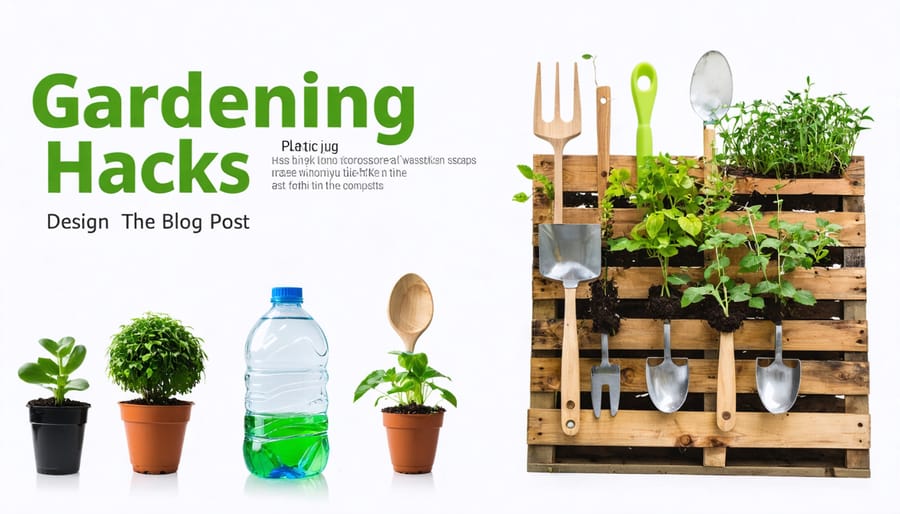
Transform empty plastic milk jugs into self-watering planters by cutting drainage holes and filling them with potting mix – perfect for growing herbs and small vegetables in limited spaces. Mix crushed eggshells directly into planting holes to prevent blossom end rot and boost calcium levels naturally. Repurpose old pallets into vertical garden walls by sanding rough edges, lining with landscape fabric, and securing them firmly to sturdy surfaces. While these DIY solutions can revolutionize your garden setup, be sure to avoid common gardening mistakes to avoid that could compromise your plants’ health. Create organic pest deterrent by steeping crushed garlic and hot peppers in water for 24 hours, then spraying directly on affected plants. Install recycled wine bottles upside-down in soil near deep-rooted plants for consistent, slow-release watering during dry spells.

Smart Soil Solutions That Actually Work

Kitchen Scraps to Garden Gold

Transform your kitchen waste into gardening gold with these smart composting shortcuts. Start by collecting coffee grounds, eggshells, and vegetable scraps in a countertop compost bin for easy access. Speed up decomposition by chopping food waste into smaller pieces before adding it to your pile. Create a “compost tea” by steeping banana peels in water for 48 hours – this nutrient-rich liquid works wonders for plant growth.

Don’t toss those citrus peels! Dry and grind them to create a natural pest deterrent. Used tea bags can be placed directly around plants to slowly release nutrients, while coffee grounds make an excellent addition to soil for acid-loving plants like tomatoes and blueberries.

For apartment dwellers, try vermicomposting with red wiggler worms in a compact bin system. These efficient decomposers turn kitchen scraps into rich castings within weeks. Remember to maintain a balance of green materials (food scraps) and brown materials (dried leaves, paper) for optimal decomposition.

Keep a spray bottle of diluted cooking water from vegetables to give plants an extra nutrient boost. This zero-waste approach helps create a sustainable garden while reducing kitchen waste.

Before and after comparison of kitchen waste becoming garden compost
Split image showing kitchen scraps transforming into rich compost

No-Till Gardening Shortcuts

No-till gardening is a game-changer for busy gardeners who want to maintain healthy soil without the backbreaking work of traditional tilling. Instead of disrupting soil structure, simply layer organic materials directly on top of your existing soil. Start with a thick layer of cardboard or newspaper to suppress weeds, then add alternating layers of compost, leaves, and grass clippings.

For new garden beds, use the “lasagna gardening” method: layer green materials (kitchen scraps, fresh grass clippings) with brown materials (dried leaves, straw) directly over your lawn. Within a few months, you’ll have rich, plantable soil without ever lifting a shovel.

To plant in a no-till bed, simply pull back the mulch layer and create small planting pockets. The undisturbed soil beneath maintains its natural structure, beneficial microorganisms, and earthworm populations. This method not only saves time and energy but also helps retain soil moisture and reduces weed growth.

Keep your no-till garden thriving by adding fresh layers of compost and mulch each season, letting nature do the hard work for you.

Water-Wise Garden Tricks

Self-Watering Solutions

Creating your own self-watering system doesn’t require expensive equipment – just a bit of creativity and some recyclable materials from around your home. While understanding the best water for plants is important, ensuring consistent delivery is equally crucial for healthy growth.

One simple solution involves using plastic bottles as water reservoirs. Cut the bottom off a clean 2-liter bottle, drill small holes in the cap, and bury it cap-down next to your plants. Fill the exposed end with water, and it will slowly seep into the soil as needed.

For container gardens, try the wick method. Thread a piece of cotton rope or fabric strip through the drainage hole of your pot, leaving one end in the soil and the other in a water reservoir below. The wick draws water up to your plants through capillary action.

Old wine bottles make excellent slow-release waterers. Simply fill them with water and quickly flip them into pre-made holes in your garden soil. They’ll gradually release water as the soil dries out.

For raised beds, create a simple irrigation system using PVC pipes with drilled holes. Connect them to a rain barrel for an eco-friendly watering solution that works while you’re away.
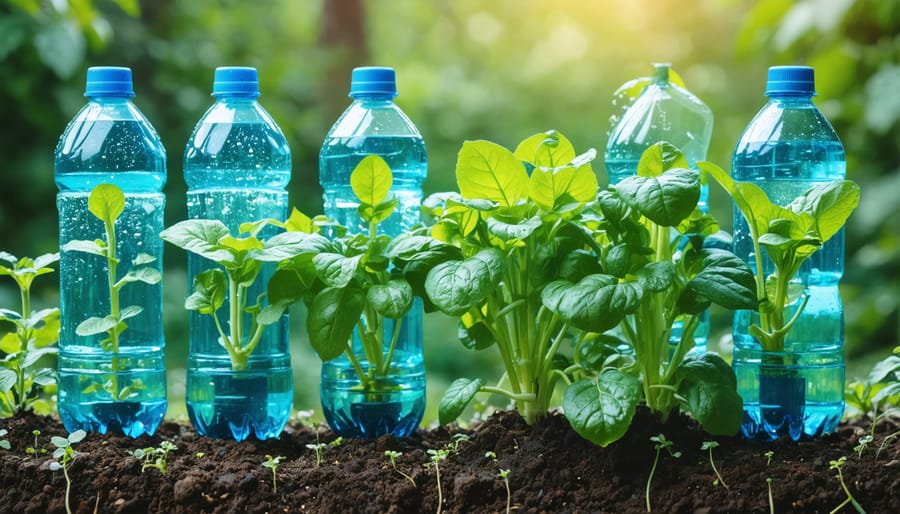
Plastic bottle irrigation system keeping garden plants hydrated
DIY self-watering system made from recycled plastic bottles in a vegetable garden

Moisture-Retention Magic

Keeping your garden hydrated doesn’t have to drain your water bill or your energy. Try layering different organic materials for a moisture-retaining mulch that works like magic. Start with a layer of cardboard or newspaper as a base, then add straw, leaves, or grass clippings. This multi-layer approach creates a natural moisture barrier that keeps your soil damp for longer periods.

Coffee grounds aren’t just for your morning brew – they’re excellent moisture retainers! Spread used grounds around your plants to help retain water and add nutrients to the soil. For container gardens, try mixing water-absorbing crystals or hydrogels into your potting mix. These tiny powerhouses can hold up to 500 times their weight in water.

Here’s a clever trick: bury unglazed terra cotta pots near your thirsty plants. Fill these pots with water, and they’ll slowly release moisture into the surrounding soil. Wine bottles can serve a similar purpose – just flip them upside down in the soil after filling them with water.

For raised beds, consider adding a layer of rocks or gravel at the bottom before filling with soil. This creates a natural reservoir that helps regulate moisture levels. Remember to water deeply but less frequently to encourage deeper root growth and better drought resistance.

Plant Protection Made Easy

DIY Pest Deterrents

Keep unwanted garden visitors at bay with these eco-friendly natural pest control methods using common household items. Create a powerful deterrent spray by steeping crushed garlic and hot peppers in water for 24 hours, then spraying it around plant bases to repel various insects and small mammals.

Coffee grounds aren’t just for your morning brew – scatter them around your plants to deter slugs and snails while adding nutrients to your soil. For aphid control, mix one tablespoon of dish soap with a quart of water and spray affected plants. The solution breaks down the insects’ protective coating without harming your vegetables.

Plant companion flowers like marigolds and nasturtiums throughout your garden – they naturally repel harmful insects while attracting beneficial pollinators. Create protective barriers using eggshells around tender seedlings to prevent slug damage and add calcium to your soil as they decompose.

For larger pests, try placing reflective items like old CDs or aluminum pie plates near your plants – the light reflection confuses birds and other creatures. A simple mixture of vinegar and water sprayed around garden borders helps keep four-legged visitors away while being safe for your plants.

Remember to reapply these natural solutions after rain and rotate different methods to prevent pests from becoming resistant to any single approach.

Weather Protection Tricks

Protecting your garden from unpredictable weather doesn’t have to be complicated or expensive. One of the simplest tricks is using plastic milk jugs as mini greenhouses – just cut off the bottom, remove the cap, and place them over tender seedlings to shield them from frost and harsh winds.

For larger plants, create instant protection using old bed sheets or lightweight blankets draped over garden stakes or hoops. This temporary coverage works wonders during unexpected cold snaps. Remember to remove the covers during the day to prevent overheating.

Empty plastic soda bottles make excellent plant protectors too. Cut them in half and use the bottom portion as a cloche to protect young plants. The top half can be inverted and stuck into the soil around plants to create a self-watering system during hot spells.

During intense summer heat, use old window screens or shade cloth suspended above plants to provide filtered sunlight. For container gardens, group pots together to create a microclimate that helps retain moisture and protect roots from temperature extremes.

Don’t forget about mulching – a thick layer of straw, leaves, or grass clippings helps regulate soil temperature and moisture levels year-round. For raised beds, attach PVC pipes in hoops and cover with clear plastic to create instant cold frames or rain shelters when needed.

These simple solutions use everyday items to keep your garden thriving through challenging weather conditions while maintaining organic growing practices.

Time-Saving Tools and Techniques

Transform everyday household items into clever gardening solutions with these time-saving tricks. Old plastic milk jugs make perfect watering cans – just punch small holes in the cap and fill with water. Keep your tools organized by mounting an old wooden pallet on your shed wall, creating instant storage slots for rakes, shovels, and other long-handled equipment.

Save time on weeding by laying down newspaper or cardboard as a natural weed barrier before adding mulch. This biodegradable solution keeps weeds at bay while enriching your soil as it decomposes. Turn plastic containers into self-watering planters by cutting small drainage holes near the bottom and adding a water reservoir.

Create instant plant markers using plastic spoons – write plant names with permanent marker on the bowl of the spoon and stick the handle into the soil. For seed starting, empty toilet paper rolls make excellent biodegradable starter pots that can be planted directly into the ground.

Old window blinds cut into strips make perfect plant labels, while wine corks stuck on bamboo skewers create charming garden markers. Use a rubber-coated wire hanger bent into a circle as a flexible plant support for climbing vegetables. For precise seed spacing, create a planting template from cardboard with properly spaced holes – just lay it down and drop seeds through.

These simple hacks not only save money but also reduce waste by repurposing items you already have at home.

Everyday household items transformed into practical gardening tools
Collection of repurposed household items being used as creative gardening tools

These DIY gardening hacks prove that you don’t need expensive equipment or years of experience to create a thriving garden. By repurposing everyday items and embracing natural solutions, you can solve common gardening challenges while staying eco-friendly and budget-conscious. Whether you’re using eggshells for pest control, creating self-watering systems from plastic bottles, or turning kitchen scraps into nutrient-rich compost, these creative solutions make gardening more accessible and enjoyable. Remember, sustainable gardening is about working smarter, not harder. Start with one or two of these hacks and gradually incorporate more as you become comfortable. Your garden – and the environment – will thank you for choosing these natural, cost-effective approaches to growing your own food and beautiful plants.
How Farm-to-Fashion Artisans Are Revolutionizing Local Markets

Posted by darrell on
0
Market Events and Community Engagement
How Farm-to-Fashion Artisans Are Revolutionizing Local Markets

Discover a new dimension of sustainable style among the farmers market treasures, where skilled artisans transform locally sourced materials into wearable art. Beyond organic produce and handcrafted goods, local markets have evolved into vibrant hubs where fashion meets farming, creating a revolutionary approach to ethical clothing production.

Local fiber farmers work directly with designers to produce small-batch collections using wool, cotton, and natural dyes harvested from neighboring fields. These collaborations yield uniquely sustainable pieces that tell the story of their agricultural origins – from sheep-to-shawl scarves to plant-dyed dresses that capture the essence of each season’s harvest.

This growing movement represents more than just fashion; it’s a return to time-honored craftsmanship that supports local agriculture while reducing the environmental impact of our wardrobes. By choosing artisanal fashion, consumers directly invest in their local farming communities while wearing pieces that celebrate the rich connection between field and fabric.

When Fashion Meets Farm-Fresh

Natural Dyes from Local Produce

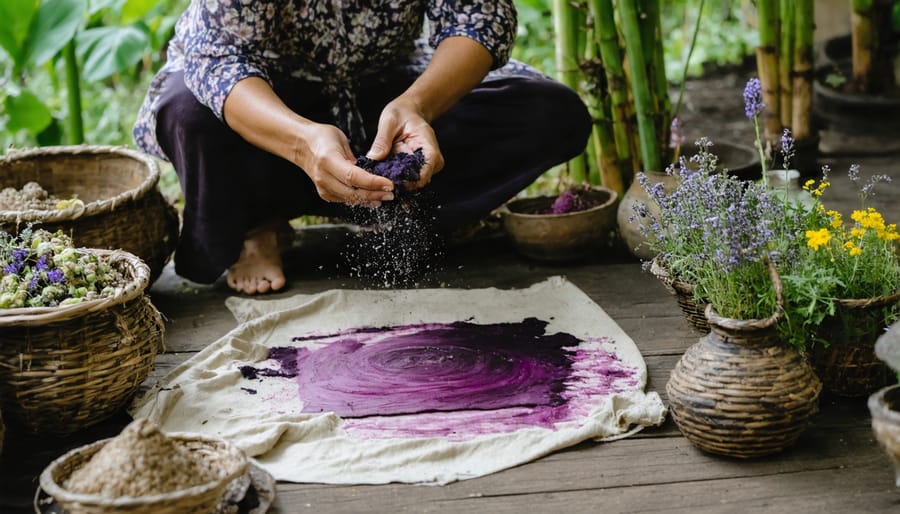
Local artisans are reviving the age-old tradition of natural dyeing using plants and produce sourced directly from nearby farms. This sustainable approach creates unique, earth-toned textiles while supporting local agriculture. Common dye sources include onion skins, which produce rich golden hues; avocado pits and skins for delicate pinks; and black walnut hulls for deep browns.

Many artisans partner with farmers to collect produce that would otherwise go to waste. Beet tops, carrot greens, and purple cabbage leaves are transformed into vibrant dyes, while marigolds and cosmos flowers grown specifically for dyeing yield brilliant yellows and oranges. The process often involves collecting seasonal ingredients throughout the year and experimenting with different mordants to achieve varied colors and ensure colorfastness.

This farm-to-fabric movement has created new opportunities for farmers to diversify their income by growing dye plants alongside food crops. Some artisans even maintain their own dye gardens, cultivating plants like indigo, weld, and madder specifically for their rich pigments. The resulting naturally dyed pieces tell a story of local agriculture and traditional craftsmanship, offering consumers a truly sustainable fashion choice.

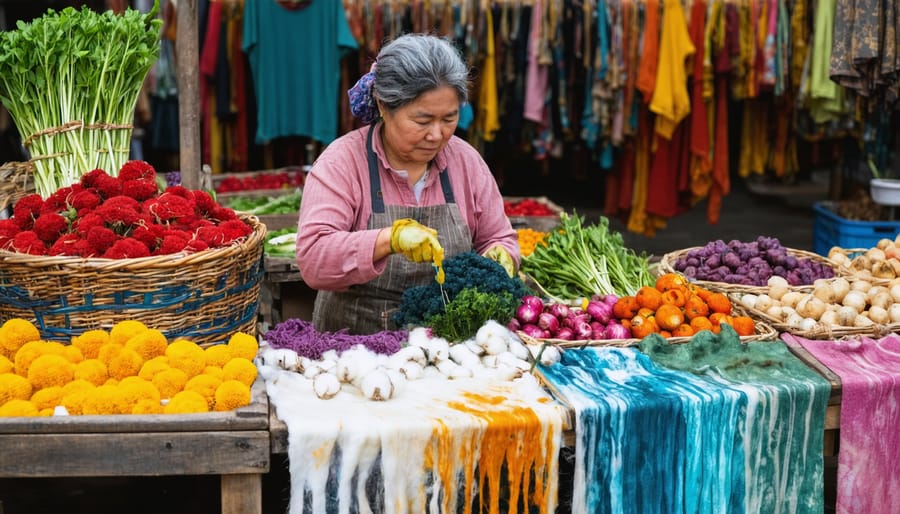
Artisan dipping white fabric into a vat of purple natural dye made from local flowers
Artisan demonstrating natural dyeing process using locally harvested plants and flowers

Farm Fiber to Fashion

The heart of artisanal fashion beats in the fields and pastures where fiber farmers cultivate the raw materials that become stunning garments. Local shepherds, cotton growers, and hemp farmers are increasingly partnering with fashion artisans to create truly sustainable clothing collections. These partnerships ensure complete transparency in the supply chain, from soil to silk.

In many communities, fiber farmers host workshops where fashion designers and artisans learn about different wool grades, cotton varieties, and hemp processing. This direct connection allows artisans to select materials that perfectly match their design vision while supporting local agriculture. Farmers benefit from premium prices for their fibers and often collaborate in the creative process, offering insights about their materials’ unique characteristics.

Success stories abound, like Sarah’s Meadow Farm, where heritage sheep breeds produce specialty wool for local knitwear designers, or Blue Valley Cotton, where organic cotton farmers work directly with indie designers to create limited-edition collections. These partnerships not only preserve traditional farming practices but also inspire innovative approaches to sustainable fashion, creating garments that tell the story of their agricultural origins.

Success Stories from the Market

The Sheep-to-Shawl Movement

A growing movement in artisanal fashion connects sheep farmers directly with textile artists, creating a farm-to-closet pipeline that’s revolutionizing sustainable clothing. Like many local farm success stories, these partnerships are transforming both farming and fashion communities.

In Ontario’s Bruce Peninsula, shepherd Sarah McKenzie works with a collective of five fiber artists who transform her Merino wool into luxurious shawls, sweaters, and accessories. The artists visit the farm regularly, selecting fleeces and learning about the sheep’s diet and care – factors that directly influence wool quality.

Similar initiatives are sprouting across Canada, with farmers offering workshops where consumers can meet the sheep, learn about sustainable wool processing, and even try their hand at spinning. This transparency allows buyers to understand the true value of ethically produced clothing.

The movement also helps preserve heritage sheep breeds. Vancouver Island’s Coast Salish wool producers, for instance, maintain flocks of rare sheep varieties specifically suited to local conditions, ensuring these ancient breeds continue to thrive while producing distinctive textiles.

For consumers interested in supporting this movement, many shepherd-artist partnerships welcome visitors during shearing season and offer fiber festivals where people can purchase directly from both farmers and artisans.

Farmer and artisan inspecting quality of raw wool at a small sheep farm
Local sheep farmer and textile artisan examining freshly sheared wool together

Botanical Print Pioneers

In the heart of rural communities, innovative artisans are revolutionizing fashion by creating stunning botanical prints using plants sourced directly from local farms. Sarah Chen, a textile artist in Vermont, collaborates with organic farmers to harvest marigolds, goldenrod, and indigo, transforming these natural dyes into vibrant patterns on sustainably sourced fabrics.

In California’s wine country, Maria Rodriguez partners with vineyard owners to collect grape leaves and stems that would otherwise go to waste. These materials create intricate impressions on silk scarves and cotton wraps, each piece telling a unique story of the region’s agricultural heritage.

The Pacific Northwest has become a hub for mushroom-based textile art, where artisans like James Foster work with forest farmers to gather non-edible fungi. These organisms create unexpected patterns and earthy hues that can’t be replicated by synthetic processes.

These partnerships benefit both farmers and artists. Farmers gain additional revenue streams from plants typically considered byproducts, while artisans access fresh, local materials for their creations. The resulting pieces often come with tags identifying the farm source and harvest date, creating a transparent chain from soil to wardrobe.

Many of these artisans also offer workshops, teaching sustainable printing techniques and helping participants understand the connection between local agriculture and fashion innovation.

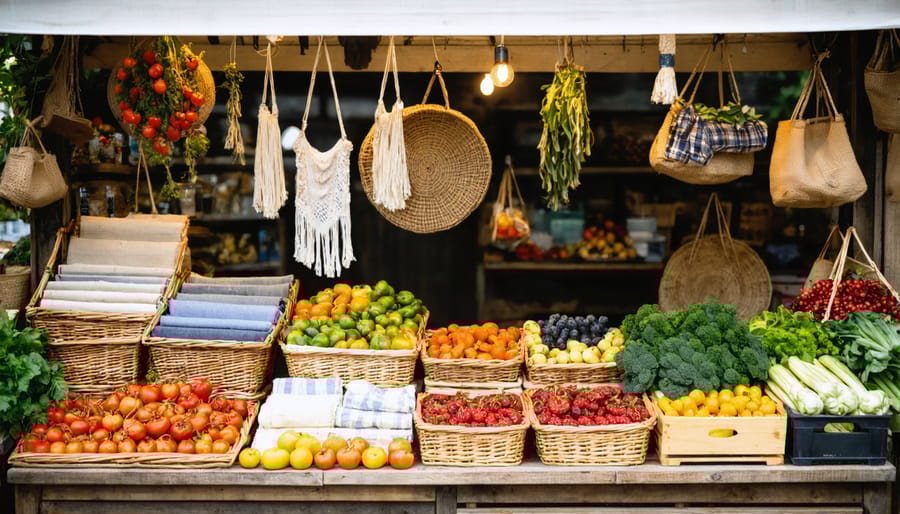
Market display featuring naturally dyed scarves and clothing next to organic vegetables
Vibrant farmers market stall displaying handmade textile products alongside fresh produce

Building Sustainable Fashion Communities

Economic Impact

The economic impact of artisanal fashion extends far beyond beautiful handcrafted garments. By fostering connections between farmers and artisans, this sustainable approach to fashion creates multiple income streams within local communities. Farmers benefit by selling both food crops and fiber crops like cotton, hemp, and flax, while artisans transform these raw materials into unique fashion pieces.

This collaborative model is proving essential in building thriving community markets where both groups can showcase their products. Farmers typically see a 25-30% increase in revenue when diversifying into fiber crops for artisanal fashion, while local artisans report average earnings of $45,000-60,000 annually from their crafted pieces.

The ripple effect touches other local businesses too. Yarn shops, natural dye producers, and textile processors all benefit from this growing sector. Additionally, tourism increases as fashion-conscious consumers seek authentic, locally-made pieces, bringing additional revenue to rural communities. This economic model has proven particularly valuable for small-scale farmers looking to maximize their land use while supporting sustainable fashion initiatives.

Environmental Benefits

Artisanal fashion production offers significant environmental advantages compared to mass-manufactured clothing. When artisans create garments locally, they dramatically reduce the carbon footprint associated with long-distance shipping and transportation. A single locally-made dress can save up to 65% in carbon emissions compared to its factory-produced counterpart.

Local fashion producers typically work in smaller batches, allowing them to minimize waste and utilize resources more efficiently. Many artisans source their materials from nearby farms and producers, creating a closed-loop system that supports both agricultural and fashion sustainability. For example, some artisans work directly with local sheep farmers to source wool, while others collaborate with organic cotton growers in their region.

The smaller scale of production also enables artisans to implement eco-friendly practices more easily. Many use natural dyes from local plants, practice water conservation, and employ zero-waste cutting techniques. These makers often repair and upcycle existing garments too, extending their lifecycle and keeping textiles out of landfills.

By choosing artisanal fashion, consumers support environmentally conscious production methods while reducing their personal carbon footprint. The direct connection between maker and wearer also encourages more mindful consumption, as people tend to value and care for handcrafted pieces longer than mass-produced alternatives.

Getting Involved

Getting involved in artisanal fashion at farmers markets is easier than you might think. Start by visiting your local farmers market regularly and building relationships with vendors who create handmade clothing, accessories, and textile products. Many artisans are happy to share their stories and explain their creative process, giving you insight into the sustainable practices behind their work.

Look for vendors who use locally sourced materials, such as wool from nearby sheep farms or natural dyes made from regional plants. These artisans often collaborate directly with farmers, creating a beautiful connection between agriculture and fashion. Ask about their sourcing methods and the stories behind their materials – you’ll often discover fascinating partnerships that support both local agriculture and sustainable fashion.

Consider joining a textile CSA (Community Supported Agriculture) program if available in your area. Similar to traditional produce CSAs, these programs allow you to support local fiber farmers and artisans while receiving seasonal handmade items or raw materials for your own projects.

To deepen your involvement, watch for workshops and demonstrations at the market. Many artisans offer classes in natural dyeing, basic weaving, or clothing repair. These hands-on experiences help you appreciate the craft while developing sustainable fashion skills.

Remember to spread the word about your favorite artisans on social media and within your community. Your support helps these small businesses thrive and encourages more local makers to join the movement.

The farm-to-fashion movement represents a promising shift towards more sustainable and community-centered clothing production. By connecting local farmers, artisans, and conscious consumers, this approach is revolutionizing how we think about our wardrobe choices. Success stories from small-scale fiber farmers and local designers show that sustainable fashion can thrive while supporting regional agriculture. Looking ahead, we can expect to see more collaborations between farmers markets and fashion artisans, increased transparency in textile sourcing, and growing consumer interest in clothing that tells a story of local craftsmanship. As this movement continues to gain momentum, it creates opportunities for farmers to diversify their crops, artisans to access quality materials, and communities to strengthen their local economies through sustainable fashion initiatives.