Monthly Archives

47 Articles

How CSA Farms Are Breathing New Life Into Rural Communities

Posted by darrell on
0
CSA Fundamentals and Benefits
How CSA Farms Are Breathing New Life Into Rural Communities

Rural communities are experiencing a remarkable renaissance through innovative economic strategies and grassroots initiatives. Community Supported Agriculture programs have emerged as powerful catalysts, reconnecting local farmers with consumers while strengthening regional food systems. By combining traditional agricultural wisdom with modern entrepreneurial approaches, rural areas are discovering fresh pathways to prosperity.

This revival isn’t just about agriculture – it’s a holistic transformation encompassing technology, tourism, and cultural preservation. Small towns are leveraging their unique assets, from historic architecture to natural landscapes, creating sustainable economic opportunities while maintaining their authentic character. Through strategic partnerships between local governments, businesses, and residents, rural communities are building resilient economies that celebrate their heritage while embracing innovation.

The impact extends beyond economic metrics. Young families are returning, drawn by affordable housing, quality of life, and emerging remote work opportunities. Local artisans and craftspeople are finding new markets through digital platforms, while sustainable farming practices are protecting precious environmental resources for future generations. This comprehensive approach to rural development is creating vibrant, self-sustaining communities that honor their past while confidently stepping into the future.

Bird's eye view of a thriving CSA farm showing diverse agricultural plots and community spaces
Aerial view of a diverse CSA farm with various crop sections, greenhouses, and community gathering area

CSA: The Rural Economic Multiplier Effect

Direct Economic Benefits

Rural revitalization brings immediate and substantial financial benefits to farming communities. The economic benefits of CSA farming create a ripple effect throughout local economies, starting with stable income streams for farmers. When small farms thrive, they typically create 3-5 new jobs per operation, from field workers to market managers and delivery drivers.

Take Sarah Miller’s farm in Vermont, for example. After implementing a CSA program, her annual income stabilized at $75,000, compared to the previous fluctuating $35,000-45,000. This predictable income allowed her to hire two full-time employees and three seasonal workers from the local community.

Direct-to-consumer sales eliminate middleman costs, allowing farmers to keep 80-90% of food dollars, compared to just 17.6% through traditional distribution channels. This enhanced profitability enables farmers to reinvest in their operations, upgrade equipment, and expand their offerings.

Local businesses also benefit from increased foot traffic as CSA members visit farms for pickup days. Many communities report a 25-30% boost in revenue for nearby shops and restaurants on these days. Additionally, farmers often collaborate with other local producers, creating value-added products that further boost regional economic activity.

The stability provided by advance payments through CSA memberships helps farmers better plan their seasons and manage cash flow, reducing the need for expensive operational loans.

Community-Wide Economic Impact

When rural communities embrace revitalization initiatives, the economic benefits ripple far beyond individual farms and businesses. Local spending tends to multiply as money circulates within the community rather than flowing to distant corporations. For every dollar spent at a local business, approximately 67 cents stays within the local economy, compared to just 43 cents from chain stores.

Success stories like the transformation of Millbrook, New York, demonstrate how agricultural initiatives can spark broader economic growth. After establishing a weekly farmers’ market and supporting local food businesses, the town saw a 40% increase in downtown foot traffic and twelve new businesses opening within two years.

Rural revitalization often creates a positive feedback loop of economic growth. As farms and local businesses thrive, they create jobs and attract new residents. These newcomers, in turn, support existing businesses and often start their own ventures. Many communities report increased property values and tax revenues, which fund better infrastructure and public services.

The impact extends to tourism as well. Rural communities with strong local food scenes and vibrant main streets attract visitors who contribute to the local economy through dining, shopping, and participating in agritourism activities. Some towns have seen tourism revenue increase by 25% or more after implementing comprehensive revitalization programs focused on local agriculture and small business development.

Flow chart illustrating how CSA money circulates through a rural economy
Infographic showing the economic impact flow of a CSA program in a rural community

Building Sustainable Rural Infrastructure

Physical Infrastructure Development

The backbone of rural revitalization lies in modernizing and enhancing physical infrastructure to support agricultural operations and community development. Many successful rural communities have invested in state-of-the-art storage facilities, complete with climate-controlled environments that extend the shelf life of fresh produce and reduce post-harvest losses.

Distribution networks have seen significant improvements through the establishment of efficient transportation hubs and cold chain facilities. For example, the Smith Valley Cooperative in Idaho transformed their operation by installing solar-powered cooling stations along their delivery routes, ensuring produce stays fresh from farm to market.

Local farmers’ markets have evolved beyond simple stands into vibrant community spaces. Many now feature permanent structures with proper lighting, restroom facilities, and weatherproof covering, allowing year-round operations. The Mountain View Market in Colorado demonstrates how modern amenities can attract both vendors and customers, even during off-peak seasons.

Irrigation infrastructure has also received attention, with communities implementing water-efficient systems and smart monitoring technology. Drip irrigation networks and automated weather-responsive watering systems help farmers optimize water usage while improving crop yields.

Road networks connecting farms to markets have been upgraded to all-weather standards, ensuring reliable transportation regardless of seasonal conditions. Additionally, many communities have invested in processing facilities that allow farmers to add value to their products through washing, packaging, and basic processing operations, creating new revenue streams and employment opportunities for local residents.

Social Infrastructure Growth

The heart of rural revitalization lies in strengthening social connections and building robust community networks. When neighbors know and support each other, rural areas thrive through shared resources, knowledge, and experiences. Community gardens, farmers’ markets, and local food cooperatives serve as natural gathering spaces where residents can connect, share gardening tips, and exchange farming wisdom passed down through generations.

Knowledge-sharing initiatives, such as mentorship programs between experienced farmers and newcomers, help preserve traditional agricultural practices while incorporating modern sustainable techniques. Regular community workshops and skill-sharing events enable residents to learn everything from seed saving to food preservation, creating a more resilient and self-sufficient community.

Local libraries and community centers are being reimagined as rural innovation hubs, offering internet access, educational resources, and meeting spaces for agricultural groups and community organizations. These spaces foster collaboration and provide essential services that keep rural communities connected to broader opportunities.

Support networks extend beyond just farming knowledge. Many rural communities are establishing tool-sharing programs, community seed banks, and equipment cooperatives, making resources more accessible to all residents. Social media groups and online forums help connect isolated farmers, while regular community potlucks and harvest celebrations strengthen personal bonds.

By investing in these social infrastructure elements, rural communities create a foundation for sustainable growth, ensuring that knowledge, resources, and support are available to current and future generations of farmers and residents.

Local farmers market with CSA members picking up fresh produce and talking to farmers
Farmers market scene showing CSA members collecting their shares while interacting with farmers

Success Stories: Rural Communities Transformed

The transformative power of CSA programs becomes evident through numerous successful community transformations across rural America. Take Cedar Grove, a small farming town in Wisconsin that revitalized its economy through an innovative multi-farm CSA initiative. Five years ago, local farmers joined forces to create a cooperative that now serves over 500 families and has sparked the opening of three farm-to-table restaurants in their downtown area.

In Millbrook, New York, the Sweet Valley CSA program didn’t just save family farms – it created a ripple effect throughout the entire community. What started with 12 farming families has grown into a network of 30 producers, supporting local artisans and food entrepreneurs. The program generated 45 new jobs and inspired a weekly farmers’ market that draws visitors from neighboring counties.

The story of Hope Springs, Colorado, showcases how CSA programs can bridge generational gaps. Their youth-focused farming initiative pairs experienced farmers with local high school students, creating mentorship opportunities while ensuring agricultural knowledge passes to the next generation. The program has retained 80% of its young participants in agriculture-related careers, effectively stopping the youth exodus that once threatened the town’s future.

Perhaps most inspiring is the transformation of Blue River Valley, Oregon, where a CSA program helped combat food insecurity while boosting the local economy. Their innovative sliding-scale payment system makes fresh produce accessible to all income levels, while their food processing facility allows farmers to create value-added products during off-seasons. The initiative has reduced local unemployment by 15% and increased average household income by $7,000 annually.

These communities prove that CSA programs can do more than provide fresh produce – they can rebuild local economies, create meaningful employment, and restore pride in rural living. Their success stories serve as blueprints for other communities seeking to revitalize their agricultural heritage while building sustainable futures.

Starting Your Community’s CSA Revolution

Initial Planning and Resources

Successful rural revitalization begins with thorough assessment and strategic planning. Start by conducting a comprehensive community survey to identify existing resources, challenges, and opportunities. This should include evaluating available land, infrastructure, workforce skills, and potential market demand for local products and services.

Create an inventory of local assets, including abandoned buildings that could be repurposed, farmland that could be rehabilitated, and natural resources that could support tourism or sustainable industries. Connect with local government officials, business owners, and community leaders to understand current initiatives and potential collaboration opportunities.

Funding is crucial for revitalization efforts. Research available grants from federal and state agencies, particularly those focused on rural development, agriculture, and small business support. Consider creative financing options like community investment cooperatives or crowdfunding platforms that allow local residents to invest in their community’s future.

Build a network of support by reaching out to successful rural communities that have undergone similar transformations. Their experiences can provide valuable insights and help avoid common pitfalls. Establish partnerships with nearby educational institutions, which can offer technical expertise and training programs.

Remember to engage the community throughout the planning process. Host town halls and workshops to gather input and build consensus around revitalization goals. This participatory approach ensures local buy-in and helps create a shared vision for the community’s future that reflects residents’ needs and aspirations.

Building Community Support

Successful rural revitalization hinges on building community support and fostering local engagement. Start by organizing community forums where residents can share their vision for the area’s future. These gatherings create opportunities for meaningful dialogue and help identify shared priorities.

Form a local action committee comprising diverse stakeholders – farmers, business owners, educators, and community leaders. This group can spearhead initiatives and maintain momentum throughout the revitalization process. Consider launching a “Local Champions” program where respected community members advocate for development projects and inspire others to get involved.

Utilize social media and local newspapers to share success stories and progress updates. Create a dedicated website or newsletter to keep community members informed and engaged. Host regular events like farmers’ markets, craft fairs, or community festivals that celebrate local culture and showcase revitalization efforts.

Partner with local schools and youth organizations to involve younger generations. This could include educational programs about agriculture, entrepreneurship workshops, or community service projects. When young people feel invested in their community’s future, they’re more likely to stay and contribute to its growth.

Remember that transparency and regular communication are key to maintaining trust and support. Celebrate small wins along the way and acknowledge the contributions of community members who help drive positive change.

Community Supported Agriculture programs represent a powerful catalyst for rural revitalization, offering a sustainable path forward for both farming communities and local economies. Through CSA partnerships, small-scale farmers can secure reliable income streams while building meaningful connections with consumers who value fresh, locally grown produce.

The success stories we’ve explored demonstrate how CSA programs do more than just provide food – they create jobs, preserve agricultural heritage, and foster a sense of community pride. From family farms finding new life through direct-to-consumer relationships to young entrepreneurs discovering viable careers in agriculture, these programs are breathing new vitality into rural areas.

As we look to the future of rural communities, CSA programs offer a practical blueprint for sustainable development. By supporting local farmers, consumers become active participants in rural revitalization efforts. Each CSA subscription represents an investment in local food security, environmental stewardship, and community resilience.

You can be part of this positive change. Consider joining a CSA program in your area, or if you’re a farmer, explore starting your own. Share your experiences with others, volunteer at local farms, or advocate for policies that support small-scale agriculture. Together, we can build a stronger, more sustainable future for rural communities while ensuring access to fresh, healthy food for generations to come.

The time to act is now – rural revitalization through CSA programs offers a promising path forward, and everyone has a role to play in this transformation.

How the National Agroforestry Center Makes Your CSA Farm More Productive

Posted by darrell on
0
Environmental Sustainability
How the National Agroforestry Center Makes Your CSA Farm More Productive

The National Agroforestry Center (NAC) stands at the forefront of revolutionizing American agriculture by blending traditional farming with sustainable forestry practices. Established as a partnership between the U.S. Forest Service and Natural Resources Conservation Service, NAC empowers farmers, ranchers, and landowners to create resilient agricultural landscapes that benefit both people and the environment. Through innovative research, practical training programs, and hands-on technical assistance, NAC helps transform conventional farmland into dynamic ecosystems where trees, crops, and livestock work together in harmony. This integrated approach not only enhances soil health and biodiversity but also creates additional income streams for farmers while combating climate change. Whether you’re a seasoned farmer looking to diversify your operation or a newcomer interested in sustainable agriculture, NAC provides the expertise, resources, and support needed to successfully implement agroforestry practices across America’s working lands.

Essential Resources for CSA Farmers

Technical Support and Training

The National Agroforestry Center offers comprehensive support through hands-on workshops, online courses, and personalized consultations. Their expert team guides farmers and landowners through every step of implementing agroforestry practices, from initial planning to long-term maintenance.

Regular training sessions cover essential topics like tree species selection, spacing optimization, and integrating livestock with forest farming. These programs are designed to accommodate both beginners and experienced practitioners, with flexible learning options including virtual webinars and on-site demonstrations at partner farms.

The center’s technical assistance program pairs participants with experienced agroforestry specialists who provide customized advice for specific land conditions and goals. They also maintain an extensive resource library featuring practical guides, case studies, and research findings that farmers can access anytime.

For hands-on learners, the center organizes field days where participants can observe successful agroforestry systems in action and network with other practitioners. These events often feature farmer-to-farmer learning opportunities, creating valuable connections within the agroforestry community.

Special workshops focusing on grant writing and business planning help farmers access funding opportunities and develop sustainable business models for their agroforestry ventures.

Agricultural specialist demonstrating tree pruning techniques to a group of CSA farmers
National Agroforestry Center specialist providing hands-on training to farmers in the field

Research and Development Tools

The National Agroforestry Center offers a wealth of practical tools and resources to help farmers succeed in their agroforestry ventures. Their online database includes detailed soil mapping tools, climate modeling software, and tree-crop compatibility guides that take the guesswork out of planning your agroforestry system.

Farmers can access free design templates for various agroforestry layouts, including alley cropping and silvopasture arrangements. The center’s mobile apps help track plant growth, monitor soil health, and schedule maintenance tasks throughout the growing season.

For research purposes, the center maintains an extensive collection of case studies, scientific publications, and field trial data. Their specialized measurement tools, like the crown density analyzer and soil moisture sensors, help farmers collect accurate data about their operations.

The center also provides practical field guides, worksheets, and calculators that help farmers estimate costs, project yields, and plan for long-term sustainability. These user-friendly resources are regularly updated based on the latest research findings and farmer feedback, ensuring they remain relevant and practical for real-world applications.

Implementing Agroforestry in Your CSA Operation

Aerial photograph of an integrated agroforestry farm with alternating rows of trees and crops
Aerial view of a well-designed agroforestry system showing rows of trees integrated with vegetable crops

Tree-Crop Integration Strategies

The National Agroforestry Center promotes several effective strategies for combining trees with traditional crops, enhancing biodiversity in CSA farming while maximizing land use. One popular method is alley cropping, where rows of trees or shrubs are planted with wide spacing between them, creating natural alleys for growing vegetables, grains, or herbs. This approach provides shade management and wind protection while allowing sufficient sunlight for crop growth.

Silvopasture combines trees with livestock grazing areas and forage production. Farmers can plant fruit or nut trees that provide additional income while offering shelter for animals. The trees’ deep roots help prevent soil erosion and improve water retention, benefiting the entire system.

Riparian forest buffers are particularly effective along waterways, where trees and shrubs protect water quality while providing habitat for beneficial insects and birds. These buffers can include profitable species like elderberries or hazelnuts, turning potential problem areas into productive zones.

Forest farming involves growing shade-tolerant crops like mushrooms, medicinal herbs, and ornamental plants under an existing tree canopy. This method is perfect for farmers looking to diversify their income streams while maintaining woodland areas.

These integration strategies can be mixed and matched based on specific farm needs, climate conditions, and market opportunities, creating resilient agricultural systems that benefit both farmers and the environment.

Sustainable Income Opportunities

Agroforestry opens up multiple revenue streams that go beyond traditional farming, creating a more resilient and sustainable income model. By integrating trees and shrubs with crops and livestock, farmers can tap into diverse market opportunities throughout the year. Just like the environmental benefits of CSA farming, these income opportunities help create a more sustainable future for agriculture.

Forest-based products like nuts, fruits, and maple syrup provide seasonal income boosts, while timber and specialty woods offer long-term investment returns. Many farmers have found success selling medicinal herbs and mushrooms grown in the forest understory, catering to the growing natural wellness market. Some even generate additional revenue through agritourism, offering educational tours and workshops about their agroforestry systems.

Consider Sarah’s story from Minnesota, who transformed her conventional farm into an agroforestry system. She now earns income from hazelnuts, elderberries, and shiitake mushrooms, while her pasture-raised chickens benefit from the natural shelter. Her diverse product line has attracted local restaurants and health food stores, creating stable year-round income streams.

The beauty of agroforestry lies in its flexibility – farmers can start small and gradually expand their operations based on market demand and available resources. Many successful practitioners combine direct-to-consumer sales with wholesale partnerships, creating a robust business model that supports their families while nurturing the land.

Success Stories from CSA Farms

Small-Scale Success

Green Valley Farm, a small 15-acre CSA operation in Vermont, stands as a shining example of successful agroforestry implementation. Owner Sarah Martinez transformed her conventional vegetable farm into a thriving food forest system over just five years, with guidance from the National Agroforestry Center.

Martinez strategically integrated fruit and nut trees along field borders, creating windbreaks that protect her vegetable crops while providing additional income streams. She planted pawpaw, persimmon, and hazelnut trees, which now contribute to her CSA shares and farmers’ market offerings.

The farm’s most innovative feature is its silvopasture system, where pastured chickens roam beneath young apple and pear trees. This arrangement provides natural pest control, fertilization, and multiple harvest opportunities from the same plot of land.

Since implementing these changes, Green Valley Farm has seen a 40% increase in overall productivity and a 30% reduction in irrigation needs. The farm now serves 120 CSA members, up from 75 before the transition, and has become a local hub for agroforestry education.

“The diversity we’ve created doesn’t just benefit our bottom line,” says Martinez. “It’s created a more resilient system that better handles climate extremes while supporting local wildlife.”

Side-by-side comparison showing a CSA farm's transition from traditional farming to agroforestry over 5 years
Before and after comparison of a CSA farm’s transformation through agroforestry implementation

Scaling Up with Agroforestry

Green Valley Farm’s journey from a traditional CSA to a thriving agroforestry operation showcases the potential of scaling up sustainable farming practices. Owner Sarah Martinez transformed her 50-acre property by strategically incorporating fruit and nut trees alongside vegetable rows, creating a dynamic food forest that produces year-round.

The farm now features alternating rows of apple, pear, and pecan trees with seasonal vegetables growing in between. This thoughtful design maximizes space while providing natural shade and wind protection for sensitive crops. The tree rows also serve as habitat corridors for beneficial insects and birds, reducing pest management costs by 40%.

Martinez credits the National Agroforestry Center’s technical assistance program for helping develop her implementation plan. “Their expertise helped us avoid common pitfalls and optimize our layout for both immediate production and long-term sustainability,” she explains.

The results speak for themselves: Green Valley Farm now serves 200 CSA members, offers value-added products like fruit preserves and nuts, and has become a model for sustainable agriculture in their region. Their success demonstrates how agroforestry principles can be adapted to enhance existing CSA operations while building resilience and diversifying income streams.

Getting Started with NAC Resources

Getting started with the National Agroforestry Center (NAC) is straightforward and rewarding for anyone interested in integrating trees with crops or livestock. Begin by visiting the NAC’s official website and registering for their free newsletter, which delivers seasonal updates and practical tips directly to your inbox.

To access NAC’s extensive resource library, create a free account on their portal. This gives you immediate access to downloadable guides, research papers, and case studies about successful agroforestry implementations. Their technical guides are particularly valuable for newcomers, offering step-by-step instructions for various sustainable agriculture initiatives.

Don’t miss their webinar series, typically held monthly, where experts share insights and answer questions live. These sessions are recorded and archived for later viewing. For hands-on support, connect with your regional NAC coordinator, who can help assess your land’s potential and develop a customized agroforestry plan.

Take advantage of NAC’s cost-share programs, which can help offset initial implementation costs. Remember to join their online community forum, where you can connect with other farmers, share experiences, and get practical advice from those who’ve successfully integrated agroforestry practices into their operations.

For in-person learning, check their events calendar for workshops and field days in your area, where you can see agroforestry systems in action and network with experienced practitioners.

The National Agroforestry Center offers a wealth of opportunities for farmers, landowners, and environmental enthusiasts to create more sustainable and productive agricultural systems. By combining trees with crops and livestock, agroforestry practices enhance soil health, increase biodiversity, and provide additional income streams through diversified products. Whether you’re a seasoned farmer or just starting out, the Center’s resources, technical assistance, and educational programs can help you implement these earth-friendly practices on your land. Take the first step today by exploring their educational materials, connecting with local experts, or attending a workshop. Together, we can build a more resilient and sustainable future for agriculture while protecting our natural resources for generations to come.

These Garden Hacks Save Hours (And Your Back)

Posted by darrell on
0
Home and Urban Gardening
These Garden Hacks Save Hours (And Your Back)

Transform empty plastic milk jugs into self-watering planters by cutting drainage holes and filling them with potting mix – perfect for growing herbs and small vegetables in limited spaces. Mix crushed eggshells directly into planting holes to prevent blossom end rot and boost calcium levels naturally. Repurpose old pallets into vertical garden walls by sanding rough edges, lining with landscape fabric, and securing them firmly to sturdy surfaces. While these DIY solutions can revolutionize your garden setup, be sure to avoid common gardening mistakes to avoid that could compromise your plants’ health. Create organic pest deterrent by steeping crushed garlic and hot peppers in water for 24 hours, then spraying directly on affected plants. Install recycled wine bottles upside-down in soil near deep-rooted plants for consistent, slow-release watering during dry spells.

Smart Soil Solutions That Actually Work

Kitchen Scraps to Garden Gold

Transform your kitchen waste into gardening gold with these smart composting shortcuts. Start by collecting coffee grounds, eggshells, and vegetable scraps in a countertop compost bin for easy access. Speed up decomposition by chopping food waste into smaller pieces before adding it to your pile. Create a “compost tea” by steeping banana peels in water for 48 hours – this nutrient-rich liquid works wonders for plant growth.

Don’t toss those citrus peels! Dry and grind them to create a natural pest deterrent. Used tea bags can be placed directly around plants to slowly release nutrients, while coffee grounds make an excellent addition to soil for acid-loving plants like tomatoes and blueberries.

For apartment dwellers, try vermicomposting with red wiggler worms in a compact bin system. These efficient decomposers turn kitchen scraps into rich castings within weeks. Remember to maintain a balance of green materials (food scraps) and brown materials (dried leaves, paper) for optimal decomposition.

Keep a spray bottle of diluted cooking water from vegetables to give plants an extra nutrient boost. This zero-waste approach helps create a sustainable garden while reducing kitchen waste.

Before and after comparison of kitchen waste becoming garden compost
Split image showing kitchen scraps transforming into rich compost

No-Till Gardening Shortcuts

No-till gardening is a game-changer for busy gardeners who want to maintain healthy soil without the backbreaking work of traditional tilling. Instead of disrupting soil structure, simply layer organic materials directly on top of your existing soil. Start with a thick layer of cardboard or newspaper to suppress weeds, then add alternating layers of compost, leaves, and grass clippings.

For new garden beds, use the “lasagna gardening” method: layer green materials (kitchen scraps, fresh grass clippings) with brown materials (dried leaves, straw) directly over your lawn. Within a few months, you’ll have rich, plantable soil without ever lifting a shovel.

To plant in a no-till bed, simply pull back the mulch layer and create small planting pockets. The undisturbed soil beneath maintains its natural structure, beneficial microorganisms, and earthworm populations. This method not only saves time and energy but also helps retain soil moisture and reduces weed growth.

Keep your no-till garden thriving by adding fresh layers of compost and mulch each season, letting nature do the hard work for you.

Water-Wise Garden Tricks

Self-Watering Solutions

Creating your own self-watering system doesn’t require expensive equipment – just a bit of creativity and some recyclable materials from around your home. While understanding the best water for plants is important, ensuring consistent delivery is equally crucial for healthy growth.

One simple solution involves using plastic bottles as water reservoirs. Cut the bottom off a clean 2-liter bottle, drill small holes in the cap, and bury it cap-down next to your plants. Fill the exposed end with water, and it will slowly seep into the soil as needed.

For container gardens, try the wick method. Thread a piece of cotton rope or fabric strip through the drainage hole of your pot, leaving one end in the soil and the other in a water reservoir below. The wick draws water up to your plants through capillary action.

Old wine bottles make excellent slow-release waterers. Simply fill them with water and quickly flip them into pre-made holes in your garden soil. They’ll gradually release water as the soil dries out.

For raised beds, create a simple irrigation system using PVC pipes with drilled holes. Connect them to a rain barrel for an eco-friendly watering solution that works while you’re away.

Plastic bottle irrigation system keeping garden plants hydrated
DIY self-watering system made from recycled plastic bottles in a vegetable garden

Moisture-Retention Magic

Keeping your garden hydrated doesn’t have to drain your water bill or your energy. Try layering different organic materials for a moisture-retaining mulch that works like magic. Start with a layer of cardboard or newspaper as a base, then add straw, leaves, or grass clippings. This multi-layer approach creates a natural moisture barrier that keeps your soil damp for longer periods.

Coffee grounds aren’t just for your morning brew – they’re excellent moisture retainers! Spread used grounds around your plants to help retain water and add nutrients to the soil. For container gardens, try mixing water-absorbing crystals or hydrogels into your potting mix. These tiny powerhouses can hold up to 500 times their weight in water.

Here’s a clever trick: bury unglazed terra cotta pots near your thirsty plants. Fill these pots with water, and they’ll slowly release moisture into the surrounding soil. Wine bottles can serve a similar purpose – just flip them upside down in the soil after filling them with water.

For raised beds, consider adding a layer of rocks or gravel at the bottom before filling with soil. This creates a natural reservoir that helps regulate moisture levels. Remember to water deeply but less frequently to encourage deeper root growth and better drought resistance.

Plant Protection Made Easy

DIY Pest Deterrents

Keep unwanted garden visitors at bay with these eco-friendly natural pest control methods using common household items. Create a powerful deterrent spray by steeping crushed garlic and hot peppers in water for 24 hours, then spraying it around plant bases to repel various insects and small mammals.

Coffee grounds aren’t just for your morning brew – scatter them around your plants to deter slugs and snails while adding nutrients to your soil. For aphid control, mix one tablespoon of dish soap with a quart of water and spray affected plants. The solution breaks down the insects’ protective coating without harming your vegetables.

Plant companion flowers like marigolds and nasturtiums throughout your garden – they naturally repel harmful insects while attracting beneficial pollinators. Create protective barriers using eggshells around tender seedlings to prevent slug damage and add calcium to your soil as they decompose.

For larger pests, try placing reflective items like old CDs or aluminum pie plates near your plants – the light reflection confuses birds and other creatures. A simple mixture of vinegar and water sprayed around garden borders helps keep four-legged visitors away while being safe for your plants.

Remember to reapply these natural solutions after rain and rotate different methods to prevent pests from becoming resistant to any single approach.

Weather Protection Tricks

Protecting your garden from unpredictable weather doesn’t have to be complicated or expensive. One of the simplest tricks is using plastic milk jugs as mini greenhouses – just cut off the bottom, remove the cap, and place them over tender seedlings to shield them from frost and harsh winds.

For larger plants, create instant protection using old bed sheets or lightweight blankets draped over garden stakes or hoops. This temporary coverage works wonders during unexpected cold snaps. Remember to remove the covers during the day to prevent overheating.

Empty plastic soda bottles make excellent plant protectors too. Cut them in half and use the bottom portion as a cloche to protect young plants. The top half can be inverted and stuck into the soil around plants to create a self-watering system during hot spells.

During intense summer heat, use old window screens or shade cloth suspended above plants to provide filtered sunlight. For container gardens, group pots together to create a microclimate that helps retain moisture and protect roots from temperature extremes.

Don’t forget about mulching – a thick layer of straw, leaves, or grass clippings helps regulate soil temperature and moisture levels year-round. For raised beds, attach PVC pipes in hoops and cover with clear plastic to create instant cold frames or rain shelters when needed.

These simple solutions use everyday items to keep your garden thriving through challenging weather conditions while maintaining organic growing practices.

Time-Saving Tools and Techniques

Transform everyday household items into clever gardening solutions with these time-saving tricks. Old plastic milk jugs make perfect watering cans – just punch small holes in the cap and fill with water. Keep your tools organized by mounting an old wooden pallet on your shed wall, creating instant storage slots for rakes, shovels, and other long-handled equipment.

Save time on weeding by laying down newspaper or cardboard as a natural weed barrier before adding mulch. This biodegradable solution keeps weeds at bay while enriching your soil as it decomposes. Turn plastic containers into self-watering planters by cutting small drainage holes near the bottom and adding a water reservoir.

Create instant plant markers using plastic spoons – write plant names with permanent marker on the bowl of the spoon and stick the handle into the soil. For seed starting, empty toilet paper rolls make excellent biodegradable starter pots that can be planted directly into the ground.

Old window blinds cut into strips make perfect plant labels, while wine corks stuck on bamboo skewers create charming garden markers. Use a rubber-coated wire hanger bent into a circle as a flexible plant support for climbing vegetables. For precise seed spacing, create a planting template from cardboard with properly spaced holes – just lay it down and drop seeds through.

These simple hacks not only save money but also reduce waste by repurposing items you already have at home.

Everyday household items transformed into practical gardening tools
Collection of repurposed household items being used as creative gardening tools

These DIY gardening hacks prove that you don’t need expensive equipment or years of experience to create a thriving garden. By repurposing everyday items and embracing natural solutions, you can solve common gardening challenges while staying eco-friendly and budget-conscious. Whether you’re using eggshells for pest control, creating self-watering systems from plastic bottles, or turning kitchen scraps into nutrient-rich compost, these creative solutions make gardening more accessible and enjoyable. Remember, sustainable gardening is about working smarter, not harder. Start with one or two of these hacks and gradually incorporate more as you become comfortable. Your garden – and the environment – will thank you for choosing these natural, cost-effective approaches to growing your own food and beautiful plants.

How Farm-to-Fashion Artisans Are Revolutionizing Local Markets

Posted by darrell on
0
Market Events and Community Engagement
How Farm-to-Fashion Artisans Are Revolutionizing Local Markets

Discover a new dimension of sustainable style among the farmers market treasures, where skilled artisans transform locally sourced materials into wearable art. Beyond organic produce and handcrafted goods, local markets have evolved into vibrant hubs where fashion meets farming, creating a revolutionary approach to ethical clothing production.

Local fiber farmers work directly with designers to produce small-batch collections using wool, cotton, and natural dyes harvested from neighboring fields. These collaborations yield uniquely sustainable pieces that tell the story of their agricultural origins – from sheep-to-shawl scarves to plant-dyed dresses that capture the essence of each season’s harvest.

This growing movement represents more than just fashion; it’s a return to time-honored craftsmanship that supports local agriculture while reducing the environmental impact of our wardrobes. By choosing artisanal fashion, consumers directly invest in their local farming communities while wearing pieces that celebrate the rich connection between field and fabric.

When Fashion Meets Farm-Fresh

Natural Dyes from Local Produce

Local artisans are reviving the age-old tradition of natural dyeing using plants and produce sourced directly from nearby farms. This sustainable approach creates unique, earth-toned textiles while supporting local agriculture. Common dye sources include onion skins, which produce rich golden hues; avocado pits and skins for delicate pinks; and black walnut hulls for deep browns.

Many artisans partner with farmers to collect produce that would otherwise go to waste. Beet tops, carrot greens, and purple cabbage leaves are transformed into vibrant dyes, while marigolds and cosmos flowers grown specifically for dyeing yield brilliant yellows and oranges. The process often involves collecting seasonal ingredients throughout the year and experimenting with different mordants to achieve varied colors and ensure colorfastness.

This farm-to-fabric movement has created new opportunities for farmers to diversify their income by growing dye plants alongside food crops. Some artisans even maintain their own dye gardens, cultivating plants like indigo, weld, and madder specifically for their rich pigments. The resulting naturally dyed pieces tell a story of local agriculture and traditional craftsmanship, offering consumers a truly sustainable fashion choice.

Artisan dipping white fabric into a vat of purple natural dye made from local flowers
Artisan demonstrating natural dyeing process using locally harvested plants and flowers

Farm Fiber to Fashion

The heart of artisanal fashion beats in the fields and pastures where fiber farmers cultivate the raw materials that become stunning garments. Local shepherds, cotton growers, and hemp farmers are increasingly partnering with fashion artisans to create truly sustainable clothing collections. These partnerships ensure complete transparency in the supply chain, from soil to silk.

In many communities, fiber farmers host workshops where fashion designers and artisans learn about different wool grades, cotton varieties, and hemp processing. This direct connection allows artisans to select materials that perfectly match their design vision while supporting local agriculture. Farmers benefit from premium prices for their fibers and often collaborate in the creative process, offering insights about their materials’ unique characteristics.

Success stories abound, like Sarah’s Meadow Farm, where heritage sheep breeds produce specialty wool for local knitwear designers, or Blue Valley Cotton, where organic cotton farmers work directly with indie designers to create limited-edition collections. These partnerships not only preserve traditional farming practices but also inspire innovative approaches to sustainable fashion, creating garments that tell the story of their agricultural origins.

Success Stories from the Market

The Sheep-to-Shawl Movement

A growing movement in artisanal fashion connects sheep farmers directly with textile artists, creating a farm-to-closet pipeline that’s revolutionizing sustainable clothing. Like many local farm success stories, these partnerships are transforming both farming and fashion communities.

In Ontario’s Bruce Peninsula, shepherd Sarah McKenzie works with a collective of five fiber artists who transform her Merino wool into luxurious shawls, sweaters, and accessories. The artists visit the farm regularly, selecting fleeces and learning about the sheep’s diet and care – factors that directly influence wool quality.

Similar initiatives are sprouting across Canada, with farmers offering workshops where consumers can meet the sheep, learn about sustainable wool processing, and even try their hand at spinning. This transparency allows buyers to understand the true value of ethically produced clothing.

The movement also helps preserve heritage sheep breeds. Vancouver Island’s Coast Salish wool producers, for instance, maintain flocks of rare sheep varieties specifically suited to local conditions, ensuring these ancient breeds continue to thrive while producing distinctive textiles.

For consumers interested in supporting this movement, many shepherd-artist partnerships welcome visitors during shearing season and offer fiber festivals where people can purchase directly from both farmers and artisans.

Farmer and artisan inspecting quality of raw wool at a small sheep farm
Local sheep farmer and textile artisan examining freshly sheared wool together

Botanical Print Pioneers

In the heart of rural communities, innovative artisans are revolutionizing fashion by creating stunning botanical prints using plants sourced directly from local farms. Sarah Chen, a textile artist in Vermont, collaborates with organic farmers to harvest marigolds, goldenrod, and indigo, transforming these natural dyes into vibrant patterns on sustainably sourced fabrics.

In California’s wine country, Maria Rodriguez partners with vineyard owners to collect grape leaves and stems that would otherwise go to waste. These materials create intricate impressions on silk scarves and cotton wraps, each piece telling a unique story of the region’s agricultural heritage.

The Pacific Northwest has become a hub for mushroom-based textile art, where artisans like James Foster work with forest farmers to gather non-edible fungi. These organisms create unexpected patterns and earthy hues that can’t be replicated by synthetic processes.

These partnerships benefit both farmers and artists. Farmers gain additional revenue streams from plants typically considered byproducts, while artisans access fresh, local materials for their creations. The resulting pieces often come with tags identifying the farm source and harvest date, creating a transparent chain from soil to wardrobe.

Many of these artisans also offer workshops, teaching sustainable printing techniques and helping participants understand the connection between local agriculture and fashion innovation.
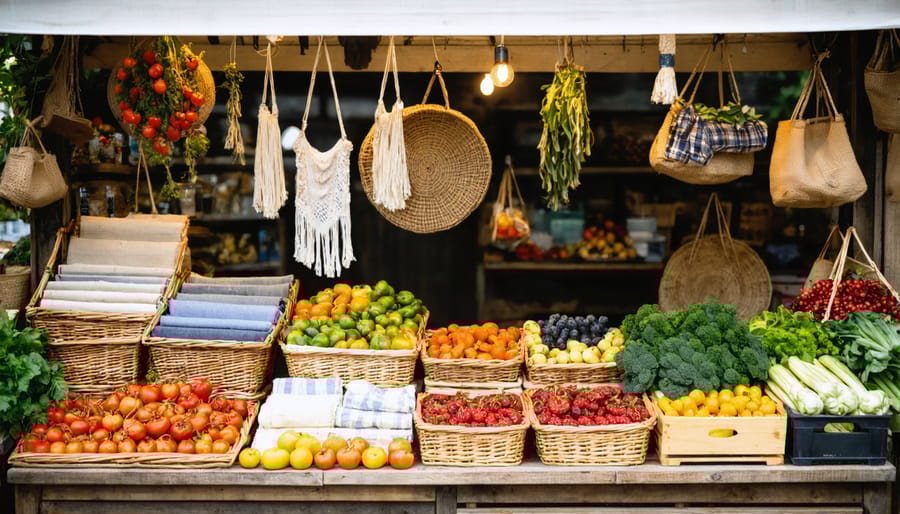
Market display featuring naturally dyed scarves and clothing next to organic vegetables
Vibrant farmers market stall displaying handmade textile products alongside fresh produce

Building Sustainable Fashion Communities

Economic Impact

The economic impact of artisanal fashion extends far beyond beautiful handcrafted garments. By fostering connections between farmers and artisans, this sustainable approach to fashion creates multiple income streams within local communities. Farmers benefit by selling both food crops and fiber crops like cotton, hemp, and flax, while artisans transform these raw materials into unique fashion pieces.

This collaborative model is proving essential in building thriving community markets where both groups can showcase their products. Farmers typically see a 25-30% increase in revenue when diversifying into fiber crops for artisanal fashion, while local artisans report average earnings of $45,000-60,000 annually from their crafted pieces.

The ripple effect touches other local businesses too. Yarn shops, natural dye producers, and textile processors all benefit from this growing sector. Additionally, tourism increases as fashion-conscious consumers seek authentic, locally-made pieces, bringing additional revenue to rural communities. This economic model has proven particularly valuable for small-scale farmers looking to maximize their land use while supporting sustainable fashion initiatives.

Environmental Benefits

Artisanal fashion production offers significant environmental advantages compared to mass-manufactured clothing. When artisans create garments locally, they dramatically reduce the carbon footprint associated with long-distance shipping and transportation. A single locally-made dress can save up to 65% in carbon emissions compared to its factory-produced counterpart.

Local fashion producers typically work in smaller batches, allowing them to minimize waste and utilize resources more efficiently. Many artisans source their materials from nearby farms and producers, creating a closed-loop system that supports both agricultural and fashion sustainability. For example, some artisans work directly with local sheep farmers to source wool, while others collaborate with organic cotton growers in their region.

The smaller scale of production also enables artisans to implement eco-friendly practices more easily. Many use natural dyes from local plants, practice water conservation, and employ zero-waste cutting techniques. These makers often repair and upcycle existing garments too, extending their lifecycle and keeping textiles out of landfills.

By choosing artisanal fashion, consumers support environmentally conscious production methods while reducing their personal carbon footprint. The direct connection between maker and wearer also encourages more mindful consumption, as people tend to value and care for handcrafted pieces longer than mass-produced alternatives.

Getting Involved

Getting involved in artisanal fashion at farmers markets is easier than you might think. Start by visiting your local farmers market regularly and building relationships with vendors who create handmade clothing, accessories, and textile products. Many artisans are happy to share their stories and explain their creative process, giving you insight into the sustainable practices behind their work.

Look for vendors who use locally sourced materials, such as wool from nearby sheep farms or natural dyes made from regional plants. These artisans often collaborate directly with farmers, creating a beautiful connection between agriculture and fashion. Ask about their sourcing methods and the stories behind their materials – you’ll often discover fascinating partnerships that support both local agriculture and sustainable fashion.

Consider joining a textile CSA (Community Supported Agriculture) program if available in your area. Similar to traditional produce CSAs, these programs allow you to support local fiber farmers and artisans while receiving seasonal handmade items or raw materials for your own projects.

To deepen your involvement, watch for workshops and demonstrations at the market. Many artisans offer classes in natural dyeing, basic weaving, or clothing repair. These hands-on experiences help you appreciate the craft while developing sustainable fashion skills.

Remember to spread the word about your favorite artisans on social media and within your community. Your support helps these small businesses thrive and encourages more local makers to join the movement.

The farm-to-fashion movement represents a promising shift towards more sustainable and community-centered clothing production. By connecting local farmers, artisans, and conscious consumers, this approach is revolutionizing how we think about our wardrobe choices. Success stories from small-scale fiber farmers and local designers show that sustainable fashion can thrive while supporting regional agriculture. Looking ahead, we can expect to see more collaborations between farmers markets and fashion artisans, increased transparency in textile sourcing, and growing consumer interest in clothing that tells a story of local craftsmanship. As this movement continues to gain momentum, it creates opportunities for farmers to diversify their crops, artisans to access quality materials, and communities to strengthen their local economies through sustainable fashion initiatives.

Smart CSA Yield Predictions: How Data Patterns Transform Farm Planning

Posted by darrell on
0
Seasonal Planning and Management
Smart CSA Yield Predictions: How Data Patterns Transform Farm Planning

Data seasonality shapes every harvest cycle, driving critical decisions from seed selection to market timing. Just as nature follows predictable patterns of growth and dormancy, CSA farm data reveals recurring trends that smart farmers leverage for success.

Understanding these natural rhythms in your farm’s data unlocks powerful insights. Track weekly harvest volumes from previous seasons to predict future yields. Monitor temperature patterns alongside crop performance to optimize planting schedules. Map customer preferences across seasons to align crop planning with peak demand periods.

For CSA farmers, this seasonal intelligence transforms raw numbers into actionable strategy. Early spring seedling data predicts summer abundance. Summer harvest records forecast fall storage needs. Fall membership renewals indicate spring planting volumes. Each season’s data flows naturally into the next, creating a continuous cycle of informed decision-making that grows stronger year after year.

This practical approach to seasonal data empowers farmers to work in harmony with natural cycles while building more resilient and profitable operations.

Understanding Data Seasonality in Agriculture

Natural Cycles vs. Data Patterns

Just as nature follows predictable cycles of growth and dormancy, data patterns in farming often mirror these natural rhythms. Consider how tomatoes flourish in summer’s warmth while winter squash peaks in autumn – these natural growing seasons create corresponding patterns in harvest data, sales figures, and resource allocation.

For CSA farmers, understanding these cycles is crucial. Spring typically shows a surge in member signups, while late summer brings an abundance of produce variety and quantity. These patterns affect everything from labor needs to storage capacity planning.

Weather patterns, too, play a vital role in shaping data seasonality. Annual rainfall cycles, frost dates, and temperature patterns create predictable trends that smart farmers can use to their advantage. By tracking these natural cycles alongside their farm data, growers can better anticipate needs, optimize planting schedules, and improve crop planning efficiency.

Seasonal data chart showing correlation between weather patterns and crop yields
Data visualization showing temperature and rainfall patterns across a growing season with overlaid crop yield trends

Key Seasonal Data Points for CSA Farms

Successful CSA farms rely on several key data points that fluctuate with the seasons. Soil temperature and moisture levels serve as primary indicators for optimal planting times, while frost dates help determine both early spring and late fall harvesting windows. Growing degree days (GDD) track heat accumulation throughout the season, helping farmers predict crop maturity dates with greater accuracy.

Weather patterns, including rainfall and temperature trends, directly impact crop development and yield potential. Many CSA farmers maintain detailed records of germination rates, harvest quantities, and crop quality across different seasons to fine-tune their planning. Disease and pest pressure data often show seasonal patterns, allowing farmers to implement preventive measures at crucial times.

Customer preference data also follows seasonal trends, with certain crops gaining popularity during specific times of the year. Tracking these patterns helps farmers adjust planting schedules to meet member expectations while maintaining diverse crop offerings throughout the growing season.

Farmer collecting digital field data with modern agricultural technology
Farmer using tablet to record crop data while standing in field, with visible weather station in background

Collecting Seasonal Farm Data

Essential Weather Metrics

Tracking weather patterns throughout the growing season is crucial for successful crop planning and yield prediction. Temperature variations, including daily highs and lows, help farmers anticipate frost risks and heat stress periods that could affect plant growth. Rainfall measurements give insights into natural irrigation patterns and help plan supplemental watering schedules.

Solar radiation levels influence photosynthesis rates and crop development, while humidity affects disease pressure and plant stress. Wind speed and direction data are essential for protecting crops and planning windbreak placement. Soil temperature readings, particularly in spring, guide optimal planting times for different crops.

Many successful CSA farmers maintain detailed weather logs, recording these metrics daily. Some use simple rain gauges and thermometers, while others invest in weather stations that automatically track multiple data points. By comparing current conditions with historical weather patterns, farmers can better predict harvest times and adjust their planting schedules.

Remember that local microclimates can create significant variations, so it’s important to collect data specific to your growing area rather than relying solely on regional forecasts.

Crop Performance Tracking

Monitoring crop performance throughout different seasons is essential for successful CSA farming. Start by establishing baseline measurements for each crop variety, including growth rates, yield patterns, and harvest timing. Keep detailed records using modern seasonal data analysis tools that can help track multiple variables like plant height, fruit development, and overall health.

Create weekly photo documentation of your crops, noting any significant changes or challenges. This visual record becomes invaluable when planning future growing seasons. Record weather patterns alongside crop development to identify correlations between environmental conditions and plant performance.

Pay special attention to key growth stages: germination rates, flowering times, and fruit set periods. Note which varieties thrive in specific seasonal conditions and which may need additional support. Track harvest quantities and quality metrics to help refine crop selection and timing for upcoming seasons.

Consider using a simple scoring system (1-5) for different aspects of crop performance, making it easier to compare data across seasons and share insights with other CSA farmers in your network.

Making Predictions Work for Your CSA

Creating Reliable Forecasting Models

Building reliable forecasting models for your CSA farm starts with consistent data collection throughout your growing seasons. By tracking planting dates, harvest quantities, and weather patterns, you’ll develop a strong foundation for predicting future yields. The key is to maintain detailed records of how different crops perform as you work to maximize seasonal yields.

Start by creating a simple spreadsheet that tracks weekly harvest amounts for each crop. Include columns for weather conditions, temperature ranges, and any unusual events that might affect growth. After collecting data for at least two full growing seasons, you can begin identifying patterns and correlations.

Look for recurring trends in your data, such as peak harvest times for specific crops or how weather patterns affect yield. Pay special attention to crops that consistently over or underperform your expectations – these variations often reveal important seasonal patterns.

Consider using basic statistical tools to analyze your data. Moving averages can help smooth out short-term fluctuations and highlight longer-term trends. Many farmers find success using simple forecasting formulas that account for both historical performance and seasonal factors.

Remember that your model should be flexible enough to adapt to changing conditions. Review and update your predictions regularly, incorporating new data and adjusting for any shifts in weather patterns or growing conditions. This dynamic approach ensures your forecasting remains accurate and reliable throughout the seasons.

Adjusting CSA Share Planning

Data-driven forecasting can revolutionize your CSA planning process, helping you create more balanced and satisfying share offerings throughout the season. By analyzing historical harvest data alongside weather patterns and member feedback, you can fine-tune your planting schedule and share contents to better meet member expectations.

Start by reviewing past seasons’ production data to identify peak harvest periods and potential gaps. This information helps you adjust crop varieties and planting dates to ensure consistent weekly shares. For example, if your data shows a consistent dip in produce variety during late July, you might introduce heat-tolerant crops or implement succession planting strategies to maintain diversity.

Many successful CSA farmers use simple spreadsheets to track their seasonal patterns, noting which crops performed well during specific weeks and adjusting their plans accordingly. Sarah Miller, a Vermont-based CSA farmer, increased member satisfaction by 40% after implementing data-based planning: “Looking at our harvest trends helped us realize we needed more early-season greens and late-summer root vegetables to balance our shares.”

Consider creating flexible share options based on your seasonal data. Some farms offer “peak season” shares during high-production months and “shoulder season” shares when variety might be limited. This transparency helps manage member expectations while maximizing farm efficiency and reducing waste.

Real Farm Success Stories

Green Acres CSA in Vermont transformed their operation by implementing data seasonality tracking in 2019. Owners Sarah and Mike Thompson noticed they were consistently overplanting certain crops while falling short on others. By analyzing three years of their sales data, they identified clear patterns in customer preferences across seasons. This led them to adjust their crop planning, resulting in a 30% reduction in waste and a 25% increase in member satisfaction.

In California, Desert Sun Farm’s journey with data seasonality began when they started losing members due to unpredictable harvest quantities. Owner Maria Rodriguez implemented a simple spreadsheet system to track weekly harvest yields alongside weather patterns. After two growing seasons, she could accurately predict harvest volumes within a 15% margin, allowing her to better manage member expectations and maintain consistent CSA box values throughout the year.

Perhaps the most inspiring story comes from Family Roots Farm in Ohio. The Andersons, a family of fourth-generation farmers, were struggling to compete with larger operations until they embraced data seasonality. They created detailed records of planting dates, harvest yields, and market demand patterns. This information helped them identify optimal planting windows for each crop and adjust their succession planting schedule. The result? Their CSA membership doubled in two years, and they now maintain a waiting list for new members.

These success stories share a common thread: starting small with basic data collection, maintaining consistent records, and using that information to make informed decisions about planting schedules and crop varieties. The farms’ experiences show that understanding data seasonality doesn’t require complex systems – just dedication to tracking and analyzing patterns over time.

Side-by-side comparison of predicted and actual CSA produce boxes
Split image comparing predicted vs actual CSA harvest boxes, showing accuracy of data-driven planning

Understanding and leveraging data seasonality is crucial for successful CSA farming operations. By tracking and analyzing seasonal patterns in your crop yields, member preferences, and market demands, you can make more informed decisions that benefit both your farm and your community.

Remember that successful data management isn’t just about collecting numbers – it’s about telling the story of your farm through the seasons and using that knowledge to grow sustainably. Start small by tracking basic metrics like weekly harvest quantities and member satisfaction, then gradually expand your data collection as you become more comfortable with the process.

Many successful CSA farmers have found that understanding their seasonal patterns has led to better crop planning, reduced waste, and more satisfied members. Take Sarah from Green Meadows Farm, who used three years of seasonal data to optimize her planting schedule and increase member retention by 30%.

Don’t wait for the perfect system – begin documenting your seasonal patterns today. Whether you use a simple spreadsheet or specialized farm management software, the insights you gain will prove invaluable for your farm’s future growth and sustainability. Your journey toward data-driven farming starts with that first seasonal observation.

Faith & Food: How Religious Communities Are Transforming Local Agriculture

Posted by darrell on
0
Community Partnerships and Networks
Faith & Food: How Religious Communities Are Transforming Local Agriculture

Faith-based organizations transform local food systems through innovative CSA partnerships that merge spiritual values with sustainable agriculture. By connecting congregations directly with local farmers, these programs create meaningful pathways for fresh, affordable produce while building stronger community bonds. Religious institutions across North America increasingly embrace their role as vital food security hubs, utilizing church grounds for community gardens, hosting farmers’ markets in parking lots, and organizing volunteer networks for food distribution. This grassroots movement demonstrates how faith communities channel their missions of service into tangible agricultural initiatives that nourish both body and soul, while supporting local farmers and environmental stewardship. From small parish vegetable plots to large-scale farming cooperatives, faith-based agricultural programs offer practical solutions to food access challenges while fostering deeper connections between congregants, farmers, and the land they share.

How Faith Communities Support Local Agriculture

Church-Hosted CSA Pickup Sites

Churches across the country are increasingly opening their doors as convenient pickup locations for Community Supported Agriculture programs, creating natural gathering points for both congregation members and the wider community. These faith-based distribution sites typically utilize their existing facilities, such as fellowship halls or community rooms, to host weekly or bi-weekly produce pickups.

Many churches offer their spaces free of charge to local farmers, seeing it as an extension of their community service mission. These locations often feature ample parking, wheelchair accessibility, and flexible hours that accommodate various schedules. Some churches enhance the pickup experience by organizing volunteers to help sort produce and assist members during distribution times.

The arrangement benefits both farmers and subscribers – farmers gain a reliable, central distribution point, while members enjoy the convenience of picking up their shares at a familiar location. Several churches have expanded these partnerships to include educational workshops about seasonal cooking, food preservation, and sustainable living practices, creating a deeper connection between faith communities and local food systems.

Church volunteers organizing fresh vegetables and fruits for CSA distribution
Volunteers sorting fresh produce at a church-based CSA pickup location

Faith-Based Farm Initiatives

Religious organizations across the country are embracing sustainable agriculture through faith-based farming initiatives. The Anathoth Community Garden in Cedar Grove, North Carolina, operates as a ministry of the Cedar Grove United Methodist Church, providing fresh produce and agricultural education to the local community. Similarly, the JustLiving Farm in Washington state, run by Lutheran volunteers, combines organic farming practices with spiritual reflection.

Many monasteries and convents maintain working farms that serve both practical and spiritual purposes. The Franciscan Earth Literacy Center in Ohio operates a certified organic farm while offering educational programs about sustainable agriculture. The Catholic Rural Life organization supports numerous farming projects nationwide, helping congregations establish community gardens and small-scale agricultural operations.

These faith-based farms often incorporate prayer gardens, meditation spaces, and outdoor worship areas alongside their agricultural activities. They frequently donate portions of their harvest to local food banks and operate CSA programs that connect congregation members with fresh, locally grown produce. Through these initiatives, religious communities demonstrate their commitment to environmental stewardship while addressing food security concerns in their communities.

Connecting Faith and Food Security

Multi-generational group tending to vegetables in a faith-based community garden
Diverse group of faith community members working in a community garden

Food Justice Programs

Faith-based food justice programs are actively reshaping local food networks by bridging the gap between fresh produce and underserved communities. Religious organizations across the country have established innovative programs that combine community gardens, food banks, and educational initiatives to address food insecurity.

These programs often partner with local farmers to create subsidized CSA shares, making organic produce accessible to families regardless of income level. Many congregations maintain their own gardens, where volunteers grow fresh vegetables and fruits for distribution through food pantries and community meals.

Some standout initiatives include “Harvest for the Hungry” programs, where congregation members grow extra rows of produce specifically for donation, and “Pay-What-You-Can” farm stands operated on house of worship grounds. These programs not only provide nutritious food but also offer practical gardening education and cooking classes to help families make the most of fresh ingredients.

The success of these programs demonstrates how faith communities can create sustainable solutions to food access challenges while building stronger neighborhood connections.

Subsidized Share Programs

Many faith-based organizations are making fresh, local produce more accessible through subsidized CSA share programs. These initiatives typically partner with local farms to offer reduced-cost or sliding-scale memberships to community members in need. Congregations often contribute to a scholarship fund that helps cover the difference between the full share price and what participants can afford to pay.

Some religious communities have developed innovative payment models, such as “pay-what-you-can” options or volunteer work exchange programs. Members can contribute time in the gardens or help with distribution to offset share costs. These arrangements benefit both the farmers, who receive fair compensation for their produce, and families who might otherwise struggle to afford fresh, organic vegetables.

Several successful programs combine food assistance with educational workshops on cooking, nutrition, and sustainable living. This holistic approach helps ensure that participants not only receive healthy food but also develop lasting skills for maintaining a nutritious diet. Many organizations report that these programs strengthen community bonds while addressing food insecurity in alignment with their faith-based mission of service.

Community Building Through Faith-Based CSAs

Faith-based CSA programs do more than just provide fresh produce – they create vibrant community connections rooted in shared values and stewardship of the land. These programs bring together people from diverse backgrounds who share common beliefs about caring for creation and supporting local food systems.

Many congregations report that their CSA programs have become natural gathering points for fellowship. Members often share recipes, cooking tips, and break bread together during harvest celebrations and community meals. Some programs organize regular potlucks where participants bring dishes made with their CSA ingredients, fostering both spiritual and culinary connections.

The community aspect extends beyond just sharing meals. Many faith-based CSAs incorporate volunteer opportunities, allowing members to work alongside farmers, learn about sustainable agriculture, and develop deeper appreciation for food production. Children’s education programs teach young people about growing food while connecting these lessons to religious teachings about environmental stewardship.

These programs also create meaningful bridges between urban and rural communities. City congregations partner with rural farmers, building relationships that help both groups better understand each other’s challenges and perspectives. Some programs even organize farm visits and harvest festivals that bring urban families to experience farm life firsthand.

The social benefits ripple outward as many faith-based CSAs include charitable components. Extra produce is often donated to local food pantries, and some programs offer subsidized shares to low-income families. This approach to food justice helps strengthen the broader community while putting faith into action through sustainable agriculture.

Starting a Faith-Based CSA Partnership

Faith-based organizations are uniquely positioned to build thriving CSA partnerships that serve both their congregation and the broader community. Here’s how to get started:

Begin by forming a core team of dedicated volunteers who share a passion for sustainable agriculture and community service. This team should include members with diverse skills, from gardening expertise to organizational management.

Connect with local farmers who align with your organization’s values and vision. Many farmers welcome the opportunity to partner with religious institutions, as it provides them with a stable customer base and supports their sustainable farming practices.

Survey your congregation to gauge interest and commitment levels. Understanding potential participation helps determine the size and scope of your CSA program. Consider offering flexible payment options and sponsorship opportunities for families who may need assistance.

Create a distribution system that works with your facility’s schedule. Many faith-based CSAs distribute shares after services or during weekly community gatherings, making it convenient for members to collect their produce.

Develop educational programs that connect faith teachings with sustainable agriculture. This might include:
– Garden-based youth programs
– Cooking classes using seasonal produce
– Scripture studies relating to environmental stewardship
– Community meals featuring CSA harvests

Consider starting small with a pilot program. Partner with an established CSA farm for the first season to learn the ropes before expanding. Some organizations begin with a church garden plot before scaling up to full CSA operations.

Establish clear communication channels between farmers, volunteers, and members. Regular updates about harvest schedules, volunteer opportunities, and community events keep everyone engaged and informed.

Include social justice initiatives in your program design. Many faith-based CSAs reserve shares for food banks or offer sliding-scale pricing to ensure fresh, healthy food is accessible to all community members.

Remember to celebrate your community’s achievements with harvest festivals, shared meals, and thanksgiving ceremonies that honor both the spiritual and agricultural aspects of your program.

Visual diagram of 5 key steps for establishing a faith-based CSA partnership
Infographic showing steps to start a faith-based CSA program

Faith-based CSA partnerships have proven to be powerful catalysts for positive change in communities across the country. These programs not only provide fresh, locally grown produce to congregations and community members but also create meaningful connections between farmers, faith communities, and families. By bridging the gap between sustainable agriculture and spiritual fellowship, these initiatives nourish both body and soul while supporting local food systems.

Whether you’re a congregation leader, farmer, or community member, getting involved in a faith-based CSA program can make a lasting difference. Start by reaching out to local religious organizations or farmers to explore partnership opportunities. Together, we can build stronger, healthier communities while stewarding the land and supporting sustainable agriculture. The seeds planted through these programs continue to grow into lasting relationships and resilient local food systems that benefit everyone involved.

Grow More Food in Less Space: The Ancient 3 Sisters Method Meets Modern Farming

Posted by darrell on
0
Seed Preservation and Biodiversity
Grow More Food in Less Space: The Ancient 3 Sisters Method Meets Modern Farming

The Three Sisters farming method stands as one of Native American agriculture’s most ingenious contributions to sustainable food production. This ancient companion planting technique – combining corn, climbing beans, and squash – creates a naturally symbiotic growing system that maximizes space, enhances soil fertility, and produces a nutritionally complete harvest. Dating back over 5,000 years, this agricultural practice demonstrates how traditional wisdom can offer powerful solutions for modern food security and environmental challenges. Today, home gardeners and small-scale farmers are rediscovering the Three Sisters method as a productive, low-maintenance approach to growing nutrient-dense foods while preserving precious soil resources. The technique’s elegant simplicity – with corn providing natural poles for beans, while beans fix nitrogen in the soil, and squash leaves creating living mulch – offers a perfect example of how working with nature, rather than against it, can yield abundant harvests while building healthier ecosystems.

The Ancient Wisdom Behind 3 Sisters Farming

Traditional three sisters garden with corn, beans, and squash growing together in a complementary arrangement
Traditional Native American three sisters garden showing mature corn stalks with climbing beans and squash covering the ground

Understanding the Sacred Triangle

The Three Sisters farming method is built upon a remarkable symbiotic relationship between corn, beans, and squash, forming what Native Americans considered a sacred triangle of crops. Each plant plays a vital role in supporting the others, creating a perfectly balanced growing system. Corn acts as a natural trellis, providing sturdy stalks for climbing beans to grow upward. The beans, in turn, enrich the soil by fixing nitrogen through their root systems, benefiting all three plants. They also help stabilize the corn stalks during strong winds.

Squash completes this partnership by spreading its large leaves across the ground, creating a living mulch that helps retain soil moisture and suppress weed growth. Its prickly vines also deter pests and larger animals from disturbing the garden. Together, these three crops not only support each other’s growth but also provide a nutritionally complete diet, offering carbohydrates from corn, protein from beans, and essential vitamins and healthy fats from squash. This intelligent combination demonstrates how traditional farming wisdom created sustainable solutions that continue to inspire modern gardeners.

Infographic illustrating how corn, beans, and squash plants benefit each other in the three sisters gardening method
Diagram showing the symbiotic relationship between corn, beans, and squash plants with arrows indicating nutrient flow and support structures

How The Three Sisters Work Together

Corn: The Strong Support

In the three sisters planting system, corn serves as the strong and sturdy foundation that supports the entire garden community. These tall stalks grow straight and true, reaching heights of 6-8 feet to create natural poles for climbing beans. The corn’s robust root system also helps anchor the soil, preventing erosion while providing stability for its companion plants.

Native American farmers traditionally selected corn varieties with thick stalks specifically for this purpose, ensuring they could bear the weight of mature bean vines. The corn plants are typically spaced about 4 feet apart in small clusters, allowing enough room for the other sisters to thrive while maintaining their vital support role.

As an added benefit, the corn receives natural fertilization from the nitrogen-fixing beans, creating a perfect example of how cooperation in the garden leads to better yields for everyone.

Beans: The Nitrogen Fixer

Beans play a crucial role in the three sisters method by naturally enriching the soil through nitrogen fixation. These remarkable plants form a symbiotic relationship with beneficial bacteria in their root nodules, converting atmospheric nitrogen into a form that plants can use. This natural fertilization process not only supports the growth of corn and squash but also improves overall soil health for future growing seasons.

As the beans grow and twine up the corn stalks, they continually feed nutrients back into the soil. A single bean plant can fix up to 150 pounds of nitrogen per acre annually – that’s free, organic fertilizer! This sustainable approach reduces the need for synthetic fertilizers while building healthier, more resilient soil. Plus, when the plants complete their lifecycle, their decomposing roots and foliage continue to enrich the earth with valuable nutrients.

Squash: The Living Mulch

Squash plants serve as nature’s living carpet in the three sisters planting method, spreading their broad leaves across the soil to create a protective green blanket. These sprawling vines work tirelessly as natural weed suppressors, shading the soil and preventing unwanted plants from taking root. The large leaves also help retain soil moisture by reducing evaporation, creating a more stable growing environment for all three sisters.

Beyond weed control, squash’s spreading habit helps maintain soil temperature and prevents erosion during heavy rains. The prickly nature of squash stems and leaves also serves as a natural deterrent to some garden pests and curious critters. As an added bonus, the dense leaf coverage reduces the need for additional mulching materials, making this companion planting method both efficient and resource-smart.

Modern Applications in Your Garden

Planning Your Three Sisters Garden

Successful implementation of the Three Sisters garden starts with thoughtful planning and timing. Begin by selecting a sunny location with well-draining soil and marking out mounds approximately 4 feet in diameter, spaced 4 feet apart. These mounds, essential for proper drainage and root development, should be prepared in early spring once soil temperatures reach 60°F (16°C).

Using complementary planting techniques, start by planting corn when the soil has warmed. Space 4-5 corn seeds in each mound, about 6 inches apart and 1 inch deep. Once the corn reaches about 6 inches tall (typically after 2-3 weeks), plant pole bean seeds in a circle around each cornstalk. A week later, add squash or pumpkin seeds around the mound’s outer edge.

This staggered planting timeline allows each sister to establish itself without competing for resources during crucial early growth stages. Remember to leave adequate pathways between mounds for maintenance and harvest, as the squash vines will spread significantly throughout the growing season.

Garden planning diagram showing optimal arrangement of corn, beans, and squash in a modern garden bed
Modern garden plot layout showing recommended spacing and planting pattern for three sisters method

Seed Selection and Preservation

Selecting the right seeds is crucial for successful Three Sisters gardening. Traditional varieties of corn, beans, and squash work best, as they’ve been cultivated together for generations. Look for tall, sturdy corn varieties that grow 6-8 feet high, pole beans (not bush beans) that will climb effectively, and sprawling squash varieties like pumpkins or winter squash.

When it comes to saving seeds from your Three Sisters garden, timing is everything. Allow corn ears to dry completely on the stalk until the kernels are hard. For beans, let the pods turn brown and brittle before harvesting. Squash should be fully mature with hardened rinds before collecting seeds.

Store your saved seeds in paper envelopes or glass jars in a cool, dry place. Label each container with the variety name and harvest date. Many gardeners find success storing seeds in the refrigerator, where they can remain viable for several years.

Consider joining local seed-sharing networks to exchange traditional varieties and preserve genetic diversity. Many Indigenous communities maintain seed libraries with varieties specifically adapted for Three Sisters planting, offering both seeds and valuable growing advice based on generations of experience.

The Three Sisters farming method stands as a shining example of how ancient wisdom can address modern agricultural challenges. By implementing this companion planting technique, modern farmers and gardeners can significantly reduce water usage, minimize the need for chemical fertilizers, and enhance soil health naturally. This sustainable approach not only yields diverse, nutrient-rich crops but also supports local ecosystems by providing habitat for beneficial insects and pollinators. Many small-scale farmers report increased yields and reduced maintenance costs after adopting this method, proving its viability in contemporary settings. As we face growing concerns about food security and environmental sustainability, the Three Sisters method offers a practical, time-tested solution that honors traditional knowledge while meeting modern farming needs. Whether you’re a backyard gardener or commercial farmer, this ancient technique provides a pathway to more sustainable and resilient food production.

Smart Sensors Transform CSA Farming: Real-Time Monitoring That Actually Works

Posted by darrell on
0
Technology and Innovation
Smart Sensors Transform CSA Farming: Real-Time Monitoring That Actually Works

Revolutionize your farming operations with precision sensor networks that monitor soil moisture, nutrient levels, and environmental conditions in real-time. Modern IoT devices in farming now enable growers to detect plant stress 48 hours before visible symptoms appear, reducing crop losses by up to 30%. Deploy microclimate sensors strategically throughout your fields to create detailed temperature and humidity maps, allowing for targeted interventions and resource optimization. These advanced monitoring systems, combining AI-driven analytics with rugged field sensors, help small-scale farmers make data-driven decisions while maintaining the personal touch that CSA members value. From automated irrigation triggers to frost warnings, today’s sensor technology transforms traditional growing practices into precise, sustainable operations without sacrificing the authentic farming experience.

The New Wave of Agricultural Sensor Technology

Soil Health Sensors

Modern soil health sensors are revolutionizing the way we understand and care for our garden soil. These smart devices can measure multiple factors simultaneously, giving farmers and gardeners real-time insights into their soil’s wellbeing. Moisture sensors help prevent over or under-watering by providing precise readings at different soil depths, while nutrient sensors track essential elements like nitrogen, phosphorus, and potassium.

Perhaps most exciting are the new microbial activity sensors that measure the biological health of soil. These innovative tools detect enzyme activity and soil respiration rates, indicating how alive and active your soil ecosystem is. Some sensors even use electrical conductivity to estimate organic matter content and soil structure.

Many of these sensors now connect to smartphone apps, making it easy to monitor soil conditions from anywhere. This technology helps growers make data-driven decisions about irrigation, fertilization, and soil amendments, leading to healthier plants and more sustainable growing practices. For small-scale farmers, these tools are becoming more affordable and user-friendly each year.

Multiple soil monitoring sensors installed in rows of organic vegetables
Array of modern soil sensors deployed in a vegetable field, showing different types of probes monitoring various soil parameters

Climate Monitoring Systems

Modern climate monitoring systems are revolutionizing how we track and respond to environmental conditions in our growing spaces. These smart sensors work around the clock to measure crucial factors like temperature, humidity, and weather patterns, helping farmers make data-driven decisions for their crops.

Temperature sensors can detect subtle changes throughout the day and night, allowing growers to maintain optimal conditions for different plant varieties. Humidity monitors help prevent issues like mold and mildew by alerting farmers when moisture levels climb too high. Advanced weather stations track rainfall, wind patterns, and incoming weather systems, enabling better preparation for environmental challenges.

Many of these systems now connect to smartphone apps, making it easy to check conditions remotely and receive instant alerts when readings fall outside ideal ranges. This technology is particularly valuable for greenhouse operations and sensitive crops that require precise environmental control. Some systems even use historical data to predict potential weather-related challenges, helping farmers stay one step ahead of nature’s variables.

Farm management dashboard displaying climate sensor data and weather metrics
Digital dashboard showing real-time sensor data with graphs of temperature, humidity, and weather patterns

Practical Applications in CSA Operations

Irrigation Management

Modern sensor technology has revolutionized the way we manage irrigation in sustainable farming. By placing moisture sensors at different soil depths, farmers can now precisely monitor water needs and deliver just the right amount to their crops. These smart systems detect when plants actually need water, rather than relying on fixed schedules or guesswork.

Sarah Jensen, a small-scale organic farmer in Vermont, reduced her water usage by 40% after implementing soil moisture sensors across her two-acre vegetable farm. “The sensors showed me that I was actually overwatering my tomatoes,” she shares. “Now I save water and my yields have improved.”

Beyond simple moisture detection, advanced sensors can also measure soil temperature, nutrient levels, and even analyze weather patterns to predict irrigation needs. This data helps farmers create customized watering schedules for different crop zones, ensuring optimal growth while conserving precious water resources.

The latest sensor systems can be monitored through smartphone apps, sending real-time alerts when water levels drop below ideal thresholds. This technology has made efficient irrigation management accessible to farms of all sizes, promoting sustainable water use while maximizing crop health.

Pest and Disease Detection

Modern sensor technology has revolutionized how we detect and prevent pest infestations and plant diseases in community-supported agriculture. These smart systems act as vigilant guardians, continuously monitoring your crops for early warning signs that might escape the naked eye. Using a combination of visual sensors, moisture detectors, and temperature monitors, farmers can spot potential threats before they become major problems.

AI-powered disease detection systems can identify subtle leaf color changes, unusual growth patterns, or pest activity long before visible damage occurs. This early detection capability allows farmers to take targeted action, reducing the need for broad-spectrum treatments and supporting organic farming practices.

The sensors work together to create a comprehensive health profile of your crops, sending real-time alerts to your smartphone or computer when something seems off. For example, if moisture levels spike while temperatures remain high, the system might warn about potential fungal growth conditions. This preventive approach helps maintain crop health naturally, leading to better yields and happier CSA members who receive consistently high-quality produce.

Setting Up Your Farm’s Sensor Network

Choosing the Right Sensors

Selecting the right sensors for your farm doesn’t have to be overwhelming. The key is matching the technology to your specific needs and scale of operation. For small farms under 5 acres, a basic setup of soil moisture and temperature sensors can provide valuable insights without breaking the bank. Consider starting with 2-3 strategically placed sensors per acre to monitor your most critical growing areas.

Medium-sized farms (5-20 acres) benefit from a more comprehensive sensor network. Include light sensors, humidity monitors, and weather stations to make more informed data-driven farming decisions. We recommend one weather station per 10 acres and soil sensors every quarter acre in actively cultivated areas.

Larger operations should invest in advanced sensor systems that include crop health monitors, irrigation flow meters, and automated data collection. These systems, while initially more expensive, quickly pay for themselves through improved resource management and reduced waste.

Remember to consider:
– Water resistance ratings (IP67 or higher recommended)
– Battery life (solar-powered options are ideal)
– Wireless range capabilities
– Data storage and transmission methods
– Integration with existing farm management software
– Warranty and support options

Start small and scale up as you become comfortable with the technology. Many farmers find success by testing sensors in a small area before expanding across their entire operation.

Agricultural professional setting up a wireless sensor system with smartphone integration
Farmer installing a wireless sensor node in their field while consulting a mobile app

Integration and Maintenance

Successfully integrating advanced sensors into your farm or garden starts with careful planning and a solid understanding of your specific needs. Begin by mapping out your growing areas and identifying the key points where you’ll need to monitor conditions like soil moisture, temperature, and nutrient levels.

Once you’ve chosen your sensor locations, create a simple installation schedule that doesn’t interfere with your growing seasons. Many farmers find success by installing sensors during crop rotation periods or before new plantings. Consider starting with a small pilot area to test and familiarize yourself with the technology before expanding.

Regular maintenance is crucial for accurate readings. Develop a monthly checklist that includes cleaning sensor probes, checking battery levels, and verifying wireless connections. During the growing season, protect sensors from physical damage during activities like tilling or harvesting by marking their locations clearly.

Data management is equally important. Set up a straightforward system to track and analyze your sensor readings. Many farmers keep a digital log alongside their traditional growing records, which helps identify patterns and make informed decisions about irrigation and fertilization.

Remember to calibrate your sensors seasonally and replace any damaged components promptly. Building relationships with local tech-savvy farmers can create a valuable support network for troubleshooting and sharing best practices. Many successful CSA farmers report that proper maintenance has helped their sensor systems last for multiple growing seasons while providing reliable data.

As we’ve explored throughout this article, sensor networks are revolutionizing the way CSA farms operate, offering unprecedented insights into crop health, soil conditions, and environmental factors. These smart farming solutions not only help farmers make data-driven decisions but also strengthen the connection between producers and their community members through transparent, efficient operations.

The future of sensor technology in CSA farming looks incredibly promising. With costs decreasing and technology becoming more user-friendly, even small-scale farmers can now access tools that were once reserved for large agricultural operations. This democratization of technology means more sustainable farming practices, better crop yields, and fresher produce for CSA members.

Many farmers report that implementing sensor networks has helped them reduce water usage by up to 30% while improving crop quality. These successes demonstrate how technology can support, rather than replace, traditional farming wisdom. As we look ahead, emerging innovations like AI-powered predictions and automated response systems will further enhance the benefits of sensor networks, making sustainable farming more achievable than ever.

By embracing these technological advances, CSA farms can continue to grow, thrive, and fulfill their mission of providing fresh, local produce while building stronger, more resilient communities.

Transform Your CSA Produce: The Magic of Yeast Inoculation in Fermentation

Posted by darrell on
0
Culinary and Food Preservation
Transform Your CSA Produce: The Magic of Yeast Inoculation in Fermentation

Transform your CSA vegetables into living, probiotic-rich foods by mastering the art of yeast inoculation. This ancient preservation technique not only extends shelf life but creates complex, vibrant flavors through controlled fermentation. To master vegetable fermentation, start with clean, fresh produce and precise measurements of salt to create the perfect environment for beneficial yeasts to thrive. Whether you’re fermenting cabbage for sauerkraut or crafting unique vegetable medleys, proper yeast inoculation ensures consistent results while preventing unwanted bacteria growth. By understanding this fundamental process, you’ll unlock endless possibilities for preserving your seasonal harvest while enhancing its nutritional value and developing distinctive flavors that connect you to centuries of food preservation tradition.

Why Yeast Inoculation Matters for Your CSA Produce

Wild vs. Controlled Fermentation

Fermentation can occur naturally or through controlled methods, each offering unique benefits for CSA produce preservation. Wild fermentation relies on naturally occurring yeasts present on fruits and vegetables, creating unique flavors that reflect local microbial environments. This traditional method has been used for generations and can produce complex, region-specific tastes that many food enthusiasts prize.

Controlled fermentation, achieved through yeast inoculation, offers more predictable results and consistent flavors. By introducing specific strains of carefully selected yeasts, farmers can better manage the fermentation process and reduce the risk of spoilage. This method is particularly valuable when preserving large batches of seasonal produce or creating specific flavor profiles.

Many small-scale farmers combine both approaches, using wild fermentation for traditional products while relying on inoculation for more sensitive or valuable crops. The choice often depends on factors like batch size, desired outcome, and risk tolerance.

Side-by-side comparison of wild fermentation versus controlled yeast inoculation in glass jars
Split image comparing wild fermentation (cloudy, irregular bubbles) versus controlled yeast inoculation (clear, uniform fermentation)

Preserving Your CSA Bounty

Yeast inoculation offers an effective way to preserve seasonal produce from your CSA share through controlled fermentation. This natural preservation method not only extends the life of your vegetables but also enhances their nutritional value and creates unique, complex flavors. By introducing specific beneficial yeasts to your produce, you can control the fermentation process and prevent unwanted bacteria from taking hold.

The technique works particularly well for cabbage, cucumbers, and root vegetables – common items in CSA boxes that sometimes arrive in abundance. Start by selecting fresh, clean produce and introducing a carefully measured amount of starter culture. Within days, the beneficial yeasts begin transforming sugars into acids, creating an environment that naturally preserves your vegetables for months.

Local farmer Sarah Jensen shares, “Since implementing yeast inoculation at our farm, we’ve helped our CSA members reduce food waste by 30% during peak harvest seasons. Plus, they love the probiotic benefits!”

Different types of fermentation yeast packets displayed with fresh produce
Various packets of specialized fermentation yeasts with vegetables and fruits in the background

Choosing the Right Yeast for Your Ferments

Vegetable-Specific Strains

Different vegetables require specific yeast strains for optimal fermentation results. For leafy greens like cabbage and kale, Lactobacillus plantarum is the go-to choice, producing a crisp texture and bright, tangy flavor. Root vegetables such as carrots and beets benefit from Saccharomyces cerevisiae, which enhances their natural sweetness while maintaining structural integrity.

When fermenting cruciferous vegetables like broccoli and cauliflower, Leuconostoc mesenteroides works exceptionally well, creating a pleasant tang without excessive sourness. For cucumber pickles, a combination of Lactobacillus brevis and Pediococcus pentosaceus yields consistently crunchy results with balanced flavor profiles.

Success story: Local farmer Sarah Chen discovered that using Lactobacillus sakei for her award-winning kimchi resulted in better flavor development and longer shelf life compared to traditional methods. For those new to vegetable fermentation, starting with universal strains like L. plantarum is recommended, as it’s versatile and forgiving across different vegetable types.

Remember to consider temperature and salt concentration when selecting your yeast strain, as these factors significantly impact fermentation success. Many suppliers now offer specialized vegetable fermentation culture blends, making it easier for home fermenters to achieve professional results.

Fruit Fermentation Yeasts

When fermenting fruits, selecting the right yeast strain is crucial for developing optimal flavors and ensuring successful fermentation. For most fruit-based ferments, wine yeasts like Saccharomyces cerevisiae are ideal due to their ability to handle higher sugar content and produce clean, fruit-forward flavors. The popular Red Star Premier Blanc (formerly Côte des Blancs) works exceptionally well with apples, pears, and stone fruits, preserving delicate aromas while achieving consistent fermentation.

For berries and tropical fruits, consider using Lalvin 71B, which enhances fruit characteristics while reducing malic acid, resulting in a smoother finished product. When fermenting citrus fruits, D-47 yeast is an excellent choice, as it tolerates higher acid levels while producing complex honey and fruity notes.

For those seeking wild fermentation, naturally occurring yeasts present on organic fruit skins can create unique flavor profiles. However, this method requires careful monitoring and carries more risk of inconsistent results. To balance tradition with reliability, many home fermenters use a combination approach – allowing wild yeasts to initiate fermentation before introducing a commercial strain to ensure complete fermentation.

Sequential images demonstrating the stages of yeast inoculation for fermentation
Step-by-step photo collage showing the yeast inoculation process

Step-by-Step Inoculation Process

Preparation and Safety

Before starting the yeast inoculation process, proper preparation and safety measures are essential for successful fermentation. Begin by thoroughly cleaning and sanitizing all equipment, including fermentation vessels, stirring tools, and measurement instruments. Use food-grade sanitizers and rinse thoroughly with clean water to avoid any chemical residue that could affect fermentation.

Temperature control is crucial for yeast health. Ensure your workspace maintains a steady temperature between 68-72°F (20-22°C). Have a reliable thermometer on hand to monitor both the environment and your fermenting mixture throughout the process.

Always wear clean gloves when handling yeast cultures to prevent contamination. If working with dry yeast, avoid direct skin contact and wear a mask to prevent inhalation of yeast particles. Keep your work surface clean and organized, with all necessary materials within easy reach.

Measure ingredients precisely using calibrated scales or measuring tools. Prepare your yeast starter in a separate, sterile container before introducing it to your main mixture. This allows you to verify the yeast’s viability and activity before committing to the full batch.

Store unused yeast cultures properly according to manufacturer guidelines, typically in a cool, dry place. Keep detailed records of each inoculation, including temperatures, measurements, and timing, to help track success and troubleshoot if needed. Having backup cultures on hand is also recommended in case of unexpected issues.

Temperature and Timing

Temperature control and proper timing are crucial elements that can make or break your fermentation success. The ideal temperature range for yeast inoculation typically falls between 68°F and 72°F (20°C to 22°C). At these temperatures, yeast cells maintain optimal activity without becoming stressed or dormant.

For most vegetable ferments, you’ll want to start with a 24-hour period at room temperature before checking the fermentation progress. During this initial phase, the yeast begins to multiply and establish itself in the environment. Keep your fermentation vessel away from direct sunlight and heat sources, as temperatures above 80°F (27°C) can lead to excessive fermentation and off-flavors.

Timing your inoculation right is equally important. Add your yeast starter when your produce and brine are at room temperature – never when they’re hot, as this can kill the beneficial organisms. After inoculation, monitor the fermentation process every 12-24 hours. You’ll notice subtle changes in aroma and the formation of small bubbles, indicating active fermentation.

Local farmer Sarah Chen shares her success story: “I learned the hard way that patience is key. Now I use a simple kitchen thermometer and keep detailed timing notes. My ferments are consistently delicious, and I never lose a batch anymore.”

Remember that cooler temperatures will slow fermentation, while warmer temperatures speed it up. Finding the sweet spot for your specific produce and desired outcome takes practice, but the results are worth the attention to detail.

Common Challenges and Solutions

Problem Prevention

To ensure successful yeast inoculation, proper preparation and monitoring are essential. Start by sanitizing all equipment thoroughly with food-grade sanitizer to prevent unwanted bacterial growth. Maintain consistent temperature control throughout the fermentation process, ideally between 68-72°F (20-22°C), using a reliable thermometer. Just like our ancestors who mastered traditional preservation techniques, paying attention to environmental conditions is crucial.

Monitor pH levels regularly using test strips or a digital meter, aiming for an initial pH between 4.0 and 4.5. Ensure proper oxygen levels during the first stages of fermentation by leaving adequate headspace in your vessels. Keep detailed records of temperature, pH, and visual observations to track progress and identify potential issues early.

Store starter cultures properly, following temperature guidelines, and regularly refresh them to maintain vitality. Consider creating backup cultures as insurance against failed batches, and always use fresh, high-quality produce for optimal results.

Quick Fixes

If your fermentation isn’t starting as expected, try warming the mixture slightly to activate dormant yeast – aim for around 70-75°F (21-24°C). For sluggish fermentation, add a small amount of sugar or honey to feed the yeast, but be careful not to overdo it. If you notice off-putting smells, check your container’s seal and ensure proper sanitization.

When fermentation seems too vigorous, move your container to a cooler spot to slow things down. For overly sour results, reduce fermentation time in future batches and monitor temperature more closely. If you see a white film on top, it’s likely kahm yeast – simply skim it off and continue fermenting.

Remember that successful fermentation takes practice. Keep detailed notes of what works and what doesn’t, and don’t be afraid to adjust your process based on results. Most importantly, trust your senses – if something doesn’t look, smell, or taste right, it’s better to start fresh than risk consuming spoiled produce.

Mastering yeast inoculation is a rewarding journey that can transform your fermentation projects from unpredictable experiments to reliable successes. As we’ve explored throughout this guide, proper yeast inoculation techniques are essential for achieving consistent, high-quality fermented products while maintaining food safety standards.

Remember that temperature control, cleanliness, and precise measurements are your best allies in the inoculation process. Start with simple projects like fruit preserves or vegetable ferments, and gradually work your way up to more complex endeavors as your confidence grows. Don’t be afraid to take detailed notes of your process – this will help you refine your technique and troubleshoot any issues that arise.

The beauty of yeast inoculation lies in its blend of science and artistry. While following proper procedures is crucial, there’s always room for creativity and experimentation with different ingredients and techniques. We encourage you to start your fermentation journey today, applying these principles to preserve and enhance your seasonal produce. With practice and patience, you’ll develop an intuitive understanding of the process and join the growing community of successful home fermenters.

Smart Farming Technology That’s Revolutionizing Small-Scale Agriculture

Posted by darrell on
0
Technology and Innovation
Smart Farming Technology That’s Revolutionizing Small-Scale Agriculture

Modern farming technologies are transforming small-scale agriculture, making sustainable food production more efficient and accessible than ever before. From automated irrigation systems to IoT devices in agriculture, innovative solutions are helping local farmers maximize yields while minimizing resource use. These advancements aren’t just for large industrial operations – they’re specifically designed to support small-scale farmers and CSA operations in growing better food more sustainably.

Smart sensors now monitor soil moisture, nutrient levels, and plant health in real-time, allowing farmers to make data-driven decisions about water and resource management. Precision farming tools, once exclusive to large operations, have become affordable and user-friendly enough for small farms to implement. These technologies not only boost productivity but also support the core values of sustainable agriculture: environmental stewardship, resource conservation, and community-focused farming.

For local farmers looking to embrace these innovations, the journey toward tech-enabled farming has never been more achievable or rewarding.

Precision Agriculture Tools for Small Farms

Smart Irrigation Systems

Smart irrigation systems are revolutionizing the way small-scale farmers manage water resources. These innovative solutions combine soil moisture sensors, weather monitoring, and automated controls to deliver precise amounts of water exactly when and where crops need it most.

At the heart of these systems are soil moisture sensors that continuously monitor water levels at different depths. When moisture drops below optimal levels, the system automatically triggers irrigation, preventing both under and over-watering. Many farmers report water savings of 30-50% after implementing these systems.

Local farmer Sarah Martinez shares, “Since installing smart irrigation on my two-acre vegetable farm, I’ve cut my water usage in half while improving crop yields. The mobile app lets me monitor everything from anywhere, which is a game-changer during busy harvest seasons.”

These systems can be scaled to fit any operation, from backyard gardens to larger market farms. Many include features like zone-specific watering schedules, rain sensors that prevent unnecessary irrigation during wet weather, and integration with local weather forecasts to optimize watering cycles.

For those concerned about initial costs, many agricultural extension offices offer grants and technical support for implementing water-saving technologies.

Agricultural worker adjusting automated irrigation settings via tablet device in vegetable field
Farmer using a tablet to monitor smart irrigation controls while standing in field

Weather Monitoring Stations

Modern weather monitoring stations have become a game-changer for small farms, offering affordable ways to track crucial climate data. These compact systems typically include sensors for temperature, humidity, rainfall, wind speed, and soil moisture – all the essentials for making informed farming decisions.

Many farmers are finding success with wireless weather stations that connect directly to smartphone apps, making it easy to check conditions from anywhere on the farm. For around $200-300, these systems provide real-time updates and historical data, helping farmers predict frost risks, plan irrigation schedules, and determine the best times for planting and harvesting.

Local farmer Sarah Chen shares, “Our weather station helped us save our tomato crop last season by alerting us to an unexpected cold snap. The investment paid for itself in just one season.” Some stations even integrate with automated irrigation systems, allowing for precise water management based on actual weather conditions.

For those just starting out, basic rain gauges and temperature sensors can be a stepping stone to more advanced systems. The key is choosing technology that matches your farm’s specific needs and scale.

Data-Driven Crop Management

Mobile Apps for Farm Management

Modern farming has gone digital, with a variety of user-friendly mobile apps revolutionizing how small-scale farmers manage their operations. These powerful tools transform smartphones into essential farming companions, helping growers track everything from seed to harvest with just a few taps.

Popular apps like Agrivi and FarmLogs allow farmers to create detailed planting schedules, monitor crop growth stages, and record harvest data. Local farmer Sarah Martinez shares, “Using these apps has helped me make better data-driven farming decisions and increased my CSA’s efficiency by 30%.”

Many apps now include features specifically designed for organic growers, such as pest identification guides, weather alerts, and soil health tracking. The Farm Manager app, for instance, helps CSA farmers plan their succession planting and manage member distributions more effectively.

Free options like Tend make it easy for beginners to start digital record-keeping without a significant investment. These apps often include cloud backup features, ensuring valuable farming data isn’t lost even if a device is damaged in the field.

For those new to farm management apps, starting with basic features like planting calendars and harvest logs can build confidence before exploring more advanced capabilities.

Farm management mobile application displaying crop planning data next to corresponding field implementation
Split screen showing mobile farm management app interface alongside actual crop rows

Soil Testing Technology

Modern soil testing has evolved far beyond the simple pH strips of yesterday. Today’s farmers can access a wealth of soil data right from their smartphones using portable digital analyzers that provide instant readings of nutrient levels, moisture content, and soil composition. These handheld devices, about the size of a trowel, can scan soil samples and deliver comprehensive results within minutes.

Real-time soil monitoring systems now use wireless sensors planted throughout fields to continuously track soil health. These smart sensors transmit data to farmers’ devices, alerting them to potential issues before they become visible problems. For example, local farmer Sarah Martinez saved her tomato crop last season by responding to early warnings of nitrogen deficiency from her sensor network.

Advanced spectral analysis tools can now detect beneficial microorganisms and potential pathogens in soil samples, helping farmers maintain optimal soil biology for organic growing. These technologies also measure organic matter content and decomposition rates, crucial information for maintaining healthy soil.

The most exciting development might be the integration of artificial intelligence with soil testing. AI systems can analyze soil data patterns over time, helping farmers predict and prevent potential issues while optimizing their soil amendment strategies for better yields and sustainability.

Agricultural building featuring rooftop solar installation and energy-efficient storage systems
Solar panels mounted on barn roof with modern storage facility visible

Sustainable Energy Solutions

Solar-Powered Farm Equipment

Solar power is revolutionizing small-scale farming with practical, cost-effective solutions that help farmers reduce their carbon footprint and operating costs. Innovative solar-powered irrigation systems are making it easier for farmers to water their crops efficiently, using smart controllers that adjust watering schedules based on weather conditions and soil moisture levels.

Small farms are increasingly adopting solar-powered cold storage units, which help preserve harvested produce without relying on grid electricity. These units are particularly valuable for farms in remote locations or areas with unreliable power supply. Solar-powered fence chargers have also become popular among livestock farmers, providing a sustainable solution for rotational grazing systems.

Other applications include solar ventilation fans for greenhouses, which help regulate temperature and humidity while reducing energy costs. Some farmers are even using portable solar generators to power small tools and equipment during field work. These practical applications demonstrate how solar technology can make small-scale farming more sustainable and economically viable.

Energy-Efficient Storage Systems

Modern storage systems are revolutionizing how small-scale farmers preserve their harvests while minimizing energy consumption. Solar-powered cold storage units have become game-changers, allowing farmers to keep produce fresh without relying on traditional power grids. These units use phase-change materials that absorb heat during the day and release it at night, maintaining consistent temperatures.

Local farmer Sarah Chen implemented a solar cold storage system last year, reducing energy costs by 70% while extending her vegetables’ shelf life by up to two weeks. “It’s amazing how we can harness natural energy to keep our produce fresh,” she shares.

Smart monitoring systems now allow farmers to track temperature, humidity, and ethylene levels through mobile apps, ensuring optimal storage conditions. Combined with modified atmosphere packaging, these technologies help reduce food waste and maintain product quality. Some innovative systems even use geothermal cooling and natural ventilation to create energy-efficient root cellars, perfect for storing root vegetables and preserving the harvest year-round.

Real Farm Success Stories

The Thompson Family Farm in Vermont revolutionized their 15-acre CSA operation by implementing smart irrigation sensors and automated greenhouse controls. “We reduced our water usage by 40% while increasing crop yields,” shares Sarah Thompson. Their investment in these modern farming solutions paid for itself within two growing seasons.

At Green Valley CSA in Oregon, farmers Mike and Lisa Chen integrated a mobile app-based harvest planning system. “Before, we spent hours each week planning harvests and managing member communications. Now, the app automatically generates picking lists and sends updates to our members,” explains Lisa. Their streamlined operation now serves 30% more families with the same staff.

Rising Sun Farm in New Mexico demonstrates how drone technology can benefit smaller operations. Owner James Martinez uses a basic agricultural drone for crop monitoring. “I can spot irrigation issues or pest problems before they become serious. What used to take days of walking the fields now takes 30 minutes,” he notes. The farm’s crop loss decreased by 25% in the first year of drone implementation.

In Massachusetts, River Brook Farm transformed their CSA pickup experience using digital check-in stations. “Members love the flexibility of self-service pickup, and we love the reduced administrative work,” says owner Maria Rodriguez. The system also tracks member preferences and automatically generates weekly newsletters based on available produce.

Perhaps most inspiring is Stone Creek CSA in Michigan, where farmer Ben Wilson implemented soil moisture sensors and weather stations. “The data helps us make better decisions about planting times and irrigation schedules,” he explains. Their system sends alerts directly to smartphones, allowing the team to respond quickly to changing conditions. The result? A 35% reduction in crop losses due to weather-related issues and more consistent harvests throughout the season.

These success stories show how even small-scale farms can benefit from thoughtful technology adoption, making CSA operations more efficient and sustainable while maintaining their community-focused values.

The integration of new technologies in farming represents an exciting frontier for sustainable agriculture. From precision irrigation systems to data-driven crop management, these innovations are making it easier than ever for farmers to grow food efficiently while protecting our environment. Small-scale farmers who embrace these tools are reporting increased yields, reduced water usage, and better crop quality – all while maintaining their commitment to organic practices.

Looking ahead, we can expect even more accessible and affordable technologies to emerge. Smartphone apps for pest identification, affordable sensor systems, and automated greenhouse controls are just the beginning. As these tools become more widespread, they’re creating opportunities for both experienced farmers and newcomers to succeed in sustainable agriculture.

The future of farming lies in finding the right balance between traditional wisdom and modern innovation. By thoughtfully adopting new technologies, farmers can enhance their operations while staying true to organic principles. This combination of old and new promises a more sustainable, productive, and environmentally conscious future for agriculture – one where local food systems can thrive and feed our communities for generations to come.