Why Your Heirloom Seeds Might Not Cross Borders (And How to Fix It)
 darrell on
Shipping heirloom tomato seeds to a fellow seed saver in Canada or bringing back rare bean varieties from a farming conference abroad requires phytosanitary certification—an official document confirming your seeds are pest-free and safe for international movement. This governmental seal protects global agriculture from invasive species while allowing dedicated growers to preserve biodiversity across borders.
Understanding phytosanitary requirements prevents your carefully saved seeds from sitting in customs limbo or being destroyed upon arrival. Each country maintains specific protocols through their plant protection organizations, typically requiring seeds to undergo inspection, treatment documentation, and official certification before export. The process involves contacting your national plant protection office, submitting seed samples for testing, providing harvest location details, and obtaining the internationally recognized certificate.
The good news: most vegetable and flower seeds face fewer restrictions than live plants or soil-bearing materials, making certification more accessible than many growers initially fear. Small-scale seed savers successfully navigate these requirements regularly by planning shipments weeks in advance, maintaining detailed records of seed origins, and connecting with experienced community members who’ve completed the process.
This certification isn’t bureaucratic obstruction—it’s the framework that allows biodiversity conservation to flourish internationally while protecting farming ecosystems worldwide. Whether you’re exchanging Cherokee Purple tomatoes with growers overseas or importing European grain varieties for your CSA operation, phytosanitary certification transforms cross-border seed sharing from risky to legitimate, ensuring rare varieties continue traveling between passionate hands legally and safely.
What Phytosanitary Certification Actually Means for Seeds
Think of phytosanitary certification as a health passport for your seeds—it’s official documentation that proves your seeds are disease-free and safe to travel. Just like you wouldn’t want to bring home a cold from your vacation, countries don’t want imported seeds bringing pests or diseases that could devastate their local ecosystems.
When inspectors examine seeds for certification, they’re looking for three main threats: pests like seed weevils or nematodes, plant diseases such as fungal infections or viruses, and invasive species that could outcompete native plants. These tiny hitchhikers might seem harmless, but they can wreak havoc on local farms and gardens. Imagine a single contaminated seed packet introducing a disease that wipes out an entire region’s tomato harvest—that’s what these inspections prevent.
This certification process matters enormously for protecting the farms and gardens you care about. When Sarah Martinez, a small-scale organic farmer in Vermont, wanted to grow heritage beans from Mexico, phytosanitary certification ensured those seeds wouldn’t accidentally introduce pests to her thriving garden ecosystem. The inspection gave her peace of mind while letting her expand her seed diversity.
Here’s where it gets exciting: phytosanitary certification actually supports global seed diversity rather than hindering it. By creating a safe, legal pathway for moving seeds internationally, these health checks help gardeners and farmers access rare varieties from around the world. Without this system, countries would likely ban seed imports altogether, making it nearly impossible to preserve endangered plant varieties or share traditional seeds across borders.
The process connects seed savers everywhere in a network of trust. When you receive certified seeds, you know someone has carefully verified their health status, protecting both your garden and the broader agricultural community. It’s not just paperwork—it’s a commitment to keeping our global seed heritage thriving for generations to come.
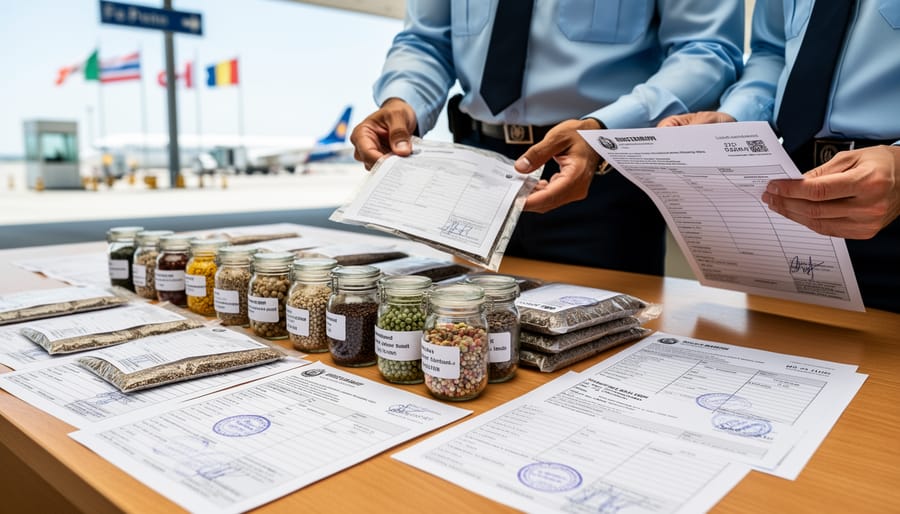
The Hidden Connection Between Seed Diversity and Plant Health Certificates
When rare Cherokee Purple tomato seeds travel from a seed bank in Sweden to a small organic farm in Ontario, they carry more than genetic heritage—they also carry the potential for plant diseases. This is where phytosanitary certification becomes essential for preserving heirloom varieties while keeping our agricultural systems safe.
Seed banks and conservation organizations work with phytosanitary authorities to ensure rare varieties can cross borders without introducing pests or pathogens. The certification process involves testing seeds for common diseases like bacterial spot or fungal infections that could devastate crops. While this might sound bureaucratic, these protocols have actually saved countless heritage varieties from disappearing entirely.
Consider the story of Sarah Chen, a Manitoba farmer who successfully imported rare Blue Jade corn seeds from a conservation program in Mexico. By working with a phytosanitary inspector, she learned proper seed treatment methods and documentation requirements. The process took extra time, but now her farm helps preserve a variety that was nearly extinct, all while maintaining the health standards that protect neighboring farms.
The balance between biodiversity and biosecurity doesn’t have to be complicated. Many seed libraries and exchanges now partner with agricultural extension offices to streamline certification for small-scale seed movements. These collaborations make it easier for gardeners and small farmers to access diverse genetics without cutting corners on plant health.
For aspiring seed savers, understanding phytosanitary requirements opens doors rather than closing them. When you know how to properly document, treat, and transport seeds, you become part of a global network protecting agricultural diversity. The paperwork might seem tedious at first, but it’s a small price for keeping both rare varieties and healthy ecosystems thriving together.

When You Actually Need Phytosanitary Certification
Importing Seeds from International Sources
Ordering those coveted heirloom tomatoes from Italy or rare pepper seeds from South America? You’ll need to navigate phytosanitary requirements, but don’t let that intimidate you. Most countries require a phytosanitary certificate issued by the exporting nation’s agricultural authority, confirming your seeds are pest and disease-free. For small orders, some suppliers handle this paperwork for you, though it may add to costs.
Before ordering, check your country’s agriculture department website for prohibited species and import permits. The United States, for example, requires small lots (under 50 seeds) to include a phytosanitary certificate, and certain families like citrus have stricter rules. Canada has similar requirements with additional provincial restrictions.
Expect your package to pass through agricultural inspection upon arrival. Seeds might be delayed or rejected if documentation is incomplete, so work with reputable overseas suppliers familiar with export requirements. Consider joining seed saving networks where experienced members share tips about reliable international sources.
One small-scale farmer in Oregon successfully imports European heritage varieties by building relationships with certified organic seed companies abroad. Her advice? Start small, keep detailed records, and always communicate directly with suppliers about phytosanitary documentation before purchasing. While the process requires patience, preserving global seed biodiversity makes it worthwhile.
Seed Swapping Across State or National Lines
Sharing seeds with fellow gardeners strengthens community seed exchanges and helps preserve biodiversity, but crossing state or national borders introduces important considerations. For casual, small-scale swaps between friends within the same country, phytosanitary certification typically isn’t required. However, once you’re moving seeds across international boundaries—even as gifts—regulations kick in to prevent the spread of plant diseases and pests.
Most countries require phytosanitary certificates for imported seeds, regardless of quantity. This protects local agriculture from invasive species and pathogens. Before mailing seeds internationally, check both your country’s export requirements and the recipient’s import regulations. Some nations maintain prohibited species lists or require additional testing.
Within the United States, interstate seed movement generally doesn’t need certification for home gardeners, though some states restrict certain plants. Sarah, a seed saver from Vermont, learned this when sharing heirloom tomatoes with a California friend—a quick email to her state agriculture department confirmed no permits were needed.
For regular international exchanges, consider connecting with established seed libraries that already navigate these requirements. When in doubt, contact your local agriculture extension office for guidance tailored to your specific situation.
Commercial Seed Sales and CSA Operations
If your CSA farm saves and distributes seeds to members or sells them commercially, phytosanitary certification becomes essential when those seeds cross provincial or international borders. Even small-scale seed exchanges require compliance with regulations designed to prevent the spread of plant diseases and pests.
The good news? Staying compliant while supporting biodiversity is entirely manageable. Start by keeping detailed records of seed origins, harvest dates, and storage conditions. Document your growing practices, especially pest and disease management strategies. Many seed-borne pathogens can be eliminated through proper drying and storage, so maintain clean, dry facilities and label everything clearly.
When selling seeds to other farms or gardeners outside your region, contact your local Canadian Food Inspection Agency office early in the process. They can guide you through the specific testing requirements for your seed varieties. Some heritage and rare seeds may have simpler certification pathways than commercial cultivars.
Consider joining seed-sharing networks that understand regulatory requirements. These communities often share resources and knowledge about compliance, making the process less daunting. Remember, protecting rare varieties while meeting legal standards isn’t just possible—it’s how we preserve agricultural heritage for future generations.
How to Get Your Seeds Certified: A Simple Walkthrough
Getting your seeds certified might sound like navigating a maze of paperwork, but it’s actually pretty straightforward once you know the steps. Think of it as a friendly checkpoint system designed to keep plant diseases from hitchhiking across borders with your precious heirloom varieties.
First, identify which authority handles your certification. For international shipments, you’ll work with the USDA’s Animal and Plant Health Inspection Service (APHIS). They’re the folks who issue official phytosanitary certificates recognized worldwide. For domestic moves between states, check with your state’s Department of Agriculture, as some states have specific requirements for incoming seeds.
Start by contacting the appropriate office at least 2-3 weeks before your planned shipment date. Timing matters here because inspectors have busy schedules, especially during peak planting seasons. When you reach out, they’ll tell you exactly which forms you need. Typically, this includes an application for inspection and documentation about your seeds: what varieties you’re shipping, where they were grown, and their destination.
Here’s where preparation pays off. Gather your paperwork early and keep detailed records of your seed sources and growing conditions. Clean, well-labeled seed packets make inspectors happy and speed up the process. One small-scale seed saver from Vermont shared that organizing her seeds by botanical family before inspection day cut her processing time in half.
The inspection itself involves an examiner checking your seeds for visible pests, disease symptoms, and proper labeling. They might take samples for laboratory testing if anything looks questionable. Be present during inspection so you can answer questions about your growing practices.
Costs vary but expect to pay between $50-$150 for domestic certificates and $75-$200 for international ones, plus any laboratory testing fees if required. Rush services cost extra, so plan ahead.
Pro tips for smooth sailing: photograph your seeds before packaging, keep copies of all correspondence, and maintain a relationship with your local inspector. Many become valuable resources for sustainable farming advice. Remember, these professionals share your goal of protecting plant biodiversity while keeping agriculture healthy and thriving.

Real Farmers Making It Work: Success Stories
Meet Sarah Chen from Vermont, who runs a small CSA specializing in heirloom tomatoes. When she wanted to share seeds with a fellow grower in Quebec, she worried the certification process would be overwhelming. “I started by contacting my state’s Department of Agriculture,” Sarah explains. “They walked me through the phytosanitary certificate application and even inspected my plants for free.” Her biggest lesson? Start early and keep detailed records of your growing practices. Now she regularly exchanges seeds across the border, helping preserve rare varieties like the Cherokee Purple and Brandywine tomatoes that her members love.
Then there’s Marcus Thompson, who coordinates a seed library network across three Midwestern states. When expanding internationally, he discovered that proper documentation actually protected his work. “Getting phytosanitary certification forced me to implement better tracking systems,” Marcus shares. “Now I know exactly where each variety comes from and its complete growing history.” He recommends joining seed-saving networks that offer mentorship on certification requirements. His advice to newcomers? Don’t let paperwork intimidate you. “The process seems complex at first, but once you complete your first certification, it becomes routine. And knowing you’re legally protecting biodiversity while following proper protocols gives you confidence and credibility.”
Both farmers emphasize that phytosanitary certification, while requiring initial effort, ultimately strengthens seed preservation efforts and opens doors to broader conservation networks.
Common Pitfalls and How to Avoid Them
Even the most dedicated seed savers can stumble when navigating phytosanitary certification. The good news? Most mistakes are preventable with a bit of planning.
Incomplete paperwork tops the list of common hiccups. Applications missing key details like botanical names, country of origin, or treatment records can delay approval for weeks. Create a checklist before submitting, and double-check that all required signatures and stamps are in place. Think of it as preparing your garden bed – thorough preparation saves headaches later.
Another frequent stumble involves misunderstanding which seeds actually need certification. Not all varieties require the same level of documentation, especially for domestic exchanges versus international shipments. When in doubt, contact your agricultural department early in the process. They’re genuinely there to help, and a quick conversation can save months of confusion.
Timing issues catch many people off guard. Certification isn’t instant – some processes take 30 days or more. Start your application well before planting season or shipping deadlines. Seed saver Maria from Vermont learned this the hard way when her heirloom tomato seeds sat in customs during prime planting time. Now she applies three months ahead.
Contamination risks, whether from soil residue or pest presence, can derail even perfect paperwork. Clean seeds thoroughly and store them properly in sealed, labeled containers. A small investment in proper cleaning equipment protects your precious varieties and ensures smooth approval. Remember, these requirements exist to protect the biodiversity we all cherish.
Phytosanitary certification might seem like just another layer of paperwork, but it’s actually one of our most powerful tools for protecting the incredible seed biodiversity we all treasure. Think of it as a guardian system that keeps devastating pests and diseases from wiping out the heirloom tomatoes, heritage beans, and rare squash varieties that have nourished communities for generations. When you embrace these protocols as part of your sustainable farming journey, you’re joining a global effort to preserve agricultural diversity.
For farmers and gardeners passionate about keeping these living legacies alive, compliance doesn’t have to be overwhelming. Start by connecting with your local plant health authorities to understand specific requirements for your region. Build relationships with certified seed suppliers who share your values. Document your seed saving practices carefully, and don’t hesitate to ask questions when navigating the certification process.
The beauty of this system is that it empowers us to share seeds responsibly across borders and communities while safeguarding what matters most. Every certified shipment represents seeds that will grow into plants, produce food, and generate more seeds for seasons to come. By working within these frameworks rather than around them, we’re ensuring that future generations inherit the same rich tapestry of plant varieties we enjoy today.