
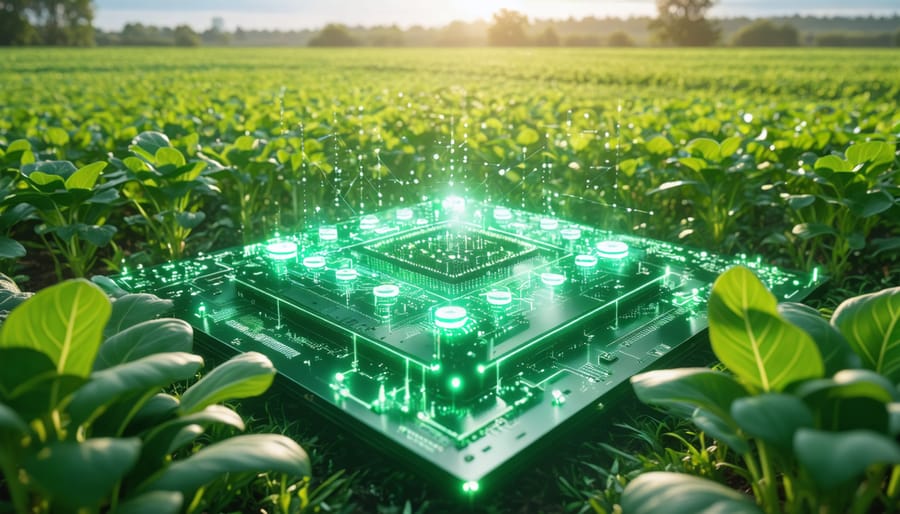
Quantum computing and AI in agricultural operations are converging to revolutionize sustainable farming in ways previously thought impossible. While these technologies may seem worlds apart, they’re actually complementary forces that could transform how we grow and distribute local organic produce. Quantum computers excel at solving complex optimization problems that traditional AI struggles with – from predicting weather patterns for crop planning to calculating optimal delivery routes for CSA distributions.
Think of quantum computing as AI’s powerful new engine, capable of processing vast amounts of agricultural data in seconds rather than years. For small-scale organic farmers, this means more accurate crop yield predictions, better resource management, and smarter pest control strategies – all while maintaining ecological balance.
But here’s what makes this partnership truly exciting for sustainable agriculture: quantum-enhanced AI can analyze countless environmental variables simultaneously, helping farmers make better decisions about soil health, water usage, and crop rotation. This isn’t just about faster computers; it’s about creating smarter, more sustainable farming systems that benefit both producers and consumers in our local food communities.
How Quantum Computing Supercharges Agricultural AI
The Quantum Advantage in Farm Planning
Quantum computing is revolutionizing farm planning by processing vast amounts of agricultural data at speeds traditional computers can’t match. For example, when planning crop rotations across multiple fields, quantum algorithms can analyze thousands of variables simultaneously – including soil conditions, weather patterns, and market demands – to suggest optimal planting schedules.
A traditional computer might take weeks to calculate the perfect combination of crops for a 50-acre farm considering factors like companion planting, water usage, and harvest timing. A quantum computer can deliver these results in minutes, helping farmers make quick, informed decisions as weather conditions change.
These powerful machines are particularly helpful for organic farmers who need to balance complex natural ecosystems. They can predict pest patterns, forecast potential soil nutrient deficiencies, and recommend natural solutions before problems arise. Some innovative farms are already using quantum-powered AI to create “smart farming” systems that automatically adjust irrigation and natural pest control measures based on real-time data.
The result? More efficient resource use, better crop yields, and healthier soil – all while maintaining organic farming principles.

Real-World Benefits for CSA Farms
Quantum-enhanced AI is revolutionizing how CSA farms operate, bringing exciting benefits to local food production. Take Sarah’s Farm in Vermont, for instance, where implementing quantum AI technology helped increase crop yields by 23% in just one growing season. The system analyzed soil conditions, weather patterns, and historical data to create incredibly accurate planting schedules.
Local farmers are using these advanced tools to predict harvest times with remarkable precision, allowing them to better coordinate with CSA members and reduce food waste. The technology can process countless variables simultaneously, considering factors like moisture levels, temperature fluctuations, and pest patterns to optimize growing conditions.
For small-scale farmers, quantum AI assists in creating detailed crop rotation plans that maximize soil health and productivity. It can suggest ideal companion planting combinations and predict potential challenges before they arise. Some farms report saving up to 30% on resource costs while improving their produce quality.
The technology also helps farmers adapt to climate change by analyzing long-term weather trends and suggesting resilient crop varieties for their specific location. This forward-thinking approach ensures sustainable farming practices while maintaining profitable operations.
Practical Applications for Your CSA Farm
Better Crop Yield Predictions
Quantum computing is revolutionizing how we predict crop yields, offering farmers unprecedented accuracy in harvest forecasting. By processing vast amounts of environmental data simultaneously, quantum AI systems can analyze soil conditions, weather patterns, and plant health markers in ways traditional computers simply cannot match. This enhanced capability leads to more effective data-driven yield optimization, helping farmers make better decisions about planting times, irrigation schedules, and resource allocation.
For local organic farmers, this technology translates into practical benefits. Instead of relying solely on experience and historical data, quantum AI can process information about micro-climate variations, soil moisture levels, and plant growth patterns to provide detailed harvest predictions weeks or even months in advance. This improved accuracy helps farmers better plan their CSA shares and reduce food waste.
Take Sarah, a small-scale organic farmer in Ontario, who participated in a pilot program using quantum AI forecasting. She reported a 30% improvement in prediction accuracy for her tomato harvest, allowing her to better manage her CSA commitments and reduce surplus produce. The system also helped her identify optimal planting windows by analyzing historical weather data alongside real-time soil conditions.
The beauty of quantum AI lies in its ability to consider countless variables simultaneously, creating a more holistic picture of crop development. This means farmers can make more informed decisions about resource allocation, leading to better yields and more sustainable farming practices.
Weather Pattern Analysis
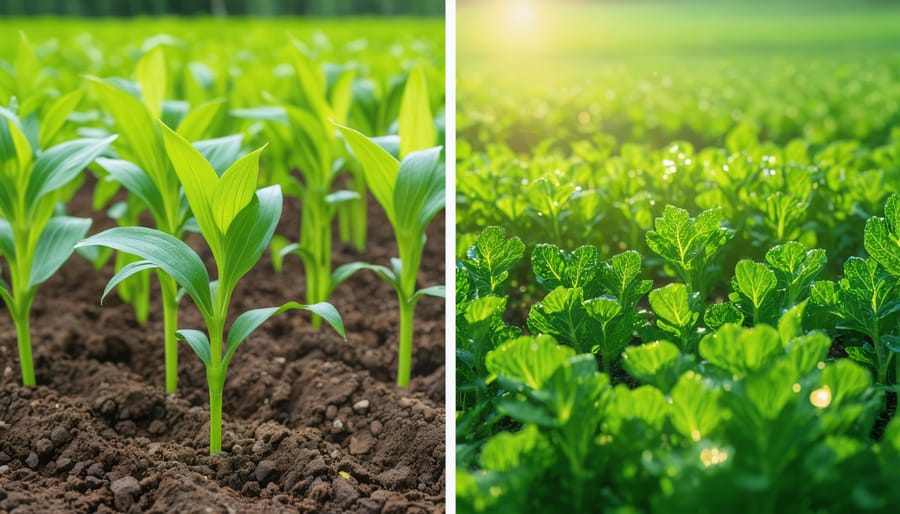
One of the most exciting applications of quantum computing in agriculture is its ability to revolutionize weather forecasting. By processing vast amounts of atmospheric data simultaneously, quantum computers can help farmers predict local weather patterns with unprecedented accuracy. This means you can better plan your planting schedules, protect crops from extreme weather events, and optimize irrigation timing.
Traditional weather forecasting computers struggle to process the countless variables that influence local weather conditions. Quantum computing, however, can analyze temperature patterns, humidity levels, wind directions, and atmospheric pressure all at once, providing more reliable short-term and seasonal forecasts specific to your growing area.
For example, some farming communities are already using early quantum-powered weather models to predict frost risks up to two weeks in advance. This extra preparation time allows farmers to take protective measures for sensitive crops and adjust their cultivation schedules accordingly.
The technology also helps identify microclimate patterns within your farm. By understanding how air flows through your land and where temperature variations occur, you can make better decisions about crop placement and protection strategies. This hyperlocal weather intelligence is particularly valuable for organic farmers who rely heavily on natural growing conditions and timing.
As quantum computing becomes more accessible, smaller farms will be able to tap into these advanced weather prediction tools, making sustainable farming more predictable and profitable.
Getting Started with Quantum AI Tools
Available Services and Platforms
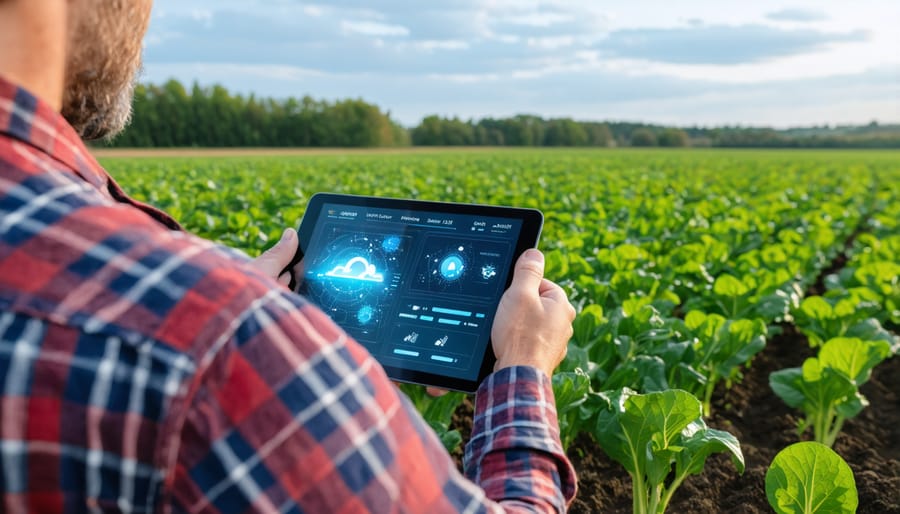
While quantum computing and AI may seem futuristic, several accessible platforms are already helping small-scale farmers embrace these modern farming technologies. IBM’s Quantum Experience offers a free, cloud-based platform where farmers can experiment with basic quantum algorithms for crop optimization and weather prediction. Microsoft’s Azure Quantum provides user-friendly tools that help analyze soil conditions and predict pest patterns without requiring deep technical expertise.
For those just starting, platforms like Xanadu’s PennyLane combine quantum computing with traditional AI in an approachable way, perfect for small farm operations. These tools can help predict optimal planting times and manage resource allocation more efficiently.
Local agricultural extension offices are increasingly offering workshops and support for implementing these technologies. Many provide access to simplified versions of quantum-AI hybrid systems, specifically designed for small-scale farming operations.
Some success stories include the Green Valley Cooperative, where farmers used basic quantum-AI tools to improve their crop rotation planning and reduce water usage by 30%. The platform they used, QFarm Basic, costs less than traditional farm management software while providing more accurate predictions for harvest timing and yield estimation.
Remember, you don’t need to be a quantum physicist to benefit from these tools – many are designed with farmers in mind, featuring intuitive interfaces and practical applications for daily farm operations.
Implementation Steps
Getting started with quantum AI for your farm operations doesn’t have to be overwhelming. Begin by identifying specific areas where predictive analytics could benefit your CSA, such as crop yield forecasting or pest management. Partner with agricultural technology providers who offer quantum-enhanced AI solutions, and ensure they can integrate with your existing farm management software.
Start small by implementing one quantum AI application, like weather prediction for optimal planting times. Work with your tech provider to collect and input relevant data from your farm, including soil conditions, historical yields, and weather patterns. Train your staff on using the new tools and interpreting the AI insights.
Create a feedback loop by documenting the accuracy of predictions and adjusting parameters as needed. Compare the quantum AI recommendations with traditional farming wisdom and find the right balance for your operation. Many successful farms begin with weather forecasting applications before expanding to more complex predictions like market demand and resource optimization.
Remember to regularly backup your data and maintain secure connections for your quantum AI systems. Consider joining a farming technology cooperative to share costs and experiences with other CSA operators. As you become more comfortable with the technology, gradually incorporate additional quantum AI applications that align with your farm’s specific needs and goals.
Stay connected with your technology provider for updates and new features that could benefit your operation. The key is to implement these advanced tools in a way that enhances, rather than replaces, your farming expertise.
The convergence of quantum computing and AI presents exciting possibilities for CSA farms looking to enhance their operations and sustainability practices. As these technologies continue to evolve, farmers can look forward to more precise weather predictions, optimized crop planning, and sophisticated pest management systems that could revolutionize small-scale organic farming.
While the current implementation costs may be prohibitive for individual farms, community-based initiatives and agricultural cooperatives are already exploring ways to make these tools more accessible. Many CSA farmers are partnering with local tech companies and universities to pilot quantum-AI solutions, showing promising results in reducing water usage and improving crop yields while maintaining organic standards.
Looking ahead, we can expect to see more user-friendly applications emerging that specifically cater to the needs of small-scale sustainable farms. The combination of quantum computing’s processing power with AI’s learning capabilities could help farmers better understand and adapt to changing climate patterns, manage resources more efficiently, and strengthen their connection with CSA members through improved communication and delivery systems.
For farmers interested in staying ahead of the curve, now is the time to start learning about these technologies and building relationships with tech-savvy partners in their communities. While quantum computing AI may seem futuristic, its practical applications are already beginning to shape the future of sustainable agriculture, offering hope for more resilient and productive CSA farms.
