
The Food Safety Modernization Act’s Section 204 brings new traceability requirements that directly impact many CSA farms starting January 20, 2026. If you grow, pack, or distribute items on the Food Traceability List—including leafy greens, tomatoes, cucumbers, herbs, melons, and peppers—you need to track these products from field to member delivery with detailed records. Understanding FSMA compliance for CSAs doesn’t have to feel overwhelming when you break it down into manageable steps.
Document your traceability lot codes by creating simple batch numbers tied to planting dates and field locations. Link these codes to every stage of handling, from harvest bins to wash stations to delivery boxes. Small farms earning less than $250,000 annually or selling directly to consumers within your state may qualify for exemptions, but verify your specific situation since rules vary based on your distribution channels.
Implement digital record-keeping through affordable farm management apps that track plantings, harvests, and distributions in one place. Even basic spreadsheets work when they capture the required data points: what you grew, where it came from, where it went, and when each step happened. The key lies in consistency rather than complexity.
Many successful CSA operators have discovered that proper traceability actually strengthens their operations beyond regulatory compliance. When food safety concerns arise, you can quickly identify affected batches and notify only the specific members who received those items. This precision protects your entire harvest and your farm’s reputation while building trust with your community. The investment in better record systems pays dividends through improved efficiency, reduced waste, and the peace of mind that comes from knowing exactly where every tomato travels from seed to supper table.
What Exactly Is FSMA 204 and Why Should CSA Farmers Care?
The Food Safety Modernization Act (FSMA) Rule 204 represents a significant step forward in protecting our food supply, and if you’re running a CSA farm, understanding this regulation matters more than you might think.
Think of FSMA 204 as the FDA’s enhanced traceability rule, designed to create a more transparent food chain from farm to table. The regulation goes into effect on January 20, 2026, giving farms time to prepare their recordkeeping systems. The heart of this rule is simple: if there’s a foodborne illness outbreak, health officials need to trace contaminated products back to their source quickly to protect consumers and stop the spread.
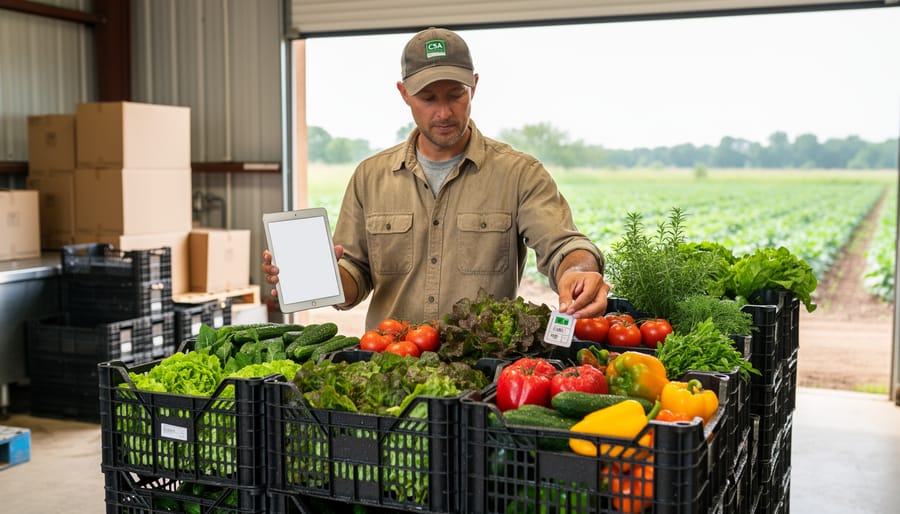
For CSA farmers, this matters because Rule 204 specifically targets foods on the FDA’s Traceability List, which includes many items you likely grow: leafy greens, fresh herbs, tomatoes, cucumbers, peppers, and melons, among others. When these products move through the supply chain, detailed records must follow them.
Here’s the good news: this rule builds on broader FSMA requirements you may already be familiar with, and many small CSA operations might qualify for exemptions. The regulation primarily affects farms that sell beyond their immediate community or work with distributors.
Why should you care even if you’re exempt? Traceability protects your farm’s reputation. When you can quickly demonstrate where your produce came from and where it went, you’re protecting both your customers and your livelihood. If an outbreak occurs in your region, solid traceability records can clear your farm’s name swiftly.
Consider Sarah, a Vermont CSA farmer who discovered her recordkeeping helped exonerate her farm when a nearby outbreak occurred. Her detailed harvest logs showed her tomatoes couldn’t have been the source, saving her business from unfair association with the contamination event.
Ultimately, good traceability practices reflect the transparency and accountability that CSA members already value in their relationship with you.
Does Your CSA Actually Need to Comply?
The Food Traceability List: Which Crops Trigger Requirements
The Food Traceability List, or FTL, identifies specific crops that require enhanced tracking under FSMA 204. If your CSA grows any of these items, you’ll need to pay close attention to the new requirements.
For many small farms, leafy greens are the big one. This category includes favorites like lettuce, spinach, arugula, and kale. Basically, if it goes in a salad bowl and hasn’t been cooked, it’s likely on the list. Fresh herbs also made the cut, including basil, cilantro, and parsley, which are CSA staples during growing season.
Tomatoes appear on the FTL too, encompassing all varieties from cherry tomatoes to heirlooms. Cucumbers are another common CSA crop that triggers traceability requirements, whether you’re growing slicers or pickling varieties.
Melons round out the list with cantaloupe and watermelon being specifically named. These summer favorites are popular CSA box additions, so if you grow them, you’ll need compliant tracking systems in place.
The good news? Many CSA crops don’t appear on the FTL. Root vegetables like carrots and beets, winter squash, peppers, and most beans aren’t subject to these enhanced requirements. Understanding which crops trigger compliance helps you prioritize your record-keeping efforts and focus resources where they matter most. Some farms have found success by maintaining detailed records for all crops as a best practice, making compliance feel less like a burden and more like an opportunity to showcase their commitment to food safety and transparency with their member community.
Small Farm Exemptions You Should Know About
Good news for smaller CSA operations: you might not be covered by FSMA 204 at all! The FDA includes specific exemptions designed to keep smaller farms from drowning in paperwork.
If your farm generates less than $25,000 in annual sales of food, you’re exempt from these traceability requirements. This threshold applies to your total food sales over the previous three years, averaged. For many beginning farmers just getting their CSA off the ground, this exemption provides breathing room to focus on growing great food.
Direct-to-consumer sales also receive special consideration. When you’re selling directly to your members at farmers markets, through your CSA shares, or at your farm stand, these transactions typically fall outside FSMA 204 requirements. The regulation primarily targets the supply chain where traceability becomes challenging, not the face-to-face relationships you’ve built with your community.
However, if you’re selling to restaurants, grocery stores, or food hubs in addition to your CSA, those transactions may require compliance depending on the specific foods involved. One successful CSA farmer in Vermont shared how she strategically kept her restaurant sales separate from her member shares, simplifying her recordkeeping considerably. Understanding where you fall can save you countless hours and help you structure your business wisely.
The Four Core Records Every Compliant CSA Needs
Growing and Harvesting Records
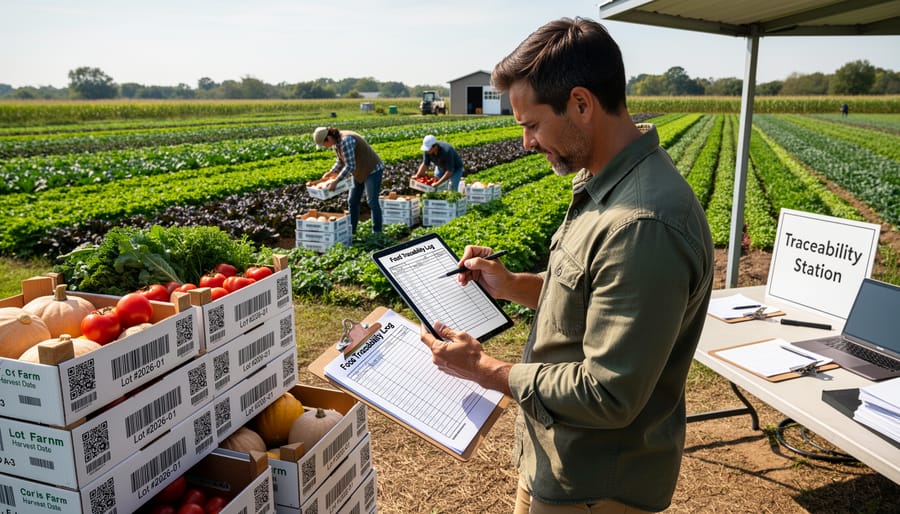
For FSMA 204 compliance, your growing and harvesting records need to capture specific details about each crop cycle. Start by documenting the exact field location or growing area where you planted each variety. Include precise harvest dates and the specific produce varieties you’re growing, using the variety names from your seed packets or transplants.
Track your planting dates alongside harvest dates to establish a clear timeline. Record the quantity harvested from each location, whether you measure in pounds, bins, or boxes. This creates a direct connection between your fields and the produce that reaches customers.
Consider creating simple field maps that show which crops grow where during each season. Many small farms find success using basic spreadsheets or even paper logbooks. The key is consistency in recording this information while it’s fresh in your mind.
If you grow multiple succession plantings of the same crop, treat each planting as a separate lot with its own records. This might seem like extra work initially, but it becomes routine quickly. One organic farmer in Vermont shared how she keeps a waterproof notebook in her harvest tote, jotting down variety, location, and date as she picks. This simple habit ensures nothing gets forgotten by day’s end.
Cooling and Initial Packing Documentation
Once you’ve harvested your beautiful organic produce, proper documentation begins immediately with cooling and initial packing activities. FSMA 204 requires you to record the cooling date and time, location where cooling occurred, and the method used (whether forced-air cooling, hydrocooling, or another technique). For small CSA operations, this doesn’t mean fancy software—a simple logbook works perfectly fine.
When you pack produce, document the date, what was packed, and any lot codes you assign. Many successful CSA farmers share a helpful tip: use a whiteboard in your packing area to track this information in real-time, then transfer it to your permanent records at day’s end. This creates a clear audit trail showing how quickly you cooled crops and prepared them for distribution.
Remember, these records protect both you and your members by demonstrating your commitment to food safety. Keep documentation simple but consistent—a spiral notebook dedicated to post-harvest activities can be just as compliant as expensive tracking systems.
Distribution Records for CSA Shares
When you distribute shares to your CSA members, keeping organized records creates a simple traceability trail. For each distribution day, record the date, traceability lot code for each crop included in the boxes, and member names or identification numbers. Many small CSAs find success using a simple spreadsheet or notebook system—no fancy software required.
The key is connecting your harvest records to your distribution records through those lot codes. If you packed lettuce from Lot 2024-0515-LETT into Tuesday’s shares, note that code on your distribution sheet. This creates the vital link between field and fork that FSMA 204 requires.
Consider keeping a master harvest sheet at your packing station where you check off which lots went into shares each week. One Virginia CSA farmer shared how she uses color-coded stickers on harvest bins that match her distribution records—a brilliant low-tech solution that works beautifully.
Remember to retain these records for two years. Most farms store paper copies in binders organized by month or use simple digital folders. The goal isn’t perfection but creating a reasonable system that you’ll actually maintain throughout the growing season.
Practical Systems That Work for Real CSA Farms
Low-Tech Paper Systems That Actually Work
Not every farm needs fancy software to meet FSMA 204 requirements. Many small-scale operations find that simple paper systems work beautifully, especially when you’re already spending most of your day outdoors rather than behind a computer screen.
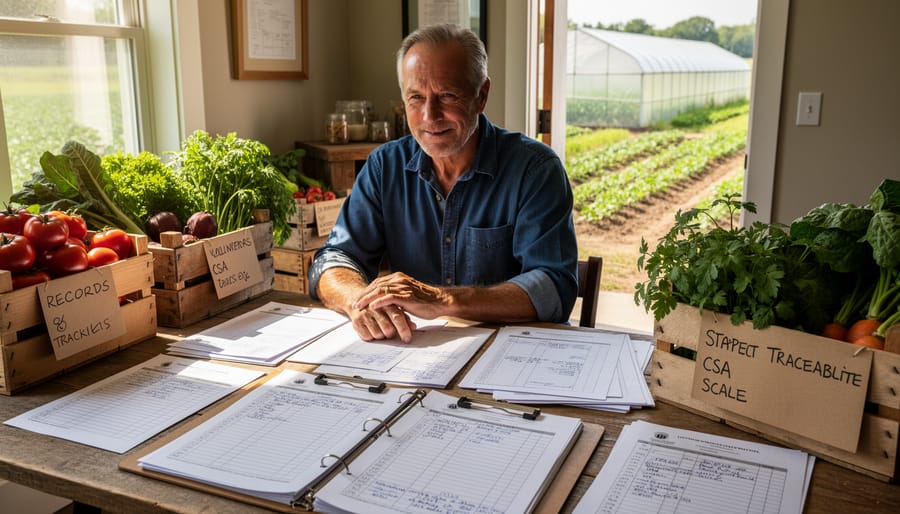
A basic three-ring binder system can cover all your traceability needs. Start with tabbed sections for harvest logs, receiving records, and shipment tracking. Your harvest log should include the date, crop name, location where it was grown, quantity harvested, and who picked it. Keep a stack of pre-printed forms clipped to a clipboard in your packing shed so crew members can fill them out immediately.
For receiving records when you buy seeds or transplants, staple invoices directly into your binder along with a simple form noting the supplier’s contact information and lot numbers. When you pack CSA shares or deliver to customers, use carbon-copy delivery sheets where one copy goes to the customer and one stays in your binder.
The key is consistency. Set aside 10 minutes at the end of each packing day to ensure all forms are complete and filed properly. Many farmers who’ve implemented paper systems report that once it becomes routine, tracking actually helps them stay more organized overall. Plus, during an inspection, you can simply hand over your binder without worrying about internet connectivity or software glitches.
Affordable Digital Tools for Traceability
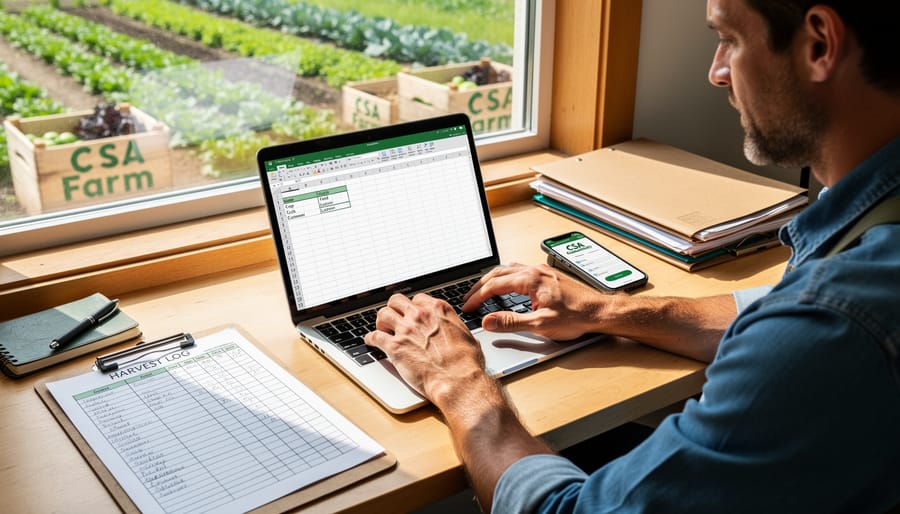
Good news for budget-conscious growers: you don’t need fancy software to achieve FSMA 204 compliance. Many farms successfully track their products using simple spreadsheet templates designed specifically for agricultural traceability. Free downloadable templates are available through state agriculture departments and cooperative extension services, allowing you to record essential information like harvest dates, lot numbers, and distribution details.
For those who prefer mobile solutions, affordable farm management apps like Tend, Crop Tracker, and LocalLine offer traceability features starting under $20 monthly. These tools let you document activities right from the field using your smartphone, eliminating duplicate data entry later.
Another practical option is cloud-based platforms designed for small farms, such as FarmOS (which is free and open-source) or FarmRaise. These systems grow with your operation and often include customer management features valuable for CSA logistics.
Consider starting with whatever system feels most comfortable. Many successful small farms began with simple paper logs, then transitioned to digital tools as their confidence grew. The key is consistency in recording information, not sophisticated technology. Remember, compliance is about having accurate records available when needed, which any organized system can achieve.
Creating Lot Codes You Can Actually Remember
The key to memorable lot codes is keeping them simple and meaningful. Your system doesn’t need fancy software or complicated formulas – just a consistent approach that makes sense for your operation.
Many successful CSA farmers use a date-based system that instantly tells them when crops were harvested. For example, a code like “2024-06-15-TOM-A” breaks down to: year, month, day, crop type (tomatoes), and field location (Field A). When you look at this code weeks later, you immediately know the story behind that harvest.
Another practical approach combines your initials with harvest dates and crop identifiers. Green Valley Farm uses “GVF-0615-CHE” for their June 15th chard harvest. It’s straightforward, memorable, and requires nothing more than a pen and your existing harvest log.
The secret is consistency. Once you choose a format, stick with it throughout the season. Train everyone on your farm to use the same system, and keep a simple reference guide posted near your packing area.
Remember, FSMA 204 doesn’t dictate how your codes should look – it just requires that you can trace products through your supply chain. Your lot code system should work for your brain and your farm’s workflow, not create extra stress during busy harvest days.
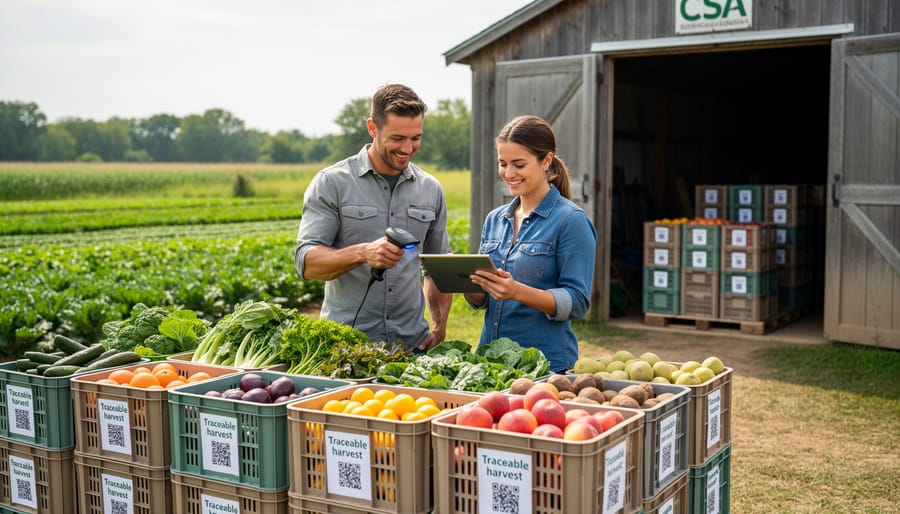
Real CSA Farmer Success Stories
Meeting FSMA 204 requirements might sound daunting, but farms across the country are proving it’s totally manageable with the right approach. Here are some inspiring examples of CSA operations that have successfully navigated compliance.
Green Valley Farm, a 15-acre CSA in Vermont, initially felt overwhelmed by the traceability requirements. Owner Maria Chen decided to start simple by using a basic spreadsheet system to track their food traceability list crops like leafy greens and tomatoes. “We already kept harvest logs for our own planning purposes,” Maria explains. “We just added a few columns for lot numbers and specific location data.” The farm invested in a $20 label maker to mark harvest bins and discovered that the whole process added only about 15 minutes to their daily routine. Their biggest lesson? Start tracking before the compliance deadline to work out any kinks while the pressure is off.
Riverbend Community Farm in Oregon took a different approach by partnering with three neighboring CSAs to share the learning curve. Together, they attended a state extension workshop and created template forms they could all customize. Farm manager James Rodriguez notes that collaboration cut their implementation time in half. “We realized we were all stressing about the same questions,” he says. The group now holds quarterly check-ins to discuss what’s working and troubleshoot challenges together.
Sunrise Acres, a small CSA in North Carolina, discovered they actually qualified for several exemptions because they sell most produce directly to members within state lines. Owner Sarah Williams still chose to implement basic traceability practices anyway. “Even though we’re exempt now, these records help us manage our operation better,” she shares. “When a member asks which field their lettuce came from, we can tell them instantly.” Her advice? Focus on making compliance work for your farm’s unique situation rather than trying to copy someone else’s system.
Common Pitfalls and How to Avoid Them
Even the most well-intentioned CSA farmers can stumble when implementing FSMA 204 traceability systems. The good news? Most mistakes are easily preventable with a bit of awareness and planning.
One of the biggest pitfalls is incomplete record-keeping. Many farmers diligently track some information but miss critical pieces like harvest dates or specific location identifiers. Emma Rodriguez, who runs a small CSA in Vermont, learned this the hard way during her first season under the new rules. “I was recording everything in different places—my phone, a notebook, sticky notes on the fridge,” she explains. “When I needed to trace a shipment, it was a mess.” Her solution was simple: create one master template that includes every required data point, and fill it out completely before moving to the next task.
Inconsistent lot coding trips up many farmers too. Using random systems like “Monday’s lettuce” or “front field tomatoes” might make sense to you, but it won’t satisfy traceability requirements. Instead, develop a straightforward numbering system and stick with it. For example, you might use the format: crop code, harvest date, and field number (L-0315-A for lettuce harvested March 15th from Field A).
Poor record retention is another common mistake. FSMA 204 requires keeping records for two years, but papers get lost, phones get replaced, and memories fade. Set up a dedicated filing system, whether that’s a simple three-ring binder or a cloud storage folder. Schedule quarterly reviews to ensure everything is where it should be.
Remember, building good habits from day one saves headaches later. Start small, stay consistent, and your traceability system will become second nature.
Your Step-by-Step Action Plan
Getting compliant with FSMA 204 doesn’t have to feel overwhelming. Here’s a practical timeline to help your CSA farm meet the January 2026 deadline with confidence.
Months 1-3: Assessment and Planning
Start by determining if your farm falls under the Food Traceability List requirements. Review which crops you grow that might be covered, such as leafy greens, fresh herbs, tomatoes, or cucumbers. Document your current record-keeping practices and identify gaps. This is also a great time to review your worker classification requirements since you’ll be updating your farm’s operational systems anyway.
Months 4-6: System Selection and Setup
Choose your traceability system based on your farm’s size and budget. This might be as simple as organized spreadsheets or dedicated farm management software. Create templates for recording harvest dates, lot numbers, and distribution information. Set up your traceability lot coding system that makes sense for your operation. Many successful CSA farms use simple date-based codes like “Tomato-Field2-072625” for easy tracking.
Months 7-9: Staff Training and Trial Runs
Train your team on new procedures for recording information at harvest, packing, and distribution. Run practice scenarios to test your system’s effectiveness. Can you trace a bunch of lettuce from field to member within a few hours? Adjust your processes based on what you learn during these trial periods.
Months 10-12: Refinement and Documentation
Fine-tune your procedures based on your trial runs. Create simple checklists for staff to follow during busy harvest days. Document your entire traceability plan in writing. Build in extra time for questions or technical hiccups.
Months 13-15: Final Preparation
Conduct a full mock audit of your system. Verify that all staff understand their roles and that records are being kept consistently. Address any remaining concerns before the enforcement deadline arrives.
Remember, compliance is a journey, not a destination. Starting early gives you breathing room to find solutions that work for your unique farm operation.
Resources and Support for CSA Farmers
Navigating FSMA 204 doesn’t have to feel overwhelming! The FDA offers free guidance documents specifically designed for small farms, including their “Small Entity Compliance Guide” that breaks down requirements in plain language. Start there to understand your obligations.
Your state’s agricultural extension service is an invaluable resource. Extension agents provide free or low-cost consultations and often host workshops on food safety regulations. Many have developed traceability templates tailored to local growing conditions and farm sizes.
The National Sustainable Agriculture Coalition and Local Harvest maintain updated resources for CSA farmers, including compliance checklists and sample recordkeeping systems. These organizations understand the unique challenges small-scale organic farms face and offer practical solutions that won’t break the bank.
Join CSA networks and farming communities in your area. Fellow farmers who’ve already tackled compliance can share their systems, templates, and lessons learned. This collaborative spirit is what makes the CSA movement special, and it extends to navigating regulations together.
Don’t forget about other compliance areas like sales tax requirements and accepting SNAP benefits, which also require proper recordkeeping.
Consider attending regional organic farming conferences where food safety experts present workshops. These events combine practical education with opportunities to connect with other growers facing similar challenges. Remember, you’re not alone in this journey toward compliance!
Taking on FSMA 204 compliance might feel like adding another task to your already full plate, but here’s the good news: it’s absolutely manageable, and you’re not in this alone. Think of compliance as an investment in your farm’s future rather than just a regulatory hurdle. When you implement better traceability, you’re protecting your customers, safeguarding your business from costly recalls, and building even more trust with your community.
The beauty of the CSA model is that you likely already know your customers personally and have simpler supply chains than large operations. This puts you at a real advantage. Start small with one or two crops on the traceability list, get comfortable with the record-keeping rhythm, and expand from there. You don’t need fancy software or expensive systems right away. A simple spreadsheet and clear labeling can get you started.
Remember Sarah from the Hudson Valley who thought compliance was impossible for her small operation? She began by dedicating just 15 minutes daily to recording harvest and distribution data. Within two months, it became second nature, and she discovered her records actually helped her plan crop rotations more effectively.
Reach out to your local agriculture extension office, connect with other CSA farmers who’ve tackled this, and don’t hesitate to ask questions. The agricultural community thrives on sharing knowledge and supporting one another.
The deadline is approaching, so the best time to start is right now. Even small steps today will put you ahead tomorrow. You’ve got this, and your commitment to transparency will only strengthen the bond with the families who depend on your harvest.
