
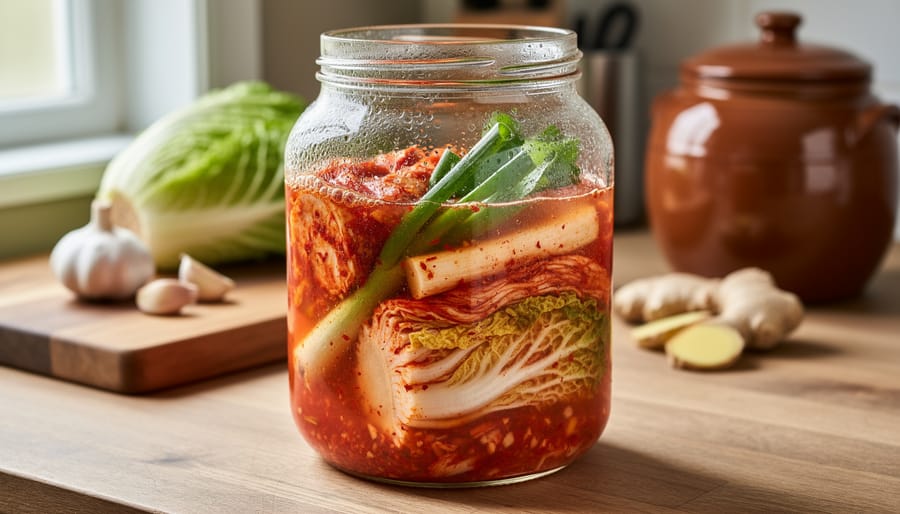
Your gut contains trillions of microorganisms that influence everything from digestion to immunity, and the living bacteria in kimchi can profoundly enhance this internal ecosystem. This traditional Korean fermented food delivers powerful probiotic strains like Lactobacillus plantarum and Leuconostoc mesenteroides directly to your digestive tract, where they help crowd out harmful bacteria, strengthen your intestinal barrier, and even produce vitamins your body needs.
Unlike shelf-stable pickles or pasteurized products, genuine fermented kimchi contains billions of active cultures per serving. These beneficial microbes survive the journey through your stomach acid to colonize your intestines, supporting diverse gut flora that scientists now link to reduced inflammation, improved mental health, and stronger immune function.
The connection between fermented foods and wellness runs deeper than probiotics alone. Kimchi provides prebiotic fiber from cabbage and vegetables that feeds your existing gut bacteria, creating a synergistic effect. The fermentation process also breaks down compounds that can cause digestive discomfort while increasing nutrient bioavailability, making vitamins and minerals easier for your body to absorb.
Sourcing matters tremendously. Mass-produced kimchi often undergoes heat treatment that kills beneficial bacteria, while organic, traditionally fermented versions from local producers maintain their microbial potency. Understanding how to identify quality kimchi and incorporate it meaningfully into your daily routine can transform your digestive wellness while supporting sustainable food systems that prioritize living, nutrient-dense ingredients over industrial convenience.
What Makes Kimchi a Microbiome Powerhouse
The Living Cultures Inside Every Batch
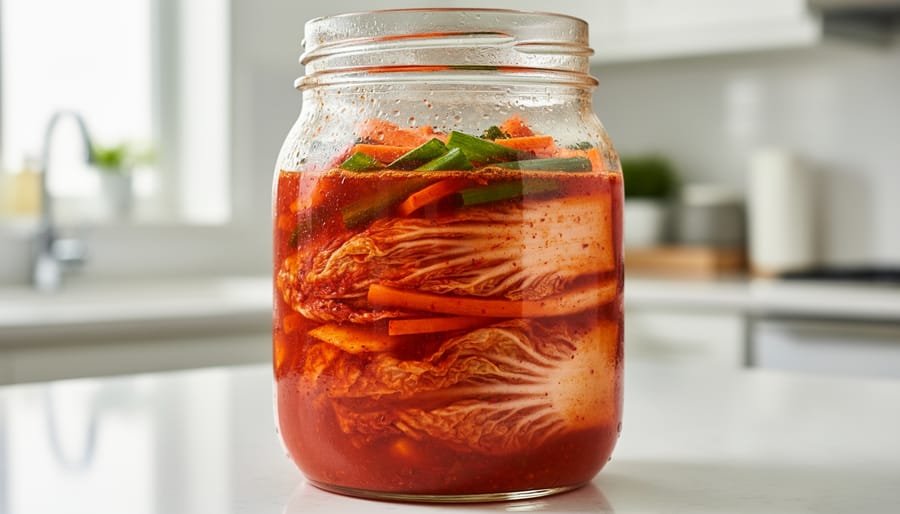
Every spoonful of traditionally fermented kimchi contains billions of beneficial bacteria working to support your digestive health. The most abundant strains include Lactobacillus plantarum, which helps break down food and produce vitamins, and Leuconostoc mesenteroides, known for creating that signature tangy flavor while strengthening your gut lining.
What makes kimchi special is the diversity of these living cultures. Unlike single-strain supplements, fermented vegetables naturally develop multiple probiotic species that work together. Lactobacillus brevis supports your immune system, while Weissella species help maintain the proper pH balance in your digestive tract. These friendly bacteria also produce short-chain fatty acids that reduce inflammation and improve nutrient absorption.
The key to getting these benefits is choosing organic, unpasteurized kimchi. Heat treatment kills the beneficial bacteria, so look for refrigerated versions from local farms or farmers’ markets. Many small-scale organic farmers are now crafting kimchi using their own cabbage and radishes, ensuring the vegetables haven’t been exposed to pesticides that could interfere with the fermentation process. When you support these local producers, you’re getting fresher, more potent probiotics while strengthening sustainable food systems in your community.
Why Organic Ingredients Make a Difference
When you choose organic ingredients for your kimchi, you’re setting the stage for a healthier fermentation process right from the start. Pesticide-free cabbages, radishes, and other organic vegetables provide a cleaner environment where beneficial bacteria can thrive without chemical interference. Research shows that pesticide residues can actually disrupt the growth of probiotic strains during fermentation, reducing the diversity of microorganisms in your final product.
Organic produce also tends to carry more naturally occurring beneficial bacteria on its surface, which contributes to a richer starter culture for fermentation. These native microbes work alongside the salt and natural sugars in your vegetables to create that complex ecosystem of probiotics that makes kimchi so powerful for gut health.
Local organic farmers often harvest vegetables at peak ripeness too, meaning higher nutrient density. When you ferment nutrient-rich ingredients, you’re creating a probiotic food that delivers both live cultures and the vitamins, minerals, and fiber your gut microbiome needs to flourish. It’s a simple choice that makes a real difference in the quality of your fermented foods.
The Science Behind Kimchi and Your Gut Microbiome
Building a Diverse Bacterial Community
When you eat kimchi, you’re introducing billions of beneficial bacteria into your digestive system, particularly strains of Lactobacillus and other lactic acid bacteria that naturally develop during fermentation. Think of it like planting a garden—these friendly microbes settle into your gut and begin to flourish, creating a thriving ecosystem that leaves less room for harmful bacteria to take hold.
This process, called competitive exclusion, is one of kimchi’s greatest gifts to your digestive health. The beneficial bacteria from kimchi actively compete for nutrients and attachment sites along your intestinal walls, effectively crowding out potentially harmful microbes. They also produce natural antimicrobial compounds that further discourage unwanted bacterial growth.
Beyond just adding good bacteria, kimchi promotes gut microbiome diversity—a key marker of digestive wellness. A diverse bacterial community is more resilient, better equipped to handle dietary changes, and more effective at supporting your immune system. The various vegetable ingredients in kimchi, especially when made with organically grown produce, also provide prebiotics—the fiber compounds that feed your beneficial bacteria and help them thrive long after you’ve enjoyed that last spicy, tangy bite.
Beyond Digestion: Whole-Body Benefits
While kimchi’s impact on digestive health is well-documented, its benefits extend far beyond your stomach. The beneficial bacteria in this fermented superfood work throughout your entire system, creating ripple effects that support overall wellness.
Your immune system gets a significant boost from regular kimchi consumption. About 70% of your immune cells actually live in your gut, so when you feed them probiotic-rich foods, you’re essentially fortifying your body’s natural defense system. The living cultures in kimchi help train these immune cells to distinguish between helpful and harmful bacteria, improving your body’s response to potential threats.
Kimchi also excels at inflammation reduction thanks to compounds found in fermented cabbage and the various organic vegetables used in traditional recipes. This anti-inflammatory action may help with everything from joint discomfort to skin health.
Another often-overlooked benefit is enhanced nutrient absorption. When your gut microbiome is balanced and healthy, your body becomes more efficient at extracting vitamins and minerals from the foods you eat. Those organic vegetables from your CSA box deliver even more nutritional value when your digestive system is functioning optimally, making kimchi a perfect companion to your farm-fresh produce.
Making Your Own Kimchi: A Farm-to-Jar Journey
Sourcing Organic Vegetables for Maximum Benefits
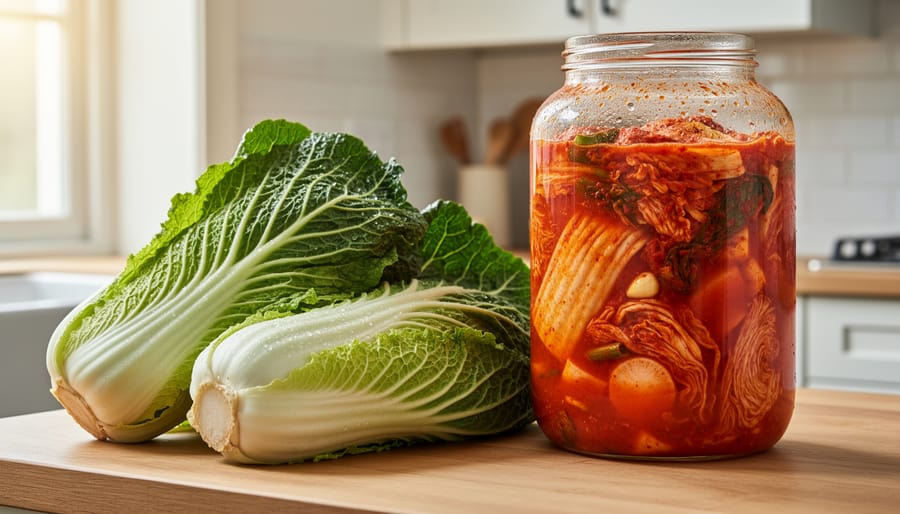
The quality of your kimchi starts with the vegetables you choose, and there’s no better source than local CSA farms or farmers markets. When shopping for kimchi ingredients, timing matters. Fall and winter napa cabbage tends to be sweeter and crisper, making it ideal for fermentation. Look for heads that feel heavy for their size with tightly packed, vibrant green outer leaves—these indicate freshness and nutrient density.
At your local farmers market, chat with growers about their practices. Organic vegetables grown in healthy, living soil contain more beneficial microbes that contribute to your kimchi’s probiotic diversity. Don’t worry about minor blemishes or irregular shapes; these are signs of chemical-free growing methods and won’t affect fermentation quality.
For daikon radishes and carrots, choose firm specimens without soft spots. Green onions should have crisp, bright green tops. Since you’ll be eating these vegetables raw and fermented, organic really matters—you’re preserving everything, including any pesticide residues from conventional farming.
Consider buying direct from farms through CSA subscriptions. Many farmers harvest vegetables the same day you pick them up, ensuring maximum freshness and microbial vitality. This farm-to-fermentation approach gives you the best possible foundation for creating gut-healthy kimchi while supporting your local agricultural community.
Simple Steps to Start Fermenting
Making your own kimchi at home is surprisingly simple and incredibly rewarding. Start by gathering your ingredients: napa cabbage, Korean chili flakes (gochugaru), garlic, ginger, sea salt, and optional additions like radish or green onions. Choose organic produce whenever possible to avoid pesticides that might interfere with beneficial fermentation bacteria.
Begin by salting your quartered cabbage for about two hours to draw out moisture and create the perfect environment for fermentation. Rinse thoroughly, then prepare your spice paste by mixing gochugaru, minced garlic, grated ginger, and a bit of salt. Massage this paste between each cabbage leaf, pack everything tightly into a clean jar, and press down to release air bubbles.
Leave your jar at room temperature for three to five days, pressing down daily to keep vegetables submerged in their brine. You’ll notice bubbling as fermentation begins, which means those beneficial microbes are hard at work. Once it reaches your preferred tanginess, move it to the refrigerator to slow fermentation.
Common troubleshooting tip: If your kimchi seems dry, simply add a saltwater brine to keep everything covered. This prevents mold and ensures even fermentation throughout.
Creating the Right Environment for Good Bacteria
Creating the perfect home for beneficial bacteria during kimchi fermentation is simpler than you might think. Start with clean, organic vegetables and let them ferment at room temperature, ideally between 65-75°F. During the first 3-5 days, lactobacillus bacteria naturally present on the vegetables begin converting sugars into lactic acid, which creates an acidic environment that keeps harmful bacteria away. This is your fermentation sweet spot. Once you see bubbles forming and smell that signature tangy aroma, move your kimchi to the refrigerator to slow the process. The cold preserves those probiotic powerhouses while preventing over-fermentation. Remember, you’re working with nature here, not against it. Using organically grown cabbage and ingredients means you’re starting with produce that hasn’t been treated with chemicals that might interfere with good bacteria growth. Think of it as creating a thriving neighborhood where beneficial microbes can flourish naturally.
Incorporating Kimchi Into Your Daily Routine
How Much Kimchi Does Your Gut Need
Good news for kimchi lovers—you don’t need massive amounts to reap gut health benefits! Most nutritionists recommend starting with 1-2 tablespoons per day, gradually increasing to about half a cup daily as your digestive system adjusts to the probiotics. This modest serving delivers billions of beneficial bacteria without overwhelming your gut or loading up on sodium.
For beginners, try incorporating kimchi into meals 3-4 times weekly. Listen to your body—some people thrive on daily servings, while others prefer every other day. The key is consistency rather than quantity. Organic, locally fermented kimchi from your CSA or farmers market offers the most active cultures, as these artisanal batches haven’t been pasteurized like many store-bought versions. Sarah Chen, an organic farmer in Oregon, notes that her customers report the best results when they make kimchi part of their regular routine, pairing it with seasonal vegetables for maximum digestive support. Remember, fermented foods work best alongside a diverse, plant-rich diet rather than as a standalone solution.
Easy Ways to Enjoy Kimchi Beyond the Jar
Getting kimchi into your daily routine doesn’t require fancy recipes or culinary expertise. Start simple by adding a forkful to your morning scrambled eggs or omelet for a probiotic breakfast boost with a flavorful kick. Layer it into grilled cheese sandwiches or quesadillas, where the melting cheese balances kimchi’s tangy bite perfectly.
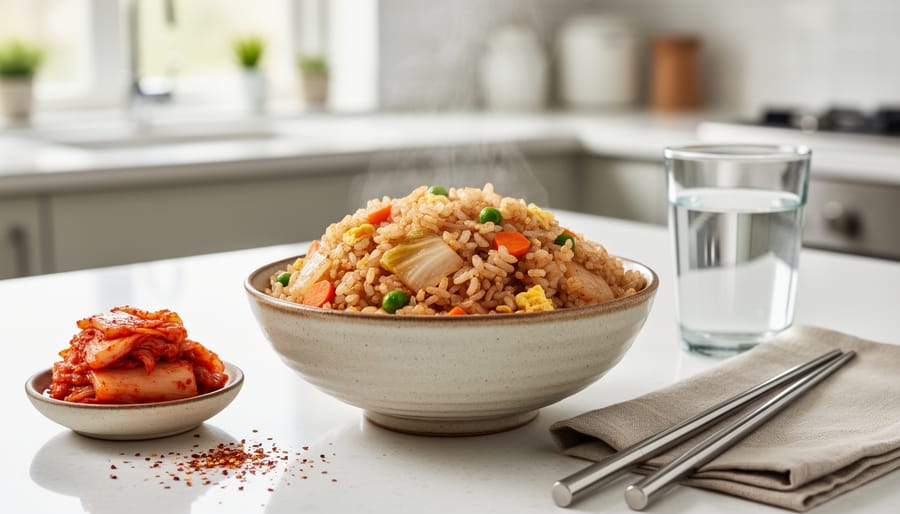
For lunch, toss chopped kimchi into grain bowls with quinoa or brown rice, roasted vegetables, and a protein of your choice. The fermented cabbage adds complexity without extra effort. Mix it into tuna or chicken salad for sandwiches that pack extra nutrition and zing.
Dinner becomes more interesting when you top baked potatoes, burgers, or tacos with kimchi instead of traditional condiments. Even pizza lovers can experiment by sprinkling it over slices fresh from the oven.
If you’re feeling adventurous, blend kimchi into dips like hummus or cream cheese spreads for crackers and crudités. The beauty of kimchi lies in its versatility—start with small amounts and adjust to your taste preferences. Remember, you’re not just adding flavor; you’re feeding your gut microbiome with every delicious bite, supporting your digestive health through simple, sustainable food choices.
Farmer Spotlight: Growing Kimchi Ingredients the Organic Way
Meet Sarah Chen, a third-generation farmer who’s transformed her family’s 15-acre farm into a thriving CSA operation specializing in Korean vegetables for kimchi. Her journey into organic farming began when she noticed that her grandmother’s homemade kimchi tasted different depending on where the vegetables came from.
“I realized that soil health directly impacts the quality of fermentation,” Sarah explains while walking through rows of vibrant napa cabbage. “When vegetables are grown in nutrient-rich, living soil, they develop stronger cell structures and higher levels of natural beneficial bacteria, which creates better conditions for lacto-fermentation.”
Sarah practices a careful four-year crop rotation system, alternating her kimchi vegetables with nitrogen-fixing cover crops like clover and vetch. This approach naturally enriches the soil without synthetic fertilizers. Between growing seasons, she adds compost made from vegetable scraps and aged manure, creating a thriving ecosystem of microorganisms that mirror the beneficial bacteria found in fermented foods.
Her farm grows traditional kimchi staples including napa cabbage, Korean radish, green onions, and garlic. She’s discovered that organic methods produce vegetables with more complex flavor profiles. “The slower growth rate in organic farming allows vegetables to develop deeper flavors and more concentrated nutrients,” she notes. “My CSA members tell me the difference is noticeable in their finished kimchi.”
One key insight Sarah shares is timing the harvest. “We pick vegetables at peak maturity in cooler weather, which gives them a natural crispness that holds up beautifully during fermentation.” She also avoids washing vegetables too aggressively before delivery, preserving some of the beneficial soil microbes that can contribute to the fermentation process.
For aspiring kimchi gardeners, Sarah recommends starting small with napa cabbage and daikon radish. “These crops are forgiving and respond well to organic methods. Focus on building healthy soil first, and the vegetables will take care of themselves.”
Other Fermented Foods That Support Gut Health
While kimchi deserves its spotlight in the fermented foods family, creating a thriving gut microbiome is all about diversity. Think of your digestive system as a garden—the more varied the plantings, the healthier the ecosystem. Each fermented food brings its own unique community of beneficial bacteria to the table.
Sauerkraut, kimchi’s European cousin, offers Lactobacillus plantarum and other strains that complement those found in kimchi. Made simply from cabbage and salt, it’s wonderfully accessible for home fermenters and pairs beautifully with local organic cabbage from your CSA box.
Kombucha introduces beneficial yeasts alongside bacteria, creating a fizzy probiotic drink that supports gut health from a different angle. When sourced from local organic producers, you’re getting living cultures without the industrial processing that can diminish beneficial microbes.
Kefir, whether made from dairy or water, provides an entirely different spectrum of probiotic strains—sometimes up to 60 varieties in a single serving. This fermented beverage has been shown to support digestive health and immune function.
The beauty of exploring various fermented foods for gut health is that each one contributes unique bacterial strains, creating a more resilient and diverse microbiome. Rotate these foods throughout your week, sourcing organic options when possible to avoid pesticides that can harm beneficial gut bacteria. Your digestive system will thank you for the variety.
The journey to better gut health through kimchi beautifully illustrates how personal wellness connects to sustainable food systems. By choosing organic, locally fermented foods, you’re not just nourishing your microbiome with billions of beneficial bacteria—you’re supporting farmers who steward the land responsibly and keep harmful chemicals out of your food chain.
Starting your kimchi journey doesn’t require a complete lifestyle overhaul. Begin by visiting your local farmers market to find fresh, organic cabbage and vegetables from nearby growers. Many CSA programs now include fermented foods in their seasonal shares, making it easier than ever to access quality kimchi while directly supporting sustainable agriculture. If you’re feeling adventurous, try making a small batch at home using locally sourced produce.
Remember, every jar of organic kimchi you choose creates a ripple effect. You’re investing in your digestive health, reducing your environmental footprint, and helping local farmers thrive. This simple act of mindful eating transforms you from a passive consumer into an active participant in building a more sustainable food system. Your gut—and your community—will thank you for it.
