
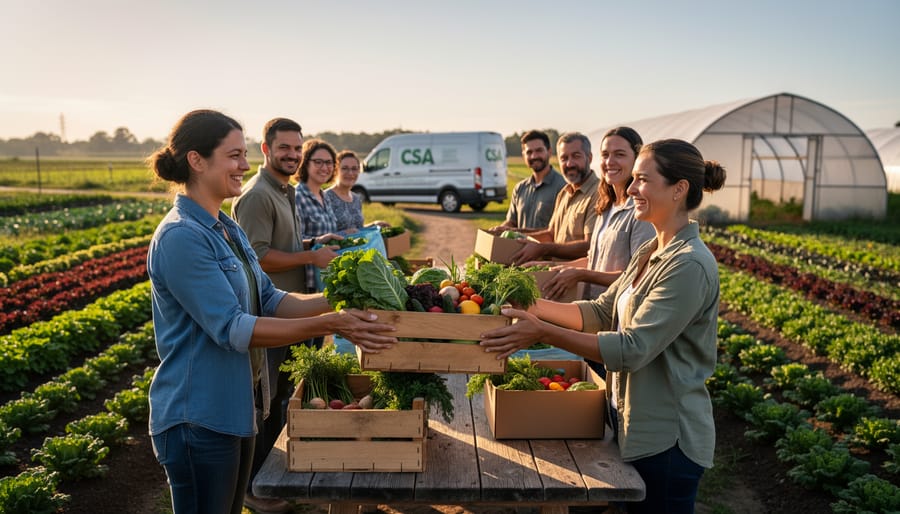
Community Supported Agriculture represents something extraordinary: a living, breathing office of food systems resilience that exists not in government buildings, but in the fields, farmers markets, and neighborhoods where you live. While institutions debate policy frameworks, CSA farms are already building the infrastructure that protects communities from supply chain disruptions, climate uncertainty, and food insecurity.
Picture your local CSA farmer as a resilience officer working on the front lines. When a Sarah Martinez in Vermont lost 40% of her tomato crop to unexpected flooding, her diversified CSA model meant members still received abundant weekly shares of lettuce, root vegetables, and herbs. This isn’t just farming—it’s risk distribution in action. Each CSA share you purchase funds a system designed to absorb shocks that would cripple conventional food chains.
The resilience mechanism works through three interconnected principles: agricultural diversity creates backup options when single crops fail, local distribution networks eliminate vulnerable transportation dependencies, and direct farmer-member relationships enable rapid adaptation to changing conditions. When the pandemic emptied grocery shelves in 2020, CSA farms expanded output within weeks because the infrastructure already existed.
Understanding this connection between institutional concepts and grassroots practice matters because resilience isn’t theoretical—it’s the food on your table during the next crisis. Whether you’re a researcher analyzing food security systems, a consumer worried about supply stability, or an aspiring farmer seeking viable models, recognizing CSA as practical resilience architecture transforms how you engage with local food. The office of food systems resilience isn’t something to study from a distance. It’s something you join, one weekly vegetable box at a time.
What Is an Office of Food Systems Resilience?
In traditional governmental and organizational contexts, an “office of food systems resilience” refers to a dedicated department or initiative focused on strengthening the stability and adaptability of local food networks. These offices typically coordinate strategies to ensure communities can access nutritious food during disruptions like extreme weather, supply chain breakdowns, or economic challenges. They work on policy development, infrastructure support, and connecting various stakeholders in the food system.
Here’s the fascinating part: Community Supported Agriculture farms function as decentralized, grassroots versions of these offices. Instead of operating from a bureaucratic structure, CSA farms embody food systems resilience through their daily operations and relationships with members. They’re living laboratories of sustainable agriculture practices that directly strengthen local food security.
CSA farms build resilience through four core principles. First, diversification means growing multiple crop varieties rather than relying on single products, protecting both farmers and members from total crop failures. If aphids damage the lettuce, there’s still kale, carrots, and tomatoes thriving in the fields.
Second, localization keeps food production close to consumers, dramatically reducing vulnerability to distant supply chain disruptions. Your weekly vegetables travel miles, not thousands of miles, from farm to table.
Third, relationship-building creates direct connections between farmers and eaters. These personal bonds foster mutual support and shared investment in each other’s success. Members understand seasonal challenges, while farmers gain loyal customers who stick with them through tough years.
Finally, adaptive capacity allows CSA farmers to respond quickly to changing conditions. Without corporate red tape, they can shift planting schedules, try new varieties, or adjust distribution methods based on immediate needs and feedback.
Together, these principles transform individual CSA farms into community anchors that quietly but powerfully strengthen food system resilience from the ground up, one harvest share at a time.
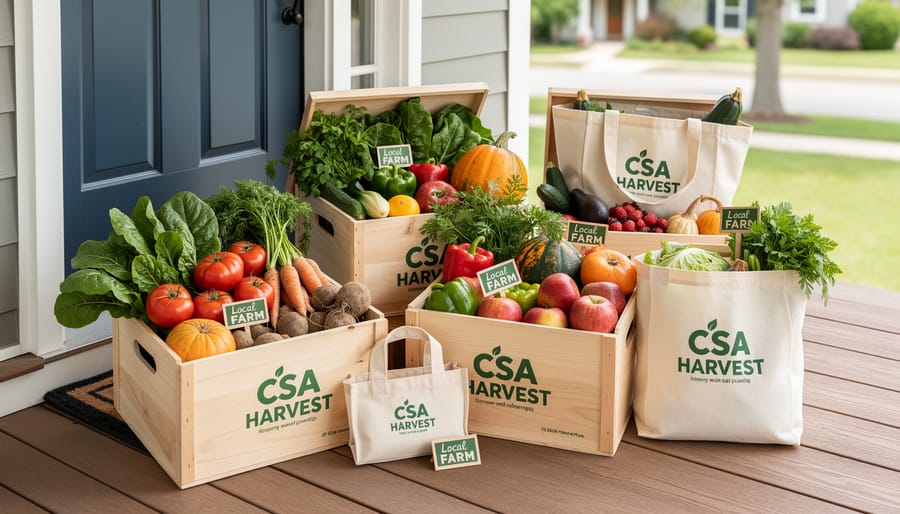
How CSA Farms Strengthen Local Food Security
Reduced Dependence on Long Supply Chains
Community Supported Agriculture dramatically shortens the distance between farm and table, typically eliminating the complex web of intermediaries that conventional food systems rely upon. Instead of produce traveling through multiple distribution centers, warehouses, and retail chains, your vegetables might journey just a few miles from field to pickup location.
This simplified pathway creates remarkable stability. When fuel prices spike or transportation strikes disrupt grocery store deliveries, CSA members continue receiving their weekly shares. The direct farm-to-consumer model doesn’t depend on interstate trucking networks or cross-country shipping routes that can be affected by weather events, infrastructure failures, or labor disputes.
Consider Sarah Chen’s organic farm in Vermont, which maintained consistent deliveries throughout regional supply disruptions that left supermarket shelves empty. Her 200 CSA members received fresh produce while conventional distribution channels struggled to recover.
This resilience extends beyond crisis situations. By reducing dependence on fossil fuel-intensive transportation, CSA farms protect members from the cascading price increases that ripple through long supply chains. You’re investing in a food source that remains accessible and affordable regardless of external economic pressures, building genuine food security right in your community.
Direct Producer-Consumer Relationships Build Trust and Transparency
When you join a CSA program, you’re not just buying vegetables—you’re building a relationship that transforms how you think about food. This direct connection between you and your farmer creates a level of accountability and trust that simply doesn’t exist in conventional food systems.
Knowing exactly where your food comes from and who grows it opens doors to ongoing education. CSA farmers often share weekly newsletters explaining what’s growing, how weather affects crops, and tips for preparing less familiar vegetables. This knowledge exchange helps you become a more informed eater and supports your journey toward sustainable living.
During challenging times, these relationships prove invaluable. When supply chains faltered during recent crises, CSA members continued receiving fresh produce while grocery store shelves sat empty. The mutual support network—farmers committed to feeding their community, members invested in their farmer’s success—creates resilience that withstands disruption.
Take Maria Santos, who started her small organic farm five years ago with just ten CSA members. When unexpected late frosts threatened her early crops, her members rallied, helping with emergency frost protection and accepting adjusted share contents without complaint. Today, her thriving operation serves 150 families, and many of those original members have become close friends. Maria credits this loyalty network with keeping her farm viable during difficult seasons.
This reciprocal relationship—where both parties understand and support each other’s needs—forms the backbone of genuine food system resilience at the grassroots level.
Crop Diversity Protects Against Single-Point Failures
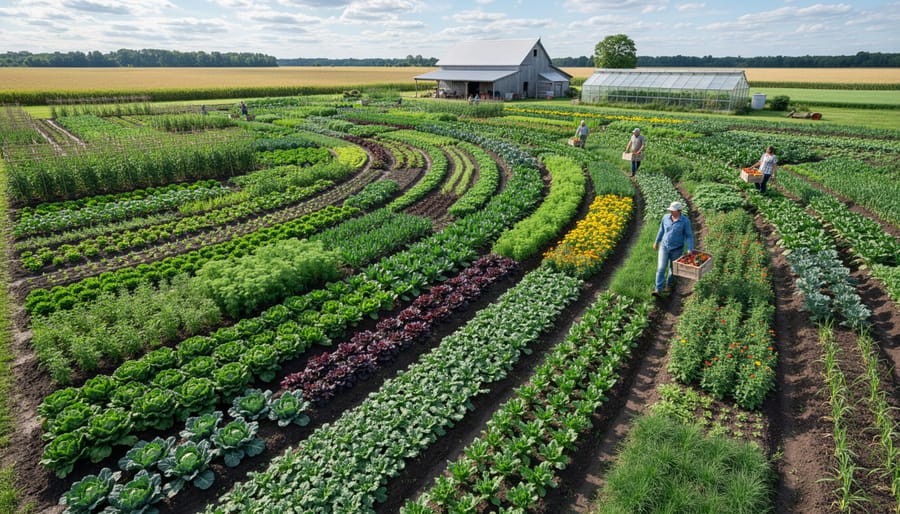
Community Supported Agriculture farms embrace crop diversity as a cornerstone of their resilience strategy. While industrial operations often dedicate hundreds of acres to a single crop, CSA farms typically cultivate 40 or more different varieties throughout the growing season. This approach creates natural insurance against the unexpected challenges that inevitably arise.
When disease strikes one crop or weather patterns favor certain plants over others, CSA farmers have multiple backup options already growing in their fields. A late frost might damage early tomatoes, but leafy greens and root vegetables keep the harvest boxes full. If market prices plummet for one vegetable, the farm’s income remains stable through its diverse portfolio.
Take Green Valley Farm, which grows 52 crop varieties annually. Last season, their cucumber crop failed due to bacterial wilt, but members hardly noticed because zucchini, summer squash, and beans thrived. This built-in redundancy means CSA members receive consistent weekly shares regardless of individual crop performance, while farmers avoid the financial devastation that monoculture operations face when their single crop fails.
Financial Resilience Through Shared Risk
Community Supported Agriculture operates on a unique shared risk model that strengthens both farmers and communities. Members pay upfront at the beginning of the growing season, providing farmers with crucial capital when they need it most—before planting seeds, purchasing supplies, or making equipment repairs.
This pre-season funding model creates a financial cushion that helps farmers weather unpredictable challenges like droughts, floods, or pest outbreaks. Instead of shouldering these risks alone, farmers share them with their members. When heavy rains damage the tomato crop, members understand they’ll receive fewer tomatoes that week. Conversely, when conditions favor bumper crops of zucchini or lettuce, everyone celebrates the abundance together.
Take the example of Green Valley Farm in Ontario, where early payment from 75 member families allowed farmer Maria Chen to install a greenhouse. When an unexpected late frost hit in May, her protected seedlings survived while neighboring farms lost entire crops. Her CSA members still received their weekly shares, demonstrating how shared investment builds genuine resilience.
This arrangement transforms the traditional farmer-consumer relationship into a partnership where both parties invest in long-term food security rather than short-term transactions.
Real-World Examples of CSA Resilience in Action
When the pandemic brought grocery store disruptions and uncertainty in 2020, members of Green Valley CSA in Vermont experienced something remarkable: they never missed a weekly harvest. While supermarket shelves emptied and supply chains faltered, the farm quickly adapted by implementing contactless pickup stations and pre-packed boxes. Member retention soared to 98%, and the farm added 150 new families to their waiting list. Farmer Sarah Chen shares that this crisis actually strengthened their community, with members volunteering to help elderly neighbors collect their shares and creating a rotating harvest crew when migrant workers couldn’t travel.
The 2022 drought in California’s Central Valley tested Three Sisters Farm differently. When water restrictions threatened their crops, CSA members rallied in unexpected ways. The farm transparently shared their irrigation challenges through weekly newsletters, explaining which crops might be affected. Members voted to accept smaller, more diverse boxes rather than cancel shares. The farm pivoted to drought-resistant varieties like amaranth and tepary beans, introducing members to traditional crops that thrive in arid conditions. By season’s end, the farm maintained 85% of projected yields and educated hundreds of families about climate-adaptive agriculture. Member Tom Rivera notes that receiving those resilient crop varieties actually inspired his own backyard garden transformation.
During the 2021 economic downturn, Riverside Community Farm in Ohio faced a different challenge when 40% of members requested payment plan modifications. Instead of reducing membership, the farm created a flexible payment system with seasonal installments and introduced a work-share program. Members could contribute farm labor in exchange for reduced costs, while simultaneously learning sustainable farming techniques. Twenty families participated in work-shares, and several members later started their own market gardens. The farm not only retained nearly all members but built deeper connections through hands-on involvement.
These stories illustrate how CSA models create built-in flexibility during crises. The direct farmer-member relationship enables rapid communication, creative problem-solving, and mutual support that conventional food systems simply can’t match. When challenges arise, CSA communities don’t just survive—they innovate together and often emerge stronger than before.
What You Can Do: Building Personal Food Resilience Through CSA
Choosing the Right CSA for Your Needs
Finding the right CSA starts with understanding your household’s needs and values. When choosing a CSA, ask farmers about their growing practices, particularly their approach to soil health, water conservation, and biodiversity. These factors directly impact food systems resilience.
Key questions to consider: What percentage of crops are grown organically? Do they save seeds or source heirloom varieties? How do they handle unexpected weather events or crop failures? Understanding their distribution methods matters too. Does the farm offer flexible pickup locations, home delivery, or farm visits? Can members swap items they don’t use?
Look for farms that demonstrate commitment to resilience through diversified crops, community education programs, and transparent communication. Many successful CSA farmers share their challenges openly, building trust through honesty about seasonal variations and harvest realities.
Don’t hesitate to visit potential farms before committing. Walking the fields, meeting the growers, and seeing their practices firsthand provides invaluable insight. Consider starting with a half-share or trial period to ensure the partnership fits your lifestyle and supports genuine food system resilience in your community.
Becoming an Active Member, Not Just a Consumer
Joining a CSA isn’t just about picking up your weekly produce box. The most rewarding experiences come when you dive deeper into the farming community. Many CSA farms welcome volunteers for harvest days, where you can get your hands in the soil alongside farmers and learn firsthand about organic growing practices. These opportunities transform passive consumers into active participants who truly understand where their food comes from.
Consider participating in a work share program, where you exchange a few hours of farm labor each week for a reduced membership fee. Members often find these experiences therapeutic and educational, gaining practical skills they can apply in their own gardens. Farm events like seasonal celebrations, potlucks, and workshops create natural gathering spaces where you’ll connect with like-minded neighbors who share your values around sustainable food.
This deeper engagement strengthens community resilience while enriching your own life. Sarah, a third-year CSA member, shares: “Volunteering during strawberry season changed everything for me. I made friends, learned pruning techniques, and now I feel like I’m part of something bigger than just buying groceries.”
Start small by attending one farm event this season, then explore volunteer opportunities that fit your schedule.
Supporting Policy and Community Initiatives
You can strengthen your local food system by engaging with community-based initiatives that make fresh, locally grown food accessible to everyone. Farmers markets serve as vital gathering spaces where you can connect directly with growers, learn about seasonal produce, and support agricultural diversity in your region. By shopping at these markets regularly, you’re helping small-scale farmers sustain their operations while enjoying the freshest ingredients.
Community gardens offer hands-on opportunities to grow food alongside neighbors, sharing knowledge and resources while building skills in sustainable gardening practices. These spaces often welcome beginners and provide a low-barrier entry point for those curious about growing their own organic vegetables.
Local food policy councils bring together farmers, consumers, and community leaders to identify challenges and create solutions that benefit everyone in the food system. Participating in public meetings or joining working groups allows you to contribute your perspective and learn how food moves from farm to table in your area. These collaborative efforts help shape a more resilient food future without requiring specialized expertise—just genuine interest in supporting local agriculture and food access for all.
Every time you purchase a CSA share, you’re making a powerful investment that ripples far beyond your kitchen table. You’re strengthening the safety net of local food systems, supporting farmers who steward the land responsibly, and building genuine resilience against supply chain disruptions and climate uncertainty. These individual choices, when multiplied across communities, create the collective action that transforms our food landscape from fragile to flourishing.
The beauty of CSA membership lies in its simplicity. While policymakers and researchers discuss food systems resilience in boardrooms, you can actively participate in building it right where you live. Each week’s harvest box represents a direct connection to the soil, the seasons, and the people who grow your food. This connection isn’t just sentimental; it’s the foundation of true food security.
Ready to take that first step? Finding your local CSA farm is easier than you might think. Search online directories, visit farmers markets, or ask neighbors who already participate. Many farms offer farm tours, workshare programs, and flexible payment plans to make membership accessible. Your journey toward resilient, community-centered food starts with a single conversation with a farmer. Reach out today and become part of the solution.
