Category Archives

61 Articles

Why Your CSA Farm Needs Transparency More Than Marketing

Posted by darrell on
0
CSA Fundamentals and Benefits
Why Your CSA Farm Needs Transparency More Than Marketing

When you pick up your weekly CSA box, you’re holding more than fresh vegetables—you’re holding a promise. But how do you know if that promise is real? Transparency in farming isn’t just a buzzword; it’s the bridge between what farmers say and what they actually do, and understanding whether it qualifies as a genuine value shapes everything from your food choices to your farm’s business strategy.

For CSA farmers wondering if open-door policies are worth the effort, and for consumers questioning whether a farm’s Instagram posts reflect reality, this matters deeply. The Community Supported Agriculture model thrives on trust, but trust without verification becomes blind faith. Real transparency means inviting members to visit fields unannounced, sharing both harvest triumphs and crop failures, documenting growing practices with photos and soil tests, and explaining exactly where your membership dollars go.

Consider Sarah Chen’s farm in Ontario, which started posting weekly video updates from the fields. Member retention jumped 40% not because her vegetables got better, but because people finally understood the daily realities of organic farming—the late blight that devastated tomatoes, the unexpected surplus of kale, the reasons behind price adjustments. That openness transformed transparency from a nice-to-have into her farm’s most valuable asset.

The question isn’t whether transparency sounds good philosophically. It’s whether radical honesty about your farming practices creates measurable benefits for your business and genuinely empowers consumers to make informed choices.

What Transparency Actually Means in CSA Farming

In the world of Community Supported Agriculture, transparency isn’t just another trendy marketing term plastered on websites to attract customers. It’s a concrete commitment to openness that fundamentally shapes the relationship between farmers and their community members. But what does this actually look like in practice?

At its core, transparency in CSA farming means you know exactly where your food comes from and how it was grown. This goes far beyond a simple organic certification label. When a CSA farm practices genuine transparency, you’ll receive regular updates about what’s happening in the fields—which crops are thriving, what challenges the weather might be creating, and even when things don’t go as planned.

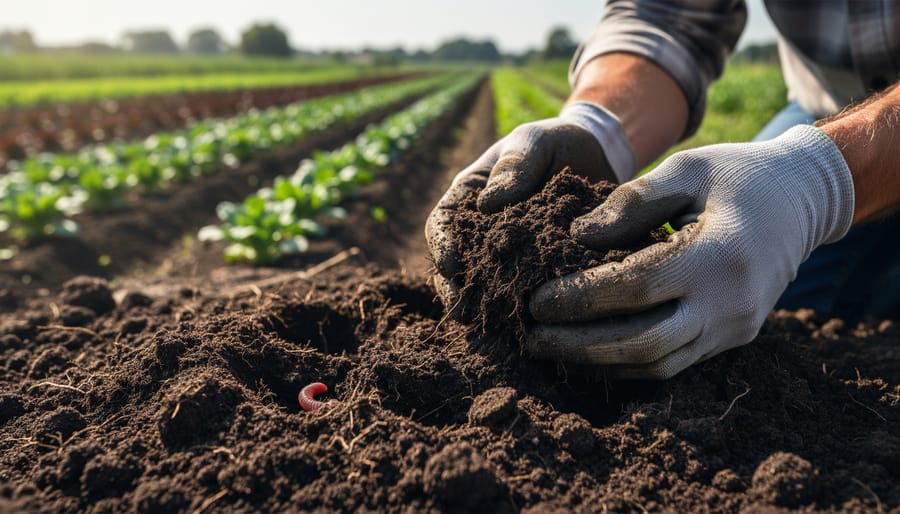
Open communication forms the foundation. This includes sharing detailed information about farming practices, from soil amendments and pest management strategies to seed varieties chosen for each season. You shouldn’t need a detective to figure out what methods your farmer uses. They should readily share this information through newsletters, farm visits, or social media updates.

Financial clarity is another essential element that separates authentic transparency from mere marketing speak. Honest CSA farms often explain their pricing structure, showing members where their investment actually goes—whether that’s covering labor costs, purchasing quality seeds, or maintaining infrastructure. This doesn’t mean sharing every financial detail, but providing enough context so members understand the real economics of small-scale farming.

Complete traceability represents the final piece. Every carrot, tomato, and bunch of kale in your share box should have a clear story. Which field did it grow in? When was it harvested? What variety is it? This seed-to-harvest knowledge transforms your weekly produce from anonymous vegetables into food with history and meaning, strengthening your connection to the land that nourished it.

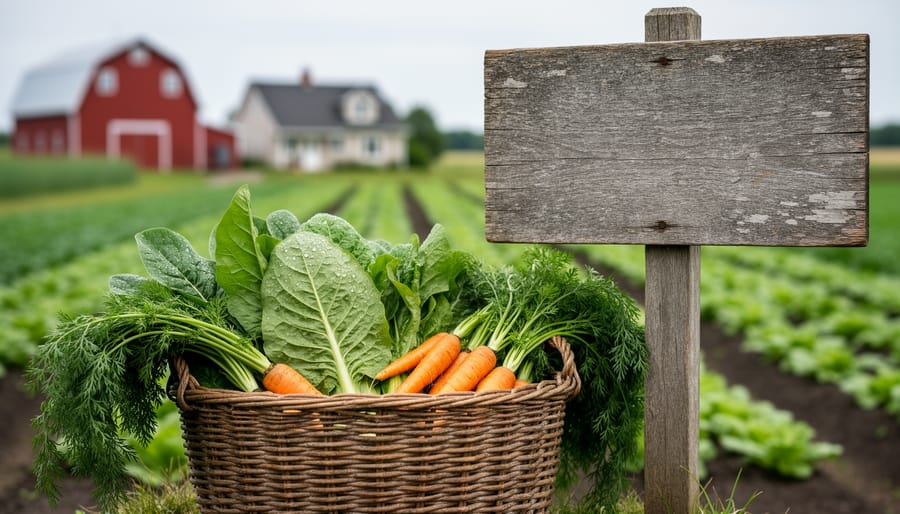
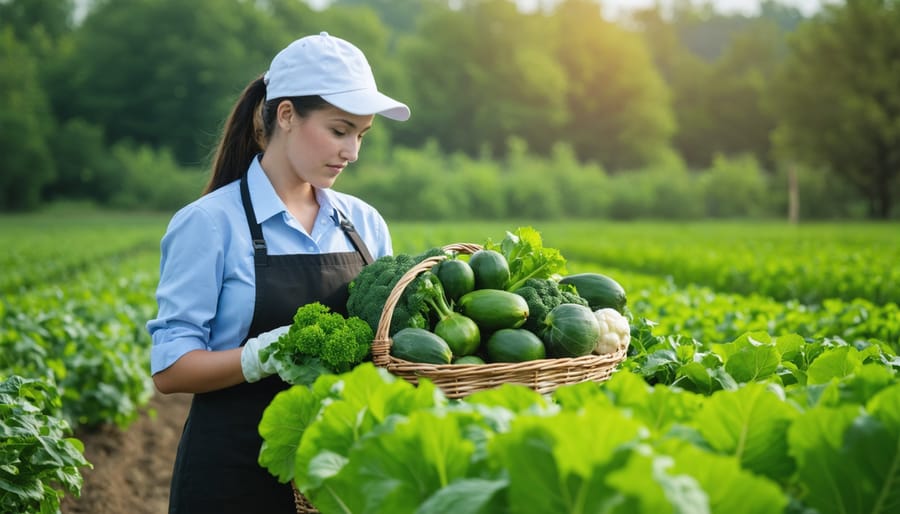
Farmer's hands holding freshly harvested vegetables in wooden basket with farm field in background
Direct harvest-to-member connection defines the Community Supported Agriculture model, where transparency begins with knowing exactly where your food comes from.

When Transparency Functions as a Business Strategy

The Trust Economy: How Openness Converts Customers

When customers know exactly where their food comes from and how it’s grown, something remarkable happens: they become loyal advocates. Transparency isn’t just good ethics—it’s smart business for CSA farms. By opening your farm gates through field days, sharing weekly harvest updates, or posting behind-the-scenes stories on social media, you’re building trust with members that translates into real economic benefits.

Consider Sarah’s organic farm in Vermont, which began sending detailed growing notes with each box. Within two seasons, her member retention jumped from 60% to 85%, and referrals doubled. Members felt connected to their food’s journey and happily paid premium prices because they understood the care behind each carrot and tomato.

Transparent farms also weather challenges better. When crop failures happen, members who’ve witnessed your sustainable practices throughout the season become understanding partners rather than disappointed customers. They know you’re doing everything possible to grow healthy food responsibly. This trust creates financial stability through consistent membership renewals and word-of-mouth marketing that no advertising budget could buy. Openness becomes your competitive advantage in an increasingly crowded marketplace.

Traceability as Your Competitive Edge

When food safety scares hit the news—whether it’s E. coli in romaine or listeria in packaged salads—CSA farms have a distinct advantage. Unlike grocery store produce that passes through multiple handlers and distribution centers, your farm knows exactly which field grew Tuesday’s carrots and which members received them. This level of traceability isn’t just impressive; it’s powerful.

During recalls, conventional suppliers often must dump entire harvests because they can’t pinpoint the contamination source. Your CSA, however, can trace every vegetable back to its exact planting date, field location, and harvest crew. This means you can quickly identify and address any issues while reassuring members with concrete details about their food’s journey.

This precision builds member confidence in ways supermarkets simply can’t match. When parents ask about pesticide use on the spinach their toddler eats, you can pull up field records showing organic practices for that specific bed. When someone with allergies needs to know if equipment touched certain crops, you have answers immediately.

One Massachusetts farmer shared how her detailed harvest logs helped a member’s doctor identify a previously unknown sensitivity to a specific heirloom tomato variety—something impossible without complete traceability. These moments transform transparency from a buzzword into genuine care that keeps members loyal through seasons and years.

When Transparency Becomes a Core Value

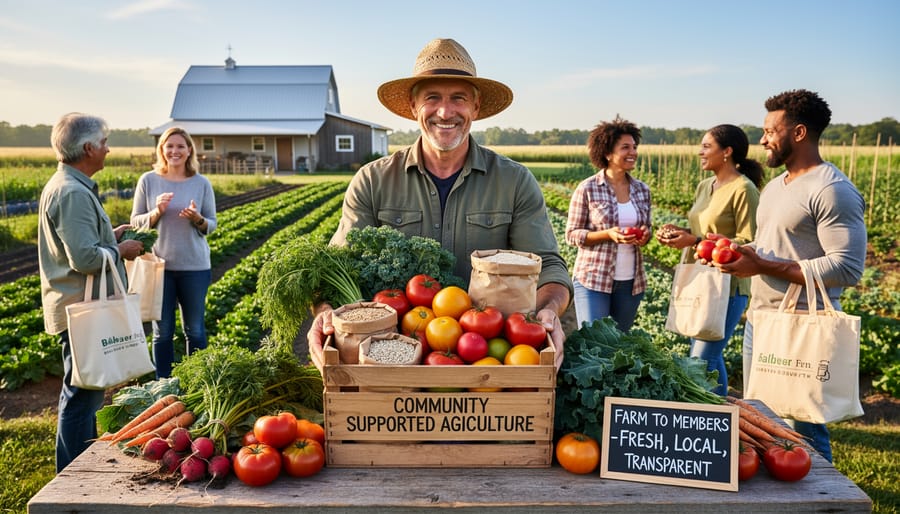
Farmer and CSA member examining fresh produce together in farm field
Open communication between farmers and CSA members builds the trust foundation that sustains community-based agriculture through both abundant harvests and challenging seasons.

The Hard Conversations: Sharing Bad News with Members

Transparency gets tested when things go wrong, and how farmers handle these moments reveals whether openness is truly a core value. Take Three Springs Farm in Oregon, where late blight destroyed their tomato crop mid-season. Rather than staying silent, they sent members detailed updates about the problem, explained the organic treatment options they tried, and offered cherry tomatoes as a substitute. The response? Members appreciated the honesty and many even volunteered to help with cleanup.

At Willow Creek CSA in Vermont, aphid infestations reduced their lettuce yields by 40% one summer. Their farmer, Maria, shared weekly photo updates showing the pest pressure and her management strategies. Sharing challenges with members strengthened their community rather than weakening it. Several members with gardening experience offered advice, creating valuable dialogue.

Price increases present another difficult conversation. When Rising Sun Farm needed to raise shares by 15% due to labor costs, they provided a transparent breakdown of expenses. They explained wages, seed costs, and infrastructure needs. Members overwhelmingly renewed their memberships, with some even paying extra to support fair wages.

These examples demonstrate that transparency during hard times builds trust and loyalty. Members don’t expect perfection; they expect honesty and communication about the realities of farming.

Beyond What’s Required: Going the Extra Mile

Some farmers choose transparency not because customers demand it, but because openness simply reflects who they are. Take Sarah Chen of Riverbend Farm, who publishes detailed weekly growing logs on her website, documenting everything from seed varieties to pest management decisions. She shares her soil testing results each season and even posts financial breakdowns showing exactly where member fees go. “I’m not required to do this,” Sarah explains, “but it keeps me accountable and helps other farmers learn from my experiences.”

Similarly, Mark Thompson at Green Valley CSA goes beyond sustainable farming practices by offering farm walks where members can photograph and measure anything they’re curious about. He maintains a digital library of crop rotation plans dating back five years and openly discusses both successes and failures.

These farmers view transparency as a core value rather than a marketing strategy. The effort requires extra time—Sarah estimates three hours weekly for documentation—but both report deeper member relationships and increased retention. Their openness creates educational opportunities for aspiring farmers and sets new standards within their communities. While not every farm needs this level of detail, their examples demonstrate how genuine transparency, driven by personal values rather than external pressure, can transform a CSA into something more: a learning community built on trust and shared commitment to conscious food production.

The Real Benefits of Traceability in CSA Models

Farm-to-Table in Real Time

Modern CSA farms are proving that transparency doesn’t require expensive technology or complicated systems. The most effective farms keep it beautifully simple. Weekly newsletters have become a cornerstone of transparent communication, with farmers sharing updates about what’s growing, weather challenges they’re facing, and what members can expect in upcoming harvest boxes. These aren’t corporate bulletins—they’re personal notes that might include a photo of seedlings emerging or a quick tip for storing root vegetables.

Social media has opened another window into farm life. Instagram stories showing morning harvest routines or Facebook posts about unexpected frost damage create real-time connections. One Pennsylvania farmer shares that her candid posts about crop failures actually strengthened member loyalty because people appreciated the honesty.

Farm visits remain the gold standard for transparency. Open-farm days, volunteer opportunities, and simple “stop by anytime” policies let members see operations firsthand. When children can touch the soil where their carrots grew or watch farmers at work, transparency transforms from concept to lived experience. These straightforward practices build trust without requiring farmers to become marketing experts—just authentic storytellers sharing their daily reality.

Safety and Accountability Built In

When you know exactly where your carrots were grown and who harvested them, food safety becomes a natural byproduct rather than an afterthought. Traceability creates an inherent layer of protection for everyone involved in the CSA relationship. If a quality concern arises—say, an unexpected pest issue affects one garden bed—transparent farms can immediately identify which members received produce from that specific location and reach out proactively.

This level of accountability transforms how farms handle challenges. Rather than broad, wasteful recalls that affect entire harvests, farmers can pinpoint precisely which items need attention. One small CSA farmer shared how their detailed record-keeping helped them trace a minor soil contamination issue to a single growing area within hours, preventing any member illness and maintaining trust.

For consumers, this traceability offers peace of mind that goes beyond organic certification. You’re not just trusting a label—you’re connected to a system where every step is documented and verifiable. When farms openly share their growing practices, pest management approaches, and harvest dates, they’re essentially inviting accountability. This transparency motivates consistent quality because farmers know their members can trace any issue directly back to its source, creating a powerful incentive for excellence at every stage.

Farm journal with handwritten notes surrounded by gardening tools and vegetable samples on wooden table
Detailed record-keeping and willingness to share growing practices demonstrate transparency that extends beyond marketing into genuine farm values.

Can Transparency Be Both Strategy and Value?

Here’s the truth: transparency can absolutely be both a strategy and a value, and there’s nothing contradictory about that. Think of it like composting on your farm. You might start composting primarily because it saves money on fertilizer purchases (a strategic decision), but over time, you genuinely come to appreciate the environmental benefits and soil health improvements it brings (a core value). The initial motivation doesn’t diminish the authenticity of your commitment.

The same applies to transparency in your CSA operation. Maybe you first decided to share harvest reports and farm updates because you noticed members stayed subscribed longer when they felt connected to their food source. That’s smart business. But as you continue the practice, you likely find yourself genuinely valuing the relationships built through open communication and feeling proud of the accountability it creates.

What matters most isn’t whether transparency started as strategy or value, but whether you practice it consistently, especially when it’s inconvenient. A farmer who shares both the triumphs and the challenges, who admits when a crop fails or explains why prices need to increase, demonstrates authentic transparency regardless of initial motivation.

For consumers evaluating a CSA, look for this consistency. Does the farm only share glossy success photos, or do they also communicate setbacks? For farmers, embrace transparency knowing it strengthens both your business and your integrity. When your members see you’re transparent about pest challenges, weather impacts, and production realities, they become partners in your journey rather than just customers. That partnership, whether born from strategy or values, creates the foundation for lasting CSA relationships built on trust and mutual respect.

So, is transparency a value in Community Supported Agriculture? Absolutely. It’s not just a marketing strategy or a nice-to-have feature. Transparency sits at the very heart of what makes CSA work, building the trust and connection that transform a simple transaction into a genuine partnership between farmers and community members.

For farmers considering how transparent to be, the answer is clear: embrace openness wholeheartedly. Share your successes and your challenges. Invite members to visit your fields. Be honest about crop failures and celebrate bumper harvests together. This vulnerability doesn’t weaken your business; it strengthens the bonds that keep members committed year after year. Start small if needed—perhaps a weekly email update with photos, or monthly farm tours—and build from there as you discover what resonates with your community.

For those seeking a CSA membership, look beyond polished websites and ask meaningful questions. Does the farm welcome visitors? Do they share specific growing practices, not just general claims about being sustainable? Can you meet the people who grow your food? Genuine transparency feels inviting and accessible, never defensive or vague.

The most thriving CSA relationships flourish when both parties commit to this open exchange. Farmers who practice true transparency find more engaged members who understand the realities of farming. Members who seek it out discover deeper satisfaction in their food choices and meaningful connections to the land that nourishes them. In Community Supported Agriculture, transparency isn’t just valuable—it’s essential, transforming how we grow, share, and celebrate the food that sustains our communities.

How Community Supported Agriculture Builds Food Security When Systems Fail

Posted by darrell on
0
CSA Fundamentals and Benefits
How Community Supported Agriculture Builds Food Security When Systems Fail

Community Supported Agriculture represents something extraordinary: a living, breathing office of food systems resilience that exists not in government buildings, but in the fields, farmers markets, and neighborhoods where you live. While institutions debate policy frameworks, CSA farms are already building the infrastructure that protects communities from supply chain disruptions, climate uncertainty, and food insecurity.

Picture your local CSA farmer as a resilience officer working on the front lines. When a Sarah Martinez in Vermont lost 40% of her tomato crop to unexpected flooding, her diversified CSA model meant members still received abundant weekly shares of lettuce, root vegetables, and herbs. This isn’t just farming—it’s risk distribution in action. Each CSA share you purchase funds a system designed to absorb shocks that would cripple conventional food chains.

The resilience mechanism works through three interconnected principles: agricultural diversity creates backup options when single crops fail, local distribution networks eliminate vulnerable transportation dependencies, and direct farmer-member relationships enable rapid adaptation to changing conditions. When the pandemic emptied grocery shelves in 2020, CSA farms expanded output within weeks because the infrastructure already existed.

Understanding this connection between institutional concepts and grassroots practice matters because resilience isn’t theoretical—it’s the food on your table during the next crisis. Whether you’re a researcher analyzing food security systems, a consumer worried about supply stability, or an aspiring farmer seeking viable models, recognizing CSA as practical resilience architecture transforms how you engage with local food. The office of food systems resilience isn’t something to study from a distance. It’s something you join, one weekly vegetable box at a time.

What Is an Office of Food Systems Resilience?

In traditional governmental and organizational contexts, an “office of food systems resilience” refers to a dedicated department or initiative focused on strengthening the stability and adaptability of local food networks. These offices typically coordinate strategies to ensure communities can access nutritious food during disruptions like extreme weather, supply chain breakdowns, or economic challenges. They work on policy development, infrastructure support, and connecting various stakeholders in the food system.

Here’s the fascinating part: Community Supported Agriculture farms function as decentralized, grassroots versions of these offices. Instead of operating from a bureaucratic structure, CSA farms embody food systems resilience through their daily operations and relationships with members. They’re living laboratories of sustainable agriculture practices that directly strengthen local food security.

CSA farms build resilience through four core principles. First, diversification means growing multiple crop varieties rather than relying on single products, protecting both farmers and members from total crop failures. If aphids damage the lettuce, there’s still kale, carrots, and tomatoes thriving in the fields.

Second, localization keeps food production close to consumers, dramatically reducing vulnerability to distant supply chain disruptions. Your weekly vegetables travel miles, not thousands of miles, from farm to table.

Third, relationship-building creates direct connections between farmers and eaters. These personal bonds foster mutual support and shared investment in each other’s success. Members understand seasonal challenges, while farmers gain loyal customers who stick with them through tough years.

Finally, adaptive capacity allows CSA farmers to respond quickly to changing conditions. Without corporate red tape, they can shift planting schedules, try new varieties, or adjust distribution methods based on immediate needs and feedback.

Together, these principles transform individual CSA farms into community anchors that quietly but powerfully strengthen food system resilience from the ground up, one harvest share at a time.

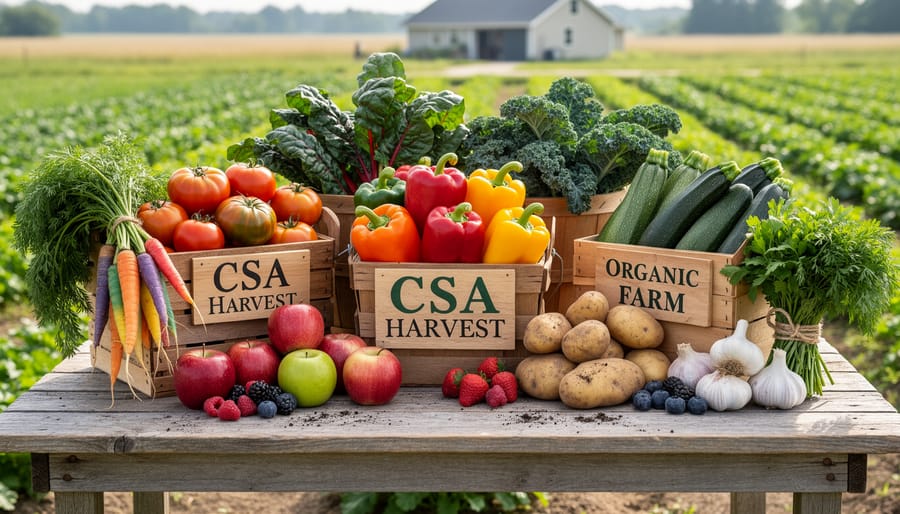
Wooden basket filled with diverse fresh vegetables including greens, carrots, and tomatoes from local farm
CSA harvest boxes deliver diverse seasonal produce directly from local farms, eliminating long supply chains and strengthening food security.

How CSA Farms Strengthen Local Food Security

Reduced Dependence on Long Supply Chains

Community Supported Agriculture dramatically shortens the distance between farm and table, typically eliminating the complex web of intermediaries that conventional food systems rely upon. Instead of produce traveling through multiple distribution centers, warehouses, and retail chains, your vegetables might journey just a few miles from field to pickup location.

This simplified pathway creates remarkable stability. When fuel prices spike or transportation strikes disrupt grocery store deliveries, CSA members continue receiving their weekly shares. The direct farm-to-consumer model doesn’t depend on interstate trucking networks or cross-country shipping routes that can be affected by weather events, infrastructure failures, or labor disputes.

Consider Sarah Chen’s organic farm in Vermont, which maintained consistent deliveries throughout regional supply disruptions that left supermarket shelves empty. Her 200 CSA members received fresh produce while conventional distribution channels struggled to recover.

This resilience extends beyond crisis situations. By reducing dependence on fossil fuel-intensive transportation, CSA farms protect members from the cascading price increases that ripple through long supply chains. You’re investing in a food source that remains accessible and affordable regardless of external economic pressures, building genuine food security right in your community.

Direct Producer-Consumer Relationships Build Trust and Transparency

When you join a CSA program, you’re not just buying vegetables—you’re building a relationship that transforms how you think about food. This direct connection between you and your farmer creates a level of accountability and trust that simply doesn’t exist in conventional food systems.

Knowing exactly where your food comes from and who grows it opens doors to ongoing education. CSA farmers often share weekly newsletters explaining what’s growing, how weather affects crops, and tips for preparing less familiar vegetables. This knowledge exchange helps you become a more informed eater and supports your journey toward sustainable living.

During challenging times, these relationships prove invaluable. When supply chains faltered during recent crises, CSA members continued receiving fresh produce while grocery store shelves sat empty. The mutual support network—farmers committed to feeding their community, members invested in their farmer’s success—creates resilience that withstands disruption.

Take Maria Santos, who started her small organic farm five years ago with just ten CSA members. When unexpected late frosts threatened her early crops, her members rallied, helping with emergency frost protection and accepting adjusted share contents without complaint. Today, her thriving operation serves 150 families, and many of those original members have become close friends. Maria credits this loyalty network with keeping her farm viable during difficult seasons.

This reciprocal relationship—where both parties understand and support each other’s needs—forms the backbone of genuine food system resilience at the grassroots level.

Farmer talking with CSA members in vegetable field during farm visit
Direct relationships between CSA farmers and members build trust, transparency, and mutual support during both abundant harvests and challenging seasons.

Crop Diversity Protects Against Single-Point Failures

Community Supported Agriculture farms embrace crop diversity as a cornerstone of their resilience strategy. While industrial operations often dedicate hundreds of acres to a single crop, CSA farms typically cultivate 40 or more different varieties throughout the growing season. This approach creates natural insurance against the unexpected challenges that inevitably arise.

When disease strikes one crop or weather patterns favor certain plants over others, CSA farmers have multiple backup options already growing in their fields. A late frost might damage early tomatoes, but leafy greens and root vegetables keep the harvest boxes full. If market prices plummet for one vegetable, the farm’s income remains stable through its diverse portfolio.

Take Green Valley Farm, which grows 52 crop varieties annually. Last season, their cucumber crop failed due to bacterial wilt, but members hardly noticed because zucchini, summer squash, and beans thrived. This built-in redundancy means CSA members receive consistent weekly shares regardless of individual crop performance, while farmers avoid the financial devastation that monoculture operations face when their single crop fails.

Financial Resilience Through Shared Risk

Community Supported Agriculture operates on a unique shared risk model that strengthens both farmers and communities. Members pay upfront at the beginning of the growing season, providing farmers with crucial capital when they need it most—before planting seeds, purchasing supplies, or making equipment repairs.

This pre-season funding model creates a financial cushion that helps farmers weather unpredictable challenges like droughts, floods, or pest outbreaks. Instead of shouldering these risks alone, farmers share them with their members. When heavy rains damage the tomato crop, members understand they’ll receive fewer tomatoes that week. Conversely, when conditions favor bumper crops of zucchini or lettuce, everyone celebrates the abundance together.

Take the example of Green Valley Farm in Ontario, where early payment from 75 member families allowed farmer Maria Chen to install a greenhouse. When an unexpected late frost hit in May, her protected seedlings survived while neighboring farms lost entire crops. Her CSA members still received their weekly shares, demonstrating how shared investment builds genuine resilience.

This arrangement transforms the traditional farmer-consumer relationship into a partnership where both parties invest in long-term food security rather than short-term transactions.

Real-World Examples of CSA Resilience in Action

When the pandemic brought grocery store disruptions and uncertainty in 2020, members of Green Valley CSA in Vermont experienced something remarkable: they never missed a weekly harvest. While supermarket shelves emptied and supply chains faltered, the farm quickly adapted by implementing contactless pickup stations and pre-packed boxes. Member retention soared to 98%, and the farm added 150 new families to their waiting list. Farmer Sarah Chen shares that this crisis actually strengthened their community, with members volunteering to help elderly neighbors collect their shares and creating a rotating harvest crew when migrant workers couldn’t travel.

The 2022 drought in California’s Central Valley tested Three Sisters Farm differently. When water restrictions threatened their crops, CSA members rallied in unexpected ways. The farm transparently shared their irrigation challenges through weekly newsletters, explaining which crops might be affected. Members voted to accept smaller, more diverse boxes rather than cancel shares. The farm pivoted to drought-resistant varieties like amaranth and tepary beans, introducing members to traditional crops that thrive in arid conditions. By season’s end, the farm maintained 85% of projected yields and educated hundreds of families about climate-adaptive agriculture. Member Tom Rivera notes that receiving those resilient crop varieties actually inspired his own backyard garden transformation.

During the 2021 economic downturn, Riverside Community Farm in Ohio faced a different challenge when 40% of members requested payment plan modifications. Instead of reducing membership, the farm created a flexible payment system with seasonal installments and introduced a work-share program. Members could contribute farm labor in exchange for reduced costs, while simultaneously learning sustainable farming techniques. Twenty families participated in work-shares, and several members later started their own market gardens. The farm not only retained nearly all members but built deeper connections through hands-on involvement.

These stories illustrate how CSA models create built-in flexibility during crises. The direct farmer-member relationship enables rapid communication, creative problem-solving, and mutual support that conventional food systems simply can’t match. When challenges arise, CSA communities don’t just survive—they innovate together and often emerge stronger than before.

What You Can Do: Building Personal Food Resilience Through CSA

Choosing the Right CSA for Your Needs

Finding the right CSA starts with understanding your household’s needs and values. When choosing a CSA, ask farmers about their growing practices, particularly their approach to soil health, water conservation, and biodiversity. These factors directly impact food systems resilience.

Key questions to consider: What percentage of crops are grown organically? Do they save seeds or source heirloom varieties? How do they handle unexpected weather events or crop failures? Understanding their distribution methods matters too. Does the farm offer flexible pickup locations, home delivery, or farm visits? Can members swap items they don’t use?

Look for farms that demonstrate commitment to resilience through diversified crops, community education programs, and transparent communication. Many successful CSA farmers share their challenges openly, building trust through honesty about seasonal variations and harvest realities.

Don’t hesitate to visit potential farms before committing. Walking the fields, meeting the growers, and seeing their practices firsthand provides invaluable insight. Consider starting with a half-share or trial period to ensure the partnership fits your lifestyle and supports genuine food system resilience in your community.

Becoming an Active Member, Not Just a Consumer

Joining a CSA isn’t just about picking up your weekly produce box. The most rewarding experiences come when you dive deeper into the farming community. Many CSA farms welcome volunteers for harvest days, where you can get your hands in the soil alongside farmers and learn firsthand about organic growing practices. These opportunities transform passive consumers into active participants who truly understand where their food comes from.

Consider participating in a work share program, where you exchange a few hours of farm labor each week for a reduced membership fee. Members often find these experiences therapeutic and educational, gaining practical skills they can apply in their own gardens. Farm events like seasonal celebrations, potlucks, and workshops create natural gathering spaces where you’ll connect with like-minded neighbors who share your values around sustainable food.

This deeper engagement strengthens community resilience while enriching your own life. Sarah, a third-year CSA member, shares: “Volunteering during strawberry season changed everything for me. I made friends, learned pruning techniques, and now I feel like I’m part of something bigger than just buying groceries.”

Start small by attending one farm event this season, then explore volunteer opportunities that fit your schedule.

Supporting Policy and Community Initiatives

You can strengthen your local food system by engaging with community-based initiatives that make fresh, locally grown food accessible to everyone. Farmers markets serve as vital gathering spaces where you can connect directly with growers, learn about seasonal produce, and support agricultural diversity in your region. By shopping at these markets regularly, you’re helping small-scale farmers sustain their operations while enjoying the freshest ingredients.

Community gardens offer hands-on opportunities to grow food alongside neighbors, sharing knowledge and resources while building skills in sustainable gardening practices. These spaces often welcome beginners and provide a low-barrier entry point for those curious about growing their own organic vegetables.

Local food policy councils bring together farmers, consumers, and community leaders to identify challenges and create solutions that benefit everyone in the food system. Participating in public meetings or joining working groups allows you to contribute your perspective and learn how food moves from farm to table in your area. These collaborative efforts help shape a more resilient food future without requiring specialized expertise—just genuine interest in supporting local agriculture and food access for all.

Every time you purchase a CSA share, you’re making a powerful investment that ripples far beyond your kitchen table. You’re strengthening the safety net of local food systems, supporting farmers who steward the land responsibly, and building genuine resilience against supply chain disruptions and climate uncertainty. These individual choices, when multiplied across communities, create the collective action that transforms our food landscape from fragile to flourishing.

The beauty of CSA membership lies in its simplicity. While policymakers and researchers discuss food systems resilience in boardrooms, you can actively participate in building it right where you live. Each week’s harvest box represents a direct connection to the soil, the seasons, and the people who grow your food. This connection isn’t just sentimental; it’s the foundation of true food security.

Ready to take that first step? Finding your local CSA farm is easier than you might think. Search online directories, visit farmers markets, or ask neighbors who already participate. Many farms offer farm tours, workshare programs, and flexible payment plans to make membership accessible. Your journey toward resilient, community-centered food starts with a single conversation with a farmer. Reach out today and become part of the solution.

Why Farmers Face Income Risks in CSA (And How Members Can Help)

Posted by darrell on
0
CSA Fundamentals and Benefits
Why Farmers Face Income Risks in CSA (And How Members Can Help)

Every farmer faces a sobering reality: months of careful planning, planting, and tending can vanish in a single hailstorm, drought, or pest invasion. Traditional farming places this entire financial burden on the grower’s shoulders, creating an income rollercoaster that drives talented farmers out of agriculture entirely. A late spring frost might destroy fruit tree blossoms, eliminating an entire season’s apple harvest. An unexpected dry spell could shrivel summer vegetables before they reach market size. Equipment breakdowns, sudden illness, and fluctuating market prices add layers of uncertainty that make financial planning nearly impossible.

Community Supported Agriculture transforms this precarious model by spreading risk across an entire community. When you purchase a CSA share before the growing season begins, you provide farmers with stable upfront capital for seeds, equipment, and labor. This financial commitment means farmers can focus on growing exceptional food rather than constantly worrying about whether they’ll earn enough to survive another season. You become a genuine partner in the farming operation, sharing both abundant harvests and challenging years. The result is a more resilient local food system where farmers can invest in soil health, experiment with diverse crops, and build sustainable businesses that nourish communities for generations.

What Income Risks Really Mean for Your CSA Farmer

When you buy tomatoes at the grocery store, the produce manager simply orders more from their distributor if they run low. But your CSA farmer doesn’t have that safety net. They’re growing everything themselves, and that creates a fundamentally different kind of financial pressure.

Income risk for farmers means their annual earnings depend entirely on what actually grows in their fields. Unlike conventional agriculture, where large-scale operations can absorb losses across hundreds or thousands of acres, most CSA farms operate on smaller acreages where every crop matters. A late spring frost can wipe out fruit blossoms. A summer drought can stunt tomato production by half. An unexpected pest invasion can decimate an entire planting of greens.

The CSA model exists partly to address these realities. While conventional farmers might sell to multiple buyers and adjust their income strategy throughout the season, CSA farmers commit to feeding a specific number of families with whatever they harvest. They can’t call up a wholesaler to fill gaps in their share boxes.

Consider this: A conventional farmer losing their lettuce crop to pests might switch focus to other buyers or crops. A CSA farmer still needs to provide weekly shares to members who’ve already paid. Weather extremes are becoming more unpredictable, making planning even harder. Too much rain encourages fungal diseases. Too little means costly irrigation and stressed plants.

Then there’s timing. Crops need to mature when members expect them. If spring arrives late, those early greens everyone anticipates might be delayed, leaving farmers scrambling to fill boxes with limited variety. These aren’t just agricultural challenges; they’re direct threats to a farmer’s livelihood and ability to pay bills, purchase seeds for next season, and support their family. Understanding these pressures helps us appreciate why the partnership between farmer and member matters so deeply.

The Four Biggest Income Threats Facing CSA Farms

Farmer's hands holding small seedlings against drought-affected field with cracked soil
Weather extremes like drought can devastate carefully planted crops, directly impacting a farmer’s entire season income.

Weather Extremes and Climate Unpredictability

Mother Nature doesn’t follow business plans. A single late spring frost can wipe out fruit blossoms, turning a promising apple harvest into near-total loss. Unexpected heat waves stress vegetables, causing crops to bolt prematurely or simply wither. Droughts reduce yields dramatically, while floods can destroy entire plantings in hours.

Take Sarah from Meadowbrook Farm, who experienced this firsthand when an August deluge flooded her low-lying fields. She lost nearly 60% of her late summer vegetables—tomatoes, peppers, and squash—representing thousands of dollars in projected income. “We had pre-sold those crops through our CSA,” she shares, “but the income we’d counted on vanished overnight.”

These weather extremes are becoming increasingly unpredictable, making traditional farming income projections feel like guesswork. For small organic farms operating on tight margins, a single catastrophic weather event can threaten an entire season’s viability. This vulnerability underscores why the CSA model’s risk-sharing approach matters so deeply for farming sustainability.

The Pre-Season Investment Gamble

Picture this: it’s February, snow still blankets the ground, and farmers are already investing thousands of dollars. Seeds need ordering, equipment requires maintenance, and greenhouse heating bills start climbing. They’re hiring workers, purchasing compost, and planning crop rotations—all without a single dollar of income.

This pre-season investment typically ranges from $15,000 to $50,000 for small to mid-sized operations, depending on farm size and production goals. Understanding CSA farm economics reveals just how crucial early member sign-ups become.

When enrollment falls short of projections, farmers face tough decisions. Do they scale back plantings, potentially disappointing members with smaller shares? Take on debt to cover gaps? Or dip into personal savings meant for winter months?

Unlike traditional businesses that can adjust inventory based on demand, farming requires commitment months in advance. Those seeds go in the ground whether 50 or 100 members sign up, creating a financial tightrope that makes planning incredibly challenging.

Labor Costs and Workforce Challenges

Managing labor is one of the trickiest aspects of running a small farm. Unlike traditional businesses with steady workflows, farms experience dramatic seasonal shifts—you might need ten helpers during June harvest but only two in February. Finding reliable workers who understand sustainable practices takes time and effort, yet predicting exactly when you’ll need them depends on weather patterns that change yearly.

Labor costs can quickly eat into thin profit margins. When unexpected frost damages crops or drought delays planting, you still need to pay your team fairly. Many successful CSA farmers have found creative solutions, like offering work-share programs where members exchange labor for their produce shares. This builds community while managing costs. Others cross-train workers in multiple tasks, ensuring year-round employment that benefits everyone. Building a skilled, dependable team requires investment, but it’s essential for maintaining the quality and consistency your members expect.

Market Competition and Member Retention

Even with a committed member base, CSA farmers face competition from farmers markets, grocery stores, and meal delivery services that offer greater flexibility. Members can choose to opt out between seasons if their circumstances change, creating uncertainty in year-to-year planning. Life events like moves, financial changes, or dietary shifts mean retention isn’t guaranteed, even when members love their farm.

Successful farmers build loyalty through consistent communication, quality produce, and community connection. Full Circle Farm in Washington state maintains an impressive 85% retention rate by offering flexible pickup options and engaging members through regular farm updates. Creating a strong farm identity helps members see their subscription as more than just vegetables—it becomes a valued relationship. Consider offering mid-season surveys to understand member needs, providing recipe ideas to inspire cooking creativity, and hosting farm events that deepen emotional connections. These efforts transform casual subscribers into devoted advocates who return season after season.

How Risk-Sharing Creates Predictable Income

Here’s where the CSA approach transforms everything. The risk-sharing model tackles income uncertainty head-on by flipping the traditional farming payment structure upside down.

Instead of waiting months to see if their harvest will sell, CSA farmers receive payments from members at the beginning of the season. This upfront commitment creates an immediate operating budget that farmers can count on. They know exactly how much money they have to purchase seeds, repair equipment, hire help, and cover essential expenses. No more sleepless nights wondering if the bills will get paid.

Think of it like a farmers’ version of a subscription service, but with much deeper meaning. When members pay in advance, they’re not just buying vegetables—they’re investing in their local food system and saying, “We believe in you, and we’re in this together.” This vote of confidence means everything to farmers who’ve spent years building their skills and nurturing their land.

The magic happens because everyone understands the deal from day one. Members know that some weeks might bring an abundance of tomatoes, while others feature more greens. If the cucumber crop struggles due to unexpected weather, members don’t demand refunds. Instead, they appreciate the extra zucchini and summer squash that thrived. This shared understanding removes the pressure farmers face in conventional markets, where imperfect produce often gets rejected.

Take the example of Green Valley Farm in Ontario. Owner Maria Chen shares how CSA membership transformed her operation: “Before CSA, I’d worry constantly about market day sales. Now, I start each season knowing I have 85 families counting on me, and I’ve already got the funds to make it happen. I can focus on growing the best food possible instead of scrambling to make ends meet.”

This financial stability ripples outward, benefiting the entire community. Farmers can experiment with new varieties, invest in soil health, and plan for long-term sustainability. Members enjoy fresher, more diverse produce while knowing their food dollars directly support local agriculture. Everyone wins when risk becomes something shared rather than shouldered alone.

CSA members and farmer standing together in field with harvest crates of fresh vegetables
CSA members and farmers form partnerships built on shared risk and mutual support, creating stable income through community commitment.

What You’re Really Signing Up For as a CSA Member

When you join a CSA, you’re not simply purchasing vegetables—you’re entering into a partnership between farmers and communities that thrives on shared commitment and realistic expectations.

Think of it this way: as a CSA member, you’re investing in the farm’s entire season before the first seed goes into the ground. Your upfront payment gives farmers the financial security to buy seeds, prepare fields, and cover early-season expenses without depending on uncertain market conditions. In return, you’re agreeing to share in whatever the season brings—the triumphs and the challenges alike.

In practice, this means your weekly box will reflect the farm’s actual harvest. During peak summer months, you might receive an abundance of tomatoes, zucchini, and peppers that has you frantically searching for new recipes. Come early spring or late fall, your share might feature more root vegetables and hearty greens. Some weeks you’ll get exactly what you expected; other weeks might surprise you with an unfamiliar vegetable or a substitution when weather affects a particular crop.

This variability isn’t a flaw in the system—it’s the whole point. You’re experiencing real farming, not a curated grocery store experience. When a late frost damages the lettuce crop, you might receive extra kale instead. When cucumbers go crazy in July, everyone celebrates the bounty together.

This shared-risk model means you’re actively supporting your farmer through unpredictable seasons, knowing they’re working tirelessly to provide you with the best possible harvest. You become invested in the farm’s success story, learning about seasonal eating, discovering new vegetables, and developing a deeper connection to how your food is grown.

By embracing this partnership mindset, you transform from a passive consumer into an active participant in sustainable, local agriculture—experiencing the authentic rhythm of farm life alongside the people who grow your food.

Hands exchanging wooden box filled with fresh colorful vegetables at farm stand
Weekly CSA shares represent more than a transaction—they embody a partnership where members support farmers through both abundant and challenging seasons.

Real Farmer Story: How One CSA Survived a Devastating Drought

When the summer of 2019 brought record-breaking heat and minimal rainfall to Green Valley Farm in northern California, third-generation farmer Maria Chen watched her carefully tended vegetable beds wither despite daily irrigation. Wells were running dangerously low, and the municipal water district had imposed strict restrictions. Maria faced an agonizing choice: purchase expensive trucked-in water or accept significant crop losses that could devastate her income for the year.

Instead of shouldering this burden alone, Maria opened up to her 85 CSA members through a heartfelt email explaining the situation. She shared photos of the parched fields, detailed the irrigation challenges, and honestly discussed what members could expect in the coming weeks. The response overwhelmed her.

Members immediately rallied, organizing a fundraiser that raised $8,000 toward emergency water costs. Several members with agricultural backgrounds volunteered weekend hours to help implement water-saving measures like installing drip irrigation and applying mulch. Others spread the word on social media, bringing in 20 new member sign-ups for the following season.

“I prepared myself for cancellations and complaints,” Maria recalls. “Instead, my members reminded me why CSA exists. They understood that supporting local farms means being there during the tough seasons, not just the abundant ones.”

The farm survived that summer with about 60 percent of typical yields, but no members cancelled their shares. Many told Maria they appreciated the smaller boxes because it helped them understand the reality of farming and deepened their connection to where their food comes from. That drought year, paradoxically, became the strongest bonding experience between Maria and her community, proving that CSA membership is truly a partnership built on mutual support and shared responsibility.

Simple Ways You Can Support Your Farmer’s Income Stability

Supporting your local farmer’s income stability doesn’t require grand gestures—small, thoughtful actions make a real difference. When you sign up for your CSA share early in the season, you’re giving farmers the financial security they need to purchase seeds, plan crop rotations, and invest in infrastructure before the growing season begins. This early commitment helps them avoid risky short-term loans and make confident decisions about what to plant.

If possible, consider paying for your share upfront or in larger installments rather than weekly payments. This approach provides farmers with crucial cash flow during the expensive spring months when they’re spending money but not yet harvesting. Many farms offer small discounts for upfront payment, creating a win-win situation.

Becoming a farm advocate is equally valuable. Recruit friends, family, and coworkers to join your CSA by sharing your experiences on social media or hosting a farm dinner party featuring your weekly harvest. Every new member strengthens the farm’s financial foundation and builds community resilience.

Flexibility goes a long way in supporting income stability. When you’re open to receiving whatever’s thriving that week instead of expecting specific items, you help farmers reduce waste and maximize their harvest value. Surplus zucchini or an abundance of greens might not be your first choice, but your willingness to accept them helps the farm avoid financial losses.

Volunteering during harvest time or work days reduces labor costs while deepening your connection to where your food comes from. Whether you can spare two hours or a whole day, your hands-on help directly impacts the farm’s bottom line. Finally, leave positive reviews online and recommend your farm to local restaurants or institutions looking for fresh produce suppliers—word-of-mouth remains the most powerful marketing tool for small farms.

When you join a CSA, you’re doing something truly meaningful—you’re stepping beyond a simple transaction and entering into a partnership that strengthens your entire community. This isn’t just about filling your kitchen with fresh, organic vegetables each week. It’s about investing in a farming model that honors the land, supports the people who tend it, and creates food systems built to last.

The beauty of CSA lies in its honesty about what farming really involves. Weather doesn’t always cooperate. Pests can be persistent. Markets fluctuate. By sharing these realities with your farmer, you’re helping them face uncertainties with confidence rather than fear. Your upfront commitment gives them the breathing room to farm thoughtfully, invest in soil health, and make decisions based on what’s best for the land rather than what’s merely profitable.

Think of your CSA membership as an investment with returns that compound in unexpected ways. Yes, you’ll enjoy incredibly fresh produce that nourishes your body. But you’ll also gain connection to the source of your food, understanding of seasonal rhythms, and the satisfaction of knowing your money directly supports someone’s livelihood and dream.

The farmers who feed us deserve stability and respect for the essential work they do. When you embrace the full CSA partnership—celebrating abundant harvests and understanding leaner weeks—you become part of the solution to farming’s income challenges. Together, we’re building food systems where both farmers and eaters can truly thrive.

How CSA Farming Transformed These Farmers’ Lives (And Why They’re Not Going Back)

Posted by darrell on
0
CSA Fundamentals and Benefits
How CSA Farming Transformed These Farmers’ Lives (And Why They’re Not Going Back)

Picture a farming life where you know exactly who’s eating your carrots, where Sunday evenings aren’t spent worrying about wholesale prices, and where your tomatoes are celebrated rather than rejected for cosmetic imperfections. This is the reality for Community Supported Agriculture farmers who’ve discovered that growing vegetables for their local community doesn’t just sustain their land—it transforms their entire quality of life.

CSA farming flips the conventional agriculture script. Instead of gambling on volatile markets and watching profits disappear to middlemen, farmers receive payment upfront from members who share both the abundance and the risks of each season. Sarah Chen, who left corporate life to farm two acres in Vermont, says her CSA brought something she never expected: “I went to bed actually excited about Monday mornings.”

The wellbeing benefits extend far beyond steadier paychecks. CSA farmers report deeper community connections, creative freedom to experiment with heirloom varieties, reduced stress from financial predictability, and the profound satisfaction of feeding neighbors they know by name. They’re not just growing food—they’re cultivating relationships, autonomy, and purpose.

Whether you’re a farmer considering this model, a consumer curious about the human impact of your food choices, or simply exploring what makes sustainable agriculture truly sustainable, understanding how CSA farming nurtures the farmer is essential. The vegetables are just the beginning of the story.

The Hidden Crisis Behind Conventional Farming

Behind every bundle of grocery store vegetables lies a story most shoppers never see. Conventional farming, despite feeding millions, often places crushing pressures on the people who grow our food. Many farmers find themselves trapped in a cycle where they have little control over their income. They plant their crops, invest months of labor and resources, and then must accept whatever price middlemen and wholesale markets offer at harvest time.

The financial uncertainty extends beyond just pricing. Farmers shoulder enormous upfront costs for seeds, equipment, and labor, yet they can’t predict if they’ll recoup these investments. A sudden market glut can slash prices overnight. Weather disasters can wipe out entire harvests. Meanwhile, input costs continue climbing year after year.

Beyond money, there’s a profound sense of isolation in conventional farming. Many farmers work long hours with minimal connection to the people who ultimately eat what they grow. They plant, tend, and harvest, but rarely receive feedback or appreciation for their efforts. This disconnect can leave even successful farmers feeling like anonymous cogs in an impersonal food system.

The emotional toll is real. Studies show that farmers experience higher rates of stress, anxiety, and burnout compared to many other professions. The combination of financial pressure, physical demands, and isolation creates a perfect storm for mental health challenges.

But what if there were a different way? What if farmers could know their income before planting season begins, build relationships with the people they feed, and regain control over their farming decisions? This is where Community Supported Agriculture and CSA vegetables enter the picture, offering a model that puts farmer wellbeing at its foundation.

Financial Stability: How CSA Veg Creates Predictable Income

Payment Before Planting

One of the most significant advantages of the CSA economic model is receiving payment upfront, before a single seed goes into the ground. This transforms the financial reality for farmers who typically face months of expenses before seeing any income. Instead of gambling on whether their harvest will sell at market prices, CSA farmers secure their revenue at the season’s start, allowing them to budget confidently for seeds, supplies, and living expenses.

This advance payment system eliminates the nail-biting uncertainty that plagues conventional farming. Farmers no longer worry about surplus produce going to waste or market prices dropping unexpectedly. Take Sarah, a second-generation farmer in Ontario, who switched to CSA after years of market farming stress. She shares, “Knowing my income is secured in February lets me sleep at night. I can focus on growing quality vegetables instead of constantly worrying about sales.”

The upfront model also enables farmers to invest in improvements like irrigation systems or hoop houses, enhancing both productivity and quality of life throughout the growing season.

Freedom from Market Price Swings

When farmers sell to wholesale markets, they’re at the mercy of unpredictable price fluctuations. One week, lettuce might fetch a decent price; the next, an oversupply could slash values by half. This volatility makes financial planning nearly impossible and keeps many farmers perpetually stressed about making ends meet.

CSA farming offers a refreshing alternative. Through the risk-sharing model, farmers receive payment upfront at the season’s start, completely bypassing the wholesale market gamble. Members pay a set subscription fee, giving farmers guaranteed income regardless of what commodity prices do that week.

Consider Sarah, who runs a small organic farm in Ontario. Before switching to CSA, she’d watch her beautiful heirloom tomatoes sell for pennies when grocery stores flooded the market with conventional produce. Now, her CSA members pay a fair, predetermined price that reflects the true value of her work and the quality she delivers.

This stability transforms how farmers operate. Instead of worrying whether they’ll cover costs after harvest, they know exactly what revenue to expect. They can invest in quality seeds, proper equipment, and soil improvements without second-guessing every purchase. The freedom from price anxiety also allows farmers to focus on what matters most: growing exceptional vegetables and nurturing their land, rather than constantly checking market reports and losing sleep over factors beyond their control.

Farmer engaging in friendly conversation with CSA member family at vegetable pickup location
Direct relationships with CSA members transform farming from anonymous commodity production into meaningful community connection.

Community Connection: The Social Benefits of Growing CSA Veg

From Anonymous to Appreciated

For many farmers, traditional vegetable farming can feel like shouting into a void. You plant, cultivate, and harvest beautiful produce, then send it off to wholesalers or farmers’ markets where it becomes just another commodity. The connection between your effort and someone’s dinner table remains invisible.

CSA farming transforms this experience entirely. Instead of anonymous transactions, farmers receive weekly feedback from members who know their name and recognize their work. Sarah Chen, a CSA farmer in Vermont, shares: “The first time a member emailed me a photo of their daughter eating my cherry tomatoes and asking for the variety name, I actually got teary. Someone cared about what I grew.”

This direct relationship creates meaningful moments that sustain farmers through challenging seasons. Members leave thank-you notes in pickup bins, share recipes using your vegetables, and celebrate your successes. When a late frost damages crops, CSA members respond with understanding rather than simply taking their business elsewhere.

The appreciation extends beyond kind words. Farmers report feeling valued as skilled professionals rather than interchangeable suppliers. One Iowa farmer noted that CSA members often ask about growing techniques and seasonal challenges, showing genuine interest in the craft of farming. This recognition of expertise provides deep emotional satisfaction that wholesale relationships rarely offer.

Building Your Farm Family

When you join a CSA, you’re not just signing up for vegetables—you’re becoming part of something much bigger. The partnership between farmers and communities creates genuine relationships that transform both sides of the farm gate.

Sarah, a third-generation farmer in Ontario, recalls the spring flood that nearly destroyed her greenhouse. Within hours of posting about the damage, twenty CSA members showed up with tools, supplies, and determination. They spent the weekend helping her rebuild, turning what could have been a devastating loss into a powerful reminder that she wasn’t farming alone.

These connections extend beyond crisis moments. Many CSA farmers describe members who return year after year, bringing their children to watch them grow up alongside the crops. Harvest celebrations become annual traditions where members contribute potluck dishes featuring the farm’s produce, swapping recipes and gardening tips while kids run through the fields.

For farmers who spend long days working the land, this social connection combats the isolation that often accompanies rural life. Members become friends who check in during tough seasons, celebrate bumper crops, and genuinely care about the farm’s success. They volunteer for u-pick days, help with special projects, and spread the word about the farm within their own networks.

This extended farm family provides emotional support that goes far beyond the transaction of food. It reminds farmers that their work matters deeply to real people who value not just the vegetables, but the farmer growing them.

Creative Freedom in What You Grow

One of the most rewarding aspects of CSA vegetable farming is the creative liberty it offers. Unlike conventional farming models that often pressure farmers into growing the same high-volume commodity crops year after year, CSA allows you to embrace diversity and experimentation in your fields.

With a CSA model, you’re growing for people who appreciate variety and seasonality, not for a standardized supermarket system. This means you can dedicate rows to heirloom tomatoes with names like Cherokee Purple or Brandywine, plant rainbow carrots in shades your members have never seen before, or try growing specialty greens like mizuna and tatsoi. The direct relationship with your members creates a market for crops that might never make it onto conventional grocery shelves.

Sarah Mitchell, who runs a CSA farm in Vermont, shares her experience: “I grew up on a dairy farm where every day felt the same. Now, I plant over 80 different varieties each season. Last year, I experimented with ground cherries and purple cauliflower, and my members loved them. That creative expression feeds my soul in ways I never expected.”

This freedom extends beyond crop selection. CSA farmers can practice sustainable farming practices that align with their values, whether that’s companion planting, cover cropping, or integrating pollinator habitats. You’re not confined to methods that maximize short-term yield at the expense of soil health or biodiversity.

The seasonal rhythm also brings fulfillment. Spring greens give way to summer abundance, then fall root vegetables and winter storage crops. This natural cycle keeps the work engaging and prevents the monotony that plagues industrial agriculture. You’re constantly learning, adapting, and discovering what thrives in your unique microclimate.

For many CSA farmers, this creative freedom transforms farming from just a livelihood into a genuine passion project where agricultural artistry meets practical purpose.

Farmer's hands holding colorful assorted fresh heirloom vegetables including purple carrots and rainbow chard
CSA farming allows farmers to grow diverse heirloom and specialty vegetables rather than being limited to commodity crops.

Work-Life Balance and Control Over Your Schedule

One of the most significant yet often overlooked benefits of the CSA vegetable model is the scheduling flexibility it offers farmers. Unlike wholesale farming, where delivery deadlines are rigid and market demands unpredictable, CSA farming operates on a predetermined weekly or biweekly distribution schedule that farmers help establish.

This predictability transforms daily life for many growers. Sarah Chen, who runs a five-acre CSA operation in Vermont, explains it simply: “I know exactly when I need to harvest, pack, and distribute. That means I can actually plan my daughter’s soccer games into my week instead of constantly missing them.” This level of control is rare in agriculture, where weather and market forces typically dictate every decision.

The CSA model also reduces the frantic pace common in conventional farming. There’s no scrambling to meet sudden wholesale orders or losing sleep over rejected produce shipments. Instead, farmers plan their growing seasons around a known number of shares, eliminating much of the guesswork and stress.

Many CSA farmers appreciate the ability to take breaks during slower seasons. Unlike farmers locked into year-round wholesale contracts, those running seasonal CSAs can intentionally design downtime for rest, planning, or even vacation. This seasonal rhythm aligns more naturally with both crop cycles and human needs for recovery.

The share-based system also means farmers can work at a sustainable pace. When you’re growing for 50 families rather than filling massive wholesale orders, the pressure to maximize every square foot diminishes. This allows for more mindful farming practices and reduces burnout. As one Wisconsin farmer put it, “CSA lets me farm like a human being, not a production machine.” This improved work-life balance contributes significantly to long-term farmer wellbeing and career satisfaction.

Content farmer standing in healthy vegetable field during golden hour sunlight
CSA farmers report improved quality of life, reduced stress, and greater satisfaction with their work compared to conventional farming.

Real Farmers, Real Stories

Nothing quite captures the transformative power of CSA vegetable farming like hearing directly from those who’ve made the leap. These farmers discovered that growing for their community brought rewards far beyond what they’d imagined.

Maria Chen spent fifteen years managing a mid-sized conventional farm in Oregon, constantly chasing commodity prices and watching profit margins shrink. “I felt like a hamster on a wheel,” she recalls. In 2018, she converted five acres to organic vegetable production and launched a 60-member CSA. The change was dramatic. “Now I know exactly who I’m feeding. Members send photos of their kids eating the carrots we grew together. That connection is priceless.” Maria reports sleeping better and feeling genuinely excited about harvest days. Her farm grosses less total revenue than before, but her take-home income actually increased by 20 percent once she eliminated middlemen. More importantly, she rediscovered why she became a farmer in the first place.

Tom and Sarah Rodriguez ran a struggling grain operation in Wisconsin before transitioning to CSA vegetables in 2020. Tom had been battling anxiety related to unpredictable markets and mounting debt. “The CSA model gave us financial predictability we’d never experienced,” Sarah explains. Members pay upfront each season, providing crucial spring cash flow. But the wellbeing boost came from unexpected places. “Our members volunteer during harvest. We host farm dinners. We’re not isolated anymore,” Tom shares. The social connections reduced his stress significantly, and he hasn’t needed anxiety medication since their second CSA season.

Jennifer Park, a former software engineer in California, started her CSA farm from scratch in 2019. While challenging initially, she found the creative freedom liberating. “Every week, I curate a harvest basket like an artist selecting colors for a palette. I experiment with heirloom varieties my members request. There’s no corporate ladder, just me, the soil, and people who genuinely appreciate my work.” Jennifer works long hours during peak season but controls her schedule in ways her tech job never allowed. “I take winter mostly off now. That balance keeps me healthy and sustainable for the long haul.”

These farmers prove that CSA vegetable farming offers more than a business model—it’s a pathway to meaningful work and genuine wellbeing.

CSA vegetable farming offers a meaningful pathway toward healthier, more fulfilling farming communities. Throughout this journey, we’ve seen how Community Supported Agriculture creates not just financial stability, but genuine connections between growers and eaters, opportunities for creative expression in the fields, and a work-life rhythm that honors both productivity and personal wellbeing.

Of course, CSA farming isn’t without its challenges. Managing member expectations, planning crop diversity, and navigating the learning curve of direct marketing all require dedication and adaptability. Yet countless farmers have found these challenges far more rewarding than the uncertainties of conventional wholesale markets. The key difference? You’re building something together with your community rather than simply supplying a faceless system.

Whether you’re a farmer feeling burned out by traditional agriculture or a consumer wanting to support farming practices that truly nourish people and planet, now is the perfect time to explore CSA farming. Start small if you’re farming—even a micro-CSA with ten families can transform your relationship with your work. If you’re on the consumer side, joining a local CSA means investing directly in farmer wellbeing with every box you receive.

The future of agriculture depends on models that sustain both land and people. CSA farming proves that growing food can feed souls as well as bodies, creating vibrant communities rooted in trust, health, and shared abundance.

Choose Your Perfect CSA Share: How Flexible Memberships Save Money and Reduce Waste

Posted by darrell on
0
CSA Fundamentals and Benefits
Choose Your Perfect CSA Share: How Flexible Memberships Save Money and Reduce Waste

Community Supported Agriculture has evolved far beyond the one-size-fits-all boxes that once defined the movement. Today’s CSAs recognize that your Tuesday evening soccer practice, your family of two, and your aversion to kohlrabi all matter when it comes to getting fresh, local produce into your kitchen.

Modern CSA programs now offer customizable share sizes, flexible pickup schedules, and swap options that eliminate the guesswork and food waste that previously deterred many potential members. You can pause deliveries during vacation, exchange unfamiliar vegetables for staples you actually cook, and adjust your share as your household needs change throughout the season.

This flexibility transforms the CSA experience from a rigid commitment into a partnership that adapts to your life. Local farmers benefit from the financial security and planning advantages of CSA memberships, while you gain access to peak-season organic produce without sacrificing convenience or ending up with a fridge full of wilted greens.

The result is a sustainable food system that works for real people with real schedules, proving that supporting local agriculture doesn’t require compromising your lifestyle or wasting money on produce you won’t use.

What CSA Customization Actually Means

Gone are the days when joining a CSA meant surrendering all control over what arrives in your weekly box. Modern CSA programs have evolved dramatically, offering customization options that make them far more practical for today’s busy households.

So what does CSA customization actually look like? It starts with portion sizes. Many farms now offer half-shares for singles or couples, full shares for average families, and even large shares for big households or avid home cooks. This flexibility means you’re not drowning in vegetables you can’t possibly use before they spoil.

Product selection has also become increasingly flexible. While traditional CSAs gave you whatever was harvested that week (hello, endless kohlrabi!), many programs now let you swap items you won’t use for ones you love. Some farms offer choice-based models where you select from available produce each week, almost like shopping at a farmers market but with the convenience of pre-ordering.

Delivery schedules represent another major area of customization. Beyond choosing your pickup day, some CSAs allow you to skip weeks when you’re traveling, pause your subscription during busy seasons, or switch between home delivery and farm pickup based on your schedule. A few innovative programs even let you adjust delivery frequency, opting for bi-weekly boxes instead of weekly commitments.

This flexibility transforms CSAs from rigid obligations into partnerships that genuinely work with your lifestyle, making fresh, local produce accessible without the stress of waste or inconvenience.

Family unpacking fresh vegetables from CSA delivery bag in home kitchen
Families can customize their CSA shares to match their household size and dietary preferences, ensuring nothing goes to waste.

Get Only What You’ll Actually Eat

Right-Sizing Your Share

Gone are the days of one-size-fits-all CSA boxes that leave you drowning in kale or wasting precious produce. Modern CSA programs recognize that every household is unique, offering share sizes and customization options that actually fit your life.

Most farms now provide multiple share tiers, from single-person portions to family-sized boxes. Planning a vacation? Many CSAs let you pause deliveries or donate your share to local food banks. Some even offer add-ons like eggs, honey, or flowers, so you can supplement your vegetables without overcommitting to a full share.

If you’re worried about unfamiliar vegetables going to waste, look for CSAs that allow swaps at pickup or provide recipe suggestions. When you choose the right share size and learn to store produce properly, you’ll maximize freshness and minimize waste. This flexibility means you can enjoy local, organic produce without the stress of forced consumption or guilt over spoiled food.

Saying No to What You Won’t Use

One of the most appealing aspects of modern CSAs is the freedom to customize your share. Unlike traditional boxes where you’re stuck with everything that arrives, many CSAs now let you skip vegetables you know your family won’t eat or swap them for items you’ll actually use. This flexibility is a game-changer for reducing food waste and stretching your grocery budget further.

Imagine receiving kohlrabi when you have no idea how to prepare it. Instead of letting it languish in your fridge, you can exchange it for extra carrots or greens your kids love. Some CSA programs even allow you to pause deliveries when you’re traveling, ensuring you’re not paying for produce that will go bad while you’re away. This practical approach means every dollar spent goes toward food your household will genuinely enjoy, making the CSA investment worthwhile and stress-free.

Work With Your Schedule, Not Against It

Person managing CSA delivery schedule on smartphone with fresh produce box at doorstep
Modern CSA programs offer flexible scheduling options including delivery holds and skip weeks to accommodate busy lifestyles.

Pause Without Penalty

Life happens, and modern CSAs understand that. Many programs now offer vacation holds that let you pause deliveries when you’re traveling or dealing with unexpected circumstances. Instead of letting shares pile up or go to waste, you can simply notify your farmer and resume when you’re ready. Some farms even allow you to donate your paused week’s share to local food banks, turning a potential loss into community support.

Flexible scheduling takes this further by letting members swap pickup days or choose delivery frequencies that match their household consumption. Whether you’re going through a busy work season or adjusting to a new routine, these options prevent the dreaded fridge overflow that leads to food waste. Sarah, a CSA member from Vermont, shares: “Being able to skip our summer vacation weeks meant we actually ate everything we received. No more guilt about wasted produce.” This flexibility transforms CSA membership from a rigid commitment into an adaptable partnership that respects your real life.

Delivery Options That Fit Your Life

Modern CSAs understand that one-size-fits-all doesn’t work for everyone’s schedule. That’s why many farms now offer multiple pickup and delivery options to match your lifestyle.

Farm pickup remains popular for those who enjoy the experience of visiting the farm, meeting farmers face-to-face, and connecting with where their food grows. It’s a wonderful weekend activity for families wanting to teach kids about agriculture firsthand.

For busy professionals, designated pickup locations at community centers, workplaces, or parking lots provide convenient alternatives. Drop by on your commute home and grab your weekly share without extra trips.

Home delivery has become increasingly available, especially for members with mobility challenges or packed schedules. Some farms partner with delivery services or create neighborhood routes, bringing fresh produce right to your doorstep.

Many successful farmers have shared that offering flexible delivery options actually strengthens their CSA membership retention. When members feel accommodated rather than burdened, they’re more likely to continue their subscription year after year, creating stable income for the farm while enjoying stress-free access to organic produce.

Explore New Foods at Your Own Pace

One of the most exciting aspects of CSA membership is the opportunity to expand your culinary horizons without the pressure of committing to large quantities of unfamiliar produce. Many modern CSAs recognize that not everyone is ready to dive headfirst into cooking with kohlrabi or celeriac, and that’s perfectly okay.

With customizable shares, you can gradually introduce new vegetables into your routine while maintaining a foundation of familiar favorites. Start with mostly staples like tomatoes, lettuce, and carrots, then swap in one adventurous item each week. This approach transforms your CSA box into a gentle culinary classroom rather than an overwhelming challenge.

Take Sarah, a farmer at Green Valley CSA, who noticed members were initially intimidated by unusual items. She began including simple recipe cards with each share, featuring quick preparation methods and flavor profiles. “We want our members to feel excited, not stressed,” she explains. “If someone isn’t ready for bok choy this week, they can choose extra zucchini instead and try something new next month.”

This flexibility dramatically reduces food waste, a common concern among potential CSA members. You’re not stuck with vegetables you don’t know how to prepare or ingredients your family won’t eat. Instead, you control the pace of exploration, building confidence with each successful dish. Many members find themselves naturally gravitating toward more variety as they discover that unfamiliar vegetables are often easier to prepare than expected, turning initial hesitation into genuine enthusiasm for seasonal eating.

Farmer offering variety of colorful heirloom vegetables to CSA member at pickup location
CSA members can gradually explore unfamiliar vegetables at their own pace while maintaining access to familiar favorites.

Real Members Share Their Experience

Nothing beats hearing from people who’ve experienced the transformation firsthand. Here are real stories from farmers and members who’ve discovered how customizable CSA shares make all the difference.

Sarah Chen, a working mother of two in Portland, was hesitant to join a CSA after a previous experience left her overwhelmed. “I used to throw away half my share because I couldn’t keep up with all the unfamiliar greens,” she admits. “But when I found a CSA that let me customize my box and swap items through their online portal, everything changed. Now I choose what my family actually eats, and our food waste has dropped to almost zero. We’ve been members for three years now.”

Green Valley Farm in Vermont saw their retention rate jump from 60% to 89% after introducing flexible share options. Farm owner Michael Rodriguez explains: “We started offering small, medium, and large shares with optional add-ons like eggs and bread. Members can also pause deliveries when they’re on vacation. It seemed risky at first, but it actually made our planning easier and kept families coming back season after season.”

For recent college graduate Jamie Liu, a customizable half-share was the perfect entry point. “I live alone in a small apartment, so a full traditional share would have been too much. Being able to select a smaller portion and skip weeks when I’m traveling made joining feel manageable rather than overwhelming. I’ve learned to cook with seasonal produce, and it’s actually saved me money compared to buying organic at the grocery store.”

These experiences highlight a common theme: when CSAs adapt to individual lifestyles, everyone wins. Members enjoy fresh produce without the guilt of waste, while farmers build loyal, long-term relationships with their community.

Finding a CSA That Offers Flexibility

Not all CSAs are created equal when it comes to flexibility, so finding the right fit requires asking the right questions upfront. Start by contacting farms directly and inquiring about their specific policies. Can you skip weeks or pause your share during vacations? Do they offer multiple pickup locations or delivery options? What happens if you can’t make your scheduled pickup time?

Review the CSA agreement carefully before committing. Look for clear policies on share swaps, substitutions, and refunds. Some farms allow you to customize your box weekly through an online portal, while others provide a standard selection. Understanding these details helps you avoid surprises down the road.

Consider the farm’s communication style too. Flexible CSAs typically maintain active email lists or apps that keep members informed about what’s coming in their shares. This transparency lets you plan meals effectively and reduces food waste.

Ask about trial periods or smaller commitment options. Progressive farms might offer month-to-month memberships or half-season shares, letting you test the waters before committing to a full year. This approach works especially well for first-time CSA members still learning their preferences.

Talk to current members if possible. They’ll share honest feedback about how flexible the program truly is in practice versus what’s advertised. Many farms also showcase member testimonials on their websites, offering valuable insights into real experiences.

For more details on evaluating different programs, check out our comprehensive guide to CSA. Remember, the best CSA matches your lifestyle while supporting local farmers sustainably.

The beauty of today’s CSA landscape is that customizable shares have transformed what was once a one-size-fits-all model into a flexible, personalized experience. Gone are the days when joining a CSA meant committing to large boxes of unfamiliar vegetables or rigid pickup schedules that didn’t match your lifestyle. Modern CSA programs understand that every household is different, and they’ve adapted to meet you where you are.

Whether you’re a single professional, a family of five, or someone just beginning their journey with organic produce, there’s a CSA share designed to fit your needs and budget. By offering options to adjust delivery frequency, customize box contents, swap out items, and choose convenient pickup times, these programs have removed the traditional barriers that kept many people from experiencing farm-fresh, locally grown food.

Ready to discover a CSA that works for your lifestyle? Take a moment to explore the flexible CSA options in your area and find a farmer who’s ready to welcome you into their community. Your perfect share is out there waiting.

How CSA Farmers and Members Share the Harvest Risk (And Why It Works)

Posted by darrell on
0
CSA Fundamentals and Benefits
How CSA Farmers and Members Share the Harvest Risk (And Why It Works)

Picture this: A late spring frost destroys half of your local farmer’s strawberry crop. In a conventional farming model, the farmer absorbs the entire financial blow. But in Community Supported Agriculture, you and fellow members share that risk together through slightly smaller shares that week, while the farmer stays afloat to grow again next season.

Risk-sharing in CSA means members pay upfront for a season’s harvest, splitting both the bounty of abundant weeks and the scarcity of challenging ones. When a hailstorm flattens the lettuce or an unexpected drought reduces tomato yields, members receive what the farm produces rather than demanding refunds. This partnership protects small-scale farmers from financial devastation while connecting you directly to the realities of growing food.

The arrangement works both ways. During bumper crop weeks, your share overflows with more produce than you might buy at market price. You celebrate the farm’s successes alongside its struggles, creating a resilient local food system that doesn’t crumble when nature throws curveballs. This shared investment transforms you from a customer into a farming partner, invested in the land’s health and your farmer’s success throughout the entire growing season.

What Risk-Sharing Actually Means in CSA

At its heart, risk-sharing in Community Supported Agriculture flips the traditional farming model on its head. Instead of farmers shouldering all the financial uncertainty alone, members become partners who share both the risks and rewards of the growing season.

Here’s how it works: Before planting even begins, CSA members pay upfront for their share of the harvest. This advance payment gives farmers the financial security they need to purchase seeds, prepare fields, and cover essential expenses. In return, members receive regular shares of whatever the farm produces throughout the season.

The CSA model means everyone shares the good times and the challenging ones. When weather conditions are perfect and crops thrive, members enjoy abundant boxes overflowing with fresh vegetables, herbs, and fruits. But when nature throws curveballs like unexpected droughts, late frosts, or heavy rains that damage crops, everyone feels the impact together through smaller or different shares.

This contrasts sharply with conventional farming, where farmers face tremendous pressure. They must absorb losses from bad weather, pest damage, or market price fluctuations entirely on their own. If their tomato crop fails, they simply lose that income while still paying their expenses.

In a CSA, that same tomato failure affects everyone equally. Members might receive extra greens or root vegetables instead, while the farmer doesn’t face financial ruin. The upfront payments have already covered operating costs, allowing the farm to survive setbacks that might otherwise be devastating.

This partnership creates stability for farmers and connects members directly to the realities of food production, fostering appreciation for the challenges and triumphs of growing food sustainably.

Farmer's hands holding wooden crate filled with fresh seasonal vegetables
CSA members receive weekly shares of fresh, seasonal produce directly from local farmers, creating a direct connection between farm and table.

Real-World Example: When the Late Frost Hit Meadowbrook Farm

Frost-damaged vegetable seedlings with ice crystals on leaves in farm field
Unexpected weather events like late frosts can damage early season crops, demonstrating the agricultural risks that CSA farmers and members share together.

What Members Received During the Shortage

When the late frost hit Green Valley Farm’s tomato crop, farmer Maria didn’t leave her CSA members guessing. Within 48 hours, she sent a detailed email explaining what happened and how it would affect the upcoming shares. Instead of the expected five pounds of heirloom tomatoes, members received smaller two-pound portions of the surviving plants.

To compensate, Maria increased quantities of thriving crops that week. Share boxes included extra summer squash, cucumbers, and leafy greens that had weathered the cold snap beautifully. She also added her homemade pesto made from an abundant basil harvest, turning a potential disappointment into a delightful surprise.

Members appreciated Maria’s transparent communication most of all. Her weekly newsletter included photos of the frost-damaged plants and updates on replanting efforts. She explained that while the main tomato season would be shorter, members could expect a bumper crop of fall vegetables since she’d redirected resources to extend that season.

This honest approach strengthened trust between farmer and members. Several subscribers later shared that receiving those adjusted boxes helped them truly understand what risk-sharing means in practice, transforming an abstract concept into a tangible learning experience about seasonal eating and agricultural realities.

How the Farm Recovered Financially

Here’s where the beauty of risk-sharing truly shone through. Thanks to the upfront payments from CSA members, Sarah had immediate access to working capital when she needed it most. Instead of scrambling to secure emergency loans or depleting her savings, she could tap into the funds already collected at the season’s start.

The $15,000 she had received from member shares became her financial lifeline. Sarah quickly purchased replacement seedlings, cover crops for the damaged areas, and additional supplies to get the farm back on track. She even hired temporary help to speed up the replanting process, ensuring she could still deliver a meaningful harvest to her members.

Without the CSA model, Sarah would have faced a devastating choice: take on high-interest debt to continue farming or possibly lose the entire season’s income. Traditional farming operations often rely on selling produce after harvest, meaning a crop failure can create a crushing financial burden with no revenue to offset expenses.

Instead, Sarah’s farm survived the setback and continued operating debt-free. While the harvest looked different than originally planned, the farm maintained its financial stability throughout the crisis. The following year, with lessons learned about weather protection and crop diversity, Sarah implemented new strategies that made the farm even more resilient.

This real-world example demonstrates how CSA risk-sharing transforms potential catastrophes into manageable challenges, creating sustainable farming businesses that can weather unexpected storms.

The Flip Side: Sharing Abundance During Bumper Crops

Risk-sharing isn’t just about weathering the tough times together. When Mother Nature delivers exceptional growing conditions, CSA members get to celebrate right alongside their farmers through generous abundance. This is where the true beauty of the partnership between farmers and members really shines.

During bumper crop years, many CSA farms increase share sizes significantly. Instead of the usual five pounds of tomatoes in August, members might receive eight or ten pounds. That extra bounty means more opportunities for canning, preserving, and sharing with neighbors. Some farms add bonus items to weekly boxes, introducing members to specialty varieties they wouldn’t normally grow in large quantities, like heirloom melons or unusual winter squashes.

Green Meadow Farm in Ontario had such an exceptional zucchini harvest one summer that they included recipe cards and preservation tips with every share, turning potential waste into community cooking events. Members swapped zucchini bread recipes and pickle techniques, strengthening bonds beyond the farm gate.

Extended season boxes represent another way farms share abundance. When mild fall weather allows crops to thrive longer than expected, some CSAs add extra weeks to their distribution schedule at no additional cost. Others offer discounted add-ons like extra produce, fresh-cut flowers, or value-added products made from surplus harvests.

These generous years build tremendous goodwill and trust. Members who receive overflowing boxes during abundant seasons remember that experience when challenging years bring smaller shares. They’ve seen firsthand that their farmers aren’t pocketing extra profits during good times but genuinely sharing the rewards of successful harvests. This reciprocal relationship transforms a simple transaction into a resilient community partnership that weathers all seasons together.

How Predictable Income Changes Everything for Small Farmers

For Sarah Martinez, a third-generation vegetable farmer in Vermont, the shift to a CSA model transformed how she could plan her farming operation. Instead of gambling on volatile wholesale prices, Sarah now receives steady upfront payments from her 85 member families each spring. This predictable revenue stream means she knows exactly what she can afford before planting season even begins.

“The difference is night and day,” Sarah explains. “Last year, I finally bought the walk-in cooler I’d been eyeing for five years. With guaranteed CSA income, the bank actually approved my loan.” That cooler extended her harvest season by six weeks and reduced crop waste by 40 percent, investments impossible when she relied on unpredictable farmers market sales.

The financial stability from CSA shares enables farmers to make smarter decisions across their entire operation. Marcus Chen, who runs a small organic farm in Oregon, uses his February CSA payments to hire two seasonal workers for the demanding spring planting period. “Before CSA, I’d scramble to find last-minute help or exhaust myself doing everything alone,” he says. Now he can offer fair wages and attract experienced workers who return year after year.

This upfront capital also helps farmers avoid predatory short-term loans that plague agriculture. Rather than borrowing at high interest rates to purchase seeds and supplies, CSA farmers use member payments to buy in bulk at better prices. They can invest in soil amendments that build long-term fertility instead of quick chemical fixes.

Perhaps most importantly, guaranteed income allows thoughtful crop planning. Instead of planting only high-margin crops that might flood the market, farmers can rotate diverse plantings that improve soil health and provide members with varied weekly boxes. They’re farming for sustainability and nutrition, not just immediate profit margins.

Farmers and CSA members gathering together during harvest in vegetable field
The CSA model builds strong community connections between farmers and members, creating partnerships that go beyond simple transactions.

What This Means for You as a CSA Member

Joining a CSA means shifting your mindset from traditional grocery store expectations to becoming an active partner in your local food system. Instead of expecting picture-perfect tomatoes year-round, you’ll receive what thrives each week based on weather, season, and growing conditions. Some weeks might bring an abundance of leafy greens, while others deliver a rainbow of root vegetables.

This partnership requires flexibility in your meal planning. Rather than shopping with a recipe in mind, you’ll adapt your cooking to what arrives in your share box. Think of it as a delicious creative challenge that expands your culinary skills and introduces you to vegetables you might never have purchased otherwise.

The value exchange goes far beyond the produce itself. You’re investing in soil health, supporting farming families in your community, and reducing the environmental impact of your food choices. Your upfront payment helps farmers buy seeds, repair equipment, and cover spring expenses before the first harvest.

To embrace this relationship fully, communicate with your farmer about what’s growing, attend farm events when possible, and connect with fellow members to swap vegetables or share recipes. Remember that smaller-than-supermarket carrots or oddly shaped peppers taste just as wonderful and represent honest, chemical-free growing practices.

During challenging growing seasons, your commitment becomes even more meaningful. You’re not just buying vegetables—you’re preserving farmland, supporting sustainable agriculture, and ensuring your farmer can continue growing food for seasons to come.

Risk-sharing through CSA memberships represents more than just a transaction—it’s a return to community-based agriculture that strengthens our local food systems. When farmers and members share both abundance and challenges, they create partnerships built on trust, transparency, and mutual support. This model has helped countless small farms survive difficult seasons while providing members with fresh, seasonal produce and a deeper connection to their food source. Take the story of Green Valley Farm, which weathered an unexpected drought thanks to member understanding and flexibility, ultimately emerging with stronger community ties. By participating in a CSA, you’re not just buying vegetables; you’re investing in your local farming community’s resilience and sustainability. Ready to experience this meaningful partnership? Find local CSA farms near you and become part of a food system where everyone grows together.

How AI Loan Matching Is Saving Small CSA Farms From Financial Collapse

Posted by darrell on
0
Categories
How AI Loan Matching Is Saving Small CSA Farms From Financial Collapse

Match your farm’s financial needs with the right lender using AI-powered platforms that analyze your CSA operation’s unique characteristics—from subscriber numbers to crop diversity—and connect you with specialized agricultural lenders in minutes rather than months. Upload your farm’s financial documents, revenue projections, and business plan to these intelligent systems that compare hundreds of online loans without credit check simultaneously, identifying products that evaluate alternative data points like customer retention rates and seasonal cash flow patterns, including options you might never find through traditional banking channels.

Community Supported Agriculture faces distinct financing challenges that conventional loan officers rarely understand. Your CSA’s subscription-based model, seasonal revenue cycles, and customer prepayments create financial patterns that traditional underwriting algorithms flag as risky. AI loan matching technology recognizes these patterns as strengths, not weaknesses.

Take Sarah Chen, who runs Green Valley Farm in Vermont. After two years of rejected bank applications, she used an AI matching platform that connected her with an agriculture-focused credit union within 48 hours. The system highlighted her 92% subscriber renewal rate and waitlist of 30 families—data points traditional lenders had overlooked—securing her a $75,000 equipment loan that transformed her operation.

These platforms democratize access to capital by removing geographic barriers and human bias from initial screenings. Whether you’re launching your first CSA or expanding from 50 to 200 shares, AI matching helps you find lenders who genuinely understand regenerative agriculture’s financial model and long-term value.

Why Traditional Lending Fails CSA Farmers

For Sarah Chen, a third-generation farmer launching her CSA operation in Vermont, the bank meeting felt like speaking different languages. Despite her detailed business plan and waiting list of eager subscribers, the loan officer seemed puzzled by her model. “But when do customers actually pay you?” he asked, flipping through projections that showed concentrated income during spring sign-ups and harvest season.

This scenario plays out repeatedly across North America. Traditional lenders struggle to understand the CSA model’s unique rhythm, creating frustrating barriers for farmers seeking growth capital.

The seasonal cash flow pattern inherent to CSA operations immediately raises red flags in conventional lending systems. While subscription payments often arrive upfront in late winter or early spring, significant expenses—equipment repairs, seed purchases, greenhouse maintenance—hit during the same period. Then comes the “hungry gap” of early season when cash reserves dwindle before harvest begins. This doesn’t indicate poor CSA farm profitability, but standard underwriting algorithms interpret these fluctuations as instability.

Collateral presents another stumbling block. Many CSA farmers operate on leased land or own property with conservation easements that limit its value as security. Their assets—hoop houses, washing stations, walk-in coolers—don’t translate easily into resale values that banks recognize.

Credit history compounds these challenges. Farmers transitioning from other careers or young growers establishing their first operations often lack extensive business credit. Their subscriber relationships, community reputation, and farming expertise carry tremendous real-world value but don’t appear on credit reports.

Perhaps most frustrating is the knowledge gap. Loan officers unfamiliar with agricultural nuances miss the strength signals inherent to successful CSA operations: high renewal rates, diversified crop plans, established distribution networks, and strong community ties. These indicators of stability and success simply don’t fit traditional lending frameworks, leaving viable farm businesses without access to capital that could fuel expansion, improve infrastructure, and strengthen local food systems.

Small organic CSA farm with diverse vegetable rows and rustic distribution building
Small CSA farms face unique financial challenges that traditional lenders often fail to understand, making capital access difficult.

What AI Loan Matching Actually Does for Your Farm

Smart Analysis of Your Farm’s Financial Story

Traditional lenders often overlook what makes CSA farms truly valuable. When you apply for conventional financing, banks focus heavily on credit scores and standard financial statements—metrics that don’t capture the unique strengths of your subscription-based farming operation.

AI-powered loan matching changes this game entirely. These intelligent systems dig deeper into what really matters for CSA success. They analyze your member retention rates, showing lenders that your 85% renewal rate demonstrates customer loyalty and predictable revenue. The technology recognizes seasonal cash flow patterns inherent to farming, understanding that February looks different from July—and that’s perfectly normal.

Your subscription growth trends tell a compelling story that AI can translate for lenders. If you’ve steadily increased from 50 to 120 member shares over three years, that progression matters more than a single quarter’s snapshot. The system also evaluates delivery consistency, member satisfaction indicators, and even your waiting list size as positive financial markers.

This smart analysis means you’re not competing against traditional businesses with different models. Instead, you’re matched with lenders who understand and value the community-supported agriculture approach, increasing your chances of securing fair financing terms.

Farmer using tablet technology in vegetable field with harvest crates nearby
AI-powered platforms analyze CSA-specific metrics like member retention and seasonal patterns to match farmers with appropriate lenders.

Finding Lenders Who Actually Understand Agriculture

One of the biggest frustrations CSA farmers face is sitting across from loan officers who simply don’t understand the seasonal nature of agriculture or the value of community-supported farming models. Traditional banks often view CSA operations as risky because they lack familiarity with this subscription-based approach to farming.

This is where AI loan matching becomes transformative. These platforms analyze your farm’s specific profile—including your CSA membership base, crop diversity, and sustainable practices—then connect you with lenders who actually specialize in agricultural financing. Instead of casting a wide net and hoping for the best, you’re instantly matched with credit unions, farm-focused lenders, and alternative financing sources that recognize the stability and community value your CSA provides.

Many of these agricultural lenders appreciate metrics that traditional banks overlook, like your customer retention rate, pre-season subscription sales, and commitment to regenerative practices. Some even offer favorable terms specifically for organic and sustainable operations.

Take Sarah Chen’s story: after being rejected by three conventional banks, an AI matching platform connected her with a regional agricultural credit union within 48 hours. They understood her CSA model immediately and approved her greenhouse expansion loan within two weeks. “They asked about my crop rotation plans and member satisfaction rates,” Sarah recalls. “Finally, someone who spoke my language.”

The technology eliminates the exhausting process of researching dozens of lenders individually, saving you valuable time you’d rather spend in the field.

Real CSA Farmers Who Found Funding Through AI Matching

Sarah Martinez discovered AI loan matching at a pivotal moment for her 15-acre CSA operation in Oregon’s Willamette Valley. After three years of managing her farm with borrowed equipment, she needed $45,000 to purchase a walk-in cooler and washing station. Traditional banks had turned her down twice, citing limited collateral and her farm’s short operating history.

“I spent maybe twenty minutes entering my farm’s information into an AI matching platform,” Sarah recalls. “Within 48 hours, I had responses from four different lenders who actually understood agriculture.” She secured a loan through a regional farm credit union that the algorithm identified based on her crop mix, customer retention rate, and commitment to organic practices. The new infrastructure allowed her to extend her growing season and increase her member base from 85 to 140 families within eighteen months.

Marcus and Jennifer Thompson faced a different challenge at their Iowa CSA farm. They wanted to expand from five to twelve acres but needed $120,000 for land purchase and soil amendments to transition the new acreage to organic certification. Their AI matching experience connected them with an agricultural-focused CDFI that specialized in organic transition financing.

“The platform highlighted our three-year waitlist and strong community connections from economic impact studies we’d participated in,” Marcus explains. “Those weren’t things our local bank even asked about.” The couple received favorable terms with deferred payments during the three-year organic transition period. Today, they supply 200 member families and employ four seasonal workers.

Even smaller investments can transform operations. Devon Chen used AI matching to secure a $15,000 microloan for high tunnel construction at his urban CSA farm outside Seattle. The algorithm connected him with a nonprofit lender focused on new farmers of color and sustainable agriculture initiatives.

“I didn’t know that lender existed,” Devon says. “The AI found them based on my demographics, farm size, and business model.” The high tunnels extended his growing season by two months, allowing him to offer winter shares for the first time and boost annual revenue by 35%.

These farmers share a common thread: AI matching didn’t just find them money—it found them the *right* partners who understood their unique business models and long-term sustainability goals.

CSA farmer standing with new commercial cooling and washing equipment funded through alternative lending
Successful CSA farmers have used AI loan matching to secure funding for critical infrastructure like cooling equipment and processing facilities.

Getting Started: What You Need to Apply

Before diving into AI loan matching platforms, gathering the right documentation will streamline your application and improve your chances of securing favorable terms. Think of this preparation as creating a comprehensive snapshot of your farm’s health and potential.

Start with your **financial fundamentals**. You’ll need at least two years of tax returns, profit and loss statements, and balance sheets. Don’t worry if your early years show modest profits—lenders understand that building a CSA takes time. Include bank statements from the past 3-6 months and a list of current debts with payment schedules.

Your **farm metrics** tell the story behind the numbers. Document your current acreage, crop varieties, growing seasons, and production volumes. Include your CSA membership numbers (current and historical), average share prices, and retention rates. These details demonstrate market demand and business stability.

A solid **business plan** is essential, but keep it practical. Outline your 3-5 year growth projections, expansion plans, and how loan funds will be used specifically. Will you purchase equipment, expand greenhouse capacity, or increase distribution? Be concrete. Many successful farmers also include their approach to sustainable farming practices, which resonates with mission-driven lenders.

**CSA-specific documentation** strengthens your application significantly. Share member testimonials, renewal rates, and waiting list numbers if applicable. Include photos of your operation, harvest records, and evidence of community engagement like farmers market participation or farm-to-table partnerships.

Finally, prepare **certification documents** such as organic certification, Good Agricultural Practices (GAP) certification, or food safety plans. These demonstrate professionalism and can unlock better loan terms.

Remember Sarah from Vermont, who secured funding by showcasing her 85% member retention rate alongside traditional financials? Her thorough preparation impressed lenders and resulted in a competitive interest rate. Taking time to organize these materials upfront means less back-and-forth later and positions you as a serious, organized business owner ready for growth.

Top AI Loan Matching Platforms for Agricultural Borrowers

Several AI-powered lending platforms have emerged to specifically serve small-scale farmers, making the loan matching process surprisingly straightforward for CSA operations.

**Steward** stands out for agricultural borrowers, offering free loan matching services that connect farmers with mission-aligned lenders who understand seasonal cash flow challenges. Their AI analyzes your farm’s unique financial patterns and matches you with lenders offering terms from $10,000 to $600,000. What makes them special? They don’t charge farmers any fees—lenders pay for the service instead.

**FarmRaise** combines AI loan matching with grant-finding tools, perfect for CSA farmers pursuing organic certification or infrastructure improvements. Their platform is free to use and includes personalized recommendations based on your farm size, crops, and sustainability practices. The AI learns from successful applications, helping you craft stronger proposals.

**AgCountry Farm Credit Services** uses sophisticated algorithms to pre-qualify farmers within minutes, specializing in operations under 100 acres. Their platform understands the value of agricultural partnerships and community-supported models, often viewing CSA membership lists as positive indicators of stable revenue.

**Whole Farm Co-op Lending** offers AI-assisted matching specifically for organic operations. While they charge a small application fee ($50-100), their technology excels at finding creative financing solutions including equipment leasing and working capital lines that sync with harvest schedules.

When choosing a platform, prioritize those with transparent fee structures and proven track records with small organic farms. Look for success stories from operations similar to yours—many platforms showcase farmer testimonials demonstrating how AI matching helped secure funding that traditional banks initially rejected.

What to Watch Out For: Protecting Your Farm’s Interests

While AI loan matching opens exciting doors for CSA farmers, it’s essential to approach these tools with informed confidence. Think of the AI as a helpful guide, not a decision-maker—the final choice always rests with you.

First, carefully review interest rates and repayment terms. AI platforms may suggest multiple lenders, but the lowest rate isn’t always the best fit. Consider the full picture: Are there prepayment penalties? What happens during a challenging growing season? Look for agricultural-friendly terms that understand the seasonal nature of farming income.

Watch out for fees that can quietly add up. Some platforms charge subscription fees, while lenders may include origination fees, application fees, or service charges. Calculate the true cost of borrowing before committing.

Be cautious about sharing sensitive farm data. Reputable AI platforms use secure encryption, but always read privacy policies. Your financial information and farm metrics are valuable—ensure they’re protected and won’t be sold to third parties.

Here’s an empowering tip from successful CSA farmer Maria Rodriguez: “I always run AI recommendations past my farm mentor and accountant. The technology found options I’d never discovered alone, but having trusted advisors review the terms gave me peace of mind.” This balanced approach—embracing innovation while maintaining careful oversight—helps you leverage AI’s power while protecting your farm’s future. Remember, you’re building a sustainable operation, and the right financing should support that long-term vision.

AI loan matching is breaking down financial barriers that have long kept sustainable farming out of reach for many passionate growers. By connecting CSA farmers with lenders who understand and value organic agriculture, these tools are creating real pathways to expand operations, invest in infrastructure, and build thriving local food systems. Whether you’re just starting your farming journey or looking to scale your existing CSA, exploring AI-powered loan platforms could be the key to unlocking your next chapter.

Take the first step today: research platforms that specialize in agricultural financing, gather your farm’s financial documentation, and prepare a clear vision for how funding will support your sustainable mission. Remember, securing capital isn’t just about growing your business—it’s about nourishing your community with nutrient-dense, locally grown food for years to come.

How Women Are Transforming Local Food Systems Through CSA Leadership

Posted by darrell on
0
CSA Fundamentals and Benefits
How Women Are Transforming Local Food Systems Through CSA Leadership

Gather three to five women in your community who share a passion for local food systems and sustainable agriculture—this small circle becomes the foundation of your women’s empowerment coalition within Community Supported Agriculture. Schedule monthly meetings at your local farmers market or community garden to discuss leadership opportunities, skill-sharing workshops, and ways to increase women’s participation in CSA programs. Connect with established CSA farms in your area to propose women-focused initiatives like farm management training, business development workshops, or collaborative growing projects that build confidence and expertise.

Women’s empowerment coalitions transform how communities engage with sustainable food systems. These grassroots groups create pathways for women to become leaders, decision-makers, and change-agents in local agriculture—whether as CSA farmers, board members, or community organizers. The connection between women’s empowerment and CSAs runs deep: when women gain agricultural knowledge and business skills through coalition activities, they strengthen food security, model sustainable practices, and inspire the next generation of environmental stewards.

Success stories illuminate the power of these coalitions. Take Maria, who started attending coalition meetings as a CSA member and now co-manages a thriving organic farm, or the twelve-woman collective that launched a women-operated CSA serving 200 families with pesticide-free produce. These real-world examples prove that when women unite around shared values of sustainability and community wellness, they create lasting impact. Your coalition doesn’t need fancy resources—just committed participants ready to learn, lead, and lift each other toward meaningful agricultural involvement.

The Natural Connection Between CSAs and Women’s Leadership

Women have long been the backbone of agriculture, tending gardens, preserving harvests, and feeding their families for generations. Today, that connection continues to flourish through Community Supported Agriculture, where women are discovering unique opportunities for leadership and empowerment that align naturally with their values and lifestyles.

The CSA model creates space for the qualities many women bring to agriculture: relationship-building, community care, and long-term sustainability thinking. Unlike conventional farming operations that often prioritize scale and speed, CSAs build stronger communities through direct connections between growers and members. This emphasis on nurturing relationships rather than simply producing commodities resonates deeply with many women entering agriculture.

One compelling advantage is flexibility. Running a CSA allows women to design work structures that accommodate family responsibilities while building successful farm businesses. Sarah Martinez, who started her small CSA in British Columbia, shares: “I can schedule farm tasks around my children’s school hours and involve them in the growing process. It’s empowering to show them that women can lead agricultural enterprises while maintaining work-life balance.”

The values-driven nature of CSAs also attracts women passionate about environmental stewardship and food justice. Research shows that women farmers are more likely to adopt organic practices and prioritize soil health—principles that form the foundation of most CSA operations. This alignment between personal values and business practices creates authentic leadership opportunities.

Additionally, CSAs typically require smaller initial investments than conventional farms, lowering financial barriers to entry. The prepaid member model provides predictable income, reducing economic uncertainty that might otherwise prevent women from pursuing agricultural entrepreneurship. This structure enables women to start small, grow sustainably, and build confidence as they develop their farming skills and business acumen.

Diverse group of women harvesting vegetables together in community farm field
Women working together in CSA farms develop agricultural knowledge while building strong community networks and leadership skills.

Building Skills That Matter: What Women Gain from CSA Participation

Farm Management and Agricultural Knowledge

Participation in CSA programs offers women invaluable hands-on education in agricultural management. Through weekly farm involvement, members gain practical knowledge about crop rotation schedules, companion planting strategies, and seasonal growing cycles. Many women discover their green thumbs while learning to assess soil quality, understand composting systems, and recognize pest management solutions that align with sustainable farming practices.

Take Sarah’s story—she joined her local CSA with zero farming experience. Within one season, she understood crop succession planning and could identify nutrient deficiencies in plants. This knowledge transformed her backyard garden and inspired her to mentor other women in her community.

CSA participation demystifies organic certification standards and introduces members to water conservation techniques, natural fertilization methods, and harvest timing. Women learn by doing—whether volunteering during planting days, attending farm workshops, or simply observing the agricultural calendar unfold. This experiential education builds confidence and practical skills that extend far beyond the farm, empowering women to make informed decisions about food production, environmental stewardship, and community food security.

Woman farmer examining soil and seedlings while taking notes in garden
CSA participation provides hands-on opportunities for women to develop farm management expertise and agricultural skills.

Business and Financial Skills

Managing a CSA coalition naturally develops essential business skills that extend far beyond the garden. Women involved in coordinating community-supported agriculture operations gain hands-on experience in budgeting, tracking membership fees, purchasing supplies, and managing seasonal cash flow. These practical financial skills build confidence and create transferable expertise applicable to any entrepreneurial venture.

Marketing becomes second nature as coalition members learn to promote their CSA shares through social media, farmer’s markets, and community events. They develop compelling narratives about their produce, design promotional materials, and master the art of communicating value to potential members. Customer relations skills flourish through weekly distribution interactions, where members learn to handle inquiries, resolve concerns, and build lasting relationships with shareholders.

Take Maria’s story—she started as a shy volunteer but soon discovered her talent for coordinating logistics and managing member communications. Within two seasons, she launched her own small-scale organic herb business, applying everything she’d learned through the coalition. The entrepreneurial mindset fostered through CSA involvement empowers women to identify opportunities, calculate risks, and transform agricultural passion into viable income streams while supporting their communities.

Community Organizing and Leadership

Building strong community networks starts with creating welcoming spaces where women can share their experiences and ideas about sustainable food systems. Regular meetups at local farms or community gardens provide perfect opportunities for members to connect while learning about organic growing practices. Consider organizing monthly potlucks featuring CSA produce, where members can exchange recipes and gardening tips while building lasting friendships.

Effective coalitions thrive on member participation. Encourage women to lead workshops on topics like composting, seed saving, or preserving seasonal harvests. These hands-on sessions not only share valuable knowledge but also help members discover their leadership potential. Many women who started as quiet participants have blossomed into confident advocates after facilitating just one workshop.

Public speaking skills develop naturally through coalition activities. Start small with informal farm tours or market table conversations, then gradually move toward community presentations about local food access. One inspiring example: Sarah, a former CSA member, now regularly speaks at city council meetings about expanding organic farming initiatives in her region. Her journey began simply by sharing her passion for sustainably grown vegetables with neighbors.

Real Stories: Women Leading the CSA Movement

The power of Community Supported Agriculture extends far beyond fresh vegetables—it creates genuine opportunities for women to step into leadership roles and transform their communities. These real CSA success stories demonstrate how diverse pathways lead to empowerment.

**From Corporate Life to Farm Founder: Maria’s Journey**

Maria Chen spent fifteen years in marketing before launching Green Meadow CSA in 2019. “I felt disconnected from meaningful work,” she recalls. “Starting a CSA gave me purpose and a way to support my family while doing something I loved.”

The transition wasn’t easy. Maria faced skepticism from traditional lenders who questioned a woman’s ability to manage farm operations. She secured funding through a women-focused agricultural grant and crowdfunding from supportive community members. Today, her 20-acre farm serves 150 member families and employs three seasonal workers.

Her biggest challenge? Learning to value her expertise. “I initially underpriced my shares because I doubted myself,” Maria admits. “Connecting with other women farmers helped me recognize my worth and set fair prices that sustain the business.”

**Building Bridges: Jennifer’s Coalition Success**

Jennifer Martinez didn’t start as a farmer—she began as a CSA member who noticed something missing. “Our local farms were thriving individually, but women farmers rarely had opportunities to collaborate and support each other,” she explains.

In 2020, Jennifer founded the Regional Women Farmers Coalition, connecting 30 CSA operators across three counties. The coalition provides peer mentorship, shared equipment resources, and joint marketing initiatives. Members report increased confidence in their business decisions and reduced feelings of isolation.

Jennifer’s practical tip for aspiring coordinators? “Start small. We began with monthly coffee meetups before expanding to workshops and resource sharing. Building trust takes time.”

**Member to Manager: Sophia’s Transformation**

Sophia Patel joined Riverside CSA as a member in 2017, drawn by her passion for organic produce. When the farm coordinator position opened in 2021, the owner encouraged her to apply despite her limited agricultural background.

“I brought organizational skills and genuine enthusiasm,” Sophia says. “The technical knowledge came through mentorship and hands-on learning.” She now manages member communications, pickup logistics, and volunteer coordination for 200 families.

Her achievement? Increasing member retention by 40% through improved communication and community-building events. “I created the supportive environment I wished I’d found as a new member,” she reflects.

These women prove that CSA involvement offers multiple entry points for leadership and personal growth.

Women's group meeting outdoors at farm table discussing CSA community organizing
Women’s coalitions within CSA communities create spaces for mentorship, skill-sharing, and collective leadership development.

Creating Your Own Women’s Empowerment Coalition Within Your CSA

Getting Started: First Steps and Finding Allies

Starting your women’s empowerment coalition begins with reaching out to fellow CSA members who share your passion for sustainable living and community building. Look for connections during farm pickup days or distribution events—these natural gathering spots make perfect conversation starters. Simply ask, “Have you thought about getting more involved?” or share your own interests in leadership and local food systems.

Begin with informal coffee meetups or potlucks featuring your CSA harvest. This relaxed approach helps gauge genuine interest while building trust among potential members. Consider posting a sign-up sheet at your pickup location or creating a simple online group to gauge participation.

For your first official meeting, keep it welcoming and focused. Choose a comfortable venue, perhaps a member’s home or local community space. Prepare a brief agenda covering why women’s voices matter in sustainable agriculture, what the coalition might achieve, and what everyone hopes to contribute. Share inspiring stories of other women-led farming initiatives to spark enthusiasm.

Remember, successful coalitions start small. Even three committed members can create meaningful change. Focus on building authentic relationships first—the structure and projects will naturally follow as your group discovers its collective strengths and shared vision.

Structuring Your Coalition for Success

Building momentum for your women’s empowerment coalition starts with creating a flexible meeting structure that respects everyone’s busy schedules. Consider monthly gatherings that rotate between different farms or gardens, allowing members to experience diverse growing practices firsthand. Mix business discussions with hands-on activities—you’ll find that conversations flow naturally while weeding beds or harvesting together.

Skill-sharing sessions form the backbone of successful coalitions. One month, a member might lead a workshop on seed saving; the next, someone demonstrates composting techniques or shares bookkeeping basics for farm businesses. These exchanges build collective knowledge while honoring each woman’s expertise.

Farm work days strengthen both crops and connections. Organize quarterly volunteer sessions where coalition members support each other during peak planting or harvest times. This practical cooperation embodies the “many hands make light work” philosophy while providing opportunities for mentorship between experienced and aspiring farmers.

Maintain momentum through the growing season with simple strategies drawn from proven community organizing strategies. Create a shared online calendar for events, establish a group chat for quick questions and encouragement, and celebrate wins—whether someone’s first successful crop or a member launching her own CSA.

Consider pairing newer farmers with seasoned mentors for one-on-one support between gatherings. This personal connection helps women navigate challenges confidently while building lasting relationships that extend beyond the season.

The Ripple Effect: How Women’s CSA Leadership Transforms Whole Communities

When women step into leadership roles within CSAs, the benefits extend far beyond individual farms—they create waves of positive change that touch every corner of their communities.

Food security strengthens dramatically when women lead agricultural initiatives. Research shows that women-led farms prioritize diverse crop production, ensuring communities have access to nutritious, varied produce throughout growing seasons. Sarah Martinez, who co-founded a women’s empowerment coalition at her Oregon CSA, explains: “We started with 30 member families. Within three years, we’d helped establish two community gardens and a food pantry partnership that now serves 200 low-income households weekly.”

Local economies flourish as women reinvest earnings back into their communities at higher rates than their male counterparts. Women CSA leaders often support other local businesses, creating interconnected economic networks. They hire locally, mentor aspiring farmers, and establish farmers’ markets that become community gathering spaces. This economic multiplier effect generates jobs and keeps money circulating within neighborhoods.

Environmental sustainability accelerates under women’s stewardship. Women farmers consistently adopt more regenerative practices—from composting programs to pollinator-friendly plantings. These practices improve soil health, increase biodiversity, and create educational opportunities for children and adults alike to learn about ecosystem care.

Perhaps most transformative is how women’s CSA leadership rebuilds social fabric. Monthly farm gatherings, skill-sharing workshops, and harvest celebrations become venues where neighbors reconnect. Isolated individuals find community, new friendships form around shared values, and collective problem-solving emerges naturally.

The ripple effect demonstrates a powerful truth: empowering one woman in agriculture creates pathways for entire communities to thrive. When we invest in women’s leadership within our local food systems, we’re cultivating resilience, connection, and abundance that nourish everyone.

Resources and Next Steps for Aspiring CSA Leaders

Ready to take the next step in your CSA leadership journey? Several wonderful organizations are dedicated to supporting women in sustainable agriculture. The **Women, Food and Agriculture Network (WFAN)** offers mentorship programs and annual conferences connecting women farmers across the country. **National Young Farmers Coalition** provides grants and training specifically designed for new agricultural entrepreneurs, with numerous resources for women starting CSAs.

Online, the **Women Farmers Facebook group** creates a supportive community where you can ask questions, share experiences, and find encouragement from over 15,000 members. The **Farmer’s Share Food Hub** offers free webinars on CSA management, marketing strategies, and building community connections.

For hands-on learning, look into **WWOOF (World Wide Opportunities on Organic Farms)**, which connects aspiring farmers with established operations for practical experience. Many successful CSA leaders started as WWOOF volunteers, learning the ropes before launching their own ventures.

Grant opportunities include the **Sustainable Agriculture Research and Education (SARE)** Farmer Grants, which fund innovative projects up to $15,000. The **USDA Beginning Farmer and Rancher Development Program** also supports women entering agriculture through local partnerships.

To get involved locally, visit nearby farmers’ markets and introduce yourself to CSA farmers. Many welcome volunteers during harvest season—it’s the perfect way to learn while building relationships. Check with your local extension office about women’s farming networks in your area. Remember, every successful CSA leader started exactly where you are today, with passion and curiosity about sustainable food systems.

The journey toward women’s empowerment through CSA participation isn’t just about fresh vegetables or sustainable farming—it’s about reclaiming space, building confidence, and creating lasting change in our food systems and communities. Every woman who joins a CSA, attends a farm day, or speaks up at a members’ meeting contributes to this transformative movement. You don’t need extensive farming knowledge or leadership experience to begin; you simply need the willingness to show up.

Whether you’re considering your first CSA share, contemplating starting a women’s empowerment coalition at your local farm, or exploring farm leadership opportunities, remember that every expert started as a beginner. Take that first step today—reach out to a nearby CSA, connect with other women members, or volunteer for a farm workday. Your participation matters more than you realize.

Empowerment grows when we lift each other up. As you develop your own connection to sustainable agriculture, extend your hand to bring other women along. Together, we’re not just supporting local farms; we’re cultivating a future where women’s voices shape how our communities grow, share, and nourish one another. The seeds of change are waiting—will you help them grow?

How Inclusive CSA Leadership Transforms Communities (Real Stories Inside)

Posted by darrell on
0
CSA Fundamentals and Benefits
How Inclusive CSA Leadership Transforms Communities (Real Stories Inside)

Transform your leadership approach by mastering the 6 Cs – essential pillars that drive innovation, foster belonging, and catalyze success in modern agricultural communities. As CSA operators and farm managers focus on building stronger, more inclusive communities, understanding and implementing these core principles becomes crucial for sustainable growth.

Cultural Competence, Creating Inclusion, Collaboration, Commitment, Courage, and Communication form the foundation of leadership that resonates across diverse teams and stakeholders. Whether you’re managing a small organic farm or coordinating large-scale community initiatives, these principles guide meaningful connections, drive authentic engagement, and create environments where every voice matters.

By embracing these six dimensions, leaders unlock the potential to cultivate workplaces where innovation thrives, productivity soars, and team members feel genuinely valued. This comprehensive framework transforms traditional management approaches into dynamic, inclusive leadership strategies that address modern agricultural challenges while celebrating diversity in all its forms.

Diverse group of people sharing food and conversation at an outdoor farm table
CSA members and farmers share a community meal, demonstrating the cultural connections formed through inclusive agriculture programs.

Building Trust Through Cultural Competence

Understanding Local Food Traditions

CSAs that embrace diverse food traditions create stronger connections within their communities while honoring various cultural heritages. Successful programs actively seek input from members about culturally significant crops and incorporate these preferences into their planting schedules. For example, many CSAs now grow traditional Asian greens like bok choy and mizuna alongside classic Western vegetables, or include varieties of peppers and herbs specific to Latin American cuisine.

Farm managers often collaborate with community members to learn proper growing techniques for heritage crops and understand their cultural significance. This knowledge sharing creates meaningful partnerships and ensures crops are grown and harvested appropriately. Some CSAs even organize cultural food festivals or cooking demonstrations where members can share traditional recipes and preparation methods.

To better serve diverse communities, many CSAs offer flexible share options that accommodate different household sizes and dietary preferences. They also provide multilingual resources, including newsletters and recipe cards, to ensure all members can fully participate in and benefit from their CSA membership. This inclusive approach not only enriches the CSA experience for everyone involved but also helps preserve valuable food traditions for future generations.

Breaking Language Barriers

In today’s diverse agricultural community, effective communication across language barriers is essential for inclusive leadership. Start by identifying the primary languages spoken by your CSA members and farm workers, then develop resources in these languages. Consider creating bilingual signage for pick-up locations, translating newsletters, and providing recipe cards in multiple languages.

Build a multilingual team when possible, and offer language learning opportunities for staff members. This investment helps create a more welcoming environment and ensures clear communication of important information about harvest schedules, food safety, and cooking instructions.

Digital tools can be valuable allies in breaking language barriers. Use translation apps during meetings when needed, and incorporate visual aids like photos and diagrams in your communications. Remember that body language and gestures can also help bridge communication gaps.

Regular feedback sessions with non-native English speakers in your community can help identify communication challenges and improve your outreach strategies. Consider partnering with local cultural organizations to ensure your messaging is both linguistically accurate and culturally appropriate.

Building these linguistic bridges not only promotes inclusion but also enriches your CSA community with diverse perspectives and traditions.

Creating Inclusive CSA Programs

Flexible Payment Options

Inclusive leadership in CSA programs means ensuring financial accessibility for all community members. By implementing flexible payment systems, farms can play a crucial role in transforming local communities through equitable food access.

Many successful CSAs offer sliding scale payment options, allowing members to pay based on their income level. This approach ensures those with limited financial resources can still access fresh, organic produce while those who can afford to pay more help sustain the program. Some innovative payment methods include:

– Monthly installment plans instead of one large upfront payment
– Work-trade opportunities where members exchange labor for their share
– SNAP/EBT acceptance and matching programs
– Scholarship funds supported by community donations
– Pay-what-you-can options with suggested pricing tiers
– Early bird discounts for advance commitments
– Group purchasing discounts for neighborhoods or organizations

The key is maintaining transparency about costs while creating multiple entry points for participation. Some farms partner with local organizations or establish crowd-funding campaigns to subsidize shares for low-income families. By removing financial barriers while ensuring farm sustainability, CSAs can build truly inclusive communities united by a commitment to local, organic agriculture.

Remember to document your payment policies clearly and train staff to discuss financial options sensitively. Regular feedback from members can help refine these systems to better serve everyone’s needs.

Accessibility Solutions

Creating an inclusive environment requires thoughtful consideration of physical and logistical accommodations. Successful CSA leaders ensure their spaces and programs are accessible to everyone, regardless of ability or circumstance. This means installing ramps and wide pathways throughout farm stands and U-pick areas, providing adequate lighting in indoor spaces, and offering flexible pickup times for CSA shares.

Consider implementing height-adjustable workstations for volunteers and staff, ensuring clear signage with high-contrast colors and large print, and creating quiet spaces for those who may need sensory breaks. Digital accessibility is equally important – websites and communication materials should be screen-reader friendly and include alt text for images.

Transportation can be a significant barrier for some community members. Consider establishing satellite pickup locations, partnering with local transportation services, or organizing carpooling networks among CSA members. For those with varying physical abilities, offer modified work options and adaptive tools during volunteer days or educational workshops.

Time flexibility is another crucial accommodation. Some members may need early morning or evening pickup options due to work schedules or family responsibilities. Others might benefit from longer windows for harvest activities or educational programs. By proactively addressing these needs, leaders demonstrate their commitment to creating truly inclusive agricultural communities where everyone can participate fully and comfortably.

Collaborative Decision-Making

Collaborative decision-making stands at the heart of successful CSA operations, creating a stronger bond between farmers and their community members. When farm leaders actively involve their members in planning and operations, they tap into a wealth of diverse perspectives and experiences that can enhance the farm’s success.

Many thriving CSAs have implemented regular member surveys and feedback sessions to guide crop selection and harvest scheduling. For example, the Green Meadows CSA in Vermont holds seasonal planning meetings where members can vote on new vegetable varieties and suggest improvements to pickup arrangements. This inclusive approach ensures the farm grows what the community truly wants while building a sense of shared ownership.

Regular farm workdays and volunteer opportunities allow members to participate directly in farm operations. Beyond the practical help provided, these experiences give community members insight into farming challenges and decision-making processes. Some CSAs have even formed member advisory boards that meet quarterly to discuss major farm developments and strategic planning.

Technology has made collaborative decision-making more accessible than ever. Many CSAs use online platforms to conduct polls, share updates, and gather feedback. Weekly newsletters can include surveys about future crop preferences or invite members to upcoming planning sessions. Some farms have created private social media groups where members can share recipes, organize crop swaps, and discuss farm-related topics.

The key to successful collaborative decision-making lies in creating multiple channels for participation while respecting different levels of involvement. Not every member will want to attend planning meetings, but they might happily complete an online survey or share feedback during pickup times. The goal is to make everyone feel their voice matters while maintaining efficient farm operations.

Remember that collaboration doesn’t mean every decision needs community input. Effective inclusive leaders know when to seek feedback and when to make executive decisions based on their farming expertise and operational requirements.

Commitment to Education

Education lies at the heart of inclusive CSA leadership, serving as a bridge between diverse community members and sustainable farming practices. Successful CSA leaders recognize that knowledge-sharing creates pathways for meaningful participation and growth within the farming community.

By implementing comprehensive nutrition education programs and hands-on farming workshops, inclusive leaders ensure that all community members have access to valuable agricultural knowledge. These educational initiatives often include multilingual resources, culturally relevant farming techniques, and adaptive learning methods to accommodate different learning styles and abilities.

Many CSAs have found success through mentorship programs that pair experienced farmers with newcomers, creating opportunities for knowledge exchange while building lasting relationships. These partnerships often lead to innovative farming solutions that blend traditional wisdom with modern sustainable practices.

Educational offerings might include:
– Seasonal growing workshops
– Food preservation classes
– Soil health management training
– Cultural cooking demonstrations
– Youth farming programs
– Adaptive gardening techniques

Inclusive leaders also understand the importance of two-way learning. While sharing their expertise, they remain open to learning from community members’ diverse experiences and cultural farming traditions. This reciprocal approach to education creates a rich learning environment where everyone’s knowledge is valued and celebrated.

By investing in educational initiatives, CSA leaders empower community members to become active participants in the local food system, fostering a sense of ownership and pride in their contributions to sustainable agriculture.

Farmer teaching harvesting techniques to diverse group of community members in garden setting
A CSA farmer shares traditional growing knowledge with community members, bridging cultural and generational gaps.

Courage in Leadership

True leadership in the CSA movement often requires making bold decisions that challenge the status quo. Several inspiring examples demonstrate how farm leaders are revolutionizing the social impact of CSA leadership through courageous actions.

Take Sarah Martinez from Green Valley Farm, who implemented a sliding-scale payment system despite initial resistance from some members. This brave step made fresh, organic produce accessible to lower-income families while maintaining the farm’s sustainability. Her decision not only transformed her community but inspired neighboring CSAs to adopt similar practices.

Another remarkable example is the River Oak Collective, where farmer James Wilson actively recruited and mentored new farmers from underrepresented communities. By offering apprenticeships and sharing land access, he faced initial skepticism but successfully created a more diverse and resilient farming community.

The Sunshine Fields CSA demonstrated courage when they restructured their entire distribution system to accommodate members with disabilities. Installing wheelchair-accessible paths and creating modified pick-up options required significant investment, but it opened their farm to everyone in the community.

These leaders share common traits: they identified barriers to inclusion, developed innovative solutions, and implemented changes despite uncertainty. They understood that meaningful change often requires taking calculated risks and standing firm in their commitment to community well-being.

Their success stories prove that courageous leadership in CSAs isn’t just about making bold decisions – it’s about creating lasting positive change that ripples through entire communities. These examples serve as inspiration for other farm leaders looking to build more inclusive and equitable food systems.

Confident female farmer of color standing in abundant vegetable fields at sunset
An emerging generation of diverse CSA leaders brings new perspectives to sustainable agriculture.

Embracing the 6 Cs of inclusive leadership can transform your CSA program into a thriving hub of community engagement and sustainable growth. When leaders prioritize Cultural Competence, Creating Inclusion, Collaboration, Commitment, Courage, and Communication, they create an environment where diverse perspectives flourish and innovative solutions emerge.

By implementing these principles, CSA programs can better serve their communities, attract a wider range of participants, and build lasting relationships with members from all backgrounds. The ripple effects extend beyond the farm gates, fostering a more resilient and equitable local food system that benefits everyone involved.

Take the first step today by evaluating your current leadership approach and identifying areas for growth. Start with small, meaningful changes – perhaps by establishing a diverse advisory board or creating multilingual program materials. Remember, inclusive leadership is an ongoing journey rather than a destination.

Your commitment to these principles will not only strengthen your CSA program but also contribute to a more sustainable and inclusive agricultural future. Let’s work together to grow not just healthy food, but healthy communities where everyone has a seat at the table.

How CSA Farms Transform Communities Through Social Work Principles

Posted by darrell on
0
CSA Fundamentals and Benefits
How CSA Farms Transform Communities Through Social Work Principles

The Council on Social Work Education’s (CSWE) nine core competencies serve as the bedrock of modern social work practice, transforming how community-supported agriculture (CSA) programs address food justice and social equity. These fundamental competencies – from ethical practice to community engagement – provide CSA organizers with a powerful framework to build more inclusive, sustainable food systems that serve diverse communities.

By integrating professional ethics, cultural competence, and evidence-based practice, CSA programs can move beyond simply providing fresh produce to become catalysts for social change. Whether working with limited-resource families, addressing food deserts, or creating educational programs for youth, these competencies enable agricultural initiatives to tackle complex social challenges while promoting environmental stewardship.

As local food systems evolve to meet growing community needs, understanding and implementing these core competencies becomes crucial for CSA managers, farm educators, and community organizers. This practical guide explores how each CSWE competency translates into actionable strategies for creating more equitable, accessible, and sustainable food networks that truly serve all members of our communities.

Multi-ethnic group harvesting vegetables together at a community farm
Diverse group of community members and farmers working together in a CSA garden

Fostering Community Engagement Through CSA Programs

Building Meaningful Relationships

CSA programs excel at building stronger, more inclusive communities by fostering meaningful connections between farmers and their members. These relationships go beyond simple transactions, creating a supportive network that benefits both parties. Farmers get to know their members personally, understanding their preferences and dietary needs, while members gain insight into the challenges and triumphs of local agriculture.

Regular farm visits, harvest celebrations, and volunteer opportunities allow members to participate directly in food production, creating lasting bonds with their farmers and fellow CSA members. Many CSAs also organize educational workshops, cooking demonstrations, and family-friendly events that bring people together around shared values of sustainable agriculture and healthy eating.

These connections often extend beyond the growing season, with members becoming long-term advocates for local food systems and sustainable farming practices. Through social media groups, newsletters, and community gatherings, CSAs create spaces for meaningful dialogue about food security, environmental stewardship, and local economic development.

Cultural Competency in Food Systems

Cultural competency in CSA programs goes beyond simply offering diverse produce varieties. Successful CSA farmers recognize and honor the various cultural food traditions within their communities, adapting their growing plans to meet these diverse needs. This might include cultivating specific ethnic crops, providing recipes that reflect different cultural cooking styles, and ensuring communications are accessible in multiple languages.

Many CSAs now collaborate with cultural community leaders to better understand dietary preferences and traditional farming practices. For example, some programs grow traditional Asian greens alongside typical Western vegetables, while others include heritage varieties from Latin American cuisine. These efforts help create more inclusive food systems that celebrate and preserve cultural food traditions.

To enhance cultural competency, CSA programs often organize multicultural cooking demonstrations, harvest festivals, and educational workshops that highlight diverse farming techniques. This approach not only serves various community needs but also enriches the overall CSA experience for all members, fostering cross-cultural understanding and appreciation through shared food experiences.

Social Justice in Local Food Access

Economic Accessibility Programs

Social workers in CSA programs play a vital role in making fresh, local produce accessible to all community members through innovative economic programs. By implementing sliding scale payment systems, farms can serve diverse economic backgrounds while helping to boost your local economy. These flexible payment structures allow members to pay based on their income level, ensuring that nutritious food remains within reach for families facing financial challenges.

Many successful CSAs integrate with food assistance programs like SNAP (Supplemental Nutrition Assistance Program) and WIC (Women, Infants, and Children), making it easier for eligible participants to use their benefits for fresh produce. Social workers help coordinate these partnerships and guide members through the enrollment process, removing barriers to participation.

Some innovative CSAs have established community fund programs where more financially secure members can contribute additional funds to support reduced-cost shares for others. This creates a sustainable model of community support while maintaining the farm’s economic viability. Social workers also connect members with additional resources like cooking classes, nutrition education, and budgeting workshops to maximize the value of their CSA participation.

By focusing on economic accessibility, social workers ensure that local organic produce becomes a realistic option for all community members, regardless of their financial situation.

CSA farm stand displaying prices and payment options including 'Pay what you can' and 'EBT accepted here' signs
Farm stand with sliding scale payment signage and EBT acceptance

Educational Outreach Initiatives

Educational outreach initiatives in sustainable food systems blend social work principles with agricultural education to create lasting community impact. Social workers partner with local farms, schools, and community organizations to develop programs that teach sustainable farming practices while addressing food security and social justice issues.

These initiatives often include hands-on workshops where community members learn about organic growing methods, composting, and seasonal crop planning. Social workers facilitate these learning experiences while ensuring programs remain accessible to diverse populations, including low-income families and historically underserved communities.

Youth education programs are particularly effective, combining classroom learning with practical garden experience. Students participate in planting, harvesting, and preparing fresh produce while learning about nutrition, environmental stewardship, and food justice. These programs often incorporate culturally relevant growing practices and recipes, honoring diverse community traditions.

Social workers also organize community education events focused on food preservation, cooking demonstrations, and farmers’ market operations. These sessions build practical skills while fostering community connections and promoting food system literacy. Through collaborative partnerships with local farmers, participants gain firsthand knowledge of sustainable agriculture while developing a deeper understanding of food production challenges and solutions.

By integrating social work competencies into agricultural education, these programs create meaningful change in how communities understand and interact with their food systems, promoting both environmental and social sustainability.

Advancing Human Rights Through Sustainable Agriculture

Environmental Justice

Community Supported Agriculture (CSA) programs play a vital role in promoting environmental justice and ecological sustainability in underserved communities. Through sustainable agriculture practices, CSAs help address food inequities while preserving natural resources and promoting biodiversity. These programs work to ensure that all community members, regardless of socioeconomic status, have access to fresh, nutritious produce while supporting environmental stewardship.

CSAs implement various strategies to promote ecological justice, including offering sliding-scale payment options, accepting SNAP benefits, and establishing community gardens in food desert areas. They also provide educational workshops on composting, water conservation, and organic farming methods, empowering residents to become environmental stewards in their neighborhoods.

By partnering with local social workers, CSAs create programs that address both environmental and social justice concerns. These collaborations often result in innovative solutions like youth farming programs, senior citizen garden initiatives, and cross-cultural farming exchanges that celebrate diverse agricultural traditions while promoting sustainable practices.

The success of these programs demonstrates how combining social work principles with sustainable agriculture can create lasting positive change in communities while protecting our environment for future generations.

Labor Rights and Fair Practices

Fair labor practices are foundational to ethical social work in agricultural settings. CSA programs must prioritize the well-being of all farm workers through comprehensive policies that ensure safe working conditions, fair wages, and reasonable hours. This includes providing proper safety equipment, regular breaks, and protection from hazardous materials or extreme weather conditions.

Social workers advocate for farm worker rights by establishing clear communication channels between management and laborers, facilitating conflict resolution, and ensuring access to healthcare and workers’ compensation. They help implement transparent wage structures that reflect the value of agricultural labor and support workers’ financial stability.

Cultural competency plays a vital role, as many farm workers come from diverse backgrounds. Social workers help create inclusive environments that respect cultural differences, language needs, and traditional farming practices. They also support workers’ rights to organize and participate in decision-making processes that affect their working conditions.

Training programs and skill development opportunities should be readily available, allowing workers to advance their careers and increase their earning potential. Social workers help design and implement these educational initiatives while ensuring they’re accessible and culturally appropriate. By prioritizing fair labor practices, CSA programs create sustainable working environments that benefit both workers and the broader agricultural community.

Research-Informed CSA Practices

Measuring Community Impact

Effective community impact measurement is essential for CSA programs that aim to transform local communities through sustainable agriculture. Successful programs typically employ a mix of quantitative and qualitative assessment tools to track their progress and outcomes. These include participant surveys, food access metrics, and regular community feedback sessions.

Key measurement areas often focus on:
– Number of families served through food assistance programs
– Increase in local food accessibility
– Community engagement levels
– Educational program participation rates
– Economic impact on local farmers
– Environmental sustainability indicators

Many CSAs use digital tracking systems to monitor distribution patterns and member satisfaction, while maintaining detailed records of harvest yields and resource allocation. Regular assessment helps programs adjust their strategies to better serve community needs and demonstrate their value to stakeholders.

Regular outcome evaluation enables CSAs to identify areas for improvement and celebrate successes, creating a continuous cycle of community-centered growth and development.

Data visualization showing statistics on food access improvement, community engagement, and environmental benefits of CSA programs
Infographic showing positive community impact metrics of CSA programs

Continuous Program Improvement

Community feedback is the cornerstone of effective social work practice, and successful practitioners consistently refine their approaches based on input from those they serve. This involves regularly gathering feedback through surveys, community meetings, and one-on-one conversations with clients and stakeholders. Social workers must stay attuned to changing community needs and adapt their services accordingly.

Effective program improvement also requires careful documentation and analysis of outcomes. Social workers track the success of their interventions, identify areas for growth, and implement evidence-based adjustments to enhance service delivery. This might involve modifying counseling techniques, updating resource referral networks, or restructuring program schedules to better accommodate community members.

The process is inherently collaborative, often involving team meetings where social workers share insights, discuss challenges, and brainstorm solutions. Professional development plays a crucial role, with practitioners staying current on emerging best practices through continuing education, peer supervision, and engagement with professional networks. This commitment to continuous improvement ensures that social work services remain relevant, effective, and responsive to evolving community needs.

Policy Practice in Local Food Systems

CSAs play a vital role in shaping local food policies and advocating for sustainable agriculture practices. Through community engagement and grassroots organizing, these organizations work to influence policy decisions that affect food access, land use, and farming regulations.

Successful CSA programs often partner with local government officials, social workers, and community leaders to develop initiatives that support small-scale farmers and expand access to fresh, healthy food. These partnerships have led to innovative programs like double-up food bucks at farmers’ markets, zoning changes that protect farmland, and farm-to-school programs that connect local growers with educational institutions.

Many CSAs engage in policy practice by organizing member advocacy days, where participants can learn about food policy issues and communicate directly with their representatives. They also collaborate with social workers to identify barriers to food access and develop solutions that address community needs. This might include establishing mobile markets in food desert areas or creating sliding-scale payment options for low-income families.

Social workers within CSA programs often help document the impact of local food systems on community well-being, gathering data that supports policy advocacy efforts. They may track metrics like improved nutrition outcomes, increased food security, and economic benefits to local farmers. This evidence-based approach strengthens proposals for policy changes and funding requests.

By combining social work principles with agricultural expertise, CSAs create powerful advocacy networks that promote food justice and sustainable farming practices while ensuring their communities have a voice in local food policy decisions.

Community Supported Agriculture programs exemplify the core competencies of social work by creating meaningful connections between farmers and communities while addressing systemic food access challenges. Through direct farmer-consumer relationships, CSAs build trust and understanding across diverse populations, fostering social justice and equitable food distribution. These programs demonstrate ethical practice by prioritizing transparency in growing methods and pricing, while ensuring fair compensation for farmers’ labor.

By engaging with local schools, food banks, and community organizations, CSAs advance human rights and social justice through innovative sliding-scale payment options and food assistance partnerships. They create lasting change by educating communities about sustainable agriculture, nutrition, and environmental stewardship. The collaborative nature of CSAs reflects social work’s emphasis on engaging with individuals and communities to promote positive outcomes.

CSAs serve as practical examples of how social work principles can transform local food systems. They address food insecurity through policy advocacy, community organization, and direct service delivery. By incorporating diverse voices in decision-making processes and adapting to community needs, these programs demonstrate cultural competency and responsiveness.

The success of CSAs in creating lasting community change shows how social work competencies can be effectively applied outside traditional settings. Through this integration of social work principles and sustainable agriculture, CSAs continue to build more resilient, equitable, and connected communities.