
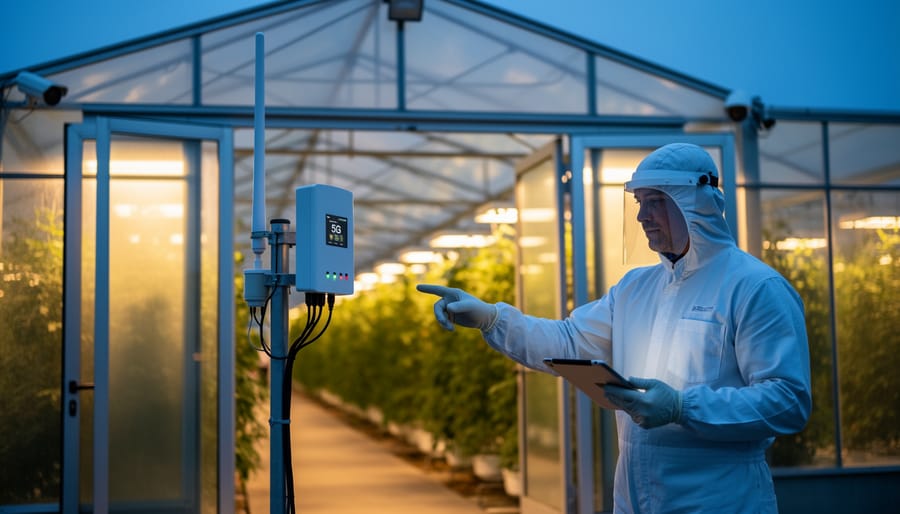
5G cybersecurity risks are vulnerabilities in fifth-generation wireless networks that can expose connected devices and data to unauthorized access, interception, or disruption. For farms adopting smart agriculture technology in 2026, these risks include everything from hacked irrigation controllers and compromised livestock sensors to stolen operational data and disrupted automated systems.
The stakes are real. When your entire operation runs on connected sensors monitoring soil moisture, tracking animal health, or controlling climate systems in greenhouses, a security breach doesn’t just mean lost data. It can mean crop failure, spoiled harvests, or compromised food safety records that impact your ability to sell at farmers markets or through CSA programs.
Here’s what makes 5G different from older wireless technology: the sheer number of connected devices it supports and the speed at which data flows. A single farm might operate dozens or hundreds of IoT sensors, all communicating simultaneously. Each connection point represents a potential entry for bad actors, and the distributed nature of 5G networks, which rely on numerous small cell sites rather than a few large towers, expands the attack surface considerably.
The good news? Understanding these risks doesn’t require a degree in computer science, and protecting your farm operation is more straightforward than you might think. Small-scale organic farmers have successfully implemented 5G-enabled precision agriculture while maintaining strong security practices, often with minimal additional cost or complexity.
This guide breaks down the specific cybersecurity threats facing connected farms, explains how these vulnerabilities actually work in simple terms, and provides practical protection strategies you can implement today. Whether you’re considering your first soil sensor or already running a fully connected greenhouse operation, you’ll learn how to adopt 5G technology safely without compromising your sustainable farming practices or your peace of mind.
What 5G Cybersecurity Risks Mean for Modern Farms
5G cybersecurity risks are the security vulnerabilities and potential attack points that emerge from the unique architecture and capabilities of fifth-generation wireless networks. For farmers and CSA operations, this means that the same technology enabling faster data transfer from field sensors and real-time equipment monitoring also creates new pathways for hackers to access your systems, intercept farm data, or disrupt connected operations.
Understanding what makes 5G different starts with recognizing that it’s not simply a faster version of 4G. Fifth-generation networks fundamentally change how data moves between devices, using distributed infrastructure and software-defined networking that introduces complexity, and with complexity comes vulnerability. Your greenhouse sensors, automated irrigation controllers, and livestock monitoring systems that communicate over 5G connect through more network entry points than older systems did, making your farm’s digital infrastructure more vulnerable to interference and unauthorized access.
- 5G Network
- Fifth-generation wireless technology that uses higher frequencies, distributed cell sites, and software-based controls to deliver faster speeds and support more connected devices simultaneously.
- IoT Devices
- Internet of Things equipment like soil moisture sensors, weather stations, and automated feeders that collect and transmit data without human intervention.
- Attack Surface
- The total number of points where an unauthorized user could potentially access your systems, every connected sensor, software application, and network junction represents a potential entry point.
- Network Slicing
- A 5G feature that creates multiple virtual networks within one physical infrastructure, allowing different types of traffic to be separated but potentially exposing isolated segments if not properly secured.
- Edge Computing
- Processing data closer to where it’s generated (at the farm level) rather than sending everything to distant cloud servers, which reduces delay but requires securing more distributed computing locations.
For agricultural operations specifically, these vulnerabilities matter because modern farms rely on interconnected systems. When your CSA’s customer database, payment processing, field sensors, and automated equipment all communicate through the same 5G network, a security breach doesn’t just mean stolen data, it could mean disrupted irrigation schedules, compromised crop monitoring, or unauthorized access to machinery controls. The distributed nature of 5G means security must extend beyond your farm office to every connected device in every field and greenhouse.
How 5G Security Vulnerabilities Work
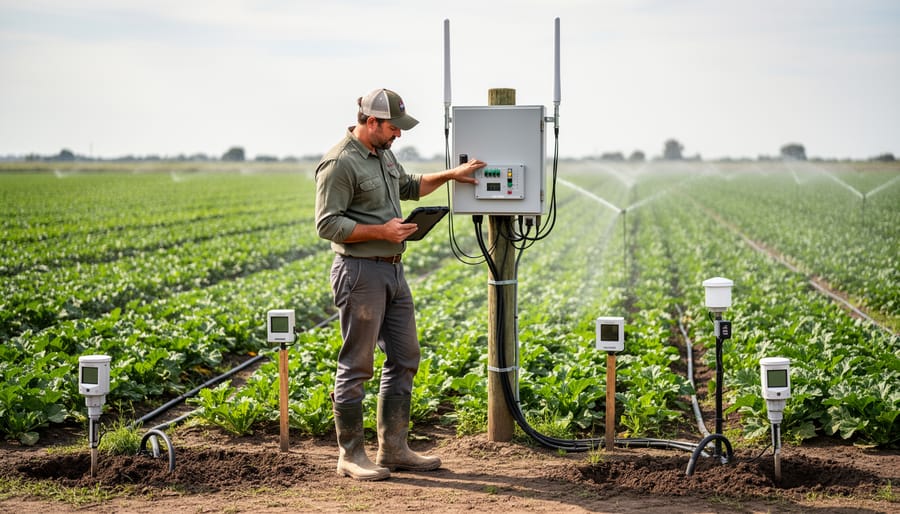
Think of your 5G farm network as a busy highway system with dozens of on-ramps and exits. Unlike older cell networks that had just a few controlled access points, 5G creates many more entry points where data flows in and out, each representing a potential security gap.
When your soil moisture sensors send readings to your phone or your automated greenhouse system adjusts temperature, that information travels through multiple checkpoints. First, it leaves your device and connects to a nearby 5G cell tower. From there, it moves through what’s called “network slicing”, imagine dedicated lanes on that highway reserved for different types of traffic. One slice might handle your irrigation data while another manages your CSA customer payment information.
Here’s where vulnerabilities creep in. Because 5G handles vastly more devices simultaneously than 4G ever could, it relies heavily on software-defined networking rather than physical hardware controls. This means security depends on code that can be hacked or misconfigured. A weak password on your greenhouse controller becomes a doorway. Outdated firmware on your weather station creates a blind spot.
Hackers exploit these weaknesses through several methods. They might impersonate a legitimate cell tower, tricking your equipment into connecting to their fake network instead, like setting up a counterfeit highway exit. Once connected, they can intercept everything your devices transmit: customer credit card numbers, proprietary growing data, even real-time video from security cameras.
Another common attack targets the authentication process. When your tablet connects to the 5G network, it exchanges digital credentials to prove it’s authorized. If those credentials are weak or stolen, an attacker can masquerade as your device. They could then send false commands to your automated systems, shutting off irrigation during a heat wave or changing temperature settings in your cold storage.
The speed and capacity that make 5G attractive for managing complex farm operations also mean breaches happen faster and affect more systems simultaneously than with older technology.
Common Types of 5G Cybersecurity Threats
Device and IoT Vulnerabilities
Every smart device on your farm is a potential entry point for hackers. 5G sensors monitoring soil moisture, automated irrigation controllers, and greenhouse climate systems all communicate wirelessly, creating multiple pathways into your network. The problem is that many agricultural IoT devices are built for functionality first, with security as an afterthought.
Most farm sensors ship with default passwords that farmers rarely change. A simple internet scan can reveal these vulnerable devices, giving attackers easy access to your systems. Once inside, they can manipulate irrigation schedules to waste water or damage crops, alter temperature controls in greenhouses, or use your devices as launching points to access customer data and payment systems.
The sheer number of connected devices on modern farms compounds the risk. Where you might carefully secure your office computer, that real-time monitoring device in the back field often goes unnoticed and unprotected. Many farmers don’t even know how many IoT devices they have running or which ones connect to their main network. Each forgotten sensor or outdated controller represents a weak link that compromises your entire operation.
Network Infrastructure Attacks
The 5G network itself can become a target, creating problems that ripple across your entire farm operation. Man-in-the-middle attacks happen when someone intercepts the communication between your devices and the network, imagine a hacker sitting between your greenhouse sensors and your phone app, secretly reading or altering the data flowing back and forth. They might see temperature readings, change irrigation commands, or capture login credentials without you noticing.
Denial of service attacks flood your network with fake requests until it can’t handle legitimate traffic anymore. For a CSA farm, this could mean your payment system goes down during Saturday market, or you can’t access real-time data from field sensors during a critical growing period.
Network slicing, a 5G feature that divides one physical network into separate virtual networks, introduces another risk. If hackers exploit weaknesses in how these slices are separated, they could jump from one slice to another, potentially accessing farm systems that should be isolated. Think of it like someone breaking through the wall between two supposedly separate storage rooms.
Data Privacy and Interception Risks
When you transmit customer data over 5G, whether that’s CSA membership payments, email addresses, or purchase histories, that information travels through multiple network points before reaching its destination. Without proper encryption, hackers can intercept this data mid-stream, a risk amplified by 5G’s reliance on software-defined networking that creates more potential entry points than older cell towers.
For CSA operators, the stakes are personal. You’re handling credit card numbers, home addresses for delivery routes, and dietary preferences that customers trust you to protect. A breach doesn’t just mean financial loss, it damages the community relationships you’ve built.
5G networks also transmit operational data from your farm management software: planting schedules, harvest yields, equipment maintenance records. Competitors or bad actors could use this information to undercut pricing or exploit your supply chain timing. The network’s speed and device capacity mean more data flows constantly, creating a larger attack surface.
The vulnerability isn’t theoretical. Unencrypted data packets can be captured using readily available equipment, especially on shared network slices where your farm’s traffic mingles with other users’ data streams.
Supply Chain Security Concerns
When you purchase smart sensors, automated irrigation controllers, or farm management software, you’re trusting that the manufacturers built security into their products. Unfortunately, hackers sometimes compromise equipment before it ever reaches your farm, inserting backdoors during manufacturing or hiding malicious code in software updates.
This supply chain vulnerability hits agriculture particularly hard because farming technology often comes from multiple vendors who don’t coordinate security standards. Your soil moisture sensor might be made in one country, its firmware written by a contractor in another, and the cloud platform it connects to operated by a third company. Each link in that chain represents a potential entry point for attackers.
The risk intensifies with 5G because these devices can transmit more data, faster, to more destinations, meaning a compromised sensor doesn’t just fail, it becomes a gateway into your entire network. A backdoored irrigation controller could expose customer payment information stored on the same system.
Where 5G Security Risks Show Up in Farm Operations
The most vulnerable spots on your farm aren’t where you’d expect. While you’re watching the fields, cybersecurity threats are often targeting the everyday digital tools you’ve come to depend on for running your CSA.
Your customer-facing systems carry significant risk. That online portal where members choose their weekly produce shares? It stores payment information, delivery addresses, and dietary preferences. If someone gains unauthorized access through a poorly secured 5G connection, they’re not just getting abstract data, they’re getting your neighbors’ credit card numbers and home addresses. The same vulnerability exists in your mobile payment terminals at farmers markets, especially when they’re connected to 5G networks without proper encryption.
Field operations present another attack surface. Many CSA farms have embraced IoT in CSA management, installing soil moisture sensors, weather stations, and automated irrigation controllers throughout their growing areas. Each connected device is a potential entry point. A compromised sensor doesn’t just send false readings, it can serve as a gateway to your entire farm network.
The farm systems most exposed to 5G security threats include:
- GPS-guided tractors and precision agriculture equipment that rely on real-time connectivity
- Point-of-sale systems and online payment processing platforms
- Member management databases with personal and financial information
- Automated greenhouse climate controls and ventilation systems
- Livestock monitoring devices tracking animal health and location
- Cold storage temperature sensors and alert systems
- Farm-to-table tracking software that follows produce from field to delivery
- Security cameras and access control systems for barns and storage facilities
Your operational data tells a story hackers find valuable. Planting schedules, harvest predictions, and yield data might seem mundane, but they’re competitive intelligence. Some farms have discovered unauthorized access only after noticing competitors seemed to anticipate their market timing suspiciously well.
Communication tools deserve attention too. Many CSA operations use messaging apps or farm management platforms to coordinate with employees, communicate with members, and manage harvest schedules. If these run over unsecured 5G connections, conversations about everything from pesticide applications to financial struggles become readable by outsiders.
The automation you’ve invested in to reduce labor costs and improve efficiency creates dependencies. When your automated watering system or climate controls rely on 5G connectivity, a network attack doesn’t just compromise data, it can physically damage crops by disrupting the environmental conditions they need.
Protecting Your Farm’s Digital Infrastructure
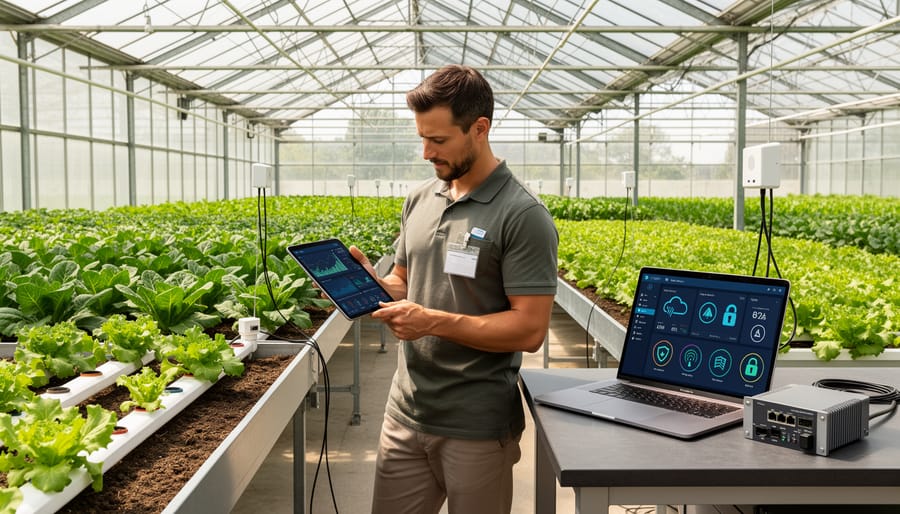
Securing your farm’s 5G network doesn’t require a massive budget or technical expertise. Start with the basics that deliver the biggest impact.
Change all default passwords on every connected device, sensors, cameras, irrigation controllers, and farm management software. Manufacturers ship equipment with standard login credentials that hackers find in minutes. Create unique, strong passwords for each system, using a password manager designed for small businesses if tracking them becomes overwhelming.
Update firmware regularly on all connected equipment. Set calendar reminders every quarter to check for security patches from manufacturers. Many farm devices sit untouched after installation, leaving known vulnerabilities open for months. This simple habit closes gaps before attackers exploit them.
Segment your farm network into separate zones. Keep customer payment systems and CSA membership data on different network segments from field sensors and equipment controls. If one area gets compromised, the damage stays contained. Most small business routers support this basic network division without requiring specialized IT knowledge.
Implement smart security practices by enabling multi-factor authentication wherever possible, especially for systems handling customer information or financial transactions. The extra step of confirming login attempts from your phone takes seconds but blocks most unauthorized access attempts.
Limit device permissions to only what each system actually needs. Your soil moisture sensors don’t require access to customer databases, and your point-of-sale system doesn’t need to control greenhouse ventilation. Restricting these connections reduces potential attack paths through your network.
Back up critical farm data weekly to an offline location, an external hard drive stored safely away from your main systems. Ransomware attacks targeting agricultural operations have increased, and offline backups ensure you can restore operations without paying criminals.
Work with equipment vendors who take security seriously. Before purchasing new connected farming technology, ask about their update policies, security certifications, and how they handle vulnerability reports. Choosing reputable manufacturers with solid security track records prevents problems before they start.
Train everyone who accesses farm systems to recognize phishing emails and suspicious requests. Most breaches start with someone clicking a malicious link, not sophisticated hacking. Brief seasonal workers and family members on basic digital hygiene as part of farm safety protocols.
Success Story: How One CSA Protected Their Network
When Emma Chen expanded Green Valley Farm’s CSA in 2025, she jumped at the chance to use 5G connectivity for her irrigation sensors, greenhouse monitors, and online ordering system. Within two months, she noticed something odd: her automated watering schedules kept changing on their own, and her customer database showed login attempts from unfamiliar locations.
Rather than panic, Emma took methodical steps any small farm could replicate. She started by changing all default passwords on her connected equipment, something she’d skipped during setup. Next, she created separate network segments: one for customer-facing systems like the CSA ordering platform, another for farm equipment controls. This meant if hackers compromised one area, they couldn’t access everything.
The biggest challenge was cost. Emma couldn’t afford enterprise-grade security software, so she focused on free and low-cost solutions: enabling two-factor authentication for all admin accounts, setting up automatic firmware updates for her IoT devices, and using a basic VPN for remote access. She also established a simple routine, checking system logs every Monday morning while drinking her coffee.
The investment paid off when her greenhouse sensors detected an attempted breach six months later. Because she’d isolated that network, the attack stopped there. Her customer data and payment systems remained untouched. Total security cost: about $300 annually, plus an hour of maintenance each month.
Common Questions About 5G Farm Security
Do I need 5G security even if I’m running a small farm?
Yes, small farms are often easier targets because they typically have fewer defenses. If you’re using any connected devices, sensors, payment systems, or customer databases, you need basic security measures regardless of farm size.
How much does 5G cybersecurity protection actually cost?
Basic protection can start with free steps like changing default passwords and enabling two-factor authentication. If you need professional support, expect $50-200 monthly for security software and network monitoring suitable for small farm operations, though costs vary based on how many devices you’re protecting.
Can I safely handle customer payment and membership data over 5G?
Yes, but use encrypted payment platforms designed for this purpose rather than handling sensitive data directly. Services like Square or Stripe manage the security heavy-lifting, which is safer than trying to protect customer information on your own farm network.
What should I ask equipment vendors about security?
Ask whether their devices receive security updates, how often updates happen, what data gets transmitted, and whether they encrypt communications. If a vendor can’t answer these questions clearly, that’s a red flag about their security practices.
Is sticking with 4G actually safer than upgrading to 5G?
Not necessarily. 4G has known vulnerabilities that hackers have had years to exploit, while 5G includes newer security features when properly configured. The real issue isn’t which generation you choose, but whether you’re implementing basic protections like strong passwords, regular updates, and network segmentation.
These concerns come up constantly at farming conferences and online forums, and they’re worth taking seriously. The technology itself isn’t inherently dangerous, but it does require you to think differently about farm management. You’re not just protecting equipment anymore, you’re safeguarding customer trust, operational data, and your farm’s reputation.
The good news is that cybersecurity doesn’t have to be overwhelming. Start with one system at a time. Secure your customer database first, then move to field sensors, then other connected equipment. You don’t need to become a tech expert overnight. Many farmers partner with local IT consultants for initial setup, then handle day-to-day security themselves using simple checklists. Think of it like maintaining your tractor, regular attention prevents major breakdowns.
Understanding 5G cybersecurity risks isn’t about avoiding technology, it’s about using it wisely. As you integrate smart sensors, automated systems, and digital tools into your farm operations, protecting your network becomes as essential as maintaining your soil health or rotating your crops. Both are forms of stewardship that ensure long-term sustainability.
The good news? You don’t need to be a cybersecurity expert to protect your CSA operation. Start with the basics: change default passwords, keep software updated, separate your business and personal networks, and choose vendors who take security seriously. These simple steps address the majority of threats facing small-scale farms today.
Think of cybersecurity as an ongoing practice rather than a one-time fix. Just as you monitor your fields throughout the growing season, regularly reviewing your digital security keeps your operation resilient. The benefits of 5G connectivity, real-time crop monitoring, efficient water management, streamlined customer communications, far outweigh the risks when you approach them thoughtfully.
Your farm’s digital infrastructure supports the relationship you’ve built with your community members. Protecting their data and your operational systems isn’t just about preventing financial loss. It’s about maintaining the trust that forms the foundation of community-supported agriculture.
Secure technology and sustainable farming aren’t opposing forces. They’re partners in building the resilient, transparent food systems our communities need.
