
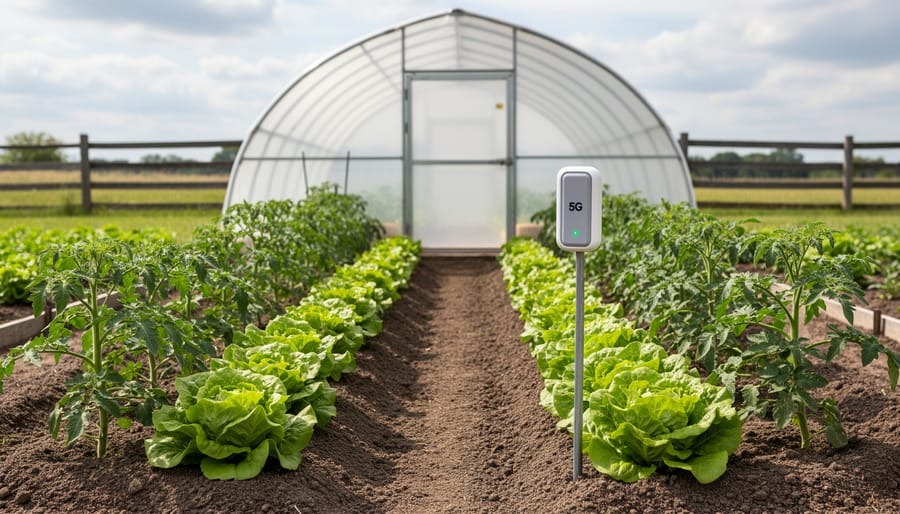
5G sensors are wireless monitoring devices that connect via 5G networks to track soil moisture, temperature, pest activity, and crop health in real time, offering CSA farmers unprecedented precision without the infrastructure headaches of traditional wired systems. For small-scale operations, these sensors represent a practical middle ground: more sophisticated than manual checks, yet more affordable and easier to install than the complex IoT systems designed for industrial agriculture.
The real question isn’t whether 5G sensors work. They do, and remarkably well. The question is whether they’re worth the investment for a farm growing vegetables for 50 to 200 member families. Right now, as of 2026, entry-level 5G sensor kits start around $800 to $1,200 for basic soil and weather monitoring across a few acres. That’s still a significant chunk of change for most CSA budgets, but it’s dropped considerably from even two years ago.
What makes 5G sensors different from older wireless options is speed and reliability. Traditional cellular sensors on 3G or 4G networks struggled with latency and coverage gaps in rural areas. 5G cuts through those problems with faster data transmission and better penetration through obstacles like greenhouse walls or dense foliage. You get alerts on your phone within seconds, not minutes, when something goes wrong. That matters when you’re trying to catch an irrigation malfunction before a bed of lettuce wilts or when overnight temperatures threaten your tomato starts.
The technology sounds futuristic, but the application is beautifully simple. Place sensors where you need eyes, connect them to an app, and let the data guide your decisions instead of guesswork. For CSA farmers juggling harvest schedules, member communication, and the hundred other tasks that fill a week, that clarity saves both time and crops.
What Makes 5G Sensors Different from Traditional Farm Monitoring
Traditional farm monitoring has relied on technologies that weren’t designed with agriculture in mind. WiFi signals struggle to reach distant fields, while older cellular networks like 4G can lag when multiple sensors try to transmit data simultaneously. This creates frustrating gaps in coverage and delays in getting critical information about your crops.
5G changes this equation fundamentally. The technology operates on different radio frequencies that penetrate obstacles better and carry data much faster than previous generations. For CSA farmers, this means sensors scattered across ten acres can all communicate reliably without dead zones or dropout areas. You’re no longer limited to monitoring only the fields closest to your barn or main building.
The speed difference matters more than you might think. When a temperature sensor detects frost conditions approaching, 5G transmits that alert in milliseconds rather than seconds. This split-second advantage gives you precious extra minutes to activate frost protection systems or cover vulnerable crops. The low latency also enables real-time monitoring through your phone as you walk the fields, with data refreshing instantly rather than buffering.
Perhaps most importantly for small farms integrating IoT in CSA operations, 5G networks handle many simultaneous connections without slowing down. Where 4G might struggle with twenty active sensors, 5G supports hundreds of devices transmitting continuously.
| Capability | 4G Technology | 5G Technology |
|---|---|---|
| Response Time | 50 milliseconds | 1 millisecond |
| Connected Devices per Area | Up to 2,000 | Up to 1 million |
| Effective Range | 2-5 miles from tower | 10+ miles from tower |
| Sensor Battery Life | Months | Years (due to efficiency) |
The extended battery life deserves special mention. Because 5G sensors communicate more efficiently, they draw less power during transmission. This means sensors placed in remote growing areas can operate for years on a single battery rather than requiring frequent replacement trips across muddy fields. For busy CSA farmers managing harvest schedules and member deliveries, this reduced maintenance burden makes comprehensive monitoring actually feasible rather than theoretically possible.
Real-World Applications: What 5G Sensors Monitor on Your CSA Farm
Soil Health and Moisture Monitoring
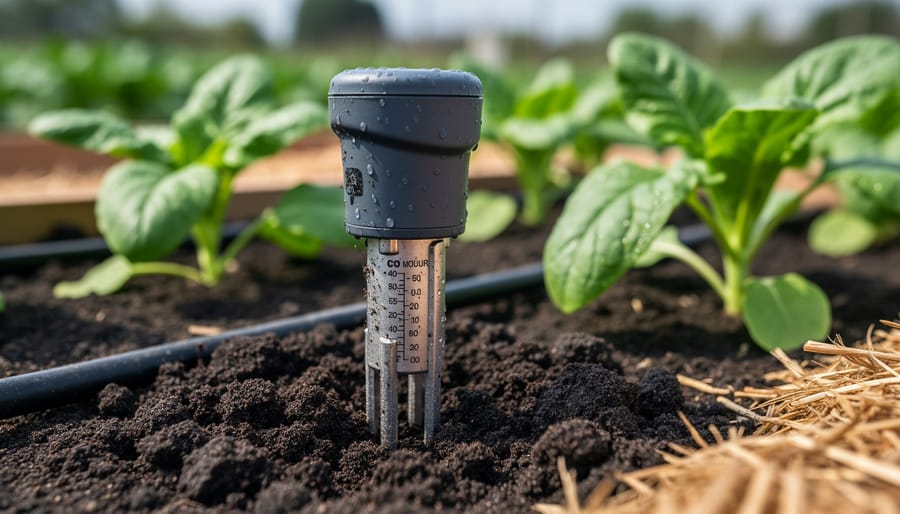
Soil sensors embedded across your growing areas send continuous updates about moisture levels, temperature, and nutrient availability, information that used to require walking fields with manual probes or simply guessing based on surface conditions. This real-time monitoring helps you catch dry spots before plants wilt and wet areas before roots start rotting, problems that often go unnoticed until harvest suffers.
For organic CSA growers, knowing precisely what your soil needs means you can apply compost or organic amendments exactly where they’ll do the most good rather than broadcasting materials uniformly across beds that have different requirements. A sensor might reveal that your tomato beds dry out faster than your lettuce rows, letting you adjust drip irrigation zones independently and cut water use by 30% while improving yields in both areas.
The data arrives on your phone, so you can check soil conditions from the farmstand while talking with members or from home during evening planning sessions, eliminating the need to walk every bed daily just to decide whether to water tomorrow morning.
Crop Growth and Plant Health Tracking
Early disease detection often means the difference between saving a crop and watching it fail. 5G sensors track subtle changes in plant health that human eyes might miss until it’s too late. Thermal imaging sensors spot heat variations that signal water stress or disease before leaves wilt. Multispectral cameras measure chlorophyll levels, revealing nutrient deficiencies days before yellowing appears. For organic CSA farmers, this advance warning creates time to respond with approved treatments like neem oil or beneficial insects rather than emergency measures.
Growth pattern monitoring helps optimize harvest timing for member boxes. Sensors tracking canopy development and fruit maturity let farmers predict yields more accurately, reducing waste and ensuring consistent CSA shares. One farmer reported catching early blight on tomatoes three days sooner than visual inspection would have revealed, treating just the affected rows organically before spores spread.
The constant vigilance these sensors provide acts like an extra farmhand who never sleeps, watching over crops while you focus on other tasks. You maintain hands-on knowledge while gaining data-backed confidence in your organic management decisions.
Environmental and Weather Data
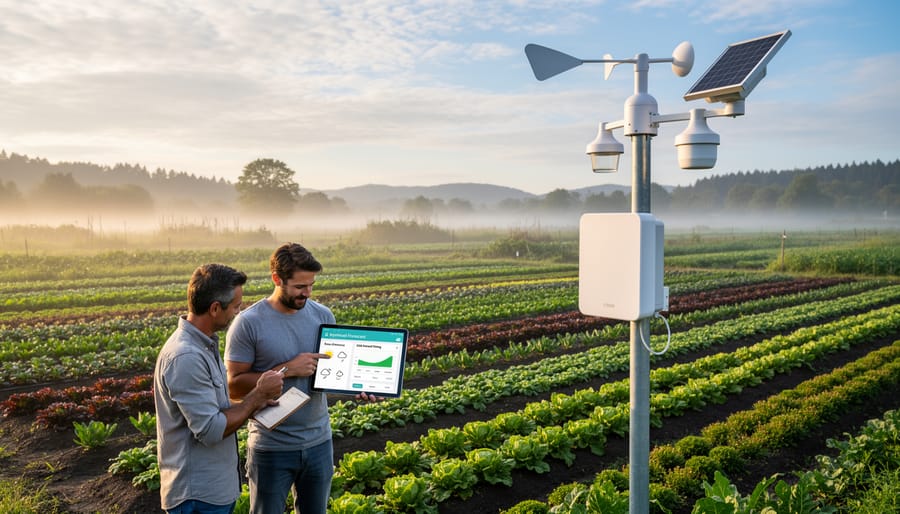
Hyperlocal weather data makes all the difference when you’re packing CSA boxes. A micro-weather station with 5G connectivity sitting in your actual field tells you what’s happening right there, not what the nearest town is experiencing three miles away. You’ll get alerts about temperature drops before frost threatens your lettuce, track humidity spikes that signal fungal disease risk, and monitor wind patterns that help you time spray applications for organic pest management.
This real-time information helps you harvest at peak quality. Instead of guessing when that rain will arrive, you know precisely when to pick tomatoes before they split or gather greens while they’re still crisp. For CSA farmers, this means consistently delivering better produce to members while protecting your investment from weather surprises that can devastate a small farm’s entire weekly harvest.
The Cost Reality: Is This Technology Accessible for Small CSA Farms?
Let’s talk numbers. A basic 5G sensor setup for a small CSA farm typically starts around $2,500 to $4,000 in 2026, covering a handful of soil moisture sensors, one or two environmental monitors, and a gateway device. If you’re monitoring multiple fields or want comprehensive coverage, expect costs to climb toward $8,000 to $12,000 for the first year. That includes equipment, installation, and initial configuration.
Monthly subscription fees add another layer. Most sensor networks require cloud-based data platforms, running $50 to $150 per month depending on the number of sensors and features you need. Over a year, that’s $600 to $1,800 in recurring costs. Installation can be DIY-friendly for tech-comfortable farmers, saving professional setup fees of $500 to $1,500, though having an expert ensure proper placement and calibration often pays off.
Now for the encouraging part: these sensors typically pay for themselves within two to three growing seasons. CSA farmers report water savings of 25-35% once they stop guessing about irrigation needs and start responding to actual soil data. That alone can cut hundreds off monthly water bills during growing season. Labor savings matter too, you’re not walking fields twice daily to check soil or guess at frost risk, freeing up hours for member engagement, harvesting, or simply taking a break.
Crop loss prevention delivers the biggest return. Catching a disease outbreak two days earlier or knowing exactly when to protect against an incoming frost can save an entire planting worth thousands of dollars. For a 200-member CSA charging $600 per season share, preventing just one major crop failure justifies the entire system investment. The question isn’t whether you can afford 5G sensors, it’s whether you can afford not to have better information guiding your growing decisions.
Success Story: How One CSA Farm Uses 5G Sensors to Serve 200 Members
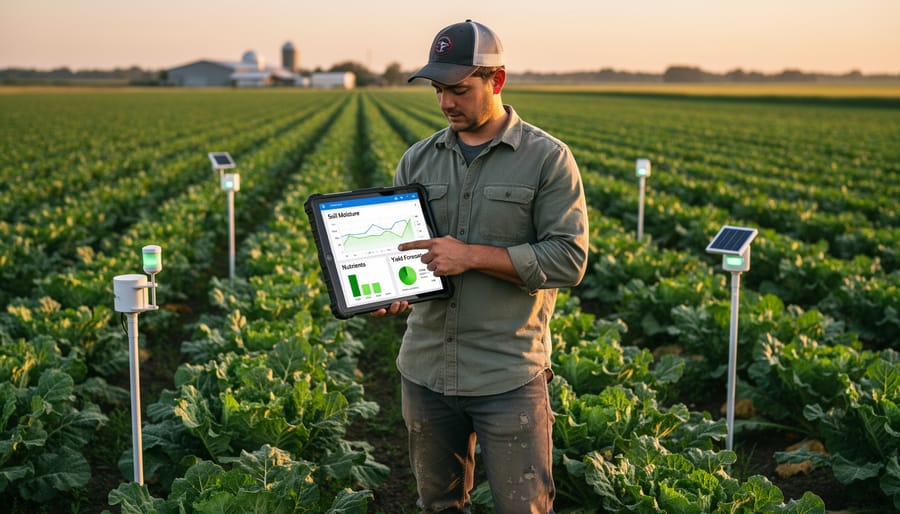
When Sarah Martinez took over her family’s 15-acre organic farm outside Portland in 2024, she inherited a loyal CSA membership of 120 families but also mounting concerns about water costs and unpredictable harvests. “I’d walk the rows twice daily, checking soil moisture by hand, guessing when to irrigate,” she recalls. “Some weeks we’d have abundance, others we’d scramble to fill boxes.”
Her turning point came during a particularly difficult summer when unexpected heat stress damaged half her tomato crop before she noticed the wilting. A fellow farmer mentioned 5G sensor networks at a regional sustainable agriculture conference, but Sarah initially dismissed it. “I thought, that’s for big industrial operations, not a small organic farm trying to keep prices affordable for working families.”
After researching options and crunching numbers, Sarah started small in spring 2025. She installed soil moisture sensors in three high-value beds growing salad greens and tomatoes, connecting them through a 5G network that finally reached her rural area. The setup cost about $1,200 for sensors and a basic monitoring system, which felt like a gamble.
The data surprised her immediately. “I was over-watering my lettuce by nearly 40 percent and under-watering my tomatoes,” she says. Within two months, her water bill dropped noticeably, and the crops looked healthier. Encouraged, she expanded sensors across all production areas by fall, adding temperature monitors that alert her phone before frost threatens tender crops.
By 2026, Sarah serves 200 CSA members with the same acreage. The sensors connect to yield analytics software that helps her plan harvest quantities more accurately. “I used to guess how much kale to plant. Now I track growth rates and know exactly when each bed hits peak harvest for our Wednesday and Saturday pickup days,” she explains.
Her members noticed the difference. Box contents became more consistent, with fewer emergency substitutions. Sarah estimates she’s cut water use by 35 percent and reduced crop loss from stress or disease by about half through early detection. “The technology doesn’t replace walking my fields,” she emphasizes. “It tells me where to look and when to act. I’m still the farmer making decisions, just better-informed ones.”
Getting Started: Practical Steps for CSA Farms Considering 5G Sensors
The leap from manual observation to digital monitoring can feel overwhelming, but you don’t need to wire your entire farm overnight. Most successful CSA operations start by asking themselves what problems they’re actually trying to solve. Are you losing crops to unexpected frost? Spending too many hours checking irrigation zones? Missing the optimal harvest window for delicate greens? Your pain points will guide your sensor priorities.
Before you shop for equipment, verify that 5G coverage reaches your fields. Rural connectivity has improved dramatically, but coverage maps don’t always reflect reality on the ground. Contact your local carriers and ask about agricultural-specific plans, some providers now offer specialized packages for farms. If 5G isn’t available yet, hybrid systems can use existing WiFi or 4G networks while preparing for future upgrades.
Here’s a practical roadmap that respects both your budget and your learning curve:
- Identify your most critical monitoring need (soil moisture, temperature, or crop health) and focus there first rather than trying to track everything simultaneously.
- Calculate your potential return on investment by estimating water savings, labor reduction, and crop loss prevention, concrete numbers make the decision easier.
- Choose one test area, ideally a high-value crop bed or problem zone where you’ll notice improvements quickly and can validate the data against your own observations.
- Select equipment designed for outdoor durability with solar charging options, reducing maintenance trips and power infrastructure costs.
- Verify that your chosen system addresses sensor cybersecurity and encrypts your farm data, small operations are increasingly targeted by hackers.
- Run your pilot area for a full growing season, learning the system’s quirks and how to interpret readings before expanding to additional zones.
Many farmers underestimate the learning curve for data interpretation. Raw numbers mean little until you correlate them with actual field conditions and outcomes. Spend time walking your monitored area, comparing what the sensors report with what your eyes and hands tell you. This validation period builds confidence in the technology while maintaining your essential connection to the land. As patterns emerge and you see measurable improvements, expanding coverage becomes a natural next step rather than a leap of faith.
Balancing Technology with Organic Farming Principles
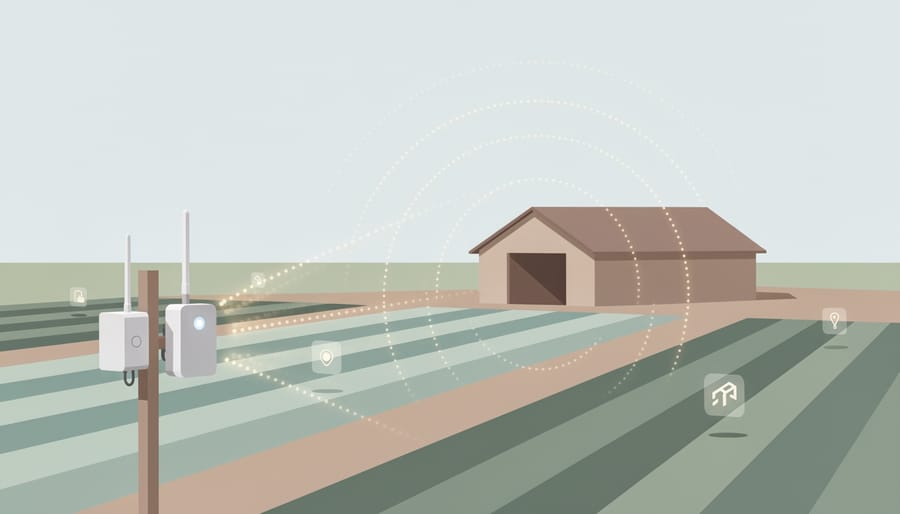
When some CSA farmers first hear about sensor networks and real-time data dashboards, they worry they’re abandoning the hands-on philosophy that drew them to organic farming. The truth is more nuanced. Technology doesn’t replace the intimate knowledge you’ve built walking your fields daily, it sharpens it.
Think of 5G sensors as an extension of your senses rather than a substitute. You’ve always read your soil by feeling its texture and observing your plants for signs of stress. Sensors simply give you additional information when you can’t be in every bed simultaneously. That soil moisture reading at 3 a.m. doesn’t replace your morning walk through the rows; it tells you which areas deserve closer inspection when you make that walk.
The organic farming ethos centers on working with nature, not against it. Sensor data actually supports this by revealing patterns you might otherwise miss. When your monitors show exactly where irrigation is needed, you avoid the blanket watering approach that wastes resources and can promote disease. When temperature sensors alert you to microclimates on your property, you can plant accordingly instead of fighting against natural conditions.
Several established organic CSA operations have found that precise data helps them intervene less, not more. They catch problems early enough to use gentle, organic solutions rather than scrambling with emergency measures. They optimize compost applications by understanding nutrient levels across different field sections.
The key is remembering that sensors provide information, not instructions. You’re still the farmer making decisions based on your experience, your land’s unique characteristics, and your commitment to sustainable practices. The technology just gives you better information to work with.
The narrative around farm technology often paints a picture of massive operations and corporate consolidation, but 5G sensors tell a different story for CSA farms. This technology isn’t about replacing the farmer’s intuition or transforming your operation into something unrecognizable. It’s about giving you better information so you can make decisions that align with your values while serving your community more effectively.
When you know exactly which sections need water and which don’t, you’re conserving a precious resource. When you catch a disease early through monitoring data, you can apply organic treatments before losing an entire crop that your members depend on. When you understand your microclimates better, you can extend your growing season and fill those late-autumn CSA boxes with fresh produce instead of storage crops alone.
The real power here is choice. You get to decide what to monitor, how to respond to the data, and which traditional practices to keep. The sensors don’t farm for you; they inform your farming. This distinction matters because it preserves what makes CSA operations special: the connection between grower and land, farmer and community.
Small-scale organic farming faces genuine challenges in 2026, from climate unpredictability to labor shortages. Technology that helps you work smarter without working larger keeps your farm viable and your mission intact. Your members aren’t just buying vegetables; they’re investing in a way of growing food that respects the earth. Tools that help you do that better, season after season, strengthen the entire community-supported agriculture movement.
