Category Archives

17 Articles

How Utah State’s Seed Program Keeps Heirloom Varieties Alive in Your Garden

Posted by darrell on
0
Cultural Agriculture Practices
How Utah State’s Seed Program Keeps Heirloom Varieties Alive in Your Garden

Every seed tells a story of resilience, adaptation, and centuries of careful cultivation by farmers who understood that preserving genetic diversity means preserving our future food security. The Utah State University (USU) Seed Program stands at the forefront of this vital mission, connecting modern gardeners and small-scale farmers with rare heirloom varieties that might otherwise disappear from our agricultural landscape forever.

This community-driven initiative does more than distribute seeds—it creates a living library of plant genetics adapted to regional growing conditions. When you participate in seed preservation, you become part of a network safeguarding varieties that have fed families for generations, each one uniquely suited to specific climates, resistant to local pests, and packed with flavors you won’t find in commercial produce aisles.

The program works through a simple yet powerful exchange: receive heritage seeds, grow them using sustainable practices, save seeds from your healthiest plants, and return a portion to keep the cycle alive. This approach has helped countless gardeners discover varieties perfectly matched to their microclimates while building skills that reduce dependence on industrial seed companies.

Whether you’re establishing your first garden bed or managing acres of farmland, seed saving transforms you from a passive consumer into an active guardian of agricultural biodiversity. The knowledge you’ll gain—from proper harvesting techniques to storage methods that maintain viability for years—empowers you to grow food with purpose while connecting to farming traditions that sustained communities long before chemical inputs became the norm.

What Makes the USU Seed Program Different

The Utah State University Seed Program stands out as a unique bridge between cutting-edge agricultural research and grassroots community engagement. Unlike commercial seed companies focused primarily on mass production, this program dedicates itself to preserving and sharing seeds specifically adapted to the Intermountain West’s challenging growing conditions—where short seasons, temperature swings, and variable moisture levels test even experienced gardeners.

What truly sets USU apart is its dual mission. As a research institution, the program systematically evaluates heirloom and open-pollinated varieties to identify those best suited to local climates. At the same time, it operates as an accessible community resource, making these regionally adapted seeds available to home gardeners and small-scale farmers who might otherwise struggle to source varieties that thrive in their specific environment.

The program honors traditional seed saving wisdom while applying modern scientific understanding. Rather than simply storing seeds in a vault, USU actively grows them out each season, maintaining their vigor and continuously selecting for traits like cold tolerance and drought resistance. This living collection approach ensures seeds remain viable and well-adapted rather than merely preserved.

Community members particularly appreciate the program’s educational component. Through workshops and growing guides, USU shares time-tested techniques that help everyday gardeners become seed savers themselves. Success stories abound, like Maria, a backyard gardener in Logan who now saves seeds from three tomato varieties she received through the program, creating a personal seed library adapted to her microclimate.

By reconnecting people with these resilient, locally adapted varieties, the USU Seed Program empowers individuals to build food security while preserving genetic diversity that commercial agriculture often overlooks.

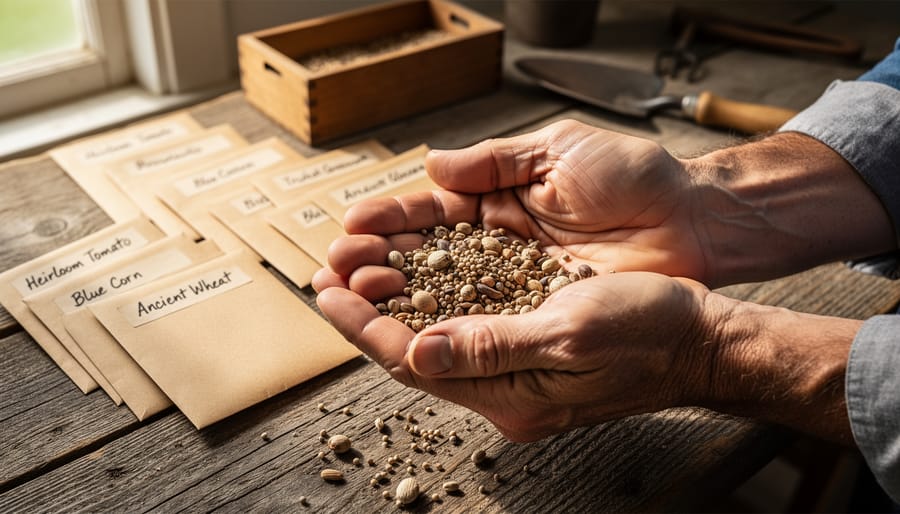
Elderly hands holding assorted heirloom seeds with vintage seed packets in background
Heirloom seeds preserved through traditional methods represent generations of agricultural heritage and genetic diversity.

The Traditional Roots of Modern Seed Preservation

Seed Saving as Cultural Heritage

For centuries, indigenous peoples and farming communities across the globe have been the true guardians of agricultural diversity. These caretakers understood something profound: seeds aren’t just planting material—they’re living libraries containing generations of adaptation, resilience, and cultural identity. Through traditional seed saving practices, families passed down treasured varieties alongside stories, recipes, and growing wisdom that connected them to their ancestors.

Think about the Cherokee Purple tomato, with its rich, smoky flavor perfected over centuries in Tennessee, or the Three Sisters planting method where corn, beans, and squash varieties were carefully selected and saved season after season. These weren’t random choices. Traditional communities observed which plants thrived in their specific climates, which resisted local pests, and which provided the best nutrition and flavor for their families.

Today, these practices matter more than ever. When we preserve heirloom varieties, we’re maintaining genetic diversity that could be crucial for future food security. Each saved seed represents solutions to challenges we haven’t even encountered yet—drought tolerance, disease resistance, or adaptability to changing climates.

The Hopi Blue corn, Mortgage Lifter tomatoes, and Scarlet Runner beans are just a few examples of varieties that survived because someone cared enough to save their seeds. By participating in programs that preserve these treasures, you’re becoming part of this incredible legacy of stewardship and hope for future generations.

From Kitchen Tables to University Labs

For generations, families carefully tucked away their best seeds in mason jars and paper envelopes, passing down treasured varieties that thrived in their specific microclimates. These kitchen table collections represented more than just seeds—they held stories, flavors, and genetic diversity adapted to local growing conditions over decades.

However, when families moved away or stopped gardening, these irreplaceable varieties often disappeared forever. That’s where Utah State University’s seed program steps in, creating a vital bridge between traditional home seed saving and scientific preservation.

The program actively works with families to rescue heirloom seeds that might otherwise be lost, cataloging their origins and growing characteristics. By combining the knowledge of longtime gardeners with university resources like proper storage facilities and germination testing, USU ensures these seeds remain viable for future generations.

Take the Johnson family from Cache Valley, who donated their 80-year-old tomato variety to the program. Now, instead of existing in a single backyard, dozens of local farmers are growing and preserving this exceptional tomato, keeping the tradition alive while expanding its reach throughout the community.

How the Program Works for Gardeners and Farmers

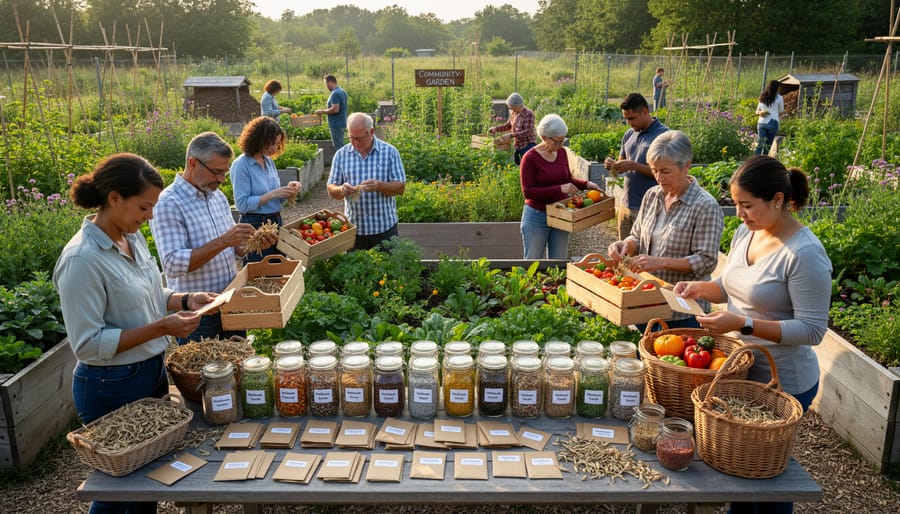
Group of gardeners working together planting seedlings in community garden
Community gardeners participate in seed preservation efforts by growing out rare varieties and sharing their harvests.

Getting Seeds from the Program

Getting seeds from the USU program is refreshingly straightforward. Start by visiting their seed library during operating hours or checking their online catalog to browse available varieties. The program typically offers an impressive selection of heirloom tomatoes, peppers, beans, squash, and various herbs—all carefully preserved for their adaptability to Utah’s unique climate.

Most programs operate on a borrowing system where you “check out” seeds at no cost or for a minimal membership fee, usually around $5-10 annually. The beautiful part? You’re encouraged to grow these varieties, save seeds from your healthiest plants, and return a portion to the library. This ensures future gardeners can benefit while you’re actively participating in seed preservation.

When requesting seeds, you’ll fill out a simple form indicating which varieties interest you. Staff members, often experienced gardeners themselves, can recommend varieties suited to your growing conditions and experience level. They’ll provide growing instructions and seed-saving tips specific to each plant.

First-time participants especially appreciate the program’s educational support. Many members report that starting with just three or four varieties helps them learn proper seed-saving techniques before expanding their collection. This approach builds confidence while contributing to agricultural biodiversity preservation.

Growing Out and Returning Seeds

Growing out seeds from the USU program is where your garden becomes part of something bigger. Once you’ve selected your varieties, plant them according to their specific needs and let them complete their full life cycle. The magic happens when flowers turn to seed heads and pods begin to dry on the plant.

For successful seed saving, timing is everything. Wait until seeds are fully mature before harvesting—beans should rattle in their pods, and tomato seeds need fermentation to remove their protective gel coating. Lettuce and other greens will send up tall flower stalks when they’re ready to go to seed. Allow these to dry completely before collecting.

Clean your seeds by removing any plant debris, then store them in paper envelopes or breathable containers in a cool, dry place. Label everything with the variety name and harvest date—you’ll thank yourself later!

When you’re ready to give back, package your saved seeds and return a portion to the program. Most participants keep some for their own garden while sharing the rest. This simple act ensures these precious varieties remain available for future growers. One gardener in Cache Valley successfully grew out rare Utah heirloom beans and returned enough seeds to supply twenty other families the following season.

Becoming a Seed Guardian

Taking your involvement to the next level as a Seed Guardian offers a rewarding way to contribute to agricultural biodiversity. Through USU’s program, passionate gardeners can become stewards of rare and heirloom varieties, growing out specific seeds each season to maintain their genetic diversity. This hands-on approach connects you with community seed exchange networks where you can share harvests, learn from experienced growers, and access varieties not available commercially. Many guardians start small, perhaps maintaining one or two varieties, before expanding their preservation work. The program provides guidance on isolation distances, population sizes, and proper seed cleaning techniques. You’ll join a dedicated community working together to safeguard food security for future generations while gaining deeper knowledge of plant genetics and traditional growing methods.

Success Stories: Farmers and Gardeners Making an Impact

The USU seed program has touched countless lives, transforming backyard gardens into thriving ecosystems and helping small farms discover new paths to profitability. These real-world success stories demonstrate how seed preservation creates ripples of positive change throughout our communities.

Maria Chen, a home gardener from Salt Lake City, credits the program with rekindling her connection to her grandmother’s heritage. After receiving Moon and Stars watermelon seeds through USU’s collection, she successfully grew varieties that hadn’t graced her family’s table in three generations. “I was amazed at how different these heirloom melons tasted compared to store-bought produce,” Maria shares. “Now I’m saving seeds every season and sharing them with neighbors who want to experience the same flavors I remember from childhood.”

The program has also launched entrepreneurial ventures. Tom and Rebecca Martinez started a small seed company after participating in USU’s training workshops. They now specialize in drought-tolerant beans and squash varieties perfectly adapted to Utah’s climate. Within two years, their business grew from selling at farmers markets to supplying dozens of regional garden centers. “The knowledge we gained about proper seed cleaning, storage, and testing gave us the confidence to turn our passion into a livelihood,” Tom explains.

Meanwhile, Green Valley Farm near Logan preserved three rare tomato varieties that were on the verge of disappearing from their region. By partnering with USU’s seed library, they’ve distributed these seeds to over 200 gardeners statewide, ensuring these precious genetics survive for future generations.

These stories illustrate how the program empowers everyday people to become stewards of agricultural biodiversity. Whether you’re growing food for your family, preserving cultural heritage, or building a seed business, the USU seed program provides the resources and community support to help your vision flourish.

Why Seed Preservation Matters for Your Table

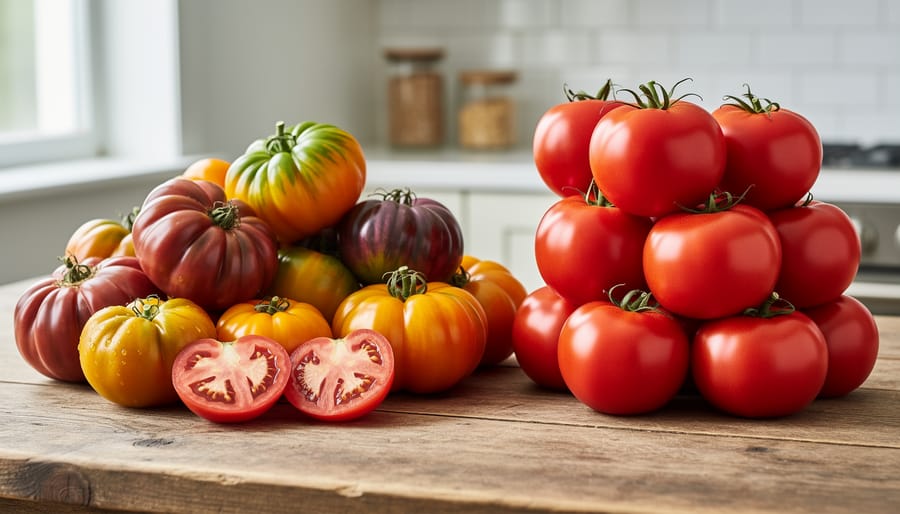
Colorful assortment of heirloom tomatoes in purple, orange, yellow, and red on wooden board
Heirloom varieties offer superior flavor profiles and diverse colors compared to commercial tomatoes bred for shipping.

Better Flavor and Nutrition

One of the most exciting benefits of growing heirloom and regionally adapted varieties from the USU Seed Program is the remarkable difference in flavor. These seeds haven’t been bred for shelf life or uniform appearance like commercial varieties—they’ve been selected for taste. Gardeners consistently report that heirloom tomatoes burst with complex, sweet flavors, while heritage beans offer richer, creamier textures that transform everyday meals into something special.

Beyond taste, these traditional varieties often pack more nutritional punch. Research shows that many heirloom vegetables contain higher levels of vitamins, minerals, and beneficial antioxidants compared to their mass-produced counterparts. When you grow regionally adapted seeds suited to your local soil and climate, plants develop stronger root systems and absorb nutrients more efficiently. Local farmers participating in the program have discovered that varieties thriving in Utah’s unique conditions produce more nutritious harvests while requiring fewer inputs. It’s a win for your taste buds, your health, and your garden’s sustainability.

Climate Resilience in Your Garden

Diverse seed varieties offer your garden a natural insurance policy against unpredictable weather. When you grow multiple varieties of the same crop, each with unique genetic traits, some will naturally thrive despite drought, early frosts, or excessive rain. The USU seed program preserves these valuable genetic differences that took generations to develop.

Think of local gardener Maria Rodriguez, who saved three tomato varieties through the program. When an unexpected cold snap hit her area, one heat-loving variety struggled while her cold-tolerant heirloom flourished, ensuring she still had a harvest. This genetic diversity becomes increasingly vital as weather patterns shift.

By participating in seed saving, you’re not just growing food—you’re cultivating climate adaptation right in your backyard. Seeds that perform well in your specific microclimate can be saved and shared, creating a community resource of resilient varieties perfectly suited to local conditions. This grassroots approach strengthens food security while connecting you to generations of agricultural wisdom.

Starting Your Own Seed Saving Practice

Starting your own seed saving journey is easier than you might think, and the USU seed program offers an excellent model to follow. Begin with simple, open-pollinated varieties that naturally produce seeds true to type. Beans, peas, lettuce, and tomatoes are perfect starter crops since they self-pollinate and require minimal intervention.

Choose healthy, vigorous plants as your seed sources. Let the fruits or pods fully mature on the plant rather than harvesting them early for eating. For tomatoes, select perfectly ripe specimens from your most productive plants. Scoop out the seeds, ferment them in water for a few days to remove the gel coating, then rinse and dry them thoroughly on paper plates.

Beans and peas are even simpler. Just leave a few pods on your best-performing plants until they’re completely dry and papery. Shell them out and store in cool, dry conditions.

Proper storage is crucial for maintaining seed viability. Use small envelopes or glass jars, clearly labeled with variety name and harvest date. Keep them in a dark, cool location with low humidity. A sealed container with silica gel packets in your refrigerator works wonderfully for long-term storage.

Sarah Martinez, a community gardener in Salt Lake City, started saving seeds from just three tomato plants. Within two years, she’d built a collection of twelve locally adapted varieties that she now shares with neighbors. Her success demonstrates how traditional seed saving techniques create resilient gardens while strengthening community connections.

Start small, keep detailed records, and don’t worry about perfection. Every seed you save is a step toward food independence and agricultural sustainability.

Every seed saved is a small act of rebellion against the erosion of agricultural biodiversity—and you can be part of this vital movement. Whether you’re tending a backyard garden or dreaming of starting a small farm, participating in seed preservation programs like USU’s connects you to generations of farmers who understood that resilience starts with diverse, locally adapted seeds. These programs aren’t just about maintaining the past; they’re building a more sustainable future where communities have access to nutritious, regionally appropriate food crops.

The beauty of seed preservation is that anyone can contribute. Start small by growing just one heirloom variety this season, observe how it performs in your specific conditions, and save those seeds for next year. Share your experiences with fellow gardeners, swap seeds at local exchanges, and document what works in your microclimate. Each successful harvest strengthens our collective seed knowledge and food security.

Ready to join the movement? Visit the USU seed program website or contact your local extension office to request your first heirloom seed variety. Your journey toward sustainable agriculture starts with a single seed—plant it, nurture it, and watch how your involvement grows into something truly transformative.

Ancient Wisdom Keeps Your Garden Soil Where It Belongs

Posted by darrell on
0
Cultural Agriculture Practices
Ancient Wisdom Keeps Your Garden Soil Where It Belongs

Your soil is the foundation of everything you grow, yet wind, water, and time constantly work against you, carrying away precious topsoil and the nutrients your plants desperately need. Every rainstorm that leaves channels in your garden bed or gust of wind that lifts dried earth into the air represents lost fertility and diminished harvests. The good news? You don’t need expensive equipment or synthetic chemicals to protect what you’ve worked so hard to build.

Indigenous farmers have maintained fertile growing spaces for thousands of years using methods that work with nature rather than against it. These traditional storage techniques and soil management practices prove that the most effective solutions often come from observing and mimicking natural systems. Whether you’re managing a small backyard garden or planning a larger farm plot, understanding how to anchor your soil creates the stable foundation every successful growing space requires.

The four techniques we’ll explore combine time-tested wisdom with practical application for today’s growers. From living root systems that grip soil particles together to strategic physical barriers that redirect water’s erosive force, each method offers a distinct approach to keeping your growing medium exactly where you need it. These aren’t complicated interventions requiring special training, they’re straightforward practices you can start implementing this growing season to protect your investment in healthy, productive soil for years to come.

The Mound Method: Building Hills That Hold

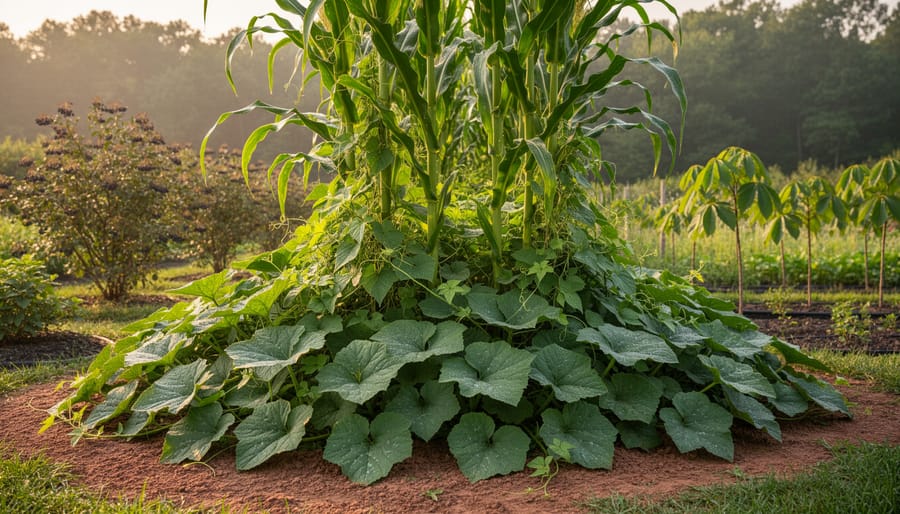
Raised earthen mound with crops growing on top in a traditional garden setting
Raised mound planting systems create natural drainage while anchoring soil particles and preventing erosion in garden beds.

How Traditional Mounds Work

Mound construction works by creating elevated ridges that transform how water and soil interact on your land. When you build these raised beds, typically 6-12 inches high, you’re essentially engineering natural drainage pathways that keep soil particles locked in place rather than washing away during heavy rains.

Here’s the science: water naturally flows downhill, seeking the path of least resistance. Traditional mounds redirect this flow between the ridges, slowing water velocity and allowing it to percolate gradually into the soil rather than rushing across the surface. This gentle infiltration means your topsoil stays put instead of eroding. The elevated structure also improves aeration, encouraging deeper root growth that acts like an underground net, physically binding soil particles together.

Similar to indigenous water management techniques, mounds work with nature’s patterns rather than against them. The raised profile warms soil faster in spring, extending your growing season, while the valleys between mounds capture organic matter and nutrients that would otherwise wash away.

What makes this method particularly effective is how it combines multiple erosion-fighting benefits: improved drainage, enhanced root anchoring, and natural sediment trapping. Many farmers report 40-60% less soil loss after implementing mound systems, proving this ancient technique delivers modern results.

Applying Mound Techniques in Your Garden

Ready to create your own storage mounds? Start small with a practice mound measuring about 3-4 feet in diameter and 18-24 inches high. Choose a well-drained location in your garden, ideally on a gentle slope where water won’t pool around the base.

Begin by loosening the soil in your chosen spot, then mound it up gradually, packing it firmly as you build. The shape should resemble a wide, flattened dome rather than a steep cone. This gentle slope prevents water from rushing down and carrying soil away, while the elevated design improves drainage and prevents waterlogging.

For best results, consider what you’re storing. Root vegetables like potatoes, carrots, and beets work beautifully in mounds, as do winter squash and sweet potatoes. Plant your crops directly into the mound or use it for post-harvest storage by covering produce with straw and additional soil.

Here’s a tip from organic farmer Maria Santos, who’s used mound techniques for fifteen years: “Add a layer of mulch or cover crop residue between soil layers. It helps retain moisture while preventing erosion, and your soil gets richer every season.”

Remember to orient longer mounds perpendicular to slopes for maximum erosion control. As seasons pass, you’ll notice how these simple structures protect and actually build your soil.

Living Borders: The Three Sisters Strategy

Root Systems That Grip

Think of plant roots as nature’s own rebar system, weaving together an underground mesh that locks soil particles in place. When you practice companion planting, you’re creating a diverse network of roots with different shapes, depths, and strengths working together like interlocking puzzle pieces.

Deep-rooted plants like comfrey and daikon radish act as anchors, penetrating far into the soil profile while their fibrous companions spread horizontally near the surface. This multi-layered approach is particularly valuable during crop storage periods when fields might otherwise sit bare and vulnerable to wind and water erosion.

Indigenous farmers have long understood this principle. The Three Sisters method, pairing corn, beans, and squash, creates a root system where corn provides deep stability, beans add nitrogen-fixing nodules, and squash spreads a protective web across the topsoil. This living architecture holds everything together even after harvest.

For your own garden or farm, try planting winter rye or clover as cover crops between growing seasons. These hardy plants maintain that crucial root network year-round, preventing the soil from washing or blowing away. One organic farmer in Vermont shared how switching to companion planting reduced his soil loss by 60 percent in just two seasons, proving that working with nature’s design beats fighting against it.

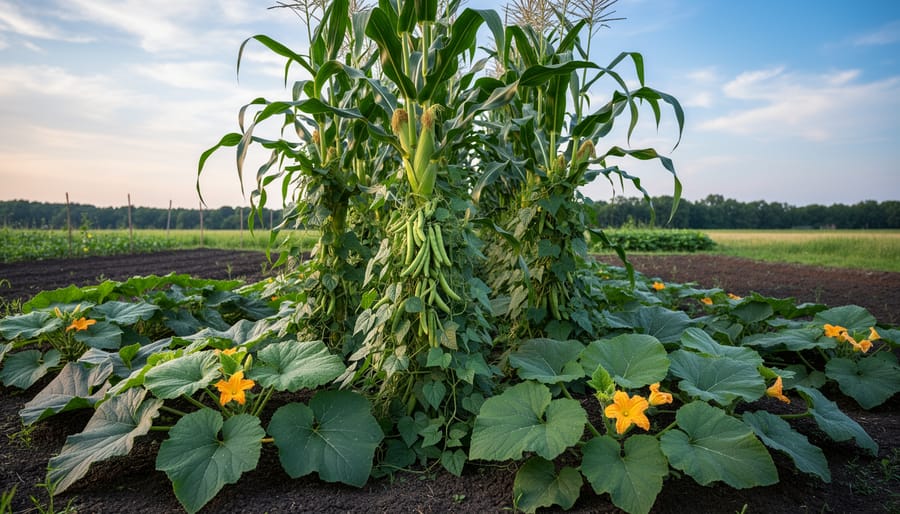
Three Sisters companion planting showing corn, beans, and squash growing together with visible root areas
The Three Sisters planting method combines corn, beans, and squash to create interlocking root systems that stabilize soil and prevent erosion.

Modern Three Sisters Gardens

Today’s gardeners can easily adapt this ancient technique to modern backyard plots and small farms. Start by planting corn in blocks rather than rows, spacing hills about 12 inches apart. Wait until your corn reaches 6 inches tall before adding beans, giving the corn enough time to establish sturdy stalks. Two weeks later, plant squash or pumpkins around the perimeter.

The beauty of this companion planting system lies in its soil-protecting benefits. The corn roots create vertical channels that improve water infiltration, while bean roots fix nitrogen naturally into the soil. The squash leaves act as a living mulch, shading the ground to retain moisture and prevent erosion during heavy rains.

Maria Rodriguez, an organic farmer in Ontario, transformed her sloped half-acre plot using the Three Sisters method. Within two seasons, she noticed dramatic improvements in soil structure and reduced runoff. Her secret? Adding a thick layer of compost before planting and using drought-tolerant squash varieties suited to her climate.

For best results, choose corn varieties that grow 6-8 feet tall, pole beans that climb vigorously, and squash with sprawling habits. This creates maximum ground coverage while building healthier, more erosion-resistant soil season after season.

Underground Cache Pits: Nature’s Soil Anchors

The Physics of Pit Storage

When indigenous communities dug cache pits into hillsides and slopes, they unknowingly created miniature ecosystems that naturally stabilized the surrounding soil. These underground chambers work like anchors, creating zones of compacted earth that resist both wind and water erosion.

The magic happens at the pit’s entrance and walls. As you excavate and line the storage area with stones or clay, you’re essentially creating a reinforced barrier that holds neighboring soil particles in place. Think of it like building a retaining wall underground—the compressed earth around the pit becomes denser and more resistant to erosion than loose topsoil.

But there’s more to the story. Cache pits become havens for beneficial soil organisms. Earthworms, beetles, and microorganisms are drawn to these stable, moisture-rich environments. As they burrow and feed around the pit’s perimeter, they create intricate tunnel networks that actually improve soil structure. These tiny engineers bind soil particles together with their castings and secretions, forming natural glue that prevents erosion.

The pit’s design also redirects water flow. Rather than racing downhill and washing away precious topsoil, rainfall infiltrates more slowly around the pit’s edges, giving the ground time to absorb moisture. This gradual percolation reduces runoff and keeps your soil exactly where it belongs.

Creating Your Own Storage Pit

Ready to build your own soil-preserving storage pit? Here’s how to get started with this traditional technique that doubles as an erosion control method.

First, choose your location wisely. Look for well-drained areas on gentle slopes where water won’t pool. Avoid low spots that collect runoff, as excess moisture can compromise your stored crops and destabilize the surrounding soil. The pit itself acts as a natural anchor point, with its walls and covering helping to hold soil particles in place during heavy rains.

For construction, dig a pit about 3-4 feet deep and 4-6 feet wide, depending on your storage needs. Line the bottom with a 6-inch layer of sand or gravel for drainage. The excavated soil should be packed around the perimeter to create a raised berm, which further prevents erosion by directing water away from the pit.

Consider your soil type carefully. Clay-rich soils provide excellent structural integrity for pit walls, while sandy soils may need reinforcement with natural materials like woven branches or stones. Many successful small-scale farmers have found that incorporating straw bales around the pit’s interior adds insulation while preventing soil slumping.

Cover your completed pit with a wooden lid, topped with soil and mulch. This vegetated cap becomes part of your erosion control system, with plant roots binding the covering material firmly in place.

Grass Lining and Natural Mulching

Garden soil covered with natural prairie grass mulch and organic materials
Natural grass mulching creates a protective barrier that prevents soil displacement while adding organic matter to improve soil quality over time.

Materials That Protect and Enrich

For generations, farmers have turned to natural materials that do double duty—protecting soil while actually making it better. Straw and hay remain popular choices for creating physical barriers that slow water runoff and catch sediment before it washes away. As these materials break down, they release nutrients back into the soil, essentially feeding your garden while guarding it.

Dried leaves and grass clippings work similarly, forming a protective blanket that softens the impact of heavy rain. Many gardeners collect autumn leaves specifically for this purpose, storing them until spring planting season. The beauty of this approach is that you’re recycling yard waste into erosion control.

Wood chips and shredded bark create longer-lasting barriers, especially useful on slopes or pathways where foot traffic might be an issue. They’re excellent around perennial beds where you need protection that endures multiple seasons. As they decompose slowly, they improve soil structure and water retention.

Compost deserves special mention as a multitasking material. A thick layer not only prevents erosion but introduces beneficial microorganisms and nutrients. One organic farmer in Vermont shared how switching to compost mulching reduced her soil loss by 60 percent while boosting vegetable yields—proof that protecting soil and enriching it aren’t separate goals but part of the same sustainable practice.

Sourcing and Applying Natural Liners

Finding natural liner materials is easier than you might think, and most are likely already growing nearby. Start by surveying your property for native grasses like switchgrass or big bluestem, which have deep root systems perfect for erosion control. Fallen leaves, pine needles, and straw make excellent readily-available options that decompose slowly while protecting soil.

When applying liners around garden beds, lay materials in a 3-4 inch thick layer, extending at least 6 inches beyond the bed’s edge. For root crop storage areas, create a barrier by lining pits or mounds with grass bundles, securing them with stakes if needed. The key is ensuring complete coverage without gaps where rain could wash through.

Local farmers’ markets and feed stores often sell straw bales at reasonable prices, while municipal leaf collection programs provide free mulch in fall. Connect with neighboring farms about sharing materials—one farmer’s excess hay becomes your soil protector.

Consider this a circular system: the organic matter that shields your soil today enriches it tomorrow as it breaks down. Sarah Chen, an urban gardener in Portland, transformed her sloped vegetable patch using free pine straw from a local tree service, reducing runoff by 80% while building healthier soil. Start small with one problem area, observe results through a rainy season, then expand your liner strategy accordingly.

These four indigenous techniques—terracing, contour planting, cover cropping, and mulching—offer modern gardeners a powerful toolkit for preventing soil erosion without relying on synthetic chemicals or expensive infrastructure. By embracing these time-tested methods, you’re not just protecting your garden’s foundation; you’re participating in a legacy of traditional ecological knowledge that has sustained communities for generations.

The beauty of these techniques lies in their accessibility. Whether you’re working with a small backyard plot or managing a larger farm, you can adapt these practices to fit your space and needs. Start small by experimenting with one method, perhaps laying down organic mulch or planting a nitrogen-fixing cover crop between growing seasons. As you gain confidence, combine techniques for even greater impact.

Many local CSA farms have successfully integrated these indigenous practices into their operations, demonstrating that ancient wisdom and modern agriculture can work hand in hand. By connecting with these farms, you’ll gain practical insights from farmers who’ve navigated the learning curve and can share real-world tips for implementation.

Remember, healthy soil is the foundation of productive gardening. These erosion-control techniques don’t just keep soil in place; they build organic matter, support beneficial microorganisms, and create resilient growing systems that thrive year after year. Your garden and the planet will thank you for making the shift toward these sustainable, earth-honoring practices.

How the Federal Seed Act Quietly Shaped Your Garden (And What It Means for Heirloom Seeds)

Posted by darrell on
0
Cultural Agriculture Practices
How the Federal Seed Act Quietly Shaped Your Garden (And What It Means for Heirloom Seeds)

Save seeds from your heirloom tomatoes and peppers without worry—the Federal Seed Act of 1939 regulates commercial seed sales, not your backyard garden exchanges or personal seed preservation. This landmark legislation establishes labeling standards and quality requirements for seeds sold in interstate commerce, ensuring buyers know what they’re getting when purchasing commercial seed packets. For home gardeners and small-scale farmers passionate about preserving biodiversity, the Act actually protects your interests by requiring accurate germination rates and variety identification on commercially sold seeds.

The confusion around seed-saving legality often stems from mixing up the Federal Seed Act with patent laws and plant variety protection. Home gardeners can freely save, replant, and share seeds from open-pollinated and heirloom varieties. Community seed libraries, seed swaps at farmers markets, and neighbor-to-neighbor exchanges fall outside the Act’s commercial scope. Even small CSA farmers typically operate below the regulatory threshold that triggers federal oversight, though maintaining basic records of seed sources proves wise for quality control.

Understanding these distinctions empowers you to participate confidently in seed preservation movements while supporting agricultural diversity. The Act’s primary targets are commercial seed companies that must meet interstate commerce standards—not passionate gardeners keeping century-old bean varieties alive or farmers selecting their best plants for next season’s crop. This regulatory framework actually creates space for grassroots seed stewardship, allowing communities to build resilient local food systems through shared genetic resources.

What the Federal Seed Act Actually Does

Collection of diverse heirloom seeds including beans, corn, and tomato seeds in wooden compartments
Heirloom seed varieties represent generations of traditional seed-saving practices and genetic diversity that federal regulations aim to protect while standardizing.

The Good: Why We Need Seed Standards

Before you worry that the Federal Seed Act might restrict your seed-saving traditions, let’s look at the genuine protections it offers. Think of this legislation as your shield against disappointment and fraud in the seed marketplace.

The Act ensures that when you purchase seeds, you’re getting what the package promises. Seed companies must accurately label germination rates, purity levels, and variety names. This means no more planting supposed heirloom tomatoes only to discover you’ve grown mystery vegetables! For small-scale farmers and gardeners investing hard-earned money in seeds, these standards prevent costly mistakes that could derail an entire growing season.

The law also protects against treated seeds entering the market without proper warnings, keeping both you and beneficial soil organisms safe. When Maria, a beginning farmer in Vermont, started her organic vegetable operation, she relied on these labeling requirements to source untreated, organic seeds with confidence.

These quality standards create a level playing field where honest seed companies thrive and gardeners can trust their purchases. The Act maintains marketplace integrity without interfering with home gardeners sharing seeds with neighbors or saving varieties for personal use—activities that remain completely legal and encouraged in sustainable farming communities.

The Gray Areas: Where Traditional Practices Fit

Good news for backyard gardeners and community seed savers: the Federal Seed Act creates important distinctions that protect traditional practices. The Act primarily targets commercial seed operations, not the seeds you swap with your neighbor over the garden fence.

If you’re exchanging seeds informally with friends or participating in community seed swaps, you’re operating in protected territory. These non-commercial activities fall outside the Act’s regulatory scope. The key distinction lies in the scale and intent of distribution. When seeds are sold across state lines or marketed commercially, that’s when labeling requirements and quality standards kick in.

Small-scale farmers who grow their own seed for personal use or share extras within their local community can generally breathe easy. The Act recognizes the difference between a commercial seed company distributing thousands of packets and a gardener passing along heritage tomato seeds to fellow enthusiasts.

Even farmers selling at local markets typically operate below the regulatory radar, especially when dealing with small quantities. The focus remains on protecting consumers from misleading commercial claims rather than restricting grassroots seed preservation efforts. This distinction ensures that community-building traditions and heirloom variety preservation can continue thriving, keeping biodiversity alive through genuine connections between growers.

Traditional Seed Saving Meets Modern Regulation

Two gardeners exchanging seed packets at community garden table
Community seed exchanges allow gardeners to legally share traditional varieties while building local food networks and preserving heirloom seeds.

Community Seed Libraries: Walking the Legal Line

Across North America, creative seed savers are finding innovative ways to keep traditional seed-saving practices alive while respecting federal guidelines. The key? Understanding that the Federal Seed Act primarily regulates commercial seed sales, not personal sharing among gardeners.

Take the Richmond Grows Seed Lending Library in California, which operates under a simple lending model. Members “check out” seeds, grow them, and return fresh seeds at harvest—sidestepping commercial regulations entirely. Similarly, the Hudson Valley Seed Company partners with regional libraries to distribute heirloom varieties through community seed exchanges, keeping these programs clearly educational and non-commercial.

The Seed Savers Exchange in Iowa demonstrates another successful approach by focusing on member-to-member connections. Their network of over 13,000 gardeners preserves more than 20,000 heirloom varieties through private exchanges, documenting traditional growing knowledge along the way.

These programs thrive by following straightforward principles: keeping exchanges non-commercial, clearly labeling varieties, focusing on education, and documenting seed origins when possible. Many also partner with local extension offices to ensure compliance with state regulations.

The result? Thriving networks that preserve Cherokee Purple tomatoes, Hopi Blue corn, and countless other heritage varieties—all while building resilient communities. These success stories prove that with thoughtful planning, seed libraries can honor both legal requirements and our gardening heritage.

Farmer Success Story: Keeping Heritage Seeds Alive

Meet Sarah Chen, a third-generation farmer who runs Meadowlark CSA in Vermont, where she’s become a passionate keeper of heirloom varieties. Sarah maintains over 40 heritage seed varieties passed down from her grandmother, including an 80-year-old tomato variety and rare pole beans that thrive in New England’s short growing season.

“Understanding the Federal Seed Act actually gave me confidence,” Sarah explains. “I learned that as a small-scale grower sharing seeds with my CSA members and local gardeners, I’m not subject to the same labeling requirements as commercial seed companies. The Act focuses on truth in advertising for commercial sales, not traditional seed-saving practices.”

Sarah keeps meticulous records of her seed varieties, noting germination rates and growing characteristics. While not legally required for her small operation, this practice helps her provide accurate information when sharing seeds. She hosts annual seed swaps where community members exchange varieties, creating a living seed library.

Her approach demonstrates that preservation and compliance aren’t opposing forces. By understanding which activities fall under federal oversight and which don’t, Sarah freely continues heritage seed work while running a successful, legally compliant farm operation that serves 150 member families.

What Home Gardeners Need to Know

When You Can Freely Share Seeds

Good news for backyard gardeners and seed-saving enthusiasts: the Federal Seed Act includes generous exemptions for personal, non-commercial seed sharing. You’re free to exchange seeds with friends, neighbors, and fellow gardening club members without worrying about federal regulations. These informal exchanges fall outside the Act’s scope because they don’t involve commercial transactions.

The key distinction is intent and scale. When you’re swapping heirloom tomato seeds with your neighbor over the fence or organizing a community seed swap at your local library, you’re engaged in the time-honored tradition of seed stewardship that regulations don’t restrict. Many community gardens and local food networks thrive on these personal exchanges, helping preserve genetic diversity and build resilient food systems.

Community seed libraries have flourished under these exemptions, allowing members to “borrow” seeds, grow them out, and return seeds from their harvest. Think of Sarah, a Michigan gardener who started a neighborhood seed circle five years ago. Today, her group of twelve families maintains over forty heirloom varieties, all shared freely without legal concerns.

The exemption applies as long as you’re not advertising seeds for sale, charging money, or operating as a business. This freedom supports grassroots seed preservation while keeping commercial seed sales appropriately regulated.

What Changes When Money Gets Involved

The Federal Seed Act primarily targets commercial seed sales rather than casual exchanges between gardeners. Once money changes hands, even at small scales, you’re technically entering commercial territory. This includes selling seeds at farmers markets, through online shops, or even accepting donations that resemble payment.

Here’s what triggers compliance requirements: selling seeds across state lines, advertising seeds for sale, or operating as a business entity. The law considers you a seed vendor when you’re regularly offering seeds for compensation, not when you’re sharing extras with neighbors or trading at seed swaps.

Small-scale seed savers like Maria from Vermont discovered this when she started selling heirloom tomato seeds at her local market. She learned that while her backyard seed-saving was perfectly legal, commercial sales required proper labeling and record-keeping. The good news? State regulations often provide exemptions for very small operations or direct sales.

If you’re considering turning your seed-saving passion into income, start by checking your state’s specific requirements. Many states have minimum thresholds before federal compliance kicks in, making it easier for aspiring seed entrepreneurs to start small while staying legal.

Protecting Yourself and Your Seeds

Good record-keeping protects both you and fellow gardeners while preserving seed diversity for future generations. Start by maintaining a simple seed journal documenting each variety’s name, source, planting date, and germination success. For home gardeners, this helps you understand which varieties thrive in your conditions and creates a valuable reference over time.

When saving seeds, label them clearly with the variety name and harvest year. Even if you’re just sharing with neighbors, accurate labels prevent confusion and ensure everyone knows what they’re planting. Consider noting any standout characteristics like exceptional flavor or disease resistance that made you choose to save those particular seeds.

If you’re sharing seeds at community swaps or with friends, basic information about germination rates and growing conditions makes your contributions more valuable. You don’t need laboratory testing, but simple observations like “90% sprouted within 10 days in warm soil” help others succeed. Many experienced seed savers have built thriving local networks simply by being generous with both seeds and knowledge. These practices not only keep you organized but also strengthen community connections and preserve heirloom varieties that might otherwise disappear from our gardens and tables.

The Bigger Picture: Biodiversity and Seed Sovereignty

Why Heirloom Seeds Matter More Than Ever

Heirloom seeds represent centuries of careful selection by farmers who adapted crops to local conditions, climates, and tastes. Unlike modern hybrid varieties bred for uniformity and shipping durability, these traditional seeds carry remarkable genetic variation that helps plants weather unexpected challenges. When Sarah Martinez started her CSA farm in Oregon, she discovered that heirloom tomatoes thrived during an unusually dry summer while commercial varieties struggled. That resilience comes from diverse genetics passed down through generations.

As climate patterns shift unpredictably, why genetic diversity matters more than protecting our future food security. Heirloom varieties contain traits that might prove essential for adaptation to changing weather, new pests, or evolving growing conditions. These seeds also preserve cultural heritage, connecting us to the immigrant farmers, indigenous communities, and regional traditions that shaped our food landscape. Cherokee Purple tomatoes, Rattlesnake beans, and Moon and Stars watermelons each tell stories of the people who nurtured them. By growing and saving heirloom seeds, you become part of this living history while building resilience into your garden and local food system.

Organizations Bridging the Gap

Several remarkable organizations have stepped up to protect seed diversity while working within federal regulations. Seed Savers Exchange, founded in 1975, maintains one of the largest collections of heirloom seeds in North America. They’ve created a thriving community where gardeners can legally share traditional varieties through their member network, preserving over 20,000 rare vegetable varieties that might otherwise disappear.

Native Seeds/SEARCH focuses on crops adapted to the Southwest’s arid climate, conserving seeds that indigenous communities have cultivated for generations. Their work ensures these climate-resilient varieties remain available to farmers and gardeners who need drought-tolerant options.

Regional seed libraries and networks have also flourished across the country. These grassroots initiatives operate within legal boundaries by offering seeds as educational loans rather than sales, creating a beautiful cycle of growing, saving, and sharing. Organizations like the Southern Seed Legacy Project and the Rocky Mountain Seed Alliance connect local growers with region-specific varieties that thrive in their unique growing conditions.

These groups prove that seed preservation and federal compliance can coexist. By joining their efforts, you’re not just growing food—you’re becoming part of a living legacy that protects agricultural biodiversity for future generations.

Practical Steps for Supporting Seed Preservation

Gardener's hands separating dried bean seeds from pods over bowl
Home seed saving connects gardeners to agricultural traditions while preserving genetic diversity for future growing seasons.

Starting Your Own Seed Saving Practice

Starting your own seed saving practice is easier than you might think, and it’s completely legal for home gardeners under the Federal Seed Act. Begin with simple, open-pollinated varieties like tomatoes, beans, lettuce, and peas—these plants self-pollinate, making them perfect for beginners who want consistent results.

When selecting seeds to save, choose your healthiest, most productive plants. Let the fruits fully mature on the vine—tomatoes should be slightly overripe, and beans should dry completely in their pods. For wet seeds like tomatoes, ferment them in water for a few days to remove the gel coating, then rinse and dry thoroughly.

Storage is crucial for seed viability. Keep dried seeds in paper envelopes or glass jars in a cool, dark, dry place. Label everything with the variety name and harvest date. Many experienced growers recommend exploring traditional seed saving techniques that have sustained gardens for generations.

Local farmer Jane Martinez shares her success: “I started with just three tomato varieties five years ago. Now I save seeds from fifteen different vegetables and share extras with neighbors.” Remember, seed saving connects you to a timeless tradition while ensuring your garden’s future abundance.

Connecting with Local Seed Networks

Finding local seed networks is easier than you might think, and these communities welcome gardeners of all experience levels. Start by searching online for seed swaps in your area—these grassroots events allow gardeners to exchange seeds freely, sharing stories and growing tips along with their carefully saved varieties. Many communities also host seed libraries, often housed in public libraries or community centers, where you can “check out” seeds, grow them, and return saved seeds from your harvest.

CSA farms in your region frequently prioritize heirloom varieties and may offer seed-saving workshops or starter collections to members. Connect with local farmers at markets to learn which farms embrace traditional practices and ask about upcoming educational events.

Consider joining seed keeper networks or regional chapters of organizations dedicated to seed preservation. These groups often host online forums where members share successful growing experiences and troubleshoot challenges together. Sarah, a community gardener in Vermont, discovered her local seed library five years ago and now coordinates monthly seed swaps that bring together over fifty gardeners each season.

Remember, participating in these networks isn’t just about obtaining free seeds—it’s about becoming part of a living tradition that preserves agricultural diversity and strengthens community bonds through shared knowledge and resources.

Supporting Farmers Who Save Seeds

Support local farmers committed to seed preservation by choosing CSA memberships that prioritize heirloom and open-pollinated varieties. Ask farmers about their seed-saving practices and whether they participate in seed exchanges or community seed libraries. Look for farms that grow diverse varieties rather than commercial hybrids, as this supports biodiversity and keeps traditional varieties alive. Consider purchasing directly from farmers’ markets where growers can share their seed stories. Many small-scale farmers dedicate portions of their crops specifically for seed saving, helping preserve varieties that might otherwise disappear. Your purchases directly fund these vital preservation efforts while providing you with flavorful, unique produce.

Here’s the good news: the Federal Seed Act doesn’t prevent you from saving, sharing, or swapping seeds from your garden. These time-honored traditions remain perfectly legal and are actually vital for maintaining biodiversity in our food system. Home gardeners and small-scale growers can continue these practices with confidence, knowing they’re contributing to something much larger than themselves.

The real power lies in community knowledge-sharing. When you exchange seeds with neighbors, participate in seed libraries, or learn from experienced gardeners at your local farmers market, you’re keeping valuable agricultural wisdom alive. These connections help preserve heirloom varieties that might otherwise disappear from our gardens and dinner tables.

Consider joining a CSA program at an organic farm near you. Many CSA farmers grow diverse crops from heritage seeds and welcome conversations about their growing practices. Sarah Chen, a CSA farmer in Vermont, notes that “Our members often become our best seed stewards, learning which varieties thrive locally and sharing that knowledge throughout the community.”

By preserving agricultural heritage through these simple acts, you’re protecting genetic diversity and ensuring future generations have access to flavorful, resilient crops. Start small: save seeds from your best tomatoes this season, connect with a local seed exchange, or ask your CSA farmer about their favorite varieties. Every seed saved is a victory for food security and agricultural independence.

Native Seed Exchange: How Traditional Communities Preserve Heritage and Build Resilience

Posted by darrell on
0
Cultural Agriculture Practices
Native Seed Exchange: How Traditional Communities Preserve Heritage and Build Resilience

Seeds carry stories—passed hand to hand through generations, adapted to local soils, and preserved by communities who understood that biodiversity isn’t just about survival, it’s about thriving together. Native seed exchange networks represent one of humanity’s oldest forms of cooperation, where gardeners and farmers share regionally adapted varieties that commercial catalogs have long forgotten.

These traditional exchanges operate on a principle both simple and profound: when you give away seeds, you multiply abundance rather than diminish it. A single heirloom tomato shared in spring can produce hundreds of seeds by fall, each one capable of feeding families and strengthening local food systems. Indigenous communities have practiced this wisdom for millennia, creating resilient crop varieties that withstand drought, resist local pests, and deliver exceptional flavor without synthetic inputs.

Today’s native seed exchanges blend ancestral knowledge with modern urgency. As climate patterns shift and industrial agriculture narrows genetic diversity to dangerously thin margins, these grassroots networks preserve thousands of heritage varieties while building community resilience. Members swap Cherokee Trail of Tears beans, Navajo blue corn, and countless regional treasures that adapt better to local conditions than any store-bought hybrid.

Whether you’re transforming your backyard into a productive garden or dreaming of farming your own land, joining a seed exchange connects you to living agricultural history while ensuring these irreplaceable genetics survive for future generations. The seeds you share today become tomorrow’s food security.

The Ancient Practice of Seed Saving and Sharing

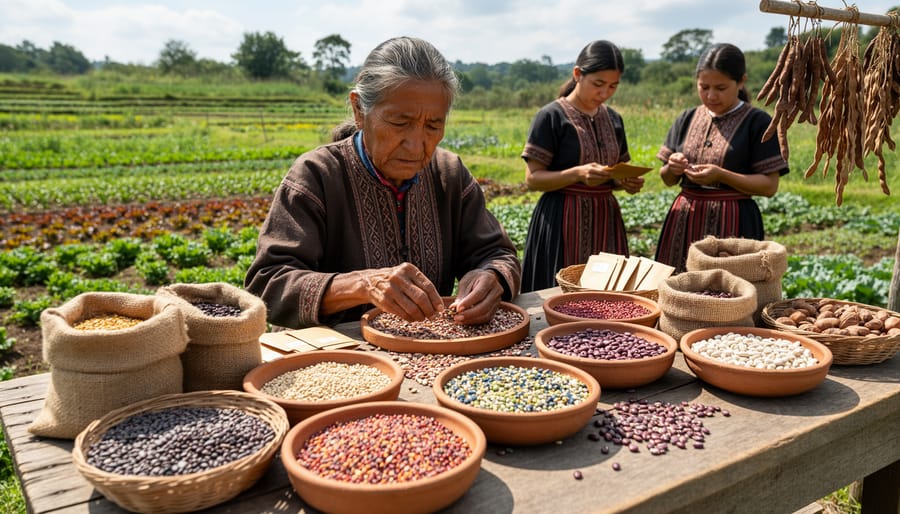
Elderly indigenous woman's hands holding basket of diverse colorful heirloom bean seeds
Traditional seed keepers preserve hundreds of varieties of heirloom seeds, each carrying generations of agricultural knowledge and cultural heritage.

Why Seeds Matter Beyond Food Production

Seeds represent far more than simple packets of genetic information waiting to sprout. In traditional societies worldwide, seeds carry ancestral knowledge passed down through countless generations, embodying the wisdom of those who carefully selected and saved the strongest, most resilient varieties season after season.

When Indigenous communities and traditional farmers exchange seeds, they’re sharing stories alongside those tiny vessels of life. Each variety carries a narrative about where it thrived, which families nurtured it, and how it sustained communities through challenging times. These exchanges strengthen social bonds and create networks of trust that extend beyond the growing season.

The spiritual dimension of seed exchange runs deep in many cultures. Seeds represent hope, continuity, and the sacred responsibility of stewardship. Many traditional societies view seed saving as a spiritual practice, honoring the gifts of the earth and ensuring future generations can continue their agricultural heritage.

Community-building happens naturally through seed exchange. When gardeners gather to share varieties, they’re not just trading plant material but exchanging growing tips, recipe ideas, and personal experiences. These gatherings create spaces where experienced growers mentor newcomers, cultural traditions stay alive, and collective agricultural knowledge expands.

For today’s sustainability-minded gardeners, participating in seed exchanges means joining this rich tradition. You’re not simply obtaining unique varieties for your garden but becoming part of a living heritage that values biodiversity, community resilience, and the profound connection between people, plants, and place.

Traditional Methods of Seed Selection and Storage

For generations, indigenous farmers and traditional communities have perfected the art of seed selection and preservation, developing techniques that modern gardeners can embrace today. These time-honored practices focus on observing plants throughout the growing season and choosing seeds from the strongest, most productive specimens.

The selection process begins in the field. Experienced seed savers mark their best plants early in the season, looking for traits like disease resistance, vigorous growth, and superior flavor. They avoid selecting from plants that bolt too quickly or show signs of weakness. This careful observation, part of traditional seed selection methods, ensures genetic strength passes to future generations.

Once harvested, proper storage becomes essential. Many communities have relied on simple yet effective techniques. Clay pots sealed with beeswax, glass jars stored in cool dark places, and cloth bags hung in dry locations all serve as excellent storage solutions. The key is maintaining low humidity and stable temperatures, typically between 32-41°F for long-term storage.

Sarah Chen, a third-generation farmer in British Columbia, shares her grandmother’s technique: “We dry our seeds thoroughly on screens for two weeks, then store them in paper envelopes inside mason jars with food-grade silica packets. This method has kept our heirloom tomato seeds viable for over five years.”

These practices aren’t just nostalgic traditions. They’re practical, cost-effective methods that connect us to agricultural heritage while building resilience in our food systems.

How Native Seed Exchange Works Today

Overhead view of diverse community members exchanging seed packets and jars at table
Community seed exchanges bring together gardeners and farmers to share locally-adapted varieties and preserve agricultural biodiversity.

Finding and Joining a Native Seed Exchange

Finding a native seed exchange near you is easier than you might think, and it’s a wonderful way to connect with your community while supporting biodiversity. Start by searching online for local seed libraries, community gardens, and farmers’ markets that often host seasonal seed swaps. Many indigenous agricultural organizations maintain their own seed exchange programs focused on preserving culturally significant varieties.

When you’re ready to join, expect a welcoming environment where experienced gardeners share knowledge alongside seeds. Most exchanges operate on a simple bring-what-you-can, take-what-you-need model, though some may ask for a small membership fee to cover administrative costs. Don’t worry if you’re new to seed saving—many programs offer workshops to teach you how to properly harvest, clean, and store seeds.

To participate responsibly, always label your seeds clearly with variety name, growing conditions, and harvest date. Be honest about whether seeds are organic or open-pollinated. Consider starting with easy-to-save varieties like tomatoes, beans, or lettuce before tackling more complex crops.

Connect with local indigenous communities by attending their cultural events, supporting Native-led agricultural initiatives, and respecting traditional knowledge-sharing protocols. Remember that some seeds hold deep cultural significance and may not be available for general exchange. Building these relationships takes time and genuine respect, but the rewards include access to rare varieties and invaluable growing wisdom passed down through generations.

The Benefits of Participating in Seed Exchange Networks

Building Climate Resilience Through Local Varieties

Native and heirloom seeds carry generations of genetic wisdom, making them champions of climate resilience in your garden. These climate-adapted varieties have naturally developed resistance to local pests, diseases, and weather patterns through years of careful selection by farmers and gardeners who came before us.

Unlike commercial seeds bred for uniform conditions, locally adapted varieties thrive in your specific microclimate. They know when to germinate after your last frost, how to handle your soil type, and which local insects to resist. This built-in intelligence means less intervention needed from you and stronger harvests even during challenging growing seasons.

Consider Sarah, a community gardener in Ontario, who switched to regionally adapted tomato varieties through her local seed exchange. While neighbors battled blight, her heritage tomatoes flourished through an unusually wet summer. The secret? Those seeds carried generations of adaptation to humid Great Lakes conditions.

By growing these time-tested varieties, you’re not just planting seeds but cultivating food security for uncertain climate futures while preserving agricultural biodiversity that commercial agriculture often overlooks.

Success Stories: Communities Keeping Seeds Alive

Across North America, dedicated communities are breathing new life into heirloom varieties that were nearly lost to time. Their stories offer hope and practical blueprints for anyone interested in seed preservation.

In Northern New Mexico, the Traditional Native American Farmers Association has revitalized over 40 indigenous crop varieties through their annual seed exchange gatherings. Farmer Miguel Santistevan shares how receiving ancestral Pueblo corn seeds five years ago transformed his small farm. “These seeds told stories my grandparents once knew,” he explains. “The corn adapted perfectly to our drought conditions, yielding 30% more than commercial varieties without irrigation.” Today, Miguel hosts monthly exchange meetups where 25 local families trade seeds and growing knowledge, creating a living seed library that strengthens food security across their community.

The Eastern Band of Cherokee Women’s Seed Keepers demonstrates the power of intergenerational exchange. When elder gardener Mary Thompson distributed Cherokee White Eagle corn to twelve younger members in 2019, she sparked a movement. These gardeners now cultivate seven traditional varieties, from Candy Roaster squash to greasy beans. Participant Sarah Wildcatt notes, “Receiving these seeds felt like holding my heritage. Now my children know the taste of food our ancestors grew.” Their informal exchange network has expanded to include 40 families, with each grower pledging to share seeds with at least three newcomers annually.

In Vermont, the Fruition Seeds community seed swap started with just eight gardeners in a barn. Founder Sasha Rosen witnessed remarkable biodiversity growth when participants began sharing regionally adapted varieties. “One member’s Italian heirloom tomatoes now thrive in thirty local gardens,” she recalls. “Exchange creates resilience we can’t buy.” Their annual event now attracts 200 participants who’ve preserved 150 vegetable varieties suited to short growing seasons.

These communities prove that seed exchange isn’t just about preservation. It builds relationships, strengthens regional food systems, and reconnects us with agricultural wisdom worth saving.

Starting Your Own Seed Saving Journey

Gardener's hands harvesting seeds from flowering plants into ceramic bowl
Learning basic seed saving techniques empowers gardeners to preserve their favorite varieties and participate in local seed networks.

Simple Tips for Successful Seed Saving

Getting started with seed saving is easier than you might think. These practical seed saving techniques will help you build confidence and contribute to native seed exchanges in your community.

Begin by selecting the healthiest, most vigorous plants in your garden. Look for specimens that show strong disease resistance, produce abundantly, and display characteristics true to their variety. Let these champion plants go to seed rather than harvesting all their produce.

Timing is everything when harvesting seeds. Wait until seed pods turn brown and brittle, or seed heads feel dry to the touch. For tomatoes and other fleshy fruits, choose fully ripe specimens and extract seeds when the fruit reaches peak maturity. A good rule of thumb is to harvest on a dry, sunny day after morning dew has evaporated.

Proper drying prevents mold and ensures long-term viability. Spread seeds in a single layer on paper plates or screens in a warm, well-ventilated area away from direct sunlight. Most seeds need one to two weeks of drying time. Test by biting a seed gently; it should crack rather than squish.

Store dried seeds in paper envelopes or glass jars in a cool, dark, dry location. Your refrigerator works wonderfully for this purpose. Label everything clearly with the plant variety, harvest date, and any special characteristics you noticed. This information becomes invaluable when sharing seeds at exchanges and helps preserve knowledge about local varieties.

Connecting Seed Exchange to Your CSA Experience

Your CSA membership offers a perfect gateway into the world of native seed exchange. Start by having a conversation with your farmer during your next pickup—ask about the varieties they grow and whether they save seeds from any heirloom or native plants. Many farmers are passionate about preserving traditional varieties and love sharing their knowledge with curious members.

Consider proposing a seed swap event at your CSA distribution site. These gatherings create wonderful opportunities for members to exchange seeds, share growing tips, and build community connections. You might be surprised how many fellow members already save seeds from their gardens and would welcome the chance to trade varieties. Even if you’re new to seed saving, participating in a swap introduces you to diverse native plants perfectly adapted to your local climate.

Some CSAs have started incorporating seed packets as part of their seasonal shares, giving members the chance to grow heritage varieties at home. If your CSA doesn’t offer this yet, suggest it as an add-on option. You could also organize a simple seed library within your CSA community—members contribute saved seeds in labeled envelopes, creating a shared resource that grows each season.

Remember, every gardener was once a beginner. Starting small with easy-to-save seeds like beans, tomatoes, or squash helps you develop confidence while contributing to the preservation of agricultural diversity. Your CSA community provides the perfect support network for this rewarding journey into seed stewardship.

Native seed exchange isn’t just for experienced gardeners or large-scale farmers—it’s an accessible practice that anyone can embrace, regardless of where you are in your growing journey. Every seed saved represents a small but meaningful act of resistance against biodiversity loss and corporate control of our food supply. These exchanges preserve agricultural heritage that stretches back generations, connecting us to the wisdom of farmers who came before us while building resilient food systems for the future.

The beauty of participating in a native seed exchange is that getting started requires nothing more than curiosity and willingness to learn. This week, choose one simple action: visit your local seed library to see what varieties grow well in your region, save seeds from just one plant in your garden to share next season, or strike up a conversation with your CSA farmer about the heirloom varieties they’re growing. Ask if they’re interested in trading seeds or can recommend local exchange networks.

Remember, every thriving seed exchange began with one person deciding to save and share. Your participation, no matter how small, strengthens the living thread that connects traditional agricultural practices to tomorrow’s harvests.

Sacred Harvest: Ancient Farm Traditions That Still Enrich Our Gardens Today

Posted by darrell on
0
Cultural Agriculture Practices
Sacred Harvest: Ancient Farm Traditions That Still Enrich Our Gardens Today

Ancient farming rituals hold remarkable power to transform modern organic gardening practices. From the Native American Three Sisters companion planting to the biodynamic calendar’s lunar cycles, these time-tested ceremonies connect us deeply to the land while improving crop yields and soil health.

Traditional harvesting rituals do more than honor cultural heritage – they provide practical solutions for today’s agricultural challenges. Farmers who incorporate mindful planting ceremonies report stronger plant resilience, better pest management, and more vibrant soil ecosystems. These practices, refined over generations, offer wisdom that bridges sustainable agriculture’s past and future.

Whether you’re tending a small garden or managing acres of farmland, integrating ritualistic elements like harvest celebrations, seed blessing ceremonies, and seasonal observances creates a meaningful framework for ecological stewardship. By blending ancient knowledge with modern organic methods, we can cultivate not just healthier crops, but a deeper relationship with the natural cycles that sustain us.

The Wisdom of Moon Phase Harvesting

Moon Phase Timing Guide

Traditional farmers have long recognized the moon’s influence on plant growth and harvest timing. The lunar cycle offers natural guidance for optimal harvesting, with different phases benefiting various crops and farming activities.

During the waxing moon (from new moon to full), rising sap levels make this period ideal for harvesting leafy greens and fruits that benefit from higher moisture content. The two days before a full moon are particularly favorable for gathering herbs and vegetables that will be eaten fresh.

The full moon phase presents a 2-3 day window perfect for harvesting root vegetables and fruits, as their nutrient and moisture content peaks. Many experienced gardeners swear by this timing for obtaining the most flavorful produce.

The waning moon phase (from full to new) is best for harvesting crops meant for storage or drying. Lower moisture levels during this time help prevent rot and improve preservation quality. Root vegetables harvested during the last quarter moon often show better storage longevity.

For medicinal herbs and aromatic plants, early morning gathering during the waxing moon can maximize their essential oil content and therapeutic properties.

Moon phase calendar showing optimal harvesting times for different crops across lunar cycles
Composite photograph showing different phases of the moon with corresponding harvest activities beneath each phase

Modern Scientific Support

Recent scientific studies have begun to validate what traditional farmers have known for generations about moon-phase harvesting. Research conducted at agricultural universities has shown that moisture content in plants fluctuates with lunar cycles, affecting both crop quality and shelf life. During the waxing moon, for example, sap flow increases, resulting in higher nutrient content and better seed germination rates.

A groundbreaking study published in the Journal of Agricultural Science demonstrated that root crops harvested during the waning moon showed 15% longer storage life compared to those harvested at other times. Similarly, fruits picked during specific moon phases contained measurably higher sugar content and maintained freshness longer.

Biodynamic farming practices, which incorporate lunar cycles, have also gained scientific support. Researchers have documented improved soil microbial activity and enhanced plant resistance to pests when farming activities align with traditional moon-phase timing. These findings suggest that our ancestors’ ritualistic approach to agriculture wasn’t merely superstition but was based on observable natural phenomena that modern science is only now beginning to understand and quantify.

Traditional blessing ceremony of farming tools including both heritage and contemporary equipment
Farmer performing traditional tool blessing ceremony with antique and modern farming tools arranged in a circle

Traditional Tool Blessing Ceremonies

Modern Adaptations

Today’s farmers are finding innovative ways to honor and incorporate traditional farming tools into their daily practices. Many organic farmers begin their day by inspecting and cleaning their equipment, expressing gratitude for these essential implements. Some communities have established tool-sharing programs where farmers gather monthly to maintain equipment collectively, sharing knowledge and stories while they work.

Modern adaptations include seasonal blessing ceremonies for new equipment, mindful maintenance routines, and educational workshops teaching proper tool care to apprentice farmers. Some CSA farms have even integrated tool appreciation into their member events, helping customers understand the vital connection between well-maintained equipment and the quality of their produce.

These contemporary practices not only preserve cultural wisdom but also promote sustainable tool use, reducing waste and fostering a deeper connection to the farming process. By combining ancient respect for tools with modern farming needs, these rituals strengthen community bonds and enhance agricultural sustainability.

First Harvest Celebrations

Community Building Through Ritual

Traditional harvest celebrations serve as powerful tools for strengthening bonds between farmers and their local communities. When neighbors gather to celebrate the season’s bounty, they create lasting connections that extend far beyond the festivities themselves. These shared experiences transform casual farm supporters into dedicated CSA members and foster a deeper appreciation for local agriculture.

Many organic farms have revived harvest rituals by hosting annual festivals, community dinners, and crop blessing ceremonies. These events give community members the chance to participate in traditional activities like corn husking, apple pressing, and garland making. Children learn about food origins through hands-on activities, while adults forge meaningful relationships with the farmers who grow their food.

These gatherings also provide natural opportunities for farmers to share knowledge about sustainable growing practices and seasonal eating, creating an informed and engaged customer base that supports local agriculture year-round.

CSA members and farmers celebrating first harvest with displays of seasonal vegetables and fruits
Community harvest festival scene showing diverse group of people celebrating with freshly harvested produce

Preservation Rituals

Throughout history, farming communities have developed intricate preservation rituals that blend practical wisdom with cultural significance. These traditional storage methods weren’t just about keeping food fresh – they were ceremonies that brought communities together and honored the earth’s abundance.

Many cultures practiced smoke blessing ceremonies before storing grains, which actually served as natural pest control while holding deep spiritual meaning. The smoke would effectively deter insects, while the ritual itself marked the transition from harvest to storage season. Similarly, the common practice of hanging dried herbs in bundles near storage areas combined practical preservation with protective symbolism.

Root cellars, still popular among organic farmers today, were often prepared with salt-lined walls and specific arrangements of crops based on both practical storage needs and traditional beliefs. Many communities would perform blessing ceremonies before sealing their root cellars, creating layers of positive energy while ensuring proper ventilation and temperature control.

The timing of preservation activities often aligned with lunar cycles, which modern research suggests may influence moisture content in plants. Communities would gather during specific moon phases to process and store their harvest, combining social bonding with efficient preservation timing.

These ancient practices remind us that successful crop storage isn’t just about technique – it’s about creating mindful connections with our food and community. Many organic farmers today incorporate elements of these traditional rituals, finding that they enhance both crop preservation and the farming experience while fostering a deeper appreciation for sustainable agriculture.

In our journey through sustainable agriculture, we’ve discovered that traditional harvesting rituals offer more than just cultural significance – they provide practical wisdom that enhances modern farming practices. These time-honored ceremonies remind us to farm in harmony with natural cycles, respect the land that feeds us, and maintain a deeper connection to our food sources.

By incorporating these ancestral practices into contemporary organic farming, we create a more mindful and sustainable approach to agriculture. Farmers who maintain traditional rituals often report stronger community bonds, better crop yields, and a more satisfying relationship with their land. These practices help preserve valuable agricultural knowledge while promoting environmental stewardship for future generations.

As we face increasing environmental challenges, these rituals serve as powerful reminders of our responsibility to protect and nurture the earth. Whether you’re managing a large organic farm or tending a small garden plot, embracing these traditional practices can enrich your agricultural journey and contribute to a more sustainable food system. Let’s continue honoring these ancient ways while building a greener, more connected future in farming.

Ancient Haitian Harvest Wisdom: Time-Tested Traditions That Honor the Land

Posted by darrell on
0
Cultural Agriculture Practices
Ancient Haitian Harvest Wisdom: Time-Tested Traditions That Honor the Land

Deep within the heart of Haiti’s vibrant culture lies a tapestry of sacred rituals and traditions that have sustained communities for generations. From the rhythmic beats of Vodou ceremonies to the time-honored agricultural practices that mark the changing seasons, Haitian traditions blend African spirituality with Caribbean ingenuity to create uniquely powerful cultural expressions.

These rituals serve not just as spiritual anchors but as practical guides for sustainable living, connecting modern Haitians to their ancestral wisdom. Whether it’s the sacred Vodou ceremony of Manje Yam (feeding the spirits), the communal Konbit farming tradition that brings neighborhoods together for planting and harvest, or the healing practices passed down through generations of Mambos and Houngans, each ritual carries profound significance for both individual and community wellbeing.

Understanding these traditions offers valuable insights into sustainable agriculture, community cooperation, and the delicate balance between human needs and natural forces – lessons that resonate deeply with today’s global challenges in food security and environmental stewardship.

Sacred Preparations: The Vodou Connection to Planting

The Role of Lwa in Agriculture

In Haitian agriculture, Lwa spirits play a vital role in guiding farming decisions and ensuring bountiful harvests. These agricultural deities, particularly Papa Zaka (also known as Azaka or Kouzin Zaka), are considered the divine protectors of crops and farmers. Wearing his signature denim outfit and carrying a machete, Papa Zaka embodies the hardworking farmer spirit and is often honored before planting seasons begin.

Farmers traditionally consult with Houngans (Vodou priests) to determine the best times for planting and harvesting based on the Lwa’s guidance. Small offerings of crops, rum, or tobacco are left at the corners of fields to gain the agricultural Lwa’s favor. Many farmers also create special garden spaces called “jaden Zaka” (Zaka’s gardens) where they grow specific crops dedicated to this powerful spirit.

These spiritual practices blend seamlessly with practical farming knowledge, creating a holistic approach to agriculture. During ceremonies, farmers share traditional growing techniques and seasonal wisdom, fostering community support and sustainable farming practices that have been passed down through generations. This spiritual connection to the land continues to influence modern Haitian farming methods, promoting biodiversity and environmental stewardship.

Pre-Planting Ceremonies

In Haiti, before seeds touch the soil, farmers engage in deeply meaningful sacred planting ceremonies that honor both the earth and their ancestors. These rituals typically begin at dawn, with the farmer and family members gathering to share a traditional meal of cornmeal, plantains, and beans – crops that symbolize abundance and sustenance.

The ceremony often involves pouring libations of rum or water onto the earth while offering prayers to the lwa (spirits) for protection and bountiful harvests. Farmers burn sacred herbs and carefully arrange small offerings of food at the corners of their fields. These offerings might include roasted corn, sweet potatoes, or specific fruits chosen based on family traditions.

A crucial element is the blessing of the seeds themselves. Elders pass the seeds through smoke from ceremonial fires and sprinkle them with holy water. Farmers then store these blessed seeds in special containers woven from local materials until planting day. Many communities also incorporate drumming and traditional songs that have been passed down through generations, creating a powerful connection between past and present agricultural practices.

Haitian farmers gathered in ceremonial circle performing pre-planting Vodou ritual
A group of Haitian farmers performing a traditional Vodou ceremony in a field before planting, with offerings and ritual objects visible

Traditional Haitian Harvesting Techniques

Konbit: Community Harvesting Practice

Konbit, a cherished Haitian tradition of communal farming, exemplifies the spirit of collaboration and mutual support that has sustained rural communities for generations. This practice brings together neighbors and family members who volunteer their time and labor to help each other prepare fields, plant crops, and harvest produce.

During a Konbit, community members gather at sunrise, often accompanied by drums and traditional songs that set the rhythm for the day’s work. The host family provides food and drinks, creating a festive atmosphere that transforms hard agricultural labor into a joyous social occasion. This system ensures that even families with limited resources can maintain productive farms through the power of collective effort.

Today, modern Haitian communities continue to practice Konbit, adapting it to contemporary needs. Some urban gardens and community farming projects have embraced this traditional system, using it to promote food security and sustainable agriculture. The practice has even inspired similar initiatives in other countries, where communities have recognized the value of pooling resources and labor.

Beyond its practical benefits, Konbit reinforces social bonds and cultural identity. It teaches younger generations the importance of community support and environmental stewardship while preserving traditional farming knowledge. This time-honored system demonstrates how ancient agricultural wisdom can offer solutions for modern sustainable farming challenges.

Haitian community members working together during traditional Konbit harvest
Large group of community members participating in a Konbit, working together to harvest crops in a traditional communal farming setting

Moon Phase Harvesting

In Haiti’s rich agricultural traditions, the moon’s phases play a vital role in determining the perfect timing for planting and harvesting crops. Farmers and community elders carefully observe lunar cycles, believing that the moon’s energy directly influences plant growth and vitality. This ancient practice, passed down through generations, combines practical farming wisdom with spiritual beliefs.

During the waxing moon (when it grows fuller), Haitian farmers traditionally plant crops that grow above ground, such as corn, beans, and leafy greens. They believe the increasing moonlight draws plants upward, promoting stronger growth and more abundant yields. As the moon approaches fullness, many farmers harvest medicinal herbs, believing their healing properties are most potent during this phase.

The waning moon period is reserved for root crops like yams, sweet potatoes, and cassava. According to tradition, the decreasing moonlight encourages growth downward into the soil, resulting in healthier root development. This phase is also considered ideal for pruning, weeding, and soil preparation, as the declining lunar energy supports these activities.

New moon periods are typically observed as rest days for the soil and farmers alike. This time is often dedicated to planning, preparing tools, and performing rituals to honor the land and ancestors. Many elders teach that this quiet period allows the earth to rejuvenate before the next growing cycle begins.

Post-Harvest Celebrations and Storage Rituals

Thanksgiving Ceremonies

In Haiti, thanksgiving ceremonies represent a beautiful fusion of spiritual devotion and agricultural celebration. These traditional harvest rituals typically occur after successful growing seasons, bringing communities together in gratitude for nature’s abundance. Farmers and families gather to share their harvested crops, offering first fruits to the lwa (spirits) as a sign of respect and appreciation.

The ceremonies often begin at sunrise, with participants wearing white clothing and bringing offerings of fresh produce, grains, and prepared dishes. A key element is the creation of an altar adorned with harvest symbols, including corn stalks, sugarcane, and seasonal fruits. The community’s spiritual leader, often a Vodou priest or priestess, leads prayers and songs that honor both the earth’s fertility and the ancestral wisdom that guides sustainable farming practices.

These gatherings serve multiple purposes: strengthening community bonds, preserving agricultural knowledge, and expressing gratitude for successful harvests. Participants share meals prepared from their crops, exchange farming tips, and discuss seasonal planning for future plantings. The ceremonies conclude with communal dancing and storytelling, ensuring that agricultural traditions continue to nurture both the land and its people.

Traditional Storage Practices

In Haiti, farmers have long relied on traditional storage methods that reflect both practical wisdom and cultural heritage. These time-tested techniques focus on preserving harvested crops naturally, often without modern refrigeration or chemical preservatives. Many Haitian families still store their yams, sweet potatoes, and cassava in cool, dry spaces underground, using carefully constructed storage pits lined with dried banana leaves and ash to prevent moisture and pests.

Another common practice involves hanging braided strings of onions, garlic, and herbs from wooden rafters, allowing air circulation while keeping produce away from ground moisture. For grains like corn and rice, woven baskets treated with natural pest-deterrent herbs are used, often placed on elevated platforms to protect against rodents and insects.

Perhaps most fascinating is the use of traditional gourds (known as “kalbas” in Creole) for storing seeds and smaller quantities of dried goods. These natural containers are first dried in the sun, cleaned with herb-infused water, and sometimes smoked to enhance their preservation properties. Many of these methods are not only sustainable but also align perfectly with modern organic farming principles, proving that ancient wisdom often holds the key to future solutions.

Traditional Haitian crop storage methods using woven baskets and protective elements
Traditional Haitian storage techniques showing dried corn and beans stored in hand-woven baskets with protective charms

Integrating Haitian Wisdom with Modern Farming

Haiti’s traditional farming wisdom offers valuable insights for modern sustainable agriculture. Local farmers have long practiced companion planting, integrating crops like corn, beans, and squash – a technique known as “trois sœurs” (three sisters) that naturally enhances soil fertility and pest resistance. This ancestral knowledge, passed down through generations, aligns perfectly with today’s organic farming principles.

Many Haitian farmers still follow the lunar calendar for planting and harvesting, a practice that’s gaining scientific recognition for its effectiveness in crop management. They observe natural indicators like bird migration patterns and flowering times of specific plants to determine optimal planting seasons – an approach that proves increasingly valuable as climate patterns become less predictable.

Traditional soil conservation methods, such as building kontou (contour barriers) with local materials and maintaining living fences of vetiver grass, demonstrate sophisticated environmental stewardship. These techniques not only prevent erosion but also promote biodiversity and sustainable land use.

The integration of medicinal plants within food crops, a common practice in Haitian agriculture, creates natural pest deterrents while providing additional resources for the community. Modern organic farmers are now adopting similar polyculture approaches, recognizing their benefits for pest management and soil health.

By combining these time-tested practices with contemporary sustainable farming methods, growers can create resilient agricultural systems that respect both tradition and innovation. This fusion of old and new wisdom helps preserve cultural heritage while advancing food security and environmental sustainability.

Haitian agricultural traditions represent a valuable intersection of cultural wisdom and sustainable farming practices that continue to benefit modern agriculture. These time-tested methods, passed down through generations, offer practical solutions for today’s environmental challenges while preserving cultural heritage. By embracing these traditional techniques, farmers can enhance soil fertility, reduce water usage, and maintain crop diversity while building stronger, more resilient communities. The integration of these practices into contemporary farming not only honors Haiti’s rich agricultural legacy but also contributes to global food security and environmental sustainability. As we face increasing environmental challenges, these ancestral farming methods remind us that sometimes the most effective solutions are rooted in traditional wisdom. Preserving and applying these practices ensures that future generations can benefit from Haiti’s agricultural heritage while building a more sustainable food system.

Ancient Wisdom Meets Modern Storage: Indigenous Crop Storage Secrets That Still Work Today

Posted by darrell on
0
Cultural Agriculture Practices
Ancient Wisdom Meets Modern Storage: Indigenous Crop Storage Secrets That Still Work Today

Preserving the harvest has been at the heart of human civilization for millennia, with traditional storage methods often proving more sustainable and effective than modern alternatives. From ancient clay silos to innovative zero-energy cooling chambers, indigenous crop storage techniques offer practical solutions for today’s farming challenges. These time-tested methods not only protect valuable harvests but also maintain crop quality without relying on expensive technology or harmful chemicals.

By understanding and adapting these traditional storage practices, modern farmers and homesteaders can significantly reduce post-harvest losses while embracing environmentally friendly approaches. Whether you’re storing grains, fruits, or vegetables, these methods combine centuries of agricultural wisdom with contemporary sustainability needs. The beauty of indigenous storage techniques lies in their simplicity, cost-effectiveness, and remarkable ability to preserve crops using locally available materials and natural principles of temperature and moisture control.

Let’s explore how these ancient practices can revolutionize your crop storage approach while honoring the earth-conscious principles that have sustained communities for generations.

Traditional Underground Storage Systems

Earth Pits and Root Cellars

Earth pits and root cellars represent time-tested methods of crop storage that harness natural cooling and humidity control. These underground storage solutions maintain a consistent temperature year-round, typically staying between 32-40°F (0-4°C) in winter and 50-70°F (10-21°C) in summer.

A traditional earth pit is created by digging a hole 4-6 feet deep, lining it with straw or dried leaves, and adding layers of vegetables separated by additional straw. The pit is then covered with boards or sturdy materials and topped with soil, creating a natural insulation barrier.

Root cellars are more permanent structures, often built into hillsides or as extensions of existing basements. They feature ventilation systems to control humidity and prevent mold growth. The earth’s natural insulation properties help maintain ideal storage conditions for root vegetables, apples, and hardy winter crops.

Modern adaptations of these methods include using buried trash cans, repurposed shipping containers, or custom-built concrete structures. These storage solutions are particularly effective for potatoes, carrots, beets, and other root vegetables, often keeping produce fresh for several months without requiring electricity.

For best results, vegetables should be cleaned, dried, and checked for damage before storage. Regular monitoring helps prevent spoilage and ensures a steady supply of fresh produce throughout the winter months.

Cross-section view of an indigenous root cellar with vegetables stored on shelves
Traditional underground root cellar showing earthen walls and stored crops

Natural Climate Control

Indigenous communities around the world mastered the art of natural temperature control for crop storage long before modern technology. They carefully observed their environment and developed ingenious solutions that worked in harmony with nature. Many communities built underground storage chambers, taking advantage of the earth’s constant temperature to keep their harvests cool during summer and protected from frost in winter.

In arid regions, communities constructed adobe structures with thick walls that regulated temperature through thermal mass. These buildings would stay cool during the day and slowly release heat at night, creating ideal conditions for preserving grains and dried foods. Some groups also utilized cave systems, which naturally maintain stable temperatures and humidity levels throughout the year.

Coastal communities often built ventilated storage huts that channeled sea breezes to maintain freshness. In mountainous areas, people constructed storage spaces facing away from direct sunlight and used natural wind patterns for ventilation. These time-tested methods didn’t just preserve food – they did so without consuming any energy, proving that sometimes the most sustainable solutions are rooted in traditional wisdom.

Today, many small-scale farmers are reviving these practices, combining ancient knowledge with modern understanding to create efficient, eco-friendly storage solutions.

Above-Ground Storage Innovations

Raised Granaries

Traditional raised granaries represent one of the most effective indigenous storage solutions, combining practicality with natural pest control. These elevated structures, typically standing 3-4 feet above ground on sturdy posts, protect harvested crops from moisture, rodents, and ground-dwelling insects.

The design typically features wooden or bamboo platforms supported by mushroom-shaped stone or wooden caps, which prevent rats and mice from climbing up. The walls are often made from woven plant materials like bamboo or wood, allowing natural airflow while protecting against rain. This ventilation system helps maintain optimal moisture levels and prevents mold growth.

Many farming communities, especially in Southeast Asia and Africa, still use these time-tested structures. The elevated design creates a cool, dry environment that can preserve grains and other crops for several months without chemical preservatives. Some modern adaptations include metal rodent guards and improved roofing materials while maintaining the traditional structure’s core benefits.

Beyond crop protection, raised granaries often serve as community gathering spaces, where farmers share knowledge and stories. This cultural aspect, combined with their practical benefits, makes them a sustainable storage solution worth considering for today’s small-scale organic farmers.

Elevated wooden granary structure with thatched roof used for grain storage
Traditional African raised granary structure made from wood and thatch

Natural Pest Control Methods

Our ancestors developed ingenious traditional pest control methods that remain effective today. Many farmers still use neem leaves and dried tobacco leaves, spreading them between grain layers to naturally repel insects. Wood ash is another powerful deterrent, creating a protective barrier that suffocates pests while absorbing excess moisture.

Some communities practice the layering technique, alternating crops with aromatic herbs like mint, basil, or marigold leaves. These natural repellents not only keep insects at bay but also add a pleasant scent to the storage area. Turmeric powder, known for its antimicrobial properties, is often sprinkled throughout stored grains to prevent pest infestations.

Cedar and eucalyptus branches placed around storage containers create a natural pest barrier while maintaining crop freshness. Many indigenous farmers also use dried chili peppers, crushing them into a powder to sprinkle around storage areas. The capsaicin in chilies effectively deters both insects and rodents.

These methods are completely chemical-free, making them perfect for organic farming and sustainable agriculture. They’re also cost-effective and readily available, proving that sometimes the most effective solutions are found in nature itself.

Preservation Techniques

Natural Drying Methods

Natural drying has been a trusted method of crop preservation for generations, combining simplicity with effectiveness. Sun drying, the most basic approach, involves spreading crops on clean mats or elevated platforms in direct sunlight. This technique works particularly well for grains, herbs, and certain fruits, allowing them to gradually release moisture while retaining their nutritional value.

Many farmers enhance the sun-drying process by creating raised drying racks, which improve air circulation and protect crops from ground moisture and pests. These platforms, often made from locally sourced materials like bamboo or wood, can be covered with protective netting to keep birds away while still allowing sunlight to penetrate.

Smoke drying offers another traditional solution, especially useful in humid regions where sun drying might be challenging. This method involves hanging crops above a controlled smoke source, typically using aromatic woods that naturally repel insects. The smoke not only dries the crops but also adds a layer of preservation through its antimicrobial properties.

Maria Rodriguez, a small-scale farmer in Mexico, shares her success with these methods: “My family has been using smoke drying for generations to preserve our chile peppers. The process not only extends shelf life but adds a wonderful smoky flavor that our customers love.”

When implementing these techniques, it’s essential to monitor weather conditions and ensure crops are completely dry before storage. Regular turning and proper spacing help achieve even drying and prevent mold growth.

Wooden racks with grains being dried in the sun using traditional methods
Indigenous grain drying process using traditional sun-drying racks

Herbal Preservatives

For centuries, indigenous communities have relied on nature’s own preservatives to protect their harvested crops. These time-tested herbal solutions not only keep crops fresh but also add beneficial properties to stored produce. Neem leaves, widely used across Asia, are particularly effective in protecting grains from insects and fungi. Simply layering dried neem leaves between stored grains creates a natural protective barrier.

Bay leaves and turmeric are other powerful natural preservatives. Bay leaves release compounds that repel storage pests, while turmeric’s antimicrobial properties help prevent mold growth. Some communities mix dried turmeric powder with grains before storage, creating a protective coating that extends shelf life.

Many indigenous farmers also use aromatic herbs like mint, sage, and thyme. These herbs not only deter pests but also impart subtle flavors to stored crops. In parts of South America, farmers traditionally wrap root vegetables in eucalyptus leaves, which naturally protect against rot and insects.

Dried chili peppers and garlic are popular choices for their strong antimicrobial properties. These can be scattered throughout storage containers or hung in mesh bags near stored produce. Some communities create powerful preservative mixtures by combining multiple herbs, often including local varieties specific to their region.

These natural solutions offer chemical-free alternatives that are both environmentally friendly and cost-effective, making them increasingly relevant in today’s sustainable farming practices.

Modern Applications

Modern farmers are increasingly turning to traditional storage methods, combining ancient wisdom with contemporary technology to create more sustainable agricultural practices. Many small-scale organic farms now use modified versions of underground storage pits, lined with modern moisture barriers and equipped with temperature monitoring systems. These hybrid solutions maintain the benefits of natural cooling while ensuring consistent conditions.

Vertical storage structures inspired by traditional grain silos are being reimagined with eco-friendly materials and improved ventilation systems. Some farmers have successfully adapted earthen storage containers by incorporating food-grade sealants and natural pest deterrents like neem oil and diatomaceous earth.

Climate-controlled rooms now mimic the natural temperature regulation of traditional root cellars, using solar power and smart technology to maintain optimal conditions. Mobile apps help farmers monitor humidity levels and temperature fluctuations, while still relying on time-tested principles of air circulation and thermal mass.

Community-supported agriculture (CSA) programs are reviving shared storage facilities, similar to traditional communal granaries. These modern versions feature separate temperature zones for different crops and utilize natural cooling methods alongside minimal mechanical refrigeration. This approach not only preserves food quality but also reduces energy consumption and supports local food security.

Indigenous storage methods represent a vital bridge between traditional wisdom and modern sustainable agriculture. These time-tested techniques not only protect crops effectively but also minimize environmental impact through their use of local materials and zero-energy requirements. From elevated granaries to underground storage pits, these methods have sustained communities for generations while preserving seed viability and nutritional value. By incorporating these ancestral practices into current farming operations, we can reduce dependency on artificial preservation methods and expensive storage facilities. The beauty of indigenous storage solutions lies in their simplicity, cost-effectiveness, and perfect alignment with organic farming principles. As we move toward a more sustainable future, these traditional methods offer valuable lessons in crop preservation while honoring the knowledge of our farming ancestors.

Ancient Seed Starting Wisdom That Still Works Today

Posted by darrell on
0
Cultural Agriculture Practices
Ancient Seed Starting Wisdom That Still Works Today

Unlock the ancient wisdom of traditional seed preservation methods through six time-tested germination techniques that ensure vibrant, healthy plants. From the basic paper towel method to advanced stratification processes, these natural approaches tap into seeds’ innate potential to sprout and thrive. Whether you’re a backyard gardener or aspiring farmer, mastering these fundamental germination methods will dramatically improve your growing success. While modern technology offers new solutions, these proven techniques have sustained generations of farmers and continue to produce reliable results in home gardens and organic farms alike. Discover how temperature, moisture, and timing work together to awaken dormant seeds and kickstart your growing journey.

Traditional Water Soaking Method

Various seeds being pre-treated using the traditional water soaking method
Seeds soaking in clear glass containers with water at different temperatures

Hot Water Treatment

Hot water treatment is a simple yet effective method for breaking seed dormancy, particularly for hard-coated seeds like morning glory, moonflower, and some legumes. Start by heating water to temperatures between 170-180°F (77-82°C). Pour the hot water over your seeds in a heat-safe container and let them soak for 12-24 hours as the water gradually cools to room temperature. This process softens the seed coat, making it easier for water to penetrate and trigger germination.

For best results, use this method on fresh seeds, as older ones might be damaged by the heat. After soaking, drain the seeds and plant them immediately in moist soil. This technique works wonders for sweet peas, lupins, and nasturtiums, with success rates often reaching 80-90%. Remember to adjust soaking times based on seed size – larger seeds typically need longer soaking periods than smaller ones.

Natural Scarification Techniques

Sand Scarification

Sand scarification is a time-tested method that mimics nature’s way of breaking seed dormancy. By gently rubbing seeds between two pieces of sandpaper or mixing them with coarse sand, you create tiny scratches on the seed coat that allow water to penetrate more easily. This technique works particularly well for hard-coated seeds like morning glories, lupines, and sweet peas.

The process is simple: place your seeds between two sheets of medium-grit sandpaper and gently rub them for about 30 seconds, or mix them with coarse sand in a jar and shake for a minute. Be careful not to damage the seeds – you only need to create microscopic scratches. After scarification, seeds typically show dramatically improved germination rates, often sprouting within days instead of weeks.

Many experienced gardeners swear by this method, especially for native plant species that naturally rely on wind-blown sand for germination in their original habitats.

Hands demonstrating the process of scarifying seeds using sand
Step-by-step demonstration of seed scarification using natural sand

Smoke Treatment Method

The smoke treatment method, deeply rooted in indigenous seed practices, has been used for thousands of years to enhance seed germination. This fascinating technique involves exposing seeds to cool smoke or smoke-infused water, which triggers a natural response that breaks seed dormancy.

Many native plants, particularly those from fire-prone regions, have evolved to respond positively to smoke exposure. The process mimics the natural occurrence of wildfires, which historically cleared vegetation and prompted new growth cycles. Today, gardeners can recreate this effect using simple DIY methods or commercial smoke-water products.

To try this at home, create a smoke chamber by placing damp seeds in a container with small holes. Generate smoke by burning natural materials like dried grass, leaves, or wood chips in a controlled setting, and direct the cool smoke into the container for about 30 minutes. Alternatively, soak seeds in water that has been infused with smoke compounds.

This method works exceptionally well for native wildflowers, certain vegetables, and herbs. Many gardeners report higher germination rates and more vigorous seedlings when using smoke treatment. While it may seem unconventional, this time-tested technique offers a natural way to boost seed performance without using synthetic chemicals.

Remember to use caution when working with smoke and ensure proper ventilation. The rewards of this ancient method are worth the extra effort, connecting modern gardening with traditional wisdom.

Natural Stratification Process

Natural stratification harnesses Mother Nature’s wisdom by mimicking the conditions seeds experience in the wild. This time-tested method involves exposing seeds to natural weather cycles, particularly the cold temperatures of winter, to break their dormancy and trigger germination.

To practice natural stratification, start by collecting your seeds in late summer or fall. Place them in a breathable container, such as a burlap bag or mesh pouch, mixed with slightly damp sand or peat moss. The moisture level should be similar to a wrung-out sponge – just enough to keep the medium moist without being wet.

Bury the container outdoors in a well-draining spot, about 6-8 inches deep, and mark the location. The natural freeze-thaw cycles of winter will work their magic, gradually breaking down the seed’s hard outer coating and preparing it for spring growth. This method works particularly well for native perennials, fruit trees, and woodland plants that naturally require a cold period before germination.

Local farmer Sarah Thompson shares, “I’ve had incredible success with natural stratification for my berry bushes. The seeds emerge stronger and more vigorous than with artificial methods.” Remember to protect your buried seeds from curious animals by covering the spot with hardware cloth or chicken wire.

Come spring, retrieve your seeds and plant them according to their specific requirements. The natural conditioning they’ve received over winter often results in higher germination rates and hardier seedlings.

Fermentation Technique

Fermentation is a fascinating traditional method particularly effective for seeds like tomatoes, cucumbers, and some squash varieties. This technique involves letting the seeds ferment in their own pulp or in water for a few days, which helps break down the gelatinous coating that naturally inhibits germination.

To ferment seeds, start by scooping out the seeds along with their surrounding pulp into a clean glass jar. Add a small amount of water – just enough to cover the seeds – and let the mixture sit at room temperature for 2-4 days. During this time, you’ll notice a layer of white mold forming on top, which is completely normal and actually beneficial to the process.

The fermentation not only removes the protective gel coating but also helps eliminate seed-borne diseases that might affect germination. Once the fermentation is complete, rinse the seeds thoroughly in a fine-mesh strainer and spread them on a paper towel to dry completely before storage.

Many gardeners swear by this method, particularly for heirloom tomatoes, as it mimics the natural decomposition process and can result in higher germination rates.

Circular diagram illustrating optimal seed sowing times according to lunar phases
Infographic showing moon phases and corresponding seed sowing times

Direct Sowing with Moon Phases

Ancient wisdom meets modern gardening in the practice of moon phase planting. This method follows lunar cycles, with seeds being sown during specific moon phases to enhance germination success. During the waxing moon (from new moon to full moon), the increasing gravitational pull is believed to draw water upward, making it an ideal time for planting above-ground crops. The full moon phase is particularly favorable for seed germination, as the increased moonlight and gravitational forces are thought to encourage stronger growth. Conversely, the waning moon period is traditionally reserved for root crops and bulbs. While scientific evidence for lunar planting remains limited, many experienced gardeners swear by this time-tested approach, incorporating it into their seasonal planting routines alongside modern growing techniques.

The wisdom of traditional seed germination methods continues to prove invaluable in today’s gardening and farming practices. By preserving and implementing these sustainable growing techniques, we not only honor our agricultural heritage but also ensure food security for future generations. Whether you’re a home gardener or professional farmer, these time-tested methods offer reliable, eco-friendly solutions that blend perfectly with modern sustainable agriculture, making them more relevant than ever in our changing climate.

Indigenous Harvest Festivals Reveal Ancient Farming Wisdom That Still Works Today

Posted by darrell on
0
Cultural Agriculture Practices
Indigenous Harvest Festivals Reveal Ancient Farming Wisdom That Still Works Today

Ancient agricultural wisdom holds solutions to our most pressing modern farming challenges. Sustainable indigenous farming practices have sustained communities for millennia, working in harmony with natural ecosystems rather than against them. These time-tested methods – from companion planting and natural pest management to water conservation techniques – demonstrate remarkable resilience in the face of climate change.

Indigenous farmers traditionally plant diverse crops together, creating robust food systems that protect soil health while maximizing yields. The Three Sisters method of growing corn, beans, and squash together exemplifies this brilliance: corn provides structure for beans to climb, beans fix nitrogen in the soil, and squash leaves shade the ground to retain moisture and prevent weed growth. This agricultural approach reflects a deeper understanding of nature’s interconnectedness, treating the land not as a resource to be exploited, but as a living system to be nurtured.

Today, as we grapple with environmental challenges and food security concerns, these ancestral farming techniques offer proven solutions for sustainable agriculture. By studying and adopting indigenous agricultural practices, modern farmers can build more resilient food systems while honoring the cultural heritage that developed these sophisticated growing methods.

Traditional Farming Methods That Honor the Earth

Three Sisters Companion Planting

The Three Sisters planting method stands as one of the most ingenious agricultural innovations developed by indigenous peoples, particularly among the Haudenosaunee (Iroquois) nations. This companion planting technique combines corn, beans, and squash in a mutually beneficial growing relationship that maximizes space and nutrients.

Tall corn stalks serve as natural poles for climbing beans to grow upward, while the beans fix nitrogen in the soil, feeding both the corn and squash. The large squash leaves spread across the ground, creating living mulch that helps retain soil moisture and suppress weeds. Their prickly vines also deter pests and other unwanted visitors from the garden.

To create a Three Sisters garden, start by planting corn in mounds about 4 feet apart when the soil warms in spring. Once the corn reaches about 6 inches tall, plant pole beans around each stalk. A week later, add squash seeds between the mounds. This timing allows each sister to establish itself without overwhelming the others.

Beyond their agricultural synergy, these three crops provide complete nutritional benefits when eaten together. Corn offers carbohydrates, beans provide protein, and squash delivers essential vitamins and minerals. This sustainable growing method continues to inspire modern gardeners while honoring indigenous agricultural wisdom.

Traditional Three Sisters garden demonstrating companion planting of corn, beans, and squash growing together
Three Sisters garden plot showing corn stalks with climbing beans and squash spreading below

Natural Pest Management Systems

Indigenous communities have long practiced sophisticated traditional pest control methods that work in harmony with nature. These time-tested approaches focus on prevention and natural balance rather than elimination, creating resilient farming systems that protect crops while preserving beneficial insects and soil health.

Companion planting stands at the forefront of these practices, with strong-smelling herbs like marigolds, sage, and tobacco planted alongside crops to naturally repel unwanted insects. Many communities also utilize strategic crop rotation patterns, preventing pest populations from establishing themselves in specific areas while maintaining soil fertility.

Physical barriers made from local materials, such as ash circles around plants or woven grass screens, effectively deter crawling insects and other pests. Some groups also employ natural pest deterrents like neem oil, hot pepper solutions, and garlic sprays – recipes passed down through generations.

Indigenous farmers often encourage natural predators by creating habitat spaces for beneficial insects, birds, and small animals that feed on crop-destroying pests. This approach maintains a healthy ecosystem where nature does most of the pest management work.

These methods not only protect crops but also preserve the delicate balance of local ecosystems, demonstrating how traditional wisdom continues to offer sustainable solutions for modern farming challenges.

Modern Indigenous Harvest Festivals

Community members participating in traditional harvest festival dance with agricultural products displayed in background
Indigenous harvest festival celebration showing traditional dancing and agricultural displays

Seasonal Celebration Calendar

Throughout the year, Indigenous communities honor their deep connection to the land through vibrant agricultural celebrations that reflect their sacred agricultural traditions. Here’s a seasonal guide to some of the most significant celebrations:

Spring (March-May):
– First Seeds Ceremony (March): Communities gather to bless seeds before planting
– Thunder Moon Festival (April): Celebrating the return of spring rains
– Green Corn Moon (May): Honoring the first sprouts emerging from the soil

Summer (June-August):
– Strawberry Festival (June): Giving thanks for the first fruits of the season
– Green Corn Ceremony (July): Marking the ripening of young corn
– Harvest Moon Celebration (August): Beginning of the main harvest season

Fall (September-November):
– Three Sisters Harvest (September): Celebrating corn, beans, and squash
– Wild Rice Moon (October): Traditional wild rice gathering ceremonies
– Giving Thanks Feast (November): Expressing gratitude for the year’s abundance

Winter (December-February):
– Winter Stories Festival (December): Sharing agricultural wisdom through storytelling
– Sacred Fire Ceremony (January): Keeping ancient farming knowledge alive
– Seed Exchange Gathering (February): Communities swap heritage seeds

Each celebration features traditional songs, dances, and feasts that strengthen community bonds while passing down essential agricultural knowledge to younger generations. These gatherings aren’t just ceremonies – they’re living calendars that guide planting times, harvest periods, and sustainable land management practices that have sustained Indigenous communities for millennia.

Community Learning Through Festivals

Agricultural festivals in indigenous communities serve as vibrant, living classrooms where traditional farming wisdom is passed down through generations. These celebrations go far beyond mere entertainment, acting as crucial platforms for preserving and sharing agricultural knowledge that has been refined over centuries.

During these gatherings, elders and experienced farmers demonstrate time-tested planting techniques, seed saving methods, and natural pest control strategies. Young community members learn through hands-on participation in traditional harvest celebrations, where they engage in activities like crop selection, proper harvesting techniques, and post-harvest storage practices.

These festivals often feature workshops where participants learn to identify beneficial plants, understand weather patterns through traditional indicators, and master companion planting arrangements. The knowledge sharing happens organically through storytelling, songs, and practical demonstrations, making complex agricultural concepts accessible and memorable.

Food plays a central role in these gatherings, with community feasts showcasing traditional crops and cooking methods. These meals become teaching moments about nutrition, food preservation, and the cultural significance of various indigenous crops. Elders share stories about specific varieties of plants, their medicinal properties, and their role in maintaining ecosystem balance.

Many festivals also include seed exchange ceremonies, where farmers trade heritage seeds and share growing tips specific to different varieties. This practice not only preserves genetic diversity but also strengthens community bonds and ensures the continuation of indigenous agricultural knowledge.

The timing of these festivals often aligns with natural growing cycles, teaching participants about seasonal changes and their impact on farming practices. Through games, ceremonies, and collaborative activities, attendees learn to read environmental cues and understand the delicate relationship between weather patterns, soil health, and successful crop production.

Indigenous elder demonstrating traditional farming methods to young community members in a garden setting
Multi-generational knowledge sharing showing elder teaching young people about traditional farming techniques

Getting Involved: From Observer to Participant

Finding Local Indigenous Agriculture Events

Discovering local indigenous agriculture events is easier than ever, thanks to various online and community resources. Start by checking your local tribal community websites and social media pages, which often maintain calendars of upcoming agricultural celebrations, harvest festivals, and educational workshops.

Many public libraries and community centers partner with indigenous organizations to host seasonal events that showcase traditional farming practices. Sign up for their newsletters or visit their bulletin boards regularly to stay informed about upcoming gatherings.

Farmers’ markets are excellent networking hubs for connecting with indigenous farmers and learning about upcoming events. Many vendors are happy to share information about traditional growing methods and community celebrations. Look for market stands featuring native crops and traditional foods – these vendors often know about or participate in indigenous agricultural events.

University agricultural extension offices frequently organize educational programs focused on indigenous farming practices. Their websites typically list workshops, seminars, and field days where you can learn directly from indigenous farmers and knowledge keepers.

Social media platforms like Facebook and Instagram are valuable tools for finding events. Follow hashtags like #IndigenousAgriculture, #NativeFarming, and #TraditionalFoods to discover gatherings in your area. Local food sovereignty groups and native seed preservation organizations also regularly post about upcoming events and learning opportunities.

Don’t forget to check with local museums and cultural centers, which often host seasonal celebrations and educational programs centered around indigenous agricultural traditions.

Respectful Participation Guidelines

When attending indigenous agricultural festivals and events, it’s essential to approach these gatherings with respect and cultural awareness. Always ask permission before taking photographs, especially during ceremonial activities or when capturing images of sacred plants and farming implements. Remember that many traditional farming practices are deeply intertwined with spiritual beliefs and customs.

Dress modestly and appropriately for the occasion, and be mindful of any specific dress codes communicated by event organizers. When participating in demonstrations or workshops, listen attentively to elders and knowledge keepers, and avoid interrupting or challenging traditional methods being shared.

If you’re invited to taste traditional foods or participate in ceremonies, accept graciously but wait for instructions on proper protocol. Some plants and spaces may be considered sacred, so follow designated pathways and only handle or harvest plants when explicitly invited to do so.

Support indigenous communities by purchasing authentic, locally made products and foods when available. Avoid appropriating or commercializing traditional agricultural practices without proper attribution and permission. Take time to learn about the specific tribe or community hosting the event, as agricultural practices can vary significantly between different indigenous groups.

Ask questions respectfully and be open to learning, but understand that some knowledge may be protected and not meant for sharing outside the community. Your genuine interest and respectful participation help preserve and celebrate these vital agricultural traditions for future generations.

As we look to build a more sustainable and resilient food system, the wisdom of indigenous agricultural practices becomes increasingly valuable. These time-tested methods, developed over generations of careful observation and adaptation, offer profound lessons in working harmoniously with nature while maintaining productive food systems.

Communities play a vital role in preserving this agricultural heritage. By participating in seed-saving programs, attending traditional farming workshops, and supporting indigenous-led agricultural initiatives, we can ensure these valuable practices continue to thrive and evolve. Many communities are now creating partnerships between indigenous elders and young farmers, facilitating the transfer of knowledge that might otherwise be lost.

The benefits of embracing indigenous agricultural wisdom extend beyond farming techniques. These practices often strengthen community bonds, promote environmental stewardship, and help maintain cultural identity. Local food sovereignty movements, inspired by indigenous approaches, are helping communities reconnect with their food systems and traditional ecological knowledge.

Looking ahead, it’s crucial that we not only preserve these practices but also adapt them thoughtfully for contemporary challenges. By combining traditional wisdom with modern sustainable innovations, we can create resilient agricultural systems that honor the past while preparing for the future. Through active community engagement and respectful learning, we can ensure that indigenous agricultural knowledge continues to inform and inspire generations to come.

How Indigenous Crop Centers Are Revolutionizing Food Security

Posted by darrell on
0
Cultural Agriculture Practices
How Indigenous Crop Centers Are Revolutionizing Food Security

Indigenous resilience centers stand as powerful beacons of hope and innovation, bridging ancient wisdom with modern sustainability challenges. These dynamic hubs serve as living laboratories where traditional ecological knowledge meets contemporary environmental solutions, empowering Native communities to preserve their agricultural heritage while adapting to climate change. Through a unique blend of hands-on training, seed preservation, and community education programs, these centers are revolutionizing how we think about sustainable agriculture and food sovereignty.

Operating at the intersection of cultural preservation and environmental stewardship, indigenous resilience centers showcase how traditional farming methods offer practical solutions to today’s most pressing agricultural challenges. From drought-resistant crop varieties developed over generations to sophisticated water conservation techniques, these centers demonstrate that indigenous knowledge isn’t just history – it’s a vital key to our sustainable future. They serve as both guardians of ancestral practices and incubators for innovative farming solutions that benefit all communities seeking to build resilient, regenerative food systems.

Traditional Knowledge Meets Modern Innovation

Sacred Seeds and Heritage Crops

At the heart of every indigenous resilience center lies a precious vault of botanical heritage – the sacred seed bank. These living libraries preserve countless generations of agricultural wisdom through carefully maintained seed collections. Communities employ traditional seed preservation methods passed down through generations, ensuring the survival of heritage crops like indigenous corn varieties, traditional squash, and ancient grains.

These seed sanctuaries do more than just store seeds – they maintain the genetic diversity crucial for food security and climate resilience. Each variety tells a story of adaptation, carrying traits that helped crops survive drought, disease, or extreme temperatures. Many centers run seed-sharing programs, allowing community members to grow these time-tested crops in their own gardens while learning about their cultural significance.

Popular heritage varieties include White Corn, a sacred crop for many Indigenous nations, Three Sisters companion plantings, and rare medicinal plants that have sustained communities for centuries. Through careful cultivation and knowledge sharing, these centers ensure that tomorrow’s farmers will have access to the same resilient crop varieties that sustained their ancestors.

Elder indigenous farmer carefully inspecting preserved heritage seeds in traditional storage containers
Indigenous farmer examining traditional seed varieties stored in handwoven baskets

Climate-Smart Growing Techniques

Indigenous communities have long practiced climate-resilient farming techniques that are proving invaluable in today’s changing climate. The Three Sisters method – interplanting corn, beans, and squash together – creates a natural support system where corn provides structure, beans fix nitrogen in the soil, and squash leaves offer ground cover to retain moisture and prevent weeds.

Traditional drought-resistant crop varieties, carefully selected and preserved through generations, thrive with minimal irrigation. These heritage seeds are naturally adapted to local conditions and extreme weather patterns. Terrace farming, an ancient technique still practiced today, prevents soil erosion on hillsides while maximizing water retention.

Many indigenous communities also implement agroforestry systems, combining trees with crops to create beneficial microclimates and improve soil health. These food forests mimic natural ecosystems, requiring fewer inputs while producing diverse yields. Seasonal planting calendars, based on natural indicators like bird migrations and flowering patterns, help farmers adapt to shifting weather patterns while maintaining productive harvests.

Community-Powered Agriculture

Elder teaching young community members about traditional farming practices in an active crop field
Multi-generational knowledge sharing session in a traditional farming field

Knowledge Sharing Networks

Knowledge sharing networks within indigenous resilience centers serve as vital bridges connecting generations and communities through the exchange of traditional wisdom and sacred agricultural practices. These networks operate through various channels, including regular community gatherings, hands-on workshops, and storytelling sessions where elders share their expertise with younger members.

Centers often organize seasonal learning circles where community members of all ages come together to discuss planting techniques, weather patterns, and harvest traditions. Digital documentation projects help preserve oral histories and traditional knowledge, making them accessible to future generations while respecting cultural protocols.

Interactive learning spaces within these centers feature demonstration gardens where experienced farmers mentor newcomers in traditional growing methods. Youth programs pair children with elder knowledge keepers, fostering deep connections to the land and ensuring cultural continuity.

Many centers also facilitate inter-community exchanges, allowing different indigenous groups to share their unique agricultural innovations and adaptive strategies. These collaborations strengthen regional food sovereignty while building resilient networks that can respond effectively to environmental challenges and changing climate conditions.

Local Food Sovereignty

The Indigenous Resilience Center champions food sovereignty by empowering communities to reclaim control over their traditional food systems. Through hands-on workshops and mentorship programs, community members learn to cultivate ancestral crops using time-honored methods that have sustained their people for generations.

The center’s seed bank preserves heritage varieties of corn, beans, and squash, ensuring these precious genetic resources remain within the community. Local families maintain traditional gardens where elders pass down agricultural knowledge to younger generations, creating a living library of farming practices.

Community members participate in seasonal harvesting events, learning proper techniques for gathering wild foods and medicines. The center also hosts regular community meals featuring traditional dishes, strengthening social bonds while celebrating indigenous foodways.

A network of local growers supplies fresh produce to tribal members through a community-supported agriculture program, reducing dependence on outside food sources. The center’s teaching kitchen offers classes on traditional food preparation and preservation methods, helping families maintain healthy connections to their cultural food heritage.

This focus on food sovereignty has led to improved nutrition outcomes and increased economic opportunities within the community, while preserving vital cultural knowledge for future generations.

Growing Success Stories

Desert Adaptation Triumphs

Several indigenous resilience centers have demonstrated remarkable success in arid environments, proving that traditional knowledge combined with modern innovations can create thriving agricultural systems even in challenging conditions. The Hopi Center for Agricultural Resilience in Arizona stands as a shining example, successfully cultivating drought-resistant corn varieties using ancient dry-farming techniques that require no irrigation.

In New Mexico, the Navajo Agricultural Training Center has revitalized traditional farming methods by incorporating solar-powered drip irrigation systems with heritage crop varieties. Their demonstration gardens produced an impressive 40% increase in yield while using 60% less water compared to conventional farming methods in the region.

The Indigenous Desert Farming Collective in Southern California has pioneered an innovative approach by combining traditional Three Sisters planting (corn, beans, and squash) with modern water harvesting techniques. Their success has inspired neighboring communities to adopt similar practices, leading to the establishment of five new community gardens in historically food-insecure areas.

These centers share common elements that contribute to their success: deep respect for traditional knowledge, careful selection of drought-resistant native plants, and strategic use of water-conservation techniques. Their achievements demonstrate how indigenous agricultural wisdom, when supported by appropriate modern technologies, can create sustainable food systems in even the most challenging desert environments.

Aerial view of innovative desert agricultural system showing traditional terracing and water conservation techniques
Terraced desert farming system combining traditional methods with modern irrigation

Mountain Region Innovations

In the breathtaking heights of the Andes Mountains, indigenous communities have developed remarkable agricultural innovations that continue to inspire modern farming practices. The Quechua people of Peru maintain ancient terrace farming techniques, known as andenes, which transform steep mountainsides into productive agricultural land while preventing soil erosion.

These communities have mastered the art of cultivating frost-resistant crops like quinoa and various potato varieties at elevations exceeding 12,000 feet. Their traditional knowledge includes sophisticated weather prediction methods based on natural indicators such as cloud patterns and animal behavior, helping them adapt to increasingly unpredictable climate patterns.

In Nepal’s Himalayan region, indigenous farmers have developed unique solutions for water conservation and frost protection. They use a system of stone walls that absorb heat during the day and release it at night, creating microclimate zones that protect sensitive crops. Their seed preservation techniques ensure crop diversity and food security, with some communities maintaining seed banks containing hundreds of local varieties adapted to high-altitude conditions.

The integration of these time-tested practices with modern sustainable farming methods has created resilient food systems that thrive in challenging environments. Many mountain communities now combine traditional knowledge with solar-powered irrigation systems and greenhouse technology, demonstrating how ancient wisdom and contemporary innovation can work together to ensure food security in extreme conditions.

Supporting Indigenous Agriculture

Supporting indigenous resilience centers is a meaningful way to preserve traditional agricultural wisdom while promoting sustainable food systems. Start by purchasing produce and traditional food products directly from indigenous-operated farms and markets. Many centers offer community-supported agriculture (CSA) programs, allowing you to receive seasonal harvests while providing stable income for indigenous farmers.

Consider participating in educational workshops and hands-on learning experiences offered by these centers. These sessions often cover traditional farming techniques, seed saving, and sustainable land management practices that have been passed down through generations. By learning these methods, you’re not only gaining valuable knowledge but also helping preserve cultural heritage.

Volunteer opportunities are another great way to get involved. Many centers welcome community members to help with planting, harvesting, and maintaining demonstration gardens. This hands-on experience provides insight into indigenous agricultural practices while supporting the centers’ missions.

Follow and share the centers’ social media content and subscribe to their newsletters to stay informed about events, workshops, and opportunities to support their work. Consider making monetary donations or contributing to fundraising campaigns that help expand their programs and infrastructure.

For those with professional expertise, offering pro-bono services in areas like grant writing, marketing, or technical support can make a significant impact. Remember that supporting indigenous agriculture isn’t just about food production – it’s about recognizing and preserving vital cultural knowledge that benefits all communities.

Indigenous resilience centers stand as vital bridges between traditional agricultural wisdom and modern sustainability challenges. These centers not only preserve ancestral farming practices but also demonstrate how indigenous knowledge can address contemporary food security issues. Through hands-on education programs and community engagement, they’re fostering a new generation of farmers who understand the delicate balance between land stewardship and productive agriculture. Success stories from these centers show how traditional methods like companion planting and water conservation techniques are being successfully adapted for today’s farming needs. As we face increasing environmental challenges, these centers serve as beacons of hope, proving that ancient wisdom combined with modern innovation can create resilient, sustainable food systems for future generations. Their work in maintaining seed sovereignty and promoting biodiversity continues to inspire both local communities and global agricultural initiatives.