
What Is Indigenous Fire Management (and How Does It Work)?
 darrell on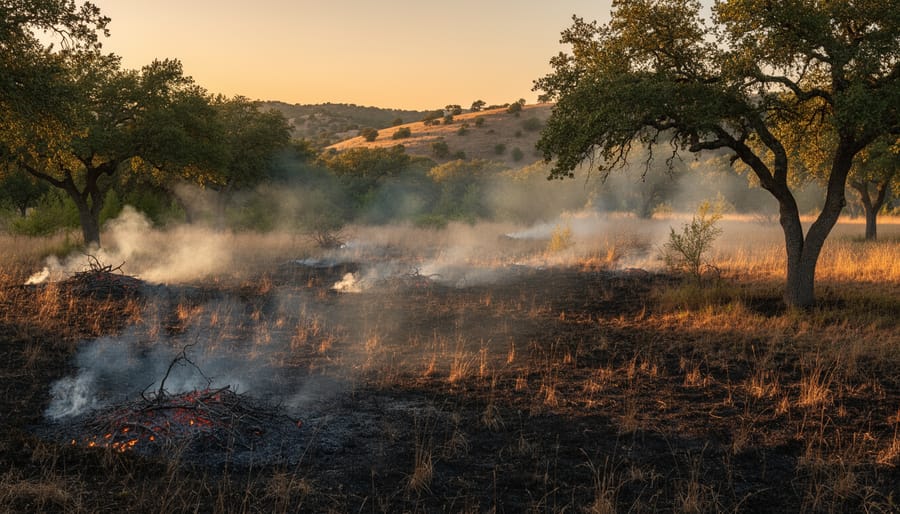
Indigenous fire management is the intentional, controlled burning of landscapes practiced by Indigenous peoples worldwide to shape ecosystems, enhance biodiversity, and support food production. Unlike wildfire suppression or accidental burns, this approach uses low-intensity fires set at specific times of year to clear underbrush, stimulate plant growth, reduce catastrophic wildfire risk, and maintain habitats for game and forage crops.
For thousands of years, communities from Australia’s Aboriginal peoples to Native American tribes across North America have refined burning techniques that work with nature’s rhythms rather than against them. These practices created the fire-adapted landscapes that European colonizers mistakenly believed were “untouched wilderness.” The reality? Many of our continent’s most productive grasslands, oak savannas, and berry patches existed because skilled land stewards used fire as a regenerative tool.
Today’s surge in catastrophic wildfires and degraded ecosystems has prompted scientists, land managers, and farmers to recognize what Indigenous knowledge keepers have maintained all along: fire, when applied correctly, heals landscapes and makes them more productive. Cultural burning techniques are being revived and integrated into modern land management, offering powerful lessons for anyone stewarding soil, from backyard gardeners to regenerative farm operators.
This article explores how Indigenous fire management works, the different burning approaches used across seasons and landscapes, and what organic growers and land stewards can learn from these time-tested practices to improve soil health, manage invasive species, and build resilient agroecosystems in 2026 and beyond.
What Indigenous Fire Management Means
Indigenous fire management is the intentional, controlled use of fire by Indigenous peoples to shape and sustain landscapes, practiced for thousands of years across continents. Unlike wildfire suppression or modern prescribed burns focused primarily on fuel reduction, this approach centers relationship to the land, cultural knowledge passed down through generations, and the goal of supporting both human communities and the broader web of life.
At its core, cultural burning described by Indigenous practitioners involves reading the land’s signals, choosing precise times based on seasonal cycles and weather conditions, and applying fire in ways that enhance rather than dominate ecosystems. Practitioners consider wind direction, fuel moisture, plant growth stages, and the needs of specific plants and animals. The fires are typically low-intensity, moving through the landscape in patterns that create diversity rather than uniformity.
- Cultural burning
- The use of fire by Indigenous peoples based on traditional knowledge and cultural practices to care for land, enhance biodiversity, and maintain resources important to the community.
- Fire stewardship
- The ongoing relationship between people and land through intentional fire use, emphasizing responsibility, observation, and adaptive management across generations.
- Controlled burn
- A fire deliberately set under specific conditions to achieve planned outcomes, such as clearing understory vegetation or encouraging new plant growth.
- Fire ecology
- The study of fire’s role in shaping ecosystems, including how plants and animals have adapted to fire and depend on it for their life cycles.
What distinguishes indigenous fire management from modern prescribed burning is not just technique but intent and context. Modern burns often aim to reduce wildfire risk or meet narrow land management goals. Indigenous fire practices emerge from intimate knowledge of place, built over centuries of observation and adjustment. Practitioners burn to support the plants their communities harvest, to create habitat for animals they hunt, to renew grasslands for seed gathering, and to maintain the health of the whole system. The timing isn’t dictated by agency schedules but by what the land shows is ready, often tied to specific plant flowering stages or seasonal transitions that signal the right moment to burn.
How Indigenous Fire Management Works
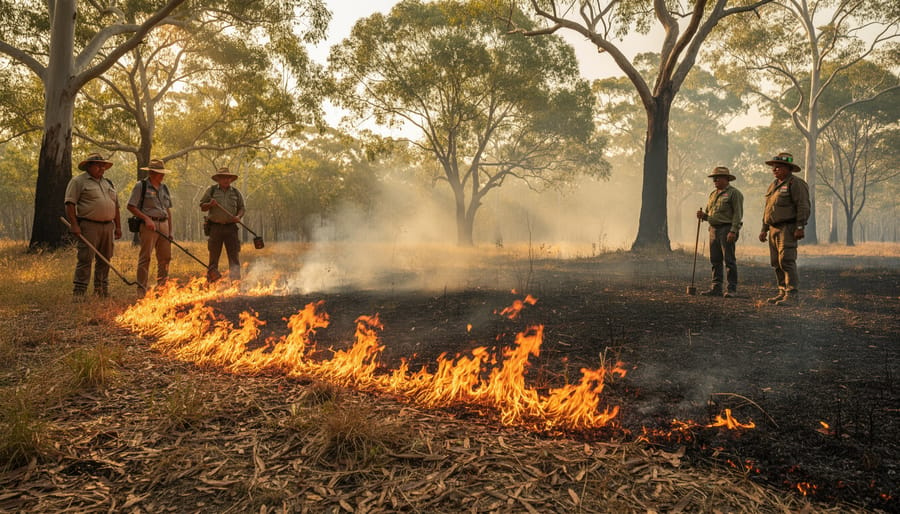
Indigenous fire management operates on a foundation of deep ecological observation and timing rather than calendar schedules or rigid protocols. Practitioners read the landscape continuously, noting fuel moisture levels in grasses and leaf litter, tracking seasonal wind patterns, observing animal behavior, and monitoring recent rainfall. This isn’t guesswork, it’s systematic knowledge built over generations of close attention to how fire moves through specific terrain under different conditions.
The mechanics start with selecting the right moment. Most cultural burns happen during cooler seasons or times of day when temperatures are moderate, humidity is higher, and winds are predictable. Fuel moisture matters enormously: slightly damp grasses burn slowly and incompletely, creating the patchy, low-intensity fires that Indigenous practitioners seek. Bone-dry fuels, by contrast, can produce the kind of heat that sterilizes soil and kills beneficial organisms, exactly what these burns aim to avoid.
Fire practitioners work with topography and wind direction, starting burns on ridges or upwind edges so flames move deliberately across the target area without racing out of control. They use natural firebreaks, streams, rocky outcrops, previously burned patches, and create intentional gaps in fuel to guide fire’s path. The goal is often a mosaic pattern: some areas lightly scorched, others untouched, creating diverse microhabitats rather than uniform results.
Monitoring happens during and after the burn. Practitioners watch flame height and color, smoke behavior, and how quickly fire consumes different fuel types. They adjust in real time, extinguishing spots that burn too hot or widening gaps if wind shifts. Post-burn observation continues for weeks and seasons, noting which plants return first, how wildlife responds, and whether the burn achieved its intended outcome, knowledge that informs the next fire cycle.
This entire process depends on intergenerational knowledge transmission. Elders teach younger practitioners through hands-on participation, explaining not just what to do but why certain signs matter and how conditions on this specific piece of land differ from others. It’s decision-making rooted in relationship with place, not abstract theory, a deeply adaptive system that evolves with ongoing observation and accumulated experience.
Types of Indigenous Burning Practices
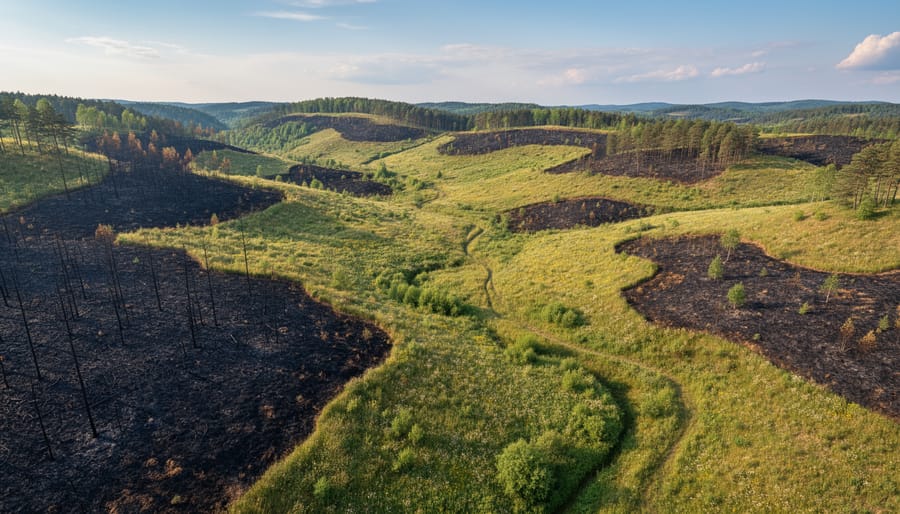
Indigenous fire practices take many forms, each designed for specific landscapes and cultural goals. These aren’t one-size-fits-all techniques but carefully adapted approaches developed over generations of observation and relationship with particular places.
- Broadcast burns sweep across grasslands and prairies to renew vegetation, triggering fresh growth that supports grazing animals and stimulates seed production for wild food plants
- Mosaic burns create a patchwork of burned and unburned areas across the landscape, maintaining habitat diversity that benefits everything from pollinators to game animals
- Understory burns clear forest floors of accumulated debris while leaving mature trees intact, reducing wildfire fuel and encouraging plants like camas, huckleberries, and medicinal herbs
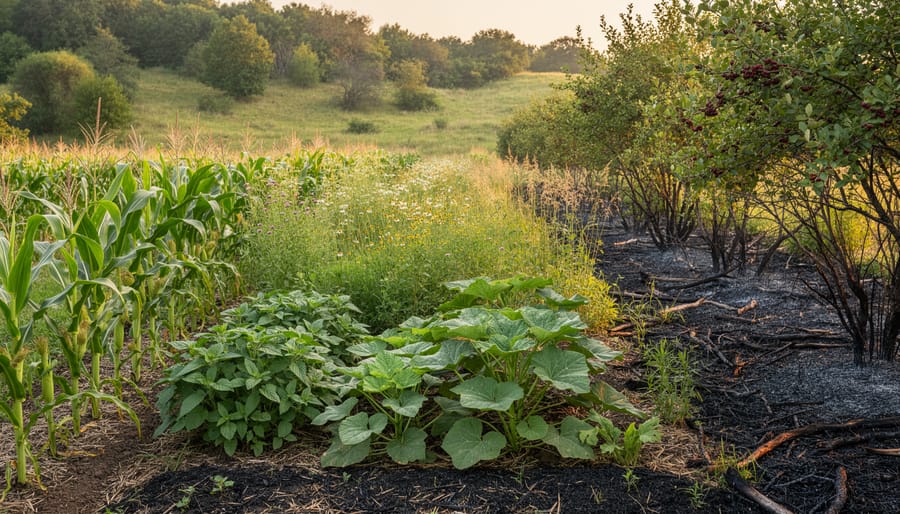
- Patch burns target specific areas within agricultural landscapes, managing field edges, clearing invasive species, and promoting wild food resources that complement cultivated crops
Each burning type reflects deep knowledge of fire behavior, plant responses, and seasonal timing. A broadcast burn across a meadow in late summer might encourage the same perennial grasses that fed bison herds for millennia. Mosaic burning creates the varied terrain that supports pollinators crucial to both wild ecosystems and modern organic farms.
Forest understory burns maintain the open, park-like structure that characterizes many pre-contact woodlands, reducing catastrophic fire risk while creating conditions for berry crops and nut harvests. In Indigenous agroforestry systems, strategic patch burns shape productive edges where wild and cultivated plants thrive together.
The choice of burning practice depends on what the land needs and what the community values. A coastal forest requires different fire management than interior grasslands, and the timing varies with local rainfall patterns, plant growth cycles, and cultural calendars that mark when specific foods are ready to harvest or when fire will best support their renewal.
How Indigenous Fire Is Used in Agroecosystems
Benefits for Soil and Plant Health
Indigenous fire management transforms soil and plant health in ways that align closely with organic farming principles. When low-intensity fires move through an area, they convert accumulated plant material into bioavailable ash rich in potassium, phosphorus, and calcium, nutrients that would otherwise take years to release through decomposition. This ash raises soil pH slightly and creates an immediate fertility boost that benefits both wild and cultivated plants.
Fire also breaks seed dormancy for many native species through heat scarification and chemical signals in smoke, triggering germination that might not occur otherwise. These heat-activated plants often include important food crops and cover species that Indigenous farmers incorporated into their agroecosystems, knowledge that connects to traditional seed saving practices still used today. The timing and intensity of burns determined which species would flourish in the following season.
Beyond fertility, controlled burning reduces fungal pathogens and certain pest populations by interrupting disease cycles and destroying overwintering insects without harsh chemicals. The resulting bare patches and new growth create conditions for diverse plant communities rather than monocultures, with pioneer species establishing first and succession plants following, a natural rotation system that maintains soil structure and prevents nutrient depletion. This diversity makes the system more resilient to drought, pests, and other stresses.
Supporting Biodiversity and Wildlife
Controlled burning creates a patchwork of habitats at different stages of recovery, which is exactly what many species need to thrive. When Indigenous fire practitioners burn small areas on rotation, they produce a landscape mosaic: some patches with new green growth, others with mature vegetation, and still others in between. This variety supports everything from ground-nesting birds to browsing deer, each finding the conditions they prefer within a compact area.
Fresh burns attract pollinators immediately. Many native flowering plants germinate after fire, and their blooms provide nectar and pollen for bees, butterflies, and other insects crucial to crop production. This is one reason traditional agroecosystems maintained such productive edges, the fire-managed boundaries between cultivated fields and wild areas became pollinator highways that benefited both wild plants and food crops.
Game animals like elk, deer, and wild turkeys gravitate toward recently burned areas for the tender new shoots and increased visibility. Predators follow prey, creating the full food web that keeps pest populations in check through natural means, much like Indigenous pest control strategies that work with ecosystem balance. Birds of prey hunt more successfully in the open conditions fire creates, while small mammals find both forage and cover in the varied structure.
This habitat diversity isn’t accidental. It mirrors the way traditional food systems blended cultivation with wild harvest, ensuring no single species dominated and resources remained abundant across seasons.
Learning from Indigenous Fire Stewards Today
Indigenous communities across North America are actively reclaiming fire management roles on their ancestral lands, demonstrating how traditional burning creates healthier forests, grasslands, and productive food landscapes. In California, the Karuk Tribe works with land agencies to restore cultural burning in the Klamath Mountains, reducing catastrophic wildfire risk while encouraging hazelnut groves, native lilies, and basketry materials. These partnerships show what happens when Western agencies step back and let fire stewards apply knowledge refined over millennia.
Similar collaborations are happening from the Great Plains to the Pacific Northwest. The Confederated Tribes of Warm Springs in Oregon manage prescribed burns that mimic ancestral practices, creating patchwork patterns that boost huckleberry yields and deer habitat. In the Southeast, Mvskoke (Creek) practitioners are reviving fire cycles that once maintained longleaf pine savannas and productive hunting grounds. These programs provide blueprints for integrating cultural knowledge with contemporary land management.
Small-scale organic farmers can apply core principles from these stewards without appropriating specific cultural practices. Start by observing your land through the seasons, noting which areas accumulate thatch or brush, when plants set seed, and how wildlife uses different zones. Time interventions based on moisture, wind, and plant cycles rather than the calendar alone. Work incrementally, affecting small sections and watching the results over years. Maintain diversity by creating varied conditions rather than uniform fields.
The wisdom is simple: pay attention, move slowly, and recognize that healthy land requires active relationship, not hands-off preservation or industrial control. Indigenous fire stewards remind us that tending land well means understanding fire as a tool, not a threat, and that the most resilient food systems come from working with ecological patterns rather than imposing rigid plans.
Common Questions About Indigenous Fire Management
Is indigenous fire management safe?
When practiced by experienced practitioners who understand local conditions, fuel loads, and weather patterns, cultural burning is extremely safe. These fires are set during specific windows when moisture, wind, and temperature support low-intensity burns that move slowly and stay close to the ground, making them far easier to control than the high-intensity fires we see during wildfire season.
How is this different from wildfires?
Wildfires burn hot and fast through landscapes loaded with decades of accumulated fuel, often during dry, windy conditions. Indigenous burns happen at cooler times of year, move slowly through lighter fuel loads maintained by regular burning, and typically stay under six feet tall rather than climbing into tree crowns. The difference is intentional management versus uncontrolled combustion.
Can non-Indigenous people practice cultural fire?
Cultural burning carries deep spiritual and knowledge traditions that belong to Indigenous communities. Non-Indigenous land managers can learn principles of observation, timing, and working with natural fire cycles, but implementing traditional fire practices should happen through partnerships with tribal fire practitioners or under their guidance, respecting both cultural protocols and the generations of knowledge involved.
What can home gardeners take from these practices?
You don’t need to light fires to apply indigenous wisdom. Observe seasonal patterns in your garden, work with natural cycles rather than imposing rigid schedules, create diversity through small-scale disturbances, leave some areas wild, and recognize that what looks messy to conventional eyes often supports the healthiest ecosystems.
These questions come up frequently because indigenous fire challenges our modern assumptions about wildfire and land management. We’ve been taught that all fire is dangerous and destructive, but traditional practitioners demonstrate that the right fire at the right time heals rather than harms.
Climate resilience connects directly to these practices. Landscapes maintained through regular low-intensity burning store more carbon in healthy soils, support diverse plant communities that adapt better to changing conditions, and break the cycle of catastrophic fires that release massive amounts of stored carbon. Indigenous fire management essentially builds fire-adapted ecosystems that can handle both drought and changing weather patterns, qualities we desperately need as climate volatility increases.
The safety question deserves emphasis because it reveals how disconnected we’ve become from understanding fire as a tool. Indigenous practitioners spend years learning to read smoke behavior, recognize when grasses have the right moisture content, and predict how a fire will move across specific terrain. That knowledge base makes cultural burning one of the safest land management practices available, with accident rates far lower than industrial forestry or even conventional farming equipment use.
Indigenous fire management represents thousands of years of careful observation, adaptive learning, and deep relationship with the land. These practices have sustained productive ecosystems and abundant food systems across diverse landscapes, proving that fire, when applied with knowledge and respect, builds resilience rather than destroys it.
What makes this approach so powerful is its foundation in working with natural cycles instead of against them. Indigenous fire stewards understand that timing matters, that landscapes speak if we learn to listen, and that small, intentional actions can create lasting benefits for soil health, plant diversity, and wildlife habitat. These aren’t abstract principles. They’re tested methods that have fed communities and maintained ecological balance through centuries of change.
For those of us tending gardens, managing small farms, or supporting local food systems, there’s much to learn here. We can observe seasonal patterns more closely, consider how our timing affects plant and soil health, and think beyond individual crops to the whole ecosystem we’re part of. Supporting Indigenous-led fire restoration programs, whether through advocacy or partnership, helps restore these vital practices to landscapes that need them.
The wisdom embedded in cultural fire management reminds us that sustainable agriculture isn’t a new invention. It’s a homecoming to practices that recognize humans as participants in healthy ecosystems, not separate from them. That understanding matters now more than ever.