Category Archives

46 Articles

How Advanced Regeneration Forestry Safeguards Seeds (And Why It Matters for Your Farm)

Posted by darrell on
0
Seed Preservation and Biodiversity
How Advanced Regeneration Forestry Safeguards Seeds (And Why It Matters for Your Farm)

Transform aging forests into thriving ecosystems through advanced regeneration forestry techniques that preserve native seed banks while maximizing biodiversity. This innovative approach combines traditional silviculture with modern ecological understanding, creating resilient woodlands that self-sustain for generations. By strategically managing canopy layers, soil health, and natural succession patterns, foresters can accelerate forest recovery while maintaining crucial ecosystem services. Advanced regeneration forestry stands apart from conventional methods by focusing on continuous cover, selective harvesting, and the preservation of legacy trees—ensuring both environmental sustainability and economic viability for landowners committed to long-term forest stewardship.

The methodology emphasizes three critical components: carefully timed understory development, protection of advance regeneration, and maintenance of multi-aged stand structures. This balanced approach not only safeguards forest health but also provides sustainable timber yields while supporting wildlife habitat and enhancing carbon sequestration capabilities. Modern practitioners are discovering that these techniques often result in more robust forests that better withstand climate challenges while providing superior ecosystem services compared to traditional even-aged management systems.

The Natural Wisdom of Forest Seed Banks

Understanding Forest Layers

A healthy forest naturally develops distinct layers, each playing a crucial role in protecting seeds and supporting genetic diversity in farming. The uppermost canopy layer consists of mature trees that create a protective umbrella, shielding younger plants from harsh weather. Below this, the understory layer houses smaller trees and shrubs that are actively growing toward the light. The shrub layer provides essential habitat for wildlife and helps regulate moisture levels, while the herb layer closest to the ground contains young seedlings and forest floor plants. Finally, the forest floor layer, rich with decomposing matter, creates the perfect environment for seed germination. Understanding these natural layers helps farmers and gardeners create similar protective environments for their own seed-saving practices, mimicking nature’s time-tested design for optimal plant reproduction and survival.

Illustrated diagram of forest layers showing canopy stratification and seed distribution
Cross-section diagram showing different forest canopy layers from understory to emergent layer

Nature’s Seed Storage System

Nature has perfected its own remarkable system of forest-based seed preservation over millions of years. Through natural cycles of growth and dormancy, forest ecosystems maintain an incredible “seed bank” in their soil layers. This living seed vault contains thousands of viable seeds per square meter, waiting for the right conditions to sprout.

Different tree species have evolved unique strategies to protect their seeds. Some produce tough seed coats that can withstand years in the soil, while others rely on animal dispersal to spread their genetics far and wide. The forest floor’s layers of organic matter create perfect storage conditions – maintaining ideal moisture levels and protecting seeds from temperature extremes.

This natural system ensures genetic diversity by preserving seeds from multiple generations and various species. When conditions change through natural disturbances like fallen trees or fires, different seeds activate at different times, allowing the forest to adapt and regenerate continuously.

Advanced Regeneration Techniques for Your Farm

Creating Seed Protection Zones

Creating dedicated seed protection zones is a vital component of successful regeneration forestry. These specialized areas serve as natural sanctuaries where native tree species can reproduce and maintain their genetic diversity. By implementing effective natural seed protection methods, you can ensure a sustainable source of seeds for future forest regeneration.

Start by identifying areas with mature, healthy trees of desired species. These zones should be at least 50 feet away from the forest edge to minimize cross-pollination with non-native species. Create clear boundaries using natural markers like rocks or fallen logs, or install simple fencing if needed.

Consider these key elements when establishing your seed protection zone:
– Choose locations with well-draining soil and adequate sunlight
– Maintain a diverse mix of tree species to encourage genetic variation
– Remove invasive plants that might compete with native seedlings
– Install basic wind barriers to prevent seed dispersal outside the zone

Regular maintenance is essential. Monitor the area monthly during growing season, removing any unwanted vegetation and checking for signs of pest damage. Create small clearings within the zone to encourage natural seed fall and germination. Many farmers find success by incorporating companion plants that naturally deter seed-eating wildlife while attracting beneficial insects.

Remember to document which trees produce the healthiest seeds and mark them clearly for future reference. This information becomes invaluable for long-term forest management and sustainability.

Established seed protection zone showing diverse plant layers and natural seed bank development
Photograph of a well-designed seed protection zone with companion plants and protective understory

Companion Planting for Seed Success

Companion planting in regenerative forestry goes beyond traditional garden partnerships, creating dynamic seed preservation networks that enhance natural reproduction. When strategically combined, certain tree and understory species work together to protect seeds and create optimal conditions for their survival.

Oak trees, for instance, benefit greatly when paired with nitrogen-fixing shrubs like autumn olive or black locust. These companions enrich the soil, providing better conditions for acorn development and preservation. Similarly, pine trees thrive when surrounded by berry-producing shrubs that attract birds, which help disperse seeds while keeping seed-eating rodent populations in check.

Creating multi-layered plantings also helps protect seeds from extreme weather conditions. Tall canopy trees shelter mid-story species, while ground covers protect fallen seeds from excessive moisture or drying. For example, native ferns under maple trees help maintain consistent soil moisture levels, improving seed viability.

Consider these proven combinations:
– Hickory trees with wild ginger groundcover
– Black walnut with pawpaw understory
– White pine with wintergreen ground layer
– Beech trees with native woodland strawberries

Success story: A Vermont forest garden saw a 40% increase in natural tree regeneration after implementing strategic companion planting, particularly in areas where native understory plants were reintroduced alongside existing hardwoods.

Remember to observe natural forest patterns in your area for inspiration – nature often provides the best blueprint for successful seed preservation strategies.

Monitoring and Maintaining Your Forest Seed Bank

Four-panel image showing seasonal changes in a forest seed preservation area
Series of seasonal photos showing the same forest plot across different times of year

Seasonal Care Strategies

Successful seed preservation in regeneration forestry requires careful attention throughout the year. In spring, focus on protecting emerging seedlings from late frost by using natural mulch and maintaining healthy soil moisture levels. Create detailed maps of seed-bearing trees and mark potential collection areas for future reference.

Summer brings critical monitoring periods. Regular soil testing helps maintain optimal pH levels, while strategic pruning encourages healthy seed production. Install shade structures where needed to protect sensitive species from intense heat, and maintain consistent irrigation schedules during dry spells.

Fall is prime seed collection season. Gather seeds during dry weather, ideally in the late morning after dew has evaporated. Store collected seeds in breathable paper bags, carefully labeled with species name and collection date. Create thorough documentation of successful parent trees for future reference.

Winter focuses on seed storage and planning. Maintain consistent temperature and humidity levels in storage areas, regularly checking for signs of mold or pest activity. Use this quieter season to analyze collection data and adjust strategies for the coming year, ensuring continuous improvement in preservation techniques.

Signs of a Healthy System

A thriving regeneration forestry system displays several key indicators that signal its success. Look for a diverse array of native plant species emerging at different heights, creating a rich, multi-layered canopy structure. Healthy soil should be dark, crumbly, and teeming with earthworms and beneficial insects. You’ll notice increasing bird and wildlife activity as the ecosystem develops, with different species making your forest their home.

The presence of naturally occurring seedlings beneath mature trees indicates successful natural regeneration. Watch for improved water retention in the soil, with less runoff during heavy rains and moisture-loving plants thriving. Dead logs and fallen branches should decompose naturally, feeding nutrients back into the system.

Fungal networks, visible through mushroom growth and mycorrhizal relationships, show strong underground connections. Your forest floor should develop a thick layer of leaf litter and organic matter, gradually building soil fertility. Seasonal changes should reveal new growth patterns, with pioneer species giving way to more permanent forest species over time. These signs together indicate a self-sustaining ecosystem that requires minimal human intervention to thrive.

Real Success Stories from Local Farms

The Thompson Family Farm in Vermont stands as a shining example of successful advanced regeneration forestry implementation. Over the past decade, they’ve transformed their 50-acre woodland into a thriving ecosystem that produces both timber and maintains a diverse seed bank. Sarah Thompson shares, “We’ve documented over 200 native plant species since starting our regeneration project, and we’re now supplying seeds to local nurseries.”

In Washington state, Cloud Mountain Farm Center has pioneered a unique approach to forest regeneration. Their method combines traditional Indigenous knowledge with modern forestry techniques, resulting in a self-sustaining seed preservation system. “Our forest now produces enough seeds to support our nursery operations and contribute to regional conservation efforts,” explains director Mark Rodriguez.

The success of Green Valley Cooperative in Michigan demonstrates the economic viability of regenerative forestry. This farmer-owned collective manages 300 acres of forest land, where they’ve established zones for different native species. Their careful management has led to a 40% increase in seed production over five years, while maintaining healthy timber stands.

Perhaps most inspiring is the story of Sweet Pine Farm in Oregon, where owner Linda Chen started with just 10 acres of degraded woodland. Through careful implementation of regenerative practices, she’s created a forest garden that now serves as a living seed bank for over 50 heritage tree species. “The forest doesn’t just preserve seeds,” Chen notes, “it tells a story of resilience and renewal that future generations can learn from.”

These success stories show that with dedication and proper management, advanced regeneration forestry can create sustainable, productive ecosystems that serve both environmental and agricultural needs.

Advanced regeneration forestry represents a powerful solution for creating resilient, productive, and environmentally sustainable forest ecosystems. By embracing these innovative practices, we can work with nature rather than against it, fostering healthy forest regeneration while maintaining biodiversity and supporting local economies.

The key takeaways from this approach include the importance of selective harvesting, maintaining diverse age structures within forest stands, and protecting soil health through minimal disturbance techniques. Success stories from various regions have demonstrated that these methods can produce higher-quality timber while preserving ecosystem services and wildlife habitats.

Whether you’re a forest manager, landowner, or conservation enthusiast, implementing advanced regeneration forestry principles can lead to remarkable results. Start small by identifying areas suitable for natural regeneration, establishing monitoring protocols, and gradually expanding your efforts as you gain experience.

Remember, every forest restoration project contributes to a larger goal of environmental stewardship. By adopting these practices, we’re not just growing trees – we’re investing in the future of our planet and creating lasting natural legacies for generations to come.

Natural Seed Protection That Actually Works: Biological Treatments in Agroforestry

Posted by darrell on
0
Seed Preservation and Biodiversity
Natural Seed Protection That Actually Works: Biological Treatments in Agroforestry

Transform your seeds into robust seedlings by harnessing the power of natural biological treatments. Ancient seed preservation methods combined with modern organic practices create resilient plants that establish quickly and resist disease naturally. Coating seeds with beneficial microorganisms like Trichoderma fungi and nitrogen-fixing bacteria boosts germination rates by up to 40% while providing built-in protection against soil-borne pathogens. These time-tested techniques, passed down through generations of forest farmers, offer a chemical-free alternative that enhances soil health, increases crop yields, and strengthens plants’ natural immune systems. Whether you’re growing heritage vegetables or establishing a food forest, biological seed treatments provide the foundation for thriving, sustainable agricultural systems that work in harmony with nature.

What Are Biological Seed Treatments?

Common Types of Biological Treatments

Biological seed treatments fall into several fascinating categories, each offering unique benefits for organic farming and gardening. Let’s explore the most common types that have proven successful in natural agriculture.

Beneficial microorganisms form the largest category of biological treatments. These include various strains of bacteria and fungi that work symbiotically with plants. For example, Trichoderma fungi help protect seeds from soil-borne diseases, while Rhizobium bacteria boost nitrogen fixation in legume crops. Many farmers have reported stronger seedling emergence and improved root development using these helpful microbes.

Plant-based treatments derive from natural botanical sources and have gained popularity among organic growers. Neem extract, for instance, offers excellent protection against various pests and fungal infections. Other effective plant extracts include garlic, which has natural antifungal properties, and seaweed solutions that provide growth-promoting compounds and essential nutrients.

Natural polymers represent an innovative approach to seed coating. Materials like chitosan, derived from crustacean shells, create a protective barrier around seeds while improving their resistance to environmental stress. These biodegradable coatings can also carry additional beneficial substances, making them excellent delivery systems for other biological treatments.

Essential oils have emerged as another powerful option, with materials like thyme and oregano oils showing promising results in seed protection. These natural compounds not only ward off harmful organisms but also support healthy seed germination.

For home gardeners, many of these treatments can be adapted into DIY solutions using readily available materials, making biological seed treatments accessible to everyone interested in organic growing methods.

Magnified image showing beneficial bacteria and fungi used in seed treatments
Microscopic view of beneficial microorganisms commonly used in biological seed treatments

Benefits for Agroforestry Systems

Disease Protection

Biological seed treatments act as natural guardians against common seed-borne diseases, creating a protective shield that helps ensure healthy plant development. These treatments work by introducing beneficial microorganisms that colonize the seed surface and create an unfavorable environment for harmful pathogens.

One of the most effective mechanisms is competitive exclusion, where beneficial bacteria and fungi outcompete disease-causing organisms for space and nutrients. For example, Trichoderma species, a naturally occurring fungus, forms a protective barrier around seeds while producing compounds that inhibit pathogenic fungi.

Many organic farmers have found success using compost tea treatments, which introduce diverse beneficial microorganisms to their seeds. Sarah Martinez, an organic farmer in California, shares, “Since implementing biological seed treatments, we’ve seen a significant reduction in damping-off disease in our seedlings.”

These treatments can protect against common issues like fusarium wilt, pythium root rot, and various bacterial infections. Unlike chemical treatments, biological options strengthen the seed’s natural defense mechanisms while promoting sustainable soil health, creating a long-term solution for disease management in organic farming systems.

Comparison showing healthy biologically treated seeds next to infected untreated seeds
Side-by-side comparison of treated vs untreated seeds showing disease resistance

Enhanced Germination

Biological seed treatments have a remarkable impact on seed performance, leading to enhanced germination rates and stronger seedling development. These natural treatments create the perfect environment for seeds to thrive by protecting them from soil-borne diseases and providing essential nutrients right from the start.

When seeds are treated with beneficial microorganisms like mycorrhizal fungi and plant-growth-promoting bacteria, they’re better equipped to break dormancy and sprout vigorously. Many farmers report seeing germination improvements of 20-30% compared to untreated seeds, especially in challenging soil conditions.

The treatments work by breaking down seed coat barriers, improving water absorption, and kickstarting metabolic processes essential for germination. They also help seeds overcome environmental stresses like temperature fluctuations and moisture inconsistencies that typically delay sprouting.

For home gardeners and small-scale farmers, this means more reliable crop establishment and fewer gaps in plantings, ultimately leading to better yields and more efficient use of garden space.

DIY Biological Treatments

Creating effective biological seed treatments at home is simpler than you might think. One popular method involves fermenting compost tea, which you can make by steeping high-quality compost in water for 24-48 hours. Strain the mixture and dilute it before soaking your seeds for 8-12 hours.

Another fantastic DIY option is using beneficial microorganisms from forest soil. Collect soil from beneath healthy trees, mix it with non-chlorinated water, and strain it to create a natural inoculant. This solution introduces helpful fungi and bacteria to your seeds.

For added protection, try making a garlic-based treatment. Blend three cloves of garlic with a cup of water, strain the mixture, and use it as a soaking solution. This natural fungicide helps prevent common seed-borne diseases.

When applying these treatments, always use clean containers and maintain consistent temperatures. After treatment, dry your seeds thoroughly before planting or implementing natural seed storage techniques. Remember to label your treated seeds and keep detailed records of which methods you’ve used.

For best results, test a small batch of seeds first to ensure the treatment doesn’t affect germination rates. Many gardeners combine these methods with other natural approaches like using seaweed extracts or beneficial herb infusions for enhanced results.

Demonstration of hands mixing natural ingredients and coating seeds with biological treatment
Step-by-step process of applying natural seed treatment using plant extracts

Biological seed treatments offer a natural, sustainable approach to protecting and enhancing crop development. By embracing these eco-friendly methods, you’re not just nurturing healthier plants – you’re contributing to a more sustainable agricultural future. Whether you’re a home gardener or small-scale farmer, implementing these treatments can significantly improve germination rates and plant vigor while maintaining organic integrity. Remember to start small, experiment with different treatments, and document your results. The beauty of biological seed treatments lies in their accessibility and effectiveness, making them an invaluable tool for anyone committed to organic growing practices. With these natural solutions at your disposal, you’re well-equipped to grow robust, healthy plants while supporting beneficial soil microorganisms and protecting our environment for future generations.

Seed Sovereignty: Your Food Freedom Starts Here

Posted by darrell on
0
Seed Preservation and Biodiversity
Seed Sovereignty: Your Food Freedom Starts Here

Food sovereignty stands at the intersection of human rights, sustainable agriculture, and local food systems, empowering communities to control their own food and farming destinies. Born from grassroots movements and championed by small-scale farmers worldwide, these principles challenge the industrial food system’s dominance while offering a practical framework for building resilient, culturally appropriate food networks.

At its core, food sovereignty recognizes that those who grow, distribute, and consume food should be at the heart of food-related decisions, not distant market forces or corporate interests. This fundamental shift in thinking has sparked a global movement, inspiring communities from rural villages to urban neighborhoods to reclaim their food heritage and agricultural independence.

From seed saving cooperatives in India to community gardens in Detroit, food sovereignty principles are transforming how we think about and interact with our food systems. These grassroots initiatives demonstrate that when communities take control of their food production, they not only secure their food supply but also preserve cultural traditions, protect biodiversity, and build stronger local economies.

As climate change and food security challenges intensify, understanding and implementing food sovereignty principles becomes increasingly crucial for creating sustainable, equitable food systems that work for everyone.

The Roots of Food Sovereignty

From Farm to Rights Movement

The food sovereignty movement emerged in the mid-1990s when small-scale farmers began raising concerns about industrialized agriculture’s impact on local food systems. La Via Campesina, an international farmers’ organization, first introduced the concept at the 1996 World Food Summit, giving voice to communities seeking control over their food production.

What started as grassroots activism quickly evolved into a global movement. Local farmers shared stories of traditional farming methods being displaced by large-scale operations, inspiring others to join the cause. Success stories, like indigenous communities in Mexico preserving heritage corn varieties and small-scale farmers in India protecting native seed varieties, demonstrated the movement’s growing influence.

By the early 2000s, food sovereignty principles began shaping policy discussions. Countries like Ecuador, Venezuela, and Mali incorporated food sovereignty into their constitutions, marking a shift from viewing food merely as a commodity to recognizing it as a fundamental right. Today, the movement continues to champion local food systems, farmer rights, and sustainable agriculture practices, offering a powerful alternative to industrial farming models.

Core Principles That Matter

Food sovereignty empowers communities to take control of their food systems through several key principles. At its heart lies the fundamental right of people to define their own agricultural and food policies. This includes protecting local farmers’ rights to land, water, and saving heirloom varieties that have sustained communities for generations.

The principles emphasize sustainable production methods that work in harmony with nature, promoting biodiversity and protecting natural resources. They prioritize local food systems, encouraging direct relationships between producers and consumers while ensuring fair compensation for farmers and agricultural workers.

Knowledge sharing plays a crucial role, with traditional farming wisdom being passed down through generations and combined with innovative ecological practices. These principles also stress the importance of community decision-making in food-related matters, from production to distribution.

Additionally, food sovereignty champions the right of communities to protect their local markets from dumping and inappropriate food aid, ensuring long-term food security and cultural preservation. These principles work together to create resilient, sustainable food systems that benefit both people and the planet.

Colorful display of various heirloom seeds including corn, beans, and indigenous grain varieties
Diverse collection of traditional heirloom seeds arranged in a spiral pattern

Why Seed Sovereignty Matters Now

Local Control, Global Impact

Local seed sovereignty stands at the heart of sustainable food systems, empowering communities to maintain control over their agricultural heritage while preserving vital biodiversity. As more farming communities are fighting for planting rights, we’re seeing a growing awareness of how local seed control impacts both regional food security and global agricultural diversity.

When farmers can save, exchange, and breed their own seeds, they’re able to develop varieties that are perfectly adapted to their local growing conditions. This practice not only reduces dependency on commercial seed companies but also helps maintain crop diversity that’s crucial for food system resilience.

Take the story of Sarah Martinez, an organic farmer in British Columbia, who’s been saving heritage tomato seeds for over a decade. Her seed library now includes 50 varieties, each telling a story of adaptation to local conditions and climate change resilience. This kind of seed stewardship helps preserve traditional knowledge while ensuring future food security.

Local seed control also supports biodiversity conservation. When communities maintain diverse seed varieties, they create living seed banks that protect against crop failures and disease outbreaks. These local seed systems serve as guardians of genetic diversity, maintaining varieties that might otherwise be lost to standardized commercial farming practices.

Indigenous farmer harvesting seeds from traditional crop varieties in a small field
Small-scale farmer carefully selecting and saving seeds from mature plants

Small Farmers, Big Stakes

At the heart of food sovereignty lies the well-being of small-scale farmers who form the backbone of local food systems. These farmers not only feed their communities but also serve as stewards of agricultural heritage and biodiversity. When small farmers thrive, entire communities benefit from fresher food, stronger local economies, and deeper connections to their food sources.

Research shows that small farms typically produce more food per acre than large industrial operations while using fewer resources. They achieve this through diverse planting methods, traditional knowledge, and careful land stewardship. As seed diversity enhances resilience, small farmers who maintain varied crop selections are better positioned to weather environmental challenges and market fluctuations.

Consider Maria, a small-scale farmer in Ontario who transformed three acres into a thriving market garden that now feeds 50 local families through a CSA program. By implementing sustainable practices and maintaining strong community ties, she’s created a resilient food system that supports both environmental and economic health.

Small farmers also play a crucial role in preserving traditional farming knowledge and adapting it to modern challenges. Their success depends on community support through farmers’ markets, CSA memberships, and local food initiatives that create direct connections between producers and consumers, ultimately strengthening food sovereignty at the grassroots level.

Taking Action: Policy Advocacy Tools

Community Organization Strategies

Building strong community support for food sovereignty starts with grassroots organization and clear communication. Begin by hosting regular community meetings at local venues like libraries, community centers, or farmers’ markets to bring together interested individuals. These gatherings create space for sharing knowledge, concerns, and ideas about local food systems.

Form working groups focused on specific aspects of food sovereignty, such as seed saving initiatives, community garden projects, or policy advocacy. Each group can develop targeted action plans and share progress during larger community meetings. Consider starting a community newsletter or social media presence to keep everyone informed and engaged.

Partner with existing local organizations like food banks, environmental groups, and farming cooperatives to amplify your impact. These partnerships can provide resources, expertise, and wider community reach. Document success stories and challenges to help other communities learn from your experience.

Organize educational workshops on practical skills like gardening, composting, and food preservation. These hands-on activities build community while developing self-sufficiency. Create a local food policy council to engage with municipal government and advocate for supportive policies.

Remember to celebrate victories, both big and small. Host community potlucks featuring locally grown food, organize harvest festivals, or arrange farm tours. These events strengthen community bonds and maintain momentum for long-term food sovereignty goals. Stay inclusive by ensuring meetings and events are accessible to all community members, regardless of background or experience level.

Policy Framework Building Blocks

A robust policy framework for food sovereignty must include several essential building blocks to effectively protect and promote local food systems. At its foundation, these policies need clear definitions of seed rights that acknowledge both traditional knowledge and modern farming practices. This includes protecting farmers’ rights to save, use, and exchange seeds freely within their communities.

Legal protections for indigenous and heritage seed varieties form another crucial element, ensuring these valuable genetic resources aren’t lost to corporate patents or restrictive regulations. These protections should extend to traditional farming methods and cultural practices associated with seed saving.

Policies must also address fair market access, creating pathways for small-scale farmers to compete effectively while maintaining their independence. This includes regulations that prevent monopolistic control of seed markets and support diverse seed systems.

Education and research support represent another vital component, with policies funding programs that promote seed saving skills, sustainable farming practices, and participatory plant breeding initiatives. These programs help preserve agricultural biodiversity while building community resilience.

Finally, effective frameworks need enforcement mechanisms and community oversight to ensure accountability. This might include local seed councils, participatory guarantee systems, and transparent processes for addressing violations of seed sovereignty rights.

Success stories from communities that have implemented such frameworks show how these elements work together to create thriving local food systems while preserving agricultural heritage for future generations.

Success Stories That Inspire

The Navdanya movement in India, founded by environmental activist Vandana Shiva, stands as a shining example of seed sovereignty in action. Since 1987, the initiative has created a network of seed keepers and organic producers across 22 states in India, protecting over 5,000 crop varieties. Their seed bank program has empowered thousands of farmers to maintain their traditional seeds and farming practices.

In Mexico, the Sin Maíz No Hay País (Without Corn, There is No Country) campaign has successfully preserved native corn varieties and protected them from genetic modification. Local communities have established community seed banks, ensuring that traditional maize varieties remain in farmers’ hands while supporting food security for millions.

The Seed Savers Exchange in the United States presents another inspiring story. Starting as a small initiative by Diane Ott Whealy and Kent Whealy to preserve their grandfather’s morning glory and tomato seeds, it has grown into America’s largest non-governmental seed bank. Today, they maintain a collection of over 20,000 plant varieties and connect thousands of gardeners who share seeds.

In Zimbabwe, the Shashe Agroecology School has transformed local food systems by training farmers in seed saving and organic farming methods. Their success has inspired similar programs across Africa, demonstrating how traditional knowledge combined with modern sustainable practices can create resilient food systems.

Your Role in Seed Sovereignty

Personal Actions That Count

Supporting seed sovereignty starts right in your own backyard. Begin by saving seeds from your favorite heirloom vegetables and fruits, creating a personal seed bank that preserves genetic diversity. Connect with local seed libraries and seed-sharing networks to exchange varieties that are well-adapted to your region’s climate and growing conditions.

When shopping for seeds and plants, choose to support small, independent seed companies that prioritize open-pollinated varieties rather than hybrids or patented seeds. Consider joining or starting a community seed-saving group where you can learn traditional seed-saving techniques and share knowledge with others.

Growing your own food using saved seeds helps maintain crop diversity and reduces dependence on commercial seed suppliers. Start small with easy-to-save seeds like tomatoes, beans, and lettuce. Document your growing experiences and keep detailed records of which varieties perform best in your garden.

Make informed choices at farmers’ markets by asking vendors about their seed sources and farming practices. Support indigenous seed-keeping initiatives and local organizations working to preserve heritage varieties. Share your excess seeds with neighbors and community gardens, creating a resilient local food system.

Consider becoming a seed guardian for rare or endangered varieties, helping to preserve these precious genetic resources for future generations. Every seed saved and shared strengthens our collective food sovereignty.

Building Community Support

Building community support for food sovereignty starts at the grassroots level. Organizing seed swaps, workshops, and educational events creates opportunities for neighbors to connect and share knowledge about seed saving and sustainable farming practices. These gatherings not only strengthen local food systems but also preserve traditional agricultural wisdom.

Consider starting a neighborhood garden club or joining existing community seed preservation initiatives to expand your impact. Local libraries and community centers often serve as perfect venues for hosting seed libraries and educational programs. These spaces allow gardeners to freely exchange seeds and growing tips while building valuable relationships.

Social media and local newsletters can help spread awareness about food sovereignty issues and upcoming events. Creating online groups or forums dedicated to seed saving and sustainable agriculture helps maintain momentum between in-person gatherings. Consider partnering with local schools to establish garden programs that teach children about seed saving and food cultivation.

Engaging local government officials and attending town hall meetings puts food sovereignty on the community agenda. Share success stories from other regions and emphasize the economic and environmental benefits of local seed sovereignty. Remember, strong communities are built on shared knowledge and mutual support – every conversation about seeds and food sovereignty plants the seeds of positive change.

Group of diverse farmers sharing seeds and discussing traditional farming practices at a local seed bank
Community seed bank meeting with farmers exchanging knowledge and seeds

Food sovereignty starts with seeds – the foundation of our food system and agricultural heritage. By understanding and supporting seed sovereignty, we empower communities to maintain control over their food production and preserve traditional farming practices for future generations. Each of us can contribute to this vital movement by saving and sharing seeds, supporting local seed libraries, and advocating for policies that protect farmers’ rights to save and exchange seeds freely. Together, we can build a more resilient and sustainable food system that honors biodiversity, traditional knowledge, and community self-determination. Take action today by starting a seed-saving practice, joining a local food sovereignty group, or educating others about the importance of seed rights in achieving true food independence.

Forest Agriculture: How Ancient Seed Preservation Methods Are Saving Modern Farms

Posted by darrell on
0
Seed Preservation and Biodiversity
Forest Agriculture: How Ancient Seed Preservation Methods Are Saving Modern Farms

Imagine walking through a forest where every tree, shrub, and vine produces food. This isn’t a fantasy – it’s forest agriculture, an ancient practice experiencing a modern renaissance. By mimicking natural forest ecosystems, farmers are creating productive, sustainable food systems that work in harmony with nature rather than against it.

Forest agriculture transforms traditional farming by layering food-producing plants from the canopy down to the forest floor. Tall nut trees shade coffee bushes, which protect herbs and mushrooms below, creating a thriving ecosystem that produces multiple harvests throughout the year. This approach not only yields more food per acre than conventional farming but also builds soil health, supports biodiversity, and captures carbon naturally.

Today’s forest farmers are blending indigenous wisdom with modern science, proving that we can grow abundant food while regenerating our planet’s ecosystems. Whether you have acres of land or a small backyard, forest agriculture offers practical solutions for growing food sustainably while preserving our natural heritage.

Traditional Forest Agriculture: A Time-Tested Seed Bank

Nature’s Vault: How Forests Store Seeds

Forests are nature’s ultimate seed banks, employing fascinating strategies to preserve and protect their genetic heritage. Through millions of years of evolution, trees and plants have developed sophisticated methods for storing seeds that ensure genetic diversity in farming and forest regeneration.

The forest floor acts as a natural seed vault, with its layers of leaf litter and soil creating perfect conditions for seed storage. Some seeds remain dormant in this “soil seed bank” for years, waiting for the right conditions to sprout. Others are stored in nature’s aerial seed banks – the canopy – where pine cones and seed pods protect their precious cargo until environmental conditions are just right.

Many forest species have developed specialized seed coverings that protect against moisture, temperature extremes, and hungry wildlife. Some seeds even require specific environmental triggers, like fire or frost, to break their dormancy. This natural preservation system ensures that seeds remain viable across seasons and even decades, ready to sprout when conditions become favorable for growth.

Understanding these natural preservation mechanisms helps us develop better seed-saving techniques for our own agricultural practices, allowing us to work in harmony with nature’s time-tested methods.

Indigenous Wisdom in Seed Preservation

Indigenous communities have long been the custodians of invaluable indigenous seed preservation techniques that continue to shape forest agriculture today. These time-tested methods focus on maintaining seed diversity while protecting against environmental challenges and ensuring food security for future generations.

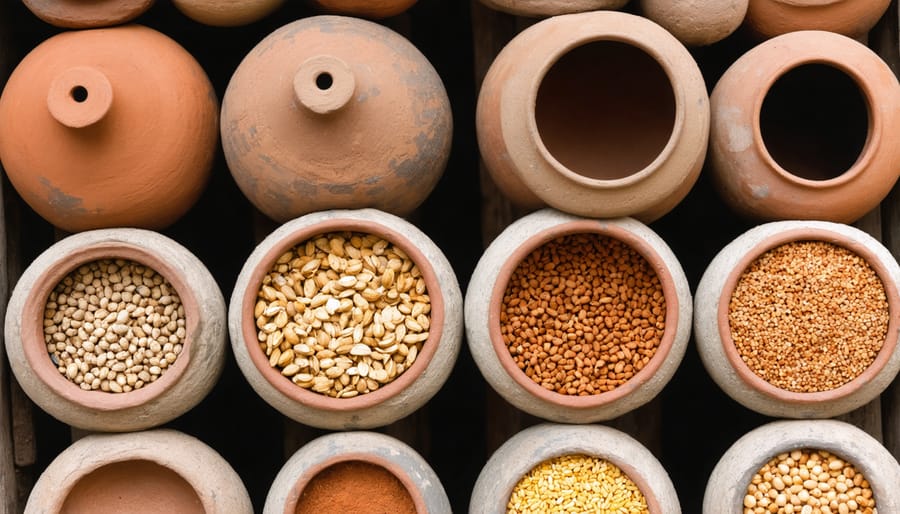
Traditional seed saving practices often involve careful selection of the strongest plants, timing harvests with natural cycles, and storing seeds using natural materials like clay pots and dried gourds. Many indigenous communities combine seed storage with storytelling, passing down crucial knowledge about each variety’s unique characteristics and growing requirements.

One fascinating practice is the creation of living seed banks within forest gardens, where multiple varieties of crops grow together, naturally adapting to local conditions. This approach not only preserves genetic diversity but also strengthens the seeds’ resilience to climate change and pests.

These ancestral methods have proven so effective that modern seed banks and agricultural organizations now actively collaborate with indigenous communities to learn and document their preservation wisdom.

Indigenous wooden and clay vessels used for storing forest seeds, displayed on woven mats
Traditional seed storage containers made from natural materials in an indigenous forest community

Modern Agroforestry Seed Preservation Techniques

Climate-Controlled Forest Seed Banks

Modern seed banks are revolutionizing how we preserve forest agricultural diversity through climate-controlled environments. These specialized facilities maintain seeds at precise temperatures and humidity levels, ensuring they remain viable for decades or even centuries.

Think of these facilities as time capsules for nature’s genetic treasures. Seeds are carefully cleaned, dried, and stored in airtight containers at temperatures around -18°C (0°F). The controlled humidity, typically between 15-20%, prevents moisture damage while maintaining seed viability.

Local farmers and indigenous communities are increasingly partnering with seed banks to protect their heritage varieties. For example, the Mountain Valley Seed Collective in Vermont has preserved over 300 native tree and understory crop varieties, working directly with local forest farmers to maintain genetic diversity.

These facilities aren’t just storage units – they’re living libraries. Regular germination testing ensures seed viability, while detailed documentation preserves traditional knowledge about growing conditions and harvesting practices.

Getting involved is easier than you might think. Many seed banks welcome community contributions and offer seed-saving workshops. Some even distribute seeds to local growers, creating a network of citizen preservationists who help maintain these vital genetic resources.

For home growers, the principles of seed banking can be applied on a smaller scale. A dedicated refrigerator section with moisture-control packets can serve as a mini seed bank, helping preserve your favorite forest-grown varieties for future seasons.

Interior view of a temperature-controlled seed storage facility with labeled containers and monitoring equipment
Modern climate-controlled seed bank facility within a forest agricultural center

Community Seed Libraries in Forest Farms

Community seed libraries have become vital hubs within forest agriculture systems, serving as living repositories of genetic diversity and local ecological knowledge. These grassroots initiatives allow farmers and gardeners to share, preserve, and exchange seeds that are particularly well-adapted to forest environments.

In forest farms across the globe, communities maintain careful records of their seed collections, documenting important characteristics like shade tolerance, companion planting success, and seasonal timing. Members can “check out” seeds at the beginning of the growing season and “return” them by saving and contributing seeds from their harvest.

Many forest farm seed libraries specialize in preserving heritage varieties of understory crops, including unique mushroom spores, shade-loving vegetables, and native medicinal plants. This practice helps maintain biodiversity while ensuring these valuable plant genetics remain available for future generations.

Success stories abound, like the Mountain Grove Forest Farm Collective, where members have preserved over 200 varieties of forest-adapted crops. Their seed library includes rare varieties of pawpaw, elderberry, and woodland medicinals that might otherwise have been lost to time.

For those interested in participating, most community seed libraries offer workshops on proper seed saving techniques and forest-specific growing methods. These educational initiatives help ensure that seeds are properly preserved and that traditional knowledge continues to be passed down through generations of forest farmers.

Starting Your Forest Seed Collection

Organized display of seed collection tools including drying racks, storage containers, labels, and moisture meters
Collection of essential seed preservation tools and materials

Essential Tools and Storage Methods

Success in forest agriculture relies heavily on having the right tools and proper storage methods for your seeds and harvested materials. Essential tools include moisture-resistant seed collection bags, pruning shears for gathering pods and fruits, and sturdy containers for temporary storage during collection trips.

For seed preservation, maintain a collection of airtight glass jars with rubber seals, food-grade silica gel packets for moisture control, and labels for accurate record-keeping. A reliable thermometer and hygrometer are crucial for monitoring storage conditions, as most seeds require cool, dry environments to maintain viability.

Many forest farmers find success using the “three-container system”: one for fresh collection, another for cleaning and processing, and a third for long-term storage. Clean seeds thoroughly before storage, removing any damaged specimens or debris that could lead to contamination.

Traditional knowledge teaches us to store seeds in dark, temperature-stable locations. Many experienced practitioners use root cellars or dedicated storage rooms kept at 35-40°F with humidity levels below 40%. For smaller operations, a dedicated mini-fridge with humidity control works well.

Remember to regularly check stored seeds for signs of moisture or pest activity, and maintain detailed records of collection dates and storage conditions for each variety.

Best Practices for Long-Term Storage

In forest agriculture, proper seed storage is crucial for maintaining genetic diversity and ensuring successful future harvests. Understanding effective seed storage methods can make the difference between viable and non-viable seeds when spring arrives.

Keep seeds in airtight, moisture-proof containers made of glass or food-grade plastic. Label each container with the seed type and collection date. The ideal storage temperature ranges between 32-41°F (0-5°C), making root cellars or dedicated refrigerators perfect for this purpose.

Maintain relative humidity below 40% using silica gel packets or rice grains in your storage containers. This prevents moisture-related issues like mold and premature germination. For longer-term storage, consider vacuum sealing particularly valuable or rare seeds.

Monitor your stored seeds regularly for signs of pest infestation or moisture damage. Many forest farmers rotate their seed stock every 2-3 years, though some species can remain viable for longer when stored properly.

Remember that different tree and plant species have varying storage requirements. Some seeds, particularly those from local forest species, may need stratification or other pre-storage treatment to maintain viability.

Success Stories: Forest Farms Leading the Way

The Catskill Forest Farm in upstate New York stands as a shining example of successful forest agriculture. Started by Maria Thompson in 2015, this 50-acre operation seamlessly integrates fruit trees, medicinal herbs, and heritage vegetables while maintaining the existing forest ecosystem. Their seed preservation program has successfully saved over 200 varieties of native plants, including rare varieties of wild ramps and American ginseng.

In the Pacific Northwest, the Olympic Forest Collective has transformed 120 acres of previously logged land into a thriving food forest. Their innovative approach combines traditional Indigenous knowledge with modern permaculture techniques. They’ve created a seed bank housing over 1,000 varieties of forest-adapted crops, which they share with other farmers through their community exchange program.

Perhaps most inspiring is the story of Green Canopy Farms in Vermont. What started as a backyard project by the Martinez family has grown into a collaborative network of forest farmers across three counties. Their seed preservation efforts focus on cold-hardy varieties that thrive in the forest understory. They’ve successfully preserved 75 varieties of mushrooms and 150 varieties of shade-loving vegetables, which they’ve shared with more than 500 local farmers.

These success stories demonstrate how forest agriculture can create resilient food systems while protecting biodiversity. Each project showcases the vital role of seed preservation in maintaining forest farm sustainability and food security for future generations.

Preserving seeds is the cornerstone of sustainable forest agriculture, ensuring the continuity of diverse plant species and maintaining the delicate balance of our forest ecosystems. By saving and sharing seeds from successful forest crops, we not only protect valuable genetic diversity but also contribute to food security for future generations. You can be part of this vital tradition by starting your own seed collection, joining local seed-saving networks, or participating in community forest garden initiatives. Every seed saved is a step toward a more resilient and sustainable food system. Whether you’re an experienced farmer or just beginning your journey into forest agriculture, remember that seed preservation is a powerful way to connect with nature, support biodiversity, and help create a greener future for all.

How the National Seed Strategy Protects Your Right to Save Seeds

Posted by darrell on
0
Seed Preservation and Biodiversity
How the National Seed Strategy Protects Your Right to Save Seeds

Seeds form the foundation of our food security, ecological resilience, and agricultural heritage. The National Seed Strategy represents a crucial framework for protecting and enhancing America’s diverse seed resources while promoting seed sovereignty at local and national levels. By coordinating efforts between federal agencies, tribal nations, and local communities, this comprehensive approach ensures the preservation of native plant species, supports sustainable agriculture, and strengthens our capacity to respond to environmental challenges.

From restoring damaged ecosystems to maintaining genetic diversity in our food crops, the strategy addresses critical needs across the agricultural spectrum. It empowers farmers, gardeners, and land stewards with tools and resources to protect valuable seed genetics while building resilient food systems. Through collaborative seed collection, storage, and distribution networks, communities can maintain control over their agricultural future while contributing to national seed security.

As climate change and biodiversity loss threaten our agricultural systems, the National Seed Strategy serves as a roadmap for protecting these vital resources. It combines traditional ecological knowledge with modern conservation techniques, ensuring that future generations have access to diverse, locally-adapted seed varieties that can thrive in changing conditions.

What is the National Seed Strategy?

Various colorful heirloom seeds displayed in rustic wooden bowls showing genetic diversity
Diverse collection of heirloom seeds arranged in wooden bowls

Key Components of the Strategy

The National Seed Strategy focuses on four core pillars that work together to create a resilient and sustainable seed system. First, it emphasizes seed collection and banking, ensuring diverse native plant species are preserved for future generations. This includes partnering with local seed banks and indigenous communities to protect heirloom varieties.

The second pillar concentrates on research and scientific studies to understand seed adaptation and climate resilience. Scientists and farmers work together to identify varieties that can thrive in changing environmental conditions while maintaining genetic diversity.

Education and training form the third component, providing resources for farmers, gardeners, and community organizations. This includes workshops on seed saving techniques, breeding programs, and best practices for seed storage.

The final pillar focuses on distribution networks and accessibility. By creating partnerships between seed producers, distributors, and communities, the strategy ensures that quality seeds reach those who need them most. This includes supporting small-scale seed companies and community seed libraries that help maintain local food sovereignty.

Together, these components create a framework that supports both ecological diversity and agricultural sustainability while empowering local communities to maintain their seed heritage.

How It Affects Local Farmers

The National Seed Strategy creates both opportunities and challenges for local farmers across the country. Small-scale farmers and Community Supported Agriculture (CSA) operations are finding new ways to adapt and thrive under these guidelines. Many local growers report improved access to diverse seed varieties, particularly those well-suited to their specific growing regions.

For example, Sarah Martinez, an organic farmer in Vermont, has leveraged the strategy’s resources to expand her heirloom tomato varieties from 5 to 15 different types. “Having access to regionally-adapted seeds has dramatically improved our crop resilience,” she shares.

The strategy also supports local seed-saving initiatives, enabling farmers to maintain their own seed banks and reduce dependence on commercial suppliers. This has proven particularly valuable for CSA operations, which often specialize in unique or heritage varieties that their members love.

However, smaller operations sometimes face challenges navigating the new documentation requirements. To help address this, many agricultural extension offices now offer workshops and support services specifically designed for small-scale farmers implementing these guidelines.

Local farmers who embrace the strategy’s framework often find themselves better positioned to participate in seed exchange networks and collaborative breeding projects, strengthening their community connections while improving crop diversity.

Protecting Seed Heritage

Traditional Seed Saving Practices

Traditional seed saving has been a cornerstone of agriculture for thousands of years, passed down through generations of farmers and gardeners. These time-honored practices involve carefully selecting the healthiest plants, allowing them to go to seed, and harvesting those seeds for future planting seasons.

Many cultures have developed unique methods for seed preservation. Native American communities, for instance, traditionally stored seeds in clay vessels or woven containers with specific herbs to prevent pest damage. In many Asian cultures, seeds were dried on bamboo screens and stored in sealed gourds with aromatic leaves.

Today, these traditional methods continue alongside modern techniques. Experienced seed savers often maintain detailed records of plant characteristics, growing conditions, and harvest dates. They use paper envelopes or glass jars for storage, keeping seeds in cool, dark, and dry locations to maintain viability.

Community seed libraries and seed swaps have emerged as modern expressions of these traditional practices, allowing gardeners to share their saved seeds and preserve local crop diversity. These gatherings not only maintain genetic diversity but also keep alive the cultural knowledge and stories associated with different plant varieties.

Elder farmer carefully processing and storing seeds using traditional methods
Farmer demonstrating traditional seed saving techniques

Community Seed Banks

Community seed banks serve as vital hubs for preserving genetic diversity and maintaining local food sovereignty. These grassroots organizations collect, store, and distribute seeds that are specifically adapted to local growing conditions, helping farmers and gardeners access reliable, regionally appropriate plant varieties.

These local seed repositories do more than just store seeds – they’re living libraries of agricultural heritage. Members can borrow seeds, grow them out, and return a portion of their saved seeds the following season, creating a sustainable cycle of seed sharing and community engagement.

Many community seed banks also offer educational workshops, seed-saving classes, and networking opportunities for local growers. They play a crucial role in protecting heirloom varieties that might otherwise disappear from our food system, while building resilience against climate change through diverse seed collections.

By participating in your local seed bank, you’re not just accessing quality seeds – you’re joining a movement to protect our agricultural biodiversity and ensure food security for future generations. These community-driven initiatives embody the spirit of the National Seed Strategy at a grassroots level.

Organized shelves of carefully labeled seed collections in a community seed bank
Community seed bank interior with labeled storage systems

Taking Action for Seed Sovereignty

Getting Involved Locally

Getting involved in local seed saving networks is an excellent way to contribute to seed conservation efforts. Start by connecting with community gardens, local farming cooperatives, or seed libraries in your area. Many public libraries now offer seed lending programs where you can borrow, grow, and return seeds. Consider joining a regional seed exchange group or attending seed swapping events to share and discover diverse plant varieties.

You can also participate in citizen science projects that document local seed varieties or volunteer with organizations that maintain seed banks. Local agricultural extension offices often offer workshops on seed saving techniques and connecting with other enthusiasts. For hands-on experience, many community gardens welcome volunteers to help with seed collection and processing.

Social media platforms and online forums are great places to find local seed savers and join existing initiatives. Remember, even small actions like maintaining a home garden with heirloom varieties contribute to the larger goal of seed preservation.

Supporting Policy Changes

Supporting seed sovereignty in your community starts with engaging local policymakers and building grassroots momentum. Begin by attending city council meetings and agricultural committee sessions to voice support for seed-saving initiatives. Connect with local farming organizations and community gardens to form advocacy coalitions that can effectively push for policy changes.

Consider starting or joining a seed library in your area, which can demonstrate the practical benefits of seed sovereignty to decision-makers. Document and share success stories from local seed savers and small-scale farmers to illustrate the positive impact of seed-saving practices on food security and biodiversity.

Write to your representatives about supporting legislation that protects farmers’ rights to save and exchange seeds. Organize educational workshops and community events that highlight the importance of seed sovereignty. Remember, even small actions like signing petitions or participating in public comments on agricultural policies can contribute to meaningful change in your community.

The National Seed Strategy represents more than just a policy framework – it’s a vital movement toward securing our agricultural future and preserving biodiversity. By supporting this initiative, we all play a crucial role in protecting our food sovereignty, enhancing regional seed systems, and ensuring sustainable agriculture for generations to come.

Every gardener, farmer, and conscious consumer can contribute to this important cause. Consider starting your own seed-saving practice, joining a local seed library, or supporting regional seed producers. Even small actions, like choosing locally adapted varieties for your garden or participating in community seed exchanges, make a meaningful difference.

The success of the National Seed Strategy depends on collective action. By working together, we can build resilient seed systems that support local food security, preserve cultural heritage, and maintain genetic diversity in our crops. Whether you’re a backyard gardener or professional farmer, your involvement matters.

Take the first step today by connecting with local seed initiatives, learning about seed saving, or sharing your knowledge with others. Together, we can cultivate a more sustainable and secure future for our food systems.

Seeds of Change: How Farm Communities Are Fighting for Their Planting Rights

Posted by darrell on
0
Seed Preservation and Biodiversity
Seeds of Change: How Farm Communities Are Fighting for Their Planting Rights

Policy advocacy transforms individual voices into powerful catalysts for change, especially when it comes to protecting our food systems and agricultural heritage. At its core, effective advocacy combines grassroots mobilization with strategic communication to influence decision-makers and shape policies that affect our communities.

Local farmers and gardeners stand at the forefront of the movement to preserve seed diversity and agricultural independence. By engaging in policy advocacy, these stewards of the land work alongside community organizations to safeguard traditional farming practices and ensure future generations have access to diverse, resilient seed varieties.

The impact of policy advocacy extends far beyond city halls and state legislatures. When communities unite to champion seed sovereignty, they protect not just seeds but also cultural heritage, biodiversity, and food security. Through organized efforts, advocates have successfully implemented seed-saving programs, established community seed banks, and passed legislation protecting farmers’ rights to save and exchange seeds.

Whether you’re a seasoned farmer, home gardener, or concerned citizen, your voice matters in the ongoing dialogue about agricultural policy. By understanding the tools and strategies of effective advocacy, you can help shape policies that support sustainable, resilient food systems for generations to come.

Why Seed Sovereignty Matters for Your Local Food System

Various colorful heirloom seeds including corn, beans, and tomatoes arranged on a wooden surface
Diverse collection of heirloom seeds arranged in a colorful display

The Connection Between Seed Rights and Food Independence

The ability to save and share seeds represents more than just a gardening practice – it’s a fundamental aspect of food independence and community resilience. When farmers and gardeners have control over their seed sources, they can cultivate heirloom varieties that are specifically adapted to their local growing conditions and climate. This autonomy strengthens local food security by reducing dependence on large commercial seed suppliers.

Communities that maintain diverse seed collections can preserve cultural food traditions, ensure crop biodiversity, and adapt to changing environmental conditions. For example, when local growers save seeds from their most successful plants, they naturally select for varieties that thrive in their specific region. This practice creates a positive cycle where each generation of crops becomes better suited to local conditions.

The connection between seed rights and food independence also extends to economic resilience. When communities control their seed supply, they can reduce farming costs, maintain consistent food prices, and support small-scale farmers who form the backbone of sustainable local food systems.

Local Success Story: How One CSA Protected Their Heritage Seeds

In the heart of Vermont’s Champlain Valley, the Mountain View Community Farm’s CSA faced a critical challenge when proposed local ordinances threatened their ability to save and exchange heritage tomato seeds – a practice their farmers had maintained for three generations. Sarah Chen, the farm’s lead grower, rallied fellow CSA members and local food advocates to take action.

The group organized educational workshops about seed saving, highlighting how their special strain of cold-hardy tomatoes had been adapted to local growing conditions over decades. They invited county officials to farm tours, demonstrating their sustainable seed-saving practices and explaining the cultural significance of their heritage varieties.

Through persistent community engagement and clear communication with policymakers, they successfully advocated for amendments to the proposed regulations. The revised ordinances now explicitly protect small-scale farmers’ rights to save and exchange seeds, while maintaining reasonable safety standards. Today, Mountain View’s tomato seeds are shared through a thriving local seed library, ensuring these valuable genetic resources remain in the community’s hands for future generations.

Building Effective Advocacy Networks

Connecting with Local Farmers and CSAs

Building strong relationships with local farmers and Community Supported Agriculture (CSAs) is essential for effective policy advocacy. Start by attending farmers’ markets and engaging in conversations with vendors about their growing practices and seed choices. Many farmers are eager to share their experiences and challenges with seed access and regulations.

Consider joining a CSA program, which provides regular opportunities to connect with farmers and understand their perspectives on seed-related issues. These direct relationships often lead to deeper involvement in local agricultural policy discussions and community initiatives.

Organize or participate in farm tours and educational workshops where you can learn firsthand about seed saving practices and the importance of seed sovereignty. Many experienced farmers are willing to mentor others and share their knowledge about preserving heirloom varieties and maintaining genetic diversity.

Create or join local food policy councils that bring together farmers, consumers, and advocates. These groups often influence local and regional agricultural policies and can be powerful voices for seed sovereignty issues.

Support farmer-led seed exchanges and seed libraries in your community. These initiatives not only preserve local seed varieties but also create platforms for discussing policy challenges and organizing collective action.

Remember to document success stories and challenges faced by local farmers. These real-world examples can become powerful tools when advocating for policy changes at local and state levels. By building these connections, you create a stronger, more unified voice for seed sovereignty while supporting sustainable local agriculture.

Working with Local Government and Policy Makers

Building relationships with local government officials and policymakers is essential for effective seed sovereignty advocacy. Start by identifying key decision-makers in your area, including city council members, county commissioners, and state representatives who work on agricultural issues.

Schedule face-to-face meetings to share your concerns about seed sovereignty and present clear, well-researched information about its importance to local food security and farmer livelihoods. Come prepared with specific examples of how current policies affect local farmers and gardeners in your community.

Joining or forming a local food policy council can provide a structured platform for engaging with officials. These councils often serve as advisory bodies to local governments and can help shape policies that support seed saving and sharing initiatives.

Consider inviting policymakers to visit local farms and community gardens where they can see firsthand the impact of seed sovereignty on local agriculture. These visits often create memorable experiences that influence future policy decisions.

Regular communication through newsletters, email updates, and public comments at government meetings helps maintain momentum. Share success stories from local farmers who benefit from seed-saving practices, and demonstrate community support through petition signatures and letters from constituents.

Remember to be patient and persistent – policy change takes time. Focus on building long-term relationships and celebrating small wins along the way. Working together with other local advocacy groups can amplify your message and increase your influence with decision-makers.

Taking Action: Practical Steps for Seed Advocacy

Community Seed Libraries and Exchanges

Establishing community seed libraries and exchanges is a powerful way to preserve genetic diversity and promote seed sovereignty at the grassroots level. These programs create accessible spaces where gardeners and farmers can share, borrow, and exchange seeds, fostering a resilient local food system.

To start a seed library in your community, begin by partnering with existing institutions like public libraries, community centers, or local garden clubs. Create a simple cataloging system to track seed varieties and establish clear guidelines for seed saving and returning. Consider implementing a “borrow and return” model where members take seeds at planting time and return saved seeds after harvest.

Success story: The Mountain View Seed Library in Colorado started with just 50 seed varieties and has grown to over 500 through community contributions. They now serve more than 300 local gardeners annually.

Essential components of a successful seed exchange program include:
– Educational workshops on seed saving techniques
– Documentation of local varieties and their growing characteristics
– Quality control measures to maintain seed viability
– Regular community events to facilitate exchanges
– Partnerships with local farmers and gardening groups

Remember to check local regulations regarding seed sharing and consider joining larger seed-saving networks for additional support and resources. Many successful programs also maintain digital catalogs and organize seasonal swap meets to keep the community engaged year-round.

Local farmers and gardeners sharing seeds at a community seed library event
Community seed library with members exchanging seeds

Educational Initiatives and Awareness Campaigns

Educational initiatives play a vital role in building grassroots support for seed sovereignty. Community workshops and seed-saving demonstrations help people understand the importance of preserving traditional seed varieties and maintaining genetic diversity in our food system. Local farmers often partner with libraries and community centers to host “seed school” events, where participants learn practical skills while gaining deeper insights into seed preservation.

Social media campaigns and educational videos have become powerful tools for reaching broader audiences. Through engaging content, these campaigns explain complex topics like seed patents and genetic modification in accessible ways. Success stories from seed-saving farmers help illustrate the real-world impact of seed sovereignty, inspiring others to get involved.

Many organizations develop educational materials for schools, introducing young students to concepts of biodiversity and sustainable agriculture through hands-on gardening projects. These programs often include curriculum guides that help teachers integrate seed sovereignty topics into science and social studies lessons.

Regular seed swaps and farming festivals serve as both educational opportunities and community-building events. These gatherings allow experienced seed savers to mentor newcomers while celebrating local agricultural heritage. Documentary screenings and panel discussions featuring local farmers and indigenous seed keepers help raise awareness about the cultural and ecological significance of seed sovereignty.

By combining practical education with awareness-building activities, these initiatives help create informed advocates who can effectively support policy changes at local and national levels.

Local farmer demonstrating seed saving techniques to a group of elementary school students
Farmer teaching children about seed saving

Policy advocacy for seed sovereignty is a powerful way to create lasting change in our food system, and every voice matters in this important conversation. By understanding the key issues, connecting with local farming communities, and taking active steps to support sustainable agriculture, you can make a meaningful difference.

Remember that successful advocacy starts at the grassroots level. Whether you’re attending community meetings, writing to your representatives, or organizing educational events, your actions contribute to the broader movement for seed freedom and sustainable farming practices.

Consider starting small by joining a local food policy council or connecting with nearby organic farmers. Share your knowledge about seed saving with neighbors, support seed libraries, and participate in seed exchanges. These actions not only strengthen our local food systems but also help preserve agricultural biodiversity for future generations.

The journey toward seed sovereignty requires patience, dedication, and collaboration. Stay informed about current policies, build relationships with like-minded individuals, and don’t hesitate to reach out to established advocacy groups for guidance and support.

Together, we can work toward a future where farmers have the freedom to save and exchange seeds, where traditional agricultural knowledge is preserved, and where sustainable farming practices flourish in our communities. Your involvement, no matter how small, helps cultivate this vision of agricultural independence and food security for all.

These Climate-Ready Seeds Could Save Your Garden From Extreme Weather

Posted by darrell on
0
Seed Preservation and Biodiversity
These Climate-Ready Seeds Could Save Your Garden From Extreme Weather

Transform your garden’s resilience with climate-smart seeds, the next evolution in sustainable agriculture. These innovative R-seeds combine traditional breeding techniques with modern climate science to create vegetable varieties that thrive in unpredictable weather patterns. Whether you’re facing prolonged droughts, unexpected frost, or intense heat waves, these specialized seeds develop into plants with enhanced root systems, improved water efficiency, and stronger natural pest resistance. For home gardeners and small-scale farmers, R-seeds offer a practical solution to growing food security challenges while maintaining the authentic flavors and nutritional benefits of heritage varieties. As extreme weather events become more frequent, these adaptive seeds represent a vital tool in building resilient, productive gardens that can withstand whatever Mother Nature throws their way.

What Makes a Seed Climate-Resilient?

Drought Tolerance Features

R-seeds showcase remarkable adaptations that help plants thrive even in water-scarce conditions. These varieties develop deeper, more extensive root systems that can reach further into the soil to access moisture reserves. The plants also feature modified leaf structures with specialized coating that reduces water loss through evaporation, helping them retain precious moisture during dry spells.

One of the most impressive features is their enhanced cellular structure, which allows them to maintain vital functions even when water is limited. The plants can adjust their metabolism to use water more efficiently, producing the same amount of biomass with less water consumption. Many varieties also demonstrate early maturity, completing their growth cycle before the peak of drought seasons.

The seeds trigger the production of protective proteins and compounds that shield cells from drought-related damage. Some varieties can even enter a state of dormancy during extreme drought, resuming growth when conditions improve. These adaptations, combined with improved photosynthetic efficiency, make r-seeds an excellent choice for gardens in drought-prone areas or regions experiencing increasingly unpredictable rainfall patterns.

Temperature Adaptability

R-seeds showcase remarkable resilience when it comes to temperature fluctuations, making them an excellent choice for future-proofing your garden against unpredictable weather patterns. These innovative seeds can withstand both unexpected cold snaps and heat waves, typically maintaining their viability in temperatures ranging from 40°F to 95°F (4°C to 35°C).

What makes r-seeds particularly special is their ability to adjust their germination timing based on soil temperature. During unseasonably cold periods, they can temporarily pause their development without losing vitality, while in warmer conditions, they activate built-in protective mechanisms to prevent heat stress damage.

Gardeners in various climate zones have reported successful harvests using r-seeds, even when faced with challenging temperature swings. The seeds’ protective coating helps regulate moisture retention and heat absorption, creating a microenvironment that shields the embryo from extreme conditions. This adaptability means you can start your growing season earlier in spring and extend it later into fall, maximizing your garden’s productive period throughout the year.

Side-by-side comparison of traditional and climate-resilient tomato plants under heat stress
Split-screen comparison showing regular tomato plant wilting in heat versus climate-resilient variety thriving
Various climate-resilient vegetable seeds showing unique shapes and colors
Collection of drought-tolerant vegetable seeds with visible distinctive characteristics

Popular Climate-Resilient Varieties for Home Gardens

Heat-Tolerant Vegetables

As temperatures continue to rise globally, farmers and gardeners are turning to heat-tolerant vegetable varieties that can thrive in challenging conditions. These specially bred vegetables maintain their productivity and flavor even during intense summer heat.

Tomatoes lead the way with varieties like ‘Sun Master’ and ‘Phoenix,’ which continue flowering and setting fruit even when temperatures exceed 95°F. These heat-warriors produce firm, flavorful fruits throughout extended hot spells.

Peppers have also been adapted for heat resistance, with varieties such as ‘Caribbean Red Hot’ and ‘Aji Dulce’ showing impressive tolerance to both high temperatures and drought conditions. These plants maintain their fruit quality even during the most scorching summer days.

For leafy greens, heat-tolerant varieties of lettuce like ‘Nevada’ and ‘Jericho’ resist bolting and maintain their crisp texture despite the heat. Malabar spinach, while technically not a true spinach, offers a heat-loving alternative that thrives when traditional spinach would wilt.

Among root vegetables, sweet potatoes and cassava naturally excel in hot conditions, while specially bred carrots like ‘Solar Yellow’ and ‘Royal Chantenay’ can develop properly even in warm soils. These heat-resistant varieties enable year-round growing in warmer climates and help extend traditional growing seasons in temperate regions.

Remember that even heat-tolerant varieties benefit from proper mulching and consistent watering to perform their best during hot weather.

Drought-Ready Fruits

When it comes to growing fruits in water-scarce conditions, several varieties have naturally evolved to thrive with minimal irrigation. Figs stand out as exceptional drought-resistant fruits, developing deep root systems that help them survive long dry spells while producing sweet, nutritious fruits. Pomegranates are another excellent choice, combining ornamental beauty with remarkable drought tolerance once established.

Dragon fruit, native to arid regions, has adapted to survive with limited water thanks to its succulent stems that store moisture. Its unique growing pattern and striking flowers make it an attractive option for water-conscious gardeners. Jujubes, sometimes called Chinese dates, are particularly resilient and can produce abundant harvests even in challenging conditions.

For small-space gardeners, bush varieties of blackberries have been developed to withstand dry conditions while offering bountiful yields. Certain grape varieties, especially those originating from Mediterranean climates, demonstrate impressive drought tolerance and continue producing sweet fruits with minimal water input.

Mulberries deserve special mention for their ability to thrive in various conditions, including prolonged dry spells. These trees not only provide delicious fruits but also offer valuable shade that helps conserve soil moisture for other plants nearby. When selecting these varieties, look for rootstock specifically bred for drought resistance to ensure the best results in water-limited environments.

Growing Success with R-Seeds

Planting Techniques

Successful planting of r-seed varieties starts with proper soil preparation. Begin by loosening the soil to a depth of 8-12 inches and incorporating organic compost to improve fertility. These climate-resilient seeds perform best when planted in well-draining soil with a pH between 6.0 and 7.0.

Plant your r-seeds at the recommended depth, typically 1-2 inches depending on the variety. Space seeds according to package instructions, usually 4-6 inches apart for smaller plants and 12-18 inches for larger varieties. When planting directly in the garden, wait until soil temperatures reach at least 60°F (15.5°C).

For optimal results, consider starting r-seeds indoors 4-6 weeks before the last frost date. Use biodegradable pots to minimize transplant shock. Keep soil consistently moist but not waterlogged during germination. Once seedlings emerge, ensure they receive 6-8 hours of direct sunlight daily.

To maximize success, implement companion planting strategies and maintain proper moisture levels through mulching. Many gardeners find that r-seeds respond well to organic fertilizers applied every 4-6 weeks during the growing season.

Four stages of planting climate-resilient seeds showing depth, spacing, and soil preparation
Step-by-step demonstration of proper planting technique for climate-resilient seeds

Maintenance Tips

To ensure your r-seed varieties thrive, regular monitoring and proper care are essential. Water your plants consistently, maintaining even soil moisture without overwatering. Most r-seed varieties prefer deep watering once or twice a week rather than frequent light sprinklings. Keep the soil well-nourished by adding compost or organic fertilizer every 4-6 weeks during the growing season.

Monitor for pests and diseases regularly, especially during humid conditions. While r-seed varieties are generally more resilient, early detection of any issues helps maintain plant health. Remove any yellowing or diseased leaves promptly to prevent spread. Maintain good air circulation by proper spacing between plants and regular pruning when needed.

Mulching around your plants helps retain moisture, suppress weeds, and regulate soil temperature. Apply a 2-3 inch layer of organic mulch, keeping it away from direct contact with plant stems. For best results, maintain detailed growing records, including planting dates, weather conditions, and crop performance. This information will help you optimize your growing practices for future seasons and better understand how your r-seed varieties respond to different conditions.

Where to Find Climate-Resilient Seeds

Finding climate-resilient seeds has become easier than ever, with numerous trusted sources available both locally and online. Local seed banks are excellent starting points, offering varieties specifically adapted to your region’s climate conditions and promoting seed diversity for resilience in our food systems.

Many community gardens and agricultural extension offices maintain seed libraries where you can obtain climate-resilient varieties. These local resources often provide valuable guidance on which varieties perform best in your specific area.

For online shopping, several reputable retailers specialize in climate-resilient seeds:
• Baker Creek Heirloom Seeds
• Southern Exposure Seed Exchange
• Adaptive Seeds
• Native Seeds/SEARCH
• High Mowing Organic Seeds

Seed-saving networks and exchanges are another fantastic resource. Organizations like Seed Savers Exchange connect gardeners nationwide, allowing members to share and trade climate-tested varieties.

Consider joining local gardening groups or farming cooperatives, as these communities often exchange seeds and knowledge about resilient varieties. Many organic farmers also sell their saved seeds at farmers’ markets, offering tried-and-true varieties that have proven successful in local conditions.

Remember to check the source’s reputation and certification status when purchasing seeds, especially for organic or heritage varieties. Most reliable suppliers provide detailed information about their seeds’ origins and performance characteristics.

As our climate continues to change, adopting climate-resilient varieties in our gardens isn’t just a trend – it’s becoming essential for sustainable food production. These specially developed seeds represent hope for maintaining productive gardens despite increasingly unpredictable weather patterns. By incorporating r-seeds into your garden, you’re not only ensuring a more reliable harvest but also contributing to a more resilient local food system.

Start small by trying one or two climate-resilient varieties in your garden this season. You might be surprised by how well they perform compared to traditional varieties, especially during challenging weather conditions. Many gardeners report that these plants require less intervention and maintain better yields even when faced with drought, excess rainfall, or temperature fluctuations.

Remember, every garden plot planted with climate-resilient varieties helps advance our collective knowledge and adaptation to changing growing conditions. By sharing your experiences with fellow gardeners and keeping detailed records of your success, you’re participating in a larger movement toward sustainable, climate-smart agriculture. The future of home gardening lies in adaptation, and r-seeds are leading the way to more resilient and productive gardens for generations to come.

Seed Exchange Libraries: Growing Community Through Heritage Plant Preservation

Posted by darrell on
0
Seed Preservation and Biodiversity
Seed Exchange Libraries: Growing Community Through Heritage Plant Preservation

In an era where industrial agriculture threatens crop diversity, seed exchange libraries stand as living archives of our agricultural heritage. These community-powered initiatives do more than just store and share seeds – they preserve centuries of farming wisdom, protect rare plant varieties, and empower local food sovereignty movements.

Think of a seed library as nature’s time capsule, where each carefully labeled envelope contains not just seeds, but stories of generations of gardeners, cultural traditions, and regional farming practices. From heirloom tomatoes that trace back to Italian immigrants to drought-resistant corn varieties developed by Indigenous communities, these libraries safeguard invaluable genetic diversity that could hold solutions for tomorrow’s food challenges.

More than just seed repositories, these grassroots networks create vibrant communities of growers who share knowledge, experiences, and a common vision for sustainable agriculture. As climate change and corporate consolidation reshape our food systems, seed libraries offer a practical, democratic solution to maintain crop diversity and strengthen local food resilience.

Vintage wooden card catalog drawer filled with organized seed packets and handwritten labels
Organized collection of labeled seed packets in a wooden library card catalog drawer

How Seed Exchange Libraries Work

The Borrowing Process

Borrowing seeds from a seed exchange library is a straightforward process that begins with becoming a member of the library. Most libraries require a simple registration form and sometimes a small annual fee. Once registered, you can browse the seed catalog and select the varieties you’d like to grow.

Members typically can borrow 3-5 seed packets per season. When checking out seeds, you’ll need to sign a borrowing agreement promising to let some of your plants go to seed at the end of the growing season. After harvesting these seeds, clean and dry them properly before returning a portion back to the library.

The library staff will help you record which seeds you’ve borrowed and provide growing instructions if needed. Some libraries also offer workshops on seed saving techniques and maintain a database tracking the success rates of different varieties. This system helps ensure the library’s collection remains viable and continues to grow through community participation.

Remember to label your plants clearly during the growing season to avoid mixing up varieties when it’s time to collect seeds for return.

Seed Saving Guidelines

Proper saving and storing seeds is essential for maintaining a successful seed library. Start by selecting healthy, mature plants and allowing their seeds to fully ripen on the plant. Harvest seeds on a dry day to prevent moisture-related issues. Clean your seeds by removing any plant material or debris, then dry them thoroughly at room temperature for 1-2 weeks.

Store seeds in paper envelopes or airtight glass containers, clearly labeled with the plant variety, harvest date, and any special growing notes. Keep them in a cool, dark place with consistent temperature and low humidity – ideally between 32-41°F (0-5°C). Most vegetable seeds remain viable for 2-5 years when stored properly.

Before contributing to the library, test a few seeds for germination by placing them between damp paper towels for several days. This ensures you’re sharing viable seeds with your community.

Digital Platforms for Seed Knowledge Exchange

Online Seed Catalogs

Modern seed exchange libraries have embraced technology, making it easier than ever to discover, track, and share seeds. Digital seed exchange platforms now offer comprehensive databases where members can browse available varieties, check germination rates, and connect with other seed savers in their community.

These online catalogs typically feature detailed information about each seed variety, including growing instructions, harvest times, and heritage stories. Many platforms incorporate user reviews and success stories, helping gardeners make informed choices about what to grow. Some advanced systems even track seed lineage and testing results, ensuring quality and genetic diversity are maintained.

Members can easily update inventory levels, mark successful germination rates, and coordinate seed donations through user-friendly interfaces. Photo galleries and growing tips help newcomers identify plants and learn best practices. Many digital catalogs also include features for organizing seed swaps and community events, making it simple to coordinate in-person exchanges while maintaining detailed digital records of available varieties.

User interface of an online seed exchange platform displaying seed varieties and exchange options
Screenshot of a digital seed exchange platform showing seed catalog interface

Community Forums and Networks

Online seed exchange communities have blossomed into vibrant hubs where gardeners, farmers, and seed savers connect and share their experiences. Popular platforms like Seed Savers Exchange and Garden.org host active forums where members discuss growing techniques, share success stories, and arrange seed swaps. These digital spaces make it easy to find rare varieties and connect with experienced growers who can offer valuable advice.

Local Facebook groups and Reddit communities like r/seedswap have also emerged as go-to spots for seed enthusiasts. Here, members organize regional seed exchanges, share growing tips, and celebrate their harvests together. Many of these online communities host virtual events, webinars, and seasonal swap meets, creating opportunities for learning and networking year-round.

For those seeking hands-on connections, many seed libraries organize in-person meetups, workshops, and seed-cleaning parties. These gatherings strengthen local food networks and help preserve regional growing traditions. Whether online or in person, these communities play a vital role in maintaining seed diversity and fostering sustainable growing practices through shared knowledge and resources.

Colorful arrangement of heirloom vegetables alongside their corresponding dried seeds
Diverse collection of heritage vegetables and their seeds displayed together

Preserving Local Food Heritage

Seed libraries play a vital role in preserving regional food heritage by safeguarding heirloom varieties that have been cultivated by local communities for generations. These precious seeds carry stories of cultural traditions, family recipes, and agricultural wisdom passed down through time.

When communities maintain local seed varieties, they protect more than just plants – they preserve entire food cultures. For instance, indigenous corn varieties in the Southwest aren’t just crops; they’re essential ingredients in traditional ceremonies and dishes that have defined communities for centuries. Similarly, specific tomato varieties in Italian-American gardens connect modern growers to their ancestral roots through beloved family recipes.

Seed libraries document and protect these cultural connections by collecting seeds along with their stories. Many libraries maintain detailed records of each variety’s history, including traditional growing methods, cooking applications, and cultural significance. This documentation helps ensure that future generations can access not just the seeds, but also the knowledge of how these plants shaped their community’s identity.

Local adaptation is another crucial aspect of seed preservation. Plants that have thrived in specific regions for decades have naturally developed resistance to local pests and climate conditions. These adapted varieties often produce better yields and require fewer inputs than commercial alternatives, making them invaluable for sustainable local food systems.

By participating in seed libraries, community members become stewards of their cultural heritage while contributing to a living archive of agricultural diversity. This collaborative effort ensures that traditional varieties and the rich cultural practices associated with them continue to flourish for generations to come.

Starting Your Own Seed Library

Starting a seed library in your community is an exciting and rewarding project that begins with careful planning. First, establish a dedicated space in your local library, community center, or gardening club where seeds can be properly stored and organized. Temperature-controlled environments work best to maintain seed viability.

Begin by gathering seeds from reliable sources, including local gardeners, seed companies, and existing seed libraries. Create a simple cataloging system that includes essential information like plant variety, harvest date, and growing instructions. Clear labeling and organization are crucial for success.

Develop guidelines for seed donation and borrowing. Consider implementing a membership system where participants agree to return seeds from their harvest. This helps ensure the library’s sustainability and growth. Storage solutions can be as simple as labeled envelopes in filing cabinets or more elaborate systems with moisture-control packets.

Education is key to your seed library’s success. Plan workshops on seed saving techniques, proper storage methods, and organic gardening practices. Create informational handouts that explain basic concepts to newcomers.

Build community engagement through social media, local gardening groups, and seasonal events. Host seed swaps, gardening demonstrations, and harvest celebrations to bring people together and share knowledge.

Remember to start small and grow naturally with your community’s needs. Focus on varieties that grow well in your local climate and are easy for beginners to cultivate.

Seed exchange libraries represent more than just collections of seeds – they’re living archives of our agricultural heritage and powerful tools for building sustainable, resilient communities. By participating in seed libraries, you become part of a growing movement that promotes biodiversity, food security, and local agriculture. Whether you’re an experienced gardener or just starting out, your involvement makes a difference. Consider joining your local seed library, donating seeds from your garden, or even helping to establish a new seed exchange in your community. Together, we can preserve heirloom varieties, strengthen local food systems, and ensure future generations have access to diverse, healthy food sources. Take the first step today by reaching out to nearby libraries or community gardens to learn about seed exchange opportunities in your area.

Z-Seed Technology: Future-Proofing Your Garden Against Climate Change

Posted by darrell on
0
Seed Preservation and Biodiversity
Z-Seed Technology: Future-Proofing Your Garden Against Climate Change

Transform your garden’s resilience with z-seed, a breakthrough category of climate-smart seeds engineered to thrive in unpredictable weather conditions. These innovative seeds combine traditional breeding techniques with modern science to produce crops that withstand extreme temperatures, resist drought, and maintain high yields despite challenging growing conditions.

Unlike conventional seeds, z-seeds activate specific genetic traits when exposed to environmental stress, enabling plants to adapt in real-time to changing conditions. This revolutionary technology offers home gardeners and small-scale farmers a practical solution for maintaining consistent harvests throughout increasingly volatile growing seasons.

What makes z-seeds particularly remarkable is their ability to enhance soil health while producing more nutritious crops. By developing stronger root systems and improving nutrient uptake, these seeds create a more sustainable and resilient garden ecosystem that becomes stronger with each growing cycle.

For gardeners seeking food security and environmental sustainability, z-seeds represent the next evolution in climate-adaptive agriculture. Whether you’re growing tomatoes on your balcony or managing a small market garden, these seeds provide the reliability and performance needed in today’s changing climate.

What Makes Z-Seed Different?

Drought Tolerance Features

Z-seed varieties showcase remarkable adaptations to water-scarce conditions, making them invaluable for sustainable farming in challenging climates. These specialized seeds have been developed to maintain productivity even when water is limited, demonstrating how seed diversity for resilience can help farmers adapt to changing weather patterns.

The secret lies in their enhanced root systems, which grow deeper into the soil to access water reserves other plants can’t reach. These seeds also develop stronger cell walls that help prevent water loss during dry spells. Many z-seed varieties feature specialized leaf structures with a waxy coating that reduces evaporation and smaller leaf surfaces that require less water to maintain.

What makes z-seeds particularly remarkable is their ability to enter a state of dormancy when water is scarce, essentially pressing pause on their growth until conditions improve. Once water becomes available again, they quickly resume growing without significant yield loss. This natural efficiency means gardeners can maintain productive plots while using up to 30% less water compared to conventional varieties.

Side-by-side comparison of withered traditional plants and thriving z-seed plants during drought
Split-screen comparison showing traditional seed vs z-seed plant growth under drought conditions

Temperature Resilience

Z-seed varieties have been specifically engineered to withstand extreme temperature fluctuations, making them ideal for regions experiencing unpredictable weather patterns. These seeds can maintain their viability in temperatures ranging from 35°F to 95°F (2°C to 35°C), offering remarkable flexibility for various growing seasons and climate zones.

What makes these seeds particularly impressive is their ability to germinate even after exposure to brief temperature spikes or drops. During testing, z-seeds demonstrated a 90% germination rate after experiencing temperature stress, compared to traditional seeds which often show significant decline in similar conditions.

Local farmer Sarah Martinez from Arizona shares, “Z-seeds have been a game-changer for my desert garden. Even during our scorching summers, these plants continue to thrive when other varieties struggle.” Similarly, in colder regions, growers report successful harvests well into the early frost season.

This temperature resilience doesn’t just protect the seeds – it extends to the mature plants as well, resulting in more reliable crop yields throughout challenging weather conditions. For home gardeners, this means less worry about unexpected heat waves or cold snaps damaging their carefully tended plants.

Growing Z-Seed Varieties in Your Garden

Illustrated diagram demonstrating correct z-seed planting techniques
Step-by-step visual guide showing proper z-seed planting depth, spacing, and soil preparation

Best Planting Practices

For successful z-seed planting, timing is everything. Start by preparing your soil in early spring, once the ground temperature reaches at least 55°F (13°C). The soil should be well-draining and enriched with organic matter for optimal results.

Begin by creating shallow furrows about 1/2 inch deep, spacing them 12-15 inches apart. Place z-seeds individually, maintaining 4-6 inches between each seed. A helpful trick is to use a ruler or marked string to ensure consistent spacing.

Water the planted area thoroughly but gently to avoid displacing the seeds. Keep the soil consistently moist but not waterlogged during the germination period, which typically takes 7-10 days. Once seedlings emerge, maintain regular watering schedules, preferably in the morning.

Thin the seedlings when they reach about 2 inches tall, keeping the strongest plants. Apply a layer of organic mulch around the plants to retain moisture and suppress weeds. This also helps maintain stable soil temperatures.

For continuous harvests, practice succession planting by sowing new batches every 2-3 weeks throughout the growing season. In warmer climates, you can plant z-seeds from early spring through late summer. In cooler regions, focus your planting between late spring and mid-summer.

Remember to monitor your plants regularly for signs of stress or pest issues, and adjust care accordingly. Many gardeners find success by keeping a planting journal to track their timing and results.

Maintenance Tips

To ensure your z-seed thrives, maintaining optimal growing conditions is crucial. Start by monitoring soil moisture levels daily, keeping the soil consistently moist but not waterlogged. A moisture meter can help you achieve the perfect balance, especially during the germination phase.

Temperature control plays a vital role in z-seed success. Maintain greenhouse or indoor temperatures between 68-75°F (20-24°C) during the day and slightly cooler at night. Use a thermometer to track conditions and adjust ventilation as needed.

Regular fertilization is essential, but less is more. Apply an organic, balanced fertilizer every 4-6 weeks during the growing season. Watch for signs of nutrient deficiency, such as yellowing leaves or stunted growth, and adjust your feeding schedule accordingly.

Practice good garden hygiene by removing any dead or diseased plant material promptly. This prevents pest problems and fungal diseases that can affect your z-seed crops. Additionally, implementing proper seed storage techniques between growing seasons will maintain seed viability and ensure successful future plantings.

For outdoor plantings, install wind barriers if needed and consider using row covers during extreme weather events. These protective measures help create a stable microclimate that promotes healthy growth and maximizes your z-seed’s resilience.

Smiling farmer showcasing healthy z-seed crops on their farm
Portrait of a local farmer standing in their successful z-seed crop field

Success Stories from Local Farmers

The impact of z-seed technology is best illustrated through the experiences of local farmers who’ve embraced this innovative approach. Sarah Martinez, a CSA farmer in California’s Central Valley, reported a 40% increase in crop yield after implementing z-seed in her drought-prone fields. “What amazed me most wasn’t just the higher yields, but how my vegetables maintained their flavor and nutritional value even during our toughest summer months,” she shares.

In Vermont, the Miller Family Farm faced challenges with their short growing season. After switching to z-seed varieties, they extended their harvest period by nearly three weeks on both ends of the season. “We’re now able to offer our CSA members fresh produce longer than ever before,” explains Tom Miller. “Plus, our energy costs have decreased since these plants require less intensive care.”

Urban farmer Jessica Chen in Chicago transformed a small community garden into a thriving mini-farm using z-seed. “In our first year, we produced enough food to support 15 families through our CSA program. The plants’ resilience to urban stress factors like pollution and temperature fluctuations has been remarkable,” she notes.

Perhaps most inspiring is the story of the Green Valley Cooperative in New Mexico, where five small-scale farmers pooled resources to implement z-seed across their combined 20 acres. Within two growing seasons, they reduced water usage by 30% while increasing their CSA membership from 50 to 125 families.

These success stories demonstrate how z-seed technology is helping local farmers create more sustainable and productive agricultural systems while strengthening community food security.

Where to Find Z-Seed Varieties

Z-seed varieties are becoming increasingly accessible through various channels, making it easier for gardeners and small-scale farmers to incorporate these climate-resilient seeds into their growing plans. Local seed companies and agricultural cooperatives often stock region-specific Z-seed varieties, ensuring they’re well-adapted to your specific growing conditions.

Many independent garden centers and nurseries now carry Z-seed selections, particularly those focusing on sustainable and organic gardening practices. Online seed retailers have also expanded their offerings, with companies like Baker Creek Heirloom Seeds, Johnny’s Selected Seeds, and High Mowing Organic Seeds featuring diverse Z-seed collections.

Community-based seed saving networks are excellent resources for finding and sharing Z-seed varieties. These networks often organize seed swaps and maintain seed libraries where members can access and contribute to the growing collection of adaptive seeds.

Agricultural extension offices and university research programs frequently partner with local farmers to distribute Z-seed varieties. Many of these institutions offer trial programs where gardeners can test new varieties and provide feedback on their performance.

For those interested in bulk quantities, agricultural supply stores and farming cooperatives often provide wholesale options. Some seed companies also offer special pricing for community gardens and farming collectives, making it more affordable to experiment with multiple Z-seed varieties.

Z-seed varieties represent a significant leap forward in sustainable agriculture, offering hope for both small-scale gardeners and farmers facing climate challenges. These innovative seeds have proven their worth through improved drought resistance, better yields, and enhanced nutritional content – all while maintaining organic growing principles. Success stories from community gardens and family farms demonstrate how z-seed varieties can thrive in diverse growing conditions while reducing water usage and chemical inputs. As climate patterns continue to shift, these adaptable seeds will likely play an increasingly vital role in food security and sustainable agriculture. Looking ahead, ongoing research and development of new z-seed varieties promises even more resilient and productive options for environmentally conscious growers. By choosing z-seed varieties, gardeners and farmers aren’t just growing food – they’re participating in the future of sustainable agriculture.

How Digital Seed Libraries Are Saving Agriculture’s Future

Posted by darrell on
0
Seed Preservation and Biodiversity
How Digital Seed Libraries Are Saving Agriculture’s Future

Safeguard humanity’s agricultural heritage through modern digital seed banks and preservation systems that protect critical genetic diversity for future generations. These sophisticated digital vaults combine temperature-controlled storage, detailed genetic mapping, and cloud-based documentation to maintain viable seed collections indefinitely. Beyond mere storage, today’s preservation systems track germination rates, document indigenous growing practices, and create searchable databases of vital crop varieties. For farmers and researchers alike, these systems serve as living libraries of agricultural biodiversity, safeguarding rare heirloom varieties and ensuring food security in the face of climate change. By digitizing traditional knowledge alongside genetic resources, these preservation networks connect local farming communities while protecting centuries of agricultural wisdom for tomorrow’s growers.

What Makes Digital Seed Preservation Essential

Traditional vs. Digital Preservation Methods

Traditional seed preservation methods, such as drying and storing seeds in paper envelopes or glass jars, have served farmers well for generations. While these seed preservation techniques remain valuable, digital systems now offer enhanced capabilities for maintaining seed viability and genetic diversity.

Modern digital preservation combines traditional wisdom with technology, using climate-controlled storage units monitored by sensors that track temperature, humidity, and light exposure. These systems automatically adjust conditions to maintain optimal preservation environments, something that was previously done manually through regular checking and adjusting.

Digital tracking systems also allow farmers to maintain detailed records of seed varieties, germination rates, and storage conditions. Unlike traditional paper logs, digital databases can store vast amounts of information, making it easier to track seed lineage, share data with other growers, and ensure the long-term survival of precious heirloom varieties.

Side-by-side comparison of traditional physical seed storage versus digital seed library interface
Split-screen comparison showing traditional seed storage methods (paper envelopes, jars) alongside modern digital cataloging system on computer screen

Benefits for Local Farmers and Communities

Digital preservation systems have revolutionized how local farmers maintain and share their seed heritage, leading to stronger and more resilient farming communities. These systems enable farmers to document traditional growing methods, track successful crop varieties, and share knowledge with neighboring farms. By digitally cataloging their seed collections, farmers can better plan crop rotations, predict yields, and maintain crop diversity.

The technology also helps create valuable connections between farmers and local food organizations, fostering community-supported agriculture programs and farmers’ markets. Small-scale farmers can now efficiently manage their seed inventory, reducing waste and improving profitability. This digital approach has proven particularly beneficial for organic farmers, who can better track their heirloom varieties and maintain detailed records for certification purposes.

Many farming communities have reported increased collaboration and knowledge sharing since adopting these systems, leading to improved crop resilience and better market opportunities. The preservation of local seed varieties has also helped strengthen food security and cultural heritage in rural areas.

Core Components of Digital Seed Libraries

Laboratory technician digitally cataloging seed specimens using specialized equipment
Close-up of scientist scanning seed specimens with detailed data entry interface visible on monitor

Cataloging and Classification Systems

Modern digital preservation systems employ sophisticated cataloging methods to keep track of seed collections effectively. Each seed variety is assigned a unique identifier and documented with detailed information including species name, variety, source location, harvest date, and germination rates. Many systems use standardized classification schemes like the International Code of Nomenclature for Cultivated Plants (ICNCP) to ensure consistency across different collections.

Digital platforms often incorporate searchable databases with multiple filtering options, making it easy for farmers and researchers to locate specific varieties. High-resolution photographs, growth characteristics, and historical cultivation data are linked to each entry, providing a comprehensive profile for every seed type. Some advanced systems also include GPS coordinates for wild-collected specimens and environmental conditions from their original habitats.

Tags and keywords help organize seeds by characteristics such as drought tolerance, disease resistance, or culinary uses. Cross-referencing capabilities allow users to track relationships between different varieties and their parent plants, essential for breeding programs and maintaining genetic diversity. Regular database updates ensure that germination test results and storage conditions are current, helping preserve the viability of these precious genetic resources.

Educational Resources Integration

Digital preservation systems often include valuable educational components that make learning about seed saving and sustainable agriculture more accessible. These integrated resources typically feature step-by-step guides, video tutorials, and interactive modules that help users understand proper seed storage techniques and preservation methods.

Many systems offer downloadable worksheets and planting calendars that farmers and gardeners can use to track their preservation efforts throughout the growing season. Virtual workshops and webinars connect users with experienced seed savers and agricultural experts, creating opportunities for real-time learning and problem-solving.

Documentation tools within these systems allow users to record their experiences, successes, and challenges, creating a valuable knowledge base for future reference. Some platforms include community forums where users can share tips and ask questions, fostering a collaborative learning environment.

For educators and agricultural programs, these systems often provide curriculum materials and lesson plans that can be integrated into formal training programs, making them particularly valuable for agricultural education initiatives and community garden projects.

Real-World Applications

Community Seed Libraries

Local communities are increasingly embracing community seed libraries supported by digital preservation systems to maintain and share their agricultural heritage. These innovative platforms combine traditional seed-saving practices with modern technology, creating accessible databases that track seed varieties, growing conditions, and success rates.

Digital tools help members catalog their seeds, record planting dates, and share growing tips through user-friendly interfaces. Many communities use cloud-based systems to manage seed inventories, allowing members to browse available varieties online and reserve seeds for the upcoming growing season. These platforms often include features for documenting germination rates, harvest yields, and specific growing conditions that worked best in local environments.

Success stories abound, like the Green Thumb Initiative in Portland, where their digital seed library system helped preserve over 200 heirloom varieties in just two years. Members can scan QR codes on seed packets to access detailed growing instructions, view photos of mature plants, and connect with experienced growers in their area.

The digital aspect of these libraries ensures that valuable growing information isn’t lost between seasons. Weather patterns, pest challenges, and successful growing techniques are recorded and shared, creating a knowledge base that strengthens local food security and promotes biodiversity. This blend of traditional wisdom and modern technology helps ensure these vital resources remain available for future generations.

People using interactive digital seed library terminal at community center
Community members accessing digital seed library at local agricultural center, with interactive touchscreen display showing seed database

Research Institutions and Universities

Research institutions and universities play a vital role in advancing digital preservation technologies and practices. These academic centers serve as living laboratories where innovative preservation methods are developed, tested, and refined. For example, Cornell University’s Digital Preservation Program has pioneered numerous techniques for maintaining digital collections, while offering valuable resources to smaller institutions and community organizations.

Universities often collaborate with libraries and archives to create comprehensive digital preservation strategies. These partnerships have led to breakthrough developments in storage solutions, metadata management, and long-term accessibility protocols. The University of Michigan’s Digital Preservation Network, for instance, has helped numerous organizations implement sustainable preservation practices while training the next generation of digital archivists.

Academic institutions also provide essential educational resources and training programs. Through workshops, online courses, and certification programs, they help professionals develop the skills needed to manage digital preservation systems effectively. Many universities maintain experimental digital archives where students can gain hands-on experience with preservation tools and techniques.

The research conducted at these institutions often focuses on making digital preservation more accessible and cost-effective for smaller organizations. By developing open-source solutions and sharing best practices, universities help democratize access to preservation technology, ensuring that valuable digital content can be preserved regardless of an organization’s size or budget.

Getting Started with Digital Seed Preservation

Starting your digital seed preservation journey doesn’t have to be complicated. Begin by creating a dedicated digital workspace on your computer, organizing folders by seed varieties, growing seasons, and preservation dates. A simple spreadsheet can serve as your digital seed inventory, tracking essential details like germination rates, harvest dates, and storage conditions.

Next, invest in basic digitization equipment. A good quality scanner or high-resolution camera is essential for capturing detailed images of your seeds and their original packaging. Take multiple photos from different angles, ensuring clear visibility of size, color, and unique characteristics. Remember to include a size reference in your photos, such as a ruler or coin.

Document your preservation process using note-taking apps or digital journals. Record important information about each seed variety, including:
– Source and acquisition date
– Growing conditions and requirements
– Success rates and challenges
– Special care instructions
– Traditional uses and cultural significance

Back up your digital records regularly using cloud storage services or external hard drives. Consider using preservation-specific software that can help manage your seed database and generate detailed reports. Many of these programs offer features like environmental monitoring, inventory tracking, and genealogy mapping.

Create a simple naming convention for your files that includes the date, variety name, and any specific identifiers. This makes it easier to search and organize your digital archive as it grows. Share your knowledge with other seed savers through online communities and digital platforms, contributing to the broader mission of seed preservation while learning from others’ experiences.

Start small with a few varieties and expand your digital preservation efforts as you become more comfortable with the process. Remember, consistent documentation is key to building a valuable digital seed library for future generations.

Digital seed preservation systems represent a crucial bridge between traditional farming wisdom and modern technology, ensuring the survival of valuable plant genetics for future generations. As climate change and environmental challenges continue to impact agriculture, these digital systems provide a robust framework for protecting and managing seed diversity. The growing adoption of these technologies by seed banks, research institutions, and farming communities worldwide demonstrates their vital role in sustainable agriculture.

Looking ahead, we can expect to see even more sophisticated preservation systems incorporating artificial intelligence, blockchain technology, and advanced environmental monitoring. These innovations will make seed preservation more accessible to small-scale farmers while improving tracking and security measures. Community seed libraries are increasingly integrating digital tools to manage their collections, creating valuable networks of shared resources and knowledge.

The success of digital preservation systems ultimately depends on continued collaboration between farmers, technologists, and agricultural institutions. By embracing these tools while honoring traditional preservation methods, we can build a more resilient and sustainable future for agriculture, ensuring food security for generations to come.