

Finding the right Community Supported Agriculture program means comparing share sizes, pickup frequencies, and pricing structures that vary wildly across farms. A CSA share typically ranges from $400 to $800 per season, but what you actually receive for that investment depends on the farm’s growing capacity, climate zone, and whether they include extras like eggs, flowers, or herbs. Most programs offer weekly or bi-weekly pickups running 20-26 weeks, with share sizes designed to feed anywhere from two people to a family of six.
Start by identifying CSA finder tools that let you filter by your zip code, preferred pickup location, and budget range. Look for programs that clearly list what vegetables they grow, how many pounds or items you’ll receive per pickup, and whether they offer half-shares or customizable options for smaller households. Check if the farm provides trial periods or summer-only shares, which help you test the commitment before investing in a full season.
The best CSA matches align with your cooking habits and storage capacity while supporting farmers who practice the sustainable methods you value, creating a partnership that nourishes both your family and your local food system.
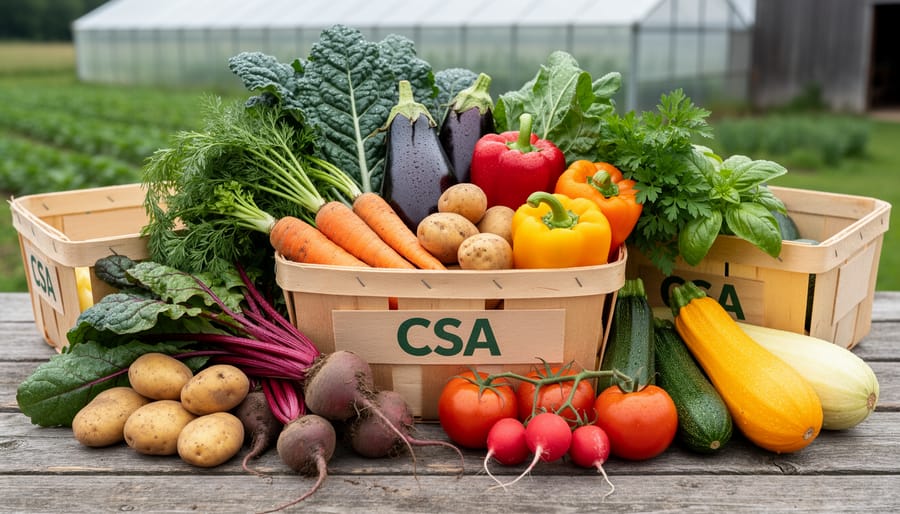
What Actually Comes in a CSA Share
Small Shares: Perfect for Singles and Couples
Small shares typically contain 4-6 varieties of seasonal produce weighing between 5-8 pounds total, perfect for households of one or two people. You might receive a head of lettuce, a bunch of carrots, some tomatoes, fresh herbs, and a couple of other seasonal vegetables each week. This size prevents waste while still offering enough variety to keep your meals interesting throughout the growing season.
These shares work beautifully for singles who cook regularly at home, young couples exploring local food systems, or anyone new to CSA memberships who wants to test the waters before committing to larger quantities. Many farmers have found that small shares attract urban dwellers with limited refrigerator space and busy professionals who appreciate pre-portioned quantities that match their weekly cooking habits. If you’re worried about overwhelming your kitchen with produce you can’t use in time, a small share offers the ideal introduction to farm-fresh eating while supporting sustainable agriculture in your community.
Medium and Large Shares: Feeding Families
Medium shares typically provide enough produce for 2-4 people, making them perfect for small families or couples who cook most meals at home. You might receive 8-12 items weekly, such as a head of lettuce, a bunch of kale, three pounds of tomatoes, two pounds of carrots, a cucumber, summer squash, peppers, herbs, and seasonal fruit. This translates to roughly 12-18 pounds of fresh produce.
Large shares are designed for families of 4-6 or households that seriously love their vegetables. Expect 12-16 different items weighing 18-25 pounds total. One family in Vermont shared how their large share from a local farm fed five people throughout the week with enough leftovers for preserving and sharing with neighbors. Large shares work beautifully if you’re committed to meal planning around what arrives each week, enjoy experimenting with preservation methods like freezing and canning, or want to embrace a more plant-forward lifestyle for your entire household.
Specialty Add-Ons: Eggs, Flowers, and More
Many CSAs offer specialty add-ons that let you customize your share beyond the standard vegetable box. Eggs from pasture-raised chickens are one of the most popular options, giving you farm-fresh breakfast staples delivered right alongside your greens. Some farms also offer seasonal flower bouquets, transforming your weekly pickup into a complete farm-to-table experience.
Other common add-ons include fresh herbs, mushrooms, honey, artisan bread, and even meat shares from livestock raised on the same property. These extras typically cost additional fees but provide incredible convenience and quality. When comparing CSAs, ask about available add-ons and their pricing structure. Some farms let you adjust add-ons weekly, while others require seasonal commitments. This flexibility can significantly increase the value you receive from your membership, especially if you’re already purchasing these items elsewhere at higher prices.
How CSA Pickup Frequency Affects Your Budget
Weekly Pickups: Maximum Freshness
Weekly pickups represent the heartbeat of most CSA programs, delivering produce at peak freshness straight from the field to your table. This schedule ensures you’re enjoying vegetables and fruits within days of harvest, maximizing both nutritional value and flavor. However, the weekly rhythm does require some planning. Most CSA members find success by dedicating Sunday evenings to meal planning around their upcoming share, creating a flexible menu that adapts to seasonal availability. Consider batch-cooking versatile items like roasted vegetables or soups early in the week to prevent waste. Sarah Chen, a third-year CSA member from Oregon, shares her approach: “I keep a running list of quick recipes that work with common CSA items like greens, root vegetables, and squash. When pickup day arrives, I already have a game plan.” The key challenge is managing abundance during peak season when your box overflows with zucchini or tomatoes. Freezing, fermenting, or swapping extras with fellow members transforms potential waste into preserved goodness for leaner months.

Biweekly and Alternative Schedules
Not every household needs weekly produce deliveries, and that’s where biweekly and alternative schedules shine. Many CSAs now offer flexible pickup frequencies that better align with different lifestyles and consumption patterns. Biweekly shares typically provide larger quantities every other week, making them ideal for couples, individuals who travel frequently, or families who supplement their CSA with grocery store shopping.
These less frequent options work particularly well for people just dipping their toes into the CSA experience. You’ll have more time to use up each delivery and won’t feel overwhelmed by constant produce arrivals. Some farmers have found that offering biweekly schedules actually reduces food waste among members who were previously struggling to keep up with weekly boxes.
Monthly or “flex” schedules are becoming increasingly popular too. These arrangements might let you choose four pickups throughout the growing season whenever it works best for your schedule. When comparing CSAs through finder tools, pay attention to frequency options and calculate the actual per-delivery cost. A biweekly share that costs slightly more might deliver better value if it means less wasted produce and a more sustainable commitment to supporting your local farm community.
Breaking Down CSA Pricing Models
Average Costs by Region and Season Length
CSA share prices vary significantly depending on where you live and how long your growing season lasts. In urban areas and coastal regions where living costs run higher, expect to pay between $600-$900 for a full share covering a typical 20-26 week season. Rural and Midwestern locations often offer more affordable options, with full shares ranging from $400-$650 for the same period.
Season length makes a big difference too. Southern farms with year-round growing seasons might offer 40-week shares at $800-$1,200, giving you incredible value per week. Northern farms with shorter growing windows typically run 16-20 week programs at proportionally lower prices, usually $350-$550 for full shares.
Half shares, perfect for smaller households, generally cost 50-60% of full share prices rather than exactly half. Many farmers also offer payment plans to spread costs across several months, making this investment in fresh, local food more manageable for your budget. When using a CSA finder tool, filter by your location and preferred season length to compare what local farms actually charge. Remember, you’re not just buying vegetables—you’re supporting a real farmer working hard to bring you the season’s best harvest each week.
What You’re Really Paying For
When you join a CSA, you’re investing in much more than vegetables. Your payment covers certified organic growing practices, which means farmers avoid synthetic pesticides and fertilizers while nurturing soil health through cover cropping and composting. You’re also supporting small-scale farmers who often hand-harvest produce at peak ripeness, something impossible with industrial agriculture.
The cost breakdown typically ranges from $2 to $4 per pound of produce, which compares favorably to organic grocery store prices of $3 to $6 per pound. However, the real value extends beyond price comparisons. Your membership helps farmers plan their season with financial security, invest in infrastructure, and stay rooted in your community. Many CSA farmers reinvest 60-70% of their income directly into local economies through equipment purchases, hiring seasonal workers, and buying supplies from nearby businesses.
Consider Sarah, a farmer in Vermont, who shared that CSA memberships allowed her to expand her operation from two to ten acres while employing three local high school students each summer. Your share supports these meaningful connections between land, farmer, and community while ensuring you receive the freshest possible produce, often harvested within 24 hours of pickup.
Payment Plans and Accessibility Programs
Many CSAs understand that upfront costs can be challenging and offer payment flexibility to make fresh, local food accessible to everyone. Look for farms that provide installment plans, allowing you to spread payments over several months rather than paying the full share cost at once.
Some programs offer work-trade arrangements where you can exchange a few hours of farm work each week for a reduced share price—a wonderful way to connect with your food source while learning sustainable farming practices. Additionally, many CSAs participate in programs offering subsidized shares for lower-income members, accepting SNAP benefits or partnering with community organizations to ensure everyone can enjoy farm-fresh produce. When using a CSA finder, filter for farms with these accessibility options to find a program that fits your budget and lifestyle.
Comparing CSAs Side-by-Side: What to Look For
Essential Questions to Ask Before Joining
Before committing to a CSA, ask the farm some key questions to ensure it’s the right fit for your lifestyle and needs.
Start with share contents: What vegetables and herbs are typically included throughout the season? How much variety can you expect each week? Does the farm offer add-ons like eggs, meat, or dairy products? Understanding what you’ll actually receive helps you plan meals and avoid surprises.
Inquire about flexibility options. Can you pause deliveries during vacations or donate your share to a local food bank? Some farms offer alternating week pickups or smaller share sizes for greater adaptability. What happens if you miss a pickup – can you collect the following week or arrange for someone else to grab your box?
Ask about pickup logistics: Where and when can you collect your share? Are multiple pickup locations or delivery options available? How long is the pickup window, and what if you’re running late?
Finally, check if the farm participates in CSA ratings programs or offers trial memberships. These details help you make an informed decision and set realistic expectations for your farm-fresh journey ahead.
Hidden Value: Beyond the Produce
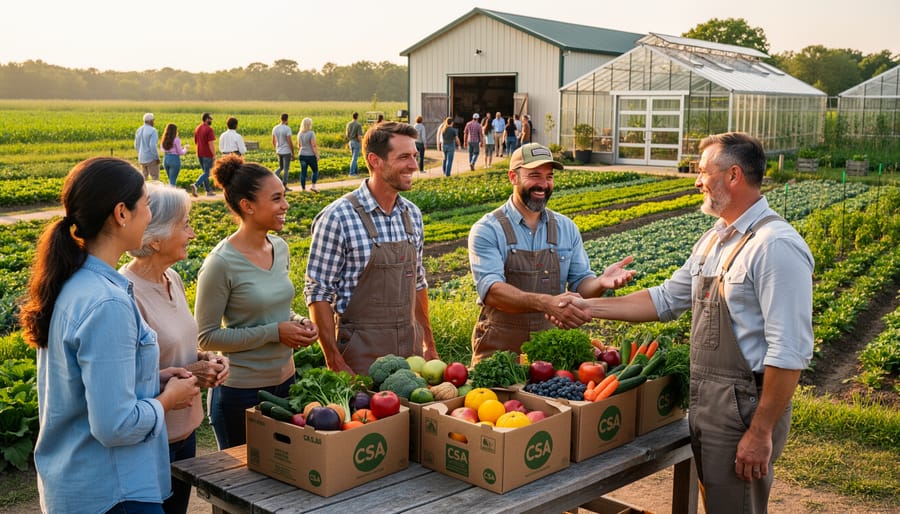
CSA memberships deliver so much more than weekly vegetables. Many farms invite members to visit during the growing season, offering a behind-the-scenes look at where your food actually comes from. These farm visits create meaningful connections between you and the people growing your produce, especially valuable for families with children curious about agriculture.
You’ll often receive seasonal recipes and preparation tips tailored to your weekly share, helping you make the most of unfamiliar vegetables like kohlrabi or garlic scapes. Some CSAs host cooking demonstrations, preservation workshops, and canning classes that teach valuable skills for sustainable living.
Community events like harvest festivals, volunteer days, and potluck dinners transform your membership into a social experience. You’ll meet like-minded neighbors who share your values around local food and environmental stewardship. For aspiring farmers, many CSAs offer educational opportunities including apprenticeships and hands-on learning about organic growing methods.
When comparing programs through a CSA finder, look beyond the produce list. Ask about member events, farm access, and educational offerings. These extras often justify price differences between similar programs and can make your membership truly enriching rather than just transactional.
Using a CSA Finder Tool Effectively
Finding the perfect CSA starts with using the right search tools. Online CSA finder directories make it simple to discover farms in your area by entering your zip code or city. These databases typically let you filter results based on several important factors that match your lifestyle and budget.
Start by narrowing down your location preferences. Most finders allow you to set a specific radius from your home, which helps you find farms with convenient pickup locations. Next, look at share sizes. Many directories let you filter by full shares, half shares, or even single-person portions. This is crucial for avoiding food waste and matching your household’s actual consumption.
Pricing filters help you stay within budget. Remember that CSA shares represent significant value when you calculate the cost per item, but upfront payments vary widely between farms. Some directories also include CSAs with openings right now, saving you time on farms with full waitlists.
Pay attention to specialized filters like organic certification, delivery options, winter shares, or add-ons like eggs and dairy. Interactive CSA maps can be particularly helpful for visualizing farm locations relative to your daily commute.
When reading listings, note the harvest season dates, pickup day flexibility, and what’s typically included each week. Look for farms that share their harvest calendars or sample box contents. Before committing, reach out with questions about payment plans, vacation holds, or trial periods. Many farmers love answering questions and appreciate your genuine interest in their growing practices. This personal connection often leads to the most satisfying CSA relationships.
Real Members Share Their CSA Experience
Sarah, a busy professional living alone, spent weeks comparing CSA options through online finder tools before choosing a farm fifteen minutes from her office. “I filtered by pickup locations near my commute and looked for half-shares since I worried about waste,” she explains. “My farm offers bi-weekly delivery, which is perfect for my schedule. I pay $18 per week, and the smaller portion means I actually use everything before it spoils.”
The Martinez family of four took a different approach when selecting their CSA. “We visited three farms during their open house days before deciding,” shares Miguel Martinez. “Seeing where our food grows mattered to us, and our kids loved meeting the farmers.” They chose a full share with weekly pickup for $35, appreciating that their farm includes kid-friendly vegetables and recipe cards. “The variety pushed us to try new things as a family, and we’ve cut our grocery bills significantly.”
Empty-nester couple Janet and Robert prioritized flexibility when using their CSA finder. “We travel frequently, so finding a farm that allowed vacation holds was essential,” Janet notes. They selected a standard share at $28 weekly with four pre-scheduled skip weeks throughout their six-month membership. “The finder tool let us filter by these specific features, saving us from calling dozens of farms individually.”
These members all emphasize one common tip: don’t just compare prices—consider logistics, household needs, and farm values when making your choice.
Finding the right CSA is an exciting journey that connects you directly to the farmers who grow your food. While the search process requires a bit of research—comparing share sizes, delivery schedules, and pricing structures—the reward is well worth the effort. You’ll gain access to the freshest seasonal produce, often picked just hours before it reaches your hands, while supporting sustainable farming practices in your community. Remember that the perfect CSA match looks different for everyone. A family of four might thrive with a full share and weekly pickups, while a single person could prefer a bi-weekly half share. Don’t hesitate to reach out to farmers with questions about their growing methods or share flexibility. Ready to start your fresh food adventure? Explore CSA programs in your area today and take that first step toward eating local, supporting your regional farmers, and building meaningful connections with the people who nourish your community.
