
These 7 HACCP Principles Keep Your Harvest Safe from Farm to Table
 darrell on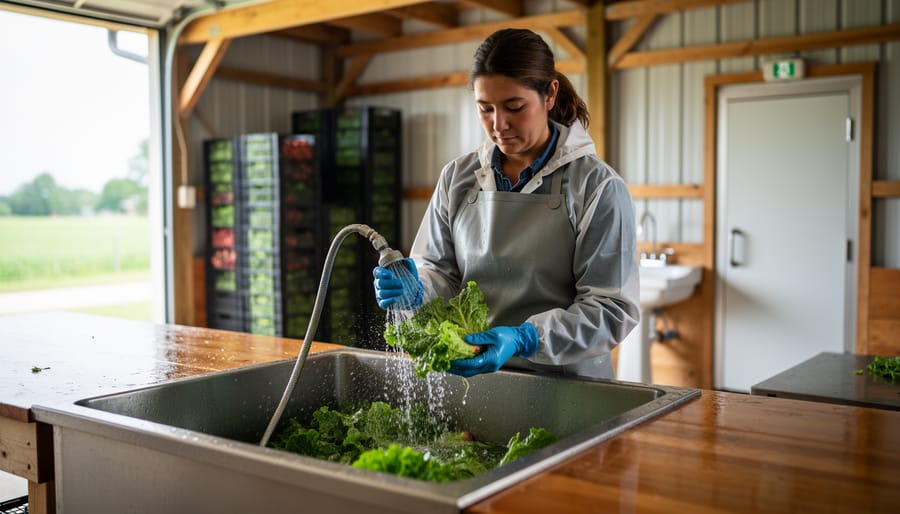
Food safety isn’t just for big processing plants—it belongs on your farm too. Whether you’re washing lettuce for your CSA boxes, storing tomatoes for market day, or preparing value-added products in your farm kitchen, the same principles that protect consumers at industrial facilities can safeguard your customers and your reputation. The Hazard Analysis and Critical Control Points (HACCP) system might sound intimidating, but it’s simply a logical, step-by-step approach to identifying where food safety risks exist in your operation and controlling them before they become problems.
For small-scale farmers and market gardeners, implementing HACCP doesn’t require fancy equipment or extensive documentation. It means understanding your workflow—from soil to sale—and recognizing critical moments where contamination could occur. Think of it as creating a safety net woven throughout your entire farm operation, complementing your existing post-harvest handling standards with systematic hazard prevention.
The seven HACCP principles follow a natural sequence that builds a complete food safety system. Master these in order, and you’ll transform how you think about producing safe food. You’ll identify potential hazards before they affect your harvest, establish control points that actually matter, and create simple records that demonstrate your commitment to quality. This practical framework adapts beautifully to farm-scale operations, protecting both the customers who trust your produce and the farming business you’ve worked hard to build.
Why HACCP Matters for Small Farms and CSA Operations
When you’re running a small farm or CSA operation, food safety might seem like something only big food companies need to worry about. But the reality is that farm reputation and customer wellbeing depend heavily on the care you take from harvest to delivery. HACCP (Hazard Analysis and Critical Control Points) provides a straightforward framework that helps protect both your customers and your business.
Fresh produce carries real risks when handling practices fall short. Contamination from soil, water, equipment, or human contact can introduce harmful bacteria like E. coli, Salmonella, and Listeria into leafy greens, tomatoes, melons, and other crops. According to the CDC, produce is responsible for nearly half of all foodborne illnesses in the United States. For small farms engaged in direct-to-consumer agriculture, one food safety incident can devastate years of relationship-building and trust.
The good news is that HACCP doesn’t require expensive equipment or complicated processes. The FDA’s HACCP Principles & Application Guidelines outline a methodical way of identifying where problems could occur in your post-harvest handling and putting safeguards in place. Whether you’re washing lettuce, packing tomatoes, or storing root vegetables, HACCP helps you think through potential hazards and create simple, effective controls. For example, a Vermont CSA farmer discovered that implementing basic HACCP steps, like monitoring wash water temperature and tracking cooling times, actually streamlined her packing process while giving members peace of mind about the safety of their weekly shares. This practical approach to food safety strengthens your operation without compromising the personal touch that makes small farms special.
Principle 1: Conduct a Hazard Analysis
The first HACCP principle lays the foundation for your entire food safety plan by systematically identifying potential dangers that could affect your fresh produce. Think of it as putting on detective glasses to spot anything that might compromise the safety of your harvest before it reaches your CSA members’ tables.
Hazards fall into three main categories. Biological hazards include harmful bacteria like E. coli or Salmonella that can contaminate produce through manure-amended soil, wildlife intrusion, or unsanitary handling practices. Chemical hazards might involve pesticide residue from neighboring conventional farms, cleaning solutions used improperly, or fuel contamination from farm equipment. Physical hazards are tangible objects like stones, glass fragments, jewelry pieces, or bits of packaging material that could accidentally end up in your harvest bins.
To conduct your hazard analysis effectively, walk through your entire operation step by step. Start at the field where irrigation water quality matters tremendously. Is your water source tested regularly? Move to harvest activities where unwashed hands or dirty tools could introduce contamination. Consider your washing and packing stations where contaminated wash water can actually spread pathogens from one batch to another if not properly managed.
One inspiring example comes from Green Valley Farm in Ontario, where farmer Sarah discovered through her hazard analysis that birds roosting above her packing area posed a contamination risk. She installed simple netting and repositioned her work stations, dramatically reducing potential hazards without expensive renovations.
Document everything you identify, rating each hazard’s likelihood and severity. This creates your roadmap for the remaining HACCP principles and shows your commitment to delivering safe, wholesome food to your community.
Principle 2: Identify Critical Control Points (CCPs)
Once you’ve mapped out your entire harvest-to-storage process, the next step is identifying your Critical Control Points, or CCPs. Think of these as the make-or-break moments in your operation where a food safety hazard could develop if something goes wrong. A critical control point is defined as a step at which control can be applied and is essential to prevent or eliminate a food safety hazard or reduce it to acceptable levels.
Critical Control Points differ from regular control points because they’re essential for food safety. For example, while trimming damaged leaves from lettuce is a good practice, it’s not a CCP. However, your final wash station where you remove dirt and potential pathogens is definitely a CCP that requires careful monitoring.
So how do you identify these critical points on your farm? Ask yourself: If this step fails, could it directly lead to a food safety problem? Is this my last chance to prevent or eliminate a hazard before the product reaches customers? If you answer yes, you’ve likely found a CCP.
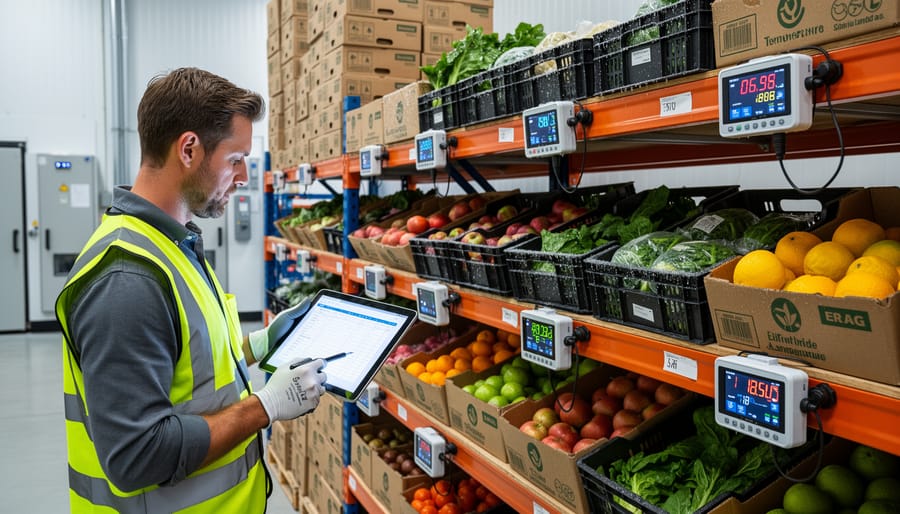
Common CCPs in farm operations include washing stations where produce gets its final cleaning, cooling processes that reduce temperatures quickly to prevent bacterial growth, and cold storage areas that maintain safe temperatures. For Ready Farms, a small lettuce operation outside Portland, identifying their refrigerated cooler as a CCP transformed their food safety approach. Owner Maria Chen shared that simply recognizing this critical point led them to install an alarm system that alerts them if temperatures rise above safe levels.
Remember, different farms will have different CCPs based on what they grow and how they handle it. A berry farm’s CCPs might look completely different from a root vegetable operation.
Proper washing stations are critical control points where farmers can prevent contamination and ensure food safety.
Principle 3: Establish Critical Limits
Once you’ve identified your Critical Control Points, the next step is setting measurable standards that tell you when things are safe and when they’re not. Think of critical limits as your safety boundaries—concrete numbers or conditions that separate acceptable from unacceptable.
For small-scale vegetable operations, these limits need to be specific and easy to monitor. Instead of saying “keep produce cold,” you’d specify “maintain cooler temperature between 34-38°F.” This precision removes guesswork and makes it clear when corrective action is needed.
According to food safety experts, critical limits must specify measurable parameters that can be consistently monitored and verified.
Here are common critical limits that work well for farm-scale operations:
| Critical Control Point | Critical Limit | Why It Matters |
|---|---|---|
| Wash water temperature | 50°F or below | Prevents bacteria from entering produce |
| Cooling time after harvest | Within 2 hours | Slows bacterial growth |
| Cold storage temperature | 34-38°F | Maintains freshness and safety |
| Sanitizer concentration | Per manufacturer specs | Ensures effective cleaning |
These standards should be based on scientific evidence or regulatory guidance. For wash water, the temperature matters because water warmer than your vegetables can actually pull bacteria inside through the pores. For leafy greens, that two-hour cooling window is critical for quality retention.
One Michigan farmer shared how implementing specific temperature limits transformed her CSA operation. By installing simple thermometers in her wash station and cooler, she could demonstrate to customers that safety wasn’t just a priority—it was measured and verified. The investment was minimal, but the confidence it built was invaluable. Your critical limits should be realistic for your operation while never compromising safety.
Principle 4: Establish Monitoring Procedures
Once you’ve identified your critical control points, the next step is keeping a watchful eye on them through consistent monitoring. Think of this as taking your farm’s vital signs—simple checks that help you catch potential issues before they become problems.
For small farm operations, monitoring doesn’t require expensive equipment or complicated systems. Start with temperature logs for your refrigeration units and wash water. A basic notebook with date, time, and temperature readings works perfectly. Check these at least twice daily, and you’ll quickly notice patterns or equipment issues that need attention.
Visual inspections are equally valuable and completely free. Train yourself and your team to spot signs of pest activity, equipment wear, or contamination risks during daily routines. Create a simple checklist that covers your packing area cleanliness, water clarity, and produce quality before distribution.
Water testing deserves special attention since it touches so much of your operation. Schedule regular testing based on your water source—well water might need monthly bacterial testing, while municipal supplies require less frequent monitoring. Keep a dedicated binder with all test results and inspection records.
Here’s a tip from successful farmer Maria Rodriguez, who runs a thriving CSA in Vermont: “I use my smartphone to take quick photos of temperature gauges and my packing area setup. It creates a visual record without extra paperwork, and I can easily share updates with my food safety team.”
The key is consistency over complexity. Choose monitoring methods you’ll actually maintain throughout the growing season. Document everything in a way that makes sense for your operation—whether that’s traditional paper logs, spreadsheets, or mobile apps designed for farm management.
Principle 5: Establish Corrective Actions
Even with the best monitoring systems in place, things can go wrong on a farm. Principle 5 is all about having a clear game plan for when critical limits aren’t met. Think of corrective actions as your emergency response protocol—a set of predetermined steps that protect food safety and get operations back on track quickly.
When monitoring reveals a deviation, your corrective action plan should address three key areas: what to do with the affected product, how to fix the immediate problem, and how to prevent it from happening again.
Let’s look at practical farm scenarios. If your walk-in cooler temperature rises above 40°F, your corrective actions might include: moving produce to a backup cooler immediately, checking the cooling unit for malfunctions, and evaluating whether the affected produce is still safe to distribute or needs to be discarded. If wash water testing shows contamination, you’d stop washing operations, drain and sanitize the system, verify water quality before resuming, and investigate the contamination source.
When freshly harvested greens sit too long before reaching cold storage, corrective actions could include implementing a harvest scheduling adjustment, adding interim cooling stations in the field, or reassigning staff to speed up the post-harvest workflow.
Documentation is critical here. Record what went wrong, when it happened, what actions you took, and how you verified the problem was resolved. Sarah Martinez, who runs a certified organic vegetable CSA in Vermont, keeps a simple corrective action log in her pack shed. “It’s saved us multiple times,” she shares. “We can spot patterns and fix recurring issues before they become serious problems.”
Principle 6: Establish Verification Procedures
Think of verification as stepping back to check the big picture of your food safety system. While monitoring is your day-to-day watch (like checking temperatures during harvesting), verification confirms that your entire HACCP plan actually works as intended.
Verification involves several activities that happen less frequently but are equally important. First, review your HACCP plan regularly—at least annually or whenever you introduce new crops, change processes, or experience a food safety issue. Sarah Chen, who runs a small vegetable CSA in Oregon, schedules her reviews every six months during her slower seasons, ensuring her procedures still make sense for her operation.
Equipment calibration is another key verification step. Your thermometers, pH meters, and scales need regular testing to ensure accuracy. A thermometer that reads incorrectly could mean you’re storing produce at unsafe temperatures without knowing it. Most small farms calibrate equipment monthly using simple ice-water tests or calibration solutions.
Testing procedures provide scientific confirmation that your system works. This might include periodic water testing from your irrigation source or swab tests on your washing station surfaces. While this sounds technical, many county extension offices offer affordable testing services specifically for small farms.
Finally, conduct periodic audits—even informal ones. Walk through your entire process with fresh eyes, or better yet, invite a fellow farmer or food safety expert to review your practices. These audits often reveal small improvements that make big differences in food safety.
Documentation of all verification activities keeps your system accountable and helps you spot patterns or problems over time.
Principle 7: Establish Record-Keeping and Documentation
The final principle brings everything together by creating a paper trail that demonstrates your farm’s commitment to food safety. Think of documentation as your farm’s food safety story—it shows what you’re doing, when you’re doing it, and how you’re keeping your produce safe for the families you serve.
Start with the essentials. You’ll want to maintain temperature logs if you’re storing produce in coolers, cleaning and sanitizing schedules for your wash stations and equipment, records of any corrective actions when something goes wrong, and notes from staff training sessions. Keep supplier information for inputs like organic fertilizers or seeds, along with any certifications you receive. These records prove you’re following your food safety plan consistently.
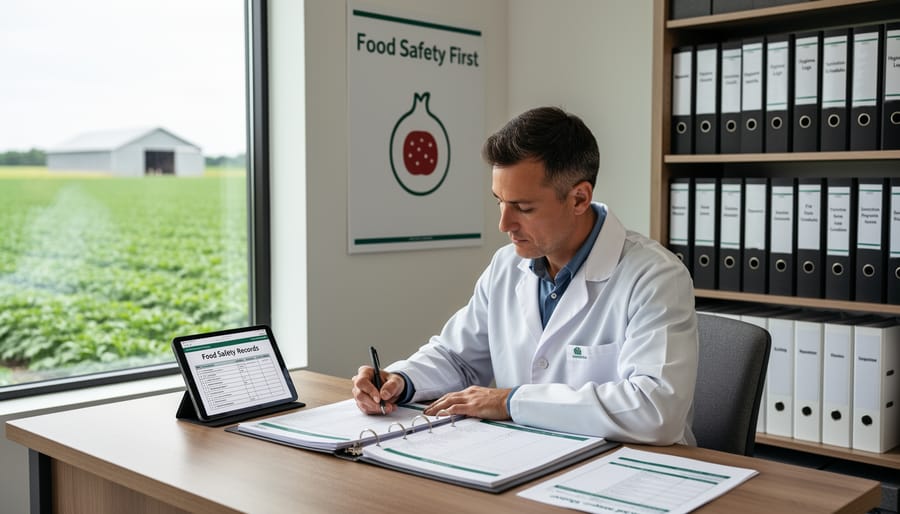
For small farms, simplicity works best. A dedicated three-ring binder kept in a clean, dry location can serve as your documentation hub. Use plastic sheet protectors to shield records from dirt and moisture—farm environments can be tough on paperwork. Create simple checklists and forms that take just minutes to complete daily.
Digital options work wonderfully too. Free apps or basic spreadsheet templates on a tablet let you record information quickly while working. Many farmers photograph their paper logs weekly and store them in cloud folders as backup.
The magic number for retention is two years minimum, though keeping records longer provides valuable patterns about your growing seasons and operations. One organic farmer in Vermont shares that reviewing her three years of harvest logs helped identify the perfect timing for her tomato plantings, improving both yield and quality.
Remember, good documentation isn’t about creating mountains of paperwork—it’s about having simple, practical records that protect your customers and your farm’s reputation.
Putting It All Together: A Day in the Life of HACCP on Your Farm
Let’s follow Sarah, a small-scale organic farmer, through her Wednesday harvest. Before dawn, she reviews her Hazard Analysis (Principle 1) notes—wildlife near the lettuce patch means extra vigilance today. At her Critical Control Points (Principle 2), she checks the wash water temperature: 34°F, perfectly within her Critical Limits (Principle 3) of 32-38°F to prevent bacterial growth.
As workers arrive, Sarah implements her Monitoring Procedures (Principle 4). She records the water temperature every 30 minutes and watches her team follow proper handwashing protocols. When the thermometer reads 40°F mid-morning, her Corrective Actions (Principle 5) kick in immediately—she adds ice to bring temperatures back down and sets aside those greens for rewashing.
Throughout the day, her Verification Procedures (Principle 6) ensure everything runs smoothly. She spot-checks sanitizer concentration and reviews yesterday’s temperature logs. Every observation goes into her Record-Keeping system (Principle 7)—a simple binder with daily checklists and temperature sheets.
By afternoon, Sarah’s produce is properly cooled and packed for the farmers market or CSA pickup. Her HACCP system works quietly in the background, protecting her customers while giving her peace of mind. What once seemed overwhelming now feels like second nature—just part of growing food safely and responsibly.
Implementing the seven HACCP principles might seem overwhelming at first, but here’s the truth: these food safety practices are absolutely achievable for farms of all sizes. Whether you’re running a small backyard CSA or managing several acres, protecting your customers through proper food safety isn’t just good practice—it’s essential for building trust and safeguarding your farm’s reputation.
The beauty of HACCP is that you don’t need to tackle everything at once. Start small. Maybe begin by identifying your critical control points during harvest, then gradually build your monitoring and record-keeping systems as you grow more comfortable. Sarah Jenkins, a small-scale organic farmer in Vermont, started with simple handwritten logs and now has a streamlined system that takes just minutes each day to maintain.
Numerous resources are available to help you on this journey, from cooperative extension offices to online food safety courses designed specifically for small farms. The peace of mind that comes with knowing you’re doing everything possible to keep your customers safe is invaluable.
Your farm’s commitment to food safety reflects your dedication to quality and customer care. Take that first step today—review your current practices, identify one area to improve, and begin building your HACCP plan. Your customers, your community, and your farm’s future will thank you.