
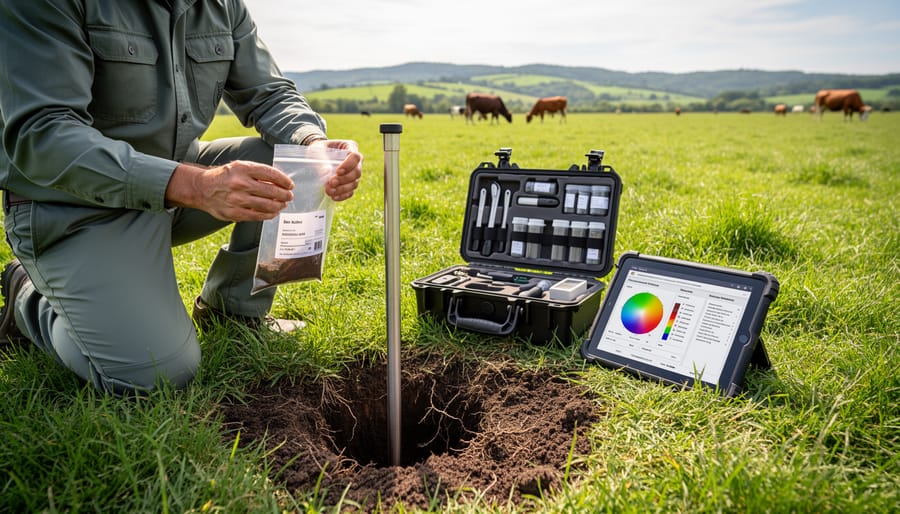
Test your soil before adding anything to your pastures—a $20 soil test reveals exactly which nutrients your land needs and saves you from wasting money on unnecessary amendments. Many small-scale graziers discover their pastures lack phosphorus or potassium rather than nitrogen, fundamentally changing their fertilization approach.
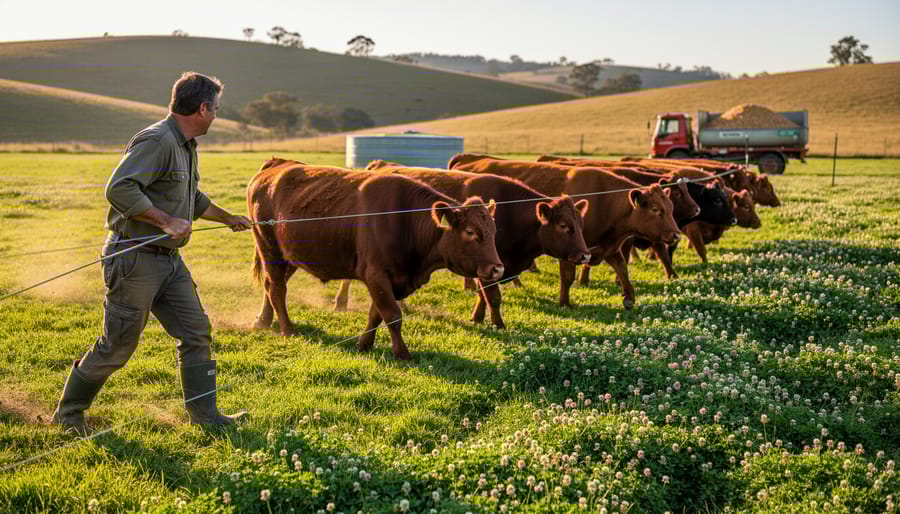
Start with what you already have by managing manure distribution through rotational grazing. Moving livestock frequently across paddocks naturally fertilizes your pastures while preventing nutrient hot spots near water sources or shade areas. This zero-cost method builds soil health while improving forage quality.
Consider composted chicken manure as your first purchased input if soil tests show nitrogen deficiency—it releases nutrients slowly, costs less than commercial fertilizers, and improves soil structure with each application. Apply 1-2 tons per acre in early spring or split applications between spring and late summer for cool-season grasses.
Time your fertilization with plant growth cycles rather than calendar dates. Cool-season grasses like orchardgrass and fescue respond best to nutrients in early spring and again in late summer, while warm-season grasses thrive with mid-spring applications after soil temperatures reach 60°F.
Build long-term fertility through frost-seeding legumes like clover and vetch into existing pastures each February or March. These plants capture atmospheric nitrogen and share it with neighboring grasses, reducing your fertilizer needs by 50-100 pounds of nitrogen per acre annually. Sarah Chen, who runs a 30-cow grazing operation in Virginia, eliminated her fertilizer budget entirely within three years by establishing a robust clover-grass mix and tightening her rotation schedule to 2-day moves.
Why Your Pasture Needs More Than Just Grass and Good Intentions
Picture your pasture as a bank account. Every time your animals graze, they’re making withdrawals—pulling nutrients from the soil to build muscle, produce milk, and grow healthy coats. The grass itself acts as the teller, converting soil minerals into edible forage. But here’s the catch: without regular deposits, that account runs dry faster than you might think.
The nutrient cycle in healthy pastures works like a well-choreographed dance. Plants draw nitrogen, phosphorus, potassium, and trace minerals from the soil. Animals eat the plants, and some nutrients return through manure. Sounds simple, right? The problem is that this cycle leaks. When you sell meat, milk, or wool, those nutrients leave your farm permanently in the bodies and products of your animals. Meanwhile, nutrients also escape through leaching, erosion, and even the wind carrying away dried manure.
Continuous grazing intensifies this depletion. Without proper rest periods, grass plants can’t develop deep root systems that mine minerals from lower soil layers. The soil structure breaks down, reducing its ability to hold both nutrients and water. What started as lush, diverse pasture gradually transforms into tired ground dominated by weedy species that animals won’t even touch.
The connection between sustainable soil health and forage quality is direct and undeniable. Nutrient-poor soil produces nutrient-poor grass. Animals grazing depleted pastures need more forage to meet their nutritional needs, which means more grazing pressure and further degradation. It’s a downward spiral that affects everything from animal health to your farm’s profitability.
Take Sarah, a grazier from Ontario, who noticed her cattle needed supplemental minerals despite abundant grass. Soil testing revealed severe phosphorus and sulfur deficiencies. By addressing these gaps through targeted fertilization, she saw dramatic improvements in both pasture vigor and herd condition within a single growing season. Her story illustrates a fundamental truth: good intentions can’t replace the minerals your soil is missing.
Reading What Your Pasture Is Actually Telling You
When and How to Test Your Soil
Testing your soil at the right time makes all the difference in getting accurate results. The best window is late summer through early fall, after the growing season but before you need to make fertilization decisions for next year. Early spring works too, though you’ll want to test before applying any amendments.
For sampling, grab a clean bucket and a soil probe or spade. Walk a zigzag pattern across your pasture, taking 10-15 cores from the top 4 inches of soil. Mix them thoroughly in your bucket, then send about two cups to the lab. Avoid sampling near gates, water troughs, or areas where animals congregate, as these spots aren’t representative of your overall pasture health.
Choose a lab that specializes in agricultural testing and specifically offers pasture analysis. Many university extension services provide affordable testing with recommendations tailored to your region’s soil conditions. Request a test that includes pH, nitrogen, phosphorus, potassium, and organic matter content.
Sarah, a third-generation farmer in Vermont, shares this tip: “Testing each paddock separately helped me discover nutrient variations I never knew existed. Now I fertilize strategically instead of treating everything the same, saving money and boosting productivity.”
Spotting Deficiencies Before They Become Problems
Your pasture will tell you what it needs if you know how to listen. The key is catching nutrient deficiencies early, before they significantly impact your forage quality and animal health.
Start by observing grass color and vigor. Healthy, well-nourished pasture displays rich green coloration and steady growth throughout the growing season. Pale, yellowish grass often signals nitrogen deficiency, while purplish tints can indicate phosphorus needs. Stunted growth or thin stands suggest multiple nutrient limitations that require attention.
Weed patterns provide valuable diagnostic clues too. Dense patches of broadleaf weeds like dandelions, plantain, or dock often indicate compacted soil or imbalanced fertility. Certain weeds thrive where specific nutrients are lacking – for example, clovers naturally fix nitrogen but may dominate when phosphorus levels are adequate while nitrogen isn’t. While some beneficial weeds add diversity, overwhelming weed pressure usually means your desirable grasses aren’t getting what they need to compete effectively.
Walk your pastures regularly during the growing season, paying attention to uneven growth patterns. Bare patches, areas where livestock consistently avoid grazing, or sections that green up later than others all warrant investigation. Take notes and photos to track changes over time.
Emma Rodriguez, who manages a small grazing CSA in Vermont, conducts weekly pasture walks with a simple notebook. This practice helped her identify a calcium deficiency in one paddock before it affected milk production. She says, “My pasture became my teacher once I learned to really see it.”
Fertilization Options That Make Sense for Small-Scale Graziers
Organic Amendments: Working With What Nature Provides
Organic amendments offer a time-tested approach to pasture fertilization that works in harmony with your soil’s natural systems. While they release nutrients more slowly than synthetic options, they provide lasting benefits that build soil health season after season.
Composted manure stands as the workhorse of organic pasture management. Well-aged cattle or horse manure delivers a balanced nutrient profile while improving soil structure and water retention. Apply 2-4 tons per acre annually, ideally in early spring before active growth begins. Fresh manure requires caution due to high nitrogen content that can burn plants and harbor pathogens, so always let it cure for at least six months before spreading.
Raw manure from your own livestock offers a cost-effective solution for small operations. Many graziers successfully spread aged manure during winter months when pastures are dormant, allowing weathering to mellow the nutrients before spring growth kicks in. Just remember that dragging manure across actively grazed areas requires proper timing to avoid parasite cycles.
Bone meal and blood meal provide targeted nutrient boosts when soil tests reveal specific deficiencies. Bone meal supplies phosphorus at rates of 200-400 pounds per acre, particularly valuable for establishing legumes. Blood meal delivers quick nitrogen but costs more than manure-based options, making it better suited for small problem areas rather than entire pastures.
One Wisconsin farmer shared how she transformed tired pastures by spreading two inches of municipal compost each fall. Within three years, her forage production doubled and earthworm populations exploded. Her secret? Patience and consistency rather than expecting overnight miracles.
Set realistic expectations with organic amendments. You’re feeding soil biology first, which then feeds your plants. This slower process means visible results may take a full growing season, but the long-term payoff in soil health makes the wait worthwhile.
Lime and Mineral Amendments: The Foundation No One Talks About
Before you spread a single bag of fertilizer, there’s something even more fundamental to address: your soil’s pH and mineral balance. Think of lime and minerals as the foundation of a house—without them, everything else you build won’t stand strong.
Most pasture grasses thrive between 6.0 and 7.0 pH. When soil becomes too acidic, nutrients get locked up where plant roots can’t reach them, no matter how much fertilizer you apply. That’s where agricultural lime comes in. A simple soil test will tell you if liming is needed, and applying it in fall gives it time to work its magic before spring growth kicks in.
But pH is just the beginning. Calcium, often delivered through lime, strengthens plant cell walls and helps legumes like clover fix nitrogen more efficiently. Sulfur plays a quiet but crucial role in protein synthesis and works hand-in-hand with nitrogen. Many graziers find their pastures transform after addressing sulfur deficiencies, especially on sandy soils.
Don’t overlook trace elements like boron, copper, and selenium. While needed in tiny amounts, these minerals impact everything from legume nodulation to animal health. Sarah Martinez, a Georgia grazier, discovered her pasture’s slow growth wasn’t a nitrogen problem at all—a soil test revealed boron deficiency. After a targeted application, her clover stands doubled.
The beauty of getting your foundation right? You’ll need less fertilizer overall, saving money while building genuinely healthy, resilient pastures. Start with that soil test—it’s the best investment you’ll make.
Legumes as Living Fertilizer Factories
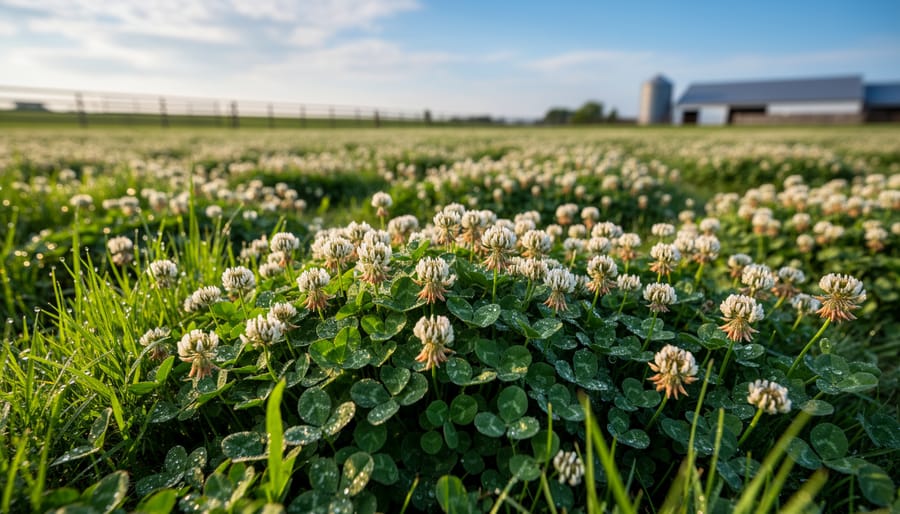
Nature has provided pasture farmers with an elegant solution to one of their biggest expenses: nitrogen fertilizer. Legumes like clover, alfalfa, vetch, and birdsfoot trefoil essentially manufacture their own nitrogen through a remarkable partnership with soil bacteria. These plants host special rhizobia bacteria in tiny nodules on their roots, which convert atmospheric nitrogen into a plant-usable form. When these legumes grow, die back, or get grazed, they release this captured nitrogen into the soil, feeding neighboring grasses at no cost to you.
The numbers are impressive. A healthy stand of white clover mixed into your pasture can fix 100-200 pounds of nitrogen per acre annually, while alfalfa in a rotation can provide even more. This biological fertilizer factory works around the clock during the growing season, reducing or completely eliminating your need for purchased nitrogen fertilizers.
Beyond nitrogen production, legumes deliver additional benefits that make them indispensable for sustainable pastures. Their deep taproots break up compacted soil layers, improving water infiltration and drought resilience. These same roots access minerals from deeper soil horizons, bringing nutrients to the surface where shallow-rooted grasses can use them. Livestock also benefit directly, as legumes typically contain higher protein levels than grasses, improving animal nutrition and weight gains.
Getting started is straightforward. For most pastures, frost-seeding white or red clover in late winter requires minimal equipment and investment. Sarah Mitchell, who manages a grazing operation in Vermont, transformed her pastures by introducing clover five years ago. “My fertilizer bills dropped by 60 percent the first year,” she shares. “The cattle performance actually improved, and I’m building soil health instead of just mining it.”
Aim for a pasture composition of 20-30 percent legumes mixed with grasses for optimal nitrogen fixation and grazing balance.
Timing Your Applications for Maximum Impact
Getting your fertilization timing right can make all the difference between a thriving pasture and wasted effort. The key is synchronizing your applications with both your grass’s natural growth cycles and your livestock’s grazing patterns.
Spring fertilization typically delivers the biggest bang for your buck. Apply fertilizer in early spring when soil temperatures reach about 50°F and grass begins actively growing. This timing gives plants the nutrients they need during their most vigorous growth phase, building forage reserves for the entire grazing season. Sarah Martinez, who runs a sheep grazing CSA in Vermont, schedules her spring applications for mid-April. “I wait until I see that first flush of green,” she explains. “The grass is hungry then, and my animals aren’t out yet, so nothing gets wasted.”
Fall applications offer a second opportunity, particularly if you’re using slower-release organic amendments like compost. Apply six to eight weeks before your first expected frost. This timing allows nutrients to establish in the soil over winter, ready to fuel early spring growth. Fall is also ideal for lime applications, giving it time to adjust soil pH before the next growing season.
Coordinating with your rotational grazing plans requires some strategic thinking. Always fertilize paddocks right after grazing and moving livestock to the next area. This gives the grass a recovery period without animals compacting treated soil or consuming excess nutrients. Plan for at least a three-week rest period before grazing freshly fertilized areas, though organic amendments may allow shorter waiting times.
Split applications work beautifully for budget-conscious farmers. Rather than applying all your fertilizer at once, divide it into smaller doses throughout the growing season. This approach matches nutrient availability with plant uptake, reduces waste, and spreads costs over multiple months. Many successful graziers apply half their annual fertilizer in spring and the remainder in early summer after their first rotation cycle completes.
Making Your Animals Part of the Fertility Solution
Your livestock can be your best fertilization crew—if you know how to direct them. Instead of purchasing expensive inputs, you can harness the natural fertilization power of grazing animals through strategic management that puts nutrients exactly where you need them.
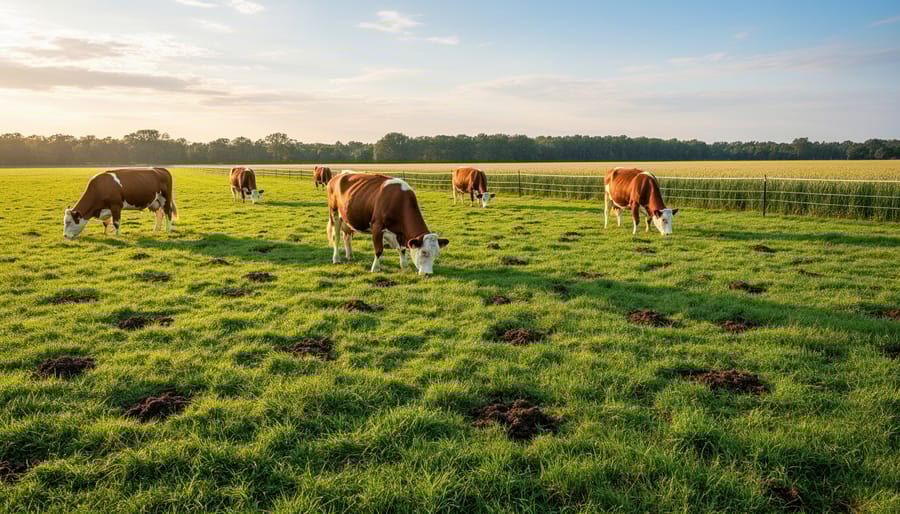
The secret lies in understanding that your animals are mobile fertilizer spreaders. Each cow, sheep, or goat deposits approximately 12-15 manure pats per day, along with nitrogen-rich urine. When animals stay in one spot too long, nutrients concentrate in waste areas while other parts of your pasture go hungry. But through careful planning, you can transform this pattern into an asset.
The rotational grazing benefits extend far beyond just grass management—they’re fundamental to pasture fertility. By moving animals to fresh paddocks every 1-3 days, you create an even distribution of manure and urine across your entire pasture. This regular movement prevents overgrazing while ensuring that nutrients return to the soil uniformly.
Consider Sarah Chen’s 15-acre Oregon farm, where she rotates her mixed herd of cattle and chickens through paddocks. “I was spending thousands on fertilizer until I realized my animals were already providing it,” she explains. “Now I just focus on moving them strategically, and my soil tests keep improving year after year.”
Effective livestock management means matching stocking density to your fertility goals. Higher density for shorter periods concentrates nutrients, while lower density spreads them more thinly. Many farmers find that following cattle with poultry helps break up manure pats and distribute nutrients even more effectively, while adding valuable nitrogen through chicken droppings.
The timing matters too. Grazing during active growing seasons ensures nutrients become available when plants need them most, maximizing recycling efficiency.
A Real CSA’s Journey to Better Pasture Fertility
When Sarah Martinez took over Green Meadow CSA in Vermont, her 15-acre pasture told a troubling story. Sparse grass growth, declining animal health, and bare patches had become the norm. Her 25 sheep and rotating flock of laying hens weren’t thriving, and her 40 CSA members were starting to notice the difference in meat and egg quality.
The turning point came after a comprehensive soil test revealed severely depleted phosphorus levels and a pH of 5.2, far too acidic for optimal grass growth. Sarah’s pastures had been grazed for years without any fertility inputs, and the soil was exhausted.
Her solution was both strategic and budget-conscious. She started with lime application to raise the pH, spreading two tons per acre in early fall. The following spring, she divided her pasture into smaller paddocks and began a rotational grazing system that gave each section adequate rest between grazing periods.
For fertilization, Sarah chose a hybrid approach. She applied composted chicken manure from her own flock at 1.5 tons per acre on half the pasture, while treating the other half with a balanced organic fertilizer blend containing rock phosphate and greensand for slow-release minerals. She also introduced white clover into her seed mix, which naturally fixed nitrogen in the soil.
The results were remarkable. Within 18 months, Sarah saw a 60 percent increase in forage density. Her animals gained weight more efficiently, and egg production jumped by 25 percent. The improved pasture quality meant she could reduce supplemental feed costs by nearly 40 percent during the growing season.
Perhaps most telling was the feedback from her CSA members. They noticed richer-tasting eggs and better-quality meat, validating that healthy soil truly does create better food. Sarah now conducts soil tests annually and maintains a rotating fertilization schedule that keeps her pastures productive while building long-term soil health.
Building Your Pasture Fertility Plan on a CSA Budget
Year One Priorities: Start Here
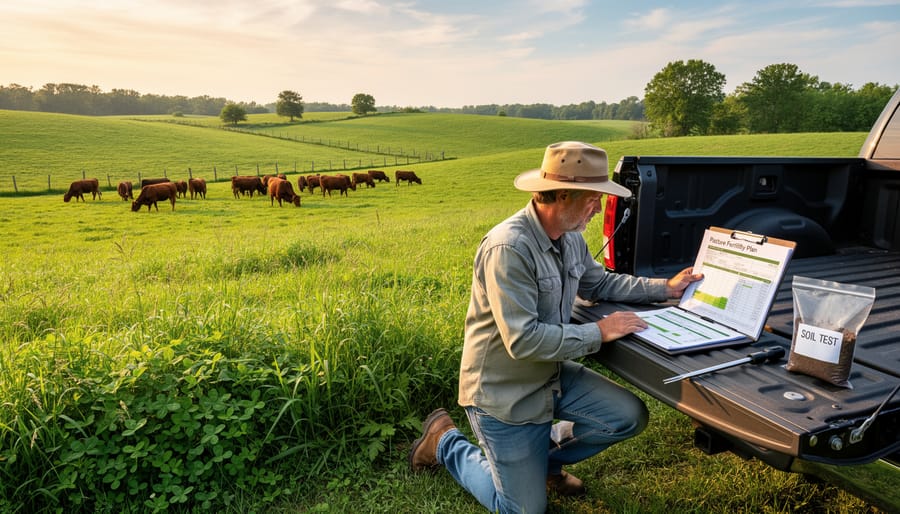
Starting your pasture fertility journey doesn’t require massive upfront investments or complicated strategies. Focus on understanding what you’re working with first. Get a baseline soil test within your first month—this single step prevents wasted money on unnecessary amendments and reveals exactly where your pastures need help. Most county extension offices offer affordable testing that provides actionable results.
Your first quick win is addressing any glaring deficiencies the soil test reveals, particularly pH issues. Lime applications can transform struggling pastures within a single growing season, and it’s one of the most cost-effective interventions available. Meanwhile, establish a simple rotation grazing pattern if you haven’t already. Even basic paddock divisions improve nutrient cycling as animals distribute manure more evenly.
Consider Sarah Chen, a first-year grazier in Vermont, who focused solely on soil testing and lime application her first season. “I was tempted to buy expensive fertilizers immediately, but addressing our acidic soil first meant everything else worked better,” she shares. Her pastures showed visible improvement within months, setting a solid foundation for future fertility investments. Keep it simple, measure your baseline, fix the fundamentals, and watch your pastures respond.
Long-Term Thinking for Sustainable Soil Health
Building healthy pastures isn’t about quick fixes—it’s about creating a long-term vision that works with your land and your wallet. Most successful graziers think in 3-5 year cycles, allowing pastures to respond gradually while spreading costs over manageable timeframes.
Start by mapping your pastures and identifying priority areas. Maybe one paddock gets the most use during calving season, or another section has visibly poor growth. Focus your initial investments where you’ll see the biggest returns, then expand year by year as cash flow allows.
A practical approach might look like this: Year one, conduct soil tests and address critical pH issues with lime. Year two, tackle phosphorus deficiencies in your most productive paddocks. Year three, introduce compost applications or add diversity with legumes. This staggered strategy prevents budget overwhelm while building momentum.
Consider Emily Rodriguez, a Montana rancher who transformed depleted grassland over four years. She started with just lime and grazing rotation adjustments, then added compost from local organic farms in year two. By year four, her pasture productivity doubled, and feed costs dropped by 40 percent. “Patience paid off,” she shared. “Each season built on the last.”
Remember that improvements compound over time. Better soil structure means increased water retention, which reduces drought stress. Healthier pastures support more diverse plant communities, which naturally cycle nutrients more efficiently. Your investment today creates resilience that pays dividends for years ahead, making your operation more sustainable and profitable.
Pasture fertilization isn’t just an expense—it’s a strategic investment in the health and longevity of your entire CSA operation. When you nourish the soil, you’re creating a foundation that supports vigorous grass growth, healthier livestock, and ultimately, a more profitable and sustainable business model. The beauty of this approach is that you don’t need to transform your pastures overnight. Start with a single paddock or a manageable test area, apply what you’ve learned about soil testing and fertilization timing, and carefully observe the results. Notice how your animals gravitate toward better-nourished areas and how recovery times improve after grazing.
Many successful graziers have built thriving operations by starting small and scaling up based on what works. One farmer in Vermont began with just composted manure on two acres and gradually expanded her fertilization program as she saw increased stocking rates and fewer health issues in her flock. Remember, resilient pastures act as your farm’s solar panels, converting sunlight into nutrient-dense forage that feeds your animals and nourishes your community. By prioritizing soil health today, you’re building a regenerative system that will support generations of grazing to come. Your pastures—and your CSA members—will thank you.
