Daily Archives

2 Articles

Why Your CSA Jam Won’t Set (And the Pectin Science That Fixes It)

Posted by darrell on
0
Culinary and Food Preservation
Why Your CSA Jam Won’t Set (And the Pectin Science That Fixes It)

Match your pectin type to your fruit’s natural pectin level—use regular pectin with high-pectin fruits like apples and citrus, but reach for low-sugar or no-sugar pectin when working with strawberries, peaches, or other low-pectin CSA favorites. Test your fruit’s readiness by mixing one tablespoon of rubbing alcohol with one tablespoon of raw juice; high-pectin fruit forms a solid clump, while low-pectin fruit creates small, separate pieces.

Extract homemade pectin from apple cores and peels saved throughout the season by simmering them in water for 40 minutes, straining, and freezing in measured portions—a perfect zero-waste solution that aligns with your CSA values and gives you complete control over your preserving process. This method works beautifully alongside other food storage techniques for maximizing your harvest.

Calculate pectin amounts based on your desired set firmness rather than blindly following package directions. Soft spreads need less pectin, while firm jellies require the full recommended amount. Add pectin at the right temperature—traditional pectin demands a rolling boil, while low-methoxyl pectin activates at lower temperatures with calcium water.

Understanding how pectin works transforms frustrating preserve failures into consistent successes. When you know why your strawberry jam stayed runny or your grape jelly turned rubbery, you gain the confidence to experiment with each week’s CSA fruit share. Whether you’re processing a bumper crop of raspberries or creating small-batch preserves from heirloom plums, mastering pectin science ensures your homemade jams and jellies capture the pure essence of local, organic fruit.

What Pectin Actually Does in Your Jam Jar
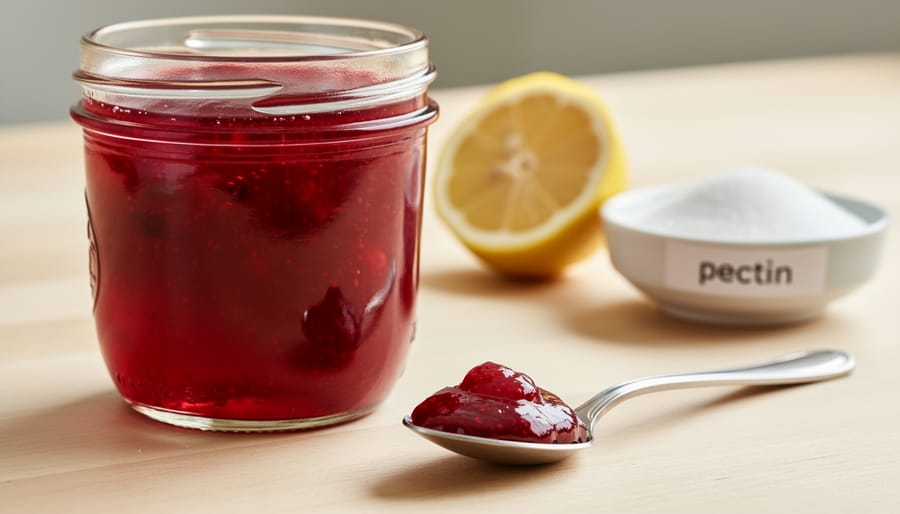
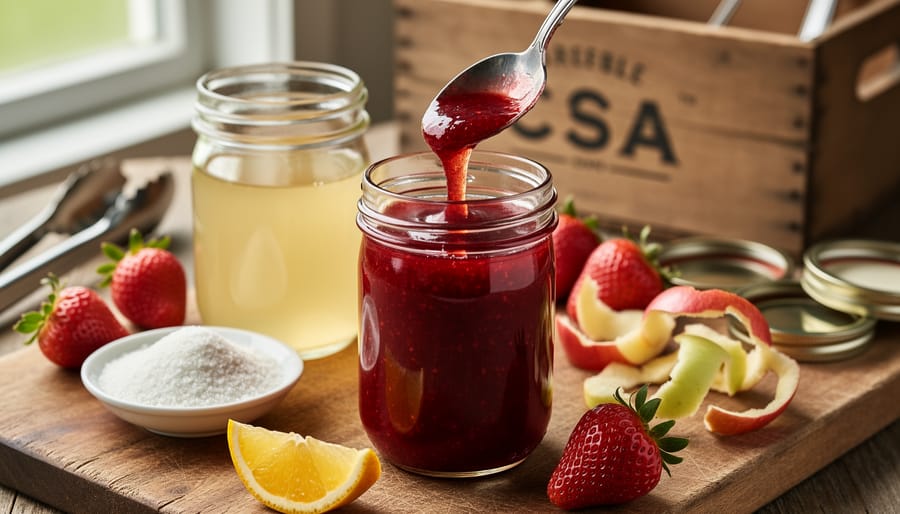
Mason jar of perfectly set strawberry jam with wooden spoon showing gel consistency
Properly set jam with ideal gel consistency demonstrates the successful interaction of pectin, sugar, and acid.

The Natural Pectin in Your CSA Fruit Box

Opening your CSA box each week is like receiving a surprise gift from nature, and understanding which fruits are naturally pectin-rich can transform your jam-making adventures. High-pectin fruits are your allies in creating perfectly set preserves without adding commercial pectin.

Apples, especially tart varieties like Granny Smith, top the list of pectin powerhouses. Their cores and peels contain the highest concentration, making them perfect for creating natural pectin stock. Cranberries, currants, and underripe plums also pack substantial pectin levels. When your CSA delivers these gems, you’re in excellent shape for firm-set jams and jellies.

Citrus fruits deserve special mention. The white pith and seeds of lemons, oranges, and grapefruits are pectin goldmines. Many jam-makers keep citrus peels specifically to boost pectin in other recipes.

On the other end of the spectrum, you’ll find low-pectin favorites like strawberries, peaches, cherries, and ripe pears. These sweet summer treasures taste amazing but need a helping hand to achieve that spreadable consistency. Blueberries and apricots fall somewhere in the middle, containing moderate pectin levels.

Here’s a practical tip from experienced preservers: combine high and low pectin fruits in your recipes. Mixing strawberries with some chopped apple creates a naturally balanced jam. This approach honors the whole-fruit philosophy many CSA members embrace while reducing waste. Understanding your fruit’s pectin personality helps you work with nature rather than fighting against it, creating delicious preserves that celebrate each season’s bounty.
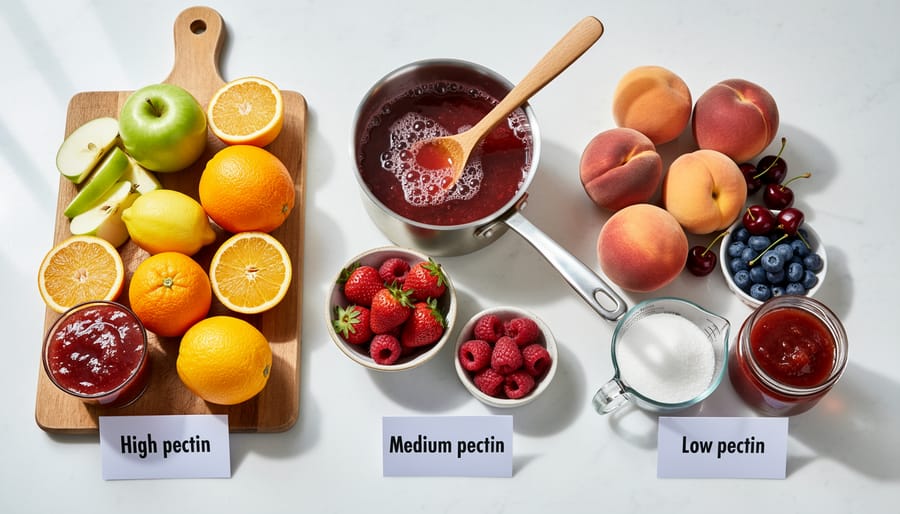
Assortment of fresh CSA fruits including strawberries, peaches, cherries and apples on wooden table
Different fruits contain varying natural pectin levels, requiring different approaches for successful jam-making.

The Magic Triangle: Pectin, Sugar, and Acid

Creating perfect jam or jelly is like conducting a beautiful symphony where three key players must work in harmony: pectin, sugar, and acid. Understanding this magic triangle will help you transform your CSA fruit bounty into gorgeous preserves every time.

Think of pectin as the framework builder. These natural plant fibers need the right conditions to link together and form that satisfying gel structure. But pectin can’t do it alone. This is where sugar steps in as the essential assistant. Sugar pulls water away from pectin molecules, allowing them to bond more easily. It typically takes about 55-65% sugar content in your mixture to achieve the ideal gel. While that might sound high, this concentration is what gives your preserves their characteristic texture and helps preserve them safely.

The third player, acid, acts as the catalyst that makes everything happen. Pectin needs an acidic environment with a pH between 2.8 and 3.4 to gel properly. Without enough acid, your pectin molecules remain too negatively charged and repel each other rather than bonding. That’s why lemon juice or citric acid often appears in jam recipes, especially when working with low-acid fruits like strawberries or pears.

During cooking, heat activates this chemical dance. As your fruit mixture boils, water evaporates, concentrating the sugar and bringing all three elements into the perfect balance. The mixture reaches its gel point typically around 220°F, when the magic triangle aligns just right.

Understanding these interactions helps you troubleshoot problems. Runny jam? You might need more acid or pectin. Too stiff? Perhaps you used excess pectin or overcooked the mixture. With this knowledge, you’ll confidently preserve every precious fruit from your farm share.

Types of Pectin and When to Use Each One

Regular vs. Low-Sugar Pectin for Organic Fruit

When you’re transforming your CSA fruit haul into delicious preserves, choosing between regular and low-sugar pectin can make all the difference in your final product. Understanding these options helps you match pectin type to your taste preferences and the natural sweetness of your organic fruit.

Regular pectin, also called high-methoxyl pectin, needs substantial sugar to work its magic—typically a 1:1 fruit-to-sugar ratio. This means if you’re working with 4 cups of crushed strawberries, you’ll need about 4 to 7 cups of sugar. The chemistry behind this is fascinating: regular pectin requires both sugar and acid to create that perfect gel structure. While this produces traditional, sweet preserves with excellent shelf stability, it can sometimes mask the bright, fresh flavors of your farm-fresh organic fruit.

Low-sugar or no-sugar-needed pectin offers wonderful flexibility for CSA members who prefer less sweetness or want to highlight their produce’s natural flavors. These modified pectins work through different chemistry, using calcium rather than sugar to gel. You can use anywhere from no sugar to about half the amount required by regular pectin. This is perfect when you receive extra-sweet peaches or perfectly ripe berries that don’t need much enhancement.

Many sustainable-minded preservers appreciate low-sugar pectin for reducing overall sweetener consumption and letting organic fruit shine. However, these preserves typically have a softer set and shorter shelf life. Choose regular pectin for classic, firm jellies and low-sugar varieties when showcasing your harvest’s authentic taste.

Making Your Own Pectin from Apple Scraps

If you’re part of a CSA and find yourself with an abundance of apples, don’t toss those cores and peels! Making your own pectin is a rewarding zero-waste solution that transforms scraps into liquid gold for your preserving projects.

Apple scraps are naturally high in pectin, especially when slightly underripe. Start by collecting cores, peels, and any bruised portions from about four pounds of apples. Place them in a large pot with enough water to just cover the scraps, plus two tablespoons of lemon juice to help extract the pectin. Bring to a boil, then reduce heat and simmer for about 45 minutes until the apples are soft and mushy.

Strain the mixture through a fine-mesh sieve or cheesecloth, pressing gently to extract all the liquid. You’ll end up with a cloudy, slightly thick liquid that’s your homemade pectin. To test its strength, pour a tablespoon into a small bowl and refrigerate for 20 minutes. If it gels nicely, you’ve got high-pectin extract perfect for low-sugar jams.

Store your homemade pectin in clean jars in the refrigerator for up to one week, or freeze it in ice cube trays for convenient portions that last up to six months. Each ice cube equals roughly one tablespoon, making it easy to add pectin power to small batches of jam.

When using homemade pectin, remember it’s less concentrated than commercial versions. Generally, you’ll need about one cup of homemade pectin per four cups of crushed fruit, though some experimentation helps you find your perfect gel.
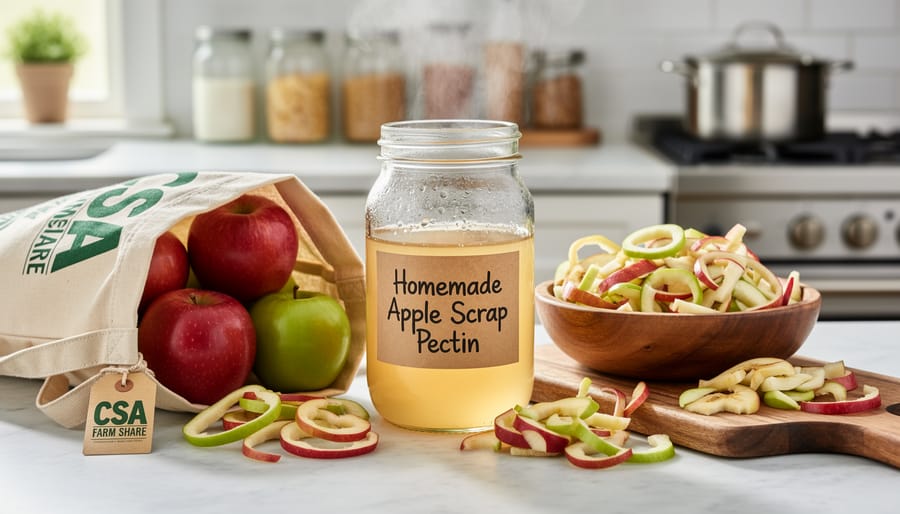
Hands pouring homemade apple pectin into copper preserving pan with apple scraps
Homemade pectin extracted from apple scraps offers a zero-waste solution for CSA members with abundant fruit.

Matching Pectin to Your CSA Harvest

Your CSA box arrives brimming with gorgeous fruit, and you’re ready to preserve that peak-season flavor. But which pectin approach will give you the best results? Let’s match common CSA fruits to their ideal pectin partners.

Strawberries, the quintessential early summer treat, have low natural pectin and benefit from added pectin. Use commercial low-sugar pectin if you want to showcase their delicate sweetness without excessive sugar. These beauties also pair wonderfully with a splash of lemon juice to boost both flavor and natural pectin levels.

Peaches and apricots are moderate in natural pectin but require some assistance for proper gelling. Traditional powdered pectin works beautifully here, creating those classic spreadable preserves. Since stone fruits can be quite sweet, you might experiment with reduced-sugar pectin formulas to let their natural flavor shine through.

Blueberries and blackberries contain moderate pectin levels, making them forgiving preserving partners. You can often use less commercial pectin than package directions suggest, or try combining them with high-pectin fruits like tart apples for a completely natural set. A local farmer, Maria from Riverside Farm, shared that she adds grated apple to her wild blackberry jam with stunning results and no commercial pectin needed.

Cherries need substantial pectin assistance, as they’re quite low in natural pectin. Liquid pectin added at the end of cooking helps preserve their vibrant color and prevents overcooking. Don’t skip the lemon juice with cherries, as the acidity is crucial for both safety and gelling.

Plums offer a pleasant surprise: they’re naturally high in pectin, especially when slightly underripe. You can often make plum jam with minimal or no added pectin, relying on the fruit’s natural thickening power combined with adequate cooking time.

Here’s your quick decision framework: Check your seasonal fruit against these categories. High-pectin fruits need little help. Low-pectin fruits need commercial pectin or a high-pectin companion fruit. When in doubt, start with small test batches to discover what works best for your taste preferences and the specific characteristics of your locally grown harvest.

Troubleshooting Common Pectin Problems

Even experienced preservers encounter pectin challenges, but understanding what went wrong helps you create perfect preserves next time. Here are the most common issues and their solutions.

Runny jam is perhaps the most frustrating problem. This usually happens when pectin levels are too low, cooking time was insufficient, or the fruit-to-sugar ratio was off. Always test for the gel point using a cold plate test before removing your jam from heat. If you’ve already made runny jam, you can actually remake it by measuring the quantity, adding fresh pectin according to package directions, and reprocessing. For future batches, ensure you’re using ripe (not overripe) fruit and following tested recipes exactly.

Overly stiff preserves occur when there’s too much pectin or the mixture was cooked too long. This often happens with high-pectin fruits like apples or when combining commercial pectin with naturally pectin-rich ingredients. The solution is reducing cooking time or using less pectin. Some experienced preservers even skip commercial pectin entirely with high-pectin fruits, relying on natural sources instead.

Sugar crystals forming in finished jam indicate either too much sugar, insufficient acid, or crystallization during cooling. Always wipe down pan sides during cooking to remove sugar crystals, and ensure proper acid balance. Adding a tablespoon of lemon juice can prevent this issue.

Uneven setting, where some jars gel perfectly while others remain liquid, typically results from inconsistent processing or filling jars with mixture at different temperatures. Keep your preserve mixture at a consistent simmer while filling jars, and process all jars together. Mastering these food preservation techniques takes practice, but each batch teaches valuable lessons.

Remember, small variations in fruit ripeness and natural pectin content mean some adjustments are normal. Keep notes on what works with your particular fruit sources, and you’ll develop an intuitive sense for creating perfect preserves every time.
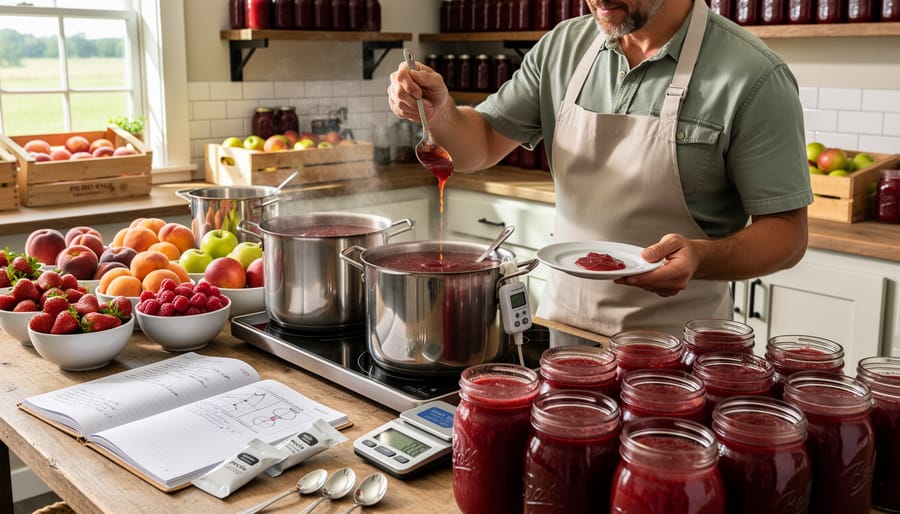
Farmer arranging homemade preserve jars at farm stand with berry fields in background
Small-scale farmers successfully turn CSA fruit into value-added preserves by understanding pectin science.

Farmer Success Story: Sarah’s Berry Farm Preserves

When Sarah Mitchell started her 50-member CSA near Guelph, Ontario, she quickly realized her abundant berry harvests were overwhelming her members. “People loved getting fresh strawberries and raspberries, but they couldn’t use them all before spoilage,” she recalls. That challenge sparked her journey into preserve-making, which eventually became her farm’s signature product line.

Sarah’s first attempts were frustrating. “I followed recipes exactly, but results were wildly inconsistent. One batch would set perfectly, the next would be syrupy.” The breakthrough came when she started testing different pectin types with her specific fruit varieties. She discovered that her early-season strawberries needed commercial pectin for reliable results, while her late-summer berries naturally contained enough pectin when combined with apple scraps from a neighboring orchard.

Her biggest lesson? Temperature matters more than most recipes admit. “I invested in a good candy thermometer and learned the gel point for each fruit type,” Sarah explains. “Strawberries hit gel at 220°F, but my low-sugar raspberry preserves needed 218°F to avoid overcooking.”

Sarah now teaches preserve-making workshops at her farm, sharing her tested formulas with CSA members. Her practical tip for beginners: start with high-pectin fruits like tart apples or currants mixed with lower-pectin berries. This natural approach gave her confidence before exploring commercial pectins and various canning methods.

“The key is keeping detailed notes,” she advises. “Write down fruit variety, ripeness, pectin type, and cooking time. After a season, you’ll have your own customized preserve recipes that work every time with your specific ingredients.”

Tips for Sustainable Jam-Making with Seasonal Fruit

Making jam with seasonal fruit from your CSA share is about more than just preserving—it’s about celebrating the full potential of your local harvest. Understanding pectin helps you transform every piece of fruit into delicious preserves, even those that aren’t picture-perfect.

Those slightly bruised peaches or oddly shaped strawberries? They’re jam gold. Simply trim away any damaged spots and use the rest. The pectin doesn’t care about cosmetic imperfections, and you’ll reduce food waste while creating something wonderful. Peak-ripeness fruit contains optimal pectin levels, so when your CSA box arrives overflowing with berries or stone fruit, jam-making preserves that perfect moment.

Consider the pectin content of different fruits when planning your preserves. High-pectin fruits like apples, currants, and citrus need less added pectin, while strawberries, peaches, and cherries benefit from supplemental pectin. You can even save citrus peels and apple cores in your freezer throughout the season—they’re packed with natural pectin perfect for making your own pectin extract.

Match your jam-making schedule to your CSA calendar. Early summer brings strawberries and rhubarb, mid-summer offers abundant berries, and fall delivers apples and grapes. This rhythm connects you to the natural growing season while building a pantry that tells the story of your local harvest. Each jar becomes a time capsule of flavor, capturing sunshine and supporting your community’s farmers with every spoonful.

You now have everything you need to turn your CSA fruit bounty into beautiful, spreadable preserves. Understanding pectin—whether it’s naturally occurring in your berries or added from a package—takes the guesswork out of jam-making and gives you confidence to experiment. Each fruit that arrives in your weekly share is an opportunity to practice your new skills.

Remember, there’s no single “right” way to make preserves. Some batches will be perfectly gelled, while others might turn out softer or firmer than expected. That’s part of the learning process, and even imperfect preserves taste delicious on morning toast or swirled into yogurt.

By mastering pectin, you’re doing more than creating pantry staples—you’re preventing food waste, preserving the peak-season flavors your local farmers worked hard to grow, and building a deeper connection to your food. Start with a simple recipe using high-pectin fruit, then branch out as your confidence grows. Your CSA box is filled with potential, and now you have the knowledge to unlock it. Happy preserving, and don’t be afraid to get creative with flavor combinations as you work through those beautiful fruit shares.
How to Feed Your Pastures Without Breaking the Bank (or the Earth)

Posted by darrell on
0
Livestock & Grazing
How to Feed Your Pastures Without Breaking the Bank (or the Earth)

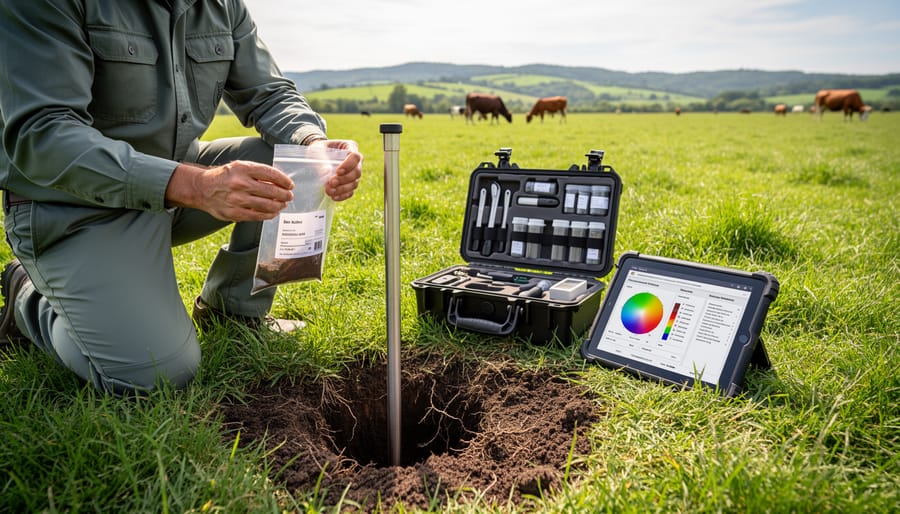
Test your soil before adding anything to your pastures—a $20 soil test reveals exactly which nutrients your land needs and saves you from wasting money on unnecessary amendments. Many small-scale graziers discover their pastures lack phosphorus or potassium rather than nitrogen, fundamentally changing their fertilization approach.

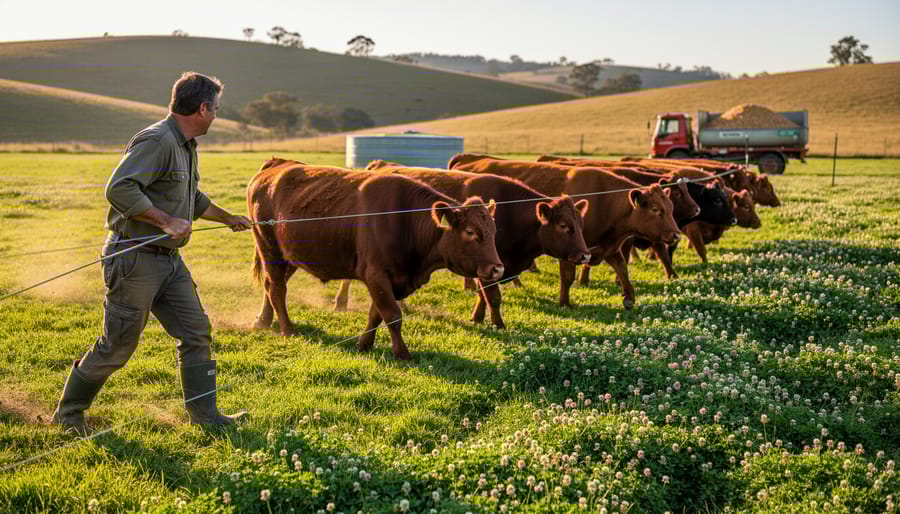
Start with what you already have by managing manure distribution through rotational grazing. Moving livestock frequently across paddocks naturally fertilizes your pastures while preventing nutrient hot spots near water sources or shade areas. This zero-cost method builds soil health while improving forage quality.

Consider composted chicken manure as your first purchased input if soil tests show nitrogen deficiency—it releases nutrients slowly, costs less than commercial fertilizers, and improves soil structure with each application. Apply 1-2 tons per acre in early spring or split applications between spring and late summer for cool-season grasses.

Time your fertilization with plant growth cycles rather than calendar dates. Cool-season grasses like orchardgrass and fescue respond best to nutrients in early spring and again in late summer, while warm-season grasses thrive with mid-spring applications after soil temperatures reach 60°F.

Build long-term fertility through frost-seeding legumes like clover and vetch into existing pastures each February or March. These plants capture atmospheric nitrogen and share it with neighboring grasses, reducing your fertilizer needs by 50-100 pounds of nitrogen per acre annually. Sarah Chen, who runs a 30-cow grazing operation in Virginia, eliminated her fertilizer budget entirely within three years by establishing a robust clover-grass mix and tightening her rotation schedule to 2-day moves.

Why Your Pasture Needs More Than Just Grass and Good Intentions

Picture your pasture as a bank account. Every time your animals graze, they’re making withdrawals—pulling nutrients from the soil to build muscle, produce milk, and grow healthy coats. The grass itself acts as the teller, converting soil minerals into edible forage. But here’s the catch: without regular deposits, that account runs dry faster than you might think.

The nutrient cycle in healthy pastures works like a well-choreographed dance. Plants draw nitrogen, phosphorus, potassium, and trace minerals from the soil. Animals eat the plants, and some nutrients return through manure. Sounds simple, right? The problem is that this cycle leaks. When you sell meat, milk, or wool, those nutrients leave your farm permanently in the bodies and products of your animals. Meanwhile, nutrients also escape through leaching, erosion, and even the wind carrying away dried manure.

Continuous grazing intensifies this depletion. Without proper rest periods, grass plants can’t develop deep root systems that mine minerals from lower soil layers. The soil structure breaks down, reducing its ability to hold both nutrients and water. What started as lush, diverse pasture gradually transforms into tired ground dominated by weedy species that animals won’t even touch.

The connection between sustainable soil health and forage quality is direct and undeniable. Nutrient-poor soil produces nutrient-poor grass. Animals grazing depleted pastures need more forage to meet their nutritional needs, which means more grazing pressure and further degradation. It’s a downward spiral that affects everything from animal health to your farm’s profitability.

Take Sarah, a grazier from Ontario, who noticed her cattle needed supplemental minerals despite abundant grass. Soil testing revealed severe phosphorus and sulfur deficiencies. By addressing these gaps through targeted fertilization, she saw dramatic improvements in both pasture vigor and herd condition within a single growing season. Her story illustrates a fundamental truth: good intentions can’t replace the minerals your soil is missing.

Farmer's hands holding dark soil sample above green pasture with cattle grazing in background
Soil testing reveals the nutrient status of pastures and guides fertilization decisions for optimal forage production.

Reading What Your Pasture Is Actually Telling You

When and How to Test Your Soil

Testing your soil at the right time makes all the difference in getting accurate results. The best window is late summer through early fall, after the growing season but before you need to make fertilization decisions for next year. Early spring works too, though you’ll want to test before applying any amendments.

For sampling, grab a clean bucket and a soil probe or spade. Walk a zigzag pattern across your pasture, taking 10-15 cores from the top 4 inches of soil. Mix them thoroughly in your bucket, then send about two cups to the lab. Avoid sampling near gates, water troughs, or areas where animals congregate, as these spots aren’t representative of your overall pasture health.

Choose a lab that specializes in agricultural testing and specifically offers pasture analysis. Many university extension services provide affordable testing with recommendations tailored to your region’s soil conditions. Request a test that includes pH, nitrogen, phosphorus, potassium, and organic matter content.

Sarah, a third-generation farmer in Vermont, shares this tip: “Testing each paddock separately helped me discover nutrient variations I never knew existed. Now I fertilize strategically instead of treating everything the same, saving money and boosting productivity.”

Spotting Deficiencies Before They Become Problems

Your pasture will tell you what it needs if you know how to listen. The key is catching nutrient deficiencies early, before they significantly impact your forage quality and animal health.

Start by observing grass color and vigor. Healthy, well-nourished pasture displays rich green coloration and steady growth throughout the growing season. Pale, yellowish grass often signals nitrogen deficiency, while purplish tints can indicate phosphorus needs. Stunted growth or thin stands suggest multiple nutrient limitations that require attention.

Weed patterns provide valuable diagnostic clues too. Dense patches of broadleaf weeds like dandelions, plantain, or dock often indicate compacted soil or imbalanced fertility. Certain weeds thrive where specific nutrients are lacking – for example, clovers naturally fix nitrogen but may dominate when phosphorus levels are adequate while nitrogen isn’t. While some beneficial weeds add diversity, overwhelming weed pressure usually means your desirable grasses aren’t getting what they need to compete effectively.

Walk your pastures regularly during the growing season, paying attention to uneven growth patterns. Bare patches, areas where livestock consistently avoid grazing, or sections that green up later than others all warrant investigation. Take notes and photos to track changes over time.

Emma Rodriguez, who manages a small grazing CSA in Vermont, conducts weekly pasture walks with a simple notebook. This practice helped her identify a calcium deficiency in one paddock before it affected milk production. She says, “My pasture became my teacher once I learned to really see it.”

Fertilization Options That Make Sense for Small-Scale Graziers

Organic Amendments: Working With What Nature Provides

Organic amendments offer a time-tested approach to pasture fertilization that works in harmony with your soil’s natural systems. While they release nutrients more slowly than synthetic options, they provide lasting benefits that build soil health season after season.

Composted manure stands as the workhorse of organic pasture management. Well-aged cattle or horse manure delivers a balanced nutrient profile while improving soil structure and water retention. Apply 2-4 tons per acre annually, ideally in early spring before active growth begins. Fresh manure requires caution due to high nitrogen content that can burn plants and harbor pathogens, so always let it cure for at least six months before spreading.

Raw manure from your own livestock offers a cost-effective solution for small operations. Many graziers successfully spread aged manure during winter months when pastures are dormant, allowing weathering to mellow the nutrients before spring growth kicks in. Just remember that dragging manure across actively grazed areas requires proper timing to avoid parasite cycles.

Bone meal and blood meal provide targeted nutrient boosts when soil tests reveal specific deficiencies. Bone meal supplies phosphorus at rates of 200-400 pounds per acre, particularly valuable for establishing legumes. Blood meal delivers quick nitrogen but costs more than manure-based options, making it better suited for small problem areas rather than entire pastures.

One Wisconsin farmer shared how she transformed tired pastures by spreading two inches of municipal compost each fall. Within three years, her forage production doubled and earthworm populations exploded. Her secret? Patience and consistency rather than expecting overnight miracles.

Set realistic expectations with organic amendments. You’re feeding soil biology first, which then feeds your plants. This slower process means visible results may take a full growing season, but the long-term payoff in soil health makes the wait worthwhile.

Lime and Mineral Amendments: The Foundation No One Talks About

Before you spread a single bag of fertilizer, there’s something even more fundamental to address: your soil’s pH and mineral balance. Think of lime and minerals as the foundation of a house—without them, everything else you build won’t stand strong.

Most pasture grasses thrive between 6.0 and 7.0 pH. When soil becomes too acidic, nutrients get locked up where plant roots can’t reach them, no matter how much fertilizer you apply. That’s where agricultural lime comes in. A simple soil test will tell you if liming is needed, and applying it in fall gives it time to work its magic before spring growth kicks in.

But pH is just the beginning. Calcium, often delivered through lime, strengthens plant cell walls and helps legumes like clover fix nitrogen more efficiently. Sulfur plays a quiet but crucial role in protein synthesis and works hand-in-hand with nitrogen. Many graziers find their pastures transform after addressing sulfur deficiencies, especially on sandy soils.

Don’t overlook trace elements like boron, copper, and selenium. While needed in tiny amounts, these minerals impact everything from legume nodulation to animal health. Sarah Martinez, a Georgia grazier, discovered her pasture’s slow growth wasn’t a nitrogen problem at all—a soil test revealed boron deficiency. After a targeted application, her clover stands doubled.

The beauty of getting your foundation right? You’ll need less fertilizer overall, saving money while building genuinely healthy, resilient pastures. Start with that soil test—it’s the best investment you’ll make.

Legumes as Living Fertilizer Factories

Nature has provided pasture farmers with an elegant solution to one of their biggest expenses: nitrogen fertilizer. Legumes like clover, alfalfa, vetch, and birdsfoot trefoil essentially manufacture their own nitrogen through a remarkable partnership with soil bacteria. These plants host special rhizobia bacteria in tiny nodules on their roots, which convert atmospheric nitrogen into a plant-usable form. When these legumes grow, die back, or get grazed, they release this captured nitrogen into the soil, feeding neighboring grasses at no cost to you.

The numbers are impressive. A healthy stand of white clover mixed into your pasture can fix 100-200 pounds of nitrogen per acre annually, while alfalfa in a rotation can provide even more. This biological fertilizer factory works around the clock during the growing season, reducing or completely eliminating your need for purchased nitrogen fertilizers.

Beyond nitrogen production, legumes deliver additional benefits that make them indispensable for sustainable pastures. Their deep taproots break up compacted soil layers, improving water infiltration and drought resilience. These same roots access minerals from deeper soil horizons, bringing nutrients to the surface where shallow-rooted grasses can use them. Livestock also benefit directly, as legumes typically contain higher protein levels than grasses, improving animal nutrition and weight gains.

Getting started is straightforward. For most pastures, frost-seeding white or red clover in late winter requires minimal equipment and investment. Sarah Mitchell, who manages a grazing operation in Vermont, transformed her pastures by introducing clover five years ago. “My fertilizer bills dropped by 60 percent the first year,” she shares. “The cattle performance actually improved, and I’m building soil health instead of just mining it.”

Aim for a pasture composition of 20-30 percent legumes mixed with grasses for optimal nitrogen fixation and grazing balance.

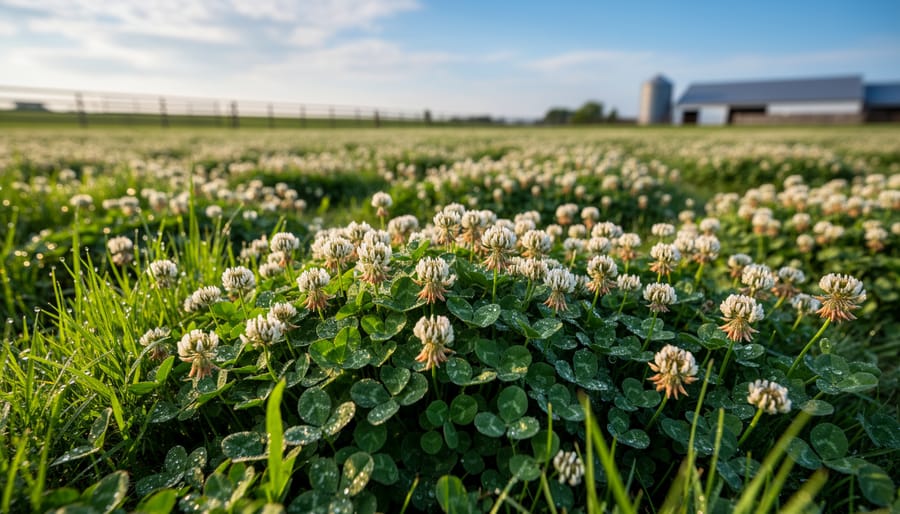
Close-up of clover flowers growing among pasture grasses in sunlight
Clover and other legumes naturally fix nitrogen from the air, reducing fertilizer costs while improving forage quality.

Timing Your Applications for Maximum Impact

Getting your fertilization timing right can make all the difference between a thriving pasture and wasted effort. The key is synchronizing your applications with both your grass’s natural growth cycles and your livestock’s grazing patterns.

Spring fertilization typically delivers the biggest bang for your buck. Apply fertilizer in early spring when soil temperatures reach about 50°F and grass begins actively growing. This timing gives plants the nutrients they need during their most vigorous growth phase, building forage reserves for the entire grazing season. Sarah Martinez, who runs a sheep grazing CSA in Vermont, schedules her spring applications for mid-April. “I wait until I see that first flush of green,” she explains. “The grass is hungry then, and my animals aren’t out yet, so nothing gets wasted.”

Fall applications offer a second opportunity, particularly if you’re using slower-release organic amendments like compost. Apply six to eight weeks before your first expected frost. This timing allows nutrients to establish in the soil over winter, ready to fuel early spring growth. Fall is also ideal for lime applications, giving it time to adjust soil pH before the next growing season.

Coordinating with your rotational grazing plans requires some strategic thinking. Always fertilize paddocks right after grazing and moving livestock to the next area. This gives the grass a recovery period without animals compacting treated soil or consuming excess nutrients. Plan for at least a three-week rest period before grazing freshly fertilized areas, though organic amendments may allow shorter waiting times.

Split applications work beautifully for budget-conscious farmers. Rather than applying all your fertilizer at once, divide it into smaller doses throughout the growing season. This approach matches nutrient availability with plant uptake, reduces waste, and spreads costs over multiple months. Many successful graziers apply half their annual fertilizer in spring and the remainder in early summer after their first rotation cycle completes.

Making Your Animals Part of the Fertility Solution

Your livestock can be your best fertilization crew—if you know how to direct them. Instead of purchasing expensive inputs, you can harness the natural fertilization power of grazing animals through strategic management that puts nutrients exactly where you need them.

The secret lies in understanding that your animals are mobile fertilizer spreaders. Each cow, sheep, or goat deposits approximately 12-15 manure pats per day, along with nitrogen-rich urine. When animals stay in one spot too long, nutrients concentrate in waste areas while other parts of your pasture go hungry. But through careful planning, you can transform this pattern into an asset.

The rotational grazing benefits extend far beyond just grass management—they’re fundamental to pasture fertility. By moving animals to fresh paddocks every 1-3 days, you create an even distribution of manure and urine across your entire pasture. This regular movement prevents overgrazing while ensuring that nutrients return to the soil uniformly.

Consider Sarah Chen’s 15-acre Oregon farm, where she rotates her mixed herd of cattle and chickens through paddocks. “I was spending thousands on fertilizer until I realized my animals were already providing it,” she explains. “Now I just focus on moving them strategically, and my soil tests keep improving year after year.”

Effective livestock management means matching stocking density to your fertility goals. Higher density for shorter periods concentrates nutrients, while lower density spreads them more thinly. Many farmers find that following cattle with poultry helps break up manure pats and distribute nutrients even more effectively, while adding valuable nitrogen through chicken droppings.

The timing matters too. Grazing during active growing seasons ensures nutrients become available when plants need them most, maximizing recycling efficiency.

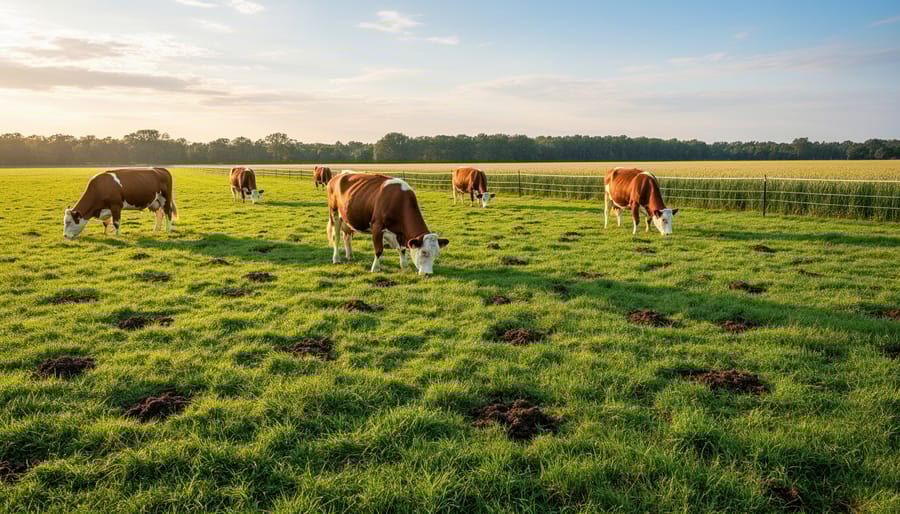
Cattle and sheep grazing on green pasture with rotational paddock divisions visible
Rotational grazing distributes manure evenly across pastures, turning livestock into mobile fertilizer applicators.

A Real CSA’s Journey to Better Pasture Fertility

When Sarah Martinez took over Green Meadow CSA in Vermont, her 15-acre pasture told a troubling story. Sparse grass growth, declining animal health, and bare patches had become the norm. Her 25 sheep and rotating flock of laying hens weren’t thriving, and her 40 CSA members were starting to notice the difference in meat and egg quality.

The turning point came after a comprehensive soil test revealed severely depleted phosphorus levels and a pH of 5.2, far too acidic for optimal grass growth. Sarah’s pastures had been grazed for years without any fertility inputs, and the soil was exhausted.

Her solution was both strategic and budget-conscious. She started with lime application to raise the pH, spreading two tons per acre in early fall. The following spring, she divided her pasture into smaller paddocks and began a rotational grazing system that gave each section adequate rest between grazing periods.

For fertilization, Sarah chose a hybrid approach. She applied composted chicken manure from her own flock at 1.5 tons per acre on half the pasture, while treating the other half with a balanced organic fertilizer blend containing rock phosphate and greensand for slow-release minerals. She also introduced white clover into her seed mix, which naturally fixed nitrogen in the soil.

The results were remarkable. Within 18 months, Sarah saw a 60 percent increase in forage density. Her animals gained weight more efficiently, and egg production jumped by 25 percent. The improved pasture quality meant she could reduce supplemental feed costs by nearly 40 percent during the growing season.

Perhaps most telling was the feedback from her CSA members. They noticed richer-tasting eggs and better-quality meat, validating that healthy soil truly does create better food. Sarah now conducts soil tests annually and maintains a rotating fertilization schedule that keeps her pastures productive while building long-term soil health.

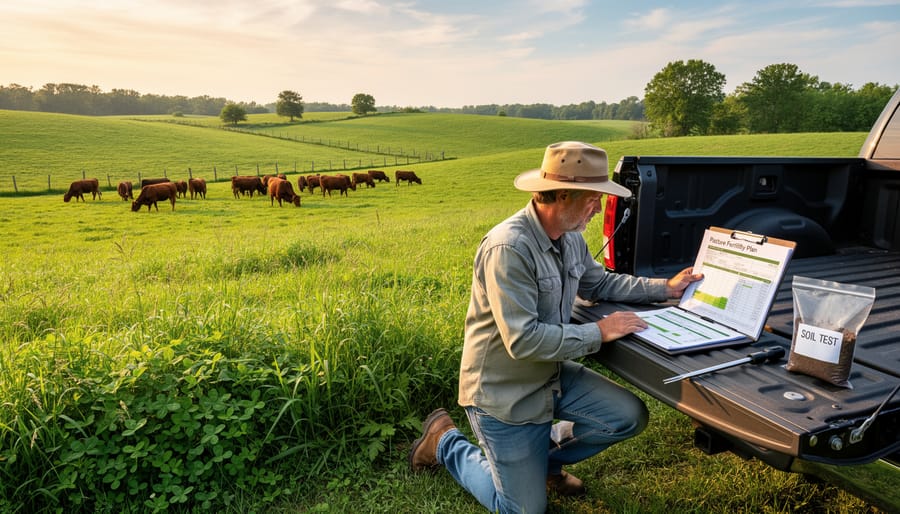
Farmer with clipboard examining pasture grass growth and taking notes
Developing a multi-year pasture fertility plan helps CSA graziers balance soil health goals with budget realities.

Building Your Pasture Fertility Plan on a CSA Budget

Year One Priorities: Start Here

Starting your pasture fertility journey doesn’t require massive upfront investments or complicated strategies. Focus on understanding what you’re working with first. Get a baseline soil test within your first month—this single step prevents wasted money on unnecessary amendments and reveals exactly where your pastures need help. Most county extension offices offer affordable testing that provides actionable results.

Your first quick win is addressing any glaring deficiencies the soil test reveals, particularly pH issues. Lime applications can transform struggling pastures within a single growing season, and it’s one of the most cost-effective interventions available. Meanwhile, establish a simple rotation grazing pattern if you haven’t already. Even basic paddock divisions improve nutrient cycling as animals distribute manure more evenly.

Consider Sarah Chen, a first-year grazier in Vermont, who focused solely on soil testing and lime application her first season. “I was tempted to buy expensive fertilizers immediately, but addressing our acidic soil first meant everything else worked better,” she shares. Her pastures showed visible improvement within months, setting a solid foundation for future fertility investments. Keep it simple, measure your baseline, fix the fundamentals, and watch your pastures respond.

Long-Term Thinking for Sustainable Soil Health

Building healthy pastures isn’t about quick fixes—it’s about creating a long-term vision that works with your land and your wallet. Most successful graziers think in 3-5 year cycles, allowing pastures to respond gradually while spreading costs over manageable timeframes.

Start by mapping your pastures and identifying priority areas. Maybe one paddock gets the most use during calving season, or another section has visibly poor growth. Focus your initial investments where you’ll see the biggest returns, then expand year by year as cash flow allows.

A practical approach might look like this: Year one, conduct soil tests and address critical pH issues with lime. Year two, tackle phosphorus deficiencies in your most productive paddocks. Year three, introduce compost applications or add diversity with legumes. This staggered strategy prevents budget overwhelm while building momentum.

Consider Emily Rodriguez, a Montana rancher who transformed depleted grassland over four years. She started with just lime and grazing rotation adjustments, then added compost from local organic farms in year two. By year four, her pasture productivity doubled, and feed costs dropped by 40 percent. “Patience paid off,” she shared. “Each season built on the last.”

Remember that improvements compound over time. Better soil structure means increased water retention, which reduces drought stress. Healthier pastures support more diverse plant communities, which naturally cycle nutrients more efficiently. Your investment today creates resilience that pays dividends for years ahead, making your operation more sustainable and profitable.

Pasture fertilization isn’t just an expense—it’s a strategic investment in the health and longevity of your entire CSA operation. When you nourish the soil, you’re creating a foundation that supports vigorous grass growth, healthier livestock, and ultimately, a more profitable and sustainable business model. The beauty of this approach is that you don’t need to transform your pastures overnight. Start with a single paddock or a manageable test area, apply what you’ve learned about soil testing and fertilization timing, and carefully observe the results. Notice how your animals gravitate toward better-nourished areas and how recovery times improve after grazing.

Many successful graziers have built thriving operations by starting small and scaling up based on what works. One farmer in Vermont began with just composted manure on two acres and gradually expanded her fertilization program as she saw increased stocking rates and fewer health issues in her flock. Remember, resilient pastures act as your farm’s solar panels, converting sunlight into nutrient-dense forage that feeds your animals and nourishes your community. By prioritizing soil health today, you’re building a regenerative system that will support generations of grazing to come. Your pastures—and your CSA members—will thank you.