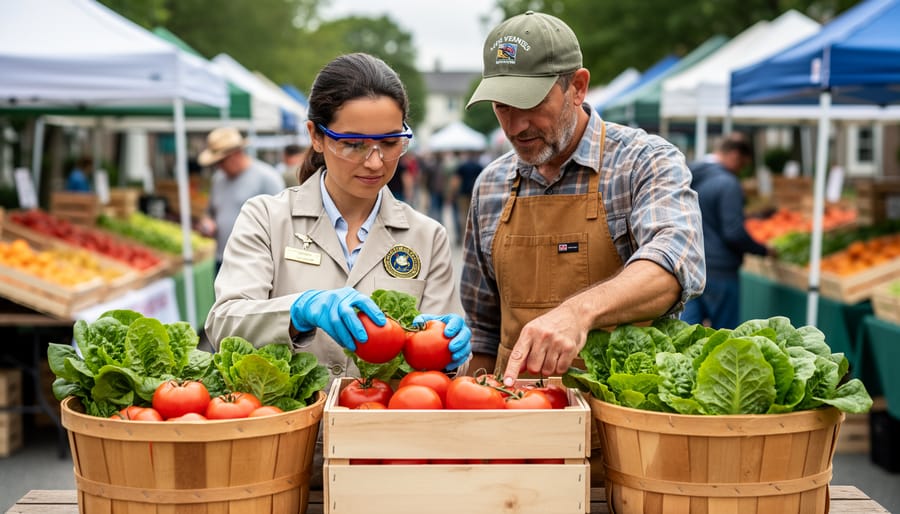
Every time you pick up vegetables at your farmers market or collect your weekly harvest box, the Virginia Department of Agriculture and Consumer Services (VDACS) food safety program works behind the scenes to protect your family. This state-level initiative ensures that the tomatoes, leafy greens, and fresh herbs you purchase from local farms meet rigorous safety standards—making your commitment to local eating both delicious and secure.
VDACS operates a comprehensive food safety framework that oversees everything from produce handling at small family farms to processing facilities that create your favorite jams and pickles. The program conducts regular inspections, provides hands-on education to farmers, and enforces science-based guidelines that prevent contamination. For consumers choosing CSA programs and farmers market vendors, this means the growers you trust are also accountable to professional safety protocols.
Understanding how VDACS supports Virginia’s local food system empowers you to make confident purchasing decisions. The program doesn’t just regulate—it partners with farmers to build sustainable safety practices that protect public health without compromising the authentic, farm-fresh quality you seek. Whether you’re a longtime local food advocate or just beginning to explore community-supported agriculture, knowing how VDACS safeguards your food supply adds another layer of trust to every purchase. This article explores how the program functions, what it means for your favorite farms, and why Virginia’s approach to food safety strengthens rather than hinders the local food movement.
What is the VDACS Food Safety Program?
The Virginia Department of Agriculture and Consumer Services (VDACS) serves as the primary regulatory agency ensuring the safety and quality of food produced and sold within the Commonwealth. Their mission centers on protecting consumers while supporting the growth of Virginia’s vibrant agricultural community. For anyone who loves picking up fresh tomatoes at the farmers market or subscribing to a local CSA, VDACS works behind the scenes to make those transactions safer and more reliable.
The VDACS Food Safety Program operates differently from federal oversight. While the U.S. Food and Drug Administration (FDA) regulates large-scale commercial operations and interstate food distribution, VDACS focuses on intrastate activities. This means they oversee food that’s grown, processed, and sold within Virginia’s borders. Think of your neighborhood farm stand, that small-batch jam maker at the weekend market, or the organic vegetable grower who supplies local restaurants.
Under VDACS jurisdiction, you’ll find a diverse range of operations. Small and mid-sized farms selling directly to consumers fall under their watch, along with food processing facilities, produce packinghouses, and food warehouses operating within the state. The program pays special attention to fresh produce farms, particularly those growing leafy greens, tomatoes, and other crops eaten raw. They also regulate value-added producers who transform farm products into items like pickles, sauces, or baked goods.
This state-level approach allows VDACS to tailor their inspections and educational programs specifically to Virginia’s agricultural landscape. They understand the unique challenges facing small farmers and work collaboratively rather than punitively. For consumers passionate about supporting local agriculture, this means the farms you trust are receiving guidance and oversight designed to maintain high safety standards while keeping small operations viable and thriving.
Key Components of VDACS Food Safety Inspections
Produce Safety Standards
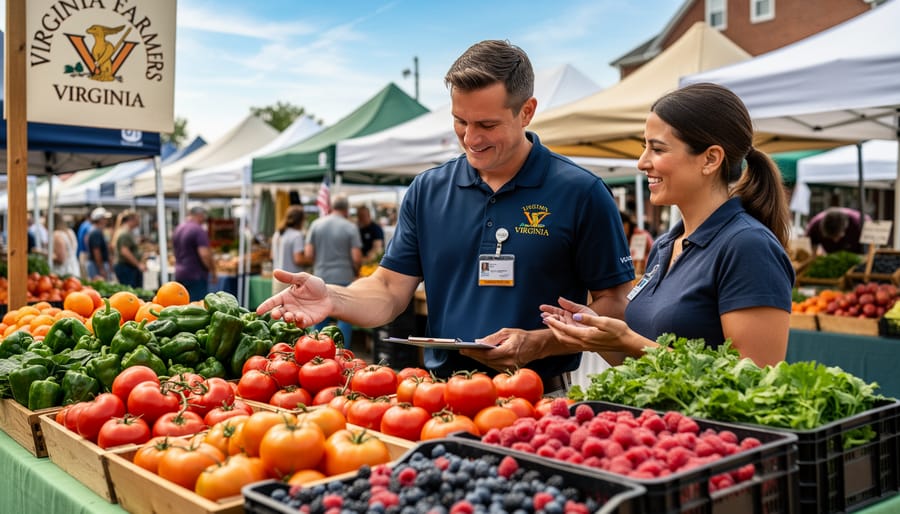
VDACS helps ensure the fresh fruits and vegetables you pick up at your farmers market are grown with safety in mind. The program works closely with Virginia farms to implement food safety standards that protect both growers and consumers.
One of the key areas of focus is water quality. VDACS requires farms to regularly test their irrigation water for harmful bacteria, ensuring that the water nourishing your tomatoes and lettuce is clean and safe. Soil amendments also receive careful attention. Whether farmers use compost or manure to enrich their soil, VDACS provides guidance on proper aging and application methods to prevent contamination.
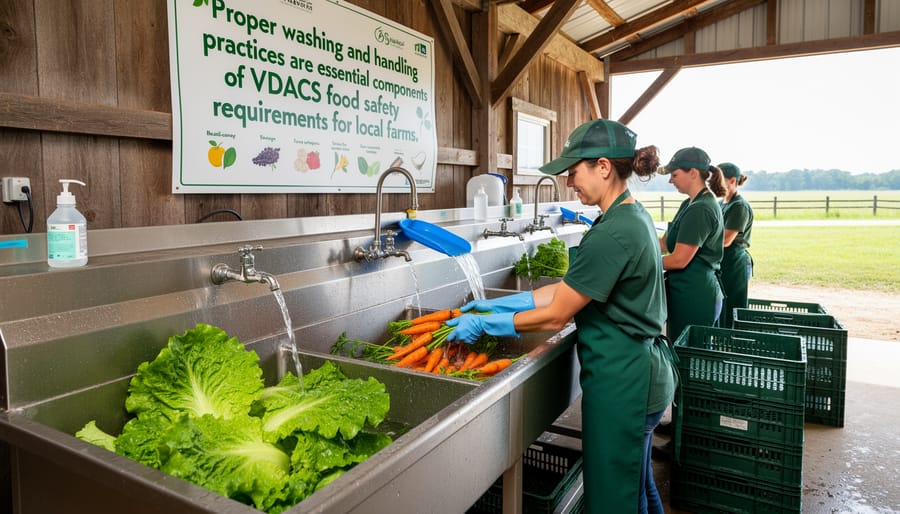
Handling practices matter too. From harvest to your shopping bag, produce should be touched with clean hands and tools. VDACS educates farmers on proper washing, storage, and transportation techniques that maintain freshness while preventing contamination.
These standards aren’t about creating burdensome red tape. They’re designed to support small-scale farmers in protecting their customers while maintaining the quality and integrity of locally grown food. Many farmers find that implementing these practices actually improves their operations, leading to better yields and happier customers who trust where their food comes from.
Processing and Packaging Requirements
If you’re a local farmer creating value-added products like strawberry jam, artisan bread, or pickled vegetables for farmers markets, VDACS has specific requirements to ensure these items are safe for your customers. Value-added products require more attention than fresh produce because processing creates additional food safety considerations.
For products like jams and jellies, you’ll need to follow proper acidification and canning procedures to prevent harmful bacteria growth. VDACS provides guidance on pH testing, thermal processing times, and safe ingredient combinations. Baked goods require sanitary preparation areas, proper temperature controls, and careful allergen labeling—especially important since many customers have gluten or nut sensitivities.
Packaging is equally crucial. All labels must include product names, ingredient lists in descending order by weight, allergen information, net weight, and your business contact details. Many successful farmers have found that investing in a commercial kitchen or using shared processing facilities helps them meet these standards while expanding their product offerings.
VDACS offers workshops and one-on-one consultations to help you navigate these requirements. Sarah Thompson, who runs a small farm in Albemarle County, credits VDACS training with helping her launch a successful line of fruit preserves. The program ensures your delicious creations reach customers safely while protecting your business from liability issues.
Storage and Transportation Guidelines
VDACS requires participating farms to maintain strict temperature control throughout the entire journey from harvest to your kitchen table. Farmers must monitor and document storage temperatures for perishable items, ensuring leafy greens stay crisp and berries remain fresh. Transportation vehicles need proper refrigeration systems, with many small farms investing in insulated coolers and refrigerated trucks to meet program standards.
During deliveries to CSA pickup locations and farmers markets, VDACS guidelines mandate that produce stays within safe temperature ranges. This means your salad greens are kept cold even on hot summer market days. Farmers learn best practices through VDACS training sessions, discovering clever solutions like using shade structures and ice packs for outdoor venues. These requirements protect food quality while giving you confidence that your local produce arrives as fresh and safe as possible.
How VDACS Supports Small Farms and CSAs
VDACS recognizes that small farms and community-supported agriculture (CSA) operations face unique challenges when navigating food safety requirements. Rather than taking a one-size-fits-all enforcement approach, the agency prioritizes education and partnership to help these small-scale producers succeed.
The program offers comprehensive training sessions designed specifically for small farmers. These workshops cover everything from proper produce handling and storage to record-keeping essentials, all presented in plain language that makes compliance manageable rather than overwhelming. Many sessions are held at convenient times and locations throughout Virginia, with some available online for farmers with tight schedules.
One of the most valuable resources is VDACS’s technical assistance program, where experienced specialists work directly with farmers to develop customized food safety plans. These consultants understand the realities of small-scale operations and help create practical solutions that fit within limited budgets and resources. They’re not there to catch farmers doing something wrong, but rather to prevent problems before they start.
Take the story of Sarah Martinez, who launched her organic CSA in Albemarle County three years ago. Initially intimidated by food safety regulations, she connected with a VDACS specialist who helped her implement simple but effective safety protocols. “They walked me through everything step by step,” Sarah shares. “Now I’m confident that my members are getting the safest produce possible, and I have systems in place that actually make my operation run more smoothly.”
VDACS also provides free educational materials, including easy-to-follow guides, checklists, and templates that small farmers can adapt to their specific operations. These resources help demystify food safety requirements and show farmers that good practices don’t require expensive equipment or complicated procedures.
The agency understands that supporting small farms strengthens Virginia’s local food system, benefiting both producers and consumers who value knowing where their food comes from and how it’s grown.
What This Means for CSA Members and Farmers Market Shoppers
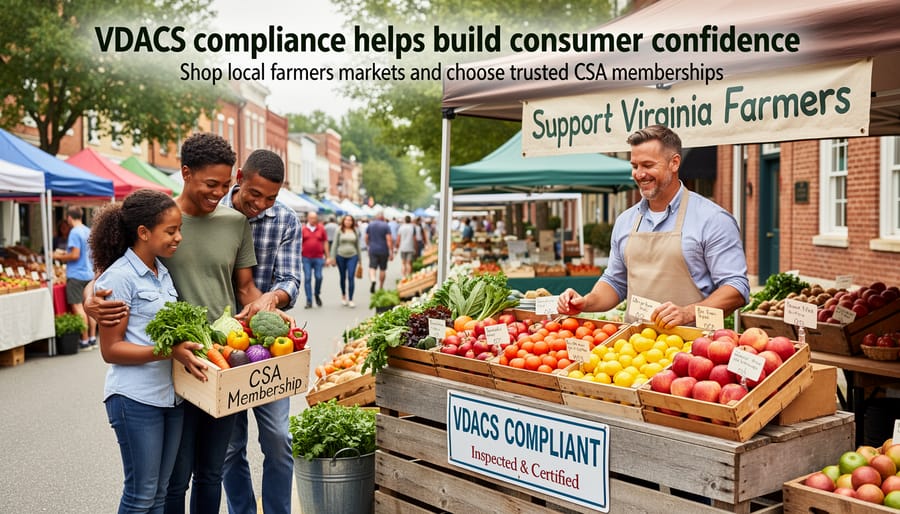
When you’re shopping at your local farmers market or considering a CSA membership, VDACS certification provides an extra layer of confidence in your food choices. Farms participating in the VDACS food safety program demonstrate their commitment to producing safe, quality produce through voluntary compliance with established guidelines.
So what should you look for? Start by asking farms directly about their food safety practices. Most farmers market vendors and CSA operators are proud to discuss their growing methods and safety protocols. Don’t be shy—questions show you’re an engaged consumer who cares about where your food comes from.
Here are some helpful questions to ask: Does the farm follow VDACS food safety guidelines? How do they handle water quality testing? What training have their workers received? How do they clean and store harvested produce? Farmers who participate in VDACS programs will happily share these details because they’ve invested time and resources into doing things right.
Look for signs of good practices when visiting farms. Clean harvest containers, proper handwashing stations, and organized storage areas all indicate attention to food safety. Many VDACS-compliant farms display their certification or mention their participation in promotional materials.
Remember, VDACS certification isn’t mandatory for all farms, especially smaller operations. A farm without formal certification can still maintain excellent safety standards. The key is open communication. Farmers passionate about their work welcome conversations about their practices and enjoy educating customers about sustainable agriculture.
By choosing farms that prioritize food safety—whether through VDACS programs or their own rigorous standards—you’re supporting responsible agriculture while protecting your family’s health. This creates a win-win situation that strengthens our local food system.
Real Stories: Virginia Farmers Working with VDACS
When Sarah Thompson started her small vegetable farm in Albemarle County, she knew quality produce was just the beginning. Working with VDACS to implement their food safety program transformed how she operates. “I thought the paperwork would be overwhelming, but the VDACS team walked me through everything,” Sarah shares. She learned proper water testing procedures, improved her harvest handling practices, and created simple documentation systems. The result? Her CSA membership doubled within a year as customers appreciated her commitment to verified safety standards. “Parents tell me they feel confident giving my greens to their kids. That trust is priceless.”
Over in Loudoun County, the Martinez family runs a certified organic berry farm that supplies several farmers markets. When they decided to pursue VDACS certification three years ago, they worried it might conflict with their organic practices. “We discovered the programs actually complement each other beautifully,” explains Miguel Martinez. The food safety training helped them refine their composting timeline and improve their cooling systems, all while maintaining organic certification. Their investment paid off when a regional grocery chain approached them for a supply contract, specifically citing their dual certifications as deciding factors.
Small-scale farmer James Reed initially hesitated about joining the VDACS program for his heritage tomato operation. “I’m just one guy with two acres,” he laughs. But after attending a free VDACS workshop, he realized the principles scaled to any size operation. The simple changes he implemented, like designated harvest containers and improved handwashing stations, gave him confidence to expand into value-added products like tomato sauces. His products now carry the VDACS-approved label, opening doors to specialty food stores throughout the Shenandoah Valley.
Beyond Virginia: Food Safety in Local Food Systems
While Virginia’s VDACS program sets a strong example, most states have similar resources to help consumers navigate local food safety. State departments of agriculture across the country typically oversee farmers market inspections, cottage food laws, and farm certifications. For instance, California has its Direct Marketing Program, while North Carolina offers robust support through its Growing Together initiative.
If you’re outside Virginia, start by visiting your state’s Department of Agriculture website and searching for “local food,” “direct marketing,” or “farmers market” sections. Many states also maintain directories of licensed food producers and inspected markets. Don’t hesitate to ask your favorite farmers about their certifications and inspection schedules—transparent growers are usually happy to share their food safety practices.
The VDACS model teaches us that good food safety programs balance regulation with education. Look for states offering training workshops for small-scale producers, as these demonstrate commitment to helping local farmers succeed while protecting consumers. Connect with your local cooperative extension office too; they’re treasure troves of region-specific food safety information and can point you toward verified local food sources. Remember, informed consumers and educated farmers create the safest, most vibrant local food communities.
Food safety programs like VDACS serve a dual purpose that benefits everyone in the local food community. They protect consumers by ensuring the produce you purchase meets rigorous safety standards, while simultaneously supporting farmers through education and resources that help them succeed. When you buy from VDACS-compliant farms and CSAs, you’re choosing products backed by science-based safety protocols without sacrificing the freshness and sustainability you value.
Don’t hesitate to ask questions when shopping at farmers markets or joining a CSA. Reputable farmers are proud to discuss their food safety practices and certifications. This transparency builds trust and strengthens the connection between growers and consumers.
Ready to find VDACS-compliant sources near you? Start by visiting the Virginia Department of Agriculture and Consumer Services website, where you’ll find directories of registered farms and producers. Check with your local farmers markets about vendor compliance, or ask CSA coordinators directly about their food safety certifications. Many farms also display their VDACS registration proudly on websites and at market stands. By supporting these compliant local sources, you’re investing in both your family’s health and your community’s agricultural future.
