
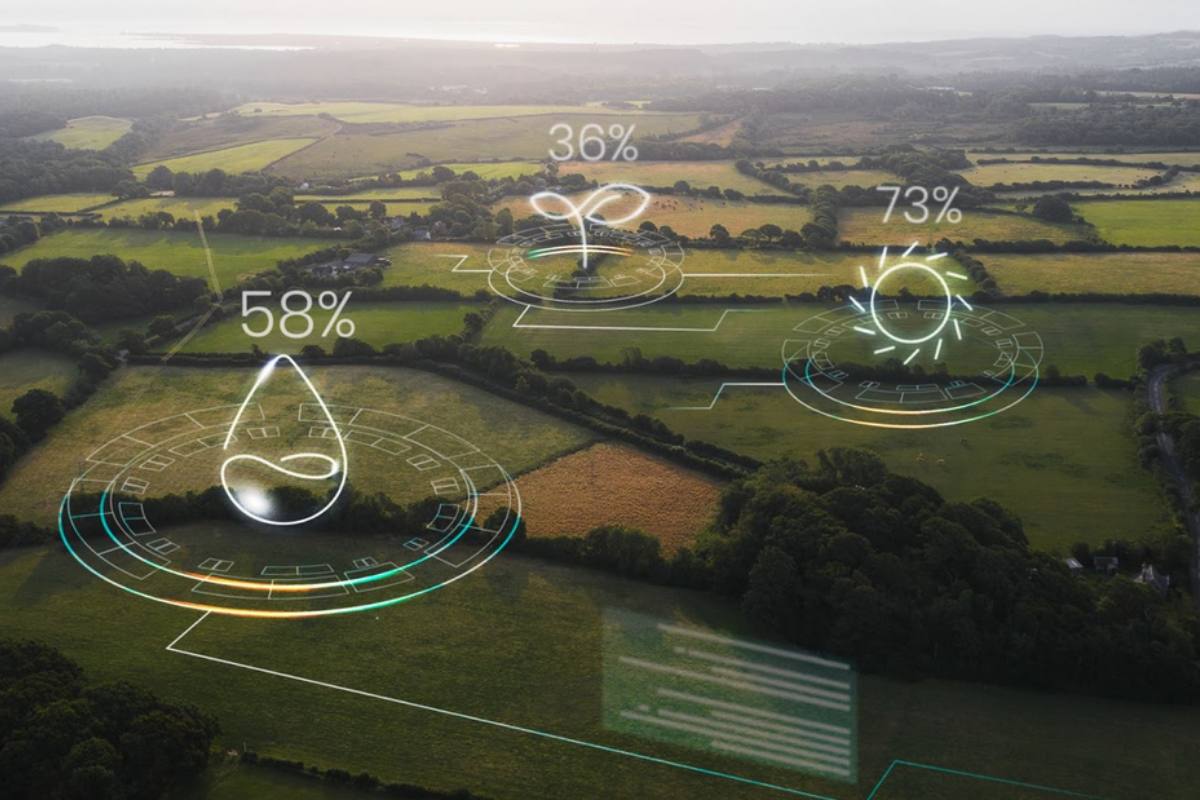
Farming has undergone massive changes over the last few decades. Earlier, farming activity was mainly based on experience and intuition without any chance to prognose or plan yields and incomes. But what has changed? Modern growers utilize satellite imagery, IoT sensors, and AI analytics to monitor their fields in real-time, even without on-site inspections.
All this data is presented in a clear and understandable format in a crop tracking platform, allowing farmers to view everything in one place: soil conditions, crop health, weather patterns, and growth progress. The result? Smarter farming, better yields, and more sustainable use of every resource.
What Is a Crop Tracking Platform?
A crop tracking platform is a central command center, where a farmer can access data from multiple resources about crop conditions, soil moisture, weather predictions, and more. As a result, growers receive a comprehensive, real-time view of the crop lifecycle through satellite imagery, on-the-ground sensors, and analytical tools. Here, how it works:
- Satellites like Sentinel and Landsat capture images of fields in various spectral bands (visible, NIR, and others, depending on the purpose).
- Together with satellites, IoT sensors in soil measure moisture, temperature, and other vital indicators. Then this data is sent wirelessly to the farmer’s device.
- Real-time information on weather patterns, humidity, and wind is also sent to the platform via an API.
- According to gathered data, tractors and harvesters, equipped with GPS on their boards, can synchronise together to adjust irrigation and fertilisation, and report on their general performance.
- All data collected and generated are stored in the platform’s cloud and are available from anywhere in the world, ensuring clarity and standardization for every authorized person.
Turning Satellite Light into Insight: How Vegetation Indices Help Farmers Act Early
Sentinel and Landsat satellites are the main sources of imagery in various spectral bands – visible, near-infrared (NIR), and shortwave-infrared (SWIR) wavelengths. Based on this information and vegetation indices, an application builds a map for growers who can improve the planting process before the consequences affect yields and profits. A wide variety of indices serve farmers:
- NDVI (Normalized Difference Vegetation Index): Measures plant “health” and photosynthetic activity. If NDVI values are low, it means that the plant is experiencing drought stress, pest damage, or nutrient deficiency.
- EVI (Enhanced Vegetation Index): This index is similar to NDVI, but it is less sensitive to atmospheric conditions and canopy density, making it suitable for areas with dense vegetation.
- NDWI (Normalized Difference Water Index): This index helps farmers to assess water content on the fields and figure out over- or under-irrigated zones.
The Role of IoT in Smart Farming
The Internet of Things brings a little magic to what is happening on the ground. It combines all the small sensors on the fields and in machinery, creating a comprehensive nervous system for a farm. As a result, all possible data, such as moisture levels, irrigation schedules, temperature, and many other factors, are synchronized in real-time and submitted to a single platform in a clear and understandable format. Therefore, there will be no guesswork for a farmer on what to do next. Generally, the processes can be automated without the need to participate in the core farming activities:
- Smart Irrigation: Sensors detect the moisture level and give this data to irrigation systems. Then they are adjusted automatically, providing the perfect amount of water for plants and precisely at the times when they need it.
- Precision Farming: Field borders are synchronised with data from satellites, and tractors are guided with centimeter-level accuracy to avoid waste.
- Targeted Pest Control: Using data from space and onsite sensors, AI-powered traps enable farmers to spray only where necessary, rather than the entire field.
- Healthy Equipment: Sensors act like a fitness tracker for tractors and predict if they need maintenance before a breakdown happens. They say it is cheaper and easier to prevent than to cure.
The result is bigger harvests and less wasted water. In fact, the UN’s Food and Agriculture Organization found this tech can boost farm efficiency by up to 25%.
The Future of Smart Farming
Traditional methods for managing crops are no longer effective in modern realities. Supply chains must be stable due to the growing population and climate change. Today, we must precisely predict what plants will need next and identify the factors that can negatively impact them. Here come all the technologies that may not have been developed for farming, but are nevertheless used in it.
Drones will act as tireless scouts, scanning vast kilometers of fields without needing to be charged. AI will continue to advance, automating processes and learning from new circumstances in real-time. Meanwhile, blockchain will create a “digital passport” for all the yields and products from fields. As a result, the logistics will be clear and transparent, and you will have a precise understanding of what is on your shelf and where each food item was produced. This will build a more trusted and safe supply chain. This is how we’ll build a brighter, greener future for farming that boosts profits and strengthens our global food security.
