

Transform your soil’s fertility and boost crop yields by integrating legumes like clover, peas, and beans into your seasonal crop rotations. These nitrogen-fixing powerhouses naturally enrich depleted soils while providing valuable food crops, making them essential to regenerative farming practices. By dedicating 25-30% of growing space to legumes each season, farmers and gardeners can reduce synthetic fertilizer needs by up to 50% while improving soil structure and supporting beneficial microbial life. Modern research shows that strategic legume rotation not only breaks pest and disease cycles but also increases yields of subsequent crops by 20-30%, offering a time-tested solution for sustainable agriculture that benefits both the environment and the farmer’s bottom line.
Why Legumes Are Your Soil’s Best Friend
The Science of Nitrogen Fixation
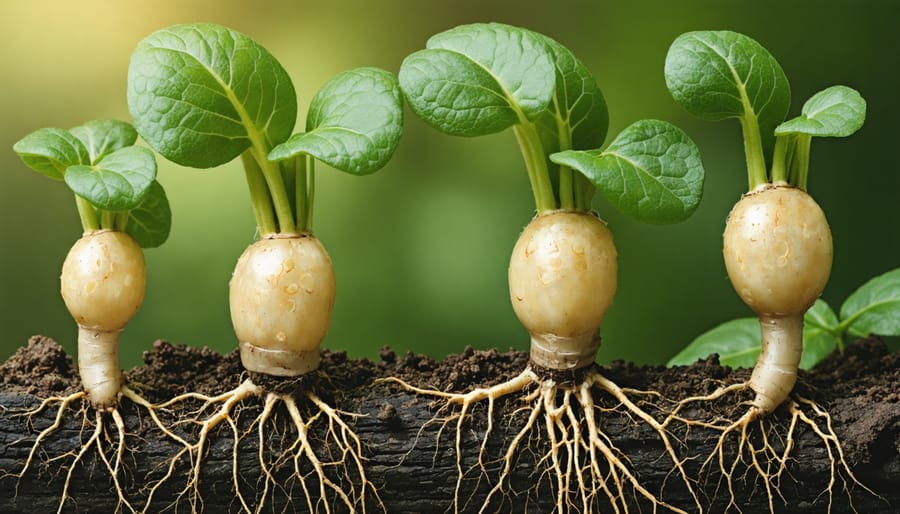
Legumes perform a remarkable feat through their partnership with special soil bacteria called rhizobia. These beneficial bacteria form tiny nodules on the legume’s roots, creating mini nitrogen factories underground. Inside these nodules, the bacteria convert atmospheric nitrogen (which plants can’t use directly) into a form that plants can absorb and use for growth.
Think of it as nature’s own fertilizer factory! The bacteria provide the legume with usable nitrogen, and in return, the plant supplies the bacteria with sugars and other nutrients. This mutually beneficial relationship can add significant amounts of nitrogen to your soil – up to 200 pounds per acre annually.
The best part? When the legume plant dies or is tilled into the soil, all that stored nitrogen becomes available for the next crop in your rotation. This natural process reduces the need for synthetic fertilizers while building healthier, more fertile soil.
Beyond Nitrogen: Additional Soil Benefits
Beyond their nitrogen-fixing abilities, legumes offer a wealth of benefits for soil health. Their extensive root systems create natural pathways that improve soil structure and water infiltration. As these roots grow deep into the earth, they help break up compacted soil layers, making it easier for future crops to establish strong root systems.
Legumes also contribute to soil biodiversity by forming beneficial relationships with various microorganisms. Their presence encourages the growth of helpful fungi and bacteria, creating a vibrant soil ecosystem. Additionally, when legume crops decompose, they add valuable organic matter to the soil, helping to naturally store carbon and improve overall soil fertility.
These plants are excellent at preventing soil erosion, thanks to their dense canopy and root structure. They act as living mulch, protecting the soil surface from harsh weather while maintaining moisture levels and suppressing weed growth. This multi-faceted approach to soil improvement makes legumes an invaluable tool in sustainable farming practices.
Planning Your Legume Rotation
Best Legumes for Crop Rotation
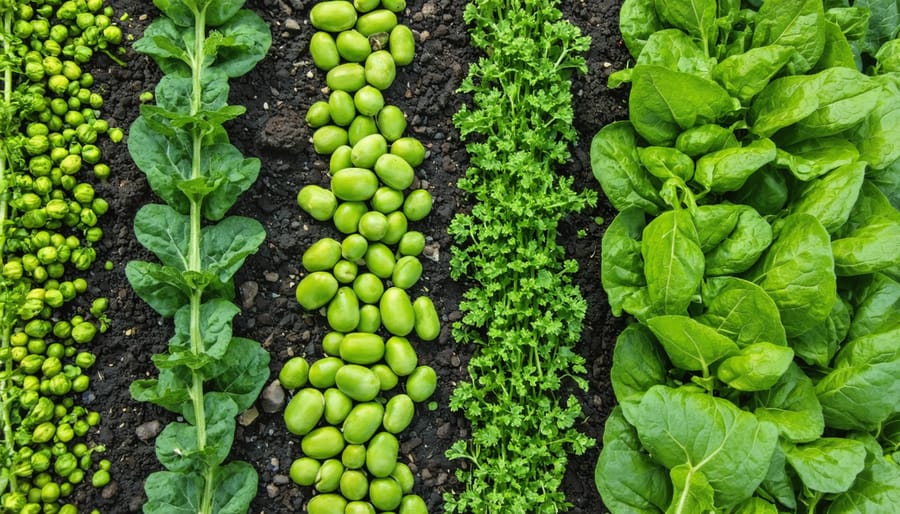
Several legume varieties excel in crop rotation systems, each offering unique benefits to your soil and subsequent crops. Soybeans are particularly effective at fixing nitrogen and can improve soil structure through their extensive root systems. They’re also a valuable cash crop, making them a win-win choice for many farmers.
Cover crops like crimson clover and hairy vetch are fantastic options for winter coverage, protecting soil from erosion while adding organic matter. These legumes are especially popular among organic farmers because they can be easily incorporated into the soil as green manure in spring.
Field peas and fava beans are excellent choices for cooler climates, as they thrive in lower temperatures and contribute significant amounts of nitrogen to the soil. They’re also relatively fast-growing, fitting well into shorter rotation windows.
For warmer regions, cowpeas and pigeon peas are outstanding choices. These heat-loving legumes are drought-resistant and particularly good at breaking up compacted soil layers. Many successful farmers in southern regions use these varieties to maintain soil health during hot summer months.
Garden beans and bush varieties work well in smaller plots and home gardens, making them perfect for urban farmers and community gardens. They’re easy to manage and provide both soil benefits and harvestable crops.
Seasonal Rotation Schedule
A successful legume rotation schedule follows the natural rhythm of seasons, maximizing both soil benefits and crop yields. Start your rotation planning in late winter, using February and March to map out your growing areas and select your legume varieties.
Spring kicks off the active growing season, typically from March to May, when you can plant cool-season legumes like peas and fava beans. These early crops help prepare the soil for summer plantings while providing an early harvest. As temperatures warm up in May and June, transition to warm-season legumes such as bush beans, pole beans, and cowpeas.
For maximum soil improvement, dedicate a specific plot to legumes for an entire growing season before rotating to heavy-feeding crops the following year. However, if space is limited, you can integrate shorter rotation cycles by following spring legumes with fall brassicas or winter squash.
Summer legumes should be planted by July in most regions, allowing enough time for nitrogen fixation before the first frost. In warmer climates, consider a fall planting of cool-season legumes in September or October to maintain soil fertility through winter.
Remember to keep detailed records of where legumes are planted each season. A simple garden journal or digital planting map helps track rotation patterns and ensures no area receives the same crop family two years in a row. Many successful farmers recommend a three to four-year rotation cycle for optimal soil health and pest management.
Success Stories from Local CSA Farms
Before and After: Soil Health Transformation
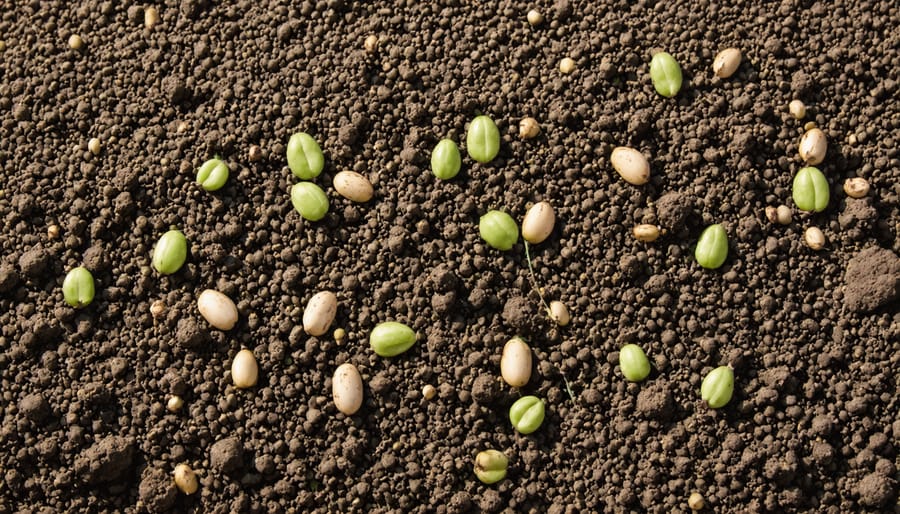
Meet Sarah Johnson, a third-generation farmer from Iowa who transformed her family’s 200-acre farm through legume crop rotation. “Five years ago, our soil was depleted, and we were spending a fortune on synthetic fertilizers,” she recalls. “Today, our soil is teeming with life, and our yields have increased by 30%.”
Sarah’s success story isn’t unique. Tom Martinez, an organic farmer in California, documented remarkable changes after implementing a three-year rotation cycle with alfalfa and clover. “Our soil organic matter increased from 2% to 5%, and we’ve cut our irrigation needs by 25%,” he shares. “The difference is visible – you can literally feel the soil becoming softer and more alive.”
The numbers tell a compelling story. According to a local farming cooperative study, farms implementing legume rotation saw:
– 40% reduction in nitrogen fertilizer use
– 35% increase in soil water retention
– 45% improvement in soil structure
– 20-30% increase in crop yields after just two rotation cycles
Marcus Chen, a small-scale vegetable farmer in Oregon, noticed changes within the first season. “The earthworm population exploded,” he notes. “Where we once found 5-10 worms per square foot, we now find 30-40. Our vegetables are more vibrant, and we’re seeing fewer pest problems.”
Even home gardeners are witnessing transformation. Linda Peterson, who maintains a quarter-acre garden in Minnesota, reports: “I started rotating beans and peas through my vegetable beds three years ago. Now my tomatoes and leafy greens grow bigger and healthier than ever, and I haven’t bought fertilizer in two years.”
These success stories demonstrate that whether you’re managing hundreds of acres or a backyard garden, legume rotation can dramatically improve soil health while reducing input costs and increasing productivity.
Common Challenges and Solutions
While legume crop rotation offers numerous benefits, farmers and gardeners often encounter several challenges during implementation. One common issue is timing – determining the optimal moment to switch from legumes to other crops requires careful planning and consideration of growing seasons. To address this, maintain detailed records of planting dates and crop performance to develop a schedule that works for your specific climate.
Disease management can also prove challenging, particularly in humid conditions where fungal problems may affect legumes. Implementing proper spacing between plants and ensuring good air circulation can help prevent these issues. Additionally, rotating different legume varieties rather than planting the same type repeatedly helps break disease cycles.
Some growers struggle with nutrient balance, as legumes can occasionally lead to excess nitrogen in the soil. Regular soil testing helps monitor nutrient levels, allowing you to adjust fertilization accordingly. If nitrogen levels are too high, following legumes with heavy-feeding crops like corn or leafy greens can help maintain balance.
Weed competition is another frequent concern, especially during the establishment phase of legume crops. Using mulch and maintaining appropriate plant density can effectively suppress weed growth. Some farmers successfully combine this with careful mechanical cultivation early in the growing season.
Market demands sometimes conflict with optimal rotation schedules. To overcome this challenge, many successful growers diversify their legume crops and stagger planting dates. This approach ensures a steady supply of products while maintaining the benefits of rotation.
Remember, most challenges have workable solutions, and the long-term benefits of legume rotation typically outweigh these temporary obstacles. Learning from experienced farmers in your area can provide valuable insights into managing these common issues.
Integrating legumes into your crop rotation system is a game-changer for sustainable agriculture and garden health. By adopting this time-tested practice, you’ll naturally enrich your soil with nitrogen, improve its structure, and create a more resilient growing environment. The benefits extend far beyond soil health – from reducing dependency on synthetic fertilizers to supporting beneficial insects and creating more diverse, productive gardens.
Whether you’re tending a small backyard plot or managing several acres, legume crop rotation offers a practical and cost-effective way to boost yields while caring for the environment. Many farmers report seeing improvements in their soil quality within just one growing season, with long-term benefits accumulating year after year.
Ready to get started? Begin with simple cover crops like clover or field peas in small sections of your garden. As you gain confidence, expand your rotation to include more diverse legume varieties. Remember, every garden plot converted to this sustainable practice contributes to healthier soils, stronger plants, and a more sustainable future for agriculture.
Take the first step today – your soil will thank you for years to come!
