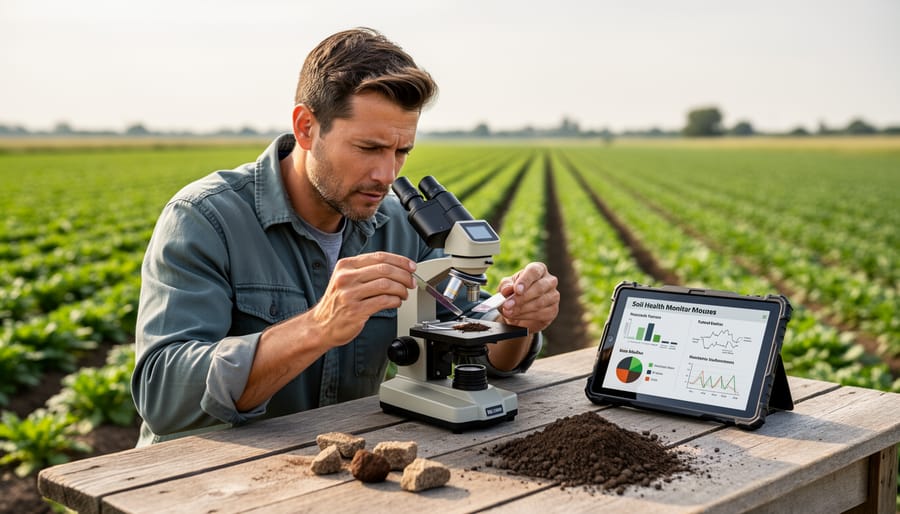
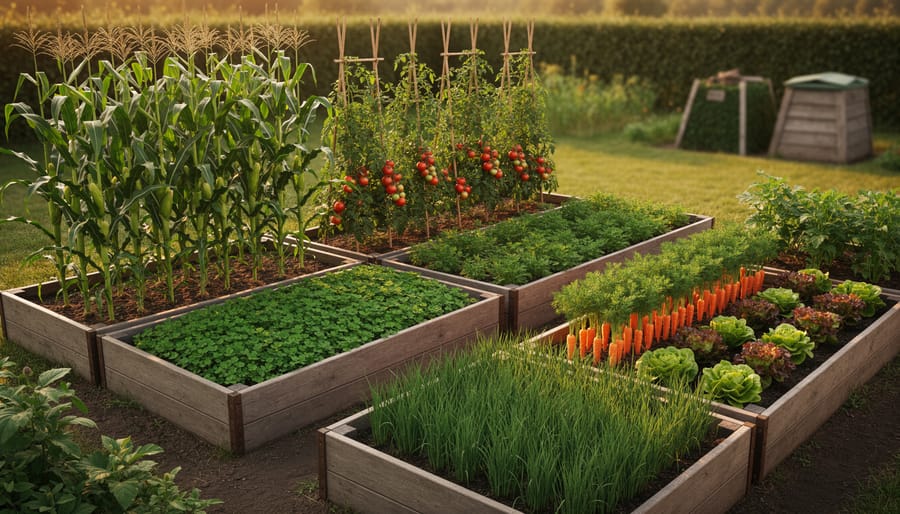
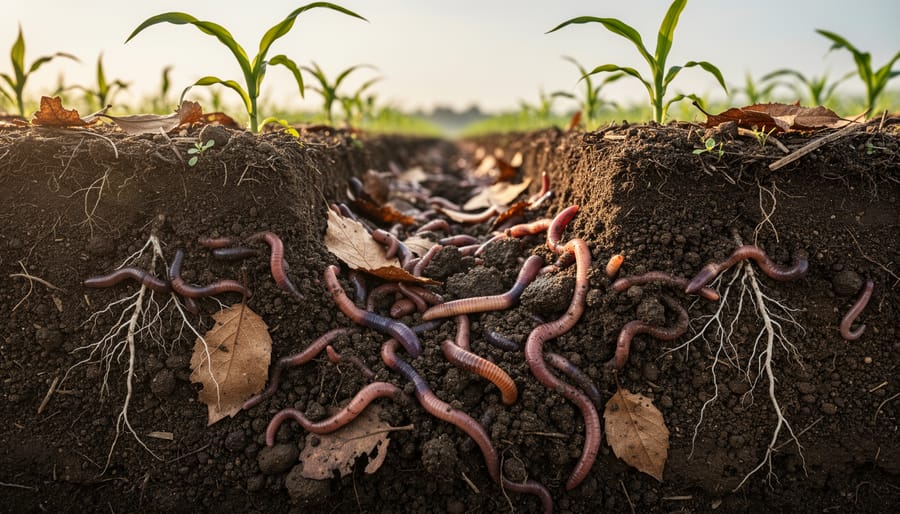
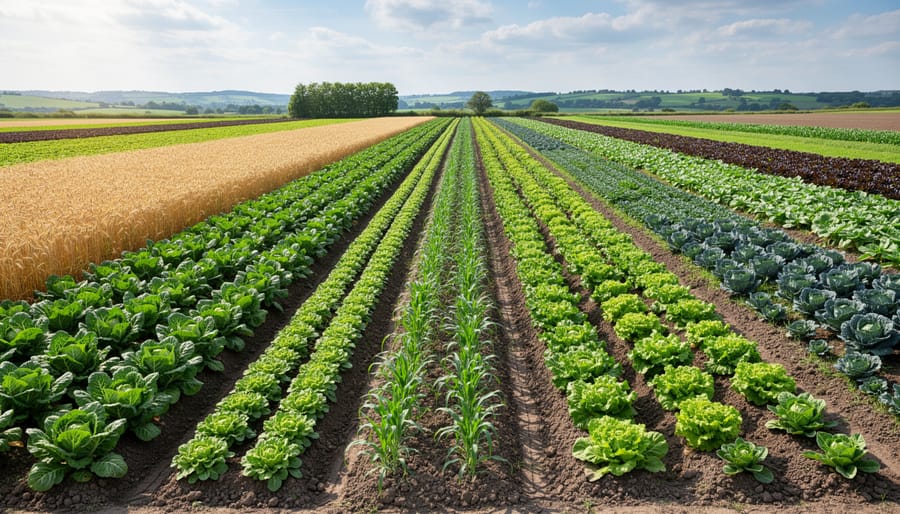
Category Archives

11 Articles

Why Carbon Sequestration Powers Healthy Ecosystems (And Your Farm)

Posted by darrell on
0
Regenerative Agriculture Insights
Why Carbon Sequestration Powers Healthy Ecosystems (And Your Farm)

Carbon sequestration stands as one of nature’s most powerful regulating services—a behind-the-scenes process where ecosystems absorb carbon dioxide from the atmosphere and store it in soil, plants, and ocean waters. Think of it as Earth’s natural climate control system, working constantly to balance greenhouse gases that would otherwise accumulate and accelerate global warming.

Regulating services are the benefits we receive from natural processes that moderate our environment, including pollination, water purification, flood control, and yes, carbon storage. Unlike provisioning services that give us tangible products like food and timber, regulating services operate as invisible guardians, maintaining conditions that make life possible. Carbon sequestration fits squarely in this category because healthy soils, forests, and grasslands actively remove carbon from the air and lock it away, reducing atmospheric CO2 concentrations without human intervention.

For farmers and gardeners embracing sustainable practices, understanding this connection transforms how you view soil health. Every time you add compost, plant cover crops, minimize tillage, or maintain perennial plantings, you’re enhancing your land’s capacity to capture and store carbon. Small-scale farms practicing regenerative methods can sequester impressive amounts of carbon annually—turning agricultural land from a carbon source into a carbon sink. This natural service doesn’t just benefit global climate; it builds soil fertility, increases water retention, and creates more resilient growing systems that produce better yields over time.

What Are Ecosystem Regulating Services?

Think of nature as having an incredible maintenance crew working 24/7 to keep our planet healthy and livable. These hardworking processes are what ecologists call ecosystem regulating services—and they’re absolutely essential to our survival, even though we rarely notice them happening.

Regulating services are the natural processes that maintain environmental balance and protect us from extremes. They work quietly in the background, filtering pollution from our air and water, controlling pests and diseases, moderating extreme weather, and keeping our climate stable. Unlike provisioning services that give us tangible products like food or timber, regulating services are all about the invisible work that keeps everything running smoothly.

Here’s how it plays out in everyday life: Wetlands act as natural sponges, absorbing excess rainwater and preventing flooding in nearby communities. Forests purify the air we breathe by absorbing pollutants and releasing oxygen. Healthy soils break down waste and filter water before it reaches our groundwater supplies. Pollinators like bees regulate plant reproduction, ensuring we have diverse crops and wild plants. Even soil microorganisms regulate nutrient cycling, making sure plants can access the minerals they need to thrive.

For those of us passionate about sustainable farming and organic gardening, understanding regulating services changes how we view our land. When you build healthy soil on your farm or garden, you’re not just growing better tomatoes—you’re supporting an entire ecosystem service that filters water, stores carbon, and maintains biodiversity. These natural processes are the foundation that makes regenerative agriculture work, turning our farms into powerful allies in environmental protection rather than just production sites.

Carbon Sequestration as a Regulating Service

Farmer's hands holding rich dark soil with visible organic matter and earthworms
Healthy soil acts as nature’s carbon storage system, capturing atmospheric CO2 and supporting vibrant ecosystems.

How Soil Acts as Earth’s Carbon Bank

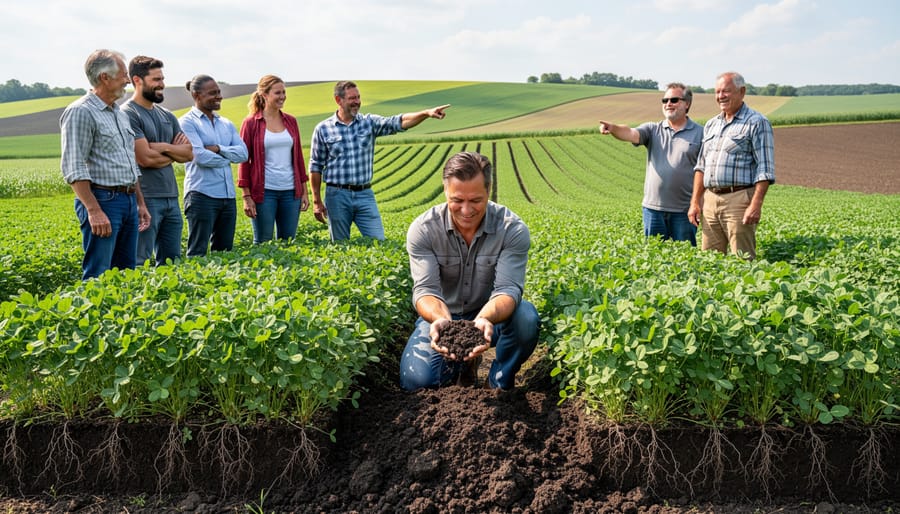
Think of soil as nature’s savings account for carbon. Through photosynthesis, plants pull carbon dioxide from the atmosphere and transform it into sugars and starches that fuel their growth. Here’s where it gets interesting: as plants grow, they send some of those carbon-rich compounds down into their roots. These roots don’t just anchor the plant—they’re constantly releasing substances into the surrounding soil, feeding beneficial microorganisms and contributing to a thriving underground ecosystem.

When plant material dies and decomposes, or when roots shed organic matter, all that carbon becomes part of the soil itself. Microorganisms break it down, and over time, it transforms into stable organic matter that can remain stored for decades or even centuries. This process is exactly how farms store carbon naturally, turning agricultural land into valuable carbon sinks.

The deeper and more extensive a plant’s root system, the more carbon it can deposit into the soil. Perennial crops and cover crops are particularly effective because their roots penetrate deeply and remain active year-round, continuously feeding this natural carbon banking system.

The Climate Regulation Connection

Carbon sequestration acts as nature’s climate control system by pulling excess CO2 from the atmosphere and locking it away in soil, plants, and roots. Think of it as a natural thermostat that helps keep our planet’s temperature in check. When carbon dioxide accumulates in the atmosphere, it traps heat like a blanket, leading to rising global temperatures. By capturing and storing this carbon, healthy soils actively counteract this warming effect.

This process directly regulates climate patterns in several ways. First, reducing atmospheric CO2 concentration helps stabilize global temperatures. Second, carbon-rich soils retain more moisture, which influences local rainfall patterns and reduces drought severity. Third, vegetation supported by carbon-dense soil releases water vapor through transpiration, creating cooling effects in surrounding areas.

For farmers practicing regenerative agriculture, this means every acre of well-managed soil becomes a climate warrior. Cover crops, minimal tillage, and composting all boost the soil’s carbon storage capacity. One inspiring example comes from a Midwest farmer who increased his soil organic matter from 2% to 5% over eight years, sequestering roughly 20 tons of CO2 per acre while simultaneously improving crop yields and resilience to extreme weather events.

Regenerative Agriculture: Supercharging Nature’s Carbon Service

Cover Cropping and No-Till Farming

Cover cropping and no-till farming are two powerful practices that work hand-in-hand to maximize carbon storage in your soil. Cover crops like clover, rye, or vetch blanket the ground during off-seasons, keeping soil protected from erosion while their roots actively pump carbon deep into the earth. When these crops die back naturally, they add organic matter that feeds beneficial soil microbes, which help lock carbon in place for the long term.

No-till farming takes this a step further by eliminating plowing and digging. When soil remains undisturbed, the carbon stored there stays put rather than being released into the atmosphere. Think of it like keeping a lid on a jar—the less you shake things up, the better everything stays contained. Traditional tillage can release decades worth of stored carbon in a single season, but no-till methods preserve those carbon reserves.

Many farmers practicing these techniques report healthier, more productive soil within just a few seasons. The combination creates a living soil ecosystem where carbon sequestration happens naturally and continuously, turning your farm or garden into an active climate solution while improving yields and soil fertility.

Diverse cover crop field with flowering plants in regenerative agriculture setting
Cover crops and diverse plantings maximize carbon sequestration while improving soil health and biodiversity on regenerative farms.

Composting and Organic Matter Addition

Adding compost and organic matter to your soil is like feeding a bustling underground city. Every time you incorporate kitchen scraps, cover crops, or well-aged manure, you’re providing fuel for billions of microorganisms that transform these materials into stable, carbon-rich humus. This dark, crumbly substance acts like a sponge, holding both carbon and water in the soil for years or even decades.

Think of it as nature’s savings account for carbon. Farmers at successful regenerative operations have documented soil organic matter increases of 1-2% over just a few growing seasons through consistent composting practices. This translates directly into carbon pulled from the atmosphere and locked underground.

Here’s a practical tip: start small with a backyard compost bin using vegetable scraps, grass clippings, and leaves. Layer brown materials (carbon-rich) with green materials (nitrogen-rich) in a 3:1 ratio. As this mixture breaks down, you’re creating the same carbon-storing humus that makes regenerative farms so effective at climate regulation while simultaneously improving your garden’s fertility and water retention.

Rotational Grazing and Diverse Plantings

Strategic livestock management and plant diversity work together beautifully to enhance carbon storage in soils. When farmers implement regenerative grazing practices, moving animals regularly across pastures, they mimic natural grazing patterns that stimulate deeper root growth and prevent soil compaction. This movement allows plants time to recover and photosynthesize more carbon back into the ground.

Combining diverse plantings with rotational grazing creates a powerful carbon-building system. Different plant species—grasses, legumes, and forbs—root at varying depths, capturing carbon throughout the soil profile. Similarly, crop rotation techniques in cultivated areas introduce biodiversity that feeds soil microbes and increases organic matter.

Many farmers have discovered that integrating livestock with diverse cover crops dramatically improves soil health within just a few seasons. The animals deposit nutrients while grazing, and their hoof action gently presses seeds and organic matter into the soil, accelerating the natural cycle of carbon capture and storage.

Cattle grazing on rotational pasture with farmer managing portable fencing
Rotational grazing practices build soil carbon while supporting livestock health and pasture vitality.

Real Benefits Beyond Carbon Storage

When we embrace carbon sequestration as a regulating service through regenerative farming practices, we unlock a treasure chest of environmental benefits that extend far beyond storing carbon in the soil. Think of it as nature’s domino effect—one positive action triggers a cascade of improvements across the entire farm ecosystem.

First, let’s talk about water. Healthy, carbon-rich soils act like sponges, leading to improved water retention during dry spells and better drainage during heavy rains. This means farms become more resilient to weather extremes, which is increasingly important as climate patterns shift. The organic matter that stores carbon also holds up to 20 times its weight in water, reducing irrigation needs and helping crops weather drought conditions.

Soil fertility gets a remarkable boost too. As carbon accumulates through composting, cover cropping, and reduced tillage, it creates a thriving underground city of microorganisms. These tiny workers break down nutrients and make them available to plants, reducing the need for synthetic fertilizers. One farmer in Ontario shared how her transition to carbon-focused practices cut her fertilizer costs by half within three years while her yields actually increased.

Biodiversity flourishes when we manage soil as a living carbon bank. From earthworms that aerate the ground to beneficial insects that pollinate crops and control pests, a carbon-rich farm becomes a haven for life above and below the surface. This diversity creates natural pest management systems, reducing reliance on chemical interventions.

Perhaps most importantly, these co-benefits work together to create crop resilience. Plants growing in nutrient-dense, well-structured soil with balanced moisture develop stronger root systems and better disease resistance. They’re simply healthier and more productive, which means better harvests and more nutritious food for your table.

Success Story: A Regenerative Farm Making a Difference

Meet Sarah Chen, a third-generation farmer who transformed her family’s struggling 40-acre conventional farm in Vermont into a thriving regenerative operation that now sequesters an estimated 80 tons of carbon annually. Five years ago, Sarah made a bold decision to transition away from tilling and synthetic inputs, instead embracing practices that work with nature’s rhythms.

Her approach focuses on keeping living roots in the soil year-round through cover cropping, integrating livestock using rotational grazing, and maintaining permanent pastures with diverse plant species. The results speak for themselves. Soil organic matter has increased from 2.8% to 5.3%, water infiltration rates have doubled, and crop yields have remained steady while input costs dropped by 40%.

Sarah’s farm now supplies 150 CSA members with vegetables, pasture-raised eggs, and grass-fed beef. She measures her progress using simple soil tests twice yearly and has noticed earthworm populations exploding, a sign of healthy, carbon-rich soil.

Her top advice for aspiring regenerative farmers? Start small and observe. Sarah began by converting just two acres to no-till methods while maintaining her existing operations. This allowed her to learn without risking the entire farm. She also emphasizes building community connections, noting that her CSA members became invested partners in the journey, appreciating both the environmental mission and superior produce quality.

The most surprising lesson? Carbon sequestration and profitability aren’t opposing goals. By reducing tillage and synthetic inputs while improving soil health, Sarah discovered that stewarding this vital regulating service actually enhanced her bottom line while creating resilience against droughts and extreme weather events.

So, is carbon sequestration a regulating service? Absolutely. This natural process stands as one of nature’s most powerful tools for maintaining atmospheric balance and mitigating climate change. Through regenerative agriculture, farmers actively harness this ecosystem service, transforming their fields into carbon sinks that benefit both the environment and food production. Every cover crop planted, every tillage practice reduced, and every compost application made contributes to pulling carbon from the atmosphere and storing it safely in the soil.

The beauty of carbon sequestration is that it doesn’t just fight climate change—it creates healthier, more productive farmland that yields nutrient-dense food for our communities. When you support local farms practicing regenerative methods, you’re directly investing in this vital regulating service. Even in your home garden, simple techniques like adding compost, planting diverse species, and keeping living roots in the soil year-round can make a meaningful difference.

Consider visiting nearby farms that embrace these practices, ask questions about their soil health strategies, and bring their carbon-sequestering produce to your table. Together, we’re not just growing food—we’re actively healing our planet, one handful of rich, living soil at a time.

How Organic Farms Become Thriving Ecosystems (Not Just Gardens)

Posted by darrell on
0
Regenerative Agriculture Insights
How Organic Farms Become Thriving Ecosystems (Not Just Gardens)

Picture a thriving organic farm where honeybees dance between wildflower borders, beneficial insects patrol vegetable rows hunting pests, and songbirds nest in hedgerows while earthworms enrich the soil below. This isn’t a distant agricultural fantasy—it’s the everyday reality of organic farms that embrace regenerative agriculture practices designed to nurture biodiversity.

While conventional farms often become biological deserts, organic farms function as vibrant ecological sanctuaries supporting 30% more species on average. The connection is straightforward: by eliminating synthetic pesticides and fertilizers, rotating diverse crops, maintaining natural habitats, and building healthy soil, organic farmers create welcoming environments where countless organisms can flourish. Each earthworm, pollinator, and soil microbe plays a vital role in creating resilient food systems that benefit everyone—from the farmer managing healthier crops with fewer inputs to the consumer enjoying nutrient-dense produce grown in living soil.

Understanding this biodiversity advantage matters whether you’re deciding which vegetables to buy at the farmers market, planning your backyard garden, or dreaming of starting your own farm. The organisms thriving on organic farms aren’t just nice to have—they’re essential workers providing free pest control, pollination services, nutrient cycling, and climate resilience. When you support biodiverse organic farms, you’re investing in ecosystems that actively restore nature while producing food, proving that agriculture can heal rather than harm our planet’s precious web of life.

What Biodiversity Really Means on an Organic Farm

When you visit an organic farm, biodiversity isn’t just an abstract environmental concept. It’s the buzzing symphony of different pollinators visiting heirloom tomato flowers, the variety of cover crops enriching the soil between planting seasons, and the beneficial insects keeping pest populations naturally balanced.

Biodiversity operates on three interconnected levels that make organic farms thrive. Genetic diversity means growing multiple varieties of the same crop rather than relying on a single type. Sarah Chen, who runs a certified organic vegetable operation in Oregon, plants five different lettuce varieties each season. “When late blight hit our region, some varieties struggled while others flourished,” she explains. “That genetic variety saved our harvest.”

Species diversity is what most people picture: the range of different plants, animals, insects, and microorganisms sharing the farm ecosystem. On a biodiverse organic farm, you’ll find heritage wheat growing alongside nitrogen-fixing clover, with beneficial wasps and ladybugs patrolling for aphids, while earthworms work tirelessly below ground. This variety creates natural pest control and eliminates the need for synthetic chemicals.

Ecosystem diversity takes the widest view, encompassing different habitats within the farm landscape. Marcus Williams transformed his Tennessee organic farm by preserving woodland edges, maintaining wetland areas, and creating hedgerows between fields. “These diverse ecosystems became home to dozens of bird species that control insect pests better than any spray ever could,” he shares.

Together, these three levels create resilient farming systems that produce nutrient-dense food while supporting wildlife. Understanding this framework helps you recognize truly biodiverse farms when shopping at farmers markets or choosing where to source your organic produce. It’s nature’s insurance policy and productivity booster rolled into one.

The Living Web: How Diverse Farms Feed Themselves

Underground Allies: The Soil Food Web

Beneath every thriving organic farm lies a hidden world teeming with life. The soil food web is nature’s ultimate recycling system, where billions of microscopic workers transform organic matter into plant-available nutrients. Think of it as an underground city where everyone has a job to do.

Bacteria and fungi are the primary decomposers, breaking down crop residues, cover crops, and compost into nutrients that plants can absorb. Mycorrhizal fungi form partnerships with plant roots, extending thread-like networks that act like nature’s internet, helping plants access water and nutrients from greater distances. In return, plants share sugars they’ve made through photosynthesis, creating healthy soil ecosystems that thrive without synthetic fertilizers.

Earthworms are the engineers of this underground world, creating tunnels that improve drainage and aeration while their castings provide rich, slow-release nutrients. A single acre of healthy organic soil can contain over a million earthworms, each one working tirelessly to build soil structure.

Ontario farmer Maria Chen discovered this firsthand when she transitioned to organic methods. “After three years without chemicals, our earthworm population exploded,” she shares. “The soil became so rich and crumbly that our crops needed less water and showed better disease resistance.”

This living soil approach eliminates the need for synthetic inputs while building long-term soil fertility, creating a self-sustaining system that gets better with time.

Close-up cross-section of healthy organic soil showing earthworms and root systems
Healthy organic soil contains a thriving ecosystem of bacteria, fungi, earthworms, and microorganisms that naturally feed plants.

Above Ground Partners: Pollinators and Predators

When you walk through an organic farm bursting with diverse plantings, you’re witnessing nature’s pest control team at work. The variety of flowering plants, cover crops, and hedgerows creates a welcoming habitat for beneficial insects that become the farmer’s best allies.

Pollinators like native bees, butterflies, and hoverflies are drawn to farms with diverse flowering plants throughout the growing season. These insects don’t just pollinate crops—many are also predators in their larval stages. Hoverfly larvae, for example, can devour up to 400 aphids before reaching adulthood. By planting a succession of blooming species, farmers ensure these helpful insects stick around all season long.

Predatory insects like ladybugs, lacewings, and ground beetles thrive where there’s plant diversity because it provides shelter, alternative food sources, and overwintering sites. When pest populations spike, these beneficial insects are already established and ready to respond. This natural balance dramatically reduces the need for any interventions, even organic-approved ones.

Michigan farmer Sarah Chen noticed this firsthand after establishing wildflower strips around her vegetable fields. “Within two seasons, I saw a huge increase in ladybugs and parasitic wasps,” she shares. “My aphid problems practically disappeared, and I’m spending less time managing pests and more time harvesting.”

For home gardeners, the principle applies equally well. Plant a variety of herbs, flowers, and vegetables together to create your own pollinator paradise. Leaving some areas a bit wild—with native plants and minimal disturbance—gives beneficial insects the diverse habitat they need to flourish.

Practical Strategies Organic Farmers Use to Build Biodiversity

Crop Rotation and Polycultures

Crop rotation stands as one of organic farming’s most powerful biodiversity boosters. By changing what grows in each field from season to season, farmers create diverse habitats that support different beneficial insects, soil microorganisms, and wildlife throughout the year. This practice naturally disrupts pest and disease cycles since many harmful organisms are plant-specific and can’t survive when their preferred host isn’t available.

Polycultures take this diversity even further by growing multiple crop species together in the same space. Think of a traditional corn-beans-squash combination where tall corn provides support for climbing beans, while broad squash leaves shade the soil and suppress weeds. This companion planting mimics nature’s diversity, attracting varied pollinators and beneficial predators that keep pest populations in check.

Sarah Chen, an Ontario organic farmer, shares her success: “Since implementing seven-year rotations with cover crop polycultures, I’ve seen monarch butterflies return and haven’t needed any pest interventions for three seasons.”

For home gardeners, try rotating vegetable families annually and pairing tomatoes with basil or carrots with onions to create your own biodiverse mini-ecosystem.

Hedgerows, Wildflower Strips, and Field Margins

Field edges become vibrant ribbons of life on organic farms when farmers intentionally create hedgerows, wildflower strips, and protected margins. These features transform what might be barren borders into thriving corridors that shelter beneficial insects, birds, and small mammals throughout the seasons.

Hedgerows serve as nature’s highways, allowing wildlife to move safely between habitats while providing nesting sites and winter protection. Native shrubs and trees like hawthorn, elderberry, and wild rose offer berries and seeds that sustain birds and pollinators year-round.

Wildflower strips planted alongside crop fields create spectacular displays while serving a practical purpose. These colorful bands attract predatory insects like ladybugs and lacewings that naturally control crop pests, reducing the need for any interventions. They also support native bees and butterflies essential for pollination.

Mary Chen, an organic vegetable grower in Vermont, shares her experience: “After establishing wildflower margins three years ago, I noticed aphid problems decreased significantly. The beneficial insects now do the pest management for me, and customers love visiting during peak bloom season.”

For home gardeners, even a small unmowed strip along your garden’s edge can make a difference, providing similar benefits on a smaller scale.

Wildflower border strip with bees and butterflies along organic farm field edge
Wildflower strips at field margins provide essential habitat and food sources for pollinators and beneficial insects that support organic crop production.

Cover Cropping and Green Manures

Between main crop seasons, organic farmers plant cover crops like clover, rye, and vetch to keep fields productive and alive. These hardworking plants create a protective blanket that prevents soil erosion while their roots feed an incredible underground ecosystem of bacteria, fungi, and earthworms.

When turned back into the soil as green manure, cover crops deliver nutrients naturally without synthetic fertilizers. Different cover crop species attract unique beneficial insects and pollinators, adding layers of diversity to the farm. Crimson clover, for example, feeds early-season bees while fixing nitrogen for future crops.

Sarah Chen, who runs a five-acre organic vegetable operation in Ontario, shares her experience: “Since switching to diverse cover crop mixes, I’ve noticed healthier soil structure and fewer pest problems. My earthworm population has tripled, and that tells me everything about my soil’s vitality.”

For home gardeners, try planting buckwheat or field peas in empty beds between seasons to mimic these farm-scale benefits.

Integrated Livestock Systems

When livestock and crops work together, farms truly come alive. Integrated livestock systems bring chickens, sheep, cattle, or pigs into crop rotation areas, where they perform multiple beneficial functions. As animals graze cover crops or crop residues, they naturally fertilize the soil with nutrient-rich manure, reducing the need for external inputs. Their foraging behaviors help control weeds and pests while their hooves gently aerate compacted soil.

This practice creates diverse habitats that attract beneficial insects, ground-nesting birds, and small mammals. Ontario farmer Sarah Mitchell rotates her laying hens through vegetable beds between seasons, noting that the chickens control pests while adding fertility. The result? Healthier soil teeming with earthworms and microorganisms, plus a more resilient ecosystem. For home gardeners, even a small backyard chicken flock can provide similar benefits, turning your garden into a miniature biodiversity hub while producing fresh eggs.

Organic farmer holding basket of freshly harvested vegetables in biodiverse farm garden
Organic farmers who embrace biodiversity practices often see improved crop health, natural pest control, and abundant harvests from thriving farm ecosystems.

Real Results: A Farmer’s Success Story

When Sarah Mitchell purchased her 40-acre farm in Vermont five years ago, the land was exhausted. Years of monoculture corn production had left the soil compacted, pest populations out of control, and yields declining steadily. Today, her thriving organic farm tells a completely different story, one where biodiversity became the key to transformation.

Sarah started small, dedicating just five acres to her biodiversity experiment. She planted hedgerows along field margins, established wildflower strips between crop rows, and created three small pollinator meadows. Within the first season, she noticed beneficial insects appearing in numbers she’d never seen before. Ladybugs and lacewings began naturally controlling aphid populations that previously required intervention.

The challenges weren’t insignificant. Sarah admits the first two years tested her patience. Converting depleted land takes time, and her initial yields dipped slightly as the ecosystem rebalanced itself. Neighbors questioned her unconventional approach, wondering why she’d “waste” productive land on flowers and shrubs.

But the results spoke for themselves. By year three, Sarah’s soil organic matter increased from 2.1% to 4.3%, measured through annual testing. Earthworm populations tripled, creating natural aeration that eliminated her need for mechanical tillage. Her vegetable yields matched and then exceeded her pre-conversion numbers, while pest damage dropped by 60%.

Perhaps most impressive was her bottom line. With reduced input costs and premium prices for her certified organic produce, Sarah’s profit margins improved by 35%. She now grows over twenty crop varieties, rotating them strategically to maximize both soil health and market opportunities.

Today, Sarah hosts regular farm tours, sharing her biodiversity journey with aspiring farmers and curious consumers. Her message is clear: working with nature rather than against it isn’t just environmentally sound, it’s economically smart. What started as a leap of faith became proof that biodiversity and productivity can flourish together.

What This Means for Your Plate (And Your CSA Box)

When you choose produce from a biodiverse organic farm, you’re getting more than just pesticide-free vegetables. Research consistently shows that crops grown in biologically rich soil systems contain higher levels of essential nutrients, including vitamins, minerals, and antioxidants. The complex web of soil microorganisms helps plants access and absorb nutrients more effectively than simplified farming systems.

You’ll also notice the difference in taste. That heirloom tomato from your CSA box bursts with flavor because the plant had access to diverse soil biology and wasn’t bred solely for shipping durability. The varied growing conditions on biodiverse farms allow crops to develop their full flavor profiles naturally.

From a food safety perspective, biodiverse farms tend to have fewer pest and disease problems because the ecosystem naturally regulates itself. When beneficial insects, birds, and microorganisms are present in healthy populations, they keep potential crop threats in check without chemical interventions.

When selecting an organic farm or CSA membership, ask questions that reveal their biodiversity practices. Do they maintain hedgerows, pollinator gardens, or wildlife corridors? How many crop varieties do they grow each season? Do they use cover crops and crop rotation? Farmers genuinely committed to biodiversity love talking about these practices.

Look for farms that describe themselves as regenerative or agroecological, terms that signal a deeper commitment to ecosystem health beyond basic organic certification. Visit the farm if possible. You should see flowering plants throughout the growing season, observe butterflies and bees, and notice diverse plantings rather than monoculture rows.

Take Sarah Chen’s approach at Meadowbrook Farm, where CSA members receive a weekly newsletter explaining which beneficial insects they’ve spotted and how companion plantings are protecting their crops. This transparency demonstrates both knowledge and commitment to working with nature rather than against it.

Starting Small: Biodiversity Tips for Home Gardens

You don’t need acres of land to support biodiversity—your backyard or balcony can become a thriving mini-ecosystem with a few thoughtful changes. Start by choosing native plants and flowers that naturally attract local pollinators like bees, butterflies, and hummingbirds. These plants have evolved alongside native wildlife and require less water and maintenance than exotic varieties.

Ditch the synthetic pesticides and fertilizers, even in small spaces. These chemicals eliminate beneficial insects along with pests, disrupting the natural balance your garden needs. Instead, welcome helpful predators like ladybugs and lacewings that naturally control aphids and other nuisances. A healthy garden finds its own equilibrium when you give nature a chance.

Create simple habitat features that invite wildlife to stay. Leave a small pile of logs or rocks in a corner for ground beetles and salamanders. Install a shallow water dish for birds and beneficial insects. Let a section of your lawn grow a bit wild—those “weeds” often provide crucial food sources for pollinators during different seasons.

Compost your kitchen scraps and yard waste to build rich, living soil teeming with microorganisms. This mirrors what organic farmers do on larger scales and reduces your waste while feeding your plants naturally.

Even a windowsill herb garden grown without chemicals contributes to a healthier local environment. Every small action creates ripples, connecting your space to the broader movement toward sustainable, biodiverse landscapes. Your garden becomes part of the solution, demonstrating that supporting biodiversity starts right where you are.

Organic farming exemplifies regenerative agriculture in its purest form—not just sustaining the land, but actively healing it while producing nourishing food. Every biodiverse organic farm becomes a sanctuary where pollinators thrive, soil organisms flourish, and natural systems regain their balance. This isn’t just agriculture; it’s ecosystem restoration happening one season at a time.

You can champion this vital work with your everyday choices. Join a Community Supported Agriculture (CSA) program to connect directly with biodiverse organic farms in your region. Shop at farmers markets where you can meet growers who prioritize wildlife habitat alongside crop production. Ask farmers about their practices—many love sharing how they nurture beneficial insects or protect hedgerows.

Consider this: when you support an organic farm, you’re investing in far more than your weekly vegetables. You’re backing ecosystem stewards who understand that healthy farms must work with nature, not against it. These farmers cultivate abundance for countless species while feeding their communities.

The future of our food system depends on recognizing farms as living ecosystems deserving our protection and support. Every purchase from a biodiverse organic farm casts a vote for a healthier planet—one where agriculture restores rather than depletes the natural world around us.

Why Fair Wages and Worker Dignity Matter More Than Your Organic Label

Posted by darrell on
0
Regenerative Agriculture Insights
Why Fair Wages and Worker Dignity Matter More Than Your Organic Label

Look beyond the soil when choosing where to buy your vegetables. The same farms that nurture the earth through organic regenerative practices don’t always extend that care to the people harvesting your food. While these farms rebuild soil health, sequester carbon, and eliminate synthetic pesticides, the uncomfortable truth is that environmental sustainability and fair labor practices don’t automatically go hand in hand.

The good news? A growing movement of regenerative farmers is proving that healing the land and honoring farmworkers are inseparable goals. These pioneers understand that true regeneration means living wages, safe working conditions, and decision-making power for everyone who tends the fields. They’re creating farm models where workers aren’t just laborers but valued partners in the agricultural ecosystem.

You have real power to support this shift. Every time you choose where to spend your food dollars, you’re casting a vote for the kind of agriculture you want to see flourish. The challenge lies in identifying which farms walk the talk on both environmental and social justice, and understanding how these two commitments strengthen each other.

This guide will help you recognize farms that practice genuine equity alongside regenerative methods, share inspiring stories from farmers who’ve built thriving, fair operations, and give you practical steps to support agricultural systems that regenerate both land and community. Because the future of farming depends on caring for soil and people with equal dedication.

The Missing Piece in Regenerative Agriculture

What Makes Regenerative Farming Different

While organic certification focuses primarily on what farmers don’t use—synthetic pesticides, GMOs, and chemical fertilizers—regenerative farming principles go several steps further. This approach asks not just “what are we avoiding?” but “what are we actively healing and improving?”

Regenerative farming treats the entire farm as a living ecosystem where soil health, water cycles, biodiversity, and carbon sequestration work together. Farmers using these methods might employ practices like cover cropping, rotational grazing, composting, and minimal tillage to actually rebuild topsoil rather than simply maintaining it.

But here’s what truly sets regenerative agriculture apart: it recognizes that people are part of the ecosystem too. A farm can restore watersheds and sequester carbon while exploiting workers or excluding community voices—that’s not genuinely regenerative. The most forward-thinking farmers understand that human wellbeing, fair labor practices, and community connection are just as essential as environmental restoration. When we support farms that honor both land and people, we’re investing in a food system that regenerates everything it touches.

Why Labor Issues Get Overlooked

The regenerative agriculture movement has captured hearts and minds with its promise of healing the soil and reversing climate change. Beautiful photos of lush pastures and thriving ecosystems dominate social media feeds and marketing materials. But here’s the reality: it’s easier to talk about carbon sequestration than uncomfortable conversations about wages and working conditions.

Farm economics play a significant role in this oversight. Many small-scale regenerative operations operate on razor-thin margins, making it genuinely challenging to provide competitive wages and benefits. This financial pressure creates a difficult situation where passionate farmers committed to environmental stewardship struggle to extend that same care to their workforce.

The marketing narrative around regenerative farming naturally gravitates toward tangible environmental wins because they’re measurable and visually compelling. Soil carbon levels, biodiversity counts, and water retention make for compelling stories. Social equity, however, requires deeper examination of power dynamics, compensation structures, and worker voices – topics that don’t translate as easily into Instagram-worthy content.

Additionally, many regenerative farms rely on volunteer labor, apprenticeships, or “work-trade” arrangements that can blur the lines between educational opportunities and fair employment practices. Without intentional focus on equity, these well-meaning models can inadvertently perpetuate exploitation.

The Real Cost of Your Organic Produce

Farmworkers harvesting fresh produce in an organic field during golden hour
Farmworkers are the backbone of organic agriculture, yet their contributions and wellbeing often go unrecognized in conversations about sustainable food.

Common Labor Challenges in Organic Farming

While organic and regenerative farms shine in environmental stewardship, they sometimes face the same labor challenges as conventional agriculture. Understanding these issues helps us support farms working toward truly holistic sustainability.

Seasonal work instability remains a significant concern. Many organic farms depend on seasonal employees during planting and harvest, leaving workers without steady income during slower months. This unpredictability makes it difficult for farmworkers to plan their lives and support their families year-round.

Housing conditions vary widely across farms. Some smaller operations struggle to provide adequate living quarters for workers, particularly during peak seasons when temporary help arrives. Rural locations can compound this challenge, as affordable housing options may be limited in the surrounding community.

Wage disparities persist even within the organic sector. While some farms pay living wages and offer benefits, others operate on tight margins and compensate workers at minimum wage or piece-rate systems that don’t always reflect the physically demanding nature of farm labor.

Benefits like health insurance, paid time off, and retirement contributions remain rare, especially on smaller farms where financial constraints are real. This gap leaves many farmworkers vulnerable during illness or injury.

Limited worker voice in farm decisions is another challenge worth addressing. When farmworkers lack opportunities to share input on working conditions, safety protocols, or operational practices, farms miss valuable perspectives from the people most intimately connected to daily operations. Creating space for worker feedback strengthens farm communities and improves outcomes for everyone involved.

Why ‘Organic’ Doesn’t Automatically Mean Fair

When you pick up a bundle of organic carrots at your local market, you’re making a choice for environmental health—but what about the people who grew them? Here’s something many consumers don’t realize: organic certification focuses exclusively on what goes into the soil and onto plants, not who’s doing the planting, weeding, or harvesting.

The USDA organic label verifies that farmers avoid synthetic pesticides and GMOs, use approved fertilizers, and follow specific land management practices. It’s a rigorous standard for environmental stewardship. However, it doesn’t require fair wages, safe working conditions, or benefits for farmworkers. A farm can maintain pristine organic soil while paying minimum wage with no healthcare coverage, and still earn that coveted green seal.

This doesn’t mean organic farmers are intentionally ignoring labor issues. Many small-scale organic growers genuinely care about their teams and create wonderful working environments. The point is simply that your organic purchase alone doesn’t guarantee it. Understanding this gap helps you ask better questions and seek out farms that prioritize both environmental and social sustainability—because truly regenerative farming should nurture people as carefully as it nurtures the land.

Farms That Are Getting It Right

Worker-Owned Cooperatives and Profit-Sharing Models

Some pioneering regenerative farms are reimagining labor relationships through worker-owned cooperatives and profit-sharing arrangements. These models transform employees into stakeholders, creating powerful incentives to care for soil health and long-term farm sustainability.

At cooperative farms, workers collectively own and govern the operation, making decisions about regenerative practices together. This shared ownership means everyone benefits when healthy soils produce better yields and when customers value the farm’s ecological methods. One Pennsylvania cooperative found that worker-owners took extra care with compost management and cover cropping because they directly profited from improved soil fertility.

Profit-sharing models offer similar benefits without full ownership transfer. Farms like Dancing Roots Farm in Oregon allocate a percentage of annual profits to their crew, rewarding the careful attention that regenerative agriculture requires. Workers report feeling genuinely invested in outcomes, from monitoring beneficial insects to maintaining biodiversity corridors.

These arrangements also improve economic resilience for farmworkers, addressing agriculture’s persistent income inequality. When a regenerative farm succeeds through premium pricing or expanded market access, workers share in that prosperity. This creates stable, dignified livelihoods while ensuring the people doing the hands-on work have real motivation to nurture the land for generations to come.

Farm workers and owners meeting together at outdoor table in collaborative setting
Worker-owned cooperatives and collaborative farm models demonstrate how social equity can be integrated into regenerative agriculture practices.

Year-Round Employment and Living Wages

Several pioneering farms have cracked the code on providing stable, well-paying jobs throughout all four seasons. At Singing Frogs Farm in California, farmer Paul Kaiser restructured his 3-acre operation around intensive market gardening techniques that require consistent labor year-round. By succession planting and diversifying crops, he maintains employment for his team with wages starting at $18 per hour plus health benefits.

Similarly, Muddy Boots Farm in Vermont transformed their business model by adding value-added products like fermented vegetables and winter storage crops. Owner Amy Ivy explains that processing these products during slower months keeps her crew of four employed full-time, earning living wages that reflect the local cost of living.

The economics work through strategic planning. These farmers maximize land productivity per square foot rather than per acre, allowing smaller operations to generate sufficient revenue. They’ve also built strong customer relationships through CSA programs and farmers markets, ensuring reliable income streams that support fair compensation.

Many successful farms combine crop production with educational workshops and agritourism, creating diverse revenue sources that sustain year-round employment. This approach proves that treating workers fairly isn’t just ethical but economically viable when farms think creatively about their business models.

Creating Pathways to Farm Ownership

Breaking down barriers to farm ownership is transforming the agricultural landscape and creating opportunities for the next generation of regenerative farmers. Several innovative programs are helping farmworkers build the skills, capital, and connections needed to own their own land.

The Agriculture and Land-Based Training Association (ALBA) in California stands out as a pioneering example. This nonprofit provides farmworker families with comprehensive business training, access to farmland, and technical support. Over the past two decades, ALBA has helped launch more than 200 Latino farm businesses, with graduates farming over 1,000 acres organically. Maria Gonzalez, an ALBA graduate, now runs a thriving five-acre organic farm that supplies local restaurants and farmers markets. “I went from picking strawberries to growing my own vegetables and building equity for my children,” she shares.

Similar initiatives like the New Entry Sustainable Farming Project in Massachusetts and the Hmong American Farmers Association in Minnesota offer incubator farm programs, land lease opportunities, and culturally specific support. These programs recognize that democratizing land access isn’t just about fairness—it strengthens local food systems by welcoming diverse knowledge and farming traditions. When farmworkers become owners, they build generational wealth while stewarding land with regenerative practices they’ve helped develop.

Consumer and farmer exchanging fresh vegetables at farmers market
Direct relationships between consumers and farmers create opportunities for meaningful conversations about labor practices and social equity.

What You Can Do as a Consumer

Questions to Ask Your CSA or Farmers Market Vendor

Striking up a conversation with your farmers market vendor or CSA farmer is a wonderful way to learn about the values behind your food. Approach these questions with genuine curiosity and an open heart—most farmers love sharing their story!

Start with appreciation: “I’m really interested in how your farm operates. Can you tell me a bit about your team?” This opens the door naturally. Follow up with, “How do you approach fair compensation for your workers?” Listen for details about living wages, benefits, or profit-sharing arrangements.

You might ask, “What does a typical day look like for farmworkers during harvest season?” This reveals working conditions without putting anyone on the spot. If you’re curious about growth opportunities, try: “Do you offer training or skill development for your team members?”

Questions about community impact work well too: “How does your farm support the local community beyond providing food?” Some farms partner with workforce development programs or offer apprenticeships for aspiring farmers.

Remember, farmers juggling market sales may have limited time for lengthy conversations. Consider visiting during slower moments or attending farm tours where deeper discussions naturally unfold. Your thoughtful questions show you value both the produce and the people who grow it, encouraging farms to prioritize social equity alongside environmental stewardship.

Certifications and Labels That Include Labor Standards

Several meaningful certifications help consumers identify farms that prioritize both environmental sustainability and fair labor practices. Food Justice Certified stands out as a comprehensive label that verifies living wages, safe working conditions, and community empowerment alongside regenerative farming methods. This certification particularly supports farmworkers’ voices in the verification process, ensuring authentic accountability.

Fair Trade USA has expanded beyond coffee and chocolate to include domestic produce, guaranteeing fair wages and worker welfare protections. The Agricultural Justice Project (AJP) offers another robust option, with standards covering everything from employment conditions to community relations. These certifications require third-party audits and regular renewals, providing reliable assurance for conscious consumers.

When shopping, look for these labels at farmers markets, food co-ops, and CSA programs. While certification can be expensive for smaller farms, many practice these principles without official labels. Don’t hesitate to ask farmers directly about their labor practices during market visits or farm tours. Supporting certified operations creates market demand that encourages more farms to adopt equitable practices, strengthening the connection between environmental health and social justice in our food system.

Supporting Policy Changes and Community Initiatives

Your purchasing power matters, but real change happens when we advocate beyond the farmers market. Consider joining or starting a local food policy council in your community—these grassroots groups shape regulations that affect farmworker conditions, from wage standards to housing requirements. You can also support farmworker-led organizations like the Coalition of Immokalee Workers or Food Chain Workers Alliance, which fight for dignity and fair treatment in agricultural settings.

Attend town halls and county meetings to voice support for policies that protect agricultural workers, including heat safety standards and pesticide exposure protections. Many regenerative farmers have shared success stories about how community advocacy helped them secure grants for worker housing improvements or health benefits programs. Write to your representatives about farm labor reform, and consider volunteering with organizations that provide legal aid, healthcare access, or education programs for farm families. When consumers and farmers work together on policy initiatives, we create lasting systemic change that extends far beyond individual farm practices. Even small actions, like signing petitions or sharing information on social media, amplify the voices of those working to feed us sustainably and ethically.

Building a Truly Regenerative Food System

Why Healthy Workers Mean Healthier Soil

Here’s a truth that regenerative farmers understand deeply: healthy soil doesn’t start with compost or cover crops—it starts with the people tending the land. When farm workers receive fair wages, stable employment, and safe working conditions, they develop a genuine stake in the farm’s long-term success. This investment translates directly into better care for the soil and crops.

Consider Maria, a farmhand at Green Valley Organics who’s been with the operation for eight years. With reliable year-round employment and health benefits, she’s learned to spot early signs of soil compaction and pest pressure, saving the farm thousands in potential losses. Her expertise wouldn’t exist without job security that encourages her to stay and grow.

Farms practicing regenerative practices recognize that rushed, stressed workers make mistakes—trampling delicate cover crops, misapplying amendments, or overlooking the subtle signs that soil biology is struggling. Conversely, workers who feel valued bring attention to detail that regenerative systems demand. They’re more likely to suggest improvements, notice patterns, and embrace the patient, observant approach that healthy ecosystems require. When we invest in people, we’re simultaneously investing in the land’s capacity to heal and thrive.

The Connection Between Food Justice and Climate Resilience

When farming communities prioritize fair wages, safe working conditions, and inclusive decision-making, they create stronger foundations for weathering climate challenges. Workers who feel valued and respected are more invested in the land’s long-term health, bringing innovative solutions and traditional knowledge to the table. Take Maria’s story at Green Valley Farm in Oregon, where transitioning to worker ownership transformed their resilience. When unexpected droughts hit, the team collaboratively redesigned their water management system, drawing on the diverse experiences of farmhands from different agricultural backgrounds.

Equitable farms also retain skilled workers longer, building institutional knowledge that proves invaluable during climate emergencies. These experienced teams can quickly adapt practices, from adjusting planting schedules to implementing emergency soil protection measures. Additionally, farms investing in their people tend to invest in infrastructure improvements, better equipment, and continued education about climate adaptation strategies.

This connection between social justice and environmental resilience strengthens sustainable food systems overall. When farmers and workers share equitably in both challenges and successes, they’re motivated to implement the kind of long-term regenerative practices our changing climate demands. Supporting these farms through your food choices means backing operations built to endure.

True regenerative agriculture goes beyond healing the soil—it must also regenerate the communities that tend it. When we choose farms that prioritize fair wages, safe working conditions, and equitable ownership models alongside carbon sequestration and biodiversity, we’re voting for a food system that values people as much as it values the planet. Every purchase from your local farmers market, every CSA membership, every conversation with a farmer is a powerful statement about the future you want to see.

Consider the story of Maria, who went from seasonal farmhand to co-owner at a worker-owned cooperative farm in Vermont. Her farm now not only builds healthy soil through cover cropping and compost, but also builds community wealth through profit-sharing and leadership development. This is what regeneration looks like when it includes everyone.

Your food choices ripple outward in ways you might not immediately see. Supporting farms that treat workers well creates jobs that allow people to stay in rural communities, raises standards across the agricultural sector, and demonstrates that ethical practices are economically viable. Look for farms that openly share their labor practices, offer living wages, and create pathways for advancement.

Start by visiting a local regenerative farm this season. Ask questions about their team, their values, and their vision. Join a CSA that aligns with your principles. Engage with farmers at markets and learn their stories. Together, we can cultivate a food system that truly nourishes everyone—from seed to soil to soul.

How Digital Tools Are Transforming Small Farms Into Regenerative Powerhouses

Posted by darrell on
0
Regenerative Agriculture Insights
How Digital Tools Are Transforming Small Farms Into Regenerative Powerhouses

The fields are getting smarter, and your farm can too. Digital tools are transforming regenerative agriculture from guesswork into precision science, helping farmers rebuild soil health while cutting costs and boosting yields. Whether you’re managing a small market garden or transitioning acres to organic production, technology now makes sustainable practices more accessible than ever.

Soil sensors track moisture levels and nutrient content in real-time, telling you exactly when and where to irrigate or apply compost. Drone imagery reveals problem areas before your eyes can spot them, identifying pest pressure, disease, or compaction issues across entire fields in minutes. Mobile apps connect you with weather forecasts, planting schedules, and crop rotation plans designed specifically for regenerative systems. GPS-guided equipment reduces overlap and fuel waste while enabling cover crop seeding with pinpoint accuracy.

The results speak clearly. Farmers using digital monitoring report 20-30% reductions in water usage, healthier soil biology measurements, and improved crop resilience during extreme weather. These aren’t futuristic concepts reserved for industrial operations. Many tools cost less than traditional equipment, with some excellent options available as free apps or through agricultural extension programs.

This digital revolution isn’t replacing the farmer’s intuition and experience. Instead, it’s enhancing your ability to observe, respond, and nurture the land back to life. The marriage of technology and regenerative principles creates a powerful pathway toward farms that feed communities while healing ecosystems. Let’s explore how these tools work in practice and how you can start using them today.

What Makes Digital Tools Essential for Regenerative Agriculture

Farmer holding smartphone with agricultural app in vegetable field
Modern farmers use smartphone apps to monitor soil health, track crop rotations, and manage regenerative practices in real-time.

The Data Gap That Held Regenerative Farming Back

For generations, regenerative farmers worked from deep knowledge passed down through families and communities. They read the land through touch, smell, and careful observation—noticing how crops responded to different practices, watching soil texture change season by season. This intuitive approach worked, but it had limitations. Without concrete data, it was difficult to prove which methods truly made a difference or to fine-tune practices for optimal results.

Take Sarah Mitchell, a third-generation farmer in Vermont who struggled to convince investors that her no-till methods were improving soil health. “I knew my soil was getting better—I could feel it in my hands,” she explains. “But I couldn’t show anyone the numbers.”

This data gap made it challenging for regenerative farmers to access funding, insurance, or even share best practices with neighboring farms. Traditional soil testing was expensive and infrequent, providing only snapshots rather than ongoing insights. Weather patterns, pest pressures, and crop performance often went undocumented beyond personal memory.

Digital tools have changed everything. Today’s sensors, smartphone apps, and satellite imagery transform observation into measurable data, helping farmers like Sarah validate their instincts while discovering new opportunities for improvement.

Why Small Farms Benefit Most

For decades, large industrial farms had exclusive access to expensive precision agriculture technology—satellite imagery, soil sensors, and data analytics that cost hundreds of thousands of dollars. Digital tools have changed everything. Today’s cloud-based platforms and affordable sensors put powerful insights into the hands of small-scale farmers running CSA operations, finally leveling the playing field.

Take Sarah Chen, who manages a three-acre regenerative farm in Oregon. Using a $200 soil moisture sensor connected to her smartphone, she optimized her irrigation schedule, reducing water use by 40% while improving crop yields. “I have the same data that mega-farms use, but I can stay true to my regenerative principles,” she explains.

Mobile apps now track crop rotations, monitor biodiversity indicators, and help small farmers demonstrate their environmental impact to CSA members. These digital solutions don’t require abandoning hands-on farming wisdom—they enhance it. Small farms can adopt technology selectively, choosing tools that support their values rather than replacing the intimate knowledge that makes regenerative agriculture thrive. The result? Competitive advantages without compromising sustainability.

Game-Changing Digital Tools Regenerative Farmers Are Using Right Now

Wireless soil sensor inserted in healthy dark soil with organic matter
Affordable soil sensors provide real-time data on moisture levels, nutrients, and microbial activity to help farmers optimize regenerative practices.

Soil Health Monitoring Apps and Sensors

Gone are the days when understanding your soil meant sending samples to a lab and waiting weeks for results. Today’s smartphone apps paired with affordable sensors bring soil science right to your fingertips. These digital tools measure critical factors like moisture levels, pH balance, nitrogen, phosphorus, and potassium content in real-time, helping you make informed decisions about irrigation and fertilization.

Modern soil sensors, some costing less than a good gardening spade, can even track microbial activity and organic matter changes. This data reveals how your regenerative practices are performing underground. By monitoring these metrics regularly, you can watch your soil improve over time and adjust your approach accordingly.

The real magic happens when you use this information to build soil health while cutting costs. Farmers using these tools report reducing fertilizer applications by 20-30% because they know exactly what their soil needs, when it needs it. One Ontario vegetable grower, Maria Chen, saved over $3,000 in her first season by letting sensor data guide her irrigation schedule, preventing both overwatering and nutrient leaching.

These apps also track your progress toward carbon sequestration goals, showing tangible proof that your regenerative efforts are actually capturing atmospheric carbon in the soil.

Crop Planning and Rotation Software

Planning diverse, healthy crop rotations can feel overwhelming, but digital tools are making it remarkably simple for farmers of all experience levels. Modern crop planning software helps you design rotations that rebuild soil health, reduce pest pressure, and maximize yields throughout the growing season.

Platforms like Tend and CropPlanner allow you to map out multi-year rotation schedules, track planting dates, and receive reminders for succession planting. These tools consider companion planting relationships, helping you pair crops that naturally support each other while deterring pests. For example, the software might suggest planting basil near tomatoes or scheduling nitrogen-fixing legumes before heavy feeders like brassicas.

Many programs also integrate weather data and local growing conditions to optimize your planting calendar. Farmer Sarah Mitchell from Ontario credits her planning app with increasing her small farm’s productivity by 30% while reducing input costs. The software helped her schedule succession plantings perfectly, ensuring continuous harvests from spring through fall.

Most platforms offer free trials or affordable subscription models designed specifically for small-scale operations. They’re surprisingly intuitive, with visual garden maps and drag-and-drop features that make planning feel more like creative design than complicated logistics. This accessibility means even beginner farmers can implement sophisticated regenerative strategies from day one.

Weather and Climate Tracking Tools

Predicting Mother Nature used to mean watching the clouds and checking the almanac, but today’s farmers have powerful weather tracking tools right in their pockets. Hyperlocal weather apps like FarmLogs and FieldClimate provide minute-by-minute forecasts for specific field locations, helping farmers time their planting, irrigation, and harvesting with remarkable precision.

These digital tools go beyond basic temperature readings. They track soil moisture levels, frost warnings, and even pest pressure indicators based on climate conditions. For regenerative farmers, this data is invaluable for making decisions that protect soil health—like avoiding field work when soil is too wet, which can cause damaging compaction.

Climate pattern trackers help farmers adapt to long-term changes by analyzing historical data and predicting seasonal trends. Sarah Martinez, an organic vegetable grower in Colorado, credits her weather app with reducing water usage by 30% while improving crop yields. “I used to guess when to irrigate,” she explains. “Now I have real-time data showing exactly what my soil needs.”

Many of these apps integrate with other farm management platforms, creating a comprehensive digital ecosystem that supports sustainable decision-making throughout the growing season.

Biodiversity and Ecosystem Monitoring

Digital tools are revolutionizing how farmers understand and protect the living ecosystems on their land. Today’s apps make it remarkably easy to identify beneficial insects like ladybugs and lacewings that naturally control pests, eliminating the guesswork that once made biodiversity management challenging. Apps such as iNaturalist and Seek allow you to simply snap a photo of an insect or plant, receiving instant identification and information about its role in your farm’s ecosystem.

Pollinator tracking apps help farmers monitor bee populations and butterfly migration patterns, providing valuable data about these essential workers. Some platforms even connect your observations to larger citizen science databases, contributing to regional conservation efforts while giving you insights into your own farm biodiversity.

Wildlife monitoring has also gone digital, with motion-activated camera apps and acoustic monitoring tools that track bird songs and animal activity. These technologies help farmers see the direct impact of their regenerative practices on local wildlife populations. One Ontario farmer discovered three new bird species nesting on her property after just one season of using a biodiversity monitoring app, confirming that her pesticide-free approach was working beautifully.

Farm Management and CSA Coordination Platforms

Managing a Community Supported Agriculture (CSA) operation while tracking regenerative farming metrics used to mean juggling multiple spreadsheets and endless email chains. Today’s integrated farm management platforms are changing that story. These all-in-one digital solutions help farmers coordinate everything from membership subscriptions and harvest planning to delivery logistics and customer updates in a single dashboard.

Platforms like Harvie, Local Line, and Farmigo streamline CSA operations by automating subscription management, payment processing, and weekly share customization. Members can easily adjust their preferences, pause deliveries, or add farm store items through user-friendly portals. Meanwhile, farmers gain valuable time to focus on what matters most: growing nutrient-dense food.

What makes these platforms especially powerful for regenerative practitioners is their ability to track sustainability metrics alongside business data. You can monitor soil health improvements, document biodiversity increases, and share these regenerative milestones directly with your community through built-in communication tools.

Take Maria’s small organic farm in Vermont, where implementing a management platform reduced her administrative time by 15 hours weekly. She now uses those hours for cover crop planning and has strengthened customer relationships through personalized harvest updates that highlight her soil-building practices. These digital tools transform farm management from overwhelming to empowering.

Real Farms, Real Results: Success Stories from Digital-Savvy Regenerative Growers

How One CSA Farm Cut Water Use by 40% Using Soil Sensors

When Green Valley Farm in Oregon began struggling with rising water costs and increasingly dry summers, owner Maria Chen knew she needed a smarter approach. Like many small-scale CSA operations, her five-acre vegetable farm relied on scheduled irrigation—watering every field on the same routine regardless of actual soil conditions. This meant some crops received too much water while others got too little.

Maria invested in a network of affordable soil moisture sensors that transmitted real-time data to her smartphone. Within the first season, she discovered eye-opening patterns. Her tomato beds were being overwatered by nearly 50%, while her greens weren’t getting enough during critical growth periods. Armed with this information, she could optimize irrigation schedules for each crop’s unique needs.

The results exceeded her expectations. Water consumption dropped by 40% compared to the previous year, slashing utility bills significantly. Even better, her soil structure improved dramatically. Over-saturated areas began draining properly, reducing compaction and encouraging deeper root growth. Her tomato yields actually increased by 15% despite using less water, and customer feedback praised the improved flavor of her produce.

Maria now shares her experience with other CSA farmers, emphasizing that the technology paid for itself within one growing season. Her advice? Start small with one field to build confidence, then expand as you see results.

The Vegetable Grower Who Doubled Biodiversity With a Smartphone

Maria Rodriguez grows vegetables on three acres in northern California, and she’s discovered something remarkable: her smartphone has become the key to unlocking natural pest control. Two years ago, she started using iNaturalist, a free biodiversity tracking app, to photograph and identify every insect, bird, and plant species she spotted on her farm.

The results surprised even her. Within months, Maria documented 87 beneficial species she never knew existed on her property, including native bees, predatory beetles, and parasitic wasps that naturally control aphids and caterpillars. “I thought I had maybe a dozen helpful bugs,” she laughs. “Turns out I had an entire workforce I didn’t even know about.”

Armed with this knowledge, Maria made strategic changes. She planted specific flowering plants to support the beneficial insects she’d identified, created small habitat areas based on species needs, and adjusted her irrigation timing to avoid disrupting ground-nesting bees. She tracks everything through the app, building a digital record of which species appear when and where.

The impact on her crops has been dramatic. Pest damage dropped by 60 percent in the first year, and she’s eliminated nearly all pesticide use, even organic ones. Her tomatoes and peppers are healthier, and she’s noticed improved pollination rates across her entire operation.

Maria now spends just 15 minutes each week photographing and logging observations. “It’s like having a team of scientists helping me understand my farm’s ecosystem,” she says. “And it’s all right here in my pocket.”

Diverse vegetable garden with multiple crops and pollinators including bees and butterflies
Biodiversity monitoring apps help farmers track beneficial insects, pollinators, and wildlife that contribute to healthy regenerative farm ecosystems.

Getting Started: Your Action Plan for Digital Regenerative Farming

Start With Just One Tool (Here’s Which One)

If you’re just beginning your digital agriculture journey, start with a soil monitoring system. Whether you’re managing a small garden plot or scaling up to several acres, understanding your soil health gives you the foundation for every other decision you make.

Digital soil sensors measure moisture levels, pH, temperature, and nutrient content in real-time, sending data directly to your smartphone. This single tool prevents overwatering, reduces fertilizer waste, and helps you spot problems before they damage your crops. For regenerative farmers specifically, tracking soil organic matter improvements becomes measurable proof that your practices are working.

Sarah Chen, an organic vegetable farmer in Oregon, started with basic soil sensors and saw immediate results. Within one season, she reduced her water usage by 30% and increased her tomato yields by 25%. The data helped her identify exactly when and where to apply compost, strengthening her soil biology naturally.

Expect to invest between $200-$800 for a quality system that covers a small to medium farm. The information you’ll gain pays for itself quickly through resource savings and improved harvests. Once you’re comfortable reading and responding to soil data, you’ll have built the confidence and baseline knowledge needed to explore other digital tools that complement your growing operation.

Free and Low-Cost Tools to Try First

Starting your digital farming journey doesn’t require a hefty investment. FarmLogs offers free farm management tools that help you track field activities, monitor weather patterns, and manage inventory with an intuitive interface perfect for beginners. For soil health monitoring, the SoilGrids app provides free access to global soil data, helping you understand your land’s composition and nutrient levels. Gardeners and small-scale farmers love iNaturalist, which uses community expertise to identify plants, pests, and beneficial insects through simple photo uploads. If you’re focused on water conservation, the Irrigation Tracker app helps schedule watering based on real-time weather data. These tools deliver professional-grade insights without the professional price tag, making regenerative agriculture more accessible to everyone ready to embrace sustainable practices.

Building Your Digital Toolkit Over Time

Start with the basics that address your immediate needs. Begin by tracking just one or two key metrics, perhaps soil moisture levels and weather patterns, using a simple smartphone app or basic sensors. As you become comfortable reading this data and applying it to your decisions, gradually add tools that support your growing regenerative practices.

Consider your farm’s evolution when choosing what’s next. If you’re expanding cover cropping, add a planning tool that helps rotate species effectively. When you’re ready to measure soil health improvements, invest in sensors that track organic matter changes over time.

Many successful farmers recommend spending a full growing season with each new tool before adding another. Sarah Chen, who manages a 50-acre regenerative vegetable operation, started with weather tracking three years ago and now uses five integrated tools. “Each addition built on what I’d learned before,” she explains. “Rushing would have overwhelmed me and wasted money on tools I wasn’t ready to use properly.”

Remember that your digital toolkit should grow alongside your regenerative journey, supporting rather than dictating your farming decisions.

The path to regenerative agriculture has never been more accessible, and digital tools are opening doors for farmers of all experience levels. Whether you’re managing acres of cropland or tending a small market garden, technology transforms what once seemed overwhelming into manageable, measurable steps forward. These tools don’t replace the farmer’s wisdom and connection to the land—they amplify it, making soil health visible, weather patterns predictable, and sustainable practices more successful.

For CSA members and local food supporters, choosing farms that embrace digital regenerative practices means backing operations built for long-term success and environmental stewardship. You’re not just buying vegetables; you’re investing in farms equipped to adapt, thrive, and heal the earth beneath them.

Ready to see digitalization in action? Visit a nearby regenerative farm and ask about their technology toolkit—you’ll likely discover passionate farmers excited to share their journey. If you’re farming yourself, start small: download one soil monitoring app or try precision water management on a single plot. Every digital step forward is a step toward more resilient, regenerative agriculture that nourishes both people and planet.

How Crop Rotation Heals Your Soil (And Boosts Your Harvest)

Posted by darrell on
0
Regenerative Agriculture Insights
How Crop Rotation Heals Your Soil (And Boosts Your Harvest)

Rotate heavy feeders like tomatoes and corn with nitrogen-fixing legumes such as peas and clover to naturally replenish soil nutrients without synthetic fertilizers. Follow deep-rooted crops like carrots with shallow-rooted lettuce to access different soil layers and prevent nutrient depletion in any single zone.

Break pest and disease cycles by never planting the same plant family in the same spot for at least three years—this simple practice dramatically reduces soil-borne pathogens and insect populations that target specific crops. Map your garden beds by family groups (nightshades, brassicas, legumes, and cucurbits) and shift each group clockwise through your space annually.

Build soil structure progressively by alternating between crops that add organic matter and those that break up compaction. Plant cover crops like winter rye or crimson clover during off-seasons to protect bare soil, suppress weeds, and pump living roots into the ground year-round. When you turn these covers under, they become green manure that feeds soil microbes and increases water retention.

This regenerative approach transforms your growing space from a resource we extract from into a living system that becomes healthier and more productive with each passing season, creating resilient soil that supports abundant harvests while requiring fewer external inputs.

What Makes Crop Rotation ‘Regenerative’?

Traditional crop rotation is certainly beneficial—it helps prevent disease buildup and stops nutrients from becoming depleted. But regenerative crop rotation? That’s where the magic happens. The key difference lies in intention and outcome: regenerative practices don’t just maintain soil health, they actively improve it year after year.

Think of basic rotation as paying your bills on time—you’re staying afloat. Regenerative rotation is like investing for the future, building wealth that compounds over time. Instead of simply alternating crops to avoid problems, regenerative farmers strategically select plants that work together to heal and enrich the soil.

Here’s how it works: regenerative rotations incorporate deep-rooted plants that break up compacted soil layers, legumes that fix nitrogen naturally, and cover crops that blanket the earth during off-seasons. This approach promotes carbon sequestration by keeping living roots in the soil throughout the year, pulling carbon from the atmosphere and storing it underground where it belongs.

The biodiversity benefits are remarkable too. By planting diverse crop families in succession, you create habitats for beneficial insects, soil microbes, and pollinators. These organisms form a living network that naturally suppresses pests, cycles nutrients, and builds resilience against drought and disease.

Take Sarah Chen, a small-scale organic farmer in Ontario, who transformed depleted land using regenerative rotation. Within three years, her soil organic matter doubled, and she reduced external inputs by 60%. “The soil literally came back to life,” she shares. “Now it works for me, not against me.”

The bottom line? Regenerative rotation creates self-sustaining ecosystems that require fewer inputs while producing more nutritious food—a true win-win for farmers and the environment.

Farmer's hands holding rich dark soil with visible earthworms and organic matter
Healthy, biologically active soil teeming with earthworms and organic matter is the foundation of regenerative agriculture.

The Science Behind Soil Healing

How Different Crops Feed Your Soil

Different crops contribute unique benefits to your soil, each playing a specific role in building fertility and structure. Understanding these contributions helps you design a rotation that truly regenerates your land.

Legumes like clover, peas, and beans are nature’s fertilizer factories. Through their partnership with beneficial bacteria, these plants pull nitrogen from the air and store it in root nodules, enriching the soil for future crops. The legume rotation benefits extend beyond nitrogen, as their residues decompose quickly, feeding soil microorganisms and improving overall fertility.

Deep-rooted plants such as daikon radish, alfalfa, and sunflowers act as natural tillers. Their powerful roots break through compacted layers, creating channels that improve water infiltration and allow future crops to access nutrients from deeper soil horizons. When these roots decompose, they leave behind organic matter throughout the soil profile, not just at the surface.

Cover crops work year-round to protect and nourish your soil. Winter rye prevents erosion during dormant months, while buckwheat suppresses weeds in summer. These hardworking plants prevent nutrient leaching, add organic matter, and provide habitat for beneficial insects.

Sarah Chen, a third-generation organic farmer in British Columbia, shares her experience: “After incorporating a diverse rotation with legumes and deep-rooted covers, our soil went from hard clay to crumbly perfection in just three seasons. Our yields increased without adding any external fertilizers.”

Breaking Pest and Disease Cycles Naturally

One of the most powerful benefits of crop rotation is its ability to naturally interrupt pest and disease cycles, helping you reduce or eliminate the need for chemical interventions. When you plant the same crop family in the same spot year after year, you’re essentially setting up a buffet for pests and pathogens that specialize in attacking those plants. They overwinter in the soil, multiply, and wait for their favorite meal to return.

By rotating plant families, you break this cycle. For example, tomato hornworms and early blight thrive when tomatoes, peppers, and eggplants (all nightshade family members) occupy the same beds season after season. Move your nightshades to a different location, and those pests find themselves without their preferred host plants. Many simply die off or relocate.

The same principle applies to soil-borne diseases. Clubroot in brassicas and fusarium wilt in tomatoes can persist in soil for years, but rotating to unrelated plant families starves these pathogens and reduces their populations naturally over time.

Sarah Martinez, an organic farmer in Oregon, shares her success: “After implementing a four-year rotation, our fungal disease pressure dropped by about 70 percent. We went from spraying organic fungicides weekly to maybe twice a season.”

The key is understanding plant families and planning rotations that give soil at least two to three years before the same family returns. This simple practice transforms your garden or farm into a naturally resilient ecosystem where beneficial organisms can flourish while harmful ones struggle to establish themselves.

Planning Your Regenerative Rotation

Aerial view of agricultural field showing multiple crop varieties in rotation pattern
A well-planned crop rotation system creates a diverse patchwork of different plant families across the growing season.

The Four-Year Rotation Framework

One of the most accessible and effective approaches to building soil health is the four-year rotation framework. This time-tested pattern works by strategically grouping plants based on their nutrient needs and contributions to the soil, creating a natural cycle that keeps your land productive year after year.

The rotation follows this simple sequence: heavy feeders, light feeders, legumes, and soil builders. Each category plays a distinct role in maintaining balance.

Heavy feeders kick off the cycle in Year One. These are your nutrient-hungry crops like tomatoes, corn, squash, and brassicas such as broccoli and cabbage. They thrive in rich soil and consume significant nitrogen and other nutrients. Since you’re starting with well-nourished soil from the previous rotation’s completion, these demanding plants get exactly what they need.

Year Two introduces light feeders, which include root vegetables like carrots, beets, and radishes, along with alliums such as onions and garlic. These crops require fewer nutrients and help prevent soil depletion after the heavy feeders have taken their share.

Legumes take center stage in Year Three. Peas, beans, and clover are nitrogen-fixers that actually replenish the soil through their relationship with beneficial bacteria. They essentially create fertilizer naturally, setting the stage for the next cycle.

Year Four focuses on soil builders like cover crops, including buckwheat or winter rye. These crops add organic matter, prevent erosion, and improve soil structure.

Sarah, an organic farmer in Vermont, credits this rotation with transforming her depleted farmland into thriving gardens within just two cycles. Her tomato yields doubled, and she eliminated the need for purchased fertilizers entirely, proving that working with nature’s rhythms creates abundance while building soil health for future generations.

Adapting Rotation to Your Climate and Space

Successful crop rotation isn’t one-size-fits-all. Your climate, growing season length, and available space all play crucial roles in designing a rotation plan that actually works for you.

If you’re gardening in a region with short growing seasons, focus on quick-maturing varieties and consider succession planting within each rotation phase. Cold-climate gardeners might rotate cool-season crops like lettuce and peas with hardy brassicas, maximizing the productive months available. Conversely, warm-climate growers can extend rotations year-round, incorporating multiple successions of heat-loving crops like tomatoes and peppers alongside winter vegetables.

Space constraints don’t mean you can’t rotate effectively. Small garden enthusiasts can divide their plot into just three or four sections, rotating crop families annually. Try vertical growing for vining crops to maximize space, and incorporate container gardens into your rotation strategy. Even a 10×10 foot garden can support a simple legume-leafy green-root vegetable rotation that builds soil health over time.

For larger operations, consider your equipment and irrigation systems when planning rotations. Farmer Maria Gonzalez from Oregon successfully adapted her five-acre farm by creating rotation zones based on water access, placing water-intensive crops near established irrigation lines while rotating drought-tolerant varieties in drier sections.

Regional pest and disease pressures also matter. Research common issues in your area and lengthen rotation cycles for particularly problematic crops. If tomato blight is prevalent in your region, extend the time before nightshades return to the same bed from three to four or even five years.

Remember, observation is your best tool. Keep notes on what thrives where, adjust your plan seasonally, and don’t hesitate to modify rotations based on what your soil and crops tell you. Flexibility paired with fundamental rotation principles creates resilient, productive growing spaces.

Cover Crops: The Secret Weapon

If you’re ready to take your crop rotation to the next level, cover crops are about to become your new best friend. Think of them as nature’s multitaskers, working overtime between your main growing seasons to build soil health, crowd out weeds, and even add nutrients back into the ground.

Let’s start with nitrogen fixers, the workhorses of cover cropping. Legumes like crimson clover, hairy vetch, and field peas have a special relationship with soil bacteria that captures atmospheric nitrogen and converts it into plant-available forms. Plant these before heavy feeders like tomatoes or corn, and you’ll slash your fertilizer needs dramatically. Sarah Chen, who runs a three-acre market garden in Oregon, swears by her winter-planted crimson clover. “It’s like getting free fertilizer,” she says. “Plus, the bees go crazy for those gorgeous red blooms.”

For weed suppression, you want aggressive growers that create thick, light-blocking canopies. Winter rye and buckwheat excel here, smothering potential weed seeds before they can establish. Buckwheat grows so quickly it can fill a gap between spring and fall crops in just 30 to 40 days, and it’s a pollinator magnet to boot.

Got compacted soil? Enter the deep-rooted champions. Daikon radishes, also called tillage radishes, drill down up to three feet, creating natural channels that break up hardpan and improve drainage. When they decompose, those channels become highways for your next crop’s roots and earthworm activity.

Timing matters tremendously. Plant cool-season covers like cereal rye in fall for spring termination, or warm-season options like sudangrass after spring harvests. The key is matching your cover crop’s growth cycle with your main crop schedule, ensuring you’re building soil without sacrificing productive growing time.

Remember, cover crops aren’t just gap fillers. They’re actively regenerating your soil while your main crops rest, creating a healthier, more resilient growing system season after season.

Real Farmers, Real Results

Meet Sarah Chen, who transformed her struggling 5-acre farm in Ontario into a thriving ecosystem through strategic crop rotation. When she took over the property in 2018, her soil was compacted and depleted from years of monoculture corn. “I couldn’t push a shovel more than three inches into the ground,” she recalls. By implementing a four-year rotation of legumes, brassicas, root vegetables, and cover crops, Sarah witnessed remarkable changes. Within two seasons, her soil organic matter increased from 2.1% to 3.8%, and earthworm populations tripled. Her tomato yields jumped 40%, and customer retention at her CSA improved dramatically as produce quality soared.

Across the country in Manitoba, the Rodriguez family faced different challenges on their 80-acre operation. Persistent pest pressure and declining wheat yields had them questioning their future in farming. After attending a workshop on regenerative farming practices, they redesigned their entire system around a seven-year rotation incorporating perennial pasture, grains, and market vegetables. “The first year was financially tight,” admits Miguel Rodriguez, “but by year three, our input costs dropped 35% as soil health improved.” Their farm now supports 120 CSA members and hosts regular educational tours.

Even small-scale operations see impressive results. James Wilson gardens on just half an acre in Nova Scotia, supplying weekly vegetable boxes to 25 families. His challenge was limited space for effective rotation. His solution involved dividing his plot into twelve beds with staggered plantings throughout the season. “I never grow the same crop family in a bed more than once per year,” he explains. This intensive rotation strategy reduced his disease problems by 60% and eliminated his need for any pest interventions.

What unites these farmers is their commitment to observation and adaptation. They all emphasize keeping detailed records, testing soil regularly, and adjusting rotations based on what the land tells them. Their success proves that whether you’re managing five acres or fifty, thoughtful crop rotation delivers measurable improvements in both soil vitality and farm profitability.

Farmer examining healthy cover crop growth of clover and vetch in agricultural field
Farmers using cover crops as part of regenerative rotation report measurable improvements in soil structure and fertility.

Getting Started This Season

Ready to begin your crop rotation journey? The good news is that you don’t need to overhaul your entire farm or garden overnight. Start by assessing where you are right now. Take a walk through your growing space and note what you’ve planted in each area over the past few seasons. Even rough notes scratched in a notebook count as your first rotation record.

For simple record-keeping, grab a notebook or create a basic spreadsheet with columns for plot location, crops grown, planting dates, and observations about plant health and yield. You can also snap photos with your phone and organize them by season. This historical view becomes invaluable for planning future rotations.

If you’re completely new to rotation, begin with a straightforward three-year pattern. Divide your space into three sections and rotate between heavy feeders like tomatoes and squash, nitrogen-fixing legumes such as beans and peas, and light feeders including root vegetables and herbs. This basic approach fits beautifully into broader regenerative agriculture systems that restore soil vitality.

Before planting, assess your soil condition. Squeeze a handful of moist soil. Does it clump into a ball or fall apart? Observe the earthworm population when you dig. Check for crusting or compaction. These simple observations tell you plenty about soil structure and biological activity.

Remember Sarah, a community garden member in Ontario, who started with just one raised bed rotation? Within two seasons, she noticed healthier plants and reduced pest problems. Her success inspired neighboring gardeners to follow suit.

Small steps create meaningful change. Even rotating just two crop families instead of planting the same vegetables in identical spots makes a difference. Your soil will thank you, and your harvests will reflect your care.

Embracing regenerative crop rotation isn’t just about this season’s harvest—it’s about investing in the future health and productivity of your land. Whether you’re managing acres of farmland or a backyard garden, these time-tested practices work with nature to build resilient soil that gets better with each passing year.

The beauty of crop rotation is that it’s accessible to everyone. You don’t need specialized equipment or a degree in soil science to start. Begin with simple rotations between plant families, pay attention to what your soil tells you, and adjust as you learn.

Want to see these principles in action? Connect with your local CSA farms and ask about their rotation practices. Many farmers love sharing their approaches and the visible improvements they’ve witnessed. Farmer Maria Chen from Green Valley Farm notes, “When people visit during harvest season, they can literally see the difference between our rotated fields and neighboring plots—the soil structure, plant vigor, and biodiversity speak for themselves.”

Remember, every small step toward regenerative practices contributes to healthier food systems and a more sustainable future. Your soil improvement journey can start today.

How Regenerative Farming Saves Local Species (And Your Food Supply)

Posted by darrell on
0
Regenerative Agriculture Insights
How Regenerative Farming Saves Local Species (And Your Food Supply)

Biodiversity loss threatens our food security, ecosystem stability, and planetary health with unprecedented urgency. On working farms and homesteads across America, innovative farmers are transforming this challenge into opportunity by integrating conservation practices that protect and enhance natural diversity. From establishing native plant corridors that support essential pollinators to implementing rotational grazing systems that mirror natural herd movements, these practical solutions demonstrate how agricultural productivity and ecological preservation can work in harmony. Studies show that farms implementing biodiversity conservation measures see up to 30% higher yields while supporting twice the species diversity of conventional operations. As climate change intensifies pressure on our food systems, understanding and applying these conservation principles isn’t just environmentally responsible – it’s crucial for building resilient, productive agricultural landscapes that will feed future generations while preserving the intricate web of life that sustains us all.

Aerial view of diverse farm fields with vegetable rows and flowering hedgerows
A thriving regenerative farm demonstrates how biodiversity integrates with productive agriculture through flowering hedgerows and diverse plantings.

Why Your Local Farm’s Biodiversity Matters

The Living Soil Web

Beneath our feet lies an intricate web of life that forms the foundation of all terrestrial ecosystems. This healthy living soil hosts billions of microorganisms in just a single teaspoon, including bacteria, fungi, protozoa, and nematodes. These tiny organisms work together in perfect harmony, creating a underground network that supports plant life and maintains ecosystem balance.

Beneficial bacteria break down organic matter into nutrients that plants can absorb, while mycorrhizal fungi form symbiotic relationships with plant roots, extending their reach and improving water and nutrient uptake. These fungal networks even facilitate communication between plants, warning neighboring plants of pest attacks and sharing resources when needed.

Earthworms and other soil creatures create channels that improve soil structure and water infiltration, while their castings enrich the soil with valuable nutrients. This living soil web is nature’s recycling system, turning dead organic matter into life-giving nutrients and ensuring the continuous cycle of growth and decomposition that sustains our gardens and farms.

Extreme close-up of rich organic soil with visible earthworms and organic matter
Healthy living soil forms the foundation of biodiversity in regenerative farming systems.

Beyond the Fields: Natural Helpers

Nature’s most dedicated farmhands don’t clock in or require a paycheck – they’re the beneficial insects, birds, and other wildlife that help create thriving food ecosystems. Ladybugs and lacewings keep aphid populations in check, while ground beetles hunt slugs and other crop-damaging pests. These natural predators reduce the need for pesticides while maintaining healthy plant growth.

Birds are equally valuable partners in sustainable farming. Swallows and bluebirds snatch insects mid-flight, while hawks and owls control rodent populations. Even bats play their part, consuming thousands of mosquitoes and crop pests each night while providing nutrient-rich guano as a bonus fertilizer.

Beneficial soil organisms, though invisible to the naked eye, are perhaps the most important helpers of all. Earthworms improve soil structure and fertility, while mycorrhizal fungi form underground networks that help plants share nutrients and information. Together with pollinating bees and butterflies, these creatures form a living web of support that makes organic farming possible.

By protecting these natural allies through habitat conservation and chemical-free practices, farmers can harness nature’s own solutions for pest control and soil health.

Practical Conservation Methods That Work

Creating Wildlife Corridors

Wildlife corridors are essential pathways that allow animals to move safely between fragmented habitats, supporting biodiversity and ecosystem health. These natural highways can be as simple as hedgerows connecting fields or as complex as vast protected passages spanning multiple properties.

To establish effective wildlife corridors, start by identifying existing animal movement patterns and natural features like streams, tree lines, or unused field margins. These areas often serve as natural pathways for wildlife and can be enhanced with strategic plantings of native vegetation.

When designing corridors, consider the needs of local species. Small mammals might need dense ground cover, while birds require varying heights of vegetation for nesting and shelter. Wide corridors (at least 30 feet) typically work best, providing enough space for multiple species to travel safely.

Maintaining these passages requires regular monitoring and care. Remove invasive species that might block movement, maintain diverse native plant communities, and avoid using pesticides near corridor areas. Consider installing wildlife-friendly fencing that allows animals to pass while keeping livestock contained.

Successful corridor projects often involve collaboration with neighboring landowners. By working together, you can create connected networks of safe passages that benefit entire ecosystems. Many farmers report seeing increased pollinator activity and natural pest control after establishing these wildlife highways, demonstrating how conservation efforts can enhance farm productivity while supporting local biodiversity.

Companion Planting Success

Companion planting is nature’s way of creating thriving ecosystems, and when done right, it’s a powerful tool for boosting biodiversity in your garden. By strategically placing plants that benefit each other, you create a mini-ecosystem that supports beneficial insects, improves soil health, and increases crop yields naturally.

The classic “Three Sisters” planting method, developed by Indigenous peoples, perfectly illustrates this concept. Corn provides a natural trellis for climbing beans, which fix nitrogen in the soil, while squash spreads along the ground, suppressing weeds and retaining moisture. This combination not only maximizes space but also creates diverse habitats for beneficial insects and soil microorganisms.

Other winning combinations include planting marigolds near tomatoes to repel pests, or growing basil alongside peppers to enhance their flavor and attract pollinators. Herbs like dill and fennel serve as excellent companion plants by attracting beneficial insects such as ladybugs and parasitic wasps, which naturally control pest populations.

For optimal results, consider creating guilds – groups of plants that support each other’s growth while providing different ecological functions. For instance, combining fruit trees with nitrogen-fixing shrubs, deep-rooted comfrey, and flowering herbs creates multiple layers of biodiversity while maximizing space utilization.

Remember, successful companion planting isn’t just about putting compatible plants together – it’s about creating relationships that mirror natural ecosystems, supporting both plant health and wildlife diversity.

Water Management for Life

Water is the lifeblood of biodiversity, and creating effective water management systems can transform your land into a thriving ecosystem. Start by mapping natural water flows and identifying opportunities to create diverse water features. Ponds, swales, and rain gardens not only help manage water but also create habitats for beneficial insects, amphibians, and birds.

Consider installing drip irrigation systems that conserve water while providing consistent moisture for plants. These systems can be integrated with rainwater harvesting solutions, such as collection tanks and bioswales, to maximize water efficiency and create wildlife corridors.

Creating different water depths in ponds allows for various aquatic plants and animals to thrive. Shallow edges support marsh plants and provide safe access for wildlife, while deeper sections offer refuge during dry periods. Native water plants not only filter water naturally but also provide food and shelter for local species.

Maintain buffer zones around water features by planting native species that prevent erosion and filter runoff. These zones become valuable habitats for pollinators and beneficial insects. Remember to monitor water quality regularly and adjust management practices to support the growing ecosystem. Even small water features can significantly boost your land’s biodiversity when properly designed and maintained.

Real Results: Local Farm Success Stories

The Green Valley transformation

Ten years ago, the Green Valley Farm was a conventional monoculture operation struggling with pest problems and declining soil health. Today, it stands as a testament to the transformative power of regenerative farming practices and biodiversity conservation.

Sarah Chen, the farm’s owner, began by introducing native flower borders and hedgerows around her fields. These simple additions attracted beneficial insects and birds, naturally controlling pest populations. She then implemented crop rotation with over 30 different vegetable varieties, interspersed with nitrogen-fixing cover crops.

The results were remarkable. Within three years, soil tests showed a 40% increase in organic matter. Beneficial insect populations tripled, and bird species diversity increased from just 8 recorded species to over 25. Water retention improved significantly, reducing irrigation needs by 30%.

The farm now hosts educational tours, showing visitors how biodiversity supports farm productivity. Children from local schools regularly visit to learn about ecosystem relationships and sustainable farming. The farm’s CSA program has grown from 50 to 200 members, with customers frequently commenting on the superior taste and quality of their produce.

Green Valley’s transformation shows how embracing biodiversity can create a thriving agricultural ecosystem that benefits both nature and business. Their success has inspired five neighboring farms to adopt similar practices, creating a growing corridor of biodiversity in their region.

Community Impact

When farmers embrace biodiversity conservation, they create a ripple effect of benefits that extends throughout their local communities. For farmers, diverse ecosystems naturally regulate pests, reduce the need for external inputs, and create more resilient farming systems that better withstand climate challenges. Native pollinators thrive in these environments, ensuring better crop yields and reducing dependency on managed honeybee colonies.

CSA members receive multiple advantages from these conservation efforts. They enjoy a wider variety of seasonal produce throughout the year, often discovering unique heritage varieties and local specialties. The enhanced soil health from biodiversity practices results in more nutrient-dense foods, providing better nutritional value for families. Many members report that fruits and vegetables from biodiverse farms have superior flavor profiles compared to conventional produce.

Local wildlife also benefits significantly, creating opportunities for CSA members to connect with nature during farm visits. Children especially benefit from experiencing these living classrooms, where they can observe butterflies, beneficial insects, and native birds in their natural habitat. This educational component helps create the next generation of environmental stewards.

The economic impact is equally impressive. Biodiverse farms typically see reduced operational costs over time, while commanding premium prices for their diverse, high-quality products. This financial stability allows farmers to reinvest in their communities, creating jobs and supporting local businesses. Many CSA members appreciate knowing their membership fees directly support these conservation efforts, creating a sustainable cycle of community benefit.

Group of CSA members and farmers working together in diverse garden setting
Community members connect with local farmers while experiencing the benefits of biodiversity-focused agriculture firsthand.

As we’ve explored throughout this article, biodiversity conservation is not just an environmental imperative – it’s a practical solution for creating resilient and productive agricultural systems. By embracing diverse plant and animal species, implementing sustainable farming practices, and maintaining healthy soil ecosystems, we can build a future where agriculture works in harmony with nature.

The success stories we’ve shared demonstrate that biodiversity conservation isn’t just theory – it’s a proven approach that benefits both farmers and the environment. From increased crop yields and natural pest control to improved soil health and water retention, the advantages of biodiversity-focused farming are clear and measurable.

But conservation isn’t just the responsibility of farmers and land managers. Each of us can contribute to biodiversity preservation through our daily choices. Consider starting a native plant garden, supporting local organic farmers, or joining a community-supported agriculture program. Even small actions, like choosing locally grown produce or creating pollinator-friendly spaces in your yard, can make a meaningful difference.

For those already practicing sustainable agriculture, continue expanding your knowledge and sharing your experiences with others. Network with fellow farmers, participate in conservation workshops, and stay informed about new research and techniques in regenerative farming.

Remember, biodiversity loss is a global challenge, but solutions begin at the local level. By working together – farmers, consumers, and communities – we can create agricultural systems that protect and enhance biodiversity while producing abundant, healthy food for future generations.

The time to act is now. Whether you’re a farmer, gardener, or conscious consumer, you have the power to contribute to biodiversity conservation. Start with one small change today, and be part of the growing movement toward more sustainable, biodiversity-friendly agriculture. Your actions, combined with those of others, will help ensure a healthier, more resilient planet for years to come.

Supercharge Your Soil: How Legume Rotation Transforms Your Garden’s Health

Posted by darrell on
0
Regenerative Agriculture Insights
Supercharge Your Soil: How Legume Rotation Transforms Your Garden’s Health

Transform your soil’s fertility and boost crop yields by integrating legumes like clover, peas, and beans into your seasonal crop rotations. These nitrogen-fixing powerhouses naturally enrich depleted soils while providing valuable food crops, making them essential to regenerative farming practices. By dedicating 25-30% of growing space to legumes each season, farmers and gardeners can reduce synthetic fertilizer needs by up to 50% while improving soil structure and supporting beneficial microbial life. Modern research shows that strategic legume rotation not only breaks pest and disease cycles but also increases yields of subsequent crops by 20-30%, offering a time-tested solution for sustainable agriculture that benefits both the environment and the farmer’s bottom line.

Why Legumes Are Your Soil’s Best Friend

The Science of Nitrogen Fixation

Legumes perform a remarkable feat through their partnership with special soil bacteria called rhizobia. These beneficial bacteria form tiny nodules on the legume’s roots, creating mini nitrogen factories underground. Inside these nodules, the bacteria convert atmospheric nitrogen (which plants can’t use directly) into a form that plants can absorb and use for growth.

Think of it as nature’s own fertilizer factory! The bacteria provide the legume with usable nitrogen, and in return, the plant supplies the bacteria with sugars and other nutrients. This mutually beneficial relationship can add significant amounts of nitrogen to your soil – up to 200 pounds per acre annually.

The best part? When the legume plant dies or is tilled into the soil, all that stored nitrogen becomes available for the next crop in your rotation. This natural process reduces the need for synthetic fertilizers while building healthier, more fertile soil.

Close-up view of legume plant roots showing nitrogen-fixing nodules
Healthy legume root systems display characteristic nodules where beneficial nitrogen-fixing bacteria thrive.

Beyond Nitrogen: Additional Soil Benefits

Beyond their nitrogen-fixing abilities, legumes offer a wealth of benefits for soil health. Their extensive root systems create natural pathways that improve soil structure and water infiltration. As these roots grow deep into the earth, they help break up compacted soil layers, making it easier for future crops to establish strong root systems.

Legumes also contribute to soil biodiversity by forming beneficial relationships with various microorganisms. Their presence encourages the growth of helpful fungi and bacteria, creating a vibrant soil ecosystem. Additionally, when legume crops decompose, they add valuable organic matter to the soil, helping to naturally store carbon and improve overall soil fertility.

These plants are excellent at preventing soil erosion, thanks to their dense canopy and root structure. They act as living mulch, protecting the soil surface from harsh weather while maintaining moisture levels and suppressing weed growth. This multi-faceted approach to soil improvement makes legumes an invaluable tool in sustainable farming practices.

Planning Your Legume Rotation

Best Legumes for Crop Rotation

Several legume varieties excel in crop rotation systems, each offering unique benefits to your soil and subsequent crops. Soybeans are particularly effective at fixing nitrogen and can improve soil structure through their extensive root systems. They’re also a valuable cash crop, making them a win-win choice for many farmers.

Cover crops like crimson clover and hairy vetch are fantastic options for winter coverage, protecting soil from erosion while adding organic matter. These legumes are especially popular among organic farmers because they can be easily incorporated into the soil as green manure in spring.

Field peas and fava beans are excellent choices for cooler climates, as they thrive in lower temperatures and contribute significant amounts of nitrogen to the soil. They’re also relatively fast-growing, fitting well into shorter rotation windows.

For warmer regions, cowpeas and pigeon peas are outstanding choices. These heat-loving legumes are drought-resistant and particularly good at breaking up compacted soil layers. Many successful farmers in southern regions use these varieties to maintain soil health during hot summer months.

Garden beans and bush varieties work well in smaller plots and home gardens, making them perfect for urban farmers and community gardens. They’re easy to manage and provide both soil benefits and harvestable crops.

Mixed planting of different legume crops including peas, beans, and clover
A healthy mixed planting of legumes demonstrates the variety of options available for crop rotation.

Seasonal Rotation Schedule

A successful legume rotation schedule follows the natural rhythm of seasons, maximizing both soil benefits and crop yields. Start your rotation planning in late winter, using February and March to map out your growing areas and select your legume varieties.

Spring kicks off the active growing season, typically from March to May, when you can plant cool-season legumes like peas and fava beans. These early crops help prepare the soil for summer plantings while providing an early harvest. As temperatures warm up in May and June, transition to warm-season legumes such as bush beans, pole beans, and cowpeas.

For maximum soil improvement, dedicate a specific plot to legumes for an entire growing season before rotating to heavy-feeding crops the following year. However, if space is limited, you can integrate shorter rotation cycles by following spring legumes with fall brassicas or winter squash.

Summer legumes should be planted by July in most regions, allowing enough time for nitrogen fixation before the first frost. In warmer climates, consider a fall planting of cool-season legumes in September or October to maintain soil fertility through winter.

Remember to keep detailed records of where legumes are planted each season. A simple garden journal or digital planting map helps track rotation patterns and ensures no area receives the same crop family two years in a row. Many successful farmers recommend a three to four-year rotation cycle for optimal soil health and pest management.

Success Stories from Local CSA Farms

Farmer's hands holding dark fertile soil with visible earthworms
Rich, healthy soil resulting from proper legume rotation practices supports abundant soil life and organic matter.

Before and After: Soil Health Transformation

Meet Sarah Johnson, a third-generation farmer from Iowa who transformed her family’s 200-acre farm through legume crop rotation. “Five years ago, our soil was depleted, and we were spending a fortune on synthetic fertilizers,” she recalls. “Today, our soil is teeming with life, and our yields have increased by 30%.”

Sarah’s success story isn’t unique. Tom Martinez, an organic farmer in California, documented remarkable changes after implementing a three-year rotation cycle with alfalfa and clover. “Our soil organic matter increased from 2% to 5%, and we’ve cut our irrigation needs by 25%,” he shares. “The difference is visible – you can literally feel the soil becoming softer and more alive.”

The numbers tell a compelling story. According to a local farming cooperative study, farms implementing legume rotation saw:
– 40% reduction in nitrogen fertilizer use
– 35% increase in soil water retention
– 45% improvement in soil structure
– 20-30% increase in crop yields after just two rotation cycles

Marcus Chen, a small-scale vegetable farmer in Oregon, noticed changes within the first season. “The earthworm population exploded,” he notes. “Where we once found 5-10 worms per square foot, we now find 30-40. Our vegetables are more vibrant, and we’re seeing fewer pest problems.”

Even home gardeners are witnessing transformation. Linda Peterson, who maintains a quarter-acre garden in Minnesota, reports: “I started rotating beans and peas through my vegetable beds three years ago. Now my tomatoes and leafy greens grow bigger and healthier than ever, and I haven’t bought fertilizer in two years.”

These success stories demonstrate that whether you’re managing hundreds of acres or a backyard garden, legume rotation can dramatically improve soil health while reducing input costs and increasing productivity.

Common Challenges and Solutions

While legume crop rotation offers numerous benefits, farmers and gardeners often encounter several challenges during implementation. One common issue is timing – determining the optimal moment to switch from legumes to other crops requires careful planning and consideration of growing seasons. To address this, maintain detailed records of planting dates and crop performance to develop a schedule that works for your specific climate.

Disease management can also prove challenging, particularly in humid conditions where fungal problems may affect legumes. Implementing proper spacing between plants and ensuring good air circulation can help prevent these issues. Additionally, rotating different legume varieties rather than planting the same type repeatedly helps break disease cycles.

Some growers struggle with nutrient balance, as legumes can occasionally lead to excess nitrogen in the soil. Regular soil testing helps monitor nutrient levels, allowing you to adjust fertilization accordingly. If nitrogen levels are too high, following legumes with heavy-feeding crops like corn or leafy greens can help maintain balance.

Weed competition is another frequent concern, especially during the establishment phase of legume crops. Using mulch and maintaining appropriate plant density can effectively suppress weed growth. Some farmers successfully combine this with careful mechanical cultivation early in the growing season.

Market demands sometimes conflict with optimal rotation schedules. To overcome this challenge, many successful growers diversify their legume crops and stagger planting dates. This approach ensures a steady supply of products while maintaining the benefits of rotation.

Remember, most challenges have workable solutions, and the long-term benefits of legume rotation typically outweigh these temporary obstacles. Learning from experienced farmers in your area can provide valuable insights into managing these common issues.

Integrating legumes into your crop rotation system is a game-changer for sustainable agriculture and garden health. By adopting this time-tested practice, you’ll naturally enrich your soil with nitrogen, improve its structure, and create a more resilient growing environment. The benefits extend far beyond soil health – from reducing dependency on synthetic fertilizers to supporting beneficial insects and creating more diverse, productive gardens.

Whether you’re tending a small backyard plot or managing several acres, legume crop rotation offers a practical and cost-effective way to boost yields while caring for the environment. Many farmers report seeing improvements in their soil quality within just one growing season, with long-term benefits accumulating year after year.

Ready to get started? Begin with simple cover crops like clover or field peas in small sections of your garden. As you gain confidence, expand your rotation to include more diverse legume varieties. Remember, every garden plot converted to this sustainable practice contributes to healthier soils, stronger plants, and a more sustainable future for agriculture.

Take the first step today – your soil will thank you for years to come!

Smart Water Management Solutions That Make Your Farm Thrive

Posted by darrell on
0
Regenerative Agriculture Insights
Smart Water Management Solutions That Make Your Farm Thrive

Transform your farm’s water efficiency with precision irrigation systems that reduce consumption by up to 70% while maximizing crop yields. Today’s smart water management technologies integrate seamlessly with regenerative agriculture practices, creating resilient food production systems that thrive even in challenging climates.

Modern soil moisture sensors, weather-responsive irrigation controllers, and advanced filtration systems now enable farmers to deliver exactly the right amount of water, at precisely the right time, directly to crop root zones. These innovations, combined with water-harvesting techniques like swales and keyline design, are revolutionizing how we manage this precious resource.

What’s truly exciting is how these technologies are becoming more accessible to small-scale farmers. From simple drip irrigation setups to sophisticated IoT-enabled systems that monitor water usage in real-time, there’s a solution for every farm size and budget. By embracing these water-smart technologies, we’re not just conserving water – we’re building more productive, sustainable farming operations that will feed communities for generations to come.

Modern Soil Moisture Monitoring Systems

Wireless Sensor Networks

Imagine having a detailed, real-time map of soil moisture levels across your entire farm, right at your fingertips. That’s exactly what wireless sensor networks deliver, revolutionizing the way we manage water in modern agriculture.

These smart sensors work like a team of tiny underground reporters, continuously measuring soil moisture at different depths and locations throughout your fields. Each sensor communicates wirelessly with a central hub, creating a comprehensive moisture map that you can access through your smartphone or computer.

The beauty of this system lies in its precision. Instead of relying on gut feelings or general weather patterns, you’ll know exactly which areas need water and which don’t. For example, Sarah Martinez, an organic farmer in California, reduced her water usage by 30% after installing a network of 20 sensors across her 15-acre vegetable farm.

These networks can also send alerts when moisture levels drop below critical thresholds, helping you prevent crop stress before it becomes visible. Many systems integrate with automated irrigation controllers, allowing for truly smart water management that responds to real-time conditions.

The initial setup is straightforward: sensors are placed strategically throughout your fields, typically at different depths and in areas with varying soil types or topography. Solar-powered nodes relay the data, making the system self-sufficient and environmentally friendly.

Wireless soil moisture sensor installed in agricultural soil with crops in background
Modern soil moisture sensors provide real-time data for precision irrigation management.

Smart Irrigation Controllers

Smart irrigation controllers have revolutionized the way we manage water in sustainable farming, making it easier than ever to deliver exactly what your crops need, when they need it. These intelligent systems use real-time soil moisture sensors and weather data to automatically adjust watering schedules, eliminating the guesswork from irrigation timing.

The heart of these systems lies in their network of soil moisture sensors strategically placed throughout your growing areas. These sensors continuously monitor soil moisture levels at different depths, providing crucial data about water availability in the root zone. When integrated with automated irrigation controls, the system can make instant decisions about whether to water your crops based on actual soil conditions rather than preset timers.

Many modern controllers also factor in local weather forecasts, evaporation rates, and plant-specific water needs. For example, if rain is predicted, the system will automatically skip scheduled irrigation cycles, preventing overwatering and conserving precious resources. Some advanced systems even allow remote monitoring and control through smartphone apps, letting you manage your irrigation from anywhere.

Farmers using these systems typically report water savings of 30-50% compared to traditional irrigation methods. Sarah Miller, an organic farmer in California, shares, “Since installing smart controllers, we’ve cut our water usage by 40% while maintaining healthy crop yields. The system practically pays for itself in water savings alone.”

Water-Efficient Irrigation Technologies

Precision Drip Systems

Precision drip systems represent a game-changing approach to water management, delivering water directly to plant roots with remarkable efficiency. These systems use a network of tubes and emitters to provide consistent, targeted moisture exactly where plants need it most, reducing water waste by up to 70% compared to traditional irrigation methods.

Local farmer Sarah Martinez implemented drip irrigation on her 5-acre organic vegetable farm and saw immediate results. “We cut our water usage in half while improving crop quality,” she shares. “The consistent moisture levels have significantly reduced plant stress and disease problems.”

The beauty of drip systems lies in their versatility. They work equally well in small garden beds or large-scale operations, and can be customized based on soil type, crop needs, and climate conditions. Modern systems often include smart controllers that adjust water flow based on weather data and soil moisture sensors, taking the guesswork out of irrigation timing.

Key benefits include:
– Reduced water evaporation
– Minimal weed growth between rows
– Decreased soil erosion
– Lower energy costs
– Better nutrient retention
– Improved crop yields

Getting started with drip irrigation doesn’t have to be overwhelming. Begin with a small area to learn the basics, then expand as you become comfortable with the system. Many farmers find success by installing drip lines during bed preparation, covering them with mulch to protect the equipment and further conserve moisture.

Remember to perform regular maintenance checks for clogged emitters and leaks to ensure optimal performance. With proper care, a well-designed drip system can last for many growing seasons while significantly improving your farm’s water efficiency.

Close-up view of drip irrigation system with water droplets falling onto soil
Precision drip irrigation delivers water directly to plant roots for maximum efficiency.

Variable Rate Irrigation

Variable Rate Irrigation (VRI) represents a game-changing approach to smart water management, allowing farmers to precisely control water application across different zones in their fields. Think of it as having multiple water controls instead of just one on-off switch for your entire field.

These systems use detailed field mapping and real-time sensors to measure various factors like soil moisture, crop health, and terrain variations. The magic happens when this data feeds into a central control system, which then adjusts water delivery accordingly. For example, sandy areas might receive more frequent but lighter irrigation, while clay-rich spots get less frequent but deeper watering.

The heart of a VRI system lies in its smart sprinklers or drip lines, which can independently adjust their flow rates. This means you’re not over-watering low spots while under-watering higher ground. Many farmers report water savings of 20-30% after implementing VRI, while also seeing more consistent crop quality across their fields.

Sarah Miller, an organic farmer in California, shares her success story: “Since installing VRI two years ago, we’ve cut our water use by 25% and noticed much more uniform growth in our tomato fields. The system even automatically adjusts for shaded areas near our windbreaks.”

For smaller farms, simplified VRI solutions are available that divide fields into just a few management zones. This provides many of the benefits of more complex systems while keeping costs manageable. The technology continues to evolve, with newer systems incorporating weather forecasts and crop growth models to fine-tune irrigation timing and amounts.

Water Capture and Storage Solutions

Rainwater Harvesting Systems

Rainwater harvesting has evolved from simple rain barrels to sophisticated collection systems that can sustain entire farms. These modern systems combine age-old wisdom with cutting-edge technology to maximize water capture and storage efficiency.

The heart of any rainwater harvesting system is the collection surface, typically your roof or a dedicated collection area. Advanced systems now incorporate first-flush diverters, which automatically filter out initial rainfall containing dust and debris, ensuring cleaner water storage. Gutters equipped with mesh guards prevent leaves and larger particles from entering the system, while modern filters remove smaller contaminants.

Storage options have also improved dramatically. While traditional above-ground tanks remain popular, underground cisterns offer several advantages: they maintain cooler water temperatures, preserve valuable surface space, and protect water from algae growth. Many farmers are now installing modular underground storage systems that can be expanded as needed.

Smart monitoring systems have revolutionized rainwater management. Digital sensors track water levels, quality, and usage patterns, while automated controls optimize distribution based on weather forecasts and crop needs. Some systems even integrate with smartphone apps, allowing farmers to monitor and adjust their water management remotely.

For smaller operations, simple yet effective solutions like rain gardens and swales help direct and store rainwater naturally in the landscape. These features not only capture water but also create beneficial microclimates and wildlife habitats.

Success story: Sarah Chen, an organic farmer in Oregon, installed a 10,000-gallon system that now provides 70% of her farm’s irrigation needs, saving thousands in water costs annually while building climate resilience.

Remember to check local regulations before installation, as some areas offer incentives for rainwater harvesting while others may have specific requirements or restrictions.

Agricultural rainwater collection system with storage tanks in farm setting
Large-scale rainwater harvesting systems capture and store valuable precipitation for agricultural use.

Soil Water Storage Enhancement

Enhancing soil water storage capacity is a game-changing strategy that helps farms become more resilient to weather fluctuations while reducing irrigation needs. By implementing specific techniques to improve soil health, farmers can create a natural water bank in their fields.

One of the most effective methods is incorporating organic matter through composting and cover cropping. These practices create a sponge-like soil structure that can hold up to 20 times its weight in water. Adding well-aged compost not only increases water retention but also feeds beneficial soil microorganisms that help maintain soil structure.

Biochar application is another innovative technique gaining popularity among organic farmers. This charcoal-like substance creates countless microscopic pockets in the soil that store both water and nutrients. Many farmers report success with a mixture of 10% biochar combined with compost before soil application.

Mulching plays a crucial role in water retention by reducing evaporation and regulating soil temperature. Natural mulch materials like straw, leaves, or wood chips create a protective layer that keeps moisture locked in the soil profile. For best results, apply a 2-3 inch layer of mulch around plants while keeping it away from stems to prevent rot.

No-till practices and minimal soil disturbance help maintain soil structure and natural water channels created by earthworms and plant roots. These biological highways allow water to penetrate deeper into the soil profile, creating reserves that plants can access during dry spells. Many successful CSA farmers combine these techniques with strategic crop selection, choosing plants that help build soil structure through their root systems.

The implementation of modern water management technologies represents a crucial step forward in advancing sustainable farming practices. These innovative solutions not only help farmers conserve our precious water resources but also contribute significantly to the overall health and productivity of agricultural operations.

By adopting smart irrigation systems, soil moisture sensors, and precision watering techniques, farmers can reduce their water consumption by up to 30-50% while maintaining or even improving crop yields. This efficiency translates into substantial cost savings and helps preserve local water tables for future generations.

The environmental benefits extend beyond water conservation. These technologies help prevent soil erosion, reduce nutrient runoff, and support beneficial soil microorganisms. Many farmers report improved crop quality and resilience to weather extremes after implementing these systems.

Looking ahead, water management technologies will play an increasingly vital role in addressing climate change challenges and ensuring food security. As more farmers embrace these solutions, we’re seeing a positive ripple effect throughout local communities – from healthier ecosystems to more sustainable food production.

For those considering implementing these technologies, the initial investment is often offset by long-term savings and improved crop outcomes. The future of farming lies in these smart, sustainable solutions that help us grow more with less while protecting our natural resources for generations to come.

How Your Farm Can Naturally Store Carbon (And Why It Matters)

Posted by darrell on
0
Regenerative Agriculture Insights
How Your Farm Can Naturally Store Carbon (And Why It Matters)

Transform your farmland into a powerful carbon sink through regenerative farming practices that boost soil health while fighting climate change. Plant cover crops between growing seasons to capture atmospheric carbon and enhance soil structure. Minimize tillage operations to prevent stored carbon from escaping while protecting valuable soil microorganisms. Integrate livestock through rotational grazing to naturally fertilize fields and accelerate carbon sequestration.

Modern agriculture holds immense potential for mitigating climate change – studies show that improved farming practices could sequester up to 10% of current global carbon emissions. By adopting these methods, farmers don’t just reduce their carbon footprint – they create resilient, productive landscapes that generate higher yields and healthier crops. The solution to climate change might just lie beneath our feet, in the rich, living soil that sustains us all.

The Soil-Carbon Connection

Close-up view of dark, fertile soil with visible earthworms and organic matter
Healthy soil rich in organic matter demonstrates the natural capacity for carbon storage in agricultural systems.

Understanding Your Soil’s Carbon Storage Potential

Different soil types have varying abilities to store carbon, making it essential to understand your land’s potential. Sandy soils typically have lower carbon storage capacity, while clay-rich soils can hold significantly more. The key to maximizing your soil’s carbon sequestration lies in its organic matter content and biological activity.

Healthy soils rich in organic matter can transform your farmland into thriving ecosystems capable of storing impressive amounts of carbon. Dark-colored soils usually indicate higher organic matter content and better carbon storage potential. You can assess your soil’s current state through simple tests like the jar test for texture and checking its color and smell.

The good news is that regardless of your soil type, you can enhance its carbon storage capacity. Adding compost, practicing minimal tillage, and maintaining year-round plant cover helps build organic matter. Local farmer Sarah Thompson improved her sandy loam soil’s carbon content by 2% over five years through consistent application of these practices, proving that with proper management, any soil can become a better carbon sink.

Simple Carbon-Storing Farming Practices

No-Till Farming Benefits

No-till farming is revolutionizing how we think about soil care and carbon storage in agriculture. Instead of traditional plowing, this approach leaves the soil undisturbed, creating a natural environment where organic matter can accumulate and thrive. When farmers skip tilling, they help enhance soil health while keeping carbon locked safely in the ground.

The benefits are impressive: reduced erosion, better water retention, and improved soil structure. Plant roots and beneficial organisms create natural pathways in the soil, leading to better drainage and aeration. This intact soil ecosystem becomes a powerful carbon sink, storing more atmospheric carbon dioxide than regularly tilled fields.

Local farmer Sarah Martinez switched to no-till five years ago and noticed dramatic improvements: “My soil holds moisture better during dry spells, and I’ve seen more earthworms than ever before. Plus, I’m spending less time and fuel on field preparation.”

No-till farming also supports beneficial microorganisms and fungi networks that help plants access nutrients more effectively. These underground communities play a crucial role in carbon sequestration while building long-term soil fertility.

Farm field showing no-till practices with corn residue and emerging cover crops
No-till farming practices maintain crop residue and allow cover crops to protect and enrich the soil.

Cover Cropping Strategies

Cover crops are nature’s carbon-capturing champions, working tirelessly to lock atmospheric carbon into the soil while protecting and enriching farmland. These helpful plants are grown during off-seasons when fields would typically lie bare, creating a win-win situation for both farmers and the environment.

Popular cover crop choices include legumes like clover and vetch, which not only sequester carbon but also fix nitrogen in the soil. Cereal rye and winter wheat excel at developing extensive root systems that help build soil organic matter, while buckwheat and mustard rapidly produce biomass above ground.

Local farmer Sarah Martinez shares her success story: “Since implementing cover crops three years ago, we’ve noticed darker, richer soil and improved water retention. Our soil tests show significantly higher carbon content, and our vegetable yields have increased by 15%.”

To maximize carbon sequestration benefits, consider these practical tips:
– Plant cover crops immediately after harvest
– Use diverse species mixtures
– Allow crops to grow as long as possible before termination
– Minimize soil disturbance when terminating crops
– Incorporate residue into the soil rather than removing it

Mixed species cover crop field with flowering clover, rye, and vetch
Diverse cover crop mixtures provide multiple benefits for soil health and carbon sequestration.

Real Success Stories from Local Farms

Meet Sarah and Tom from Sunrise Valley Farm, who transformed their 20-acre plot into a carbon-capturing powerhouse. By implementing no-till farming and maintaining year-round cover crops, they’ve increased their soil organic matter by 2% in just three years while boosting their vegetable yields by 30%.

In the Pacific Northwest, Green Meadows CSA has become a model for successful carbon sequestration. Owner Maria Rodriguez combines rotational grazing with diverse perennial plantings. Her soil tests show a remarkable increase in carbon content, and her farm now sequesters an estimated 5 tons of carbon per acre annually.

The Johnson Family Farm in Vermont proves that small changes add up to big impacts. Their transition to regenerative practices, including composting and agroforestry, has not only improved soil health but also reduced their irrigation needs by 40%. They’ve created a thriving ecosystem where beneficial insects flourish, naturally controlling pests while building soil organic matter.

These success stories demonstrate that carbon sequestration practices not only benefit the environment but also lead to more resilient and profitable farming operations.

Carbon sequestration in agriculture offers a powerful solution for combating climate change while improving soil health and farm productivity. By implementing practices like cover cropping, no-till farming, and agroforestry, farmers and gardeners can actively contribute to reducing atmospheric carbon dioxide while building more resilient agricultural systems.

The benefits extend beyond environmental impact – improved soil structure, increased water retention, and enhanced biodiversity create more productive and sustainable farming operations. Even small-scale gardeners can make a difference by adopting these practices in their backyard plots.

As we face growing environmental challenges, every effort to sequester carbon counts. Whether you’re managing acres of farmland or tending a small garden, consider implementing these carbon-smart practices. Together, we can cultivate a healthier planet while growing abundant, nutritious food for our communities.

Regenerative Grazing: Transform Your Pastures Into Thriving Ecosystems

Posted by darrell on
0
Regenerative Agriculture Insights
Regenerative Grazing: Transform Your Pastures Into Thriving Ecosystems

Transform depleted grazing lands into thriving regenerative farming systems through strategic livestock rotation, allowing pastures to rest and recover for 30-45 days between grazing periods. Plant diverse cover crop mixtures including deep-rooted perennials like chicory and alfalfa alongside nitrogen-fixing legumes to build soil organic matter and create resilient ecosystems. Implement adaptive multi-paddock grazing by dividing larger pastures into smaller sections, moving livestock daily to mimic natural herd movements and prevent overgrazing while stimulating plant growth. Monitor soil health through regular testing and visual assessment of ground cover, root development, and soil structure to fine-tune management practices and maximize carbon sequestration.

These proven regenerative techniques don’t just restore degraded landscapes – they create robust, profitable farming operations that produce nutrient-dense food while building environmental resilience. By working with nature’s cycles rather than against them, farmers can dramatically reduce input costs while increasing productivity and ecosystem services.

The Core Principles of Regenerative Grazing

Planned Grazing Patterns

Planned grazing patterns form a cornerstone of sustainable ecosystem development in regenerative farming. This approach mimics nature’s rhythms by moving livestock through different pasture sections, allowing grass to recover and soil to regenerate between grazing periods.

Think of it as a carefully choreographed dance between animals and land. Instead of letting livestock graze freely in one area, farmers divide their pastures into smaller paddocks. Animals are moved every few days – or even daily – depending on factors like grass height, soil moisture, and season. This movement prevents overgrazing while promoting healthy root systems and soil biology.

The magic happens during rest periods when grass regrows and deepens its root system. This process naturally aerates the soil, increases organic matter, and enhances water retention. Many farmers report seeing dramatic improvements within just one season: thicker grass coverage, increased biodiversity, and healthier animals.

Success tip: Start small by dividing one pasture into four sections and rotate animals weekly. Monitor grass recovery and adjust your timing based on what you observe. Remember, nature is your best teacher!

Herd of cattle grazing closely together in lush, diverse pasture during sunset
Cattle graze intensively in a carefully managed rotational pattern, demonstrating successful implementation of regenerative grazing practices.

Rest and Recovery Periods

One of the most crucial aspects of regenerative grazing is allowing adequate rest and recovery periods for pastures. Just as our gardens need time to rejuvenate after harvest, grasslands require sufficient breaks between grazing sessions to rebuild their root systems and restore soil health.

The optimal recovery period varies depending on several factors, including climate, season, and grass species. In temperate regions, pastures typically need 30-45 days of rest during the growing season, while in drier climates, this period might extend to 60-90 days or more.

Smart farmers watch for specific indicators to determine when a pasture is ready for grazing again. Look for grass that’s reached at least 6-8 inches in height, showing vibrant color and strong root development. The presence of diverse plant species and beneficial insects is another positive sign.

Sarah Miller, a regenerative farmer in Vermont, shares her success story: “I’ve learned to read my land’s signals. When I see earthworms returning and grass stems becoming thick and sturdy, I know the pasture has recovered well.” This patient approach has helped her triple her soil organic matter in just five years.

Soil Health and Carbon Sequestration

Close-up of rich soil with visible root systems and earthworms
Healthy soil structure showing the results of regenerative grazing practices, with visible organic matter and biological activity.

Building Organic Matter

Building organic matter in soil through grazing management is a cornerstone of creating thriving food ecosystems. When managed properly, livestock can dramatically improve soil health through a natural cycle of grazing, trampling, and manure deposition.

The key lies in mimicking nature’s patterns. Instead of continuous grazing, animals are moved frequently through paddocks, allowing grass to recover fully between grazing periods. This practice, known as rotational or managed grazing, helps plants develop deeper root systems and increases their ability to store carbon underground.

As livestock graze, they naturally trample uneaten plant material into the soil surface. This creates a protective mulch layer that reduces water evaporation and feeds soil organisms. Their hooves also break up compacted soil, allowing better water infiltration and root growth.

The manure and urine deposited by grazing animals provide readily available nutrients and organic matter to the soil. These natural fertilizers feed beneficial microorganisms, which in turn break down organic materials into stable forms of carbon-rich humus.

Success stories from regenerative ranchers show that well-managed grazing can increase soil organic matter by 1-2% within just a few years. This improvement translates to better water retention, increased fertility, and more resilient pastures that produce nutritious forage throughout the growing season.

Natural Fertilization Cycles

Natural fertilization through animal impact is one of nature’s most effective ways to enhance soil fertility. When livestock graze in a managed rotational pattern, they create a beautiful cycle of soil enrichment that mimics natural ecosystems.

As animals graze, they deposit manure and urine across the land, providing an immediate source of nitrogen, phosphorus, and other essential nutrients. Their hooves work these nutrients into the soil while simultaneously breaking up compacted earth, improving soil structure and water infiltration.

What makes this system truly remarkable is the stimulation of plant growth. When animals bite down on grass, it triggers the plant to release sugary substances through its roots. These substances feed beneficial soil microorganisms, which in turn break down organic matter more efficiently and make nutrients more available to plants.

Sarah Thompson, a regenerative farmer in Vermont, saw dramatic improvements after implementing managed grazing on her land. “Within two years, our soil organic matter increased by 2%, and we noticed a significant increase in earthworm activity,” she shares. “The pastures are more resilient during dry spells, and the grass grows back faster after grazing.”

To maximize these benefits, timing is crucial. Moving animals frequently prevents overgrazing and ensures manure distribution is even across the land. This approach not only improves soil health but also reduces or eliminates the need for synthetic fertilizers, creating a self-sustaining system that gets better with time.

Practical Implementation Steps

Pasture Assessment

Before implementing regenerative grazing practices, it’s essential to assess your pasture’s current condition and potential. Start by examining soil health through basic tests that measure organic matter, nutrients, and compaction levels. Look for signs of soil life, such as earthworms and beneficial insects, which indicate a thriving ecosystem.

Evaluate plant diversity by identifying existing species and their distribution. A healthy pasture should have a mix of grasses, legumes, and forbes. Note areas of bare soil, erosion, or invasive species that need attention. These observations will help you develop targeted improvement strategies.

Monitor water infiltration by performing simple tests: pour water on different areas and observe how quickly it absorbs. Poor absorption often indicates compacted soil that needs rehabilitation. Also assess natural water sources, drainage patterns, and potential for water retention improvements.

Document your findings with photos and detailed notes, creating a baseline for measuring future progress. This information will guide your decisions about stocking rates, grazing patterns, and restoration efforts. Remember that successful pasture regeneration takes time, but careful assessment helps ensure your efforts are focused where they’ll have the most impact.

Farmer kneeling in pasture examining grass quality and height
A farmer evaluates pasture health through hands-on assessment of grass diversity and growth.

Herd Management

Effective herd management lies at the heart of regenerative farming, where livestock becomes a vital tool for land restoration rather than just a source of food. The key principle is planned grazing, which mimics the natural movement patterns of wild herds across grasslands.

To implement successful herd management, farmers should rotate their animals frequently through different paddocks, allowing each area adequate rest and recovery time. The ideal grazing duration depends on factors like grass height, season, and local climate conditions, but typically ranges from one to three days per paddock.

Livestock density plays a crucial role in this system. Higher density grazing for shorter periods often yields better results than continuous low-density grazing. This approach ensures even distribution of manure, prevents selective grazing, and promotes uniform plant recovery.

Consider the “mob grazing” technique, where animals graze intensively in small areas before moving to fresh pasture. This method helps build soil organic matter, increases biodiversity, and improves water retention in the soil. Many successful farmers use portable electric fencing to create flexible paddock systems that can be adjusted based on seasonal conditions and herd size.

Monitor your animals’ impact regularly by observing soil health, plant diversity, and recovery periods. Remember, healthy animals contribute to healthy land, creating a regenerative cycle that benefits both the ecosystem and farm productivity.

Monitoring Progress

Tracking the success of regenerative farming practices involves monitoring several key indicators that reflect soil and ecosystem health. Start by conducting regular soil tests to measure organic matter content, nutrient levels, and microbial activity. Document changes in soil structure and water retention capacity through simple field tests like the soil infiltration test or earthworm counts.

Keep detailed records of crop yields, pest presence, and beneficial insect populations. Photograph your fields seasonally to track visible changes in plant diversity and soil coverage. Many farmers find success using smartphone apps designed for agricultural monitoring, making data collection more manageable.

Monitor water quality in nearby streams or ponds, as improved farming practices often lead to cleaner waterways. Track your carbon footprint through specialized agricultural carbon calculators, which can help quantify your farm’s environmental impact. Remember to measure economic indicators too, such as reduced input costs and crop resilience during extreme weather events.

Create a baseline assessment before implementing new techniques, allowing you to measure progress effectively over time. Consider partnering with local agricultural extension services or conservation groups for additional monitoring support and expertise.

Real Farm Success Story

When Sarah and Tom Mitchell inherited their family’s 200-acre cattle ranch in Montana, they faced declining soil health and struggling pastures. Determined to restore their land while maintaining profitable cattle operations, they embarked on a journey into regenerative grazing that would transform their ranch into a model of farm vitality.

The Mitchells implemented a carefully planned rotational grazing system, dividing their land into smaller paddocks where cattle would graze intensively for short periods before moving to the next area. This approach mimics natural grazing patterns of wild herds and allows grass to recover fully between grazing periods.

“We started with just 20 acres as a test plot,” Sarah explains. “Within the first year, we noticed thicker grass growth and more diverse plant species returning to our pastures. The soil was visibly darker and richer, and we found more earthworms – a clear sign of improving soil health.”

Their success encouraged them to expand the system across their entire ranch. They introduced mobile water systems and portable electric fencing to facilitate cattle movement, making management more flexible and efficient. The Mitchells also incorporated multi-species grazing, adding sheep to their operation, which helped control weeds naturally and created an additional revenue stream.

After three years of regenerative grazing, the results were remarkable:
– Soil organic matter increased from 2% to 4.5%
– Water retention improved, reducing irrigation needs by 30%
– Forage production increased by 40%
– Cattle health improved with fewer veterinary interventions needed
– Profit margins grew by 25% despite initial investment costs

The transformation hasn’t gone unnoticed. Local farmers regularly visit the Mitchell Ranch to learn about their methods, and their success has inspired several neighboring ranches to adopt similar practices. “The most rewarding part,” Tom shares, “is seeing the land come back to life. We’re not just raising cattle anymore; we’re rebuilding an ecosystem while creating a sustainable future for our family farm.”

The Mitchells continue to refine their approach, experimenting with cover crops in their rotation and documenting their journey to help other farmers transition to regenerative practices. Their story demonstrates that with careful planning and patience, regenerative grazing can restore landscapes while building a more resilient and profitable agricultural operation.

Regenerative farming stands as a beacon of hope for our agricultural future, offering a powerful combination of environmental stewardship and economic viability. By embracing these sustainable practices, farmers worldwide are witnessing remarkable improvements in soil health, water retention, and biodiversity while maintaining profitable operations.

The benefits extend far beyond the farm gate. Enhanced soil carbon sequestration helps combat climate change, while improved water management creates more resilient farming systems. Local communities benefit from cleaner water, healthier ecosystems, and more nutritious food products. Farmers report increased crop yields, reduced input costs, and greater farm resilience against extreme weather events.

The journey to regenerative farming doesn’t have to be overwhelming. Start small by implementing one or two techniques, such as cover cropping or rotational grazing, and gradually expand your practices as you gain confidence and experience. Connect with local farming communities, attend workshops, and learn from experienced practitioners who have successfully made the transition.

Remember, every step toward regenerative agriculture is a step toward a more sustainable future. Whether you’re managing a large farm or tending a small garden, these principles can be adapted to suit your needs. By choosing to farm regeneratively, you’re not just growing food – you’re nurturing the earth, supporting biodiversity, and helping create a more resilient food system for generations to come.