
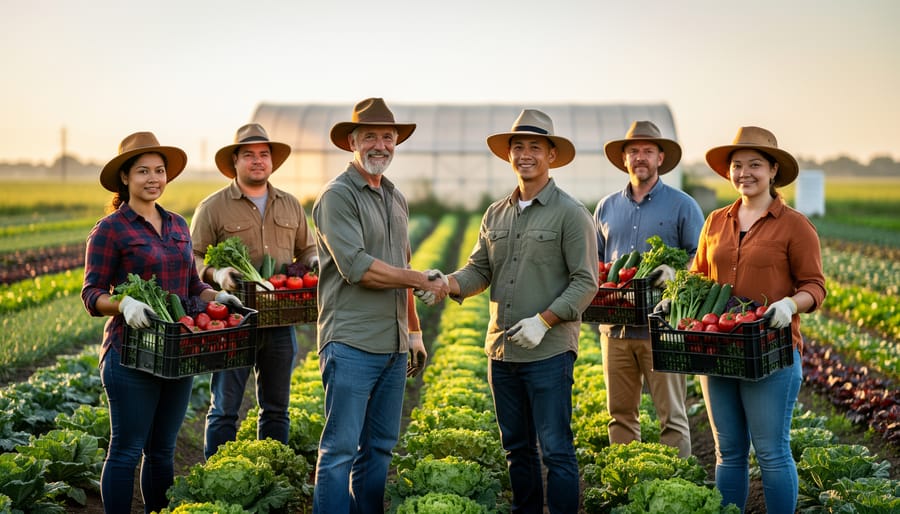
Look beyond the soil when choosing where to buy your vegetables. The same farms that nurture the earth through organic regenerative practices don’t always extend that care to the people harvesting your food. While these farms rebuild soil health, sequester carbon, and eliminate synthetic pesticides, the uncomfortable truth is that environmental sustainability and fair labor practices don’t automatically go hand in hand.
The good news? A growing movement of regenerative farmers is proving that healing the land and honoring farmworkers are inseparable goals. These pioneers understand that true regeneration means living wages, safe working conditions, and decision-making power for everyone who tends the fields. They’re creating farm models where workers aren’t just laborers but valued partners in the agricultural ecosystem.
You have real power to support this shift. Every time you choose where to spend your food dollars, you’re casting a vote for the kind of agriculture you want to see flourish. The challenge lies in identifying which farms walk the talk on both environmental and social justice, and understanding how these two commitments strengthen each other.
This guide will help you recognize farms that practice genuine equity alongside regenerative methods, share inspiring stories from farmers who’ve built thriving, fair operations, and give you practical steps to support agricultural systems that regenerate both land and community. Because the future of farming depends on caring for soil and people with equal dedication.
The Missing Piece in Regenerative Agriculture
What Makes Regenerative Farming Different
While organic certification focuses primarily on what farmers don’t use—synthetic pesticides, GMOs, and chemical fertilizers—regenerative farming principles go several steps further. This approach asks not just “what are we avoiding?” but “what are we actively healing and improving?”
Regenerative farming treats the entire farm as a living ecosystem where soil health, water cycles, biodiversity, and carbon sequestration work together. Farmers using these methods might employ practices like cover cropping, rotational grazing, composting, and minimal tillage to actually rebuild topsoil rather than simply maintaining it.
But here’s what truly sets regenerative agriculture apart: it recognizes that people are part of the ecosystem too. A farm can restore watersheds and sequester carbon while exploiting workers or excluding community voices—that’s not genuinely regenerative. The most forward-thinking farmers understand that human wellbeing, fair labor practices, and community connection are just as essential as environmental restoration. When we support farms that honor both land and people, we’re investing in a food system that regenerates everything it touches.
Why Labor Issues Get Overlooked
The regenerative agriculture movement has captured hearts and minds with its promise of healing the soil and reversing climate change. Beautiful photos of lush pastures and thriving ecosystems dominate social media feeds and marketing materials. But here’s the reality: it’s easier to talk about carbon sequestration than uncomfortable conversations about wages and working conditions.
Farm economics play a significant role in this oversight. Many small-scale regenerative operations operate on razor-thin margins, making it genuinely challenging to provide competitive wages and benefits. This financial pressure creates a difficult situation where passionate farmers committed to environmental stewardship struggle to extend that same care to their workforce.
The marketing narrative around regenerative farming naturally gravitates toward tangible environmental wins because they’re measurable and visually compelling. Soil carbon levels, biodiversity counts, and water retention make for compelling stories. Social equity, however, requires deeper examination of power dynamics, compensation structures, and worker voices – topics that don’t translate as easily into Instagram-worthy content.
Additionally, many regenerative farms rely on volunteer labor, apprenticeships, or “work-trade” arrangements that can blur the lines between educational opportunities and fair employment practices. Without intentional focus on equity, these well-meaning models can inadvertently perpetuate exploitation.
The Real Cost of Your Organic Produce
Common Labor Challenges in Organic Farming
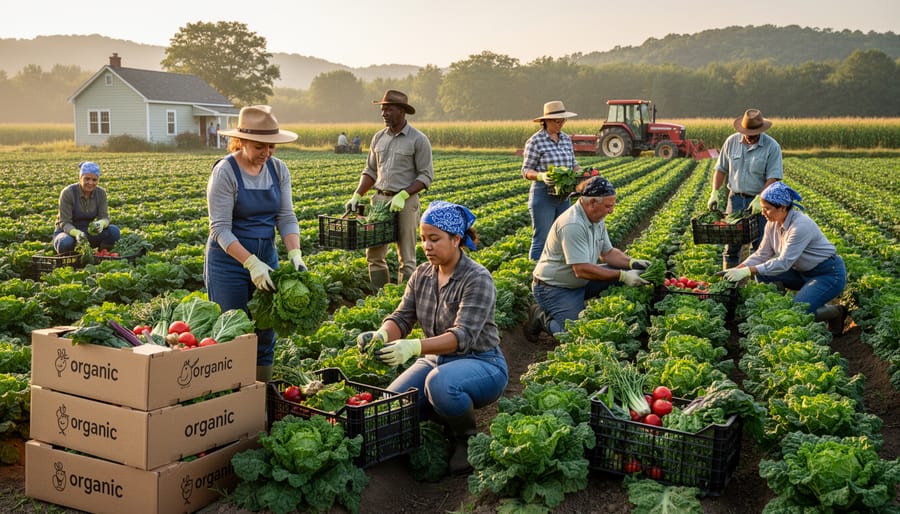
While organic and regenerative farms shine in environmental stewardship, they sometimes face the same labor challenges as conventional agriculture. Understanding these issues helps us support farms working toward truly holistic sustainability.
Seasonal work instability remains a significant concern. Many organic farms depend on seasonal employees during planting and harvest, leaving workers without steady income during slower months. This unpredictability makes it difficult for farmworkers to plan their lives and support their families year-round.
Housing conditions vary widely across farms. Some smaller operations struggle to provide adequate living quarters for workers, particularly during peak seasons when temporary help arrives. Rural locations can compound this challenge, as affordable housing options may be limited in the surrounding community.
Wage disparities persist even within the organic sector. While some farms pay living wages and offer benefits, others operate on tight margins and compensate workers at minimum wage or piece-rate systems that don’t always reflect the physically demanding nature of farm labor.
Benefits like health insurance, paid time off, and retirement contributions remain rare, especially on smaller farms where financial constraints are real. This gap leaves many farmworkers vulnerable during illness or injury.
Limited worker voice in farm decisions is another challenge worth addressing. When farmworkers lack opportunities to share input on working conditions, safety protocols, or operational practices, farms miss valuable perspectives from the people most intimately connected to daily operations. Creating space for worker feedback strengthens farm communities and improves outcomes for everyone involved.
Why ‘Organic’ Doesn’t Automatically Mean Fair
When you pick up a bundle of organic carrots at your local market, you’re making a choice for environmental health—but what about the people who grew them? Here’s something many consumers don’t realize: organic certification focuses exclusively on what goes into the soil and onto plants, not who’s doing the planting, weeding, or harvesting.
The USDA organic label verifies that farmers avoid synthetic pesticides and GMOs, use approved fertilizers, and follow specific land management practices. It’s a rigorous standard for environmental stewardship. However, it doesn’t require fair wages, safe working conditions, or benefits for farmworkers. A farm can maintain pristine organic soil while paying minimum wage with no healthcare coverage, and still earn that coveted green seal.
This doesn’t mean organic farmers are intentionally ignoring labor issues. Many small-scale organic growers genuinely care about their teams and create wonderful working environments. The point is simply that your organic purchase alone doesn’t guarantee it. Understanding this gap helps you ask better questions and seek out farms that prioritize both environmental and social sustainability—because truly regenerative farming should nurture people as carefully as it nurtures the land.
Farms That Are Getting It Right
Worker-Owned Cooperatives and Profit-Sharing Models
Some pioneering regenerative farms are reimagining labor relationships through worker-owned cooperatives and profit-sharing arrangements. These models transform employees into stakeholders, creating powerful incentives to care for soil health and long-term farm sustainability.
At cooperative farms, workers collectively own and govern the operation, making decisions about regenerative practices together. This shared ownership means everyone benefits when healthy soils produce better yields and when customers value the farm’s ecological methods. One Pennsylvania cooperative found that worker-owners took extra care with compost management and cover cropping because they directly profited from improved soil fertility.
Profit-sharing models offer similar benefits without full ownership transfer. Farms like Dancing Roots Farm in Oregon allocate a percentage of annual profits to their crew, rewarding the careful attention that regenerative agriculture requires. Workers report feeling genuinely invested in outcomes, from monitoring beneficial insects to maintaining biodiversity corridors.
These arrangements also improve economic resilience for farmworkers, addressing agriculture’s persistent income inequality. When a regenerative farm succeeds through premium pricing or expanded market access, workers share in that prosperity. This creates stable, dignified livelihoods while ensuring the people doing the hands-on work have real motivation to nurture the land for generations to come.
Year-Round Employment and Living Wages
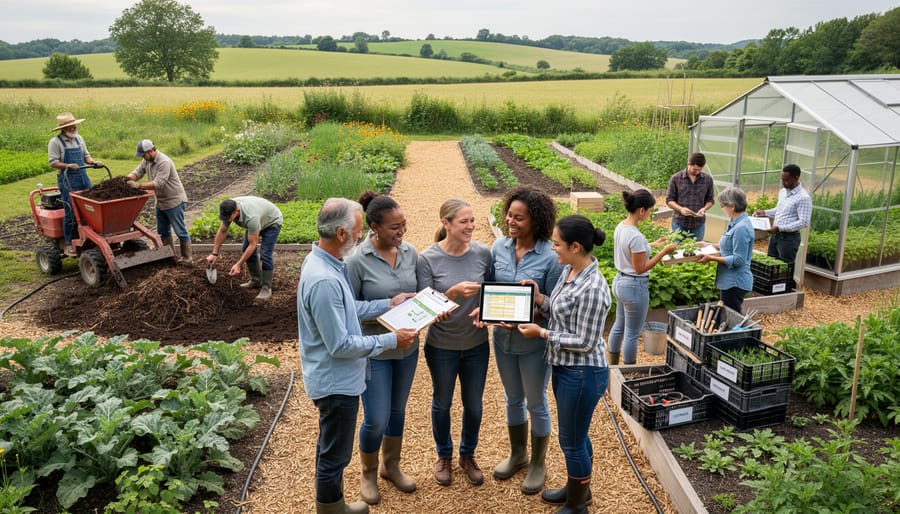
Several pioneering farms have cracked the code on providing stable, well-paying jobs throughout all four seasons. At Singing Frogs Farm in California, farmer Paul Kaiser restructured his 3-acre operation around intensive market gardening techniques that require consistent labor year-round. By succession planting and diversifying crops, he maintains employment for his team with wages starting at $18 per hour plus health benefits.
Similarly, Muddy Boots Farm in Vermont transformed their business model by adding value-added products like fermented vegetables and winter storage crops. Owner Amy Ivy explains that processing these products during slower months keeps her crew of four employed full-time, earning living wages that reflect the local cost of living.
The economics work through strategic planning. These farmers maximize land productivity per square foot rather than per acre, allowing smaller operations to generate sufficient revenue. They’ve also built strong customer relationships through CSA programs and farmers markets, ensuring reliable income streams that support fair compensation.
Many successful farms combine crop production with educational workshops and agritourism, creating diverse revenue sources that sustain year-round employment. This approach proves that treating workers fairly isn’t just ethical but economically viable when farms think creatively about their business models.
Creating Pathways to Farm Ownership
Breaking down barriers to farm ownership is transforming the agricultural landscape and creating opportunities for the next generation of regenerative farmers. Several innovative programs are helping farmworkers build the skills, capital, and connections needed to own their own land.
The Agriculture and Land-Based Training Association (ALBA) in California stands out as a pioneering example. This nonprofit provides farmworker families with comprehensive business training, access to farmland, and technical support. Over the past two decades, ALBA has helped launch more than 200 Latino farm businesses, with graduates farming over 1,000 acres organically. Maria Gonzalez, an ALBA graduate, now runs a thriving five-acre organic farm that supplies local restaurants and farmers markets. “I went from picking strawberries to growing my own vegetables and building equity for my children,” she shares.
Similar initiatives like the New Entry Sustainable Farming Project in Massachusetts and the Hmong American Farmers Association in Minnesota offer incubator farm programs, land lease opportunities, and culturally specific support. These programs recognize that democratizing land access isn’t just about fairness—it strengthens local food systems by welcoming diverse knowledge and farming traditions. When farmworkers become owners, they build generational wealth while stewarding land with regenerative practices they’ve helped develop.
What You Can Do as a Consumer
Questions to Ask Your CSA or Farmers Market Vendor
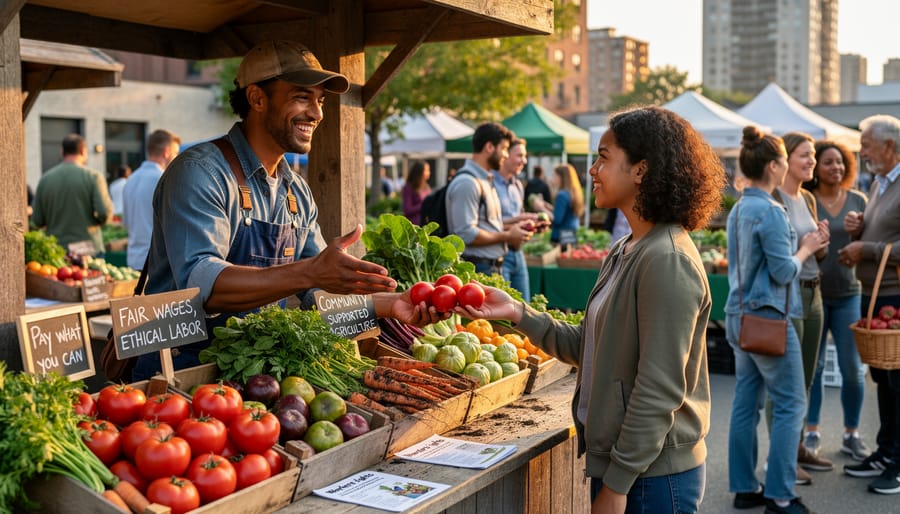
Striking up a conversation with your farmers market vendor or CSA farmer is a wonderful way to learn about the values behind your food. Approach these questions with genuine curiosity and an open heart—most farmers love sharing their story!
Start with appreciation: “I’m really interested in how your farm operates. Can you tell me a bit about your team?” This opens the door naturally. Follow up with, “How do you approach fair compensation for your workers?” Listen for details about living wages, benefits, or profit-sharing arrangements.
You might ask, “What does a typical day look like for farmworkers during harvest season?” This reveals working conditions without putting anyone on the spot. If you’re curious about growth opportunities, try: “Do you offer training or skill development for your team members?”
Questions about community impact work well too: “How does your farm support the local community beyond providing food?” Some farms partner with workforce development programs or offer apprenticeships for aspiring farmers.
Remember, farmers juggling market sales may have limited time for lengthy conversations. Consider visiting during slower moments or attending farm tours where deeper discussions naturally unfold. Your thoughtful questions show you value both the produce and the people who grow it, encouraging farms to prioritize social equity alongside environmental stewardship.
Certifications and Labels That Include Labor Standards
Several meaningful certifications help consumers identify farms that prioritize both environmental sustainability and fair labor practices. Food Justice Certified stands out as a comprehensive label that verifies living wages, safe working conditions, and community empowerment alongside regenerative farming methods. This certification particularly supports farmworkers’ voices in the verification process, ensuring authentic accountability.
Fair Trade USA has expanded beyond coffee and chocolate to include domestic produce, guaranteeing fair wages and worker welfare protections. The Agricultural Justice Project (AJP) offers another robust option, with standards covering everything from employment conditions to community relations. These certifications require third-party audits and regular renewals, providing reliable assurance for conscious consumers.
When shopping, look for these labels at farmers markets, food co-ops, and CSA programs. While certification can be expensive for smaller farms, many practice these principles without official labels. Don’t hesitate to ask farmers directly about their labor practices during market visits or farm tours. Supporting certified operations creates market demand that encourages more farms to adopt equitable practices, strengthening the connection between environmental health and social justice in our food system.
Supporting Policy Changes and Community Initiatives
Your purchasing power matters, but real change happens when we advocate beyond the farmers market. Consider joining or starting a local food policy council in your community—these grassroots groups shape regulations that affect farmworker conditions, from wage standards to housing requirements. You can also support farmworker-led organizations like the Coalition of Immokalee Workers or Food Chain Workers Alliance, which fight for dignity and fair treatment in agricultural settings.
Attend town halls and county meetings to voice support for policies that protect agricultural workers, including heat safety standards and pesticide exposure protections. Many regenerative farmers have shared success stories about how community advocacy helped them secure grants for worker housing improvements or health benefits programs. Write to your representatives about farm labor reform, and consider volunteering with organizations that provide legal aid, healthcare access, or education programs for farm families. When consumers and farmers work together on policy initiatives, we create lasting systemic change that extends far beyond individual farm practices. Even small actions, like signing petitions or sharing information on social media, amplify the voices of those working to feed us sustainably and ethically.
Building a Truly Regenerative Food System
Why Healthy Workers Mean Healthier Soil
Here’s a truth that regenerative farmers understand deeply: healthy soil doesn’t start with compost or cover crops—it starts with the people tending the land. When farm workers receive fair wages, stable employment, and safe working conditions, they develop a genuine stake in the farm’s long-term success. This investment translates directly into better care for the soil and crops.
Consider Maria, a farmhand at Green Valley Organics who’s been with the operation for eight years. With reliable year-round employment and health benefits, she’s learned to spot early signs of soil compaction and pest pressure, saving the farm thousands in potential losses. Her expertise wouldn’t exist without job security that encourages her to stay and grow.
Farms practicing regenerative practices recognize that rushed, stressed workers make mistakes—trampling delicate cover crops, misapplying amendments, or overlooking the subtle signs that soil biology is struggling. Conversely, workers who feel valued bring attention to detail that regenerative systems demand. They’re more likely to suggest improvements, notice patterns, and embrace the patient, observant approach that healthy ecosystems require. When we invest in people, we’re simultaneously investing in the land’s capacity to heal and thrive.
The Connection Between Food Justice and Climate Resilience
When farming communities prioritize fair wages, safe working conditions, and inclusive decision-making, they create stronger foundations for weathering climate challenges. Workers who feel valued and respected are more invested in the land’s long-term health, bringing innovative solutions and traditional knowledge to the table. Take Maria’s story at Green Valley Farm in Oregon, where transitioning to worker ownership transformed their resilience. When unexpected droughts hit, the team collaboratively redesigned their water management system, drawing on the diverse experiences of farmhands from different agricultural backgrounds.
Equitable farms also retain skilled workers longer, building institutional knowledge that proves invaluable during climate emergencies. These experienced teams can quickly adapt practices, from adjusting planting schedules to implementing emergency soil protection measures. Additionally, farms investing in their people tend to invest in infrastructure improvements, better equipment, and continued education about climate adaptation strategies.
This connection between social justice and environmental resilience strengthens sustainable food systems overall. When farmers and workers share equitably in both challenges and successes, they’re motivated to implement the kind of long-term regenerative practices our changing climate demands. Supporting these farms through your food choices means backing operations built to endure.
True regenerative agriculture goes beyond healing the soil—it must also regenerate the communities that tend it. When we choose farms that prioritize fair wages, safe working conditions, and equitable ownership models alongside carbon sequestration and biodiversity, we’re voting for a food system that values people as much as it values the planet. Every purchase from your local farmers market, every CSA membership, every conversation with a farmer is a powerful statement about the future you want to see.
Consider the story of Maria, who went from seasonal farmhand to co-owner at a worker-owned cooperative farm in Vermont. Her farm now not only builds healthy soil through cover cropping and compost, but also builds community wealth through profit-sharing and leadership development. This is what regeneration looks like when it includes everyone.
Your food choices ripple outward in ways you might not immediately see. Supporting farms that treat workers well creates jobs that allow people to stay in rural communities, raises standards across the agricultural sector, and demonstrates that ethical practices are economically viable. Look for farms that openly share their labor practices, offer living wages, and create pathways for advancement.
Start by visiting a local regenerative farm this season. Ask questions about their team, their values, and their vision. Join a CSA that aligns with your principles. Engage with farmers at markets and learn their stories. Together, we can cultivate a food system that truly nourishes everyone—from seed to soil to soul.
