Daily Archives

2 Articles

These Smart Food Tech Companies Are Revolutionizing Sustainable Eating

Posted by darrell on
0
Sustainable Consumer Practices
These Smart Food Tech Companies Are Revolutionizing Sustainable Eating

Technology is revolutionizing sustainability in ways previously unimaginable, with innovative companies leading the charge toward a greener future. From renewable energy pioneers to waste-reduction visionaries, sustainable tech companies are transforming how we interact with our planet. Today’s most forward-thinking businesses aren’t just creating eco-friendly products – they’re fundamentally reimagining entire industries through the lens of environmental stewardship.

As consumers increasingly demand sustainable solutions, a new generation of tech companies has emerged, focusing on everything from carbon capture and storage to biodegradable electronics. These organizations are proving that profitability and environmental responsibility aren’t mutually exclusive – they’re interdependent in our modern economy. By leveraging artificial intelligence, blockchain, and advanced materials science, these companies are creating scalable solutions to some of our most pressing environmental challenges.

The impact is already visible: sustainable tech companies reduced global carbon emissions by millions of tons in 2023 alone, while creating thousands of green jobs and attracting billions in investment capital.

Farm-to-Table Tech Solutions Transforming Local Food Systems

Digital Marketplace Platforms

Digital marketplaces are revolutionizing how we connect with local farmers, making local food sourcing more accessible than ever. Leading this transformation is FarmLink, a user-friendly platform that enables consumers to browse and purchase directly from nearby farms. Their innovative rating system helps users make informed choices while supporting sustainable agriculture.

Another standout is HarvestMatch, which uses AI to pair consumers with farmers based on their preferences and location. The app tracks seasonal availability and sends notifications when favorite products become available, reducing food waste and supporting timely harvests.

The GrowLocal platform has gained popularity by incorporating social features, allowing farmers to share their stories and growing practices. Users can follow their favorite farms, learn about sustainable farming methods, and coordinate group purchases with neighbors.

These platforms typically feature secure payment systems, delivery tracking, and feedback mechanisms that build trust between farmers and consumers. Many also integrate educational resources about seasonal eating and food preservation, helping users make the most of their farm-fresh purchases.

Digital marketplace app interface showing local farm products and farmer profiles
Split-screen showing a mobile app interface connecting local farmers with consumers, displaying fresh produce listings and farm profiles

Smart Distribution Solutions

Smart technology is revolutionizing how we store and distribute food sustainably. Companies like FreshBox are developing AI-powered storage solutions that extend produce shelf life by up to 40% while reducing energy consumption. Their smart containers adjust temperature and humidity levels based on the specific needs of different fruits and vegetables.

Local food delivery startups such as GreenMile are transforming last-mile logistics with electric vehicles and route optimization algorithms. They’ve partnered with small farms to create efficient delivery networks that reduce food miles and carbon emissions while ensuring produce reaches consumers at peak freshness.

Innovative companies like SmartPantry are tackling food waste through connected storage systems that track inventory and expiration dates. Their smart sensors alert users when produce needs to be used, while their app suggests recipes based on what’s available. This technology has helped households reduce food waste by up to 30%.

These solutions not only support sustainable food distribution but also strengthen connections between local farmers and consumers, creating a more resilient and environmentally friendly food system.

Smart Garden Technology for Home Growers

Indoor Growing Systems

Indoor growing systems are revolutionizing how we approach food production at home, making it possible to grow fresh, organic produce year-round regardless of available outdoor space. Companies like Lettuce Grow and Click & Grow have developed smart hydroponic systems that fit perfectly in kitchens, living rooms, or small apartments, complementing your home composting setup.

These innovative systems use up to 95% less water than traditional farming methods while eliminating the need for soil. LED grow lights mimic natural sunlight, and automated nutrient delivery systems ensure optimal growing conditions with minimal effort. Many units connect to smartphone apps that monitor plant health and send care reminders.

Vertical farming solutions from companies like Rise Gardens and Tower Garden maximize growing capacity in small spaces, allowing users to stack multiple growing levels. These systems can produce everything from leafy greens and herbs to cherry tomatoes and strawberries, providing a steady supply of fresh, pesticide-free produce.

For beginners, many companies offer starter kits with pre-seeded pods and essential nutrients, making it easy to start growing food indoors. These systems are particularly popular among urban dwellers and families looking to ensure access to fresh, sustainable produce while reducing their carbon footprint.

Compact indoor hydroponic system growing vegetables in a home kitchen
Modern indoor smart hydroponic garden system in a home setting, growing leafy greens with LED lights

Garden Management Apps

Modern garden management apps are revolutionizing how home gardeners plan, maintain, and optimize their growing spaces. These smart tools combine weather data, plant databases, and artificial intelligence to help both novice and experienced gardeners achieve better results while maintaining sustainable practices.

Popular apps like Planta and SmartPlant offer personalized care schedules, identifying optimal planting times and providing customized watering recommendations based on local weather patterns. These digital assistants help prevent overwatering and ensure efficient resource use, making sustainable gardening more accessible to everyone.

Garden tracking apps like Gardenize enable users to document their growing journey, track harvests, and share insights with other gardeners. This community-driven approach helps spread sustainable practices and traditional growing wisdom across digital platforms.

For urban gardeners, apps like iHuerting and GrowIt! provide specialized guidance for container gardens and small spaces, proving that anyone can grow food sustainably, regardless of their living situation. These apps often include features for identifying common plant diseases and pest problems, helping gardeners address issues naturally without defaulting to chemical solutions.

The integration of smart sensors with these apps is creating even more precise growing environments, ensuring optimal conditions while minimizing water waste and resource consumption.

Food Waste Reduction Technology

Smart Storage Solutions

Innovative smart food storage solutions are revolutionizing how we preserve fresh produce and reduce food waste. Companies like FreshTech and GreenKeeper are developing intelligent storage containers equipped with sensors that monitor humidity, temperature, and ethylene levels – the natural gas that causes fruits and vegetables to ripen.

These smart containers automatically adjust their internal environment to create optimal conditions for different types of produce. For example, leafy greens stay crisp longer with precise humidity control, while tomatoes and apples maintain their freshness through ethylene management. Some systems even connect to smartphone apps, sending alerts when produce needs attention or is approaching its peak ripeness.

Local farmers and CSA members particularly benefit from these technologies, as they can better manage their harvest surplus and ensure customers receive produce at its prime. These solutions not only help reduce food waste but also support sustainable agriculture by maximizing the lifespan of locally grown produce, making organic farming more economically viable for small-scale producers.

High-tech food storage containers with digital freshness monitoring displays
Smart food storage containers with digital displays showing freshness tracking and expiration dates

Food Tracking Apps

Food tracking apps are revolutionizing the way we manage our kitchen supplies and reduce food waste. These smart digital tools help you maintain an organized inventory of your pantry, track expiration dates, and plan meals efficiently. Popular apps like Too Good To Go and OLIO connect users with local restaurants and neighbors to share surplus food, while NoWaste and Kitche help you monitor what’s in your fridge and create shopping lists based on what you actually need.

These apps often include features like barcode scanning for easy item entry, automated expiration date alerts, and recipe suggestions based on ingredients you have on hand. Some even calculate the environmental impact of your food choices and waste reduction efforts, helping you understand your contribution to sustainability.

Many of these platforms also integrate with local food suppliers and farmers’ markets, making it easier to source fresh, local ingredients while supporting community agriculture. By using these digital tools, households typically reduce their food waste by 25-50%, leading to significant cost savings and a smaller environmental footprint. The best part? Most of these apps are free or very affordable, making sustainable food management accessible to everyone.

Getting Started with Sustainable Food Tech

Getting started with sustainable food tech doesn’t have to be complicated or expensive. Begin by downloading food waste reduction apps that connect you with local restaurants and grocers offering surplus food at discounted prices. These apps not only help you save money but also prevent perfectly good food from ending up in landfills.

Consider investing in a smart garden system for your kitchen counter. These compact units use LED growing lights and automated watering systems to help you grow fresh herbs and microgreens year-round. Many models connect to smartphone apps that monitor plant health and send care reminders.

For those interested in larger-scale growing, smart irrigation controllers can help optimize water usage in your garden. These devices use weather data and soil moisture sensors to water plants only when necessary, reducing waste while maintaining healthy growth.

Explore local food-sharing platforms that connect home gardeners with neighbors, creating mini food networks in your community. Some apps even help you track seasonal produce availability and share growing tips with other urban farmers.

Start composting with the help of smart composting bins that monitor temperature, moisture, and decomposition rates. These systems can alert you when to add specific materials or when your compost is ready for use.

Join online communities focused on sustainable food technology to stay updated on the latest innovations and share experiences with like-minded individuals. Many of these platforms offer valuable insights from experienced growers and tech enthusiasts who can help you navigate your sustainable food journey.

Remember to start small and gradually incorporate these technologies as you become more comfortable with sustainable food practices. The goal is to create lasting habits that benefit both you and the environment.

As we look to the future of sustainable food technology, it’s clear that innovation continues to drive positive change in how we grow, distribute, and consume our food. These emerging technologies are not just reshaping agriculture; they’re creating new opportunities for farmers and consumers alike to participate in a more sustainable food system.

The impact of sustainable food tech extends beyond environmental benefits. We’re seeing increased food security in urban areas, reduced carbon footprints in farming operations, and stronger connections between producers and consumers. Smart farming solutions are becoming more accessible to small-scale farmers, while apps and platforms are making it easier for consumers to make sustainable food choices.

Looking ahead, we can expect to see even more integration of AI and IoT in sustainable agriculture, expansion of vertical farming in cities, and innovative solutions for reducing food waste. The future of food technology is promising, with a clear trend toward systems that are not only environmentally conscious but also economically viable and socially responsible.

As consumers become more aware of their food choices’ impact, these technologies will continue to evolve, making sustainable food practices the norm rather than the exception.

Smart Kitchen Water-Saving Methods That Actually Cut Your Bills

Posted by darrell on
0
Sustainable Consumer Practices
Smart Kitchen Water-Saving Methods That Actually Cut Your Bills

Water scarcity affects nearly 2.8 billion people worldwide, making innovative water-saving technology not just an eco-friendly choice, but a critical solution for our future. Modern kitchens and food preparation facilities are embracing smart systems that reduce water waste while maintaining efficiency. From precision spray nozzles that use 98% less water than traditional faucets to AI-powered dishwashers that optimize every drop, these technologies are revolutionizing how we think about water conservation in food service.

Recent advances in water recycling systems now allow commercial kitchens to reuse up to 75% of their greywater, while smart meters provide real-time monitoring that helps identify leaks and usage patterns instantly. These innovations aren’t just preserving our most precious resource – they’re also delivering significant cost savings for businesses and households alike.

The future of sustainable food preparation lies in these water-conscious technologies, offering practical solutions that benefit both the environment and the bottom line.

Modern Water-Efficient Kitchen Equipment

Smart Dishwashers and Steam Cleaners

Modern dishwashers and steam cleaners are revolutionizing the way we conserve water in our kitchens. Today’s ENERGY STAR certified dishwashers use as little as 3.5 gallons per cycle, compared to the 27 gallons typically used when washing dishes by hand. These smart appliances come equipped with soil sensors that adjust water usage based on how dirty your dishes are, ensuring optimal cleaning while minimizing waste.

Steam cleaning technology has emerged as another game-changer in water conservation. These innovative devices use minimal water to create pressurized steam, providing powerful cleaning without the need for excessive water or harsh chemicals. When combined with eco-friendly cleaning solutions, steam cleaners can effectively sanitize surfaces while using up to 90% less water than traditional cleaning methods.

Many modern dishwashers now feature half-load options and zone-specific washing, perfect for smaller households or when you only need to clean a few items. Some models even recycle rinse water from the final cycle for use in the next load’s pre-rinse, further reducing water consumption while maintaining excellent cleaning performance.

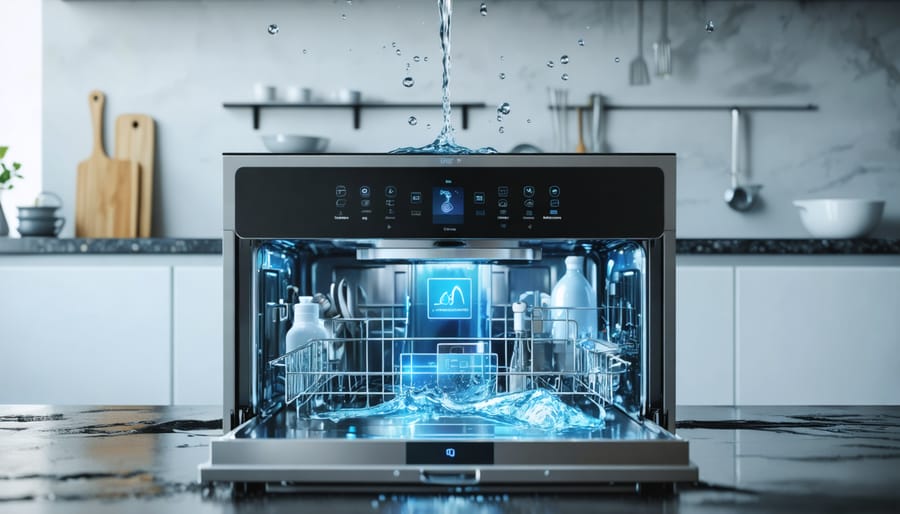
Energy-efficient dishwasher showing water consumption metrics on digital display
Modern smart dishwasher with water efficiency rating display

Advanced Faucet Systems

Modern faucet systems have revolutionized the way we conserve water in our homes and gardens. Sensor-based faucets, which activate only when detecting motion, can reduce water usage by up to 70% compared to traditional fixtures. These smart systems prevent unnecessary water flow when washing produce or filling containers, making them ideal for eco-conscious kitchens.

Many advanced faucets now come equipped with flow regulators and aerators that mix air with water, maintaining strong pressure while using less water. Some models feature adjustable spray patterns, allowing you to switch between a gentle stream for delicate herbs and a more powerful flow for root vegetables.

Water-reducing technologies have evolved to include preset timers and digital displays that help track water usage. These features are particularly valuable for garden sinks and outdoor washing stations. Some systems even connect to smartphone apps, providing real-time data on water consumption and helping users develop more sustainable habits.

For those concerned about water quality, many advanced faucets now incorporate built-in filtration systems, ensuring clean water for both cooking and garden irrigation while minimizing waste from separate filtering devices.

Water-Smart Food Prep Techniques

Steam Cooking and Water Recycling

Modern steam cooking technology has revolutionized how we can prepare delicious meals while conserving water. By incorporating zero-waste kitchen practices, steam cooking systems can help you reduce water consumption by up to 90% compared to traditional boiling methods.

Steam ovens and advanced rice cookers now feature water recycling capabilities, collecting condensation and reusing it for multiple cooking cycles. These smart appliances monitor moisture levels precisely, ensuring optimal cooking while minimizing waste. For example, a standard steam oven can cook an entire meal using just one cup of water, which can then be collected and reused for cleaning or watering plants.

Many home cooks are discovering the benefits of stackable steam baskets, which allow you to cook multiple ingredients with the same steam source. This efficient method not only saves water but also preserves nutrients better than conventional cooking methods.

Some innovative systems even integrate with smart home technology, allowing you to monitor water usage and receive tips for more efficient cooking through mobile apps. These features help you track your conservation efforts while maintaining perfect cooking results.

For those interested in upgrading their kitchen, modern steam cooking appliances offer an excellent return on investment through reduced utility bills and improved food quality, making them a smart choice for environmentally conscious home chefs.

Professional steam oven with integrated water recycling system in modern kitchen
Kitchen steam cooking system with water recycling feature

Produce Washing Innovations

Modern produce washing innovations have revolutionized how we clean fruits and vegetables while conserving precious water resources. Ultrasonic cleaning systems, which use sound waves to create microscopic bubbles that gently remove dirt and contaminants, require up to 70% less water than traditional washing methods. These systems are increasingly popular in commercial settings and are now becoming available for home use.

Spray-based cleaning technologies have also evolved significantly. New misting systems use high-pressure, fine water droplets that effectively clean produce while using minimal water. Some models incorporate ozone or electrolyzed water technology, which naturally sanitizes produce without requiring additional rinse cycles.

Air-assisted cleaning systems represent another breakthrough in produce washing. These systems combine forced air with small amounts of water to create a powerful cleaning action that dislodges debris while using just a fraction of the water needed for conventional washing methods.

For home gardeners and small-scale farmers, innovative wash basin designs now include built-in water recycling features. These basins filter and recirculate water during the cleaning process, reducing waste while maintaining food safety standards. Some models even incorporate UV sterilization to ensure water quality throughout multiple cleaning cycles.

Smart sensors in modern washing systems monitor water quality and usage, automatically adjusting flow rates and pressure to optimize cleaning while minimizing water consumption. This technology ensures that produce is cleaned effectively without waste.

Water Recovery Systems

Greywater Collection Methods

Greywater collection from kitchen activities offers an excellent opportunity to reduce water waste while maintaining food safety standards. A basic collection system starts with a sink strainer to catch food particles, followed by a connection to storage tanks specifically designed for greywater. Modern systems often include smart filters that separate oils and soaps from reusable water, making it safe for garden irrigation.

Under-sink collection units are becoming increasingly popular, featuring compact designs that fit seamlessly into existing kitchen layouts. These systems typically include a primary filtration stage, UV sanitization, and automated pumps that direct the treated water to outdoor storage or directly to irrigation systems.

For those seeking a simpler approach, countertop collection containers can capture rinse water from fruits and vegetables. This water can be used immediately for houseplants or stored briefly in food-grade containers for garden use. Smart sensors in advanced systems can monitor water quality and alert users when maintenance is needed.

Remember to use biodegradable, plant-friendly soaps and avoid collecting water containing meat products or excessive oils. Regular system maintenance ensures safe water collection and prevents unwanted odors or bacterial growth.

Water Filtration Technology

Modern water filtration systems are revolutionizing how we reuse water in food preparation, making it easier than ever to conserve this precious resource. These systems use a combination of physical, chemical, and biological processes to transform used water into clean, safe water suitable for food-related tasks.

Multi-stage filtration systems, now popular in commercial kitchens and becoming more common in homes, typically include sediment filters to remove particles, activated carbon filters to eliminate odors and chemicals, and UV sterilization to kill harmful microorganisms. Some advanced systems even incorporate reverse osmosis technology, ensuring the highest quality water for food preparation.

Smart sensors in these systems monitor water quality in real-time, alerting users when filters need replacement or if water quality drops below acceptable levels. This technology helps maintain consistent water standards while minimizing waste.

For example, restaurant kitchens using these systems can safely reuse rinse water from produce washing for other purposes like cleaning or irrigation. Home cooks can install compact under-sink units that filter and recycle greywater for tasks like washing fruits and vegetables or cleaning dishes.

These filtration solutions not only conserve water but also reduce utility bills and support sustainable kitchen practices, making them a worthwhile investment for environmentally conscious food preparation.

Chart comparing traditional vs water-saving kitchen technology annual costs
Infographic showing water and cost savings comparison

Real Cost Savings

The numbers don’t lie when it comes to water-saving technology’s impact on both the environment and your wallet. A typical smart irrigation system can reduce outdoor water usage by 30-50%, translating to annual savings of $200-400 for the average household. Indoor innovations are equally impressive – high-efficiency dishwashers use just 3.5 gallons per cycle compared to 27 gallons for hand-washing, potentially saving over 5,000 gallons yearly.

Smart water meters paired with leak detection systems have helped homeowners identify and fix hidden leaks, reducing water waste by up to 15%. One community in California reported average household savings of $280 annually after implementing these technologies. For restaurants and commercial kitchens, water-efficient pre-rinse spray valves can save 7,000 gallons per month and cut water heating costs by $1,000 annually.

Modern sustainable kitchen management through aerators and sensor-controlled faucets typically reduces water consumption by 30-50%. A small investment in these devices, usually between $20-100, can pay for itself within months through reduced utility bills. Even simple technologies like faucet aerators, costing under $5, can save up to 700 gallons annually per fixture, proving that water-saving solutions don’t need to be expensive to be effective.

Water-saving technology has revolutionized how we approach sustainable resource management in our homes and gardens. From smart irrigation systems to water-efficient appliances, these innovations help us protect our most precious resource while maintaining productive gardens and comfortable lifestyles. By implementing these solutions, you can reduce your water consumption by up to 50% while keeping your plants thriving and your utility bills lower.

Remember, every drop counts. Whether you start with a simple rain barrel or invest in a comprehensive smart irrigation system, taking action today creates a more sustainable tomorrow. Consider starting small and gradually incorporating more water-saving technologies as you become comfortable with each solution. Your efforts not only benefit your household but contribute to the broader goal of environmental conservation and responsible resource management. Let’s embrace these innovative technologies and make water conservation a natural part of our daily lives.