Daily Archives

2 Articles

Why Your Farm Needs a Landscape Mosaic (And How It Transforms Your Harvest)

Posted by darrell on
0
Agroecology and Ecosystem Practices
Why Your Farm Needs a Landscape Mosaic (And How It Transforms Your Harvest)

Picture your farm as a living quilt, where each patch of vegetables, wildflowers, hedgerows, and cover crops works together to create something far more resilient than any single crop could achieve alone. This is landscape mosaic, a practical approach that transforms your farm into a diverse network of interconnected habitats that naturally support each other.

Rather than viewing your land as separate, isolated plots, landscape mosaic thinking recognizes that the borders between your tomato beds and native flower strips, between your orchard and nearby woodland edge, create opportunities for beneficial insects, pollinators, and wildlife to thrive. When these diverse elements connect across your property, they form ecological highways that strengthen your entire farming system.

The results speak for themselves. Farmers implementing landscape mosaic principles report fewer pest problems as predatory insects find year-round habitat in hedgerows and field margins. Pollination rates improve when bees have continuous flowering resources beyond crop bloom periods. Soil health increases as diverse root systems and organic matter from varied plantings build fertility naturally.

You don’t need to overhaul your entire operation overnight. Start by identifying existing diversity on your land, then thoughtfully add elements that bridge gaps between habitats. Even small changes like planting native perennials along fence lines or leaving unmowed buffer strips create meaningful connections that amplify the ecological services supporting your crops. Your farm becomes stronger, more productive, and remarkably more self-sustaining.

What Is a Landscape Mosaic in Agroecology?
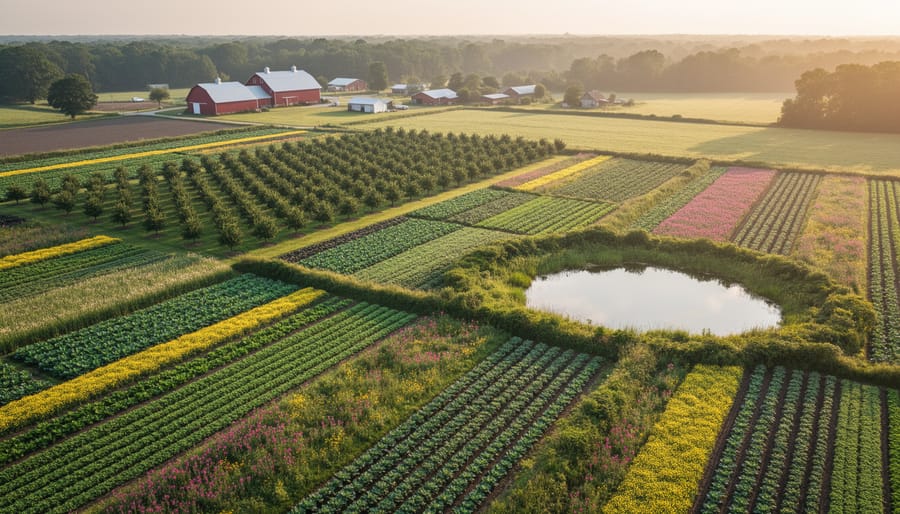
Aerial view of diversified farm showing patchwork of crop fields, wildflower strips, hedgerows and pond
A landscape mosaic integrates diverse habitat types including crop fields, wildflower borders, hedgerows, and water features into a functional farm ecosystem.

The Patchwork Effect: Understanding Habitat Diversity

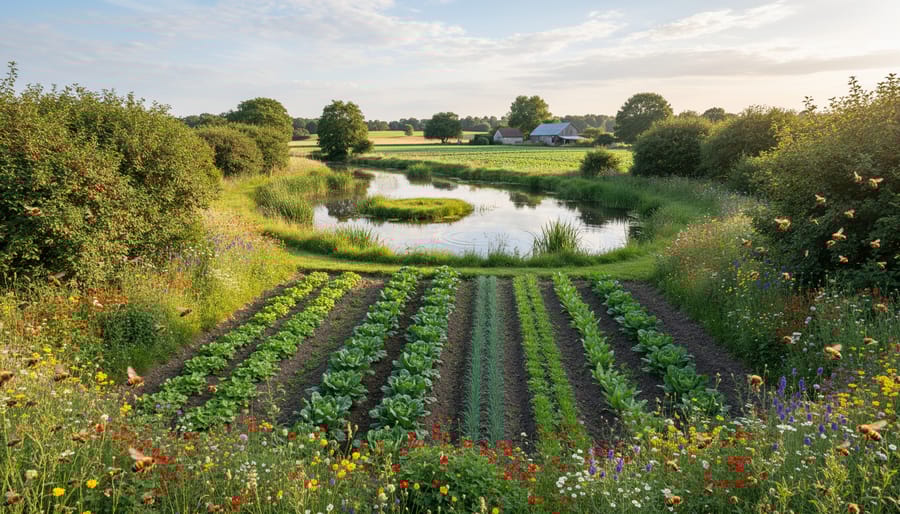
Think of your farm as a living quilt, where each patch plays a unique role in supporting the whole system. These distinct areas work together to create a healthier, more productive landscape.

Your cultivated areas are the workhorses—the vegetable beds, fruit orchards, or grain fields where your main crops grow. These patches benefit enormously from what happens around them. Wild edges and hedgerows act as nature’s safety nets, providing shelter for beneficial insects and birds that help control pests naturally. Sarah Martinez, an organic vegetable grower in Vermont, noticed a 40% decrease in aphid damage after planting mixed hedgerows along her field borders.

Pollinator strips are the unsung heroes of farm productivity. These deliberate plantings of native wildflowers and flowering herbs create highways for bees, butterflies, and other pollinators moving across your property. Even a simple 10-foot strip planted with sunflowers, cosmos, and native asters can dramatically boost pollination rates in nearby crops.

Water sources—whether ponds, seasonal wetlands, or simple birdbaths—serve multiple purposes. They attract beneficial wildlife, provide irrigation reserves during dry spells, and create microclimates that moderate temperature extremes.

The magic happens when these patches connect and interact. A dragonfly hatches in your pond, hunts mosquitoes over your lettuce beds, then rests in your wildflower strip. This interconnectedness is what transforms scattered patches into a thriving landscape mosaic, where diversity becomes your greatest farming asset.

How Landscape Connectivity Makes the Magic Happen

Think of landscape connectivity as the highway system that keeps your farm ecosystem thriving. While diverse habitat patches are valuable, they only reach their full potential when beneficial organisms can travel freely between them. This is where corridors, hedgerows, and transitional zones become game-changers for your functional ecosystem.

Hedgerows act as protected pathways, allowing ladybugs, ground beetles, and parasitic wasps to move from field to field, controlling pests wherever they go. Native pollinators use these green corridors to access different flowering plants throughout the season, ensuring consistent pollination across your entire property. Even a simple grass strip between crop fields creates safe passage for small mammals and birds that help control rodent populations and disperse seeds.

Sarah Chen, an organic vegetable grower in Ontario, transformed her farm’s productivity by planting hedgerows connecting her woodlot to her market gardens. Within two growing seasons, she noticed a remarkable increase in native bee populations and a 40 percent reduction in aphid damage. The key was creating continuous pathways rather than isolated habitat islands.

Don’t overlook transitional zones where different habitats meet. These edge areas between forest and field, or wetland and meadow, support the highest concentration of species diversity. By maintaining these gradients and connecting them with simple features like stone walls, brush piles, or flowering borders, you create an integrated network where nature does much of your farm management work for you.

The Hidden Benefits Your Farm Gets from Habitat Mosaics
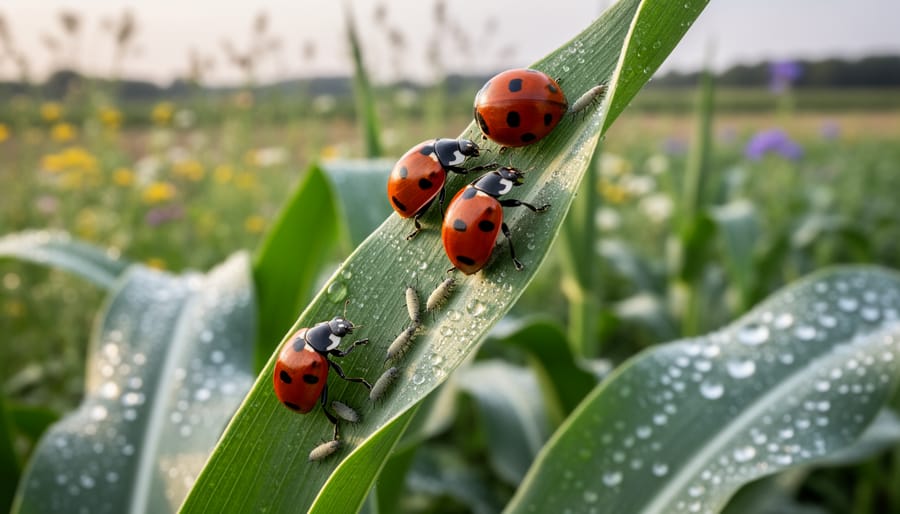
Ladybug beetle on plant stem with wildflowers in background showing natural pest control
Beneficial predator insects like ladybugs thrive in diverse farm habitats and provide natural pest control for crops.

Natural Pest Control That Actually Works

Here’s the secret that organic farmers have discovered: when you create a landscape mosaic with diverse habitats, nature handles pest control for you. Different plantings and wild areas provide homes for beneficial predator insects like ladybugs, lacewings, and ground beetles that feast on common garden pests.

Take Sarah Chen’s Oregon farm as an example. By planting flowering hedgerows between her vegetable beds and maintaining strips of native grasses, she attracted hover flies that demolished her aphid problem naturally. The key is providing year-round habitat: hedgerows offer shelter, flowering plants supply nectar for adult predators, and unmowed grass strips create homes for pest-eating spiders.

Start small by leaving a corner of your garden a bit wild or planting alyssum and yarrow near your crops. These simple additions invite helpful insects that patrol your plants 24/7, reducing pests by up to 70 percent without a single spray bottle in sight. Your diverse landscape becomes a living pest management system.

Supercharged Pollination for Better Yields

Here’s the thing about landscape mosaics: they create the perfect dinner-and-hotel package for pollinators. When you weave together wildflower strips, hedgerows, and diverse plantings around your crops, you’re essentially building a neighborhood that bees, butterflies, and beneficial insects can’t resist. This variety means pollinators have continuous food sources throughout the growing season, not just when your main crops are flowering.

The payoff? Robust pollinator populations translate directly to your bottom line. Organic farmer Maria Chen saw her squash yields jump 35% after planting native wildflower borders around her fields. Her secret wasn’t fancy techniques, just creating habitat that kept pollinators close and active.

Better pollination means more than quantity too. Fruits and vegetables develop more uniformly, with improved size and flavor. Think plumper tomatoes, perfectly formed peppers, and berries that actually fill their containers. For small-scale growers focused on quality over volume, this improvement in produce appearance and taste can command premium prices at farmers markets and through CSA shares.

Healthier Soil Through Natural Cycles

When you create a landscape mosaic on your farm, you’re essentially building an underground support system that works around the clock. Different vegetation types in your mosaic contribute various organic materials—fallen leaves, plant roots, and decomposing matter—that feed the soil at different depths and times throughout the year. This continuous cycle of nutrient recycling creates richer, more productive earth for your crops.

The diverse plantings in a mosaic act as natural erosion barriers. Hedgerows and buffer strips slow down water runoff, giving it time to soak into the ground rather than washing away your precious topsoil. Root systems from different plants create an intricate underground network that holds soil particles together, particularly on slopes or areas prone to washing.

Perhaps most importantly, varied habitats support diverse communities of beneficial soil organisms. These tiny workers—from earthworms to mycorrhizal fungi—break down organic matter, improve soil structure, and make nutrients available to your plants. A thriving landscape mosaic essentially creates ideal real estate for these microscopic helpers, dramatically improving soil health without expensive inputs or constant intervention.

Climate Resilience on Your Farm

Think of your landscape mosaic as nature’s insurance policy against unpredictable weather. Diverse landscapes naturally enhance climate resilience by creating multiple layers of protection for your crops. Hedgerows and tree lines act as windbreaks during storms, reducing soil erosion and protecting tender plants from damage. These features also moderate temperature swings, creating beneficial microclimates where frost-sensitive crops can thrive.

Water management becomes easier too. Wetland patches and varied vegetation slow rainfall runoff, allowing moisture to percolate into the soil rather than rushing away. This natural sponge effect helps your fields stay hydrated during dry spells while preventing flooding during heavy rains.

Ontario farmer Maria Santos found that adding pollinator strips and woodland edges to her vegetable operation reduced crop stress during the 2023 heat waves. The shaded areas stayed five degrees cooler, and her soil retained moisture 30 percent longer than neighboring fields. Her diversified landscape literally created its own weather protection system, safeguarding her harvest when it mattered most.

Building Your Own Landscape Mosaic: Practical Steps for Small Farms

Map Your Current Landscape

Start by taking a simple walk around your property with a notebook in hand. Sketch out the different areas you notice—maybe you have a vegetable patch, some wildflower borders, a hedgerow, or even a small pond. Don’t worry about being an artist; a rough map works perfectly.

Next, identify what habitat types already exist. Are there areas with native plants that attract pollinators? Do you have spaces that could support beneficial insects? Look for spots where water collects naturally or where birds tend to gather.

Now comes the exciting part: spotting opportunities for improvement. Perhaps that bare corner could become a pollinator haven, or those unused strips between crops could host cover crops that enrich your soil. One organic farmer in Vermont transformed her field edges into wildflower corridors and saw her pest problems decrease by nearly half within two seasons.

Take photos during different seasons to see how your landscape changes. This visual record helps you make informed decisions about where small improvements can create the biggest impact for biodiversity and farm productivity.

Start with Strategic Edges and Borders

The edges of your fields hold untapped potential for supporting beneficial insects, pollinators, and wildlife while enhancing your farm’s productivity. Rather than leaving fencerows and field margins as weedy afterthoughts, intentionally transform these boundaries into thriving habitat corridors.

Start by identifying underutilized borders around your property. These narrow strips don’t compete with your production space but create enormous ecological value. Plant native perennials and wildflowers that bloom at different times throughout the season, providing consistent nectar sources for pollinators. Consider species like milkweed for monarch butterflies, native asters for late-season pollinators, and goldenrod for beneficial wasps.

Minnesota farmer Sarah Chen transformed her half-acre of field edges with a pollinator strip mix and noticed a 40% increase in vegetable yields the following year thanks to improved pollination. She also observed more beneficial insects controlling pest populations naturally.

Keep your strips manageable by choosing low-maintenance native plants suited to your region’s conditions. Mow paths through taller plantings to maintain access while creating diverse habitat structure. These strategic edges become living fencerows that work for you year-round, reducing your need for pesticides while beautifying your farm landscape and connecting isolated habitat patches across your property.
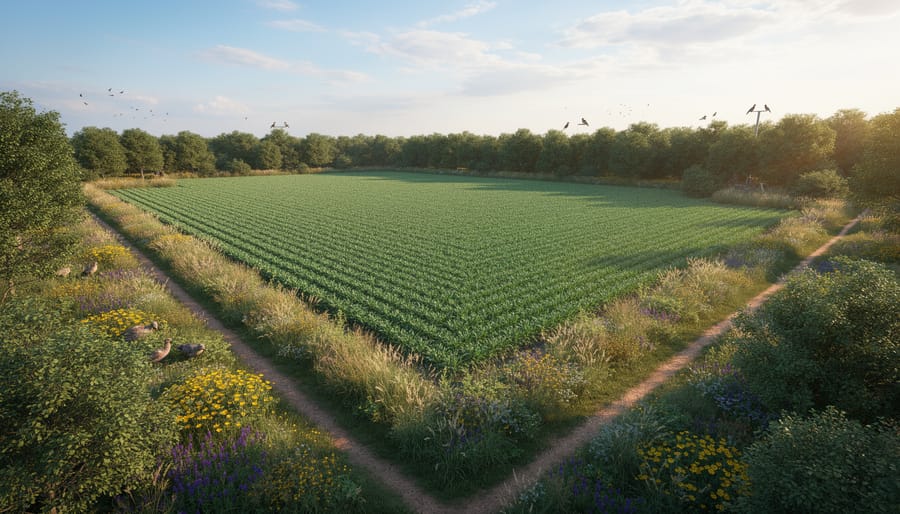
Farmer planting native wildflowers along field edge to create habitat corridor
Transforming field edges and borders with native plantings creates valuable habitat corridors without sacrificing productive farmland.

Add Diverse Habitat Patches

You don’t need to sacrifice productive space to create wildlife-friendly habitat patches. Start by identifying marginal areas where crops struggle, like edges near tree lines, steep slopes, or compacted corners. These spots are perfect for wildflower meadows that attract pollinators and beneficial insects. A 10-by-20-foot strip can make a real difference.

Small ponds or water features don’t require much space either. Even a half-whiskey barrel filled with water and native plants provides drinking spots for birds and habitat for dragonflies that devour aphids and mosquitoes. Position these near garden beds for maximum pest control benefits.

Brush piles tucked along fence lines offer shelter for ground beetles, toads, and small mammals that prey on common pests. Simply stack pruned branches and woody debris in out-of-the-way spots rather than hauling them off-site.

Consider planting insectary strips between crop rows using flowering plants like alyssum, yarrow, or buckwheat. These low-growing options support beneficial insects without shading your vegetables. Oregon farmer Maria Chen reports a 40 percent reduction in aphid damage after adding just three insectary strips throughout her two-acre vegetable operation. These strategic patches work harder than you’d expect, delivering measurable pest control while enhancing your farm’s ecological resilience.

Create Connections Between Habitat Areas

Creating living connections between your habitat patches transforms isolated islands into a thriving, interconnected ecosystem. Hedgerows make excellent wildlife highways—plant a mix of native shrubs, flowering plants, and small trees along property boundaries or between fields. These dense corridors provide shelter for beneficial insects and birds while they travel between larger habitat areas.

Living fences offer a productive alternative, combining fruiting shrubs like elderberry or hazelnut with nitrogen-fixing species. They create functional boundaries while supporting biodiversity. Keep corridors at least 6-10 feet wide for maximum effectiveness.

Vegetated waterways and grass strips along ditches naturally link wetland areas to upland habitats. One Oregon farmer increased beneficial insect populations by 40% after establishing pollinator corridors connecting her orchard to meadow patches. Start small—even a single hedgerow creates measurable improvements. Plant diverse species at different heights to accommodate various wildlife, and avoid pesticide use near these critical connections.

Real Farms, Real Results: Success Stories from the Field

When Sarah Thompson started her 8-acre CSA operation in Vermont, she was struggling with aphid infestations on her brassicas and declining yields in her tomato patches. After integrating a landscape mosaic approach by adding flowering hedgerows between crop sections and establishing a small pollinator meadow at the field’s edge, everything changed. Within two seasons, Sarah noticed a 40% reduction in pest damage and her beneficial insect population tripled. Her customers loved seeing the vibrant wildflower strips during farm tours, and she saved nearly $800 annually on organic pest control inputs.

Over in Oregon, Green Valley Farm transformed 12 acres of monoculture into a diverse landscape mosaic featuring vegetable beds interspersed with perennial herb borders, intentional beetle banks, and native shrub corridors. Farm manager David Chen documented impressive results: crop yields increased by 25% over three years, and the farm experienced significantly less damage during an unusually dry summer. The varied landscape created microclimates that helped vulnerable crops survive temperature extremes. David attributes their improved resilience directly to the mosaic design, which retained more soil moisture and provided natural windbreaks.

Perhaps most inspiring is Meadowbrook Community Farm in Wisconsin, where beginning farmers learn sustainable techniques firsthand. They incorporated landscape mosaic principles from day one, dedicating 15% of their land to habitat strips, berry hedges, and strategically placed cover crop patches. Their integrated pest management needs dropped dramatically, reducing labor hours spent on pest control by half. The diversified landscape also became an educational asset, attracting school groups and community members eager to learn about biodiversity in action.

These farmers emphasize that starting small works beautifully. You don’t need to overhaul everything at once. Sarah began with just one hedgerow. David added habitat features incrementally over three seasons. Their advice? Start where pest pressure is highest, observe what thrives naturally on your land, and let the landscape teach you as it grows.

Common Mistakes to Avoid When Creating Habitat Mosaics

Creating a thriving landscape mosaic is rewarding, but a few common missteps can derail your efforts. Let’s walk through what to avoid and how to stay on track.

One frequent mistake is over-complicating your design from the start. When Sarah, a Michigan organic farmer, first learned about habitat mosaics, she tried implementing twelve different habitat types simultaneously. The result? Overwhelming maintenance demands and scattered resources. Start simple with three to four complementary habitats that match your farm’s existing conditions. You can always expand once you’ve mastered the basics.

Choosing the wrong plants poses another significant challenge. It’s tempting to select vigorous, fast-growing species, but some can quickly become invasive nightmares. Before planting, research whether species are appropriate for your region and won’t outcompete native vegetation. Your local agricultural extension office can provide lists of beneficial, non-invasive plants suited to your area.

Neglecting maintenance is perhaps the most common pitfall. Habitat mosaics aren’t set-and-forget projects. Plan for seasonal management tasks like controlling unwanted species, refreshing mulch, and monitoring plant health. Schedule these activities into your regular farm calendar, dedicating just an hour or two monthly during the growing season.

Finally, avoid creating isolated habitat patches. Disconnected islands won’t support wildlife movement or provide the ecological benefits you’re seeking. Connect your habitats with corridors like hedgerows, grassy strips, or flowering borders. Think of these connections as highways allowing beneficial insects and pollinators to travel safely throughout your farm.

Remember, successful landscape mosaics develop gradually. Give yourself permission to learn through experience, adjust as needed, and celebrate small victories along the way.

Creating a landscape mosaic on your farm isn’t reserved for large operations with extensive resources. Whether you manage two acres or two hundred, you can start transforming your land today. Begin with something simple: plant a hedgerow along one field edge, leave a small wetland area unmown, or establish a pollinator strip between crops. These modest steps ripple outward, creating habitat connections that benefit your entire farm ecosystem.

The beauty of landscape mosaic principles lies in their flexibility and scalability. Sarah Martinez, who runs a three-acre CSA operation in Vermont, started by adding just three native tree islands to her vegetable fields. Within two seasons, she noticed improved pest control and higher yields. Her story reminds us that every small action counts.

As members of the organic farming community, we share a commitment to working with nature rather than against it. Landscape mosaics embody this philosophy perfectly, weaving biodiversity into productive farmland. Your farm can become more than a food production site—it can be a thriving ecosystem that nourishes both people and wildlife. Take that first step today and watch your land come alive with possibility.

These Garden Tools Won’t Poison Your Soil (or Your Planet)

Posted by darrell on
0
Sustainable Consumer Practices
These Garden Tools Won’t Poison Your Soil (or Your Planet)

Switch to stainless steel hand tools instead of plastic-handled alternatives—they last decades longer and won’t leach chemicals into your soil or end up in landfills within a few seasons. Choose FSC-certified wooden handles when metal isn’t an option, as responsibly harvested wood biodegrades naturally and reduces your carbon footprint by up to 60% compared to synthetic materials.

Replace gas-powered equipment with manual alternatives like push reel mowers and hand cultivators for small to medium gardens. You’ll eliminate emissions entirely while building strength and connecting more intimately with your plants. For larger properties, invest in battery-powered electric tools that produce zero direct emissions and operate quietly enough to garden early morning without disturbing neighbors or wildlife.

Maintain your tools properly to extend their lifespan indefinitely. Clean metal surfaces after each use, apply food-grade mineral oil to wooden handles monthly, and sharpen blades seasonally rather than replacing entire tools. This simple routine transforms a five-year tool into a lifetime investment you can eventually pass down.

Source tools secondhand from estate sales, farming cooperatives, or community garden exchanges. Pre-owned equipment carries no manufacturing footprint and often features superior craftsmanship from eras when tools were built to last generations. Many experienced gardeners have discovered their most reliable implements came from someone’s grandfather’s shed rather than a big-box retailer.

Why Your Gardening Tools Matter More Than You Think

You might not realize it, but your gardening tools carry a hidden environmental footprint that extends far beyond your backyard. Traditional tools often rely on energy-intensive manufacturing processes, non-renewable materials like virgin plastics and metals mined through harmful extraction methods, and coatings that can leach chemicals into your soil. When these tools break or wear out—which happens faster with lower-quality options—they typically end up in landfills where they can take centuries to decompose.

Think about it this way: if you’re putting effort into growing organic vegetables or composting kitchen scraps, using tools that contradict those values doesn’t quite align with your sustainable goals. Every gardening decision creates a ripple effect in your local ecosystem and beyond.

The good news? Making mindful choices about your tools is surprisingly simple and supports the same philosophy that drives organic farming communities. Sarah, a small-scale farmer in Ontario, made the switch to eco-friendly tools three years ago and noticed her garden waste decreased significantly while her tools lasted longer. She discovered that sustainable options often mean better quality, not just better ethics.

By choosing tools made from renewable resources, recycled materials, or designed for longevity, you’re investing in both your garden’s health and the planet’s future. These choices complement other sustainable practices you’re already embracing, creating a truly holistic approach to gardening that feels authentic and achievable.

What Makes a Garden Tool Truly Eco-Friendly

Not all tools labeled “eco-friendly” actually live up to the promise. Understanding what genuinely makes a garden tool sustainable helps you make informed choices that benefit both your garden and the planet.

The materials matter most. Look for tools crafted from renewable resources like FSC-certified wood, bamboo, or recycled metals. These materials reduce demand for virgin resources and often have a smaller carbon footprint. Avoid plastic handles when possible, as they’re petroleum-based and rarely recyclable. Sarah Chen, an organic farmer from Vancouver, shares her approach: “I always check what a tool is made from before buying. My grandfather’s wooden-handled spade still works perfectly after 40 years, while plastic tools break within seasons.”

Durability goes hand-in-hand with sustainability. A well-made tool that lasts decades prevents waste far better than cheap alternatives requiring frequent replacement. Quality construction means tighter joints, thicker metal, and robust connections between parts.

Repairability extends a tool’s lifespan even further. Can you replace the handle? Sharpen the blade? Find spare parts? Tools designed for repair rather than disposal align perfectly with sustainable gardening practices and save money long-term.

Ethical manufacturing also matters. Companies committed to fair labor practices, local production, and transparent supply chains demonstrate genuine environmental responsibility beyond just the product itself.

Here’s a simple evaluation framework: Ask yourself four questions before purchasing. Is it made from sustainable materials? Will it last for years? Can I repair it if needed? Does the company prioritize ethical practices? If you answer yes to most of these, you’ve found a truly eco-friendly tool worth investing in.

Overhead view of eco-friendly garden tools with wooden and bamboo handles arranged on wooden surface
A thoughtfully curated collection of eco-friendly garden tools demonstrates how sustainable materials like FSC-certified wood, stainless steel, and bamboo create durable alternatives to conventional options.

Essential Eco-Friendly Hand Tools Every Beginner Needs

Hand Trowels and Cultivators

Hand trowels and cultivators are essential for every gardener, and choosing eco-friendly versions means you’ll have tools that last decades while minimizing environmental impact. Look for trowels with stainless steel blades, which resist rust naturally without chemical coatings and can be sharpened repeatedly for extended life. The best handles feature FSC-certified wood from responsibly managed forests, offering both comfort and sustainability.

Many manufacturers now craft handles from recycled materials like reclaimed hardwood or even recycled plastic, giving new life to materials that would otherwise end up in landfills. When selecting your tools, prioritize durability over price. A well-made trowel might cost more initially but will outlast several cheap alternatives, ultimately reducing waste and saving money.

Sarah Chen, an organic farmer in Oregon, shares this advice: “I’ve used the same stainless steel trowel with a walnut handle for fifteen years. It’s developed a beautiful patina and feels like an extension of my hand.” Test the weight and grip before purchasing, ensuring the tool feels balanced in your hand. Check that metal components are securely attached to handles, as loose connections indicate poor craftsmanship. Store your tools in a dry location and occasionally rub wooden handles with food-grade mineral oil to prevent cracking and ensure they serve you for years to come.

Pruning Shears and Garden Scissors

Quality pruning shears are gardening essentials that can last decades when chosen thoughtfully. Look for models with high-carbon steel blades, which maintain their edge longer and require less frequent replacement than cheaper alternatives. This durability means fewer tools ending up in landfills over your gardening lifetime.

Bamboo-handled options offer an excellent eco-friendly choice, combining sustainable materials with comfortable grips. Bamboo grows rapidly without pesticides and provides natural antimicrobial properties that help handles stay fresh through years of use.

The real sustainability secret? Regular sharpening. Many gardeners replace dull shears annually, but simple maintenance extends tool life dramatically. Local hardware stores often offer sharpening services, or you can learn this rewarding skill yourself with an inexpensive whetstone. One organic farmer I know still uses the same pruning shears her grandmother passed down forty years ago, simply sharpening them each spring. This maintain-don’t-replace mindset saves money while significantly reducing your environmental footprint. Clean blades after each use and oil them monthly to prevent rust, ensuring your investment serves you for generations.

Rakes, Hoes, and Spades

When choosing larger hand tools, prioritize sustainable materials that’ll serve you for years. Bamboo handles offer excellent strength while being rapidly renewable, and FSC-certified hardwood provides durability from responsibly managed forests. Stainless steel heads resist rust and eliminate the need for toxic coatings, making them a smart long-term investment.

Quality assessment starts with the connection point between handle and tool head. Look for forged construction rather than welded joints, as these withstand heavy use without separating. The weight should feel balanced in your hands, not top-heavy. Run your fingers along wooden handles to check for smooth, splinter-free finishes that won’t require frequent replacement.

Local farmer Maria Torres shared that her grandfather’s ash-handled spade still works beautifully after 40 years of garden use. “Quality tools become family heirlooms,” she notes. Consider visiting farm supply stores where staff can guide you toward brands known for longevity. Remember, buying one well-made tool beats replacing cheap versions repeatedly, reducing waste while saving money over time.

Watering Tools

Choosing the right watering tools makes a real difference in water conservation. Copper or galvanized steel watering cans are excellent sustainable choices that last for decades, unlike plastic versions that crack and end up in landfills. These metal options develop a beautiful patina over time and can be repaired if damaged.

For hoses, consider natural rubber or recycled rubber alternatives instead of vinyl. They’re more durable and free from harmful chemicals that can leach into your soil. Look for drinking-water-safe certifications to ensure you’re not introducing toxins to your organic garden beds.

Rain barrel systems represent one of the smartest investments for eco-conscious gardeners. By capturing runoff from your roof, you’ll reduce water bills while providing chlorine-free water that plants actually prefer. Many local farmers have cut their water usage by 40% after installing basic rain collection systems. Start with one barrel and expand as you see the benefits. Even a small 50-gallon barrel can water a modest vegetable garden through dry spells, making your growing practices more sustainable and resilient.

Smart Alternatives to Power Tools

Before you rush to buy the latest battery-powered gadget, consider giving manual tools a try. They’re quieter, require zero fuel or electricity, and offer a surprisingly satisfying gardening experience. Plus, you’ll get a bit of exercise while tending your plot.

Push reel mowers are perfect for small to medium lawns, typically under a quarter-acre. They work beautifully on level ground and provide a clean cut when blades are kept sharp. Modern versions glide easier than you’d expect, and the gentle swishing sound beats engine noise any day. However, be honest about your terrain. If you’re dealing with steep slopes or thick, overgrown grass, a push mower becomes frustrating fast.

Manual edgers and rotary cultivators shine in defined garden beds and borders. A half-moon edger creates crisp lines around flower beds with just a few firm pushes, while a wheel cultivator breaks up soil for planting without disturbing beneficial organisms too deeply. These tools require some muscle but work wonders for smaller areas.

Hand weeders deserve special mention for their precision. A good hori-hori knife or dandelion digger gets roots out completely, preventing regrowth better than many powered options. They’re ideal for spot-weeding and tight spaces between vegetables.

Local farmer Maria Gonzalez manages her two-acre market garden primarily with manual tools. “I use a wheel hoe for my crop rows,” she shares. “It’s faster than you’d think, and I never worry about battery life during peak season.” Her approach proves that hand tools aren’t just nostalgic options, they’re legitimate choices for serious growers.

The key is matching tools to your garden’s scale and your physical capabilities. Start with one or two manual alternatives and see how they fit your routine.

Materials That Make the Difference

Sustainable Woods and Bamboo

When shopping for wooden or bamboo gardening tools, look for the FSC (Forest Stewardship Council) certification mark. This label ensures the wood comes from responsibly managed forests that protect biodiversity and worker rights. Think of it as organic certification for lumber – it guarantees sustainable harvesting practices that keep forests healthy for future generations.

Bamboo deserves special attention as a gardening tool material. This fast-growing grass reaches maturity in just three to five years, compared to decades for hardwood trees. It’s naturally antimicrobial, incredibly strong, and biodegradable at the end of its life. Many local farmers swear by bamboo-handled tools for their lightweight comfort during long planting sessions.

Caring for wooden handles is simple and rewarding. Wipe them clean after each use and occasionally rub in food-grade mineral oil or beeswax to prevent cracking. Store tools in a dry location, and they’ll serve you faithfully for years. One community gardener shared that her grandmother’s wooden spade, now over 40 years old, still works beautifully thanks to regular oiling – a testament to quality sustainable materials.

Recycled and Upcycled Materials

Choosing tools made from recycled and upcycled materials gives new life to discarded items while reducing demand for virgin resources. Many manufacturers now craft durable garden tools from recycled plastic bottles, transforming waste into sturdy handles and tool bodies that withstand years of use. These recycled plastic options perform just as well as traditional materials while keeping plastic out of landfills.

Repurposed metal tools offer another sustainable choice. Some companies forge garden implements from reclaimed steel and aluminum, creating quality trowels, rakes, and cultivators with a smaller environmental footprint. The durability of metal means these tools often outlast their conventional counterparts.

Getting creative with upcycling opens endless possibilities. Old kitchen utensils become dibbers for planting seeds, while worn-out buckets transform into containers for tool storage or compost collection. Local farmer Maria Santos shares her favorite tip: “I use repurposed wine bottles as garden edging and old wooden pallets as trellises. It’s amazing what you can reimagine with items headed for the trash.” This approach not only reduces waste but also adds unique character to your garden while saving money on new purchases.

Naturally Durable Metals

Investing in tools made from naturally durable metals means you’ll buy fewer replacements over your gardening lifetime, which is great news for both your wallet and the planet. Stainless steel stands out as the champion choice because it resists rust naturally without chemical coatings, making it perfect for trowels, pruners, and cultivators that face constant soil contact. Copper tools offer another excellent option, naturally inhibiting fungal growth while developing a beautiful patina that actually protects the metal underneath. For budget-conscious beginners, look for tools with forged carbon steel blades, which sharpen easily and last for decades when properly maintained. Local farmer Maria Rodriguez shared that her grandfather’s copper watering wand still works perfectly after forty years of daily use. These metals might cost more upfront, but their longevity means less manufacturing waste and fewer tools ending up in landfills. A quick rinse and occasional oiling keeps metal tools in peak condition for generations of gardening adventures.

Making Your Current Tools Last Longer

Before investing in new eco-friendly tools, let’s talk about maximizing what you already own. The greenest tool is the one that doesn’t need replacing, and with proper care, your existing equipment can serve you beautifully for years to come.

Start with a simple post-use cleaning routine. After each gardening session, remove soil and debris with a stiff brush or cloth. For metal tools, wipe blades with an oily rag to prevent rust. This two-minute habit prevents buildup that accelerates deterioration and keeps your tools ready for action.

Store your tools properly to protect your investment. Hang them in a dry shed or garage rather than leaving them exposed to moisture. Wooden handles appreciate a coat of linseed oil annually, which prevents cracking and splitting. Think of it as feeding your tools the way you nourish your garden.

Sharpening makes a remarkable difference in tool performance and longevity. Dull blades require more force, increasing wear on both the tool and your body. A simple metal file works wonders on pruners and hoes. Run it along the blade at the original bevel angle about ten times per side. Sharp tools cut cleanly, reducing plant stress and making your work more enjoyable.

Learn basic repairs before discarding broken tools. Replace loose handles, tighten screws, and sand rough spots. Local farmers often develop these skills out of necessity. Maria, who runs a thriving CSA outside Vancouver, repairs handles using reclaimed wood, extending tool life while embracing sustainable material choices that align with her farm’s values.

Gardener's hands sharpening pruning shears with whetstone
Regular maintenance like sharpening extends the life of quality garden tools, reducing the need for frequent replacements and minimizing waste.

Where to Find Eco-Friendly Garden Tools

Finding eco-friendly garden tools doesn’t require hours of research or breaking the bank. Start by exploring your local farmers markets, where vendors often sell handcrafted wooden tools and can point you toward sustainable suppliers in your area. These connections prove invaluable for beginners building their eco-conscious toolkit.

Consider joining a tool library or community garden sharing program. These innovative spaces let you borrow quality tools before investing in your own, helping you discover what works best for your gardening style while reducing consumption. Many libraries stock both vintage metal tools and modern sustainable options.

Secondhand shops, estate sales, and online marketplaces offer treasure troves of durable vintage tools. Look for solid wood handles and metal heads that just need cleaning or minor repairs. These pre-loved tools often outlast newer alternatives and keep perfectly functional items out of landfills.

When purchasing new tools, research brands committed to sustainability. Look for companies using FSC-certified wood, recycled metals, and transparent manufacturing processes. Read customer reviews focusing on durability rather than just price.

Be cautious of greenwashing claims. Genuine eco-friendly brands provide specific details about materials, sourcing, and production methods. If a product simply says “eco” or “green” without explanation, dig deeper. Local farmers who’ve transitioned to sustainable practices can be excellent resources for recommendations. Sarah Chen, an organic farmer in Vermont, shares that her favorite suppliers often participate in take-back programs, recycling old tools into new products. These circular economy practices represent the future of truly sustainable gardening.

Real Gardener Story: Sarah’s Transition to Sustainable Tools

When Sarah started her backyard garden three years ago, she grabbed whatever tools were cheapest at the local hardware store. Within months, her plastic hand tools cracked, and her wooden-handled spade developed splinters. Frustrated but determined, she began researching sustainable alternatives.

Her transition started small. She replaced her broken trowel with a secondhand stainless steel version from a yard sale for just five dollars. Next came bamboo plant markers instead of plastic ones. The biggest investment was a quality stainless steel digging fork that cost seventy dollars, but it replaced three cheaper tools she’d already worn through.

The real challenge? Breaking the habit of impulse-buying garden gadgets. Sarah learned to pause and ask herself if she truly needed each tool or if something she already owned could do the job. She started borrowing specialized equipment from her community garden instead of purchasing rarely-used items.

After three years, Sarah estimates she’s saved over two hundred dollars by investing in durable tools rather than repeatedly replacing cheap ones. Her garden shed contains half as many tools as before, and she’s diverted approximately fifteen pounds of plastic and metal waste from landfills. Best of all, her quality tools make gardening more enjoyable and efficient, encouraging her to spend more time growing her own organic vegetables.

Woman gardener using bamboo-handled trowel to plant in organic vegetable garden
Sustainable gardening practices come together when eco-friendly tools meet organic growing methods in a thriving home garden.

Starting your eco-friendly gardening journey doesn’t require a complete overhaul of your toolkit overnight. Begin with just one or two sustainable tools that fit your immediate needs, whether that’s a bamboo hand trowel or a simple pair of recycled steel pruners. Every conscious choice you make ripples through your local ecosystem and connects you to a larger community of growers who value organic practices and environmental stewardship. Many CSA farmers started exactly where you are now, swapping out conventional tools one at a time while learning what works best for their soil and plants. As you cultivate your garden with earth-friendly tools, you’re not just growing vegetables or flowers—you’re participating in a movement that prioritizes soil health, reduces waste, and supports sustainable agriculture. Remember, the most sustainable tool is the one you’ll actually use regularly and maintain well. Your small steps today contribute to healthier gardens, thriving local food systems, and a greener tomorrow for everyone.