Daily Archives

2 Articles

How Urban Community Gardens Transform Neighborhoods (And Make Food Accessible to Everyone)

Posted by darrell on
0
Home and Urban Gardening
How Urban Community Gardens Transform Neighborhoods (And Make Food Accessible to Everyone)

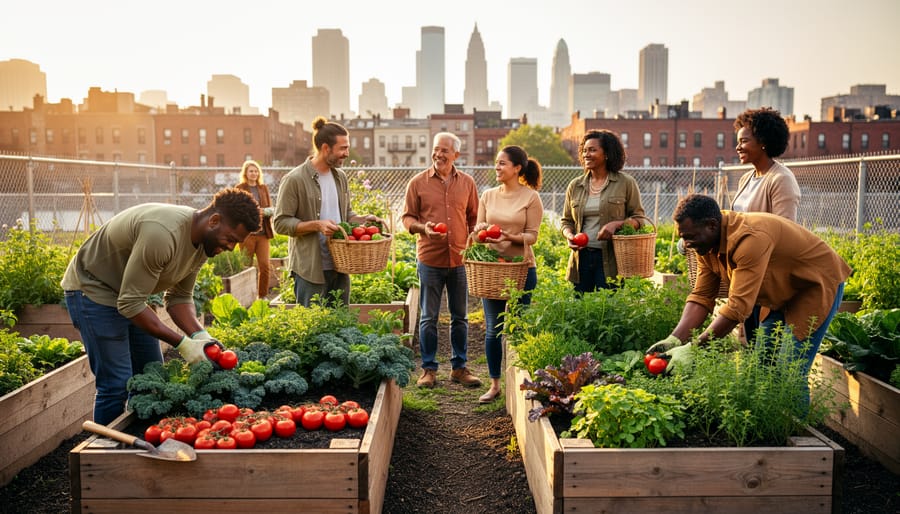
Transform vacant city lots into thriving food-producing spaces where neighbors cultivate fresh vegetables, build relationships, and reconnect with where their meals originate. Urban community gardens are shared green spaces where residents collectively grow organic produce, creating pockets of sustainable agriculture within concrete landscapes. These collaborative plots address food insecurity, reduce carbon footprints by eliminating transportation distances, and provide hands-free access to pesticide-free harvests right in your neighborhood.

Picture Sarah, a Chicago teacher who transformed her block’s abandoned corner into a flourishing garden that now feeds 15 families weekly with tomatoes, leafy greens, and herbs. Her story mirrors thousands of communities nationwide discovering that growing food together strengthens social bonds while improving nutrition and mental well-being. Whether you’re an apartment dweller craving dirt under your fingernails or someone passionate about local food systems, community gardens offer accessible entry points into organic growing practices.

Starting or joining a garden requires less expertise than you might think. Most projects welcome beginners eager to learn composting techniques, companion planting strategies, and seasonal crop rotation from experienced gardeners. The rewards extend beyond harvests—expect to gain gardening mentors, reduce grocery bills, exercise outdoors, and contribute to urban biodiversity while creating lasting friendships with neighbors who share your commitment to sustainable living.

What Makes Urban Community Gardens Different from Other Green Spaces

Urban community gardens represent a unique model of green space that goes beyond traditional gardening approaches. Unlike private backyard gardens where individuals work independently, community gardens bring neighbors together around shared plots of land, fostering collaboration and collective stewardship. These spaces operate on principles of shared ownership and responsibility, where members jointly maintain common areas, share tools and resources, and often make decisions together about what to grow and how to manage their space.

What truly sets urban community gardens apart is their dual focus on food production and community building. While public parks prioritize recreation and aesthetics, community gardens emphasize growing fresh, organic vegetables, herbs, and fruits that members can harvest and take home. This practical focus on food security connects directly to local food systems and sustainable agriculture. Many participants discover that growing their own produce not only provides healthy, chemical-free food but also deepens their understanding of where food comes from.

The social aspect distinguishes community gardens from individual allotment plots too. Rather than simply renting a space to garden alone, participants become part of a vibrant network of gardening enthusiasts. You’ll find experienced growers sharing gardening tips for beginners, families teaching children about composting, and neighbors exchanging seeds and recipes. These gardens become outdoor classrooms where knowledge flows freely.

Take Maria’s story, for instance. She joined her local community garden knowing nothing about plants, but within a season, fellow gardeners had taught her organic pest control methods and companion planting techniques. Now she mentors newcomers herself, perpetuating the cycle of knowledge-sharing that makes these spaces truly communal.
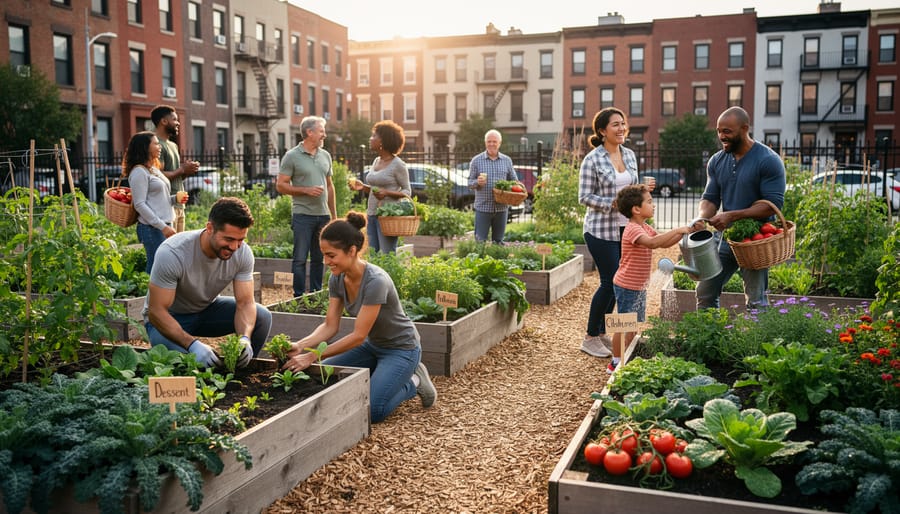
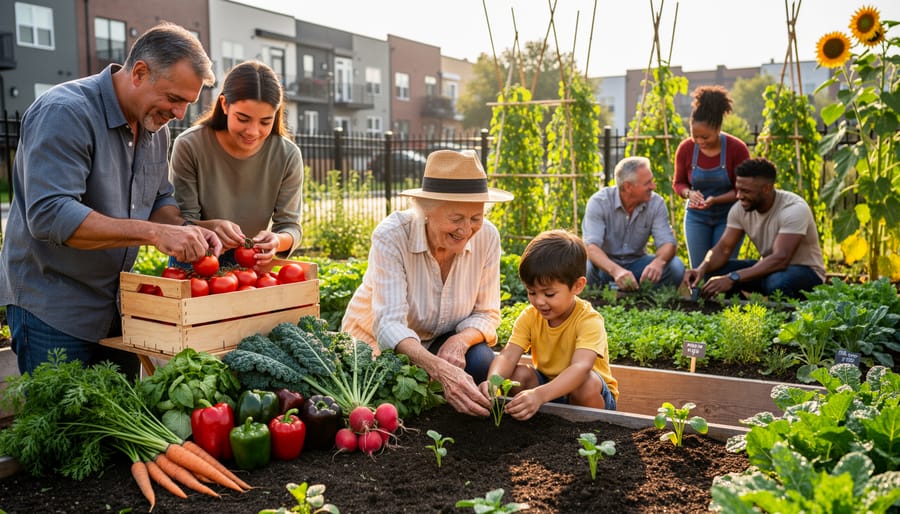
Aerial view of diverse community members working together in urban garden with raised beds and vegetables
Urban community gardens bring together diverse neighbors to grow fresh produce and build meaningful connections in shared green spaces.

The Real Benefits Community Gardens Bring to Your Neighborhood

Fresh Food Access in Unexpected Places

In many urban neighborhoods, accessing fresh, nutritious produce remains a significant challenge. Food deserts—areas where grocery stores with healthy options are scarce—often leave residents relying on convenience stores and fast food. This is where organic community gardens step in as game-changers, transforming vacant lots into thriving sources of fresh vegetables and herbs.

These gardens bridge the gap between communities and wholesome food by growing pesticide-free tomatoes, leafy greens, carrots, and seasonal produce right where people live. Take the story of Maria from Detroit, who helped establish a community garden in her neighborhood. Within two growing seasons, over thirty families had access to fresh vegetables they could afford—many picking produce for free or through small volunteer contributions.

Community gardens don’t just provide food; they restore dignity and choice to underserved populations. Families can harvest ripe strawberries, crisp lettuce, and aromatic basil without traveling miles or stretching tight budgets. This hyperlocal approach to food production empowers communities to take control of their nutrition while building connections with neighbors who share the harvest.

Building Connections One Plot at a Time

In our increasingly digital world, urban community gardens serve as powerful antidotes to isolation, bringing neighbors together around a shared love of growing food. These green spaces naturally foster connections across age groups, with experienced senior gardeners passing down decades of growing wisdom to curious children and young professionals. There’s something magical about watching a grandmother teach a teenager how to properly stake tomatoes or a college student showing retirees how to use social media to organize seed swaps.

Community gardens also become vibrant hubs for cultural exchange. When gardeners from different backgrounds work side-by-side, they share more than just tools and compost. Recipe exchanges flourish as people discover new ways to prepare unfamiliar vegetables, and traditional growing techniques from around the world enrich everyone’s gardening knowledge. A plot planted with Asian bitter melon sits next to one growing Mexican tomatillos, while another showcases Ethiopian collard greens, creating an edible celebration of diversity.

For city dwellers who might go weeks without knowing their neighbors’ names, community gardens transform strangers into friends. Regular garden work sessions create natural opportunities for conversation and collaboration. Take Maria’s story: after moving to a new city, she felt disconnected until joining her local community garden. Within months, she’d built lasting friendships with fellow gardeners who became her urban family, sharing not just harvests but also meals, childcare, and support during difficult times. These gardens remind us that community isn’t just built on proximity but on shared purpose and mutual care.
Elderly and young hands together holding freshly harvested vegetables from community garden
Community gardens create powerful intergenerational connections while providing fresh, organic produce to neighborhood residents.

Starting Your Own Urban Community Garden: First Steps

Finding the Right Space and Getting Permission

Finding the perfect spot for your urban community garden starts with exploring your neighborhood with fresh eyes. Take walks through your area and look for underutilized vacant lots, unused corners of parks, or neglected spaces that could transform into green oases. These forgotten patches of land often belong to municipalities, private owners, or organizations eager to see them put to good use.

Churches, schools, and community centers make excellent partners because they typically have available land and share your vision of bringing people together. Approach these organizations with a simple proposal highlighting how a garden benefits their community through fresh produce access, educational opportunities, and neighborhood beautification. Many institutions welcome the chance to support local food production while strengthening community bonds.

Before breaking ground, navigate the bureaucratic side by contacting your city’s parks and recreation department or urban planning office. They’ll guide you through zoning requirements, permits, and any necessary approvals. Some cities have streamlined processes specifically for community gardens, making it easier than you might expect.

Secure your garden’s future with written land access agreements. Whether you’re working with a private landowner or municipality, get clear terms in writing covering duration, responsibilities, water access, and liability insurance. Most agreements run 3-5 years, giving your garden stability to grow and thrive. Consider joining local gardening networks too, where experienced urban farmers share insider tips about working with city officials and negotiating favorable terms. Their success stories often reveal shortcuts that save months of frustration.

Rallying Your Neighbors and Building Your Garden Team

Getting your neighbors excited about a community garden starts with genuine conversation and shared vision. Begin by talking with people in your neighborhood—at local coffee shops, community centers, or through social media groups. You’ll likely discover others who share your passion for fresh, organic produce and sustainable living.

Once you’ve gathered interested folks, schedule an initial meeting to gauge commitment levels and identify potential leaders. This is where your garden committee takes shape. Aim for diversity in your leadership team, including people with different skills like gardening knowledge, fundraising experience, communication abilities, and organizational talents. A successful garden thrives on varied perspectives and strengths.

Establishing clear bylaws early prevents future conflicts and ensures smooth operations. Your guidelines should cover membership requirements, plot assignments, shared space maintenance, work hour expectations, and decision-making processes. Keep these rules straightforward and fair, making sure everyone understands their responsibilities.

Create inclusive participation structures that welcome gardeners of all experience levels, ages, and physical abilities. Consider offering mentorship programs where seasoned growers guide beginners, hosting family-friendly workdays, and ensuring accessible garden beds for those with mobility challenges. Some gardens designate communal plots specifically for donating produce to local food banks, allowing members to contribute even if they can’t maintain individual plots.

Regular gatherings—whether monthly meetings, seasonal potlucks, or weekend work parties—strengthen bonds and keep everyone invested in your garden’s success. Remember, you’re not just growing vegetables; you’re cultivating a resilient, connected community committed to sustainable living.

Essential Growing Tips for Shared Urban Garden Spaces

Making the Most of Limited Space

Urban community gardens often work with compact plots, but that doesn’t mean you can’t grow abundantly! Smart gardening strategies help you maximize every square foot while keeping your harvest thriving throughout the season.

Growing upward instead of outward is one of the most effective space-saving approaches. Vertical gardening techniques allow you to train climbing plants like beans, peas, cucumbers, and tomatoes on trellises, stakes, or frames. This method not only saves ground space but also improves air circulation and makes harvesting easier. You can even use vertical planters or wall-mounted containers for herbs and lettuce.

Succession planting keeps your garden productive all season long. Instead of planting everything at once, stagger your sowings every two to three weeks. This works beautifully with quick-growing crops like radishes, lettuce, and spinach, ensuring fresh harvests continuously rather than one overwhelming abundance.

Companion planting pairs plants that benefit each other. The classic trio of corn, beans, and squash demonstrates this perfectly: corn provides support for climbing beans, beans add nitrogen to soil, and squash leaves shade out weeds. Try pairing tomatoes with basil, or carrots with onions to maximize your plot’s potential.

Focus on high-yield, space-efficient crops like cherry tomatoes, zucchini, kale, and herbs. These plants produce generously without demanding excessive space, perfect for urban gardeners eager to enjoy homegrown organic produce while building community connections.
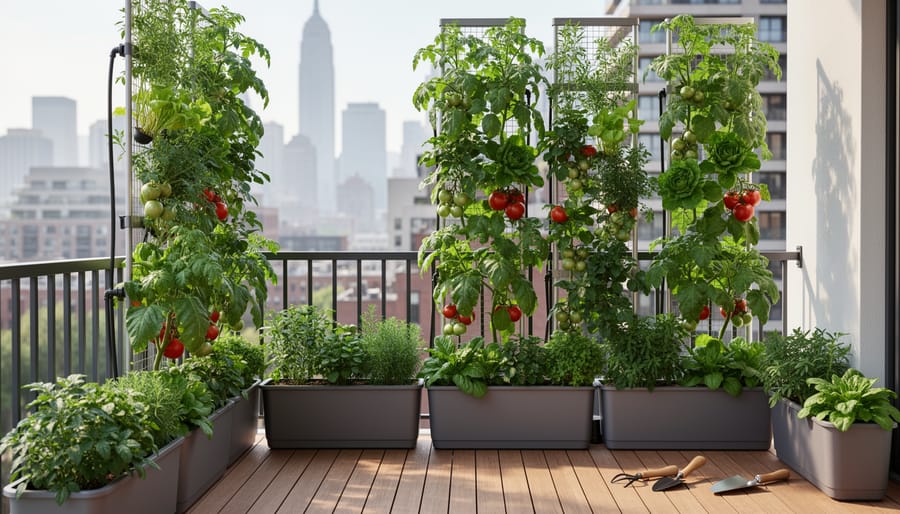
Vertical garden with climbing vegetables on trellis structure in compact urban space
Vertical growing techniques maximize harvest potential in small urban spaces by using height rather than horizontal area.

Organic Practices That Work in Community Settings

Creating a thriving organic community garden starts with systems that work for everyone involved. Composting is the backbone of healthy soil in shared spaces. Set up a simple three-bin system where gardeners can contribute kitchen scraps and yard waste. The first bin collects fresh materials, the second allows decomposition, and the third holds finished compost ready for garden beds. This closed-loop system reduces waste while building nutrient-rich soil that feeds your plants naturally.

Natural pest management keeps gardens productive without harsh chemicals. Companion planting works beautifully in community settings. Plant marigolds alongside tomatoes to deter aphids, or grow basil near peppers to repel thrips. Encourage beneficial insects by dedicating a small area to native flowers that attract ladybugs and lacewings. These garden helpers control pests naturally while creating a beautiful, welcoming space.

Building healthy soil takes teamwork. Add organic matter like finished compost, aged manure, and leaf mold each season. Cover crops like clover or winter rye planted between growing seasons prevent erosion and add nitrogen back into the soil.

Water conservation matters in community gardens. Install rain barrels to capture runoff from nearby structures, and use drip irrigation or soaker hoses to deliver water directly to plant roots. Mulching with straw or wood chips reduces evaporation and keeps soil temperatures steady. These sustainable practices create abundance while teaching valuable skills for aspiring farmers and gardening enthusiasts alike.

Real Stories: Community Gardens That Changed Everything

Real community gardens have the power to transform entire neighborhoods, bringing fresh food, connection, and hope to unexpected places. Let’s explore three inspiring examples that demonstrate just how impactful these green spaces can be.

In Detroit’s North End neighborhood, the Georgia Street Community Collective started on an abandoned lot filled with debris and broken glass. A group of retired residents partnered with young families to clear the space in 2018. They faced initial challenges including contaminated soil and lack of funding, but persevered by importing clean topsoil and hosting fundraising dinners. Today, the garden produces over 2,000 pounds of organic vegetables annually, supplying a weekly farm stand that serves 150 families. Perhaps more importantly, the garden became a gathering place where longtime residents teach newcomers about Detroit’s agricultural heritage while kids learn where their food comes from.

Across the country in South Los Angeles, the Pueblo del Sol Garden transformed a former drug-dealing hotspot into a thriving half-acre oasis. Founded by a group of immigrant women in 2015, the garden initially struggled with vandalism and skepticism from neighbors. The gardeners responded by hosting open community events and inviting everyone to participate. Within two years, crime in the surrounding blocks dropped by 40 percent. The garden now features over 80 family plots where members grow traditional crops from their home countries, creating a living celebration of cultural diversity while providing fresh produce in a neighborhood previously considered a food desert.

These success stories share common themes: persistent leadership, community buy-in, and a willingness to start small and grow organically. Both gardens prove that with determination and collective effort, urban spaces can become sources of nourishment, pride, and lasting positive change.

Overcoming Common Challenges in Shared Garden Spaces

Every community garden faces its share of hurdles, but with the right approach, these challenges become opportunities for growth and learning. Let’s explore practical solutions to keep your shared space thriving.

Managing different skill levels can feel overwhelming, but it’s actually one of your garden’s greatest strengths. Create a buddy system pairing experienced gardeners with newcomers. Host monthly skill-sharing workshops where members teach specific techniques like composting or pruning. This builds confidence while strengthening community bonds.

Plot abandonment happens, especially during busy seasons. Establish clear guidelines from the start about minimum maintenance expectations. Consider implementing a three-strike communication system before reassigning plots. Some gardens successfully use “foster gardeners” who temporarily care for neglected spaces until the original member returns or the plot gets reassigned.

Vandalism and theft can discourage even the most dedicated gardeners. Install simple solutions like motion-sensor lights, clearly visible signage explaining the garden’s community purpose, and maintain an active presence with staggered watering schedules. Gardens with regular foot traffic experience fewer incidents. Building relationships with neighbors transforms them into informal guardians who watch over your space.

Water access issues require creative problem-solving. Explore rainwater harvesting systems, negotiate reduced rates with local utilities, or apply for environmental grants. Many municipalities offer support for green spaces that benefit the community.

Funding maintenance becomes easier when you diversify income streams. Organize plant sales, host seasonal festivals with vendor fees, partner with local CSA programs, or apply for sustainability grants through environmental organizations.

Interpersonal conflicts are natural when passionate people work together. Designate a rotating conflict resolution team trained in mediation. Schedule regular community meetings where members voice concerns before they escalate. Remember, open communication and respect for different approaches create the foundation for lasting success.

Urban community gardens hold remarkable transformative potential for neighborhoods, bringing together people who share a passion for fresh, organic food and sustainable living. These green spaces don’t just produce nutritious vegetables—they cultivate connections, restore urban ecosystems, and empower communities to take control of their food sources. Whether you’re an experienced gardener or just starting your journey into sustainable agriculture, there’s a place for you in this growing movement.

Getting involved is easier than you might think. Check with your local municipality about available plots, connect with existing garden groups through social media, or gather neighbors to start something new in your area. Many successful gardens began with just a few dedicated individuals who shared a vision. As you explore these opportunities, consider how community gardening connects to broader local food systems through CSA connections and other sustainable agriculture programs.

Take that first step today—visit a nearby community garden, attend a planning meeting, or simply start conversations with like-minded neighbors. Your involvement, no matter how small, contributes to healthier communities and a more sustainable future for urban agriculture.
Why Farmers Face Income Risks in CSA (And How Members Can Help)

Posted by darrell on
0
CSA Fundamentals and Benefits
Why Farmers Face Income Risks in CSA (And How Members Can Help)

Every farmer faces a sobering reality: months of careful planning, planting, and tending can vanish in a single hailstorm, drought, or pest invasion. Traditional farming places this entire financial burden on the grower’s shoulders, creating an income rollercoaster that drives talented farmers out of agriculture entirely. A late spring frost might destroy fruit tree blossoms, eliminating an entire season’s apple harvest. An unexpected dry spell could shrivel summer vegetables before they reach market size. Equipment breakdowns, sudden illness, and fluctuating market prices add layers of uncertainty that make financial planning nearly impossible.

Community Supported Agriculture transforms this precarious model by spreading risk across an entire community. When you purchase a CSA share before the growing season begins, you provide farmers with stable upfront capital for seeds, equipment, and labor. This financial commitment means farmers can focus on growing exceptional food rather than constantly worrying about whether they’ll earn enough to survive another season. You become a genuine partner in the farming operation, sharing both abundant harvests and challenging years. The result is a more resilient local food system where farmers can invest in soil health, experiment with diverse crops, and build sustainable businesses that nourish communities for generations.

What Income Risks Really Mean for Your CSA Farmer

When you buy tomatoes at the grocery store, the produce manager simply orders more from their distributor if they run low. But your CSA farmer doesn’t have that safety net. They’re growing everything themselves, and that creates a fundamentally different kind of financial pressure.

Income risk for farmers means their annual earnings depend entirely on what actually grows in their fields. Unlike conventional agriculture, where large-scale operations can absorb losses across hundreds or thousands of acres, most CSA farms operate on smaller acreages where every crop matters. A late spring frost can wipe out fruit blossoms. A summer drought can stunt tomato production by half. An unexpected pest invasion can decimate an entire planting of greens.

The CSA model exists partly to address these realities. While conventional farmers might sell to multiple buyers and adjust their income strategy throughout the season, CSA farmers commit to feeding a specific number of families with whatever they harvest. They can’t call up a wholesaler to fill gaps in their share boxes.

Consider this: A conventional farmer losing their lettuce crop to pests might switch focus to other buyers or crops. A CSA farmer still needs to provide weekly shares to members who’ve already paid. Weather extremes are becoming more unpredictable, making planning even harder. Too much rain encourages fungal diseases. Too little means costly irrigation and stressed plants.

Then there’s timing. Crops need to mature when members expect them. If spring arrives late, those early greens everyone anticipates might be delayed, leaving farmers scrambling to fill boxes with limited variety. These aren’t just agricultural challenges; they’re direct threats to a farmer’s livelihood and ability to pay bills, purchase seeds for next season, and support their family. Understanding these pressures helps us appreciate why the partnership between farmer and member matters so deeply.

The Four Biggest Income Threats Facing CSA Farms

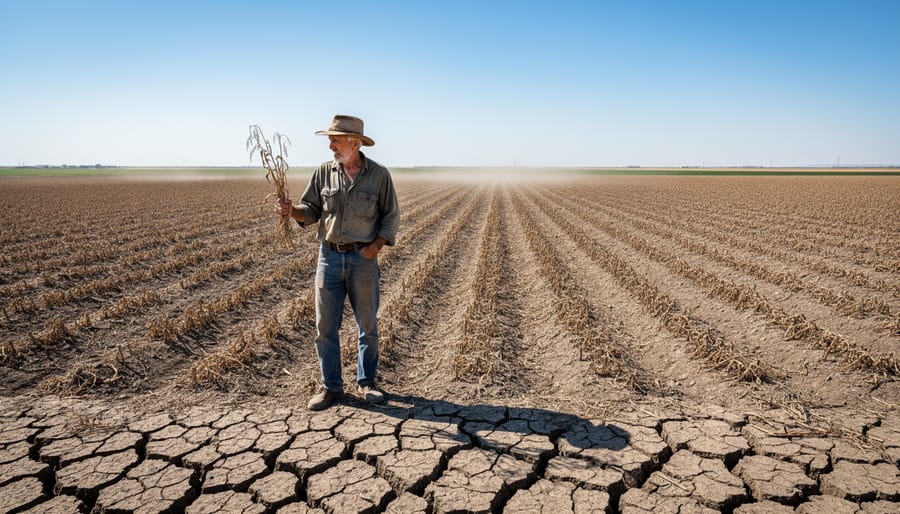
Farmer's hands holding small seedlings against drought-affected field with cracked soil
Weather extremes like drought can devastate carefully planted crops, directly impacting a farmer’s entire season income.

Weather Extremes and Climate Unpredictability

Mother Nature doesn’t follow business plans. A single late spring frost can wipe out fruit blossoms, turning a promising apple harvest into near-total loss. Unexpected heat waves stress vegetables, causing crops to bolt prematurely or simply wither. Droughts reduce yields dramatically, while floods can destroy entire plantings in hours.

Take Sarah from Meadowbrook Farm, who experienced this firsthand when an August deluge flooded her low-lying fields. She lost nearly 60% of her late summer vegetables—tomatoes, peppers, and squash—representing thousands of dollars in projected income. “We had pre-sold those crops through our CSA,” she shares, “but the income we’d counted on vanished overnight.”

These weather extremes are becoming increasingly unpredictable, making traditional farming income projections feel like guesswork. For small organic farms operating on tight margins, a single catastrophic weather event can threaten an entire season’s viability. This vulnerability underscores why the CSA model’s risk-sharing approach matters so deeply for farming sustainability.

The Pre-Season Investment Gamble

Picture this: it’s February, snow still blankets the ground, and farmers are already investing thousands of dollars. Seeds need ordering, equipment requires maintenance, and greenhouse heating bills start climbing. They’re hiring workers, purchasing compost, and planning crop rotations—all without a single dollar of income.

This pre-season investment typically ranges from $15,000 to $50,000 for small to mid-sized operations, depending on farm size and production goals. Understanding CSA farm economics reveals just how crucial early member sign-ups become.

When enrollment falls short of projections, farmers face tough decisions. Do they scale back plantings, potentially disappointing members with smaller shares? Take on debt to cover gaps? Or dip into personal savings meant for winter months?

Unlike traditional businesses that can adjust inventory based on demand, farming requires commitment months in advance. Those seeds go in the ground whether 50 or 100 members sign up, creating a financial tightrope that makes planning incredibly challenging.

Labor Costs and Workforce Challenges

Managing labor is one of the trickiest aspects of running a small farm. Unlike traditional businesses with steady workflows, farms experience dramatic seasonal shifts—you might need ten helpers during June harvest but only two in February. Finding reliable workers who understand sustainable practices takes time and effort, yet predicting exactly when you’ll need them depends on weather patterns that change yearly.

Labor costs can quickly eat into thin profit margins. When unexpected frost damages crops or drought delays planting, you still need to pay your team fairly. Many successful CSA farmers have found creative solutions, like offering work-share programs where members exchange labor for their produce shares. This builds community while managing costs. Others cross-train workers in multiple tasks, ensuring year-round employment that benefits everyone. Building a skilled, dependable team requires investment, but it’s essential for maintaining the quality and consistency your members expect.

Market Competition and Member Retention

Even with a committed member base, CSA farmers face competition from farmers markets, grocery stores, and meal delivery services that offer greater flexibility. Members can choose to opt out between seasons if their circumstances change, creating uncertainty in year-to-year planning. Life events like moves, financial changes, or dietary shifts mean retention isn’t guaranteed, even when members love their farm.

Successful farmers build loyalty through consistent communication, quality produce, and community connection. Full Circle Farm in Washington state maintains an impressive 85% retention rate by offering flexible pickup options and engaging members through regular farm updates. Creating a strong farm identity helps members see their subscription as more than just vegetables—it becomes a valued relationship. Consider offering mid-season surveys to understand member needs, providing recipe ideas to inspire cooking creativity, and hosting farm events that deepen emotional connections. These efforts transform casual subscribers into devoted advocates who return season after season.

How Risk-Sharing Creates Predictable Income

Here’s where the CSA approach transforms everything. The risk-sharing model tackles income uncertainty head-on by flipping the traditional farming payment structure upside down.

Instead of waiting months to see if their harvest will sell, CSA farmers receive payments from members at the beginning of the season. This upfront commitment creates an immediate operating budget that farmers can count on. They know exactly how much money they have to purchase seeds, repair equipment, hire help, and cover essential expenses. No more sleepless nights wondering if the bills will get paid.

Think of it like a farmers’ version of a subscription service, but with much deeper meaning. When members pay in advance, they’re not just buying vegetables—they’re investing in their local food system and saying, “We believe in you, and we’re in this together.” This vote of confidence means everything to farmers who’ve spent years building their skills and nurturing their land.

The magic happens because everyone understands the deal from day one. Members know that some weeks might bring an abundance of tomatoes, while others feature more greens. If the cucumber crop struggles due to unexpected weather, members don’t demand refunds. Instead, they appreciate the extra zucchini and summer squash that thrived. This shared understanding removes the pressure farmers face in conventional markets, where imperfect produce often gets rejected.

Take the example of Green Valley Farm in Ontario. Owner Maria Chen shares how CSA membership transformed her operation: “Before CSA, I’d worry constantly about market day sales. Now, I start each season knowing I have 85 families counting on me, and I’ve already got the funds to make it happen. I can focus on growing the best food possible instead of scrambling to make ends meet.”

This financial stability ripples outward, benefiting the entire community. Farmers can experiment with new varieties, invest in soil health, and plan for long-term sustainability. Members enjoy fresher, more diverse produce while knowing their food dollars directly support local agriculture. Everyone wins when risk becomes something shared rather than shouldered alone.

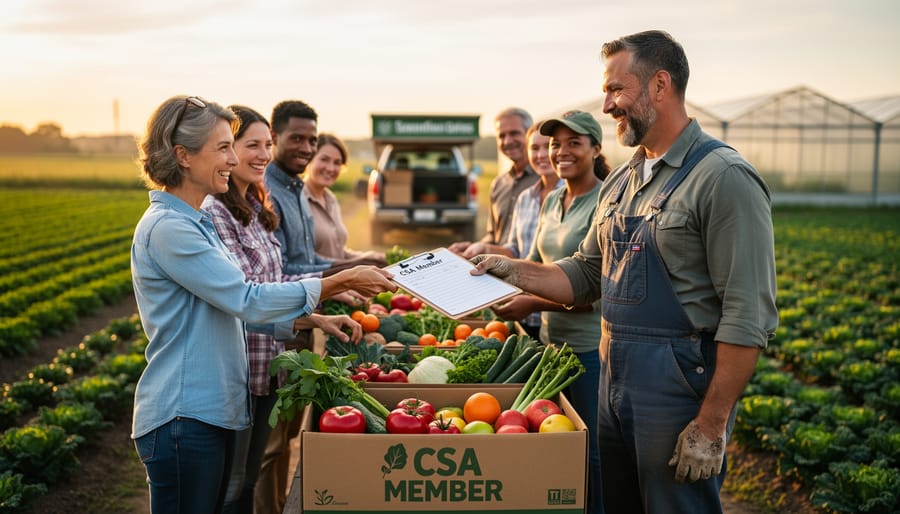
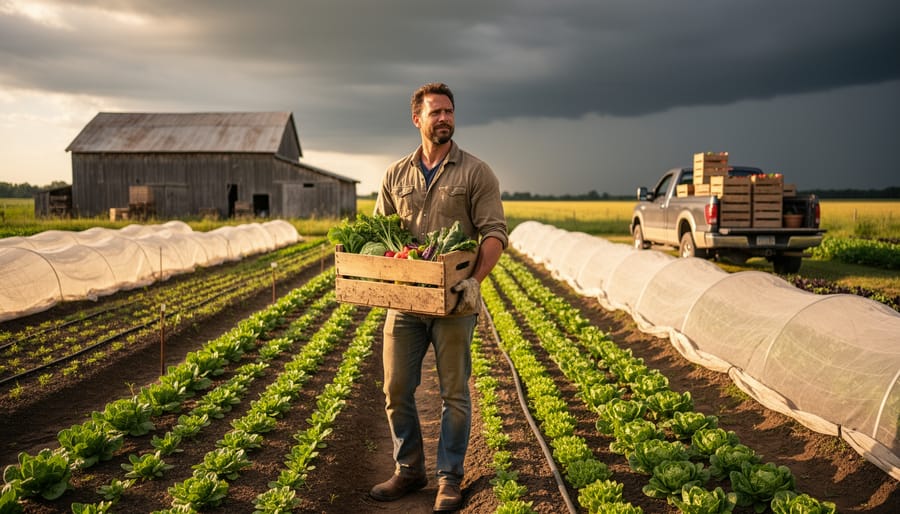
CSA members and farmer standing together in field with harvest crates of fresh vegetables
CSA members and farmers form partnerships built on shared risk and mutual support, creating stable income through community commitment.

What You’re Really Signing Up For as a CSA Member

When you join a CSA, you’re not simply purchasing vegetables—you’re entering into a partnership between farmers and communities that thrives on shared commitment and realistic expectations.

Think of it this way: as a CSA member, you’re investing in the farm’s entire season before the first seed goes into the ground. Your upfront payment gives farmers the financial security to buy seeds, prepare fields, and cover early-season expenses without depending on uncertain market conditions. In return, you’re agreeing to share in whatever the season brings—the triumphs and the challenges alike.

In practice, this means your weekly box will reflect the farm’s actual harvest. During peak summer months, you might receive an abundance of tomatoes, zucchini, and peppers that has you frantically searching for new recipes. Come early spring or late fall, your share might feature more root vegetables and hearty greens. Some weeks you’ll get exactly what you expected; other weeks might surprise you with an unfamiliar vegetable or a substitution when weather affects a particular crop.

This variability isn’t a flaw in the system—it’s the whole point. You’re experiencing real farming, not a curated grocery store experience. When a late frost damages the lettuce crop, you might receive extra kale instead. When cucumbers go crazy in July, everyone celebrates the bounty together.

This shared-risk model means you’re actively supporting your farmer through unpredictable seasons, knowing they’re working tirelessly to provide you with the best possible harvest. You become invested in the farm’s success story, learning about seasonal eating, discovering new vegetables, and developing a deeper connection to how your food is grown.

By embracing this partnership mindset, you transform from a passive consumer into an active participant in sustainable, local agriculture—experiencing the authentic rhythm of farm life alongside the people who grow your food.

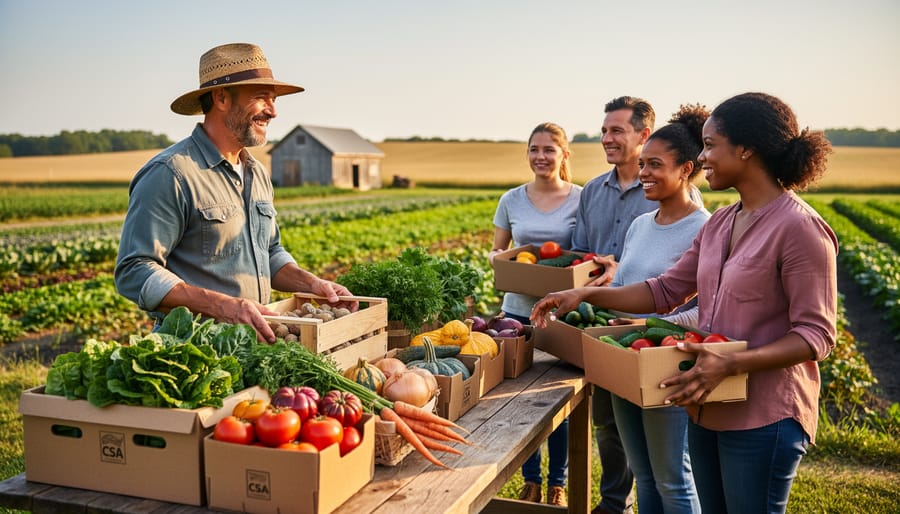
Hands exchanging wooden box filled with fresh colorful vegetables at farm stand
Weekly CSA shares represent more than a transaction—they embody a partnership where members support farmers through both abundant and challenging seasons.

Real Farmer Story: How One CSA Survived a Devastating Drought

When the summer of 2019 brought record-breaking heat and minimal rainfall to Green Valley Farm in northern California, third-generation farmer Maria Chen watched her carefully tended vegetable beds wither despite daily irrigation. Wells were running dangerously low, and the municipal water district had imposed strict restrictions. Maria faced an agonizing choice: purchase expensive trucked-in water or accept significant crop losses that could devastate her income for the year.

Instead of shouldering this burden alone, Maria opened up to her 85 CSA members through a heartfelt email explaining the situation. She shared photos of the parched fields, detailed the irrigation challenges, and honestly discussed what members could expect in the coming weeks. The response overwhelmed her.

Members immediately rallied, organizing a fundraiser that raised $8,000 toward emergency water costs. Several members with agricultural backgrounds volunteered weekend hours to help implement water-saving measures like installing drip irrigation and applying mulch. Others spread the word on social media, bringing in 20 new member sign-ups for the following season.

“I prepared myself for cancellations and complaints,” Maria recalls. “Instead, my members reminded me why CSA exists. They understood that supporting local farms means being there during the tough seasons, not just the abundant ones.”

The farm survived that summer with about 60 percent of typical yields, but no members cancelled their shares. Many told Maria they appreciated the smaller boxes because it helped them understand the reality of farming and deepened their connection to where their food comes from. That drought year, paradoxically, became the strongest bonding experience between Maria and her community, proving that CSA membership is truly a partnership built on mutual support and shared responsibility.

Simple Ways You Can Support Your Farmer’s Income Stability

Supporting your local farmer’s income stability doesn’t require grand gestures—small, thoughtful actions make a real difference. When you sign up for your CSA share early in the season, you’re giving farmers the financial security they need to purchase seeds, plan crop rotations, and invest in infrastructure before the growing season begins. This early commitment helps them avoid risky short-term loans and make confident decisions about what to plant.

If possible, consider paying for your share upfront or in larger installments rather than weekly payments. This approach provides farmers with crucial cash flow during the expensive spring months when they’re spending money but not yet harvesting. Many farms offer small discounts for upfront payment, creating a win-win situation.

Becoming a farm advocate is equally valuable. Recruit friends, family, and coworkers to join your CSA by sharing your experiences on social media or hosting a farm dinner party featuring your weekly harvest. Every new member strengthens the farm’s financial foundation and builds community resilience.

Flexibility goes a long way in supporting income stability. When you’re open to receiving whatever’s thriving that week instead of expecting specific items, you help farmers reduce waste and maximize their harvest value. Surplus zucchini or an abundance of greens might not be your first choice, but your willingness to accept them helps the farm avoid financial losses.

Volunteering during harvest time or work days reduces labor costs while deepening your connection to where your food comes from. Whether you can spare two hours or a whole day, your hands-on help directly impacts the farm’s bottom line. Finally, leave positive reviews online and recommend your farm to local restaurants or institutions looking for fresh produce suppliers—word-of-mouth remains the most powerful marketing tool for small farms.

When you join a CSA, you’re doing something truly meaningful—you’re stepping beyond a simple transaction and entering into a partnership that strengthens your entire community. This isn’t just about filling your kitchen with fresh, organic vegetables each week. It’s about investing in a farming model that honors the land, supports the people who tend it, and creates food systems built to last.

The beauty of CSA lies in its honesty about what farming really involves. Weather doesn’t always cooperate. Pests can be persistent. Markets fluctuate. By sharing these realities with your farmer, you’re helping them face uncertainties with confidence rather than fear. Your upfront commitment gives them the breathing room to farm thoughtfully, invest in soil health, and make decisions based on what’s best for the land rather than what’s merely profitable.

Think of your CSA membership as an investment with returns that compound in unexpected ways. Yes, you’ll enjoy incredibly fresh produce that nourishes your body. But you’ll also gain connection to the source of your food, understanding of seasonal rhythms, and the satisfaction of knowing your money directly supports someone’s livelihood and dream.

The farmers who feed us deserve stability and respect for the essential work they do. When you embrace the full CSA partnership—celebrating abundant harvests and understanding leaner weeks—you become part of the solution to farming’s income challenges. Together, we’re building food systems where both farmers and eaters can truly thrive.