How One Farm’s Career Training Program Is Reshaping the Local Food Economy
 darrell on
Growing your own food starts with knowledge, and one local agricultural business is turning that principle into economic opportunity by offering comprehensive career training programs that transform aspiring farmers into skilled professionals. Through hands-on apprenticeships, classroom instruction, and mentorship from experienced growers, trainees learn everything from soil preparation and crop rotation to pest management and direct-to-consumer marketing strategies that make small farms financially viable.
The ripple effects extend far beyond individual careers. When local businesses invest in training the next generation of farmers, they strengthen regional food systems, create living-wage jobs that keep young people in rural communities, and build a more resilient agricultural economy. Each trained farmer who launches their own operation multiplies the impact, supplying fresh produce to neighborhood markets, restaurants, and families who value knowing exactly where their food comes from.
These training programs address a critical gap in modern agriculture. With the average farmer age climbing above 58, the industry desperately needs skilled newcomers who understand both traditional growing methods and innovative sustainable practices. Local businesses providing this education aren’t just filling job openings; they’re preserving agricultural knowledge, revitalizing communities, and empowering people to build meaningful careers that nourish their neighbors while protecting the environment. The investment pays dividends in stronger local economies, healthier communities, and a more secure food future for everyone.
The Growing Demand for Trained Farm Workers
The sustainable agriculture movement has sparked tremendous consumer interest in locally grown, organic produce. Yet behind every thriving farmers market and bustling CSA box pickup, there’s a growing challenge: farms desperately need skilled workers, and they’re struggling to find them.
This labor shortage isn’t just about having extra hands during harvest season. Modern sustainable farms require workers who understand soil health, pest management, crop rotation, and the careful timing that organic growing demands. As more conventional farms transition to regenerative practices and new CSA operations launch to meet consumer demand, the gap between available jobs and qualified candidates continues to widen. These changes are reshaping local labor markets across the country.
Here’s the disconnect: while thousands of people express interest in sustainable food systems and dream of working the land, very few possess the practical skills needed to succeed. Gardening in your backyard differs vastly from managing acres of diverse crops, operating farm equipment safely, or implementing season extension techniques. Without proper training, well-intentioned newcomers often feel overwhelmed and farms lose valuable time and resources.
Career training programs have emerged as the essential bridge between enthusiasm and expertise. These programs offer hands-on experience in real farm settings, teaching everything from seed starting to post-harvest handling. Participants learn alongside experienced farmers, gaining confidence through practical application rather than theory alone.
Consider Sarah, who completed a six-month training program before launching her own market garden. “I thought I knew farming from reading books,” she shares. “But learning proper transplanting techniques and irrigation management changed everything. Now I’m actually profitable in my second season.”
This transformation from curious learner to confident farmer demonstrates why structured training has become indispensable for agriculture’s future.
What Farm-Based Career Training Actually Looks Like
Hands-On Skills Development
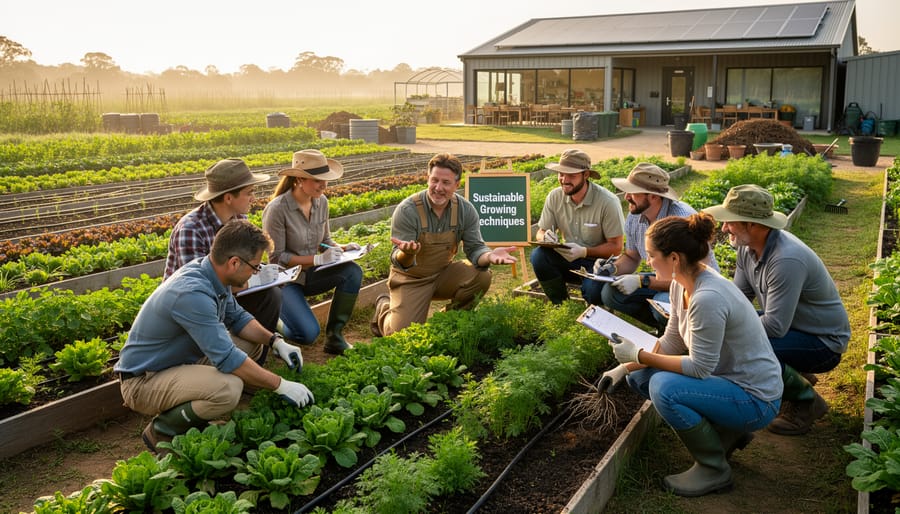
The career training program offers comprehensive hands-on experience that transforms beginners into confident farmers. Trainees spend their days in the fields learning essential skills like proper seed selection, soil preparation, and planting techniques for various seasonal crops. Under the guidance of experienced farmers, participants master the art of transplanting seedlings, understanding proper spacing, and creating optimal growing conditions for each plant variety.
Harvesting skills form a crucial part of the curriculum, teaching trainees to identify peak ripeness, use proper cutting techniques, and handle produce gently to maintain quality. The program also covers integrated pest management, where participants learn to identify common pests and diseases while implementing organic solutions like companion planting, beneficial insects, and natural pest deterrents.
Sustainable farming practices weave through every aspect of the training. Participants discover composting methods, crop rotation strategies, water conservation techniques, and soil health management. One graduate, Maria, shares her success story: “I started knowing nothing about farming. Now I manage my own quarter-acre plot, providing fresh vegetables to twenty local families.” This practical, mentorship-based approach ensures trainees gain real-world skills they can immediately apply to their own farming ventures or careers in sustainable agriculture.
Business and Marketing Education
Beyond growing techniques, successful farming requires solid business acumen. Many local agricultural training programs recognize that understanding the entrepreneurial side is crucial for long-term viability. These programs teach aspiring farmers how to develop comprehensive business plans that cover startup costs, seasonal cash flow management, and pricing strategies for different market channels.
Participants learn the essential ingredients for farm success, including how to build lasting customer relationships through effective communication and transparency about growing practices. Training often includes practical modules on operating a Community Supported Agriculture (CSA) program, selling at farmers markets, and navigating wholesale partnerships with restaurants and local retailers.
Understanding local food distribution channels is essential in today’s market. Trainees explore various sales models, from direct-to-consumer approaches to cooperative distribution networks. They also learn basic marketing strategies, including social media promotion, creating compelling farm stories, and engaging with their community. This business education empowers graduates to transform their agricultural passion into sustainable livelihoods while strengthening local food systems and creating economic opportunities within their communities.
Measuring Economic Impact: Beyond the Farm Gate
Direct Economic Benefits
When local farms invest in career training programs, the economic ripple effects are substantial and measurable. Recent economic impact studies show that each trained agricultural worker contributes an average of $35,000 to $50,000 annually in wages to the local economy, money that typically stays within the community through local spending.
Training programs create immediate employment opportunities, with many farms reporting the ability to expand operations by 20-30% after bringing on skilled workers. Take Sarah Chen, who completed a season-long apprenticeship at Green Valley Farm. Within two years, she launched her own organic vegetable operation, now employing three additional workers and serving 85 member families.
The productivity gains are equally impressive. Farms with trained staff report 25-40% increases in crop yields through improved soil management, efficient planting schedules, and reduced crop loss. This translates to more fresh, organic produce available for community members while strengthening food security.
Beyond the farm gate, these trained workers often become educators themselves, sharing sustainable growing techniques with home gardeners and inspiring the next generation of environmental stewards. This knowledge transfer multiplies the economic and environmental benefits throughout the region.
Indirect Community Benefits
The ripple effects of career training in sustainable agriculture extend far beyond the classroom, creating a flourishing ecosystem of local food initiatives. As newly trained farmers launch their own operations, they naturally gravitate toward community gathering spaces like farmers markets, breathing fresh life into these beloved weekend destinations. These markets become more vibrant and diverse, offering shoppers greater variety while strengthening connections between growers and consumers.
The training also sparks an entrepreneurial wave of farm startups throughout the region. Graduates armed with practical knowledge and confidence often begin with small-scale operations, perhaps starting a backyard microgreens business or launching a specialty herb garden. These micro-enterprises might seem modest at first, but they collectively contribute to a more resilient local food system. One inspiring example comes from Maria, who transformed her half-acre plot into a thriving cut-flower farm after completing her training, now supplying three local florists and two farmers markets.
Beyond individual success stories, this training strengthens the entire local food supply chain. Restaurants gain access to reliable sources of fresh, seasonal produce. Food cooperatives expand their local vendor networks. Even school lunch programs benefit from increased availability of farm-fresh ingredients. This interconnected web of producers, distributors, and consumers creates economic stability while reducing our community’s dependence on distant food sources shipped from thousands of miles away.
Success Story: From Trainee to Farm Entrepreneur
When Maria Rodriguez enrolled in the apprenticeship program three years ago, she was working retail and dreaming of a different future. Today, she runs Verde Valley Farm, a thriving 5-acre organic operation that supplies fresh produce to over 80 local families and three restaurants in the community.
Maria’s journey began with an intensive six-month training program that covered everything from soil health and crop rotation to business planning and customer relations. She spent her mornings learning greenhouse management and her afternoons getting hands-on experience in the fields. The program didn’t just teach her how to grow vegetables—it equipped her with real-world skills to launch a sustainable business.
“I learned about companion planting, season extension techniques, and how to build healthy soil without synthetic inputs,” Maria shares. “But what really made the difference was understanding the business side. They taught us pricing strategies, how to connect with customers, and the importance of building relationships within the local food community.”
After completing her training, Maria leased land through a farmland access program and started small with just half an acre of mixed vegetables. Her first season, she served 15 CSA members and generated $12,000 in revenue. By her third year, she’d expanded to 5 acres and increased her annual revenue to $85,000 while creating two full-time positions and seasonal work for local high school students.
Beyond the numbers, Maria’s farm has become a community hub. She hosts monthly farm tours for families, donates surplus produce to the local food pantry, and mentors new trainees from the same program that launched her career. Her success demonstrates how accessible agricultural training can transform individual lives while strengthening local food systems.
“The training gave me confidence and practical knowledge,” Maria reflects. “Now I get to share fresh, organic food with my neighbors while making a living doing something I genuinely love.”

The Multiplier Effect on Local Food Systems
When a local farm invests in training new farmers, the benefits ripple far beyond individual career development. These trained growers become vital threads in the fabric of local food systems, creating opportunities that strengthen the entire community’s access to fresh, sustainable produce.
Consider the journey of trained farmers like Sarah Martinez, who completed a two-year apprenticeship at Green Valley Farm. Within three years, she was supplying organic vegetables to eight local restaurants, two elementary schools, and running her own thriving CSA program with 75 member families. Her success story isn’t unique. Trained farmers consistently expand market channels that didn’t previously exist, creating new purchasing options for institutions and families alike.
The knowledge transfer continues as these graduates become mentors themselves. They host farm tours, lead workshops on composting and season extension techniques, and provide crucial guidance to the next generation of growers. This creates a self-sustaining cycle of agricultural expertise within the community.
Schools particularly benefit from this multiplier effect. When trained farmers understand food safety protocols and can maintain consistent supply schedules, they become reliable partners for farm-to-school programs. Children gain access to nutrient-dense produce while learning where their food originates.
The economic impact extends to related businesses too. Local seed companies, tool suppliers, farmers’ market organizations, and food hubs all experience increased activity as more trained farmers enter the field. Each new CSA operation creates demand for delivery services, packaging materials, and storage facilities.
This interconnected growth demonstrates how career training in sustainable agriculture doesn’t just create jobs but builds resilient food networks that serve entire regions for generations.

Finding Career Training Opportunities in Your Area
If you’re excited about pursuing agricultural career training or want to support farms investing in their workforce, here’s how to get started. Begin by reaching out directly to local farms and CSAs in your area—many offer apprenticeships or internship programs but don’t advertise them widely. Visit farmers markets and farm stands to ask growers about training opportunities they might offer or know about.
When evaluating a program’s quality, look for hands-on learning opportunities that cover diverse farm operations throughout growing seasons. Reputable programs provide clear expectations about work hours, learning outcomes, and any compensation or food shares offered. Ask about mentor availability and whether you’ll gain experience in areas like soil health, crop planning, and sustainable pest management. Programs connected to organic certification bodies or sustainable agriculture organizations often maintain high educational standards.
Don’t overlook resources like your local Cooperative Extension office, agricultural colleges, and community colleges offering beginning farmer courses. Many non-profit farming organizations also maintain directories of training opportunities and can connect you with established farmers willing to mentor newcomers.
As a consumer, you play a vital role in supporting workforce development. Join CSAs that actively train new farmers, spreading awareness about their commitment to education. Purchase produce from farms employing apprentices, knowing your dollars help fund the next generation of sustainable growers. Share success stories of farmers who started as apprentices, inspiring others to explore agricultural careers. Consider volunteering at teaching farms or donating to scholarship funds that make training accessible to diverse communities, strengthening local food systems for everyone.
When local farms invest in career training programs, they’re doing much more than filling immediate job openings. They’re building a foundation for resilient food systems that strengthen our entire community. These programs create ripple effects throughout the local economy, from reduced unemployment to increased spending at neighboring businesses, while nurturing the next generation of agricultural stewards.
The farmers who complete these training programs become ambassadors for sustainable agriculture, carrying forward time-tested practices while bringing fresh innovation to their work. Their success stories demonstrate that investing in people creates lasting value that extends far beyond any single growing season.
As consumers and community members, we have the power to support this vital cycle. Seek out farms that prioritize workforce development and career training. When you purchase from these businesses, you’re not just buying fresh, organic produce. You’re investing in jobs, strengthening local food security, and helping build a more sustainable agricultural future. Consider visiting local farmers markets, joining a CSA program, or simply asking your favorite farm about their training initiatives. Every purchase becomes a vote for the kind of community you want to see thrive.