
Why Saving Seed Microbiomes Could Be the Key to Our Food Future
 darrell on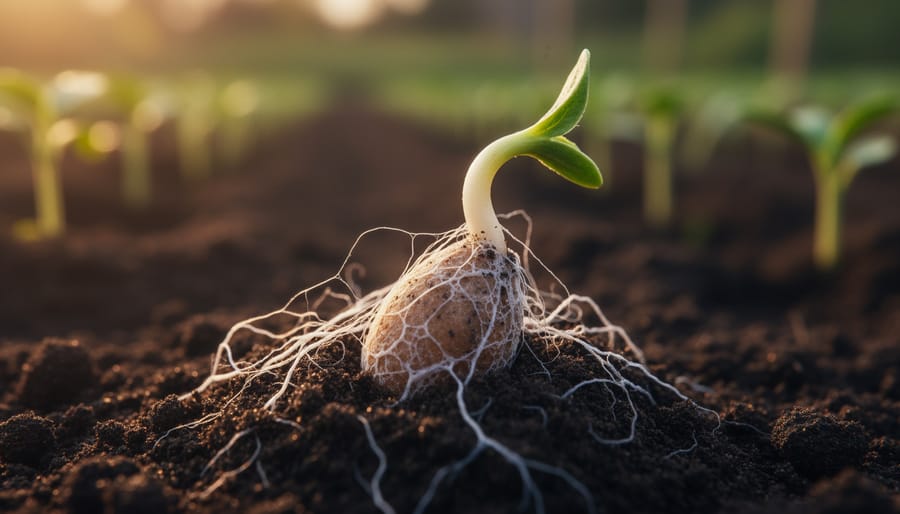
Every seed carries an invisible guardian—a community of beneficial bacteria, fungi, and microorganisms that determines whether that seed will thrive or struggle. This hidden ecosystem, known as the seed microbiome, plays a crucial role in plant health, disease resistance, and crop resilience that most gardeners and farmers never see. Yet modern agricultural practices, including chemical seed treatments and monoculture farming, are steadily eroding these microscopic allies, threatening both food security and biodiversity.
The seed microbiome works like a plant’s first immune system, inherited from parent plants and passed to the next generation. These beneficial microbes colonize seedlings immediately upon germination, helping them absorb nutrients, fight off pathogens, and adapt to environmental stress. When we preserve seed microbiomes, we’re not just saving genetic diversity—we’re protecting generations of microbial knowledge that helps plants survive droughts, resist pests, and flourish in their local environments.
For farmers practicing sustainable agriculture and home gardeners committed to organic methods, understanding seed microbiomes opens new possibilities for growing healthier, more resilient plants without synthetic inputs. The encouraging news? You can actively participate in preserving these vital microbial communities through simple seed-saving practices and thoughtful growing techniques. By maintaining diverse seed microbiomes in your garden or farm, you become part of a growing movement protecting agricultural biodiversity from the ground up—or more accurately, from the seed out.
What Is a Seed Microbiome?
The Living Armor Around Every Seed
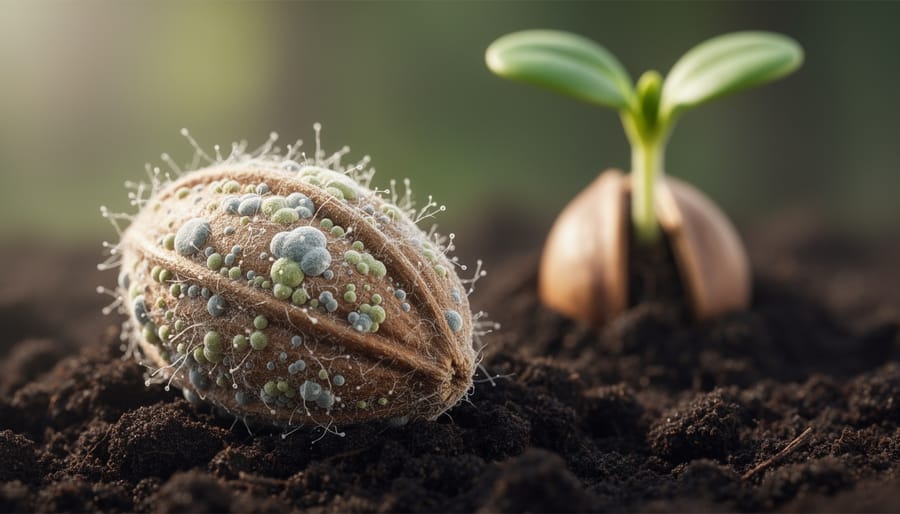
Every seed carries invisible allies on its journey from soil to sprout. These beneficial microbes—bacteria, fungi, and other tiny organisms—form a protective living coating around seeds, creating nature’s first line of defense for the next generation of plants.
Think of this microbial armor as a seed’s personal security team and nutrition crew combined. These microscopic helpers actively guard against harmful pathogens that might otherwise cause rot or disease during the vulnerable germination period. At the same time, they produce compounds that signal the seed when conditions are right for sprouting, essentially whispering “it’s time to grow.”
Once germination begins, these microbes continue their supportive role. They help break down nutrients in the surrounding soil, making essential minerals more accessible to tender young roots. Some microbes even produce natural growth hormones that give seedlings a stronger start. This partnership is especially valuable in organic farming systems, where farmers rely on natural processes rather than synthetic treatments.
What’s fascinating is that many of these beneficial microbes have co-evolved with specific plant species over thousands of years, creating perfectly matched partnerships. When we preserve seed microbiomes, we’re maintaining these ancient relationships that help plants thrive naturally and resist environmental stresses.
Where Seed Microbes Come From
Seeds acquire their microscopic companions through several fascinating pathways, creating a unique microbial signature that passes from generation to generation. The parent plant serves as the primary source, transferring beneficial bacteria and fungi directly through flowers, developing fruits, and ultimately into the seeds themselves. This vertical transmission ensures that valuable microbial partners travel with seeds to new locations.
The surrounding environment also plays a crucial role in shaping seed microbiomes. Soil microorganisms can colonize seeds during development and after they fall to the ground. Pollinators like bees and butterflies unknowingly act as microbial messengers, carrying microbes from flower to flower as they forage. Even wind, rain, and other environmental factors contribute to the diverse community of microorganisms that call seeds home.
What’s truly remarkable is how this natural system has evolved over millions of years to benefit both plants and microbes. When you save seeds from your garden or support local farmers who practice seed saving, you’re helping preserve these ancient relationships. Understanding where seed microbes originate helps us appreciate why maintaining diverse, healthy growing environments matters so much for sustainable agriculture and the preservation of these invisible yet vital partnerships.
Why Seed Microbiomes Matter for Biodiversity
The Diversity We’re Losing
Over the past century, we’ve witnessed a quiet but significant loss in the microbial diversity that once thrived on our seeds. Modern industrial agriculture has fundamentally changed the relationship between seeds and their microscopic partners.
Think of it this way: conventional seed treatment processes often involve chemical fungicides and pesticides that sterilize seed surfaces, eliminating harmful pathogens but also wiping out beneficial microbes that have co-evolved with plants for thousands of years. While this approach addresses immediate disease concerns, it’s like using antibiotics that kill both bad and good bacteria in our bodies.
The shift toward monoculture farming has compounded this problem. When we grow massive fields of genetically uniform crops year after year, we’re essentially creating a microbial desert. Compare this to traditional farming practices where diverse crop rotations and heirloom varieties maintained rich communities of beneficial bacteria and fungi on seeds passed down through generations.
Take the example of heritage corn varieties grown by indigenous communities in Mexico. Studies have shown these seeds carry incredibly diverse microbial communities that help plants resist drought and diseases. In contrast, commercially treated hybrid seeds often start with minimal beneficial microbes, making plants more dependent on synthetic fertilizers and pesticides.
Small-scale farmers are noticing these differences too. Maria Chen, an organic vegetable grower in Vermont, shared how her saved tomato seeds seem more vigorous than store-bought alternatives, likely because they’ve developed relationships with beneficial soil microbes specific to her farm’s ecosystem. This real-world observation reflects what scientists are discovering in laboratories worldwide.
What Happens When Microbiomes Disappear
When seed microbiomes disappear, plants lose their invisible allies, and the consequences ripple through our entire food system. Think of it like removing the foundation from a house—everything becomes less stable.
Without their beneficial microbes, plants struggle to access nutrients in the soil, even when those nutrients are present. Seeds that once germinated reliably in challenging conditions now fail to sprout. This means reduced crop yields and plants that require more water, fertilizer, and care to survive. For farmers working with tight margins, this translates to increased costs and decreased resilience.
Disease susceptibility skyrockets when protective microbes vanish. These microscopic defenders normally crowd out harmful pathogens and produce natural antibiotics that keep plants healthy. Without them, crops become sitting ducks for fungal infections, bacterial diseases, and pest attacks. Many organic growers have noticed that heirloom varieties saved for generations suddenly seem more vulnerable than they remember—often because their seed microbiomes have been compromised through improper storage or modern seed treatments.
Perhaps most concerning is the quiet loss of traditional crop varieties. Many heritage seeds have been passed down through families for decades, carrying unique microbiomes adapted to specific regions and growing conditions. When these microbiomes disappear, the seeds lose their special characteristics—drought tolerance, flavor profiles, or pest resistance—that made them valuable in the first place.
The good news? Gardeners and small-scale farmers are discovering that by understanding and protecting seed microbiomes, they can restore some of this lost resilience and preserve biodiversity for future generations.
How Traditional Farmers Have Been Preserving Seed Microbiomes All Along
Ancient Wisdom Meets Modern Science
For generations, farmers have instinctively protected something scientists are only now beginning to understand: the invisible microbial communities that coat every seed. Our grandparents didn’t know about beneficial bacteria and fungi, but their traditional seed saving methods naturally preserved these vital organisms.
When seeds are saved in cool, dry conditions and handled gently, their microbiome remains intact. This age-old practice aligns perfectly with modern research showing that harsh chemical treatments and high-heat processing can destroy up to 90 percent of beneficial seed microbes.
Maria Chen, a third-generation organic farmer in Ontario, shares her experience: “My grandmother always stored seeds in clay pots with dried herbs. I thought it was just tradition, but now I realize the herbs created the perfect moisture balance to keep the microbes alive. My seeds germinate faster and produce stronger plants than anything I could buy.”
Indigenous communities have long understood this connection. Their practice of fermenting tomato seeds before storage, for instance, actually enhances beneficial bacteria while eliminating pathogens. Modern scientists have confirmed this method creates an ideal environment for protective microorganisms.
These time-tested techniques offer practical solutions for today’s gardeners. By combining ancestral knowledge with scientific understanding, we can preserve not just seeds, but the complete living systems that make plants resilient and biodiverse ecosystems thrive.
Success Story: A Community Seed Bank Bringing Back Heritage Varieties
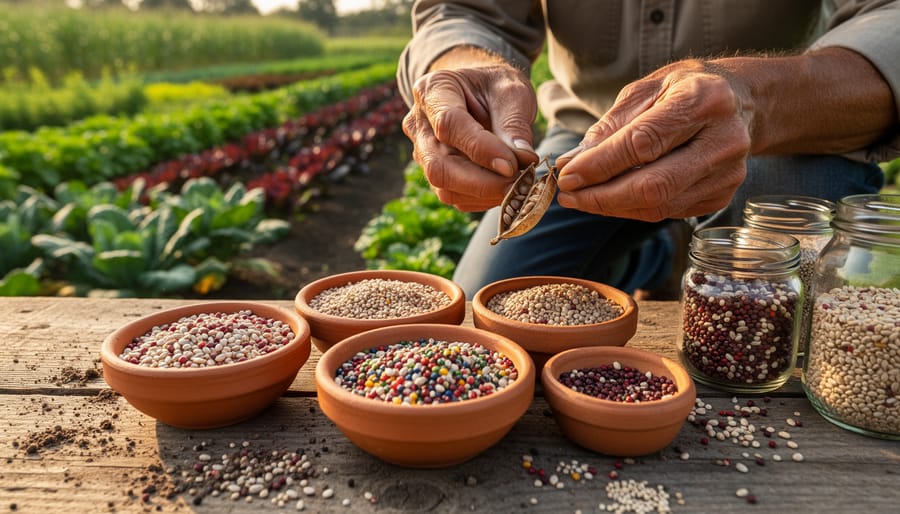
In the Okanagan Valley of British Columbia, the Seeds of Diversity community seed bank has achieved remarkable success in preserving heirloom seeds while protecting their beneficial microbiomes. Starting in 2018, local farmers began storing their heritage tomato, bean, and squash seeds using traditional methods that maintain the protective bacterial and fungal communities naturally present on seed surfaces.
The results have been impressive. Farmers reported a 40% increase in germination rates compared to commercially cleaned seeds, along with stronger seedlings that required less water and showed better resistance to early-season blight. One participating farmer, Maria Chen, discovered that her grandmother’s heritage tomato variety, stored with its intact microbiome, produced plants that naturally repelled aphids without any intervention.
The project expanded to include over 50 families who now exchange seeds at quarterly gatherings, carefully maintaining storage conditions that preserve these invisible microbial partners. Their collective efforts have brought back 23 locally adapted varieties that had nearly disappeared from the region, proving that community-led conservation can deliver both biodiversity benefits and practical farming advantages.
Modern Threats to Seed Microbiomes
Chemical Seed Treatments
While chemical seed treatments protect crops from diseases and pests, they come with an unintended consequence: they wipe out the beneficial microbes living on and around seeds. Most conventional seeds receive a coating of fungicides, insecticides, or both before planting. These chemicals don’t discriminate between harmful pathogens and helpful bacteria or fungi that naturally support plant growth, disease resistance, and soil health.
When you plant chemically treated seeds, you’re essentially starting with a blank microbial slate. The protective bacteria that would normally help seedlings access nutrients, ward off diseases, and establish strong root systems are gone. This creates a dependency on synthetic fertilizers and additional chemical interventions throughout the growing season.
For organic farmers and home gardeners, this presents a real challenge. Many find success by sourcing untreated, organic seeds and allowing nature’s microscopic helpers to do their job. One small-scale farmer in Vermont shared how switching to untreated heirloom seeds reduced her fungal disease problems over three seasons as beneficial microbes reestablished themselves in her soil. The key is understanding that those invisible microorganisms aren’t just passengers on seeds—they’re essential partners in creating resilient, thriving plants naturally.
Storage and Distribution Challenges
Modern seed handling practices can significantly disrupt the delicate microbial communities living on and within seeds. When seeds are processed for commercial distribution, they often undergo chemical treatments, temperature extremes during storage, and extended periods in climate-controlled facilities. These conditions may eliminate beneficial microbes that naturally protect seeds and help them thrive.
Long-distance shipping adds another layer of stress. Seeds traveling from large-scale producers to garden centers can spend weeks in transit, experiencing humidity fluctuations and temperature changes that further deplete their microbial diversity. Industrial seed cleaning processes, while effective at removing debris and pathogens, can also strip away helpful bacteria and fungi.
The good news? Small-scale seed savers and local growers are making a difference. Sarah Martinez, an organic farmer in Vermont, shares her success preserving seed microbiomes by storing seeds in breathable cloth bags with a small amount of their native soil. This simple technique maintains moisture balance and keeps beneficial microbes alive through winter storage.
For home gardeners, sourcing seeds from local producers or seed libraries helps ensure you’re getting seeds with robust microbial communities adapted to your region’s conditions.
How You Can Help Preserve Seed Microbiomes
Start Saving Seeds from Your Garden
Ready to become a seed-saving champion while protecting those precious microbes? It’s easier than you might think! Let’s start with the basics: timing is everything. Wait until your plants are fully mature before harvesting seeds, as this ensures the beneficial bacteria and fungi have properly colonized the seed surface.
For dry-seeded crops like beans, lettuce, and flowers, simply allow the seed pods to dry completely on the plant. Collect them on a sunny day, then spread them on a clean screen or paper for a week of additional drying. Store in paper envelopes (never plastic, which traps moisture and disrupts the microbiome) in a cool, dark place.
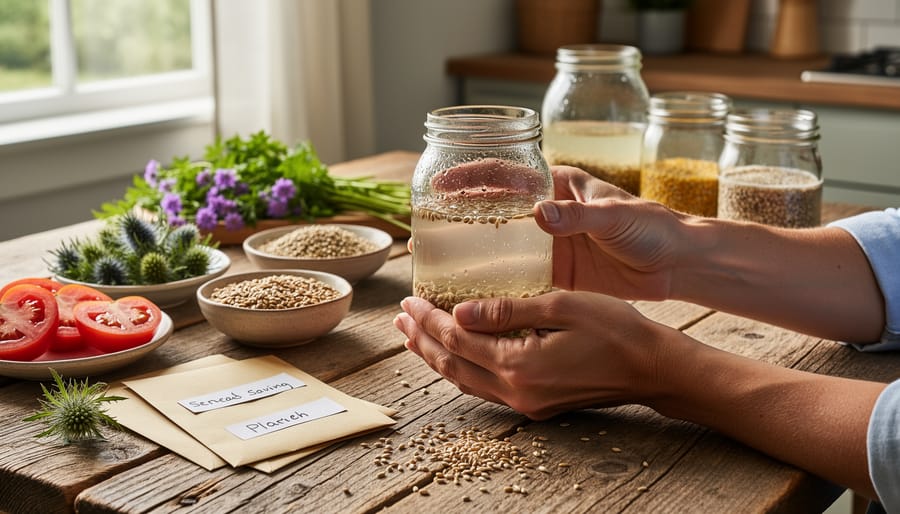
Wet-seeded crops like tomatoes and cucumbers require a special fermentation process that actually enhances their microbiome. Here’s how: scoop out the seeds and surrounding gel into a jar, add a small amount of water, and let it sit at room temperature for 2-3 days. You’ll notice a layer of mold forming on top—don’t worry, that’s exactly what should happen! This fermentation mimics natural decomposition, allowing beneficial microbes to thrive while eliminating seed-borne diseases. After fermentation, rinse the seeds thoroughly and dry them on a screen.
Sarah Mitchell, an organic gardener from Vermont, noticed her tomato yields increased by 30 percent after three seasons of saving fermented seeds, crediting the robust microbiome for healthier, more resilient plants.
Choose Organic and Untreated Seeds
When shopping for seeds, prioritize organic and untreated seeds to ensure their beneficial microbiomes remain intact. Chemical seed treatments, commonly used in conventional agriculture, can destroy the natural microbial communities that help plants thrive. Look for certified organic seeds from reputable suppliers who avoid synthetic fungicides and pesticides.
Consider supporting seed libraries in your community, where gardeners share locally adapted varieties that carry region-specific microbes. These seeds have often been saved and grown in your area for generations, making them particularly well-suited to local conditions.
Connecting with local seed savers is another fantastic way to access untreated varieties while building community connections. Attend seed swaps, join gardening groups, or visit farmers markets to meet growers who save their own seeds. These passionate individuals often share valuable knowledge about which varieties perform best in your area.
Many small-scale seed companies specialize in heirloom and open-pollinated varieties that haven’t been chemically treated. By choosing these sources, you’re not only protecting seed microbiomes but also supporting businesses committed to preserving agricultural biodiversity for future generations.
Support Your Soil Microbiome Too
Just as seeds harbor beneficial microbes, the soil beneath your feet teems with microbial life that directly influences seed health. Healthy soil creates healthy seeds, making soil care essential for preserving beneficial seed microbiomes. When you nourish your soil’s microbial community, you’re supporting the entire plant lifecycle from germination through seed production.
Composting is your secret weapon here. Adding finished compost to your garden beds introduces diverse beneficial bacteria and fungi that colonize plant roots and eventually make their way into developing seeds. Think of it as building a thriving underground city that supports plant health across generations.
Cover cropping between growing seasons prevents soil erosion while feeding soil microbes. Legumes like clover and vetch add nitrogen, while deeper-rooted covers like daikon radish break up compacted soil, creating channels for air, water, and microbial movement. Minnesota farmer Sarah Chen shared how her winter rye cover crops transformed her seed-saving operation, producing vigorous seedlings with stronger disease resistance each year.
Avoid chemical fertilizers and pesticides that disrupt delicate microbial balance. Instead, embrace practices like mulching, crop rotation, and minimal tillage to maintain the living soil ecosystem that supports robust seed microbiomes for future harvests.
The Future of Seed Microbiome Research
The science of seed microbiomes is experiencing remarkable momentum, opening doors to innovations that could reshape how we approach farming and food production. Researchers worldwide are establishing seed biobanks, carefully preserving not just plant genetics but also the beneficial microbial communities that have co-evolved with heritage and heirloom varieties over centuries. These living libraries serve as insurance policies for agricultural biodiversity, protecting valuable microbial partnerships that might otherwise disappear.
One particularly exciting development involves mapping the microbiomes of crop varieties from different regions and climates. Scientists are discovering that seeds from drought-resistant plants often harbor unique bacteria and fungi that help their offspring survive water stress. This knowledge is already being applied practically. For instance, several organic farms in California have begun using seed treatments derived from microbiome research, seeing improved germination rates and healthier seedlings without synthetic inputs.
Technology is making this research more accessible too. New DNA sequencing methods allow even small-scale farmers to understand what microbes live in their seeds, enabling them to make informed decisions about seed saving and sharing. Some community seed libraries are partnering with universities to document the microbiomes of locally adapted varieties, creating valuable regional databases.
The implications for food security are profound. As climate patterns shift, understanding and preserving seed microbiomes gives us tools to develop more resilient crops naturally. Home gardeners and small farmers play crucial roles in this effort simply by growing diverse varieties and saving seeds using traditional methods that maintain microbial health. Each saved seed becomes part of a larger conservation movement, protecting both plant diversity and the invisible microbial partners that sustain agricultural ecosystems.
The future of sustainable agriculture lives in something as small as a seed—and the invisible community thriving within it. By understanding and protecting seed microbiomes, you’re contributing to something much bigger than your backyard garden. You’re helping preserve biodiversity, strengthen food systems, and support the health of our planet for generations to come.
Every seed you save, every time you choose organic produce from your local CSA, and every garden you tend with sustainable practices, you’re casting a vote for a healthier world. These individual actions ripple outward, joining a growing movement of farmers, gardeners, and conscious consumers who recognize that real change starts at the soil level.
The organic farming community has shown us that when we work with nature rather than against it, incredible things happen. Seed microbiomes are nature’s original support system, and by protecting them, we’re honoring the wisdom that sustainable growers have championed for decades.
Start today. Save seeds from your healthiest plants. Support farms practicing organic methods. Share what you’ve learned with fellow gardening enthusiasts. Together, we’re not just growing food—we’re cultivating a movement that recognizes the power of the smallest life forms to create the biggest impact.