

Filter your CSA search by vacation policy to identify farms that allow you to pause deliveries, swap pickup dates, or donate shares when you’re away. Most Community Supported Agriculture programs understand that life happens—summer getaways, business trips, and family emergencies shouldn’t mean throwing away fresh produce or feeling locked into an inflexible commitment.
Check whether farms offer vacation holds (typically 1-3 weeks per season), rolling credits for missed pickups, or the option to send a friend in your place. Some CSAs provide freezer-friendly items or preserved goods as makeup options, while others partner with food banks to donate your share if you can’t make it. When finding CSA farms with openings, prioritize those with clearly stated vacation terms that match your travel patterns.
Compare how different farms handle advance notice requirements—some need two weeks’ warning while others allow last-minute notifications through member portals or apps. Look for CSAs that build flexibility into their membership structure rather than treating it as an inconvenient exception. Farms with robust vacation policies often demonstrate stronger member retention and community relationships because they recognize that supporting local agriculture shouldn’t add stress to your life.
Understanding these policies before committing helps you maximize the value of your membership while maintaining the consistent support farmers need to plan their harvests. The right vacation policy transforms CSA participation from a rigid obligation into a sustainable, long-term relationship with your local food system.
What Are CSA Vacation Holds and Pause Policies?

How Vacation Holds Work
Understanding how vacation holds work helps you plan worry-free getaways without losing your investment. Most CSA farms require advance notice, typically ranging from one to two weeks before your scheduled pickup. This gives farmers time to adjust harvest quantities and distribution planning accordingly.
When you activate a vacation hold, your weekly share is essentially paused for the specified period. Some farms allow you to hold one or two weeks per season, while others offer more flexibility based on share length. A 20-week membership might include up to three vacation weeks, for example.
During your hold period, the farm won’t prepare a box for you, which means less food waste and helps farmers plan more accurately. Think of Sarah, a CSA member who travels each summer for work—she schedules her holds in spring, ensuring her greens and tomatoes go to someone who can enjoy them fresh.
What happens to those missed weeks varies by farm. Some extend your membership, adding hold weeks to the end of your season. Others might offer credit toward next year’s share or allow you to donate your portion to local food banks. A few farms use a swap system where members can trade pickup dates, creating a supportive community solution that benefits everyone involved.
Types of Vacation Policies Farms Offer
CSA farms recognize that life happens and members travel, so many have developed flexible vacation policies to accommodate their subscribers. The most common approach is share credits, where you receive a credit for missed weeks that applies to future pickups or next season’s membership. Some farms offer donation options, allowing you to designate your share to local food banks, community organizations, or neighbors in need when you’re away.
Friend pickup policies let you authorize someone else to collect your box, ensuring nothing goes to waste while you’re traveling. This works wonderfully for sharing the farm-fresh experience with family or coworkers. Extended season options give you flexibility by spreading your paid shares across a longer timeframe, so you can skip weeks without losing value.
It’s worth noting that some smaller farms operate with no-pause policies due to operational constraints. These farms plan their harvests precisely based on member counts, making week-to-week adjustments challenging. Understanding why these limitations exist helps you make informed choices when selecting a CSA. Many members find creative solutions like coordinating pickups with friends or preserving extra produce during heavy harvest weeks to balance out vacation times.
Why Vacation Policies Matter for Your CSA Experience
The Cost of Wasted Shares
Let’s say your CSA share costs $30 per week. If you’re away for three weeks during the summer season without a vacation hold policy, that’s $90 worth of fresh, organic produce going to waste. Over two separate vacation periods, you could lose $180 or more from your annual membership. When you’re calculating your share value, these missed weeks significantly impact your investment. Many families find themselves giving away shares to neighbors or watching beautiful vegetables spoil in their absence. With a vacation hold, those same funds get you the produce you actually use, making your CSA membership more affordable and practical for your lifestyle.
Supporting Food Security in Your Community
Many CSA farms have transformed their vacation policies into community support programs that make a real difference. When you can’t pick up your share during vacation, some farms donate those items to local food banks, shelters, or community organizations serving families in need. This means your membership continues supporting local agriculture while helping neighbors facing food insecurity.
Farms like Johnson Family Farm in Vermont have partnered with regional food pantries for years, delivering donated CSA shares weekly. These partnerships provide fresh, organic produce to community members who might not otherwise have access to it. When you choose a CSA with this donation option, taking a vacation becomes an opportunity to give back. You maintain your commitment to the farm through your membership payment, and your absence helps stock community food resources with nutritious, locally grown vegetables. It’s a win-win approach that strengthens community food systems while giving you flexibility.

Using the CSA Finder Vacation Policy Filter
Finding Farms That Match Your Travel Schedule
Start by honestly assessing your typical vacation pattern. Do you take one two-week trip annually, or several long weekends throughout the growing season? Most CSA Finder tools let you filter farms by their vacation policy specifics. Look for options that show whether farms offer skip weeks, pausing services, or alternative pickup arrangements.
When browsing results, pay attention to the minimum notice requirements. Some farms need three weeks’ advance notice, while others offer more spontaneous flexibility. If your travel schedule is unpredictable due to work, prioritize farms with generous policies or those offering share swaps with other members.
Consider the total number of vacation weeks allowed. A farm permitting four skips might work perfectly if you vacation annually, but could feel restrictive if you travel frequently for business. Many farmers understand life happens and build reasonable accommodations into their programs. Reading member reviews often reveals how accommodating a farm truly is beyond their stated policy. This transparency helps you find a partnership that respects both your commitment to local agriculture and your lifestyle needs.
Questions to Ask Before Joining
Before committing to a CSA membership, ask farms specific questions about their vacation policy to avoid surprises. Start by clarifying how much advance notice they require for pausing deliveries—some farms need a week, while others may require two weeks or more. Find out if there’s a limit on how many weeks you can skip per season, as this varies widely between farms. Ask whether you can donate skipped shares to food banks or if you’re allowed to designate someone else to pick up your box. Understanding the administrative process is crucial—some farms handle vacation requests through online portals, while others prefer email or phone calls. Inquire about refund policies versus credit systems, and whether unused vacation weeks roll over to the next season. These conversations are part of choosing the right farm that matches your lifestyle and travel habits, ensuring a positive experience for both you and your local grower.
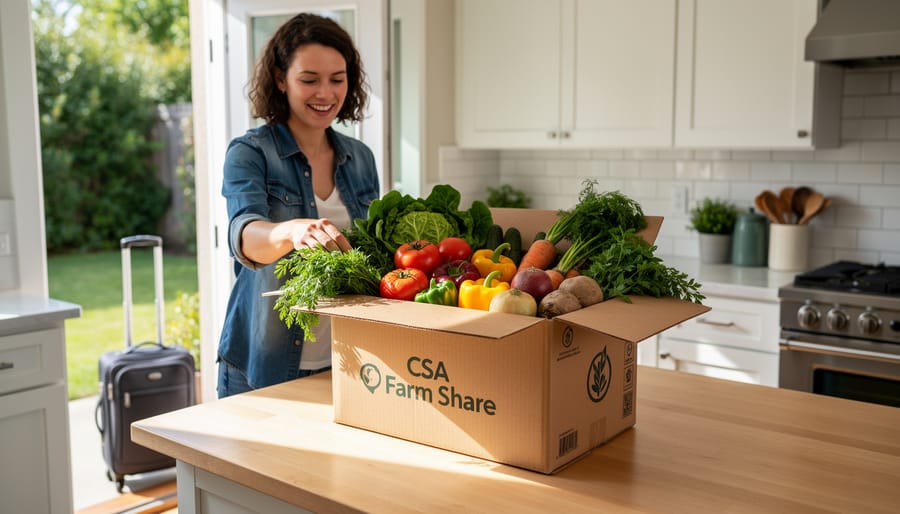
Real Stories: How Vacation Policies Save Memberships
Meet Sarah, a teacher who joins Green Valley Farm’s CSA every spring. She loves supporting local agriculture but used to dread summer vacation because her fresh produce would go to waste. Last year, she discovered their flexible vacation policy through CSA Finder. “I put my share on hold for three weeks while visiting my parents,” Sarah explains. “When I returned, I didn’t feel guilty about wasted food or money. It made me realize this farm truly values its members.” She’s now in her fourth year with Green Valley and has recommended them to six colleagues.
For farmers like Miguel at Harvest Moon Farm, vacation policies are about building community, not just preventing cancellations. “We started offering a four-week vacation hold after losing several members who traveled frequently for work,” Miguel shares. “Initially, I worried about the logistics, but it’s actually simplified our planning. Members tell us their schedules in advance, and we adjust harvest quantities accordingly.” The result? His member retention rate jumped from 68 percent to 91 percent in just two seasons.
Miguel also noticed an unexpected benefit: members who take vacation holds often return more enthusiastic about their shares. “They miss the fresh vegetables,” he laughs. “We get emails saying they can’t wait to pick up their next box.” This enthusiasm translates into word-of-mouth marketing and stronger community connections at the farm.
Both stories illustrate how vacation policies create genuine partnerships between farmers and members, ensuring everyone thrives while reducing food waste and supporting sustainable agriculture year-round.
What to Do If Your CSA Doesn’t Offer Vacation Holds
Not every CSA offers vacation holds, but that doesn’t mean you’re stuck with wasted produce. With some creative planning, you can make the most of your share even when you’re away.
Consider finding a share buddy to split your weekly box. This arrangement works particularly well with neighbors, coworkers, or friends who’ve been curious about CSAs but hesitant to commit to a full share. You alternate pickup weeks or divide the contents, and they cover your weeks when you travel. Many farms welcome this approach since it keeps members engaged and introduces new people to community-supported agriculture.
Designate a regular recipient for your share during absences. Local food banks, senior centers, community kitchens, and neighbors appreciate fresh, organic produce. Some members even establish standing arrangements where their shares automatically go to a specific organization when they’re traveling. This transforms potential waste into meaningful community support.
Master preserving your produce before your trip. Dedicate time the week before departure to blanch and freeze vegetables, make pestos or sauces, pickle items, or dehydrate herbs. This extends your harvest’s life and provides farm-fresh meals when you return home.
Ask about flexible pickup schedules. While some farms don’t offer formal vacation policies, they might allow occasional pickup day swaps or let you collect a double share before traveling. Open communication with your farmer often reveals unofficial workarounds that benefit everyone while maintaining the farm’s operational needs.
