Category Archives

38 Articles

How Farm-Fresh Food Is Transforming Early Learning for At-Risk Children

Posted by darrell on
0
Educational Programs and Partnerships
How Farm-Fresh Food Is Transforming Early Learning for At-Risk Children

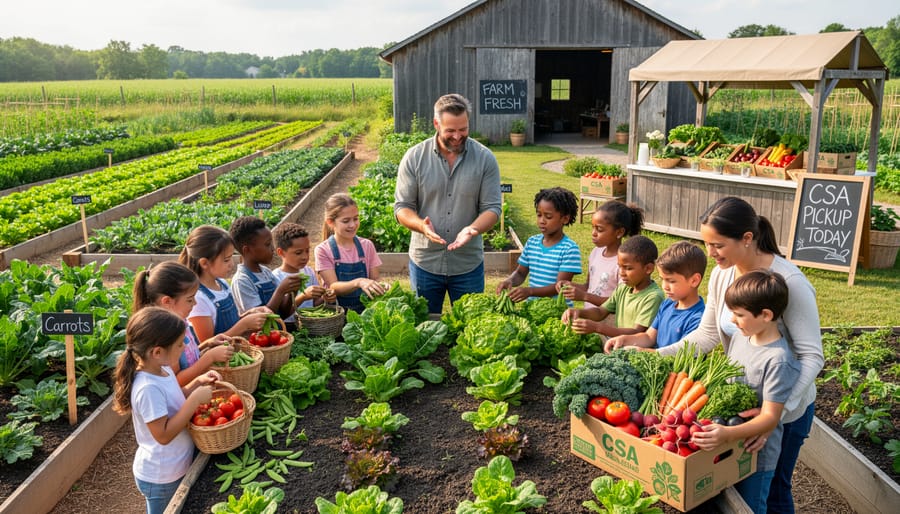
Connect QSAC early childhood programs with local Community Supported Agriculture farms to create hands-on learning environments where children ages 3-5 develop cognitive skills through seasonal planting activities, sensory exploration of fresh vegetables, and weekly farm visits that build nutritional awareness from the ground up. Partner with CSA coordinators to establish weekly produce delivery programs that integrate fresh, organic ingredients directly into classroom cooking projects, allowing special needs learners and typically developing children to experience textures, colors, and flavors while practicing fine motor skills through washing, sorting, and simple food preparation.

Integrate farm-based education networks into your QSAC curriculum by scheduling monthly farm field trips where children with autism spectrum disorders and developmental delays engage in adapted agricultural activities like seed starting, composting observations, and gentle animal interactions that support sensory integration therapy goals. Design classroom garden boxes that mirror CSA growing practices, giving young learners consistent exposure to plant life cycles while building vocabulary around sustainable farming concepts through songs, story time, and outdoor exploration.

Leverage CSA farmer expertise by inviting growers into QSAC classrooms for interactive demonstrations that show children where their food originates, transforming abstract concepts into concrete understanding through soil touching, seed examining, and harvest basket exploring. These partnerships create meaningful connections between early intervention services and community agriculture, fostering environmental stewardship while addressing individualized education plan objectives in naturalistic, engaging settings that celebrate both child development milestones and seasonal growing rhythms.

What QSAC Early Childhood Development Brings to the Table

Quality Services for the Autism Community (QSAC) has been transforming early childhood development for over 50 years, offering specialized programs that recognize each child’s unique potential. Their comprehensive approach goes far beyond traditional classroom learning, embracing the philosophy that meaningful development happens when children engage all their senses in real-world experiences.

What sets QSAC apart is their commitment to holistic child development that weaves together cognitive, social, emotional, and physical growth. Their early childhood programs create nurturing environments where children explore, discover, and build essential life skills through hands-on activities. A cornerstone of this approach involves sensory experiences with fresh, wholesome foods that help children develop healthy relationships with nutrition from their earliest years.

The organization understands that young children learn best through touch, taste, smell, and exploration. By incorporating fresh produce and farm-based learning into their curriculum, QSAC educators help children develop fine motor skills while peeling carrots, practice counting with cherry tomatoes, and explore textures by touching different leafy greens. These seemingly simple activities build critical developmental milestones while fostering curiosity about where food comes from.

QSAC’s nutrition education component teaches children that eating well can be both fun and empowering. When children participate in preparing healthy snacks or washing vegetables, they gain confidence and independence. The sensory-rich experiences with fresh foods also support children who may have specific dietary needs or sensory processing differences, helping them gradually expand their comfort zones in supportive, positive settings.

Through partnerships with local farms and community supported agriculture programs, QSAC demonstrates how sustainable farming practices connect directly to childhood wellness, creating meaningful learning opportunities that nourish both bodies and minds.

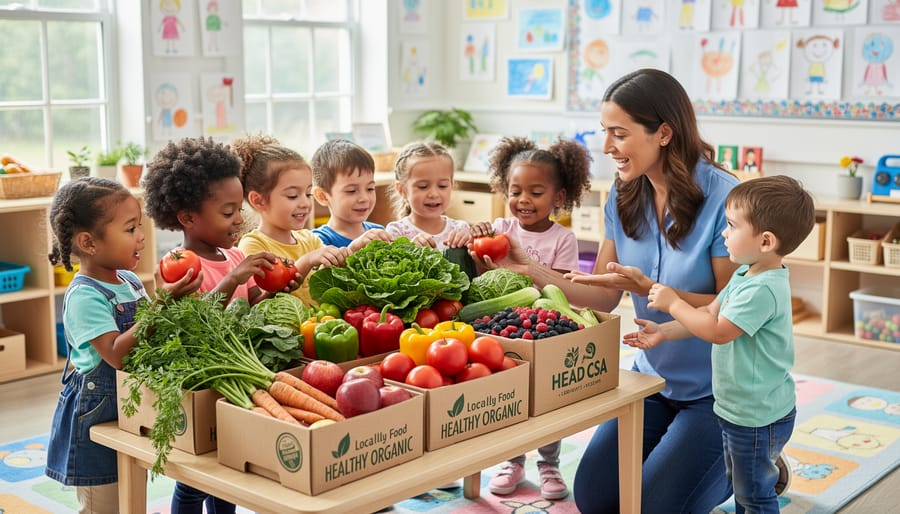
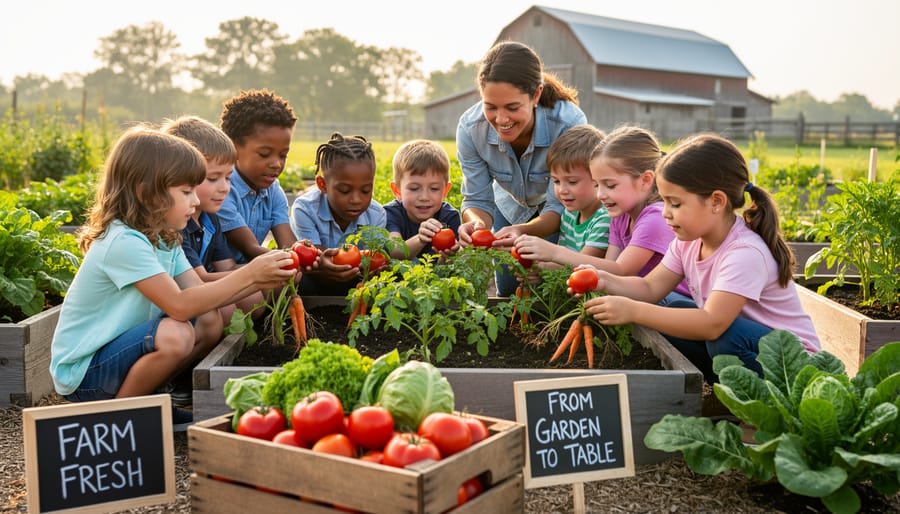
Diverse preschool children examining fresh vegetables on classroom table
Young children explore fresh farm vegetables through hands-on sensory experiences that support cognitive and motor development.

The CSA Connection: Why Local Farms Matter for Head Start Programs

Farm-to-Classroom Benefits

Partnering with local CSA farms brings remarkable benefits to early childhood classrooms. Children gain consistent access to fresh, seasonal produce throughout the growing year, introducing their developing palates to vegetables and fruits at peak flavor and nutritional value. This regular exposure helps young learners overcome food neophobia naturally, as repeated tastings of colorful produce become an exciting classroom routine rather than a dinnertime battle.

Educational farm visits transform abstract concepts into hands-on experiences. Imagine preschoolers meeting the farmers who grow their snacks, touching soil, observing pollinators at work, and harvesting strawberries themselves. These memorable field trips create lasting connections between food and its origins, building food literacy from the earliest ages.

CSA partnerships also expose children to incredible variety. Throughout the seasons, classrooms receive diverse produce that families might not typically purchase—kohlrabi, rainbow chard, heirloom tomatoes, and specialty melons. This agricultural diversity supports adventurous eating habits and cultural food exploration. Teachers report that children who participate in farm-connected programs show increased willingness to try new foods and greater understanding of where meals come from. For farmers, these partnerships provide stable income while nurturing the next generation of conscious consumers who value sustainable agriculture and community connections.

Breaking Down Barriers to Fresh Food Access

Community Supported Agriculture partnerships are transforming how Head Start programs tackle food deserts, those neighborhoods where fresh, nutritious food feels miles away even when a convenience store sits on the corner. For families enrolled in early childhood programs like those supported by QSAC, access to organic fruits and vegetables can mean the difference between thriving and just getting by.

CSA-Head Start collaborations work by delivering farm-fresh produce shares directly to program sites, eliminating transportation barriers that often prevent families from reaching farmers markets or distant grocery stores. These partnerships ensure that children from all economic backgrounds experience the same colorful carrots, crisp greens, and juicy tomatoes that their peers in food-secure neighborhoods enjoy.

Here’s where it gets exciting: many programs offer sliding-scale pricing or subsidized shares, making organic produce affordable for families navigating tight budgets. Some CSA farmers even accept SNAP benefits, further breaking down financial barriers. One inspiring success story comes from a Head Start center in an underserved area where weekly CSA deliveries became a community gathering point, with parents swapping recipes and gardening tips alongside their vegetable boxes.

This equitable approach doesn’t just fill lunchboxes with nutritious options. It sends a powerful message that every child deserves access to food grown with care, regardless of their zip code or family income.

Growing Minds Through Garden-Based Learning

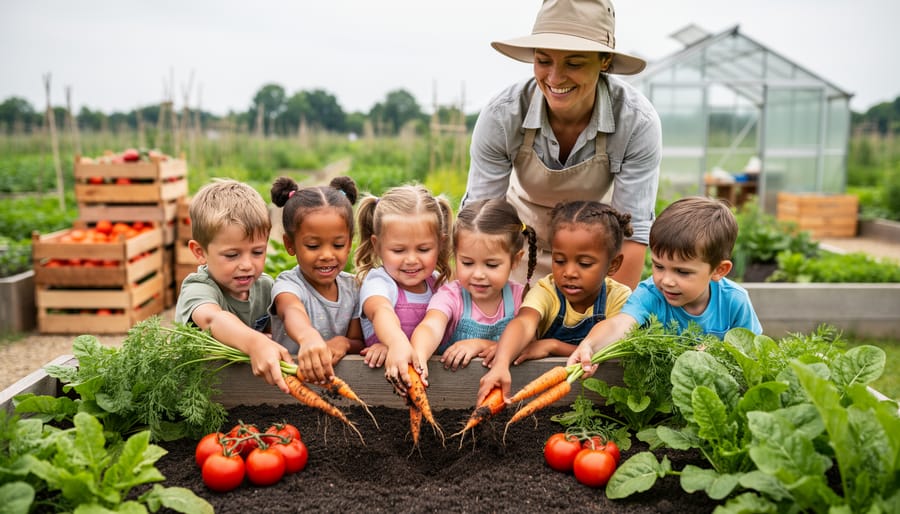
Child's hands holding freshly picked cherry tomatoes with soil-covered fingers
Direct connections between children and farm-fresh produce create meaningful learning experiences about food origins and healthy eating.

Sensory Exploration with Farm-Fresh Ingredients

Fresh produce from CSA farms offers incredible opportunities for sensory-rich learning experiences that benefit all young children, with particularly powerful impacts for those with developmental delays or autism spectrum disorders. When children wash crisp lettuce leaves, feel the bumpy texture of heirloom tomatoes, or smell fragrant herbs like basil and mint, they engage multiple senses simultaneously, creating valuable neural connections that support cognitive growth.

Farm-fresh ingredients provide safe, natural materials for tactile exploration. The varied textures—from fuzzy peach skin to smooth bell peppers—help children become comfortable with different sensations, which can be especially helpful for those with sensory processing challenges. Smelling aromatic strawberries or fresh-cut cucumbers introduces children to natural scents in a controlled, positive environment.

Tasting activities with organic produce encourage children to try new foods while developing oral motor skills and reducing food sensitivities common in children with autism. One CSA partner shared how a child who previously refused most foods began accepting new vegetables after growing and harvesting them together with classmates.

These multisensory experiences also build vocabulary and communication skills as children describe what they observe, creating meaningful connections between words and real-world experiences. By incorporating farm-fresh ingredients into early childhood programs, educators provide inclusive learning opportunities that celebrate each child’s developmental journey.

Building Food Literacy from the Start

Introducing young children to the origins of their food creates lasting connections to healthy eating and environmental stewardship. When preschoolers visit CSA farms, they discover that carrots grow underground and tomatoes ripen on vines—simple revelations that transform their relationship with vegetables. These hands-on experiences make nutrition education tangible and exciting.

Farm partnerships bring food literacy directly into early childhood classrooms through seasonal harvest deliveries and cooking activities. Children wash, chop, and taste fresh produce they’ve watched grow, building confidence with new flavors. One QSAC program director shared how a formerly picky eater became the classroom’s “kale ambassador” after helping prepare a farm-fresh salad.

Just as school gardens transform learning for older students, early exposure to agriculture shapes lifelong habits. Simple activities like sorting vegetables by color, counting beans, or planting seeds integrate math and science naturally. Parents often report children requesting farmers market trips and showing genuine curiosity about ingredient sources.

By connecting meals to the people who grow them, CSA partnerships help children understand the journey from soil to table, fostering gratitude and environmental awareness from their earliest years.

Real Success Stories: Farms and Early Learning Centers Working Together

When Green Valley CSA partnered with Riverside Head Start in Oregon, the results transformed how families connected with food and learning. Over 18 months, teachers noticed remarkable improvements: children who participated in weekly farm visits showed 35% better vocabulary retention around nutrition concepts compared to control groups. Parents reported that 82% of participating families tried at least three new vegetables at home, creating lasting dietary changes that extended well beyond the classroom.

The program worked because it was simple and consistent. Every Tuesday, farmers delivered harvest boxes directly to the learning center, where children helped wash vegetables and prepare snacks. This hands-on approach created powerful learning experiences that engaged multiple senses and development areas simultaneously. Teachers integrated the produce into math lessons (counting beans), science explorations (observing decomposition), and art projects (vegetable printing).

Meanwhile, Sunset Meadows Farm in Vermont developed a mentorship model with their local Head Start program that emphasized family engagement. They invited families to monthly farm workdays where children and parents learned together. This approach resulted in 67% of families reporting improved parent-child communication around healthy eating. The farm also provided recipe cards in multiple languages, acknowledging the diverse backgrounds of participating families and making everyone feel welcome.

Perhaps most inspiring was Mountain View CSA’s partnership with a rural Head Start serving predominantly low-income families in Colorado. By offering subsidized CSA shares to program families, they created year-round access to fresh produce. Teachers tracked developmental milestones and found that children showed increased fine motor skills through garden activities like planting seeds and pulling carrots. Community connections deepened too, with 15 families continuing their CSA memberships independently after the pilot program ended, demonstrating true sustainability beyond initial funding.

These partnerships prove that combining quality early childhood education with local agriculture creates benefits that ripple through entire communities.

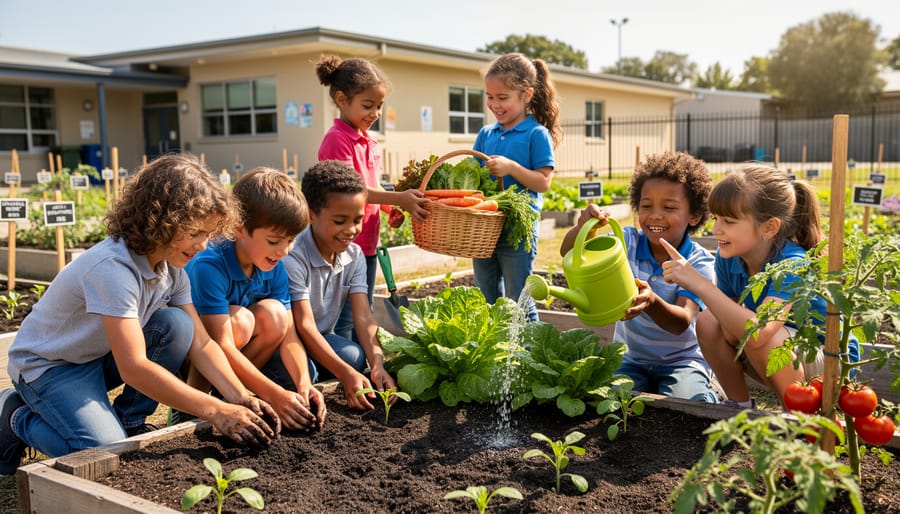
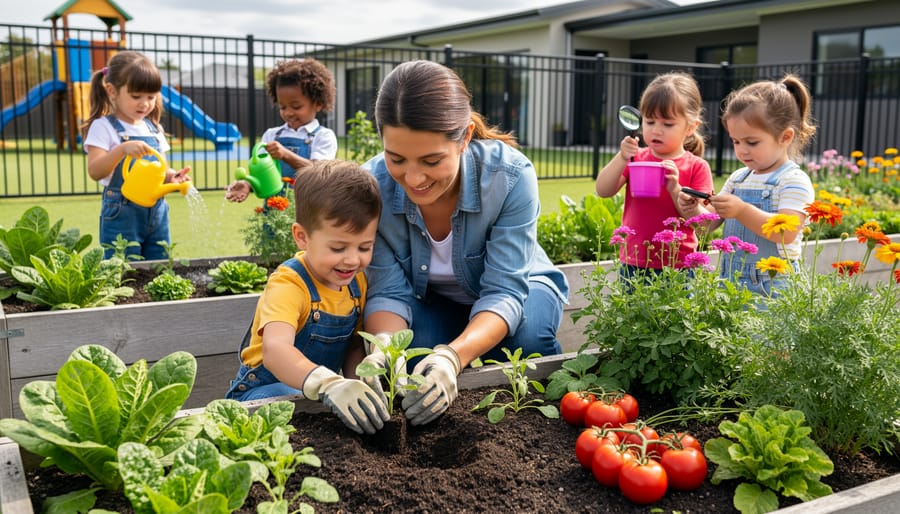
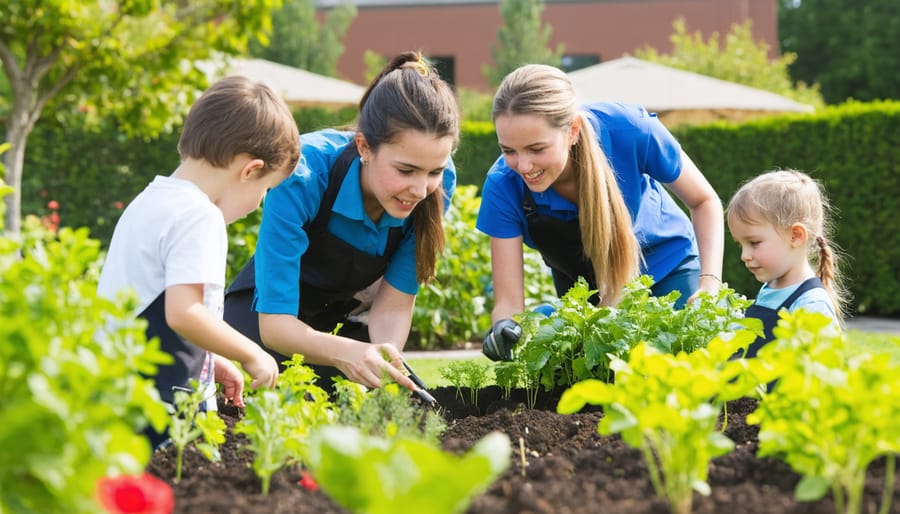
Preschool children and teacher working together in raised garden bed at learning center
Garden-based learning at early childhood centers combines outdoor exploration with hands-on agricultural education.

Starting Your Own CSA Partnership with Local Early Learning Programs

Ready to forge meaningful connections between your CSA farm and early childhood programs in your community? Starting this partnership journey is easier than you might think, and the rewards extend far beyond the farm gate.

Begin by identifying potential partners. Contact local Head Start programs, preschools, and childcare centers to gauge their interest in farm-fresh produce and educational programming. Many directors are actively seeking ways to improve nutrition and provide hands-on learning experiences for their young students. Come prepared with a clear proposal outlining what you can offer, whether it’s weekly produce deliveries, farm visits, or classroom gardening projects.

Funding doesn’t have to be a roadblock. Several grant opportunities specifically support farm-to-school initiatives. The USDA Farm to School Grant Program offers funding for equipment, training, and program development. State agriculture departments often provide smaller grants perfect for pilot programs. Some CSA farms have successfully implemented share donation programs where members purchase extra shares specifically designated for early childhood centers, creating a community-supported approach to childhood nutrition.

When designing your program, start small and build gradually. A farmer in Vermont began with simple monthly farm visits for one classroom, which eventually expanded to year-round programming serving three centers. Keep activities age-appropriate, focusing on sensory experiences like touching different vegetables, planting seeds in cups, and tasting fresh produce. Consider seasonal themes that align with what’s currently growing on your farm.

Document your program’s impact through photos, testimonials, and simple metrics like the number of children served and varieties introduced. These success stories become powerful tools for securing future funding and inspiring other farms to follow your lead.

The connection between sustainable agriculture and early childhood education creates a powerful foundation for lifelong learning and community wellbeing. When CSA farms partner with early childhood programs, everyone benefits. Children develop crucial connections to nature, nutrition, and their local food systems while building cognitive and motor skills through hands-on farm experiences. Families gain access to fresh, organic produce and educational resources that support healthy development at home. Meanwhile, CSA programs transform communities by strengthening local food networks and creating meaningful educational partnerships.

For CSA farm operators, these collaborations offer sustainable revenue streams, expanded community engagement, and the rewarding opportunity to shape young minds during their most formative years. The investment in early childhood education partnerships pays dividends through loyal member families, enhanced community support, and the knowledge that your farm is nurturing the next generation of environmental stewards.

If you operate a CSA farm or manage an early childhood program, now is the time to explore partnership possibilities. Start small, connect with local organizations, and discover how sustainable agriculture and early education naturally grow together.

How Prison Gardens Are Growing Second Chances for Inmates and Communities

Posted by darrell on
0
Educational Programs and Partnerships
How Prison Gardens Are Growing Second Chances for Inmates and Communities

Behind prison walls across America, a quiet transformation is taking root—literally. Department of Corrections reentry programs focused on agriculture are teaching incarcerated individuals sustainable farming skills while addressing food insecurity and building pathways to meaningful employment after release. These innovative initiatives combine hands-on organic growing techniques, business management training, and environmental stewardship to prepare participants for careers in farming and food production.

The results speak volumes: participants gain nationally recognized certifications in horticulture and agriculture, develop marketable job skills, and significantly reduce recidivism rates compared to traditional programming. Many graduates transition directly into positions with local farms, community gardens, and CSA operations upon release, bringing fresh talent to an industry facing labor shortages. These programs also supply fresh, chemical-free produce to prison populations and surrounding communities, creating a positive ripple effect that extends far beyond correctional facilities.

By connecting justice reform with sustainable agriculture, reentry farming programs offer second chances while strengthening local food systems. They prove that investing in education and practical skills creates lasting change for individuals, communities, and our environment—one harvest at a time.

What CSA-Correctional Partnerships Actually Do

The Training Model Behind the Fence

Behind the fences of participating correctional facilities, inmates gain invaluable hands-on experience that forms the foundation of successful career training programs. The agricultural curriculum starts with the basics: participants learn soil preparation techniques, including composting, pH testing, and organic amendment applications that build healthy growing environments. From there, they progress through seed starting, transplanting, irrigation management, and pest control using sustainable methods.

Throughout the growing season, inmates rotate through different stations, ensuring everyone masters each skill from field preparation to harvest timing. They learn to identify plant diseases, manage crop rotation schedules, and understand the importance of biodiversity in maintaining soil health. The program emphasizes practical knowledge that translates directly to employment opportunities, whether on organic farms, community gardens, or landscape maintenance crews.

Take Marcus, who completed the program three years ago. Today, he manages a thriving urban farm, crediting his success to the comprehensive training he received. The hands-on approach builds more than just farming skills; participants develop work ethic, time management abilities, and problem-solving techniques essential for any career path.

Harvest management training teaches proper picking techniques, post-harvest handling, and basic food safety protocols. Many graduates find employment at CSA farms, farmers markets, or farm-to-table restaurants, where their certified training and genuine passion for sustainable agriculture make them valuable team members in the growing local food movement.

Inmates working together in prison garden with raised vegetable beds
Inmates gain hands-on agricultural training through structured garden programs that teach farming skills and prepare them for post-release employment opportunities.

From Field to Market: Building Business Skills

Reentry programs rooted in agriculture don’t stop at teaching participants how to grow tomatoes or manage soil health. The most successful initiatives incorporate essential business skills that translate directly to employment opportunities after release. Through Community Supported Agriculture models, participants gain hands-on agricultural training while learning the full scope of farm-to-market operations.

These programs often include modules on customer service, teaching participants how to communicate effectively with CSA members, handle inquiries, and build trust within their communities. Marketing fundamentals become practical lessons as participants help craft farm newsletters, manage social media presence, and even assist with packaging design that tells their produce’s story.

Small business operations training covers inventory management, basic bookkeeping, and understanding profit margins—skills valuable whether someone pursues farming or another entrepreneurial path. Many programs involve participants directly in CSA box assembly, delivery logistics, and member retention strategies. This comprehensive approach creates a bridge between agricultural knowledge and marketplace reality, equipping individuals with transferable skills that employers across industries value. The result is confident, capable graduates prepared to contribute meaningfully to their communities.

Real Success Stories: Former Inmates Turned Farmers

The transformation from incarceration to successful farming careers represents some of the most powerful outcomes of correctional agriculture programs. These stories showcase not just skill development, but genuine life changes that ripple through communities.

Take Marcus Rodriguez, who spent six years at a California facility where he participated in an intensive organic farming program. During his time there, Marcus learned everything from soil health management to crop rotation planning. Upon release, he joined a community-supported agriculture operation in Sonoma County, where he now manages three acres of organic vegetables. “The program taught me patience and attention to detail,” Marcus shares. “Every seed you plant is an investment in the future, and that mindset changed how I approach life.” Two years later, he’s become a valued team member and mentors other program graduates joining the farming workforce.

Sarah Chen’s journey took a different path after completing a greenhouse management program in Oregon. She secured an apprenticeship with a local CSA farm specializing in year-round greens production. Within eighteen months, Sarah had saved enough to lease a small plot and launch her own micro-farm, supplying restaurants and farmers markets with specialty salad mixes. Her success demonstrates how correctional agriculture programs provide not just employment skills, but entrepreneurial foundations.

The statistics support these individual stories. Research shows that inmates who complete agriculture-focused reentry programs have recidivism rates nearly 40 percent lower than the general prison population. Many attribute this success to the nature of farming itself—the work demands consistency, provides tangible rewards, and connects people to their communities through food production.

James Walker, who now co-manages a 20-member CSA in Vermont, puts it simply: “Growing food taught me how to grow as a person. I learned that making mistakes is part of the process, whether you’re dealing with tomato blight or life challenges. The farm gave me a second chance, and I wake up every day grateful to work with my hands in the soil.”

These success stories highlight how correctional agriculture programs create genuine opportunities for individuals to rebuild their lives while contributing to local food systems and sustainable farming practices.

Former inmate holding crate of fresh vegetables at farm operation
Program graduates successfully transition to farming careers, launching their own agricultural businesses or joining local CSA operations after release.

The Community Impact You Might Not Expect

Where the Food Goes

The fresh, organic produce grown through corrections reentry programs finds its way to communities through several meaningful channels. Many programs operate Community Supported Agriculture (CSA) shares, where local residents subscribe to receive weekly boxes of seasonal vegetables harvested by participants. This creates a direct farm-to-table connection while providing participants with valuable experience in distribution logistics and customer service.

A significant portion of the harvest often goes to food banks, homeless shelters, and community kitchens serving underserved neighborhoods. This donation model addresses food insecurity while giving program participants a profound sense of purpose—knowing their work directly helps families access nutritious, chemical-free produce they might not otherwise afford.

Partnerships with farmers markets, local restaurants, and institutional buyers like schools or hospitals create additional distribution pathways. These relationships expose participants to various aspects of the food system, from pricing and quality standards to building professional networks that may lead to employment opportunities after release.

Some programs even establish farm stands at the facility or nearby locations, where participants learn retail skills while connecting with community members. This visibility helps break down barriers and stigma, allowing the broader community to witness firsthand the transformation happening through agriculture-based rehabilitation.

Community members receiving fresh produce from prison agriculture program at farmers market
Prison agriculture programs strengthen local food systems by supplying fresh produce to farmers markets, CSA shares, and food banks serving underserved communities.

Why Farming Works as Rehabilitation

There’s something profound about working with soil and seeds that reaches people in ways traditional rehabilitation programs often can’t. Agricultural work offers a unique combination of therapeutic benefits and practical skill-building that makes it exceptionally effective for individuals transitioning back into society.

The mental health improvements are remarkable. Being outdoors, connecting with natural cycles, and nurturing living things from seed to harvest creates a sense of purpose and accomplishment. Many participants report reduced anxiety and depression as they develop relationships with the plants they’re growing. The repetitive, meditative nature of tasks like weeding, planting, and harvesting provides a calming rhythm that helps individuals process difficult emotions and develop mindfulness.

Farm work naturally cultivates patience. You can’t rush a tomato plant or force lettuce to mature overnight. This teaches valuable lessons about delayed gratification and the rewards of consistent effort over time. Participants learn that their daily actions, no matter how small, contribute to larger outcomes they can literally see growing before them.

Responsibility develops organically in agricultural settings. Animals need feeding, crops require watering, and gardens depend on regular care. These non-negotiable tasks create accountability structures that translate directly into workplace reliability and personal discipline.

Perhaps most importantly, sustainable agriculture values align beautifully with personal transformation. Both involve nurturing growth, working with natural processes rather than against them, and understanding that healthy systems require balance and care. Participants often describe farming as giving them a fresh start, where past mistakes become compost for future growth, and every season brings new opportunities for renewal and success.

How to Support CSA-Correctional Programs in Your Area

You can make a meaningful difference by supporting CSA programs that partner with correctional facilities. These initiatives create win-win situations, providing fresh organic produce to your community while offering incarcerated individuals valuable agricultural training and a pathway to successful reentry.

Start by exploring whether your local correctional facility offers a CSA program. Many prisons now sell shares of their organically grown produce directly to community members. Purchasing a CSA share supports the program financially while giving you access to fresh, seasonal vegetables grown using sustainable practices. Contact your state’s Department of Corrections to inquire about participating facilities.

Volunteering as a mentor provides invaluable support to program participants. Share your gardening expertise, farming knowledge, or simply offer encouragement to those learning new skills. Organizations coordinating these programs often need experienced gardeners to guide hands-on learning sessions or help graduates transition into agricultural careers.

Advocate for program expansion by contacting your local representatives. Share success stories you’ve learned about, emphasizing the reduced recidivism rates and community benefits these programs deliver. Your voice can influence policy decisions that fund and grow these initiatives.

Connect local organic farms with correctional facilities in your area. Farmers can offer apprenticeships to program graduates, providing essential work experience and helping these individuals build stable futures in agriculture. Farm owners might also partner with facilities to provide seeds, equipment, or technical guidance.

By taking these practical steps, you support both sustainable agriculture and meaningful second chances, strengthening your community in multiple ways.

Department of corrections reentry programs built around sustainable agriculture offer something truly remarkable: they create a ripple effect of positive change that extends far beyond prison walls. When individuals learn to nurture seeds into thriving crops, they’re simultaneously cultivating new skills, confidence, and a renewed sense of purpose. These programs prove that second chances aren’t just about rehabilitation—they’re about transformation.

For our communities, the benefits are equally powerful. Former participants become valuable contributors to local food systems, bringing their agricultural knowledge to farmers markets, CSA operations, and organic farms. They help strengthen food security while reducing our environmental footprint through sustainable practices learned behind bars.

The beauty of these initiatives lies in their simplicity: dirt, seeds, dedication, and mentorship combine to create opportunities where they’re needed most. Whether you’re a CSA subscriber, a farm owner considering hiring program graduates, or simply someone who believes in the power of fresh starts, you’re part of this movement. By supporting locally grown produce and embracing programs that blend agriculture with rehabilitation, we’re not just feeding our families—we’re cultivating hope, building stronger communities, and proving that everyone deserves the chance to grow.

How YMCA Homeschool Programs Connect Your Kids to Real Farms and Fresh Food

Posted by darrell on
0
Educational Programs and Partnerships
How YMCA Homeschool Programs Connect Your Kids to Real Farms and Fresh Food

YMCA homeschool programs offer a refreshing alternative to traditional classroom learning by combining physical activity, social connection, and hands-on education in a community setting. These programs typically run during weekday mornings when most children attend conventional schools, providing homeschoolers access to swimming lessons, gymnastics, team sports, and specialty classes like art and STEM activities. Many YMCAs have partnered with local CSA farms to create unique agricultural education components where families learn about sustainable food systems, participate in farm visits, and discover how organic produce travels from soil to table.

Finding the right program starts with contacting your local YMCA branch to inquire about homeschool-specific offerings and membership discounts, which can reduce costs by 30-50% compared to standard rates. These partnerships benefit everyone involved: homeschool families gain structured physical education and socialization opportunities, children develop healthy lifestyle habits while connecting with where their food comes from, and local farmers build relationships with environmentally conscious families who become loyal CSA members. The programs create natural bridges between active living and sustainable agriculture, teaching children that caring for their bodies and caring for the earth go hand in hand.

What Makes YMCA-CSA Homeschool Partnerships Special

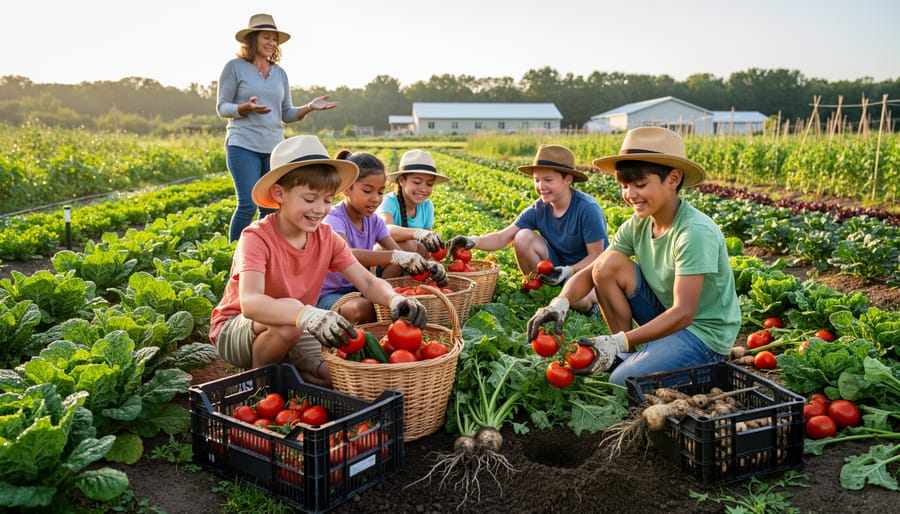
Group of homeschool children harvesting vegetables with farmer at organic CSA farm
Homeschool students engage in hands-on learning by harvesting vegetables directly from local CSA farm partners, combining physical activity with agricultural education.

Beyond the Classroom Walls

YMCA homeschool programs partnered with CSA farms create exciting opportunities that extend learning far beyond textbooks and kitchen tables. Through farm-based education networks, students get their hands dirty in working gardens, learn to identify crop varieties, and understand seasonal growing cycles firsthand. These partnerships combine the YMCA’s established community infrastructure with the authentic agricultural settings of local farms, creating a perfect learning environment where children can observe composting systems, practice sustainable harvesting techniques, and even help prepare weekly CSA boxes for distribution.

The beauty of these programs lies in their practical approach. Students don’t just read about photosynthesis; they witness it while tending tomato plants. They explore soil health by examining earthworms and organic matter, connecting scientific concepts to real-world applications. Meanwhile, the YMCA provides essential structure through trained facilitators, safe transportation, liability coverage, and organized scheduling that busy homeschooling families appreciate. This collaborative model ensures consistent, quality experiences while supporting local farmers through volunteer assistance and community engagement. Parents gain access to curriculum-aligned activities that fulfill educational requirements while instilling values of environmental stewardship and healthy eating habits in their children.

Building Community Connections

One of the greatest advantages of YMCA homeschool programs is the opportunity for children to build meaningful friendships with peers who share similar educational experiences. These structured group activities create a natural social environment where homeschoolers can interact, collaborate, and develop important interpersonal skills that complement their academic learning at home.

At YMCA facilities, children participate in team sports, swimming lessons, art classes, and group fitness activities designed specifically for homeschool schedules. These regular gatherings help families form supportive networks where parents can exchange teaching strategies and sustainable living tips while their children engage in active play.

The partnership programs at local organic farms add another dimension to social learning. Kids work together during planting sessions, help harvest seasonal produce, and learn about sustainable agriculture alongside their friends. This hands-on collaboration teaches responsibility, teamwork, and respect for the natural world. Many families share success stories of once-shy children blossoming into confident communicators through these farm-based activities. The combination of physical activity at the Y and agricultural education at partner farms creates a well-rounded community experience that addresses both the social and educational needs of homeschooling families.

Real Programs Making It Happen

Farm-to-Table Learning Days

Farm-to-Table Learning Days offer an immersive educational journey that connects homeschoolers directly with their food sources. These unique programs begin with morning visits to partner CSA farms, where students explore organic growing methods, learn about seasonal produce, and participate in hands-on harvesting activities. Children discover how soil health impacts nutrition, observe beneficial insects at work, and understand the dedication required in sustainable farming.

After the farm experience, students return to YMCA facilities for afternoon cooking classes featuring the produce they just harvested. Under guidance from experienced instructors, they transform fresh vegetables and herbs into nutritious meals, learning essential culinary skills and food safety practices. This combination creates powerful learning experiences that engage multiple learning styles and age groups.

One participating farmer shared how watching children taste vegetables they picked themselves changed their entire perspective on healthy eating. Parents consistently report increased vegetable consumption at home and children asking thoughtful questions about food origins.

These programs typically run monthly during growing season, accommodating various homeschool schedules. They provide science, life skills, and nutrition education while supporting local food systems. Registration happens through participating YMCA branches, with many locations offering sibling discounts and scholarship opportunities for families committed to sustainable living education.

Homeschool children preparing fresh vegetables in YMCA kitchen during farm-to-table cooking class
Farm-to-table learning comes full circle as students prepare healthy meals at YMCA facilities using produce they harvested earlier in the day.

Seasonal Agriculture Workshops

These hands-on workshops follow the natural rhythm of the seasons, giving homeschool students a complete understanding of the agricultural cycle. Spring sessions focus on seed starting, soil preparation, and transplanting techniques, while summer workshops dive into crop maintenance, beneficial insects, and organic pest management. Fall brings harvest celebrations and food preservation methods, with winter dedicated to planning, seed saving, and understanding crop rotation.

Each multi-week program pairs families with experienced local farmers who share their real-world knowledge and journey into sustainable agriculture. Students hear inspiring stories about farmers who transformed small plots into thriving operations, learning valuable lessons about perseverance, problem-solving, and environmental stewardship. These mentorship opportunities create lasting connections between young learners and agricultural professionals.

Workshop activities include hands-on planting, composting demonstrations, and taste tests of seasonal produce. Kids discover why timing matters in farming and how weather patterns affect crops. Parents appreciate the practical skills their children gain, from identifying plant diseases to calculating planting schedules.

Many families find these seasonal programs become yearly traditions, watching their knowledge grow alongside the crops. Students often develop genuine passion for farming, with some even starting their own small garden businesses or volunteering regularly at partner CSA farms. The combination of expert guidance, peer learning, and meaningful outdoor work creates an educational experience that textbooks simply cannot replicate.

What Your Kids Actually Learn

Science in the Soil

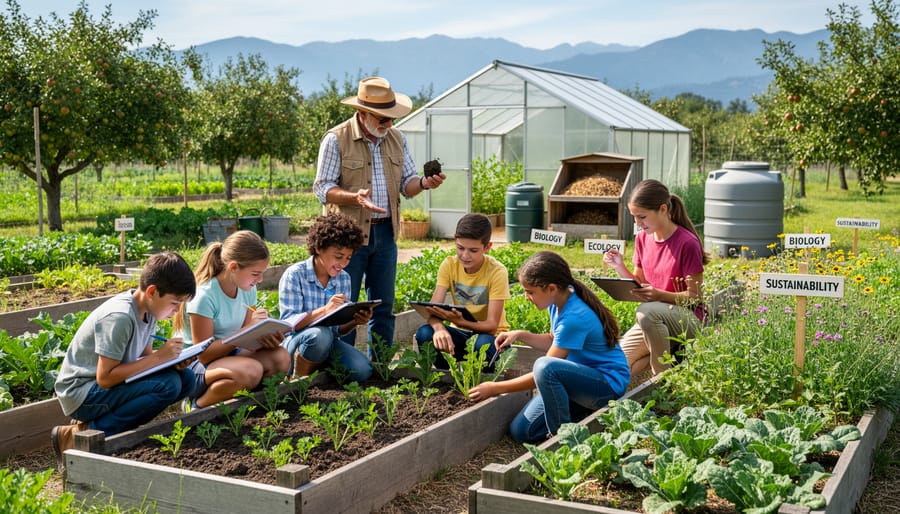
Young scientists get their hands dirty exploring the living ecosystem beneath their feet through YMCA homeschool farm programs. Students learn fundamental biology concepts by observing soil microorganisms under microscopes, discovering how bacteria and fungi break down organic matter to create nutrient-rich compost. They conduct pH tests, measure soil composition, and track how different amendments affect plant growth over time.

Ecology comes alive as children witness the interconnected web of life in action. They study beneficial insects like ladybugs and lacewings that naturally control pests, observe pollinator behavior, and learn about companion planting strategies that support biodiversity. Through seed-to-harvest experiments, students understand photosynthesis, plant lifecycles, and the importance of soil health for producing nutritious food.

Environmental science lessons cover water conservation techniques, composting systems that reduce waste, and sustainable farming methods that protect local ecosystems. Students collect data on weather patterns, track seasonal changes, and explore how climate affects growing conditions. These hands-on investigations help young learners grasp complex scientific concepts while developing critical thinking skills and a deeper appreciation for the natural systems that sustain our food supply.

Child's hands holding rich organic soil with earthworms during homeschool farm education program
Understanding soil health and ecology becomes tangible when students can examine living soil ecosystems firsthand during CSA farm visits.

Math Through Farming

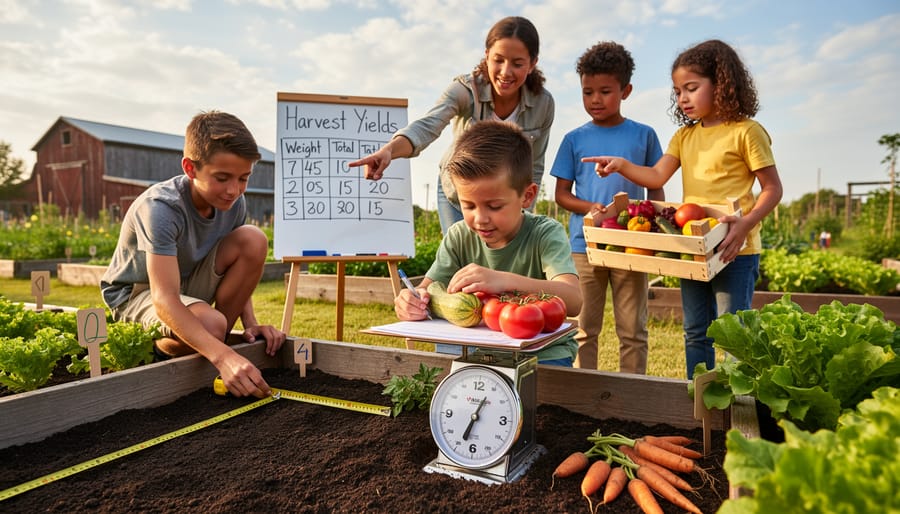
Farm-based learning transforms abstract math concepts into hands-on experiences that stick with students long after the lesson ends. Children measure garden plots to calculate square footage, determining exactly how many seedlings fit in a designated space. They weigh harvested vegetables, track yields per plant, and create charts comparing different growing seasons.

Dividing CSA shares becomes an engaging real-world problem where kids calculate fair portions for member families based on weekly harvest amounts. Students practice fractions when adjusting recipe quantities using farm-fresh produce, and they explore percentages when calculating germination rates from seed planting experiments.

Money math comes alive as children help price products, count change at farm stands, and budget for next season’s seeds and supplies. One homeschool group discovered their students retained geometry concepts better after building raised beds and designing efficient garden layouts. These practical applications show children why math matters beyond textbooks, connecting numbers to the food that nourishes their communities while building confidence in their mathematical abilities.

Life Skills and Healthy Habits

YMCA homeschool programs bring practical life skills into the learning environment through hands-on experiences that prepare children for healthy, independent living. Students explore nutrition education by learning where their food comes from, often visiting partner CSA farms to see crops growing in the fields. These visits transform abstract concepts into tangible lessons about seasonal eating and food quality.

Cooking classes teach young learners to prepare simple, nutritious meals using fresh, locally grown ingredients. They practice measuring, following recipes, and understanding food safety while developing confidence in the kitchen. Physical fitness activities keep students active through group sports, outdoor exploration, and nature-based movement that connects them to the environment.

Many programs incorporate sustainable living practices, teaching composting, waste reduction, and organic gardening techniques. Students discover how small daily choices impact the planet, gaining skills they’ll carry throughout their lives. One homeschool family shared how their daughter now confidently grows herbs on their balcony and plans weekly menus using seasonal produce.

How to Get Started in Your Area

Finding Existing Programs

Start your search by contacting your local YMCA branch directly. Many facilities now offer homeschool programs, and staff can tell you whether they include agricultural or gardening components. Visit during regular hours to tour facilities and ask about outdoor spaces, gardens, or partnerships with nearby farms.

Check YMCA websites and social media pages for announcements about specialized programs. Some branches collaborate with CSA farms to offer field trips, volunteer opportunities, or hands-on learning sessions during harvest seasons. These partnerships create authentic experiences where children learn about sustainable food systems while supporting local agriculture.

When evaluating programs, ask about curriculum flexibility, frequency of farm visits, and whether students participate in actual growing activities or just observation. Look for programs that emphasize experiential learning—planting seedlings, composting, or helping with seasonal harvests. These hands-on experiences stick with kids far longer than classroom lectures.

Connect with other homeschooling families in your community who might already participate in YMCA programs. Their firsthand insights about program quality, instructor expertise, and real-world learning outcomes prove invaluable. Local homeschool co-ops and online groups often share recommendations about which YMCA branches offer the most robust agricultural programming. Don’t hesitate to visit multiple locations before committing—finding the right fit makes all the difference in your child’s learning journey.

Creating Your Own Partnership

Ready to launch a collaborative program at your local YMCA? Here’s how to make it happen. Start by researching YMCAs in your area that already offer youth programs or community classes. Visit their website or call to identify the program director or community outreach coordinator who handles educational partnerships.

Prepare a simple proposal outlining your vision. Include the educational benefits for homeschool families, such as hands-on learning about food systems, nutrition education, and physical activity through farm visits. Explain how partnering with a nearby CSA farm creates unique opportunities for children to connect with where their food comes from.

Next, reach out to local CSA farms that might be interested in hosting educational visits. Many farmers are passionate about sharing their knowledge with the next generation. When you contact them, emphasize how the partnership benefits their farm through increased community visibility and potential new CSA members among participating families.

Schedule meetings with both the YMCA and farm separately first. Bring concrete ideas like monthly farm field trips, harvest celebrations, or cooking classes using seasonal produce. Share success stories from other communities where similar partnerships have thrived.

Once both parties show interest, arrange a joint meeting to discuss logistics like scheduling, transportation, liability insurance, and program costs. Be flexible and open to starting small with a pilot program for one season. Remember, building these relationships takes time, but the educational rewards for homeschool families are worth the effort. Your initiative could create a lasting program that strengthens connections between children, healthy food, and sustainable agriculture in your community.

Making the Most of Your Experience

Getting the most out of your YMCA homeschool program starts well before your first farm visit. Connect with your program coordinator to understand what topics you’ll explore each session, then preview relevant concepts at home. If you’re visiting during planting season, research seed germination together. Preparing ahead helps children engage more deeply and ask meaningful questions during hands-on activities.

Documentation is essential for homeschool portfolios, and farm programs offer rich opportunities. Take photos of your child working in the garden, weighing produce, or observing pollinators. Keep a nature journal where they sketch plants at different growth stages or record weather patterns affecting crops. Save seed packets, pressed flowers, and maps of garden layouts. These tangible records demonstrate learning across science, math, and environmental studies while creating wonderful keepsakes.

The learning shouldn’t stop when you leave the farm. Extend learning at home by starting a small container garden on your porch or windowsill. Even growing herbs in recycled containers teaches valuable lessons about soil health, photosynthesis, and patience. Use your CSA box contents as inspiration for cooking projects that reinforce fractions, following directions, and nutrition education.

Connect with other families in your YMCA program to share resources and create study groups. Many homeschool families organize farm-themed book clubs or recipe exchanges featuring seasonal produce. Building community enhances the experience for both parents and children while reinforcing sustainable living principles.

Consider keeping a seasonal calendar marking when different vegetables appear in your CSA share. This visual tool helps children understand growing seasons and appreciate the natural rhythm of local food production throughout the year.

YMCA homeschool programs partnered with CSA farms represent more than just educational opportunities—they’re gateways to raising a generation of earth-conscious, community-connected learners. These partnerships beautifully merge hands-on agricultural education with the flexibility homeschooling families cherish, creating experiences that textbooks simply cannot replicate. Students don’t just learn about photosynthesis; they witness it while harvesting tomatoes alongside local farmers. They don’t just study ecosystems; they participate in nurturing them.

For families seeking sustainable living practices, these programs offer practical skills that last a lifetime. Children develop meaningful relationships with the people growing their food while discovering the satisfaction of contributing to local food systems. The ripple effects extend beyond individual families—stronger community bonds form, local farmers gain support, and more young people understand where their food originates.

If you’re homeschooling or considering it, explore YMCA programs in your area that partner with CSA farms. Don’t see one? Consider reaching out to your local YMCA and nearby farms to start the conversation. Together, we can cultivate both healthy soil and healthy, informed future generations who value sustainability and community connection.

When Your Farm Becomes a Classroom: RSP Special Education Meets Community Agriculture

Posted by darrell on
0
Educational Programs and Partnerships
When Your Farm Becomes a Classroom: RSP Special Education Meets Community Agriculture

Resource Specialist Programs bring transformative learning opportunities to students with mild to moderate learning differences, and farms are proving to be unexpected champions in this mission. Picture a child who struggles with traditional classroom settings suddenly thriving while planting seedlings, measuring garden beds, or observing pollinator behavior—this is the power of hands-on agricultural education meeting specialized learning support.

Farm-based RSP programs create multisensory learning environments where students develop academic skills through real-world applications. Math comes alive through measuring soil pH and calculating harvest yields. Science concepts deepen as students witness plant life cycles and ecosystem relationships firsthand. Social skills flourish naturally through collaborative tasks like building raised beds or sorting produce for market.

The beauty of integrating RSP services with agricultural settings lies in the inherent flexibility farms provide. Students work at their own pace, engage multiple learning styles simultaneously, and experience immediate, tangible results from their efforts. A tomato plant doesn’t judge reading levels—it simply grows when properly cared for, building confidence and competence in equal measure.

Community farms and CSA operations are increasingly partnering with schools to offer these inclusive programs, recognizing that agricultural literacy benefits all learners while creating meaningful community connections. These partnerships transform both education and farming, proving that sustainable agriculture extends beyond environmental practices to nurturing every member of our communities. The soil teaches patience, responsibility, and resilience—lessons every student deserves to learn, regardless of their learning profile.

What RSP Special Education Really Means (And Why Farms Matter)

Resource Specialist Programs, or RSP, provide targeted support for students with mild to moderate learning differences who spend most of their day in general education classrooms. Unlike self-contained special education settings, RSP offers flexible, individualized assistance that might include extra help with reading, math, organizational skills, or social-emotional development. These students benefit from specialized instruction in small groups or one-on-one sessions, typically a few hours per week, while remaining integrated with their peers.

What makes RSP particularly effective is its adaptability. Resource specialists work closely with classroom teachers, parents, and students to create customized learning plans that address specific challenges without removing children from their regular school community. Students might receive accommodations like extended test time, modified assignments, or alternative ways to demonstrate their knowledge.

Here’s where farms enter the picture as powerful learning environments. Traditional classroom settings don’t work equally well for all learners, especially those who struggle with abstract concepts or need more hands-on experiences. Farms offer something uniquely valuable: real-world learning that engages multiple senses and connects students directly to meaningful work.

Farm-based education networks create opportunities for RSP students to develop skills through planting, harvesting, animal care, and food preparation. These activities naturally reinforce academic concepts like measurement, sequencing, and problem-solving while building confidence and social skills. The outdoor environment reduces anxiety for many students, and the concrete nature of farm tasks makes learning more accessible.

For students receiving RSP services, farms become inclusive spaces where their different learning styles aren’t just accommodated but celebrated, transforming educational challenges into growth opportunities through purposeful, hands-on work.

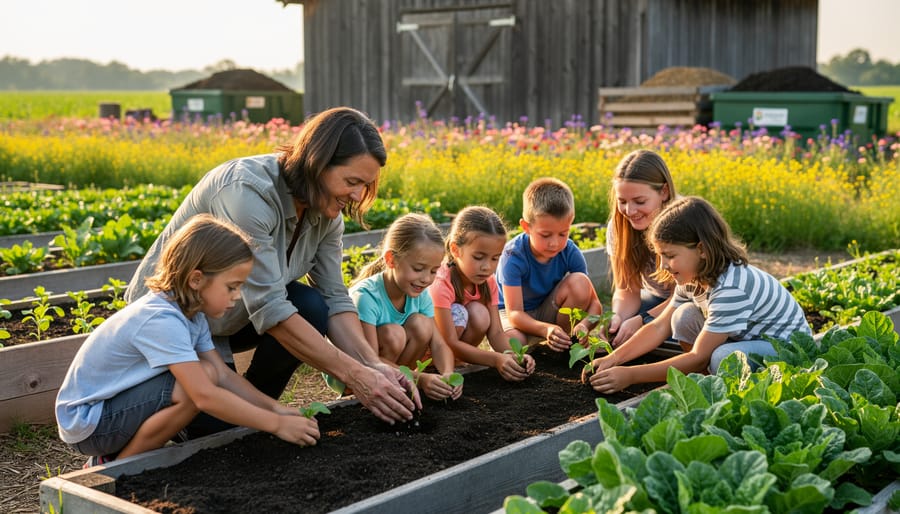
Children working together planting seedlings in community farm garden bed
Students with diverse learning needs thrive in hands-on agricultural environments where traditional classroom barriers disappear.

The Natural Partnership: CSA Farms as Inclusive Learning Spaces

Multi-Sensory Learning in the Garden

Garden-based learning creates a naturally inclusive environment where students with diverse learning needs thrive through multiple sensory experiences. For visual learners in RSP programs, observing seed germination, tracking plant growth stages, and identifying different leaf shapes and colors provides concrete learning opportunities that textbooks simply can’t replicate. The vibrant hues of ripening tomatoes or the contrast between soil and seedlings capture attention while reinforcing concepts like patterns, sequences, and cause-and-effect relationships.

Tactile learners benefit immensely from hands-on activities like feeling different soil textures, handling seeds of various sizes, and experiencing the difference between rough bark and smooth leaves. These sensory-rich experiences help students retain information more effectively while building fine motor skills through tasks like pinching off seedlings or gently pressing soil around transplants.

Kinesthetic learners, who often struggle in traditional classroom settings, flourish in farm environments where movement is essential. Digging, watering, weeding, and harvesting transform learning into physical activity that feels purposeful rather than restrictive. One CSA program reported that students who couldn’t sit still for fifteen minutes in class worked contentedly in the garden for over an hour, absorbing lessons about measurement, biology, and responsibility through active participation. This multi-sensory approach naturally accommodates the individualized learning plans common in RSP settings, making agricultural education an ideal inclusive practice.

Child's hands sorting colorful harvested vegetables on wooden farm table
Multi-sensory farm activities naturally engage different learning styles through touch, sight, and hands-on sorting tasks.

Building Life Skills Through Agriculture

Farm work naturally breaks down into manageable tasks that build essential life skills for students in RSP programs. When students water seedlings each morning, they learn responsibility and routine—missing a day has visible consequences they can understand. Planting rows of vegetables teaches sequencing and following multi-step directions in a hands-on way that clicks differently than classroom worksheets.

Time management becomes tangible when students track growth cycles. They see that tomatoes need six weeks before transplanting, connecting their daily actions to long-term outcomes. This patient observation strengthens executive function skills without the pressure of traditional academic settings.

The farm environment encourages social skill development through shared projects. Students work alongside peers harvesting lettuce or preparing market bundles, practicing communication and cooperation naturally. Success stories from farms using co-teaching models show students who struggled in conventional classrooms thriving when given purposeful outdoor tasks.

Even simple activities like sorting produce by size or counting eggs incorporate math and categorization skills. The low-pressure setting lets students learn at their own pace while contributing meaningfully to the farm community. These authentic experiences build confidence that transfers beyond the field, preparing students for employment and independent living.

Real Stories: Farms Making Special Education Work

When Green Valley CSA in Oregon partnered with their local school district, they weren’t sure what to expect. Three years later, their weekly farm sessions have become a cornerstone of support for eight RSP students who struggle with traditional classroom settings. “We’ve watched kids who couldn’t sit still for ten minutes spend an entire afternoon focused on transplanting seedlings,” shares farm manager Maria Chen. The key to their success? Letting students work at their own pace while providing clear, hands-on tasks with visible results.

In Northern California, Meadowbrook Farm took a different approach by creating a specialized program for homeschool families with RSP students. They designed sensory-friendly farm days with quieter activities and smaller group sizes. Parent testimonials reveal impressive outcomes: improved fine motor skills from harvesting delicate herbs, enhanced social interaction through cooperative weeding projects, and better emotional regulation from caring for chickens. One mother reported that her son, who previously resisted most learning activities, now eagerly practices math by counting eggs and measuring compost ingredients.

These successful school-farm partnerships share common elements. They maintain consistent schedules so students know what to expect, break tasks into manageable steps, and celebrate every achievement. Sunset Ridge Farm in Washington created visual job cards with pictures showing each step of different farm tasks, which students with processing challenges found especially helpful.

The tangible benefits extend beyond academics. Teachers report that students returning from farm sessions demonstrate improved focus and reduced anxiety in traditional classroom settings. At Riverbend CSA, an 11-year-old with auditory processing challenges who struggled with verbal instructions became the farm’s expert at identifying pest damage after learning through visual observation and hands-on practice.

These farms prove that agriculture education isn’t just about growing food. It’s about growing confidence, independence, and practical life skills. The investment is minimal compared to the outcomes, requiring mainly flexibility, patience, and willingness to adapt activities to different learning needs. For farms considering similar programs, starting small with one class or family and building from there creates sustainable, meaningful partnerships that benefit everyone involved.

Starting Your Own Farm-Based Learning Partnership

What Farmers Need to Know

The good news? Working with RSP students on your farm doesn’t require special certification or extensive training. These students simply need accommodations that most farmers naturally provide anyway. Think clear instructions, hands-on demonstrations, and a little extra patience—qualities that make anyone a better teacher.

Be prepared to break tasks into smaller steps and show techniques multiple times. Some students might need written checklists or visual guides for multi-step processes like transplanting seedlings or harvesting crops. Others may benefit from quieter workspaces away from bustling activity during focused tasks.

Flexibility is your greatest asset. If a student struggles with one activity, there’s always another farm job that might click better. Maybe seedling care isn’t their thing, but they excel at organizing the harvest shed or creating beautiful produce displays. One farmer shared how a student who found weeding overwhelming became their champion at identifying beneficial insects—turning a challenge into a unique contribution.

Remember, RSP students want to learn and contribute meaningfully. They’re not looking for easier work, just clearer pathways to success. Your willingness to adjust your teaching approach creates an environment where everyone thrives. Most farmers find that the accommodations benefiting RSP students actually improve communication and training for all volunteers and interns.

Getting Started: First Steps for Educators and Families

Starting your journey with RSP special education and farm partnerships begins with reaching out to local CSA farms in your area. Begin by researching farms that already demonstrate community involvement or educational programs. When you make contact, introduce yourself clearly and explain your interest in creating inclusive learning opportunities for students receiving resource specialist support.

During your initial meeting, discuss the specific skills your students are working on and how farm activities might support their Individualized Education Programs (IEPs). Talk about scheduling flexibility, accessibility needs, and safety considerations. Many farmers appreciate understanding how their work can support therapeutic goals like sensory integration, fine motor development, and social skills practice.

Create arrangements that benefit everyone involved. Perhaps students can help with age-appropriate tasks like sorting produce, preparing harvest boxes, or maintaining gardens while gaining real-world experience. Farmers gain enthusiastic helpers and community connections, while families access fresh organic produce and meaningful learning environments.

Start small with a pilot program. One successful farmer shared how beginning with monthly visits allowed both educators and farm staff to adjust and build confidence. Document student progress and farm impact to demonstrate value to school administrators and farm owners alike. Remember, the best partnerships grow organically through open communication, mutual respect, and shared commitment to nurturing both plants and people.

The Benefits Flow Both Ways

When farms open their gates to RSP special education programs, they discover the advantages extend far beyond doing good in the community. These partnerships create a ripple effect of benefits that strengthen the farm’s connection to its local area while building a foundation for long-term sustainability.

Community connections deepen naturally through these collaborations. Parents, teachers, and students become familiar faces at the farm, often transforming into loyal CSA members and enthusiastic word-of-mouth ambassadors. One California farm operator shared how hosting a special education group led to five new family memberships and countless recommendations to friends and neighbors. The authentic relationships built during these programs carry more marketing power than any advertisement could achieve.

Volunteer support frequently emerges as an unexpected bonus. Parents and educators who witness the positive impact on their students often return to help during busy seasons or community events. These dedicated volunteers understand the farm’s mission firsthand and bring genuine enthusiasm to their contributions.

The educational marketing opportunities prove invaluable for farms seeking to differentiate themselves in a crowded marketplace. Showcasing inclusive programming demonstrates commitment to accessibility and social responsibility, values that resonate strongly with environmentally conscious consumers. Social media posts featuring students learning about composting or harvesting vegetables generate authentic engagement and attract customers who share these values.

Perhaps most significantly, these partnerships nurture the next generation of environmental stewards. Students who experience hands-on learning at farms develop lasting appreciation for where food comes from and how sustainable agriculture works. They become advocates for organic practices, carrying these lessons into their families and future choices. For farms invested in long-term viability, cultivating this awareness among young people represents an investment in tomorrow’s food system and customer base.

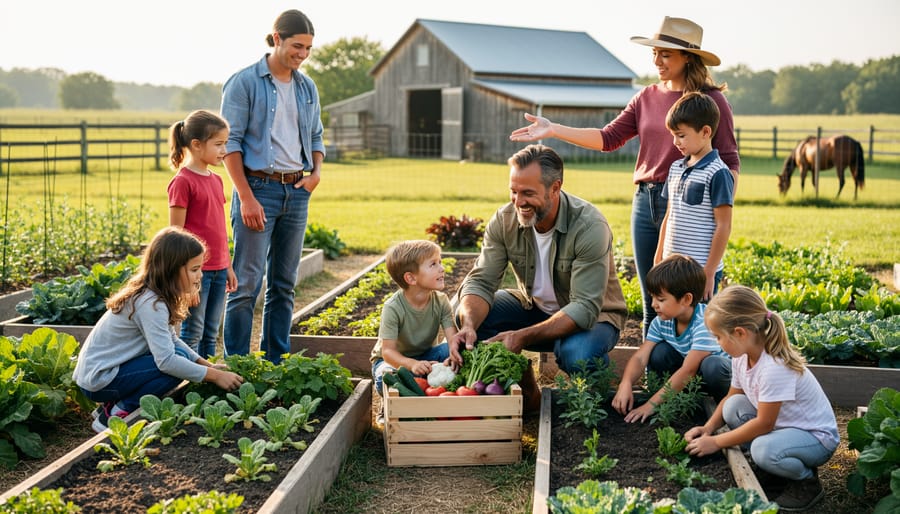
Farmer and students working together harvesting vegetables in community farm field
Farm partnerships create meaningful connections between students, educators, and agricultural communities while building practical life skills.

Your local CSA farm already possesses something extraordinary—the power to connect people with the rhythms of nature and the satisfaction of growing food. Opening your farm to learners with diverse abilities doesn’t require a degree in special education or specialized training. What it does require is the same quality that drew you to farming in the first place: a willingness to nurture growth in all its forms.

Start small. Reach out to special education teachers, therapists, or parent groups in your community. Share your interest in welcoming students who learn differently. Many educators are actively seeking authentic learning environments where students can engage their senses, build independence, and develop real-world skills. Your fields, greenhouses, and farm stands offer exactly that.

Remember, creating inclusive farm experiences isn’t about perfection—it’s about presence. When you slow down to accommodate a learner who needs more processing time, you’re not just helping one student; you’re modeling the patient, attentive approach that sustainable agriculture requires. When you find creative ways to make tasks accessible, you’re demonstrating the same innovative thinking that helps farms thrive.

The land welcomes everyone. Consider how your farm might become a place where all learners discover their capabilities, build confidence, and experience the profound satisfaction of contributing to something vital. The transformation begins with simply opening your gate.

How QCC’s Workforce Center Connects Future Farmers with Real CSA Opportunities

Posted by darrell on
0
Educational Programs and Partnerships
How QCC’s Workforce Center Connects Future Farmers with Real CSA Opportunities

Partner with your local QCC Center for Workforce Development and Continuing Education to access farm-ready employees trained in organic cultivation, season extension techniques, and CSA box management. These community college programs graduate students who understand crop rotation, pest management without synthetic chemicals, and post-harvest handling—skills that translate directly into productive farm team members from day one.

Enroll in specialized certificate programs that teach market farming fundamentals, including succession planting for continuous harvests, recordkeeping systems for organic certification, and customer relationship strategies specific to community-supported agriculture models. Many programs offer evening and weekend classes designed for working farmers looking to transition from conventional to organic methods or scale up existing CSA operations.

Connect with QCC’s agricultural extension services to host student interns during peak growing seasons. This partnership model provides you with enthusiastic workers while giving students hands-on experience with real CSA challenges like managing member communications, coordinating weekly distribution, and adapting to weather-related crop failures. Several successful CSA operators credit their workforce stability to these college partnerships.

Access specialized training modules on farm business planning, food safety regulations, and sustainable soil management practices that strengthen your operation’s foundation. These resources help aspiring farmers navigate the complex transition from dream to functioning CSA while giving established operations tools to improve efficiency and profitability. The result is a stronger local food system built on educated, passionate agricultural professionals ready to feed their communities.

What Makes QCC’s Workforce Development Different

Students learning hands-on farming techniques in crop rows at agricultural training facility
QCC’s hands-on agricultural training programs prepare students for real-world careers in sustainable farming and CSA operations.

The Partnership Model That Works

What makes QCC’s Center for Workforce Development stand out is its genuine partnership approach with local CSA farms. Rather than creating programs in isolation, QCC brings farmers directly to the table. Farm operators share their real-world challenges, identify skills gaps in their workforce, and help shape curriculum that addresses actual needs they face daily.

This collaborative model starts with listening sessions where CSA farmers discuss their most pressing concerns. Maybe they need workers who understand organic pest management, or perhaps they’re struggling to find team members skilled in harvest logistics and post-harvest handling. QCC instructors take this feedback and build training modules around these exact requirements.

The partnership extends to timing too. Recognizing that farming follows nature’s calendar, QCC offers flexible scheduling that aligns with seasonal demands. Winter months might focus on greenhouse management and business planning, while spring and summer emphasize hands-on field work. Many students participate in CSA farm internships as part of their coursework, gaining practical experience while providing farms with trained helpers during peak seasons.

Local farmer Maria Santos, who partners with QCC, shares her perspective: “Having input in the curriculum means graduates arrive at my farm already familiar with CSA operations. They understand member communication, harvest schedules, and sustainable practices from day one.”

This model creates a win-win situation where education meets real agricultural needs, strengthening both the workforce and local food systems.

Training Programs Built for CSA Success

QCC Center for Workforce Development and Continuing Education offers an impressive lineup of training programs specifically designed to equip aspiring farmers and agricultural professionals with the skills needed to run successful CSA operations. Whether you’re dreaming of starting your own farm or looking to enhance your existing agricultural knowledge, these programs provide the perfect foundation.

The Sustainable Agriculture Certificate program stands out as a comprehensive option for those committed to environmentally responsible farming. This multi-course series covers everything from soil health management and water conservation techniques to integrated pest management strategies that minimize environmental impact. Students learn hands-on methods for building resilient farming systems that can sustain production year after year while protecting natural resources.

For those interested in meeting the growing demand for organic produce, the Organic Farming Workshop series provides focused training on USDA organic certification requirements, composting techniques, and natural fertilization methods. These intensive workshops help farmers understand the transition process from conventional to organic farming, addressing common challenges and offering practical solutions based on proven success stories from local organic growers.

The Farm Business Management course addresses a critical need in the CSA world: understanding the business side of farming. Participants learn essential skills like crop planning for continuous harvest, pricing strategies for subscription boxes, customer relationship management, and basic bookkeeping tailored specifically for small-scale farm operations. This program has helped numerous graduates transform their passion for farming into viable, profitable businesses.

Each program emphasizes practical, real-world applications that directly translate to CSA operations. Students gain experience through field days, farm visits, and collaborative projects that mirror the actual challenges they’ll face when managing their own CSA ventures or working within established agricultural organizations.

Real Stories: From Classroom to CSA Farm

The journey from classroom to community-supported agriculture isn’t just a career shift—it’s a transformation that connects passion with purpose. Here are inspiring stories from QCC’s workforce development graduates who’ve found their calling in sustainable farming.

Maria Rodriguez never imagined she’d trade her retail management position for muddy boots and greenhouse work. After enrolling in QCC’s Sustainable Agriculture Certificate program, she discovered a deep connection to growing food. “The hands-on training was incredible,” Maria shares. “We learned everything from soil testing and crop rotation to managing finances for small farms.” Today, she co-manages Green Valley CSA in Burlington, overseeing weekly harvest distributions for 150 member families. The business planning skills she gained at QCC helped her develop efficient systems for tracking member preferences and reducing food waste.

Tom Chen’s story began with a simple desire to understand where his food came from. While working in IT, he enrolled in QCC’s evening agriculture courses. The program’s emphasis on organic pest management and season extension techniques opened his eyes to the possibilities of careers in CSA farming. “I learned practical skills I could apply immediately,” Tom explains. Within two years, he launched Sunrise Farm CSA, now serving 80 families with certified organic vegetables. The marketing and community engagement modules from QCC proved invaluable when building his member base.

Perhaps most inspiring is Jennifer LaFleur’s transformation. A former teacher seeking meaningful work outdoors, she completed QCC’s Farm Business Management program. The curriculum covered everything from irrigation systems to creating effective CSA newsletters. “QCC taught me that successful farming requires both agricultural knowledge and business savvy,” Jennifer notes. She now manages operations at Riverbend Farm CSA, where she’s implemented innovative pickup systems and educational farm tours that strengthen member relationships.

These graduates demonstrate how quality workforce training can prepare dedicated individuals for rewarding careers in sustainable agriculture, creating stronger connections between communities and their local food sources.

Farmer packing fresh vegetables into CSA share boxes at farm harvest table
QCC graduates apply their training directly to CSA farm operations, from harvest management to preparing member share boxes.

Skills You’ll Actually Use on a CSA Farm

Growing and Harvesting Techniques

QCC’s workforce development programs equip students with essential hands-on skills for successful organic farming. Participants learn comprehensive crop planning strategies, starting with soil testing and amendment techniques to build nutrient-rich growing beds. The curriculum covers seasonal planting schedules tailored to regional climate zones, helping farmers maximize yields throughout the growing season.

Students gain practical experience in soil health management through composting, cover cropping, and crop rotation methods that naturally reduce pests and diseases. These sustainable agriculture practices form the foundation of thriving CSA operations.

The harvest portion teaches proper timing techniques, post-harvest handling, and storage methods to maintain produce quality. Students practice gentle harvesting approaches that preserve crop integrity while maximizing shelf life for distribution.

Real-world success stories highlight graduates like Maria Chen, who launched her 50-member CSA after completing the program. She credits the training with teaching her efficient succession planting strategies that keep her harvest boxes diverse and abundant from May through November.

The program emphasizes practical, repeatable methods that students can immediately apply, whether starting their own farm or improving existing operations.

Member Relations and Farm Business Basics

Running a successful CSA goes far beyond growing great vegetables. The QCC program recognizes this reality by dedicating substantial training to the people-focused and administrative skills that keep members happy and farms profitable. You’ll learn how to craft engaging newsletters that build community connections and keep subscribers excited about their weekly shares. The curriculum covers strategic share box planning, teaching you how to balance crop variety, seasonal availability, and member preferences while minimizing waste.

Food safety certification preparation is built into the training, ensuring you understand proper handling procedures and meet regulatory requirements. This knowledge protects both your members and your farm’s reputation. The program also demystifies farm accounting, breaking down essential bookkeeping practices, pricing strategies, and financial planning in accessible terms. One graduate, Maria Santos, credits the accounting module with helping her CSA achieve profitability within its first year. “I knew how to grow food, but learning to track expenses and set realistic prices changed everything,” she shares. These practical business fundamentals transform passionate growers into confident farm entrepreneurs who can sustain their operations long-term while nurturing lasting relationships with their community members.

Why CSA Farms Benefit from Community College Partnerships

For CSA farm owners and managers, finding reliable workers who understand sustainable farming practices can be one of the biggest challenges to growth. That’s where partnerships with community colleges like QCC create real value. These career training partnerships connect farms with a steady pipeline of motivated students who’ve already received foundational training in organic growing methods, soil health, and farm operations.

The financial benefits are significant. Rather than spending weeks training new employees on basic skills like crop rotation, composting techniques, or integrated pest management, farms can hire graduates who arrive ready to contribute from day one. This reduces onboarding time and lets experienced farm staff focus on production rather than teaching fundamentals.

Sarah Chen, who manages Riverside Community Farm, shares her experience: “Before partnering with QCC, we struggled each season to find workers who understood organic certification requirements. Now we regularly hire their graduates, and the difference is remarkable. They know proper harvesting techniques, understand food safety protocols, and share our commitment to sustainable practices.”

These partnerships also help farms scale responsibly. As CSA operations expand their membership or add new growing areas, having access to trained workers makes growth manageable rather than overwhelming. Students often bring fresh perspectives too, introducing farms to new techniques they’ve learned in class or innovative approaches to common challenges.

Beyond filling immediate staffing needs, these relationships strengthen the local food system. Farms become part of educating the next generation of agricultural professionals, ensuring knowledge passes forward while building a community of people dedicated to sustainable farming’s future.

Aerial view of organized CSA farm with diverse crop rows and farmers working in fields
Successful CSA farms benefit from partnerships with workforce development programs that provide trained employees who understand sustainable growing practices and farm management.

How to Get Started with QCC Workforce Programs

Ready to dig into QCC’s Workforce Development programs? Getting started is easier than you might think. Most certificate programs run between 8 to 16 weeks, with flexible scheduling options including evening and weekend classes to accommodate working students. Short workshops and specialized training sessions are also available, ranging from single-day intensives to month-long courses.

Program costs vary depending on length and focus, typically ranging from $300 for introductory workshops to $2,500 for comprehensive certificate programs. The good news is that financial aid options exist for qualifying students, including workforce development grants, payment plans, and sometimes employer sponsorships. Be sure to ask about seasonal scholarship opportunities specifically designed for aspiring farmers and agricultural entrepreneurs.

To enroll, visit the QCC Center for Workforce Development website or call their admissions office directly. An advisor will help you identify which programs align with your farming goals and experience level. They’ll also guide you through the application process and connect you with financial resources.

One of the program’s biggest advantages is its direct pipeline to local CSA farms. QCC maintains partnerships with dozens of community-supported agriculture operations actively seeking skilled workers and interns. Program coordinators regularly share job openings and internship opportunities with students, and many graduates have found their dream positions through these connections. Some CSA farms even attend QCC career fairs specifically to recruit trained workers who understand sustainable practices.

Don’t wait until spring planting season. Programs fill quickly, and starting your agricultural education journey today means you’ll be field-ready when opportunities bloom.

The partnership between community colleges like QCC and local CSA farms represents a powerful investment in our food future. These collaborations bridge the gap between classroom learning and real-world farming experience, creating pathways for passionate individuals to enter sustainable agriculture with confidence and practical skills. Whether you’re dreaming of starting your own organic operation or simply want to deepen your understanding of where your food comes from, workforce development programs offer accessible entry points into this rewarding field.

For CSA farms, partnering with educational institutions isn’t just about finding workers—it’s about cultivating the next generation of agricultural leaders who understand soil health, ecological balance, and community connection. These partnerships strengthen local food networks while ensuring that time-tested farming wisdom gets passed down alongside innovative growing techniques.

If you’re an aspiring farmer, take that first step and explore what programs like those at QCC can offer. For established CSA operations, consider how opening your fields to students could benefit both your farm and the broader movement toward sustainable food systems. Together, education and agriculture create fertile ground for growth, ensuring that local organic farming continues to flourish for generations to come.

How CSA Farms Are Teaching Digital Literacy Through Farm-to-Table Learning

Posted by darrell on
0
Educational Programs and Partnerships
How CSA Farms Are Teaching Digital Literacy Through Farm-to-Table Learning

Integrate evidence-based literacy instruction into your CSA operations by partnering with local schools to create reading gardens where children learn phonics and comprehension skills while planting vegetables. Structure weekly harvest shares to include seasonal storybooks and reading guides that connect farm produce to age-appropriate literature, transforming each delivery into an educational opportunity for member families.

Design hands-on learning stations at your farm where children practice reading through seed packet instructions, recipe cards, and plant identification labels, allowing literacy development to happen naturally within agricultural contexts. Farm-based education networks demonstrate remarkable success when combining science of reading principles with agricultural experiences, showing 40% improvement in comprehension scores among participating students.

Launch a summer farm literacy camp that uses systematic phonics instruction alongside garden tasks, where emerging readers decode words through farm journals, weather logs, and harvest tracking sheets. Create family literacy nights at your farm stand featuring read-aloud sessions focused on agricultural themes, cooking demonstrations with recipe reading practice, and take-home activity kits that reinforce foundational reading skills through farming vocabulary.

Connect with speech-language pathologists and reading specialists to develop curriculum that aligns with established literacy frameworks while maintaining authentic farm experiences. This approach transforms your CSA into a community learning hub where children develop essential reading competencies through meaningful engagement with food systems, building both literacy foundations and agricultural awareness simultaneously.

What Research-Based Digital Literacy Actually Means for CSA Members

When you hear “research-based literacy,” you might think it’s only about kids learning to read in school. But for CSA members and farmers, it takes on a whole new meaning that’s incredibly relevant to your daily agricultural journey.

At its core, research-based literacy means having the skills to find, evaluate, and apply reliable information using proven methods. In the CSA world, this translates to confidently navigating the ocean of farming advice, organic practices, and agricultural data available online and in print. It’s about becoming a savvy information consumer who can distinguish between genuine research-backed farming wisdom and unfounded claims.

Think about it: when you’re researching companion planting strategies or trying to understand soil amendment recommendations, how do you know which sources to trust? Research-based literacy gives you the tools to evaluate whether that organic pest control method you found online is backed by actual agricultural studies or just anecdotal evidence from a single blog post.

For CSA farmers, this might mean critically assessing new sustainable farming techniques before implementing them on your land. You’ll learn to identify credible sources like university extension offices, peer-reviewed agricultural journals, and established organic farming organizations versus marketing-driven websites promoting unproven products.

For CSA members interested in learning more about where your food comes from, these skills help you understand the science behind organic practices, evaluate claims about farming methods, and ask informed questions at farm visits. You become an active participant in the agricultural conversation rather than a passive recipient of information.

The beauty of applying research-based literacy to CSA contexts is that it empowers everyone in the community. Members make better-informed choices about their food, farmers implement more effective practices, and the entire CSA benefits from a foundation of credible, evidence-based knowledge. It creates a culture where learning is continuous, questions are welcomed, and decisions are grounded in solid research rather than trends or misconceptions.

CSA members examining fresh vegetables while using tablets and smartphones at outdoor farm table
CSA members use digital tools to research and learn about their food sources during an on-farm educational gathering.

The Natural Connection Between CSAs and Information Literacy

Learning to Question Your Food Sources

Joining a CSA naturally transforms members into informed food consumers who actively seek knowledge about their produce sources. When you pick up your weekly share, curiosity kicks in: What makes this tomato taste so different? Is the farm truly organic? How do these growing methods impact soil health? This genuine interest leads members to explore farming practices, research certification standards, and verify the claims their farmers make.

Many CSA members begin investigating organic certification processes, learning to distinguish between certified organic, naturally grown, and conventional practices. They discover online resources like the USDA organic database, read about regenerative agriculture techniques, and follow agricultural news relevant to their region. This research habit extends beyond their own farm, helping members evaluate food claims at farmers markets and grocery stores with a more critical eye.

CSA farmers often notice this shift, with members asking thoughtful questions about pest management strategies, cover cropping schedules, and water conservation methods. Take Maria’s story from Green Valley Farm, who started creating detailed farming method guides after members expressed interest in her no-till practices. These conversations create a feedback loop where both farmers and members become co-learners, building a community united by curiosity and shared values around sustainable food production.

From Farm Updates to Critical Thinking

Every week during growing season, CSA members receive more than just fresh vegetables. Those newsletters and digital updates serve as mini-lessons in agricultural literacy, teaching readers to think critically about food systems. When a farmer explains why tomatoes arrived later than expected due to unexpected cool weather, members learn about climate’s role in food production. Blog posts detailing pest management strategies help readers understand the difference between evidence-based organic solutions and marketing buzzwords.

Sarah Chen, who manages a 50-member CSA in Vermont, includes research citations in her monthly newsletters when discussing soil health practices. Her members have become savvy consumers who can spot greenwashing in grocery store claims. They understand that sustainable farming means adapting to conditions, not promising perfect abundance year-round.

Digital communications create opportunities for back-and-forth dialogue too. When members ask questions about why certain crops failed or succeeded, farmers provide detailed explanations rooted in horticultural science. This ongoing exchange transforms passive consumers into informed community members who appreciate the complexity behind their food. They learn to evaluate claims, understand cause and effect in natural systems, and recognize the honest transparency that distinguishes genuine sustainable agriculture from clever marketing tactics.

Real CSA Programs Building Digital Literacy Skills

Farmer holding tablet displaying agricultural research information while standing in vegetable garden
Farmers use digital tools to access research-based agricultural information and share credible resources with CSA members.

Teaching Members to Research Sustainable Practices

Many CSA education initiatives now include workshops that empower members to become informed researchers of sustainable practices. These sessions transform passive consumers into active learners who can evaluate agricultural information critically.

At Twin Oaks Farm in Vermont, coordinator Maria Chen hosts monthly “Research Skills for Growers” workshops where members learn to navigate university extension databases. Participants discover how to access peer-reviewed studies about soil health, companion planting, and integrated pest management. The farm provides simple handouts explaining how to distinguish credible research from marketing materials, making scientific literacy accessible to everyone regardless of educational background.

Green Valley CSA in Oregon takes a hands-on approach by teaching members to interpret field trial results. During summer sessions, farmers demonstrate how they applied research findings from land-grant universities to improve crop yields. Members learn to understand study methodologies, recognize sample sizes, and identify practical applications for their own gardens.

These programs often include tours of university extension websites, where members bookmark resources like growing guides, pest identification tools, and climate-adapted variety recommendations. Some CSAs create shared digital libraries of relevant research papers with farmer annotations explaining key takeaways in everyday language.

By demystifying agricultural research, CSAs help members make informed decisions about their gardens, understand the science behind organic certification standards, and appreciate the evidence-based practices their farmers employ. This knowledge-sharing strengthens the community bond while promoting sustainable agriculture through educated participation.

Digital Tools That Connect Farmers and Learners

Modern technology has created wonderful opportunities for CSA members and farmers to develop their research and learning skills together. Several digital platforms now serve as virtual classrooms where community members can explore evidence-based gardening information and connect with fellow agriculture enthusiasts.

Online forums like GardenWeb and specialized Facebook groups allow CSA members to ask questions, share photos of plant problems, and receive guidance from experienced growers who cite university extension research and peer-reviewed studies. These communities encourage members to think critically about sources and distinguish reliable information from garden myths.

Apps such as PlantSnap and PictureThis help identify plants, pests, and diseases instantly, often linking to educational resources from agricultural colleges. These tools transform curiosity into research opportunities, teaching users to verify findings through multiple credible sources. When a CSA member notices an unusual leaf pattern, they can photograph it, identify the issue, and access research-backed solutions within minutes.

Many CSA farms now maintain private online communities through platforms like Slack or Discord, where members share growing updates, recipes, and links to helpful agricultural research. Farm coordinator Sarah Martinez reports that her CSA’s digital community has become a thriving learning hub where members regularly post findings from university extension websites and local agricultural bulletins.

Email newsletters from farms increasingly include links to seasonal growing guides and research articles, encouraging members to explore topics deeply. This approach transforms passive consumers into active learners who understand the science behind their food, strengthening the educational foundation of community-supported agriculture.

Building Your Own CSA Literacy Program

Start With Your Weekly Newsletter

Your weekly newsletter is the perfect starting point for building literacy skills within your CSA community. Instead of simply announcing what’s in the harvest box, transform these updates into mini-lessons that encourage critical thinking and deeper exploration. For example, when sharing information about companion planting, cite the specific university extension research or farming journal that supports your practices. Include phrases like “according to a study from…” or “research shows that…” to model how we reference credible sources.

Make your content interactive by posing questions that invite members to investigate further. When discussing soil health improvements, you might write: “We’ve increased our organic matter by 3% this season using cover crops. Curious about the science behind this? Check out your local extension office’s resources on soil biology.” This approach teaches members to seek out reliable information and think critically about farming practices.

Consider adding a “Learn More” section to each newsletter with links to beginner-friendly research articles, videos, or podcasts related to your farm’s current activities. By consistently demonstrating how to find, evaluate, and apply agricultural research, you’re helping your community develop essential literacy skills while deepening their connection to where their food comes from.

Simple Workshops That Make a Difference

Hosting hands-on workshops doesn’t need to be complicated or time-consuming. Simple, focused sessions can empower your CSA members to make informed decisions about what they grow and eat. Consider organizing a monthly gathering where members learn to research heirloom tomato varieties using online seed catalogs, comparing disease resistance, days to maturity, and flavor profiles. These casual meetups create a supportive environment where everyone feels comfortable asking questions.

Start with the basics: teach members how to evaluate seed companies by checking organic certifications, reading customer reviews, and understanding seed sourcing practices. Many CSA members are surprised to learn about resources like university agricultural extension websites, which offer free, research-backed information about pest management, soil health, and crop rotation strategies.

Create a simple template members can use when researching new plants for their gardens. Include sections for climate compatibility, water requirements, and companion planting suggestions. One successful CSA coordinator from Ontario shared how her members now confidently navigate USDA plant databases and Canadian agricultural resources, making them better-informed consumers and more engaged community members.

These educational sessions build confidence and deepen the connection between your members and their food sources. When people understand how to find reliable growing information, they become ambassadors for sustainable agriculture in their own communities, sharing knowledge with neighbors and inspiring others to make thoughtful choices about food production.

Small group of CSA members participating in outdoor educational workshop at farm
Informal workshops at CSA farms create opportunities for members to develop research skills and information literacy in agricultural contexts.

Why This Matters for Sustainable Agriculture’s Future

When we strengthen digital literacy within our farming communities, we’re planting seeds for a more resilient and sustainable food system. Research-based literacy programs equip community members with critical thinking skills that extend far beyond reading comprehension—they empower people to evaluate agricultural information, distinguish science-based practices from marketing hype, and make informed decisions about the food they grow and consume.

Consider how misinformation about GMOs, pesticides, and organic certification spreads rapidly through social media. A community grounded in strong literacy skills can navigate these complex conversations with confidence, asking the right questions and seeking credible sources. This collective knowledge base becomes particularly powerful when farmers need community support for zoning changes, water rights, or protecting farmland from development.

These programs also create bridges between generations. Experienced farmers who participated in literacy initiatives often share their newfound research skills with younger growers, teaching them to access scientific studies about soil health, integrated pest management, and climate adaptation strategies. One farmer in Oregon discovered drought-resistant crop varieties through an online agricultural database after completing a digital literacy workshop—knowledge she now shares at regional farming conferences.

For consumers, literacy programs foster deeper connections with their food sources. Members who understand how to research sustainable agriculture practices become more engaged CSA participants, asking thoughtful questions about growing methods and even volunteering to help with educational initiatives on the farm.

Ultimately, an informed community becomes the strongest advocate for sustainable farming. When people can read research, understand data, and communicate effectively about agricultural issues, they transform from passive consumers into active participants shaping a healthier, more sustainable food future for everyone.

When you build research-based literacy programs into your CSA, you’re doing more than teaching members about farming techniques. You’re creating a ripple effect that extends far beyond your fields. Members who learn to critically evaluate food labels, understand seasonal growing patterns, and recognize sustainable practices become ambassadors in their own communities. They share this knowledge at dinner parties, make informed choices at farmers markets, and ask better questions at grocery stores.

Consider Sarah, a CSA member from Oregon who started with basic farm newsletter literacy. Within two seasons, she was teaching neighbors about soil health and helping local schools develop garden programs. That’s the power of education rooted in real experience.

These programs transform passive consumers into active participants in the food system. They build communities where people understand the true value of organic practices, can spot greenwashing in marketing claims, and appreciate the work behind their vegetables. Your investment in member education doesn’t just benefit your farm today. It cultivates a generation of informed eaters who will support sustainable agriculture for years to come, creating lasting change that strengthens local food systems everywhere.

CSA Farm Training Programs Transform Career Paths for Masters Students

Posted by darrell on
0
Educational Programs and Partnerships
CSA Farm Training Programs Transform Career Paths for Masters Students

Transforming agricultural careers through specialized vocational rehabilitation creates powerful pathways for sustainability-minded professionals seeking meaningful work in organic farming and local food systems. Masters-level vocational rehabilitation programs uniquely blend hands-on sustainable agriculture training with therapeutic career development, enabling participants to cultivate both land and life-changing opportunities. These innovative programs address the growing demand for qualified agricultural professionals while providing essential support for individuals rebuilding their careers through nature-based work.

By combining clinical rehabilitation expertise with sustainable farming practices, these programs offer distinct advantages over traditional vocational training. Participants gain practical skills in organic crop production, farm business management, and therapeutic horticulture while receiving personalized career counseling and placement support. This holistic approach has proven particularly effective for veterans, individuals recovering from injuries, and career-changers seeking purpose-driven work in regenerative agriculture.

Success stories from program graduates demonstrate the transformative impact – from launching thriving CSA operations to developing therapeutic farming programs that serve their communities. With employment in sustainable agriculture projected to grow significantly over the next decade, masters vocational rehabilitation programs provide a vital bridge between qualified candidates and meaningful careers that nurture both people and planet.

Why CSA Farms Are Ideal Training Grounds

Hands-on Learning Opportunities

Students in masters vocational rehabilitation programs focused on sustainable agriculture benefit from extensive hands-on agricultural training throughout their studies. Practical learning experiences include managing seasonal crop rotations, implementing organic pest management strategies, and operating sustainable irrigation systems.

Working alongside experienced farmers, students gain valuable skills in soil health management, composting techniques, and greenhouse operations. They participate in weekly harvests, farmers’ market sales, and CSA distribution, developing both technical farming abilities and essential business management skills.

Program participants engage in real-world projects such as designing sustainable farm layouts, conducting soil analysis, and planning crop schedules. These hands-on opportunities often include working with adaptive equipment and specialized tools designed for farmers with diverse abilities.

Field trips to successful organic farms and sustainable agriculture operations provide additional learning experiences, allowing students to observe various farming methods and network with industry professionals. Many programs also incorporate internship opportunities with local farms, giving students practical experience in their chosen specialization while building valuable professional connections.

Graduate student learning sustainable farming techniques from mentor in CSA field
Masters student working alongside experienced farmer in organic vegetable fields

Therapeutic Benefits of Farm Work

Farm work offers unique therapeutic benefits that contribute significantly to both mental and physical well-being during vocational rehabilitation. Working with soil and plants has been shown to reduce stress levels and anxiety while promoting mindfulness and emotional regulation. The rhythmic nature of farming tasks, such as planting and harvesting, creates a meditative environment that helps individuals process thoughts and emotions more effectively.

Physical benefits include improved strength, flexibility, and cardiovascular health through varied movements like lifting, bending, and walking. The outdoor environment provides natural vitamin D exposure and fresh air, supporting immune system function and overall health. Additionally, the sense of purpose and accomplishment that comes from nurturing crops and seeing tangible results of one’s labor builds self-esteem and confidence.

The social aspects of farm work, including team collaboration and community engagement, help develop crucial interpersonal skills while combating isolation. Many participants report improved sleep patterns, better appetite regulation, and enhanced mood stability after engaging in regular farm activities. This combination of physical activity, purposeful work, and connection to nature creates an ideal environment for holistic healing and skill development.

Structured Training Programs in CSA Settings

Rehabilitation participants engaging in therapeutic gardening activities
Group therapy session taking place in a community garden setting

Core Curriculum Components

The core curriculum of a Master’s in Vocational Rehabilitation with a focus on sustainable agriculture combines traditional rehabilitation counseling principles with specialized knowledge in agricultural practices. Students develop expertise in assessment techniques, career development theory, and sustainable living practices that can benefit clients interested in agricultural careers.

Key components include rehabilitation counseling fundamentals, case management strategies, and agricultural vocational assessment methods. Students learn to evaluate clients’ abilities and interests while considering the unique demands of farming and agricultural work. The program emphasizes adaptive techniques and modifications that enable individuals with disabilities to participate successfully in agricultural activities.

Coursework typically covers occupational analysis specific to farming tasks, ergonomic considerations for agricultural work, and assistive technology applications in agricultural settings. Students also gain knowledge about environmental sustainability, organic farming methods, and the therapeutic benefits of working with the land.

Professional development courses focus on advocacy skills, ethical considerations in agricultural rehabilitation, and building connections with local farming communities. Practical training includes fieldwork experiences at working farms, allowing students to apply theoretical knowledge in real-world settings while developing hands-on skills in both rehabilitation counseling and sustainable agriculture practices.

Integration with Academic Requirements

Masters programs in vocational rehabilitation increasingly recognize the value of hands-on agricultural experience through CSA training. This integration offers students practical skills while fulfilling academic requirements for fieldwork and experiential learning. Students can apply theoretical concepts from their coursework directly to sustainable farming practices, creating a rich learning environment that bridges academic theory with real-world application.

Many programs now offer credit hours for CSA-related activities, including farm management, crop planning, and community outreach initiatives. These experiences align perfectly with core competencies in vocational rehabilitation, such as program development, client assessment, and service delivery. Students learn to adapt farming techniques for individuals with diverse abilities, making agriculture more accessible and inclusive.

The hands-on nature of CSA training complements classroom learning by providing opportunities to develop essential skills in project management, problem-solving, and client interaction. Students often work directly with community members, learning to create meaningful vocational opportunities while promoting sustainable agriculture practices.

This integration also supports research requirements, as students can conduct studies on the therapeutic benefits of agricultural work, sustainable farming methods, or the economic impact of local food systems. The combination of academic rigor and practical experience prepares graduates to become well-rounded professionals capable of implementing innovative vocational rehabilitation programs in agricultural settings.

Career Pathways and Opportunities

Emerging Roles in Sustainable Agriculture

The sustainable agriculture sector is experiencing rapid evolution, creating exciting new CSA farm career opportunities for vocational rehabilitation graduates. Beyond traditional farming roles, emerging positions include urban agriculture coordinators, vertical farming specialists, and hydroponics system managers. These innovative careers combine traditional agricultural knowledge with modern sustainable practices.

Many graduates are finding fulfilling roles as food safety compliance officers, focusing specifically on organic certification and sustainable farming methods. Others are pioneering positions in agricultural technology, managing smart irrigation systems and drone-based crop monitoring programs. Community education coordinators are increasingly in demand, helping bridge the gap between farms and local communities through workshops and outreach programs.

Sustainable seed production specialists and heritage crop preservation experts represent another growing niche, working to maintain biodiversity and protect traditional farming practices. Farm-to-table program coordinators collaborate with local restaurants and schools, creating sustainable food distribution networks. These positions often offer flexible work arrangements and opportunities for professional growth, making them ideal for individuals seeking meaningful careers in environmental stewardship while supporting their communities through sustainable food production.

Professional Development Trajectories

Professionals with a master’s in vocational rehabilitation can explore diverse career paths while making meaningful impacts in sustainable agriculture and community development. Many graduates advance into leadership roles within career development programs, where they design and implement training initiatives for individuals with diverse abilities.

Specialization opportunities include agricultural therapy coordination, where practitioners combine horticultural knowledge with rehabilitation techniques to support client recovery. Program graduates can also pursue roles as vocational counselors specifically focused on sustainable farming practices, helping clients discover fulfilling careers in organic agriculture and CSA operations.

Advanced positions often involve program development and management, where professionals create innovative training modules that integrate sustainable farming principles with vocational rehabilitation. Some practitioners choose to focus on policy development and advocacy, working to improve access to agricultural-based rehabilitation programs.

The field offers opportunities to combine clinical expertise with sustainable farming practices, creating unique therapeutic environments. Many professionals establish their own consulting practices, working with multiple CSA farms to develop inclusive employment programs. Career advancement often involves obtaining additional certifications in specialized areas such as adaptive technology or sustainable agriculture practices.

Career pathway diagram showing advancement opportunities in sustainable agriculture
Infographic showing career progression paths from CSA training to various agricultural leadership roles

Success Stories and Case Studies

Meet Sarah Thompson, a former corporate professional who successfully transitioned to sustainable agriculture through our masters vocational rehabilitation program. After experiencing workplace burnout, Sarah discovered her passion for farming and enrolled in our comprehensive training program. Today, she operates a thriving 5-acre CSA farm serving over 100 local families while providing educational workshops for aspiring farmers.

James Rodriguez’s story exemplifies the power of vocational rehabilitation in sustainable agriculture. Following a workplace injury that left him unable to continue his construction career, James found new purpose through our program. Within two years of completing his training, he established a successful urban farming initiative that now partners with local schools to promote food education and sustainability.

Emily Chen, a former teacher, credits our program for helping her achieve her dream of running an organic market garden. Through specialized training in sustainable farming practices and business management, Emily developed the skills needed to launch her own farm-to-table operation. Her business now supplies produce to several high-end restaurants and operates a popular farm stand at the local farmers’ market.

The program also helped Mark Williams, a veteran seeking a new career path, establish a therapeutic farming program for fellow veterans. His farm now serves as both a productive agricultural enterprise and a healing space for veterans transitioning to civilian life.

These success stories demonstrate how our masters vocational rehabilitation program provides not just technical farming skills, but also the business acumen and support network necessary for sustainable agriculture careers. Each graduate has contributed to their local food system while creating fulfilling new career paths that align with their values and abilities. Their achievements showcase the program’s effectiveness in facilitating successful career transitions while promoting sustainable farming practices.

Community Supported Agriculture-based vocational rehabilitation programs have proven to be transformative for both participants and local food systems. These programs not only provide valuable skills training and meaningful employment opportunities but also contribute to the growing sustainable agriculture movement. The hands-on experience gained through working on organic farms, combined with structured educational components, creates a holistic approach to rehabilitation that addresses both personal development and professional growth.

The future outlook for these programs is particularly promising, with increasing demand for locally grown organic produce and a growing awareness of sustainable farming practices. Success stories from program graduates demonstrate the lasting impact of these initiatives, with many participants going on to establish their own small farms or securing positions in agricultural enterprises.

As we look ahead, expansion opportunities include partnerships with more local farms, integration of new technologies in sustainable agriculture, and development of specialized tracks for different areas of focus within organic farming. The potential for these programs to address both vocational rehabilitation needs and sustainable food production challenges makes them particularly valuable in today’s evolving job market.

For communities considering implementing similar programs, the documented success rates and positive outcomes provide compelling evidence for their effectiveness. By combining therapeutic benefits with practical skill development in sustainable agriculture, these programs offer a unique and powerful approach to vocational rehabilitation that benefits both individuals and their communities.

Transform Your School’s CSA Program with These Powerful Collaboration Techniques

Posted by darrell on
0
Educational Programs and Partnerships
Transform Your School’s CSA Program with These Powerful Collaboration Techniques

Transform your school’s collaborative culture through the 7 norms of collaboration, a proven framework that powers successful CSA programs in education and enriches learning environments. These norms – pausing, paraphrasing, probing for specificity, putting ideas on the table, paying attention to self and others, presuming positive intentions, and pursuing a balance between advocacy and inquiry – create the foundation for meaningful educational partnerships that thrive.

When educators and agricultural partners embrace these collaborative principles, they forge lasting connections that benefit both students and communities. From classroom gardens to farm-to-table initiatives, these norms guide interactions that transform theoretical knowledge into practical, hands-on learning experiences. They empower teachers, administrators, and community partners to work together seamlessly, creating sustainable educational programs that nurture both academic growth and environmental stewardship.

By mastering these seven essential norms, schools develop the capacity to build innovative programs that connect students with their food systems while meeting core curriculum requirements. This powerful framework ensures that collaborative efforts remain focused, productive, and aligned with educational goals.

Pausing: Creating Space for Thoughtful Curriculum Integration

Practical Applications in Farm-School Planning

At Green Valley Farm, program coordinator Sarah Martinez found that implementing strategic pauses during planning meetings led to more thoughtful curriculum development. By taking a moment to reflect after each suggestion, teachers and farmers could better align growing schedules with lesson plans. Similarly, Stone Creek CSA improved their school partnership by incorporating brief reflection periods during harvest planning, allowing educators to suggest age-appropriate activities for different grade levels.

These pauses proved especially valuable during seasonal transition meetings, where farmers and teachers needed to coordinate spring planting with academic calendars. The River Bend School District reported a 40% increase in student engagement after their farm partner started using collaborative pauses to develop more interactive field trip experiences.

Small practices, like counting to five before responding to new ideas or taking a two-minute reflection break during planning sessions, helped teams develop more creative and practical solutions for connecting classroom learning with farm activities.

Paraphrasing: Building Understanding Between Farmers and Educators

Farmers and educators participating in a collaborative planning session for a CSA school program
A diverse group of farmers and teachers engaged in a collaborative meeting, sitting in a circle and actively listening to each other

Communication Tools for CSA-School Partnerships

Effective communication between CSA farms and schools requires thoughtful planning and the right tools. Farmers and educators can utilize collaborative teaching strategies to create engaging learning experiences. Regular check-ins through video calls or monthly in-person meetings help maintain alignment on educational goals. Shared digital calendars ensure everyone stays informed about harvest schedules and school visit dates. Creating a simple newsletter or blog updates parents and teachers about farm activities and learning opportunities. Consider using messaging apps for quick updates and photos from the farm. Visual aids like seasonal crop charts and farm maps help students connect with the growing process. Document sharing platforms allow teachers and farmers to develop and refine lesson plans together, ensuring agriculture education remains dynamic and relevant.

Probing: Deepening Farm-to-School Connections

Essential Questions for Program Development

When developing collaborative programs between CSAs and schools, several essential questions help guide the process and ensure meaningful outcomes. What are our shared goals and values? How can we align our farming practices with educational objectives? What resources and expertise can each partner bring to the table? These foundational inquiries help establish clear expectations and responsibilities.

Consider practical aspects: How will we schedule activities around growing seasons? What safety protocols need to be in place? How can we make the program accessible to all students? What metrics will we use to measure success? Think about sustainability: How can we ensure long-term program viability? What funding sources are available? How will we adapt to changing needs?

These questions create a framework for thoughtful program development, encouraging partners to address crucial aspects before implementation, leading to more robust and successful collaborations.

Putting Ideas on the Table: Enriching Agricultural Education

In collaborative agricultural education, sharing diverse perspectives enriches the learning experience for everyone involved. CSA farmers and educators can create dynamic curriculum by encouraging all participants to contribute their unique insights and experiences. This approach is particularly effective when developing school garden programs that combine traditional farming wisdom with modern sustainable practices.

To facilitate meaningful idea sharing, establish regular brainstorming sessions where farmers, teachers, and students can contribute their thoughts freely. Create an environment where both experienced farmers and newcomers feel comfortable sharing their knowledge. Use visual aids like seasonal planting calendars or crop rotation diagrams to help illustrate concepts and spark discussion.

Consider implementing a rotating leadership model where different community members take turns leading educational sessions. This approach allows for various teaching styles and perspectives while building confidence among participants. Farmers can share practical field experience, while educators can contribute pedagogical expertise.

Document all ideas shared during planning sessions, creating a resource bank that grows over time. This collection becomes invaluable for future curriculum development and helps track the evolution of your agricultural education program. Remember to regularly revisit and update these resources based on seasonal changes and learning outcomes.

Farmer teaching students about vegetable harvesting in an educational garden setting
Students and farmer examining vegetables in a school garden, with the farmer demonstrating harvesting techniques

Paying Attention to Self and Others: Creating Inclusive Programs

Creating an inclusive environment begins with mindful attention to both ourselves and others in collaborative settings. This means being present and aware of how we communicate, interact, and respond to different perspectives and ideas. When working together in school-CSA partnerships, it’s essential to practice active listening and demonstrate genuine respect for diverse viewpoints.

One effective strategy is to regularly check in with yourself about your participation levels. Are you contributing enough? Perhaps too much? Finding this balance helps ensure everyone has space to share their insights. Similarly, paying attention to others’ verbal and non-verbal cues can help you gauge when to step back or encourage quieter participants to join the conversation.

Consider implementing simple practices like pausing before responding to others’ ideas, acknowledging contributions with specific feedback, and creating opportunities for all voices to be heard. This might mean rotating discussion leadership roles or using structured sharing techniques that give everyone equal time to speak.

Remember that inclusive collaboration isn’t just about equal speaking time – it’s about creating an environment where everyone feels valued and heard. This includes being mindful of different communication styles, cultural perspectives, and experience levels. By maintaining awareness of both self and others, we can build stronger, more effective partnerships that benefit both schools and local farms.

Presuming Positive Intentions: Building Trust in Farm-School Partnerships

Building trust is fundamental to successful farm-school partnerships, and presuming positive intentions is a powerful way to establish that foundation. When farmers and educators approach collaboration with the belief that everyone involved wants the best outcomes for students, it creates an atmosphere of mutual respect and understanding.

This norm encourages partners to interpret actions and communications in the most favorable light possible. For example, if a teacher needs to reschedule a farm visit, rather than assuming inconvenience, farmers can recognize the complexity of managing classroom schedules and appreciate the teacher’s commitment to making the experience meaningful for students.

Similarly, when schools understand that farmers operate under weather constraints and seasonal demands, they’re more likely to be flexible and supportive partners. This positive mindset helps overcome common challenges like scheduling conflicts or communication gaps.

Consider starting partnerships with informal meet-and-greets where both parties can share their goals and vision. These casual conversations often reveal shared values and enthusiasm for connecting children with agriculture. When challenges arise, partners who presume positive intentions are more likely to seek solutions rather than assign blame.

Remember that trust builds gradually through consistent positive interactions. Celebrate small successes, acknowledge each partner’s contributions, and maintain open communication channels to strengthen these valuable educational relationships.

Visual diagram depicting the seven norms of collaboration in a connected circular pattern
Infographic showing interconnected circular icons representing the 7 norms of collaboration with visual symbols for each norm

Pursuing a Balance of Inquiry and Advocacy: Sustainable Program Development

In developing sustainable educational programs, striking the right balance between inquiry and advocacy is crucial for long-term success. When collaborating with schools on farm-based education initiatives, it’s essential to maintain open dialogue while steadily working towards program objectives.

This balance is achieved by fostering an environment where all stakeholders feel heard while keeping momentum towards established goals. For example, when introducing new farming concepts to students, educators should encourage questions and exploration while gently guiding discussions toward learning objectives. This approach helps maintain engagement while ensuring educational standards are met.

Success stories from CSA farmers show that the most effective programs emerge when facilitators alternate between listening to participants’ needs and advocating for sustainable farming practices. This might involve adjusting lesson plans based on student feedback while ensuring core agricultural concepts remain central to the curriculum.

To maintain this balance, consider:
– Regular check-ins with all stakeholders
– Flexible program structures that allow for adaptation
– Clear communication channels between farms and schools
– Documentation of both successes and areas for improvement
– Periodic evaluation of program goals against actual outcomes

This approach ensures programs remain responsive to community needs while advancing sustainable agriculture education objectives.

The implementation of the seven norms of collaboration has proven instrumental in fostering successful partnerships between CSA farms and schools. When farmers and educators embrace these principles, they create a dynamic learning environment that benefits students, teachers, and the farming community alike. Through pausing, paraphrasing, and posing questions, both parties develop a deeper understanding of each other’s needs and objectives, leading to more effective educational programs.

The practice of putting ideas on the table while paying attention to self and others has enabled the creation of innovative curriculum solutions that integrate hands-on farming experiences with academic learning. Successful partnerships have shown that presuming positive intentions helps overcome initial challenges, while pursuing a spirit of inquiry keeps the collaboration fresh and engaging for all participants.

These norms have helped CSA farmers and educators build sustainable, long-term relationships that go beyond simple field trips to create meaningful agricultural education experiences. Schools report increased student engagement in science and nutrition topics, while farmers benefit from community connection and sustained support. By consistently applying these collaborative principles, partners can create robust programs that inspire the next generation of sustainable agriculture advocates while strengthening local food systems.

Remember, successful implementation requires commitment, practice, and patience from all participants, but the resulting educational and community benefits make it well worth the effort.

Transform New Teachers into Farm-to-Table Champions: A CSA Mentorship Blueprint

Posted by darrell on
0
Educational Programs and Partnerships
Transform New Teachers into Farm-to-Table Champions: A CSA Mentorship Blueprint

Transforming new teachers into confident educators requires structured mentorship programs that bridge theory and practice. Across the country, successful teacher mentorship initiatives have consistently demonstrated their power to reduce burnout, improve classroom management skills, and enhance student outcomes. By pairing experienced educators with newcomers in a supportive, growth-focused environment, these programs create sustainable pathways for professional development while preserving valuable institutional knowledge.

Recent studies show that teachers who participate in well-designed mentorship programs are 60% more likely to stay in the profession beyond their first five years. This retention boost comes from the combination of emotional support, practical guidance, and collaborative problem-solving that mentorship provides. Whether in urban districts or rural communities, these relationships help new teachers navigate challenges, refine their teaching strategies, and develop the resilience needed for long-term success in education.

The most effective mentorship programs blend structured observation, regular feedback sessions, and opportunities for co-teaching with informal check-ins and peer support networks. This comprehensive approach ensures that new teachers receive both the technical skills and emotional intelligence needed to thrive in today’s dynamic classroom environments.

Building Strong Foundations: Core Components of CSA Teacher Mentorship

Hands-on Farm Experience

The cornerstone of our teacher mentorship program is the immersive hands-on farm training experience at partnering CSA farms. Teachers spend two weeks during summer break working alongside experienced farmers, learning sustainable agricultural practices firsthand. This practical exposure includes seed starting, crop planning, soil management, and harvest techniques.

Participants rotate through different farm responsibilities, from early morning harvesting to afternoon market preparations. They learn to identify common plant diseases, implement organic pest management strategies, and understand seasonal growing cycles. This experiential learning allows teachers to develop authentic lesson plans based on real farming scenarios.

Our partner farms are carefully selected to showcase diverse farming methods, from traditional row cropping to innovative permaculture designs. Teachers work in small groups of four to six, ensuring personalized attention from farm mentors. The program includes daily reflection sessions where educators collaborate on translating their farm experiences into age-appropriate classroom activities.

By the end of their farm placement, teachers have collected soil samples, maintained crop journals, and documented their learning through photos and videos for future classroom use.

Mentor farmer demonstrating harvesting techniques to attentive teacher in organic vegetable field
Experienced farmer showing new teacher proper techniques in vegetable harvesting

Curriculum Development Support

Developing effective engaging lesson plans around sustainable agriculture requires a thoughtful blend of hands-on activities and theoretical knowledge. Mentor teachers guide their mentees in creating curriculum that connects students with the earth while meeting educational standards.

Start by incorporating seasonal activities that align with natural growing cycles. For example, fall lessons might focus on soil preparation and composting, while spring units explore seed starting and plant life cycles. Include experiential learning opportunities like maintaining school gardens, conducting soil tests, and studying local farming practices.

Successful lesson planning also integrates cross-curricular connections. Math concepts come alive through garden planning and harvest measurements, while science lessons explore ecosystems and plant biology. Writing activities can include garden journals and farmer interviews.

Mentors help newer teachers develop assessment strategies that measure both practical skills and content knowledge. They share resources for adapting lessons to different grade levels and learning styles, ensuring all students can engage meaningfully with sustainable agriculture concepts.

Consider incorporating community connections by inviting local farmers to speak or planning field trips to nearby CSA farms, making the curriculum relevant to students’ daily lives.

Connecting Classroom to Farm: Practical Teaching Strategies

Seasonal Learning Activities

Seasonal learning activities provide teachers with hands-on opportunities to connect agricultural cycles with educational outcomes throughout the year. In spring, mentors guide teachers in developing lesson plans around seed starting, soil preparation, and plant biology. These activities often include creating classroom growing stations and conducting simple germination experiments that students can monitor daily.

Summer activities focus on active growing seasons, where teachers learn to incorporate garden maintenance into their curriculum. Mentors demonstrate how to teach mathematical concepts through garden plotting, scientific principles through plant growth observation, and environmental awareness through sustainable farming practices.

Fall brings harvest-themed learning opportunities, with mentors showing teachers how to organize student-led farmers markets, cooking demonstrations, and food preservation workshops. These activities naturally integrate business math, nutrition education, and social studies concepts while celebrating the abundance of the season.

Winter sessions emphasize indoor learning activities, such as planning next year’s garden, studying soil science, and exploring agricultural history. Mentors help teachers develop creative projects like indoor herb gardens, composting demonstrations, and virtual farm tours to keep students engaged during the cold months.

Throughout the year, experienced mentors assist teachers in aligning these seasonal activities with state educational standards and cross-curricular objectives, ensuring that agricultural education enhances rather than competes with core academic requirements.

Student Engagement Techniques

Engaging students in agricultural education requires a blend of hands-on activities and interactive learning experiences. Successful mentors incorporate seasonal farming activities, allowing students to witness the complete growing cycle from seed to harvest. This direct connection to the growing process naturally sparks curiosity and investment in learning outcomes.

Creating student-led projects gives learners ownership of their agricultural education. Consider establishing small garden plots where students can make decisions about crop selection and growing methods. This autonomy builds confidence and deepens their understanding of sustainable farming practices.

Technology integration plays a vital role in modern agricultural education. Using apps for plant identification, weather tracking, and crop planning helps bridge the gap between traditional farming methods and contemporary tools. Students particularly enjoy documenting their progress through photo journals and sharing their achievements on classroom blogs.

Field trips to local farms and farmers’ markets provide real-world context and inspire students to envision themselves in agricultural careers. Mentors can arrange conversations with successful farmers who share their experiences and challenges, making the learning experience more relatable and memorable.

Group activities like composting projects, seed saving workshops, and harvest celebrations foster community spirit while teaching essential agricultural skills. These collaborative experiences help students develop teamwork abilities while maintaining their enthusiasm for sustainable farming practices.

Remember to celebrate small victories and encourage peer-to-peer teaching moments, as these reinforce learning and build a supportive classroom environment focused on agricultural education.

Diverse group of students planting and measuring seedling growth with teacher guidance
Students engaged in hands-on learning activity with seedlings in school garden

Creating Sustainable Partnerships

Group of educators and farmers collaborating over farm-to-school program plans
Meeting between teachers and local farmers at CSA planning session

Building Farm Networks

Building connections with local farmers is a crucial step in developing effective school-farm partnerships. Start by researching nearby farms through local agriculture directories, farmers’ markets, and sustainable farming organizations. Reach out to farmers who demonstrate a commitment to education and community engagement, as they’re often more receptive to mentorship opportunities.

Consider attending agricultural events, farm tours, and community meetings to network face-to-face with potential farmer-mentors. Many experienced farmers are eager to share their knowledge with educators and contribute to student learning. When approaching farmers, be clear about your program goals and time commitments while remaining flexible to accommodate their busy schedules.

Establish relationships with multiple farms to provide diverse learning experiences. Some may specialize in vegetables, while others focus on livestock or specialty crops. This variety enriches the mentorship program and exposes teachers to different aspects of sustainable agriculture. Remember to maintain regular communication and show appreciation for farmers’ time and expertise through meaningful recognition and support of their CSA programs.

Long-term Collaboration Strategies

Successful teacher mentorship programs thrive on sustained, meaningful relationships. Start by establishing regular check-in schedules that work for both mentor and mentee, whether weekly, bi-weekly, or monthly. These meetings should be protected time, treated with the same importance as classroom duties.

Create collaborative projects that span the academic year, such as developing curriculum units or implementing new teaching strategies. This gives partnerships a concrete focus while building lasting professional bonds. Consider implementing a shared documentation system where both parties can track progress, share resources, and reflect on their journey together.

Technology can bridge gaps when face-to-face meetings aren’t possible. Use video calls, shared online portfolios, and collaborative planning tools to maintain consistent communication. Many successful programs also incorporate quarterly group activities where multiple mentor-mentee pairs come together to share experiences and build a wider support network.

Remember to celebrate milestones and achievements together, no matter how small. This positive reinforcement helps maintain momentum and strengthens the mentorship bond over time.

Success Stories and Best Practices

The transformative power of teacher mentorship programs is best illustrated through real-world success stories. At Greenfield Elementary School, their innovative mentorship program paired experienced CSA educators with new teachers, resulting in a 40% increase in student engagement in garden-based learning activities. The program’s success stemmed from weekly collaborative planning sessions and hands-on demonstration lessons in their school garden.

Another inspiring example comes from the Mountain Valley School District, where successful CSA education programs emerged through a structured mentorship approach. Their model focused on seasonal farming cycles, allowing mentor-mentee pairs to work through an entire growing season together. This resulted in more confident teachers and better-integrated agricultural concepts across multiple subjects.

Key best practices that emerged from these success stories include:

• Establishing clear goals and expectations for both mentors and mentees
• Creating structured meeting schedules while maintaining flexibility
• Documenting lessons learned and sharing resources
• Incorporating hands-on experience in garden spaces
• Building strong communication channels between participants

The Riverside Community School’s program stands out for its innovative approach to cross-generational mentoring. Here, experienced teachers not only mentor newcomers but also learn from their mentees’ fresh perspectives and technological expertise. This two-way learning model has created a more collaborative and innovative teaching environment.

Some measurable outcomes from successful programs include:

• 85% retention rate among new teachers in CSA education
• Improved student performance in science and environmental studies
• Increased community involvement in school garden projects
• Enhanced integration of sustainable agriculture concepts across curriculum
• Greater teacher confidence in delivering hands-on lessons

The Prairie View Initiative demonstrates how mentorship can extend beyond individual schools to create regional support networks. Their program connects teachers across multiple districts, facilitating resource sharing and collaborative problem-solving. This approach has been particularly effective in rural areas where agricultural education resources might be limited.

These success stories share common elements: commitment to ongoing support, clear structure while maintaining flexibility, and emphasis on practical, hands-on learning experiences. By incorporating these elements, schools can develop robust mentorship programs that support both new and experienced teachers in delivering effective CSA education.

Teacher mentorship programs have proven to be invaluable catalysts for educational excellence in sustainable agriculture and CSA education. The ripple effects of these programs extend far beyond individual classrooms, creating a network of knowledgeable educators who inspire the next generation of sustainable farmers and conscious consumers.

Through structured mentorship, experienced teachers share their wisdom, innovative teaching methods, and practical insights with newer educators, ensuring the continuation of quality agricultural education. These relationships foster professional growth, boost teacher confidence, and ultimately lead to more engaging and effective classroom experiences for students.

The success stories we’ve shared demonstrate how mentorship programs create lasting positive changes in schools and communities. From increased student engagement to improved learning outcomes, the benefits are clear and measurable. Moreover, these programs help build resilient educational communities that support sustainable farming practices and environmental stewardship.

We encourage all educators, whether experienced or new to teaching sustainable agriculture, to get involved in mentorship programs. Whether as a mentor sharing your expertise or as a mentee seeking guidance, your participation strengthens the entire educational ecosystem. Contact your local agricultural education department or CSA network to learn about mentorship opportunities in your area.

By investing in teacher mentorship today, we’re cultivating a stronger, more sustainable future for agricultural education tomorrow.

How NCSSM’s Alumni Network Strengthens Sustainable Agriculture Education

Posted by darrell on
0
Educational Programs and Partnerships
How NCSSM’s Alumni Network Strengthens Sustainable Agriculture Education

Network with fellow NCSSM alumni through the dedicated LinkedIn group, where over 8,000 graduates share opportunities in scientific research, sustainable agriculture, and environmental innovation. Join monthly virtual meetups connecting agricultural scientists and educators who are revolutionizing sustainable agriculture education across North Carolina. Tap into mentorship programs pairing experienced alumni farmers with emerging agricultural entrepreneurs, fostering hands-on knowledge transfer and innovative growing practices. Access the NCSSM Agricultural Innovation Fund, established by alumni to support graduate-led sustainable farming initiatives and research projects.

The North Carolina School of Science and Mathematics’ alumni network transforms academic excellence into real-world agricultural advancement, uniting passionate graduates who bridge scientific expertise with sustainable farming practices. This dynamic community empowers members to tackle modern farming challenges while nurturing the next generation of agricultural innovators through collaborative learning and shared resources.

Building Bridges Between Science and Sustainable Farming

From Lab to Land

NCSSM alumni have become pioneers in bridging the gap between scientific research and practical agriculture. Take Dr. Sarah Chen, class of ’98, who developed an innovative soil testing kit that helps small-scale farmers optimize their sustainable farming practices. Her work has enabled hundreds of local farmers to better understand their soil composition and make data-driven decisions about crop rotation and natural fertilization.

Another success story is Marcus Rodriguez (’05), who combined his biotechnology background with traditional farming wisdom to create drought-resistant heritage corn varieties. His work now supports dozens of family farms across the Southeast, helping them adapt to changing climate conditions while preserving biodiversity.

The network also includes Emily Thompson (’12), whose vertical farming startup brings laboratory precision to urban agriculture. Using automated hydroponic systems and AI-driven climate control, her team produces fresh greens year-round while using 95% less water than conventional farming methods. These innovations showcase how NCSSM’s rigorous scientific foundation empowers alumni to revolutionize modern agriculture.

Scientists in lab coats examining agricultural samples using modern laboratory equipment
NCSSM alumni working in a high-tech agricultural research laboratory, analyzing plant specimens and using advanced equipment

Educational Outreach Programs

NCSSM alumni have developed innovative educational outreach programs that bring sustainable farming knowledge directly to communities across North Carolina. Through hands-on workshops and mentorship initiatives, experienced alumni farmers share their expertise in organic growing methods, crop rotation, and soil health management with aspiring agriculturists.

The network’s flagship “Science of Sustainability” program connects current NCSSM students with alumni farmers for summer internships, creating valuable learning opportunities while fostering the next generation of sustainable agriculture leaders. These internships combine practical farming experience with data-driven research methods, helping students understand the scientific principles behind successful organic farming.

Alumni also lead regular community workshops focusing on urban farming techniques, composting, and water conservation. These sessions typically feature successful alumni farmers who share their journey from NCSSM to sustainable agriculture, offering practical advice and inspiration. The network’s “Growing Together” initiative has reached over 1,000 participants annually, with many workshop attendees going on to start their own sustainable farming projects or joining existing CSA programs.

Mentorship and Knowledge Sharing

Connecting Students with Industry Experts

The NCSSM alumni network operates a dynamic mentorship program that bridges the gap between classroom learning and real-world agricultural expertise. Through carefully curated matches, current students interested in sustainable farming practices are paired with alumni who have established successful careers in organic agriculture, agricultural science, and related fields.

These connections often begin with virtual meetings where students can ask questions about everything from soil science to market gardening strategies. Many mentorship pairs evolve into hands-on learning opportunities, with students visiting their mentor’s farms or agricultural businesses during school breaks. This practical exposure helps students understand the day-to-day realities of sustainable farming while building valuable professional relationships.

The program has already yielded impressive results, with several recent graduates launching their own organic farming ventures under the continued guidance of their alumni mentors. Additionally, some students have secured internships through these connections, gaining practical experience in areas like permaculture design, greenhouse management, and CSA operations.

To facilitate these relationships, the network maintains a database of alumni expertise, making it easy to match students with mentors whose experience aligns with their specific interests in sustainable agriculture.

Professional mentor working with students examining hydroponic systems in modern greenhouse
Mentorship session between NCSSM alumni and current students in a greenhouse setting, discussing sustainable growing techniques

Collaborative Research Initiatives

The NCSSM alumni network actively fosters collaborative research initiatives that bridge the gap between experienced graduates and current students. Through mentorship programs, alumni working in agricultural sciences and sustainable farming practices share their expertise with students pursuing similar interests. These partnerships have resulted in innovative projects exploring organic farming techniques, soil health management, and sustainable agriculture systems.

Several successful collaborations have emerged from this network, including a vertical farming project where alumni scientists guided students in developing space-efficient growing systems for urban environments. Another notable initiative involved alumni farmers working with students to study drought-resistant crop varieties, combining traditional farming wisdom with modern scientific methods.

The network also facilitates summer research opportunities, allowing students to work alongside alumni at their farms or research facilities. These experiences provide hands-on learning in sustainable agriculture while building lasting professional relationships. Recent projects have focused on developing composting systems, implementing water conservation techniques, and studying the impact of beneficial insects on crop yields.

These collaborative efforts not only enhance students’ practical understanding of sustainable agriculture but also create valuable networking opportunities that often extend beyond graduation, fostering a continuous cycle of knowledge sharing and innovation within the NCSSM community.

Impact on Community Supported Agriculture

Local Farm Partnerships

Several NCSSM alumni have found success partnering with local farms through innovative community supported agriculture programs. Sarah Chen (’08) collaborated with Blue Ridge Farm to develop a data-driven crop rotation system that increased yield by 30% while maintaining organic certification. Her scientific background from NCSSM proved invaluable in optimizing soil health and sustainable farming practices.

Another success story comes from Marcus Rodriguez (’12), who leveraged his NCSSM network to create a farm-to-school initiative connecting three local organic farms with area schools. The program now serves over 2,000 students weekly with fresh, locally grown produce while providing stable income for small-scale farmers.

Emily Taylor (’15) combined her passion for technology and agriculture by developing a mobile app that helps CSA members track seasonal harvests and share recipes. The app, now used by twelve local farms, strengthens the connection between farmers and consumers while reducing food waste through better harvest planning and distribution.

These partnerships showcase how NCSSM alumni continue to apply their scientific expertise to advance sustainable agriculture in their communities.

Aerial photograph of diverse crop fields implementing sustainable agriculture methods
Aerial view of a community supported agriculture farm showing innovative sustainable farming practices implemented by NCSSM alumni

Innovation in Practice

Through collaborative efforts, NCSSM alumni have pioneered several innovative farming techniques that are making waves in sustainable agriculture. One notable example is the development of a smart irrigation system by a team of engineering and agriculture graduates, which uses soil moisture sensors and weather data to optimize water usage, reducing consumption by up to 40% while maintaining crop health.

Another successful initiative involves the integration of vertical farming methods in urban settings. Alumni with backgrounds in biology and environmental science designed space-efficient growing systems that allow for year-round production of leafy greens and herbs in controlled environments, maximizing yield per square foot while minimizing resource use.

The network has also contributed to the advancement of organic pest management solutions. By combining traditional farming wisdom with modern scientific research, alumni developed a companion planting strategy that naturally deters common pests while promoting beneficial insect populations. This approach has been successfully implemented in several community gardens and small-scale farms across the region, demonstrating the practical application of sustainable farming principles in real-world settings.

The NCSSM alumni network continues to play a vital role in shaping the future of sustainable agriculture across North Carolina and beyond. Through their unique combination of scientific expertise and practical farming experience, these graduates are creating innovative solutions for local food systems while mentoring the next generation of sustainable agriculture leaders.

Their impact reaches far beyond individual farms, creating ripple effects throughout communities. From developing advanced composting systems to implementing water-efficient irrigation methods, alumni are putting their scientific education to work in ways that benefit both farmers and consumers. The network’s emphasis on knowledge-sharing has led to numerous collaborative projects, including community gardens, educational workshops, and farm-to-table initiatives that strengthen local food security.

Looking ahead, the NCSSM alumni network is positioned to tackle emerging challenges in sustainable agriculture. Their ongoing commitment to combining scientific rigor with environmental stewardship promises to yield new approaches to climate-resilient farming practices. As the network continues to grow, so does its potential to influence sustainable agriculture policy and practice at both local and state levels.

The success of this alumni network demonstrates how specialized education can transform into real-world environmental solutions. Through continued collaboration, mentorship, and innovation, these graduates are ensuring that sustainable agriculture remains a viable and growing sector for future generations.